

Axon Biology in ALS: Mechanisms of Axon Degeneration and Prospects for Therapy
Open accessThe DOI matches its Crossref record; 122 of the 122 references it cites were found in a registry or an index.
Abstract
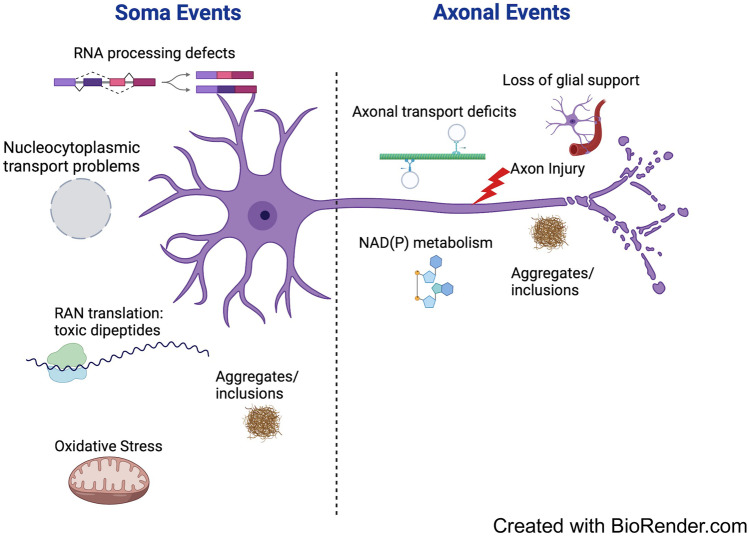
This review addresses the longstanding debate over whether amyotrophic lateral sclerosis (ALS) is a 'dying back' or 'dying forward' disorder in the light of new gene identifications and the increased understanding of mechanisms of action for previously identified ALS genes. While the topological pattern of pathology in animal models, and more anecdotally in patients is indeed 'dying back', this review discusses how this fits with the fact that many of the major initiating events are thought to occur within the soma. It also discusses how widely varying ALS risk factors, including some impacting axons directly, may combine to drive a common pathway involving TAR DNA binding protein 43 (TDP-43) and neuromuscular junction (NMJ) denervation. The emerging association between sterile alpha and TIR motif-containing 1 (SARM1), a protein so far mostly associated with axon degeneration, and sporadic ALS is another major theme. The strengths and limitations of the current evidence supporting an association are considered, along with ways in which SARM1 could become activated in ALS. The final section addresses SARM1-based therapies along with the prospects for targeting other axonal steps in ALS pathogenesis.
Overview
The claims and statistics of this paper haven’t been checked yet.
Free: it reads the open-access text and checks the first 5 claims that cite a source we can check. Create a free account to check every claim.
Integrity signals
Registry
Cites
Statistics
Figures
Verification
Claims the paper makes
The claims and statistics of this paper haven’t been checked yet.
Free: it reads the open-access text and checks the first 5 claims that cite a source we can check. Create a free account to check every claim.
Claims other papers make about this one
Each is checked against this paper’s own text: does it say what the citing paper says it does?
The source backs part of the claim, not all of it — or backs it for a different population, condition or comparison.
In the citing paper
“Unlike other neurodegenerative diseases, ALS also results in pronounced disturbances in the axonal transport and cytoskeletal dynamics of motor neurons.194”
From Antiageing strategy for neurodegenerative diseases: from mechanisms to clinical advances (2025) · cites this paper as [194]
Experimental — accuracy not yet measured
Self-check
Percentages, sums and reported differences re-computed from the paper’s own numbers.
The self-check needs the paper’s full text.
Citations
Cites
Ubiquitinated TDP-43 in Frontotemporal Lobar Degeneration and Amyotrophic Lateral Sclerosis
Neumann, M., Sampathu, D. M., Kwong, L. K., Truax, A. C., Micsenyi, M. C., Chou, T. T., Bruce, J., Schuck, T., Grossman, M., Clark, C. M., et al. (2006) · Science · doi:10.1126/science.1134108 · Cited by 6,576 · cited 1×
“However, the near-ubiquitous presence of TDP-43 aggregates [82] suggests convergence of these varying initial causes onto one or a few central mechanisms.”
BackgroundRothstein, J. D., Dykes-Hoberg, M., Pardo, C. A., Bristol, L. A., Jin, L., Kuncl, R. W., Kanai, Y., Hediger, M. A., Wang, Y., Schielke, J. P., et al. (1996) · Neuron · doi:10.1016/s0896-6273(00)80086-0 · Cited by 2,534 · cited 1×
“Axonal transport also declines greatly with age [54], the biggest single risk factor in ALS, and loss of the glial glutamate transporter GLT1 in ALS [55] appears likely to impact axons more than the soma.”
BackgroundHardiman, O., Al-Chalabi, A., Chio, A., Corr, E. M., Logroscino, G., Robberecht, W., Shaw, P. J., Simmons, Z., & van den Berg, L. H. (2017) · Nature Reviews Disease Primers · doi:10.1038/nrdp.2017.71 · Cited by 1,414 · cited 1×
“Much less is known about environmental risks but some that have been proposed based on epidemiology studies are environmental toxins [78], strenuous exercise [79] and traumatic brain injury (TBI) [53], although better preclinical models are required to establish causation rather than reverse causation for TBI [80].”
BackgroundAmyotrophic lateral sclerosis is a distal axonopathy: evidence in mice and man
Fischer, L. R., Culver, D. G., Tennant, P., Davis, A. A., Wang, M., Castellano-Sanchez, A., Khan, J., Polak, M. A., & Glass, J. D. (2004) · Experimental Neurology · doi:10.1016/j.expneurol.2003.10.004 · Cited by 1,357 · cited 3×
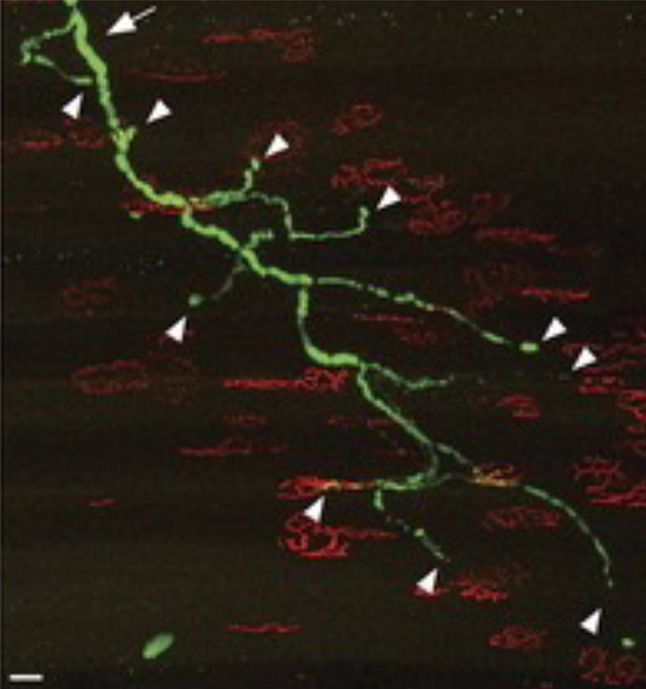
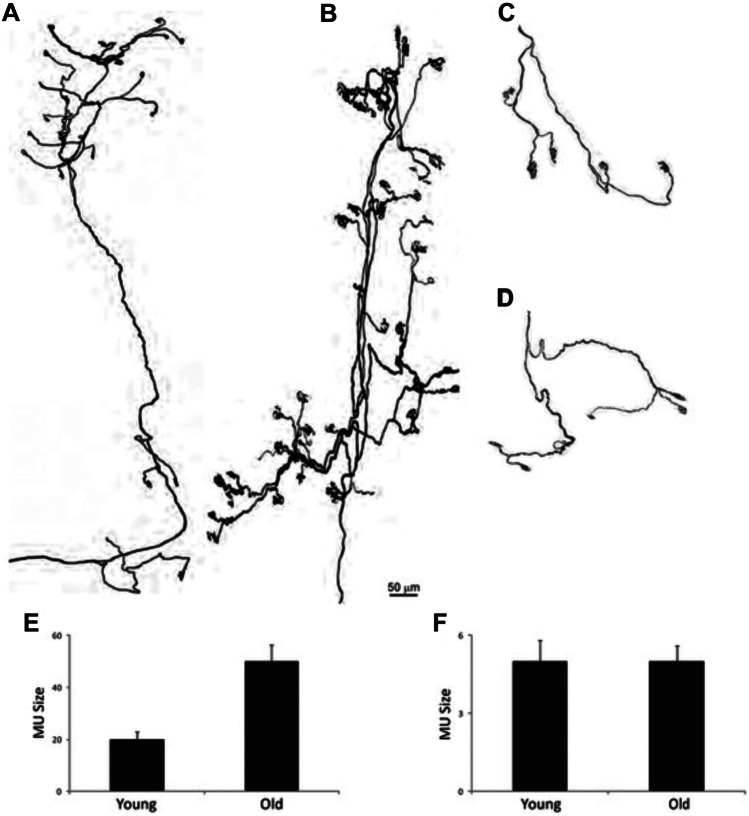
“Denervation and sprouting can occur simultaneously in different parts of the same motor unit [26], and in one human early stage case NMJ denervation also preceded motor neuron loss [2].”
BackgroundThe C9orf72 repeat expansion disrupts nucleocytoplasmic transport.
Zhang, K., Donnelly, C. J., Haeusler, A. R., Grima, J. C., Machamer, J. B., Steinwald, P., Daley, E. L., Miller, S. J., Cunningham, K. M., Vidensky, S., et al. (2015) · Nature · doi:10.1038/nature14973 · Cited by 982 · cited 1×
“For example, the neurotoxicity of C9orf72 hexanucleotide repeat expansions, the most common known cause of familial ALS and a common risk factor for sporadic ALS, can be potently suppressed in Drosophila by RanGAP, a regulator of nuclear-cytoplasmic transport [42], and there is additional support for such a mechanism…”
BackgroundAxon degeneration mechanisms: Commonality amid diversity
Coleman, M. (2005) · Nature reviews. Neuroscience · doi:10.1038/nrn1788 · Cited by 819 · cited 1×
“3) [86], it may not be the only death signal that arises from cell body impairment.”
BackgroundSelf-citationdSarm/Sarm1 Is Required for Activation of an Injury-Induced Axon Death Pathway
Osterloh, J. M., Yang, J., Rooney, T. M., Fox, A. N., Adalbert, R., Powell, E. H., Sheehan, A. E., Avery, M. A., Hackett, R., Logan, M. A., et al. (2012) · Science · doi:10.1126/science.1223899 · Cited by 687 · cited 2×
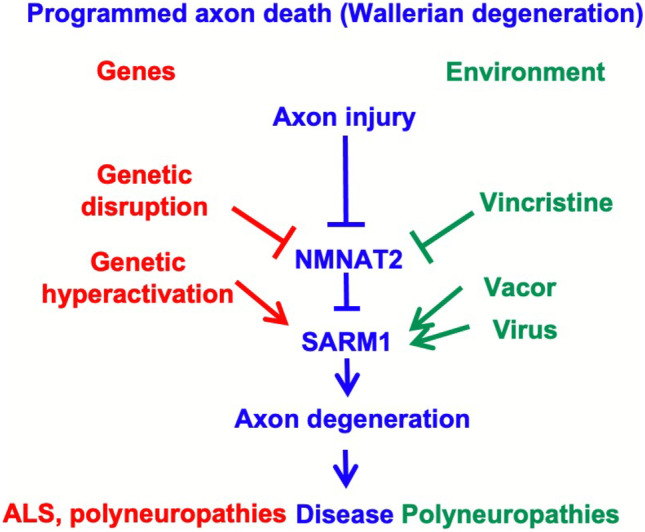
“SARM1 is particularly well known for its profound effects in killing axons [3, 4].”
BackgroundSelf-citationALS-implicated protein TDP-43 sustains levels of STMN2, a mediator of motor neuron growth and repair
Klim, J. R., Williams, L. A., Limone, F., Guerra San Juan, I., Davis-Dusenbery, B. N., Mordes, D. A., Burberry, A., Steinbaugh, M. J., Gamage, K. K., Kirchner, R., et al. (2019) · Nature Neuroscience · doi:10.1038/s41593-018-0300-4 · Cited by 653 · cited 2×
“An ASO-based correction of the STMN2 premature termination defect downstream of TDP-43 [47, 48] could be one example, and such trials are in progress.”
BackgroundMelamed, Z., López-Erauskin, J., Baughn, M. W., Zhang, O., Drenner, K., Sun, Y., Freyermuth, F., McMahon, M. A., Beccari, M. S., Artates, J. W., et al. (2019) · Nature Neuroscience · doi:10.1038/s41593-018-0293-z · Cited by 635 · cited 2×
“An ASO-based correction of the STMN2 premature termination defect downstream of TDP-43 [47, 48] could be one example, and such trials are in progress.”
BackgroundEssuman, K., Summers, D. W., Sasaki, Y., Mao, X., DiAntonio, A., & Milbrandt, J. (2017) · Neuron · doi:10.1016/j.neuron.2017.02.022 · Cited by 619 · cited 1×
“It has multiple enzyme activities, including both the degradation and cyclisation of NAD and NADP, and base exchange activity that switches the nicotinamide of either coenzyme for another pyridine base [57, 58].”
Background
Cited by
Antiageing strategy for neurodegenerative diseases: from mechanisms to clinical advances
Jiang, Q., Liu, J., Huang, S., Wang, X.-Y., Chen, X., Liu, G.-H., Ye, K., Song, W., Masters, C. L., Wang, J., et al. (2025) · Signal Transduction and Targeted Therapy · doi:10.1038/s41392-025-02145-7 · Cited by 165
Regulated cell death and its role in Alzheimer’s disease and amyotrophic lateral sclerosis
Thal, D. R., Gawor, K., & Moonen, S. (2024) · Acta Neuropathologica · doi:10.1007/s00401-024-02722-0 · Cited by 51
“Multiple pathological processes, of which some seem to predominantly affect either the soma or the axon, likely converge in protein aggregation and ultimately motor neuron death [44].”
Synaptic Dysfunction and Plasticity in Amyotrophic Lateral Sclerosis
Gulino, R. (2023) · International Journal of Molecular Sciences · doi:10.3390/ijms24054613 · Cited by 43
Sensory neuropathy in amyotrophic lateral sclerosis: a systematic review
Bombaci, A., Lupica, A., Pozzi, F. E., Remoli, G., Manera, U., & Stefano, V. D. (2023) · Journal of Neurology · doi:10.1007/s00415-023-11954-1 · Cited by 43
“While in small fibers a length-dependent degeneration similar to that recognized in second motor neurons can be hypothesized [46], in large sensory fibers an acute or subacute inflammatory process could be involved.”
BackgroundDLK-dependent axonal mitochondrial fission drives degeneration after axotomy
Gómez-Deza, J., Nebiyou, M., Alkaslasi, M. R., Nadal-Nicolás, F. M., Somasundaram, P., Slavutsky, A. L., Li, W., Ward, M. E., Watkins, T. A., & Pichon, C. E. L. (2024) · Nature Communications · doi:10.1038/s41467-024-54982-9 · Cited by 16
“It has been suggested that dying back axon degeneration overlaps with Wallerian degeneration 61 , but this remains unclear 62 .”
Beckers, J., & Damme, P. V. (2025) · Autophagy Reports · doi:10.1080/27694127.2025.2474796 · Cited by 21
Luan, T., Li, Q., Huang, Z., Feng, Y., Xu, D., Zhou, Y., Hu, Y., & Wang, T. (2024) · Neuroscience Bulletin · doi:10.1007/s12264-024-01267-2 · Cited by 15
“In recent years, degenerative changes in motor neurons along the axons [3] and at the neuromuscular junctions (NMJs) (the specialized connections between motor neurons and muscles) [4], have been identified as prognostic indicators of ALS.”
Oxysterols in Central and Peripheral Synaptic Communication
Petrov, A. M. (2023) · Advances in experimental medicine and biology · doi:10.1007/978-3-031-43883-7_6 · Cited by 15
The Corticospinal System and Amyotrophic Lateral Sclerosis: IFCN handbook chapter
Lemon, R. (2024) · Clinical Neurophysiology · doi:10.1016/j.clinph.2024.02.001 · Cited by 15
SARM1 deficiency induced depressive-like behavior via AMPKα/p-eEF2 axis to synapse dysfunction
Li, W., Zhu, W., Chen, J., Ali, T., & Li, S. (2024) · Neuropharmacology · doi:10.1016/j.neuropharm.2024.110206 · Cited by 13
SARM1: The Checkpoint of Axonal Degeneration in the Nervous System Disorders
Karnik, A., & Joshi, A. R. (2025) · Molecular Neurobiology · doi:10.1007/s12035-025-04835-3 · Cited by 13
“Failure of axonal transport also leads to impairment in the protein synthesis of the soma besides dysfunctional RNA metabolism due to mutation in TDP-43 [127].”
HDAC6 inhibition as a mechanism to prevent neurodegeneration in the mSOD1G93A mouse model of ALS
Phipps, A. J., Dwyer, S., Collins, J. M., Kabir, F., Atkinson, R. A. K., Chowdhury, A., Matthews, L., Dixit, D., TERRY, R. S., Smith, J. A., et al. (2024) · Heliyon · doi:10.1016/j.heliyon.2024.e34587 · Cited by 13
“There are several mechanisms that may contribute to the loss of axons in ALS, including excitotoxicity, axonal accumulation of filamentous protein aggregates, impaired neurofilament structure, and altered post-translational modifications of proteins in the axon [5 – 9].”
BackgroundExploring the Role of Axons in ALS from Multiple Perspectives
Chen, X., Lv, S., Liu, J., Guan, Y., Xu, C., Ma, X., Li, M., Bai, X., Liu, K., Zhang, H., et al. (2024) · Cells · doi:10.3390/cells13242076 · Cited by 12
Programmed axon degeneration: mechanism, inhibition and therapeutic potential
Loreto, A., & Neukomm, L. J. (2025) · Nature reviews. Neuroscience · doi:10.1038/s41583-025-00986-3 · Cited by 12
“However, the evidence is not always clear-cut — ALS models, for example, illustrate this complexity.”
InfluentialNeurofilament heavy phosphorylated epitopes as biomarkers in ageing and neurodegenerative disease
Paoli, L. F. D., Kirkcaldie, M., King, A. E., & Collins, J. M. (2024) · Journal of Neurochemistry · doi:10.1111/jnc.16261 · Cited by 7
“Since both corticospinal or upper motor neurons (UMNs) and alpha or lower motor neurons (LMNs) have unusually long axons, axonal dysfunction is implicated in ALS pathology and may be mediated through NF disruption (Coleman, 2022 ; Sharma et al., 2020).”
Targeting SARM1: from inhibition for neuroprotection to activation for neuroablation
Arthur‐Farraj, P., & Loreto, A. (2025) · Trends in Pharmacological Sciences · doi:10.1016/j.tips.2025.09.003 · Cited by 11
Zhu, W., Liu, J., Li, W. H., Zhao, Z. Y., Huang, C., Yang, J. Y., Lee, H. C., & Zhao, Y. J. (2025) · Cell Death and Disease · doi:10.1038/s41419-025-07342-4 · Cited by 9
The rise and fall of SARM1 base-exchange inhibitors
Lundbäck, T., Chandrasekar, V., Gu, C., Ju, H., McAdam, R. L., Palomero, M. Á., Sader, K., Peter, B., Wissler, L., Nevin, P., et al. (2026) · Communications Chemistry · doi:10.1038/s42004-026-02074-8 · Cited by 10
“However, 8 did not demonstrate good potency in cellular assays.”
A molecular systems architecture of neuromuscular junction in amyotrophic lateral sclerosis
Ayyadurai, V. A. S., Deonikar, P., & Kamm, R. D. (2025) · npj Systems Biology and Applications · doi:10.1038/s41540-025-00501-5 · Cited by 4
Keerie, A. F. A., Martins, R. R., Allen, C. F., Bowden, K. M., Mashhadi, S. A., Marlow, T. R., Myszczynska, M. A., Thakur, N., Beal, S. N., Shaw, A. C., et al. (2025) · Molecular Neurodegeneration · doi:10.1186/s13024-025-00908-y · Cited by 7
“…in the SOD1 G93A mouse model is interesting and likely reflects the fact that axonal degeneration is occurring prior to complete loss of motor neuron cell bodies in the spinal cord as has been observed by others [68] and that lower doses of M102 do not sufficiently rescue this degenerative process.”
Zeng, J.-Y., Huang, H., Zhuang, S.-P., Wu, Y., Chen, S., Zou, Z., & Chen, H. (2025) · European Journal of Radiology · doi:10.1016/j.ejrad.2025.111981 · Cited by 4
The Evolving Landscape of Motor Neuron Disease Therapeutics
Maragakis, N. J., & Rothstein, J. D. (2022) · Neurotherapeutics · doi:10.1007/s13311-022-01307-7 · Cited by 1
“Work by a number of investigators, as reviewed by one of the leaders in the field of axon biology, Coleman [6], has challenged this notion and firmly placed established axon dysfunction and distal denervation as an important target for early ALS therapeutic intervention.”
BackgroundHypoxia-inducible factor 1 protects neurons from Sarm1-mediated neurodegeneration
Meraner, P., Avetisyan, A. A., Swift, K. A., Cheng, Y.-C., Barría, R., & Freeman, M. R. (2026) · Cell Reports · doi:10.1016/j.celrep.2025.116873 · Cited by 2
Trace Elements Dyshomeostasis and Toxic Metals Neurotoxicity in Neurodegenerative Diseases
Tang, M., Fleming, E., Gu, J., Shi, H., Xu, Y., & Gong, X. (2026) · Biological Trace Element Research · doi:10.1007/s12011-026-05187-2 · Cited by 3
“Lead impairs fast axonal transport in long motor neurons and damages neuromuscular junctions, central to ALS pathology, less so in AD and PD [247].”
HDAC6 inhibition as a mechanism to prevent axon degeneration in the mSOD1 G93A mouse model of ALSPreprint
Phipps, A. J., Dwyer, S., Collins, J. M., Kabir, F., Atkinson, R. A. K., Chowdhury, A., Matthews, L., Dixit, D., TERRY, R. S., Smith, J. A., et al. (2023) · bioRxiv (Cold Spring Harbor Laboratory) · doi:10.1101/2023.08.28.555025
“…in ALS, including excitotoxicity, axonal accumulation of filamentous protein aggregates, impaired neurofilament structure, and altered post-translational modifications of proteins in the axon (Blizzard et al., 2015; Coleman, 2022; Lefebvre-Omar et al., 2023; Tian et al., 2020; Trist et al., 2022).”
Spreading of motor neuron degeneration in ALS is not so random
Corcia, P., & Couratier, P. (2024) · Revue Neurologique · doi:10.1016/j.neurol.2024.02.384
Role of Enzymes in Amyotrophic Lateral Sclerosis
Maya, S., & Shamnas, M. (2024) · Springer eBooks · doi:10.1007/978-981-97-6822-6_3
Otomo, A., Nishijima, K., Murakami, Y., Ishikawa, M., Yudahira, H., Shimakura, K., Okano, H., Aoki, M., Kimura, H., & Hadano, S. (2025) · Frontiers in Cellular Neuroscience · doi:10.3389/fncel.2025.1590732
“Since axonal dysfunction and degeneration are implicated in ALS pathogenesis (Coleman, 2022), it is crucial to investigate the axonal phenotype of FUS_H517D Tet-on LMNs.”
Early endothelial activation at the blood–nerve barrier defines a hallmark of ALSPreprint
Bhat, G. P., Diprima, S., Beccaría, C. G., Podini, P., Badaloni, A., Motta, A., Brambilla, I., Martins, L. F., Boselli, D., de Pretis, S., et al. (2025) · bioRxiv (Cold Spring Harbor Laboratory) · doi:10.1101/2025.08.31.673224
Glial Activation and Autophagic Imbalance in Amyotrophic Lateral Sclerosis
Mallapur, S. P., Patil, S. S., Patil, V. S., & Yadav, P. (2025) · Springer eBooks · doi:10.1007/978-981-95-3945-1_10
Axonal transport impairment as an upstream mechanism in amyotrophic lateral sclerosis pathogenesis
Gabbay, U. (2026) · Frontiers in Neuroscience · doi:10.3389/fnins.2026.1802313
Deveci, Ş., Matur, Z., & Erzurumluoğlu, S. S. (2026) · Neuromuscular Disorders · doi:10.1016/j.nmd.2026.106463
Mechanobiology of Myelin Generation/Regeneration in Health and Disease
Morçimen, Z. G., Missirlis, Y. F., & Sendemir, A. (2026) · Results and problems in cell differentiation · doi:10.1007/978-3-032-19509-8_15
Metadata
- Authors
- Coleman, M. P.
- Affiliations
- University of Cambridge (GB)
- Corresponding author
- Coleman, Michael P.
- ORCID
- Coleman, Michael P.
- Venue
- Neurotherapeutics
- Publisher
- Elsevier BV
- Published
- 2022-07
- Volume
- 19
- Issue
- 4
- Pages
- 1133-1144
- ISSN
- 1878-7479 (ISSN-L)
- PMC
- PMC9587191
- OpenAlex
- W4303453393
- Semantic Scholar
- 483eeda12a5c660d85fd49a6f09780d987583125
- Cited by
- 33
- References
- 121
- Citations by year
- 2026: 6 · 2025: 12 · 2024: 10 · 2023: 4 · 2022: 1
- FWCI
- 0.97
- Type
- journal article
- Language
- en
- Open access
- hybrid
- doi.org
- Licence
- cc-by
- www.elsevier.com/tdm/userlicense/1.0/ (tdm)
- www.elsevier.com/legal/tdmrep-license (tdm)
- creativecommons.org/licenses/by/4.0/ (vor, 98 d)
- Locations
- Neurotherapeutics (publishedVersion, cc-by)
- PubMed Central (publishedVersion, cc-by)
- PubMed (publishedVersion)
- Apollo (University of Cambridge) (submittedVersion, cc-by)
- Apollo
- Funders
- John and Lucille Van Geest Foundation
- Robert Packard Center for ALS Research, Johns Hopkins University
- Topics
- Health Sciences › Medicine › Clinical Neurology › Amyotrophic Lateral Sclerosis Research
- Life Sciences › Neuroscience › Cellular and Molecular Neuroscience › Hereditary Neurological Disorders
- Life Sciences › Neuroscience › Cellular and Molecular Neuroscience › Alzheimer's disease research and treatments
- Keywords
- amyotrophic lateral sclerosis, axonal degeneration, dying back, TDP-43, neuromuscular junction denervation, SARM1, axonopathy, ALS risk factors, ALS pathogenesis
- MeSH terms
- Amyotrophic Lateral Sclerosis, Animals, Axons, Biology, Cytoskeletal Proteins, DNA-Binding Proteins, Armadillo Domain Proteins
About these checks
Registry, retraction, Cites and statistics results are computed, not judged, with one exception: a printed reference that no index lists is read once by a model before it counts as a citation error. Claims are extracted by a model and kept only when their quote appears verbatim in the text; each cited source is then checked, with a model’s help, for whether it says what the claim relies on. Those verdicts can be wrong — read the claim’s quote and the cited source before relying on one.
Statistics and arithmetic are recomputed, not judged.
Confidence bands are shown only for fields calibrated on our annotated test set. None is calibrated yet, so no band is shown.
What counts as a claim ›How we measure confidence ›How we check this ›
Are you an author, or do you see a problem with this page? Request a review
Data sources
Bibliographic data: Semantic Scholar, OpenAlex, Crossref.
Contains information from the Semantic Scholar Academic Graph Datasets, made available under the ODC Attribution License (ODC-BY 1.0).
Semantic Scholar’s data is described in: Kinney, R., et al. (2023). The Semantic Scholar Open Data Platform. arXiv:2301.10140.
