

Top-Down LESA Mass Spectrometry Protein Analysis of Gram-Positive and Gram-Negative Bacteria
Open accessThe DOI matches its Crossref record; 54 of the 55 references it cites were found in a registry or an index.
Abstract
We have previously shown that liquid extraction surface analysis (LESA) mass spectrometry (MS) is a technique suitable for the top-down analysis of proteins directly from intact colonies of the Gram-negative bacterium Escherichia coli K-12. Here we extend the application of LESA MS to Gram-negative Pseudomonas aeruginosa PS1054 and Gram-positive Staphylococcus aureus MSSA476, as well as two strains of E. coli (K-12 and BL21 mCherry) and an unknown species of Staphylococcus. Moreover, we demonstrate the discrimination between three species of Gram-positive Streptococcus (Streptococcus pneumoniae D39, and the viridans group Streptococcus oralis ATCC 35037 and Streptococcus gordonii ATCC35105), a recognized challenge for matrix-assisted laser desorption ionization time-of-flight MS. A range of the proteins detected were selected for top-down LESA MS/MS. Thirty-nine proteins were identified by top-down LESA MS/MS, including 16 proteins that have not previously been observed by any other technique. The potential of LESA MS for classification and characterization of novel species is illustrated by the de novo sequencing of a new protein from the unknown species of Staphylococcus. Graphical Abstract ᅟ.
Overview
The claims and statistics of this paper haven’t been checked yet.
Free: it reads the open-access text and checks the first 5 claims that cite a source we can check. Create a free account to check every claim.
Integrity signals
Registry
Cites
Statistics
Figures
Verification
Claims the paper makes
The claims and statistics of this paper haven’t been checked yet.
Free: it reads the open-access text and checks the first 5 claims that cite a source we can check. Create a free account to check every claim.
Claims other papers make about this one
Each is checked against this paper’s own text: does it say what the citing paper says it does?
The source backs part of the claim, not all of it — or backs it for a different population, condition or comparison.
In the citing paper
“Another emerging technique is liquid extraction surface analysis (LESA), which directly sampling proteins from a solid surface for analysis of protein and protein complexes [94,95].”
From Top-down proteomics: challenges, innovations, and applications in basic and clinical research (2020) · cites this paper as [94]
Experimental — accuracy not yet measured
Self-check
Percentages, sums and reported differences re-computed from the paper’s own numbers.
The self-check needs the paper’s full text.
Citations
Cites
Protein Identification and Analysis Tools on the ExPASy Server
Gasteiger, E., Hoogland, C., Gattiker, A., Duvaud, S., Wilkins, M. R., Appel, R. D., & Bairoch, A. (2005) · The Proteomics Protocols Handbook · doi:10.1385/1-59259-890-0:571 · Cited by 8,681
The Complete Genome Sequence of Escherichia coli K-12
Blattner, F. R., Plunkett, G., Bloch, C. A., Perna, N. T., Burland, V., Riley, M., Collado-Vides, J., Glasner, J. D., Rode, C. K., Mayhew, G. F., et al. (1997) · Science · doi:10.1126/science.277.5331.1453 · Cited by 7,452 · cited 1×
“YahO was identified following cleavage of a 21 amino acid sequence peptide from the intact protein, previously inferred from protein sequence [52] and experimentally confirmed here by LESA MS.”
MethodProtein Identification and Analysis Tools in the ExPASy Server
Wilkins, M. R., Gasteiger, E., Bairoch, A., Sanchez, J.-C., Williams, K. L., Appel, R. D., & Hochstrasser, D. F. (2003) · 2-D Proteome Analysis Protocols · doi:10.1385/1-59259-584-7:531 · Cited by 6,155 · cited 1×
“A predicted thermolysin cleavage site was identified by PeptideCutter [38] at the site of observed fragmentation; it is therefore possible that the cleavage is conducted by an as yet unidentified protease and may be functionally relevant.”
BackgroundComplete genome sequence of Pseudomonas aeruginosa PAO1, an opportunistic pathogen
Stover, C. K., Pham, X. Q., Erwin, A. L., Mizoguchi, S. D., Warrener, P., Hickey, M. J., Brinkman, F. S. L., Hufnagle, W. O., Kowalik, D. J., Lagrou, M., et al. (2000) · Nature · doi:10.1038/35023079 · Cited by 4,573 · cited 4×
“coli parvulin [36]; PpiC2 was identified here in its intact form, missing the N-terminal methionine.”
BackgroundInfluentialMass Spectrometry Sampling Under Ambient Conditions with Desorption Electrospray Ionization
Takáts, Z., Wiseman, J. M., Gologan, B., & Cooks, R. G. (2004) · Science · doi:10.1126/science.1104404 · Cited by 3,324 · cited 1×
“Desorption electrospray ionization (DESI) has been applied to the analysis of bacterial suspensions dried onto solid substrates [13, 14], and colonies grown on filter membranes [15]; however, direct measurements on agar could not be easily obtained without drying of the sample because of the soft and conductive nature…”
MethodSeng, P., Drancourt, M., Gouriet, F., La Scola, B., Fournier, P., Rolain, J. M., & Raoult, D. (2009) · Clinical Infectious Diseases · doi:10.1086/600885 · Cited by 1,983 · cited 1×
“Thanks to its long development time and resulting robustness, it is currently being rolled out worldwide as a clinical and diagnostic tool with the potential to eventually replace classic microbiological identification methods [7, 8], although discrimination between certain strains and species (e.”
BackgroundMALDI-TOF mass spectrometry: an emerging technology for microbial identification and diagnosis
Singhal, N., Kumar, M., Kanaujia, P. K., & Virdi, J. S. (2015) · Frontiers in Microbiology · doi:10.3389/fmicb.2015.00791 · Cited by 1,605 · cited 2×
“Matrix-assisted laser desorption ionization (MALDI) time-of-flight (TOF) MS, the most commonly used technique [3], has been in development for that purpose since the late 1990s [4, 5] (recently reviewed in [6]).”
BackgroundMethodInteraction network containing conserved and essential protein complexes in Escherichia coli
Butland, G., Peregrín-Alvarez, J. M., Li, J., Yang, W., Yang, X., Canadien, V., Starostine, A., Richards, D., Beattie, B., Krogan, N., et al. (2005) · Nature · doi:10.1038/nature03239 · Cited by 1,201 · cited 1×
“In addition to these, one previously unseen protein and nine proteins identified by other techniques (five by peptide mass fingerprinting by MALDITOFMS, as part of large-scale interaction studies [45, 46], and four by gel electrophoresis [47] and top-downMALDIMS [48, 49]) were identified.”
BackgroundWang, R., Braughton, K. R., Kretschmer, D., Bach, T.-H. L., Queck, S. Y., Li, M., Kennedy, A. D., Dorward, D. W., Klebanoff, S. J., Peschel, A., et al. (2007) · Nature Medicine · doi:10.1038/nm1656 · Cited by 1,046 · cited 1×
“The other example, phenol-soluble modulin α4, is implicated in the lysis of neutrophils [42]; in this particular strain, its existence has so far been inferred only from homology, although in the methicillinresistant S.”
BackgroundHolden, M. T. G., Feil, E. J., Lindsay, J. A., Peacock, S. J., Day, N. P. J., Enright, M. C., Foster, T. J., Moore, C. E., Hurst, L., Atkin, R., et al. (2004) · Proceedings of the National Academy of Sciences · doi:10.1073/pnas.0402521101 · Cited by 892 · cited 3×
“Finally, the predicted protein SAOUHSC_01729 [43], identified here with no modifications, is completely uncharacterized; identical gene products have been found by a standard protein BLAST search in numerous strains of S. aureus, as well as one strain of Staphylococcus haemolyticus.”
BackgroundHolland, R. D., Wilkes, J. G., Rafii, F., Sutherland, J. B., Persons, C. C., Voorhees, K. J., & Lay, Jr. (1996) · Rapid Communications in Mass Spectrometry · doi:10.1002/(sici)1097-0231(19960731)10:10<1227::aid-rcm659>3.0.co;2-6 · Cited by 637
Bizzini, A., Durussel, C., Bille, J., Greub, G., & Prod'hom, G. (2010) · Journal of Clinical Microbiology · doi:10.1128/jcm.01794-09 · Cited by 615 · cited 1×
“Thanks to its long development time and resulting robustness, it is currently being rolled out worldwide as a clinical and diagnostic tool with the potential to eventually replace classic microbiological identification methods [7, 8], although discrimination between certain strains and species (e.”
BackgroundThe rapid identification of intact microorganisms using mass spectrometry
Claydon, M. A., Davey, S. N., Edwards-Jones, V., & Gordon, D. B. (1996) · Nature Biotechnology · doi:10.1038/nbt1196-1584 · Cited by 609 · cited 1×
“Matrix-assisted laser desorption ionization (MALDI) time-of-flight (TOF) MS, the most commonly used technique [3], has been in development for that purpose since the late 1990s [4, 5] (recently reviewed in [6]).”
MethodIdentification of bacteria using mass spectrometry
Anhalt, J. P., & Fenselau, C. (1975) · Analytical Chemistry · doi:10.1021/ac60352a007 · Cited by 504 · cited 1×
“The application of mass spectrometry (MS) for the identification and characterization of bacterial species has a history of more than 40 years [1].”
BackgroundPhenol-soluble modulins and staphylococcal infection
Peschel, A., & Otto, M. (2013) · Nature Reviews Microbiology · doi:10.1038/nrmicro3110 · Cited by 452 · cited 2×
“A related, predicted protein, SAOUHSC_01135 [43], was also identified; all three retain N-terminal formylmethionine characteristic of this family [40].”
BackgroundLarge-scale identification of protein–protein interaction of Escherichia coli K-12
Arifuzzaman, M., Maeda, M., Itoh, A., Nishikata, K., Takita, C., Saito, R., Ara, T., Nakahigashi, K., Huang, H.-C., Hirai, A., et al. (2006) · Genome Research · doi:10.1101/gr.4527806 · Cited by 403 · cited 1×
“In addition to these, one previously unseen protein and nine proteins identified by other techniques (five by peptide mass fingerprinting by MALDITOFMS, as part of large-scale interaction studies [45, 46], and four by gel electrophoresis [47] and top-downMALDIMS [48, 49]) were identified.”
BackgroundKertesz, V., & Van Berkel, G. J. (2010) · Journal of Mass Spectrometry · doi:10.1002/jms.1709 · Cited by 350 · cited 1×
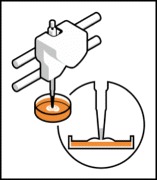
“A straightforward, solvent-based technique, suitable for manual application although usually performed by use of the dedicated TriVersa NanoMate automatic pipette system [31], LESA relies on the deposition of a droplet of solvent on the surface to be sampled.”
MethodArnold, R. J., & Reilly, J. P. (1999) · Analytical Biochemistry · doi:10.1006/abio.1998.3077 · Cited by 220 · cited 1×
“In addition to these, one previously unseen protein and nine proteins identified by other techniques (five by peptide mass fingerprinting by MALDITOFMS, as part of large-scale interaction studies [45, 46], and four by gel electrophoresis [47] and top-downMALDIMS [48, 49]) were identified.”
BackgroundPrimer on Agar-Based Microbial Imaging Mass Spectrometry
Yang, J. Y., Phelan, V. V., Simkovsky, R., Watrous, J. D., Trial, R. M., Fleming, T. C., Wenter, R., Moore, B. S., Golden, S. S., Pogliano, K., et al. (2012) · Journal of Bacteriology · doi:10.1128/jb.00823-12 · Cited by 167
Expression of Virulence Factors by Staphylococcus aureus Grown in Serum
Oogai, Y., Matsuo, M., Hashimoto, M., Kato, F., Sugai, M., & Komatsuzawa, H. (2011) · Applied and Environmental Microbiology · doi:10.1128/aem.05316-11 · Cited by 155 · cited 1×
“hemolysin and related, secreted proteins occurs during stationary phase [53].”
BackgroundProtein Identification Using Top-Down Spectra
Liu, X., Sirotkin, Y., Shen, Y., Anderson, G., Tsai, Y. S., Ting, Y. S., Goodlett, D. R., Smith, R. D., Bafna, V., & Pevzner, P. A. (2012) · Molecular & Cellular Proteomics · doi:10.1074/mcp.m111.008524 · Cited by 153 · cited 1×
“Other software packages, such as MSAlign [39], may facilitate the identification of uncharacterized, highly modified proteins.”
MethodWatrous, J. D., Roach, P. J., Heath, B. S., Alexandrov, T., Laskin, J., & Dorrestein, P. C. (2013) · Analytical Chemistry · doi:10.1021/ac4023154 · Cited by 134 · cited 1×
“5 kDa), secreted peptides as well [22, 23].”
Babu, M., Arnold, R., Bundalovic-Torma, C., Gagarinova, A., Wong, K. S., Kumar, A., Stewart, G., Samanfar, B., Aoki, H., Wagih, O., et al. (2014) · PLoS Genetics · doi:10.1371/journal.pgen.1004120 · Cited by 132 · cited 1×
“YbgS, a protein inferred from homology and shown to display genetic interactions with several partners [50], was detected with its signal peptide cleaved.”
BackgroundReal-Time Metabolomics on Living Microorganisms Using Ambient Electrospray Ionization Flow-Probe
Hsu, C., ElNaggar, M., Peng, Y., Fang, J., Sanchez, L. M., Mascuch, S. J., Møller, K. A., Alazzeh, E. K., Pikula, J., Quinn, R. A., et al. (2013) · Analytical Chemistry · doi:10.1021/ac401613x · Cited by 124 · cited 1×
“5 kDa), secreted peptides as well [22, 23].”
Rapid Discrimination of Bacteria by Paper Spray Mass Spectrometry
Hamid, A. M., Jarmusch, A. K., Pirro, V., Pincus, D., Clay, B. G., Gervasi, G., & Cooks, R. G. (2014) · Analytical Chemistry · doi:10.1021/ac501254b · Cited by 123 · cited 1×
“Similarly, paper spray MS of bacterial colony smears, generating mass spectra primarily consisting of phospholipid peaks, was shown to provide enough information for bacterial identification at the species level [21].”
BackgroundCheng, K., Chui, H., Domish, L., Hernandez, D., & Wang, G. (2016) · PROTEOMICS - CLINICAL APPLICATIONS · doi:10.1002/prca.201500086 · Cited by 115 · cited 2×
“Matrix-assisted laser desorption ionization (MALDI) time-of-flight (TOF) MS, the most commonly used technique [3], has been in development for that purpose since the late 1990s [4, 5] (recently reviewed in [6]).”
BackgroundMethodEdwards, R. L., Creese, A. J., Baumert, M., Griffiths, P., Bunch, J., & Cooper, H. J. (2011) · Analytical Chemistry · doi:10.1021/ac1030804 · Cited by 111
Self-citationChanges in Escherichia coli transcriptome during acclimatization at low temperature
Polissi, A., Laurentis, W. D., Zangrossi, S., Briani, F., Longhi, V., Pesole, G., & Dehò, G. (2003) · Research in Microbiology · doi:10.1016/s0923-2508(03)00167-0 · Cited by 108 · cited 1×
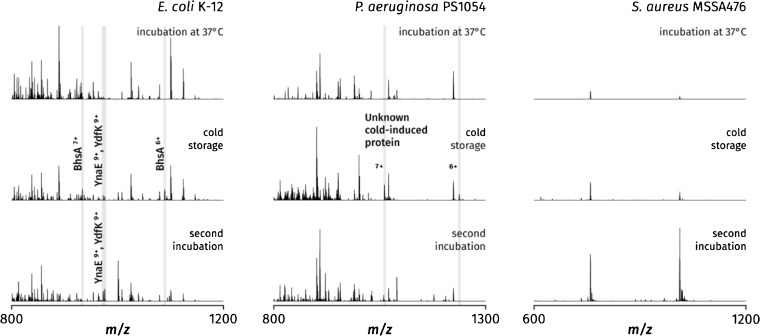
“YdfK, a hypothetical cold shock protein [51], could not be identified in a previous study using the search modes and databases provided by ProSight 2.”
ResultSong, Y., Talaty, N. N., Tao, W. A., Pan, Z., & Cooks, R. G. (2006) · Chemical Communications · doi:10.1039/b615724f · Cited by 106 · cited 1×
“Desorption electrospray ionization (DESI) has been applied to the analysis of bacterial suspensions dried onto solid substrates [13, 14], and colonies grown on filter membranes [15]; however, direct measurements on agar could not be easily obtained without drying of the sample because of the soft and conductive nature…”
MethodStrittmatter, N., Rebec, M., Jones, E. A., Golf, O., Abdolrasouli, A., Balog, J., Behrends, V., Veselkov, K., & Takáts, Z. (2014) · Analytical Chemistry · doi:10.1021/ac501075f · Cited by 102
Quanico, J. P., Franck, J., Dauly, C., Strupat, K., Dupuy, J., Day, R. W., Salzet, M., Fournier, I., & Wisztorski, M. (2013) · Journal of Proteomics · doi:10.1016/j.jprot.2012.11.025 · Cited by 101 · cited 2×
“The extraction of multiple classes of molecules may in some cases produce overly complex mass spectra or lead to extensive ion suppression [32]; to circumvent this issue, separation methods such as nano liquid chromatography (LC)–MS [28] or high-field asymmetric waveform ion mobility separation (FAIMS) [26, 29] may be…”
MethodThe BON domain: a putative membrane-binding domain
Yeats, C., & Bateman, A. G. (2003) · Trends in Biochemical Sciences · doi:10.1016/s0968-0004(03)00115-4 · Cited by 96 · cited 1×
“PA4739, another predicted protein detected by LESA MS, contains a putative BON domain, which suggests it is localized to either the periplasm or the outer membrane, and is likely involved in stress response [37].”
BackgroundGas-Phase Concentration, Purification, and Identification of Whole Proteins from Complex Mixtures
Reid, G. E., Shang, H., Hogan, J. M., Lee, G. U., & McLuckey, S. A. (2002) · Journal of the American Chemical Society · doi:10.1021/ja025966k · Cited by 94 · cited 1×
“In addition to these, one previously unseen protein and nine proteins identified by other techniques (five by peptide mass fingerprinting by MALDITOFMS, as part of large-scale interaction studies [45, 46], and four by gel electrophoresis [47] and top-downMALDIMS [48, 49]) were identified.”
BackgroundWADA, A. (1986) · The Journal of Biochemistry · doi:10.1093/oxfordjournals.jbchem.a121866 · Cited by 93
Identification of bacteria using mass spectrometry techniques
Krásný, L., Hynek, R., & Hochel, I. (2013) · International Journal of Mass Spectrometry · doi:10.1016/j.ijms.2013.04.016 · Cited by 92 · cited 1×
“Detection of characteristic compounds in bacterial samples allows their identification down to a genus or, in rarer instances, species and strain level [2].”
BackgroundSarsby, J., Griffiths, R. L., Race, A. M., Bunch, J., Randall, E. C., Creese, A. J., & Cooper, H. J. (2015) · Analytical Chemistry · doi:10.1021/acs.analchem.5b01151 · Cited by 87 · cited 4×
“The extraction of multiple classes of molecules may in some cases produce overly complex mass spectra or lead to extensive ion suppression [32]; to circumvent this issue, separation methods such as nano liquid chromatography (LC)–MS [28] or high-field asymmetric waveform ion mobility separation (FAIMS) [26, 29] may be…”
BackgroundMethodInfluentialSelf-citationBolt, F., Cameron, S. J. S., Karancsi, T., Simon, D. A., Schaffer, R., Rickards, T., Hardiman, K., Burke, A., Bodai, Z., Perdones-Montero, Á., et al. (2016) · Analytical Chemistry · doi:10.1021/acs.analchem.6b01016 · Cited by 86
Randall, E. C., Bunch, J., & Cooper, H. J. (2014) · Analytical Chemistry · doi:10.1021/ac503349d · Cited by 84 · cited 2×
“spectra, as compared with mass spectra of colonies sampled immediately after incubation [30].”
MethodResultSelf-citationEdwards, R. L., Griffiths, P., Bunch, J., & Cooper, H. J. (2012) · Journal of the American Society for Mass Spectrometry · doi:10.1007/s13361-012-0477-9 · Cited by 78
Self-citationSong, Y., Talaty, N. N., Datsenko, K. A., Wanner, B. L., & Cooks, R. G. (2009) · The Analyst · doi:10.1039/b900069k · Cited by 77 · cited 1×
“Desorption electrospray ionization (DESI) has been applied to the analysis of bacterial suspensions dried onto solid substrates [13, 14], and colonies grown on filter membranes [15]; however, direct measurements on agar could not be easily obtained without drying of the sample because of the soft and conductive nature…”
MethodThe Staphylococcus aureus NCTC 8325 Genome
Gillaspy, A. F., Worrell, V., Orvis, J., Roe, B. A., Dyer, D. W., & Iandolo, J. J. (2014) · Gram-Positive Pathogens · doi:10.1128/9781555816513.ch32 · Cited by 76 · cited 1×
“SAOUHSC_00845 [44] has been assigned by sequence homology to the previously mentioned UPF0337 family of stress response proteins, detected in all three species.”
BackgroundAnalysis of intact bacteria using rapid evaporative ionisation mass spectrometry
Strittmatter, N., Jones, E. A., Veselkov, K., Rebec, M., Bundy, J. G., & Takáts, Z. (2013) · Chemical Communications · doi:10.1039/c3cc42015a · Cited by 76
Angeletti, S., Dicuonzo, G., Avola, A., Crea, F., Dedej, E., Vailati, F., Farina, C., & Florio, L. D. (2015) · PLoS ONE · doi:10.1371/journal.pone.0120502 · Cited by 73 · cited 2×
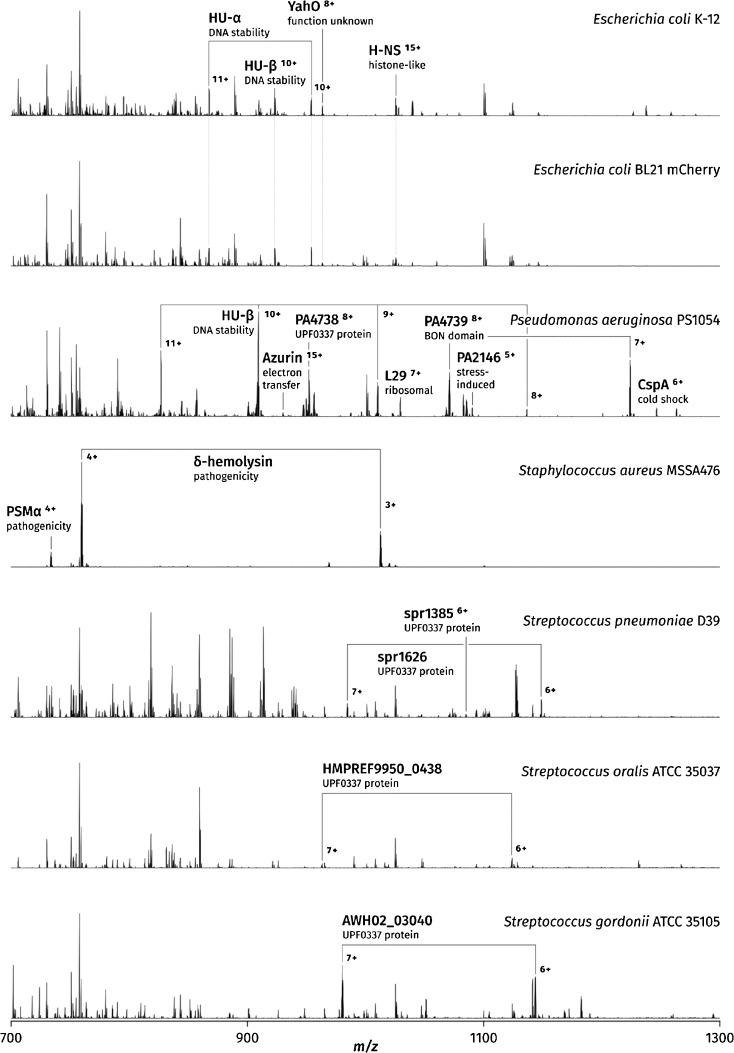
“Here we present the application of this approach to two clinical isolate species, the Gram-negative Pseudomonas aeruginosa PS1054 and the Gram-positive Staphylococcus aureus MSSA476, as well as three representatives of a group of closely related species of Gram-positive streptococci, known to cause nonidentification a…”
BackgroundMethodMartin, N. J., Bunch, J., & Cooper, H. J. (2013) · Journal of the American Society for Mass Spectrometry · doi:10.1007/s13361-013-0658-1 · Cited by 69 · cited 1×
“Addition of a separation step, such as FAIMS [29] or LC [27], into the LESA MS workflow is possible, and would likely expand the range of detected proteins.”
BackgroundSelf-citationDebois, D., Ongena, M., Cawoy, H., & Pauw, E. D. (2013) · Journal of the American Society for Mass Spectrometry · doi:10.1007/s13361-013-0620-2 · Cited by 65
Griffiths, R. L., Dexter, A., Creese, A. J., & Cooper, H. J. (2015) · The Analyst · doi:10.1039/c5an00933b · Cited by 58 · cited 3×
“The extraction of multiple classes of molecules may in some cases produce overly complex mass spectra or lead to extensive ion suppression [32]; to circumvent this issue, separation methods such as nano liquid chromatography (LC)–MS [28] or high-field asymmetric waveform ion mobility separation (FAIMS) [26, 29] may be…”
MethodSelf-citationTomlinson, L. J., Fuchser, J., Fütterer, A., Baumert, M., Hassall, D. G., West, A., & Marshall, P. S. (2014) · Rapid Communications in Mass Spectrometry · doi:10.1002/rcm.6869 · Cited by 54
Direct Protocol for Ambient Mass Spectrometry Imaging on Agar Culture
Angolini, C. F. F., Vendramini, P. H., Araújo, F. D. D. S., Araújo, W. L., Augusti, R., Eberlin, M. N., & Oliveira, L. G. D. (2015) · Analytical Chemistry · doi:10.1021/acs.analchem.5b01538 · Cited by 53 · cited 2×
“Laser ablation electrospray ionization has been used to directly probe biofilms on filter paper, providing information largely limited to lipids and metabolites [16, 20].”
MethodHoffmann, T., & Dorrestein, P. C. (2015) · Journal of the American Society for Mass Spectrometry · doi:10.1007/s13361-015-1241-8 · Cited by 49
Dean, S. N., Walsh, C. M., Goodman, H., & van Hoek, M. L. (2015) · Biofouling · doi:10.1080/08927014.2015.1011067 · Cited by 36 · cited 1×
“Laser ablation electrospray ionization has been used to directly probe biofilms on filter paper, providing information largely limited to lipids and metabolites [16, 20].”
MethodModels of δ‐hemolysin membrane channels and crystal structures
Raghunathan, G., Seetharamulu, P., Brooks, B. R., & Guy, H. R. (1990) · Proteins Structure Function and Bioinformatics · doi:10.1002/prot.340080304 · Cited by 35 · cited 1×
“δ-Hemolysin, a 26 amino acid peptide that oligomerizes into pore-like structures [41] and subsequently lyses erythrocytes, is one of two well-characterized examples on the list.”
BackgroundAnderton, C., Chu, R., Tolić, N., Creissen, A., & Paša‐Tolić, L. (2016) · Journal of the American Society for Mass Spectrometry · doi:10.1007/s13361-015-1324-6 · Cited by 35
Zhou, M., Yang, Q., Kudinha, T., Zhang, L., Xiao, M., Kong, F., Zhao, Y.-P., & Xu, Y. (2016) · Frontiers in Microbiology · doi:10.3389/fmicb.2016.01328 · Cited by 27 · cited 2×
“Here we present the application of this approach to two clinical isolate species, the Gram-negative Pseudomonas aeruginosa PS1054 and the Gram-positive Staphylococcus aureus MSSA476, as well as three representatives of a group of closely related species of Gram-positive streptococci, known to cause nonidentification a…”
BackgroundMethodIdentifying new PCR targets for pathogenic bacteria using top-down LC/MS protein discovery.
Williams, T. L., Monday, S. R., Feng, P., & Musser, S. M. (2005) · PubMed Central · Cited by 12
Cited by
Top-down proteomics: challenges, innovations, and applications in basic and clinical research
Brown, K. A., Melby, J. A., Roberts, D. S., & Ge, Y. (2020) · Expert Review of Proteomics · doi:10.1080/14789450.2020.1855982 · Cited by 152
“Another emerging technique is liquid extraction surface analysis (LESA), which directly sampling proteins from a solid surface for analysis of protein and protein complexes [94,95].”
BackgroundAn update on the routine application of MALDI-TOF MS in clinical microbiology
Welker, M., van Belkum, A., Girard, V., Charrier, J., & Pincus, D. (2019) · Expert Review of Proteomics · doi:10.1080/14789450.2019.1645603 · Cited by 101
“Surface Analysis (LESA [162];), paper spray [163], and Laser Ablation Electrospray Ionization (LAESI [164];).”
MethodZhou, M., Uwugiaren, N., Williams, S. M., Moore, R. J., Zhao, R., Goodlett, D., Dapic, I., Paša-Tolić, L., & Zhu, Y. (2020) · Analytical Chemistry · doi:10.1021/acs.analchem.0c00467 · Cited by 62
Mass spectrometry imaging in plants, microbes, and food: a review
Vats, M., Cillero‐Pastor, B., Cuypers, E., & Heeren, R. M. A. (2024) · The Analyst · doi:10.1039/d4an00644e · Cited by 42
Cameron, S. J. S., Bodai, Z., Temelkuran, B., Perdones-Montero, Á., Bolt, F., Burke, A., Hardiman, K., Salzet, M., Fournier, I., Rebec, M., et al. (2019) · Scientific Reports · doi:10.1038/s41598-019-39815-w · Cited by 33
Metadata
- Authors
- Kocurek, K. I., Stones, L., Bunch, J., May, R. C., & Cooper, H. J.
- Affiliations
- University of Birmingham (GB)
- National Physical Laboratory (GB)
- Corresponding author
- Cooper, Helen J.
- Venue
- Journal of the American Society for Mass Spectrometry
- Publisher
- American Chemical Society (ACS)
- Published
- 2017-07-05
- Volume
- 28
- Issue
- 10
- Pages
- 2066-2077
- ISSN
- 1044-0305 (ISSN-L)
- PMC
- PMC5594050
- OpenAlex
- W2732290919
- Cited by
- 37
- References
- 55
- Citations by year
- 2026: 1 · 2025: 1 · 2024: 2 · 2023: 6 · 2022: 3 · 2021: 3 · 2020: 9 · 2019: 7 · 2018: 5
- FWCI
- 2.83
- Type
- journal article
- Language
- en
- Open access
- hybrid
- doi.org
- Locations
- Journal of the American Society for Mass Spectrometry (publishedVersion, cc-by)
- PubMed Central (publishedVersion, cc-by)
- PubMed (publishedVersion)
- University of Birmingham Research Portal (University of Birmingham) (submittedVersion, cc-by)
- Funders
- Engineering and Physical Sciences Research Council (EP/L023490/1)
- Topics
- Physical Sciences › Chemistry › Spectroscopy › Mass Spectrometry Techniques and Applications
- Physical Sciences › Chemistry › Spectroscopy › Advanced Proteomics Techniques and Applications
- Health Sciences › Medicine › Microbiology (medical) › Bacterial Identification and Susceptibility Testing
- Keywords
- liquid extraction surface analysis, top-down mass spectrometry, Gram-positive bacteria, Gram-negative bacteria, Escherichia coli, Pseudomonas aeruginosa, Staphylococcus aureus, Streptococcus pneumoniae, Streptococcus gordonii, Streptococcus oralis, bacterial species discrimination, novel protein identification, de novo sequencing
- MeSH terms
- Bacterial Proteins, Escherichia coli, Gram-Negative Bacteria, Gram-Positive Bacteria, Refrigeration, Staphylococcus aureus, Streptococcus, Sequence Analysis, Protein, Tandem Mass Spectrometry, Liquid-Liquid Extraction
About these checks
Registry, retraction, Cites and statistics results are computed, not judged, with one exception: a printed reference that no index lists is read once by a model before it counts as a citation error. Claims are extracted by a model and kept only when their quote appears verbatim in the text; each cited source is then checked, with a model’s help, for whether it says what the claim relies on. Those verdicts can be wrong — read the claim’s quote and the cited source before relying on one.
Statistics and arithmetic are recomputed, not judged.
Confidence bands are shown only for fields calibrated on our annotated test set. None is calibrated yet, so no band is shown.
What counts as a claim ›How we measure confidence ›How we check this ›
Are you an author, or do you see a problem with this page? Request a review
Data sources
Bibliographic data: Semantic Scholar, OpenAlex, Crossref.
Contains information from the Semantic Scholar Academic Graph Datasets, made available under the ODC Attribution License (ODC-BY 1.0).
Semantic Scholar’s data is described in: Kinney, R., et al. (2023). The Semantic Scholar Open Data Platform. arXiv:2301.10140.
