

The Skin-Resident Immune Network
Open accessThe DOI matches its Crossref record; 139 of the 139 references it cites were found in a registry or an index.
Abstract
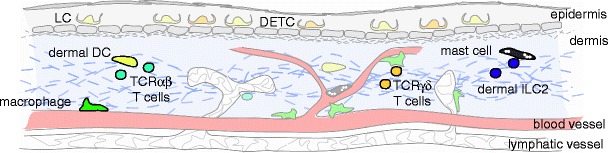
The skin provides an effective physical and biological barrier against environmental and pathogenic insults whilst ensuring tolerance against commensal microbes. This protection is afforded by the unique anatomy and cellular composition of the skin, particularly the vast network of skin-associated immune cells. These include the long-appreciated tissue-resident macrophages, dendritic cells, and mast cells, as well as the more recently described dermal γδ T cells and innate lymphoid cells. Collectively, these cells orchestrate the defense against a wide range of pathogens and environmental challenges, but also perform a number of homeostatic functions. Here, we review recent developments in our understanding of the various roles that leukocyte subsets play in cutaneous immunobiology, and introduce the newer members of the skin immune system. Implications for human disease are discussed.
Overview
The claims and statistics of this paper haven’t been checked yet.
Free: it reads the open-access text and checks the first 5 claims that cite a source we can check. Create a free account to check every claim.
Integrity signals
Registry
Cites
Statistics
Figures
Verification
Claims the paper makes
The claims and statistics of this paper haven’t been checked yet.
Free: it reads the open-access text and checks the first 5 claims that cite a source we can check. Create a free account to check every claim.
Claims other papers make about this one
Each is checked against this paper’s own text: does it say what the citing paper says it does?
The cited source says what the claim attributes to it.
In the citing paper
“In the intact skin, macrophages are the most abundant haematopoietic population, performing immune sentinel and homeostatic functions [47].”
From Transition from inflammation to proliferation: a critical step during wound healing (2016) · cites this paper as [47]
Self-check
Percentages, sums and reported differences re-computed from the paper’s own numbers.
The self-check needs the paper’s full text.
Citations
Cites
Exploring the full spectrum of macrophage activation
Mosser, D. M., & Edwards, J. P. (2008) · Nature Reviews Immunology · doi:10.1038/nri2448 · Cited by 9,144 · cited 1×
“injury or pathogen invasion [15].”
Protective and pathogenic functions of macrophage subsets
Murray, P. J., & Wynn, T. A. (2011) · Nature Reviews Immunology · doi:10.1038/nri3073 · Cited by 5,269 · cited 1×
“These cells also perform developmental and homeostatic functions [2].”
BackgroundFate Mapping Analysis Reveals That Adult Microglia Derive from Primitive Macrophages
Ginhoux, F., Greter, M., Leboeuf, M., Nandi, S., See, P., Gokhan, S., Mehler, M. F., Conway, S. J., Ng, L. G., Stanley, E. R., et al. (2010) · Science · doi:10.1126/science.1194637 · Cited by 5,175
Toll-like receptors: critical proteins linking innate and acquired immunity
Akira, S., Takeda, K., & Kaisho, T. (2001) · Nature Immunology · doi:10.1038/90609 · Cited by 4,777 · cited 1×
“which detect both damage-associated and pathogen-associated motifs [14].”
BackgroundInflammation and insulin resistance
Shoelson, S. E. (2006) · Journal of Clinical Investigation · doi:10.1172/jci29069 · Cited by 4,769
Macrophage biology in development, homeostasis and disease
Wynn, T. A., Chawla, A., & Pollard, J. W. (2013) · Nature · doi:10.1038/nature12034 · Cited by 4,684 · cited 1×
“skin [8].”
Alternative activation of macrophages: mechanism and functions
Gordon, S., & Martinez, F. O. (2010) · Immunity · doi:10.1016/j.immuni.2010.05.007 · Cited by 4,197 · cited 1×
“are able to switch to a growth-promoting [16] and less inflammatory phenotype [17, 18], and begin to actively phagocytose”
BackgroundMacrophages, inflammation, and insulin resistance
Olefsky, J. M., & Glass, C. K. (2010) · Annual Review of Physiology · doi:10.1146/annurev-physiol-021909-135846 · Cited by 2,733 · cited 1×
“diseases such as atherosclerosis, type 2 diabetes, and cancer [7].”
BackgroundA Lineage of Myeloid Cells Independent of Myb and Hematopoietic Stem Cells
Schulz, C., Perdiguero, E. G., Chorro, L., Szabo-Rogers, H., Cagnard, N., Kierdorf, K., Prinz, M., Wu, B., Jacobsen, S. E. W., Pollard, J. W., et al. (2012) · Science · doi:10.1126/science.1219179 · Cited by 2,578
Fitzgerald, M., Hayward, I. P., Thomas, A. C., Campbell, J. H., & CAMPBELL, G. R. (1995) · Cited by 2,552
Cited by
Items 101–160 of 160
Host–Candida auris interactions in the skin
Thangamani, S., Balakumar, A., Datta, A., Bryak, G., & Lionakis, M. S. (2026) · PLOS Pathogens · doi:10.1371/journal.ppat.1014075 · Cited by 3
Koseki, J., Kaneko, A., Matsubara, Y., Sekiguchi, K., Ebihara, S., Aiba, S., & Yamasaki, K. (2017) · Trends in Immunotherapy · doi:10.24294/ti.v1.i1.31 · Cited by 3
Vitamin C status of patients with chronic wounds
Cabunilas, D. (2021) · Otago University Research Archive (University of Otago) · Cited by 6
The role of mast cells in accelerating our skin aging
Hafez, S. M. N. A., Ali, E. S. M., & Naguib, S. M. (2021) · Journal of Clinical Images and Medical Case Reports · doi:10.52768/2766-7820/1345 · Cited by 2
“allergy, asthma, anaphylaxis, gastrointestinal disorders, many types of malignancies, and cardiovascular diseases [4].”
BackgroundInfluentialTratamiento de las verrugas vulgares y de los condilomas acuminados
Casanova-Seuma, J. M., Armenteros, J. M. F., la Fuente, M. R. G.-D., Llarden-García, M., & Ortiz, R. A. (2017) · FMC - Formación Médica Continuada en Atención Primaria · doi:10.1016/j.fmc.2017.02.005 · Cited by 2
Regulatory concerns, future prospects, and concluding remarks on nanomedicine-mediated wound healing
Abishek, K. G., Kar, A., Gupta, G., Wahab, S., Sharma, A. K., Kesharwani, P., & Dandela, R. (2025) · Elsevier eBooks · doi:10.1016/b978-0-443-22027-2.00010-5 · Cited by 2
Mechanism of Wound Healing by Hematopoietic Stem Cells
Parkhideh, S., Lasemi, M. V., Mehravar, M., Asadi, M., Majidi, M., Salimi, M., & Roshandel, E. (2025) · Journal of Skin and Stem Cell · doi:10.5812/jssc-162196 · Cited by 1
Bullous Pemphigoid Develops Independently of DAP12
Pigors, M., Patzelt, S., Brudey, M., Emtenani, S., Khil’chenko, S., Kamaguchi, M., Reichhelm, N., Parker, M., Bieber, K., Ludwig, R. J., et al. (2025) · Biomolecules · doi:10.3390/biom15111549 · Cited by 1
“We also assessed skin-resident immune cells that are typically present under physiological conditions [27,28].”
The interplay between epidermal cells and the cutaneous sensory nervous: a systematic review
Wang, F., An, X., Fan, D., & Shang, J. (2026) · Frontiers in Immunology · doi:10.3389/fimmu.2026.1809838 · Cited by 1
“These efferent fi bers innervate blood vessels, lymphatic vessels, and cutaneous appendages, thereby modulating the homeostasis of cutaneous perfusion, lymphatic drainage, and appendageal activity (28, 29).”
Isolating Immune Cells from Mouse Embryonic Skin
Kurbet, A. S., & Raghavan, S. (2018) · Methods in molecular biology · doi:10.1007/7651_2018_148 · Cited by 1
Solid-in-Oil Nanodispersions for Transcutaneous Immunotherapy of Japanese Cedar Pollinosis
Kong, Q., Kitaoka, M., Wakabayashi, R., Tahara, Y., Kamiya, N., & Goto, M. (2020) · Pharmaceutics · doi:10.3390/pharmaceutics12030240 · Cited by 1
“TCIT/EPIT involves continuous administration of the antigen through the skin to target several antigen-presenting cells (APCs) found in the skin to promote the immune tolerance and mitigate both local and systemic adverse effects [7,8].”
BackgroundBioenergetic profiling in the skin
Maglio, D. H. G., Marchini, T., Cela, E. M., Magnani, N., Leoni, J., Paz, M. L., & Evelson, P. (2020) · Elsevier eBooks · doi:10.1016/b978-0-12-819621-2.00012-7 · Cited by 1
Effector T Lymphocyte Migration to and Within Non-Lymphoid Tissues
Jain, R., Tikoo, S., Egawa, G., & Weninger, W. (2016) · Elsevier eBooks · doi:10.1016/b978-0-12-374279-7.07014-4 · Cited by 1
Self-citationTissue engineering approach using fibrous scaffold with matricellular protein for wound healing
Chen, H. (2018) · DR-NTU (Nanyang Technological University) · doi:10.32657/10356/73326 · Cited by 1
“[16] Tay SS, Roediger B, Tong PL, Tikoo S, Weninger W.”
BackgroundRôle du facteur de transcription Nrf2 dans l'immunomodulation induit par les adjuvants vaccinaux
Génard, R. (2015) · theses.fr (ABES) · doi:10.70675/0d000f17z2f3fz43d2z9a29z5ed1474f70af · Cited by 1
Epithelial-mesenchymal dialogue during skin wound healing
Chong, K. H. C. (2014) · DR-NTU (Nanyang Technological University) · doi:10.32657/10356/61824
Analysis of the role of Rho GTPases in epithelial cells
Stanley, A. (2014) · Arrow@dit (Dublin Institute of Technology) · doi:10.13025/16338
Karpińska, T. A., Szpringer, E., Lutnicki, K., Wasiak, M., & Reichert, M. (2015) · Journal of Veterinary Research · doi:10.1515/bvip-2015-0045
“It is known that thymus hormones have an effect on skin-associated lymphoid tissue (SALT) (18).”
BackgroundMacrófagos e sua Relação com o Carcinoma de Células Escamosas Oral
Leite, R. B., Santos, H. B. P., Lúcio, P. S. C., Alvez, P. M., Godoy, G. P., & Nonaka, C. F. W. (2015) · Revista da Faculdade de Odontologia de Lins · doi:10.15600/2238-1236/fol.v25n1p37-46
Brachytherapy of the Skin: Cancers and Other Diseases
Fontanesi, J., Kopitzki, B., & Limbergen, E. V. (2016) · Medical radiology · doi:10.1007/978-3-319-26791-3_22
Análisis celular de la respuesta inmune cutánea en un modelo murino de candidosis neonatal.
Fernández, A., & Alicia, S. (2016) · El Repositorio Academico Digital de la UANL (Universidad Autónoma de Nuevo León)
Particularităţile pielii nou-născutului – consideraţii fiziologice şi implicaţii clinice
Universitatea de Medicină şi Farmacie „Carol Davila“, B., Muntean, A., Stoica, I., Children's Health, I., Enescu, D. M., & Universitatea de Medicină şi Farmacie „Carol Davila“, B. (2019) · Romanian Medical Journal · doi:10.37897/rmj.2019.3.5
Immune-keratinocyte crosstalk in healthy and cancerous epidermis
McCarthy, S. E., & Agudo, J. (2020) · Current Opinion in Physiology · doi:10.1016/j.cophys.2020.10.006
Koseki, J., Kaneko, A., Matsubara, Y., Sekiguchi, K., Ebihara, S., Aiba, S., & Yamasaki, K. (2019) · Trends in Immunotherapy · doi:10.24294/ti.v3.i1.31
Mucida, D. (2018) · Faculty Opinions – Post-Publication Peer Review of the Biomedical Literature · doi:10.3410/f.732801082.793545021
Ullrich, S. E. (2016) · Elsevier eBooks · doi:10.1016/b978-0-12-801238-3.64116-8
Faculty Opinions recommendation of Nppb Neurons Are Sensors of Mast Cell-Induced Itch.
Braz, J. M. (2019) · Faculty Opinions – Post-Publication Peer Review of the Biomedical Literature · doi:10.3410/f.735392239.793567865
Ali, Z. E., Génard, R., de Bourayne, M., Pallardy, M. J., & Kerdine‐Römer, S. (2016) · Compendium of Inflammatory Diseases · doi:10.1007/978-3-7643-8550-7_102
Feldmann, H. (2018) · Faculty Opinions – Post-Publication Peer Review of the Biomedical Literature · doi:10.3410/f.733689488.793551588
Ali, Z. E., Génard, R., de Bourayne, M., Pallardy, M. J., & Kerdine‐Römer, S. (2015) · Encyclopedia of Inflammatory Diseases · doi:10.1007/978-3-0348-0620-6_102-1
Neuroimmune Interactions in Acute and Chronic Itch
Ouyang, C., Rahman, S., Olexa, M., Ji, J., Huh, Y., & Ji, R. (2023) · Springer eBooks · doi:10.1007/978-3-031-29231-6_7 · Cited by 1
Biological Stability and Circulating Purification of Cutting Fluids
Zhang, Y., & Li, C. (2025) · Springer eBooks · doi:10.1007/978-981-96-7026-0_2
Rodrigues, P. M., de Abreu, G. M. A., dos Santos, L. G., de Andrade, E. J. N., & Castilho, M. L. (2025) · World Congress on Medical Physics and Biomedical Engineering, September 7 - 12, 2009, Munich, Germany · doi:10.1007/978-3-031-94921-0_2
Altman, M. D. (2023) · eScholarship (California Digital Library) · Cited by 1
Marinho Leite, M. (2021) · Portuguese National Funding Agency for Science, Research and Technology (RCAAP Project by FCT)
Optimierung einer transkutanen Immunisierungsstrategie gegen Influenza-Peptide
Çule, J. (2025) · Gutenberg Open Science · doi:10.25358/openscience-13254
A commensally regulated immune rheostat fine-tunes skin barrier fitness
Gola, A., Srinivas, R., Rodig, E. G., Schernthanner, M., Abdusselamoglu, M. D., Tierney, M. T., Alexander, N. J., Gonzales, K. A. U., Sajjath, S. M., Soto-Ugaldi, L. F., et al. (2026) · Science · doi:10.64898/2026.01.07.698149
Impact du cycle pileux sur l'homéostasie des cellules de Langerhans
Voisin, B. (2014) · theses.fr (ABES) · doi:10.70675/d8021927zecaez4f9ezac85z2229be28bff8
de Bourayne, M. (2015) · theses.fr (ABES) · doi:10.70675/fed3e8c8z64c2z4e1ez81a9z054e2d240b5f
“Dans la peau, ils sont principalement localisés à proximité des vaisseaux sanguins du derme (Tay et al., 2014).”
InfluentialRôle de l'oncostatine M et des interleukines 6 et 31 dans l'inflammation cutanée chez la souris
Pohin, M. (2017) · theses.fr (ABES) · doi:10.70675/6ee5de11z33c0z4d68z9887z2c7a7194291a
Simonneau, M. (2018) · theses.fr (ABES) · doi:10.70675/34bc0b41z17a7z49e0zb6c5zd874a4c8cbeb · Cited by 1
Étude des interrelations foie / peau dans un modèle murin de psoriasis
Vasseur, P. (2015) · theses.fr (ABES) · doi:10.70675/da720be5z0581z4928za570zaccc7abaacb7
Genetic basis of hidradenitis suppurativa (acne inversa or Verneuil's disease)
Miskinyte, S. (2023) · theses.fr (ABES) · doi:10.70675/1f0af597z96abz44d1zb802zc4a04b5a3f6a
Wang, W. X., Gong, Y., Li, J., Wu, T., Deng, M., & Yang, Y. (2026) · Advanced Science · doi:10.1002/advs.76654
Illuminating Connections: Exploring the Dynamic Relationship Between Phototherapy and the Skin
Paz, M., & Lio, P. (2026) · Pediatric Dermatology · doi:10.1111/pde.70330
Barathan, M., & Venkatraman, G. (2026) · Journal of drug targeting · doi:10.1080/1061186x.2026.2735986
Oliveira, C. S., Fernandes, A. M., de Melo, A. N. F., Afonso, T. B., Costa, A. F., Pintado, M., Silva, C., & Tavaria, F. K. (2026) · Pharmaceutics · doi:10.3390/pharmaceutics18101301
“Likewise, macrophages represent key immune regulators within the skin, responsible for detecting external stimuli, driving inflammatory responses, and coordinating tissue repair [58].”
Decoding cutaneous injury-induced inflammation through single-cell RNA sequencing
Batzli, G. F., Kleb, S. S., Droll, S. H., & Shook, B. A. (2026) · Seminars in Cell and Developmental Biology · doi:10.1016/j.semcdb.2026.103703
Metadata
- Authors
- Tay, S. S., Roediger, B., Tong, P. L., Tikoo, S., & Weninger, W.
- Affiliations
- Centenary Institute (AU)
- The University of Sydney (AU)
- Corresponding author
- Weninger, Wolfgang
- Venue
- Current Dermatology Reports
- Published
- 2013-11-28
- Volume
- 3
- Issue
- 1
- Pages
- 13-22
- ISSN
- 2162-4933 (ISSN-L)
- PMC
- PMC3931970
- OpenAlex
- W1975100017
- Cited by
- 147
- References
- 139
- Citations by year
- 2026: 7 · 2025: 9 · 2024: 8 · 2023: 5 · 2022: 11 · 2021: 11 · 2020: 11 · 2019: 16 · 2018: 15 · 2017: 11 · 2016: 16 · 2015: 23 · 2014: 4
- FWCI
- 2.37
- Type
- journal article
- Language
- en
- Open access
- hybrid
- doi.org
- Locations
- Current Dermatology Reports (publishedVersion, cc-by)
- Europe PMC (PubMed Central) (publishedVersion)
- PubMed Central (publishedVersion, cc-by)
- PubMed (publishedVersion)
- Funders
- Cancer Institute NSW
- Medical Research Council
- Australian Research Council
- National Health and Medical Research Council
- Topics
- Health Sciences › Medicine › Dermatology › Dermatology and Skin Diseases
- Life Sciences › Immunology and Microbiology › Immunology › T-cell and B-cell Immunology
- Life Sciences › Immunology and Microbiology › Immunology › Psoriasis: Treatment and Pathogenesis
- Keywords
- skin immune system, skin barrier, tissue-resident macrophages, dendritic cells, mast cells, innate lymphoid cells, commensal tolerance, host defense against infection, skin immune homeostasis
About these checks
Registry, retraction, Cites and statistics results are computed, not judged, with one exception: a printed reference that no index lists is read once by a model before it counts as a citation error. Claims are extracted by a model and kept only when their quote appears verbatim in the text; each cited source is then checked, with a model’s help, for whether it says what the claim relies on. Those verdicts can be wrong — read the claim’s quote and the cited source before relying on one.
Statistics and arithmetic are recomputed, not judged.
Confidence bands are shown only for fields calibrated on our annotated test set. None is calibrated yet, so no band is shown.
What counts as a claim ›How we measure confidence ›How we check this ›
Are you an author, or do you see a problem with this page? Request a review
Data sources
Bibliographic data: Semantic Scholar, OpenAlex, Crossref.
Contains information from the Semantic Scholar Academic Graph Datasets, made available under the ODC Attribution License (ODC-BY 1.0).
Semantic Scholar’s data is described in: Kinney, R., et al. (2023). The Semantic Scholar Open Data Platform. arXiv:2301.10140.
