

The Skin-Resident Immune Network
Open accessThe DOI matches its Crossref record; 139 of the 139 references it cites were found in a registry or an index.
Abstract
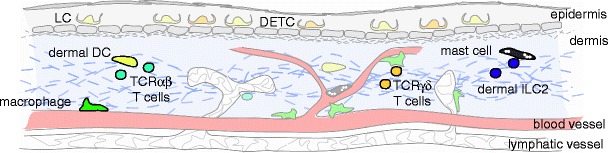
The skin provides an effective physical and biological barrier against environmental and pathogenic insults whilst ensuring tolerance against commensal microbes. This protection is afforded by the unique anatomy and cellular composition of the skin, particularly the vast network of skin-associated immune cells. These include the long-appreciated tissue-resident macrophages, dendritic cells, and mast cells, as well as the more recently described dermal γδ T cells and innate lymphoid cells. Collectively, these cells orchestrate the defense against a wide range of pathogens and environmental challenges, but also perform a number of homeostatic functions. Here, we review recent developments in our understanding of the various roles that leukocyte subsets play in cutaneous immunobiology, and introduce the newer members of the skin immune system. Implications for human disease are discussed.
Overview
The claims and statistics of this paper haven’t been checked yet.
Free: it reads the open-access text and checks the first 5 claims that cite a source we can check. Create a free account to check every claim.
Integrity signals
Registry
Cites
Statistics
Figures
Verification
Claims the paper makes
The claims and statistics of this paper haven’t been checked yet.
Free: it reads the open-access text and checks the first 5 claims that cite a source we can check. Create a free account to check every claim.
Claims other papers make about this one
Each is checked against this paper’s own text: does it say what the citing paper says it does?
The cited source says what the claim attributes to it.
In the citing paper
“In the intact skin, macrophages are the most abundant haematopoietic population, performing immune sentinel and homeostatic functions [47].”
From Transition from inflammation to proliferation: a critical step during wound healing (2016) · cites this paper as [47]
Self-check
Percentages, sums and reported differences re-computed from the paper’s own numbers.
The self-check needs the paper’s full text.
Citations
Cites
Exploring the full spectrum of macrophage activation
Mosser, D. M., & Edwards, J. P. (2008) · Nature Reviews Immunology · doi:10.1038/nri2448 · Cited by 9,144 · cited 1×
“injury or pathogen invasion [15].”
Protective and pathogenic functions of macrophage subsets
Murray, P. J., & Wynn, T. A. (2011) · Nature Reviews Immunology · doi:10.1038/nri3073 · Cited by 5,269 · cited 1×
“These cells also perform developmental and homeostatic functions [2].”
BackgroundFate Mapping Analysis Reveals That Adult Microglia Derive from Primitive Macrophages
Ginhoux, F., Greter, M., Leboeuf, M., Nandi, S., See, P., Gokhan, S., Mehler, M. F., Conway, S. J., Ng, L. G., Stanley, E. R., et al. (2010) · Science · doi:10.1126/science.1194637 · Cited by 5,175
Toll-like receptors: critical proteins linking innate and acquired immunity
Akira, S., Takeda, K., & Kaisho, T. (2001) · Nature Immunology · doi:10.1038/90609 · Cited by 4,777 · cited 1×
“which detect both damage-associated and pathogen-associated motifs [14].”
BackgroundInflammation and insulin resistance
Shoelson, S. E. (2006) · Journal of Clinical Investigation · doi:10.1172/jci29069 · Cited by 4,769
Macrophage biology in development, homeostasis and disease
Wynn, T. A., Chawla, A., & Pollard, J. W. (2013) · Nature · doi:10.1038/nature12034 · Cited by 4,684 · cited 1×
“skin [8].”
Alternative activation of macrophages: mechanism and functions
Gordon, S., & Martinez, F. O. (2010) · Immunity · doi:10.1016/j.immuni.2010.05.007 · Cited by 4,197 · cited 1×
“are able to switch to a growth-promoting [16] and less inflammatory phenotype [17, 18], and begin to actively phagocytose”
BackgroundMacrophages, inflammation, and insulin resistance
Olefsky, J. M., & Glass, C. K. (2010) · Annual Review of Physiology · doi:10.1146/annurev-physiol-021909-135846 · Cited by 2,733 · cited 1×
“diseases such as atherosclerosis, type 2 diabetes, and cancer [7].”
BackgroundA Lineage of Myeloid Cells Independent of Myb and Hematopoietic Stem Cells
Schulz, C., Perdiguero, E. G., Chorro, L., Szabo-Rogers, H., Cagnard, N., Kierdorf, K., Prinz, M., Wu, B., Jacobsen, S. E. W., Pollard, J. W., et al. (2012) · Science · doi:10.1126/science.1219179 · Cited by 2,578
Fitzgerald, M., Hayward, I. P., Thomas, A. C., Campbell, J. H., & CAMPBELL, G. R. (1995) · Cited by 2,552
Cited by
Transition from inflammation to proliferation: a critical step during wound healing
Landén, N. X., Li, D., & Ståhle, M. (2016) · Cellular and Molecular Life Sciences · doi:10.1007/s00018-016-2268-0 · Cited by 1,980
Baral, P., Umans, B. D., Li, L., Wallrapp, A., Bist, M., Kirschbaum, T., Wei, Y., Zhou, Y., Kuchroo, V. K., Burkett, P. R., et al. (2018) · Nature Medicine · doi:10.1038/nm.4501 · Cited by 422
Salminen, A., Kaarniranta, K., & Kauppinen, A. (2022) · Inflammation Research · doi:10.1007/s00011-022-01598-8 · Cited by 432
Molecular and epigenetic basis of macrophage polarized activation
Porta, C., Riboldi, E., Ippolito, A., & Sica, A. (2015) · Seminars in Immunology · doi:10.1016/j.smim.2015.10.003 · Cited by 320
Epidermal tight junctions in health and disease
Brandner, J., Zorn-Kruppa, M., Yoshida, T., Moll, I., Beck, L., & De Benedetto, A. (2015) · Tissue Barriers · doi:10.4161/21688370.2014.974451 · Cited by 220
Skin Physiology of the Neonate and Infant: Clinical Implications
Oranges, T., Dini, V., & Romanelli, M. (2015) · Advances in Wound Care · doi:10.1089/wound.2015.0642 · Cited by 223
Postnatal Innate Immune Development: From Birth to Adulthood
Georgountzou, A., & Papadopoulos, N. G. (2017) · Frontiers in Immunology · doi:10.3389/fimmu.2017.00957 · Cited by 204
“In the last few years, with the discovery of toll-like receptors (TLRs) and other pattern-recognition receptors (PRRs) and our improved understanding of innate immune recognition and function, it has become obvious that the innate immune system of neonates differs in many aspects from that of adults (3, 5).”
BackgroundInfluentialBiological Stability of Water-Based Cutting Fluids: Progress and Application
Tang, L., Zhang, Y., Li, C., Zhou, Z., Nie, X., Chen, Y., Cao, H., Liu, B., Zhang, N., Said, Z., et al. (2022) · Chinese Journal of Mechanical Engineering · doi:10.1186/s10033-021-00667-z · Cited by 175
A review of the evidence for threshold of burn injury
Martin, N. A., & Falder, S. (2017) · Burns · doi:10.1016/j.burns.2017.04.003 · Cited by 160
Organization of the skin immune system and compartmentalized immune responses in infectious diseases
Quaresma, J. A. S. (2019) · Clinical Microbiology Reviews · doi:10.1128/cmr.00034-18 · Cited by 149
Niches for the Long-Term Maintenance of Tissue-Resident Memory T Cells
Takamura, S. (2018) · Frontiers in Immunology · doi:10.3389/fimmu.2018.01214 · Cited by 151
“Many of these cells are resident populations and form a sophisticated immune network that provides a biological barrier against invading pathogens (18).”
BackgroundMechanisms underlying skin disorders induced by EGFR inhibitors
Holcmann, M., & Sibilia, M. C. (2015) · Molecular & Cellular Oncology · doi:10.1080/23723556.2015.1004969 · Cited by 145
“The epidermis contains specialized dendritic cells, the Langerhans cells, as well as ab T-cells and gd T-cells (also called dendritic epidermal T cells or DETCs), which are rare in human skin but the main T-cell population in mouse epidermis.(47) The dermis contains various subpopulations of dendritic cells, macrophag…”
BackgroundNppb Neurons Are Sensors of Mast Cell-Induced Itch
Solinski, H. J., Kriegbaum, M. C., Tseng, P., Earnest, T., Gu, X., Barik, A., Chesler, A. T., & Hoon, M. A. (2019) · Cell Reports · doi:10.1016/j.celrep.2019.02.089 · Cited by 138
“Classically, their function is believed to involve the detection of invading parasites and the recruitment of other immune cell types via paracrine signaling (Metcalfe et al., 1997; Tay et al., 2013).”
Tong, P. L., Roediger, B., Kolesnikoff, N., Biro, M., Tay, S. S., Jain, R., Shaw, L. E., Grimbaldeston, M. A., & Weninger, W. (2014) · Journal of Investigative Dermatology · doi:10.1038/jid.2014.289 · Cited by 127
“Moreover, several novel dermal immune cell subsets (reviewed in Tay et al. , 2013) such as DDC (reviewed in Kaplan, 2010), dermal type 2 innate lymphoid cells (dILC2) (Roediger et al ., 2013) and dermal γδ T cells (Sumaria et al ., 2011) have only been described very recently, and their precise…”
Self-citationImmune modulation of hair follicle regeneration
Rahmani, W., Sinha, S., & Biernaskie, J. (2020) · npj Regenerative Medicine · doi:10.1038/s41536-020-0095-2 · Cited by 108
Neuronal Regulation of Immunity in the Skin and Lungs
Blake, K. J., Jiang, X. R., & Chiu, I. M. (2019) · Trends in Neurosciences · doi:10.1016/j.tins.2019.05.005 · Cited by 123
“The resident immune population ensures both protection against pathogens and maintenance of tolerance against innocuous antigens (Box 1) [19].”
BackgroundInfluentialMandlik, D. S., & Mandlik, S. K. (2021) · Immunopharmacology and Immunotoxicology · doi:10.1080/08923973.2021.1889583 · Cited by 129
Immune cells and non-immune cells with immune function in mammalian cochleae
Hu, B., Zhang, C., & Frye, M. D. (2017) · Hearing Research · doi:10.1016/j.heares.2017.12.009 · Cited by 112
“…Liyanage et al., 2016); tissues under constant exposure to microbial-derived molecules and intrinsic cytotoxic molecules host a more diverse population of resident immune cells including mast cells, natural killer cells and T cells (Mowat et al., 2014; Racanelli et al., 2006; Tay et al., 2014).”
BackgroundHuman Papillomavirus 16 E5 Inhibits Interferon Signaling and Supports Episomal Viral Maintenance
Scott, M. L., Woodby, B. L., Ulicny, J., Raikhy, G., Orr, A. W., Songock, W. K., & Bodily, J. M. (2020) · Journal of Virology · doi:10.1128/jvi.01582-19 · Cited by 87
Current status of skin cancers with a focus on immunology and immunotherapy
Kohnehshahri, M. K., Sarkesh, A., Khosroshahi, L. M., HajiEsmailPoor, Z., Aghebati‐Maleki, A., Yousefi, M., & Maleki, L. A. (2023) · Cancer Cell International · doi:10.1186/s12935-023-03012-7 · Cited by 100
Molecular and cellular mechanisms that initiate pain and itch
Luo, J., Feng, J., Liu, S., Walters, E. T., & Hu, H. (2015) · Cellular and Molecular Life Sciences · doi:10.1007/s00018-015-1904-4 · Cited by 99
Anti-cancer vaccination by transdermal delivery of antigen peptide-loaded nanogels via iontophoresis
Toyoda, M., Hama, S., Ikeda, Y., Nagasaki, Y., & Kogure, K. (2015) · International Journal of Pharmaceutics · doi:10.1016/j.ijpharm.2015.02.024 · Cited by 98
Macrophage physiology in the eye
Chinnery, H. R., McMenamin, P. G., & Dando, S. J. (2017) · Pflügers Archiv - European Journal of Physiology · doi:10.1007/s00424-017-1947-5 · Cited by 96
Siiskonen, H., Poukka, M., Bykachev, A., Tyynelä-Korhonen, K., Sironen, R., Pasonen-Seppänen, S., & Harvima, I. T. (2015) · Melanoma Research · doi:10.1097/cmr.0000000000000192 · Cited by 77
Microneedles coated with peanut allergen enable desensitization of peanut sensitized mice
Shakya, A. K., Ingrole, R. S. J., Joshi, G. V., Uddin, M. J., Anvari, S., Davis, C. M., & Gill, H. S. (2019) · Journal of Controlled Release · doi:10.1016/j.jconrel.2019.09.022 · Cited by 77
“Antigen presenting cells such as Langerhans cells and dermal dendritic cells that reside in the skin can process the delivered allergen, and migrate to the nearest lymph nodes to prime naïve T cells to T helper cells for activation of B cells for antibody secretion [59].”
BackgroundVaccination into the Dermal Compartment: Techniques, Challenges, and Prospects
Hettinga, J., & Carlisle, R. (2020) · Vaccines · doi:10.3390/vaccines8030534 · Cited by 72
Park, S., Matte-Martone, C. C., Gonzalez, D. G., Lathrop, E., May, D. P., Pineda, C. M., Moore, J. L., Boucher, J. D., Marsh, E. D., Schmitter-Sánchez, A. D., et al. (2021) · Nature Cell Biology · doi:10.1038/s41556-021-00670-5 · Cited by 71
“These basal epithelial cells are closely intermingled with two main populations of skin-resident immune cells, Langerhans cells (LCs) and dendritic epidermal T cells (DETCs) [7-9].”
BackgroundHe, X., Yang, Y., Mu, L., Zhou, Y., Chen, Y., Wu, J., Wang, Y., Yang, H., Li, M., Xu, W., et al. (2019) · Frontiers in Immunology · doi:10.3389/fimmu.2019.02421 · Cited by 68
Ahmad, H. I., Jabbar, A., Mushtaq, N., Javed, Z., Hayyat, M. U., Bashir, J., Naseeb, I., Abideen, Z. U., Ahmad, N., & Chen, J. (2022) · Frontiers in Veterinary Science · doi:10.3389/fvets.2022.827407 · Cited by 76
“Hence, the skin serves as the major immunologically complex organ which possesses and ability to react or show response to any infectious or non-infectious foreign agent by modulating either the innate or the adaptive mechanisms of immunity (61, 62).”
BackgroundMechanomodulatory biomaterials prospects in scar prevention and treatment
Fernandes, M. G., da Silva, L. P., Cerqueira, M. T., Ibañez, R. I. R., Murphy, C. M., Reis, R. L., O’Brien, F. J., & Marques, A. P. (2022) · Acta Biomaterialia · doi:10.1016/j.actbio.2022.07.042 · Cited by 66
Microarray patches enable the development of skin-targeted vaccines against COVID-19
Korkmaz, E., Balmert, S. C., Sumpter, T. L., Carey, C. D., Erdös, G., & Falo, L. D. (2021) · Advanced Drug Delivery Reviews · doi:10.1016/j.addr.2021.01.022 · Cited by 62
Noninvasive transdermal delivery of liposomes by weak electric current
Hasan, M., Khatun, A., Fukuta, T., & Kogure, K. (2020) · Advanced Drug Delivery Reviews · doi:10.1016/j.addr.2020.06.016 · Cited by 62
Arboviruses: How Saliva Impacts the Journey from Vector to Host
Schneider, C. A., Calvo, E., & Peterson, K. E. (2021) · International Journal of Molecular Sciences · doi:10.3390/ijms22179173 · Cited by 56
“Dermal innate and adaptive immune cells, along with DCs and resident macrophages, amplify inflammation during infection or wounding [80,84,85].”
BackgroundSolid‐in‐oil nanodispersions for transdermal drug delivery systems
Kitaoka, M., Wakabayashi, R., Kamiya, N., & Goto, M. (2016) · Biotechnology Journal · doi:10.1002/biot.201600081 · Cited by 61
MyD88 in Macrophages Is Critical for Abscess Resolution in Staphylococcal Skin Infection
Feuerstein, R., Seidl, M., Prinz, M., & Henneke, P. (2015) · The Journal of Immunology · doi:10.4049/jimmunol.1402566 · Cited by 47
Heat Shock Protein 90 (Hsp90) and Hsp70 as Potential Therapeutic Targets in Autoimmune Skin Diseases
Tukaj, S., & Sitko, K. (2022) · Biomolecules · doi:10.3390/biom12081153 · Cited by 55
“During microbial skin infection, different activated T cell subpopulations, monocytes, and granulocytes may be additionally recruited to the skin to support host defense [45].”
BackgroundKaufman, C. L., Marvin, M. R., Chilton, P. M., Hoying, J. B., Williams, S. K., Tien, H. Y., Özyürekoğlu, T., & Ouseph, R. (2016) · Transplant International · doi:10.1111/tri.12764 · Cited by 50
“This is a recently described population of cdT cells which populate murine skin [2] and, to a lesser extent, human skin [3].”
BackgroundPathogenesis of atopic dermatitis: A short review
Egawa, G., & Weninger, W. (2015) · Cogent Biology · doi:10.1080/23312025.2015.1103459 · Cited by 53
Self-citationRuscitti, P., Cipriani, P., Ciccia, F., Benedetto, P. D., Liakouli, V., Berardicurti, O., Carubbi, F., Guggino, G., Bartolomeo, S. D., Triolo, G., et al. (2016) · Clinical & Experimental Immunology · doi:10.1111/cei.12826 · Cited by 44
Cho, K., Park, M., Kim, Y., & Woo, S. (2017) · Biochemical and Biophysical Research Communications · doi:10.1016/j.bbrc.2017.04.141 · Cited by 42
“These cells protect against invading pathogens while maintaining tolerance to harmless antigens, but also contribute to the pathology of a number of inflammatory skin diseases [18].”
BackgroundThe Interaction Between Human Papillomaviruses and the Stromal Microenvironment
Woodby, B. L., Scott, M. L., & Bodily, J. M. (2016) · Progress in molecular biology and translational science · doi:10.1016/bs.pmbts.2016.09.003 · Cited by 45
Interactions Between Keratinocytes and Somatosensory Neurons in Itch
Schwendinger‐Schreck, J., Wilson, S. R., & Bautista, D. M. (2015) · Handbook of experimental pharmacology · doi:10.1007/978-3-662-44605-8_10 · Cited by 39
Kaufman, C. L., Kanitakis, J., Weißenbacher, A., Brandacher, G., Mehra, M. R., Amer, H., Zelger, B. G., Zelger, B., Pomahač, B., McDiarmid, S. V., et al. (2020) · SAGE Open Medicine · doi:10.1177/2050312120940421 · Cited by 37
Recent progress of microneedles in transdermal immunotherapy: A review
Ai, X., Yang, J., Liu, Z., Guo, T., & Feng, N. (2024) · International Journal of Pharmaceutics · doi:10.1016/j.ijpharm.2024.124481 · Cited by 38
Hafez, S. M. N. A. (2019) · Acta Histochemica · doi:10.1016/j.acthis.2019.05.004 · Cited by 36
Virus-host protein-protein interactions as molecular drug targets for arboviral infections
Bhutkar, M., Singh, V., Dhaka, P., & Tomar, S. (2022) · Frontiers in Virology · doi:10.3389/fviro.2022.959586 · Cited by 32
Xu, R., Sun, H., Williams, D. W., Jones, A. V., Al‐Hussaini, A., Song, B., & Wei, X. (2015) · Journal of Immunology Research · doi:10.1155/2015/328146 · Cited by 34
“This immune tolerance arises as a result of a complex interaction of cell components including tissue resident macrophages such as Langerhans cells in the epidermal layers of skin [22, 23].”
BackgroundMicroneedle-Mediated Allergen-Specific Immunotherapy for the Treatment of Airway Allergy in Mice
Shakya, A. K., Lee, C. H., & Gill, H. S. (2020) · Molecular Pharmaceutics · doi:10.1021/acs.molpharmaceut.0c00447 · Cited by 31
Takeuchi, I., Suzuki, T., & Makino, K. (2020) · Colloids and Surfaces A Physicochemical and Engineering Aspects · doi:10.1016/j.colsurfa.2020.125607 · Cited by 29
The role of chemokines in cutaneous immunosurveillance
Tan, S., Roediger, B., & Weninger, W. (2015) · Immunology and Cell Biology · doi:10.1038/icb.2015.16 · Cited by 30
Self-citationShoulder arthroplasty in the patient with metal hypersensitivity
Morwood, M. P., & Garrigues, G. E. (2015) · Journal of Shoulder and Elbow Surgery · doi:10.1016/j.jse.2015.01.015 · Cited by 28
Małachowa, N., Kobayashi, S. D., Sturdevant, D. E., Scott, D. P., & DeLeo, F. R. (2015) · PLoS ONE · doi:10.1371/journal.pone.0117713 · Cited by 36
“Skin immune cells consist of tissue-resident macrophages, dendritic cells, Langerhans cells, mast cells, T lymphocytes, and innate lymphoid cells (reviewed in [1]).”
Tolerance induction via mixed chimerism in vascularized composite allotransplantation
Cetrulo, C. L., Drijkoningen, T., & Sachs, D. H. (2015) · Current Opinion in Organ Transplantation · doi:10.1097/mot.0000000000000248 · Cited by 26
Microbiology in Water-Miscible Metalworking Fluids
Passman, F. J., & Küenzi, P. (2020) · Tribology Transactions · doi:10.1080/10402004.2020.1764684 · Cited by 31
Streptococci Engage TLR13 on Myeloid Cells in a Site-Specific Fashion
Kolter, J., Feuerstein, R., Spoeri, E., Gharun, K., Elling, R., Trieu‐Cuot, P., Goldmann, T., Waskow, C., Chen, Z. J., Kirschning, C. J., et al. (2016) · The Journal of Immunology · doi:10.4049/jimmunol.1501014 · Cited by 28
Hao, J., Jin, R., Zeng, J., Hua, Y., Yorek, M. S., Liu, L., Mandal, A., Li, J., Zheng, H., Sun, Y., et al. (2022) · Cell Reports · doi:10.1016/j.celrep.2022.111804 · Cited by 28
“16,38 Our flow cytometric and CyTOF data confirmed that CD207 + cells were distributed in both epidermis and dermis regardless of diet.”
Chien, W.-C., & Tsai, T. (2023) · International Journal of Molecular Sciences · doi:10.3390/ijms242015207 · Cited by 29
“As an effector of the T-helper 2 (Th2) immune response, skin mast cells can mediate allergic inflammatory diseases [31].”
BackgroundKitaoka, M., Naritomi, A., Kawabe, Y., Kamihira, M., Kamiya, N., & Goto, M. (2016) · Bioengineering & Translational Medicine · doi:10.1002/btm2.10048 · Cited by 24
Suppression of Stromal Interferon Signaling by Human Papillomavirus 16
Raikhy, G., Woodby, B. L., Scott, M. L., Shin, G., Myers, J. E., Scott, R. S., & Bodily, J. M. (2019) · Journal of Virology · doi:10.1128/jvi.00458-19 · Cited by 24
Broggi, A., Cigni, C., Zanoni, I., & Granucci, F. (2016) · Journal of Visualized Experiments · doi:10.3791/52589-v · Cited by 24
Zhang, Q., Zhu, L., Wang, G., Zhao, Y., Xiong, N., Bao, H., & Jin, W. (2016) · Journal of Biochemical and Molecular Toxicology · doi:10.1002/jbt.21868 · Cited by 23
Surprises from Intravital Imaging of the Innate Immune Response
Mihlan, M., Safaiyan, S., Stecher, M., Paterson, N., & Lämmermann, T. (2022) · Annual Review of Cell and Developmental Biology · doi:10.1146/annurev-cellbio-120420-112849 · Cited by 24
Conversation between skin microbiota and the host: from early life to adulthood
Cha, J., Kim, T., & Ryu, J.-H. (2025) · Experimental & Molecular Medicine · doi:10.1038/s12276-025-01427-y · Cited by 28
Rodriguez, S. E., McAuley, A. J., Gargılı, A., & Bente, D. A. (2018) · Viruses · doi:10.3390/v10070381 · Cited by 22
“dDCs, residing within the dermis, engage in migratory immune surveillance, draining lymph node antigen cross-presentation, and local T-cell subtype polarization [13,14].”
BackgroundThe inflammasome in leprosy skin lesions: an immunohistochemical evaluation
Silva, L. M., de Sousa, J. R., Hirai, K. E., Dias, L. B., Furlaneto, I. P., Carneiro, F. R. O., Aarão, T., Sotto, M. N., & Quaresma, J. A. S. (2018) · Infection and Drug Resistance · doi:10.2147/idr.s172806 · Cited by 21
“In particular, sometimes the skin can be considered an organ with its own immune system that often employs different mechanisms when responding to infections compared to other organs of the body.(32) Among the mechanisms triggered by innate immunity in response to infectious agents, inflammasomes are complexes of cyto…”
Group A Streptococcal DNase Sda1 Impairs Plasmacytoid Dendritic Cells’ Type 1 Interferon Response
Keller, N., Woytschak, J., Heeb, L. E. M., Maggio, E. M., Shambat, S. M., Snäll, J., Hyldegaard, O., Boyman, O., Norrby‐Teglund, A., & Zinkernagel, A. S. (2018) · Journal of Investigative Dermatology · doi:10.1016/j.jid.2018.11.027 · Cited by 23
Yam, A. O. W., & Chtanova, T. (2019) · Cellular Immunology · doi:10.1016/j.cellimm.2019.01.003 · Cited by 20
Baidya, A., & Mabalirajan, U. (2025) · doi:10.37349/eaa.2025.100973 · Cited by 25
Соболев, В. В., Ziganshin, R. H., Викторович, М. А., Соболева, А. Г., Denieva, M., Korsunskaya, I. M., & Свитич, О. А. (2021) · PLoS ONE · doi:10.1371/journal.pone.0240956 · Cited by 19
“The mentioned immune cells infiltrate the skin in response to awakening the resident immune cells that secrete proinflammatory cytokines causing a dilation of dermal microcapillaries [23].”
BackgroundMedina‐Torres, C. E., Underwood, C., Pollitt, C. C., Castro‐Olivera, E. M., Hodson, M. P., Richardson, D. W., & Eps, A. W. V. (2015) · Equine Veterinary Journal · doi:10.1111/evj.12417 · Cited by 19
Structure and Function of the Skin
McGrath, J. A., & Uitto, J. (2016) · Wiley eBooks · doi:10.1002/9781118441213.rtd0002 · Cited by 31
Effect of Delivery Platforms Structure on the Epidermal Antigen Transport for Topical Vaccination
Sonzogni, A. S., Yealland, G., Kar, M., Wedepohl, S., Gugliotta, L. M., Gonzalez, V. D. G., Hedtrich, S., Calderón, M., & Minari, R. J. (2018) · Biomacromolecules · doi:10.1021/acs.biomac.8b01307 · Cited by 19
Preedalikit, W., Chittasupho, C., Leelapornpisid, P., Duangnin, N., & Kiattisin, K. (2024) · International Journal of Molecular Sciences · doi:10.3390/ijms25179416 · Cited by 16
“Macrophages, as immune cells, act as the first line of defense when the skin is exposed to pollutants and primarily release cytokines [3,4].”
BackgroundConfounding Factors in the Transcriptome Analysis of an In-Vivo Exposure Experiment
Bruning, O., Rodenburg, W., Wackers, P. F. K., van Oostrom, C., Jonker, M. J., Dekker, R. J., Rauwerda, H., Ensink, W. A., de Vries, A., & Breit, T. M. (2016) · PLoS ONE · doi:10.1371/journal.pone.0145252 · Cited by 21
“Another potential reason for such variability is influx or outflow of mobile cells to the sampling area of the skin [40,41].”
The impact of ischemia‐reperfusion injuries on skin resident murine dendritic cells
Goh, C. C., Evrard, M., Chong, S. Z., Tan, Y., Tan, L., Teng, K. W. W., Weninger, W., Becker, D. L., Tey, H. L., Newell, E. W., et al. (2018) · European Journal of Immunology · doi:10.1002/eji.201747347 · Cited by 16
Self-citationVitamin D and immunomodulation in the skin: a useful affirmative nexus
Samanta, S. (2021) · Exploration of Immunology · doi:10.37349/ei.2021.00009 · Cited by 25
Obesity aggravates contact hypersensitivity reaction in mice
Majewska‐Szczepanik, M., Kowalczyk, P. K., Marcińska, K., Strzępa, A., LIS, G. J., Wong, F. S., Szczepanik, M., & Li, W. (2022) · Contact Dermatitis · doi:10.1111/cod.14088 · Cited by 13
Kong, Q., Kitaoka, M., Wakabayashi, R., Kamiya, N., & Goto, M. (2017) · International Journal of Pharmaceutics · doi:10.1016/j.ijpharm.2017.07.020 · Cited by 13
Oh, the Mutations You’ll Acquire! A Systematic Overview of Cutaneous Squamous Cell Carcinoma
Droll, S. H., & Bao, X. (2021) · Cellular Physiology and Biochemistry · doi:10.33594/000000433 · Cited by 12
Skin innate immune response against fungal infections and the potential role of trained immunity
Bombassaro, A., Figueiredo, J., Taborda, C. P., Joosten, L. A. B., Vicente, V. A., Queiroz‐Telles, F., Meis, J. F. G. M., & Kischkel, B. (2024) · Mycoses · doi:10.1111/myc.13682 · Cited by 11
“24,25 The skin is the first physical barrier for the host's de - fence and its disruption through wounds and trauma exposes the host to a wide range of fungal infections that can primarily reach the skin through the injured site.”
BackgroundErfolgreiche Kombinationsbehandlung der Psoriasis mit Phototherapie und niedrig dosierten Zytokinen
Lotti, T. (2015) · Der Hautarzt · doi:10.1007/s00105-015-3698-6 · Cited by 11
Ghoneum, M. H., Kenawy, E., Soliman, H. M. A., Abdel-Moaty, M. S., & El-Shanshory, A. A. (2025) · Carbohydrate Polymer Technologies and Applications · doi:10.1016/j.carpta.2025.100878 · Cited by 16
Pathophysiology and Management of Atopic Dermatitis: A Laconic Review
Kumar, P., Sharma, D. K., & Ashawat, M. S. (2019) · Current Drug Therapy · doi:10.2174/1574885514666190828152316 · Cited by 9
Freppel, W., Puech, P., Ferguson, D. J. P., Azas, N., Dubey, J. P., & Dumètre, A. (2016) · Scientific Reports · doi:10.1038/srep33654 · Cited by 9
“Contribution of phagocytic cells in opening the robust T. gondii oocyst in vitro is quite unexpected but this could occur following oocyst inoculation at extra-intestinal sites, such as skin, in which macrophages and other inflammatory cells will home on deposits of foreign 44 .”
Forestier, C., Billard, E., Milon, G., & Gueirard, P. (2017) · Frontiers in Microbiology · doi:10.3389/fmicb.2017.02309 · Cited by 11
“…in the epidermis, whereas the dermis mainly harbors in the upper dermis myeloid cells such as dendritic cells, mast cells as well as lymphoid cells (αβT cells, γδT cells, and group 2 Innate Lymphoid Cells), and mainly resident macrophages in the deeper dermis (Tay et al., 2014; Tong et al., 2015).”
BackgroundKong, Q., Higasijima, K., Wakabayashi, R., Tahara, Y., Kitaoka, M., Obayashi, H., Hou, Y., Kamiya, N., & Goto, M. (2019) · Pharmaceutics · doi:10.3390/pharmaceutics11110563 · Cited by 8
“Antigen-presenting cells (APCs), which include Langerhans cells and dermal dendritic cells (DCs) in the skin, play central roles in the induction of immunity [18,19].”
BackgroundSkin‐ny deeping: Uncovering immune cell behavior and function through imaging techniques*
Tan, Y., Tey, H. L., Chong, S. Z., & Ng, L. G. (2021) · Immunological Reviews · doi:10.1111/imr.13049 · Cited by 9
Clister, T., Fey, R. M., Garrison, Z. R., Valenzuela, C. D., Bar, A., Leitenberger, J. J., & Kulkarni, R. P. (2024) · Cells · doi:10.3390/cells13030266 · Cited by 8
“In addition to acting as a physical barrier which defends against pathogens, the skin contains a diverse resident immune cell population that serves a critical role in immune response and homeostasis [1–3].”
Backgrounddos Anjos, D. S., Bueno, C. M., de Mattos, E., Nardi, A. B. D., & Fonseca‐Alves, C. E. (2021) · Life · doi:10.3390/life11121321 · Cited by 8
“Anatomically, the epidermis is an avascular layer composed of keratinocytes, while the dermis is a fibroblast-rich network of collagen, capillaries, and lymphatic vessels that serve as an entrance for immune cells [20].”
BackgroundImmune-Epithelial Cell Interactions during Epidermal Regeneration, Repair, and Inflammatory Diseases
Schmitter-Sánchez, A. D., & Park, S. (2024) · International Journal of Stem Cells · doi:10.15283/ijsc23107 · Cited by 6
“In addition to the keratinocytes, there are four co-existing tissue-resident immune cells in the in-terfollicular epidermis: Langerhans cells (LCs), dendritic epidermal T cells (DETCs), CD8 + tissue-resident memory T (T RM ) cells, and innate lymphoid cells (ILCs) (3, 4).”
Cutaneous adaptive immunity and uraemia: a narrative review
Zibandeh, N., Li, Z., Ogg, G. S., & Bottomley, M. J. (2024) · Frontiers in Immunology · doi:10.3389/fimmu.2024.1464338 · Cited by 8
“Activation via TLR leads to secretion of proin fl ammatory cytokines and chemokines, driving recruitment and activation of circulating leucocytes, and upregulation of antigen presenting capability (64 – 67).”
BackgroundKazaoka, A., Fujimori, S., Yamada, Y., Shirayanagi, T., Gao, Y., Kuwahara, S., Sakamoto, N., Susukida, T., Aoki, S., & Ito, K. (2024) · PNAS Nexus · doi:10.1093/pnasnexus/pgae140 · Cited by 6
Wang, D., Li, Y., Lu, J., Zhou, Y., Chang, X., Liu, J., Zhang, S., & Yan, W. (2025) · Ageing Research Reviews · doi:10.1016/j.arr.2025.102966 · Cited by 6
Identification of novel biomarkers and key pathways of condyloma acuminata
Zhong, Y., Wei, J., Song, W., Wang, Q., Zhang, Z., Liu, H., Chen, X., Huang, X., & Zeng, K. (2022) · Genomics · doi:10.1016/j.ygeno.2022.110303 · Cited by 6
Regulation of contact sensitivity in non‐obese diabetic (NOD) mice by innate immunity
Szczepanik, M., Majewska‐Szczepanik, M., Wong, F. S., Kowalczyk, P. K., Pasare, C., & Li, W. (2018) · Contact Dermatitis · doi:10.1111/cod.13046 · Cited by 5
“In contrast, epidermal CD207 + CD103 - LCs promote Th17 responses to extracellular pathogens, which may ultimately lead to tolerance/anergy (42).”
BackgroundInfluentialCho, Y. J., Jang, B. J., Yang, Y. J., & Shin, H. S. (2023) · Biotechnology and Bioprocess Engineering · doi:10.1007/s12257-023-0103-7 · Cited by 5
Shedding Light on the Role of the Skin in Vaccine-Induced Protection against the Malaria Sporozoite
Daily, J. P. (2018) · mBio · doi:10.1128/mbio.02555-18 · Cited by 5
Genetic variants affecting chemical mediated skin immunotoxicity
de Souza, I. R., de Araujo‐Souza, P. S., & Leme, D. M. (2022) · Journal of Toxicology and Environmental Health Part B · doi:10.1080/10937404.2021.2013372 · Cited by 6
Insect-Borne Viruses and Host Skin Interface
Mueller, C. G., & Cao‐Lormeau, V. (2018) · Elsevier eBooks · doi:10.1016/b978-0-12-811436-0.00008-3 · Cited by 4
Patient-derived skin tumor organoids with immune cells respond to metformin
Shi, Y., Liu, J., Li, L., Wang, C., Zhang, J., Rong, M., Rao, Y., Zhou, X., Sun, D., Chen, J., et al. (2024) · Cell organoid (Print) · doi:10.26599/co.2024.9410001 · Cited by 5
Metadata
- Authors
- Tay, S. S., Roediger, B., Tong, P. L., Tikoo, S., & Weninger, W.
- Affiliations
- Centenary Institute (AU)
- The University of Sydney (AU)
- Corresponding author
- Weninger, Wolfgang
- Venue
- Current Dermatology Reports
- Published
- 2013-11-28
- Volume
- 3
- Issue
- 1
- Pages
- 13-22
- ISSN
- 2162-4933 (ISSN-L)
- PMC
- PMC3931970
- OpenAlex
- W1975100017
- Cited by
- 147
- References
- 139
- Citations by year
- 2026: 7 · 2025: 9 · 2024: 8 · 2023: 5 · 2022: 11 · 2021: 11 · 2020: 11 · 2019: 16 · 2018: 15 · 2017: 11 · 2016: 16 · 2015: 23 · 2014: 4
- FWCI
- 2.37
- Type
- journal article
- Language
- en
- Open access
- hybrid
- doi.org
- Locations
- Current Dermatology Reports (publishedVersion, cc-by)
- Europe PMC (PubMed Central) (publishedVersion)
- PubMed Central (publishedVersion, cc-by)
- PubMed (publishedVersion)
- Funders
- Cancer Institute NSW
- Medical Research Council
- Australian Research Council
- National Health and Medical Research Council
- Topics
- Health Sciences › Medicine › Dermatology › Dermatology and Skin Diseases
- Life Sciences › Immunology and Microbiology › Immunology › T-cell and B-cell Immunology
- Life Sciences › Immunology and Microbiology › Immunology › Psoriasis: Treatment and Pathogenesis
- Keywords
- skin immune system, skin barrier, tissue-resident macrophages, dendritic cells, mast cells, innate lymphoid cells, commensal tolerance, host defense against infection, skin immune homeostasis
About these checks
Registry, retraction, Cites and statistics results are computed, not judged, with one exception: a printed reference that no index lists is read once by a model before it counts as a citation error. Claims are extracted by a model and kept only when their quote appears verbatim in the text; each cited source is then checked, with a model’s help, for whether it says what the claim relies on. Those verdicts can be wrong — read the claim’s quote and the cited source before relying on one.
Statistics and arithmetic are recomputed, not judged.
Confidence bands are shown only for fields calibrated on our annotated test set. None is calibrated yet, so no band is shown.
What counts as a claim ›How we measure confidence ›How we check this ›
Are you an author, or do you see a problem with this page? Request a review
Data sources
Bibliographic data: Semantic Scholar, OpenAlex, Crossref.
Contains information from the Semantic Scholar Academic Graph Datasets, made available under the ODC Attribution License (ODC-BY 1.0).
Semantic Scholar’s data is described in: Kinney, R., et al. (2023). The Semantic Scholar Open Data Platform. arXiv:2301.10140.
