

The Antifungal Pipeline: Fosmanogepix, Ibrexafungerp, Olorofim, Opelconazole, and Rezafungin
Open accessThe DOI matches its Crossref record; 190 of the 190 references it cites were found in a registry or an index.
Abstract
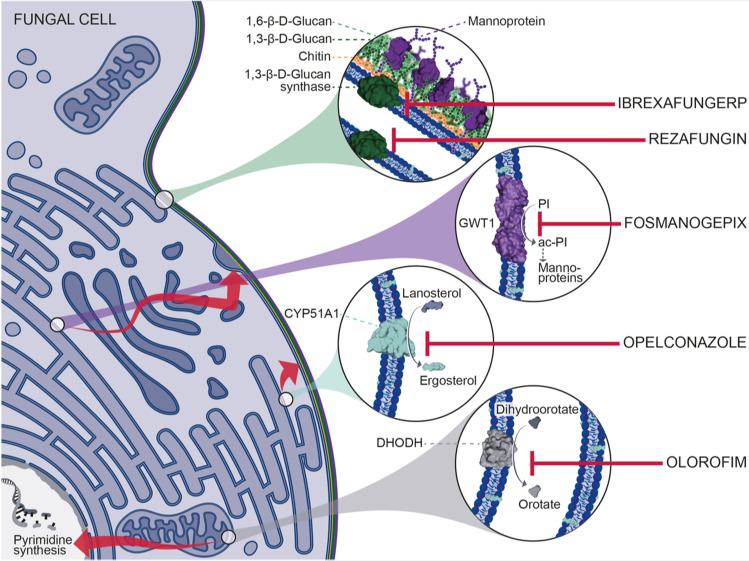
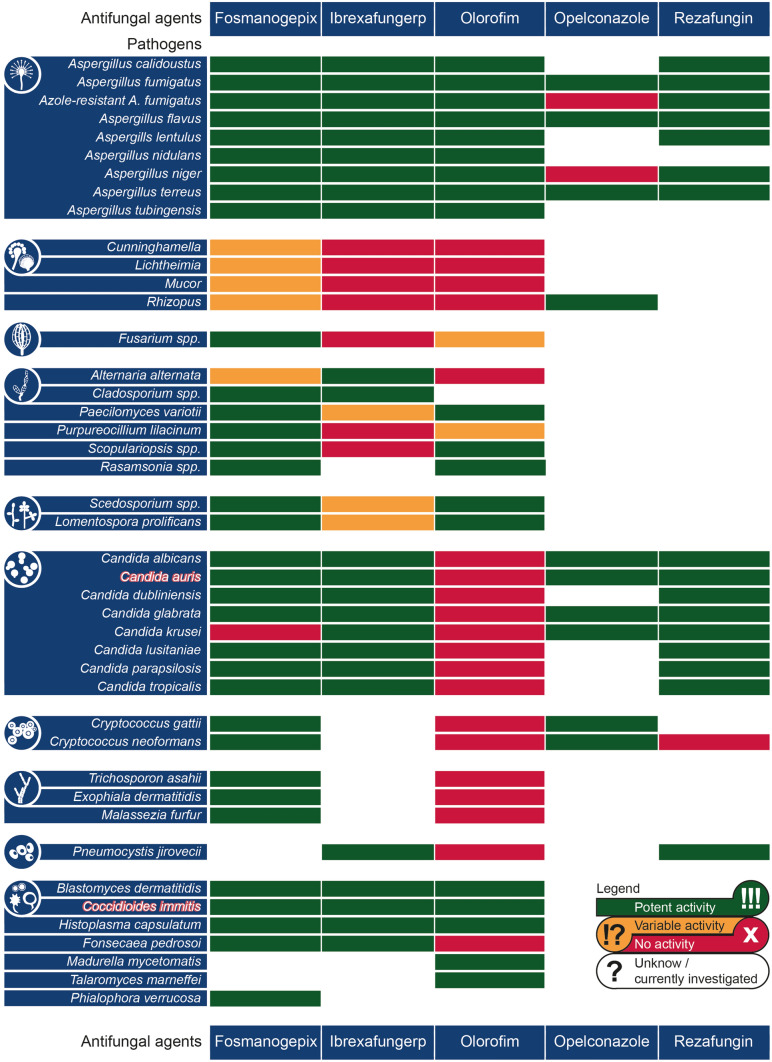
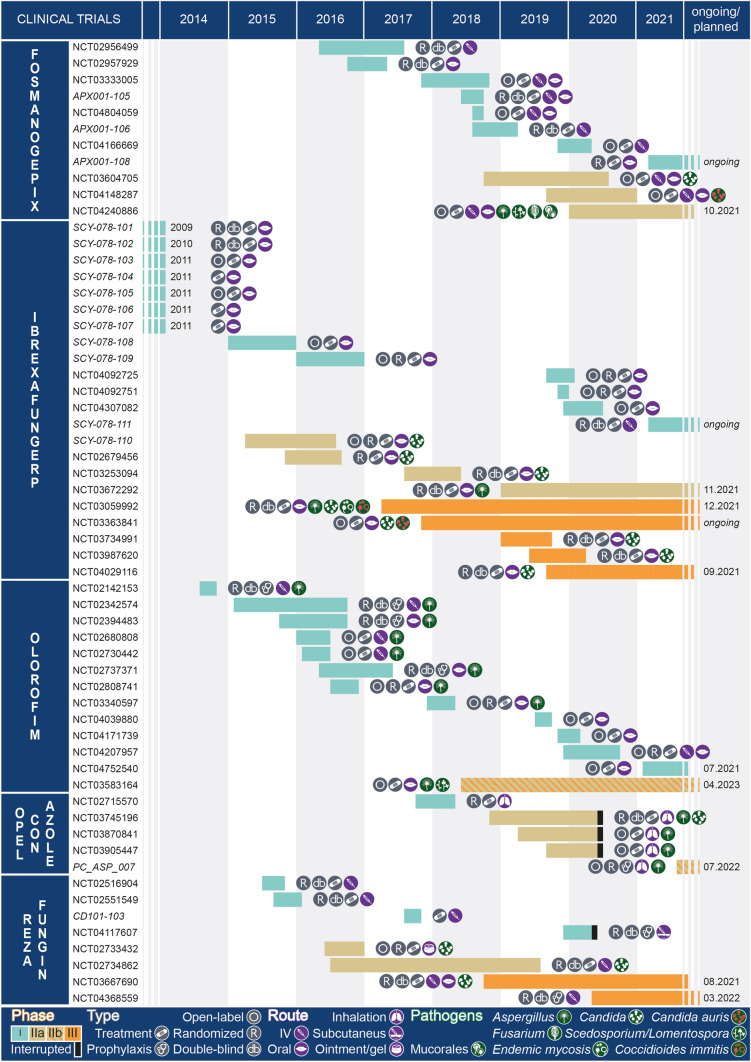
The epidemiology of invasive fungal infections is changing, with new populations at risk and the emergence of resistance caused by the selective pressure from increased usage of antifungal agents in prophylaxis, empiric therapy, and agriculture. Limited antifungal therapeutic options are further challenged by drug-drug interactions, toxicity, and constraints in administration routes. Despite the need for more antifungal drug options, no new classes of antifungal drugs have become available over the last 2 decades, and only one single new agent from a known antifungal class has been approved in the last decade. Nevertheless, there is hope on the horizon, with a number of new antifungal classes in late-stage clinical development. In this review, we describe the mechanisms of drug resistance employed by fungi and extensively discuss the most promising drugs in development, including fosmanogepix (a novel Gwt1 enzyme inhibitor), ibrexafungerp (a first-in-class triterpenoid), olorofim (a novel dihyroorotate dehydrogenase enzyme inhibitor), opelconazole (a novel triazole optimized for inhalation), and rezafungin (an echinocandin designed to be dosed once weekly). We focus on the mechanism of action and pharmacokinetics, as well as the spectrum of activity and stages of clinical development. We also highlight the potential future role of these drugs and unmet needs.
Overview
The claims and statistics of this paper haven’t been checked yet.
Free: it reads the open-access text and checks the first 5 claims that cite a source we can check. Create a free account to check every claim.
Integrity signals
Registry
Cites
Statistics
Figures
Verification
Claims the paper makes
The claims and statistics of this paper haven’t been checked yet.
Free: it reads the open-access text and checks the first 5 claims that cite a source we can check. Create a free account to check every claim.
Claims other papers make about this one
Each is checked against this paper’s own text: does it say what the citing paper says it does?
The source backs part of the claim, not all of it — or backs it for a different population, condition or comparison.
In the citing paper
“Fosmanogepix inhibits the inositol acyltransferase Gwt1 which catalyzes and early step in the glycosylphosphatidylinositol (GPI) anchor biosynthesis pathway, thereby preventing GPI-anchored protein maturation, a process critical for linkages between different components of the fungal cell wall [39,46].”
From Antifungal therapy of Candida biofilms: Past, present and future (2023) · cites this paper as [39]
Experimental — accuracy not yet measuredThe cited source says what the claim attributes to it.
In the citing paper
“Ibrexafungerp is another novel agent which inhibits (1→3)-β-D-glucan synthesis at a different site than echinocandins and thus retains activity against many organisms with echinocandin resistance due to FKS mutations, including many strains of C. auris.156”
From Epidemiology of Invasive Candidiasis (2024) · cites this paper as [156]
The cited source says what the claim attributes to it.
In the citing paper
“It has oral bioavailability of 35–50% and good systemic distribution except for the CNS.”
From Epidemiology of Invasive Candidiasis (2024) · cites this paper as [156]
The cited source says what the claim attributes to it.
In the citing paper
“Ibrexafungerp is currently only FDA approved as oral therapy for vulvovaginal candidiasis, although clinical trials for invasive candidiasis step-down therapy, refractory candidiasis, and C. auris are ongoing.149,156–159”
From Epidemiology of Invasive Candidiasis (2024) · cites this paper as [156]
In the citing paper
“At the present time there are a handful of investigational agents at different stages of the antifungal development pipeline. Although the majority still target ergosterol (same as azoles) or 1,3-β-D-glucan (same as echinocandins), they also include some novel classes with novel targets and mechanisms [25,39,40].”
From Antifungal therapy of Candida biofilms: Past, present and future (2023) · cites this paper as [39]
Self-check
Percentages, sums and reported differences re-computed from the paper’s own numbers.
The self-check needs the paper’s full text.
Citations
Cites
J Antimicrob Chemother 1994; 33: 350–351
O'SHAUGHNESSY, E. M., & DAS, S. S. (1994) · Journal of Antimicrobial Chemotherapy · doi:10.1093/jac/33.2.350 · Cited by 3,746
Cornely, O. A., Alastruey-Izquierdo, A., Arenz, D., Chen, S. C. A., Dannaoui, E., Hochhegger, B., Hoenigl, M., Jensen, H. E., Lagrou, K., Lewis, R. E., et al. (2019) · The Lancet Infectious Diseases · doi:10.1016/s1473-3099(19)30312-3 · Cited by 1,820
Self-citationDenning, D. W. (2003) · The Lancet · doi:10.1016/s0140-6736(03)14472-8 · Cited by 1,131 · cited 1×
“an N-linked acyl lipid side-chain [187] that is considered essential for the antifungal activity [188].”
BackgroundThe global problem of antifungal resistance: prevalence, mechanisms, and management
Perlin, D. S., Rautemaa-Richardson, R., & Alastruey-Izquierdo, A. (2017) · The Lancet Infectious Diseases · doi:10.1016/s1473-3099(17)30316-x · Cited by 1,055
Maertens, J. A., Raad, I. I., Marr, K. A., Patterson, T. F., Kontoyiannis, D. P., Cornely, O. A., Bow, E. J., Rahav, G., Neofytos, D., Aoun, M., et al. (2016) · The Lancet · doi:10.1016/s0140-6736(15)01159-9 · Cited by 1,001
Self-citationKoehler, P., Bassetti, M., Chakrabarti, A., Chen, S. C. A., Colombo, A. L., Hoenigl, M., Klimko, N., Lass-Flörl, C., Oladele, R. O., Vinh, D. C., et al. (2021) · The Lancet Infectious Diseases · doi:10.1016/s1473-3099(20)30847-1 · Cited by 951 · cited 1×
“In addition, new manifestations of disease in the intensive care population such as coronavirus disease 2019 (COVID-19)-associated aspergillosis [10–13] and mucormycosis [14, 15] are posing major problems because of extensive drug–drug interactions of antifungal drugs [16].”
BackgroundSelf-citationAneuploidy and Isochromosome Formation in Drug-Resistant Candida albicans
Selmecki, A., Forche, A., & Berman, J. (2006) · Science · doi:10.1126/science.1128242 · Cited by 733
Drug resistance and tolerance in fungi.
Berman, J., & Krysan, D. J. (2020) · Nature Reviews Microbiology · doi:10.1038/s41579-019-0322-2 · Cited by 642 · cited 21×
“Candida dubliensis, C. fabianii, C. glabrata, C. inconspicua, C. kefyr, C. krusei, C. lipolytica, C. pulcherrima, C. sojae, and C. tropicalis were also inhibited by MIC values ≤ 0.125 µg/mL and were susceptible to other echinocandins using epidemiological cut-off value (ECV) interpretive criteria [194, 195].”
BackgroundInfluentialChowdhary, A., Prakash, A., Sharma, C., Kordalewska, M., Kumar, A., Sarma, S., Tarai, B., Singh, A., Upadhyaya, G., Upadhyay, S., et al. (2018) · Journal of Antimicrobial Chemotherapy · doi:10.1093/jac/dkx480 · Cited by 577 · cited 1×
“At the same time, the emergence of Candida auris [7], as well as azole-resistant Aspergillus fumigatus [8], and cryptic species that are morphologically indistinguishable by classical methods within main Aspergillus sections [9] pose additional threats to our current antifungal armamentarium.”
BackgroundThe ALS gene family of Candida albicans.
Hoyer, L. L. (2001) · Trends in Microbiology · doi:10.1016/s0966-842x(01)01984-9 · Cited by 540
Research works printed but not linked: 9
- Vale-Silva L Ischer F Leibundgut-Landmann S Sanglard D Gain-of-function mutations in PDR1, a regulator of antifungal drug resistance in Candida glabrata, control adherence to host cells Infect Immun 2013 81 5 1709 1720 10.1128/IAI.00074-13 23460523 PMC3648025 · DOI · Paper page
- Hagiwara D Miura D Shimizu K Paul S Ohba A Gonoi T A novel Zn2-Cys6 transcription factor AtrR plays a key role in an azole resistance mechanism of Aspergillus fumigatus by co-regulating cyp51A and cdr1B expressions PLoS Pathog 2017 13 1 e1006096 10.1371/journal.ppat.1006096 28052140 PMC5215518 · DOI · Paper page
- Ghannoum M, Long L, Larkin EL, Isham N, Sherif R, Borroto-Esoda K, et al. SCY-078, a novel oral glucan synthase inhibitor, for the treatment of invasive aspergillosis: evaluation of antifungal activity singly and in combination. Antimicrob Agents Chemother. 2018;62(6):e00244-18. PMC5971594 29610204 · DOI · Paper page
- Trucksis M, Garrett G, Heriman I. A phase I multiple rising dose study evaluating safety, tolerability, and pharmacokinetics of MK-3118, oral glucan synthase inhibitor, in healthy volunteers. 51st Interscience Conference on Antimicrobial Agents and Chemotherapy (ICAAC); 2011; Chicago (IL).
- Kennedy T AG, Steiner J, Heep M, Oliver J, Sibley G, Law D., editor Multiple dose pharmacokinetics of an immediate-release tablet formulation of F901318 in healthy male and female subjects. In: Proceedings of the 27th European congress of clinical microbiology and infectious diseases; 22–25 April 2017; Vienna.
- Kennedy TAG, Steiner J, Heep M, Oliver J, Sibley G, Law D, editor Assessment of the duraiton of infusion on the tolerability and repaet dose pharmacokinetics of F901318 in health-volunteers (abstract P1711). In: Proceedings of the 27th European congress of clinical microbiology and infectious diseases; 22-25 April 2017; Vienna.
- Tio SH TK, Ng G, Rex JH, Carney D, Slavin M. Olorofim for a case of severe disseminated Lomentospora prolificans infection. In: Proceedings of the 30th European Congress of Clinical Microbiology and Infectious Diseases; 18–21 April 2020; Paris.
- Chen S RN, Cunneen S, Cornelissen K, Rex JH, Heath CH, Harvey E. A case of Lomentospora prolificans treated with the novel antifungal olorofim. In: Proceedings of the 30th European Congress of Clinical Microbiology and Infectious Diseases; 18–21 April 2020; Paris.
- Harvey EFL, Rex JH, Thompson G. Successful use of the novel antifungal olorofim in the treatment of dissemianted coccidioidomycosis. Proceedings of the 30th European Congress of Clinical Microbiology and Infectious Diseases; 18-21 April 2020; Paris.
Cited by
Items 101–200 of 488
Emerging Diagnostics and Therapeutics for Invasive Fungal Infections
Friedman, D. Z. P., & Schwartz, I. S. (2023) · Infectious Disease Clinics of North America · doi:10.1016/j.idc.2023.05.001 · Cited by 26
Optimizing the Treatment of Invasive Candidiasis—A Case for Combination Therapy
Wake, R. M., Allebone-Salt, P. E., John, L. L. H., Caswall, B. A., Govender, N. P., Ben‐Ami, R., Murray, L., Logan, C., Harrison, T. S., & Bicanic, T. A. (2024) · Open Forum Infectious Diseases · doi:10.1093/ofid/ofae072 · Cited by 26
“There are promising new antifungal drugs in the pipeline for candidiasis including fosmanogepix, ibrexafungerp, and the long-acting echinocandin reza-fungin [28].”
BackgroundSreelakshmi, K. P., Madhuri, M., Swetha, R., Rangarajan, V., & Roy, U. (2024) · World Journal of Microbiology and Biotechnology · doi:10.1007/s11274-024-03908-0 · Cited by 26
The Significance of Mono‐ and Dual‐Effective Agents in the Development of New Antifungal Strategies
Zobi, C., & Algül, Ö. (2025) · Chemical Biology & Drug Design · doi:10.1111/cbdd.70045 · Cited by 27
Recent Advances in the Development of Antifungal Agents: Beyond Azoles, Polyenes, and Echinocandins
Saini, V., Safwan, S. M., Mehta, D., Das, E. E., & Bajaj, A. (2025) · ACS Infectious Diseases · doi:10.1021/acsinfecdis.4c00828 · Cited by 25
Systemic Antifungal Therapy for Invasive Pulmonary Infections
Ben‐Ami, R. (2023) · Journal of Fungi · doi:10.3390/jof9020144 · Cited by 30
“Much needed drugs with novel antifungal mechanisms of action are currently undergoing evaluation in clinical trials [16].”
BackgroundDectiSomes: C-type lectin receptor-targeted liposomes as pan-antifungal drugs
Meagher, R. B., Lewis, Z., Ambati, S., & Lin, X. (2023) · Advanced Drug Delivery Reviews · doi:10.1016/j.addr.2023.114776 · Cited by 27
Target- and prodrug-based design for fungal diseases and cancer-associated fungal infections
Liu, N., Tu, J., Huang, Y., Yang, W., Wang, Q., Li, Z., & Sheng, C. (2023) · Advanced Drug Delivery Reviews · doi:10.1016/j.addr.2023.114819 · Cited by 26
Approaches for identifying and measuring heteroresistance in azole-susceptible Candida isolates
Gautier, C., Maciel, E. I., & Ene, I. V. (2024) · Microbiology Spectrum · doi:10.1128/spectrum.04041-23 · Cited by 23
“against fungal infections and only limited antifungal drugs are available for treatment (6, 7).”
BackgroundUpdates on Histoplasmosis in Solid Organ Transplantation
Saullo, J. L., & Miller, R. A. (2022) · Current Fungal Infection Reports · doi:10.1007/s12281-022-00441-1 · Cited by 24
EQUAL CPA Score 2022: a tool to measure guideline adherence for chronic pulmonary aspergillosis
Sprute, R., Braeckel, E. V., Flick, H., Hoenigl, M., Kosmidis, C., Agarwal, R., Davidsen, J. R., Laursen, C. B., Cornely, O. A., & Seidel, D. (2022) · Journal of Antimicrobial Chemotherapy · doi:10.1093/jac/dkac378 · Cited by 23
Self-citationCeballos-Garzón, A., Lebrat, J., Holzapfel, M., Josa, D. F., Welsch, J., & Mercer, D. K. (2025) · Antimicrobial Agents and Chemotherapy · doi:10.1128/aac.00137-25 · Cited by 22
“Among the emerging therapies, rezafungin (RZF), ibrexafungerp (IBF), and manogepix (MGPX) have shown promise against a range of fungal pathogens including some that are often resistant to currently available classes of antifungal treatments (15).”
Haq, S. U., Ling, W., Aqib, A. I., Danmei, H., Aleem, M. T., Fatima, M., Ahmad, S., & Gao, F. (2025) · European Journal of Pharmacology · doi:10.1016/j.ejphar.2025.177511 · Cited by 26
Azole-Resistant Aspergillus fumigatus: Epidemiology, Diagnosis, and Treatment Considerations
Zubovskaia, A. (2025) · Journal of Fungi · doi:10.3390/jof11100731 · Cited by 24
“Novel antifungals with new mechanisms of action may become important tools in the management of infections caused by azole-resistant A. fumigatus [145,146].”
Camargo, J. F., Jabr, R., Anderson, A. D., Lekakis, L. J., Diaz‐Paez, M., Briski, L. M., Raja, M. A., Morris, M. I., Komanduri, K. V., & Pereira, D. L. (2021) · Antimicrobial Agents and Chemotherapy · doi:10.1128/aac.02206-21 · Cited by 21
Controversies in the Management of Central Nervous System Coccidioidomycosis
Thompson, G. R., Ampel, N. M., Blair, J. E., Donovan, F., Fierer, J., Galgiani, J. N., Heidari, A., Johnson, R. H., Shatsky, S. A., Uchiyama, C. M., et al. (2022) · Clinical Infectious Diseases · doi:10.1093/cid/ciac478 · Cited by 22
Self-citationHigashimura, N., Hamada, A., Ohara, T., Sakurai, S., Ito, H., & Banba, S. (2022) · Journal of Pesticide Science · doi:10.1584/jpestics.d22-027 · Cited by 24
Developing novel antifungals: lessons from G protein-coupled receptors
Velazhahan, V., McCann, B. L., Bignell, E., & Tate, C. G. (2023) · Trends in Pharmacological Sciences · doi:10.1016/j.tips.2022.12.002 · Cited by 23
“Currently there are several novel antifungal agents under clinical investigation that have novel mechanisms of action, including novamycin, an antifungal peptide that interacts with the plasma membrane causing cell lysis [6], olorofim [27,28] of the orotomide class of drugs that inhibit pyrimidine biosynthesis via rev…”
BackgroundInfluentialDu, W., Wang, Q., & Zhao, M. (2025) · Frontiers in Cellular and Infection Microbiology · doi:10.3389/fcimb.2025.1641373 · Cited by 21
Borba-Santos, L. P., Rollin‐Pinheiro, R., Fontes, Y. D. S., dos Santos, G. M. P., Araújo, G. R. D. S., Rodrigues, A. M., Guimaraes, A. J., de Souza, W., Frasés, S., Ferreira‐Pereira, A., et al. (2022) · Journal of Fungi · doi:10.3390/jof8101004 · Cited by 20
Challenges in the diagnosis and treatment of candidemia due to multidrug-resistant Candida auris
Giacobbe, D. R., Mikulska, M., Vena, A., Pilato, V. D., Magnasco, L., Marchese, A. E., & Bassetti, M. (2023) · Frontiers in Fungal Biology · doi:10.3389/ffunb.2023.1061150 · Cited by 20
“Some novel antifungal agents are in advanced phases of clinical development that, for the first time in years, could improve/expand spectrum of activity, route of administration, drug-drug interactions, tolerability of currently available antifungals (Rauseo et al., 2020; Hoenigl et al., 2021; Jacobs et al., 2021).”
BackgroundCornely, O. A., Ostermann, H., Koehler, P. A., Teschner, D., Limburg, E., Kramer, W. G., Barbat, S. H., Tawadrous, M., & Hodges, M. R. (2023) · Journal of Antimicrobial Chemotherapy · doi:10.1093/jac/dkad269 · Cited by 21
Self-citationAntifungal resistance, combinations and pipeline: oh my!
Stover, K. R., Hawkins, B. K., Keck, J. M., Barber, K. E., & Cretella, D. A. (2023) · Drugs in Context · doi:10.7573/dic.2023-7-1 · Cited by 22
“137,154,155 With limited cross-resistance, ibrexafungerp offers a potential agent with retained activity to Candida spp. that is resistant to echinocandins.”
BackgroundSchaefer, S., Melodia, D., Pracey, C. P., Corrigan, N. A., Lenardon, M. D., & Boyer, C. A. (2024) · Biomacromolecules · doi:10.1021/acs.biomac.3c01038 · Cited by 21
Aldejohann, A. M., Menner, C., Thielemann, N., Martin, R., Walther, G., & Kurzai, O. (2024) · Antimicrobial Agents and Chemotherapy · doi:10.1128/aac.01324-23 · Cited by 23
“This may be beneficial as step-down therapy in IC or beneficial for patients suffering from azole allergies and other azole contradictions (13, 18).”
BackgroundInfluentialNatural products in antibiotic development: is the success story over?
Bernal, F. A., Hammann, P., & Kloß, F. (2022) · Current Opinion in Biotechnology · doi:10.1016/j.copbio.2022.102783 · Cited by 20
Espinel‐Ingroff, A., & Wiederhold, N. P. (2024) · Journal of Fungi · doi:10.3390/jof10050362 · Cited by 19
Self-citationAzole Combinations and Multi-Targeting Drugs That Synergistically Inhibit Candidozyma auris
Toepfer, S., Keniya, M. V., Lackner, M., & Monk, B. C. (2024) · Journal of Fungi · doi:10.3390/jof10100698 · Cited by 23
Redefining Antifungal Treatment: The Innovation of Metal-Based Compounds
Cardoso, J., Pinto, E., Sousa, E., & Resende, D. I. S. P. (2025) · Journal of Medicinal Chemistry · doi:10.1021/acs.jmedchem.4c02084 · Cited by 20
Liposomal amphotericin B—the future
Hoenigl, M., Lewis, R. E., van de Veerdonk, F. L., Verweij, P. E., & Cornely, O. A. (2022) · Journal of Antimicrobial Chemotherapy · doi:10.1093/jac/dkac353 · Cited by 20
Self-citationSprute, R., Bethe, U., Chen, S. C. ‐., & Cornely, O. A. (2022) · Journal of Antimicrobial Chemotherapy · doi:10.1093/jac/dkac085 · Cited by 18
Self-citationZhang, M., Rao, Z.-G., Ma, T., Tang, M., Xu, T., He, X.-X., Li, Z.-P., Liu, Y., Xu, Q.-J., Yang, K., et al. (2022) · Frontiers in Medicine · doi:10.3389/fmed.2022.952611 · Cited by 20
Yau, K. P. S., Weerasinghe, H., Olivier, F. A. B., Lo, T. L., Powell, D., Koch, B., Beilharz, T. H., & Traven, A. (2023) · PLoS Pathogens · doi:10.1371/journal.ppat.1011338 · Cited by 18
“New antifungal drugs are being developed [3], but it is also important to understand how fungi overcome current antifungal agents so that improved treatment strategies could be devised [4].”
BackgroundZhou, Y., & Reynolds, T. B. (2024) · Journal of Fungi · doi:10.3390/jof10030171 · Cited by 19
“In addition, novel agents like olorofim (targeting dihydroorotate dehydrogenase) and fosmanogepix (targeting inositol acyltransferase) possess broad spectrum activity and remarkable novelty that are expected to be significant in the future [30–34].”
BackgroundAntifungals in Patients With Extracorporeal Membrane Oxygenation: Clinical Implications
Kriegl, L., Hatzl, S., Schilcher, G., Zollner‐Schwetz, I., Boyer, J., Geiger, C., Hoenigl, M., & Krause, R. (2024) · Open Forum Infectious Diseases · doi:10.1093/ofid/ofae270 · Cited by 19
“We included recently licensed antifungals and those with potential indications for prophylaxis or treatment of invasive fungal infections [19].”
BackgroundSelf-citationCandida auris : host interactions, antifungal drug resistance, and diagnostics
Chowdhary, A., Lionakis, M. S., & Chauhan, N. (2025) · Microbiology and Molecular Biology Reviews · doi:10.1128/mmbr.00187-22 · Cited by 22
“Fosmanogepix is a structurally and mechanistically distinct firstinclass antifungal agent that targets GPI anchor biosynthesis (201, 202) (Table 1).”
Liposomal amphotericin B and renal safety: review of the evidence and clinical considerations
Maertens, J. A., Birne, R., Felton, T., Neofytos, D., & Hoenigl, M. (2026) · Journal of Antimicrobial Chemotherapy · doi:10.1093/jac/dkaf473 · Cited by 19
Self-citationSiderophores: a potential role as a diagnostic for invasive fungal disease
Kriegl, L., Havlíček, V., Dichtl, K., Egger, M., & Hoenigl, M. (2022) · Current Opinion in Infectious Diseases · doi:10.1097/qco.0000000000000862 · Cited by 17
“Although the antifungal pipeline is finally loaded with promising drugs that will likely be approved for clinical use within the next few years [7,8], there have been fewer advancements in early diagnosis of IFD, which may explain why IFD mortality rates have not improved over the last two decades [9].”
BackgroundSelf-citationEffect of Star Topology Versus Linear Polymers on Antifungal Activity and Mammalian Cell Toxicity
Schaefer, S., Melodia, D., Corrigan, N. A., Lenardon, M. D., & Boyer, C. A. (2023) · Macromolecular Bioscience · doi:10.1002/mabi.202300452 · Cited by 17
Transcriptomic meta-analysis to identify potential antifungal targets in Candida albicans
Hefny, Z. A., Ji, B., Elsemman, I. E., Nielsen, J., & Dijck, P. V. (2024) · BMC Microbiology · doi:10.1186/s12866-024-03213-8 · Cited by 18
Hsu, A. J., Hanisch, B. R., Fisher, B. T., & Huppler, A. R. (2024) · Journal of the Pediatric Infectious Diseases Society · doi:10.1093/jpids/piad115 · Cited by 17
Combatting Fungal Infections: Advances in Antifungal Polymeric Nanomaterials
Schaefer, S., Corrigan, N. A., Brunke, S., Lenardon, M. D., & Boyer, C. A. (2024) · Biomacromolecules · doi:10.1021/acs.biomac.4c00866 · Cited by 20
Yang, L., Li, W., Zhong, J., & Liu, X. (2024) · Biomedicine & Pharmacotherapy · doi:10.1016/j.biopha.2024.117352 · Cited by 18
Alligamycin A, an antifungal β-lactone spiroketal macrolide from Streptomyces iranensis
Yang, Z., Qiao, Y., Strøbech, E., Morth, J. P., Walther, G., Jørgensen, T. S., Lum, K. Y., Peschel, G., Rosenbaum, M. A., Previtali, V., et al. (2024) · Nature Communications · doi:10.1038/s41467-024-53695-3 · Cited by 18
Invasive Respiratory Fungal Infections in COVID-19 Critically Ill Patients
Raffaelli, F., Tanzarella, E. S., PASCALE, G. D., & Tumbarello, M. (2022) · Journal of Fungi · doi:10.3390/jof8040415 · Cited by 21
“New antifungal classes are under development (fosmanogepix, ibrexafungerp, opelconazole and olorofim) [70] and may become future options with good efficacy without the drug–drug interactions and toxicity [4,71].”
BackgroundMelchers, M., van Zanten, A. R. H., Heusinkveld, M., Leeuwis, J. W., Schellaars, R., Lammers, H. J. W., Kreemer, F. J., Haas, P., Verweij, P. E., & van Bree, S. H. W. (2022) · Critical Care Explorations · doi:10.1097/cce.0000000000000696 · Cited by 20
“Although most studies have used a formulation of AmB, new azole drugs, such as opelconazole, are in clinical development for inhalation, which may also be considered for this indication (28).”
BackgroundClinical utility of antifungal susceptibility testing
McCarty, T. P., Luethy, P. M., Baddley, J. W., & Pappas, P. G. (2022) · JAC-Antimicrobial Resistance · doi:10.1093/jacamr/dlac067 · Cited by 19
Robbins, N., & Cowen, L. E. (2022) · Current Opinion in Microbiology · doi:10.1016/j.mib.2022.102198 · Cited by 21
Wu, H., Ji, Z., Huang, X., Li, L., Hang, S., Yu, J., Lu, H., & Jiang, Y. (2024) · ACS Infectious Diseases · doi:10.1021/acsinfecdis.4c00399 · Cited by 16
Antifungal Resistance in Non‐ fumigatus Aspergillus Species
Djènontin, E., Lavergne, R., Morio, F., & Dannaoui, É. (2025) · Mycoses · doi:10.1111/myc.70051 · Cited by 17
“Meanwhile, the pipeline for new antifungal agents aims to introduce novel compounds with unique mechanisms of action that can effectively target resistant Aspergillus species [133].”
An Update on the Global Treatment of Invasive Fungal Infections
Munzen, M. E., Garcia, A. D. G., & Martinez, L. R. (2023) · Future Microbiology · doi:10.2217/fmb-2022-0269 · Cited by 18
Vicente, F., Reyes, F., & Genilloud, O. (2024) · Natural Product Reports · doi:10.1039/d4np00044g · Cited by 15
Li, L. X., & Yoon, H. (2024) · Infectious Disease Clinics of North America · doi:10.1016/j.idc.2024.11.006 · Cited by 15
Antifungal Resistance Patterns of Microsporum canis : A 27‐Year MIC Study in Mainland China
Liang, T., Chen, X., de Hoog, S., Li, L., Wang, L., Wan, Z., Yu, J., Li, R., & Song, Y. (2025) · Mycoses · doi:10.1111/myc.70020 · Cited by 15
“Novel antifungals are being developed and tested clinically, providing novel treatment options for fungal infections [22].”
New trends in antifungal treatment: What is coming up?
Guinea, J. (2023) · Revista Española de Quimioterapia · doi:10.37201/req/s01.14.2023 · Cited by 15
Aşkun, T. (2022) · IntechOpen eBooks · doi:10.5772/intechopen.100869 · Cited by 16
He, R. X., Lin, F., Yu, B., & Huang, L. (2024) · Heliyon · doi:10.1016/j.heliyon.2024.e28776 · Cited by 14
“The oteseconazole has a different chem-structure for fluconazole, with a target affinity similar to fluconazole and being sensitive to the Candida spp. clinical isolates exhibiting reduced susceptibility to fluconazole [9].”
BackgroundInterdisciplinary approaches for the discovery of novel antifungals
Yiu, B., Robbins, N., & Cowen, L. E. (2024) · Trends in Molecular Medicine · doi:10.1016/j.molmed.2024.04.018 · Cited by 14
Liu, A., Xiong, L., Wang, L., Han, Z., Gan, X., Zou, M., & Wang, X. (2024) · BMC Infectious Diseases · doi:10.1186/s12879-024-09477-9 · Cited by 15
Zhang, X., Zhang, M., Han, H., Chen, Z., & Huang, A. (2025) · Microbial Pathogenesis · doi:10.1016/j.micpath.2024.107256 · Cited by 14
Organoselenium compounds as an enriched source for the discovery of new antimicrobial agents
Friberg, L. I. M., Kavanagh, A. M., Amado, M., Lowe, G. J., Zuegg, J., de Paula, M. N., Onawole, A. T., Floyd, H. E. E., Кравченко, А. Н., Guan, D., et al. (2025) · RSC Medicinal Chemistry · doi:10.1039/d4md00677a · Cited by 14
Non-Aspergillusmould lung infections
Puerta‐Alcalde, P., & García‐Vidal, C. (2022) · European Respiratory Review · doi:10.1183/16000617.0104-2022 · Cited by 14
New and emerging options for management of invasive fungal diseases in paediatric patients
Groll, A. H., Körholz, K. F., Holterhus, M., & Lehrnbecher, T. (2023) · Mycoses · doi:10.1111/myc.13654 · Cited by 15
Diagnostics and therapy of paediatric patients with febrile neutropenia
Koenig, C., & Lehrnbecher, T. (2023) · EJC Paediatric Oncology · doi:10.1016/j.ejcped.2023.100116 · Cited by 16
Zhou, M., Peng, J., Ren, K., Yu, Y., Li, D., She, X., & Liu, W. (2024) · Microbiology Spectrum · doi:10.1128/spectrum.04042-23 · Cited by 13
“Therefore, identification of the new drug targets could be a resolution to aid a rational use of currently used antifungal applications (6–8), which, thus, requires us to deepen understanding of the resistance mechanisms with antifungals such as azoles.”
BackgroundInvasive Pulmonary Aspergillosis: Not Only a Disease Affecting Immunosuppressed Patients
Zaragoza, R., Solé‐Violán, J., Cusack, R. A. F., Rodríguez, A. H., Reyes, L. F., & Martín‐Loeches, I. (2023) · Diagnostics · doi:10.3390/diagnostics13030440 · Cited by 14
“Recently, some studies have been conducted with a novel class of azole: opelconazole [30].”
BackgroundJani, A. H., Reigler, A. N., Leal, S. M., & McCarty, T. P. (2024) · Infectious Disease Clinics of North America · doi:10.1016/j.idc.2024.11.011 · Cited by 16
Hodges, M. R., Hazel, S., Kramer, W. G., van Hoogdalem, E., van Marle, S., Tawadrous, M., & Jakate, A. S. (2024) · Antimicrobial Agents and Chemotherapy · doi:10.1128/aac.01455-23 · Cited by 13
“These findings support the duration and provide a detailed PK profile of the treatment regimen assessed in the phase 2 efficacy and safety studies of FMGX for the treatment of candidemia and/or invasive candidiasis caused by Candida auris (NCT04148287) (12) and invasive aspergillosis and other rare molds (NCT04240886)…”
BackgroundInfluentialMaertens, J. A., Slavin, M. A., Hoenigl, M., Thompson, G. R., Richardson, M. D., & Lass‐Flörl, C. (2024) · Journal of Antimicrobial Chemotherapy · doi:10.1093/jac/dkae158 · Cited by 14
Self-citationRecent progress on total synthesis of cyclic peptides
Liu, H., Bai, L., & Jiang, X. (2024) · Tetrahedron Letters · doi:10.1016/j.tetlet.2024.155314 · Cited by 12
Simm, C., Lee, T.-H., Weerasinghe, H., Walsh, D., Nakou, I. T., Shankar, M., Tse, W. C., Zhang, Y. L., Inman, R., Mulder, R. J., et al. (2024) · mBio · doi:10.1128/mbio.02611-24 · Cited by 13
“Given the scarcity of antifungal treatments, the growing resist ance to both azoles and echinocandins, and the relatively small number of antifungal compounds in the development pipeline (51), it is important to take a multi-pronged approach to improve therapeutic options.”
Invasive Aspergillosis in the Intensive Care Unit
Zubovskaia, A., & Vázquez, J. A. (2025) · Journal of Fungi · doi:10.3390/jof11010070 · Cited by 14
Recent Advances in the Catalytic Synthesis of α ‐Ketoamides
Aaron, M. B., Devi, P. S., & Anilkumar, G. N. (2025) · The Chemical Record · doi:10.1002/tcr.202500008 · Cited by 12
Jain, K., Wadhwa, K., MALIK, M. L., Haque, S., Prieto, M. A., & Kaur, H. (2025) · Open Forum Infectious Diseases · doi:10.1093/ofid/ofaf742 · Cited by 13
“However, it has been seen that Manogepix has reasonably good potency against most Candida strains but has limited efficacy in combating C krusei infections [62].”
The dual role of azoles: lifesaving antifungals and drivers of resistance – a One Health perspective
Roohi, B., Tyndall, J. D. A., Svoboda, T., de Hoog, S., Crous, P. W., Monk, B. C., Strobl, B., Weißenbacher, A., Strauss, J., Verweij, P. E., et al. (2026) · Nature Communications · doi:10.1038/s41467-026-71762-9 · Cited by 15
“Theseoverlaps in antifungal mechanisms highlight the potential for resistance evolution across sectors 281 – 284 Australian Pesticides and Veterinary Medicines Authority (APVMA) approved Ip fl ufenoquin (DHODH inhibitors [FRAC 52]) for controlling Botrytis cinerea , the causal agent of gray mold, in…”
Acute Lymphoblastic Leukemia and Invasive Mold Infections: A Challenging Field
Stafylidis, C., Diamantopoulos, P. T., Athanasoula, E., Solomou, E. E., & Anastasopoulou, A. N. (2022) · Journal of Fungi · doi:10.3390/jof8111127 · Cited by 14
“, and other rare molds, and shows potent activity against resistant molds [79,82].”
BackgroundInfluentialExploiting antifungal immunity in the clinical context
Lionakis, M. S. (2023) · Seminars in Immunology · doi:10.1016/j.smim.2023.101752 · Cited by 14
Walsh, T. J. (2024) · Open Forum Infectious Diseases · doi:10.1093/ofid/ofae257 · Cited by 14
Anti- Aspergillus activities of olorofim at sub-MIC levels during early-stage growth
Kühbacher, A., Birch, M., Oliver, J. D., & Gsaller, F. (2024) · Microbiology Spectrum · doi:10.1128/spectrum.03304-23 · Cited by 11
Cobo, F., González-Sierra, P. A., Ortega-Gavilán, M. C., Castellano-Sánchez, L., & Navarro‐Marí, J. M. (2024) · Diagnostic Microbiology and Infectious Disease · doi:10.1016/j.diagmicrobio.2024.116527 · Cited by 11
Immunity to fungi and vaccine considerations
Whitehead, A. J., Woodring, T. S., & Klein, B. S. (2024) · Cell Host & Microbe · doi:10.1016/j.chom.2024.09.011 · Cited by 12
An update on newer antifungals
Akinosoglou, K., Papageorgiou, D., Gogos, C. A., & Dimοpoulos, G. (2025) · Expert Review of Anti-infective Therapy · doi:10.1080/14787210.2025.2461566 · Cited by 11
In vitro activity of novel antifungals, natamycin, and terbinafine against Fusarium
Garbe, E., Ullah, A., Aldejohann, A. M., Kurzai, O., Janevska, S., & Walther, G. (2025) · Antimicrobial Agents and Chemotherapy · doi:10.1128/aac.01913-24 · Cited by 11
“Ibrexafungerp and rezafungin both target the β-1,3-glucan synthase like established echinocandins, for which Fusarium resistance is well known (6, 46).”
Diagnostic Mycology Laboratories Should Have a Central Role for the Management of Fungal Disease
Medina, N., Alastruey‐Izquierdo, A., Mercado, D., Denning, D. W., Arathoon, E., & Rodríguez-Tudela, J. L. (2022) · Journal of Fungi · doi:10.3390/jof8121285 · Cited by 11
“However, currently, although the situation is still far from being ideal, we have several rapid and inexpensive diagnostic assays and multiple antifungals approved and regarded as essential by the World Health Organization (WHO) with others in the pipeline [2].”
BackgroundChastain, D. B., White, B. P., Tu, P. J., Chan, S., Jackson, B., Kubbs, K. A., Bandali, A., McDougal, S., Henao‐Martínez, A. F., & Cluck, D. B. (2023) · Annals of Pharmacotherapy · doi:10.1177/10600280231175201 · Cited by 11
Combating Black Fungus: Using Allicin as a Potent Antifungal Agent against Mucorales
Schier, C., Gruhlke, M. C. H., Reucher, G., Slusarenko, A. J., & Rink, L. (2023) · International Journal of Molecular Sciences · doi:10.3390/ijms242417519 · Cited by 15
Yuan, J., Xu, L., Han, Y., Jiang, Z., Zheng, Q., Gao, Y., Xing, W., & Li, Z. (2023) · Sustainable materials and technologies · doi:10.1016/j.susmat.2023.e00807 · Cited by 11
A case of Lomentospora prolificans endophthalmitis treated with the novel antifungal agent Olorofim
Dong, M., Pearce, F., Singh, N., & Lin, M. (2024) · Journal of Ophthalmic Inflammation and Infection · doi:10.1186/s12348-024-00393-2 · Cited by 11
“Due to its novel mechanism of action, Olorofim may be useful for fungal species that are otherwise resistant to other treatments such as azole-resistant Aspergil-losis, Scedosporiosis, Lomentosporiosis and other less common mould infections [8].”
BackgroundOvercoming amphotericin B resistance in Candida auris using the antiemetic drug rolapitant
Salama, E. A., Elgammal, Y., Utturkar, S. M., Lanman, N. A., Hazbun, T. R., & Seleem, M. N. (2024) · Antimicrobial Agents and Chemotherapy · doi:10.1128/aac.00556-24 · Cited by 13
New Developments in Pediatric Antifungal Pharmacology
Groll, A. H., Roilides, E., & Walsh, T. J. (2022) · The Pediatric Infectious Disease Journal · doi:10.1097/inf.0000000000003659 · Cited by 11
“inhibitor of dihydroorotate dehydrogenase involved in pyrimidine synthesis with broad activity against filamentous and dimorphic fungi).(11,12) PIPs exist for all of these compounds, and pediatric phase I/II clinical trials are in advanced stages of planning.”
BackgroundDiagnosis and Treatment of Fungal Infections in Lung Transplant Recipients
Escamilla, J. E., January, S. E., & Guillamet, R. V. (2023) · Pathogens · doi:10.3390/pathogens12050694 · Cited by 10
Management of invasive candidiasis: A focus on rezafungin, ibrexafungerp, and fosmanogepix
August, B., & Kale-Pradhan, P. B. (2024) · Pharmacotherapy The Journal of Human Pharmacology and Drug Therapy · doi:10.1002/phar.2926 · Cited by 11
Rezafungin Utilisation in Real Life— FungiScope Results From Europe and the United States
Reinhold, I., Mori, G., Lanzafame, M., Limongelli, A., Vena, A., Götz, J., Bauernfeind, S., Hanses, F., Tometten, L., Mayer, M., et al. (2025) · Mycoses · doi:10.1111/myc.70114 · Cited by 12
Self-citationExperimental evolution of drug resistance in human fungal pathogens
Gerstein, A. C., & Sethi, P. (2022) · Current Opinion in Genetics & Development · doi:10.1016/j.gde.2022.101965 · Cited by 13
Aerosolized Antifungals for the Treatment of Pulmonary Fungal Diseases
Muthu, V., Sehgal, I. S., & Agarwal, R. (2024) · Current Fungal Infection Reports · doi:10.1007/s12281-024-00495-3 · Cited by 10
“Several newer antifungals are undergoing evaluation in clinical trials for various indications, some of which can be orally administered [8].”
Hodges, M. R., van Marle, S., Kramer, W. G., Ople, E., Tawadrous, M., & Jakate, A. S. (2024) · Antimicrobial Agents and Chemotherapy · doi:10.1128/aac.01650-23 · Cited by 11
“In cohort 1, to avoid possible toxicities due to potential increased MGX exposures resulting from CYP3A4 inhibition, the FMGX dose administered was 500 mg, lower than 600/800 mg (IV/oral), that is, the doses evaluated in phase 2 trials and to be assessed in phase 3 trials (6, 16).”
BackgroundInfluentialSpruijtenburg, B., Rezusta, A., Houbraken, J. A. M. P., Hagen, F., de Groot, T., Meis, J. F. G. M., & Meijer, E. F. J. (2024) · Mycopathologia · doi:10.1007/s11046-024-00869-8 · Cited by 10
Antifungal chemotherapies and immunotherapies for the future
Armstrong-James, D. P. H. (2022) · Parasite Immunology · doi:10.1111/pim.12960 · Cited by 10
“In terms of clinical studies, olorofim appeared safe in Phase 1 studies, although there were significant infusion-related reactions.(9)”
BackgroundEchinocandin exposures in obese patients: A scoping review and clinical perspectives
Alsowaida, Y. S., Alamer, A., Thabit, A. K., Almulhim, A., Aleissa, M. M., Kalbasi, A., Eljaaly, K., Almangour, T. A., & Erstad, B. L. (2023) · American Journal of Health-System Pharmacy · doi:10.1093/ajhp/zxad021 · Cited by 10
Treatment alternatives for multidrug-resistant fungal pathogens
Roe, K. (2023) · Drug Discovery Today · doi:10.1016/j.drudis.2023.103596 · Cited by 11
Metadata
- Authors
- Hoenigl, M., Sprute, R., Egger, M., Arastehfar, A., Cornely, O. A., Krause, R., Lass-Flörl, C., Prattes, J., Spec, A., Thompson, G. R., Wiederhold, N., & Jenks, J. D.
- Affiliations
- Medical University of Graz (AT)
- University of Cologne (DE)
- Hackensack Meridian Health (US)
- Washington University in St. Louis (US)
- University of California Davis Medical Center (US)
- The University of Texas at San Antonio Health Science Center (US)
- University of California San Diego (US)
- Corresponding author
- Hoenigl, Martin
- ORCID
- Venue
- Drugs
- Published
- 2021-10
- Volume
- 81
- Issue
- 15
- Pages
- 1703-1729
- ISSN
- 0012-6667 (ISSN-L)
- 1179-1950
- PMC
- PMC8501344
- OpenAlex
- W3202074216
- Cited by
- 467
- References
- 188
- Citations by year
- 2026: 78 · 2025: 116 · 2024: 117 · 2023: 98 · 2022: 54 · 2021: 3
- FWCI
- 7.96
- Type
- journal article
- Language
- en
- Open access
- hybrid
- doi.org
- Licence
- cc-by-nc
- creativecommons.org/licenses/by-nc/4.0 (tdm)
- creativecommons.org/licenses/by-nc/4.0 (vor, 8 d)
- Locations
- Drugs (publishedVersion, cc-by-nc)
- PubMed Central (publishedVersion, cc-by-nc)
- PubMed (publishedVersion)
- Kölner Universitäts PublikationsServer (Universität zu Köln) (publishedVersion)
- eScholarship (California Digital Library) (submittedVersion, cc-by-nc)
- Digital Commons@Becker (Washington University School of Medicine) (submittedVersion, cc-by-nc)
- eScholarship (California Digital Library) (submittedVersion)
- Funders
- national institute of allergy and infectious diseases (UL1TR001442)
- Medical University of Graz
- Topics
- Health Sciences › Medicine › Infectious Diseases › Antifungal resistance and susceptibility
- Life Sciences › Agricultural and Biological Sciences › Plant Science › Fungal Plant Pathogen Control
- Health Sciences › Medicine › Infectious Diseases › Fungal Infections and Studies
- Keywords
- antifungal drug development, fosmanogepix, ibrexafungerp, olorofim, rezafungin, invasive fungal infections, antifungal resistance mechanisms, triterpenoids, triazoles, echinocandins, pharmacokinetics, drug-drug interactions, unmet medical needs
- MeSH terms
- Invasive Fungal Infections, Drug Development, Animals, Antifungal Agents, Drug Interactions, Fungi, Humans, Drug Resistance, Fungal
About these checks
Registry, retraction, Cites and statistics results are computed, not judged, with one exception: a printed reference that no index lists is read once by a model before it counts as a citation error. Claims are extracted by a model and kept only when their quote appears verbatim in the text; each cited source is then checked, with a model’s help, for whether it says what the claim relies on. Those verdicts can be wrong — read the claim’s quote and the cited source before relying on one.
Statistics and arithmetic are recomputed, not judged.
Confidence bands are shown only for fields calibrated on our annotated test set. None is calibrated yet, so no band is shown.
What counts as a claim ›How we measure confidence ›How we check this ›
Are you an author, or do you see a problem with this page? Request a review
Data sources
Bibliographic data: Semantic Scholar, OpenAlex, Crossref.
Contains information from the Semantic Scholar Academic Graph Datasets, made available under the ODC Attribution License (ODC-BY 1.0).
Semantic Scholar’s data is described in: Kinney, R., et al. (2023). The Semantic Scholar Open Data Platform. arXiv:2301.10140.
