

The Antifungal Pipeline: Fosmanogepix, Ibrexafungerp, Olorofim, Opelconazole, and Rezafungin
Open accessThe DOI matches its Crossref record; 190 of the 190 references it cites were found in a registry or an index.
Abstract
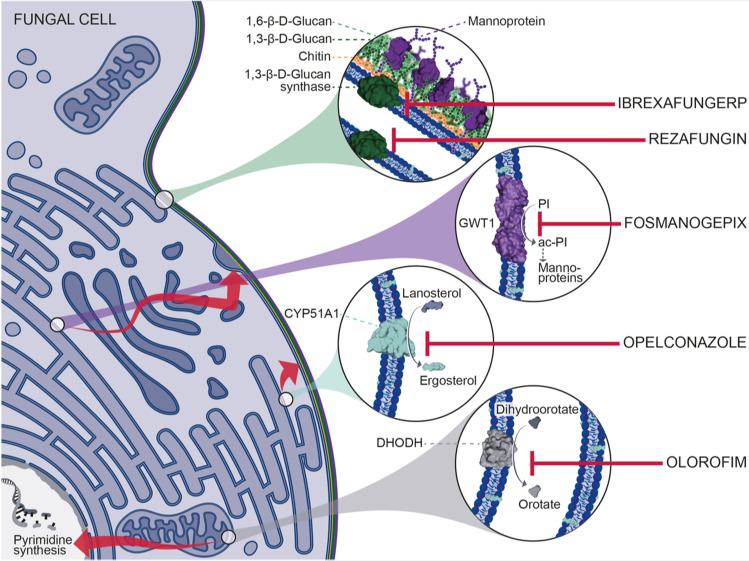
The epidemiology of invasive fungal infections is changing, with new populations at risk and the emergence of resistance caused by the selective pressure from increased usage of antifungal agents in prophylaxis, empiric therapy, and agriculture. Limited antifungal therapeutic options are further challenged by drug-drug interactions, toxicity, and constraints in administration routes. Despite the need for more antifungal drug options, no new classes of antifungal drugs have become available over the last 2 decades, and only one single new agent from a known antifungal class has been approved in the last decade. Nevertheless, there is hope on the horizon, with a number of new antifungal classes in late-stage clinical development. In this review, we describe the mechanisms of drug resistance employed by fungi and extensively discuss the most promising drugs in development, including fosmanogepix (a novel Gwt1 enzyme inhibitor), ibrexafungerp (a first-in-class triterpenoid), olorofim (a novel dihyroorotate dehydrogenase enzyme inhibitor), opelconazole (a novel triazole optimized for inhalation), and rezafungin (an echinocandin designed to be dosed once weekly). We focus on the mechanism of action and pharmacokinetics, as well as the spectrum of activity and stages of clinical development. We also highlight the potential future role of these drugs and unmet needs.
Overview
The claims and statistics of this paper haven’t been checked yet.
Free: it reads the open-access text and checks the first 5 claims that cite a source we can check. Create a free account to check every claim.
Integrity signals
Registry
Cites
Statistics
Figures
Verification
Claims the paper makes
The claims and statistics of this paper haven’t been checked yet.
Free: it reads the open-access text and checks the first 5 claims that cite a source we can check. Create a free account to check every claim.
Claims other papers make about this one
Each is checked against this paper’s own text: does it say what the citing paper says it does?
The source backs part of the claim, not all of it — or backs it for a different population, condition or comparison.
In the citing paper
“Fosmanogepix inhibits the inositol acyltransferase Gwt1 which catalyzes and early step in the glycosylphosphatidylinositol (GPI) anchor biosynthesis pathway, thereby preventing GPI-anchored protein maturation, a process critical for linkages between different components of the fungal cell wall [39,46].”
From Antifungal therapy of Candida biofilms: Past, present and future (2023) · cites this paper as [39]
Experimental — accuracy not yet measuredThe cited source says what the claim attributes to it.
In the citing paper
“Ibrexafungerp is another novel agent which inhibits (1→3)-β-D-glucan synthesis at a different site than echinocandins and thus retains activity against many organisms with echinocandin resistance due to FKS mutations, including many strains of C. auris.156”
From Epidemiology of Invasive Candidiasis (2024) · cites this paper as [156]
The cited source says what the claim attributes to it.
In the citing paper
“It has oral bioavailability of 35–50% and good systemic distribution except for the CNS.”
From Epidemiology of Invasive Candidiasis (2024) · cites this paper as [156]
The cited source says what the claim attributes to it.
In the citing paper
“Ibrexafungerp is currently only FDA approved as oral therapy for vulvovaginal candidiasis, although clinical trials for invasive candidiasis step-down therapy, refractory candidiasis, and C. auris are ongoing.149,156–159”
From Epidemiology of Invasive Candidiasis (2024) · cites this paper as [156]
In the citing paper
“At the present time there are a handful of investigational agents at different stages of the antifungal development pipeline. Although the majority still target ergosterol (same as azoles) or 1,3-β-D-glucan (same as echinocandins), they also include some novel classes with novel targets and mechanisms [25,39,40].”
From Antifungal therapy of Candida biofilms: Past, present and future (2023) · cites this paper as [39]
Self-check
Percentages, sums and reported differences re-computed from the paper’s own numbers.
The self-check needs the paper’s full text.
Citations
Cites
J Antimicrob Chemother 1994; 33: 350–351
O'SHAUGHNESSY, E. M., & DAS, S. S. (1994) · Journal of Antimicrobial Chemotherapy · doi:10.1093/jac/33.2.350 · Cited by 3,746
Cornely, O. A., Alastruey-Izquierdo, A., Arenz, D., Chen, S. C. A., Dannaoui, E., Hochhegger, B., Hoenigl, M., Jensen, H. E., Lagrou, K., Lewis, R. E., et al. (2019) · The Lancet Infectious Diseases · doi:10.1016/s1473-3099(19)30312-3 · Cited by 1,820
Self-citationDenning, D. W. (2003) · The Lancet · doi:10.1016/s0140-6736(03)14472-8 · Cited by 1,131 · cited 1×
“an N-linked acyl lipid side-chain [187] that is considered essential for the antifungal activity [188].”
BackgroundThe global problem of antifungal resistance: prevalence, mechanisms, and management
Perlin, D. S., Rautemaa-Richardson, R., & Alastruey-Izquierdo, A. (2017) · The Lancet Infectious Diseases · doi:10.1016/s1473-3099(17)30316-x · Cited by 1,055
Maertens, J. A., Raad, I. I., Marr, K. A., Patterson, T. F., Kontoyiannis, D. P., Cornely, O. A., Bow, E. J., Rahav, G., Neofytos, D., Aoun, M., et al. (2016) · The Lancet · doi:10.1016/s0140-6736(15)01159-9 · Cited by 1,001
Self-citationKoehler, P., Bassetti, M., Chakrabarti, A., Chen, S. C. A., Colombo, A. L., Hoenigl, M., Klimko, N., Lass-Flörl, C., Oladele, R. O., Vinh, D. C., et al. (2021) · The Lancet Infectious Diseases · doi:10.1016/s1473-3099(20)30847-1 · Cited by 951 · cited 1×
“In addition, new manifestations of disease in the intensive care population such as coronavirus disease 2019 (COVID-19)-associated aspergillosis [10–13] and mucormycosis [14, 15] are posing major problems because of extensive drug–drug interactions of antifungal drugs [16].”
BackgroundSelf-citationAneuploidy and Isochromosome Formation in Drug-Resistant Candida albicans
Selmecki, A., Forche, A., & Berman, J. (2006) · Science · doi:10.1126/science.1128242 · Cited by 733
Drug resistance and tolerance in fungi.
Berman, J., & Krysan, D. J. (2020) · Nature Reviews Microbiology · doi:10.1038/s41579-019-0322-2 · Cited by 642 · cited 21×
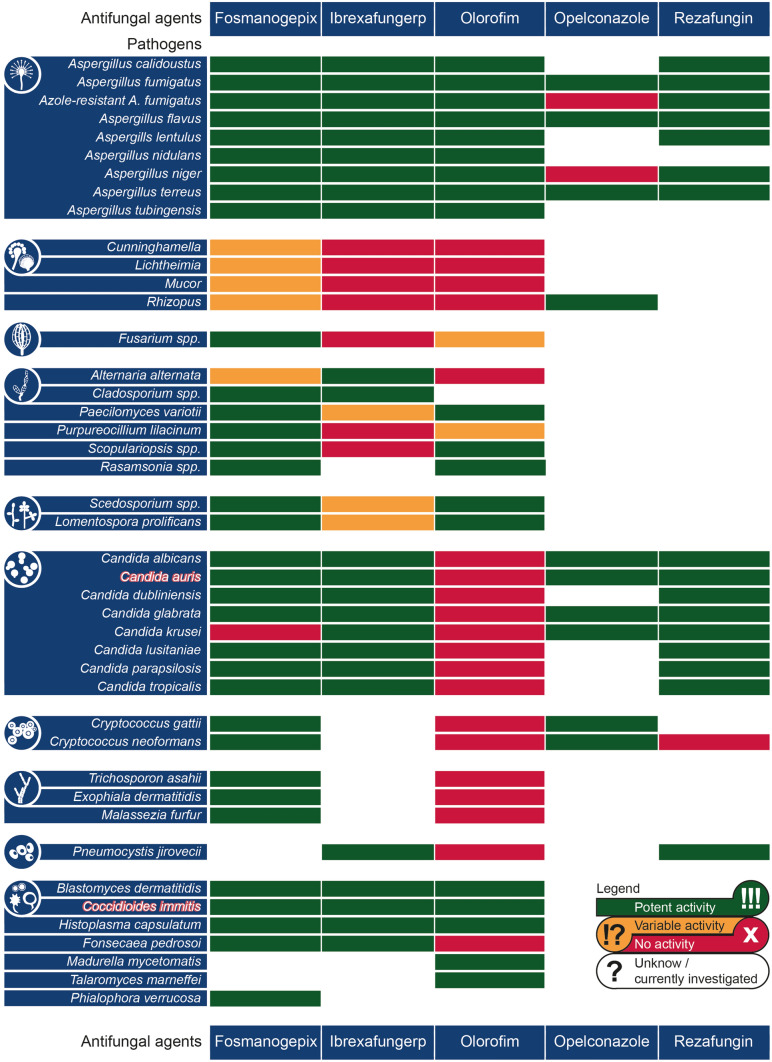
“Candida dubliensis, C. fabianii, C. glabrata, C. inconspicua, C. kefyr, C. krusei, C. lipolytica, C. pulcherrima, C. sojae, and C. tropicalis were also inhibited by MIC values ≤ 0.125 µg/mL and were susceptible to other echinocandins using epidemiological cut-off value (ECV) interpretive criteria [194, 195].”
BackgroundInfluentialChowdhary, A., Prakash, A., Sharma, C., Kordalewska, M., Kumar, A., Sarma, S., Tarai, B., Singh, A., Upadhyaya, G., Upadhyay, S., et al. (2018) · Journal of Antimicrobial Chemotherapy · doi:10.1093/jac/dkx480 · Cited by 577 · cited 1×
“At the same time, the emergence of Candida auris [7], as well as azole-resistant Aspergillus fumigatus [8], and cryptic species that are morphologically indistinguishable by classical methods within main Aspergillus sections [9] pose additional threats to our current antifungal armamentarium.”
BackgroundThe ALS gene family of Candida albicans.
Hoyer, L. L. (2001) · Trends in Microbiology · doi:10.1016/s0966-842x(01)01984-9 · Cited by 540
Research works printed but not linked: 9
- Vale-Silva L Ischer F Leibundgut-Landmann S Sanglard D Gain-of-function mutations in PDR1, a regulator of antifungal drug resistance in Candida glabrata, control adherence to host cells Infect Immun 2013 81 5 1709 1720 10.1128/IAI.00074-13 23460523 PMC3648025 · DOI · Paper page
- Hagiwara D Miura D Shimizu K Paul S Ohba A Gonoi T A novel Zn2-Cys6 transcription factor AtrR plays a key role in an azole resistance mechanism of Aspergillus fumigatus by co-regulating cyp51A and cdr1B expressions PLoS Pathog 2017 13 1 e1006096 10.1371/journal.ppat.1006096 28052140 PMC5215518 · DOI · Paper page
- Ghannoum M, Long L, Larkin EL, Isham N, Sherif R, Borroto-Esoda K, et al. SCY-078, a novel oral glucan synthase inhibitor, for the treatment of invasive aspergillosis: evaluation of antifungal activity singly and in combination. Antimicrob Agents Chemother. 2018;62(6):e00244-18. PMC5971594 29610204 · DOI · Paper page
- Trucksis M, Garrett G, Heriman I. A phase I multiple rising dose study evaluating safety, tolerability, and pharmacokinetics of MK-3118, oral glucan synthase inhibitor, in healthy volunteers. 51st Interscience Conference on Antimicrobial Agents and Chemotherapy (ICAAC); 2011; Chicago (IL).
- Kennedy T AG, Steiner J, Heep M, Oliver J, Sibley G, Law D., editor Multiple dose pharmacokinetics of an immediate-release tablet formulation of F901318 in healthy male and female subjects. In: Proceedings of the 27th European congress of clinical microbiology and infectious diseases; 22–25 April 2017; Vienna.
- Kennedy TAG, Steiner J, Heep M, Oliver J, Sibley G, Law D, editor Assessment of the duraiton of infusion on the tolerability and repaet dose pharmacokinetics of F901318 in health-volunteers (abstract P1711). In: Proceedings of the 27th European congress of clinical microbiology and infectious diseases; 22-25 April 2017; Vienna.
- Tio SH TK, Ng G, Rex JH, Carney D, Slavin M. Olorofim for a case of severe disseminated Lomentospora prolificans infection. In: Proceedings of the 30th European Congress of Clinical Microbiology and Infectious Diseases; 18–21 April 2020; Paris.
- Chen S RN, Cunneen S, Cornelissen K, Rex JH, Heath CH, Harvey E. A case of Lomentospora prolificans treated with the novel antifungal olorofim. In: Proceedings of the 30th European Congress of Clinical Microbiology and Infectious Diseases; 18–21 April 2020; Paris.
- Harvey EFL, Rex JH, Thompson G. Successful use of the novel antifungal olorofim in the treatment of dissemianted coccidioidomycosis. Proceedings of the 30th European Congress of Clinical Microbiology and Infectious Diseases; 18-21 April 2020; Paris.
Cited by
Items 401–488 of 488
Candida Auris Features and its Treatment: Global EmergencyPreprint
Durán, N., Fávaro, W. J., & Nakazato, G. (2025) · doi:10.21467/preprints.653
Novel Therapeutic Approaches to Control Fungal Biofilms
Guisso, L. P., Ribeiro, N. P., Carmona, W. R., Roseno, A. C. B., Pessan, J. P., & Monteiro, D. R. (2025) · Springer series on biofilms · doi:10.1007/978-3-031-93315-8_11
Thite, T., Jain, P., Iyer, K. A., Tenchov, R., Sasso, J. M., Balande, U., Maind, A., & Zhou, Q. A. (2025) · ChemRxiv · doi:10.26434/chemrxiv-2025-86lcw
Invasive Candidiasis in Children
Rincón-Zuno, J., Caballero, L. B. M., & Carbajal, D. N. L. (2025) · Current Fungal Infection Reports · doi:10.1007/s12281-025-00505-y
Neelima, S., Anju, M. V., Archana, K., Anooja, V. V., Athira, P. P., Revathy, M. R., Mohan, A. S., Kesavan, D., & Philip, R. (2025) · Fish & Shellfish Immunology · doi:10.1016/j.fsi.2025.110551
Eichenberger, E. M., Mendoza, M. A., & Baddley, J. W. (2025) · JHLT Open · doi:10.1016/j.jhlto.2025.100382
“97 Olorofim is not active against Mucorales, as Mucorales lack the class 2 dihydroorotate dehydrogenase enzyme.”
Kikuoka, R., Higashionna, T., Hamano, H., & Zamami, Y. (2025) · Okayama Igakkai Zasshi (Journal of Okayama Medical Association) · doi:10.4044/joma.137.72
Massey, J., Haidar, G., Shields, R. K., & Tyne, D. V. (2025) · Current Opinion in Pulmonary Medicine · doi:10.1097/mcp.0000000000001214
Understanding Fungal Pathogens and Their Challenges in Therapy
Kamran, M., Habib, M. B., Zafar, S., Shahid, A., Ali, M., & Shaikh, R. S. (2025) · Springer eBooks · doi:10.1007/978-3-032-01356-9_8
Wang, X., Cao, C., & Zou, Y. (2025) · ACS Chemical Biology · doi:10.1021/acschembio.5c00589
Chronisch pulmonale Aspergillose: Welche Form? Welche Therapiestrategie?
Schwarz, P. (2025) · Pneumo News · doi:10.1007/s15033-025-4219-7
“Es handelt sich hierbei um First-in-Class-Medi-kamente mit Aspergillus -Wirksamkeit, für die auch orale Formulierungen existieren [17].”
Bader, S. J., Hamied, A. S., & Baqer, N. N. (2025) · Journal of Molecular Histology · doi:10.1007/s10735-025-10650-w
“While Hoenigl et al. (2021) in their study showed Ibrexafungerp, a type of triterpenoid, was only approved in 2021 for treating vulvo-vaginal candidiasis.”
Conjugation Based CRISPR Antifungals (COBRA)Preprint
Nasrollahi, V., & Karas, B. J. (2025) · bioRxiv (Cold Spring Harbor Laboratory) · doi:10.64898/2025.12.06.692781 · Cited by 1
Tsirogianni, N., Walch, A., Alnawaiseh, M., Kaup, O., & Stuempeley, R. (2025) · Cureus · doi:10.7759/cureus.99499
“These developments emphasize the need for antifungals with improved corneal penetration and reliable activity against organisms with intrinsic resistance to conventional therapy [10].”
Liu, A., Xiong, L., Wang, L., Zhuang, H., Gan, X., Zou, M., & Wang, X. (2024) · Figshare · doi:10.6084/m9.figshare.26733235
Debergh, H. (2024) · ORBi (University of Liège)
Bovio, P. A. (2022) · Portuguese National Funding Agency for Science, Research and Technology (RCAAP Project by FCT)
Pereira, L. D. V. (2024) · LA Referencia (Red Federada de Repositorios Institucionales de Publicaciones Científicas)
Modern trends in the development of antifungal agents
Avtonomova, A. V., Валерьевна, К. О., Zagainova, A. V., & Makarov, V. V. (2025) · Экология человека · doi:10.17816/humeco695458
dos Santos, A. N. B. (2024) · LA Referencia (Red Federada de Repositorios Institucionales de Publicaciones Científicas)
LOWE, A., King, S. T., & Hand, J. M. (2026) · JHLT Open · doi:10.1016/j.jhlto.2026.100482
“53,61 Rezafungin’s activity is analogous to other echinocandins in that it is active against a broad population of Candida spp ., including C auris , as well as, Aspergillus spp. 54 Interestingly, rezafungin has shown activity against pneumocystis in animal models.”
InfluentialSamajdar, S. S., Chatterjee, R., & Mukherjee, S. (2026) · One Health Bulletin · doi:10.4103/ohbl.ohbl_57_25
Résistance aux antifongiques : détection, mécanismes et épidémiologie
Pasquier, G., & Charif, D. L. (2026) · Revue Francophone des Laboratoires · doi:10.1016/s1773-035x(26)76541-2
Domingos, J. M. L. (2024) · Portuguese National Funding Agency for Science, Research and Technology (RCAAP Project by FCT)
Avtonomova, A. V., Валерьевна, К. О., Lysenkova, L. N., & Krasnopolskaya, T. S. (2025) · Antibiot Khimioter = Antibiotics and Chemotherapy · doi:10.37489/0235-2990-2025-70-9-10-62-76
Osteoarticular Coccidioidomycosis in California: A Single-Center Experience
Arya, R., Dzinoreva, M., Shiu, T., Thottacherry, E. D., Chang, A., Aronson, J., Kappagoda, S., & Furukawa, D. (2026) · Open Forum Infectious Diseases · doi:10.1093/ofid/ofag103
“Further studies are needed to better characterize the optimal antifungal agent, particularly given that data are lacking for newer triazoles and with novel antifungal agents such as olorofim emerging as an alternative treatment option [13].”
Neuerungen im Management von Candida-Infektionen
Fadlalla, S., Sprute, R., & Cornely, O. A. (2026) · DMW - Deutsche Medizinische Wochenschrift · doi:10.1055/a-2645-5607
Self-citationNamysł, M., Skóra, M., Pomorska-Wesołowska, M., Romanik, M. K., Kwapniewska, W. Ś. –., Serwacki, P., Pawłowska, I., Olechowska‐Jarząb, A., & Wójkowska‐Mach, J. (2026) · Journal of Fungi · doi:10.3390/jof12030212
“…the choice of the appropriate drug is complicated by the growing problem of acquired drug resistance of fungi as a consequence of therapeutic errors and because of the exposure of fungi to non-medical sources of antimycotic substances, i.e., plant protection products used in agriculture [14,15].”
Qu, X. (2026) · cIRcle (University of British Columbia)
Antifungal drug resistance: Current mechanisms and future directions
Tang, M., Fan, L., Shen, L., & Xing, H. (2026) · Elsevier eBooks · doi:10.1016/b978-0-443-36518-8.00009-6
Fongémies : épidémiologie, diagnostic et conduite à tenir
Dellière, S., Chantelot, L., Garnaud, C., & Cornet, M. (2026) · EMC - Biologie Médicale · doi:10.1016/s2211-9698(25)48322-8
周, 晓. (2026) · Advances in Clinical Medicine · doi:10.12677/acm.2026.1641222
Ravenel, K. (2024) · theses.fr (ABES) · doi:10.70675/4fa54de1zc43fz4ffcz887dza5d8138789e2
Kharrat, O. (2025) · theses.fr (ABES) · doi:10.70675/c47e5b02ze7d4z4d9cz9fd6z03e321b9669f
Surgical Management of Pulmonary Mucormycosis
Jindal, P., & Kalra, S. (2026) · Thoracic surgery clinics/Thorac. surg. clin. · doi:10.1016/j.thorsurg.2026.02.010
BELİK, H. Ö., Heper, Y., Kazak, E., Yılmaz, E., Ener, B., & Akalın, H. (2026) · Mycopathologia · doi:10.1007/s11046-026-01073-6
Ma, Q., He, Z., Duan, G., Wei, J., Duan, C., Zhu, Y., & Long, F. (2026) · Frontiers in Cellular and Infection Microbiology · doi:10.3389/fcimb.2026.1820215
“IFIs caused by C. albicans and C. neoformans pose signi fi cant threats to immunocompromised populations, with high mortality often attributed to delayed or inaccurate diagnosis (Hoenigl et al., 2021; Sedik et al., 2024; Pechacek and Lionakis, 2026).”
Current Management of Fusariosis: A Systematic Review
Madhuwantha, K. C., Adhikari, A. M. A. C., Welgama, H. S., Gunathilaka, M. G. R. S. S., & Jayaweera, J. A. A. S. (2026) · Current Fungal Infection Reports · doi:10.1007/s12281-026-00533-2
Metagenomic next-generation sequencing reveals the clinicopathological features of mucormycosis
Yang, F., Sui, C., Tian, H., & Ao, J. (2026) · Microbial Pathogenesis · doi:10.1016/j.micpath.2026.108553
Antifungal interventions and clinical outcomes: A review
Simran, S., Gaba, P., Sharma, N., & Singh, J. (2026) · Scripta Medica · doi:10.5937/scriptamed57-58699
Fungal Infections and Climate Change: Emerging Threats, Future Directions, and Clinical Implications
Chastain, D. B., George, M. E., Cluck, D. B., & Henao‐Martínez, A. F. (2026) · Springer eBooks · doi:10.1007/978-3-032-21237-5_15
Neuerungen im Management von Candida-Infektionen
Fadlalla, S., Sprute, R., & Cornely, O. A. (2026) · Aktuelle Dermatologie · doi:10.1055/a-2844-5557
Self-citationAntifungal vaccine development: where we are, where we are headed
Janeczko, M., Kubiński, K., & Wawiórka, L. (2026) · Vaccine · doi:10.1016/j.vaccine.2026.128766
Calvache, C., Cárdenas, M. D. R., Sanchez-Salazar, S. S., Treviño‐Rangel, R. D. J., & Camacho-Ortíz, A. (2026) · Case Reports in Pulmonology · doi:10.1155/crpu/7415627 · Cited by 1
“While Amphotericin B, newer echinocandins (e.g., rezafungin), and terbinafine demonstrate better in vitro activity [3, 6, 9, 10], their clinical use is limited by toxicity or drug interactions.”
Anti-infective therapy and novel treatment options for coccidioidomycosis
Kuo, A. P., Hamdan, S., Donnelley, M., & Thompson, G. R. (2026) · Expert Review of Anti-infective Therapy · doi:10.1080/14787210.2026.2693682 · Cited by 1
“Opelconazole (PC945) is an inhaled azole antifungal that also inhibits 14-α-demethylase but is designed to achieve high local pulmonary concentrations while minimizing systemic toxicity and drug–drug interactions (Figure 1) [14,72].”
InfluentialSelf-citationReinhold, I., Sprute, R., Stemler, J., & Cornely, O. A. (2026) · CMI Communications · doi:10.1016/j.cmicom.2026.105211
Self-citationVardanyan, R., & Vardanyan, G. (2026) · Elsevier eBooks · doi:10.1016/b978-0-443-51186-8.00012-9
Kimbrough, J. H., Winkler, M., Karr, M. H., Ewald, J. M., & Castanheira, M. (2026) · Mycoses · doi:10.1111/myc.70197
刘, 志. (2026) · Advances in Clinical Medicine · doi:10.12677/acm.2026.1672644
Management of invasive fungal infections in the intensive care unit
Chean, D., Friol, A., Azoulay, É., & Maillard, A. (2026) · Expert Review of Anti-infective Therapy · doi:10.1080/14787210.2026.2710718
“Ibrexafungerp, a first-in-class oral triterpenoid glucan-synthase inhibitor, and fosmanogepix have shown activity against many Candida species, including isolates resistant to triazoles and echinocandins, and may broaden future therapeutic options [57,69,128].”
Searching antifungal agents for invasive fungal infection from natural products
Chou, S. (2026) · Studies in natural products chemistry · doi:10.1016/b978-0-443-49142-9.00007-x
Emerging antifungal agents in human medicine: Mechanisms, clinical progress, and future perspectives
Al‐Zoubi, R. M., Farhan, A., Hanbali, B., Al-Zoubi, S. R., Al-Zoubi, Y. R., Shkoor, M., Alkharraz, L. M., Agouni, A., & Al-Jabiry, A. (2026) · European Journal of Medicinal Chemistry · doi:10.1016/j.ejmech.2026.119194
Novel antifungal agents for treating endemic mycoses: hope on the horizon?
Bahr, N. C., Pasqualotto, A. C., & Thompson, G. R. (2026) · Current Opinion in Infectious Diseases · doi:10.1097/qco.0000000000001225 · Cited by 1
Self-citationAdoptive T-cell therapies in neuroinfectious and neuroinflammatory diseases
Lambert, N., & Cortese, I. C. M. (2026) · Brain · doi:10.1093/brain/awag275
Alkashef, N. M., Khan, A. A., & Seleem, M. N. (2026) · PLoS neglected tropical diseases · doi:10.1371/journal.pntd.0014627
“Moreover, direct drug delivery via inhalation can provide an alternative approach to overcome the pharmacokinetic limitation of NTX, allowing reaching the alveolar spaces with high concentration comparing to the oral route [79,80].”
Razali, N. A., Jamain, Z., Mahmud, F., & Borhan, D. N. D. (2026) · Bioorganic Chemistry · doi:10.1016/j.bioorg.2026.110421
Malta-Luís, C., Romeo, G., Francescato, G., Mariano, C. V., Mil‐Homens, D., Petronilho, A., & Pimentel, C. (2026) · Microbiology Spectrum · doi:10.1128/spectrum.00759-26
Mechanistic Investigations of a Novel Lactam Antifungal Agent Against Candida albicans
Abduljalil, H., Johnston, W., Butcher, M. C., Parry, N., O’Keeffe, J., Davies, Y., & Ramage, G. (2026) · Apmis · doi:10.1111/apm.70258
Fungal Esophagitis: Molecular Insights Into Pathogenesis and Emerging Antifungal Strategies
Papantoniou, K., Pastras, P., Aggeletopoulou, I., & Triantos, C. K. (2026) · Frontiers in Bioscience-Landmark · doi:10.31083/fbl50241
Bratosin, F., Bogdan, I. G., & Pescariu, S. A. (2026) · Journal of Fungi · doi:10.3390/jof12100733
“…agent available through expanded access for rare moulds, has limited activity against Fusarium spp. but is highly active against Lomentospora and Scedosporium spp., so the choice between the two will depend on pathogen, site, and access rather than on comparative data, which do not exist [2,40].”
InfluentialBratosin, F., Hogea, E., Bogdan, I. G., & Branea, H. S. (2026) · Pathogens · doi:10.3390/pathogens15101041
“Only four systemic anti-fungal classes exist, each limited by toxicity, interactions, route of administration or spectrum [3].”
Puyana, J. D. P., Rico, D., Iregui, A., & GUEVARA, F. (2026) · Journal of Fungi · doi:10.3390/jof12100770
“To maximize clinical impact and overcome regional diagnostic limitations, the implementation of clinical care pathways or “treatment bundles,” firmly supported by hospital governance, is strongly recommended as a core strategy [71,85].”
Chen, T., Yao, Y., Chen, J., Lv, H., & Nan, P. (2026) · Infection and Drug Resistance · doi:10.2147/idr.s629247
Fungal Infections: Review for Practitioners
Garber, B., & Glauser, J. M. (2026) · Current Emergency and Hospital Medicine Reports · doi:10.1007/s40138-026-00366-w
“Drug tolerance is a distinct phenomenon and denotes a temporary or unstable physiologic change in the pathogen’s biology, which can develop after treatment is initiated [5].”
Phan-Canh, T., Elbe‐Bürger, A., & Kuchler, K. (2026) · Trends in Microbiology · doi:10.1016/j.tim.2026.08.011
Ayatollahi, A., Lotfali, E., Amirinia, F., & Fattahi, M. (2026) · Research Square · doi:10.21203/rs.3.rs-10900393/v1
Novel Therapeutics and Management Strategies for Dermatologic Infectious Disease
Williams, A. S., Nguyen, T. Q., Chen, J., Mueller, K., & Trinidad, J. L. (2026) · Dermatologic Clinics · doi:10.1016/j.det.2026.08.006
Zhu, G., Zheng, N., Zhai, P., & Mou, Y. (2026) · Biomedical Reports · doi:10.3892/br.2026.2204
“Against azole‑resistant A. fumigatus (including clinical and environmental isolates with CYP51A mutations), fosmanogepix performed well against susceptible strains, confirming that azole resistance does not affect its therapeutic efficacy (20).”
InfluentialEmerging therapies for Candidozyma auris ( Candida auris) : current landscape and future directions
Zhang, L., Felix, L. O., & Mylonakis, E. E. (2026) · Expert Review of Anti-infective Therapy · doi:10.1080/14787210.2026.2740114
In Silico Prediction of Prioritised Drug Targets in Candida Albicans and Nakaseomyces Glabratus
Jha, M., Tufchi, N., Pant, K., & Kumar, N. (2026) · Defence Life Science Journal
Maldonado-Barrueco, A., Mozo, Y., Baquero‐Artigao, F., Grasa, C., León, N. D. V. D., Martínez-Romera, I., de Asua, I. F.-R., Alastruey‐Izquierdo, A., Alcázar‐Fuoli, L., Quiles‐Melero, I., et al. (2026) · European Journal of Clinical Microbiology & Infectious Diseases · doi:10.1007/s10096-026-05695-y
The Antifungal Pipeline: New and Future Antifungals
Hendrix, C., Blum, S., Zuniga-Moya, J. C., Spec, A., & Rauseo, A. M. (2026) · Current Clinical Microbiology Reports · doi:10.1007/s40588-026-00280-5
Self-citationSharma, S., & Kumar, S. (2026) · International Journal of Drug Delivery Technology · doi:10.25258/ijddt.16.70s.36
Das, S., Jain, M., Khapuinamai, A., & Joseph, J. (2026) · Future Microbiology · doi:10.1080/17460913.2026.2751606
Hua, T., Bott, N., & Phan, H. (2026) · Springer eBooks · doi:10.1007/978-981-95-2300-9_10-1
Aspergillus–Mucorales co-infections: implications for first-line antifungal treatment?
Felber, D., Hoenigl, M., Prattes, J., & Sedik, S. (2026) · Current Opinion in Infectious Diseases · doi:10.1097/qco.0000000000001255 · Cited by 1
Self-citationVanbiervliet, Y., Aerts, R., Boon, E., Beuselinck, K., Reynders, M., Mercier, T., Schauwvlieghe, A. F. A. D., Lagrou, K., & Maertens, J. A. (2026) · Open Forum Infectious Diseases · doi:10.1093/ofid/ofag696
Real‐World Use of Rezafungin for the Treatment of Challenging Aspergillus Infections
Stone, N. R. H., Bachiller‐Luque, P., Giuliano, S., Pai, S., Pernas, B., García‐Vidal, C., Tyler, N., Ferin, S., Tascini, C., & Cruz, A. F. (2026) · Mycoses · doi:10.1111/myc.70230
“As well as a broad spectrum of antifungal activity, rezafungin has a distinct PK profile that enables once-weekly IV dosing [22].”
Fytros, F., Sivridis, A., Zisis, S., Zisis, V., Poulopoulos, K., Charisi, C., Telopoulou, M., Dimitropoulou, P., Spantidakis, N., & Poulopoulos, A. K. (2026) · Journal of the Oman Medical Association · doi:10.3390/joma3020026
Maroc, L., Gervais, N. C., Fogal, M., Bates, E., Westmacott, G., McQueen, P., McCorrister, S., Grant, C., Johnson, S., & Shapiro, R. S. (2026) · bioRxiv (Cold Spring Harbor Laboratory) · doi:10.64898/2026.11.03.763960
Li, C., Du, Q., Li, S., Ge, L., Dun, X., Du, X., Wang, H., & Wang, X. (2026) · Industrial Crops and Products · doi:10.1016/j.indcrop.2026.124730
Metadata
- Authors
- Hoenigl, M., Sprute, R., Egger, M., Arastehfar, A., Cornely, O. A., Krause, R., Lass-Flörl, C., Prattes, J., Spec, A., Thompson, G. R., Wiederhold, N., & Jenks, J. D.
- Affiliations
- Medical University of Graz (AT)
- University of Cologne (DE)
- Hackensack Meridian Health (US)
- Washington University in St. Louis (US)
- University of California Davis Medical Center (US)
- The University of Texas at San Antonio Health Science Center (US)
- University of California San Diego (US)
- Corresponding author
- Hoenigl, Martin
- ORCID
- Venue
- Drugs
- Published
- 2021-10
- Volume
- 81
- Issue
- 15
- Pages
- 1703-1729
- ISSN
- 0012-6667 (ISSN-L)
- 1179-1950
- PMC
- PMC8501344
- OpenAlex
- W3202074216
- Cited by
- 467
- References
- 188
- Citations by year
- 2026: 78 · 2025: 116 · 2024: 117 · 2023: 98 · 2022: 54 · 2021: 3
- FWCI
- 7.96
- Type
- journal article
- Language
- en
- Open access
- hybrid
- doi.org
- Licence
- cc-by-nc
- creativecommons.org/licenses/by-nc/4.0 (tdm)
- creativecommons.org/licenses/by-nc/4.0 (vor, 8 d)
- Locations
- Drugs (publishedVersion, cc-by-nc)
- PubMed Central (publishedVersion, cc-by-nc)
- PubMed (publishedVersion)
- Kölner Universitäts PublikationsServer (Universität zu Köln) (publishedVersion)
- eScholarship (California Digital Library) (submittedVersion, cc-by-nc)
- Digital Commons@Becker (Washington University School of Medicine) (submittedVersion, cc-by-nc)
- eScholarship (California Digital Library) (submittedVersion)
- Funders
- national institute of allergy and infectious diseases (UL1TR001442)
- Medical University of Graz
- Topics
- Health Sciences › Medicine › Infectious Diseases › Antifungal resistance and susceptibility
- Life Sciences › Agricultural and Biological Sciences › Plant Science › Fungal Plant Pathogen Control
- Health Sciences › Medicine › Infectious Diseases › Fungal Infections and Studies
- Keywords
- antifungal drug development, fosmanogepix, ibrexafungerp, olorofim, rezafungin, invasive fungal infections, antifungal resistance mechanisms, triterpenoids, triazoles, echinocandins, pharmacokinetics, drug-drug interactions, unmet medical needs
- MeSH terms
- Invasive Fungal Infections, Drug Development, Animals, Antifungal Agents, Drug Interactions, Fungi, Humans, Drug Resistance, Fungal
About these checks
Registry, retraction, Cites and statistics results are computed, not judged, with one exception: a printed reference that no index lists is read once by a model before it counts as a citation error. Claims are extracted by a model and kept only when their quote appears verbatim in the text; each cited source is then checked, with a model’s help, for whether it says what the claim relies on. Those verdicts can be wrong — read the claim’s quote and the cited source before relying on one.
Statistics and arithmetic are recomputed, not judged.
Confidence bands are shown only for fields calibrated on our annotated test set. None is calibrated yet, so no band is shown.
What counts as a claim ›How we measure confidence ›How we check this ›
Are you an author, or do you see a problem with this page? Request a review
Data sources
Bibliographic data: Semantic Scholar, OpenAlex, Crossref.
Contains information from the Semantic Scholar Academic Graph Datasets, made available under the ODC Attribution License (ODC-BY 1.0).
Semantic Scholar’s data is described in: Kinney, R., et al. (2023). The Semantic Scholar Open Data Platform. arXiv:2301.10140.
