

The Antifungal Pipeline: Fosmanogepix, Ibrexafungerp, Olorofim, Opelconazole, and Rezafungin
Open accessThe DOI matches its Crossref record; 190 of the 190 references it cites were found in a registry or an index.
Abstract
The epidemiology of invasive fungal infections is changing, with new populations at risk and the emergence of resistance caused by the selective pressure from increased usage of antifungal agents in prophylaxis, empiric therapy, and agriculture. Limited antifungal therapeutic options are further challenged by drug-drug interactions, toxicity, and constraints in administration routes. Despite the need for more antifungal drug options, no new classes of antifungal drugs have become available over the last 2 decades, and only one single new agent from a known antifungal class has been approved in the last decade. Nevertheless, there is hope on the horizon, with a number of new antifungal classes in late-stage clinical development. In this review, we describe the mechanisms of drug resistance employed by fungi and extensively discuss the most promising drugs in development, including fosmanogepix (a novel Gwt1 enzyme inhibitor), ibrexafungerp (a first-in-class triterpenoid), olorofim (a novel dihyroorotate dehydrogenase enzyme inhibitor), opelconazole (a novel triazole optimized for inhalation), and rezafungin (an echinocandin designed to be dosed once weekly). We focus on the mechanism of action and pharmacokinetics, as well as the spectrum of activity and stages of clinical development. We also highlight the potential future role of these drugs and unmet needs.
Overview
The claims and statistics of this paper haven’t been checked yet.
Free: it reads the open-access text and checks the first 5 claims that cite a source we can check. Create a free account to check every claim.
Integrity signals
Registry
Cites
Statistics
Figures
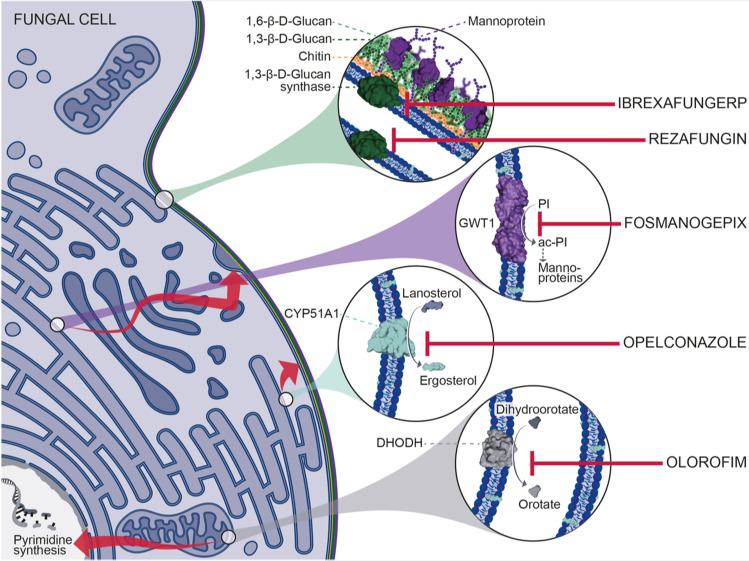
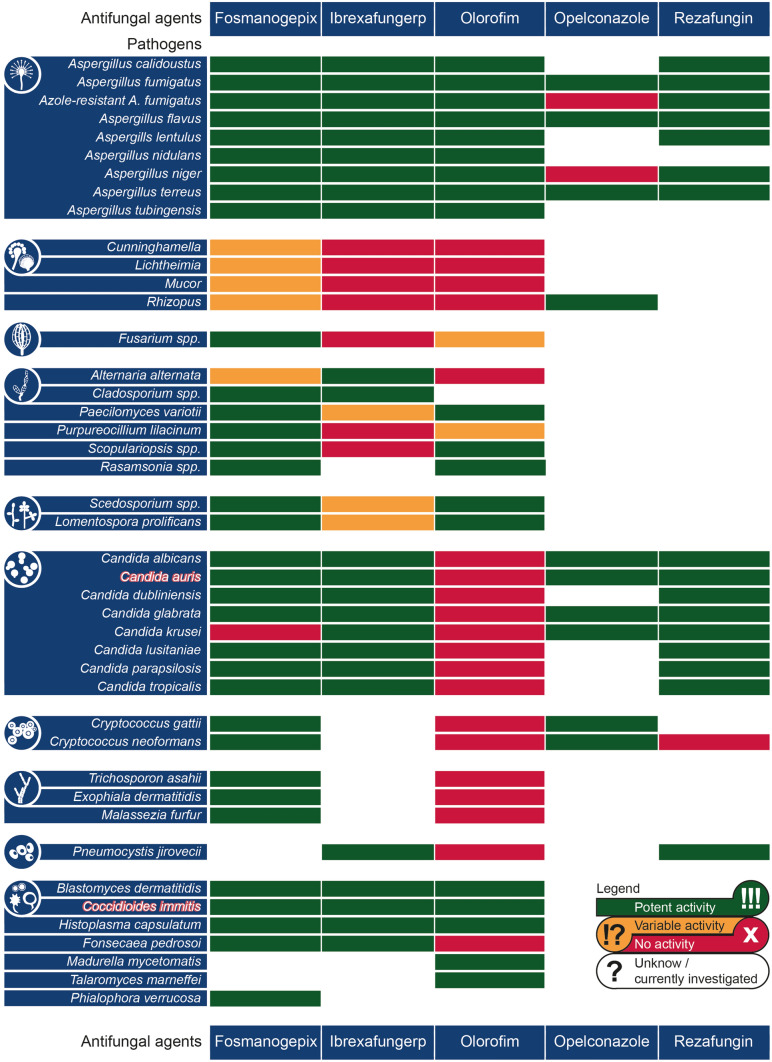
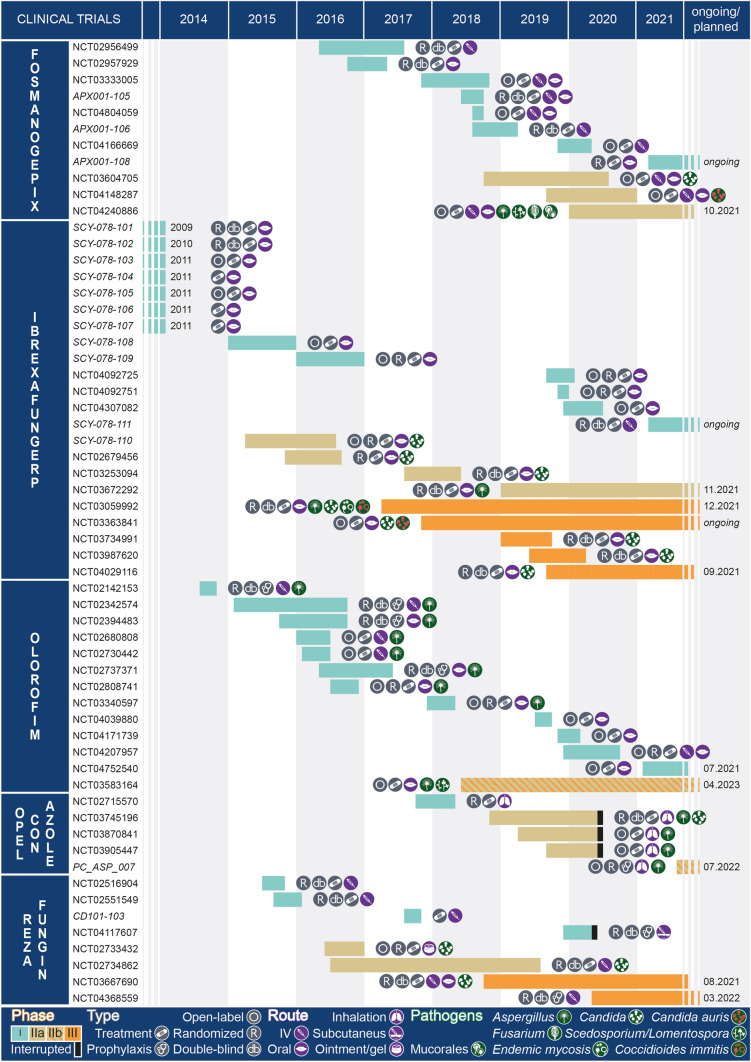
Verification
Claims the paper makes
The claims and statistics of this paper haven’t been checked yet.
Free: it reads the open-access text and checks the first 5 claims that cite a source we can check. Create a free account to check every claim.
Claims other papers make about this one
Each is checked against this paper’s own text: does it say what the citing paper says it does?
The source backs part of the claim, not all of it — or backs it for a different population, condition or comparison.
In the citing paper
“Fosmanogepix inhibits the inositol acyltransferase Gwt1 which catalyzes and early step in the glycosylphosphatidylinositol (GPI) anchor biosynthesis pathway, thereby preventing GPI-anchored protein maturation, a process critical for linkages between different components of the fungal cell wall [39,46].”
From Antifungal therapy of Candida biofilms: Past, present and future (2023) · cites this paper as [39]
Experimental — accuracy not yet measuredThe cited source says what the claim attributes to it.
In the citing paper
“Ibrexafungerp is another novel agent which inhibits (1→3)-β-D-glucan synthesis at a different site than echinocandins and thus retains activity against many organisms with echinocandin resistance due to FKS mutations, including many strains of C. auris.156”
From Epidemiology of Invasive Candidiasis (2024) · cites this paper as [156]
The cited source says what the claim attributes to it.
In the citing paper
“It has oral bioavailability of 35–50% and good systemic distribution except for the CNS.”
From Epidemiology of Invasive Candidiasis (2024) · cites this paper as [156]
The cited source says what the claim attributes to it.
In the citing paper
“Ibrexafungerp is currently only FDA approved as oral therapy for vulvovaginal candidiasis, although clinical trials for invasive candidiasis step-down therapy, refractory candidiasis, and C. auris are ongoing.149,156–159”
From Epidemiology of Invasive Candidiasis (2024) · cites this paper as [156]
In the citing paper
“At the present time there are a handful of investigational agents at different stages of the antifungal development pipeline. Although the majority still target ergosterol (same as azoles) or 1,3-β-D-glucan (same as echinocandins), they also include some novel classes with novel targets and mechanisms [25,39,40].”
From Antifungal therapy of Candida biofilms: Past, present and future (2023) · cites this paper as [39]
Self-check
Percentages, sums and reported differences re-computed from the paper’s own numbers.
The self-check needs the paper’s full text.
Citations
Cites
J Antimicrob Chemother 1994; 33: 350–351
O'SHAUGHNESSY, E. M., & DAS, S. S. (1994) · Journal of Antimicrobial Chemotherapy · doi:10.1093/jac/33.2.350 · Cited by 3,746
Cornely, O. A., Alastruey-Izquierdo, A., Arenz, D., Chen, S. C. A., Dannaoui, E., Hochhegger, B., Hoenigl, M., Jensen, H. E., Lagrou, K., Lewis, R. E., et al. (2019) · The Lancet Infectious Diseases · doi:10.1016/s1473-3099(19)30312-3 · Cited by 1,820
Self-citationDenning, D. W. (2003) · The Lancet · doi:10.1016/s0140-6736(03)14472-8 · Cited by 1,131 · cited 1×
“an N-linked acyl lipid side-chain [187] that is considered essential for the antifungal activity [188].”
BackgroundThe global problem of antifungal resistance: prevalence, mechanisms, and management
Perlin, D. S., Rautemaa-Richardson, R., & Alastruey-Izquierdo, A. (2017) · The Lancet Infectious Diseases · doi:10.1016/s1473-3099(17)30316-x · Cited by 1,055
Maertens, J. A., Raad, I. I., Marr, K. A., Patterson, T. F., Kontoyiannis, D. P., Cornely, O. A., Bow, E. J., Rahav, G., Neofytos, D., Aoun, M., et al. (2016) · The Lancet · doi:10.1016/s0140-6736(15)01159-9 · Cited by 1,001
Self-citationKoehler, P., Bassetti, M., Chakrabarti, A., Chen, S. C. A., Colombo, A. L., Hoenigl, M., Klimko, N., Lass-Flörl, C., Oladele, R. O., Vinh, D. C., et al. (2021) · The Lancet Infectious Diseases · doi:10.1016/s1473-3099(20)30847-1 · Cited by 951 · cited 1×
“In addition, new manifestations of disease in the intensive care population such as coronavirus disease 2019 (COVID-19)-associated aspergillosis [10–13] and mucormycosis [14, 15] are posing major problems because of extensive drug–drug interactions of antifungal drugs [16].”
BackgroundSelf-citationAneuploidy and Isochromosome Formation in Drug-Resistant Candida albicans
Selmecki, A., Forche, A., & Berman, J. (2006) · Science · doi:10.1126/science.1128242 · Cited by 733
Drug resistance and tolerance in fungi.
Berman, J., & Krysan, D. J. (2020) · Nature Reviews Microbiology · doi:10.1038/s41579-019-0322-2 · Cited by 642 · cited 21×
“Candida dubliensis, C. fabianii, C. glabrata, C. inconspicua, C. kefyr, C. krusei, C. lipolytica, C. pulcherrima, C. sojae, and C. tropicalis were also inhibited by MIC values ≤ 0.125 µg/mL and were susceptible to other echinocandins using epidemiological cut-off value (ECV) interpretive criteria [194, 195].”
BackgroundInfluentialChowdhary, A., Prakash, A., Sharma, C., Kordalewska, M., Kumar, A., Sarma, S., Tarai, B., Singh, A., Upadhyaya, G., Upadhyay, S., et al. (2018) · Journal of Antimicrobial Chemotherapy · doi:10.1093/jac/dkx480 · Cited by 577 · cited 1×
“At the same time, the emergence of Candida auris [7], as well as azole-resistant Aspergillus fumigatus [8], and cryptic species that are morphologically indistinguishable by classical methods within main Aspergillus sections [9] pose additional threats to our current antifungal armamentarium.”
BackgroundThe ALS gene family of Candida albicans.
Hoyer, L. L. (2001) · Trends in Microbiology · doi:10.1016/s0966-842x(01)01984-9 · Cited by 540
Research works printed but not linked: 9
- Vale-Silva L Ischer F Leibundgut-Landmann S Sanglard D Gain-of-function mutations in PDR1, a regulator of antifungal drug resistance in Candida glabrata, control adherence to host cells Infect Immun 2013 81 5 1709 1720 10.1128/IAI.00074-13 23460523 PMC3648025 · DOI · Paper page
- Hagiwara D Miura D Shimizu K Paul S Ohba A Gonoi T A novel Zn2-Cys6 transcription factor AtrR plays a key role in an azole resistance mechanism of Aspergillus fumigatus by co-regulating cyp51A and cdr1B expressions PLoS Pathog 2017 13 1 e1006096 10.1371/journal.ppat.1006096 28052140 PMC5215518 · DOI · Paper page
- Ghannoum M, Long L, Larkin EL, Isham N, Sherif R, Borroto-Esoda K, et al. SCY-078, a novel oral glucan synthase inhibitor, for the treatment of invasive aspergillosis: evaluation of antifungal activity singly and in combination. Antimicrob Agents Chemother. 2018;62(6):e00244-18. PMC5971594 29610204 · DOI · Paper page
- Trucksis M, Garrett G, Heriman I. A phase I multiple rising dose study evaluating safety, tolerability, and pharmacokinetics of MK-3118, oral glucan synthase inhibitor, in healthy volunteers. 51st Interscience Conference on Antimicrobial Agents and Chemotherapy (ICAAC); 2011; Chicago (IL).
- Kennedy T AG, Steiner J, Heep M, Oliver J, Sibley G, Law D., editor Multiple dose pharmacokinetics of an immediate-release tablet formulation of F901318 in healthy male and female subjects. In: Proceedings of the 27th European congress of clinical microbiology and infectious diseases; 22–25 April 2017; Vienna.
- Kennedy TAG, Steiner J, Heep M, Oliver J, Sibley G, Law D, editor Assessment of the duraiton of infusion on the tolerability and repaet dose pharmacokinetics of F901318 in health-volunteers (abstract P1711). In: Proceedings of the 27th European congress of clinical microbiology and infectious diseases; 22-25 April 2017; Vienna.
- Tio SH TK, Ng G, Rex JH, Carney D, Slavin M. Olorofim for a case of severe disseminated Lomentospora prolificans infection. In: Proceedings of the 30th European Congress of Clinical Microbiology and Infectious Diseases; 18–21 April 2020; Paris.
- Chen S RN, Cunneen S, Cornelissen K, Rex JH, Heath CH, Harvey E. A case of Lomentospora prolificans treated with the novel antifungal olorofim. In: Proceedings of the 30th European Congress of Clinical Microbiology and Infectious Diseases; 18–21 April 2020; Paris.
- Harvey EFL, Rex JH, Thompson G. Successful use of the novel antifungal olorofim in the treatment of dissemianted coccidioidomycosis. Proceedings of the 30th European Congress of Clinical Microbiology and Infectious Diseases; 18-21 April 2020; Paris.
Cited by
Pathogenesis and virulence of Candida albicans
Lopes, J. P., & Lionakis, M. S. (2022) · Virulence · doi:10.1080/21505594.2021.2019950 · Cited by 477
“review of the new antifungal agents in clinical development the reader is refered to [409].”
BackgroundCOVID-19-associated fungal infections
Hoenigl, M., Seidel, D., Sprute, R., Cunha, C., Oliverio, M., Goldman, G. H., Ibrahim, A. S., & Carvalho, A. (2022) · Nature Microbiology · doi:10.1038/s41564-022-01172-2 · Cited by 482
Self-citationThe importance of antimicrobial resistance in medical mycology
Gow, N. A. R., Johnson, C., Berman, J., Coste, A. T., Cuomo, C. A., Perlin, D. S., Bicanic, T., Harrison, T. S., Wiederhold, N., Bromley, M., et al. (2022) · Nature Communications · doi:10.1038/s41467-022-32249-5 · Cited by 224
Self-citationThe WHO fungal priority pathogens list: a crucial reappraisal to review the prioritisation
Casalini, G., Giacomelli, A., & Antinori, S. (2024) · The Lancet Microbe · doi:10.1016/s2666-5247(24)00042-9 · Cited by 197
Structural and mechanistic insights into fungal β-1,3-glucan synthase FKS1
Hu, X., Yang, P., Chai, C., Liu, J., Sun, H., Wu, Y., Zhang, M., Zhang, M., Liu, X., & Yu, H. (2023) · Nature · doi:10.1038/s41586-023-05856-5 · Cited by 213
Candida albicans and Candida glabrata : global priority pathogens
Katsipoulaki, M., Stappers, M. H. T., Malavia-Jones, D., Brunke, S., Hube, B., & Gow, N. A. R. (2024) · Microbiology and Molecular Biology Reviews · doi:10.1128/mmbr.00021-23 · Cited by 180
“All these novel antifungals have activity against both C. albicans and C. glabrata (100, 101).”
BackgroundThe pathobiology of human fungal infections
Brown, G. D., Ballou, E. R., Bates, S., Bignell, E., Borman, A. M., Brand, A., Brown, A. J. P., Coelho, C., Cook, P. C., Farrer, R. A., et al. (2024) · Nature Reviews Microbiology · doi:10.1038/s41579-024-01062-w · Cited by 209
“Improved agents, formulations and novel classes of antifungals, such as rezafungin, encochleated amphotericin B, opelconazole, ibrexafungerp, olorofim and fosmanogepix, offer new clinical opportunities 192 .”
Hoenigl, M., Arastehfar, A. A., Arendrup, M. C., Brüggemann, R. J. M., Carvalho, A., Chiller, T. M., Chen, W., Egger, M., Feys, S., Gangneux, J., et al. (2024) · Clinical Microbiology Reviews · doi:10.1128/cmr.00074-23 · Cited by 185
Self-citationHoenigl, M., Salmanton-García, J., Egger, M., Gangneux, J.-P., Bicanic, T., Arikan-Akdagli, S., Alastruey-Izquierdo, A., Klimko, N., Barac, A., Özenci, V., et al. (2023) · The Lancet Infectious Diseases · doi:10.1016/s1473-3099(22)00872-6 · Cited by 152
Self-citationFungal Endocarditis: Pathophysiology, Epidemiology, Clinical Presentation, Diagnosis, and Management
Thompson, G. R., Jenks, J. D., Baddley, J. W., Lewis, J. S., Egger, M., Schwartz, I. S., Boyer, J., Patterson, T. F., Chen, S. C. ‐., Pappas, P. G., et al. (2023) · Clinical Microbiology Reviews · doi:10.1128/cmr.00019-23 · Cited by 165
Self-citationLionakis, M. S., & Chowdhary, A. (2024) · New England Journal of Medicine · doi:10.1056/nejmra2402635 · Cited by 130
Vanreppelen, G., Wuyts, J., Dijck, P. V., & Vandecruys, P. (2023) · Journal of Fungi · doi:10.3390/jof9020171 · Cited by 128
Antifungals: From Pharmacokinetics to Clinical Practice
do Carmo, A., Rocha, M. J., Pereirinha, P., Tomé, R., & Costa, E. (2023) · Antibiotics · doi:10.3390/antibiotics12050884 · Cited by 132
“The antifungal drug received orphan drug designation from the FDA and from the EMA for the treatment of cocidioidomycosis, scedosporiosis, invasive scopulariopsis and invasive aspergillosis [136,145,147,149].”
BackgroundInfluentialEpidemiology of Invasive Candidiasis
Bays, D., Jenkins, E., Lyman, M., Chiller, T., Strong, N., Ostrosky-Zeichner, L., Hoenigl, M., Pappas, P., & Thompson, G. (2024) · Clinical Epidemiology · doi:10.2147/clep.s459600 · Cited by 109
“150 It has oral bioavailability of 35–50% and good systemic distribution except for the CNS. 156–159 Lastly, fosmanogepix is another encouraging novel antifungal.”
BackgroundSelf-citationFungal Drug Response and Antimicrobial Resistance
Osset-Trénor, P., Pascual‐Ahuir, A., & Proft, M. (2023) · Journal of Fungi · doi:10.3390/jof9050565 · Cited by 117
Stemler, J., Mellinghoff, S. C., Khodamoradi, Y., Sprute, R., Classen, A. Y., Zapke, S. E., Hoenigl, M., Krause, R., Schmidt‐Hieber, M., Heinz, W., et al. (2023) · Journal of Antimicrobial Chemotherapy · doi:10.1093/jac/dkad143 · Cited by 109
Self-citationA Visual and Comprehensive Review on COVID-19-Associated Pulmonary Aspergillosis (CAPA)
Feys, S., Almyroudi, M. P., Braspenning, R., Lagrou, K., Spriet, I., Dimοpoulos, G., & Wauters, J. (2021) · Journal of Fungi · doi:10.3390/jof7121067 · Cited by 104
“New antifungals, such as opelconazole, fosmanogepix, ibrexafungerp, olorofim and rezafungin are currently being evaluated and may be added to the therapeutic armamentarium in the future [7,111].”
BackgroundPulmonary Histoplasmosis: A Clinical Update
Barros, N., Wheat, L. J., & Hage, C. A. (2023) · Journal of Fungi · doi:10.3390/jof9020236 · Cited by 113
“capsulatum and may be helpful for those who are unable to tolerate Itraconazole or other azoles [91].”
BackgroundNew treatment options for critically important WHO fungal priority pathogens
Kriegl, L., Egger, M., Boyer, J., Hoenigl, M., & Krause, R. (2024) · Clinical Microbiology and Infection · doi:10.1016/j.cmi.2024.03.006 · Cited by 105
Self-citationCheng, Q., Widanage, M. C. D., Yarava, J. R., Ankur, A., Latgé, J., Wang, P., & Wang, T. (2024) · Nature Communications · doi:10.1038/s41467-024-52759-8 · Cited by 92
Candida parapsilosis complex in the clinical setting
Govrins, M. A., & Lass‐Flörl, C. (2023) · Nature Reviews Microbiology · doi:10.1038/s41579-023-00961-8 · Cited by 94
“Isavuconazole, which is the only new approved antifungal in the past decade 95 , shows low MICs 101 and has been approved for the treatment of invasive aspergillosis and mucormycosis.”
BackgroundInfluentialSelf-citationEvolution of antifungal resistance in the environment
van Rhijn, N., & Rhodes, J. L. (2025) · Nature Microbiology · doi:10.1038/s41564-025-02055-y · Cited by 94
“Other antifungal drug classes with unique mechanisms of action have also been recently developed (for example, olorofim and fosmanogepix), which will be essential to outpace the adaptive capabilities of pathogenic fungi and ensure robust crop protection and patient treatment 121 .”
Pagano, L., Maschmeyer, G., Lamoth, F., Blennow, O., Xhaard, A., Spadea, M., Busca, A., Cordonnier, C., Maertens, J. A., On behalf of, E. C. I. L., et al. (2025) · Leukemia · doi:10.1038/s41375-025-02586-7 · Cited by 90
Self-citationInvestigational Antifungal Agents for Invasive Mycoses: A Clinical Perspective
Lamoth, F., Lewis, R. E., & Kontoyiannis, D. P. (2022) · Clinical Infectious Diseases · doi:10.1093/cid/ciab1070 · Cited by 85
Treatment of Cryptococcal Meningitis: How Have We Got Here and Where are We Going?
Ngan, N. T. T., Flower, B., & Day, J. (2022) · Drugs · doi:10.1007/s40265-022-01757-5 · Cited by 90
“gattii, Candida albicans, Candida auris and Aspergillus fumigatus and is synergistic with fluconazole [85] and liposomal amphotericin B [86].”
BackgroundInvasive Pulmonary Aspergillosis
Ledoux, M., & Herbrecht, R. (2023) · Journal of Fungi · doi:10.3390/jof9020131 · Cited by 90
Current treatments against mucormycosis and future directions
Smith, C., & Lee, S. C. (2022) · PLoS Pathogens · doi:10.1371/journal.ppat.1010858 · Cited by 80
OMICS and Other Advanced Technologies in Mycological Applications
Wijayawardene, N. N., Boonyuen, N., Ranaweera, C. B., Zoysa, H. K. S. D., Padmathilake, K. R. E., Nifla, F., Dai, D.-Q., Liu, Y., Suwannarach, N., Kumla, J., et al. (2023) · Journal of Fungi · doi:10.3390/jof9060688 · Cited by 85
Fungal biofilms in human health and disease
Ramage, G., Kean, R., Rautemaa-Richardson, R., Williams, C., & Lopez-Ribot, J. L. (2025) · Nature Reviews Microbiology · doi:10.1038/s41579-025-01147-0 · Cited by 72
“…(aspergillosis, including azole-resistant; scedosporiosis, lomentosporiosis, coccidioidomycosis and Scopulariopsis invasive fungal infections) 154,171 (Shionogi and F2G) In vitro studies show low minimal biofilm eradication concentration and anti-biofilm activity against azole-resistant A.…”
InfluentialStemler, J., de Jonge, N., Skoetz, N., Sinkó, J., Brüggemann, R. J., Busca, A., Ben‐Ami, R., Ráčil, Z., Piechotta, V., Lewis, R., et al. (2022) · The Lancet Haematology · doi:10.1016/s2352-3026(22)00073-4 · Cited by 80
Self-citationWiederhold, N. P. (2022) · Journal of Fungi · doi:10.3390/jof8080857 · Cited by 67
Self-citationTreatment of Invasive Aspergillosis: How It’s Going, Where It’s Heading
Boyer, J., Feys, S., Zsifkovits, I., Hoenigl, M., & Egger, M. (2023) · Mycopathologia · doi:10.1007/s11046-023-00727-z · Cited by 77
“A double-blind, randomized, placebo-controlled study assessing the efficacy and safety of opelconazole when added to systemic antifungal therapy in refractory IA (NCT05238116) is currently recruiting patients and is estimated to be completed in 2024 [32].”
InfluentialSelf-citationSingh, A., Singh, K., Sharma, A., Kaur, K., Chadha, R., & Bedi, P. M. S. (2023) · Chemical Biology & Drug Design · doi:10.1111/cbdd.14266 · Cited by 71
Advances in the treatment of invasive fungal disease
Zhang, Z., Bills, G. F., & An, Z. (2023) · PLoS Pathogens · doi:10.1371/journal.ppat.1011322 · Cited by 70
“Rezafungin is a novel echinocandin with exceptional stability and solubility and a uniquely long half-life allowing for front-loaded drug exposure with once-weekly dosing [5].”
BackgroundInfluentialFungal infections in immunocompromised critically ill patients
Garnacho-Montero, J., Barrero-García, I., & León-Moya, C. (2024) · Journal of Intensive Medicine · doi:10.1016/j.jointm.2024.01.005 · Cited by 56
“[ 76 ] Therefore, the emergence of these novel drugs is promising for future disease management.”
BackgroundFisher, M. C., Burnett, F. J., Chandler, C., Gow, N. A. R., Gurr, S. J., Hart, A. J., Holmes, A. H., May, R. C., Quinn, J., Soliman, T., et al. (2024) · npj Antimicrobials and Resistance · doi:10.1038/s44259-024-00055-2 · Cited by 67
Verweij, P. E., Arendrup, M. C., Alastruey‐Izquierdo, A., Gold, J. A. W., Lockhart, S. R., Chiller, T. M., & White, P. L. (2022) · Drug Resistance Updates · doi:10.1016/j.drup.2022.100885 · Cited by 73
“Olorofim, an orally available drug currently undergoing clinical evaluation, is the first member of its class to show promising in vitro and in vivo activity against azole-resistant A. fumigatus and other difficult-to-treat mold infections (Jørgensen et al., 2018; Hoenigl et al., 2021).”
Backgrounddos Reis, T. F., de Castro, P. A., Bastos, R. W., Pinzan, C. F., Souza, P. F. N., Ackloo, S. Z., Hossain, M. A., Drewry, D. H., Alkhazraji, S., Ibrahim, A. S., et al. (2023) · Nature Communications · doi:10.1038/s41467-023-37573-y · Cited by 68
Candida auris: A Continuing Threat
Bhargava, A., Klamer, K., Sharma, M., Ortiz, D. A., & Saravolatz, L. I. I. (2025) · Microorganisms · doi:10.3390/microorganisms13030652 · Cited by 72
“An open-label study is ongoing to evaluate the effectiveness of ibrexafungerp for infections caused by C. auris [98].”
New antifungal strategies: Drug combination and co-delivery
Zhu, P., Li, Y., Guo, T., Liu, S., Tancer, R. J., Hu, C., Zhao, C., Xue, C., & Liao, G. (2023) · Advanced Drug Delivery Reviews · doi:10.1016/j.addr.2023.114874 · Cited by 63
What Is New in Pulmonary Mucormycosis?
Danion, F., Coste, A., Hyaric, C. L., Melenotte, C., Lamoth, F., Calandra, T., Garcia‐Hermoso, D., Aimanianda, V., Lanternier, F., & Lortholary, O. (2023) · Journal of Fungi · doi:10.3390/jof9030307 · Cited by 66
Ibrexafungerp, a Novel Triterpenoid Antifungal in Development for the Treatment of Mold Infections
Angulo, D. A., Alexander, B. D., Rautemaa‐Richardson, R., Alastruey‐Izquierdo, A., Hoenigl, M., Ibrahim, A. S., Ghannoum, M. A., King, T. R., Azie, N. E., & Walsh, T. J. (2022) · Journal of Fungi · doi:10.3390/jof8111121 · Cited by 63
“Figure adapted from Hoenigl, 2021 [33].”
Self-citationAmphotericin B in the Era of New Antifungals: Where Will It Stand?
Akinosoglou, K., Rigopoulos, E. A., Papageorgiou, D., Schinas, G., Polyzou, E., Dimopoulou, E., Gogos, C. A., & Dimοpoulos, G. (2024) · Journal of Fungi · doi:10.3390/jof10040278 · Cited by 68
“Inhibition of the fungal enzyme Gwt1 facilitates the maturation of glycosylphosphatidylinositol-anchored proteins, thereby affecting fungal cell integrity, growth, and virulence [117].”
BackgroundPotential Strategies to Control the Risk of Antifungal Resistance in Humans: A Comprehensive Review
Rabaan, A. A., Sulaiman, T., Al-Ahmed, S. H., Buhaliqah, Z. A., Buhaliqah, A. A., AlYuosof, B., Alfaresi, M. S., Fares, M. A. A., Alwarthan, S. M., Alkathlan, M. S., et al. (2023) · Antibiotics · doi:10.3390/antibiotics12030608 · Cited by 66
“The existing antifungal therapeutic agents are affected by other factors such as drug–drug interaction, toxicity, and limitation in routes of drug administration [32].”
BackgroundAlves, V., Zamith‐Miranda, D., Frasés, S., & Nosanchuk, J. D. (2025) · Journal of Fungi · doi:10.3390/jof11020093 · Cited by 60
“The rise of antifungal resistance poses significant challenges in both medicine and agriculture [149,150].”
Review of the novel antifungal drug olorofim (F901318)
Vanbiervliet, Y., Nieuwenhuyse, T. V., Aerts, R., Lagrou, K., Spriet, I., & Maertens, J. A. (2024) · BMC Infectious Diseases · doi:10.1186/s12879-024-10143-3 · Cited by 58
Antifungal therapy of Candida biofilms: Past, present and future
Ajetunmobi, O. H., Badali, H., Romo, J. A., Ramage, G., & Lopez-Ribot, J. L. (2023) · Biofilm · doi:10.1016/j.bioflm.2023.100126 · Cited by 52
Antifungal therapy: Novel drug delivery strategies driven by new targets
Wu, S., Song, R., Liu, T., & Li, C. (2023) · Advanced Drug Delivery Reviews · doi:10.1016/j.addr.2023.114967 · Cited by 57
Hoenigl, M., Egger, M., Price, J., Krause, R., Prattes, J., & White, P. L. (2023) · Journal of Clinical Microbiology · doi:10.1128/jcm.01859-22 · Cited by 51
“In light of a loaded antifungal pipeline with several new antifungal classes entering late-stage clinical development (27, 28), accurate detection of causative fungal species will become even more important in the near future for enabling optimal targeted treatment.”
BackgroundSelf-citationDickwella Widanage, M. C., Singh, K., Li, J., Yarava, J. R., Scott, F. J., Xu, Y., Gow, N. A. R., Mentink-Vigier, F., Wang, P., Lamoth, F., et al. (2025) · Nature Communications · doi:10.1038/s41467-025-61678-1 · Cited by 51
Prevalence of COVID-19-Associated Pulmonary Aspergillosis: Critical Review and Conclusions
Egger, M., Bussini, L., Hoenigl, M., & Bartoletti, M. (2022) · Journal of Fungi · doi:10.3390/jof8040390 · Cited by 47
“Novel antifungals in the pipeline, namely fosmanogepix and olorofim, may have similar efficacy compared to azoles, yet without the same burden of limiting drug–drug interactions [49].”
BackgroundSelf-citationHoenigl, M., Sprute, R., Arastehfar, A., Perfect, J. R., Lass-Flörl, C., Bellmann, R., Prattes, J., Thompson, G. R., Wiederhold, N. P., Al Obaidi, M. M., et al. (2022) · Expert Opinion on Investigational Drugs · doi:10.1080/13543784.2022.2086120 · Cited by 45
“is comparable to those of other echinocandins [28].”
BackgroundResultInfluentialSelf-citationOur current clinical understanding of Candida biofilms: where are we two decades on?
Ramage, G., Borghi, E., Rodrigues, C. F., Kean, R., Williams, C., & Lopez-Ribot, J. L. (2023) · Apmis · doi:10.1111/apm.13310 · Cited by 50
“There is a renewed optimism in the management of fungal infections as new antifungals emerge into clinical use (101).”
InfluentialUpdate on fungal lipid biosynthesis inhibitors as antifungal agents
Vishwakarma, M., Haider, T., & Soni, V. (2023) · Microbiological Research · doi:10.1016/j.micres.2023.127517 · Cited by 51
Invasive aspergillosis: A comprehensive review
Machado, M., Fortün, J., & Muñóz, P. (2024) · Medicina Clínica · doi:10.1016/j.medcli.2024.01.045 · Cited by 51
Hänsel, L., Schumacher, J., Denis, B., Hamane, S., Cornely, O. A., & Koehler, P. A. (2023) · Clinical Microbiology and Infection · doi:10.1016/j.cmi.2023.04.015 · Cited by 50
Self-citationUpdate on therapeutic approaches for invasive fungal infections in adults
Boutin, C.-A., & Luong, M. (2024) · Therapeutic Advances in Infectious Disease · doi:10.1177/20499361231224980 · Cited by 54
Diagnosis and Treatment of Invasive Aspergillosis Caused by Non-fumigatus Aspergillus spp.
Stemler, J., Többen, C., Lass‐Flörl, C., Steinmann, J., Ackermann, K., Rath, P., Simon, M., Cornely, O. A., & Koehler, P. A. (2023) · Journal of Fungi · doi:10.3390/jof9040500 · Cited by 47
Self-citationAntifungal prophylaxis and pre-emptive therapy: When and how?
Sprute, R., Nacov, J. A., Neofytos, D., Oliverio, M., Prattes, J., Reinhold, I., Cornely, O. A., & Stemler, J. (2023) · Molecular Aspects of Medicine · doi:10.1016/j.mam.2023.101190 · Cited by 45
Self-citationPublic Health Research Priorities for Fungal Diseases: A Multidisciplinary Approach to Save Lives
Smith, D. J., Gold, J. A. W., Benedict, K., Wu, K., Lyman, M., Jordan, A., Medina, N., Lockhart, S. R., Sexton, D. J., Chow, N. A., et al. (2023) · Journal of Fungi · doi:10.3390/jof9080820 · Cited by 48
“While the recent development of novel classes of antifungals equips providers with a wider array of options for Candida treatment, further efforts are needed in antifungal supply-chain management to provide effective therapy in resource-limited settings [27,52].”
BackgroundWolfgruber, S., Sedik, S., Klingspor, L., Tortorano, A. M., Gow, N. A. R., Lagrou, K., Gangneux, J., Maertens, J. A., Meis, J. F. G. M., Lass‐Flörl, C., et al. (2024) · Mycopathologia · doi:10.1007/s11046-024-00871-0 · Cited by 44
Self-citationA synthetic peptide mimic kills Candida albicans and synergistically prevents infection
Schaefer, S., Vij, R., Sprague, J. L., Austermeier, S., Dinh, H., Judzewitsch, P. R., Müller‐Loennies, S., Silva, T. L., Seemann, E. A., Qualmann, B., et al. (2024) · Nature Communications · doi:10.1038/s41467-024-50491-x · Cited by 45
New antifungal strategies and drug development against WHO critical priority fungal pathogens
Li, Y., Liu, Y., Jiang, Y., Yang, Y., Ni, W., Zhang, W., & Tan, L. (2025) · Frontiers in Cellular and Infection Microbiology · doi:10.3389/fcimb.2025.1662442 · Cited by 53
Antifungal Development and the Urgency of Minimizing the Impact of Fungal Diseases on Public Health
de Oliveira, H. C., Bezerra, B. T., & Rodrigues, M. L. (2022) · ACS Bio & Med Chem Au · doi:10.1021/acsbiomedchemau.2c00055 · Cited by 46
Oliva, A., Rosa, F. G. D., Mikulska, M., Pea, F., Sanguinetti, M., Tascini, C., & Venditti, M. (2023) · Expert Review of Anti-infective Therapy · doi:10.1080/14787210.2023.2240956 · Cited by 51
The Role of Novel Antifungals in the Management of Candidiasis: A Clinical Perspective
Ordaya, E. E., Clement, J., & Vergidis, P. I. (2023) · Mycopathologia · doi:10.1007/s11046-023-00759-5 · Cited by 45
Fungal cell wall biogenesis: structural complexity, regulation and inhibition
Gow, N. A. R. (2025) · Fungal Genetics and Biology · doi:10.1016/j.fgb.2025.103991 · Cited by 47
Gorris, M. E., Ardon‐Dryer, K., Campuzano, A., Castañón-Olivares, L. R., Gill, T. E., Greene, A., Hung, C.-Y., Kaufeld, K., Lacy, M. D., & Sánchez-Paredes, E. (2023) · Journal of Fungi · doi:10.3390/jof9010083 · Cited by 40
“Additionally, there are several promising drug candidates in late-stage clinical development [47,48].”
Fahal, A. H., Ahmed, E. S., Bakhiet, S. M., Bakheet, O. E., Fahal, L. A., Mohamed, A. A., Mohamed, E. S. W., Bahar, M. E. N., Attalla, H. Y., Siddig, E. E., et al. (2024) · The Lancet Infectious Diseases · doi:10.1016/s1473-3099(24)00404-3 · Cited by 38
George, M. E., Gaitor, T. T., Cluck, D. B., Henao‐Martínez, A. F., Sells, N. R., & Chastain, D. B. (2025) · Therapeutic Advances in Infectious Disease · doi:10.1177/20499361251313841 · Cited by 71
Egger, M., Salmanton‐García, J., Barac, A. M., Gangneux, J., Guegan, H., Arsić-Arsenijević, V. S., Matos, T., Tomazin, R., Климко, Н. Н., Bassetti, M., et al. (2023) · Mycopathologia · doi:10.1007/s11046-023-00776-4 · Cited by 37
“New antifungals, including rezafungin (echinocandin with prolonged half-life allowing once-a-week administration) and ibrexafungerp (oral triterpenoid glucan synthase inhibitor) are currently in late stage clinical development and may help tackle this problem [12, 13].”
BackgroundSelf-citationThe evolution of antifungal therapy: Traditional agents, current challenges and future perspectives
de Souza, C. M., Bezerra, B. T., Mellon, D. A., & de Oliveira, H. C. (2025) · Current Research in Microbial Sciences · doi:10.1016/j.crmicr.2025.100341 · Cited by 53
Li, Z., Huang, Y., Tu, J., Yang, W., Liu, N., Wang, W., & Sheng, C. (2023) · Journal of Medicinal Chemistry · doi:10.1021/acs.jmedchem.3c00165 · Cited by 36
John, L. L. H., Thomson, D. D., Bicanic, T. A., Hoenigl, M., Brown, A. J. P., Harrison, T. S., & Bignell, E. (2023) · Antimicrobial Agents and Chemotherapy · doi:10.1128/aac.01645-22 · Cited by 37
“New antifungal drugs, such as fosmanogepix, are currently in development (reviewed in (30)).”
BackgroundSelf-citationIbrexafungerp: A narrative overview
Ayoubi, L. W. E., Allaw, F., Moussa, E., & Kanj, S. S. (2024) · Current Research in Microbial Sciences · doi:10.1016/j.crmicr.2024.100245 · Cited by 41
“The specific interaction between IBX and Cryptococcus neoformans remains to be explored (Hoenigl et al., 2021).”
BackgroundLiang, X., Chen, D., Wang, J., Liao, B., Shen, J., Ye, X., Wang, Z., Zhu, C., Gou, L., Zhou, X., et al. (2023) · International Journal of Oral Science · doi:10.1038/s41368-023-00245-0 · Cited by 32
Després, P. C., Cisneros, A. F., Alexander, E. M. M., Sonigara, R., Gagné-Thivierge, C., Dubé, A. K., & Landry, C. R. (2022) · Nature Ecology & Evolution · doi:10.1038/s41559-022-01846-4 · Cited by 32
Diagnosis and Prevention of Invasive Fungal Infections in the Immunocompromised Host
Wahab, A., Sanborn, D., Vergidis, P. I., Razonable, R. R., Yadav, H., & Pennington, K. M. (2024) · CHEST Journal · doi:10.1016/j.chest.2024.08.046 · Cited by 35
Lomentospora prolificans Disseminated Infections: A Systematic Review of Reported Cases
Konsoula, A., Agouridis, A. P., Markaki, L., Tsioutis, C., & Spernovasilis, N. A. (2022) · Pathogens · doi:10.3390/pathogens12010067 · Cited by 34
“Inherent resistance to most available treatments raises the need for new classes of antifungal agents [123].”
BackgroundHoenigl, M., Jenks, J. D., Egger, M., Nucci, M., & Thompson, G. R. (2023) · Mycopathologia · doi:10.1007/s11046-023-00790-6 · Cited by 30
Self-citationReview of treatment options for a multidrug-resistant fungus: Candida auris
Wang, S., Pan, J., Gu, L., Wang, W., Wei, B., Zhang, H., Chen, J., & Wang, H. (2023) · Medical Mycology · doi:10.1093/mmy/myad127 · Cited by 34
Susan, V., Lang, M., Sabou, M., & Bourel‐Bonnet, L. (2025) · Pharmaceuticals · doi:10.3390/ph18081220 · Cited by 30
“This small molecule presents a wide antifungal activity against molds, including Aspergillus spp., Scedosporium spp., and dimorphic fungi such as Histoplasma spp. and Coccidioides spp. [105,111].”
InfluentialAntifungal stewardship in solid organ transplantation
Kriegl, L., Boyer, J., Egger, M., & Hoenigl, M. (2022) · Transplant Infectious Disease · doi:10.1111/tid.13855 · Cited by 31
Self-citationEgger, M., Bellmann, R., Krause, R., Boyer, J., Jakšić, D., & Hoenigl, M. (2023) · Infection and Drug Resistance · doi:10.2147/idr.s372546 · Cited by 31
“While ibrexafungerp and rezafungin as well as olorofim are not thought to have activity against Mucorales, preliminary data from a Rhizopus delemar mouse model 104 indicated that survival with ibrexafungerp (35”
BackgroundInfluentialSelf-citationTargeting Fks1 proteins for novel antifungal drug discovery
Kumar, V., Huang, J., Dong, Y., & Hao, G. (2024) · Trends in Pharmacological Sciences · doi:10.1016/j.tips.2024.02.007 · Cited by 32
What’s New in Cryptococcus gattii: From Bench to Bedside and Beyond
Beardsley, J., Dao, A., Keighley, C., Garnham, K., Halliday, C. L., Chen, S. C.-A., & Sorrell, T. C. (2022) · Journal of Fungi · doi:10.3390/jof9010041 · Cited by 34
“A comprehensive review of the antifungal drug pipeline in 2021 [73] reported the spectra of activity for fosmanogepix, ibrexafungerp, olorofim, opelconazole, and rezafungin (all agents in late-stage clinical development).”
BackgroundWeerasinghe, H., Stölting, H., Rose, A. J., & Traven, A. (2024) · Microbiology and Molecular Biology Reviews · doi:10.1128/mmbr.00171-22 · Cited by 31
“Some new antifungal drugs are in the pipeline, including a new class of cell wall biogenesis inhibitors (9).”
Donovan, F., Ampel, N. M., & Thompson, G. R. (2024) · Infectious Disease Clinics of North America · doi:10.1016/j.idc.2024.11.012 · Cited by 29
Self-citationAntifungal treatment strategies and their impact on resistance development in clinical settings
van Rhijn, N., & White, P. L. (2025) · Journal of Antimicrobial Chemotherapy · doi:10.1093/jac/dkaf382 · Cited by 33
Inhaled Antifungal Agents for Treatment and Prophylaxis of Bronchopulmonary Invasive Mold Infections
Brunet, K., Martellosio, J.-P., Tewes, F., Marchand, S., & Rammaert, B. (2022) · Pharmaceutics · doi:10.3390/pharmaceutics14030641 · Cited by 32
“A new triazole drug, named PC945 (opelconazole), was developed to optimize topical treatment with tissue retention and physicochemical properties adapted to inhalation [163,164].”
BackgroundMethodHost immune response against fungal biofilms
Mannan, M. A., Nabeela, S., Mishra, R., & Uppuluri, P. (2024) · Current Opinion in Microbiology · doi:10.1016/j.mib.2024.102520 · Cited by 29
The progress and future of the treatment of Candida albicans infections based on nanotechnology
Gao, Y., Cao, Q., Xiao, Y., Wu, Y., Ding, L., Huang, H., Li, Y., Yang, J., & Meng, L. (2024) · Journal of Nanobiotechnology · doi:10.1186/s12951-024-02841-6 · Cited by 34
Antifungal pipeline: New tools for the treatment of mycoses
Wolfgruber, S., Salmanton‐García, J., Kuate, M. P. N., Hoenigl, M., & Brunelli, J. G. P. (2024) · Revista Iberoamericana de Micología · doi:10.1016/j.riam.2024.11.001 · Cited by 31
Self-citationPost-COVID-19 Fungal Infection in the Aged Population
Chavda, V. P., Mishra, T., Kamaraj, S., Punetha, S., Sengupta, O., Joshi, Y., Vuppu, S., Vaghela, D. A., & Vora, L. K. (2023) · Vaccines · doi:10.3390/vaccines11030555 · Cited by 28
Candida parapsilosis Sensu Stricto Antifungal Resistance Mechanisms and Associated Epidemiology
Franconi, I., Rizzato, C., Poma, N. V., Tavanti, A., & Lupetti, A. (2023) · Journal of Fungi · doi:10.3390/jof9080798 · Cited by 29
“parapsilosis sensu stricto was documented [139]; however, in 2022 Siopi et al.”
BackgroundWake-up Call: Rapid Increase in Human Fungal Diseases under Climate Change
Neabore, L. K. (2024) · Environmental Health Perspectives · doi:10.1289/ehp14722 · Cited by 30
“No new classes of antifungals have reached the market in the last 20 years, 48,49 but Perfect, Hoenigl, and others are optimistic about a number of new classes of antifungals in late-stage clinical development.”
BackgroundSmall molecules for combating multidrug-resistant superbug Candida auris infections
Tu, J., Liu, N., Huang, Y., Yang, W., & Sheng, C. (2022) · Acta Pharmaceutica Sinica B · doi:10.1016/j.apsb.2022.08.001 · Cited by 29
Satała, D., Juszczak, M., Wronowska, E., Surowiec, M., Kulig, K., Kozik, A., Rąpała‐Kozik, M., & Karkowska‐Kuleta, J. (2022) · Cellular Microbiology · doi:10.1155/2022/2599136 · Cited by 28
Wiederhold, N. P., Patterson, H. P., Sanders, C. J., & Cañete-Gibas, C. F. (2022) · Mycoses · doi:10.1111/myc.13548 · Cited by 27
Self-citationEmerging Diagnostics and Therapeutics for Invasive Fungal Infections
Friedman, D. Z. P., & Schwartz, I. S. (2023) · Infectious Disease Clinics of North America · doi:10.1016/j.idc.2023.05.001 · Cited by 26
Metadata
- Authors
- Hoenigl, M., Sprute, R., Egger, M., Arastehfar, A., Cornely, O. A., Krause, R., Lass-Flörl, C., Prattes, J., Spec, A., Thompson, G. R., Wiederhold, N., & Jenks, J. D.
- Affiliations
- Medical University of Graz (AT)
- University of Cologne (DE)
- Hackensack Meridian Health (US)
- Washington University in St. Louis (US)
- University of California Davis Medical Center (US)
- The University of Texas at San Antonio Health Science Center (US)
- University of California San Diego (US)
- Corresponding author
- Hoenigl, Martin
- ORCID
- Venue
- Drugs
- Published
- 2021-10
- Volume
- 81
- Issue
- 15
- Pages
- 1703-1729
- ISSN
- 0012-6667 (ISSN-L)
- 1179-1950
- PMC
- PMC8501344
- OpenAlex
- W3202074216
- Cited by
- 467
- References
- 188
- Citations by year
- 2026: 78 · 2025: 116 · 2024: 117 · 2023: 98 · 2022: 54 · 2021: 3
- FWCI
- 7.96
- Type
- journal article
- Language
- en
- Open access
- hybrid
- doi.org
- Licence
- cc-by-nc
- creativecommons.org/licenses/by-nc/4.0 (tdm)
- creativecommons.org/licenses/by-nc/4.0 (vor, 8 d)
- Locations
- Drugs (publishedVersion, cc-by-nc)
- PubMed Central (publishedVersion, cc-by-nc)
- PubMed (publishedVersion)
- Kölner Universitäts PublikationsServer (Universität zu Köln) (publishedVersion)
- eScholarship (California Digital Library) (submittedVersion, cc-by-nc)
- Digital Commons@Becker (Washington University School of Medicine) (submittedVersion, cc-by-nc)
- eScholarship (California Digital Library) (submittedVersion)
- Funders
- national institute of allergy and infectious diseases (UL1TR001442)
- Medical University of Graz
- Topics
- Health Sciences › Medicine › Infectious Diseases › Antifungal resistance and susceptibility
- Life Sciences › Agricultural and Biological Sciences › Plant Science › Fungal Plant Pathogen Control
- Health Sciences › Medicine › Infectious Diseases › Fungal Infections and Studies
- Keywords
- antifungal drug development, fosmanogepix, ibrexafungerp, olorofim, rezafungin, invasive fungal infections, antifungal resistance mechanisms, triterpenoids, triazoles, echinocandins, pharmacokinetics, drug-drug interactions, unmet medical needs
- MeSH terms
- Invasive Fungal Infections, Drug Development, Animals, Antifungal Agents, Drug Interactions, Fungi, Humans, Drug Resistance, Fungal
About these checks
Registry, retraction, Cites and statistics results are computed, not judged, with one exception: a printed reference that no index lists is read once by a model before it counts as a citation error. Claims are extracted by a model and kept only when their quote appears verbatim in the text; each cited source is then checked, with a model’s help, for whether it says what the claim relies on. Those verdicts can be wrong — read the claim’s quote and the cited source before relying on one.
Statistics and arithmetic are recomputed, not judged.
Confidence bands are shown only for fields calibrated on our annotated test set. None is calibrated yet, so no band is shown.
What counts as a claim ›How we measure confidence ›How we check this ›
Are you an author, or do you see a problem with this page? Request a review
Data sources
Bibliographic data: Semantic Scholar, OpenAlex, Crossref.
Contains information from the Semantic Scholar Academic Graph Datasets, made available under the ODC Attribution License (ODC-BY 1.0).
Semantic Scholar’s data is described in: Kinney, R., et al. (2023). The Semantic Scholar Open Data Platform. arXiv:2301.10140.
