

The DOI matches its Crossref record; 44 of the 44 references it cites were found in a registry or an index.
A Comparison of the Energetic Cost of Running in Marathon Racing Shoes
Open accessAbstract
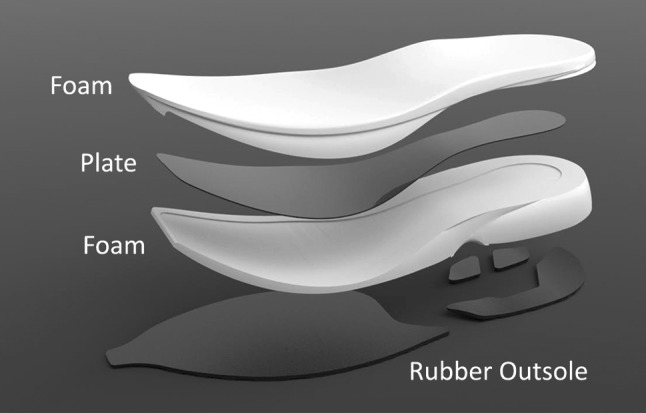
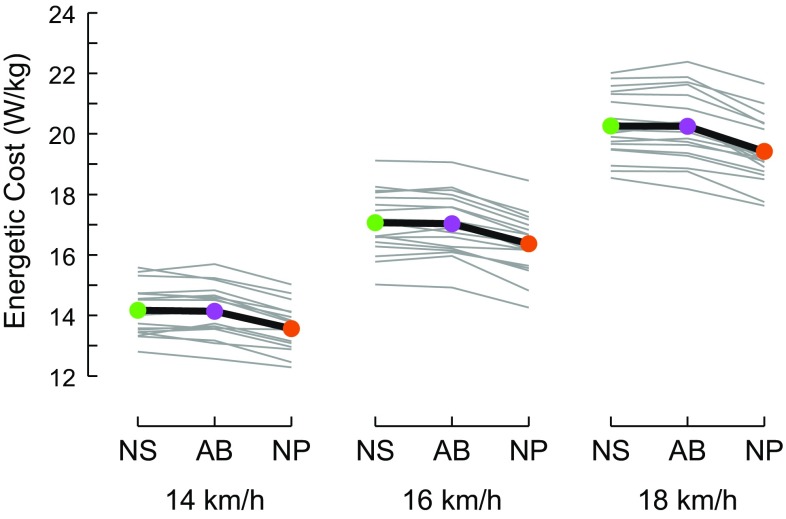
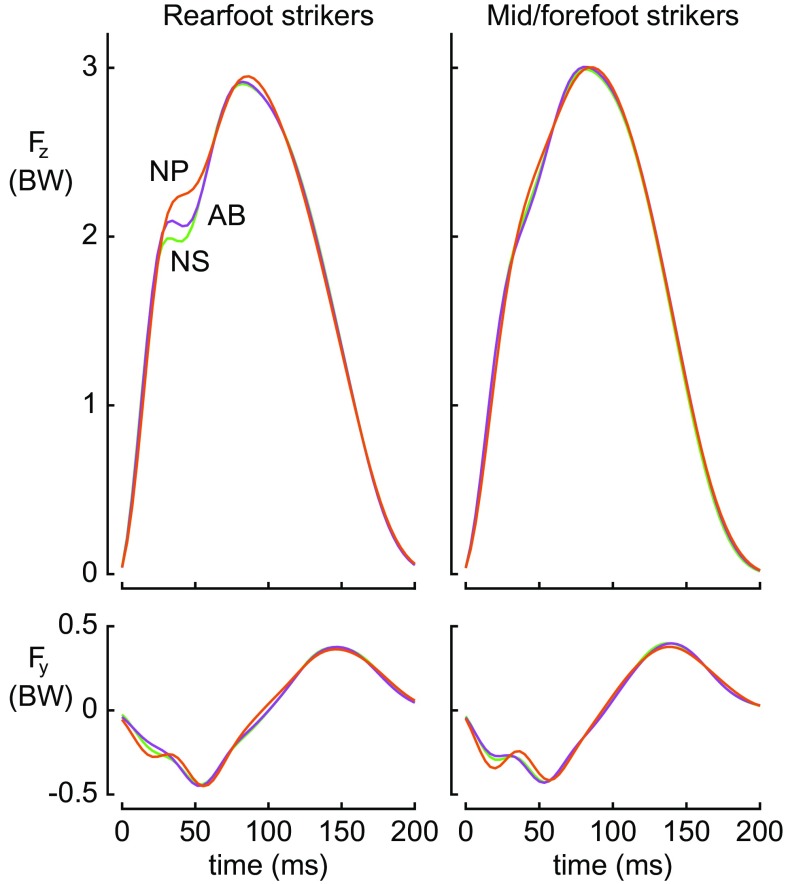
BACKGROUND: Reducing the energetic cost of running seems the most feasible path to a sub-2-hour marathon. Footwear mass, cushioning, and bending stiffness each affect the energetic cost of running. Recently, prototype running shoes were developed that combine a new highly compliant and resilient midsole material with a stiff embedded plate. OBJECTIVE: The aim of this study was to determine if, and to what extent, these newly developed running shoes reduce the energetic cost of running compared with established marathon racing shoes. METHODS: 18 high-caliber athletes ran six 5-min trials (three shoes × two replicates) in prototype shoes (NP), and two established marathon shoes (NS and AB) during three separate sessions: 14, 16, and 18 km/h. We measured submaximal oxygen uptake and carbon dioxide production during minutes 3-5 and averaged energetic cost (W/kg) for the two trials in each shoe model. RESULTS: Compared with the established racing shoes, the new shoes reduced the energetic cost of running in all 18 subjects tested. Averaged across all three velocities, the energetic cost for running in the NP shoes (16.45 ± 0.89 W/kg; mean ± SD) was 4.16 and 4.01% lower than in the NS and AB shoes, when shoe mass was matched (17.16 ± 0.92 and 17.14 ± 0.97 W/kg, respectively, both p < 0.001). The observed percent changes were independent of running velocity (14-18 km/h). CONCLUSION: The prototype shoes lowered the energetic cost of running by 4% on average. We predict that with these shoes, top athletes could run substantially faster and achieve the first sub-2-hour marathon.
Overview
The claims and statistics of this paper haven’t been checked yet.
Run the check — free, no account needed. It reads the open-access text and checks the sources it cites.
Integrity signals
Registry
Cites
Statistics
Figures
Verification
Claims the paper makes
The claims and statistics of this paper haven’t been checked yet.
Run the check — free, no account needed. It reads the open-access text and checks the sources it cites.
Claims other papers make about this one
Each is checked against this paper’s own text: does it say what the citing paper says it does?
In the citing paper
“which achieves a 4% mean reduction in the oxygen cost of running [72].”
Self-check
Percentages, sums and reported differences re-computed from the paper’s own numbers.
The self-check needs the paper’s full text.
Citations
Cites
Maximal Oxygen Intake as an Objective Measure of Cardio-Respiratory Performance
TAYLOR, H. L., BUSKIRK, E. R., & Henschel, A. F. (1955) · Journal of Applied Physiology · doi:10.1152/jappl.1955.8.1.73 · Cited by 1,366 · cited 1×
“Our criterion for reaching _ VO2max was a plateau in oxygen consumption rate after an increase in incline [33].”
BackgroundThe mechanics of running: How does stiffness couple with speed?
McMahon, T. A., & Cheng, G. C. (1990) · Journal of Biomechanics · doi:10.1016/0021-9290(90)90042-2 · Cited by 1,122 · cited 1×
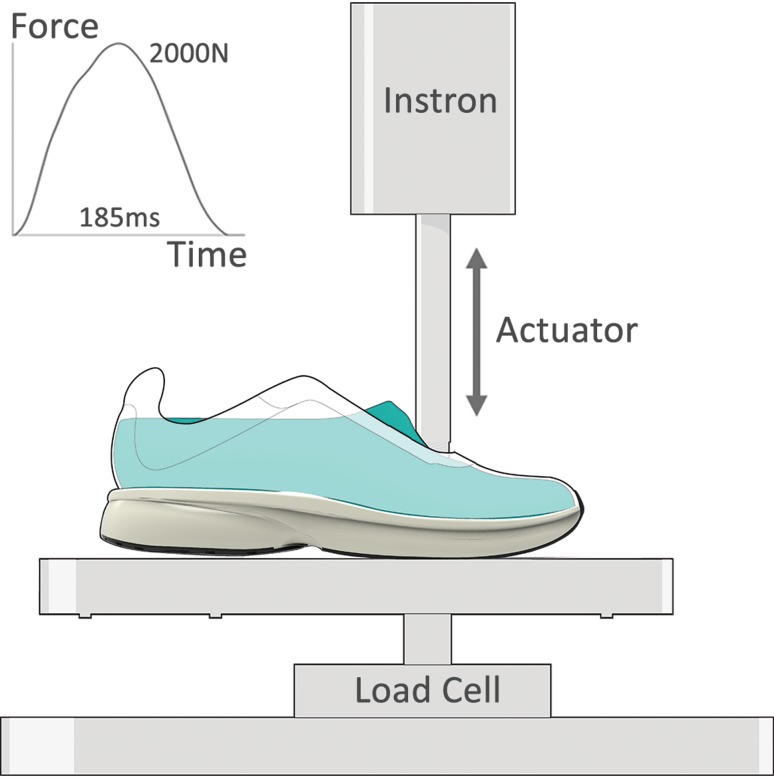
“Though limited, this simplified testing method does provide a clean, general characterization of midsole mechanical energy storage and return capabilities in a direction relevant to the spring-mass behavior of runners [27].”
MethodJustification of the 4-mmol/l lactate threshold
Heck, H., Mader, A., Hess, G., Mücke, S., Müller, R., & Hollmann, W. (1985) · International Journal of Sports Medicine · doi:10.1055/s-2008-1025824 · Cited by 888 · cited 2×
“The remaining 18 subjects were running at an intensity below the onset of blood lactate accumulation (OBLA), which specifies an [La] of 4 mmol/L [28], and the average [La] at 18 km/h was 2.”
BackgroundMethodScaling Body Support in Mammals: Limb Posture and Muscle Mechanics
Biewener, A. A. (1989) · Science · doi:10.1126/science.2740914 · Cited by 865 · cited 1×
“This improves the mechanical advantage of the muscles acting around the joints, which reduces the energetic cost of body weight support [14, 37].”
BackgroundStorage of elastic strain energy in muscle and other tissues
Alexander, R. M., & Bennet-Clark, H. C. (1977) · Nature · doi:10.1038/265114a0 · Cited by 851 · cited 1×
“Other ligaments and tendons of the leg store and return additional energy [39, 40].”
BackgroundThe spring in the arch of the human foot
Ker, R. F., Bennett, M. B., Bibby, S., Kester, R. C., & Alexander, R. M. (1987) · Nature · doi:10.1038/325147a0 · Cited by 780
Derivation of formulae used to calculate energy expenditure in man.
Brockway, J. M. (1987) · PubMed · Cited by 585
McMahon, T. A., Valiant, G., & Frederick, E. C. (1987) · Journal of Applied Physiology · doi:10.1152/jappl.1987.62.6.2326 · Cited by 453
Runners adjust leg stiffness for their first step on a new running surface
Ferris, D. P., Liang, K., & Farley, C. T. (1999) · Journal of Biomechanics · doi:10.1016/s0021-9290(99)00078-0 · Cited by 425 · cited 2×
“When running on compliant surfaces, people maintain their center of mass mechanics by reducing knee flexion during the stance period, which increases leg stiffness [31].”
BackgroundEnergetics and mechanics of human running on surfaces of different stiffnesses
Kerdok, A. E., Biewener, A. A., McMahon, T. A., Weyand, P. G., & Herr, H. (2002) · Journal of Applied Physiology · doi:10.1152/japplphysiol.01164.2000 · Cited by 411 · cited 4×
“Experiments using special treadmills with springy or cushioned surfaces have demonstrated up to 12% energy savings [13, 14] that are attributed to two factors.”
BackgroundInfluential
Research works printed but not linked: 3
- Frederick EC, Daniels JT, Hayes JW. The effect of shoe weight on the aerobic demands of running. In: Bachl N, Prokop L, Suckert R, editors. Curr Top Sports Med Proc World Congr Sports Med. Vienna: Urban and Schwarzenberg; 1984. p. 616–25.
- Frederick EC, Clarke TE, Larsen JL, et al. The effects of shoe cushioning on the oxygen demands of running. In: Nigg BM, Kerr BA, editors. Biomechanical aspects of sports shoes and playing surfaces. Calgary: The University of Calgary; 1983. p. 107–14.
- Frederick EC, Howley ET, Powers SK. Lower O2 cost while running in air-cushion type shoes. Med Sci Sports Exerc. 1980;12:81–2.
Cited by
Sorted by citations
Items 301–400 of 432
Muzeau, M. A., Flood, A., Kean, C. O., Saunders, P. U., Tam, N., & Rattray, B. (2025) · Footwear Science · doi:10.1080/19424280.2025.2493290 · Cited by 1
“They have been shown to improve running performance and running economy (Hoogkamer et al., 2018).”
Running with an Exotendon can Reduce Metabolic Rate Across a Range of Speeds
Felton, O., Healy, C. M., Phair, D., Ahmed, A. A., & Welker, C. G. (2025) · International Conference on Rehabilitation Robotics · doi:10.1109/icorr66766.2025.11063084 · Cited by 1
“One notable example is the Nike Vaporfly 4% (VP4), which has demonstrated an average MR reduction of 3-4% compared to mass-normalized shoes, based on studies involving highly trained athletes at speeds of ∼ 4-5 m/s [18], [19].”
Design of an ankle exoskeleton with twisted string actuation for running assistance
Tan, G. R., & Collins, S. H. (2025) · Wearable Technologies · doi:10.1017/wtc.2025.10010 · Cited by 1
“The Nike Vaporfly shoe with a carbon fiber plate embedded in the sole obtained a 4% reduction (Hoogkamer et al., 2018).”
Nahan, K., Willwacher, S., Kerr, J., Héroux, M. E., & McDonald, K. A. (2026) · Medicine & Science in Sports & Exercise · doi:10.1249/mss.0000000000004134 · Cited by 1
Lyons, S. M., Paquette, M. R., TenBroek, T. M., & Steiner, E. (2025) · Footwear Science · doi:10.1080/19424280.2025.2579974 · Cited by 1
“…evidence has shown consistently positive effects of AFT on RE in mostly well-trained and competitive runners across studies (Barnes & Kilding, 2019; Hoogkamer et al., 2018; Hunter et al., 2019; Joubert et al., 2023) but results are less consistent in novice runners (Hébert-Losier et al., 2022;…”
InfluentialGanju, E., Hanson, H., Wormser, M., & Chawla, N. (2025) · Scientific Reports · doi:10.1038/s41598-025-19043-1 · Cited by 1
Influence of carbon-plated running shoes and fatigue on lower limb biomechanics
Luo, X., Liu, R., & Li, B. (2025) · Journal of Biomechanics · doi:10.1016/j.jbiomech.2025.113102 · Cited by 1
Effects of carbon-fiber plate design on foot stress injury risk: a finite element analysis
Guan, L., Guo, Y., Wang, H., Wu, Y., Jia, Y., & Zhu, X. (2025) · Frontiers in Bioengineering and Biotechnology · doi:10.3389/fbioe.2025.1723984 · Cited by 1
“…between plate stiffness and running economy, reporting slightly decreased performance (Day and Hahn, 2020), no signi fi cant difference (Flores et al., 2019; Beck et al., 2020), or improvements of approximately 2.8% – 4.2% ( Hoogkamer et al., 2018; Barnes and Kilding, 2019; Hunter et al., 2019).”
InfluentialMatties, J. R., & Rowley, K. M. (2026) · Footwear Science · doi:10.1080/19424280.2026.2637938 · Cited by 1
“…consumption (VO 2 ) and carbon dioxide production were measured and averaged over the final 2 minutes of each submaximal trial (True One 2400, Parvo Medicks, Salt Lake City, UT, USA) (Barnes & Kilding, 2019; Hoogkamer et al., 2018; Hunter et al., 2019; Joubert et al., 2023; Joubert & Jones, 2022).”
InfluentialFohrmann, D., Schaffarczyk, M., Menge, C., Willwacher, S., Sanchez-Alvarado, A., Gronwald, T., & Hollander, K. (2026) · Sports Medicine - Open · doi:10.1186/s40798-026-01005-0 · Cited by 1
“Based on the empirical findings by Hoog-kamer et al. [6] and the modeling approach by Kipp et al. [12], a 4% improvement in RE — as observed with advanced footwear technology — is predicted to result in approximately a 3.4% increase in running velocity at sub-elite marathon speeds (~ 16 km ⸱ h − 1…”
InfluentialLee, R. Y., Noro, H., Hata, K., Yamazaki, Y., & Yanagiya, T. (2026) · Gait & Posture · doi:10.1016/j.gaitpost.2026.110168 · Cited by 1
Askew, G. N., Hill, S., Payne, M., Stewart, T. D., Charles, D., & Brown, A. (2026) · Scandinavian Journal of Medicine and Science in Sports · doi:10.1111/sms.70298 · Cited by 1
“However, previous studies have demonstrated improvements in RE with AFT with limited familiarisation [3, 6, 18, 21], suggesting that any influence of prior experience is unlikely to have substantially affected the present findings.”
InfluentialNeedles, B. J., Kim, S., & Grabowski, A. M. (2026) · European Journal of Applied Physiology · doi:10.1007/s00421-026-06257-y · Cited by 1
“Our results are similar to previous studies that found running economy improved by an average of 2 to 4% for runners wearing AFT spikes and shoes compared to traditional racing shoes (Hoogkamer et al. 2018; Hunter et al. 2019; Barnes and Kilding 2019; Joubert et al. 2024 ).”
InfluentialWhy now? A physiological perspective on the first official sub-2-hour marathon
Grivas, G. V. (2026) · European Journal of Applied Physiology · doi:10.1007/s00421-026-06285-8 · Cited by 1
“), and advanced footwear technology (Hoogkamer et al. 2018; Kipp et al. 2019; Muniz-Pardos et al. 2021 , 2025 ).”
InfluentialShahidi, S. H., Can, R., Paça, F. M., & Zengin, M. D. (2026) · PLoS ONE · doi:10.1371/journal.pone.0355988 · Cited by 1
“The oxygen cost of transport (O2-COT) quantifies this cost per unit distance (mL·k-g1¹·km1¹), facilitating comparisons across running speeds [3,4].”
Sports Materials Special Issue Editorial
Allen, T., Foster, L., Strangwood, M., & Webster, J. A. (2019) · Applied Sciences · doi:10.3390/app9245272 · Cited by 1
Hollander, K., Hoenig, T., & Édouard, P. (2022) · Springer eBooks · doi:10.1007/978-3-662-65064-6_1 · Cited by 1
An Impedance-Controlled Testbed for Simulating Variations in the Mechanical Fit of Wearable Devices
Ambrose, A. B., VanAtter, C., & Hammond, F. L. (2022) · IEEE/RSJ International Conference on Intelligent Robots and Systems (IROS) · doi:10.1109/iros47612.2022.9981391 · Cited by 1
Effect of wearing carbon plate shoes on the running economy of pronated feet
Urushihara, T., Haba, T., Nakagawa, Y., Kawamura, D., Umezaki, Y., & Kumazawa, I. (2022) · Journal of Internationl Exercise Sciences · doi:10.58796/jiesjapan.1.1_40 · Cited by 1
Yetman, Q., Arndt, A., & Rainbow, M. J. (2023) · Footwear Science · doi:10.1080/19424280.2023.2199391 · Cited by 1
Guo, L. (2023) · Applied Mathematics and Nonlinear Sciences · doi:10.2478/amns.2023.2.00393 · Cited by 1
Ten questions in sports engineering: supershoe use in distance running
Dyer, B. T. J. (2024) · Sports Engineering · doi:10.1007/s12283-024-00468-2 · Cited by 1
“It was then reported in 2018 that a prototype running shoe potentially possessed the performance capabilities to assist a runner to achieve the first sub 2 h marathon [6].”
Geisler, C., & Hannigan, J. J. (2024) · Sports Biomechanics · doi:10.1080/14763141.2024.2393199 · Cited by 1
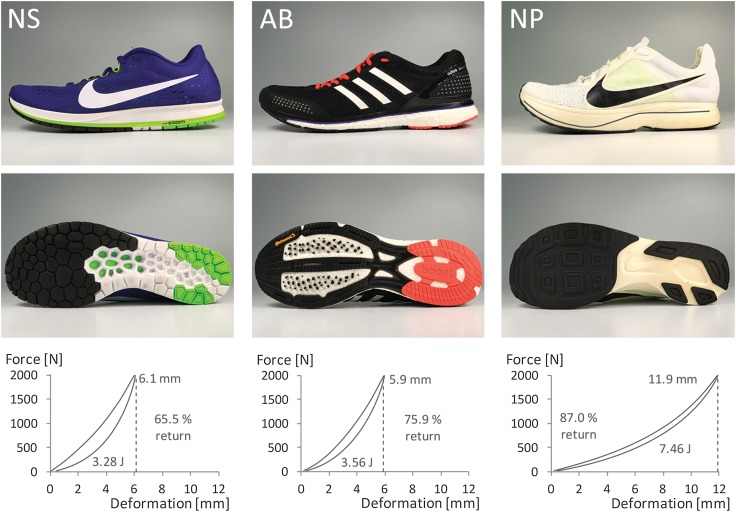
“In comparison to typical midsole foams, PEBA has a resilience of approximately 87% (Hoogkamer et al., 2018), compared to 40–52% for EVA and TPU (Wang et al., 2012).”
InfluentialControversial technological advancements in sports
Couture, K. M., & Senefeld, J. W. (2024) · Journal of Applied Physiology · doi:10.1152/japplphysiol.00423.2024 · Cited by 1
Records are an accumulation of human achievement
Barrons, Z. B. (2024) · Journal of Applied Physiology · doi:10.1152/japplphysiol.00410.2024 · Cited by 1
Six-year follow-up of a world record-breaking master marathon runner
Romberger, N. T., Stock, J. M., McMillan, R. K., Overstreet, M. L., Lepers, R., Joyner, M. J., & Farquhar, W. B. (2024) · Journal of Applied Physiology · doi:10.1152/japplphysiol.00474.2024 · Cited by 1
Biomechanical determinants of running economy
Fukuchi, C. A., Stefanyshyn, D. J., & Wannop, J. W. (2025) · Journal of Sports Sciences · doi:10.1080/02640414.2025.2477397 · Cited by 1
“AFT have been reported to reduce RE by 4% in highly-trained male runners (Hoogkamer et al., 2018).”
Zhang, K. X., Yan, Z., Duan, Y., Xu, Y., Chu, Z., Yang, F., Pu, F., Ren, W., & Fan, Y. (2025) · Annals of Biomedical Engineering · doi:10.1007/s10439-025-03795-y · Cited by 1
Walking on your sensitive sole
D’Août, K. (2019) · Nature · doi:10.1038/d41586-019-01953-6 · Cited by 2
Understanding ‘ride’ perception in running using reliable testers: ankle joint mechanics matter
Giandolini, M., Macchi, R., & Horvais, N. (2019) · Footwear Science · doi:10.1080/19424280.2019.1606077 · Cited by 1
Effect of shoe midsole hardness and resilience on running performance
Ryue, J., Cho, S.-H., Lee, J.-H., & Lee, K. (2019) · Footwear Science · doi:10.1080/19424280.2019.1606292 · Cited by 1
“Among them, the cushioning of running shoes makes it possible to use less muscular energies of the leg through allowing to run with less knee flexion when shoes touch down on the ground (Hoogkamer et al., 2018) However, good cushioning results in energy loss as the shoe midsole is compressed.”
BackgroundEngineering Running Shoes to Break Records
Palmer, C. (2020) · Engineering · doi:10.1016/j.eng.2020.07.006 · Cited by 1
Sports Science and Efforts towards Sub-Two Hour Marathon Performance
Mwangi, F. M., Enomóto, Y., Hong, S., Shanmugam, S. P., Tian, X., Rintaugu, E. G., Fuku, N., & Kidokoro, T. (2021) · IntechOpen eBooks · doi:10.5772/intechopen.100005 · Cited by 1
Anam, M. C., & Pujiyono, P. (2023) · Journal Of Social Research · doi:10.55324/josr.v2i3.715 · Cited by 1
Sánchez, J. D. A., de Torres-Burgos, F., & Arias-Oliva, M. (2021) · SSRN Electronic Journal · doi:10.2139/ssrn.3855049 · Cited by 1
The use of Advanced Footwear Technology shoes in amateur runnersPreprint
Bonato, M., Pedrinelli, C., Ferraris, L., & Filipas, L. (2024) · Research Square · doi:10.21203/rs.3.rs-3953604/v1 · Cited by 1
Emerging Approaches in Analysis and Evaluation in Sports Science
Galip, O. (2018) · Global Journal of Orthopedics Research · doi:10.33552/gjor.2018.01.000502
“In these studies, shoe properties such as mass, midsole compliance, resilience, and longitudinal bending stiffness are observed as in close relation with dissipated energy during running [20-22].”
BackgroundShoes, running economy and distance running performance
Kram, R. (2019) · Footwear Science · doi:10.1080/19424280.2019.1606339
Creating performance footwear using biomechanics insights
Sheets, A. L. (2019) · Footwear Science · doi:10.1080/19424280.2019.1606343
“Through years of research, this community has proven that specific attributes of footwear including forefoot bending stiffness (Roy & Stefanyshyn, 2006; Stefanyshyn & Fusco, 2004) and underfoot cushioning (Frederick, Clarke, & Larsen, 1983; Hoogkamer et al. 2018; Kerdok, Biewener, McMahon, Weyand, & Herr, 2002) can im…”
BackgroundRecent Trends of Marathon Shoes
Yanagiya, T., Takeshita, T., Noro, H., & Hata, K. (2020) · Juntendō Igaku/Juntendo igaku · doi:10.14789/jmj.2020.66.jmj19-p15
Influence of Vaporfly shoe on sub-2 hour marathon and other top running performancesPreprint
Arderiu, A., & de Fondeville, R. (2021) · arXiv (Cornell University)
Schirber, M. (2021) · Physics · doi:10.1103/physics.14.95
Prediction of the effect of midsole stiffness and energy return using trajectory optimisation
Nitschke, M., Luckfiel, T., Schlarb, H., Dorschky, E., & Koelewijn, A. D. (2021) · Footwear Science · doi:10.1080/19424280.2021.1917684
“Our results confirmed that softer and more efficient shoes improve the energy cost of running (Hoogkamer et al., 2018; Worobets et al., 2014).”
ResultWolthon, A., & Arndt, T. (2021) · Footwear Science · doi:10.1080/19424280.2021.1917686
“These characteristics have been scientifically investigated and heavily discussed within the running community since the launch of the record-breaking Nike Vaporfly 4% (Hoogkamer et al., 2018).”
BackgroundNumerical Assessment of Directional Energy Transfer for Geometric Structure
Sultana, A. (2020) · Spectrum Research Repository (Concordia University)
Effects of Carbon Fiber Foot Plate on Able-bodied Gait: Pilot Study
Premprasopchok, Y., Sukthomya, S., Petmunee, W., Rayothee, P., Permpool, K., Eh, S. N. N., & Utami, F. (2022) · JPO Journal of Prosthetics and Orthotics · doi:10.1097/jpo.0000000000000418
“Hoogkamer et al.(16) showed that, during push-off, foot plate stiffness increases sharply then decreases steadily, acting as an “active mechanism””
BackgroundInfluentialAntoine, B., Christopher, T., & Bermon, S. (2022) · Springer eBooks · doi:10.1007/978-3-662-65064-6_9
Triska, C., Hoogkamer, W., Snyder, K. L., Taboga, P., Arellano, C. J., & Kram, R. (2019) · doi:10.31236/osf.io/xrjvb
Self-citationHurdling the Challenges of the 2019 IAAF World Championships
(409080), O. G., Racinais, S., Édouard, P., (8540739), A. R., Navarro, L., Grémeaux, V., (8540754), P. B., (17471385), A. J., (7512125), F. J. H., (9728127), A. M. E., et al. (2020) · Frontiers research topics · doi:10.3389/978-2-88963-499-6
“Controlling kinetic and kinematic responses (dose-response) across a group of participants hasn’t been investigated previously (Griffiths and Spooner, 2018; Hoogkamer et al., 2018).”
BackgroundColonna, M., Crosetta, L., Nanni, A., Colombo, D., & Brugo, T. M. (2022) · doi:10.5703/1288284317544
“The mechanism of action has been ascribed to a spring effect [2] that provides an energy return after bending and/or to the modification of metatarsal–phalangeal and ankle joint bio-mechanics [1].”
BackgroundEinfluss einer 3D-gedruckten bionischen Fußorthese auf die Rückfußbelastung und Laufökonomie
Stief, T., & Sprekelmeyer, T. (2023) · Fuß & Sprunggelenk · doi:10.1016/j.fuspru.2023.05.003
Does deconstructing the Nike Vaporfly 4% affect running mechanics?
Subramanium, A., & Nigg, B. M. (2023) · Footwear Science · doi:10.1080/19424280.2023.2199427
“The running economy improvements observed in the Nike Vaporfly 4% (VP4) shoe have been proposed to be a result of different specific features of the shoe, such as the curved carbon fibre plate, forefoot geometry, and the PEBAX (polyether block amide) foam (Hoogkamer et al., 2018).”
BackgroundTechnological advances in track spike design facilitate enhanced running performance
Wilkie, E. W. C., Bertschy, M., Albert, W. J., & Hoogkamer, W. (2023) · Footwear Science · doi:10.1080/19424280.2023.2199288
“traditional marathon racing shoes (Hoogkamer et al., 2018).”
Self-citationBenefits of a curved forefoot plate in a women's walking shoe
Worobets, J. T., Caldwell, C., Cann, A., Cohen, J., Gaither, J., Helseth, J., Jorgensen, J. K., Rainville, M., Siegel, A., & Wathen, R. (2023) · Footwear Science · doi:10.1080/19424280.2023.2199387
“Curved carbon fiber plates have demonstrated metabolic and performance benefits in distance running shoes (Hoogkamer et al. 2018).”
BackgroundAnais do 21º Simpósio Internacional de Atividades Físicas do Rio de Janeiro (SIAFIS-2023)
REF/JPE, C. (2023) · Revista de Educação Física / Journal of Physical Education · doi:10.37310/ref.v92i1.2932
Vicente‐Rodríguez, G., Lozano Berges, G., & Gómez‐Bruton, A. (2023) · Universidad de Zaragoza eBooks · doi:10.26754/uz.978-84-18321-63-4
Can Midsole Hollow Structure Improve Energy Storage and Return of Running ShoesPreprint
Liu, T., Matijevich, E., Chu, Z., Yang, F., & Nigg, B. M. (2023) · SSRN Electronic Journal · doi:10.2139/ssrn.4642552
Ryan, B. J., Spiering, B. A., Hoogkamer, W., & Looney, D. P. (2024) · BMJ Military Health · doi:10.1136/military-2023-002614
“7 10 However, given the complexity of military running tasks, metabolic savings should also be assessed during graded running, 27 as well as high-intensity running and sprinting.”
BackgroundSelf-citationPotthast, W. (2024) · Springer eBooks · doi:10.1007/978-3-662-68703-1_2
A Finite Element Model to Predict Shear Deformation in Running Shoe Midsoles During the Foot Strike
Lane, B., Sissler, L., Abel, B., Dellion, K., & Tam, N. (2024) · Lecture notes on data engineering and communications technologies · doi:10.1007/978-981-97-2898-5_3
BIOMECHANICAL INFLUENCE OF RUNNING SHOES WITH MIDSOLE HOLLOW STRUCTURE ON LOWER LIMBS DURING RUNNING
Hu, Z., Meng, H., Fu, F., HUANG, H., Guo, T., CHU, Z., Jia, S., & Yang, F. (2024) · Journal of Mechanics in Medicine and Biology · doi:10.1142/s0219519424400414
Potthast, W. (2024) · Springer eBooks · doi:10.1007/978-3-662-68128-2_2
Fastest marathon times achievable based on extreme value statistics
Kebe, M., & Nadarajah, S. (2024) · Physica A Statistical Mechanics and its Applications · doi:10.1016/j.physa.2024.130069
Running Economy Changes Alter Predicted Running Speed and Performance in Collegiate Runners
Ibe, O., Musci, R. V., & Roper, J. L. (2024) · International journal of exercise science · doi:10.70252/glkw8080
Impact of advanced footwear technology for Japanese Ekiden athletes
Maruo, Y., & Takezawa, K. (2024) · The Journal of Sports Medicine and Physical Fitness · doi:10.23736/s0022-4707.24.16164-6
Yokoyama, S., Arita, K., Oshima, S., Otsuka, J., Okamoto, Y., Kato, H., Tazawa, S., Hirai, S., Kajiwara, Y., Kunimasa, Y., et al. (2024) · Footwear Science · doi:10.1080/19424280.2024.2415049
“Studies have shown that a 0.9% saving in oxygen consumption would result in a 0.7% increase in running speed at a marathon world record pace, which could reduce marathon times by 53 s (Hoogkamer et al., 2017).”
InfluentialAytiş, E., Güçlü, H., Atalan, E., GÜLER, Y. E., Çırak, N., & Yumak, B. N. (2024) · Akademisyen Kitabevi eBooks · doi:10.37609/akya.3278
Plantar Fasciitis: An Autobiographical Case Report From the Perspective of an Athlete and Physician
Watson, N. C. (2025) · Cureus · doi:10.7759/cureus.81623
“My racing shoes for 2019 were a pair of “supershoes,” defined here as any running shoe comprised of high-energy return foam and a carbon-plated sole [10,11].”
Brüggemann, G.-P., Esser, T., Rehorst, S., Hirschhäuser, E., & Hensen, N. (2025) · Sportverletzung · Sportschaden · doi:10.1055/a-2563-4935
“Die biomechanischen Effekte und die physio-logischen Vorteile im Sinne einer Verbesserung der Laufökonomie konnten eindrucksvoll bei trainierten Läufern mit bis zu 4% geringe-rem Sauerstoffverbrauch gezeigt werden [10].”
Arndt, T., Seglina, I., Kvarforth, L., Hallström, S., & Torniainen, K. (2025) · Footwear Science · doi:10.1080/19424280.2025.2492270
Wang, J., Fu, F., Qiu, C., Yang, C., & Yang, F. (2025) · Footwear Science · doi:10.1080/19424280.2025.2491016
“Some studies have shown that carbon-plated running shoes change the mechanics of the lower limb joints (Hoogkamer et al., 2018), and excessively increased bending stiffness may induce discomfort or hinder the performance benefits (Roy & Stefanyshyn, 2006).”
Batista, K., Peel, S. A., Healey, L. A., & Paquette, M. R. (2025) · Footwear Science · doi:10.1080/19424280.2025.2490683
“Advanced footwear technology (AFT) such as compliant and resilient midsole foam, a carbon fibre plate, and fore-foot curvature contribute to improvements in running economy (RE) by 2%–6% (Hoogkamer et al., 2018).”
Biomechanical effects of carbon plate running shoes with different characteristics on novice runners
Wang, X., Xie, C., Zhou, T., Guo, X., & Wei, S. (2025) · Footwear Science · doi:10.1080/19424280.2025.2493275
Using rollover curve model to understand running shoe biomechanics
Liu, T., & Nigg, B. M. (2025) · Footwear Science · doi:10.1080/19424280.2025.2494670
“One such example is the Nike Vaporfly shoe, which has been shown to decrease running energy cost by 4% (Hoogkamer et al., 2018).”
Venzke, J., Schäfer, R., & Platen, P. (2025) · PLoS ONE · doi:10.1371/journal.pone.0329323 · Cited by 1
“In contrast, treadmill running provides a consistent, relatively stiff surface with minimal frictional resistance, potentially reducing energy expenditure [21,34].”
von Diecken, C., Riedl, M., Willwacher, S., & Ueberschär, O. (2025) · Research Square · doi:10.21203/rs.3.rs-7316917/v1
Zhu, C., Sun, D., Xu, Y., Lu, Z., Hu, C., Cen, X., Song, Y., Gao, Z., & Gu, Y. (2025) · Proceedings of the Institution of Mechanical Engineers Part P Journal of Sports Engineering and Technology · doi:10.1177/17543371251356133
How do I know when it’s time to replace my running shoes?
Arnold, J. B., & FULLER, J. T. (2024) · doi:10.64628/aa.e3yxnxsks
Park, J. M., Nakamura, J. E., Goodworth, A. D., & VanHaitsma, T. A. (2025) · European Journal of Applied Physiology · doi:10.1007/s00421-025-06034-3
“Running economy was expressed as the steady-state VO 2 in L/min and as running economy in W/kg as described previously (Kipp et al. 2018; Péronnet and Massicotte 1991).”
Hintzy, F., Kaced, Y., Morio, C., Giandolini, M., Samozino, P., Flores, N., & Pavailler, S. (2025) · EMC - Podología · doi:10.1016/s1762-827x(25)51028-3
Multilayered Spacer Midsoles: A Novel Method for 3D Printing Midsoles for Performance Running Shoes
Gispan, K., Solav, D., & Sterman, Y. (2025) · ACM Symposium on Computational Fabrication (SCF) · doi:10.1145/3745778.3766663
“For example, previous studies showed that the Nike Zoom Streak 6 obtains a relative energy return of 66%, the Adidas Adizero Boost 2 achieves 76%, and the Nike Vaporfly peaks at 87% [Burns and Tam 2020; Hoogkamer et al. 2018].”
Wu, Y., Zhang, H., Wang, S., Lu, C., Xing, Q., Tian, Y., He, D., Sun, L., & Shen, Y. (2025) · Frontiers in Physiology · doi:10.3389/fphys.2025.1703854
Bernuz, B., Laujac, S., Sirial, C., Auffret, S., Preda, C., SLAWINSKI, J. S., Millot, B., Pradon, D., Coudrat, L., & Gavarry, O. (2024) · Figshare · doi:10.6084/m9.figshare.26944467
Bernuz, B., Laujac, S., Sirial, C., Auffret, S., Preda, C., SLAWINSKI, J. S., Millot, B., Pradon, D., Coudrat, L., & Gavarry, O. (2024) · Figshare · doi:10.6084/m9.figshare.26944464
Miller, D. E., Tan, G. R., Farina, E. M., Sheets-Singer, A. L., & Collins, S. H. (2022) · Figshare · doi:10.6084/m9.figshare.19759763
Wu, Y., Zhang, H., Wang, S., Lu, C., Xing, Q., Sun, L., & Shen, Y. (2026) · Frontiers in Bioengineering and Biotechnology · doi:10.3389/fbioe.2025.1714473
“IC and TC events were identified via a 25 N threshold of vGRF (Hoogkamer et al., 2018).”
Marmondi, F., Ferrando, V., Panascì, M., & Bonato, M. (2026) · The Journal of Sports Medicine and Physical Fitness · doi:10.23736/s0022-4707.25.16838-2
Multilayered Spacer Midsoles: A Novel Method for 3D Printing Midsoles for Performance Running Shoes
Gispan, K., Solav, D., & Sterman, Y. (2025) · ACM Symposium on Computational Fabrication (SCF) · doi:10.1145/3774746.3779235
“While energy-return values varied across specimens and loading amplitudes, the overall response remained comparable to reported values for commercial midsole materials under similar quasi-static testing conditions [Hoogkamer et al. 2018].”
Rodrigo‐Carranza, V., Alda-Blanco, A., Kuzmeski, J., González‐Mohíno, F., Anguita, R. A., & Hoogkamer, W. (2026) · International Journal of Sports Physiology and Performance · doi:10.1123/ijspp.2025-0475
Self-citationAlda-Blanco, A., González‐Mohíno, F., Valero, F., Rodríguez‐Barbero, S., & Salinero, J. J. (2026) · International Journal of Sports Physiology and Performance · doi:10.1123/ijspp.2025-0649
Citius, altius, fortius: The crucial role of composites in sports
Teixidó, H., Michaud, V. J., & Verpoest, I. (2026) · Elsevier eBooks · doi:10.1016/b978-0-443-34119-9.00021-8
Economy benefits of running in advanced footwear technology shoes remain with plantarflexion fatigue
Bidois, B. J., Cumming, C., Giandolini, M., Nguyen, A. P., & Hébert‐Losier, K. (2026) · European Journal of Applied Physiology · doi:10.1007/s00421-026-06190-0
“…runners (Hébert-Losier et al. 2022a), -11.3 to + 11.4% in elite Kenyan runners (Knopp et al. 2023), -1.1 to + 9.7% in amateur European runners (Knopp et al. 2023), and 0.0 to + 6.4% (Hunter et al. 2019) and + 1.59 to + 6.26% (Hoogkamer et al. 2018) in runners who have ran 10 km under 32 min.”
InfluentialPerformance factors of prolonged running : a particular focus on running economy and fatigue
Pastor, F. S. (2021) · theses.fr (ABES) · doi:10.70675/5bde97d0zd2b5z4653z8a3ezfe2346031100
Biomechanical and physiological differences between males and females in endurance running
Besson, T. (2021) · theses.fr (ABES) · doi:10.70675/df81ec29zd02az4c4bzb17czff321b38a4ac
Wang, W., Potthast, W., Torniainen, K., Xu, S., Ammann, K., Jing, Y., Wang, S., Fu, W., Liu, J., & Arndt, A. (2026) · Scandinavian Journal of Medicine and Science in Sports · doi:10.1111/sms.70275
Metadata
- Authors
- Hoogkamer, W., Kipp, S., Frank, J. H., Farina, E. M., Luo, G., & Kram, R.
- Affiliations
- University of Colorado Boulder (US)
- Nike (United States) (US)
- Corresponding author
- Hoogkamer, Wouter
- Venue
- Sports Medicine
- Published
- 2017-11-16
- Volume
- 48
- Issue
- 4
- Pages
- 1009-1019
- ISSN
- 0112-1642 (ISSN-L)
- 1179-2035
- PMC
- PMC5856879
- OpenAlex
- W2770125989
- Cited by
- 434
- References
- 44
- Citations by year
- 2026: 58 · 2025: 71 · 2024: 68 · 2023: 61 · 2022: 51 · 2021: 43 · 2020: 42 · 2019: 28 · 2018: 12
- FWCI
- 10.10
- Type
- journal article
- Language
- en
- Update notices
- correction (2017-12-16)
- Open access
- hybrid
- doi.org
- Locations
- Sports Medicine (publishedVersion, cc-by)
- PubMed Central (publishedVersion, cc-by)
- PubMed (publishedVersion)
- Funders
- NIKE
- Topics
- Physical Sciences › Engineering › Biomedical Engineering › Lower Extremity Biomechanics and Pathologies
- Health Sciences › Medicine › Orthopedics and Sports Medicine › Sports Performance and Training
- Physical Sciences › Engineering › Biomedical Engineering › Sports Dynamics and Biomechanics
- Keywords
- running shoes, submaximal oxygen uptake, CO2 emissions, running speed
- MeSH terms
- Adult, Altitude, Biomechanical Phenomena, Energy Metabolism, Humans, Male, Running, Shoes, Young Adult, Athletes
About these checks
Registry, retraction, Cites and statistics results are computed, not judged, with one exception: a printed reference that no index lists is read once by a model before it counts as a citation error. Claims are extracted by a model and kept only when their quote appears verbatim in the text; each cited source is then checked, with a model’s help, for whether it says what the claim relies on. Those verdicts can be wrong — read the claim’s quote and the cited source before relying on one.
Statistics and arithmetic are recomputed, not judged.
Confidence bands are shown only for fields calibrated on our annotated test set. None is calibrated yet, so no band is shown.
What counts as a claim ›How we measure confidence ›How we check this ›
Are you an author, or do you see a problem with this page? Request a review
