

The DOI matches its Crossref record; 44 of the 44 references it cites were found in a registry or an index.
A Comparison of the Energetic Cost of Running in Marathon Racing Shoes
Open accessAbstract
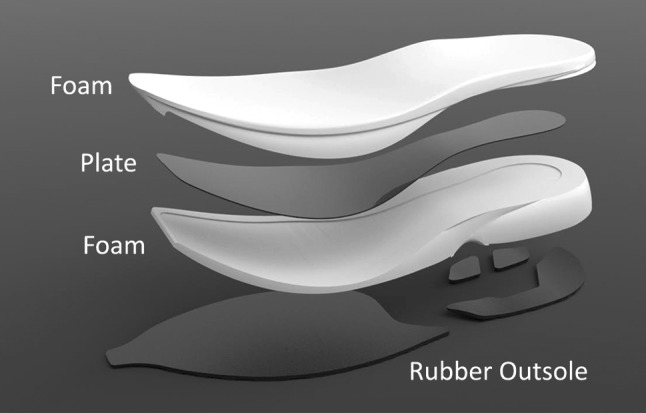
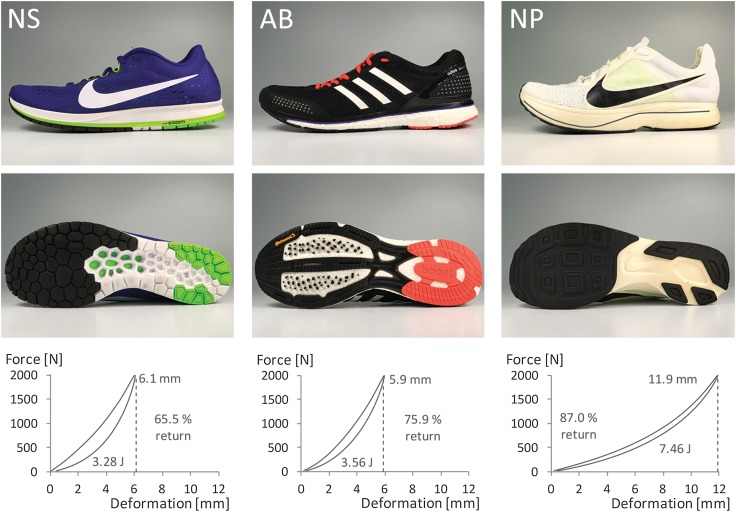
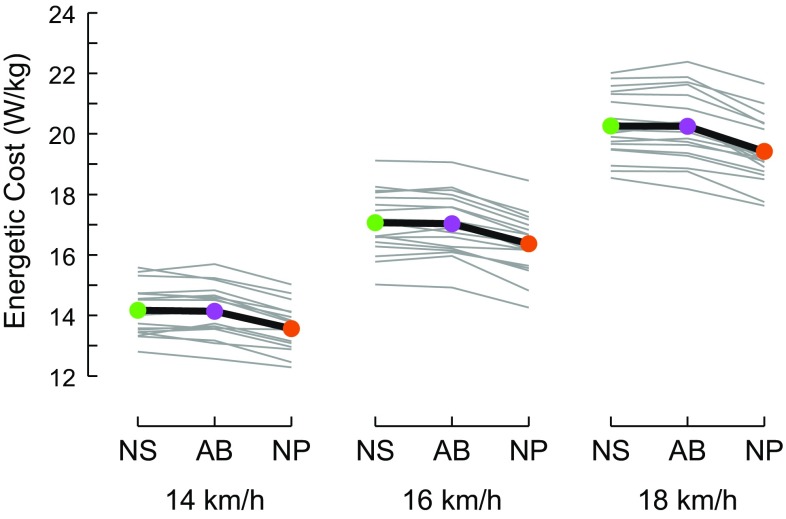
BACKGROUND: Reducing the energetic cost of running seems the most feasible path to a sub-2-hour marathon. Footwear mass, cushioning, and bending stiffness each affect the energetic cost of running. Recently, prototype running shoes were developed that combine a new highly compliant and resilient midsole material with a stiff embedded plate. OBJECTIVE: The aim of this study was to determine if, and to what extent, these newly developed running shoes reduce the energetic cost of running compared with established marathon racing shoes. METHODS: 18 high-caliber athletes ran six 5-min trials (three shoes × two replicates) in prototype shoes (NP), and two established marathon shoes (NS and AB) during three separate sessions: 14, 16, and 18 km/h. We measured submaximal oxygen uptake and carbon dioxide production during minutes 3-5 and averaged energetic cost (W/kg) for the two trials in each shoe model. RESULTS: Compared with the established racing shoes, the new shoes reduced the energetic cost of running in all 18 subjects tested. Averaged across all three velocities, the energetic cost for running in the NP shoes (16.45 ± 0.89 W/kg; mean ± SD) was 4.16 and 4.01% lower than in the NS and AB shoes, when shoe mass was matched (17.16 ± 0.92 and 17.14 ± 0.97 W/kg, respectively, both p < 0.001). The observed percent changes were independent of running velocity (14-18 km/h). CONCLUSION: The prototype shoes lowered the energetic cost of running by 4% on average. We predict that with these shoes, top athletes could run substantially faster and achieve the first sub-2-hour marathon.
Overview
The claims and statistics of this paper haven’t been checked yet.
Run the check — free, no account needed. It reads the open-access text and checks the sources it cites.
Integrity signals
Registry
Cites
Statistics
Figures
Verification
Claims the paper makes
The claims and statistics of this paper haven’t been checked yet.
Run the check — free, no account needed. It reads the open-access text and checks the sources it cites.
Claims other papers make about this one
Each is checked against this paper’s own text: does it say what the citing paper says it does?
In the citing paper
“which achieves a 4% mean reduction in the oxygen cost of running [72].”
Self-check
Percentages, sums and reported differences re-computed from the paper’s own numbers.
The self-check needs the paper’s full text.
Citations
Cites
Maximal Oxygen Intake as an Objective Measure of Cardio-Respiratory Performance
TAYLOR, H. L., BUSKIRK, E. R., & Henschel, A. F. (1955) · Journal of Applied Physiology · doi:10.1152/jappl.1955.8.1.73 · Cited by 1,366 · cited 1×
“Our criterion for reaching _ VO2max was a plateau in oxygen consumption rate after an increase in incline [33].”
BackgroundThe mechanics of running: How does stiffness couple with speed?
McMahon, T. A., & Cheng, G. C. (1990) · Journal of Biomechanics · doi:10.1016/0021-9290(90)90042-2 · Cited by 1,122 · cited 1×
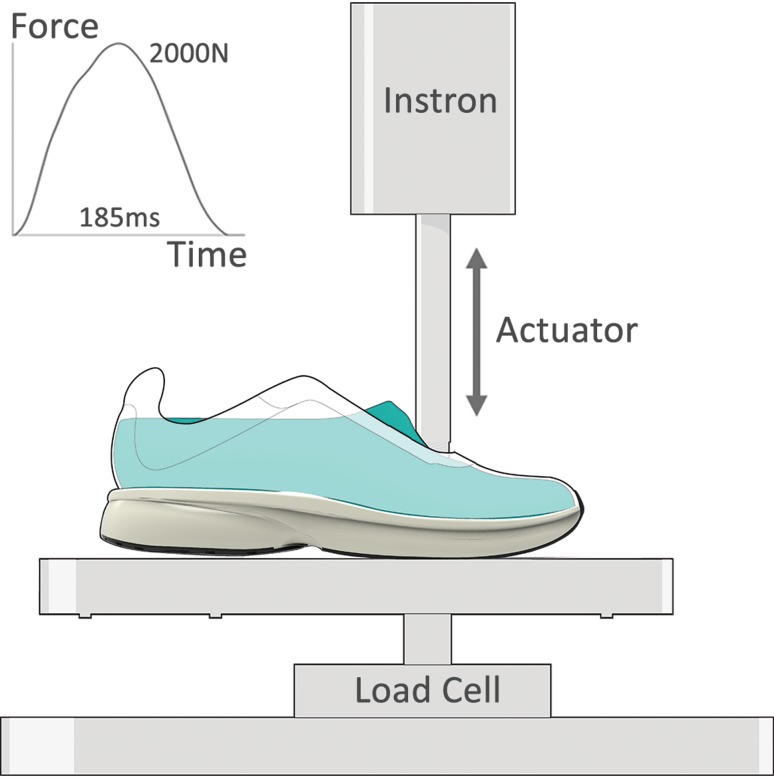
“Though limited, this simplified testing method does provide a clean, general characterization of midsole mechanical energy storage and return capabilities in a direction relevant to the spring-mass behavior of runners [27].”
MethodJustification of the 4-mmol/l lactate threshold
Heck, H., Mader, A., Hess, G., Mücke, S., Müller, R., & Hollmann, W. (1985) · International Journal of Sports Medicine · doi:10.1055/s-2008-1025824 · Cited by 888 · cited 2×
“The remaining 18 subjects were running at an intensity below the onset of blood lactate accumulation (OBLA), which specifies an [La] of 4 mmol/L [28], and the average [La] at 18 km/h was 2.”
BackgroundMethodScaling Body Support in Mammals: Limb Posture and Muscle Mechanics
Biewener, A. A. (1989) · Science · doi:10.1126/science.2740914 · Cited by 865 · cited 1×
“This improves the mechanical advantage of the muscles acting around the joints, which reduces the energetic cost of body weight support [14, 37].”
BackgroundStorage of elastic strain energy in muscle and other tissues
Alexander, R. M., & Bennet-Clark, H. C. (1977) · Nature · doi:10.1038/265114a0 · Cited by 851 · cited 1×
“Other ligaments and tendons of the leg store and return additional energy [39, 40].”
BackgroundThe spring in the arch of the human foot
Ker, R. F., Bennett, M. B., Bibby, S., Kester, R. C., & Alexander, R. M. (1987) · Nature · doi:10.1038/325147a0 · Cited by 780
Derivation of formulae used to calculate energy expenditure in man.
Brockway, J. M. (1987) · PubMed · Cited by 585
McMahon, T. A., Valiant, G., & Frederick, E. C. (1987) · Journal of Applied Physiology · doi:10.1152/jappl.1987.62.6.2326 · Cited by 453
Runners adjust leg stiffness for their first step on a new running surface
Ferris, D. P., Liang, K., & Farley, C. T. (1999) · Journal of Biomechanics · doi:10.1016/s0021-9290(99)00078-0 · Cited by 425 · cited 2×
“When running on compliant surfaces, people maintain their center of mass mechanics by reducing knee flexion during the stance period, which increases leg stiffness [31].”
BackgroundEnergetics and mechanics of human running on surfaces of different stiffnesses
Kerdok, A. E., Biewener, A. A., McMahon, T. A., Weyand, P. G., & Herr, H. (2002) · Journal of Applied Physiology · doi:10.1152/japplphysiol.01164.2000 · Cited by 411 · cited 4×
“Experiments using special treadmills with springy or cushioned surfaces have demonstrated up to 12% energy savings [13, 14] that are attributed to two factors.”
BackgroundInfluential
Research works printed but not linked: 3
- Frederick EC, Daniels JT, Hayes JW. The effect of shoe weight on the aerobic demands of running. In: Bachl N, Prokop L, Suckert R, editors. Curr Top Sports Med Proc World Congr Sports Med. Vienna: Urban and Schwarzenberg; 1984. p. 616–25.
- Frederick EC, Clarke TE, Larsen JL, et al. The effects of shoe cushioning on the oxygen demands of running. In: Nigg BM, Kerr BA, editors. Biomechanical aspects of sports shoes and playing surfaces. Calgary: The University of Calgary; 1983. p. 107–14.
- Frederick EC, Howley ET, Powers SK. Lower O2 cost while running in air-cushion type shoes. Med Sci Sports Exerc. 1980;12:81–2.
Cited by
Sorted by citations
Items 401–432 of 432
Simulation-guided design of exotendons to reduce the energetic cost of runningPreprint
Stingel, J. P., Bianco, N. A., Ong, C. F., Collins, S. H., Delp, S. L., & Hicks, J. L. (2026) · bioRxiv (Cold Spring Harbor Laboratory) · doi:10.64898/2026.04.07.717115
Bruneau, M. M., Hollander, K., Kipp, S., Lieberman, D. E., Hoo, J. S., Saxena, A., Zech, A., & Tenforde, A. S. (2026) · PM&R · doi:10.1002/pmrj.70149
“Additionally, a study on male recreational runners who acutely transitioned to minimalist footwear demonstrated an increase in metatarsal strains by 28.7% and failure of metatarsals 2 – 4 by 17.3% — long-term adaptations to habituation are unknown.”
InfluentialAlexe, C. I., Choudhary, P. K., Choudhary, S., Saha, S., Panaet, E. A., & Alexe, D. I. (2026) · BMC Sports Science Medicine and Rehabilitation · doi:10.1186/s13102-026-01721-w
“For instance, shoes combining a curved carbon-fibre plate with PEBA-based foam reduced metabolic cost by approximately 4% [7], while Barnes and Kilding (2019) reported improvements ranging from 2.6 to 4.2% compared with traditional footwear [8].”
InfluentialKhuddus, L. A., Wismanadi, H., Siantoro, G., & Bahauddin, M. A. (2026) · Balneo and PRM Research Journal · doi:10.12680/balneo.2026.977
Makino, M., Takigawa, H., & Matsubayashi, T. (2026) · Frontiers in Sports and Active Living · doi:10.3389/fspor.2026.1824228
Effects of two advanced footwear technology shoes on durability in trained male runners
Alda-Blanco, A., Rodríguez‐Barbero, S., Valero, F., Salinero, J. J., Rodrigo‐Carranza, V., González‐Ravé, J. M., & González‐Mohíno, F. (2026) · German Journal of Exercise and Sport Research · doi:10.1007/s12662-026-01117-5
Effects of Advanced Footwear Technology in Trail Running Shoes on Running Economy
Joubert, D. P., & Sanders, J. (2026) · The Journal of Strength and Conditioning Research · doi:10.1519/jsc.0000000000005553
Development of a Simulation System for 1500 m Race Performance Analysis Using WaveLight
Yamazaki, K., & Shishido, H. (2026) · International Conference on Control and Computer Vision (ICCCV) · doi:10.1145/3810417.3810424
Bank-speed alignment: a conceptual framework for understanding indoor track performance
Barnes, K. R. (2026) · Frontiers in Sports and Active Living · doi:10.3389/fspor.2026.1845340
“Carbon fiber – plated footwear, for example, has been shown to influence running economy under certain conditions by altering the mechanical interaction between the athlete and the ground (13, 14).”
Lee, R. Y., Suzuki, Y., Hata, K., & Yanagiya, T. (2026) · Footwear Science · doi:10.1080/19424280.2026.2672950
“In addition, the highly resilient midsole materials used in AFTs may further contribute to energy storage and return, as has been demonstrated in running (Hoogkamer et al., 2018).”
Shoe heel-toe drop affects running economy
Renninger, K. D., & Beck, O. N. (2026) · Journal of Applied Physiology · doi:10.1152/japplphysiol.00886.2025
From body hulls to musculoskeletal models: Personalized inertial parameter estimation
Gambietz, M., Azam, P. Q., Amon, P., Wechsler, I., Hille, E. M., Menzel, T., Ott, T., Botsch, M., Braun, M., Miehling, J., et al. (2026) · PLoS ONE · doi:10.1371/journal.pone.0349886 · Cited by 3
“The metabolic reduction observed from altering inertial parameters through SIPP of up to 12.8% is relevant, as it is larger than the typical improvements seen with advanced footwear [43] and comparable to the gains achieved with modern exoskeleton assistance [44–46].”
InfluentialKiesewetter, P., Milani, T. L., & Mitschke, C. (2026) · Bioengineering · doi:10.3390/bioengineering13070751
Davis, D. J., Long, C. L., Franz, J. R., & Takahashi, K. Z. (2026) · PeerJ · doi:10.7717/peerj.21563 · Cited by 2
“We opted not to counterbalance ( e.g. , ABCCBA) the footwear condition order, as is becoming more common in footwear research ( Healey & Hoogkamer, 2022 ; Hoogkamer et al., 2018 ; Hunter et al., 2019 ) to reduce participant burden across the nine experimental conditions.”
Advanced footwear technology improves sprinting mechanics and performance
Prajapati, S. K., Brooks, L. C., Farina, E. M., & Weyand, P. G. (2026) · Journal of Applied Physiology · doi:10.1152/japplphysiol.01129.2025
Hébert‐Losier, K., Cumming, C., Bidois, B. J., Nguyen, A. P., & Giandolini, M. (2026) · Sports Medicine - Open · doi:10.1186/s40798-026-01091-0
“In AFT shoes, it has been suggested that greater plantarflexion strength is necessary to maximise the benefits from the footwear [23], with increases in ground contact times [4, 6] pointing to a reduced overall lower-extremity stiffness.”
Müller-Jabusch, Y., Petrella, D., Vanwanseele, B., & de Beukelaar, T. T. (2026) · Sports Biomechanics · doi:10.1080/14763141.2026.2715652
Ketabi, S., Fletcher, J. R., & Kersting, U. G. (2026) · Footwear Science · doi:10.1080/19424280.2026.2719673
Abran, G., Dardenne, N., Delvaux, F. H., Croisier, J., & Schwartz, C. (2026) · International Journal of Sports Physiology and Performance · doi:10.1123/ijspp.2026-0047
Prisak, C., Etzerodt, L. K., Gliemann, L., & Jensen, K. (2026) · International Journal of Sports Physiology and Performance · doi:10.1123/ijspp.2025-0641
Riedl, M., Schwesig, R., & Ueberschär, O. (2026) · Frontiers in Sports and Active Living · doi:10.3389/fspor.2026.1908480
“While many studies have shown that AFT improves running economy (2, 5 – 7), their biomechanical effects seem to be double-edged, and the underlying biomechanical effects and their orthopaedic implications are a subject of ongoing scientific debate (4, 8, 9).”
Uzun, A., Şahiner, Y., SOFUOĞLU, H. Z., & Kırbağ, Z. M. U. (2026) · Sportive · doi:10.53025/sportive.2018548
Felton, O., Healy, C. M., Ahmed, A., & Welker, C. G. (2026) · IEEE/RAS-EMBS International Conference on Biomedical Robotics and Biomechatronics (BioRob) · doi:10.1109/biorob66782.2026.11681388
“The compliant foams store and return energy during stance, while the stiff carbon-fiber plate helps stabilize the foam, reduce ankle joint work, and shift the center of pressure forward [13], [14].”
Impact of running speed and footstrike type on foam compression in Advanced Footwear Technology
Nguyen, C., Coleman, K., VanKeersbilck, L., Hunter, M., & Hunter, I. (2026) · Footwear Science · doi:10.1080/19424280.2026.2736546
Blattmann, L., Hamacher, D., Tucker, R., Healey, L., & Mason, J. (2026) · Journal of Applied Physiology · doi:10.1152/japplphysiol.90174.2026
The effects of forefoot bending stiffness in athletic footwear on stresses in the second metatarsal
Buckley, R., Ellison, M. A., Hirai, S., & Dixon, S. (2026) · Footwear Science · doi:10.1080/19424280.2026.2738763
Edgar, K. M., Collichio, D., Belio, M., Niehaus, L. C., Bennett, Z. T., Hanson, E. D., Jensen, B. C., Battaglini, C. L., & Gordon, B. D. H. (2026) · Translational Journal of the American College of Sports Medicine · doi:10.1249/tjx.0000000000000396
Zhang, Q., Chen, J., Zhou, C., Ling, Z., Zou, K., Yuan, W., Chen, J., & Xi, N. (2026) · Biomimetics · doi:10.3390/biomimetics11100699
Energy and performance aspects of the curved carbon fiber plate in advanced footwear Technology
Subramanium, A., Vienneau, J., Nigg, S., & Nigg, B. M. (2026) · Footwear Science · doi:10.1080/19424280.2026.2738770
Joubert, D. P., Beck, O. N., Hayden, L., & Cohan, A. E. (2026) · Translational Journal of the American College of Sports Medicine · doi:10.1249/tjx.0000000000000390
Ankle joint gearing with increased longitudinal bending stiffness in tactical footwear
Thorsen, T. A., Lagad, S., Donahue, P., Killgore, A., Young, T., Mercer, Z., Ott, M., Stapleton, S. E., Reese, R., & Piland, S. (2026) · Journal of Biomechanics Open · doi:10.1016/j.jbmo.2026.100030
Metadata
- Authors
- Hoogkamer, W., Kipp, S., Frank, J. H., Farina, E. M., Luo, G., & Kram, R.
- Affiliations
- University of Colorado Boulder (US)
- Nike (United States) (US)
- Corresponding author
- Hoogkamer, Wouter
- Venue
- Sports Medicine
- Published
- 2017-11-16
- Volume
- 48
- Issue
- 4
- Pages
- 1009-1019
- ISSN
- 0112-1642 (ISSN-L)
- 1179-2035
- PMC
- PMC5856879
- OpenAlex
- W2770125989
- Cited by
- 434
- References
- 44
- Citations by year
- 2026: 58 · 2025: 71 · 2024: 68 · 2023: 61 · 2022: 51 · 2021: 43 · 2020: 42 · 2019: 28 · 2018: 12
- FWCI
- 10.10
- Type
- journal article
- Language
- en
- Update notices
- correction (2017-12-16)
- Open access
- hybrid
- doi.org
- Locations
- Sports Medicine (publishedVersion, cc-by)
- PubMed Central (publishedVersion, cc-by)
- PubMed (publishedVersion)
- Funders
- NIKE
- Topics
- Physical Sciences › Engineering › Biomedical Engineering › Lower Extremity Biomechanics and Pathologies
- Health Sciences › Medicine › Orthopedics and Sports Medicine › Sports Performance and Training
- Physical Sciences › Engineering › Biomedical Engineering › Sports Dynamics and Biomechanics
- Keywords
- running shoes, submaximal oxygen uptake, CO2 emissions, running speed
- MeSH terms
- Adult, Altitude, Biomechanical Phenomena, Energy Metabolism, Humans, Male, Running, Shoes, Young Adult, Athletes
About these checks
Registry, retraction, Cites and statistics results are computed, not judged, with one exception: a printed reference that no index lists is read once by a model before it counts as a citation error. Claims are extracted by a model and kept only when their quote appears verbatim in the text; each cited source is then checked, with a model’s help, for whether it says what the claim relies on. Those verdicts can be wrong — read the claim’s quote and the cited source before relying on one.
Statistics and arithmetic are recomputed, not judged.
Confidence bands are shown only for fields calibrated on our annotated test set. None is calibrated yet, so no band is shown.
What counts as a claim ›How we measure confidence ›How we check this ›
Are you an author, or do you see a problem with this page? Request a review
