

The DOI matches its Crossref record; 44 of the 44 references it cites were found in a registry or an index.
A Comparison of the Energetic Cost of Running in Marathon Racing Shoes
Open accessAbstract
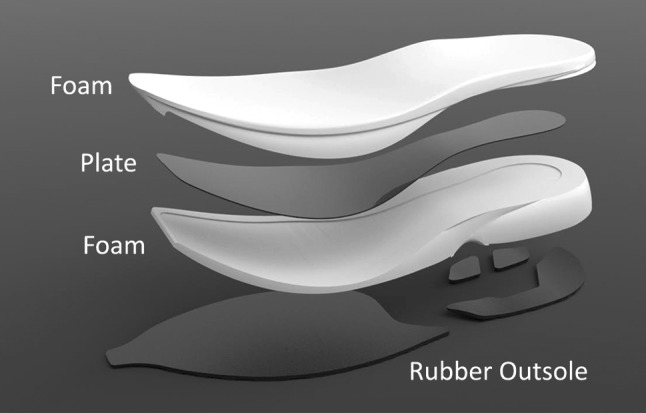
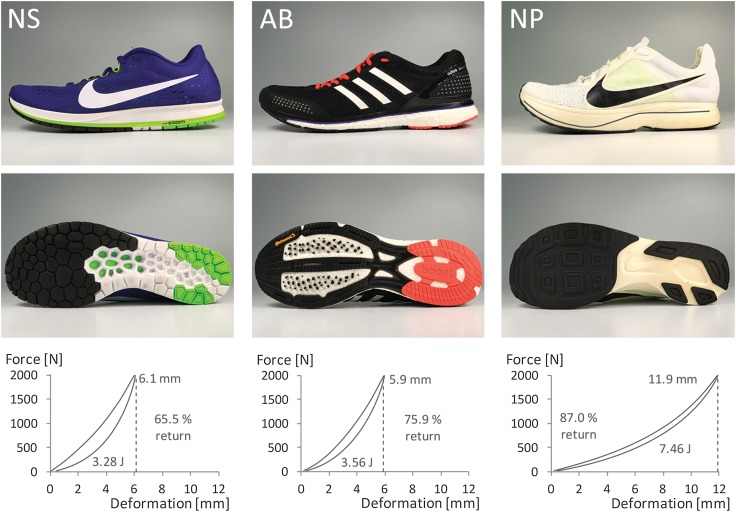
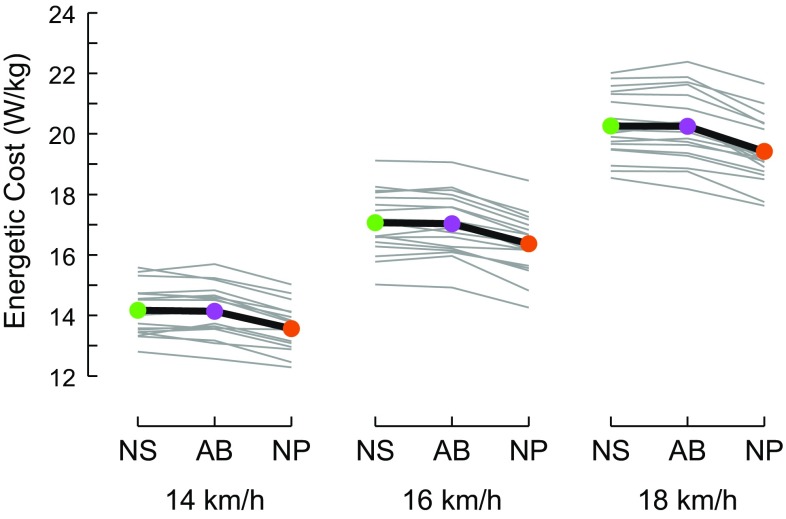
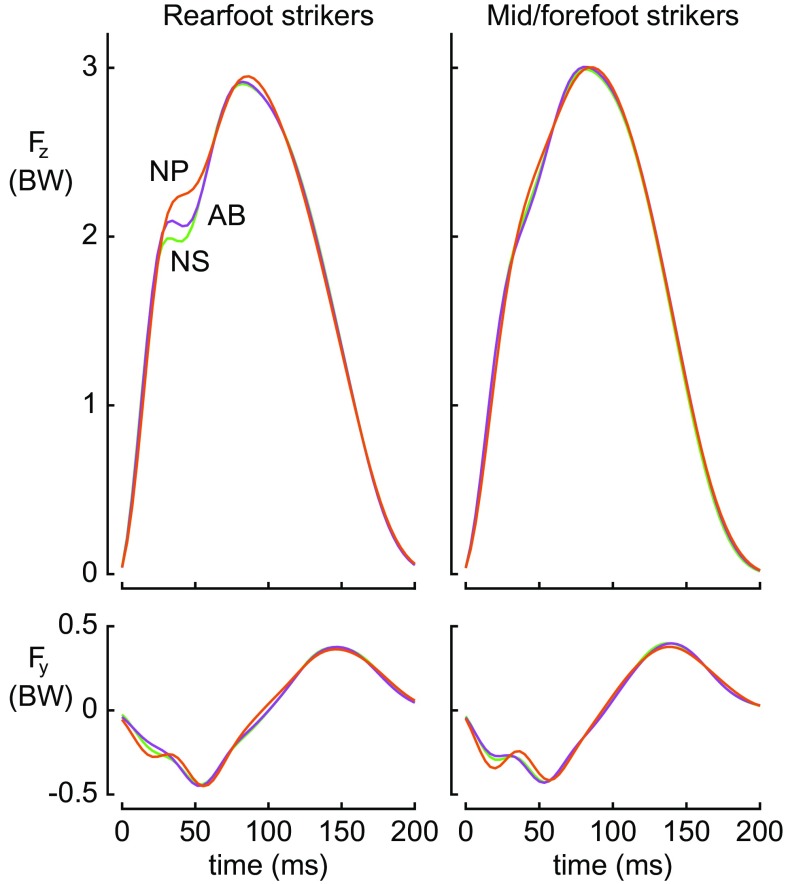
BACKGROUND: Reducing the energetic cost of running seems the most feasible path to a sub-2-hour marathon. Footwear mass, cushioning, and bending stiffness each affect the energetic cost of running. Recently, prototype running shoes were developed that combine a new highly compliant and resilient midsole material with a stiff embedded plate. OBJECTIVE: The aim of this study was to determine if, and to what extent, these newly developed running shoes reduce the energetic cost of running compared with established marathon racing shoes. METHODS: 18 high-caliber athletes ran six 5-min trials (three shoes × two replicates) in prototype shoes (NP), and two established marathon shoes (NS and AB) during three separate sessions: 14, 16, and 18 km/h. We measured submaximal oxygen uptake and carbon dioxide production during minutes 3-5 and averaged energetic cost (W/kg) for the two trials in each shoe model. RESULTS: Compared with the established racing shoes, the new shoes reduced the energetic cost of running in all 18 subjects tested. Averaged across all three velocities, the energetic cost for running in the NP shoes (16.45 ± 0.89 W/kg; mean ± SD) was 4.16 and 4.01% lower than in the NS and AB shoes, when shoe mass was matched (17.16 ± 0.92 and 17.14 ± 0.97 W/kg, respectively, both p < 0.001). The observed percent changes were independent of running velocity (14-18 km/h). CONCLUSION: The prototype shoes lowered the energetic cost of running by 4% on average. We predict that with these shoes, top athletes could run substantially faster and achieve the first sub-2-hour marathon.
Overview
The claims and statistics of this paper haven’t been checked yet.
Run the check — free, no account needed. It reads the open-access text and checks the sources it cites.
Integrity signals
Registry
Cites
Statistics
Figures
Verification
Claims the paper makes
The claims and statistics of this paper haven’t been checked yet.
Run the check — free, no account needed. It reads the open-access text and checks the sources it cites.
Claims other papers make about this one
Each is checked against this paper’s own text: does it say what the citing paper says it does?
In the citing paper
“which achieves a 4% mean reduction in the oxygen cost of running [72].”
Self-check
Percentages, sums and reported differences re-computed from the paper’s own numbers.
The self-check needs the paper’s full text.
Citations
Cites
Maximal Oxygen Intake as an Objective Measure of Cardio-Respiratory Performance
TAYLOR, H. L., BUSKIRK, E. R., & Henschel, A. F. (1955) · Journal of Applied Physiology · doi:10.1152/jappl.1955.8.1.73 · Cited by 1,366 · cited 1×
“Our criterion for reaching _ VO2max was a plateau in oxygen consumption rate after an increase in incline [33].”
BackgroundThe mechanics of running: How does stiffness couple with speed?
McMahon, T. A., & Cheng, G. C. (1990) · Journal of Biomechanics · doi:10.1016/0021-9290(90)90042-2 · Cited by 1,122 · cited 1×
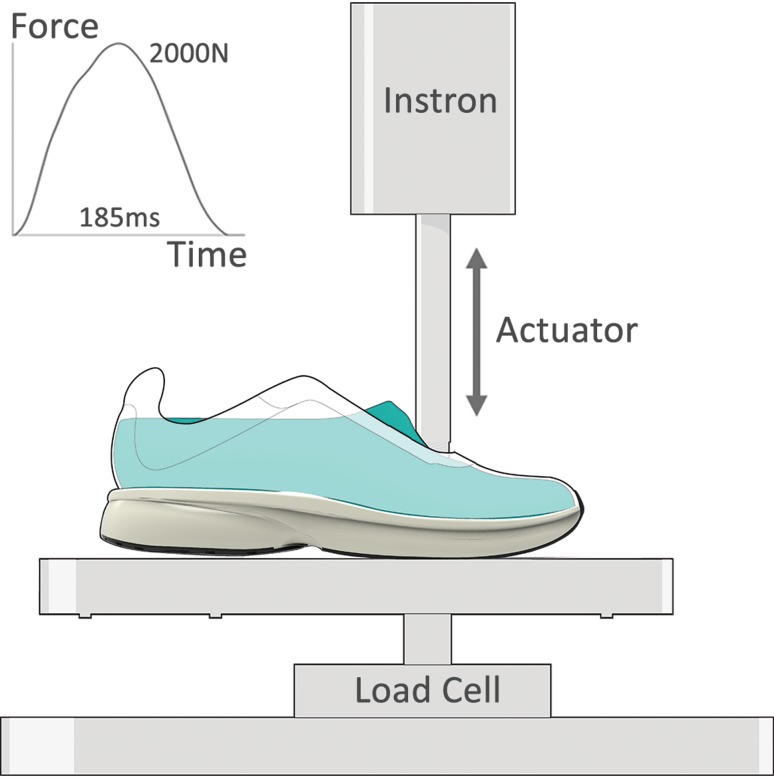
“Though limited, this simplified testing method does provide a clean, general characterization of midsole mechanical energy storage and return capabilities in a direction relevant to the spring-mass behavior of runners [27].”
MethodJustification of the 4-mmol/l lactate threshold
Heck, H., Mader, A., Hess, G., Mücke, S., Müller, R., & Hollmann, W. (1985) · International Journal of Sports Medicine · doi:10.1055/s-2008-1025824 · Cited by 888 · cited 2×
“The remaining 18 subjects were running at an intensity below the onset of blood lactate accumulation (OBLA), which specifies an [La] of 4 mmol/L [28], and the average [La] at 18 km/h was 2.”
BackgroundMethodScaling Body Support in Mammals: Limb Posture and Muscle Mechanics
Biewener, A. A. (1989) · Science · doi:10.1126/science.2740914 · Cited by 865 · cited 1×
“This improves the mechanical advantage of the muscles acting around the joints, which reduces the energetic cost of body weight support [14, 37].”
BackgroundStorage of elastic strain energy in muscle and other tissues
Alexander, R. M., & Bennet-Clark, H. C. (1977) · Nature · doi:10.1038/265114a0 · Cited by 851 · cited 1×
“Other ligaments and tendons of the leg store and return additional energy [39, 40].”
BackgroundThe spring in the arch of the human foot
Ker, R. F., Bennett, M. B., Bibby, S., Kester, R. C., & Alexander, R. M. (1987) · Nature · doi:10.1038/325147a0 · Cited by 780
Derivation of formulae used to calculate energy expenditure in man.
Brockway, J. M. (1987) · PubMed · Cited by 567
McMahon, T. A., Valiant, G., & Frederick, E. C. (1987) · Journal of Applied Physiology · doi:10.1152/jappl.1987.62.6.2326 · Cited by 453
Runners adjust leg stiffness for their first step on a new running surface
Ferris, D. P., Liang, K., & Farley, C. T. (1999) · Journal of Biomechanics · doi:10.1016/s0021-9290(99)00078-0 · Cited by 425 · cited 2×
“When running on compliant surfaces, people maintain their center of mass mechanics by reducing knee flexion during the stance period, which increases leg stiffness [31].”
BackgroundEnergetics and mechanics of human running on surfaces of different stiffnesses
Kerdok, A. E., Biewener, A. A., McMahon, T. A., Weyand, P. G., & Herr, H. (2002) · Journal of Applied Physiology · doi:10.1152/japplphysiol.01164.2000 · Cited by 411 · cited 4×
“Experiments using special treadmills with springy or cushioned surfaces have demonstrated up to 12% energy savings [13, 14] that are attributed to two factors.”
BackgroundInfluential
Research works printed but not linked: 3
- Frederick EC, Daniels JT, Hayes JW. The effect of shoe weight on the aerobic demands of running. In: Bachl N, Prokop L, Suckert R, editors. Curr Top Sports Med Proc World Congr Sports Med. Vienna: Urban and Schwarzenberg; 1984. p. 616–25.
- Frederick EC, Clarke TE, Larsen JL, et al. The effects of shoe cushioning on the oxygen demands of running. In: Nigg BM, Kerr BA, editors. Biomechanical aspects of sports shoes and playing surfaces. Calgary: The University of Calgary; 1983. p. 107–14.
- Frederick EC, Howley ET, Powers SK. Lower O2 cost while running in air-cushion type shoes. Med Sci Sports Exerc. 1980;12:81–2.
Cited by
Sorted by citations
Items 201–300 of 432
Advanced footwear technology in well-trained athletes: methodological insights from outdoor running
Muñiz-Pardos, B., Angeloudis, K., Zelenkova, I. E., Guppy, F. M., Marco-Contreras, L. A., Gómez‐Bruton, A., Lozano‐Berges, G., Pitsiladis, Y. P., & Casajús, J. A. (2025) · Frontiers in Physiology · doi:10.3389/fphys.2025.1713902 · Cited by 6
“…used in the literature as a control shoe [e.g., Nike Zoom Streak (Hoogkamer et al., 2018; Hunter et al., 2019), Adios BOOST one to three models (Hoogkamer et al., 2018; Barnes and Kilding, 2019; Hunter et al., 2019), athletes' own shoe, Saucony Endorphine flat (Hébert-Losier et al., 2022), the…”
InfluentialJaboulay, C., & Giandolini, M. (2025) · Footwear Science · doi:10.1080/19424280.2024.2448653 · Cited by 6
“…mid-sole), also name ‘advanced footwear technology’ (Frederick, 2022), the scientific community has aimed to understand the mechanisms underlying the substantial improvements by up to 4% in RE observed in road runners when wearing such shoes (Hoogkamer et al., 2018; Rodrigo-Carranza et al., 2023).”
Skeletal muscle elastic modulus in marathon distance runners
Winn, B., Haight, D. J., Williams, D. S. B., & Kirby, B. S. (2025) · European Journal of Applied Physiology · doi:10.1007/s00421-025-05708-2 · Cited by 6
“Therefore, while it is accepted that footwear can modify surface interactions and improve running performance (Hoogkamer et al. 2018, 2019), and that controlled lengthening of the rectus femoris manages impact at ground contact (Kakehata et al. 2021), it is also possible that footwear selection…”
Yan, L., Chen, Z., Zhang, X., Han, Q., Zhu, J., Wang, Q., & Zhao, Z. (2024) · Frontiers in Physiology · doi:10.3389/fphys.2024.1388565 · Cited by 9
Zrenner, M., Feldner, C., Jensen, U. J., Roth, N., Richer, R., & Eskofier, B. M. (2019) · Advances in intelligent systems and computing · doi:10.1007/978-3-030-35048-2_13 · Cited by 6
Bräuer, S., Kiesewetter, P., Milani, T. L., & Mitschke, C. (2021) · Sensors · doi:10.3390/s21155010 · Cited by 6
Matties, J. R., Kerr, J. D., & Rowley, K. M. (2024) · bioRxiv (Cold Spring Harbor Laboratory) · doi:10.1101/2024.11.20.624520 · Cited by 5
Bonato, M., Marmondi, F., Faelli, E. L., Pedrinelli, C., Ferraris, L., & Filipas, L. (2024) · Sports · doi:10.3390/sports12120356 · Cited by 5
Technologically advanced running shoes reduce biomechanical factors of running related injury risk
Kim, H., & Ahn, J. (2025) · Scientific Reports · doi:10.1038/s41598-025-03029-0 · Cited by 13
“The selected shoe models were cross-validated with prior literature 19,23,49 to ensure that their material and structural characteristics (e.g., mass, midsole height, and minimalist index) align with properties of shoes in each category.”
Yang, H., Cai, Y., Li, K., Wang, X., & Liu, T. (2025) · Frontiers in Sports and Active Living · doi:10.3389/fspor.2025.1608092 · Cited by 5
Sex-specific metabolic and biomechanical responses to advanced footwear technology
Matties, J. R., & Rowley, K. M. (2025) · Footwear Science · doi:10.1080/19424280.2025.2535284 · Cited by 5
“…runners in this study showed metabolic benefits similar to those reported among male runners (Hébert-Losier, Finlayson, Driller, et al., 2022; Hoogkamer et al., 2018; Hunter et al., 2019; Joubert & Jones, 2022), but more closely aligned with previous data on women tested at 14 km ⋅ h −1…”
InfluentialInfluence of Trail Running Footwear Foam on Running Economy and Perceptual Metrics
Muzeau, M. A., Flood, A., Tam, N., Abel, B., Saunders, P. U., Staiano, W., & Rattray, B. (2025) · European Journal of Sport Science · doi:10.1002/ejsc.70059 · Cited by 6
“Although not analysed, descriptive values for energetic cost are reported in Table 1 to allow comparison with existing research in the field (Hoogkamer et al. 2017; Chollet et al. 2022).”
InfluentialBaumann, G.-A., Biedermann, K., Item, E., Spengler, C. M., & Beltrami, F. G. (2025) · Sports Medicine - Open · doi:10.1186/s40798-025-00911-z · Cited by 5
“…distance records by runners wearing the Nike Vaporfly 4%, which was shown to boost RE by approximately 4% compared with traditional running shoes [1], a call was made to regulate the midsole thickness (also called stack height) of AFT shoes [7], to prevent shoes from having an oversized role in…”
Grivas, G. V. (2025) · European Journal of Applied Physiology · doi:10.1007/s00421-025-06085-6 · Cited by 6
“…s, physiologists and coaches have speculated whether a human could cover the 42.195 km distance in less than two hours, which requires sustaining a pace of approximately 2 min and 50 s per kilometer, or over 21 km·h⁻¹, for the entire race (Joyner 1991 ; Hoogkamer et al. 2017; Sousa et al. 2018).”
InfluentialKuzmeski, J., Bertschy, M., Healey, L. A., Barrons, Z. B., & Hoogkamer, W. (2026) · Journal of sport and health science/Journal of Sport and Health Science · doi:10.1016/j.jshs.2026.101133 · Cited by 5
“1 (cid:1) 5 Hoogkamer et al. 6 were the first to study a novel type of marathon racing shoe featuring a modern, compliant and resilient foam and an embedded carbon fiber plate.”
Self-citationWu, K., Li, J., Suo, B., Lu, Z., Wang, J., Zhi, R., Zeng, Z., Luo, J., Ye, D., Deng, L., et al. (2026) · Scientific Reports · doi:10.1038/s41598-026-43636-z · Cited by 5
“Curved carbon fiber plates, in combination with other advanced footwear technologies, have been reported to further enhance performance 18,19 .”
Role of midsole hollow structure in energy storage and return in running shoes
Liu, T., Matijevich, E., Chu, Z., Yang, F., & Nigg, B. M. (2024) · Journal of Biomechanics · doi:10.1016/j.jbiomech.2024.112197 · Cited by 5
Exploring the teeter-totter effect in shoes with curved carbon fibre plates
Subramanium, A., & Nigg, B. M. (2021) · Footwear Science · doi:10.1080/19424280.2021.1917689 · Cited by 5
A Comparison Of Running Economy Across Seven Carbon-Plated Racing Shoes
Joubert, D. P., & Jones, G. P. (2022) · Medicine & Science in Sports & Exercise · doi:10.1249/01.mss.0000882736.47396.e1 · Cited by 5
“However, much of the research since has been limited to various editions of the Nike Vaporfly, which incorporates new, thicker midsole foams made of polyether block amide (PEBA) and a full-length carbon-fiber plate.7-10 Hoogkamer et al.7 found ~4% improvements in RE in a Nike Vaporfly prototype across running speeds o…”
BackgroundResultInfluentialA pilot study: effects of an 8-week training intervention in carbon-plated running shoes
Matties, J. R., & Rowley, K. M. (2023) · Footwear Science · doi:10.1080/19424280.2023.2202943 · Cited by 5
“With runners also anecdotally reporting less sore calf muscles and less ‘beat up’ legs after hard workouts compared to traditional racing flats, use of VP may cause runners to undergo physiological adaptations since their muscles may be aided during training by the shoe’s energy returning technology (Hoogkamer et al.…”
Xia, Y., Shen, S., Jia, S., Teng, J., Gu, Y., Fekete, G., Korim, T., Zhao, H., Wei, Q., & Yang, F. (2023) · Scientific Reports · doi:10.1038/s41598-023-39718-x · Cited by 5
Boosting Energy Return Using 3D Printed Midsoles Designed With Compliant Constant Force Mechanisms
Ou, H., & Johnson, S. (2023) · Journal of Mechanical Design · doi:10.1115/1.4064164 · Cited by 5
Design and Characterization of the AdjuSST: An Adjustable Surface Stiffness Treadmill
Price, M. A., Locurto, D., Abdikadirova, B., Huber, M. E., & Hoogkamer, W. (2024) · IEEE/ASME Transactions on Mechatronics · doi:10.1109/tmech.2024.3508476 · Cited by 5
Self-citationBrinkmann, D. J., Koerger, H., Gollhofer, A., & Gehring, D. (2020) · Journal of Applied Biomechanics · doi:10.1123/jab.2019-0115 · Cited by 5
Alsenoy, K. K. V., Ryu, J. H., & Girard, O. (2022) · European Journal of Applied Physiology · doi:10.1007/s00421-022-04903-9 · Cited by 5
“Because inherent characteristics of running shoes per se can alter running mechanics and/or RE (Hoogkamer et al. 2018), participants were not allowed to use their own running shoes.”
BackgroundHébert‐Losier, K., Finlayson, S. J., Driller, M. W., Dubois, B., Esculier, J.-F., & Beaven, C. M. (2020) · doi:10.31236/osf.io/ctavy · Cited by 5
“Nike-sponsored [7] and Nike-independent [6, 10] experiments have confirmed RE improvements under laboratory conditions in high-calibre runners (sub 32:00 men and 35:30 women 10 km) wearing Nike Vaporfly 4% mechanistically driven by the elastic properties and energy return from midsole compression [12].”
BackgroundResultInfluentialWithin-day reliability of submaximal running economy testing: implications for footwear testing
Oehlert, G. M., Jones, E. J., Savala, P., & Joubert, D. P. (2025) · Footwear Science · doi:10.1080/19424280.2025.2488755 · Cited by 4
Dudek, K. K., Duncan, O., Martínez, J. A. I., & Kadic, M. (2025) · Advanced Science · doi:10.1002/advs.202503088 · Cited by 4
Trends and hotspots in running shoe research: a bibliometric study from 2005 to 2024
Xiao, X., Lian, A., Li, Z., & Fan, Y. (2025) · Frontiers in Sports and Active Living · doi:10.3389/fspor.2025.1609141 · Cited by 4
“The top-10 most cited papers included the study by Hoogkamar et al. (29), which were sponsored by Nike.”
InfluentialSteele, J. R., VanKeersbilck, L., Ward, J., & Hunter, I. (2025) · International Journal of Sports Physiology and Performance · doi:10.1123/ijspp.2025-0218 · Cited by 4
Metabolic effects of carbon-plated running shoes: a systematic review and meta-analysis
Kobayashi, E. N., de Toledo, R. R. F., de Almeida, M. O., Sprey, J. W. C., & Jorge, P. B. (2026) · Frontiers in Sports and Active Living · doi:10.3389/fspor.2025.1710224 · Cited by 4
Kim, S., Lim, Y., Jung, S., Quagliato, L., Hassan, O. R., Ryu, J., & Lee, T. (2026) · Frontiers in Bioengineering and Biotechnology · doi:10.3389/fbioe.2026.1797727 · Cited by 4
Biology and Management of Male‐Bodied Athletes in Elite Female Sports
Handelsman, D. J., & Bermon, S. (2025) · Drug Testing and Analysis · doi:10.1002/dta.3876 · Cited by 4
“…of the Nike Vaporfly shoes, World Athletics modified its rules governing competition shoes but stopped short of formally banning them despite their creation of a 4% advantage in running energy efficiency [9], exceeding the previous benefits of prior conventional shoe technology of < 2% [10].”
Williams, C., Farlie, M. K., Kolic, J., Morrison, S. C., Paterson, K. L., Hill, M., Bonacci, J., Breet, M. C., Cranage, S., Caswell, S. V., et al. (2025) · Journal of Foot and Ankle Research · doi:10.1002/jfa2.70065 · Cited by 4
“Continued investment in the adult sporting footwear industry demonstrates footwear is also considered a method of performance enhancement [17].”
Waśkiewicz, Z., Akbaş, A., Grzywacz, T., & Borysiuk, Z. (2025) · Frontiers in Bioengineering and Biotechnology · doi:10.3389/fbioe.2025.1642555 · Cited by 5
Marta, G., Quental, C., Folgado, J., & Pinto, F. G. (2022) · Proceedings of the Institution of Mechanical Engineers Part K Journal of Multi-body Dynamics · doi:10.1177/14644193221090871 · Cited by 4
Neuromechanical adaptations of foot function when hopping on a damped surface
Birch, J. V., Farris, D. J., Riddick, R., Cresswell, A. G., Dixon, S., & Kelly, L. A. (2022) · Journal of Applied Physiology · doi:10.1152/japplphysiol.00012.2022 · Cited by 4
“Our findings also provide a plausible explanation as to why shoes with lightweight, thick, and highly resilient (elastic) midsoles may provide an energetic advantage during running (31).”
BackgroundInfluence of Footwear Features on Oxygen Consumption and Running Economy: A Review
Melero-Lozano, M. Á., San-Antolín, M., Vicente-Campos, D., Chicharro, J., Becerro-de-Bengoa-Vallejo, R., Losa-Iglesias, M., Rodríguez-Sanz, D., & Calvo-Lobo, C. (2022) · Applied Sciences · doi:10.3390/app13010023 · Cited by 4
Engel, F. A., Zehnter, F., Yona, T., Mai, P., Willwacher, S., Düking, P., & Sperlich, B. (2024) · Frontiers in Sports and Active Living · doi:10.3389/fspor.2024.1340154 · Cited by 5
“While previous research (8, 5 – 7) reported improved running economy with advanced shoe technology, our participants showed a non-signi fi cant increase in oxygen consumption (2.9% – 5.7”
InfluentialIMPACT OF FOOTWEAR BENDING STIFFNESS ON LOWER-LIMB WORK REDISTRIBUTION AND RUNNING ECONOMY
LIU, Z., Yang, F., Ma, R.-Y., & Ding, L. (2024) · Journal of Mechanics in Medicine and Biology · doi:10.1142/s021951942440044x · Cited by 4
Firminger, C. R., Čigoja, S., Asmussen, M. J., Fletcher, J. R., Nigg, B. M., & Edwards, B. (2019) · Footwear Science · doi:10.1080/19424280.2019.1606081 · Cited by 4
Effect of Rest Periods on Mechanical Ageing of Running Shoes
Allen, T., Pagan, M., Martin, R., & Duncan, O. (2020) · Conference of the International Sports Engineering Association (ISEA) · doi:10.3390/proceedings2020049138 · Cited by 4
“6 mm at 2 kN), allowing it to store more energy, and then returned over twice as much energy due to its higher resilience [9].”
BackgroundInfluentialEffects of 2.4 kg of Proximal External Loading on 5-km Running Performance
Sharp, D. W., Swain, J. C., Boy, T. G., Killen, L. G., Green, J. M., & O'Neal, E. K. (2020) · The Journal of Strength and Conditioning Research · doi:10.1519/jsc.0000000000003722 · Cited by 5
“It is common for a 5-minute resting period to occur between multiple running economy measurement bouts (8,15,16).”
Backgroundde Andrés-Sánchez, J., Torres-Burgos, F. D., & Arias-Oliva, M. (2023) · Journal of Sport and Health Research · doi:10.58727/jshr.89629 · Cited by 4
Effects of longitudinal bending stiffness and midsole foam on running energetics and biomechanics
Lino, H., Perry, D., Bertschy, M., Price, M. A., & Hoogkamer, W. (2023) · Footwear Science · doi:10.1080/19424280.2023.2199393 · Cited by 4
Self-citationThe influence of midsole thickness on running turns
Barrons, Z. B., Wannop, J. W., & Stefanyshyn, D. J. (2024) · Footwear Science · doi:10.1080/19424280.2024.2316345 · Cited by 5
No effect of cycling shoe sole stiffness on sprint performance
Hurt, J. W., & Kram, R. (2020) · Footwear Science · doi:10.1080/19424280.2020.1825533 · Cited by 4
The Impact of Grounding in Running Shoes on Indices of Performance in Elite Competitive Athletes
Muñiz-Pardos, B., Zelenkova, I. E., González‐Agüero, A., Knopp, M. U., Boitz, T., Graham, M., Ruiz, D., Casajús, J. A., & Pitsiladis, Y. P. (2022) · International Journal of Environmental Research and Public Health · doi:10.3390/ijerph19031317 · Cited by 4
“This technology has shown to improve RE by increasing the midsole longitudinal bending stiffness, favoring a decrease in the range of motion of the metatarsophalangeal joint [3,21,22].”
BackgroundThe secrets to running economy
Herzog, W. (2022) · Journal of sport and health science/Journal of Sport and Health Science · doi:10.1016/j.jshs.2022.03.003 · Cited by 4
Effect of advanced footwear technology spikes on lower limb kinetics and sprint performance
Gerlach, M., de Graaf, M. L., Boström, K. J., & Wagner, H. (2025) · Footwear Science · doi:10.1080/19424280.2025.2458322 · Cited by 3
“In addition to the changes in LBS the midsole materials also play an important role in explaining the significant improvements in sprint times after the introduction of AFT Spikes (Hoogkamer et al., 2018).”
Mechanisms, Economy, and Performance of Advanced Footwear Technology in Endurance Running—A Review
Bruvere, D. D., & Bernāns, E. (2025) · Muscles · doi:10.3390/muscles5010002 · Cited by 3
“When comparing the Nike Zoom Vaporfly prototype (heel height: 31 mm; forefoot height: 21 mm) with two similar-technology shoes—the Adidas Adios Boost and the Nike Zoom Streak 6—Hoogkamer et al. [14] reported that the prototype deformed nearly twice as much (11.9 mm; energy return: 87”
InfluentialLi, W., Feng, J., Feng, G., & Feng, S. (2026) · Microchimica Acta · doi:10.1007/s00604-025-07792-9 · Cited by 4
“When comparing matched mass shoes with and without CFP across 14–18 km/h speeds, laboratory tests of running economy have revealed energy-cost savings of around 4.0% (e.g., W/ kg reduced from 17.16 ± 0.97 to ~ 16.45 W/kg)[ 38].”
InfluentialMacdermid, P. W., Walker, S. J., Ingalla, B., & Leuchanka, A. (2026) · Applied Sciences · doi:10.3390/app16020784 · Cited by 3
Li, K., Yu, L., Habibi, M., & Zhao, J. (2026) · Polymers for Advanced Technologies · doi:10.1002/pat.70585 · Cited by 3
“Footwear soles, insoles, and other wearable protective systems must simultaneously provide high energy absorption to reduce impact forces while maintaining sufficient stiffness to support running mechanics, stability, and propulsion efficiency [51, 52].”
Mechanical Testing of Midsole Properties at Different Impact Frequencies
Scherrer, D., Legg, K. A., Rogers, C. W., Gottschall, J. S., & Cochrane, D. J. (2026) · Applied Sciences · doi:10.3390/app16105130 · Cited by 3
Effect of Advanced Footwear Technology Spikes on Sprint Acceleration: A Multiple N-of-1 Trial
Bernuz, B., Laujac, S., Sirial, C., Auffret, S., Preda, C., SLAWINSKI, J. S., Millot, B., Pradon, D., Coudrat, L., & Gavarry, O. (2024) · Sports Medicine - Open · doi:10.1186/s40798-024-00758-w · Cited by 3
“However, the research found a positive performance benefit when using AFTs on running economy and training performance for mid-and long-distance [5–8], so much so that several records have been set from the 5-km to the marathon [9].”
BackgroundWhite, L. T., Malcolm, P., Franz, J. R., & Takahashi, K. Z. (2025) · Journal of Applied Biomechanics · doi:10.1123/jab.2024-0150 · Cited by 3
Guo, Y., Jia, Y., Wu, Y., & Zhu, X. (2025) · Applied Sciences · doi:10.3390/app15052785 · Cited by 3
Akgül, H., Birtane, M., & Tonga, E. (2025) · Musculoskeletal Care · doi:10.1002/msc.70085 · Cited by 7
Effects of selected features of advanced footwear technology on lower limb joint work
Ghanbari, A., Vienneau, J., Nigg, S., & Nigg, B. M. (2025) · Sports Biomechanics · doi:10.1080/14763141.2025.2508244 · Cited by 3
“This was demonstrated by a significant 4% improvement in running economy in a Nike Vaporfly 4% shoe prototype, which surpassed the performance of its competitors lacking a stiffening element and advanced midsole material (Hoogkamer et al., 2018).”
Xiao, Y., Hu, X., Tian, D., & Qiu, A. (2025) · International Journal of Sports Medicine · doi:10.1055/a-2637-7283 · Cited by 3
Bolliger, A., Spengler, C. M., & Beltrami, F. G. (2026) · Sports Medicine - Open · doi:10.1186/s40798-026-00977-3 · Cited by 3
“Previous studies have also reported changes in spatiotemporal parameters during running whilst wearing AFT shoes, including an increased stride length and leg stiffness coupled with a decreased in ground contact time [1, 4].”
InfluentialEvaluación ética de atletas y triatletas españoles sobre uso de la tecnología vaporfly
Sánchez, J. D. A., & Torres-Burgos, F. D. (2021) · Revista Iberoamericana de Ciencias de la Actividad Física y el Deporte · doi:10.24310/riccafd.2021.v10i3.12840 · Cited by 3
Connected model to optimize performance
Lerebourg, L., & Coquart, J. B. (2023) · Frontiers in Sports and Active Living · doi:10.3389/fspor.2022.1054783 · Cited by 3
Papachatzis, N., Ray, S. F., & Takahashi, K. Z. (2023) · Journal of Experimental Biology · doi:10.1242/jeb.245113 · Cited by 3
Arch Stiffness Does Not Determine Running Economy in Recreational Runners
Bradford, I., Kirkwood, P., Eddy, J., Essenmacher, P., McCrory, J. L., & Leary, B. K. (2023) · International journal of exercise science · doi:10.70252/dzdb1603 · Cited by 3
“Additionally, shoes which artificially increase the longitudinal stiffness through carbon fiber plating have been shown to improve RE by ~4%, further supporting the relationship between longitudinal arch stiffness and running economy (13).”
BackgroundResultMax, F., Hübner, F., Frisch, M. J., & Ruckdäschel, H. (2023) · Results in Materials · doi:10.1016/j.rinma.2023.100404 · Cited by 3
The Alphafly Outcry: Distance Running, Technological Doping, and the Rhetoric of Stigma
Milford, M. (2023) · Communication & Sport · doi:10.1177/21674795231174833 · Cited by 3
Macdermid, P. W., Walker, S. J., & Cochrane, D. J. (2025) · Applied Sciences · doi:10.3390/app15031120 · Cited by 3
Čigoja, S., Fletcher, J. R., & Nigg, B. M. (2020) · ISBS Proceedings Archive · Cited by 3
Effects of Three Modest Levels of Proximal Loading on Marathon Pace Running Economy
Gaddie, J. W., Kennedy, E. P., Green, M., Killen, L. G., Linder, B. A., Heinkel, A. A., & O'Neal, E. K. (2020) · International journal of exercise science · doi:10.70252/xiqu5513 · Cited by 3
“Participants completed 4 running bouts of 5 min with 5 min recovery periods between each bout (11, 20) at the target pace the individual would attempt for a marathon distance race based on current training status and a racing pace history questionnaire.”
MethodIs a sub 7-h IronmanTM possible?
Desroches, A. J., & Goulet, E. D. B. (2022) · Frontiers in Sports and Active Living · doi:10.3389/fspor.2022.866599 · Cited by 3
“, 2019) and more than 4% (Hoogkamer et al., 2018; Barnes and Kilding, 2019), which translates into an improvement in running performance greater than 2% (Muniz-Pardos et al.”
BackgroundDesign and Materials in Athletics
Linthorne, N. P. (2019) · Elsevier eBooks · doi:10.1016/b978-0-08-102582-6.00014-9 · Cited by 3
Stiffening the human foot with a biomimetic exotendon
Riddick, R., Farris, D. J., Brown, N. A. T., & Kelly, L. A. (2021) · Scientific Reports · doi:10.1038/s41598-021-02059-8 · Cited by 3
Experimental investigations on waist supportive passive exoskeleton to improve human comfort
Chittar, O. A., Barve, S., & Kanthale, V. (2022) · Materials Today Proceedings · doi:10.1016/j.matpr.2022.09.086 · Cited by 3
Menthol mouth swilling and endurance running performance in the heat
Best, R. J. (2020) · Wintec Research Archive (Waikato Institute of Technology) · Cited by 3
Defining responders to altered running footwear based on measures of running economy
Brund, R. B. K., Nielsen, A., Larsen, R. G., Kersting, U. G., & de Zee, M. (2024) · Footwear Science · doi:10.1080/19424280.2024.2415080 · Cited by 2
“Previous studies have reported differences in RE between CON and AFTV (Barnes & Kilding, 2019; Hoogkamer et al., 2018; Hunter et al., 2019), providing a rationale for using these two shoes in this study.”
Pan, M., Chen, Z., Huang, D., Wu, Z., Xue, F., García, J. D.-C., Yi, Q., & Shen, S. (2025) · Applied Sciences · doi:10.3390/app15137066 · Cited by 2
“While increased stiffness has been associated with reduced energy loss at the MTP joint [23], excessive stiffness may limit elastic energy storage and return, particularly in dynamic sports such as badminton [24].”
Peng, Y., Wang, D., Zheng, H., Qian, H., Chen, C., Han, Y., Zhao, K., Gao, T., Liu, W., & Pang, X. (2025) · Sports Medicine - Open · doi:10.1186/s40798-025-00913-x · Cited by 2
“Whether it is the brief success of the “sharkskin” swimsuit or Kipchoge’s challenge of breaking the 2-hour marathon barrier, these events underscore humanity’s keen interest in advancing science to explore the boundaries of physical capability [4, 5].”
Hofmann, C. L. (2026) · Footwear Science · doi:10.1080/19424280.2026.2637936 · Cited by 2
“While Hoogkamer et al. (2018) found a specific AFT afforded a consistent benefit to running economy (~4”
Maruo, Y., & Takezawa, K. (2026) · Frontiers in Physiology · doi:10.3389/fphys.2026.1800107 · Cited by 2
“…and 4.0% for women ’ s marathon, values that closely align with the 2 – 5% enhancement in RE reported in previous laboratory-based longitudinal studies (Hoogkamer et al., 2018; Joubert et al., 2024; Langley et al., 2023; Mason et al., 2024). suggests that AFT contributes to higher running velocity.”
InfluentialAsmussen, M. J., Lichtwark, G. A., & Maharaj, J. N. (2022) · Journal of Applied Biomechanics · doi:10.1123/jab.2021-0354 · Cited by 2
Biomechanics of Athletic Footwear
Weir, G., & Hamill, J. (2023) · Elsevier eBooks · doi:10.1016/b978-0-12-815449-6.00006-8 · Cited by 2
Effect of running shoes with a carbon plate on running biomechanics
Ryu, S., Kang, J., Kong, S., Choi, Y., Yoon, S., Ryu, J.-S., & Park, S.-K. (2023) · Footwear Science · doi:10.1080/19424280.2023.2199280 · Cited by 2
“In a study examining metabolic variables in elite running athletes (Hoogkamer et al., 2018), it was reported that carbon plate running shoes can shorten the record by about six minutes compared to normal running shoes.”
BackgroundFrederick, E. C., Stefanyshyn, D. J., & Hoogkamer, W. (2023) · Footwear Science · doi:10.1080/19424280.2023.2199296 · Cited by 2
“Impressive in its performance (Hoogkamer et al., 2018) the Nike Vaporfly 4% ushered in a new era of AFT in 2017.”
BackgroundSelf-citationThe Impact of Student Engagement and Motivation in the Statistics Learning Process
Lumbantoruan, J. H. (2023) · Journal of Research in Mathematics Education · doi:10.17583/redimat.12884 · Cited by 2
“…et al., 2017), (2) challenge in the activity or task, and Should perceive that they have the (acquired) skill or competence (s) to tackle the task (Hoogkamer et al., 2018) have shown for instance that discussing and/or solving a math problem individually, with a classmate or within a group can…”
BackgroundResultWang, S., Gao, M., Xiao, X., Jiang, X., & Luo, J. (2024) · npj Climate and Atmospheric Science · doi:10.1038/s41612-024-00637-x · Cited by 2
“Recently, the introduction of high-technology shoes substantially improved performance of elite marathon athletes by ~2 – 3 min 32,33 .”
Hudgins, J. H., Pastina, J. T., Gillis, I. L., Abel, M. G., Bergstrom, H. C., Black, W. S., & Best, S. A. (2024) · Journal of Sports Sciences · doi:10.1080/02640414.2024.2426903 · Cited by 2
“When examining the influence of shoe type on the relationship between running economy and Stryd RP, running economy was defined as the energetic cost of running instead of oxygen cost to account for variation in substrate utilisation (Kipp et al., 2018).”
InfluentialFootwear's Impact on Athletic Performance and Injury Risk
Mettler, J. H. (2024) · ACSMʼs Health & Fitness Journal · doi:10.1249/fit.0000000000001019 · Cited by 2
Alsenoy, K. K. V., van der Linden, M. L., Girard, O., Ryu, J. H., Raisi, L. A., & Santos, D. (2025) · Gait & Posture · doi:10.1016/j.gaitpost.2025.01.030 · Cited by 2
Alda-Blanco, A., González‐Mohíno, F., González‐Ravé, J. M., & Santos‐Concejero, J. (2025) · Frontiers in Physiology · doi:10.3389/fphys.2025.1653896 · Cited by 2
O’Grady, T. J., & Gracey, D. (2020) · Entertainment and Sports Law Journal · doi:10.16997/eslj.257 · Cited by 2
Running-Related Injury From an Engineering, Medical and Sport Science Perspective
Papagiannaki, M., Samoladas, E., Maropoulos, S., & Arabatzi, F. (2020) · Frontiers in Bioengineering and Biotechnology · doi:10.3389/fbioe.2020.533391 · Cited by 2
Footwear reduces and redistributes lower extremity joint work in women runners
Farina, E. M., Wathen, R., Gaytan-Jenkins, D., Haight, D. J., & Clark, D. (2023) · Footwear Science · doi:10.1080/19424280.2023.2199409 · Cited by 2
“Footwear can influence running biomechanics, and novel designs can provide benefits of performance (Hoogkamer et al., 2018) or protection (Ryan & Taunton, 2019).”
BackgroundThe metabolic cost of overcoming air resistive forces in distance runningPreprint
da Silva, E. S., Kram, R., & Hoogkamer, W. (2021) · bioRxiv (Cold Spring Harbor Laboratory) · doi:10.1101/2021.04.27.441608 · Cited by 2
Self-citationCould a hybrid cycling-running shoe offer time savings to triathletes?
Sterns, K., Hurt, J. W., Wilkinson, R. D., & Kram, R. (2022) · Footwear Science · doi:10.1080/19424280.2022.2077841 · Cited by 1
Dierickx, E. E., Butler, C. R., Huggins, R. A., Zuk, E. F., Mason, L. C., DiStefano, L. J., & Casa, D. J. (2023) · International journal of exercise science · doi:10.70252/egdu7320 · Cited by 1
“Previous investigations support the effect of a potential optimal bending stiffness on reducing the metabolic cost of running (21,29,34), however, other studies report limited to no effects of embedded carbon fiber plates on running economy, the oxygen requirement at a given velocity (1,8–10,13,31).”
BackgroundCarbon Racing Wheelchair Frames: Trespassing Technological Unfairness?
Sanz-Quinto, S., Brizuela, G., & Alonso, J. M. (2024) · European Journal of Sport Sciences · doi:10.24018/ejsport.2024.3.1.116 · Cited by 1
“…found similarities with racing athletics shoes when comparing models with embedded carbon fiber plate that increases longitudinal bending stiffness (Hoogkamer et al ., 2018) to minimalist racing flat shoes and heavier highly-cushioned shoe models (i.e., 313 ± 44 g mass), reporting better…”
BackgroundKnopp, M. U., Guppy, F. M., Joyner, M. J., Muñiz-Pardos, B., Wackerhage, H., Schönfelder, M., Pitsiladis, Y. P., & Ruiz, D. (2025) · Translational Exercise Biomedicine · doi:10.1515/teb-2024-0016 · Cited by 1
Hazelwood, B., Hoogkamer, W., Powell, D. W., & Paquette, M. R. (2025) · Footwear Science · doi:10.1080/19424280.2025.2489682 · Cited by 1
“‘Super-shoes’ (SS) – featuring a longitudinal stiffening agent embedded in a high stack midsole of resilient & compliant foam and a forefoot rocker geometry – improve running economy (RE), yet individual results vary (Hoogkamer et al., 2018).”
Self-citation
Metadata
- Authors
- Hoogkamer, W., Kipp, S., Frank, J. H., Farina, E. M., Luo, G., & Kram, R.
- Affiliations
- University of Colorado Boulder (US)
- Nike (United States) (US)
- Corresponding author
- Hoogkamer, Wouter
- Venue
- Sports Medicine
- Published
- 2017-11-16
- Volume
- 48
- Issue
- 4
- Pages
- 1009-1019
- ISSN
- 0112-1642 (ISSN-L)
- 1179-2035
- PMC
- PMC5856879
- OpenAlex
- W2770125989
- Cited by
- 434
- References
- 44
- Citations by year
- 2026: 58 · 2025: 71 · 2024: 68 · 2023: 61 · 2022: 51 · 2021: 43 · 2020: 42 · 2019: 28 · 2018: 12
- FWCI
- 10.10
- Type
- journal article
- Language
- en
- Update notices
- correction (2017-12-16)
- Open access
- hybrid
- doi.org
- Locations
- Sports Medicine (publishedVersion, cc-by)
- PubMed Central (publishedVersion, cc-by)
- PubMed (publishedVersion)
- Funders
- NIKE
- Topics
- Physical Sciences › Engineering › Biomedical Engineering › Lower Extremity Biomechanics and Pathologies
- Health Sciences › Medicine › Orthopedics and Sports Medicine › Sports Performance and Training
- Physical Sciences › Engineering › Biomedical Engineering › Sports Dynamics and Biomechanics
- Keywords
- running shoes, submaximal oxygen uptake, CO2 emissions, running speed
- MeSH terms
- Adult, Altitude, Biomechanical Phenomena, Energy Metabolism, Humans, Male, Running, Shoes, Young Adult, Athletes
About these checks
Registry, retraction, Cites and statistics results are computed, not judged, with one exception: a printed reference that no index lists is read once by a model before it counts as a citation error. Claims are extracted by a model and kept only when their quote appears verbatim in the text; each cited source is then checked, with a model’s help, for whether it says what the claim relies on. Those verdicts can be wrong — read the claim’s quote and the cited source before relying on one.
Statistics and arithmetic are recomputed, not judged.
Confidence bands are shown only for fields calibrated on our annotated test set. None is calibrated yet, so no band is shown.
What counts as a claim ›How we measure confidence ›How we check this ›
Are you an author, or do you see a problem with this page? Request a review
