

Physical Fitness with Exercise and GLP-1 Receptor Agonist Treatment Alone or Combined After Diet-Induced Weight Loss: A Secondary Analysis of a Randomized Controlled Trial in Adults with Obesity
Open accessThe DOI matches its Crossref record; 56 of the 57 references it cites were found in a registry or an index.
Abstract
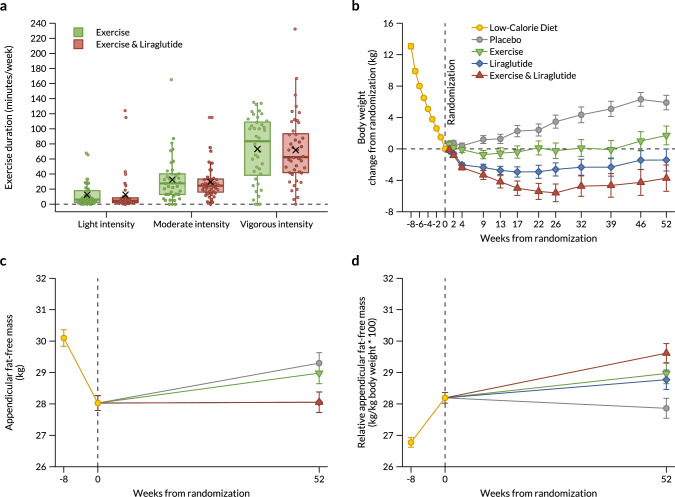
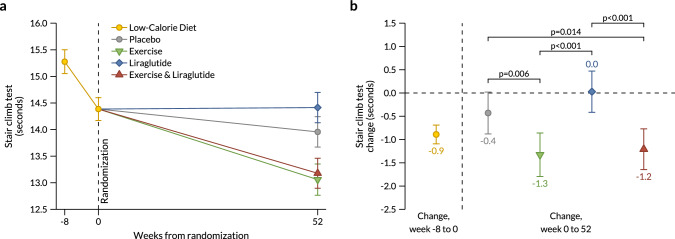
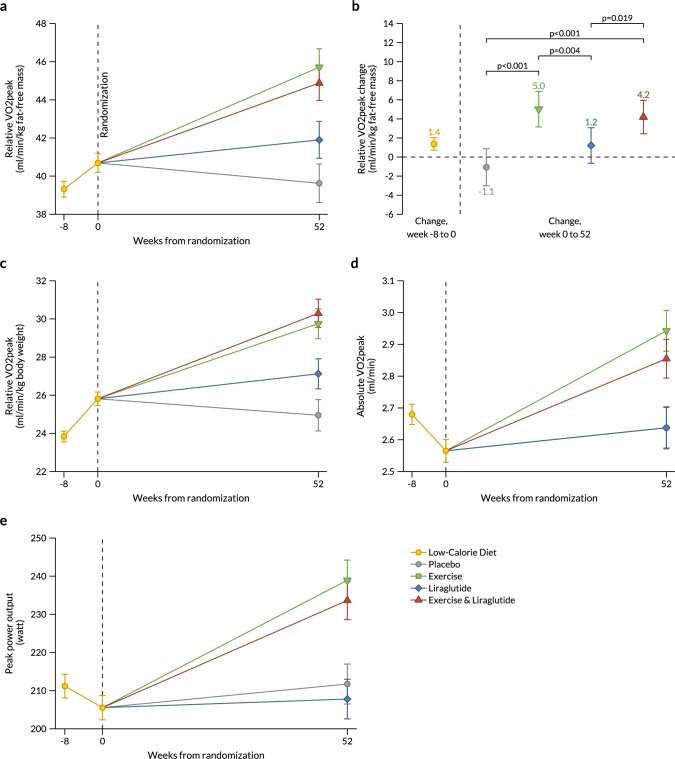
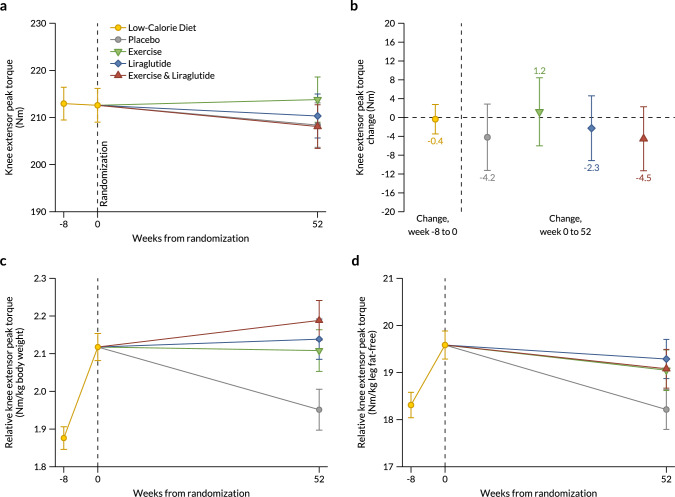
Background: Obesity is associated with impaired physical fitness, including physical functional performance and cardiorespiratory fitness, which affect health-related quality of life and mortality. Objective: We aimed to investigate the efficacy of a moderate-to-vigorous intensity exercise program and glucagon-like peptide-1 receptor agonist treatment alone or in combination during weight maintenance for physical fitness. Methods: This is secondary analysis of a randomized controlled trial involving 193 adults with obesity (age 18–65 years, body mass index 32–43 kg/m 2 ) without diabetes mellitus who completed an 8-week low-calorie diet and were subsequently randomized (1:1:1:1 ratio) to: exercise plus placebo; glucagon-like peptide-1 receptor agonist liraglutide 3 mg once-daily plus usual activity; exercise plus liraglutide combined; or placebo plus usual activity. The exercise program was a combination of group sessions (interval-based indoor cycling followed by circuit training) and individual sessions of moderate-to-vigorous intensity, designed to meet the World Health Organization recommendations on physical activity for health. Exercise adherence was measured with sports watches and heart rate monitors. Key secondary endpoints related to physical fitness were changes from randomization to the end of treatment (weeks 0–52) in: (1) physical functional performance (time to ascend and descend an 11-step stairway twice); (2) cardiorespiratory fitness (peak oxygen consumption normalized to fat-free mass); and (3) muscle strength (isometric knee extensor peak torque). Results: Participants randomized to exercise performed a median 2.65 session/week (116 min/week at 79% of maximum heart rate) with no significant difference between those who received placebo or liraglutide. Compared with liraglutide alone, the combined treatment decreased time to complete a stair climb test by 1.2 s [95% confidence interval 0.6–1.9] (corresponding to 8.6%) and improved peak oxygen consumption by 3.0 mL/min/kg fat-free mass [95% confidence interval 0.5–5.5]. Exercise alone led to similar benefits, whereas liraglutide alone did not improve physical fitness. Compared with placebo (− 7.8%), relative muscle strength (strength normalized to body weight) was higher with exercise (− 0.4%), liraglutide (+ 1.0%), and the combined treatment (+ 3.3%) because of lower weight and preserved absolute strength. Conclusions: Structured exercise combined with glucagon-like peptide-1-based obesity pharmacotherapy led to clinically meaningful improvements in physical functional performance and cardiorespiratory fitness, in contrast to pharmacotherapy alone. Clinical Trial Registration: EudraCT number, 2015-005585-32; ClinicalTrials.gov number, NCT04122716.
Overview
The claims and statistics of this paper haven’t been checked yet.
Free: it reads the open-access text and checks the first 5 claims that cite a source we can check. Create a free account to check every claim.
Integrity signals
Registry
Cites
Statistics
Figures
Verification
Claims the paper makes
The claims and statistics of this paper haven’t been checked yet.
Free: it reads the open-access text and checks the first 5 claims that cite a source we can check. Create a free account to check every claim.
Claims other papers make about this one
Each is checked against this paper’s own text: does it say what the citing paper says it does?
The source backs part of the claim, not all of it — or backs it for a different population, condition or comparison.
In the citing paper
“physical performance and functional outcomes are generally preserved or improved in most studies, particularly when resistance training is maintained”
From Weight maintenance after discontinuation of GLP-1 therapies (2026) · cites this paper as [72]
Experimental — accuracy not yet measured
Self-check
Percentages, sums and reported differences re-computed from the paper’s own numbers.
The self-check needs the paper’s full text.
Citations
Cites
Controlling the False Discovery Rate: A Practical and Powerful Approach to Multiple Testing
Benjamini, Y., & Hochberg, Y. (1995) · Journal of the Royal Statistical Society Series B: Statistical Methodology · doi:10.1111/j.2517-6161.1995.tb02031.x · Cited by 109,482 · cited 1×
“The Benjamini–Hochberg procedure [35] was used to control the false discovery rate (5%).”
World Health Organization 2020 guidelines on physical activity and sedentary behaviour
Bull, F. C., Al-Ansari, S. S., Biddle, S., Borodulin, K., Buman, M. P., Cardon, G., Carty, C., Chaput, J.-P., Chastin, S., Chou, R., et al. (2020) · British Journal of Sports Medicine · doi:10.1136/bjsports-2020-102955 · Cited by 11,657 · cited 1×
“…program included a 6-week ramp-up phase, and from weeks 7 to 52, the aim was to follow the World Health Organization’s recommendations on physical activity for health, i.e., at least 150 min/week of moderate intensity, 75 min/week of vigorous intensity, or an equivalent combination of both [31].”
Once-Weekly Semaglutide in Adults with Overweight or Obesity
Wilding, J. P. H., Batterham, R. L., Calanna, S., Davies, M., Van Gaal, L. F., Lingvay, I., McGowan, B. M., Rosenstock, J., Tran, M. T. D., Wadden, T. A., et al. (2021) · New England Journal of Medicine · doi:10.1056/nejmoa2032183 · Cited by 5,205 · cited 1×
“The phase III trials of liraglutide, semaglutide, and tirzepatide all showed improvements in self-reported physical functioning [14, 43, 44].”
Tirzepatide Once Weekly for the Treatment of Obesity
Jastreboff, A. M., Aronne, L. J., Ahmad, N. N., Wharton, S., Connery, L., Alves, B., Kiyosue, A., Zhang, S., Liu, B., Bunck, M. C., et al. (2022) · New England Journal of Medicine · doi:10.1056/nejmoa2206038 · Cited by 3,838 · cited 1×
“The phase III trials of liraglutide, semaglutide, and tirzepatide all showed improvements in self-reported physical functioning [14, 43, 44].”
A Randomized, Controlled Trial of 3.0 mg of Liraglutide in Weight Management
Pi-Sunyer, X., Astrup, A., Fujioka, K., Greenway, F., Halpern, A., Krempf, M., Lau, D. C. W., le Roux, C. W., Violante Ortiz, R., Jensen, C. B., et al. (2015) · New England Journal of Medicine · doi:10.1056/nejmoa1411892 · Cited by 2,724 · cited 2×
“The phase III trials of liraglutide, semaglutide, and tirzepatide all showed improvements in self-reported physical functioning [14, 43, 44].”
DONNELLY, J. E., BLAIR, S. N., JAKICIC, J. M., MANORE, M. M., RANKIN, J. W., & SMITH, B. K. (2009) · Medicine & Science in Sports & Exercise · doi:10.1249/mss.0b013e3181949333 · Cited by 2,658
Ross, R., Blair, S. N., Arena, R., Church, T. S., Després, J.-P., Franklin, B. A., Haskell, W. L., Kaminsky, L. A., Levine, B. D., Lavie, C. J., et al. (2016) · Circulation · doi:10.1161/cir.0000000000000461 · Cited by 2,486 · cited 3×
“…with reduced all-cause and cardiovascular mortality and prevention of age-related declines [2, 33, 34] and were considered realistic to detect [7, 26], and they were therefore chosen as the minimum clinically relevant differences (see the statistical analysis plan in the ESM for details).”
Limiting factors for maximum oxygen uptake and determinants of endurance performance
BASSETT, D. R. (2000) · Medicine & Science in Sports & Exercise · doi:10.1097/00005768-200001000-00012 · Cited by 2,410 · cited 1×
“As liraglutide alone did not improve cardiorespiratory fitness compared with placebo, we speculate that the improvements observed with combined exercise and liraglutide were mainly due to exercise-induced physiological adaptations [51], rather than weight loss per se.”
Balady, G. J., Arena, R., Sietsema, K., Myers, J., Coke, L., Fletcher, G. F., Forman, D., Franklin, B., Guazzi, M., Gulati, M., et al. (2010) · Circulation · doi:10.1161/cir.0b013e3181e52e69 · Cited by 1,964
Newman, A. B., Kupelian, V., Visser, M., Simonsick, E. M., Goodpaster, B. H., Kritchevsky, S. B., Tylavsky, F. A., Rubin, S. M., Harris, T. B., & on Behalf of the Health, A. A. B. C. S. I. (2006) · The Journals of Gerontology Series A: Biological Sciences and Medical Sciences · doi:10.1093/gerona/61.1.72 · Cited by 1,692 · cited 1×
“Nevertheless, muscle strength is more strongly associated with adverse outcomes and mortality than muscle mass [24].”
Semaglutide in Patients with Heart Failure with Preserved Ejection Fraction and Obesity
Kosiborod, M. N., Abildstrøm, S. Z., Borlaug, B. A., Butler, J., Rasmussen, S., Davies, M., Hovingh, G. K., Kitzman, D. W., Lindegaard, M. L., Møller, D. V., et al. (2023) · New England Journal of Medicine · doi:10.1056/nejmoa2306963 · Cited by 1,669
Ettinger, W. H. (1997) · JAMA · doi:10.1001/jama.277.1.25 · Cited by 1,233
Wei, M. (1999) · JAMA · doi:10.1001/jama.282.16.1547 · Cited by 1,168
Weight loss, exercise, or both and physical function in obese older adults
Villareal, D. T., Chode, S., Parimi, N., Sinacore, D. R., Hilton, T., Armamento-Villareal, R., Napoli, N., Qualls, C., & Shah, K. (2011) · New England Journal of Medicine · doi:10.1056/nejmoa1008234 · Cited by 1,096 · cited 3×
“Weight loss per se may lead to some improvements in physical functional performance; however, the addition of combined aerobic and resistance exercise produces greater benefits [26].”
Definition and Diagnostic Criteria for Sarcopenic Obesity: ESPEN and EASO Consensus Statement
Donini, L. M., Busetto, L., Bischoff, S. C., Cederholm, T., Ballesteros-Pomar, M. D., Batsis, J. A., Bauer, J. M., Boirie, Y., Cruz-Jentoft, A. J., Dicker, D., et al. (2022) · Obesity Facts · doi:10.1159/000521241 · Cited by 1,019 · cited 1×
“Appendicular FFM normalized to body weight, a surrogate marker of muscle mass used to assess sarcopenia risk [52], increased in all active groups, but more with combined exercise and liraglutide treatment than with liraglutide alone.”
Tirzepatide for Heart Failure with Preserved Ejection Fraction and Obesity
Packer, M., Zile, M. R., Kramer, C. M., Baum, S. J., Litwin, S. E., Menon, V., Ge, J., Weerakkody, G. J., Ou, Y., Bunck, M. C., et al. (2025) · New England Journal of Medicine · doi:10.1056/nejmoa2410027 · Cited by 1,009 · cited 1×
“These three incretin-based medications also previously improved 6-min walking distance in patients with overweight or obesity and heart failure [45–47].”
on behalf of the NN8022-1923 Investigators, Wadden, T. A., Hollander, P., Klein, S., Niswender, K., Woo, V, Hale, P. M., & Aronne, L. (2013) · International Journal of Obesity · doi:10.1038/ijo.2013.120 · Cited by 842
Aerobic or Resistance Exercise, or Both, in Dieting Obese Older Adults
Villareal, D. T., Aguirre, L., Gurney, A. B., Waters, D. L., Sinacore, D. R., Colombo, E., Armamento-Villareal, R., & Qualls, C. (2017) · New England Journal of Medicine · doi:10.1056/nejmoa1616338 · Cited by 754
García-Hermoso, A., Cavero-Redondo, I., Ramírez-Vélez, R., Ruiz, J. R., Ortega, F. B., Lee, D.-C., & Martínez-Vizcaíno, V. (2018) · Archives of Physical Medicine and Rehabilitation · doi:10.1016/j.apmr.2018.01.008 · Cited by 609
Jorsal, A., Kistorp, C., Holmager, P., Tougaard, R. S., Nielsen, R., Hänselmann, A., Nilsson, B., Møller, J. E., Hjort, J., Rasmussen, J., et al. (2017) · European Journal of Heart Failure · doi:10.1002/ejhf.657 · Cited by 592 · cited 1×
“These three incretin-based medications also previously improved 6-min walking distance in patients with overweight or obesity and heart failure [45–47].”
Healthy Weight Loss Maintenance with Exercise, Liraglutide, or Both Combined
Lundgren, J. R., Janus, C., Jensen, S. B. K., Juhl, C. R., Olsen, L. M., Christensen, R. M., Svane, M. S., Bandholm, T., Bojsen-Møller, K. N., Blond, M. B., et al. (2021) · New England Journal of Medicine · doi:10.1056/nejmoa2028198 · Cited by 536 · cited 7×
“The sample size was calculated based on the primary end-point, a change in body weight [29].”
InfluentialSelf-citationA new framework for the diagnosis, staging and management of obesity in adults
Busetto, L., Dicker, D., Frühbeck, G., Halford, J. C. G., Sbraccia, P., Yumuk, V., & Goossens, G. H. (2024) · Nature Medicine · doi:10.1038/s41591-024-03095-3 · Cited by 501 · cited 1×
“Accordingly, updated guidelines for obesity care now emphasize that improved physical fitness should be considered a central treatment target [12].”
Muscular strength as a strong predictor of mortality: A narrative review
Volaklis, K. A., Halle, M., & Meisinger, C. (2015) · European Journal of Internal Medicine · doi:10.1016/j.ejim.2015.04.013 · Cited by 309 · cited 1×
“These differences have been associated with reduced all-cause and cardiovascular mortality and prevention of age-related declines [2, 33, 34] and were considered realistic to detect [7, 26], and they were therefore chosen as the minimum clinically relevant differences (see the statistical analysis…”
Is stair climb power a clinically relevant measure of leg power impairments in at-risk older adults?
Bean, J. F., Kiely, D. K., LaRose, S., Alian, J., & Frontera, W. R. (2007) · Archives of Physical Medicine and Rehabilitation · doi:10.1016/j.apmr.2007.02.004 · Cited by 278 · cited 1×
“The stair climb test was a performance-based measure to assess physical functional performance; in addition to physical functioning, the test reflects anaerobic power, lower limb strength, balance, agility, and mobility [36].”
Obesity, functional mobility and quality of life
Forhan, M., & Gill, S. V. (2013) · Best Practice & Research Clinical Endocrinology & Metabolism · doi:10.1016/j.beem.2013.01.003 · Cited by 232 · cited 2×
“The impaired physical functioning and mobility often experienced by people with obesity reduce health-related quality of life [5].”
Physical Activity and the Prevention of Weight Gain in Adults: A Systematic Review
JAKICIC, J. M., POWELL, K. E., CAMPBELL, W. W., DIPIETRO, L., PATE, R. R., PESCATELLO, L. S., COLLINS, K. A., BLOODGOOD, B., & PIERCY, K. L. (2019) · Medicine & Science in Sports & Exercise · doi:10.1249/mss.0000000000001938 · Cited by 213
Wadden, T. A., Tronieri, J. S., Sugimoto, D., Lund, M. T., Auerbach, P., Jensen, C., & Rubino, D. (2020) · Obesity · doi:10.1002/oby.22726 · Cited by 200 · cited 1×
“In the SCALE IBT trial, the addition of liraglutide to intensive behavioral therapy did not improve walking distance [15].”
Osman, A. F., Mehra, M. R., Lavie, C. J., Nunez, E., & Milani, R. V. (2000) · Journal of the American College of Cardiology · doi:10.1016/s0735-1097(00)00985-2 · Cited by 198 · cited 1×
“Indeed, V ̇ O2 peak is directly related to FFM, and normalizing to FFM reflects fitness related to exercise performance and cardiorespiratory function and has high prognostic value for mortality [33, 48–50].”
O'Donoghue, G., Blake, C., Cunningham, C., Lennon, O., & Perrotta, C. (2021) · Obesity Reviews · doi:10.1111/obr.13137 · Cited by 190 · cited 1×
“Among people who are physically inactive and/or have obesity, aerobic exercise interventions consistently improve cardiorespiratory fitness to levels associated with substantial reductions in all-cause mortality [7, 28].”
Effects of obesity on functional capacity
Pataky, Z., Armand, S., Müller‐Pinget, S., Golay, A., & Allet, L. (2014) · Obesity · doi:10.1002/oby.20514 · Cited by 176 · cited 2×
“Obesity is linked to impaired physical functional performance and cardiorespiratory fitness [1–3].”
Effects of Weight Loss on Lean Mass, Strength, Bone, and Aerobic Capacity
WEISS, E. P., JORDAN, R. C., FRESE, E. M., ALBERT, S. G., & VILLAREAL, D. T. (2017) · Medicine & Science in Sports & Exercise · doi:10.1249/mss.0000000000001074 · Cited by 169 · cited 1×
“During calorie restriction, resistance exercise alone or combined with aerobic exercise preserves muscle mass, whereas aerobic exercise alone is less effective [27].”
Oktay, A. A., Lavie, C. J., Kokkinos, P. F., Parto, P., Pandey, A., & Ventura, H. O. (2017) · Progress in Cardiovascular Diseases · doi:10.1016/j.pcad.2017.05.005 · Cited by 166 · cited 1×
“High cardiorespiratory fitness levels largely mitigate the increased risk of cardiovascular and all-cause mortality associated with obesity [10, 11].”
Strategies for minimizing muscle loss during use of incretin‐mimetic drugs for treatment of obesity
Mechanick, J. I., Butsch, W. S., Christensen, S. M., Hamdy, O., Li, Z., Prado, C. M., & Heymsfield, S. B. (2025) · Obesity Reviews · doi:10.1111/obr.13841 · Cited by 149 · cited 1×
“About 20–40% of the weight lost during pharmacotherapy consists of fat-free mass (FFM) [18], which has led to concerns about potential adverse effects on muscle strength and cardiorespiratory fitness [19, 20].”
Nicklas, B. J., Chmelo, E., Delbono, O., Carr, J. J., Lyles, M. F., & Marsh, A. P. (2015) · The American Journal of Clinical Nutrition · doi:10.3945/ajcn.114.105270 · Cited by 144 · cited 1×
“The magnitude of improvement aligns with the 5–10% improvements in physical functioning typically observed in response to exercise interventions alone or as an add-on to calorie restriction [26, 40–42].”
Houston, D. K., Ding, J., Nicklas, B. J., Harris, T. B., Lee, J. S., Nevitt, M. C., Rubin, S. M., Tylavsky, F. A., Kritchevsky, S. B., & Study, F. T. H. A. (2009) · American Journal of Epidemiology · doi:10.1093/aje/kwp007 · Cited by 132 · cited 1×
“Stair climb tests are generally sensitive to detect declines in physical functioning and mobility limitations in mid/late life, which are accelerated by obesity [1, 2, 38, 39].”
Sattar, N., Neeland, I. J., Dahlqvist Leinhard, O., Fernández Landó, L., Bray, R., Linge, J., & Rodriguez, A. (2025) · The Lancet Diabetes & Endocrinology · doi:10.1016/s2213-8587(25)00027-0 · Cited by 131 · cited 1×
“…regardless of their location [21], is not equivalent to skeletal muscle mass. Obesity pharmaco-therapy has been shown to reduce muscle mass as evident by a decreased thigh muscle volume measured by magnetic resonance imaging after the incretin-based treatments liraglutide [22] and tirzepatide [23].”
Associations between Cardiorespiratory Fitness and Health-Related Quality of Life
Sloan, R. A., Sawada, S. S., Martin, C. K., Church, T. R., & Blair, S. N. (2009) · Health and Quality of Life Outcomes · doi:10.1186/1477-7525-7-47 · Cited by 125
Cardiorespiratory fitness, body mass index and mortality: a systematic review and meta-analysis
Weeldreyer, N. R., Guzman, J. C. D., Paterson, C. A., Allen, J. D., Gaesser, G. A., & Angadi, S. S. (2024) · British Journal of Sports Medicine · doi:10.1136/bjsports-2024-108748 · Cited by 110 · cited 2×
“High cardiorespiratory fitness levels largely mitigate the increased risk of cardiovascular and all-cause mortality associated with obesity [10, 11].”
Vaughan, L., Leng, X., LaMonte, M. J., Tindle, H. A., Cochrane, B. B., & Shumaker, S. A. (2016) · The Journals of Gerontology Series A · doi:10.1093/gerona/glv061 · Cited by 103 · cited 1×
“Low levels of these physical fitness constructs negatively affect health-related quality of life [4, 5] and are independent predictors of functional disability or limitations in older adulthood [6] and premature all-cause mortality [7–9].”
Cardiopulmonary fitness is a function of lean mass, not total body weight: The DR’s EXTRA study
Krachler, B., Savonen, K. P., Komulainen, P., Hassinen, M., Lakka, T. A., & Rauramaa, R. (2014) · European Journal of Preventive Cardiology · doi:10.1177/2047487314557962 · Cited by 92
Tinsley, G. M., & Heymsfield, S. B. (2024) · Journal of the Endocrine Society · doi:10.1210/jendso/bvae164 · Cited by 81 · cited 1×
“…absorptiometry (DXA), i.e., the mass of all the body’s non-fat molecules (e.g., water, organ tissue, bone, and muscle) regardless of their location [21], is not equivalent to skeletal muscle mass. Obesity pharmaco-therapy has been shown to reduce muscle mass as evident by a decreased thigh muscle…”
Pandey, A., Patel, K. V., Segar, M. W., Ayers, C., Linge, J., Leinhard, O. D., Anker, S. D., Butler, J., Verma, S., Joshi, P. H., et al. (2024) · Journal of Cachexia, Sarcopenia and Muscle · doi:10.1002/jcsm.13445 · Cited by 80 · cited 1×
“…regardless of their location [21], is not equivalent to skeletal muscle mass. Obesity pharmaco-therapy has been shown to reduce muscle mass as evident by a decreased thigh muscle volume measured by magnetic resonance imaging after the incretin-based treatments liraglutide [22] and tirzepatide [23].”
Lolli, L., Batterham, A. M., Weston, K. L., & Atkinson, G. (2017) · Sports Medicine · doi:10.1007/s40279-016-0655-1 · Cited by 80 · cited 1×
“Indeed, V ̇ O2 peak is directly related to FFM, and normalizing to FFM reflects fitness related to exercise performance and cardiorespiratory function and has high prognostic value for mortality [33, 48–50].”
Zanuso, S., Sacchetti, M., Sundberg, C. J., Orlando, G., Benvenuti, P., & Balducci, S. (2017) · British Journal of Sports Medicine · doi:10.1136/bjsports-2016-096724 · Cited by 77
Cardiorespiratory Fitness Normalized to Fat-Free Mass and Mortality Risk
Imboden, M. T., Kaminsky, L. A., Peterman, J. E., Hutzler, H. L., WHALEY, M. H., Fleenor, B. S., & Harber, M. P. (2020) · Medicine & Science in Sports & Exercise · doi:10.1249/mss.0000000000002289 · Cited by 58 · cited 3×
“These differences have been associated with reduced all-cause and cardiovascular mortality and prevention of age-related declines [2, 33, 34] and were considered realistic to detect [7, 26], and they were therefore chosen as the minimum clinically relevant differences (see the statistical analysis…”
The relationship between body composition and muscle power output in men and women with obesity
Lafortuna, C. L., Agosti, F., Marazzi, N., & Sartório, A. (2004) · Journal of Endocrinological Investigation · doi:10.1007/bf03346280 · Cited by 52 · cited 2×
“…included all randomized participants who received at least one randomized treatment dose, irrespective of completion and treatment adherence [2, 38], indicating that the observed improvements with exercise may potentially translate into a clinically meaningful prevention of age-related decline…”
Dubin, R. L., Heymsfield, S. B., Ravussin, E., & Greenway, F. L. (2024) · Diabetes, Obesity and Metabolism · doi:10.1111/dom.15913 · Cited by 47
Johnson, N. A., Sultana, R. N., Brown, W. J., Bauman, A. E., & Gill, T. (2021) · Journal of Science and Medicine in Sport · doi:10.1016/j.jsams.2021.07.009 · Cited by 47
Müllertz, A. L. O., Sandsdal, R. M., Jensen, S. B. K., & Torekov, S. S. (2024) · Obesity Reviews · doi:10.1111/obr.13717 · Cited by 46 · cited 1×
“More effective pharmacotherapies are now available, reaching weight losses exceeding 20% [17].”
Self-citationJensen, S. B. K., Janus, C., Lundgren, J. R., Juhl, C. R., Sandsdal, R. M., Olsen, L. M., Andresen, A., Borg, S. A., Jacobsen, I. C., Finlayson, G., et al. (2022) · Nature Communications · doi:10.1038/s41467-022-32307-y · Cited by 42 · cited 1×
“Obtaining and sustaining a clinically relevant weight reduction with lifestyle intervention alone is challenging [13].”
Self-citationSartório, A., Lafortuna, C. L., Agosti, F., Proietti, M., & Maffiuletti, N. A. (2004) · International Journal of Obesity · doi:10.1038/sj.ijo.0802702 · Cited by 39 · cited 1×
“The magnitude of improvement aligns with the 5–10% improvements in physical functioning typically observed in response to exercise interventions alone or as an add-on to calorie restriction [26, 40–42].”
Skeletal muscle loss and sarcopenia in obesity pharmacotherapy
Hope, D. C. D., & Tan, T. (2024) · Nature Reviews Endocrinology · doi:10.1038/s41574-024-01041-4 · Cited by 29 · cited 1×
“About 20–40% of the weight lost during pharmacotherapy consists of fat-free mass (FFM) [18], which has led to concerns about potential adverse effects on muscle strength and cardiorespiratory fitness [19, 20].”
Mesinovic, J., Hurst, C., Leung, G. K. W., Ryan, J. R., Daly, R. M., & Scott, D. (2025) · Reviews in Endocrine and Metabolic Disorders · doi:10.1007/s11154-025-09968-3 · Cited by 27 · cited 1×
“Weight loss obtained through low-calorie diets is associated with modest reductions in absolute strength but increases in strength relative to body weight [25].”
Lange‐Maia, B. S., Karvonen-Gutierrez, C. A., Strotmeyer, E. S., Avery, E., Appelhans, B. M., Fitzpatrick, S. L., Janssen, İ., Dugan, S. A., & Kravitz, H. M. (2019) · The journal of nutrition health & aging · doi:10.1007/s12603-019-1254-2 · Cited by 25 · cited 3×
“These differences have been associated with reduced all-cause and cardiovascular mortality and prevention of age-related declines [2, 33, 34] and were considered realistic to detect [7, 26], and they were therefore chosen as the minimum clinically relevant differences (see the statistical analysis…”
Jensen, S. B. K., Lundgren, J. R., Janus, C., Juhl, C. R., Olsen, L. M., Rosenkilde, M., Holst, J. J., Stallknecht, B. M., Madsbad, S., & Torekov, S. S. (2019) · BMJ Open · doi:10.1136/bmjopen-2019-031431 · Cited by 20 · cited 2×
“The trial design is detailed in the primary trial report [29] and protocol [30].”
Self-citationMolari, M., Fernandes, K. B. P., Marquez, A. D. S., Probst, V. S., Bignardi, P. R., & Teixeira, D. D. C. (2021) · Archives of Gerontology and Geriatrics · doi:10.1016/j.archger.2021.104524 · Cited by 9 · cited 1×
“Low levels of these physical fitness constructs negatively affect health-related quality of life [4, 5] and are independent predictors of functional disability or limitations in older adulthood [6] and premature all-cause mortality [7–9].”
Cited by
Weight maintenance after discontinuation of GLP-1 therapies
Moiz, A., Filion, K. B., Knäuper, B., Tsoukas, M. A., Brazeau, A.-S., Zolotarova, T., Lelièvre, A., & Eisenberg, M. J. (2026) · EClinicalMedicine · doi:10.1016/j.eclinm.2026.103992 · Cited by 7
“71,72 Beyond its role in preserving strength and function, skeletal muscle plays a central role in metabolic regulation.”
Sancho-Haro, E. S., Muñoz-López, M., Baz-Valle, E., Villanueva-Tobaldo, C. V., Tornero-Aguilera, J. F., López-Gil, J. F., López‐Moreno, M., Martín-Rodríguez, A., & Clemente‐Suárez, V. J. (2026) · Pharmaceuticals · doi:10.3390/ph19060897 · Cited by 2
Olumuyide, E. O., Ariel, K., & Aneni, E. (2026) · International Journal of Obesity · doi:10.1038/s41366-026-02143-x · Cited by 1
Ming, Q., & Li, Z. (2026) · Frontiers in Nutrition · doi:10.3389/fnut.2026.1914155
Damasio, N. M. A., Freccia, G. W., Fortes, M. D. S. R., Gomes, M. G. Z., & de Lira, C. A. B. (2026) · Obesity Medicine · doi:10.1016/j.obmed.2026.100743
Metadata
- Authors
- Jensen, S. B. K., Fiorenza, M., Juhl, C. R., Sandsdal, R. M., Jensen, E., Seier, S. S., Janus, C., Jørgensen, J. R., Blond, M. B., Holst, J. J., Stallknecht, B. M., Madsbad, S., Bandholm, T., & Torekov, S. S.
- Affiliations
- University of Copenhagen (DK)
- Steno Diabetes Center Copenhagen (DK)
- Corresponding author
- Jensen, Simon Birk Kjær
- Torekov, Signe Sørensen
- ORCID
- Venue
- Sports Medicine
- Published
- 2026-01-24
- Volume
- 56
- Issue
- 7
- Pages
- 1785-1800
- ISSN
- 0112-1642 (ISSN-L)
- 1179-2035
- PMC
- PMC13388483
- OpenAlex
- W7125578635
- Cited by
- 9
- References
- 57
- Citations by year
- 2026: 9
- FWCI
- 41.14
- Type
- journal article
- Language
- en
- Open access
- hybrid
- doi.org
- Licence
- cc-by
- creativecommons.org/licenses/by/4.0 (tdm)
- creativecommons.org/licenses/by/4.0 (vor)
- Locations
- Sports Medicine (publishedVersion, cc-by)
- PubMed (publishedVersion)
- PubMed Central (publishedVersion, cc-by)
- Research at the University of Copenhagen (University of Copenhagen) (publishedVersion, cc-by)
- Funders
- Novo Nordisk Fonden (NNF16OC0019968, NNF15CC0018486)
- Helsefonden
- Novo Nordisk Foundation Center for Basic Metabolic Research
- Danish Diabetes and Endocrine Academy
- Danish Cardiovascular Academy
- Det Sundhedsvidenskabelige Fakultet, Københavns Universitet
- Copenhagen University
- Topics
- Health Sciences › Medicine › Public Health, Environmental and Occupational Health › Physical Activity and Health
- Health Sciences › Medicine › Physiology (medical) › Cardiovascular and exercise physiology
- Health Sciences › Medicine › Pharmacology (medical) › Pharmacology and Obesity Treatment
- Keywords
- obesity, physical fitness, physical activity, liraglutide, GLP-1 receptor agonists, weight maintenance, hypocaloric diet, cardiorespiratory fitness, peak oxygen uptake, physical functional performance, muscle strength, quadriceps strength, weight loss, exercise adherence, circuit training, health-related quality of life
- MeSH terms
- Liraglutide, Cardiorespiratory Fitness, Glucagon-Like Peptide-1 Receptor Agonists, Adolescent, Adult, Aged, Combined Modality Therapy, Diet, Reducing, Exercise Therapy, Female, Humans, Hypoglycemic Agents, Male, Middle Aged, Obesity, Physical Fitness, Weight Loss, Caloric Restriction, Young Adult
About these checks
Registry, retraction, Cites and statistics results are computed, not judged, with one exception: a printed reference that no index lists is read once by a model before it counts as a citation error. Claims are extracted by a model and kept only when their quote appears verbatim in the text; each cited source is then checked, with a model’s help, for whether it says what the claim relies on. Those verdicts can be wrong — read the claim’s quote and the cited source before relying on one.
Statistics and arithmetic are recomputed, not judged.
Confidence bands are shown only for fields calibrated on our annotated test set. None is calibrated yet, so no band is shown.
What counts as a claim ›How we measure confidence ›How we check this ›
Are you an author, or do you see a problem with this page? Request a review
Data sources
Bibliographic data: Semantic Scholar, OpenAlex, Crossref.
Contains information from the Semantic Scholar Academic Graph Datasets, made available under the ODC Attribution License (ODC-BY 1.0).
Semantic Scholar’s data is described in: Kinney, R., et al. (2023). The Semantic Scholar Open Data Platform. arXiv:2301.10140.
