

The DOI matches its Crossref record; 103 of the 106 references it cites were found in a registry or an index.
A Multimedia Adaptive Tutoring System for Mathematics that Addresses Cognition, Metacognition and Affect
Open accessAbstract
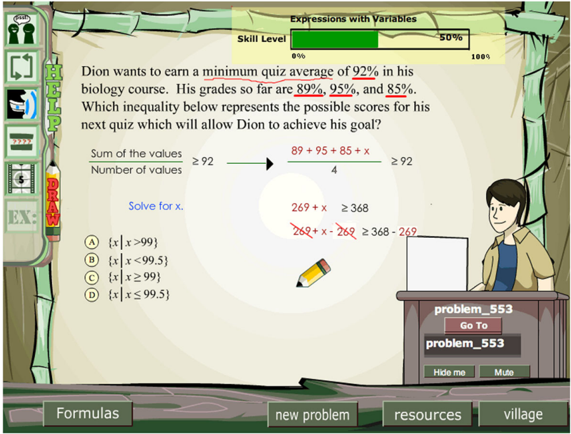
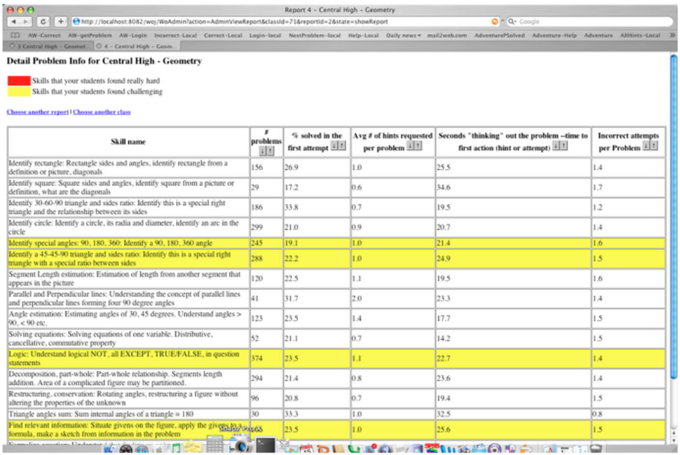
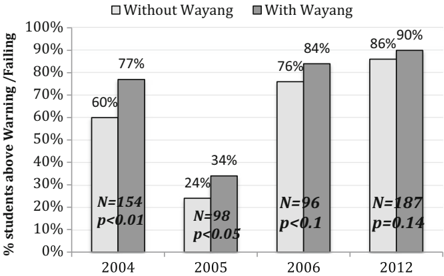
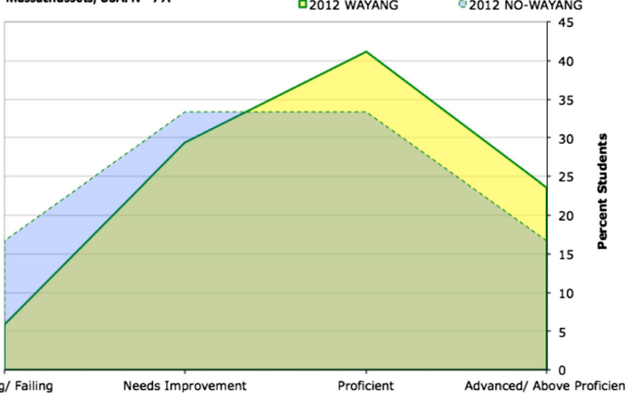
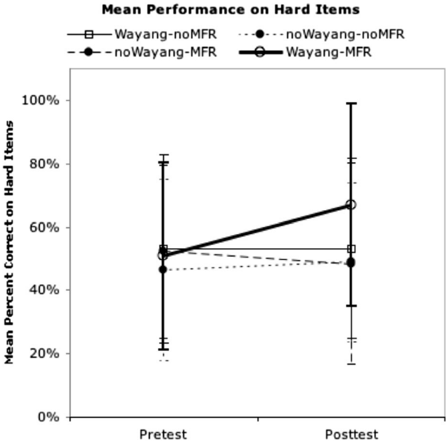
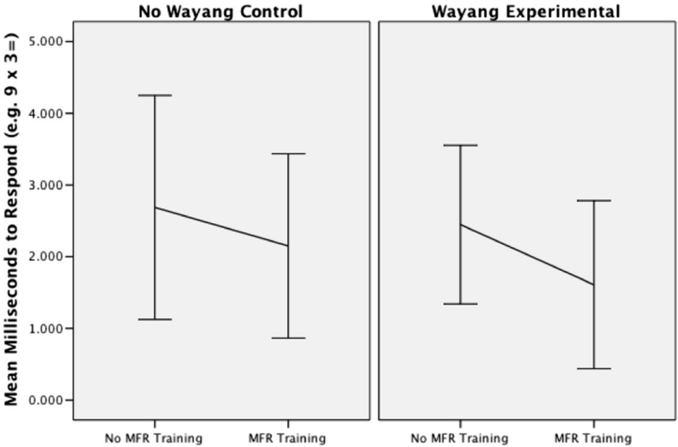
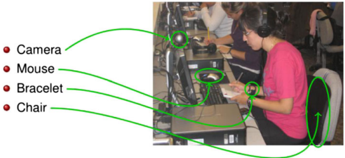
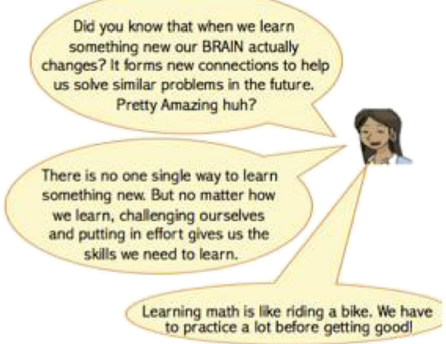
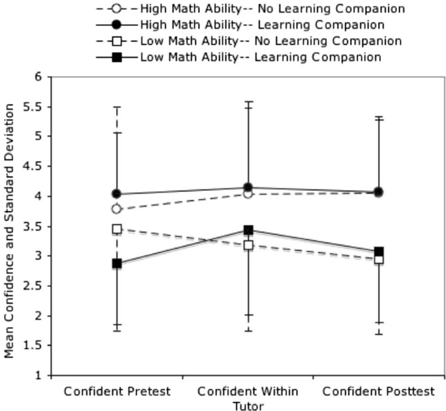
This article describes research results based on multiple years of experimentation and real-world experience with an adaptive tutoring system named Wayang Outpost. The system represents a novel adaptive learning technology that has shown successful outcomes with thousands of students, and provided teachers with valuable information about students’ mathematics performance. We define progress in three areas: improved student cognition, engagement, and affect, and we attribute this improvement to specific components and interventions that are inherently affective, cognitive, and metacognitive in nature. For instance, improved student cognitive outcomes have been measured with pre-post tests and state standardized tests, and achieved due to personalization of content and math fluency training. Improved student engagement was achieved by supporting students’ metacognition and motivation via affective learning companions and progress reports, measured via records of student gaming of the system. Student affect within the tutor was measured through sensors and student self-reports, and supported through affective learning companions and progress reports. Collectively, these studies elucidate a suite of effective strategies to support advanced personalized learning via an intelligent adaptive tutor that can be tailored to the individual needs, emotions, cognitive states, and metacognitive skills of learners.
Overview
The claims and statistics of this paper haven’t been checked yet.
Run the check — free, no account needed. It reads the open-access text and checks the sources it cites.
Integrity signals
Registry
Cites
Statistics
Figures


Verification
Claims the paper makes
The claims and statistics of this paper haven’t been checked yet.
Run the check — free, no account needed. It reads the open-access text and checks the sources it cites.
Claims other papers make about this one
Each is checked against this paper’s own text: does it say what the citing paper says it does?
In the citing paper
“As far as we can tell, only one paper from 2014 surveyed other aspects of motivation (e.g., self-efficacy) in a more substantial way (Arroyo et al., 2014).”
From Evolution and Revolution in Artificial Intelligence in Education (2016) · cites this paper as Arroyo et al., 2014
Self-check
Percentages, sums and reported differences re-computed from the paper’s own numbers.
The self-check needs the paper’s full text.
Citations
Cites
(1978) · Medical Entomology and Zoology · Cited by 53,488
Baddeley, A. D., & Hitch, G. (1974) · Psychology of Learning and Motivation · doi:10.1016/s0079-7421(08)60452-1 · Cited by 9,860
Mayer, R. E. (2009) · doi:10.1017/cbo9780511811678 · Cited by 7,800
Mayer, R. (2020) · doi:10.1017/9781316941355 · Cited by 7,777
Building a practically useful theory of goal setting and task motivation: A 35-year odyssey.
Locke, E. A., & Latham, G. P. (2002) · American Psychologist · doi:10.1037/0003-066x.57.9.705 · Cited by 7,766 · cited 1×
“2003), understanding which problem solving strategies to apply, and setting manageable goals and objectives for one-self (Locke and Latham 2002).”
BackgroundProbabilistic Models for Some Intelligence and Attainment Tests
Psychology, M. (1961) · Information and Control · doi:10.1016/s0019-9958(61)80061-2 · Cited by 6,936
(1999) · Cited by 6,308
Pekrun, R. (2006) · Educational Psychology Review · doi:10.1007/s10648-006-9029-9 · Cited by 5,566 · cited 8×
“…theory of emotion existed that addressed learning, explained which emotions are most important in learning, or identified how emotion influenced learning (Picard et al. 2004), though later work by Pekrun solidified that idea that our intuitions were headed in the right direction (Pekrun 2006).”
BackgroundMethodResultInfluentialHandbook of educational psychology
(1997) · Choice Reviews Online · doi:10.5860/choice.34-3084 · Cited by 4,850
Self-Efficacy: An Essential Motive to Learn
Zimmerman, B. J. (2000) · Contemporary Educational Psychology · doi:10.1006/ceps.1999.1016 · Cited by 4,294
Research works printed but not linked: 4
- Azevedo, R., Bouchet, F., Harley, J. M., Feyzi-Behnagh, R., Trevors, G., Duffy, M., Taub, M., Pacampara, N., Agnew, L., Griscom, S., Mudrick, N., Stead, V., & Yang, W. (2011). MetaTutor: An Intelligent Multi-Agent Tutoring System Designed to Detect, Track, Model, and Foster Self-Regulated Learning In Proceedings of the Fourth Workshop on Self-Regulated Learning in Educational Technologies. In conjunction with the 15th International Conference onArtificial Intelligence on Education (AIED 2011)
- Bull, S., Wasson, B., Johnson, M. D., Petters, D., & Hansen, C. (2012). Helping teachers effectively support group learning. In Proceedings of Workshop on Intelligent Support for Learning in Groups, Intelligent Tutoring Systems
- Heffernan, N., Militello, M., Heffernan, C., & Decoteau, M. (2012) Effective and meaningful use of educational technology: three cases from the classroom. In C. Dede & J. Richards (Eds.), Digital Teaching Platforms (pp. 88–102). · DOI
- Ogan, 2011, Pervasive social effects of agent-based instructional dialog, Proceedings of the 15th International Conference on Artificial Intelligence in Education (AIED 2011), 238
Cited by
Sorted by citations
Evolution and Revolution in Artificial Intelligence in Education
Roll, I., & Wylie, R. (2016) · International Journal of Artificial Intelligence in Education · doi:10.1007/s40593-016-0110-3 · Cited by 1,229
Bernacki, M. L., Greene, M. J., & Lobczowski, N. G. (2021) · Educational Psychology Review · doi:10.1007/s10648-021-09615-8 · Cited by 618
Stupid tutoring systems, intelligent humans
Baker, R. S. (2016) · International Journal of Artificial Intelligence in Education · doi:10.1007/s40593-016-0105-0 · Cited by 425
Empowering Educators to Be AI-Ready
Luckin, R., Cukurova, M., Kent, C., & du Boulay, B. (2022) · Computers and Education Artificial Intelligence · doi:10.1016/j.caeai.2022.100076 · Cited by 422
Ng, D. T. K., Wu, W., Leung, J. K. L., Chiu, T. K. F., & Chu, S. K. W. (2024) · British Journal of Educational Technology · doi:10.1111/bjet.13411 · Cited by 390
Metadata
- Authors
- Arroyo, I., Woolf, B. P., Burelson, W., Muldner, K., Rai, D., & Tai, M.
- Affiliations
- Worcester Polytechnic Institute (US)
- University of Massachusetts Amherst (US)
- New York University (US)
- Corresponding author
- Arroyo, Ivon
- Venue
- International Journal of Artificial Intelligence in Education
- Publisher
- Elsevier BV
- Published
- 2014-12
- Volume
- 24
- Issue
- 4
- Pages
- 387-426
- ISSN
- 1560-4292 (ISSN-L)
- OpenAlex
- W2094147479
- Cited by
- 263
- References
- 106
- Citations by year
- 2026: 13 · 2025: 36 · 2024: 25 · 2023: 36 · 2022: 31 · 2021: 22 · 2020: 22 · 2019: 18 · 2018: 17 · 2017: 19 · 2016: 11 · 2015: 12 · 2014: 1
- FWCI
- 14.29
- Type
- journal article
- Language
- en
- Update notices
- Open access
- hybrid
- doi.org
- Licence
- Locations
- International Journal of Artificial Intelligence in Education (publishedVersion, cc-by-nc-nd)
- Funders
- National Science Foundation (1324385)
- Office of Naval Research (N0001413C0127)
- Topics
- Physical Sciences › Computer Science › Artificial Intelligence › Intelligent Tutoring Systems and Adaptive Learning
- Social Sciences › Psychology › Developmental and Educational Psychology › Innovative Teaching and Learning Methods
- Physical Sciences › Computer Science › Computer Science Applications › Online Learning and Analytics
- Keywords
- adaptive tutoring systems, mathematics education, metacognition, student engagement, student motivation, personalized learning, emotion sensing
About these checks
Registry, retraction, Cites and statistics results are computed, not judged, with one exception: a printed reference that no index lists is read once by a model before it counts as a citation error. Claims are extracted by a model and kept only when their quote appears verbatim in the text; each cited source is then checked, with a model’s help, for whether it says what the claim relies on. Those verdicts can be wrong — read the claim’s quote and the cited source before relying on one.
Statistics and arithmetic are recomputed, not judged.
Confidence bands are shown only for fields calibrated on our annotated test set. None is calibrated yet, so no band is shown.
What counts as a claim ›How we measure confidence ›How we check this ›
Are you an author, or do you see a problem with this page? Request a review
