

The DOI matches its Crossref record; 103 of the 106 references it cites were found in a registry or an index.
A Multimedia Adaptive Tutoring System for Mathematics that Addresses Cognition, Metacognition and Affect
Open accessAbstract
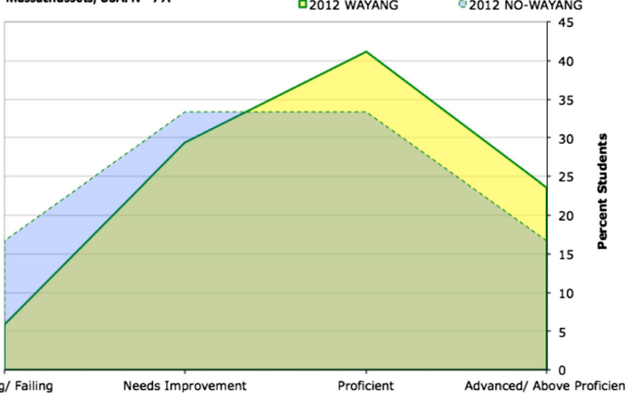
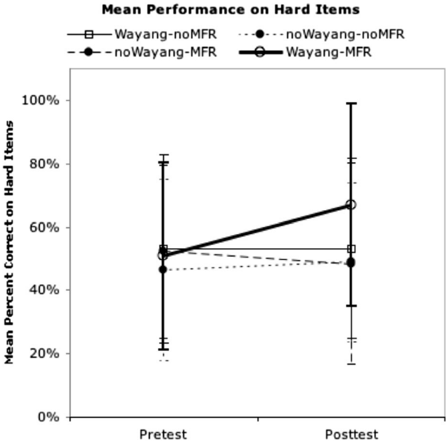
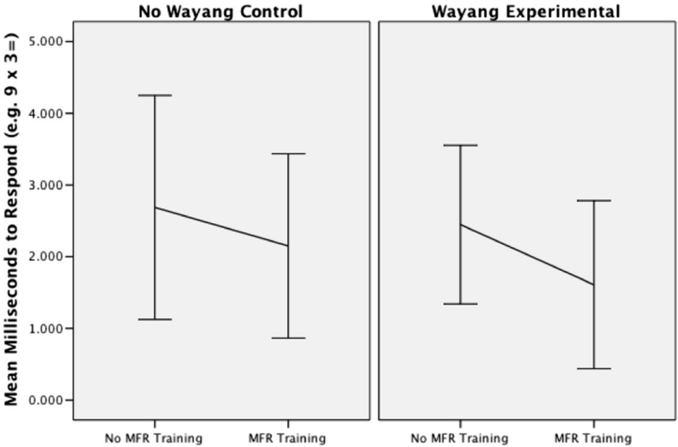
This article describes research results based on multiple years of experimentation and real-world experience with an adaptive tutoring system named Wayang Outpost. The system represents a novel adaptive learning technology that has shown successful outcomes with thousands of students, and provided teachers with valuable information about students’ mathematics performance. We define progress in three areas: improved student cognition, engagement, and affect, and we attribute this improvement to specific components and interventions that are inherently affective, cognitive, and metacognitive in nature. For instance, improved student cognitive outcomes have been measured with pre-post tests and state standardized tests, and achieved due to personalization of content and math fluency training. Improved student engagement was achieved by supporting students’ metacognition and motivation via affective learning companions and progress reports, measured via records of student gaming of the system. Student affect within the tutor was measured through sensors and student self-reports, and supported through affective learning companions and progress reports. Collectively, these studies elucidate a suite of effective strategies to support advanced personalized learning via an intelligent adaptive tutor that can be tailored to the individual needs, emotions, cognitive states, and metacognitive skills of learners.
Overview
The claims and statistics of this paper haven’t been checked yet.
Run the check — free, no account needed. It reads the open-access text and checks the sources it cites.
Integrity signals
Registry
Cites
Statistics
Figures


Verification
Claims the paper makes
The claims and statistics of this paper haven’t been checked yet.
Run the check — free, no account needed. It reads the open-access text and checks the sources it cites.
Claims other papers make about this one
Each is checked against this paper’s own text: does it say what the citing paper says it does?
In the citing paper
“As far as we can tell, only one paper from 2014 surveyed other aspects of motivation (e.g., self-efficacy) in a more substantial way (Arroyo et al., 2014).”
From Evolution and Revolution in Artificial Intelligence in Education (2016) · cites this paper as Arroyo et al., 2014
Self-check
Percentages, sums and reported differences re-computed from the paper’s own numbers.
The self-check needs the paper’s full text.
Citations
Cites
(1978) · Medical Entomology and Zoology · Cited by 53,488
Baddeley, A. D., & Hitch, G. (1974) · Psychology of Learning and Motivation · doi:10.1016/s0079-7421(08)60452-1 · Cited by 9,860
Mayer, R. E. (2009) · doi:10.1017/cbo9780511811678 · Cited by 7,800
Mayer, R. (2020) · doi:10.1017/9781316941355 · Cited by 7,777
Building a practically useful theory of goal setting and task motivation: A 35-year odyssey.
Locke, E. A., & Latham, G. P. (2002) · American Psychologist · doi:10.1037/0003-066x.57.9.705 · Cited by 7,766 · cited 1×
“2003), understanding which problem solving strategies to apply, and setting manageable goals and objectives for one-self (Locke and Latham 2002).”
BackgroundProbabilistic Models for Some Intelligence and Attainment Tests
Psychology, M. (1961) · Information and Control · doi:10.1016/s0019-9958(61)80061-2 · Cited by 6,936
(1999) · Cited by 6,308
Pekrun, R. (2006) · Educational Psychology Review · doi:10.1007/s10648-006-9029-9 · Cited by 5,566 · cited 8×
“…theory of emotion existed that addressed learning, explained which emotions are most important in learning, or identified how emotion influenced learning (Picard et al. 2004), though later work by Pekrun solidified that idea that our intuitions were headed in the right direction (Pekrun 2006).”
BackgroundMethodResultInfluentialHandbook of educational psychology
(1997) · Choice Reviews Online · doi:10.5860/choice.34-3084 · Cited by 4,850
Self-Efficacy: An Essential Motive to Learn
Zimmerman, B. J. (2000) · Contemporary Educational Psychology · doi:10.1006/ceps.1999.1016 · Cited by 4,294
Research works printed but not linked: 4
- Azevedo, R., Bouchet, F., Harley, J. M., Feyzi-Behnagh, R., Trevors, G., Duffy, M., Taub, M., Pacampara, N., Agnew, L., Griscom, S., Mudrick, N., Stead, V., & Yang, W. (2011). MetaTutor: An Intelligent Multi-Agent Tutoring System Designed to Detect, Track, Model, and Foster Self-Regulated Learning In Proceedings of the Fourth Workshop on Self-Regulated Learning in Educational Technologies. In conjunction with the 15th International Conference onArtificial Intelligence on Education (AIED 2011)
- Bull, S., Wasson, B., Johnson, M. D., Petters, D., & Hansen, C. (2012). Helping teachers effectively support group learning. In Proceedings of Workshop on Intelligent Support for Learning in Groups, Intelligent Tutoring Systems
- Heffernan, N., Militello, M., Heffernan, C., & Decoteau, M. (2012) Effective and meaningful use of educational technology: three cases from the classroom. In C. Dede & J. Richards (Eds.), Digital Teaching Platforms (pp. 88–102). · DOI
- Ogan, 2011, Pervasive social effects of agent-based instructional dialog, Proceedings of the 15th International Conference on Artificial Intelligence in Education (AIED 2011), 238
Cited by
Sorted by citations
Evolution and Revolution in Artificial Intelligence in Education
Roll, I., & Wylie, R. (2016) · International Journal of Artificial Intelligence in Education · doi:10.1007/s40593-016-0110-3 · Cited by 1,229
Bernacki, M. L., Greene, M. J., & Lobczowski, N. G. (2021) · Educational Psychology Review · doi:10.1007/s10648-021-09615-8 · Cited by 618
Stupid tutoring systems, intelligent humans
Baker, R. S. (2016) · International Journal of Artificial Intelligence in Education · doi:10.1007/s40593-016-0105-0 · Cited by 425
Empowering Educators to Be AI-Ready
Luckin, R., Cukurova, M., Kent, C., & du Boulay, B. (2022) · Computers and Education Artificial Intelligence · doi:10.1016/j.caeai.2022.100076 · Cited by 422
Ng, D. T. K., Wu, W., Leung, J. K. L., Chiu, T. K. F., & Chu, S. K. W. (2024) · British Journal of Educational Technology · doi:10.1111/bjet.13411 · Cited by 390
Out of the laboratory and into the classroom: the future of artificial intelligence in education
Schiff, D. (2021) · AI & SOCIETY · doi:10.1007/s00146-020-01033-8 · Cited by 334
Understanding the implementation of personalized learning: A research synthesis
Ling, Z., Basham, J. D., & Yang, S. (2020) · Educational Research Review · doi:10.1016/j.edurev.2020.100339 · Cited by 317
Help Helps, But Only So Much: Research on Help Seeking with Intelligent Tutoring Systems
Aleven, V. A. W. M. M., Roll, I., McLaren, B. M., & Koedinger, K. R. (2016) · International Journal of Artificial Intelligence in Education · doi:10.1007/s40593-015-0089-1 · Cited by 300
Major, L., Francis, G. A., & Tsapali, M. (2021) · British Journal of Educational Technology · doi:10.1111/bjet.13116 · Cited by 359
Affordances and challenges of artificial intelligence in K-12 education: a systematic review
Crompton, H., Jones, M. V., & Burke, D. (2024) · Journal of Research on Technology in Education · doi:10.1080/15391523.2022.2121344 · Cited by 213
Applications of the Elo rating system in adaptive educational systems
Pelánek, R. (2016) · Computers & Education · doi:10.1016/j.compedu.2016.03.017 · Cited by 190
Example-Tracing Tutors: Intelligent Tutor Development for Non-programmers
Aleven, V. A. W. M. M., McLaren, B. M., Sewall, J., van Velsen, M., Popescu, O., Demi, S., Ringenberg, M. A., & Koedinger, K. R. (2016) · International Journal of Artificial Intelligence in Education · doi:10.1007/s40593-015-0088-2 · Cited by 153
Sarıtepeci, M., & Durak, H. Y. (2024) · Education and Information Technologies · doi:10.1007/s10639-024-12829-2 · Cited by 198
Proactive and reactive engagement of artificial intelligence methods for education: a review
Mallik, S., & Gangopadhyay, A. (2023) · Frontiers in Artificial Intelligence · doi:10.3389/frai.2023.1151391 · Cited by 139
The intertwined histories of artificial intelligence and education
Doroudi, S. (2023) · International Journal of Artificial Intelligence in Education · doi:10.1007/s40593-022-00313-2 · Cited by 129
Reinhold, F., Hoch, S., Werner, B., Richter-Gebert, J., & Reiss, K. M. (2019) · Learning and Instruction · doi:10.1016/j.learninstruc.2019.101264 · Cited by 179
Adaptive feedback in computer-based learning environments: a review
Bimba, A. T., Idris, N. B., Al-Hunaiyyan, A. A., Mahmud, R. B., & Shuib, L. M. (2017) · Adaptive Behavior · doi:10.1177/1059712317727590 · Cited by 123
Zheng, L., Long, M., Zhong, L., & Gyasi, J. F. (2022) · Education and Information Technologies · doi:10.1007/s10639-022-11092-7 · Cited by 116
Evaluating Artificial Intelligence in Education for Next Generation
Joshi, S., Rambola, R. K., & Churi, P. P. (2021) · Journal of Physics Conference Series · doi:10.1088/1742-6596/1714/1/012039 · Cited by 139
There are Open Learner Models About!
Susan Bull, A. (2020) · IEEE Transactions on Learning Technologies · doi:10.1109/tlt.2020.2978473 · Cited by 93
Xhakaj, F., Aleven, V., & McLaren, B. M. (2017) · Lecture notes in computer science · doi:10.1007/978-3-319-66610-5_23 · Cited by 81
Using Robotics to Enhance Active Learning in Mathematics: A Multi-Scenario Study
López-Caudana, E. O., Soledad, M., Pérez, S. M., & Rodríguez-Abitia, G. (2020) · Mathematics · doi:10.3390/math8122163 · Cited by 80
Escape from the Skinner Box: The case for contemporary intelligent learning environments
du Boulay, B. (2019) · British Journal of Educational Technology · doi:10.1111/bjet.12860 · Cited by 80
Metrics for Evaluation of Student Models
Pelánek, R. (2015) · Journal of Educational Data Mining · doi:10.5281/zenodo.3554665 · Cited by 80
Implementation of technology-supported personalized learning—its impact on instructional quality
Schmid, R., Pauli, C., Стеблер, Р., Reusser, K., & Petko, D. (2022) · The Journal of Educational Research · doi:10.1080/00220671.2022.2089086 · Cited by 91
Koć‐Januchta, M., Schönborn, K. J., Tibell, L. A. E., Chaudhri, V. K., & Heller, H. C. (2020) · Journal of Educational Computing Research · doi:10.1177/0735633120921581 · Cited by 69
Adapting Progress Feedback and Emotional Support to Learner Personality
Dennis, M., Masthoff, J., & Mellish, C. (2015) · International Journal of Artificial Intelligence in Education · doi:10.1007/s40593-015-0059-7 · Cited by 77
Predicting learners' effortful behaviour in adaptive assessment using multimodal data
Sharma, K., Papamitsiou, Z. K., Olsen, J. K., & Giannakos, M. N. (2020) · International Conference on Learning Analytics and Knowledge (LAK) · doi:10.1145/3375462.3375498 · Cited by 66
Implementation of Adaptive Learning Systems: Current State and Potential
Imhof, C., Bergamin, P. B., & McGarrity, S. (2020) · Cognition and exploratory learning in the digital age · doi:10.1007/978-3-030-48190-2_6 · Cited by 68
The potential of learning with (and not from) artificial intelligence in education
Chichekian, T., & Benteux, B. (2022) · Frontiers in Artificial Intelligence · doi:10.3389/frai.2022.903051 · Cited by 75
Ashwin, T., & Guddeti, R. R. (2020) · User modeling and user-adapted interaction · doi:10.1007/s11257-019-09254-3 · Cited by 63
Promoting Personalized Learning in Flipped Classrooms: A Systematic Review Study
Çevikbaş, M., & Kaiser, G. (2022) · Sustainability · doi:10.3390/su141811393 · Cited by 87
Artificial Intelligence in Education and Ethics
du Boulay, B. (2023) · Handbook of Open, Distance and Digital Education · doi:10.1007/978-981-19-2080-6_6 · Cited by 89
Personalized learning in iSTART: Past modifications and future design
McCarthy, K. S., Watanabe, M., Dai, J., & McNamara, D. S. (2020) · Journal of Research on Technology in Education · doi:10.1080/15391523.2020.1716201 · Cited by 53
Innovative Learning Environments in STEM Higher Education
Ryoo, J., & Winkelmann, K. (2021) · SpringerBriefs in statistics · doi:10.1007/978-3-030-58948-6 · Cited by 75
Teklu, S. W., & Terefe, B. B. (2022) · Scientific Reports · doi:10.1038/s41598-022-15376-3 · Cited by 49
Delgado, K. A. M., Origgi, J. M., Hasanpoor, T., Yu, H., Allessio, D., Arroyo, I., Lee, W., Betke, M., Woolf, B. P., & Bargal, S. A. (2021) · IEEE International Conference on Computer Vision Workshops · doi:10.1109/iccvw54120.2021.00405 · Cited by 45
Fernández-Herrero, J., Gomez‐Donoso, F., & Roig-Vila, R. (2023) · British Journal of Educational Technology · doi:10.1111/bjet.13326 · Cited by 55
Toward Asset-based Instruction and Assessment in Artificial Intelligence in Education
Ocumpaugh, J. L., Roscoe, R. D., Baker, R. S., Hutt, S. J., & Aguilar, S. J. (2024) · International Journal of Artificial Intelligence in Education · doi:10.1007/s40593-023-00382-x · Cited by 51
Personalized learning and ESSA: What we know and where we go
Zhang, L., Yang, S., & Carter, R. A. (2020) · Journal of Research on Technology in Education · doi:10.1080/15391523.2020.1728448 · Cited by 38
Salmeron-Majadas, S., Baker, R., Santos, O., & Boticario, J. (2018) · IEEE Access · doi:10.1109/access.2018.2854966 · Cited by 32
IRT-Based Adaptive Hints to Scaffold Learning in Programming
Ueno, M., & Miyazawa, Y. (2017) · IEEE Transactions on Learning Technologies · doi:10.1109/tlt.2017.2741960 · Cited by 37
Digital Disruption In Teaching And Testing
Wyatt‐Smith, C., Lingard, B., & Heck, E. (2021) · Routledge eBooks · doi:10.4324/9781003045793 · Cited by 42
Enhancing learning by Open Learner Model (OLM) driven data design
Kay, J., Bartimote-Aufflick, K., Kitto, K., Kummerfeld, B., Liu, D., & Reimann, P. (2022) · Computers and Education Artificial Intelligence · doi:10.1016/j.caeai.2022.100069 · Cited by 45
Bringula, R. P., Fosgate, I. C. O., Garcia, N. P. R., & Yorobe, J. L. M. (2017) · Journal of Educational Computing Research · doi:10.1177/0735633117722494 · Cited by 35
Combining intelligent tutoring systems and gamification: a systematic literature review
Ramadhan, A., Warnars, H. L. H. S., & Razak, F. H. A. (2023) · Education and Information Technologies · doi:10.1007/s10639-023-12092-x · Cited by 33
Artificial Intelligence and Machine Learning: An Instructor’s Exoskeleton in the Future of Education
August, S. E., & Tsaima, A. (2021) · SpringerBriefs in statistics · doi:10.1007/978-3-030-58948-6_5 · Cited by 32
Zhang, L., Carter, R. A., Basham, J. D., & Yang, S. (2022) · Journal of Computer Assisted Learning · doi:10.1111/jcal.12725 · Cited by 31
Some insights into the impact of affective information when delivering feedback to students
Cabestrero, R., Quirós, P., Santos, O., Salmeron-Majadas, S., Uria-Rivas, R., Boticario, J., Arnau, D., Arevalillo-Herráez, M., & Ferri, F. (2018) · Behavior and Information Technology · doi:10.1080/0144929x.2018.1499803 · Cited by 28
Improving metacognition through self-explication in a digital self-regulated learning tool
Braad, E., Degens, N., Barendregt, W., & IJsselsteijn, W. A. (2022) · Educational Technology Research and Development · doi:10.1007/s11423-022-10156-2 · Cited by 56
Arroyo, I., Micciolo, M., Casano, J. D. L., Ottmar, E., Hulse, T., & Rodrigo, M. M. T. (2017) · Annual Symposium on Computer-Human Interaction in Play · doi:10.1145/3116595.3116637 · Cited by 36
Gaur, A. S., Sharan, H. O., & Kumar, R. (2024) · Advances in computational intelligence and robotics book series · doi:10.4018/979-8-3693-2964-1.ch003 · Cited by 33
Artificial Intelligence in Education and Ethics
du Boulay, B. (2022) · Handbook of Open, Distance and Digital Education · doi:10.1007/978-981-19-0351-9_6-2 · Cited by 33
A Dashboard to Support Teachers During Students’ Self-paced AI-Supported Problem-Solving Practice
Aleven, V., Blankestijn, J., Lawrence, L., Nagashima, T., & Taatgen, N. (2022) · Lecture Notes in Computer Science · doi:10.1007/978-3-031-16290-9_2 · Cited by 28
Adaptive Learning is Hard: Challenges, Nuances, and Trade-offs in Modeling
Pelánek, R. (2024) · International Journal of Artificial Intelligence in Education · doi:10.1007/s40593-024-00400-6 · Cited by 36
Chopra, A., Patel, H., Rajput, D. S., & Bansal, N. (2024) · Applied Intelligence and Informatics. · doi:10.1007/978-981-97-0914-4_15 · Cited by 27
Integrating affective learning into intelligent tutoring systems
Jiménez, S., Juárez‐Ramírez, R., Castillo, V. H., & Noriega, A. D. R. (2017) · Universal Access in the Information Society · doi:10.1007/s10209-017-0524-1 · Cited by 26
ATL-BP: A Student Engagement Dataset and Model for Affect Transfer Learning for Behavior Prediction
Ruiz, N., Yu, H., Allessio, D., Jalal, M., Joshi, A., Murray, T., Magee, J., Delgado, K. A. M., Ablavsky, V., Sclaroff, S., et al. (2022) · IEEE Transactions on Biometrics Behavior and Identity Science · doi:10.1109/tbiom.2022.3210479 · Cited by 29
Addressing Student Behavior and Affect with Empathy and Growth Mindset.
Karumbaiah, S., Lizarralde, R., Allessio, D., Woolf, B. P., Arroyo, I., & Wixon, N. (2017) · Cited by 23
Student Modeling for Individuals and Groups: the BioWorld and HOWARD Platforms
Lajoie, S. P. (2020) · International Journal of Artificial Intelligence in Education · doi:10.1007/s40593-020-00219-x · Cited by 26
Chen, L., Chang, H., Rudoler, J., Arnardóttir, E., Zhang, Y., Angeles, C. D. L., & Menon, V. (2022) · npj Science of Learning · doi:10.1038/s41539-022-00146-7 · Cited by 36
The Impact of Gender in Learning With Games
Nguyen, H. A., Hou, X., Richey, J. E., & McLaren, B. M. (2022) · International Journal of Game-Based Learning · doi:10.4018/ijgbl.309128 · Cited by 30
Do better in math: How your body posture may change stereotype threat response
Peper, E., Harvey, R., Mason, L., & Lin, I. (2018) · NeuroRegulation · doi:10.15540/nr.5.2.67 · Cited by 21
Fukuda, M., Hajian, S., Jain, M., Liu, A. L., Obaid, T., Nesbit, J. C., & Winne, P. H. (2022) · International Journal of Science Education · doi:10.1080/09500693.2022.2062799 · Cited by 20
Zhong, L. (2022) · Smart Learning Environments · doi:10.1186/s40561-022-00219-5 · Cited by 31
Motivational and metacognitive feedback in SQL-Tutor*
Hull, A., & du Boulay, B. (2015) · Computer Science Education · doi:10.1080/08993408.2015.1033143 · Cited by 20
Kooken, J. W., Zaini, R. M., & Arroyo, I. (2021) · Metacognition and Learning · doi:10.1007/s11409-020-09252-6 · Cited by 24
Artificial Intelligence in Education and Ethics
du Boulay, B. (2022) · Handbook of Open, Distance and Digital Education · doi:10.1007/978-981-19-0351-9_6-1 · Cited by 20
Developing a Teacher Dashboard For Use with Intelligent Tutoring Systems.
Aleven, V. A. W. M. M., Xhakaj, F., Holstein, K., & McLaren, B. M. (2016) · Cited by 19
Young learners’ motivation, self-regulation and performance in personalized learning
Ackermans, K., Bakker, M., van Loon, A., Kral, M., & Camp, G. (2024) · Computers & Education · doi:10.1016/j.compedu.2024.105208 · Cited by 39
Künstliche Intelligenz in der Hochschulbildung
Schmohl, T., Watanabe, A., & Schelling, K. (2023) · transcript Verlag eBooks · doi:10.14361/9783839457696 · Cited by 48
Affect-Aware Adaptive Tutoring Based on Human–Automation Etiquette Strategies
Yang, E., & Dorneich, M. C. (2018) · Human Factors The Journal of the Human Factors and Ergonomics Society · doi:10.1177/0018720818765266 · Cited by 17
Active Learning for Student Affect Detection
Yang, T.-Y., Baker, R. S., Studer, C., Heffernan, N. T., & Lan, A. (2019) · Repository for Publications and Research Data (ETH Zurich) · doi:10.3929/ethz-b-000461351 · Cited by 17
Janning, R., Schatten, C., & Schmidt-Thieme, L. (2016) · International Journal of Artificial Intelligence in Education · doi:10.1007/s40593-016-0097-9 · Cited by 19
Baker, R. S., Richey, J. E., Zhang, J., Karumbaiah, S., Andres-Bray, J. M. L., Nguyen, H. A., Andres, J. M. A. L., & McLaren, B. M. (2024) · Instructional Science · doi:10.1007/s11251-024-09679-3 · Cited by 16
Accessible mathematics videos for non-disabled students in primary education
Ascaso, A. R., Letón, E., Muñoz-Carenas, J., & Finat, C. (2018) · PLoS ONE · doi:10.1371/journal.pone.0208117 · Cited by 16
An Overview of the Growth and Trends of Current Research on Emotions and Mathematics
Xolocotzin, U. (2017) · Elsevier eBooks · doi:10.1016/b978-0-12-802218-4.00001-7 · Cited by 16
Examining Student Effort on Help through Response Time Decomposition
Gurung, A., Botelho, A. F., & Heffernan, N. T. (2021) · International Conference on Learning Analytics and Knowledge (LAK) · doi:10.1145/3448139.3448167 · Cited by 16
Fu, W.-S., Zhang, J., Zhang, D., Li, T., Lan, M., & Liu, N. (2025) · Journal of Educational Computing Research · doi:10.1177/07356331241313126 · Cited by 15
Yu, H., Gupta, A., Lee, W., Arroyo, I., Betke, M., Allessio, D., Murray, T., Magee, J., & Woolf, B. P. (2021) · Lecture notes in computer science · doi:10.1007/978-3-030-77873-6_16 · Cited by 15
The Effects of Adaptive Feedback on Student’s Learning Gains
Bimba, A. T., Idris, N. B., Al-Hunaiyyan, A. A., Ibrahim, S. U., Mustafa, N., Supa'at, I., Zainal, N., & Ahmad, M. Y. (2021) · International Journal of Advanced Computer Science and Applications · doi:10.14569/ijacsa.2021.0120709 · Cited by 14
A Systematic Review on Artificial Intelligence in Supporting Teaching Practice
Shi, L., & Choi, I. (2024) · Oxford University Press eBooks · doi:10.1093/oso/9780198882077.003.0015 · Cited by 18
Orji, F. A., & Vassileva, J. (2022) · Frontiers in Artificial Intelligence · doi:10.3389/frai.2022.1015660 · Cited by 14
Oladele, J. I., Ndlovu, M., & Ayanwale, M. A. (2022) · Springer eBooks · doi:10.1007/978-3-031-13927-7_8 · Cited by 14
Guidance counselor reports of the ASSISTments college prediction model (ACPM)
Ocumpaugh, J. L., Baker, R. S., Pedro, M. O. C. Z. S., Hawn, M. A., Heffernan, C., Heffernan, N. T., & Slater, S. (2017) · International Conference on Learning Analytics and Knowledge (LAK) · doi:10.1145/3027385.3027435 · Cited by 14
A Classification Framework for Practice Exercises in Adaptive Learning Systems
Pelánek, R. (2020) · IEEE Transactions on Learning Technologies · doi:10.1109/tlt.2020.3027050 · Cited by 13
Implementation of Motivational Tactics in Tutoring Systems: 20 years on
du Boulay, B., & Soldato, T. D. (2015) · International Journal of Artificial Intelligence in Education · doi:10.1007/s40593-015-0052-1 · Cited by 13
Zhao, G., Li, M., Long, Z., & Fan, H. (2025) · Acta Psychologica · doi:10.1016/j.actpsy.2025.105558 · Cited by 20
Thi-Nga, H., Thi-Binh, V., & Nguyen, T. (2024) · Eurasia Journal of Mathematics Science and Technology Education · doi:10.29333/ejmste/14381 · Cited by 36
Pelánek, R., Effenberger, T., & Jarušek, P. (2024) · User Modeling and User-Adapted Interaction · doi:10.1007/s11257-024-09396-z · Cited by 19
Nowlan, N. S., Arya, A., Qorbani, H. S., & Abdinejad, M. (2023) · Computers & Education X Reality · doi:10.1016/j.cexr.2023.100012 · Cited by 12
Mosier, K. L., Fischer, U. M., Burian, B. K., & Kochan, J. A. (2017) · NASA STI Repository (National Aeronautics and Space Administration) · doi:10.13140/rg.2.2.25859.60966 · Cited by 14
The Effect of Assistance on Learning and Affect in an Algebra Tutor
Borracci, G., Gauthier, E., Jennings, J., Sale, K., & Müldner, K. (2019) · Journal of Educational Computing Research · doi:10.1177/0735633118822103 · Cited by 12
Modeling language learning using specialized Elo rating
Hou, J., Koppatz, M., Quecedo, J. M. H., Stoyanova, N., & Yangarber, R. (2019) · Workshop on Innovative Use of NLP for Building Educational Applications · doi:10.18653/v1/w19-4451 · Cited by 14
Leveraging Affect Transfer Learning for Behavior Prediction in an Intelligent Tutoring System
Ruiz, N., Yu, H., Allessio, D., Jalal, M., Joshi, A., Murray, T., Magee, J., Whitehill, J., Ablavsky, V., Arroyo, I., et al. (2021) · International Conference on Automatic Face and Gesture Recognition · doi:10.1109/fg52635.2021.9667001 · Cited by 13
Basham, J. D., Han, K., Zhang, L., & Yang, S. (2020) · Advancing inclusive and special education in the Asia-Pacific · doi:10.1007/978-981-15-4443-9_3 · Cited by 12
Personalized Learning for the Developing World
Zualkernan, I. A. (2015) · Lecture notes in educational technology · doi:10.1007/978-3-662-47724-3_13 · Cited by 12
Craig, S. D., Graesser, A. C., & Perez, R. S. (2018) · International Journal of STEM Education · doi:10.1186/s40594-018-0111-x · Cited by 12
Using Technology to Address Individual Differences in Learning
Antonenko, P. D., Dawson, K., Cheng, L., & Wang, J. (2020) · Springer eBooks · doi:10.1007/978-3-030-36119-8_6 · Cited by 10
Conversational Agents to Support Remote Personalized Instruction for Diverse Learners
Carter, R. A., Zhang, L., Hunt, T., Emerling, C. R., Yang, S., & Rujimora, J. (2023) · TechTrends · doi:10.1007/s11528-023-00877-3 · Cited by 11
Metadata
- Authors
- Arroyo, I., Woolf, B. P., Burelson, W., Muldner, K., Rai, D., & Tai, M.
- Affiliations
- Worcester Polytechnic Institute (US)
- University of Massachusetts Amherst (US)
- New York University (US)
- Corresponding author
- Arroyo, Ivon
- Venue
- International Journal of Artificial Intelligence in Education
- Publisher
- Elsevier BV
- Published
- 2014-12
- Volume
- 24
- Issue
- 4
- Pages
- 387-426
- ISSN
- 1560-4292 (ISSN-L)
- OpenAlex
- W2094147479
- Cited by
- 263
- References
- 106
- Citations by year
- 2026: 13 · 2025: 36 · 2024: 25 · 2023: 36 · 2022: 31 · 2021: 22 · 2020: 22 · 2019: 18 · 2018: 17 · 2017: 19 · 2016: 11 · 2015: 12 · 2014: 1
- FWCI
- 14.29
- Type
- journal article
- Language
- en
- Update notices
- Open access
- hybrid
- doi.org
- Licence
- Locations
- International Journal of Artificial Intelligence in Education (publishedVersion, cc-by-nc-nd)
- Funders
- National Science Foundation (1324385)
- Office of Naval Research (N0001413C0127)
- Topics
- Physical Sciences › Computer Science › Artificial Intelligence › Intelligent Tutoring Systems and Adaptive Learning
- Social Sciences › Psychology › Developmental and Educational Psychology › Innovative Teaching and Learning Methods
- Physical Sciences › Computer Science › Computer Science Applications › Online Learning and Analytics
- Keywords
- adaptive tutoring systems, mathematics education, metacognition, student engagement, student motivation, personalized learning, emotion sensing
About these checks
Registry, retraction, Cites and statistics results are computed, not judged, with one exception: a printed reference that no index lists is read once by a model before it counts as a citation error. Claims are extracted by a model and kept only when their quote appears verbatim in the text; each cited source is then checked, with a model’s help, for whether it says what the claim relies on. Those verdicts can be wrong — read the claim’s quote and the cited source before relying on one.
Statistics and arithmetic are recomputed, not judged.
Confidence bands are shown only for fields calibrated on our annotated test set. None is calibrated yet, so no band is shown.
What counts as a claim ›How we measure confidence ›How we check this ›
Are you an author, or do you see a problem with this page? Request a review
