

The DOI matches its Crossref record; 103 of the 106 references it cites were found in a registry or an index.
A Multimedia Adaptive Tutoring System for Mathematics that Addresses Cognition, Metacognition and Affect
Open accessAbstract
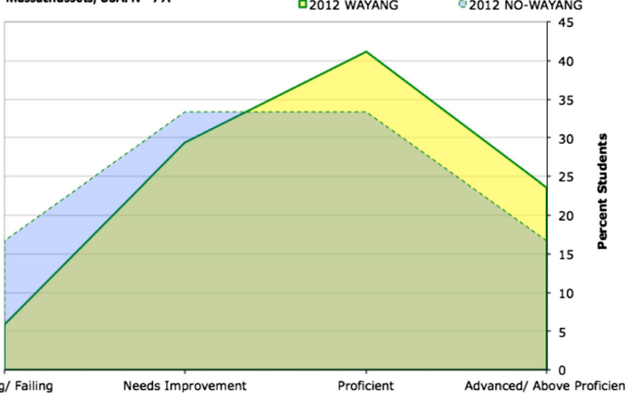
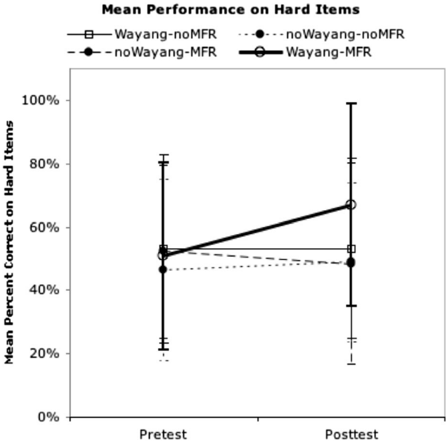
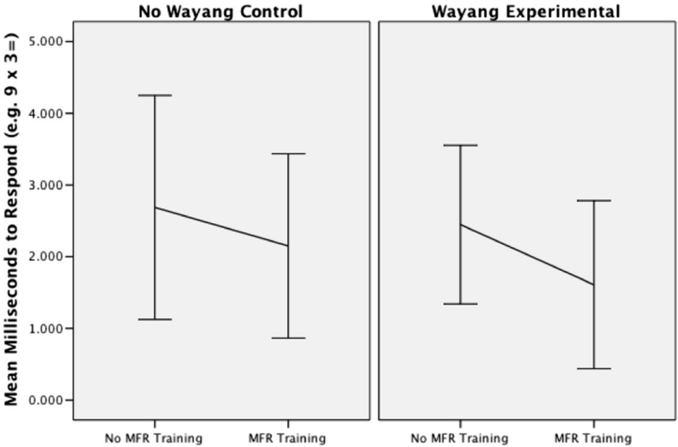
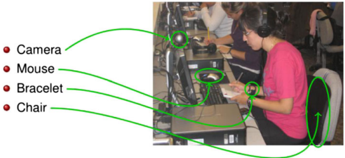
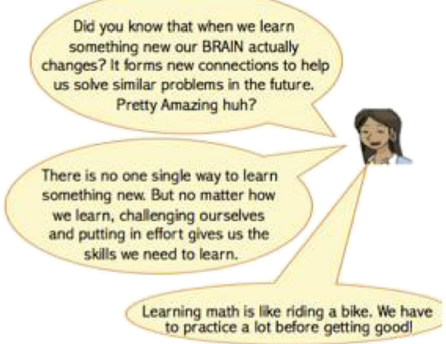
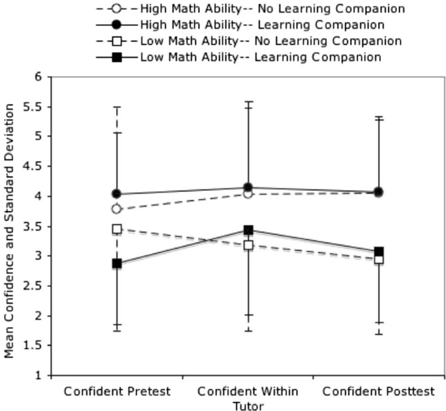
This article describes research results based on multiple years of experimentation and real-world experience with an adaptive tutoring system named Wayang Outpost. The system represents a novel adaptive learning technology that has shown successful outcomes with thousands of students, and provided teachers with valuable information about students’ mathematics performance. We define progress in three areas: improved student cognition, engagement, and affect, and we attribute this improvement to specific components and interventions that are inherently affective, cognitive, and metacognitive in nature. For instance, improved student cognitive outcomes have been measured with pre-post tests and state standardized tests, and achieved due to personalization of content and math fluency training. Improved student engagement was achieved by supporting students’ metacognition and motivation via affective learning companions and progress reports, measured via records of student gaming of the system. Student affect within the tutor was measured through sensors and student self-reports, and supported through affective learning companions and progress reports. Collectively, these studies elucidate a suite of effective strategies to support advanced personalized learning via an intelligent adaptive tutor that can be tailored to the individual needs, emotions, cognitive states, and metacognitive skills of learners.
Overview
The claims and statistics of this paper haven’t been checked yet.
Run the check — free, no account needed. It reads the open-access text and checks the sources it cites.
Integrity signals
Registry
Cites
Statistics
Figures


Verification
Claims the paper makes
The claims and statistics of this paper haven’t been checked yet.
Run the check — free, no account needed. It reads the open-access text and checks the sources it cites.
Claims other papers make about this one
Each is checked against this paper’s own text: does it say what the citing paper says it does?
In the citing paper
“As far as we can tell, only one paper from 2014 surveyed other aspects of motivation (e.g., self-efficacy) in a more substantial way (Arroyo et al., 2014).”
From Evolution and Revolution in Artificial Intelligence in Education (2016) · cites this paper as Arroyo et al., 2014
Self-check
Percentages, sums and reported differences re-computed from the paper’s own numbers.
The self-check needs the paper’s full text.
Citations
Cites
(1978) · Medical Entomology and Zoology · Cited by 53,488
Baddeley, A. D., & Hitch, G. (1974) · Psychology of Learning and Motivation · doi:10.1016/s0079-7421(08)60452-1 · Cited by 9,860
Mayer, R. E. (2009) · doi:10.1017/cbo9780511811678 · Cited by 7,800
Mayer, R. (2020) · doi:10.1017/9781316941355 · Cited by 7,777
Building a practically useful theory of goal setting and task motivation: A 35-year odyssey.
Locke, E. A., & Latham, G. P. (2002) · American Psychologist · doi:10.1037/0003-066x.57.9.705 · Cited by 7,766 · cited 1×
“2003), understanding which problem solving strategies to apply, and setting manageable goals and objectives for one-self (Locke and Latham 2002).”
BackgroundProbabilistic Models for Some Intelligence and Attainment Tests
Psychology, M. (1961) · Information and Control · doi:10.1016/s0019-9958(61)80061-2 · Cited by 6,936
(1999) · Cited by 6,308
Pekrun, R. (2006) · Educational Psychology Review · doi:10.1007/s10648-006-9029-9 · Cited by 5,566 · cited 8×
“…theory of emotion existed that addressed learning, explained which emotions are most important in learning, or identified how emotion influenced learning (Picard et al. 2004), though later work by Pekrun solidified that idea that our intuitions were headed in the right direction (Pekrun 2006).”
BackgroundMethodResultInfluentialHandbook of educational psychology
(1997) · Choice Reviews Online · doi:10.5860/choice.34-3084 · Cited by 4,850
Self-Efficacy: An Essential Motive to Learn
Zimmerman, B. J. (2000) · Contemporary Educational Psychology · doi:10.1006/ceps.1999.1016 · Cited by 4,294
Self-Efficacy and Academic Motivation
Schunk, D. H. (1991) · Educational Psychologist · doi:10.1080/00461520.1991.9653133 · Cited by 4,292
Cognitive Apprenticeship: Teaching the Crafts of Reading, Writing, and Mathematics
Collins, A., Brown, J. S., & Newman, S. E. (2018) · Knowing, Learning, and Instruction · doi:10.4324/9781315044408-14 · Cited by 3,674
Feedback and Self-Regulated Learning: A Theoretical Synthesis
Butler, D. L., & Winne, P. H. (1995) · Review of Educational Research · doi:10.3102/00346543065003245 · Cited by 3,334
Handbook of Educational Psychology
Berliner, D. C., & Calfee, R. C. (2013) · Routledge eBooks · doi:10.4324/9780203053874 · Cited by 3,212
Knowledge tracing: Modeling the acquisition of procedural knowledge
Corbett, A. T., & Anderson, J. R. (1995) · User Modelling and User-Adapted Interaction · doi:10.1007/bf01099821 · Cited by 2,324
Mayer, R. E. (2001) · doi:10.1017/cbo9781139164603 · Cited by 2,304
Affect Detection: An Interdisciplinary Review of Models, Methods, and Their Applications
Calvo, R. A., & D'Mello, S. (2010) · IEEE Transactions on Affective Computing · doi:10.1109/t-affc.2010.1 · Cited by 1,893 · cited 1×
“The learning sciences community acknowledges the importance of affect in students’ experiences with educational systems and has developed technologies that can automatically detect and respond to student affect (Arroyo et al. 2009a; Calvo and D’Mello 2010; Conati and Maclaren 2009; Cooper et al. 2010; Graesser et al.…”
BackgroundKnowing, Learning, and Instruction
(2018) · Routledge eBooks · doi:10.4324/9781315044408 · Cited by 1,824
Praise for intelligence can undermine children's motivation and performance.
Mueller, C. M., & Dweck, C. S. (1998) · Journal of Personality and Social Psychology · doi:10.1037/0022-3514.75.1.33 · Cited by 1,709 · cited 2×
“They also had significantly higher mastery learning orientation scores, as measured by two survey questions based on ones by Mueller and Dweck (1998), indicating that students who saw Progress Charts and Tips had a greater desire to learn for the sake of learning.”
MethodBull, R., & Scerif, G. (2001) · Developmental Neuropsychology · doi:10.1207/s15326942dn1903_3 · Cited by 1,501 · cited 1×
“as working memory capacity and executive function (Bull and Scerif 2001).”
The Control-Value Theory of Achievement Emotions
Pekrun, R. H., Frenzel, A. C., Goetz, T., & Perry, R. P. (2007) · Elsevier eBooks · doi:10.1016/b978-012372545-5/50003-4 · Cited by 1,413
Establishing and maintaining long-term human-computer relationships
Bickmore, T. W., & Picard, R. W. (2005) · ACM Transactions on Computer-Human Interaction · doi:10.1145/1067860.1067867 · Cited by 1,333 · cited 2×
“Research has shown that by encouraging team relationships between humans and computers, people can be influenced to think that the information from the computer is of better quality and relayed in a more friendly way (Bickmore and Picard 2004; Nass et al. 1996).”
BackgroundPekrun, R. H., Goetz, T., Daniels, L. M., Stupnisky, R. H., & Perry, R. P. (2010) · Journal of Educational Psychology · doi:10.1037/a0019243 · Cited by 1,330
Intelligent Tutoring Goes To School in the Big City
Koedinger, K. R., Anderson, J. R., Hadley, W. H., & Mark, M. A. (2018) · doi:10.1184/r1/6470153 · Cited by 1,105
Mathematics in the streets and in schools
Carraher, T. N., Carraher, D. W., & Schliemann, A. D. (1985) · British Journal of Developmental Psychology · doi:10.1111/j.2044-835x.1985.tb00951.x · Cited by 1,065
Women's underrepresentation in science: sociocultural and biological considerations
Ceci, S. J., Williams, W. M., & Barnett, S. M. (2009) · Psychological Bulletin · doi:10.1037/a0014412 · Cited by 957
How can primary school students learn self-regulated learning strategies most effectively?
Dignath, C., Buettner, G., & Langfeldt, H.-P. (2008) · Educational Research Review · doi:10.1016/j.edurev.2008.02.003 · Cited by 903 · cited 2×
“In a meta-analysis of selfregulatory training programs, (Dignath et al. 2008) summarized evidence that by addressing self-regulation during learning, students’ academic performance, strategy use, and motivational outcomes were improved.”
BackgroundProceedings of the 7th International Conference on Educational Data Mining.
Stamper, J. C., Pardos, Z. A., Mavrikis, M., & McLaren, B. M. (2014) · Educational Data Mining · Cited by 667
Help Seeking and Help Design in Interactive Learning Environments
Aleven, V., Stahl, E., Schworm, S., Fischer, F., & Wallace, R. (2003) · Review of Educational Research · doi:10.3102/00346543073003277 · Cited by 609
Handbook of Educational Data Mining
Mavrikis, M., D'Mello, S., Porayska‐Pomsta, K., Cocea, M., & Graesser, A. C. (2010) · CRC Press eBooks · doi:10.1201/b10274 · Cited by 586
Koedinger, K., Aleven, V., Roll, I., & Baker, R. (2009) · Routledge eBooks · doi:10.4324/9780203876428-29 · Cited by 580
Theories and Principles of Motivation
Berliner, D. C., & Calfee, R. C. (2013) · Routledge eBooks · doi:10.4324/9780203053874-10 · Cited by 540
Nass, C., Fogg, B. J., & Moon, Y. (1996) · International Journal of Human-Computer Studies · doi:10.1006/ijhc.1996.0073 · Cited by 536
Affective Learning — A Manifesto
Picard, R. W., Papert, S. A., Bender, W. R., Blumberg, B. M., Breazeal, C., Cavallo, D. P., Machover, T., Resnick, M., Roy, D. K., & Strohecker, C. (2004) · BT Technology Journal · doi:10.1023/b:bttj.0000047603.37042.33 · Cited by 518
Greene, J. A., & Azevedo, R. (2007) · Review of Educational Research · doi:10.3102/003465430303953 · Cited by 486
Mazzocco, M. M. M., Feigenson, L., & Halberda, J. (2011) · PLoS ONE · doi:10.1371/journal.pone.0023749 · Cited by 465
Off-task behavior in the cognitive tutor classroom
Baker, R. S., Corbett, A. T., Koedinger, K. R., & Wagner, A. Z. (2004) · CHI Conference on Human Factors in Computing Systems · doi:10.1145/985692.985741 · Cited by 456
Toward Meta-cognitive Tutoring: A Model of Help Seeking with a Cognitive Tutor
Aleven, V. A. W. M. M., McLaren, B. M., Roll, I., & Koedinger, K. R. (2006) · International Journal of Artificial Intelligence in Education · doi:10.3233/irg-2006-16(2)02 · Cited by 428
Improving academic achievement: Impact of psychological factors on education
Aronson, J. M. (2002) · Cited by 396
Ivon, A., Cooper David, G., Winslow, B., Park, W. B., Kasia, M., & Robert, C. (2009) · Frontiers in Artificial Intelligence and Applications · doi:10.3233/978-1-60750-028-5-17 · Cited by 382
Affect-aware tutors: recognising and responding to student affect
Woolf, B., Burleson, W., Arroyo, I., Dragon, T., Cooper, D., & Picard, R. (2009) · International Journal of Learning Technology · doi:10.1504/ijlt.2009.028804 · Cited by 371
Self-citationEkman, P. (1999) · doi:10.1002/0470013494.ch16 · Cited by 341
Empirically Building and Evaluating a Probabilistic Model of User Affect
Conati, C., & Maclaren, H. (2009) · User Modeling and User-Adapted Interaction · doi:10.1007/s11257-009-9062-8 · Cited by 328
Adaptive Human Scaffolding Facilitates Adolescents’ Self-regulated Learning with Hypermedia
Azevedo, R., Cromley, J. G., Winters, F. I., Moos, D. C., & Greene, J. A. (2005) · Instructional Science · doi:10.1007/s11251-005-1273-8 · Cited by 306
Libertus, M. E., Duong, S., & Silver, A. M. (2019) · Elsevier eBooks · doi:10.1016/b978-0-12-809324-5.23573-6 · Cited by 270
Parslow, G. P. (1990) · Biochemical Education · doi:10.1016/0307-4412(90)90227-f · Cited by 257
Dweck, C. (2002) · Elsevier eBooks · doi:10.1016/b978-012064455-1/50006-3 · Cited by 253
Adapting to When Students Game an Intelligent Tutoring System
Baker, R. S., Corbett, A. T., Koedinger, K. R., Evenson, S., Roll, I., Wagner, A. Z., Naim, M., Raspat, J., Baker, D. J., & Beck, J. E. (2006) · Lecture notes in computer science · doi:10.1007/11774303_39 · Cited by 245
Course sequencing techniques for large-scale web-based education
Brusilovsky, P. L., & Vassileva, J. (2003) · International Journal of Continuing Engineering Education and Life-Long Learning · doi:10.1504/ijceell.2003.002154 · Cited by 239
Adaptive Learning Resources Sequencing in Educational Hypermedia Systems
Karampiperis, P., & Sampson, D. G. (2005) · Cited by 233
Developing a generalizable detector of when students game the system
Baker, R. S., Corbett, A. T., Roll, I., & Koedinger, K. R. (2008) · User Modeling and User-Adapted Interaction · doi:10.1007/s11257-007-9045-6 · Cited by 214
Gobert, J. D., Sao Pedro, M., Raziuddin, J., & Baker, R. S. (2013) · Journal of the Learning Sciences · doi:10.1080/10508406.2013.837391 · Cited by 210
Who Am I and What Can I Do? Children's Self-Concepts and Motivation in Achievement Situations
Wigfield, A., & Karpathian, M. (1991) · Educational Psychologist · doi:10.1080/00461520.1991.9653134 · Cited by 188
New Perspectives on Affect and Learning Technologies
Calvo, R. A., & D’Mello, S. K. (2011) · Springer eBooks · doi:10.1007/978-1-4419-9625-1 · Cited by 175
Inferring learning and attitudes from a Bayesian Network of log file data
Arroyo, I., & Woolf, B. P. (2005) · Cited by 137
A Time for Emoting: When Affect-Sensitivity Is and Isn’t Effective at Promoting Deep Learning
D’Mello, S. K., Lehman, B. A., Sullins, J., Daigle, R. P., Combs, R., Vogt, K. A., Perkins, L. A., & Graesser, A. C. (2010) · Lecture notes in computer science · doi:10.1007/978-3-642-13388-6_29 · Cited by 135
Murray, W. R. (2013) · Routledge eBooks · doi:10.4324/9780203056257-6 · Cited by 134
Evaluating the consequences of affective feedback in intelligent tutoring systems
Robison, J. L., McQuiggan, S. W., & Lester, J. C. (2009) · International Conference on Affective Computing and Intelligent Interaction and workshops · doi:10.1109/acii.2009.5349555 · Cited by 132
Carraher, D. W., & Schliemann, A. D. (2002) · Journal of the Learning Sciences · doi:10.1207/s15327809jls1101_1 · Cited by 132
Achieving Affective Impact: Visual Emotive Communication in Lifelike Pedagogical Agents
Lester, J. C., Towns, S., & FitzGerald, P. J. (1998) · Cited by 132
Repairing Disengagement With Non-Invasive Interventions
Arroyo, I., Ferguson, K., Johns, J., Dragon, T., Meheranian, H., Fisher, D., Barto, A. G., Mahadevan, S., & Woolf, B. P. (2007) · Cited by 126
Designing for metacognition—applying cognitive tutor principles to the tutoring of help seeking
Roll, I., Aleven, V. A. W. M. M., McLaren, B. M., & Koedinger, K. R. (2007) · Metacognition and Learning · doi:10.1007/s11409-007-9010-0 · Cited by 124
Toward Measuring and Maintaining the Zone of Proximal Development in Adaptive Instructional Systems
Murray, T., & Arroyo, I. (2002) · Lecture notes in computer science · doi:10.1007/3-540-47987-2_75 · Cited by 119
Aleven, V. A. W. M. M., Roll, I., McLaren, B. M., & Koedinger, K. R. (2010) · Educational Psychologist · doi:10.1080/00461520.2010.517740 · Cited by 118
Woolf, B. P., Arroyo, I., Müldner, K., Burleson, W., Cooper, D. G., Dolan, R., & Christopherson, R. M. (2010) · Lecture notes in computer science · doi:10.1007/978-3-642-13388-6_37 · Cited by 117
A dynamic mixture model to detect student motivation and proficiency
Johns, J., & Woolf, B. P. (2006) · Cited by 104
Lemaire, P., & Lecacheur, M. (2011) · Cognitive Development · doi:10.1016/j.cogdev.2011.01.002 · Cited by 97
2. Beliefs That Make Smart People Dumb
Dweck, C. S. (2017) · Yale University Press eBooks · doi:10.12987/9780300128208-004 · Cited by 84
Arroyo, I., Woolf, B. P., Cooper, D. G., Burleson, W., & Müldner, K. (2011) · IEEE International Conference on Advanced Learning Technologies (ICALT) · doi:10.1109/icalt.2011.157 · Cited by 82
Eynde, P. O. ’., Corte, E. D., & Verschaffel, L. (2007) · Elsevier eBooks · doi:10.1016/b978-012372545-5/50012-5 · Cited by 78
Emotions and Learning with AutoTutor
Graesser, A. C., Chipman, P., King, B. G., McDaniel, B., & D’Mello, S. K. (2007) · Cited by 76
Affective Gendered Learning Companions
Arroyo, I., Park, W. B., Royer, J. M., & Minghui, T. (2009) · Frontiers in artificial intelligence and applications · doi:10.3233/978-1-60750-028-5-41 · Cited by 74
Web-Based Intelligent Multimedia Tutoring for High Stakes Achievement Tests
Arroyo, I., Beal, C., Murray, T., Walles, R., & Woolf, B. P. (2004) · Lecture notes in computer science · doi:10.1007/978-3-540-30139-4_44 · Cited by 74
Supporting Students’ Self-Regulated Learning with an Open Learner Model in a Linear Equation Tutor
Long, Y., & Aleven, V. (2013) · Lecture notes in computer science · doi:10.1007/978-3-642-39112-5_23 · Cited by 71
Tronsky, L. N. (2005) · Memory & Cognition · doi:10.3758/bf03193086 · Cited by 68
The effects of empathetic virtual characters on presence in narrative-centered learning environments
McQuiggan, S. W., Rowe, J., & Lester, J. C. (2008) · CHI Conference on Human Factors in Computing Systems · doi:10.1145/1357054.1357291 · Cited by 68
Extending Knowledge Tracing to Allow Partial Credit: Using Continuous versus Binary Nodes
Wang, Y., & Heffernan, N. T. (2013) · Lecture notes in computer science · doi:10.1007/978-3-642-39112-5_19 · Cited by 64
AI and Education: Grand Challenges
Kay, J. (2012) · IEEE Intelligent Systems · doi:10.1109/mis.2012.92 · Cited by 61
Lajoie, S. P., & Lesgold, A. (1989) · eScholarship@McGill (McGill) · Cited by 55
Sensors Model Student Self Concept in the Classroom
Cooper, D. G., Arroyo, I., Woolf, B. P., Müldner, K., Burleson, W., & Christopherson, R. M. (2009) · Lecture notes in computer science · doi:10.1007/978-3-642-02247-0_6 · Cited by 48
Roll, I., Aleven, V., McLaren, B. M., & Koedinger, K. R. (2011) · Lecture notes in computer science · doi:10.1007/978-3-642-21869-9_38 · Cited by 47
Effort-based Tutoring: An Empirical Approach to Intelligent Tutoring.
Arroyo, I., Meheranian, H., & Woolf, B. P. (2010) · Educational Data Mining · Cited by 43
“Yes!”: Using Tutor and Sensor Data to Predict Moments of Delight during Instructional Activities
Müldner, K., Burleson, W., & VanLehn, K. A. (2010) · Lecture notes in computer science · doi:10.1007/978-3-642-13470-8_16 · Cited by 39
Mathews, M., Mitrović, A., Lin, B., Holland, J., & Churcher, N. (2012) · Lecture notes in computer science · doi:10.1007/978-3-642-30950-2_54 · Cited by 38
Sensor-free automated detection of affect in a Cognitive Tutor for Algebra.
Baker, R. S., Gowda, S. M., Wixon, M., Kalka, J., Wagner, A. Z., Salvi, A., Aleven, V., Kusbit, G. W., Ocumpaugh, J. L., & Rossi, L. M. (2012) · Educational Data Mining · Cited by 38
Using an Intelligent Tutor and Math Fluency Training to Improve Math Performance
Arroyo, I., Royer, J. M., & Woolf, B. P. (2011) · International Journal of Artificial Intelligence in Education · doi:10.3233/jai-2011-020 · Cited by 35
LEARNING DISABILITIES IN BASIC MATHEMATICS Deficits in Memory and Cognition
Geary, D. C., & Hoard, M. K. (2002) · Cited by 33
Ranking Feature Sets for Emotion Models Used in Classroom Based Intelligent Tutoring Systems
Cooper, D. G., Müldner, K., Arroyo, I., Woolf, B. P., & Burleson, W. (2010) · Lecture notes in computer science · doi:10.1007/978-3-642-13470-8_14 · Cited by 26
Actionable Affective Processing for Automatic Tutor Interventions
Cooper, D. G., Arroyo, I., & Woolf, B. P. (2011) · Springer eBooks · doi:10.1007/978-1-4419-9625-1_10 · Cited by 25
Burleson, W., & Picard, R. W. (2004) · Educational technology: The magazine for managers of change in education · Cited by 23
The Opportunities and Limitations of Scaling Up Sensor-Free Affect Detection
Wixon, M., Arroyo, I., Müldner, K., Burleson, W., Rai, D., & Woolf, B. P. (2014) · Cited by 21
PRELIMINARY EVALUATION OF A NEGOTIABLE STUDENT MODEL IN A CONSTRAINT-BASED ITS
THOMSON, D., & Mitrović, A. (2010) · Research and Practice in Technology Enhanced Learning · doi:10.1142/s1793206810000797 · Cited by 20
An Architecture to Combine Meta-Cognitive and Cognitive Tutoring: Pilot Testing the Help Tutor
Aleven, V. A. W. M. M., Roll, I., McLaren, B. M., Ryu, E. J., & Koedinger, K. R. (2018) · Figshare · doi:10.1184/r1/6469799 · Cited by 18
1 Bayesian Networks and Linear Regression Models of Students’ Goals, Moods and Emotions
Arroyo, I., Cooper, D. G., Burleson, W., & Woolf, B. P. (2013) · Cited by 15
Keating, D. P. (2011) · Elsevier eBooks · doi:10.1016/b978-0-12-373951-3.00008-9 · Cited by 13
Visualization of Student Activity Patterns within Intelligent Tutoring Systems
Shanabrook, D. H., Arroyo, I., Woolf, B. P., & Burleson, W. (2012) · Lecture notes in computer science · doi:10.1007/978-3-642-30950-2_6 · Cited by 12
Preferred Features of Open Learner Models for University Students
Susan Bull, A. (2012) · Lecture notes in computer science · doi:10.1007/978-3-642-30950-2_53 · Cited by 11
Teammate Relationships Improve Help-Seeking Behavior in an Intelligent Tutoring System
Tai, M., Arroyo, I., & Woolf, B. P. (2013) · Lecture notes in computer science · doi:10.1007/978-3-642-39112-5_25 · Cited by 9
Persistent Effects of Social Instructional Dialog in a Virtual Learning Environment
Ogan, A. E., Aleven, V., Jones, C., & Kim, J. M. (2011) · International Conference on Artificial Intelligence in Education · doi:10.1007/978-3-642-21869-9_32 · Cited by 8
Repairing Deactivating Negative Emotions with Student Progress Pages
Rai, D., Arroyo, I., Stephens, L., Lozano, C., Burleson, W., Woolf, B. P., & Beck, J. E. (2013) · Lecture notes in computer science · doi:10.1007/978-3-642-39112-5_115 · Cited by 6
Link Recommendation in E-Learning Systems Based on Content-Based Student Proles
Godoy, D., & Amandi, A. (2010) · CRC Press eBooks · doi:10.1201/b10274-26 · Cited by 6
Stottler, D., Domeshek, E. A., & Henke, S. (2005) · Cited by 5
Royer, J. M. (2003) · Cited by 4
Research works printed but not linked: 4
- Azevedo, R., Bouchet, F., Harley, J. M., Feyzi-Behnagh, R., Trevors, G., Duffy, M., Taub, M., Pacampara, N., Agnew, L., Griscom, S., Mudrick, N., Stead, V., & Yang, W. (2011). MetaTutor: An Intelligent Multi-Agent Tutoring System Designed to Detect, Track, Model, and Foster Self-Regulated Learning In Proceedings of the Fourth Workshop on Self-Regulated Learning in Educational Technologies. In conjunction with the 15th International Conference onArtificial Intelligence on Education (AIED 2011)
- Bull, S., Wasson, B., Johnson, M. D., Petters, D., & Hansen, C. (2012). Helping teachers effectively support group learning. In Proceedings of Workshop on Intelligent Support for Learning in Groups, Intelligent Tutoring Systems
- Heffernan, N., Militello, M., Heffernan, C., & Decoteau, M. (2012) Effective and meaningful use of educational technology: three cases from the classroom. In C. Dede & J. Richards (Eds.), Digital Teaching Platforms (pp. 88–102). · DOI
- Ogan, 2011, Pervasive social effects of agent-based instructional dialog, Proceedings of the 15th International Conference on Artificial Intelligence in Education (AIED 2011), 238
Cited by
Sorted by citations
Evolution and Revolution in Artificial Intelligence in Education
Roll, I., & Wylie, R. (2016) · International Journal of Artificial Intelligence in Education · doi:10.1007/s40593-016-0110-3 · Cited by 1,229
Bernacki, M. L., Greene, M. J., & Lobczowski, N. G. (2021) · Educational Psychology Review · doi:10.1007/s10648-021-09615-8 · Cited by 618
Stupid tutoring systems, intelligent humans
Baker, R. S. (2016) · International Journal of Artificial Intelligence in Education · doi:10.1007/s40593-016-0105-0 · Cited by 425
Empowering Educators to Be AI-Ready
Luckin, R., Cukurova, M., Kent, C., & du Boulay, B. (2022) · Computers and Education Artificial Intelligence · doi:10.1016/j.caeai.2022.100076 · Cited by 422
Ng, D. T. K., Wu, W., Leung, J. K. L., Chiu, T. K. F., & Chu, S. K. W. (2024) · British Journal of Educational Technology · doi:10.1111/bjet.13411 · Cited by 390
Metadata
- Authors
- Arroyo, I., Woolf, B. P., Burelson, W., Muldner, K., Rai, D., & Tai, M.
- Affiliations
- Worcester Polytechnic Institute (US)
- University of Massachusetts Amherst (US)
- New York University (US)
- Corresponding author
- Arroyo, Ivon
- Venue
- International Journal of Artificial Intelligence in Education
- Publisher
- Elsevier BV
- Published
- 2014-12
- Volume
- 24
- Issue
- 4
- Pages
- 387-426
- ISSN
- 1560-4292 (ISSN-L)
- OpenAlex
- W2094147479
- Cited by
- 263
- References
- 106
- Citations by year
- 2026: 13 · 2025: 36 · 2024: 25 · 2023: 36 · 2022: 31 · 2021: 22 · 2020: 22 · 2019: 18 · 2018: 17 · 2017: 19 · 2016: 11 · 2015: 12 · 2014: 1
- FWCI
- 14.29
- Type
- journal article
- Language
- en
- Update notices
- Open access
- hybrid
- doi.org
- Licence
- Locations
- International Journal of Artificial Intelligence in Education (publishedVersion, cc-by-nc-nd)
- Funders
- National Science Foundation (1324385)
- Office of Naval Research (N0001413C0127)
- Topics
- Physical Sciences › Computer Science › Artificial Intelligence › Intelligent Tutoring Systems and Adaptive Learning
- Social Sciences › Psychology › Developmental and Educational Psychology › Innovative Teaching and Learning Methods
- Physical Sciences › Computer Science › Computer Science Applications › Online Learning and Analytics
- Keywords
- adaptive tutoring systems, mathematics education, metacognition, student engagement, student motivation, personalized learning, emotion sensing
About these checks
Registry, retraction, Cites and statistics results are computed, not judged, with one exception: a printed reference that no index lists is read once by a model before it counts as a citation error. Claims are extracted by a model and kept only when their quote appears verbatim in the text; each cited source is then checked, with a model’s help, for whether it says what the claim relies on. Those verdicts can be wrong — read the claim’s quote and the cited source before relying on one.
Statistics and arithmetic are recomputed, not judged.
Confidence bands are shown only for fields calibrated on our annotated test set. None is calibrated yet, so no band is shown.
What counts as a claim ›How we measure confidence ›How we check this ›
Are you an author, or do you see a problem with this page? Request a review
