

Interactive effects of changes in UV radiation and climate on terrestrial ecosystems, biogeochemical cycles, and feedbacks to the climate system
Open accessThe DOI matches its Crossref record; 451 of the 454 references it cites were found in a registry or an index.
Abstract
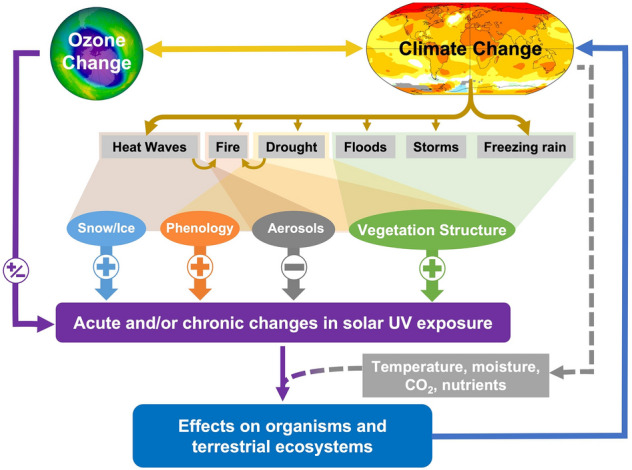
Terrestrial organisms and ecosystems are being exposed to new and rapidly changing combinations of solar UV radiation and other environmental factors because of ongoing changes in stratospheric ozone and climate. In this Quadrennial Assessment, we examine the interactive effects of changes in stratospheric ozone, UV radiation and climate on terrestrial ecosystems and biogeochemical cycles in the context of the Montreal Protocol. We specifically assess effects on terrestrial organisms, agriculture and food supply, biodiversity, ecosystem services and feedbacks to the climate system. Emphasis is placed on the role of extreme climate events in altering the exposure to UV radiation of organisms and ecosystems and the potential effects on biodiversity. We also address the responses of plants to increased temporal variability in solar UV radiation, the interactive effects of UV radiation and other climate change factors (e.g. drought, temperature) on crops, and the role of UV radiation in driving the breakdown of organic matter from dead plant material (i.e. litter) and biocides (pesticides and herbicides). Our assessment indicates that UV radiation and climate interact in various ways to affect the structure and function of terrestrial ecosystems, and that by protecting the ozone layer, the Montreal Protocol continues to play a vital role in maintaining healthy, diverse ecosystems on land that sustain life on Earth. Furthermore, the Montreal Protocol and its Kigali Amendment are mitigating some of the negative environmental consequences of climate change by limiting the emissions of greenhouse gases and protecting the carbon sequestration potential of vegetation and the terrestrial carbon pool. Graphical abstract
Overview
The claims and statistics of this paper haven’t been checked yet.
Free: it reads the open-access text and checks the first 5 claims that cite a source we can check. Create a free account to check every claim.
Integrity signals
Registry
Cites
Statistics
Figures
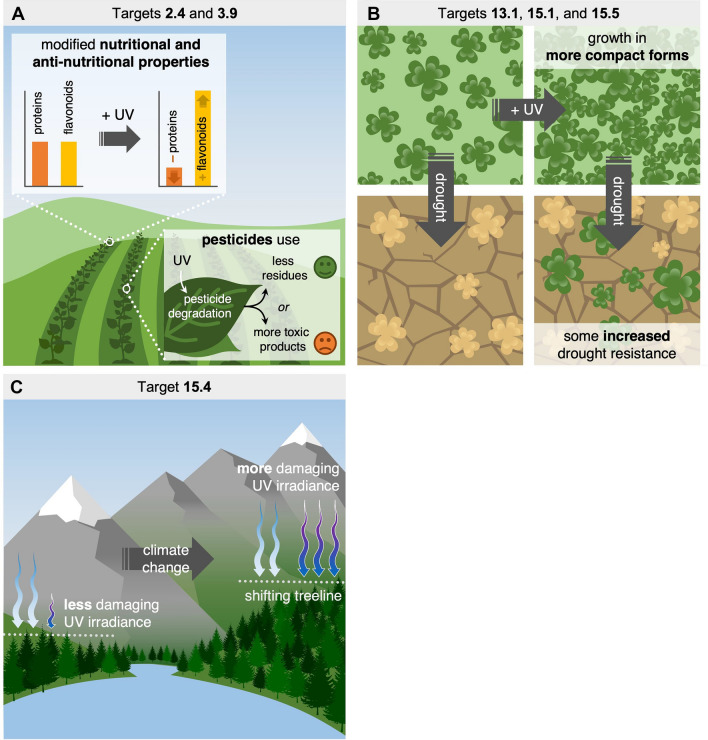
Verification
Claims the paper makes
The claims and statistics of this paper haven’t been checked yet.
Free: it reads the open-access text and checks the first 5 claims that cite a source we can check. Create a free account to check every claim.
Claims other papers make about this one
Each is checked against this paper’s own text: does it say what the citing paper says it does?
The source backs part of the claim, not all of it — or backs it for a different population, condition or comparison.
In the citing paper
“Changes in weather patterns, including extreme weather events, are not only caused by climate change but also by polar stratospheric ozone depletion, which strengthens the stratospheric polar vortex.”
From Changes in tropospheric air quality related to the protection of stratospheric ozone in a changing climate (2023) · cites this paper as [169]
Experimental — accuracy not yet measuredThe source backs part of the claim, not all of it — or backs it for a different population, condition or comparison.
In the citing paper
“In a changing climate, leached substances can migrate, travel further in the environment, and are more likely to be bioavailable to organisms [137, 138].”
From Environmental consequences of interacting effects of changes in stratospheric ozone, ultraviolet radiation, and climate: UNEP Environmental Effects Assessment Panel, Update 2024 (2025) · cites this paper as [138]
Experimental — accuracy not yet measuredThe source backs part of the claim, not all of it — or backs it for a different population, condition or comparison.
In the citing paper
“The projected recovery of the stratospheric ozone layer due to the implementation of the Montreal Protocol, and contingent return of UV-B radiation at the Earth’s surface to pre-ozone depletion levels (depending on future greenhouse gas emissions), are expected to have multiple direct and indirect consequences for food supply and food quality [138].”
From Environmental consequences of interacting effects of changes in stratospheric ozone, ultraviolet radiation, and climate: UNEP Environmental Effects Assessment Panel, Update 2024 (2025) · cites this paper as [138]
Experimental — accuracy not yet measuredThe cited source says what the claim attributes to it.
In the citing paper
“Changing weather patterns due to the Antarctic ozone hole have been observed in the Southern Hemisphere [23, 169, 170].”
From Changes in tropospheric air quality related to the protection of stratospheric ozone in a changing climate (2023) · cites this paper as [169]
The cited source says what the claim attributes to it.
In the citing paper
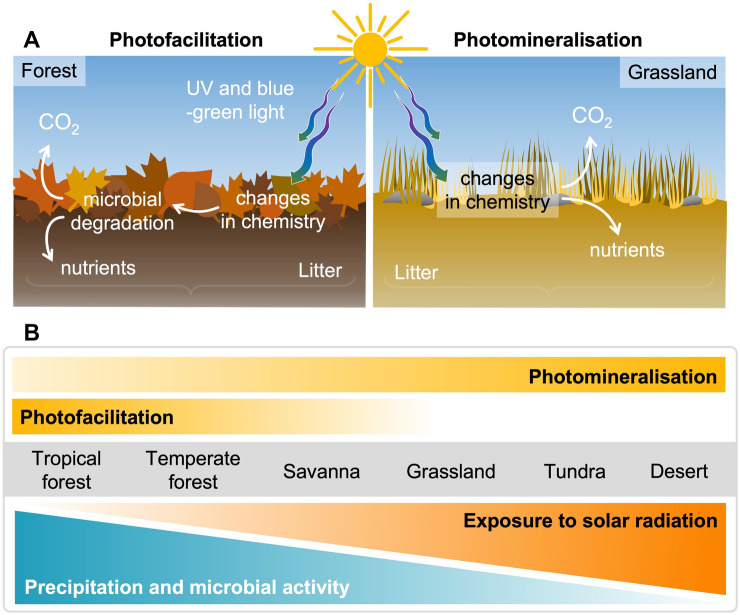
“Photodegradation by shortwave radiation (UV-B, UV-A, and blue light) has been identified as a ubiquitous contributing driver of litter decomposition and carbon cycling over the Earth’s biomes [138, 200].”
Self-check
Percentages, sums and reported differences re-computed from the paper’s own numbers.
The self-check needs the paper’s full text.
Citations
Cites
(IPCC), I. P. O. C. C. (2023) · doi:10.1017/9781009325844 · Cited by 10,921 · cited 5×
“Warming temperatures on the Antarctic Peninsula are opening up ice free areas [79] causing the expansion of vascular plants [81] and increasing the possibility of new plant and animal species invading the continent [21, 82].”
BackgroundInfluential(IPCC), I. P. O. C. C. (2023) · doi:10.1017/9781009157896 · Cited by 6,972 · cited 7×
“Globally, extreme climate events (ECEs 1 ) are increasing in frequency and severity with climate change and are projected to become even more prevalent in the future as the climate continues to change [20].”
BackgroundInfluentialEnvironmental Organic Chemistry
Schwarzenbach, R. P., Gschwend, P. M., & Imboden, D. M. (2002) · Wiley eBooks · doi:10.1002/0471649643 · Cited by 4,895
Biodiversity redistribution under climate change: Impacts on ecosystems and human well-being
Pecl, G. T., Araújo, M. B., Bell, J. D., Blanchard, J., Bonebrake, T. C., Chen, I.-C., Clark, T. D., Colwell, R. K., Danielsen, F., Evengård, B., et al. (2017) · Science · doi:10.1126/science.aai9214 · Cited by 3,668 · cited 1×
“Plant and animal species are migrating or shifting their distribution ranges to higher elevations and latitudes in response to ongoing changes in climate [229–231].”
BackgroundSelf-citation(2019) · Cited by 3,602
The Global Methane Budget 2000–2017
Saunois, M., Stavert, A. R., Poulter, B., Bousquet, P., Canadell, J. G., Jackson, R. B., Raymond, P. A., Dlugokencky, E. J., Houweling, S., Patra, P. K., et al. (2019) · doi:10.5194/essd-2019-128 · Cited by 2,760 · cited 4×
“Methane emission from plants also occurs through microbial methane production in the heartwood of trees (reviewed by [421, 424, 430]).”
BackgroundInfluentialThe Global Methane Budget 2000–2017
Saunois, M., Stavert, A. R., Poulter, B., Bousquet, P., Canadell, J. G., Jackson, R. B., Raymond, P. A., Dlugokencky, E. J., Houweling, S., Patra, P. K., et al. (2020) · Earth System Science Data · doi:10.5194/essd-12-1561-2020 · Cited by 2,711
Permafrost is warming at a global scale
Biskaborn, B. K., Smith, S. L., Noetzli, J., Matthes, H., Vieira, G., Streletskiy, D. A., Schoeneich, P., Romanovsky, V. E., Lewkowicz, A. G., Abramov, A., et al. (2019) · Nature Communications · doi:10.1038/s41467-018-08240-4 · Cited by 2,064 · cited 1×
“…and atmospheric CO 2 by influencing plant productivity [3], and the photodeg-radation of modern dead plant material (litter) and ancient organic matter preserved in permafrost soils [377, 378], which becomes exposed to solar radiation because of climate change-induced thawing [379–383] (Box 2).”
BackgroundHugelius, G., Strauss, J., Zubrzycki, S., Harden, J. W., Schuur, E. A. G., Ping, C.-L., Schirrmeister, L., Grosse, G., Michaelson, G. J., Koven, C. D., et al. (2014) · Biogeosciences · doi:10.5194/bg-11-6573-2014 · Cited by 1,731 · cited 1×
“Solar UV radiation affects carbon storage and atmospheric CO2 by influencing plant productivity [3], and the photodegradation of modern dead plant material (litter) and ancient organic matter preserved in permafrost soils [377, 378], which becomes exposed to solar radiation because of climate change-induced thawing [3…”
BackgroundAlbedo enhancement by stratospheric sulfur injections: a contribution to resolve a policy dilemma?
Crutzen, P. J. (2006) · Climatic Change · doi:10.1007/s10584-006-9101-y · Cited by 1,541 · cited 1×
“SAI would involve injecting reflective aerosols, such as sulphate, into the stratosphere to reflect incoming solar radiation away from the Earth’s surface [22].”
Background
Research works printed but not linked: 6
- Lim E-P Hendon HH Butler AH Garreaud RD Polichtchouk I Shepherd TG Scaife A Comer R Coy L Newman PA Thompson DJW Nakamura H The 2019 Antarctic sudden stratospheric warming SPARC Newsletter 2020 54 10 13
- Newman, P., Nash, E. R., Kramarova, N., & Butler, A. (2020). The 2019 southern stratospheric warming. In: T. Scambos, & S. Stammerjohn (Eds.) “State of the Climate in 2019", Bulletin of the American Meteorological Society (Vol. 101, pp. S297-S298, Vol. 8). · DOI · Paper page
- Bernhard, G. H., Fioletov, V. E., Grooß, J.-U., Ialongo, I., Johnsen, B., Lakkala, K., Manney, G. L., Müller, R., & Svendby, T. (2021). Ozone and ultraviolet radiation. In: J. Blunden, & T. Boyer (Eds.). Vol. 102 “State of the Climate in 2020”, Bull. Amer. Meteor. Soc. (, pp. S299–S303).
- IPCC, 2014: Climate change 2014: Impacts, adaptation, and vulnerability Part A: Global and sectoral aspects. Contribution of working group II to the fifth assessment report of the intergovernmental panel on climate change [Field, C.B., V.R. Barros, D.J. Dokken, K.J. Mach, M.D. Mastrandrea, T.E. Bilir, M. Chatterjee, K.L. Ebi, Y.O. Estrada, R.C. Genova, R. B. Girma, E.S. Kissel, A.N. Levy, S. MacCracken, P.R. Mastrandrea, and L.L. White (eds.)]. Cambridge University Press, Cambridge, United Kingdom and New York, NY, USA, 1132 pp
- Schwarzenbach RP Gschwend PM Imboden DM Schwarzenbach RP Gschwend PM Imboden DM Indirect Photolysis: Reactions with Photooxidants in Natural Waters and in the Atmosphere Environmental Organic Chemistry 2002 John Wiley 655 686 · DOI · Paper page
- Takshak S Agrawal SB Defense potential of secondary metabolites in medicinal plants under UV-B stress Journal of Photochemistry & Photobiology, B: Biology 2019 193 51 88 10.1016/j.jphotobiol.2019.02.002 30818154 · DOI · Paper page
Cited by
The effects of exposure to solar radiation on human health
Neale, R. E., Lucas, R. M., Byrne, S. N., Hollestein, L., Rhodes, L. E., Yazar, S., Young, A. R., Berwick, M., Ireland, R. A., & Olsen, C. M. (2023) · Photochemical & Photobiological Sciences · doi:10.1007/s43630-023-00375-8 · Cited by 162
“1 3 on terrestrial [3] and aquatic [4] ecosystems, and materials [5].”
BackgroundStratospheric ozone, UV radiation, and climate interactions
Bernhard, G. H., Bais, A. F., Aucamp, P. J., Klekociuk, A. R., Liley, J. B., & McKenzie, R. L. (2023) · Photochemical & Photobiological Sciences · doi:10.1007/s43630-023-00371-y · Cited by 138
“High UV radiation at this time, which coincides with the start of the growing season for plants and the peak breeding season for most animals, is a concern [3].”
BackgroundSelf-citationJansen, M. A. K., Andrady, A. L., Bornman, J. F., Aucamp, P. J., Bais, A. F., Banaszak, A. T., Barnes, P. W., Bernhard, G. H., Bruckman, L. S., Busquets, R., et al. (2024) · Photochemical & Photobiological Sciences · doi:10.1007/s43630-024-00552-3 · Cited by 83
“Hydroxyl radicals also play an important role in surface waters in the transformation and breakdown of pollut-ants e.g. pesticides [3].”
Self-citationNeale, P. J., Williamson, C. E., Banaszak, A. T., Häder, D.-P., Hylander, S., Ossola, R., Rose, K. C., Wängberg, S.-Å., & Zepp, R. (2023) · Photochemical & Photobiological Sciences · doi:10.1007/s43630-023-00370-z · Cited by 79
Self-citationMadronich, S., Sulzberger, B., Longstreth, J. D., Schikowski, T., Andersen, M. P. S., Solomon, K. R., & Wilson, S. R. (2023) · Photochemical & Photobiological Sciences · doi:10.1007/s43630-023-00369-6 · Cited by 64
“However, the recovery of stratospheric O3 should decrease the stability of the Antarctic polar vortex, which should lead to wetter conditions in the Southern Hemisphere in the near future for this region.”
BackgroundInfluentialCanopy gap impacts on soil organic carbon and nutrient dynamic: a meta-analysis
Tong, R., Ji, B., Wang, G. G., Lou, C., Ma, C., Zhu, N., Yuan, W., & Wu, T. (2024) · Annals of Forest Science · doi:10.1186/s13595-024-01224-z · Cited by 48
“Solar radiation is intricately linked to plant photosynthesis and nutrient stoichiometry, garnering heightened attention for its impact on biogeochemical cycling in recent studies (Epp et al. 2007; Ji et al. 2020; Barnes et al. 2023).”
BackgroundBasking in the sun: how mosses photosynthesise and survive in Antarctica
Yin, H., Perera-Castro, A. V., Randall, K. L., Turnbull, J. D., Waterman, M. J., Dunn, J. W., & Robinson, S. A. (2023) · Photosynthesis Research · doi:10.1007/s11120-023-01040-y · Cited by 53
“In autumn 2022, an extensive heatwave across Antarctica brought unseasonably warm temperatures for autumn and additional precipitation (Barnes et al. 2023).”
BackgroundSelf-citationDownie, A. T., Wu, N. C., Cramp, R. L., & Franklin, C. E. (2023) · Global Change Biology · doi:10.1111/gcb.16848 · Cited by 34
“…at the equator (a phenomena known as tropicalisation), a select number of animals are moving from temperate to tropical latitudes to escape the increasing seasonality of temperatures at temperate latitudes but would expose them to significantly higher ambient UVR levels (Barnes et al., 2023).”
BackgroundInfluentialEnvironmental & health impacts of ultraviolet radiation: current trends and mitigation strategies
Mmbando, G. S., & Ngongolo, K. (2024) · Discover Sustainability · doi:10.1007/s43621-024-00698-1 · Cited by 40
“Higher UV exposure harms both terrestrial and aquatic ecosystems, disturbs wildlife populations, and raises the risk of cataracts, skin cancer, and other illnesses [7, 11, 13, 29].”
InfluentialConfronting the data deluge: How artificial intelligence can be used in the study of plant stress
Koh, E., Sunil, R. S., Lam, H. Y. I., & Mutwil, M. (2024) · Computational and Structural Biotechnology Journal · doi:10.1016/j.csbj.2024.09.010 · Cited by 41
“Climate change can come with changing rainfall patterns and consequently decreased cloud cover, while geographical locations at risk of desertification are also exposed to such stresses [19].”
BackgroundNeale, P. J., Hylander, S., Banaszak, A. T., Häder, D.-P., Rose, K. C., Vione, D., Wängberg, S.-Å., Jansen, M. A. K., Busquets, R., Andersen, M. P. S., et al. (2025) · Photochemical & Photobiological Sciences · doi:10.1007/s43630-025-00687-x · Cited by 32
“Photodegradation by shortwave radiation (UV-B, UV-A, and blue light) has been identified as a ubiquitous contributing driver of litter decomposition and carbon cycling over the Earth’s biomes [138, 200].”
Self-citationMathur, S., Bheemanahalli, R., Jumaa, S. H., Kakar, N., Reddy, V. R., Gao, W., & Reddy, K. R. (2024) · Frontiers in Plant Science · doi:10.3389/fpls.2024.1369397 · Cited by 27
Menzel, C. M. (2025) · The Journal of Horticultural Science and Biotechnology · doi:10.1080/14620316.2024.2449026 · Cited by 36
“Changes in the transmission of UV light effect the development of plant diseases (Barnes et al., 2023).”
Gomes, M. P. (2024) · Phyton · doi:10.32604/phyton.2024.056360 · Cited by 25
The recent possible strategies for breeding ultraviolet-B-resistant crops
Mmbando, G. S. (2024) · Heliyon · doi:10.1016/j.heliyon.2024.e27806 · Cited by 21
“UVB penetration through the atmosphere can be affected by changes in atmospheric composition, changes in cloud cover, along with other climate-related factors [41,42].”
Protection of Photosynthesis by UVR8 and Cryptochromes in Arabidopsis Under Blue and UV Radiation
Morales, L. O., Shapiguzov, A., Rai, N., Aphalo, P. J., & Brosché, M. (2025) · Plant Cell & Environment · doi:10.1111/pce.15608 · Cited by 18
Downie, A. T., Cramp, R. L., & Franklin, C. E. (2023) · The Science of The Total Environment · doi:10.1016/j.scitotenv.2023.168066 · Cited by 19
Madronich, S., Bernhard, G. H., Neale, P. J., Heikkilä, A., Andersen, M. P. S., Andrady, A. L., Aucamp, P. J., Bais, A. F., Banaszak, A. T., Barnes, P. J., et al. (2024) · Photochemical & Photobiological Sciences · doi:10.1007/s43630-024-00577-8 · Cited by 15
Self-citationUltraviolet-B radiation, mushrooms, and vitamin D: From technology to bioavailability
Hidalgo-Sanz, R., Del‐Castillo‐Alonso, M., Monforte, L., Heras, R. T. L., Cervera, S. A. S., Olarte, C., Pérez‐Matute, P., Íñiguez-Martínez, M., Ene, A.-L., Martínez‐Abaigar, J., et al. (2023) · LWT · doi:10.1016/j.lwt.2023.115210 · Cited by 15
Plant tolerance mechanisms to DNA-damaging UV stress
Asik, E., Kashif, S. Z., & Oztas, O. (2025) · Journal of Experimental Botany · doi:10.1093/jxb/eraf272 · Cited by 20
Significant Impact of UV Exposure on Litter Decomposition Across Diverse Climate Zones
Yang, S., Jia, Z., Chang, P., Wu, Y., Huang, J., Wang, J., Deng, M., Su, J. R., Hong, S., He, Y. L., et al. (2025) · Global Change Biology · doi:10.1111/gcb.70456 · Cited by 14
Considering ultraviolet radiation in experimental biology: a neglected pervasive stressor
Hird, C., Lundsgaard, N. U., Downie, A. T., Cramp, R. L., & Franklin, C. E. (2024) · Journal of Experimental Biology · doi:10.1242/jeb.247231 · Cited by 14
Linkages between COVID-19, solar UV radiation, and the Montreal Protocol
Bernhard, G. H., Madronich, S., Lucas, R. M., Byrne, S. N., Schikowski, T., & Neale, R. E. (2023) · Photochemical & Photobiological Sciences · doi:10.1007/s43630-023-00373-w · Cited by 12
Komić, S. M., Živanović, B., Dumanovic, J., Kolarž, P., Zorić, A. S., Morina, F., Vidović, M., & Veljovic-Jovanovic, S. D. (2023) · International Journal of Molecular Sciences · doi:10.3390/ijms242015350 · Cited by 14
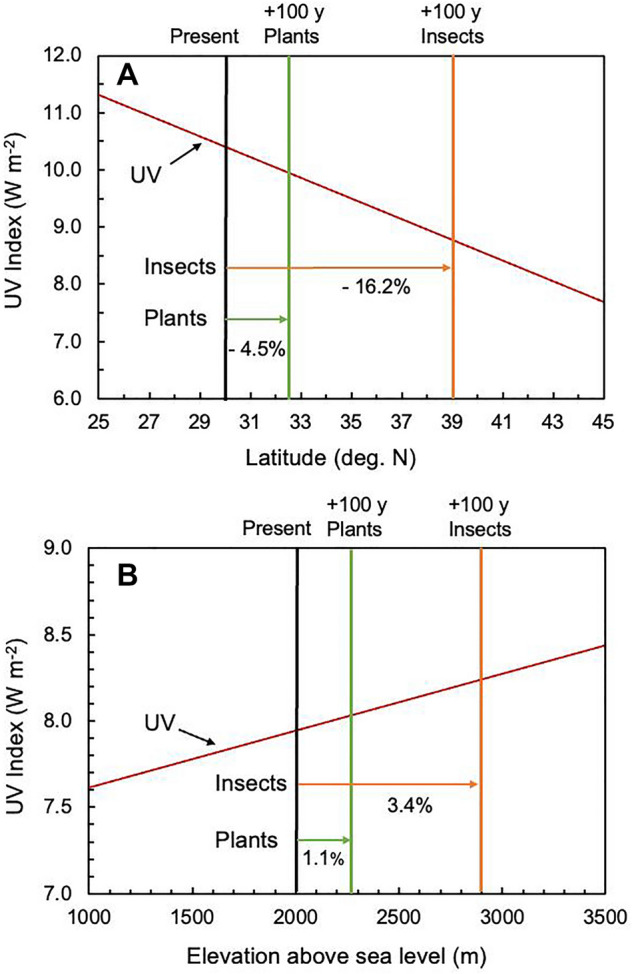
“Recent studies predict a 3–8% increase in the UV index over the tropics or mid-latitudes by 2100, depending on the greenhouse gas scenario, cloud cover, and aerosol concentration used for modelling [4–6].”
MethodMcBride, S. G., Levi, E. M., Nelson, J. A., Archer, S. R., Barnes, P. W., Throop, H. L., Predick, K., & McCulley, R. L. (2023) · Ecosystems · doi:10.1007/s10021-023-00837-1 · Cited by 12
Self-citationPhytohormonal strategies for managing crop responses to abiotic stresses: a review
Hoque, M. N., Hannan, A., Imran, S., Tuz-zohra, F., Sultana, T., Seen, M. M. H., Thamid, S. S., Fahim, T. M., Islam, A. K. M. M., & Rhaman, M. S. (2024) · Discover Plants. · doi:10.1007/s44372-024-00058-3 · Cited by 17
“Extreme irradiance and photomorphogenic or injured cellular processes generate "distress" from photodamage, which can lead to programmed cell death [106].”
Regional background ozone estimation for China through data fusion of observation and simulation
Sun, Z., Tan, J., Wang, F., Li, R., Zhang, X., Liao, J., Wang, Y., Huang, L., Zhang, K., Fu, J. S., et al. (2023) · The Science of The Total Environment · doi:10.1016/j.scitotenv.2023.169411 · Cited by 13
“Additionally, O 3 plays an important role in the global atmospheric radiation balance (Barnes et al., 2023; Rasmussen et al., 2013) and can consequently influence atmospheric circulations (Rudeva et al., 2023).”
BackgroundMa, J., Zhang, J., Lu, C., Li, X., Xie, L., Deng, J., Zhou, W., Hu, Y., Yan, Q., Peng, H., et al. (2024) · Environmental and Experimental Botany · doi:10.1016/j.envexpbot.2024.105857 · Cited by 10
Self-citationZhang, C., Gao, N., Na, X., Li, K., Pu, M., Sun, H., Song, Y., Peng, T., Fei, P., Li, J., et al. (2025) · Soil Biology and Biochemistry · doi:10.1016/j.soilbio.2025.109767 · Cited by 12
Research Bias in Long‐Term Monitoring of Antarctic Nearshore Marine and Terrestrial Biota
Jones, S., King, D. H., Cummings, V. J., Robinson, S. A., & Waterman, M. J. (2025) · Global Change Biology · doi:10.1111/gcb.70392 · Cited by 16
“In addition, Antarctic biota is exposed to high ultraviolet radiation and windier conditions as a result of ozone depletion (Barnes et al. 2023; Burritt and Lamare 2016; Robinson et al. 2024), and is threatened by emerging diseases such as avian influenza (Banyard et al. 2024).”
Self-citationAč, A., Jansen, M. A. K., Grace, J., & Urban, O. (2024) · Plant Cell & Environment · doi:10.1111/pce.14841 · Cited by 9
Self-citationYang, Q., Li, H., Zhang, H., Ma, L., Zhang, X., & Wu, J. (2025) · Frontiers in Medicine · doi:10.3389/fmed.2025.1582946 · Cited by 12
Fragkos, K., Fountoulakis, I., Charalampous, G., Papachristopoulou, K., Nisantzi, A., Hadjimitsis, D. G., & Kazadzis, S. (2024) · Remote Sensing · doi:10.3390/rs16111878 · Cited by 10
Mmbando, G. S. (2024) · International Journal of Radiation Biology · doi:10.1080/09553002.2024.2398081 · Cited by 7
“Moreover, careful research is required due to the ecological effects of heightened UV-B radiation on entire ecosystems and the possible domino effects on biodiversity (Häder et al. 2015; Barnes et al. 2023).”
InfluentialPanthari, P., Khantwal, G., Kumar, M., Shang, X., Lee, J., Haniyyah, S., Sharma, K., & Saini, R. K. (2025) · Foods · doi:10.3390/foods14203516 · Cited by 8
“Environmental factors such as altitude, temperature, and nutrient availability are known to influence sterol metabolism, including ergosterol biosynthesis, with higher altitudes and stronger UV exposure potentially enhancing ergosterol accumulation [37].”
Kaya, S., Erdoğan, D. E., Sancar, A., Adebalı, O., & Oztas, O. (2024) · Scientific Reports · doi:10.1038/s41598-024-53472-8 · Cited by 7
Incorporating photosynthetic acclimation improves stomatal optimisation models
Flo, V., Joshi, J., Sabot, M. E. B., Sandoval, D., & Prentice, I. C. (2024) · Plant Cell & Environment · doi:10.1111/pce.14891 · Cited by 7
Exogenous iron mitigates photo-facilitation of soil organic matter
Wen, Y., Wu, J., Wen, X., Zhang, Z., Wang, J., Yu, G., He, X., Xu, M., Cheng, M., Liu, W., et al. (2025) · Geochimica et Cosmochimica Acta · doi:10.1016/j.gca.2025.03.010 · Cited by 7
Orford, J. T., Tan, H., Martin, J. M., Wong, B. B. M., & Alton, L. A. (2024) · Environmental Toxicology and Chemistry · doi:10.1002/etc.5895 · Cited by 7
“…and surface water circulation, and shifts in the geographic distributions and phenology of species that are occurring as a result of human land ‐ use practices (e.g., defor-estation) and climate change (explained in detail by Barnes et al., 2023; Downie et al., 2023; Neale et al., 2023).”
BackgroundClimate change in interaction with global carbon cycle
Hameed, R., Abbas, A., Balooch, S., Khattak, W. A., Nazir, M. M., Naqvi, S., Li, G., & Du, D. (2024) · Elsevier eBooks · doi:10.1016/b978-0-443-23707-2.00009-x · Cited by 5
Marcinek, S., Cindrić, A.-M., & Omanović, D. (2025) · Marine Chemistry · doi:10.1016/j.marchem.2025.104513 · Cited by 5
Chang, L., Deng, J., Zhang, J., Fu, Q., Wang, T., Osono, T., Peng, H., Robson, T. M., Kurokawa, H., & Wang, Q. (2025) · Journal of Forestry Research · doi:10.1007/s11676-024-01811-w · Cited by 6
“This finding is supported by research in diverse ecosystems (Austin and Ballaré 2010; Barnes et al. 2023).”
Self-citationIntense solar radiation constrains plant species richness in global grasslands
Spohn, M., Arnillas, C. A., Bakker, J. D., Borer, E. T., Bråthen, K. A., Cadotte, M. W., Carbutt, C., Catford, J. A., DuPre, M. E., Dwyer, C., et al. (2026) · Proceedings of the National Academy of Sciences · doi:10.1073/pnas.2527128123 · Cited by 6
“Contrary to earlier estimates (34), our results suggest that PAR rather than UV -”
Shu, C., Han, B., Cai, W., Cai, Z., Zheng, H., & Ouyang, Z. (2026) · Ecological Indicators · doi:10.1016/j.ecolind.2026.114698 · Cited by 4
Environmental behavior and the degradation of tire-rubber-related pollutant 6PPD-quinone in soils
Kim, M.-Y., An, J.-Y., Lee, D.-Y., Jeong, S.-H., & Kim, J.-H. (2026) · Applied Biological Chemistry · doi:10.1186/s13765-025-01064-z · Cited by 4
Vertebrates under ultraviolet radiation
Jin, P. (2023) · Global Change Biology · doi:10.1111/gcb.16878 · Cited by 3
“…the increasing temperature in the tropics, where UVR is predicted to increase by 3%– 8%, is driving the relocation of vertebrates from tropical to temperate regions or shifting their habitat ranges to higher altitudes with higher ambient UVR levels to seek thermal refuge (Barnes et al., 2023 ).”
BackgroundLiu, Z., Mo, S., Liu, F., Korshin, G. V., & Yan, M. (2024) · ISPRS Journal of Photogrammetry and Remote Sensing · doi:10.1016/j.isprsjprs.2024.05.026 · Cited by 4
Initial Litter Chemistry and UV Radiation Drive Chemical Divergence in Litter during Decomposition
Yao, B., Kong, X., Tian, K., Zeng, X., Lu, W., Pang, L., Sun, S., & Tian, X. (2024) · Microorganisms · doi:10.3390/microorganisms12081535 · Cited by 7
“UV radiation has been demonstrated to accelerate the release of organic C during litter decomposition [10–13].”
BackgroundMonte Carlo Evaluation of Uncertainties of UV Spectra Measured With Brewer Spectroradiometers
Hernández, C. G., Vilaplana, J. M., & Serrano, A. (2023) · Journal of Geophysical Research Atmospheres · doi:10.1029/2023jd039500 · Cited by 5
Hidalgo-Sanz, R., Del‐Castillo‐Alonso, M., Cervera, S. A. S., Olarte, C., Martínez‐Abaigar, J., & Núñez‐Olivera, E. (2024) · Agriculture · doi:10.3390/agriculture14050681 · Cited by 4
“The responses of organisms to UV-B have profusely been studied in the case of plants [15– 17] and mushrooms [18,19].”
BackgroundInfluentialResearch hotspots and global trends in plant responses under UV-B radiation
Singh, P., & Choudhary, K. K. (2025) · Discover Plants. · doi:10.1007/s44372-025-00204-5 · Cited by 3
The concept of UV radiation hormesis: evidence, mechanisms and implications
Trela-Makowej, A., Olbińska, E., Orzechowska, A., & Szymańska, R. (2026) · Biological reviews/Biological reviews of the Cambridge Philosophical Society · doi:10.1002/brv.70159 · Cited by 5
Su‐Zhou, C., Durand, M., Aphalo, P. J., Martínez‐Abaigar, J., Shapiguzov, A., Ishihara, H., Liu, X., & Robson, T. M. (2024) · Physiologia Plantarum · doi:10.1111/ppl.14383 · Cited by 4
Self-citationKondrateva, E. S., Николаевич, Г. А., Rzhechitskiy, Y., Saranchina, A., Diagileva, A., Drozdova, P. B., Vereshchagina, K., Shatilina, Z. M., Sokolova, I. M., & Timofeyev, M. A. (2024) · Biology · doi:10.3390/biology13121004 · Cited by 3
Chatzopoulou, A., Tourpali, K., Bais, A. F., & Braesicke, P. (2024) · Photochemical & Photobiological Sciences · doi:10.1007/s43630-024-00676-6 · Cited by 6
“The shorter wavelengths (UV-B) may cause cellular damage, which can lead to changes in the morphology, physiology, and biochemistry of organisms [38].”
Cross, J. F., Owen, J. S., Shreckhise, J. H., Fields, J. S., Nackley, L. L., Altland, J. E., & Drewry, D. T. (2025) · Smart Agricultural Technology · doi:10.1016/j.atech.2025.101289 · Cited by 4
Climatic Factors and Inflammatory Skin Disorders
Fernandez, K., Ha, A., Zhong, X., Belzer, A., & Wei, M. L. (2025) · Dermatologic Clinics · doi:10.1016/j.det.2025.08.012 · Cited by 6
Effect of UV exclusion and AMF inoculation on photosynthetic parameters of Glycine max
Laad, P., PATEL, P., Guruprasad, K. N., SHARMA, M. P., Kataria, S., & Brestič, M. (2023) · Photosynthetica · doi:10.32615/ps.2023.014 · Cited by 3
Kharel, T. P., Reddy, K. R., Sehgal, A., Narayana, N. K., Bheemanahalli, R., Bhandari, A. B., Reddy, K. N., & Gao, W. (2025) · Agrosystems Geosciences & Environment · doi:10.1002/agg2.70037 · Cited by 2
Jansen, M. A. K., Ač, A., Grace, J., & Urban, O. (2025) · Plant Cell & Environment · doi:10.1111/pce.15643 · Cited by 3
Self-citationZhu, D., Li, Z., Wang, Y., Chen, W., Wu, N., Huang, M., Liu, H., He, S., Xu, W., & Liu, W. (2025) · Macromolecular Chemistry and Physics · doi:10.1002/macp.202500213 · Cited by 2
“However, with the Earth’s ozone layer depleting, UV radiation has become increasingly intense [9], and excessive UV radiation will cause skin sunburn and eye damage [10–12], and accelerate the aging of plastics and the fading of paints [13, 14].”
Environmental abiotic stresses and their impacts on plants
Talebi, S. M., Shariatzadeh, S., & Ghorbanpour, M. (2026) · Elsevier eBooks · doi:10.1016/b978-0-443-33026-1.00009-8 · Cited by 3
Soriano, G., Monforte, L., Del‐Castillo‐Alonso, M., Heras, R. T. L., Jenkins, G. I., Kondou, Y., Martínez‐Abaigar, J., & Núñez‐Olivera, E. (2026) · Journal of Experimental Botany · doi:10.1093/jxb/erag213 · Cited by 1
The Antarctic ozone hole, ultraviolet radiation and bushfires
Robinson, S. A. (2023) · Antarctic Science · doi:10.1017/s0954102023000081 · Cited by 2
Self-citationLi, H., Li, W., Liu, T., Xu, Y., He, D., & Wang, J. (2024) · Photonics · doi:10.3390/photonics11090812 · Cited by 2
Variability of solar UV radiation in the northern mountains of the Czech Republic, 2020–2021
Novotná, M., Láska, K., Čížková, K., Metelka, L., & Staněk, M. (2024) · Czech Polar Reports · doi:10.5817/cpr2024-1-8 · Cited by 2
Mall, A., Patel, T., Soni, V. K., & Singh, S. (2024) · MAPAN · doi:10.1007/s12647-024-00788-5 · Cited by 3
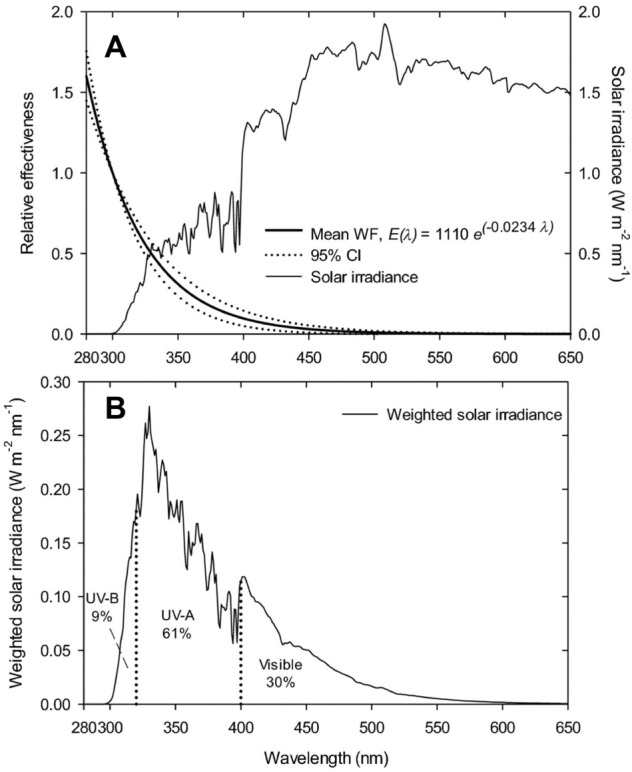
“A large proportion of UVA and a small fraction of UVB reaches the earth’s surface, which makes a large impact on both living organisms and terrestrial ecosystems [5, 6].”
Park, H., Kim, K. J., & Kwon, S. J. (2024) · Electrochimica Acta · doi:10.1016/j.electacta.2024.145600 · Cited by 3
Swaid, S. Y., & SHAREEF, H. J. (2025) · Folia oecologica · doi:10.2478/foecol-2025-0004 · Cited by 3
Qin, Y., & Xia, Y. (2025) · Microbiological Research · doi:10.1016/j.micres.2025.128190 · Cited by 2
Effects of Ultraviolet Radiation (UVR) on Some Stages of Clarias gariespinus (Catfish) Growth
Ichaver, A., Tyovenda, A. A., Tikyaa, E. V., & Sombo, T. (2024) · Radiation Science and Technology · doi:10.11648/j.rst.20241001.11 · Cited by 1
Xiang, X., Xie, F., & Xia, Y. (2025) · Environmental Research Letters · doi:10.1088/1748-9326/adda66 · Cited by 1
“Surface ultraviolet (UV) radiation poses severe threats to human health (Williamson et al 2014), agricultural productivity (Liaqat et al 2024), and air quality (Madronich et al 2023), while also causing profound disruptions to ecosystems and biogeo-chemical cycles (Barnes et al 2023).”
Xue, Y., Bai, Y., & Reinhuber, E. (2025) · Creativity and Cognition · doi:10.1145/3698061.3726945 · Cited by 1
Trentin, R., Rodrigues, M. J., Santos, A. D., Fernandes, E., & Custódio, L. M. B. (2025) · South African Journal of Botany · doi:10.1016/j.sajb.2025.07.038 · Cited by 2
Su‐Zhou, C., Durand, M., Martínez‐Abaigar, J., Shapiguzov, A., Kangasjärvi, S., Liu, X., & Robson, T. M. (2025) · Plant Physiology and Biochemistry · doi:10.1016/j.plaphy.2025.110863 · Cited by 1
Self-citationProduction of rice husk-based particleboard using biomass extract as a binder
Akor, H. I., Adams, P. O., Onu, M. A., Salawu, A. S., & Bello, F. O. (2026) · Next Chemical Engineering · doi:10.1016/j.nxcen.2026.100048 · Cited by 1
The influence of electromagnetic radiation on the body of the honey bee
Kovalska, L., Gryciv, I., Kovalskyi, Y., & Zhmur, A. J. (2024) · Scientific Messenger of LNU of Veterinary Medicine and Biotechnologies · doi:10.32718/nvlvet-a10025 · Cited by 1
“Через атмосферу Землі прохо - дять випромінювання Сонця : інфрачервоного ( тепло - вого ), оптичного ( світлового ), мала частина вкрай високочастотного ( КВЧ ) діапазону , надвисокочастот - ного ( НВЧ ) і радіодіапазону (Barnes et al., 2023; Neale et al., 2023).”
Incorporating photosynthetic acclimation improves stomatal optimisation modelsPreprint
Flo, V., Joshi, J., Sabot, M. E. B., Sandoval, D., & Prentice, I. C. (2023) · bioRxiv (Cold Spring Harbor Laboratory) · doi:10.1101/2023.07.07.548137 · Cited by 1
“This suggests an enhanced photosynthetic sensitivity to drought (i.e., a higher α ) for high J max,25 leaves, perhaps linked to the production costs of photoprotective compounds whose concentrations acclimate to UV radiation levels (Barnes et al., 2023).”
Modeling the association between lagged climatic factors and malaria incidence in Ghana
Antwi, P., Muhua, G., & Nyarko, E. (2026) · Scientific African · doi:10.1016/j.sciaf.2026.e03554
Ruhland, C. T., & Fraley, P. (2023) · Journal of Arid Environments · doi:10.1016/j.jaridenv.2023.105084 · Cited by 1
Modelización matemática de la radiación solar ultravioleta
García-Rodríguez, S. (2023) · Repositorio Institucional de la Universidad de Burgos (University of Burgos) · doi:10.36443/10259/9094
Widjaja, S. A., Lutfi, D., Dewanti, L., Rahniayu, A., & Kusumastuti, F. (2024) · Majalah Biomorfologi · doi:10.20473/mbiom.v34i2.2024.74-82
Jahromi, F., Mannai, M. A., Alabed, A., Alkhlofi, S., Hejres, S., Alromaihi, D., Kumar, P., & Freije, A. M. (2024) · Atmosphere · doi:10.3390/atmos15121497 · Cited by 1
“Such studies”
The Influence of Climate Dynamics on The Development of Regional Landscapes
Asfandi, A. M., Sudarmadji, T., & Hartati, W. (2025) · IOP Conference Series Earth and Environmental Science · doi:10.1088/1755-1315/1447/1/012027
“Recent research has revisited the interactive effects of ultraviolet radiation and increased nitrogen deposition, ozone pollution, and increased atmospheric CO2 concentrations [14].”
Xue, J., Chen, S., Ma, X., Shi, T., Wu, H., Liu, Z., Hua, R., & Huang, Y. (2025) · Water · doi:10.3390/w17071032 · Cited by 1
“This process typically occurs on soil surfaces or in water and is influenced by environmental factors such as light intensity, wavelength, temperature, and pH [20,21].”
Editorial: Atmospheric aerosol and pollution: characterization techniques and source identification
Tahri, M., & Benchrif, A. (2025) · Frontiers in Environmental Science · doi:10.3389/fenvs.2025.1601870
Singh, S., & Sharma, P. C. (2025) · Food Analytical Methods · doi:10.1007/s12161-025-02841-8
“…stages, pollinator activity, and biotic stressors like pathogens or herbivores may activate specific signaling pathways (e.g., jasmonate or salicylate pathways) that alter metabolite profiles independently of macro-environmental variables like temperature or elevation (Barnes et al. 2023).”
Oben, A.-D. M. (2025) · Law and Economy · doi:10.63593/le.2788-7049.2025.06.003
Spatiotemporal Distribution of UVB Index in Relation to Ozone over Libya
Abouleid, S. B., Aljaff, M. A., & Miloud, H. M. B. (2025) · IOP Conference Series Earth and Environmental Science · doi:10.1088/1755-1315/1531/1/012008
“Moreover, the emission of greenhouse gases must be limited to mitigate the adverse effects of Tropospheric Ozone (O 3 ), It is a detrimental secondary pollutant and the third most significant greenhouse gas [13].”
Tang, Q., Xiao, Q., Xu, Y., Liu, Y., & Han, J. (2025) · International Conference on Geoinformatics · doi:10.1109/geoinformatics67279.2025.11173527
“With increasing intensity and variability of UV exposure driven by stratospheric ozone depletion and climate change [3], it is imperative to examine its role in melanoma incidence at a spatially explicit level.”
Hydrogen Peroxide Production in Freshwater Environments: A Minireview
Garcia, P. E., Hancock, T. L., & Urakawa, H. (2025) · Springer eBooks · doi:10.1007/978-3-032-05809-6_17
Naeem, M., Chen, H., Bashir, N. H., Wang, H., & Riasat, M. (2025) · Journal of Economic Entomology · doi:10.1093/jee/toaf274
Jadaun, H., Deep, A., & Jain, H. (2025) · Architecture Structures and Construction · doi:10.1007/s44150-025-00178-8
Rodríguez-Hidalgo, C., Llorens, L., Doménech‐Pascual, A., Romaní, A. M., González, J.-A., & Verdaguer, D. (2025) · Environmental and Experimental Botany · doi:10.1016/j.envexpbot.2025.106307
Ichaver, A., Tyovenda, A. A., & Mohammed, A. A. (2026) · Nigerian Journal of Physics · doi:10.62292/njp.v35i1.2026.463
A field experiment showing plant response to UV radiation in diffuse sunlightPreprint
Neimane, S., Durand, M., Lintunen, A., & Robson, T. M. (2026) · SSRN Electronic Journal · doi:10.2139/ssrn.6381882
Self-citationOptical properties of leaf structural elements
Jan, S., & Bhat, G. H. (2026) · Elsevier eBooks · doi:10.1016/b978-0-443-21727-2.00002-2
Lozano, I. L., Alados, I., & Foyo-Moreno, I. (2026) · Physics and Chemistry of the Earth Parts A/B/C · doi:10.1016/j.pce.2026.104518
García‐Campa, L., Shafie, A., Skogström, O., Bånkestad, D., & Morales, L. O. (2026) · Plant Science · doi:10.1016/j.plantsci.2026.113263
Personalized skincare: Concept, technological advances, and future directions
Chauhan, N. S. (2026) · Elsevier eBooks · doi:10.1016/b978-0-443-41640-8.00004-0
Metadata
- Authors
- Barnes, P. W., Robson, T. M., Zepp, R. G., Bornman, J. F., Jansen, M. A. K., Ossola, R., Wang, Q.-W., Robinson, S. A., Foereid, B., Klekociuk, A. R., Martinez-Abaigar, J., Hou, W.-C., Mackenzie, R., & Paul, N. D.
- Affiliations
- Loyola University New Orleans (US)
- University of Helsinki (FI)
- Environmental Protection Agency (US)
- Murdoch University (AU)
- University College Cork (IE)
- NSF National Center for Atmospheric Research (US)
- Chinese Academy of Sciences (CN)
- University of Wollongong (AU)
- Norwegian Institute of Bioeconomy Research (NO)
- Australian Antarctic Division (AU)
- National Cheng Kung University (TW)
- Instituto de Biodiversidad de Ecosistemas Antárticos y Subantárticos (CL)
- Lancaster University (GB)
- Corresponding author
- Barnes, P. W.
- Robson, T. M.
- ORCID
- Venue
- Photochemical & Photobiological Sciences
- Published
- 2023-02-01
- Volume
- 22
- Issue
- 5
- Pages
- 1049-1091
- ISSN
- 1474-905X (ISSN-L)
- 1474-9092
- PMC
- PMC9889965
- OpenAlex
- W4318754076
- Cited by
- 113
- References
- 449
- Citations by year
- 2026: 27 · 2025: 35 · 2024: 32 · 2023: 19
- FWCI
- 12.48
- Type
- journal article
- Language
- en
- Open access
- hybrid
- doi.org
- Licence
- cc-by
- creativecommons.org/licenses/by/4.0 (tdm)
- creativecommons.org/licenses/by/4.0 (vor)
- Locations
- Photochemical & Photobiological Sciences (publishedVersion, cc-by)
- PubMed Central (publishedVersion, cc-by)
- PubMed (publishedVersion)
- Insight (University of Cumbria) (submittedVersion, cc-by)
- Research Online (University of Wollongong) (submittedVersion)
- Lancaster EPrints (Lancaster University) (submittedVersion)
- Figshare (submittedVersion)
- Työväentutkimus Vuosikirja (submittedVersion)
- NORA - Norwegian Open Research Archives (submittedVersion, cc-by)
- RIUR (Universidad de La Rioja) (submittedVersion, other-oa)
- Funders
- University of Helsinki including Helsinki University Central Hospital
- Topics
- Physical Sciences › Earth and Planetary Sciences › Atmospheric Science › Atmospheric Ozone and Climate
- Life Sciences › Agricultural and Biological Sciences › Plant Science › Plant responses to elevated CO2
- Life Sciences › Agricultural and Biological Sciences › Agronomy and Crop Science › Climate change impacts on agriculture
- Keywords
- solar ultraviolet radiation, stratospheric ozone depletion, climate change, terrestrial ecosystems, biogeochemical cycles, Montreal Protocol, Kigali Amendment, climate extremes, biodiversity, ecosystem services, drought, temperature effects on crops, litter decomposition, climate feedbacks, terrestrial carbon sequestration, greenhouse gas emissions
- MeSH terms
- Feedback, Rwanda, Ultraviolet Rays, Ecosystem, Crops, Agricultural, Climate Change, Stratospheric Ozone
About these checks
Registry, retraction, Cites and statistics results are computed, not judged, with one exception: a printed reference that no index lists is read once by a model before it counts as a citation error. Claims are extracted by a model and kept only when their quote appears verbatim in the text; each cited source is then checked, with a model’s help, for whether it says what the claim relies on. Those verdicts can be wrong — read the claim’s quote and the cited source before relying on one.
Statistics and arithmetic are recomputed, not judged.
Confidence bands are shown only for fields calibrated on our annotated test set. None is calibrated yet, so no band is shown.
What counts as a claim ›How we measure confidence ›How we check this ›
Are you an author, or do you see a problem with this page? Request a review
Data sources
Bibliographic data: Semantic Scholar, OpenAlex, Crossref.
Contains information from the Semantic Scholar Academic Graph Datasets, made available under the ODC Attribution License (ODC-BY 1.0).
Semantic Scholar’s data is described in: Kinney, R., et al. (2023). The Semantic Scholar Open Data Platform. arXiv:2301.10140.
