

Interactive effects of changes in UV radiation and climate on terrestrial ecosystems, biogeochemical cycles, and feedbacks to the climate system
Open accessThe DOI matches its Crossref record; 451 of the 454 references it cites were found in a registry or an index.
Abstract
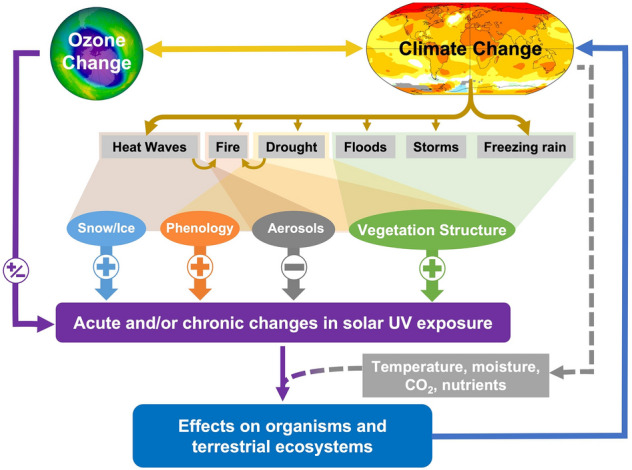
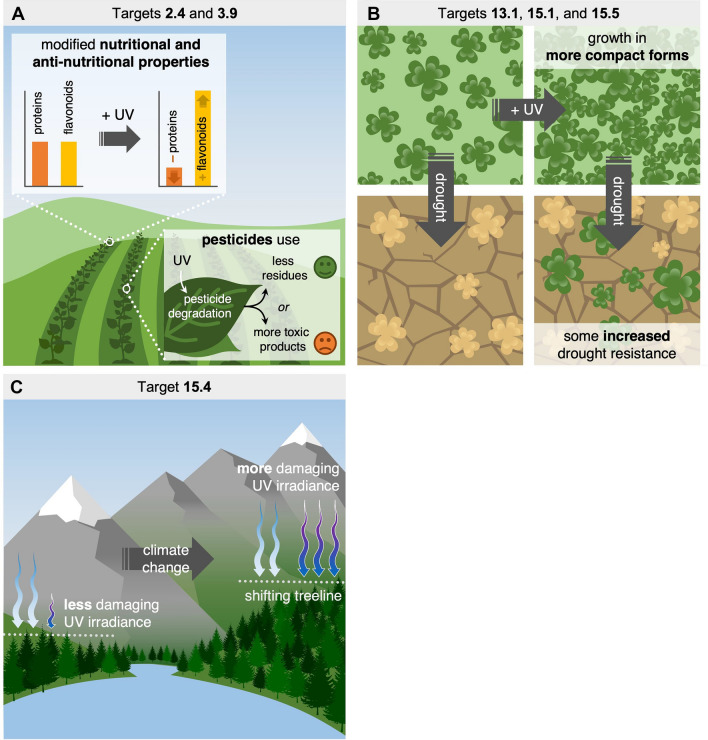
Terrestrial organisms and ecosystems are being exposed to new and rapidly changing combinations of solar UV radiation and other environmental factors because of ongoing changes in stratospheric ozone and climate. In this Quadrennial Assessment, we examine the interactive effects of changes in stratospheric ozone, UV radiation and climate on terrestrial ecosystems and biogeochemical cycles in the context of the Montreal Protocol. We specifically assess effects on terrestrial organisms, agriculture and food supply, biodiversity, ecosystem services and feedbacks to the climate system. Emphasis is placed on the role of extreme climate events in altering the exposure to UV radiation of organisms and ecosystems and the potential effects on biodiversity. We also address the responses of plants to increased temporal variability in solar UV radiation, the interactive effects of UV radiation and other climate change factors (e.g. drought, temperature) on crops, and the role of UV radiation in driving the breakdown of organic matter from dead plant material (i.e. litter) and biocides (pesticides and herbicides). Our assessment indicates that UV radiation and climate interact in various ways to affect the structure and function of terrestrial ecosystems, and that by protecting the ozone layer, the Montreal Protocol continues to play a vital role in maintaining healthy, diverse ecosystems on land that sustain life on Earth. Furthermore, the Montreal Protocol and its Kigali Amendment are mitigating some of the negative environmental consequences of climate change by limiting the emissions of greenhouse gases and protecting the carbon sequestration potential of vegetation and the terrestrial carbon pool. Graphical abstract
Overview
The claims and statistics of this paper haven’t been checked yet.
Free: it reads the open-access text and checks the first 5 claims that cite a source we can check. Create a free account to check every claim.
Integrity signals
Registry
Cites
Statistics
Figures
Verification
Claims the paper makes
The claims and statistics of this paper haven’t been checked yet.
Free: it reads the open-access text and checks the first 5 claims that cite a source we can check. Create a free account to check every claim.
Claims other papers make about this one
Each is checked against this paper’s own text: does it say what the citing paper says it does?
The source backs part of the claim, not all of it — or backs it for a different population, condition or comparison.
In the citing paper
“Changes in weather patterns, including extreme weather events, are not only caused by climate change but also by polar stratospheric ozone depletion, which strengthens the stratospheric polar vortex.”
From Changes in tropospheric air quality related to the protection of stratospheric ozone in a changing climate (2023) · cites this paper as [169]
Experimental — accuracy not yet measuredThe source backs part of the claim, not all of it — or backs it for a different population, condition or comparison.
In the citing paper
“In a changing climate, leached substances can migrate, travel further in the environment, and are more likely to be bioavailable to organisms [137, 138].”
From Environmental consequences of interacting effects of changes in stratospheric ozone, ultraviolet radiation, and climate: UNEP Environmental Effects Assessment Panel, Update 2024 (2025) · cites this paper as [138]
Experimental — accuracy not yet measuredThe source backs part of the claim, not all of it — or backs it for a different population, condition or comparison.
In the citing paper
“The projected recovery of the stratospheric ozone layer due to the implementation of the Montreal Protocol, and contingent return of UV-B radiation at the Earth’s surface to pre-ozone depletion levels (depending on future greenhouse gas emissions), are expected to have multiple direct and indirect consequences for food supply and food quality [138].”
From Environmental consequences of interacting effects of changes in stratospheric ozone, ultraviolet radiation, and climate: UNEP Environmental Effects Assessment Panel, Update 2024 (2025) · cites this paper as [138]
Experimental — accuracy not yet measuredThe cited source says what the claim attributes to it.
In the citing paper
“Changing weather patterns due to the Antarctic ozone hole have been observed in the Southern Hemisphere [23, 169, 170].”
From Changes in tropospheric air quality related to the protection of stratospheric ozone in a changing climate (2023) · cites this paper as [169]
The cited source says what the claim attributes to it.
In the citing paper
“Photodegradation by shortwave radiation (UV-B, UV-A, and blue light) has been identified as a ubiquitous contributing driver of litter decomposition and carbon cycling over the Earth’s biomes [138, 200].”
Self-check
Percentages, sums and reported differences re-computed from the paper’s own numbers.
The self-check needs the paper’s full text.
Citations
Cites
Items 201–400 of 454
Ecological consequences of Australia's “Black Summer” bushfires: Managing for recovery
Dickman, C. R. (2021) · Integrated Environmental Assessment and Management · doi:10.1002/ieam.4496 · Cited by 79 · cited 1×
“…r a li a [ 97 ] L o ss o f hu m a n li f e a nd a dv e r s e h ea lt h e ff ec t s ; l o ss o f do m e s ti c a n i m a l s a nd w il d li f e [ 98– 101 ] H ea t w a v e s i n A n t a r c ti ca [ 102 ] A dd iti on a l s no w m e lt t h a t ca u s e d t e m po r a r y g r ee n i ng o f s o m e p r…”
Neale, P. J., Williamson, C. E., Banaszak, A. T., Häder, D.-P., Hylander, S., Ossola, R., Rose, K. C., Wängberg, S.-Å., & Zepp, R. (2023) · Photochemical & Photobiological Sciences · doi:10.1007/s43630-023-00370-z · Cited by 79 · cited 4×
“Most studies of photodegradation of organic matter in terrestrial ecosystems have focussed on effects on carbon but, as demonstrated in aquatic ecosystems [111], UV radiation can also affect the storage and cycling of other elements, such as nitrogen and phosphorous.”
BackgroundInfluentialSelf-citationSunlight and Soil–Litter Mixing: Drivers of Litter Decomposition in Drylands
Barnes, P. W., Throop, H. L., Archer, S. R., Breshears, D. D., McCulley, R. L., & Tobler, M. A. (2014) · Progress in botany · doi:10.1007/978-3-319-08807-5_11 · Cited by 78 · cited 2×
“The overall effect of solar radiation on litter decomposition reflects the net effect of these three processes [390].”
BackgroundSelf-citationRobinson, S. A., & Erickson, D. J. (2015) · Global Change Biology · doi:10.1111/gcb.12739 · Cited by 78 · cited 3×
“The loss of protective snow cover could exacerbate these effects [34].”
BackgroundResultSelf-citationBostick, K. W., Zimmerman, A. R., Goranov, A. I., Mitra, S., Hatcher, P. G., & Wozniak, A. S. (2021) · Journal of Geophysical Research Biogeosciences · doi:10.1029/2020jg005981 · Cited by 78 · cited 2×
“The specific chemical composition of PyC depends on biomass type and charring temperature, and this composition affects its solubility, bioavailability, and photoreactivity [440, 443, 445, 446].”
BackgroundSangüesa‐Barreda, G., Filippo, A. D., Piovesan, G., Rozas, V., Fiore, L. D., García‐Hidalgo, M., García‐Cervigón, A. I., Muñoz‐Garachana, D., Baliva, M., & Olano, J. M. (2021) · The Science of The Total Environment · doi:10.1016/j.scitotenv.2021.145860 · Cited by 78
Lin, N., Liu, X., Zhu, W., Cheng, X., Wang, X., Wan, X., & Liu, L. (2021) · Journal of Agricultural and Food Chemistry · doi:10.1021/acs.jafc.0c07009 · Cited by 78 · cited 1×
“1 3 research demonstrating that exposure to modest levels of UV radiation can improve food quality by enhancing crop flavour [308], taste [309], colour [310], nutritional content [311–314], and pharmaceutical content [315–317] in various plants.”
BackgroundRammer, W., Braziunas, K. H., Hansen, W. D., Ratajczak, Z., Westerling, A. L., Turner, M. G., & Seidl, R. (2021) · Global Change Biology · doi:10.1111/gcb.15726 · Cited by 78 · cited 1×
“Recovery of ecosystems from these ECEs will largely depend on the species that colonise the more open habitats created, and their biodiversity value and traits that support ecosystem function [142].”
BackgroundImpact of the 2019/2020 Australian Megafires on Air Quality and Health
Graham, A. M., Pringle, K. J., Pope, R. J., Arnold, S. R., Conibear, L., Burns, H. K., Rigby, R., Arriagada, N. B., Butt, E., Kiely, L., et al. (2021) · GeoHealth · doi:10.1029/2021gh000454 · Cited by 78
Day, T. A., Bliss, M. S., Tomes, A. R., Ruhland, C. T., & Guénon, R. (2018) · Global Change Biology · doi:10.1111/gcb.14438 · Cited by 77 · cited 1×
“biogeochemical models of litter decomposition that do not include photodegradation are often inadequate in reproducing measured mass and carbon losses [401, 452, 453].”
BackgroundSpringtime arctic ozone depletion forces northern hemisphere climate anomalies
Friedel, M., Chiodo, G., Stenke, A., Domeisen, D. I. V., Fueglistaler, S., Anet, J. G., & Peter, T. (2022) · Nature Geoscience · doi:10.1038/s41561-022-00974-7 · Cited by 77
The role of phenotypic plasticity on population differentiation
Schmid, M., & Guillaume, F. (2017) · Heredity · doi:10.1038/hdy.2017.36 · Cited by 75
Fire Effects on Understory Forest Regeneration in Southern Amazonia
Prestes, N. C. C. D. S., Massi, K. G., Silva, E. A., Nogueira, D. S., de Oliveira, E. A., Freitag, R., Marimon, B. S., Marimon-Junior, B. H., Keller, M., & Feldpausch, T. R. (2020) · Frontiers in Forests and Global Change · doi:10.3389/ffgc.2020.00010 · Cited by 75
The role of land cover change in Arctic-Boreal greening and browning trends
Wang, J. A., & Friedl, M. A. (2019) · Environmental Research Letters · doi:10.1088/1748-9326/ab5429 · Cited by 74 · cited 1×
“Changes in stratospheric ozone and climate are not independent of one another [7, 8] and both can affect surface ultraviolet radiation (UV; 280–400 nm), especially UV-B radiation [9–11].”
BackgroundClimate Change, Ecosystem Processes and Biological Diversity Responses in High Elevation Communities
Seastedt, T. R., & Oldfather, M. F. (2021) · Climate · doi:10.3390/cli9050087 · Cited by 74 · cited 1×
“Depending on the availability of suitable habitats at higher elevations, these changes in species interactions have the potential to negatively affect biodiversity [252] by shifting the balance of competition between species [253, 254].”
BackgroundIslands in the ice: Potential impacts of habitat transformation on Antarctic biodiversity
Lee, J. R., Waterman, M. J., Shaw, J. D., Bergstrom, D. M., Lynch, H. J., Wall, D. H., & Robinson, S. A. (2022) · Global Change Biology · doi:10.1111/gcb.16331 · Cited by 74 · cited 2×
“Warming temperatures on the Antarctic Peninsula are opening up ice free areas [79] causing the expansion of vascular plants [81] and increasing the possibility of new plant and animal species invading the continent [21, 82].”
BackgroundSelf-citationDamany-Pearce, L., Johnson, B. T. T., Wells, A., Osborne, M., Allan, J., Belcher, C. M., Jones, A., & Haywood, J. (2022) · Scientific Reports · doi:10.1038/s41598-022-15794-3 · Cited by 74
The potential use of the UV-A and UV-B to improve tomato quality and preference for consumers
Mariz‐Ponte, N., Martins, S., Gonçalves, A., Correia, C. M., Ribeiro, C., Dias, M. C., & Santos, C. (2018) · Scientia Horticulturae · doi:10.1016/j.scienta.2018.11.058 · Cited by 73 · cited 1×
“In addition, more attention is being given to studying the effects of UV-B radiation on seeds, fruits, subterranean organs (e.g. roots and tubers), and on derived products, such as wine and olive oil [312, 359–362].”
BackgroundBernhard, G. H., Fioletov, V. E., Grooß, J., Ialongo, I., Johnsen, B., Lakkala, K., Manney, G. L., Müller, R., & Svendby, T. (2020) · Geophysical Research Letters · doi:10.1029/2020gl090844 · Cited by 71 · cited 1×
“strong stratospheric ozone depletion, and this resulted in record-breaking high solar UV-B irradiances [92, 93].”
BackgroundFire Occurrences and Greenhouse Gas Emissions from Deforestation in the Brazilian Amazon
Silva, C. A., Santilli, G., Sano, E. E., & Laneve, G. (2021) · Remote Sensing · doi:10.3390/rs13030376 · Cited by 71
Condensed tannins as antioxidants that protect poplar against oxidative stress from drought and UV‐B
Gourlay, G., Hawkins, B. J., Albert, A., Schnitzler, J., & Constabel, C. P. (2021) · Plant Cell & Environment · doi:10.1111/pce.14242 · Cited by 71 · cited 1×
“1 3 studies have shown that overexpression of protective pigments in plants results in enhanced protection against both drought and UV-B radiation [210, 211].”
BackgroundSulzberger, B., Austin, A. T., Cory, R. M., Zepp, R. G., & Paul, N. D. (2019) · Photochemical & Photobiological Sciences · doi:10.1039/c8pp90063a · Cited by 70 · cited 16×
“While concentrations of ozone-depleting substances (ODSs) remain elevated, later seasonal persistence of the Antarctic vortex could expose organisms to higher UV irradiances at times of year when young animals are born/hatch and when plants are actively growing.”
BackgroundInfluentialSelf-citationEffects of Ultraviolet Radiation on Predatory Mites and the Role of Refuges in Plant Structures
Onzo, A., Sabelis, M. W., & Hanna, R. (2010) · Environmental Entomology · doi:10.1603/en09206 · Cited by 69 · cited 1×
“1 3 agricultural systems, showing that terrestrial invertebrates, including mites [152, 153] and insects such as aphids [154–156], are vulnerable to direct damage from UV-B radiation.”
BackgroundMazza, C. A. D. S., Giménez, P. I., Kantolic, A. G., & Ballaré, C. L. (2012) · Physiologia Plantarum · doi:10.1111/j.1399-3054.2012.01661.x · Cited by 69 · cited 1×
“By comparison, several field experiments have shown that certain varieties of temperate-zone crops (e.g. wheat and soybean) [290–292] show decreases in photosynthesis and yield when grown under ambient UV-B radiation in the tropics.”
ResultWilson, S. R., Madronich, S., Longstreth, J. D., & Solomon, K. R. (2019) · Photochemical & Photobiological Sciences · doi:10.1039/c8pp90064g · Cited by 68
Ding, R., Che, X., Shen, Z., & Zhang, Y. (2021) · BMC Plant Biology · doi:10.1186/s12870-021-03121-3 · Cited by 68
Puglis, H. J., & Boone, M. D. (2010) · Archives of Environmental Contamination and Toxicology · doi:10.1007/s00244-010-9528-z · Cited by 67
Kergunteuil, A., Descombes, P., Glauser, G., Pellissier, L., & Rasmann, S. (2018) · Oecologia · doi:10.1007/s00442-018-4162-y · Cited by 67 · cited 1×
“High elevation alpine plants often have heightened accumulation of UV-screening compounds and herbivore defence [140, 245–248].”
BackgroundGori, A., Nascimento, L. B. D. S., Ferrini, F., Centritto, M., & Brunetti, C. (2020) · Molecules · doi:10.3390/molecules25040956 · Cited by 67
Smoke with Induced Rotation and Lofting (SWIRL) in the Stratosphere
Allen, D. R., Fromm, M. D., Kablick III, G. P., & Nedoluha, G. E. (2020) · Journal of the Atmospheric Sciences · doi:10.1175/jas-d-20-0131.1 · Cited by 67
Ma, M., Wang, P., Yang, R., Zhou, T., & Gu, Z. (2018) · Food Chemistry · doi:10.1016/j.foodchem.2018.09.158 · Cited by 66 · cited 1×
“There is abundant research demonstrating that exposure to modest levels of UV radiation can improve food quality by enhancing crop flavour [308], taste [309], colour [310], nutritional content [311–314], and pharmaceutical content [315–317] in various plants.”
BackgroundPanchen, Z. A., Doubt, J., Kharouba, H. M., & Johnston, M. O. (2019) · Applications in Plant Sciences · doi:10.1002/aps3.1229 · Cited by 66 · cited 1×
“However, to be reliable proxies for UV radiation, herbarium specimens must be sampled in a consistent and unbiased manner over time (See [201] for a full discussion of necessary procedures).”
BackgroundDownsizing in plants—UV light induces pronounced morphological changes in the absence of stress
Qian, M., Rosenqvist, E., Prinsen, E., Pescheck, F., Flygare, A.-M., Kalbina, I., Jansen, M. A. K., & Strid, Å. (2021) · PLANT PHYSIOLOGY · doi:10.1093/plphys/kiab262 · Cited by 66
Self-citationMadronich, S., Sulzberger, B., Longstreth, J. D., Schikowski, T., Andersen, M. P. S., Solomon, K. R., & Wilson, S. R. (2023) · Photochemical & Photobiological Sciences · doi:10.1007/s43630-023-00369-6 · Cited by 64 · cited 3×
“Forest fires directly contribute to climate change by releasing GHGs such as CO2, methane, and nitrous oxide [15, 434].”
BackgroundClear-sky ultraviolet radiation modelling using output from the Chemistry Climate Model Initiative
Lamy, K., Portafaix, T., Josse, B., Brogniez, C., Godin-Beekmann, S., Bencherif, H., Revell, L., Akiyoshi, H., Bekki, S., Hegglin, M. I., et al. (2019) · Atmospheric Chemistry and Physics · doi:10.5194/acp-19-10087-2019 · Cited by 62 · cited 1×
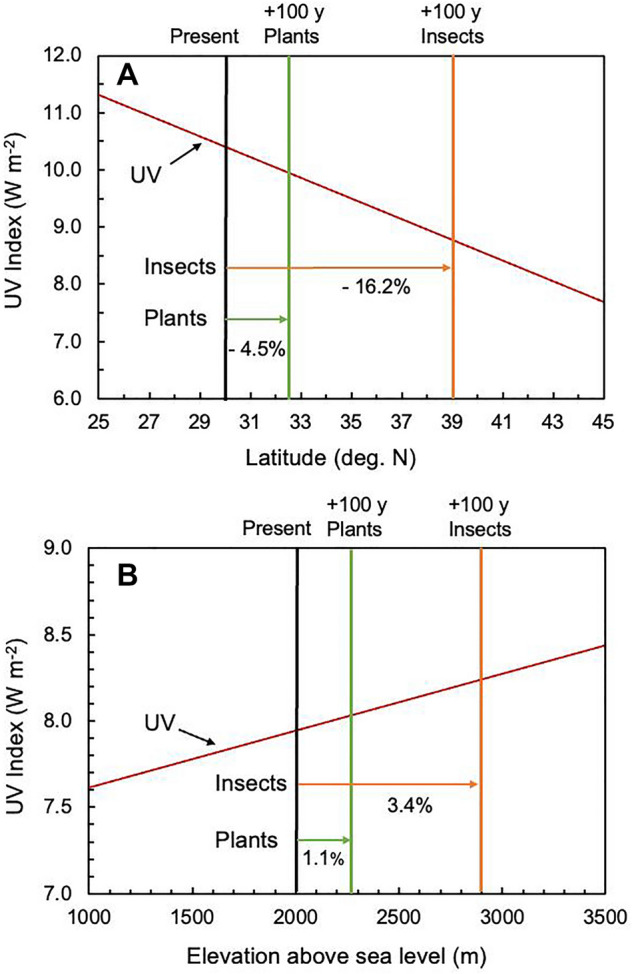
“However, future changes in UV radiation at the Earth’s surface are uncertain: a new study projects an increase in the UV Index of 3–8% over the tropics and mid-latitudes, respectively, by 2100 depending on the greenhouse gas (GHG) scenario used in the model simulations, cloud cover, and aerosol concentrations [10, 14].”
BackgroundBostick, K. W., Zimmerman, A. R., Goranov, A. I., Mitra, S., Hatcher, P. G., & Wozniak, A. S. (2020) · The Science of The Total Environment · doi:10.1016/j.scitotenv.2020.138198 · Cited by 62 · cited 1×
“Adding to previous findings [440], recent studies confirmed that black carbon is the most photoreactive fraction of PyC [447] and that microbial mineralisation of PyC can be enhanced by prior exposure to UV radiation (i.e. photofacilitation) [443, 446], similar to plant litter (Sect.”
ResultEnvironmental Toxicity of Nanopesticides Against Non-Target Organisms: The State of the Art
Côa, F., Bortolozzo, L. D. S., Petry, R., da Silva, G. H., Martins, C. H. Z., de Medeiros, A. M. Z., Sabino, C. M. S., Costa, R. S., Khan, L. U., Delite, F. D. S., et al. (2020) · Springer eBooks · doi:10.1007/978-3-030-44873-8_8 · Cited by 62
A constitutively monomeric UVR8 photoreceptor confers enhanced UV-B photomorphogenesis
Podolec, R., Lau, K., Wagnon, T. B., Hothorn, M., & Ulm, R. (2021) · Proceedings of the National Academy of Sciences · doi:10.1073/pnas.2017284118 · Cited by 62 · cited 1×
“through inhibition of elongation of lateral roots and hypocotyls [172]).”
A meta‐analysis of the interactive effects of UV and drought on plants
Jansen, M. A. K., Ač, A., Klem, K., & Urban, O. (2021) · Plant Cell & Environment · doi:10.1111/pce.14221 · Cited by 62 · cited 3×
“growth chambers or greenhouses) or in the field [205].”
BackgroundSelf-citationAchieving Paris climate goals calls for increasing ambition of the Kigali Amendment
Purohit, P., Borgford‐Parnell, N., Klimont, Z., & Höglund-Isaksson, L. (2022) · Nature Climate Change · doi:10.1038/s41558-022-01310-y · Cited by 62 · cited 1×
“Moreover, because many of the ozone-depleting compounds regulated by the Montreal Protocol are also potent greenhouse gases, this treaty and its Kigali Amendment are playing an important role in mitigating global warming and other environmental effects of climate change [5, 6].”
BackgroundWhere on Earth are the “tropics”?
Feeley, K. J., & Stroud, J. T. (2018) · Frontiers of Biogeography · doi:10.21425/f5101-238649 · Cited by 62
Tilmes, S., Kinnison, D. E., Garcia, R. R., Salawitch, R., Canty, T., Lee-Taylor, J., Madronich, S., & Chance, K. (2012) · Atmospheric Chemistry and Physics · doi:10.5194/acp-12-10945-2012 · Cited by 61
Zhou, S., Xia, Y., Yang, J., Qian, C., Yin, X., Fan, X., Fang, T., Gao, Y., Chang, Y., Liu, W., et al. (2021) · Frontiers in Plant Science · doi:10.3389/fpls.2021.683265 · Cited by 60 · cited 1×
“Similarly, the importance of the local environment over the place of origin is also highlighted by experiments where species and populations are grown in the same location and habitat (i.e. common-garden experiments [193]).”
BackgroundClimate Impacts and Potential Drivers of the Unprecedented Antarctic Ozone Holes of 2020 and 2021
Yook, S., Thompson, D. W. J., & Solomon, S. (2022) · Geophysical Research Letters · doi:10.1029/2022gl098064 · Cited by 60 · cited 3×
“…ce d ae r o s o l s t h a t ca u s e d o z on e d e p l e ti on a nd b l ac k ca r bon p a r ti c l e s t h a t acce l e r a t e d s no w m e lt [ 76 ] W i d e s p r ea d l o ss o f p l a n t b i o m a ss i n A u s t r a li a [ 97 ] L o ss o f hu m a n li f e a nd a dv e r s e h ea lt h e ff ec…”
BackgroundAustralian New Year's PyroCb Impact on Stratospheric Composition
Schwartz, M. J., Santee, M. L., Pumphrey, H. C., Manney, G. L., Lambert, A., Livesey, N. J., Millán, L., Neu, J. L., Read, W. G., & Werner, F. (2020) · Geophysical Research Letters · doi:10.1029/2020gl090831 · Cited by 59 · cited 1×
“It has been suggested that the Australian wildfires that occurred during the previous summer contributed to this strong ozone loss [18, 54–56, 71, 72, 74].”
BackgroundHow Frequent Are Antarctic Sudden Stratospheric Warmings in Present and Future Climate?
Jucker, M., Reichler, T., & Waugh, D. W. (2021) · Geophysical Research Letters · doi:10.1029/2021gl093215 · Cited by 59 · cited 1×
“R e du c ti on s i n A n t a r c ti c s ea i ce [ 21 ] w ill r e s u lt i n h i gh e r e xpo s u r e t o UV r a d i a ti on i n t h e w a t e r c o l u m n [58].”
BackgroundLosses of Tree Cover in California Driven by Increasing Fire Disturbance and Climate Stress
Wang, J. A., Randerson, J. T., Goulden, M. L., Knight, C. A., & Battles, J. J. (2022) · AGU Advances · doi:10.1029/2021av000654 · Cited by 59
Son, S.-W., Han, B.-R., Garfinkel, C. I., Kim, S.-Y., Park, R., Abraham, N. L., Akiyoshi, H., Archibald, A. T., Butchart, N., Chipperfield, M. P., et al. (2018) · Environmental Research Letters · doi:10.1088/1748-9326/aabf21 · Cited by 58
Tong, S., & Feng, M. (2021) · Pest Management Science · doi:10.1002/ps.6600 · Cited by 58 · cited 1×
“These fungi live naturally in soils but can be mass-produced for application to crops where they have been used against pests including spittlebugs and locusts, which affect crops such as maize, sugarcane and beans [331], as well as against various insect pests in rice [332].”
BackgroundJaiswal, D., Pandey, A., Mukherjee, A., Agrawal, M., & Agrawal, S. B. (2020) · Environmental and Experimental Botany · doi:10.1016/j.envexpbot.2020.104152 · Cited by 56 · cited 1×
“It is now well-established that the concentrations of a wide array of natural plant chemicals are modified by UV radiation [304–307] and these changes in chemical composition can have positive and negative effects on food quality.”
BackgroundSunlight Doubles Aboveground Carbon Loss in a Seasonally Dry Woodland in Patagonia
Berenstecher, P., Vivanco, L., Pérez, L. I., Ballaré, C. L., & Austin, A. T. (2020) · Current Biology · doi:10.1016/j.cub.2020.06.005 · Cited by 56
Noguchi, S., Kuroda, Y., Kodera, K., & Watanabe, S. (2020) · Geophysical Research Letters · doi:10.1029/2020gl088743 · Cited by 56
Extreme summer marine heatwaves increase chlorophyll a in the Southern Ocean
Montie, S., Thomsen, M. S., Rack, W., & Broady, P. A. (2020) · Antarctic Science · doi:10.1017/s0954102020000401 · Cited by 56 · cited 1×
“…e s i n c r ea s e d c h l o r ophy ll a ( a n i nd i ca t o r o f t h e a bund a n ce o f phy t op l a nk t on ) i n t h e S ou t h e r n O cea n [ 105 ] H o tt e r a nd l ong e r h ea t w a v e s i n c r ea s e d t h e m o r-t a lit y a nd d ec r ea s e d po s t - h ea t w a v e g r o w t h r a…”
BackgroundSchulz, E., Tohge, T., Winkler, J. B., Albert, A., Schäffner, A. R., Fernie, A. R., Zuther, E., & Hincha, D. K. (2021) · Plant and Cell Physiology · doi:10.1093/pcp/pcab013 · Cited by 54 · cited 1×
“Where plants are simultaneously exposed to both cold and UV radiation, complex interactive effects are observed, with UV-B decoupling flavonoid accumulation from gene expression, indicating post-translational regulation [218].”
BackgroundQuestions remain about the biolability of dissolved black carbon along the combustion continuum
Wagner, S., Coppola, A. I., Stubbins, A., Dittmar, T., Niggemann, J., Drake, T. W., Seidel, M., Spencer, R. G. M., & Bao, H. (2021) · Nature Communications · doi:10.1038/s41467-021-24477-y · Cited by 54 · cited 1×
“The specific chemical composition of PyC depends on biomass type and charring temperature, and this composition affects its solubility, bioavailability, and photoreactivity [440, 443, 445, 446].”
BackgroundLeitold, V., Morton, D. C., Martinuzzi, S., Paynter, I. L., Uriarte, M., Keller, M., Ferraz, A., Cook, B. D., & González, G. (2021) · Ecosystems · doi:10.1007/s10021-021-00688-8 · Cited by 54 · cited 1×
“For example, fires, floods, and tropical cyclones (hurricanes) all create openings in forest canopies [127, 128], driving subsequent adjustment in the understorey vegetation to an acute or chronic increase in incident solar radiation; these increases in solar radiation are often accompanied by increases in temperature…”
BackgroundFRASER, W. T., BLEI, E., FRY, S. C., NEWMAN, M. F., REAY, D. S., SMITH, K. A., & MCLEOD, A. R. (2015) · Plant, Cell & Environment · doi:10.1111/pce.12489 · Cited by 53 · cited 1×
“They also contribute to methane emissions through photochemical mineralisation of pectin, waxes, and lignin by UV-B radiation, although this effect is deemed rather small [426].”
BackgroundClimate change and extreme events are changing the biology of Polar Regions
Robinson, S. A. (2022) · Global Change Biology · doi:10.1111/gcb.16309 · Cited by 53
Self-citationHeterogeneous impacts of climate change on crop yields across altitudes in Ethiopia
Ginbo, T. (2022) · Climatic Change · doi:10.1007/s10584-022-03306-1 · Cited by 52 · cited 1×
“4.1, climate change is shifting bioclimatic zones and this is allowing certain crops to be grown at higher elevations than was previously possible [293–298].”
BackgroundInfluentialLee, H.-S., Hur, J., Lee, M., Brogi, S. R., Kim, T., & Shin, H.-S. (2019) · Chemosphere · doi:10.1016/j.chemosphere.2019.06.127 · Cited by 51 · cited 1×
“This result suggests that photodegradation followed by leaching may be another significant mechanism of loss of litter mass in arid ecosystems [388, 420].”
BackgroundPérez‐Hedo, M., Alonso, M., Vacas, S., Gallego, C., Pons, C., Arbona, V., Rambla, J. L., Navarro‐Llopis, V., Granell, A., & Urbaneja, A. (2021) · Journal of Pest Science · doi:10.1007/s10340-021-01334-x · Cited by 51 · cited 1×
“These effects on pests or pathogen attack are part of a wider network of interactive effects on plant physiology and morphology potentially altering the susceptibility of crops to these threats [330].”
BackgroundUVB exposure stimulates production of vitamin D3 in selected microalgae
Ljubić, A., Thulesen, E. T., Jacobsen, C., & Jakobsen, J. (2021) · Algal Research · doi:10.1016/j.algal.2021.102472 · Cited by 51 · cited 2×
“5.2) [357, 358].”
BackgroundInfluentialSurviving Heatwaves: Thermal Experience Predicts Life and Death in a Southern Ocean Diatom
Samuels, T., Rynearson, T. A., & Collins, S. (2021) · Frontiers in Marine Science · doi:10.3389/fmars.2021.600343 · Cited by 50
Explaining pre-emptive acclimation by linking information to plant phenotype
Aphalo, P. J., & Sadras, V. O. (2021) · Journal of Experimental Botany · doi:10.1093/jxb/erab537 · Cited by 49 · cited 2×
“Further, it has been postulated that plants may use UV radiation as a signal of impending drought [208].”
BackgroundEarly indications of anomalous behaviour in the 2019 spring ozone hole over Antarctica
Milinevsky, G. P., Evtushevsky, O., Klekociuk, A., Wang, Y., Grytsai, A., Shulga, V., & Ivaniha, O. (2020) · International Journal of Remote Sensing · doi:10.1080/2150704x.2020.1763497 · Cited by 48
Self-citationWeaver, S. A., & Mallinger, R. E. (2022) · Ecology · doi:10.1002/ecy.3658 · Cited by 48 · cited 1×
“Differential effects of climate change on range shifts and phenology can also lead to spatial and/or temporal or seasonal mismatches between pollinators and their plant hosts [302, 303], posing additional risks to food security.”
BackgroundFraser, D. P., Sharma, A., Fletcher, T., Budge, S. P., Moncrieff, C., Dodd, A. N., & Franklin, K. A. (2017) · Scientific Reports · doi:10.1038/s41598-017-18073-8 · Cited by 47 · cited 1×
“Nevertheless, as species migrate to high elevations, more resources may be allocated towards protection against UV radiation, and this could in turn divert resources away from growth, which could then reduce competitive ability [250, 251].”
BackgroundSolar UV-A radiation and blue light enhance tree leaf litter decomposition in a temperate forest
Pieristè, M., Chauvat, M., Kotilainen, T. K., Jones, A. G., Aubert, M., Robson, T. M., & Forey, E. (2019) · Oecologia · doi:10.1007/s00442-019-04478-x · Cited by 47 · cited 2×
“Even in understory environments, where the amount and spectral composition of solar radiation is greatly modified by canopy structure and phenology, UV-B radiation [395], UV-A radiation and blue light can promote the conversion of organic nitrogen into inorganic compounds (nitrogen mineralisation) [411, 415].”
BackgroundSelf-citationPyrocumulonimbus Stratospheric Plume Injections Measured by the ACE‐FTS
Boone, C. D., Bernath, P. F., & Fromm, M. D. (2020) · Geophysical Research Letters · doi:10.1029/2020gl088442 · Cited by 47
Estimation of carbon dioxide emissions from the megafires of Australia in 2019–2020
Shiraishi, T., & Hirata, R. (2021) · Scientific Reports · doi:10.1038/s41598-021-87721-x · Cited by 47 · cited 1×
“The changes in solar UV radiation together with other environmental factors (e.g. temperature, availability of moisture) may affect biodiversity, productivity, emissions of greenhouse gases [124–126], and ecosystem carbon storage [123].”
BackgroundSmoke from regional wildfires alters lake ecology
Scordo, F., Chandra, S., Suenaga, E., Kelson, S. J., Culpepper, J., Scaff, L., Tromboni, F., Caldwell, T. J., Seitz, C., Fiorenza, J. E., et al. (2021) · Scientific Reports · doi:10.1038/s41598-021-89926-6 · Cited by 46 · cited 2×
“These atmospheric changes not only reduce PAR and UV radiation, but also change the spectral composition of sunlight at ground level [144].”
BackgroundZhang, Z., Xu, C., Zhang, S., Shi, C., Cheng, H., Liu, H., & Zhong, B. (2021) · PLANT PHYSIOLOGY · doi:10.1093/plphys/kiab486 · Cited by 46 · cited 2×
“The UVR8-signalling pathway likely evolved very early in the transition of plants from aquatic to terrestrial environments [168–170].”
BackgroundResponses of Arctic sea ice to stratospheric ozone depletion
Zhang, J., Tian, W., Pyle, J. A., Keeble, J., Abraham, N. L., Chipperfield, M. P., Xie, F., Yang, Q., Mu, L., Ren, H., et al. (2022) · 中国科学通报:英文版 · doi:10.1016/j.scib.2022.03.015 · Cited by 46 · cited 2×
“Heatwave conditions that occurred in the Siberian Arctic in early 2020 [95] appear to have been aided by atmospheric circulation patterns that were affected by the strong ozone depletion [33, 94].”
BackgroundCarvalho, L. C., & Amâncio, S. (2018) · Physiologia Plantarum · doi:10.1111/ppl.12857 · Cited by 45 · cited 1×
“UV radiation and drought) to affect the growth and physiology of plants [451] but studies need to be expanded to include multiple interactive factors (e.”
BackgroundThe Role of the Stratospheric Polar Vortex for the Austral Jet Response to Greenhouse Gas Forcing
Ceppi, P., & Shepherd, T. G. (2019) · Geophysical Research Letters · doi:10.1029/2019gl082883 · Cited by 45 · cited 1×
“Modelling suggests that increasing greenhouse gas concentrations also favour a more persistent vortex [78], as well as reducing the likelihood of a weaker vortex”
BackgroundMicrobial labilization and diversification of pyrogenic dissolved organic matter
Goranov, A. I., Wozniak, A. S., Bostick, K. W., Zimmerman, A. R., Mitra, S., & Hatcher, P. G. (2022) · Biogeosciences · doi:10.5194/bg-19-1491-2022 · Cited by 45 · cited 3×
“During rainfall events following a wildfire, ash and pyrogenic carbon (estimated up to 203 TgC yr−1 in a modelling study [441]) reach nearby watersheds, resulting in increased loads of organic carbon, nutrients, and metals [442, 443].”
BackgroundExclusion of solar UV radiation improves photosynthetic performance and yield of wheat varieties
Kataria, S., & Guruprasad, K. N. (2015) · Plant Physiology and Biochemistry · doi:10.1016/j.plaphy.2015.10.001 · Cited by 44 · cited 1×
“By comparison, several field experiments have shown that certain varieties of temperate-zone crops (e.g. wheat and soybean) [290–292] show decreases in photosynthesis and yield when grown under ambient UV-B radiation in the tropics.”
ResultPeng, L., Cheng, F., Hu, X., Mao, J., Xu, X., Zhong, Y., Li, S.-Y., & Xian, H. (2019) · Scientific Reports · doi:10.1038/s41598-019-39449-y · Cited by 44
Significant Contribution of Severe Ozone Loss to the Siberian‐Arctic Surface Warming in Spring 2020
Xia, Y., Hu, Y., Huang, Y., Zhao, C., Xie, F., & Yang, Y. (2021) · Geophysical Research Letters · doi:10.1029/2021gl092509 · Cited by 44 · cited 4×
“Heatwave conditions that occurred in the Siberian Arctic in early 2020 [95] appear to have been aided by atmospheric circulation patterns that were affected by the strong ozone depletion [33, 94].”
BackgroundInfluentialTagliari, M. M., Danthu, P., Tsy, J.-M. L. P., Cornu, C., Lenoir, J., Carvalho‐Rocha, V., & Vieilledent, G. (2021) · Global Change Biology · doi:10.1111/gcb.15859 · Cited by 44 · cited 2×
“, towards lower elevation (lower UV radiation) and latitude (higher UV radiation), to avoid the increased seasonality of temperature at higher latitudes [232, 233].”
BackgroundCallaghan, T. V., Gatti, R. C., & Phoenix, G. K. (2021) · AMBIO · doi:10.1007/s13280-021-01607-w · Cited by 43 · cited 1×
“As in the Arctic, there are examples of both plant expansion (i.e. “greening”, [81, 83]) and death of plants by drought (i.e. “browning”, [84–88]).”
BackgroundNichol, C., Pieruschka, R., Takayama, K., Förster, B., Kolber, Z., Rascher, U., Grace, J., Robinson, S. A., Pogson, B. J., & Osmond, B. (2012) · Functional Plant Biology · doi:10.1071/fp11255 · Cited by 42
Self-citationPhotodegradation influences litter decomposition rate in a humid tropical ecosystem, Brazil
Marinho, O. A., Martinelli, L. A., Duarte-Neto, P. J., Mazzi, E. A., & King, J. Y. (2020) · Science of The Total Environment · doi:10.1016/j.scitotenv.2020.136601 · Cited by 42 · cited 2×
“Recent studies have established that photodegradation of litter is important not only in semi-arid [400–402] and arid [403–406] ecosystems but also in moist environments that support tropical [407], subtropical [408], temperate and boreal forests [392, 395, 396], alpine steppe [409], and marshes [410].”
BackgroundBernardo, C. D. C., Pereira-Junior, R. A., Luz, C., Mascarin, G. M., & Fernandes, É. K. K. (2020) · Fungal Biology · doi:10.1016/j.funbio.2020.04.003 · Cited by 42 · cited 1×
“Therefore, these abiotic constraints are considered a major barrier to the use of entomopathogenic fungi in controlling insect pests [332–335].”
BackgroundEntomopathogenic fungi to control bark beetles: a review of ecological recommendations
Mann, A. J., & Davis, T. S. (2021) · Pest Management Science · doi:10.1002/ps.6364 · Cited by 42
Periodical UV-B radiation hormesis in biosynthesis of kale sprouts nutraceuticals
Castillejo, N., Martínez‐Zamora, L., & Artés‐Hernández, F. (2021) · Plant Physiology and Biochemistry · doi:10.1016/j.plaphy.2021.05.022 · Cited by 42 · cited 1×
“This approach has been successfully applied in kale and grapes [361, 371, 372].”
MethodNeugart, S., & Bumke‐Vogt, C. (2021) · Molecules · doi:10.3390/molecules26020494 · Cited by 41 · cited 1×
“2); (2) improving the tolerance of rice and tomato to low temperatures, salinity and drought [366, 367]; (3) the manipulation of flavonoid accumulation in vegetables [368]; (4) the production of smaller cucumber plants for targeted commercialisation [174]; (5) an increase in anticancer compounds in Catharanthus roseus…”
BackgroundBerenstecher, P., Araujo, P. I., & Austin, A. T. (2021) · Journal of Ecology · doi:10.1111/1365-2745.13688 · Cited by 40 · cited 1×
“buried or covered in dust) is the predominant factor determining carbon loss from photodegradation [398, 417].”
BackgroundWang, Q.-W., Robson, T. M., Pieristè, M., Kenta, T., Zhou, W., & Kurokawa, H. (2022) · Science of The Total Environment · doi:10.1016/j.scitotenv.2022.153185 · Cited by 40 · cited 2×
“The loss of forests and other natural or semi-natural vegetation cover due to agricultural practices increases photodegradation of surface litter [19, 397], such that deforestation and land clearing will accelerate release of carbon from the ecosystem and alter patterns of GHG emissions and nutrient cycling [395, 402,…”
BackgroundSelf-citationSantin, M., Lucini, L., Castagna, A., Rocchetti, G., Hauser, M., & Ranieri, A. (2018) · Plant Physiology and Biochemistry · doi:10.1016/j.plaphy.2018.11.009 · Cited by 38
Thomas, T. T. D., & Puthur, J. T. (2020) · Plant Growth Regulation · doi:10.1007/s10725-020-00628-x · Cited by 38 · cited 1×
“2); (2) improving the tolerance of rice and tomato to low temperatures, salinity and drought [366, 367]; (3) the manipulation of flavonoid accumulation in vegetables [368]; (4) the production of smaller cucumber”
BackgroundDamiani, A., Cordero, R. R., Llanillo, P. J., Feron, S., Boisier, J. P., Garreaud, R., Rondanelli, R., Irie, H., & Watanabe, S. (2020) · Atmosphere · doi:10.3390/atmos11060579 · Cited by 38
UV-B Induced Flavonoids Contribute to Reduced Biotrophic Disease Susceptibility in Lettuce Seedlings
McLay, E., Pontaroli, A. C., & Wargent, J. J. (2020) · Frontiers in Plant Science · doi:10.3389/fpls.2020.594681 · Cited by 38 · cited 1×
“There are also some examples of successful application of UV LEDs in reducing certain plant diseases [376] and increasing nutritional quality [375].”
BackgroundDel‐Castillo‐Alonso, M., Monforte, L., Heras, R. T. L., Ranieri, A., Castagna, A., Martínez‐Abaigar, J., & Núñez‐Olivera, E. (2021) · Physiologia Plantarum · doi:10.1111/ppl.13483 · Cited by 38
Barnes, P. W., Ryel, R. J., & Flint, S. D. (2017) · Frontiers in Plant Science · doi:10.3389/fpls.2017.01451 · Cited by 37 · cited 2×
“In some cases, invasive species have been found to alter their production of UV screening compounds to a greater degree than native species [140].”
BackgroundSelf-citationMéndez, M. S., Martinez, M. L., Araujo, P. I., & Austin, A. T. (2019) · Plant and Soil · doi:10.1007/s11104-019-04325-1 · Cited by 37 · cited 1×
“The loss of forests and other natural or semi-natural vegetation cover due to agricultural practices increases photodegradation of surface litter [19, 397], such that deforestation and land clearing will accelerate release of carbon from the ecosystem and alter patterns of GHG emissions and nutrient cycling [395, 402,…”
BackgroundEscobar-Bravo, R., Nederpel, C., Naranjo, S., Kim, H. K., Rodríguez-López, M. J., Chen, G., Glauser, G., Leiss, K. A., & Klinkhamer, P. G. L. (2021) · Journal of Pest Science · doi:10.1007/s10340-019-01166-w · Cited by 37 · cited 1×
“The multiplicity of roles performed by these plant secondary compounds could, in turn, make some plants more vulnerable to herbivores [238, 239] (Sect.”
BackgroundWang, Q., Robson, T. M., Pieristè, M., Oguro, M., Oguchi, R., Murai, Y., & Kurokawa, H. (2020) · Journal of Ecology · doi:10.1111/1365-2745.13384 · Cited by 37 · cited 1×
“With respect to UV radiation, some plant species can respond rapidly to increases in amounts and variability in solar UV radiation through the production and accumulation of UV-protective pigments [131, 135] (Sect.”
BackgroundSelf-citationThe stress of Arctic warming on polar bears
Boonstra, R., Bodner, K., Bosson, C. O., Delehanty, B., Richardson, E. S., Lunn, N. J., Derocher, A. E., & Molnár, P. K. (2020) · Global Change Biology · doi:10.1111/gcb.15142 · Cited by 37 · cited 1×
“…m p s ) a nd i n c r ea s e d g r ee nhou s e g a s e m i ss i on s [ 108 ] N e g a ti v e i m p ac t s on o r g a n i s m s t h a t d e p e nd on s ea i ce ; po s iti v e i m p ac t s on a n i m a l s t h a t t h r i v e i n op e n o cea n s [ 95 , 109 , 110 ] A n t a rc t i c a ( N ov e m b er –”
Pieristè, M., Forey, E., Lounès-Hadj Sahraoui, A., Meglouli, H., Laruelle, F., Delporte, P., Robson, T. M., & Chauvat, M. (2020) · Plant and Soil · doi:10.1007/s11104-020-04557-6 · Cited by 37 · cited 1×
“Recent studies have established that photodegradation of litter is important not only in semi-arid [400–402] and arid [403–406] ecosystems but also in moist environments that support tropical [407], subtropical [408], temperate and boreal forests [392, 395, 396], alpine steppe [409], and marshes [410].”
BackgroundSelf-citationPolvani, L. M., Banerjee, A., Chemke, R., Doddridge, E. W., Ferreira, D., Gnanadesikan, A., Holland, M. A., Kostov, Y., Marshall, J., Seviour, W. J. M., et al. (2021) · Geophysical Research Letters · doi:10.1029/2021gl094871 · Cited by 37 · cited 1×
“Knock-on effects on warming of oceans and melting sea ice cover have been investigated [40–49], but many uncertainties persist [50] as the effects of ozone depletion on weather patterns are occurring against a backdrop of climate change.”
BackgroundThe role of phenotypic plasticity in the establishment of range margins
Eriksson, M., & Rafajlović, M. (2022) · Philosophical Transactions of the Royal Society B Biological Sciences · doi:10.1098/rstb.2021.0012 · Cited by 37 · cited 1×
“Although the capacity for rapid acclimation may be advantageous for adjusting to short-term environmental variability, high phenotypic plasticity may interfere with the capacity for genetic adaptation to changing conditions over long time periods [194–196].”
BackgroundCastagna, A., Csepregi, K., Neugart, S., Zipoli, G., Večeřová, K., Jakab, G., Jug, T., Llorens, L., Martínez‐Abaigar, J., Martínez‐Lüscher, J., et al. (2017) · Plant Cell & Environment · doi:10.1111/pce.13054 · Cited by 36 · cited 1×
“epidermal flavonoids and other phenolic compounds) [236, 237].”
Self-citationPiccolella, S., Crescente, G., Pacifico, F., & Pacifico, S. (2018) · Phytochemistry Reviews · doi:10.1007/s11101-018-9558-0 · Cited by 36
Evolutionary and ecological drivers of plant flavonoids across a large latitudinal gradient
Tripp, E. A., Zhuang, Y., Schreiber, M., Stone, H., & Berardi, A. E. (2018) · Molecular Phylogenetics and Evolution · doi:10.1016/j.ympev.2018.07.004 · Cited by 36 · cited 1×
“epidermal flavonoids and other phenolic compounds) [236, 237].”
Xi, N., Li, Y., Chen, J., Yixiao, Y., Duan, J., & Xia, X. (2020) · Environmental Science & Technology · doi:10.1021/acs.est.0c06959 · Cited by 36 · cited 1×
“While photodegradation kinetics typically have a weak temperature dependence, pyrethroid insecticides applied onto spinach plants grown at 16–21oC degraded up to 2 times slower than when plants were grown at lower temperatures (10–15 oC), likely due to differences in the chemical composition of leaf wax [346].”
BackgroundZhong, Z., Liu, S., Han, S., Li, Y., Tao, M., Liu, A., He, Q., Chen, S., Dufresne, C., Zhu, W., et al. (2021) · Industrial Crops and Products · doi:10.1016/j.indcrop.2021.113448 · Cited by 36 · cited 1×
“There is abundant research demonstrating that exposure to modest levels of UV radiation can improve food quality by enhancing crop flavour [308], taste [309], colour [310], nutritional content [311–314], and pharmaceutical content [315–317] in various plants.”
BackgroundAdjustments in epidermal UV ‐transmittance of leaves in sun‐shade transitions
Barnes, P. W., Kersting, A. R., Flint, S. D., Beyschlag, W., & Ryel, R. J. (2013) · Physiologia Plantarum · doi:10.1111/ppl.12025 · Cited by 35 · cited 1×
“However, other plant species can respond quickly to these environmental changes [132–134] and may increase in 1 An extreme climate event has been defined as “an episode or occurrence in which a statistically rare or unusual climatic period alters ecosystem structure and ⁄or function well outside…”
BackgroundSelf-citationThe Southern Ocean Sea Surface Temperature Response to Ozone Depletion: A Multimodel Comparison
Seviour, W. J. M., Codron, F., Doddridge, E. W., Ferreira, D., Gnanadesikan, A., Kelley, M., Kostov, Y., Marshall, J., Polvani, L. M., Thomas, J. L., et al. (2019) · Journal of Climate · doi:10.1175/jcli-d-19-0109.1 · Cited by 35 · cited 1×
“Knock-on effects on warming of oceans and melting sea ice cover have been investigated [40–49], but many uncertainties persist [50] as the effects of ozone depletion on weather patterns are occurring against a back-drop of climate change.”
BackgroundRen, T., He, N., Liu, Z., Li, M., Zhang, J., Li, A., Wei, C., Lü, X., & Han, X. (2021) · Ecological Indicators · doi:10.1016/j.ecolind.2021.108049 · Cited by 35 · cited 2×
“For example, Rheum nobile (Sikkim Rhubarb), an herbaceous plant that grows above 4000 m on the Tibetan Plateau, has large translucent flower bracts containing high concentrations of flavonoids, which form a protective cover over its flowers.”
BackgroundSu, L., Caywood, L. M., Sivey, J. D., & Dai, N. (2019) · Environmental Science & Technology · doi:10.1021/acs.est.9b01243 · Cited by 34 · cited 1×
“a compound used in combination with herbicides to reduce negative effects on crops) of the herbicide metolachlor, accelerates the photodegradation of the active ingredient on soil surfaces, lessening its toxicity [341].”
BackgroundSeddon, A. W. R., Festi, D., Robson, T. M., & Zimmermann, B. (2019) · Photochemical & Photobiological Sciences · doi:10.1039/c8pp00490k · Cited by 33 · cited 1×
“However, before it can be reliably used it is necessary to ascertain the action spectrum of its response to UV radiation, its rate of degradation, the response time of its synthesis, as well as the consistency of response among species and over time [202].”
BackgroundSelf-citationPieristè, M., Neimane, S., Solanki, T., Nybakken, L., Jones, A. G., Forey, E., Chauvat, M., Ņečajeva, J., & Robson, T. M. (2020) · Plant Physiology and Biochemistry · doi:10.1016/j.plaphy.2019.11.005 · Cited by 33 · cited 4×
“Recent studies have established that photodegradation of litter is important not only in semi-arid [400–402] and arid [403–406] ecosystems but also in moist environments that support tropical [407], subtropical [408], temperate and boreal forests [392, 395, 396], alpine steppe [409], and marshes [410].”
BackgroundInfluentialSelf-citationErdenebileg, E., Wang, C., Ye, X., Cui, Q., Du, J., Huang, Z., Liu, G., & Cornelissen, J. H. C. (2020) · Functional Ecology · doi:10.1111/1365-2435.13559 · Cited by 33 · cited 1×
“The surface area of litter exposed to solar radiation is also an important predictor of litter decomposition rate and carbon turnover [397–399].”
BackgroundTranscriptomes of Saussurea (Asteraceae) Provide Insights into High-Altitude Adaptation
Zhang, X., Sun, Y., Landis, J. B., Shen, J., Zhang, H., Kuang, T., Sun, W., Sun, J., Tiamiyu, B. B., Deng, T., et al. (2021) · Plants · doi:10.3390/plants10081715 · Cited by 33 · cited 1×
“In the same region, other herbaceous plants, such as Megacarpaea delavayi (a wild mustard [198]) and five species in the genus Saussurea (thistle-like plants in the sunflower family [199]) have a rapid DNA-repair mechanism to mitigate the damaging effects of high UV-B irradiances.”
BackgroundThe benefits of informed management of sunlight in production greenhouses and polytunnels
Robson, T. M., Pieristè, M., Durand, M., Kotilainen, T. K., & Aphalo, P. J. (2022) · Plants People Planet · doi:10.1002/ppp3.10258 · Cited by 33
Self-citationPeach, K., Liu, J. W., & Mazer, S. J. (2020) · Frontiers in Plant Science · doi:10.3389/fpls.2020.00847 · Cited by 32 · cited 1×
“in Clarkia unguiculate; [181]) and flavonoids function in UV screening in pollen, which is essential to maintain viability [182, 183].”
BackgroundBernhard, P., Zwieback, S., & Hajnsek, I. (2022) · The Cryosphere · doi:10.5194/tc-16-2819-2022 · Cited by 32
Predick, K. I., Archer, S. R., Aguillon, S. M., Keller, D. A., Throop, H. L., & Barnes, P. W. (2018) · Journal of Arid Environments · doi:10.1016/j.jaridenv.2018.06.007 · Cited by 31 · cited 1×
“In contrast to forests, these dryland systems are experiencing an increase in woody plant cover as a result of changes in land use and climate and these vegetation shifts result in more shading of ground litter and increased soil erosion and deposition, which decrease litter photodegradation [418, 419].”
BackgroundSelf-citationTripathi, R., Rai, K., Singh, S., Agrawal, M., & Agrawal, S. B. (2019) · Ecotoxicology · doi:10.1007/s10646-019-02020-6 · Cited by 31 · cited 1×
“Recent studies have revisited the interactive effects of UV radiation and increased nitrogen deposition [223], ozone pollution [15, 224] and elevated atmospheric CO2 concentration, where short-term stimulation can be outweighed by long-term downregulation of photosynthesis [225], as noted in our previous assessments […”
BackgroundRare forecasted climate event under way in the Southern Hemisphere
Hendon, H. H., Thompson, D. W. J., Lim, E., Butler, A. H., Newman, P. A., Coy, L., Scaife, A. A., Polichtchouk, I., Garreaud, R. D., Shepherd, T. G., et al. (2019) · Nature · doi:10.1038/d41586-019-02858-0 · Cited by 31
Spatial co‐localisation of extreme weather events: a clear and present danger
Dodd, R. J., Chadwick, D. R., Harris, I., Hines, A., Hollis, D., Economou, T., Gwynn‐Jones, D., Scullion, J., Robinson, D. A., & Jones, D. L. (2020) · Ecology Letters · doi:10.1111/ele.13620 · Cited by 31 · cited 1×
“ECEs cause long-term disruption to ecosystem structure and function [119–122] and occur against a backdrop of more gradual changes in the environment (e.g. rising surface temperatures and atmospheric carbon dioxide (CO 2 ) concentrations).”
BackgroundSignatures of an abiotic decomposition pathway in temperate forest leaf litter
Keiser, A. D., Warren, R. J., Filley, T. R., & Bradford, M. A. (2021) · Biogeochemistry · doi:10.1007/s10533-021-00777-9 · Cited by 31 · cited 1×
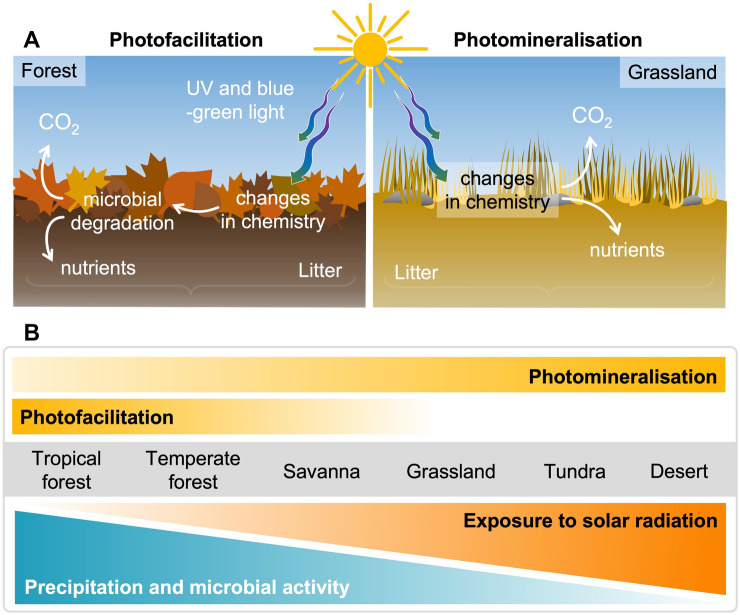
“This fact highlights the role of photofacilitation in mesic ecosystems, where higher water availability favours microbial decomposition compared to drylands [387, 413] (Fig.”
BackgroundUnprecedented snow darkening and melting in New Zealand due to 2019–2020 Australian wildfires
Pu, W., Cui, J., Wu, D., Shi, T., Chen, Y., Xing, Y., Zhou, Y., & Wang, X. (2021) · Fundamental Research · doi:10.1016/j.fmre.2021.04.001 · Cited by 31
Li, H., Zhang, X., Deng, F., Han, X., Xiao, C., Han, S., & Wang, Z. (2019) · Trees · doi:10.1007/s00468-019-01914-6 · Cited by 30 · cited 1×
“This process is currently thought to be the main avenue of plant methane emissions in non-wetland environments, and it is modulated by the moisture and phenolic content of heartwood rather than by UV radiation [431].”
BackgroundKwon, H., Choi, H., Kim, B., Kim, S., & Kim, S. (2020) · Environmental Research Letters · doi:10.1088/1748-9326/ab9d3d · Cited by 30
UV radiation increases mortality and decreases the antioxidant activity in a tephritid fly
Cui, H., Zeng, Y., Reddy, G. V. P., Gao, F., Li, Z., & Zhao, Z. (2021) · Food and Energy Security · doi:10.1002/fes3.297 · Cited by 30 · cited 1×
“There are interesting parallels between invertebrate and plant responses to UV radiation; for example, in the role of DNA-repair [157, 158], antioxidant metabolism [159–162] and pigments [155, 156, 161] in conferring UV-protection.”
BackgroundOzone‐Forced Southern Annular Mode During Antarctic Stratospheric Warming Events
Jucker, M., & Goyal, R. (2022) · Geophysical Research Letters · doi:10.1029/2021gl095270 · Cited by 30
Photo-enzymatic repair of UVB-induced DNA damage in the two-spotted spider mite Tetranychus urticae
Murata, Y., & Osakabe, M. (2016) · Experimental and Applied Acarology · doi:10.1007/s10493-016-0100-z · Cited by 29 · cited 1×
“There are interesting parallels between invertebrate and plant responses to UV radiation; for example, in the role of DNA-repair [157, 158], antioxidant metabolism [159–162] and pigments [155, 156, 161] in conferring UV-protection.”
BackgroundCoffey, A., & Jansen, M. A. K. (2018) · Plant Physiology and Biochemistry · doi:10.1016/j.plaphy.2018.06.016 · Cited by 29 · cited 1×
“The shift in composition towards quercetin synthesis at low temperatures suggests an enhancement in antioxidant function [176, 219], which could increase overall plant hardiness.”
BackgroundSelf-citationEffects of elevated UV-B radiation and N deposition on the decomposition of coarse woody debris
Wu, C., Wang, H., Mo, Q., Zhang, Z., Huang, G., Kong, F., Liu, Y., & Wang, G. G. (2019) · Science of The Total Environment · doi:10.1016/j.scitotenv.2019.01.271 · Cited by 29 · cited 1×
“Recent studies have established that photodegradation of litter is important not only in semi-arid [400–402] and arid [403–406] ecosystems but also in moist environments that support tropical [407], subtropical [408], temperate and boreal forests [392, 395, 396], alpine steppe [409], and marshes [410].”
BackgroundAnticancer compounds production in Catharanthus roseus by methyl jasmonate and UV-B elicitation
Rady, M. R., Gierczik, K., Ibrahim, M., Matter, M. A., & Galiba, G. (2021) · South African Journal of Botany · doi:10.1016/j.sajb.2021.05.024 · Cited by 29 · cited 1×
“…(4) the production of smaller cucumber plants for targeted commercialisation [174]; (5) an increase in anticancer compounds in Catharanthus roseus [369] following treatment with a combination of hormones and UV radiation; and (6) extending the shelf-life of fruit by reducing the activity of…”
BackgroundTripathi, D., Meena, R. P., & Rai, S. P. (2021) · Physiology and Molecular Biology of Plants · doi:10.1007/s12298-021-01046-7 · Cited by 29
Barnes, P. W., Bornman, J. F., Pandey, K. K., Bernhard, G., Bais, A. F., Neale, R. Ε., Robson, T. M., Neale, P. J., Williamson, C. E., Zepp, R. G., et al. (2021) · Global Change Biology · doi:10.1111/gcb.15841 · Cited by 29
Self-citationWhere on Earth are the “tropics”?
Feeley, K. J., & Stroud, J. T. (2018) · Frontiers of Biogeography · doi:10.21425/f5fbg38649 · Cited by 29 · cited 1×
“The tropics extend over approximately 33% of the Earth’s land surface [285] and harbour a vast reservoir of biodiversity [286] that provides critical resources and essential services for agriculture and food security [287].”
BackgroundMishra, P., Dutta, S., Haldar, M., Dey, P., Kumar, D., Mukherjee, A., & Chandrasekaran, N. (2019) · Ecotoxicology and Environmental Safety · doi:10.1016/j.ecoenv.2019.03.096 · Cited by 28
Diana Sáenz de la, O., Morales, L. O., Strid, Å., Torres‐Pacheco, I., & Guevara-González, R. G. (2021) · Physiologia Plantarum · doi:10.1111/ppl.13448 · Cited by 28
Koveos, D. S., Suzuki, T., Terzidou, A. M., Kokkari, A., Floros, G., Damos, P. T., & Kouloussis, N. A. (2016) · Experimental and Applied Acarology · doi:10.1007/s10493-016-0102-x · Cited by 27 · cited 1×
“There are interesting parallels between invertebrate and plant responses to UV radiation; for example, in the role of DNA-repair [157, 158], antioxidant metabolism [159–162] and pigments [155, 156, 161] in conferring UVprotection.”
BackgroundUltraviolet Radiation modelling using output from the Chemistry Climate Model InitiativePreprint
Lamy, K., Portafaix, T., Josse, B., et al. (2018) · doi:10.5194/acp-2018-525 · Cited by 27
Li, W., Shi, M., Huang, Y., Chen, K., Sun, H., & Chen, J. (2019) · Forests · doi:10.3390/f10030220 · Cited by 27 · cited 1×
“These projections suggest that the ranges of some species of native plants from open, dry habitats found in arid and semi-arid shrubsteppe biomes will expand to higher elevations [267–272], while the ranges of willows and other related species from wetter habitats will contract [266].”
BackgroundSolar Photochemical Emission of CO2 From Leaf Litter: Sources and Significance to C Loss
Day, T. A., & Bliss, M. S. (2019) · Ecosystems · doi:10.1007/s10021-019-00473-8 · Cited by 27 · cited 1×
“This process is referred to as photochemical mineralisation or photomineralisation [384, 385] (Fig.”
BackgroundJardine, P. E., Hoorn, C., Beer, M. A. M., Barbolini, N., Woutersen, A., Bogotá‐Ángel, G., Gosling, W. D., Fraser, W. T., Lomax, B. H., Huang, H., et al. (2021) · Palaeontology · doi:10.1111/pala.12523 · Cited by 27 · cited 1×
“In the case of fossilised pollen from Nitraria (a steppe plant) and conifers, chemical signatures have been shown to differ from those of contemporary (extant) pollen in a predictable and consistent manner such that stable relationships can be modelled [203].”
BackgroundDerebe, A. D., Roro, A. G., Asfaw, B. T., Ayele, W. W., & Hvoslef‐Eide, A. K. (2019) · Scientia Horticulturae · doi:10.1016/j.scienta.2019.108563 · Cited by 26 · cited 1×
“For some crop species originating from lower elevations, the more intense UV radiation at high elevations may exceed their tolerances to UV radiation with negative consequences for their physiology and growth [299].”
BackgroundJin, P., Overmans, S., Duarte, C. M., & Agustí, S. (2019) · Global Ecology and Biogeography · doi:10.1111/geb.12973 · Cited by 26 · cited 2×
“This positive effect of warming appears to be restricted to cool climates where organisms often function at temperatures below their physiological optima, and thus is not expected to occur in environments approaching the thermal and physiological limits of organisms [216].”
BackgroundSantin, M., Castagna, A., Miras‐Moreno, B., Rocchetti, G., Lucini, L., Hauser, M., & Ranieri, A. (2020) · Frontiers in Plant Science · doi:10.3389/fpls.2020.579063 · Cited by 26 · cited 1×
“These advances include, (1) accumulation of anthocyanins and other antioxidants in different coloured fruits, such as peach, apple, grapes, and blueberry [313, 362–365] (Sect.”
BackgroundLogan, J., Jacobson, K. M., Jacobson, P. J., & Evans, S. E. (2021) · Frontiers in Microbiology · doi:10.3389/fmicb.2021.596517 · Cited by 26
Day, T. A., Urbine, J. M., & Bliss, M. S. (2022) · Biogeochemistry · doi:10.1007/s10533-022-00888-x · Cited by 26 · cited 2×
“This result suggests that photodegradation followed by leaching may be another significant mechanism of loss of litter mass in arid ecosystems [388, 420].”
BackgroundArctic greening and browning: Challenges and a cascade of complexities
Phoenix, G. K., & Treharne, R. (2022) · Global Change Biology · doi:10.1111/gcb.16118 · Cited by 26
Logan, J., Barnes, P. W., & Evans, S. E. (2022) · Functional Ecology · doi:10.1111/1365-2435.14053 · Cited by 26 · cited 1×
“Promotion of microbial activity can also occur by the photodegradation of waxy surfaces layers (i.e. leaf cuticle) that allows moisture to more readily penetrate litter [389].”
BackgroundSelf-citationThe effects of historical ozone changes on Southern Ocean heat uptake and storage
Li, S., Liu, W., Lyu, K., & Zhang, X. (2021) · Climate Dynamics · doi:10.1007/s00382-021-05803-y · Cited by 25
Sutanto, K. D., Husain, M., Rasool, K. G., Malik, A. F., Al-Qahtani, W. H., & Aldawood, A. S. (2022) · Insects · doi:10.3390/insects13010103 · Cited by 25
Solar radiation drives methane emissions from the shoots of Scots pine
Tenhovirta, S. A. M., Kohl, L., Koskinen, M. I. K., Patama, M., Lintunen, A., Zanetti, A., Lilja, R., & Pihlatie, M. K. (2022) · New Phytologist · doi:10.1111/nph.18120 · Cited by 25 · cited 2×
“Controlled experiments with Scots pine and Norway spruce under ambient conditions in Finland found a positive relationship between methane emissions and solar radiation, which was steeper at warmer temperatures [428].”
BackgroundMethodThe Carbon Cycle and Hurricanes in the United States between 1900 and 2011
Dahal, D., Liu, S., & Oeding, J. (2014) · Scientific Reports · doi:10.1038/srep05197 · Cited by 24
Response of Surface Ultraviolet and Visible Radiation to Stratospheric SO2 Injections
Madronich, S., Tilmes, S., Kravitz, B., MacMartin, D. G., & Richter, J. H. (2018) · Atmosphere · doi:10.3390/atmos9110432 · Cited by 24
Watermann, L. Y., Hock, M., Blake, C., & Erfmeier, A. (2019) · Biological Invasions · doi:10.1007/s10530-019-02173-9 · Cited by 24 · cited 1×
“To what extent differences among plant species in their tolerances to UV radiation influences species invasions into high UV environments remains unclear [140, 141].”
BackgroundKennard, D. K., Matlaga, D. P., Sharpe, J. M., King, C., Alonso‐Rodríguez, A. M., Reed, S. C., Cavaleri, M. A., & Wood, T. E. (2020) · Ecology and Evolution · doi:10.1002/ece3.6589 · Cited by 24
Palma, C. F. F., Castro‐Alves, V., Rosenqvist, E., Ottosen, C., Strid, Å., & Morales, L. O. (2021) · Physiologia Plantarum · doi:10.1111/ppl.13551 · Cited by 24 · cited 1×
“There is abundant research demonstrating that exposure to modest levels of UV radiation can improve food quality by enhancing crop flavour [308], taste [309], colour [310], nutritional content [311–314], and pharmaceutical content [315–317] in various plants.”
BackgroundA meta-analysis of the effects of UV radiation on the plant carotenoid pool
Badmus, U. O., Ač, A., Klem, K., Urban, O., & Jansen, M. A. K. (2022) · Plant Physiology and Biochemistry · doi:10.1016/j.plaphy.2022.05.001 · Cited by 24
Self-citationGolob, A., Stibilj, V., Kreft, I., Vogel‐Mikuš, K., Gaberščik, A., & Germ, M. (2017) · Acta Agriculturae Scandinavica Section B - Soil & Plant Science · doi:10.1080/09064710.2017.1349172 · Cited by 23 · cited 1×
“High levels of UV radiation may also increase amounts of other anti-nutritional compounds in plants, such as oxalates, which are generally associated with kidney problems [323].”
BackgroundSantin, M., Giordani, T., Cavallini, A., Bernardi, R., Castagna, A., Hauser, M., & Ranieri, A. (2019) · Photochemical & Photobiological Sciences · doi:10.1039/c8pp00505b · Cited by 23
Esch, E. H., King, J. Y., & Cleland, E. E. (2019) · Plant and Soil · doi:10.1007/s11104-019-04069-y · Cited by 23 · cited 1×
“Recent studies have established that photodegradation of litter is important not only in semi-arid [400–402] and arid [403–406] ecosystems but also in moist environments that support tropical [407], subtropical [408], temperate and boreal forests [392, 395, 396], alpine steppe [409], and marshes…”
BackgroundSoils linked to climate change
Rumpel, C. (2019) · Nature · doi:10.1038/d41586-019-02450-6 · Cited by 23
Song, B., Gao, Y., Stöcklin, J., Song, M., Sun, L., & Sun, H. (2020) · Botanical Journal of the Linnean Society · doi:10.1093/botlinnean/boaa005 · Cited by 23 · cited 1×
“This species can, thus, attenuate UV-B radiation within its floral tissues to similar levels across its elevation range [197].”
BackgroundYe, M., Zhu, X., Gao, P., Jiang, L., & Wu, R. (2020) · Frontiers in Plant Science · doi:10.3389/fpls.2020.00632 · Cited by 23 · cited 1×
“…a large-scale study of 1192 grassland species found that UV radiation was negatively correlated with leaf size across the Mongolian and Tibetan Plateau [274], while leaf shape, reflectance, and thickness have also been found to covary with UV-B radiation along environmental gradients [275–277].”
BackgroundSouthern Ocean Heat Storage, Reemergence, and Winter Sea Ice Decline Induced by Summertime Winds
Doddridge, E. W., Marshall, J. C., Song, H., Campin, J., & Kelley, M. (2020) · Journal of Climate · doi:10.1175/jcli-d-20-0322.1 · Cited by 23
Quintero-Arias, G., Acuña-Caita, J. F., Asensio, C., & Valenzuela, J. L. (2021) · Agronomy · doi:10.3390/agronomy11020358 · Cited by 23 · cited 1×
“1 3 research demonstrating that exposure to modest levels of UV radiation can improve food quality by enhancing crop flavour [308], taste [309], colour [310], nutritional content [311–314], and pharmaceutical content [315–317] in various plants.”
BackgroundUltraviolet radiation causes leaf warming due to partial stomatal closure
Williams, T., Dodd, I. C., Sobeih, W. Y., & PAUL, N. D. (2022) · Horticulture Research · doi:10.1093/hr/uhab066 · Cited by 23
Self-citationTian, C.-B., Li, Y.-Y., Wang, X., Fan, W.-H., Wang, G., Jing-yu, L., Wang, Z., & Liu, H. (2019) · Experimental and Applied Acarology · doi:10.1007/s10493-019-00361-9 · Cited by 22 · cited 1×
“There are interesting parallels between invertebrate and plant responses to UV radiation; for example, in the role of DNA-repair [157, 158], antioxidant metabolism [159–162] and pigments [155, 156, 161] in conferring UV-protection.”
BackgroundDay, T. A., & Bliss, M. S. (2019) · Biogeochemistry · doi:10.1007/s10533-019-00616-y · Cited by 22 · cited 1×
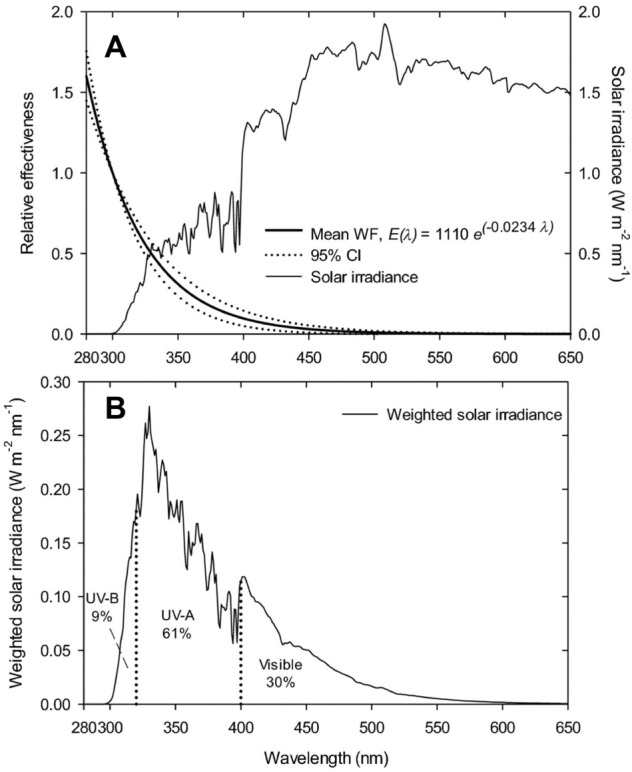
“1 3 of UV-B radiation in promoting loss of litter mass agrees with the results obtained with a new spectral weighting function for litter photomineralisation, which showed that UV-B and UV-A radiation, together with visible blue-green light, are responsible for 9%, 61% and 30%, respectively, of total photochemical (ab…”
BackgroundYoon, H. I., Kim, D., & Son, J. E. (2020) · Photochemistry and Photobiology · doi:10.1111/php.13237 · Cited by 22
Landuyt, D., Ampoorter, E., Bastías, C. C., Benavides, R., Müller, S., Scherer‐Lorenzen, M., Valladares, F., Wasof, S., & Verheyen, K. (2020) · Forest Ecosystems · doi:10.1186/s40663-020-00256-x · Cited by 22 · cited 1×
“The loss of forests and other natural or semi-natural vegetation cover due to agricultural practices increases photodegradation of surface litter [19, 397], such that deforestation and land clearing will accelerate release of carbon from the ecosystem and alter patterns of GHG emissions and nutrient cycling [395, 402,…”
BackgroundGori, A., Brunetti, C., Nascimento, L. B. D. S., Marino, G., Guidi, L., Ferrini, F., Centritto, M., Fini, A., & Tattini, M. (2021) · International Journal of Molecular Sciences · doi:10.3390/ijms22158303 · Cited by 22
Lecouffe, A., Godin-Beekmann, S. M., Pazmiño, A., & Hauchecorne, A. (2022) · Atmospheric chemistry and physics · doi:10.5194/acp-22-4187-2022 · Cited by 22 · cited 1×
“There is evidence that increased ozone depletion has tended to delay the annual breakdown of the Antarctic stratospheric vortex [77].”
Background18 Politically relevant solar geoengineering scenarios
Lockley, A., Xu, Y., Tilmes, S., Sugiyama, M., Rothman, D. S., & Hindes, A. (2022) · Socio-Environmental Systems Modeling · doi:10.18174/sesmo.18127 · Cited by 22
Gillett, Z. E., Arblaster, J. M., Dittus, A. J., Deushi, M., Jöckel, P., Kinnison, D. E., Morgenstern, O., Plummer, D. A., Revell, L. E., Rozanov, E., et al. (2019) · Journal of Climate · doi:10.1175/jcli-d-18-0273.1 · Cited by 21
Direct effects of protective cladding material on insect pests in crops
Fennell, J. T., Fountain, M. T., & PAUL, N. D. (2019) · Crop Protection · doi:10.1016/j.cropro.2019.04.003 · Cited by 21 · cited 1×
“What research there is on animals, typically addresses vision in the UV-A waveband and its effect on behaviour [150], and the application of these findings for controlling insect pests and pollinators of certain crops [151].”
BackgroundSelf-citationUltraviolet (UV) B effects on growth and yield of three contrasting sweet potato cultivars
Chen, Z., Gao, W., Reddy, K. R., Chen, M., Taduri, S., Meyers, S. L., & Shankle, M. W. (2019) · Photosynthetica · doi:10.32615/ps.2019.137 · Cited by 21
Qi, W., Ma, J., Zhang, J., Gui, M., Li, J., & Zhang, L. (2020) · Plant Signaling & Behavior · doi:10.1080/15592324.2020.1783490 · Cited by 21 · cited 1×
“In addition, more attention is being given to studying the effects of UV-B radiation on seeds, fruits, subterranean organs (e.g. roots and tubers), and on derived products, such as wine and olive oil [312, 359–362].”
BackgroundShelton, S. A., Neale, P. J., Pinsonneault, A. J., & Tzortziou, M. A. (2021) · Estuaries and Coasts · doi:10.1007/s12237-021-00982-7 · Cited by 21 · cited 1×
“Recent studies have established that photodegradation of litter is important not only in semi-arid [400–402] and arid [403–406] ecosystems but also in moist environments that support tropical [407], subtropical [408], temperate and boreal forests [392, 395, 396], alpine steppe [409], and marshes [410].”
BackgroundBernhard, G., McKenzie, R., Lantz, K., & Stierle, S. (2022) · Photochemical & Photobiological Sciences · doi:10.1007/s43630-022-00178-3 · Cited by 21
Antarctic Climate Change and the Environment: A Decadal Synopsis and Recommendations for Action
(15987980), S. C., (20541911), R. L., (16142564), T. N., (13388304), C. B., (13582087), P. C., Henley, B. J., (11544397), A. M., (9183536), L. P., (20541914), M. K., & (7752476), S. G. (2022) · Research Online (University of Wollongong) · Cited by 21
Burdick, S. C., Prischmann‐Voldseth, D. A., & Harmon, J. P. (2015) · Population Ecology · doi:10.1007/s10144-015-0501-6 · Cited by 20 · cited 2×
“One exception is the increasing research, largely focussed on agricultural systems, showing that terrestrial invertebrates, including mites [152, 153] and insects such as aphids [154–156], are vulnerable to direct damage from UV-B radiation.”
BackgroundVáclavík, T., Beckmann, M., Cord, A. F., & Bindewald, A. M. (2017) · PLoS ONE · doi:10.1371/journal.pone.0175671 · Cited by 20
Hamid, A., Singh, S., Agrawal, M., & Agrawal, S. B. (2018) · Photochemistry and Photobiology · doi:10.1111/php.12990 · Cited by 20 · cited 1×
“For example, some species of tropical grasses show increases in tannins when grown under experimentally elevated UV-B radiation, and this would imply a reduced palatability of forage for cattle [321, 322].”
BackgroundLi, M., He, J. G., Zhao, Z., Lyu, R., Yao, M., Cheng, J. H., & Xie, L. (2020) · PeerJ · doi:10.7717/peerj.8729 · Cited by 20
Del‐Castillo‐Alonso, M., Monforte, L., Heras, R. T. L., Núñez‐Olivera, E., & Martínez‐Abaigar, J. (2020) · European Journal of Agronomy · doi:10.1016/j.eja.2020.126150 · Cited by 20 · cited 1×
“This approach has been successfully applied in kale and grapes [361, 371, 372].”
MethodYoon, H. I., Kim, H. Y., Kim, J.-W., Oh, M., & Son, J. E. (2021) · International Journal of Molecular Sciences · doi:10.3390/ijms22052701 · Cited by 20 · cited 2×
“There are also some examples of successful application of UV LEDs in reducing certain plant diseases [376] and increasing nutritional quality [375].”
BackgroundMosena, A., Steinlein, T., & Beyschlag, W. (2018) · Flora · doi:10.1016/j.flora.2018.03.002 · Cited by 19
Knuesting, J., Brinkmann, M. C., Silva, B., Schorsch, M., Bendix, J., Beck, E., & Scheibe, R. (2018) · PLOS ONE · doi:10.1371/journal.pone.0202255 · Cited by 19 · cited 1×
“For example, certain invasive species that can tolerate high solar radiation and colonise open habitats may displace some native, specialised or endemic species [139].”
BackgroundNutrient dynamics during photodegradation of plant litter in the Sonoran Desert
Ball, B. A., Christman, M. P., & Hall, S. J. (2018) · Journal of Arid Environments · doi:10.1016/j.jaridenv.2018.09.004 · Cited by 19 · cited 1×
“Recent studies have established that photodegradation of litter is important not only in semi-arid [400–402] and arid [403–406] ecosystems but also in moist environments that support tropical [407], subtropical [408], temperate and boreal forests [392, 395, 396], alpine steppe [409], and marshes…”
BackgroundDeng, B., Liu, X., Zheng, L., Liu, Q., Guo, X., & Zhang, L. (2018) · Forest Ecology and Management · doi:10.1016/j.foreco.2018.11.038 · Cited by 19 · cited 1×
“Recent studies have revisited the interactive effects of UV radiation and increased nitrogen deposition [223], ozone pollution [15, 224] and elevated atmospheric CO2 concentration, where short-term stimulation can be outweighed by long-term downregulation of photosynthesis [225], as noted in our previous assessments […”
BackgroundHock, M., Hofmann, R. W., Müller, C., & Erfmeier, A. (2019) · Ecology · doi:10.1002/ecy.2665 · Cited by 19
Wang, Q., Liu, C., Robson, T. M., Hikosaka, K., & Kurokawa, H. (2021) · Physiologia Plantarum · doi:10.1111/ppl.13512 · Cited by 19 · cited 1×
“…a large-scale study of 1192 grassland species found that UV radiation was negatively correlated with leaf size across the Mongolian and Tibetan Plateau [274], while leaf shape, reflectance, and thickness have also been found to covary with UV-B radiation along environmental gradients [275–277].”
BackgroundSelf-citationKrause, G. H., Jahns, P., Virgo, A., García, M., Aranda, J., Wellmann, E., & Winter, K. (2006) · Journal of Plant Physiology · doi:10.1016/j.jplph.2006.09.004 · Cited by 18 · cited 1×
“…suggests that current levels of UV-B radiation in the tropics can alter the morphology (e.g. smaller leaves, reduced shoot height) and chemistry (e.g. increased flavonoid levels) of native, non-crop tropical plants, but that biomass production is rarely decreased in these species (e.g. [289]).”
BackgroundPhotodegradation accelerates ecosystem N cycling in a simulated California grassland
Asao, S., Parton, W. J., Chen, M., & Gao, W. (2018) · Ecosphere · doi:10.1002/ecs2.2370 · Cited by 18
Müller, R., Acosta‐Motos, J. R., Großkinsky, D. K., Hernández, J. A., Lütken, H., & Barba‐Espín, G. (2019) · Agronomy · doi:10.3390/agronomy9060323 · Cited by 18
Cuadra, P., Guajardo, J., Carrasco-Orellana, C., Stappung, Y., Fajardo, V., & Herrera, R. (2019) · Phytochemistry · doi:10.1016/j.phytochem.2019.112179 · Cited by 18 · cited 1×
“However, recent studies have found that cellulose and hemicellulose are even more susceptible to photodegradation than lignin [393, 394].”
BackgroundPalma, D., Arbid, Y., Sleiman, M., de Sainte-Claire, P., & Richard, C. (2020) · Environmental Science and Technology · doi:10.1021/acs.est.9b07304 · Cited by 18 · cited 1×
“The leaves of aromatic herbs like thyme emit volatile organic compounds that can further affect the photodegradation of biocides deposited on their leaf surfaces, resulting in the formation of different photoproducts [341, 343–345].”
BackgroundYoon, H. I., Kim, H., Kim, J.-W., & Son, J. E. (2021) · Frontiers in Plant Science · doi:10.3389/fpls.2021.667456 · Cited by 18
EFSA Panel on Nutrition, N. F. A. F. A. (., Turck, D., Bohn, T., Castenmiller, J. J. M., Henauw, S. D., Hirsch‐Ernst, K. I., Maciuk, A., Mangelsdorf, I., McArdle, H. J., Naska, A., et al. (2022) · EFSA Journal · doi:10.2903/j.efsa.2022.7326 · Cited by 18 · cited 1×
“Some have proposed legal regulation for UV treatment of foods, including mushrooms [320].”
Background
Research works printed but not linked: 6
- Lim E-P Hendon HH Butler AH Garreaud RD Polichtchouk I Shepherd TG Scaife A Comer R Coy L Newman PA Thompson DJW Nakamura H The 2019 Antarctic sudden stratospheric warming SPARC Newsletter 2020 54 10 13
- Newman, P., Nash, E. R., Kramarova, N., & Butler, A. (2020). The 2019 southern stratospheric warming. In: T. Scambos, & S. Stammerjohn (Eds.) “State of the Climate in 2019", Bulletin of the American Meteorological Society (Vol. 101, pp. S297-S298, Vol. 8). · DOI · Paper page
- Bernhard, G. H., Fioletov, V. E., Grooß, J.-U., Ialongo, I., Johnsen, B., Lakkala, K., Manney, G. L., Müller, R., & Svendby, T. (2021). Ozone and ultraviolet radiation. In: J. Blunden, & T. Boyer (Eds.). Vol. 102 “State of the Climate in 2020”, Bull. Amer. Meteor. Soc. (, pp. S299–S303).
- IPCC, 2014: Climate change 2014: Impacts, adaptation, and vulnerability Part A: Global and sectoral aspects. Contribution of working group II to the fifth assessment report of the intergovernmental panel on climate change [Field, C.B., V.R. Barros, D.J. Dokken, K.J. Mach, M.D. Mastrandrea, T.E. Bilir, M. Chatterjee, K.L. Ebi, Y.O. Estrada, R.C. Genova, R. B. Girma, E.S. Kissel, A.N. Levy, S. MacCracken, P.R. Mastrandrea, and L.L. White (eds.)]. Cambridge University Press, Cambridge, United Kingdom and New York, NY, USA, 1132 pp
- Schwarzenbach RP Gschwend PM Imboden DM Schwarzenbach RP Gschwend PM Imboden DM Indirect Photolysis: Reactions with Photooxidants in Natural Waters and in the Atmosphere Environmental Organic Chemistry 2002 John Wiley 655 686 · DOI · Paper page
- Takshak S Agrawal SB Defense potential of secondary metabolites in medicinal plants under UV-B stress Journal of Photochemistry & Photobiology, B: Biology 2019 193 51 88 10.1016/j.jphotobiol.2019.02.002 30818154 · DOI · Paper page
Cited by
The effects of exposure to solar radiation on human health
Neale, R. E., Lucas, R. M., Byrne, S. N., Hollestein, L., Rhodes, L. E., Yazar, S., Young, A. R., Berwick, M., Ireland, R. A., & Olsen, C. M. (2023) · Photochemical & Photobiological Sciences · doi:10.1007/s43630-023-00375-8 · Cited by 162
“1 3 on terrestrial [3] and aquatic [4] ecosystems, and materials [5].”
BackgroundStratospheric ozone, UV radiation, and climate interactions
Bernhard, G. H., Bais, A. F., Aucamp, P. J., Klekociuk, A. R., Liley, J. B., & McKenzie, R. L. (2023) · Photochemical & Photobiological Sciences · doi:10.1007/s43630-023-00371-y · Cited by 138
“High UV radiation at this time, which coincides with the start of the growing season for plants and the peak breeding season for most animals, is a concern [3].”
BackgroundSelf-citationJansen, M. A. K., Andrady, A. L., Bornman, J. F., Aucamp, P. J., Bais, A. F., Banaszak, A. T., Barnes, P. W., Bernhard, G. H., Bruckman, L. S., Busquets, R., et al. (2024) · Photochemical & Photobiological Sciences · doi:10.1007/s43630-024-00552-3 · Cited by 83
“Hydroxyl radicals also play an important role in surface waters in the transformation and breakdown of pollut-ants e.g. pesticides [3].”
Self-citationNeale, P. J., Williamson, C. E., Banaszak, A. T., Häder, D.-P., Hylander, S., Ossola, R., Rose, K. C., Wängberg, S.-Å., & Zepp, R. (2023) · Photochemical & Photobiological Sciences · doi:10.1007/s43630-023-00370-z · Cited by 79
Self-citationMadronich, S., Sulzberger, B., Longstreth, J. D., Schikowski, T., Andersen, M. P. S., Solomon, K. R., & Wilson, S. R. (2023) · Photochemical & Photobiological Sciences · doi:10.1007/s43630-023-00369-6 · Cited by 64
“However, the recovery of stratospheric O3 should decrease the stability of the Antarctic polar vortex, which should lead to wetter conditions in the Southern Hemisphere in the near future for this region.”
BackgroundInfluential
Metadata
- Authors
- Barnes, P. W., Robson, T. M., Zepp, R. G., Bornman, J. F., Jansen, M. A. K., Ossola, R., Wang, Q.-W., Robinson, S. A., Foereid, B., Klekociuk, A. R., Martinez-Abaigar, J., Hou, W.-C., Mackenzie, R., & Paul, N. D.
- Affiliations
- Loyola University New Orleans (US)
- University of Helsinki (FI)
- Environmental Protection Agency (US)
- Murdoch University (AU)
- University College Cork (IE)
- NSF National Center for Atmospheric Research (US)
- Chinese Academy of Sciences (CN)
- University of Wollongong (AU)
- Norwegian Institute of Bioeconomy Research (NO)
- Australian Antarctic Division (AU)
- National Cheng Kung University (TW)
- Instituto de Biodiversidad de Ecosistemas Antárticos y Subantárticos (CL)
- Lancaster University (GB)
- Corresponding author
- Barnes, P. W.
- Robson, T. M.
- ORCID
- Venue
- Photochemical & Photobiological Sciences
- Published
- 2023-02-01
- Volume
- 22
- Issue
- 5
- Pages
- 1049-1091
- ISSN
- 1474-905X (ISSN-L)
- 1474-9092
- PMC
- PMC9889965
- OpenAlex
- W4318754076
- Cited by
- 113
- References
- 449
- Citations by year
- 2026: 27 · 2025: 35 · 2024: 32 · 2023: 19
- FWCI
- 12.48
- Type
- journal article
- Language
- en
- Open access
- hybrid
- doi.org
- Licence
- cc-by
- creativecommons.org/licenses/by/4.0 (tdm)
- creativecommons.org/licenses/by/4.0 (vor)
- Locations
- Photochemical & Photobiological Sciences (publishedVersion, cc-by)
- PubMed Central (publishedVersion, cc-by)
- PubMed (publishedVersion)
- Insight (University of Cumbria) (submittedVersion, cc-by)
- Research Online (University of Wollongong) (submittedVersion)
- Lancaster EPrints (Lancaster University) (submittedVersion)
- Figshare (submittedVersion)
- Työväentutkimus Vuosikirja (submittedVersion)
- NORA - Norwegian Open Research Archives (submittedVersion, cc-by)
- RIUR (Universidad de La Rioja) (submittedVersion, other-oa)
- Funders
- University of Helsinki including Helsinki University Central Hospital
- Topics
- Physical Sciences › Earth and Planetary Sciences › Atmospheric Science › Atmospheric Ozone and Climate
- Life Sciences › Agricultural and Biological Sciences › Plant Science › Plant responses to elevated CO2
- Life Sciences › Agricultural and Biological Sciences › Agronomy and Crop Science › Climate change impacts on agriculture
- Keywords
- solar ultraviolet radiation, stratospheric ozone depletion, climate change, terrestrial ecosystems, biogeochemical cycles, Montreal Protocol, Kigali Amendment, climate extremes, biodiversity, ecosystem services, drought, temperature effects on crops, litter decomposition, climate feedbacks, terrestrial carbon sequestration, greenhouse gas emissions
- MeSH terms
- Feedback, Rwanda, Ultraviolet Rays, Ecosystem, Crops, Agricultural, Climate Change, Stratospheric Ozone
About these checks
Registry, retraction, Cites and statistics results are computed, not judged, with one exception: a printed reference that no index lists is read once by a model before it counts as a citation error. Claims are extracted by a model and kept only when their quote appears verbatim in the text; each cited source is then checked, with a model’s help, for whether it says what the claim relies on. Those verdicts can be wrong — read the claim’s quote and the cited source before relying on one.
Statistics and arithmetic are recomputed, not judged.
Confidence bands are shown only for fields calibrated on our annotated test set. None is calibrated yet, so no band is shown.
What counts as a claim ›How we measure confidence ›How we check this ›
Are you an author, or do you see a problem with this page? Request a review
Data sources
Bibliographic data: Semantic Scholar, OpenAlex, Crossref.
Contains information from the Semantic Scholar Academic Graph Datasets, made available under the ODC Attribution License (ODC-BY 1.0).
Semantic Scholar’s data is described in: Kinney, R., et al. (2023). The Semantic Scholar Open Data Platform. arXiv:2301.10140.
