

Interactive effects of changes in UV radiation and climate on terrestrial ecosystems, biogeochemical cycles, and feedbacks to the climate system
Open accessThe DOI matches its Crossref record; 451 of the 454 references it cites were found in a registry or an index.
Abstract
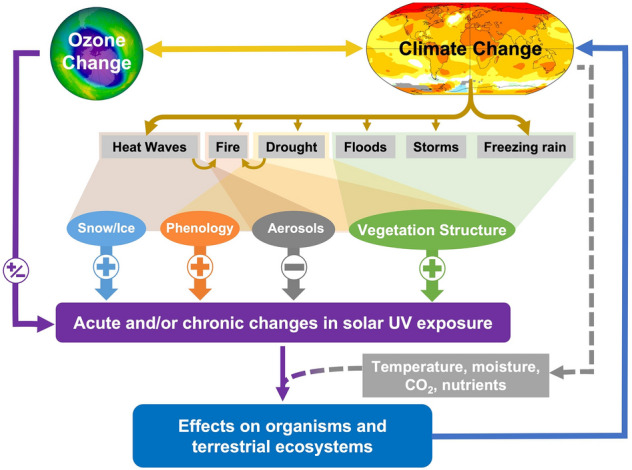
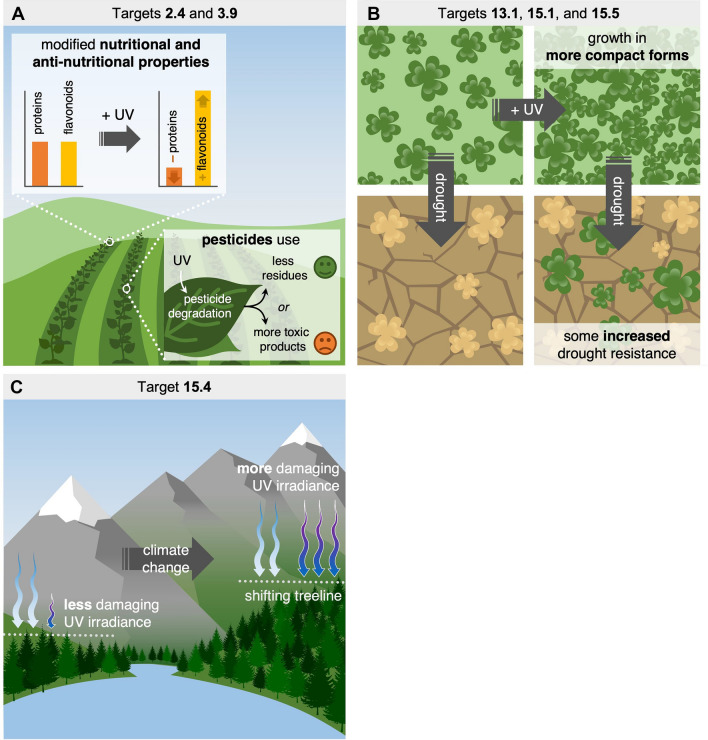
Terrestrial organisms and ecosystems are being exposed to new and rapidly changing combinations of solar UV radiation and other environmental factors because of ongoing changes in stratospheric ozone and climate. In this Quadrennial Assessment, we examine the interactive effects of changes in stratospheric ozone, UV radiation and climate on terrestrial ecosystems and biogeochemical cycles in the context of the Montreal Protocol. We specifically assess effects on terrestrial organisms, agriculture and food supply, biodiversity, ecosystem services and feedbacks to the climate system. Emphasis is placed on the role of extreme climate events in altering the exposure to UV radiation of organisms and ecosystems and the potential effects on biodiversity. We also address the responses of plants to increased temporal variability in solar UV radiation, the interactive effects of UV radiation and other climate change factors (e.g. drought, temperature) on crops, and the role of UV radiation in driving the breakdown of organic matter from dead plant material (i.e. litter) and biocides (pesticides and herbicides). Our assessment indicates that UV radiation and climate interact in various ways to affect the structure and function of terrestrial ecosystems, and that by protecting the ozone layer, the Montreal Protocol continues to play a vital role in maintaining healthy, diverse ecosystems on land that sustain life on Earth. Furthermore, the Montreal Protocol and its Kigali Amendment are mitigating some of the negative environmental consequences of climate change by limiting the emissions of greenhouse gases and protecting the carbon sequestration potential of vegetation and the terrestrial carbon pool. Graphical abstract
Overview
The claims and statistics of this paper haven’t been checked yet.
Free: it reads the open-access text and checks the first 5 claims that cite a source we can check. Create a free account to check every claim.
Integrity signals
Registry
Cites
Statistics
Figures
Verification
Claims the paper makes
The claims and statistics of this paper haven’t been checked yet.
Free: it reads the open-access text and checks the first 5 claims that cite a source we can check. Create a free account to check every claim.
Claims other papers make about this one
Each is checked against this paper’s own text: does it say what the citing paper says it does?
The source backs part of the claim, not all of it — or backs it for a different population, condition or comparison.
In the citing paper
“Changes in weather patterns, including extreme weather events, are not only caused by climate change but also by polar stratospheric ozone depletion, which strengthens the stratospheric polar vortex.”
From Changes in tropospheric air quality related to the protection of stratospheric ozone in a changing climate (2023) · cites this paper as [169]
Experimental — accuracy not yet measuredThe source backs part of the claim, not all of it — or backs it for a different population, condition or comparison.
In the citing paper
“In a changing climate, leached substances can migrate, travel further in the environment, and are more likely to be bioavailable to organisms [137, 138].”
From Environmental consequences of interacting effects of changes in stratospheric ozone, ultraviolet radiation, and climate: UNEP Environmental Effects Assessment Panel, Update 2024 (2025) · cites this paper as [138]
Experimental — accuracy not yet measuredThe source backs part of the claim, not all of it — or backs it for a different population, condition or comparison.
In the citing paper
“The projected recovery of the stratospheric ozone layer due to the implementation of the Montreal Protocol, and contingent return of UV-B radiation at the Earth’s surface to pre-ozone depletion levels (depending on future greenhouse gas emissions), are expected to have multiple direct and indirect consequences for food supply and food quality [138].”
From Environmental consequences of interacting effects of changes in stratospheric ozone, ultraviolet radiation, and climate: UNEP Environmental Effects Assessment Panel, Update 2024 (2025) · cites this paper as [138]
Experimental — accuracy not yet measuredThe cited source says what the claim attributes to it.
In the citing paper
“Changing weather patterns due to the Antarctic ozone hole have been observed in the Southern Hemisphere [23, 169, 170].”
From Changes in tropospheric air quality related to the protection of stratospheric ozone in a changing climate (2023) · cites this paper as [169]
The cited source says what the claim attributes to it.
In the citing paper
“Photodegradation by shortwave radiation (UV-B, UV-A, and blue light) has been identified as a ubiquitous contributing driver of litter decomposition and carbon cycling over the Earth’s biomes [138, 200].”
Self-check
Percentages, sums and reported differences re-computed from the paper’s own numbers.
The self-check needs the paper’s full text.
Citations
Cites
Items 401–454 of 454
Plant responses to fluctuating UV environments.
Barnes, P. W., Robson, T. M., Tobler, M. A., Bottger, I. N., & Flint, S. D. (2017) · CABI eBooks · doi:10.1079/9781780648590.0072 · Cited by 17 · cited 2×
“The accumulation of these compounds in leaves, flower petals and pollen is temperature dependent but is also driven by UV-B radiation [135, 175, 176].”
BackgroundSelf-citationYang, Q. L., Bi, H., Yang, W., Li, T., Jiang, J., Zhang, L., Liu, J., & Hu, Q. (2020) · Frontiers in Genetics · doi:10.3389/fgene.2020.00812 · Cited by 17 · cited 1×
“In the same region, other herbaceous plants, such as Megacarpaea delavayi (a wild mustard [198]) and five species in the genus Saussurea (thistle-like plants in the sunflower family [199]) have a rapid DNA-repair mechanism to mitigate the damaging effects of high UV-B irradiances.”
BackgroundNeugart, S., Tobler, M. A., & Barnes, P. W. (2021) · Physiologia Plantarum · doi:10.1111/ppl.13517 · Cited by 17 · cited 1×
“Diurnal changes in UV screening can, however, be of comparable size to the variation in screening that results from day-to-day fluctuations in UV radiation and temperature [176, 186, 191].”
BackgroundSelf-citationJiang, Z., Xu, M., Dong, J., Zhu, Y., Lou, P., Han, Y., Hao, J., Yang, Y., Ni, J., & Xu, M. (2021) · Postharvest Biology and Technology · doi:10.1016/j.postharvbio.2021.111777 · Cited by 17 · cited 1×
“2); (2) improving the tolerance of rice and tomato to low temperatures, salinity and drought [366, 367]; (3) the manipulation of flavonoid accumulation in vegetables [368]; (4) the production of smaller cucumber”
BackgroundKhan, S., Dar, A. H., Shams, R., Aga, M. B., Siddiqui, M. W., Mir, S. A., Rizvi, Q. U. E. H., Khan, S. A., & Altaf, A. (2021) · Food and Bioprocess Technology · doi:10.1007/s11947-021-02742-8 · Cited by 17
Functional thermal limits are determined by rate of warming during simulated marine heatwaves
Leij, R. D., Grange, L., & Peck, L. (2022) · Marine Ecology Progress Series · doi:10.3354/meps13980 · Cited by 17
Sunlight and soil biota accelerate decomposition of crop residues in the Argentine Pampas
Araujo, P. I., Grasso, A. A., González‐Arzac, A., Méndez, M., & Austin, A. T. (2022) · Agriculture Ecosystems & Environment · doi:10.1016/j.agee.2022.107908 · Cited by 17 · cited 1×
“The loss of forests and other natural or semi-natural vegetation cover due to agricultural practices increases photodegradation of surface litter [19, 397], such that deforestation and land clearing will accelerate release of carbon from the ecosystem and alter patterns of GHG emissions and nutrient cycling [395, 402,…”
BackgroundThe Antarctic ozone hole during 2020
Klekociuk, A., Tully, M. B., Krummel, P. B., Henderson, S. I., Smale, D., Querel, R., Nichol, S. E., Alexander, S. P., Fraser, P. J., & Nedoluha, G. (2022) · Journal of Southern Hemisphere Earth System Science · doi:10.1071/es21015 · Cited by 17
Self-citationRuthrof, K. X., Fontaine, J. B., Breshears, D. D., Field, J. P., & Allen, C. D. (2021) · Ecological studies · doi:10.1007/978-3-030-71330-0_8 · Cited by 16
Wu, Y., Yang, Y., Liu, C., Hou, Y., Yang, S., Wang, L., & Zhang, X. (2021) · Forests · doi:10.3390/f12091263 · Cited by 16 · cited 1×
“Further, reduced snow cover due to warmer temperatures exposes organisms to fluctuations in temperature and solar radiation, including UV-B radiation [244].”
BackgroundKlem, K., Oravec, M., Holub, P., Šimor, J., Findurová, H., Surá, K., Veselá, B., Hodaňová, P., Jansen, M. A. K., & Urban, O. (2022) · Plant Physiology and Biochemistry · doi:10.1016/j.plaphy.2022.01.006 · Cited by 16 · cited 1×
“increased root:shoot ratios), but high nitrogen availability has the opposite effect on root–shoot allocation [213].”
BackgroundSelf-citationHu, Z., Zhao, H., & Thieme, T. (2013) · Environmental Entomology · doi:10.1603/en12136 · Cited by 15
Verdaguer, D., Díaz-Guerra, L., Font, J., González, J., & Llorens, L. (2017) · Environmental and Experimental Botany · doi:10.1016/j.envexpbot.2017.12.007 · Cited by 15 · cited 1×
“The response of plants to increased UV radiation may therefore confer cross-protection against drought [205, 207] and mitigate some of the detrimental effects of drought on plant growth and productivity, unless both stress factors are excessive.”
BackgroundUrban, O., Hrstka, M., Holub, P., Veselá, B., Večeřová, K., Novotná, K., Grace, J., & Klem, K. (2018) · Plant Physiology and Biochemistry · doi:10.1016/j.plaphy.2018.08.026 · Cited by 15 · cited 1×
“…the interactive effects of UV radiation and increased nitrogen deposition [223], ozone pollution [15, 224] and elevated atmospheric CO 2 concentration, where short-term stimulation can be outweighed by long-term downregulation of photosynthesis [225], as noted in our previous assessments [12, 226].”
BackgroundA Pollen Diet Confers Ultraviolet-B Resistance in Phytoseiid Mites by Providing Antioxidants
Sugioka, N., Kawakami, M., Hirai, N., & Osakabe, M. (2018) · Frontiers in Ecology and Evolution · doi:10.3389/fevo.2018.00133 · Cited by 15 · cited 1×
“This includes evidence that mites can obtain UV-protective compounds by consuming pollen [160].”
BackgroundWei, B., Zhang, D., Kou, D., Yang, G., Liu, F., Peng, Y., & Yang, Y. (2022) · Functional Ecology · doi:10.1111/1365-2435.14015 · Cited by 15 · cited 2×
“Additional environmental changes such as increased nitrogen deposition and abandonment or less intensive use of agricultural land may slow litter decomposition through the attenuation of surface UV radiation by increased plant canopy development [409].”
BackgroundLi, X., Ke, X., Zhou, H., & Tang, Y. (2018) · Journal of Plant Ecology · doi:10.1093/jpe/rty016 · Cited by 14
Yoshioka, Y., Gotoh, T., & Suzuki, T. (2018) · Experimental and Applied Acarology · doi:10.1007/s10493-018-0263-x · Cited by 14 · cited 3×
“In the same region, other herbaceous plants, such as Megacarpaea delavayi (a wild mustard [198]) and five species in the genus Saussurea (thistle-like plants in the sunflower family [199]) have a rapid DNA-repair mechanism to mitigate the damaging effects of high UV-B irradiances.”
BackgroundTedla, B., Dang, Q., & Inoue, S. (2019) · Forest Ecology and Management · doi:10.1016/j.foreco.2019.117565 · Cited by 14 · cited 1×
“Trees with long generation times may be especially vulnerable to extinction because they have limited opportunities to genetically adapt to a changing photoperiod and their environmental cues such as UV radiation may be mismatched with their new environment [240–242].”
BackgroundAlpine forbs rely on different photoprotective strategies during spring snowmelt
Fernández‐Marín, B., Sáenz‐Ceniceros, A., Solanki, T., Robson, T. M., & García‐Plazaola, J. I. (2021) · Physiologia Plantarum · doi:10.1111/ppl.13342 · Cited by 14 · cited 1×
“High elevation alpine plants often have heightened accumulation of UV-screening compounds and herbivore defence [140, 245–248].”
BackgroundSelf-citationPhotochemical interactions between pesticides and plant volatiles
Arbid, Y., Sleiman, M., & Richard, C. (2021) · The Science of The Total Environment · doi:10.1016/j.scitotenv.2021.150716 · Cited by 14 · cited 1×
“For example, some breakdown products generated by UV-B radiation of the fungicide chlorothalonil and the insecticide imidacloprid on plant leaves are more toxic to fish than their parent compounds [344].”
BackgroundRuhland, C. T., & Niere, J. A. (2019) · Scientific Reports · doi:10.1038/s41598-019-55272-x · Cited by 13 · cited 1×
“However, recent studies have found that cellulose and hemicellulose are even more susceptible to photodegradation than lignin [393, 394].”
BackgroundPollen colour morphs take different paths to fitness
Koski, M. H., Berardi, A. E., & Galloway, L. F. (2020) · Journal of Evolutionary Biology · doi:10.1111/jeb.13599 · Cited by 13 · cited 1×
“in Clarkia unguiculate; [181]) and flavonoids function in UV screening in pollen, which is essential to maintain viability [182, 183].”
BackgroundBehavioral thermoregulation in a small herbivore avoids direct UVB damage
Yin, W., Hoffmann, A. A., Gu, X.-B., & Ma, C. (2017) · Journal of Insect Physiology · doi:10.1016/j.jinsphys.2017.12.002 · Cited by 12 · cited 2×
“It is also clear that avoidance behaviour plays a major part in reducing the exposure of invertebrates to solar UV radiation [152–154”
BackgroundResponses of mass loss and nutrient release in litter decomposition to ultraviolet radiation
Yan, W., Shangguan, Z., & Zhong, Y. (2020) · Journal of Soils and Sediments · doi:10.1007/s11368-020-02810-0 · Cited by 12 · cited 2×
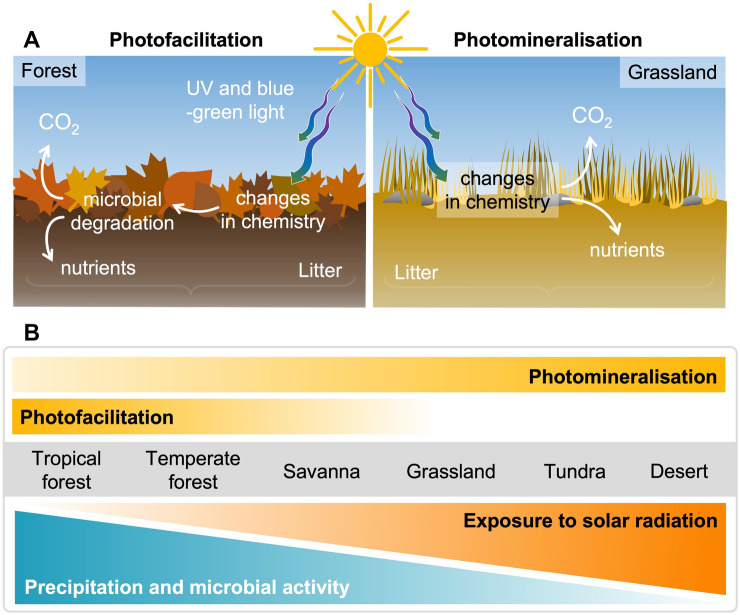
“This fact highlights the role of photofacilitation in mesic ecosystems, where higher water availability favours microbial decomposition compared to drylands [387, 413] (Fig.”
BackgroundLeung, M. F., & Cheung, P. C. K. (2021) · International journal of medicinal mushrooms · doi:10.1615/intjmedmushrooms.2021040390 · Cited by 12 · cited 1×
“For example, mushrooms [355, 356] and certain microalgae [357] synthesise increased amounts of vitamin D after being exposed”
BackgroundCowled, B., Hillman, A., Ward, M. P., Clutterbuck, H., Doyle, M., WARE, J. W., Thomas, M., Plain, K. M., Barwell, R., Laurence, M., et al. (2022) · Australian Veterinary Journal · doi:10.1111/avj.13165 · Cited by 12
Linkages between COVID-19, solar UV radiation, and the Montreal Protocol
Bernhard, G. H., Madronich, S., Lucas, R. M., Byrne, S. N., Schikowski, T., & Neale, R. E. (2023) · Photochemical & Photobiological Sciences · doi:10.1007/s43630-023-00373-w · Cited by 12
Hamid, A., Singh, S. V., Agrawal, M., & Agrawal, S. B. (2020) · Plant Biology · doi:10.1111/plb.13116 · Cited by 11
Long‐term legacies of seasonal extremes in Arctic ecosystem functioning
Bokhorst, S., Cornelissen, J. H. C., & Veraverbeke, S. (2022) · Global Change Biology · doi:10.1111/gcb.16078 · Cited by 11 · cited 1×
“As in the Arctic, there are examples of both plant expansion (i.e. “greening”, [81, 83]) and death of plants by drought (i.e. “browning”, [84–88]).”
BackgroundKataria, S., & Baghel, L. (2015) · South African Journal of Botany · doi:10.1016/j.sajb.2015.09.003 · Cited by 10
Wang, H., Ma, X., Zhang, L., Zou, J., & Siemann, E. (2015) · Journal of Plant Ecology · doi:10.1093/jpe/rtv045 · Cited by 10 · cited 1×
“At present, it is unclear if UV radiation affects native and non-native invasive species differently [140, 141, 258–260].”
BackgroundMendoza, G. H., Ramos, C. A. G., Corral, D. M. H., Cruz, R. S., & Garbolino, E. (2020) · Atmosphere · doi:10.3390/atmos11111201 · Cited by 10
Cortés-Antíquera, R., Pizarro, M., Contreras, R. A., Köhler, H., & Zúñiga, G. E. (2021) · Frontiers in Plant Science · doi:10.3389/fpls.2021.635491 · Cited by 10 · cited 1×
“…p s i a a n t a r c ti c a a pp ea r s t o b e qu it e t o l e r a n t o f i n - v it r o h i gh t e m p e r a t u r e s ho c k t r ea t m e n t s [ 104 ] E x t r e m e s u mm e r m a r i n e h ea t w a v e s i n c r ea s e d c h l o r ophy ll a ( a n i nd i ca t o r o f t h e a bund a n ce o f…”
BackgroundResponse of Zebrina pendula leaves to enhanced UV-B radiation
Wang, D., Sun, Y., Tu, M., Zhang, P., Wang, X., Wang, T., & Li, J. (2021) · Functional Plant Biology · doi:10.1071/fp20274 · Cited by 10 · cited 1×
“slower but more efficient growth, photosynthesis, and water loss [173, 174]) collectively mitigate the potentially deleterious effects of current levels of solar UV radiation on plants.”
BackgroundHartikainen, S. M., & Robson, T. M. (2022) · Frontiers in Plant Science · doi:10.3389/fpls.2022.1058162 · Cited by 10 · cited 1×
“In fact, a comparison of 629 taxa growing together at high-elevation and high-latitude locations subject to strongly contrasting UV irradiances, found phenotypic plasticity in epidermal UV screening according to their immediate growing microenvironment, and this outweighed any differences in adaptation arising from th…”
BackgroundSelf-citationApplications and Advances in LEDs for Horticulture and Crop Production
Viršilė, A., Samuolienė, G., Miliauskienė, J., & Duchovskis, P. (2019) · Elsevier eBooks · doi:10.1016/b978-0-12-817794-5.00003-0 · Cited by 9 · cited 1×
“high-pressure sodium vapour or metal halide lamps), and by utilising LEDs that emit both in the UV and PAR regions the control of the spectral composition, intensity and exposure period can be attuned to the light requirements of specific plants and crops [373, 374].”
BackgroundTedla, B., Dang, Q., & Inoue, S. (2020) · Frontiers in Plant Science · doi:10.3389/fpls.2020.00506 · Cited by 9 · cited 1×
“Trees with long generation times may be especially vulnerable to extinction because they have limited opportunities to genetically adapt to a changing photoperiod and their environmental cues such as UV radiation may be mismatched with their new environment [240–242].”
BackgroundNichelmann, L., & Pescheck, F. (2021) · Physiologia Plantarum · doi:10.1111/ppl.13554 · Cited by 9 · cited 4×
“Low temperatures and UV-B radiation also produce a shift in the composition of flavonoid glycosides from kaempferols to quercetins [176].”
BackgroundInfluentialGateva, S., Jovtchev, G., Angelova, T., Nonova, T., Tyutyundzhiev, N., Geleva, E. G., Katrandzhiev, K., Nikolova, N., Dimitrov, D., & Angelov, C. V. (2021) · Phyton · doi:10.32604/phyton.2022.016397 · Cited by 9 · cited 1×
“These mechanisms were sufficiently effective since plants growing at the highest elevations had fewer UV-induced DNA dimers than those at lower elevations, with grasses (Family Poaceae) least susceptible to UV-induced DNA damage among a wide diversity of plant families tested [249].”
BackgroundNeugart, S., Tobler, M. A., & Barnes, P. W. (2021) · Plants · doi:10.3390/plants10112268 · Cited by 9 · cited 1×
“Diurnal changes in UV screening can, however, be of comparable size to the variation in screening that results from day-to-day fluctuations in UV radiation and temperature [176, 186, 191].”
BackgroundSelf-citationUse and Evaluation of Biological Spectral UV Weighting Functions for the Ozone Reduction Issue
Caldwell, M. M., & Flint, S. D. (2006) · NATO science series. Series IV, Earth and environmental sciences · doi:10.1007/1-4020-3697-3_6 · Cited by 8 · cited 1×
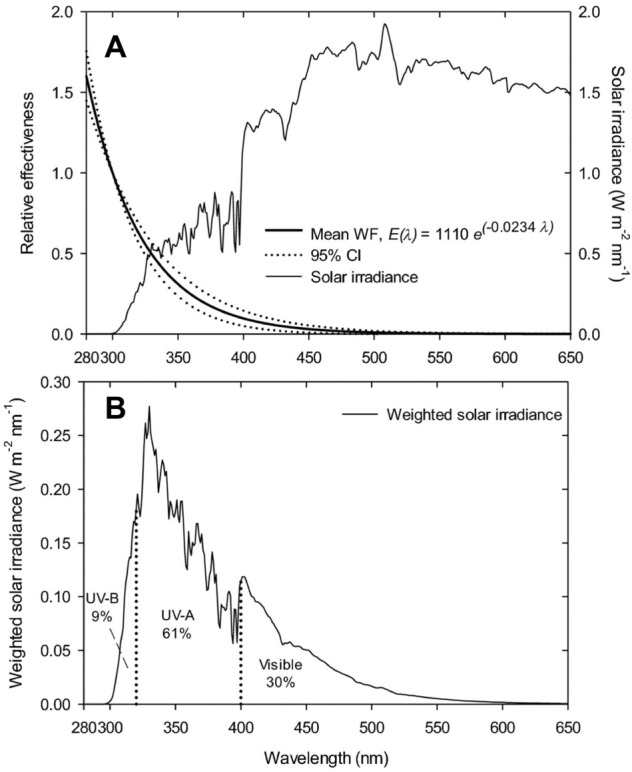
“Large uncertainties in assessing the effects of ozone depletion can occur if inappropriate action spectra are used [450].”
BackgroundNew understanding of the direct effects of spectral balance on behaviour in Myzus persicae
Fennell, J. T., Wilby, A., Sobeih, W. Y., & PAUL, N. D. (2020) · Journal of Insect Physiology · doi:10.1016/j.jinsphys.2020.104096 · Cited by 8
Self-citationAnderson, S. C., Chu, L., Bouma, C., Beukelman, L., McLouth, R., Larson, E., & Nienow, A. M. (2018) · Journal of Environmental Science and Health Part B · doi:10.1080/03601234.2018.1511400 · Cited by 7 · cited 1×
“For example, the photodegradation rate of the herbicide imazethapyr is two orders of magnitude slower when applied to maize and soybean leaves than in aqueous solutions [342].”
BackgroundBidel, L., Meyer, S., Talhouët, A., Baudin, X., Daniel, C., Cazals, G., & Streb, P. (2020) · Plant Physiology and Biochemistry · doi:10.1016/j.plaphy.2020.02.045 · Cited by 7 · cited 1×
“The accumulation of these compounds in leaves, flower petals and pollen is temperature dependent but is also driven by UV-B radiation [135, 175, 176].”
BackgroundAncient sun protection: the evolutionary origin of plant UV-B signaling
Balcerowicz, M. (2021) · PLANT PHYSIOLOGY · doi:10.1093/plphys/kiab517 · Cited by 7
Díaz-Guerra, L., Llorens, L., Julkunen‐Tiitto, R., Nogués, I., Font, J., González, J., & Verdaguer, D. (2019) · Plant Physiology and Biochemistry · doi:10.1016/j.plaphy.2019.01.031 · Cited by 6 · cited 1×
“reduced production of stress‐associated malondialdehyde (MDA) and reactive oxygen species (ROS)), and this reduces the negative effects on photosynthesis and biomass production [205, 206].”
BackgroundJovtchev, G., Stankov, A., Ravnachka, I., Gateva, S., Dimitrov, D., Tyutyundzhiev, N., Nikolova, N., & Angelov, C. V. (2019) · Environmental Science and Pollution Research · doi:10.1007/s11356-019-04872-1 · Cited by 6
Ecosystem Collapse on a Sub-Antarctic Island
Bergstrom, D. M., Dickson, C. R., Baker, D. J., Whinam, J., Selkirk, P. M., & McGeoch, M. A. (2021) · Ecological studies · doi:10.1007/978-3-030-71330-0_2 · Cited by 5 · cited 1×
“As documented in our previous assessments and elsewhere, these shifts in weather and climate have had pronounced impacts on many Antarctic organisms, from tiny moss and cushion plants to wandering albatross [12, 34, 52, 53].”
ResultOzone-forced Southern Annular Mode during Antarctic Stratospheric Warming EventsPreprint
Jucker, M., & Goyal, R. (2021) · doi:10.1002/essoar.10507626.1 · Cited by 5
Potential Application of Nanopesticides to Pest Control in the Food and Agriculture Sector
Mishra, P., Tyagi, B. K., Mukherjee, A., & Chandrasekaran, N. (2019) · CRC Press eBooks · doi:10.1201/9780429297038-21 · Cited by 3
Qian, M., Rosenqvist, E., Prinsen, E., et al. (2021) · bioRxiv (Cold Spring Harbor Laboratory) · doi:10.1101/2021.02.27.432481 · Cited by 3 · cited 2×
“slower but more efficient growth, photosynthesis, and water loss [173, 174]) collectively mitigate the potentially deleterious effects of current levels of solar UV radiation on plants.”
BackgroundConsumption of Sun-Exposed Oyster Mushrooms Help Patients Fight Tuberculosis
Keflie, T. S., Samuel, A., Woldegiorgis, A. Z., Lambert, C., Nöhr, D., & Biesalski, H. K. (2021) · Asian Journal of Complementary and Alternative Medicine · doi:10.53043/2347-3894.acam90007 · Cited by 3 · cited 1×
“[319] used solar UV-B radiation to increase vitamin D in oyster mushrooms, which may alleviate vitamin D deficiency in humans.”
Wang, Q., Pieristè, M., Kotilainen, T. K., Forey, E., Chauvat, M., Kurokawa, H., Robson, T. M., & Jones, A. G. (2022) · Research Square · doi:10.21203/rs.3.rs-1377521/v1 · Cited by 3
Self-citation
Research works printed but not linked: 6
- Lim E-P Hendon HH Butler AH Garreaud RD Polichtchouk I Shepherd TG Scaife A Comer R Coy L Newman PA Thompson DJW Nakamura H The 2019 Antarctic sudden stratospheric warming SPARC Newsletter 2020 54 10 13
- Newman, P., Nash, E. R., Kramarova, N., & Butler, A. (2020). The 2019 southern stratospheric warming. In: T. Scambos, & S. Stammerjohn (Eds.) “State of the Climate in 2019", Bulletin of the American Meteorological Society (Vol. 101, pp. S297-S298, Vol. 8). · DOI · Paper page
- Bernhard, G. H., Fioletov, V. E., Grooß, J.-U., Ialongo, I., Johnsen, B., Lakkala, K., Manney, G. L., Müller, R., & Svendby, T. (2021). Ozone and ultraviolet radiation. In: J. Blunden, & T. Boyer (Eds.). Vol. 102 “State of the Climate in 2020”, Bull. Amer. Meteor. Soc. (, pp. S299–S303).
- IPCC, 2014: Climate change 2014: Impacts, adaptation, and vulnerability Part A: Global and sectoral aspects. Contribution of working group II to the fifth assessment report of the intergovernmental panel on climate change [Field, C.B., V.R. Barros, D.J. Dokken, K.J. Mach, M.D. Mastrandrea, T.E. Bilir, M. Chatterjee, K.L. Ebi, Y.O. Estrada, R.C. Genova, R. B. Girma, E.S. Kissel, A.N. Levy, S. MacCracken, P.R. Mastrandrea, and L.L. White (eds.)]. Cambridge University Press, Cambridge, United Kingdom and New York, NY, USA, 1132 pp
- Schwarzenbach RP Gschwend PM Imboden DM Schwarzenbach RP Gschwend PM Imboden DM Indirect Photolysis: Reactions with Photooxidants in Natural Waters and in the Atmosphere Environmental Organic Chemistry 2002 John Wiley 655 686 · DOI · Paper page
- Takshak S Agrawal SB Defense potential of secondary metabolites in medicinal plants under UV-B stress Journal of Photochemistry & Photobiology, B: Biology 2019 193 51 88 10.1016/j.jphotobiol.2019.02.002 30818154 · DOI · Paper page
Cited by
The effects of exposure to solar radiation on human health
Neale, R. E., Lucas, R. M., Byrne, S. N., Hollestein, L., Rhodes, L. E., Yazar, S., Young, A. R., Berwick, M., Ireland, R. A., & Olsen, C. M. (2023) · Photochemical & Photobiological Sciences · doi:10.1007/s43630-023-00375-8 · Cited by 162
“1 3 on terrestrial [3] and aquatic [4] ecosystems, and materials [5].”
BackgroundStratospheric ozone, UV radiation, and climate interactions
Bernhard, G. H., Bais, A. F., Aucamp, P. J., Klekociuk, A. R., Liley, J. B., & McKenzie, R. L. (2023) · Photochemical & Photobiological Sciences · doi:10.1007/s43630-023-00371-y · Cited by 138
“High UV radiation at this time, which coincides with the start of the growing season for plants and the peak breeding season for most animals, is a concern [3].”
BackgroundSelf-citationJansen, M. A. K., Andrady, A. L., Bornman, J. F., Aucamp, P. J., Bais, A. F., Banaszak, A. T., Barnes, P. W., Bernhard, G. H., Bruckman, L. S., Busquets, R., et al. (2024) · Photochemical & Photobiological Sciences · doi:10.1007/s43630-024-00552-3 · Cited by 83
“Hydroxyl radicals also play an important role in surface waters in the transformation and breakdown of pollut-ants e.g. pesticides [3].”
Self-citationNeale, P. J., Williamson, C. E., Banaszak, A. T., Häder, D.-P., Hylander, S., Ossola, R., Rose, K. C., Wängberg, S.-Å., & Zepp, R. (2023) · Photochemical & Photobiological Sciences · doi:10.1007/s43630-023-00370-z · Cited by 79
Self-citationMadronich, S., Sulzberger, B., Longstreth, J. D., Schikowski, T., Andersen, M. P. S., Solomon, K. R., & Wilson, S. R. (2023) · Photochemical & Photobiological Sciences · doi:10.1007/s43630-023-00369-6 · Cited by 64
“However, the recovery of stratospheric O3 should decrease the stability of the Antarctic polar vortex, which should lead to wetter conditions in the Southern Hemisphere in the near future for this region.”
BackgroundInfluential
Metadata
- Authors
- Barnes, P. W., Robson, T. M., Zepp, R. G., Bornman, J. F., Jansen, M. A. K., Ossola, R., Wang, Q.-W., Robinson, S. A., Foereid, B., Klekociuk, A. R., Martinez-Abaigar, J., Hou, W.-C., Mackenzie, R., & Paul, N. D.
- Affiliations
- Loyola University New Orleans (US)
- University of Helsinki (FI)
- Environmental Protection Agency (US)
- Murdoch University (AU)
- University College Cork (IE)
- NSF National Center for Atmospheric Research (US)
- Chinese Academy of Sciences (CN)
- University of Wollongong (AU)
- Norwegian Institute of Bioeconomy Research (NO)
- Australian Antarctic Division (AU)
- National Cheng Kung University (TW)
- Instituto de Biodiversidad de Ecosistemas Antárticos y Subantárticos (CL)
- Lancaster University (GB)
- Corresponding author
- Barnes, P. W.
- Robson, T. M.
- ORCID
- Venue
- Photochemical & Photobiological Sciences
- Published
- 2023-02-01
- Volume
- 22
- Issue
- 5
- Pages
- 1049-1091
- ISSN
- 1474-905X (ISSN-L)
- 1474-9092
- PMC
- PMC9889965
- OpenAlex
- W4318754076
- Cited by
- 113
- References
- 449
- Citations by year
- 2026: 27 · 2025: 35 · 2024: 32 · 2023: 19
- FWCI
- 12.48
- Type
- journal article
- Language
- en
- Open access
- hybrid
- doi.org
- Licence
- cc-by
- creativecommons.org/licenses/by/4.0 (tdm)
- creativecommons.org/licenses/by/4.0 (vor)
- Locations
- Photochemical & Photobiological Sciences (publishedVersion, cc-by)
- PubMed Central (publishedVersion, cc-by)
- PubMed (publishedVersion)
- Insight (University of Cumbria) (submittedVersion, cc-by)
- Research Online (University of Wollongong) (submittedVersion)
- Lancaster EPrints (Lancaster University) (submittedVersion)
- Figshare (submittedVersion)
- Työväentutkimus Vuosikirja (submittedVersion)
- NORA - Norwegian Open Research Archives (submittedVersion, cc-by)
- RIUR (Universidad de La Rioja) (submittedVersion, other-oa)
- Funders
- University of Helsinki including Helsinki University Central Hospital
- Topics
- Physical Sciences › Earth and Planetary Sciences › Atmospheric Science › Atmospheric Ozone and Climate
- Life Sciences › Agricultural and Biological Sciences › Plant Science › Plant responses to elevated CO2
- Life Sciences › Agricultural and Biological Sciences › Agronomy and Crop Science › Climate change impacts on agriculture
- Keywords
- solar ultraviolet radiation, stratospheric ozone depletion, climate change, terrestrial ecosystems, biogeochemical cycles, Montreal Protocol, Kigali Amendment, climate extremes, biodiversity, ecosystem services, drought, temperature effects on crops, litter decomposition, climate feedbacks, terrestrial carbon sequestration, greenhouse gas emissions
- MeSH terms
- Feedback, Rwanda, Ultraviolet Rays, Ecosystem, Crops, Agricultural, Climate Change, Stratospheric Ozone
About these checks
Registry, retraction, Cites and statistics results are computed, not judged, with one exception: a printed reference that no index lists is read once by a model before it counts as a citation error. Claims are extracted by a model and kept only when their quote appears verbatim in the text; each cited source is then checked, with a model’s help, for whether it says what the claim relies on. Those verdicts can be wrong — read the claim’s quote and the cited source before relying on one.
Statistics and arithmetic are recomputed, not judged.
Confidence bands are shown only for fields calibrated on our annotated test set. None is calibrated yet, so no band is shown.
What counts as a claim ›How we measure confidence ›How we check this ›
Are you an author, or do you see a problem with this page? Request a review
Data sources
Bibliographic data: Semantic Scholar, OpenAlex, Crossref.
Contains information from the Semantic Scholar Academic Graph Datasets, made available under the ODC Attribution License (ODC-BY 1.0).
Semantic Scholar’s data is described in: Kinney, R., et al. (2023). The Semantic Scholar Open Data Platform. arXiv:2301.10140.
