

Putting AI ethics to work: are the tools fit for purpose?
Open accessThe DOI matches its Crossref record; 99 of the 101 references it cites were found in a registry or an index; 17 of the 97 sources its claims cite were checked for support.
Abstract
Bias, unfairness and lack of transparency and accountability in Artificial Intelligence (AI) systems, and the potential for the misuse of predictive models for decision-making have raised concerns about the ethical impact and unintended consequences of new technologies for society across every sector where data-driven innovation is taking place. This paper reviews the landscape of suggested ethical frameworks with a focus on those which go beyond high-level statements of principles and offer practical tools for application of these principles in the production and deployment of systems. This work provides an assessment of these practical frameworks with the lens of known best practices for impact assessment and audit of technology. We review other historical uses of risk assessments and audits and create a typology that allows us to compare current AI ethics tools to Best Practices found in previous methodologies from technology, environment, privacy, finance and engineering. We analyse current AI ethics tools and their support for diverse stakeholders and components of the AI development and deployment lifecycle as well as the types of tools used to facilitate use. From this, we identify gaps in current AI ethics tools in auditing and risk assessment that should be considered going forward.
Overview
CoChat Summary
TL;DR
The paper reviews practical AI ethics tools that go beyond high-level principles and assesses them against historical impact assessment and audit best practices. It finds current tools are mostly internal, checklist-driven, focused on AI production stakeholders, and missing external verification, wider stakeholder participation, and established assessment techniques.
Key findings
- From 169 initial AI ethics documents, 39 practical tools were analysed; the focus shifted from data to models between 2017 and 2020.
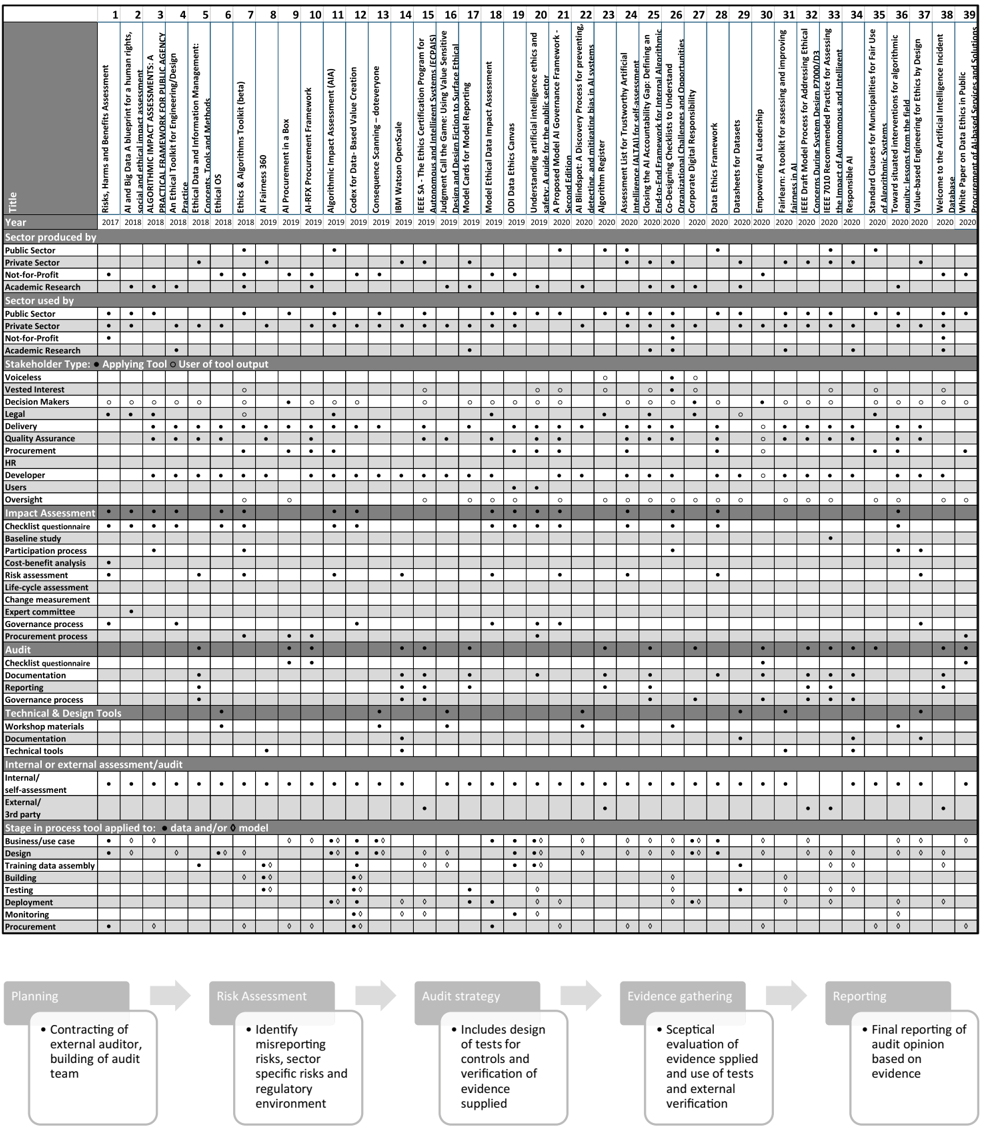
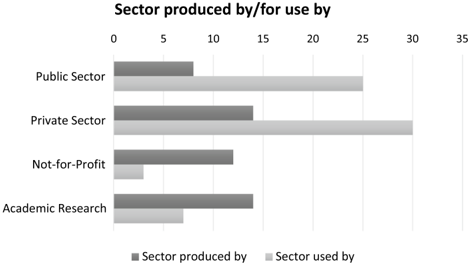
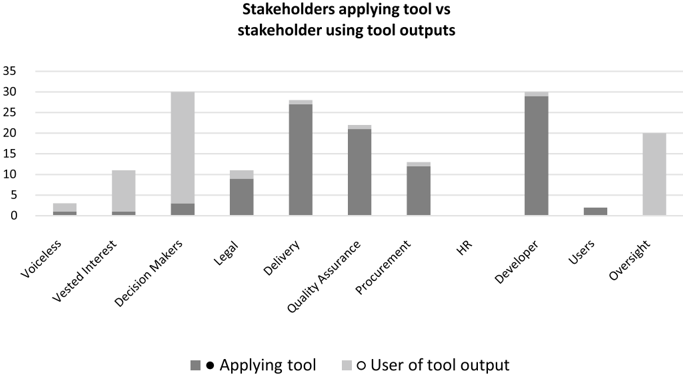
- Tools mainly target product development roles (developers, delivery, quality assurance), with outputs used by management decision-makers; voiceless groups, vested interests, and users are largely excluded.
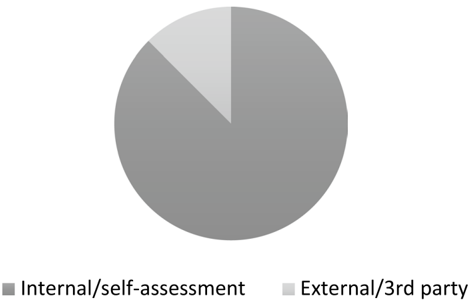
- Nearly all tools are internal self-assessment; only IEEE standards require external verification, and two public registers provide explicit transparency; external verification occurs in only 5 of 35 tools analysed.
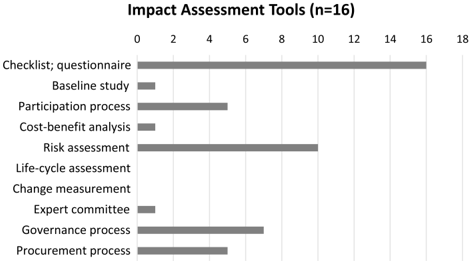
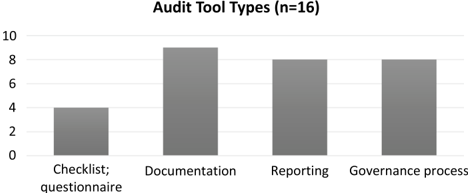
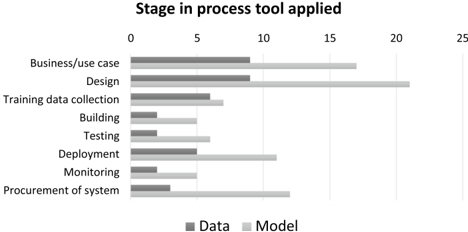
- Checklists/questionnaires are used in all 16 impact assessments versus 4/16 audit tools; missing techniques include participation process, baseline study, life-cycle assessment, change measurement, and expert committees; a third of impact assessment tools focus on procurement.
Methods
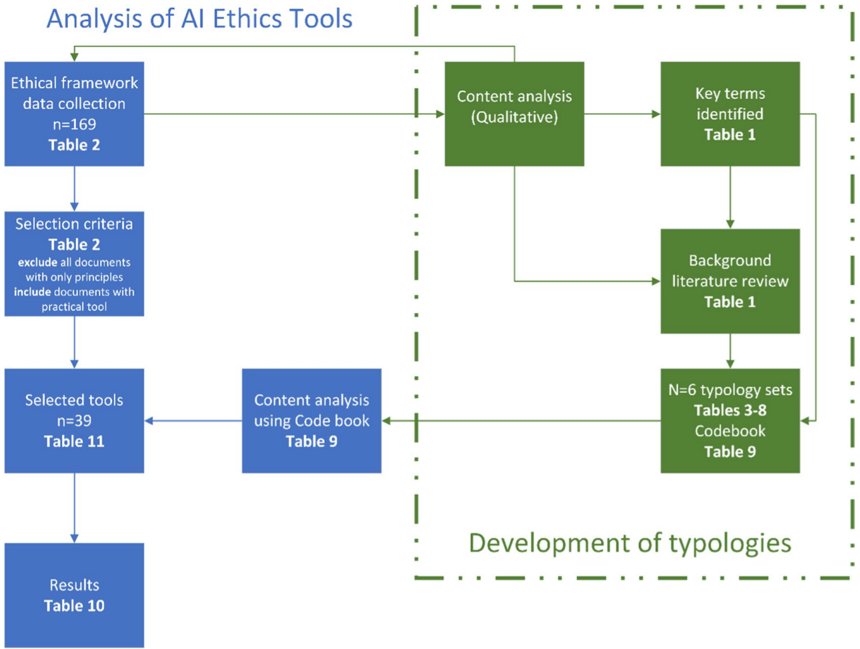
- Qualitative content analysis of AI ethics documents collected May 2019–December 2020, with publication dates 2016–2020; initial n = 169, excluding principles-only documents, leaving n = 39 practical tools.
- Typologies were built from historical impact assessment and audit literature across technology, environment, privacy/data protection, human rights, finance, and engineering, then used to code documents for stakeholders, tool types, internal/external process, production stage, and data/model focus.
- Documents were stored in Zotero and coded iteratively in MS Excel using a codebook and sub-questions to compare tools.
Limitations
- Stated: the limited size of the team analysing and coding the documents presents a limitation, since qualitative validity is often justified by recurrent iterations with different coders.
- Stated: the paper does not provide an exhaustive review of computational techniques in AI/ML for fairness and explainability.
- Evident from the text: “impact assessment” and “audit” are used loosely or interchangeably across AI ethics documents, requiring researcher judgement; the sample is largely grey literature, English-language, and publicly online, which may limit generalisability.
Model-written summary. Check it against the paper before relying on it.
Integrity signals
Registry
Cites
Statistics
Figures

Verification
Claims the paper makes
10 Valid · 5 Not valid · 45 Not checked · 64 Own results and interpretations
The sources with a verdict support this claim; the rest weren’t checked yet, have no full text we could read, or their verdicts aren’t rated yet.
In the paper
“Meta-analyses of AI ethics proposals have thus far focused mainly on classifying and comparing the ethical principles suggested, where some convergence can be identified for principles like transparency, fairness, privacy and responsibility [4][5][6].”
§ Putting AI ethics to work: are the tools fit for purpose? > 1 Introduction
What the sources say
- Supportedcites [4] Hagendorff, T.: The ethics of AI ethics-an evaluation of guide- lines. Minds Mach. 30(1), 99-120 (2020). https:// doi. org/ 10. 1007/ s11023-020-09517-8 source
Split into 2 atoms — 2 confirmed, 0 partially supported, 0 disputed, 0 misattributed, 0 unverifiable. Expand the claim to see per-atom verdicts.
- Supportedcites [5] Jobin, A., Ienca, M., Vayena, E.: The global landscape of AI eth- ics guidelines. Nat. Mach. Intell. 1(9), 389-399 (2019). https:// doi. org/ 10. 1038/ s42256-019-0088-2 source
Split into 2 atoms — 2 confirmed, 0 partially supported, 0 disputed, 0 misattributed, 0 unverifiable. Expand the claim to see per-atom verdicts.
- Not checked yetcites [6] Fjeld, J., Achten, N., Hilligoss, H., Nagy, A., Srikumar, M.: Prin- cipled artificial intelligence: mapping consensus in ethical and rights-based approaches to principles for AI. In: Social Science Research Network, Rochester, NY, SSRN Scholarly Paper ID 3518482 (2020). Available https:// papers. ssrn. com/ abstr act= 35184 82. Accessed 27 Jan. 2020. (Online) source
plain- Asserted: passes — The authors put it forward as true.
- Checkable: passes — It can be checked against evidence.
- Load-bearing: passes — The paper’s conclusions depend on it.
- Based: passes — The paper gives a reason why it holds.
- Supported
The sources with a verdict support this claim; the rest weren’t checked yet, have no full text we could read, or their verdicts aren’t rated yet.
In the paper
“In the first phase from 2016 to 2019, many high-level ethical principles for AI were published as evidenced by these catalogues of ethical principles and frameworks for ethical, trustworthy responsible AI [4-6, 18, 19].”
§ Putting AI ethics to work: are the tools fit for purpose? > 1 Introduction
What the sources say
- Supportedcites [4] Hagendorff, T.: The ethics of AI ethics-an evaluation of guide- lines. Minds Mach. 30(1), 99-120 (2020). https:// doi. org/ 10. 1007/ s11023-020-09517-8 source
The Abstract says that numerous AI ethics guidelines setting out normative principles were released in recent years. Section 2.1 (Method) identifies multiple guidelines and principle lists dated 2016–2019. The paper supports their publication in that period; the citing paper’s description of it as a “first phase” is its own framing. (LLM, conf=0.89)
- Supportedcites [5] Jobin, A., Ienca, M., Vayena, E.: The global landscape of AI eth- ics guidelines. Nat. Mach. Intell. 1(9), 389-399 (2019). https:// doi. org/ 10. 1038/ s42256-019-0088-2 source
The Results report 84 documents containing AI ethical principles or guidelines, 88% of which were released after 2016. This supports the claim that many such principles were published during the stated period; the 'first phase' label is the citing authors’ framing. (LLM, conf=0.93)
- Supportedcites [6] Fjeld, J., Achten, N., Hilligoss, H., Nagy, A., Srikumar, M.: Prin- cipled artificial intelligence: mapping consensus in ethical and rights-based approaches to principles for AI. In: Social Science Research Network, Rochester, NY, SSRN Scholarly Paper ID 3518482 (2020). Available https:// papers. ssrn. com/ abstr act= 35184 82. Accessed 27 Jan. 2020. (Online) source
Our copy is itself one of the catalogues the citing sentence points to: the Executive Summary (p. 1) states that 'In the past several years, seemingly every organization with a connection to technology policy has authored or endorsed a set of principles for AI,' and that the authors 'analyzed the contents of thirty-six prominent AI principles documents'; the Introduction likewise describes 'a proliferation of "principles" documents.' The 'Definition of Relevant Documents' section (footnote 14) confirms the range spans 'high-level and abstract statements of values,' and the bibliography entries in our copy date the included documents to 2016-2019. The 'first phase' periodization is the citing authors' own framing rather than this paper's, but the substance attributed to this source — a catalogue evidencing many high-level AI ethics principles published in that window — is stated in it. (LLM, conf=0.80)
- Not checked yetcites [18] AlgorithmWatch: "AI Ethics Guidelines Global Inventory by AlgorithmWatch," AI Ethics Guidelines Global Inventory (2020). https:// inven tory. algor ithmw atch. org. Accessed 11 Aug. 2020.
- Supportedcites [19] Schiff, D., Borenstein, J., Biddle, J., Laas, K.: AI ethics in the public, private, and NGO sectors: a review of a global document collection. IEEE Trans. Technol. Soc. (2021). https:// doi. org/ 10. 1109/ TTS. 2021. 30521 27 source
Our copy of Schiff et al. (2021) states in the Introduction/methods (p. 1, Sec. A 'Document Collection') that organizations worldwide 'produced documents that examine AI's ethical implications, articulate principles and guidance,' and that the study analysed English-language documents 'published between January 2016 and July 2019,' yielding 112 AI ethics documents (ethics codes, principles, frameworks, guidelines, policy strategies) from an initial 224 candidates — i.e., a large body of AI ethics principles issued in 2016-2019. The same paper's literature summary (Introduction) points to the catalogues of such principles (Jobin et al.'s 84 documents, Fjeld et al.'s 36 documents, Floridi & Cowls' 47 principles), matching the claim's 'as evidenced by these catalogues.' Only the 'first phase' periodisation is the citing authors' own framing, not content attributed to this source; the source's window closes in July rather than December 2019, a negligible boundary difference. (LLM, conf=0.85)
plain- Asserted: passes — The authors put it forward as true.
- Checkable: passes — It can be checked against evidence.
- Load-bearing: unclear — It is unclear whether the paper’s conclusions depend on it.
- Based: passes — The paper gives a reason why it holds.
- Supported
The sources with a verdict support this claim; the rest weren’t checked yet, have no full text we could read, or their verdicts aren’t rated yet.
In the paper
“There are already established governance methodologies for assessing and mitigating the impact of new technologies, processes, and infrastructure across the domains of environment [24], information privacy [25], data protection [26] and human rights [27].”
§ Putting AI ethics to work: are the tools fit for purpose? > 1 Introduction
What the sources say
- Supportedcites [24] Morgan, R.K.: Environmental impact assessment: the state of the art. Impact Assess. Proj. Apprais. 30(1), 5-14 (2012). https:// doi. org/ 10. 1080/ 14615 517. 2012. 661557 source
For the environment leg of the claim, Morgan (2012) supplies exactly the attributed point: the Introduction defines EIA as the established process of 'assessing proposed actions (from policies to projects) for their likely implications for all aspects of the environment ... before decisions are made to commit to those actions, and developing appropriate responses to the issues identified in that assessment' (i.e. assessing and mitigating impacts of new projects/infrastructure), and the Institutional considerations section states that after 40 years 'EIA is now universally recognized as a key instrument for environmental management, firmly embedded in domestic and international environmental law', with the ECOLEX search showing 191 of 193 UN member nations have legislation or an international instrument referring to EIA. The Strengths section likewise records that 'EIA is well established around the world', in statutory development control, international law and lending-institution standards. The claim's other domains (privacy, data protection, human rights) carry separate citations and are not judged here; note only that this paper mentions human rights impact assessment as one of several newer forms of impact assessment (Forms of impact assessment). (LLM, conf=0.88)
- Not checked yetcites [25] Clarke, R.: Privacy impact assessment: Its origins and develop- ment. Comput. Law Secur. Rev. 25(2), 123-135 (2009). https:// doi. org/ 10. 1016/j. clsr. 2009. 02. 002 source
- Not checked yetcites [26] Information Commissioner's Office: Data protection impact assessments (2018). https:// ico. org. uk/ for-organ isati ons/ guide- to-the-gener al-data-prote ction-regul ation-gdpr/ accou ntabi lity- and-gover nance/ data-prote ction-impact-asses sments/. Accessed 07 Jun. 2018
plain- Asserted: passes — The authors put it forward as true.
- Checkable: passes — It can be checked against evidence.
- Load-bearing: passes — The paper’s conclusions depend on it.
- Based: passes — The paper gives a reason why it holds.
- Supported
The sources with a verdict support this claim; the rest weren’t checked yet, have no full text we could read, or their verdicts aren’t rated yet.
In the paper
“Audit also requires non-technical governance processes [15] to ensure consistency with relevant principles or norms [56].”
§ Putting AI ethics to work: are the tools fit for purpose? > 2.6 Audit
What the sources say
- Not checked yetcites [15] Kazim, E., Koshiyama, A.: AI assurance processes. In: Social Science Research Network, Rochester, SSRN Scholarly Paper ID 3685087 (2020). https:// doi. org/ 10. 2139/ ssrn. 36850 87. source
- Supportedcites [56] Mökander, J., Floridi, L.: Ethics-based auditing to develop trustworthy AI. Minds Mach. (2021). https:// doi. org/ 10. 1007/ s11023-021-09557-8 source
Section 2 ("Ethics-based Auditing of AI—What it is and How it Works") states that "Ethics-based auditing is a governance mechanism" and that operationally it is "a structured process by which an entity's behaviour is assessed for consistency with relevant principles or norms" — i.e. the audit's purpose is normative alignment, not a technical fix. Section 4 ("A Roadmap for Future Research") reinforces the non-technical, institutional character: "Ethics-based auditing is only as good as the institutions backing it," with organisational and institutional constraints (Table 1) listed separately from technical ones, and Section 3 requiring frameworks to "harmonise with organisational policies and individual incentives." Together these support the cited proposition that auditing requires non-technical governance processes to ensure consistency with relevant principles or norms. (LLM, conf=0.85)
plainstates a cause- Asserted: passes — The authors put it forward as true.
- Checkable: passes — It can be checked against evidence.
- Load-bearing: unclear — It is unclear whether the paper’s conclusions depend on it.
- Based: passes — The paper gives a reason why it holds.
Every source the paper cites for this claim was checked and supports it.
In the paper
“Studies with ML developers highlight that considerations of a model's context, and the specificity of the domain in which it is used, are vital to improve features like fairness [73].”
§ Putting AI ethics to work: are the tools fit for purpose? > 2.9 Technical and design tools
What the sources say
- Supportedcites [73] Veale, M., Van Kleek, M., Binns, R.: Fairness and accountability design needs for algorithmic support in high-stakes public sec- tor decision-making. In: Proceedings of the 2018 CHI Confer- ence on Human Factors in Computing Systems, New York, p. 440:1-440:14 (2018). https:// doi. org/ 10. 1145/ 31735 74. 31740 14. source
The Concluding Remarks (p. 10) state that 'Domain-specific, organisational and contextual factors are crucial to closely consider in the context of interventions intended to improve the fairness and accountability of algorithmic decision-support', which matches the claim's substance (context and domain specificity as vital to improving fairness). The Introduction (p. 1-2) and Background (p. 2) reinforce this: FAT/ML tools are 'built in isolation ... from specific users and use contexts' and 'will also fail unless contextual challenges are understood early on'. The study basis is practitioners including 'in-house machine learning modellers' (Introduction, p. 2), so describing it as a study with ML developers is accurate. (LLM, conf=0.85)
plainstates a cause- Asserted: passes — The authors put it forward as true.
- Checkable: passes — It can be checked against evidence.
- Load-bearing: unclear — It is unclear whether the paper’s conclusions depend on it.
- Based: passes — The paper gives a reason why it holds.
- Supported
32 more claims
Create a free account to see all 124 claims and to verify the 80 references still open.
- Probably not a substantial claim. 63
- It may state two separate claims as one. 51
Claims other papers make about this one
Each is checked against this paper’s own text: does it say what the citing paper says it does?
The cited source says what the claim attributes to it.
In the citing paper
“There is little consensus yet on the proper way to design and conduct an AI audit [4,56].”
From Who Audits the Auditors? Recommendations from a field scan of the algorithmic auditing ecosystem (2022) · cites this paper as [4]
In the citing paper
“The latter enables researchers to study the real-world effects different auditing procedures have on how AI systems are designed and deployed (Ayling & Chapman, 2021;Fitzgerald et al., 2013;Stoel et al., 2012).”
From Auditing of AI: Legal, Ethical and Technical Approaches (2023) · cites this paper as Ayling & Chapman, 2021
Self-check
Percentages, sums and reported differences re-computed from the paper’s own numbers.
Each contradiction between two passages listed here was confirmed by an independent check.
Rated minor: it would not touch a result — a value no result rests on, a p-value that stays on the same side of the significance level, or a conflict that is clerical, resolved elsewhere in the paper, or outside its own findings.
In the paper
§ Putting AI ethics to work: are the tools fit for purpose? > 5 Discussion
“As Fig. 2 illustrates, current tools, not surprisingly, are designed for use by those in the production process of AI systems and the key decision-makers around that process.”
§ Putting AI ethics to work: are the tools fit for purpose? > Appendix 1: Source documents
“Figure: 2 Fig. 2 Fig. 2 Flow diagram of methodology”
Rated minor: it would not touch a result — a value no result rests on, a p-value that stays on the same side of the significance level, or a conflict that is clerical, resolved elsewhere in the paper, or outside its own findings.
In the paper
§ Putting AI ethics to work: are the tools fit for purpose? > 5 Discussion
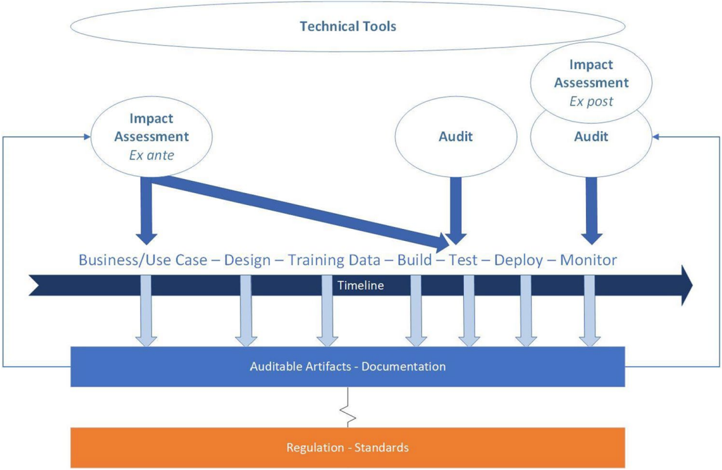
“In Fig. 8, the top-level-Regulation and Standards-has no direct connection to the processes below.”
§ Putting AI ethics to work: are the tools fit for purpose? > Appendix 1: Source documents
“Figure: 8 Fig. 8 Fig. 8 Technical and design tools”
Citations
Cites
Content Analysis: An Introduction to its Methodology.
Shelley, M., & Krippendorff, K. (1984) · Journal of the American Statistical Association · doi:10.2307/2288384 · Cited by 24,312
(2010) · Cited by 24,023
Risk Society, Towards a New Modernity
Leiss, W., Beck, U., Ritter, M., Lash, S., & Wynne, B. (1994) · Canadian Journal of Sociology / Cahiers canadiens de sociologie · doi:10.2307/3341155 · Cited by 12,546
Risk Society: Towards a New Modernity
Boyd, W., Beck, U., & Shrader-Frechette, K. S. (1993) · Economic Geography · doi:10.2307/143601 · Cited by 9,215
(2014) · Medical Entomology and Zoology · Cited by 6,828
The global landscape of AI ethics guidelines
Jobin, A., Ienca, M., & Vayena, E. (2019) · Nature Machine Intelligence · doi:10.1038/s42256-019-0088-2 · Cited by 6,220 · cited 3×
“[5] note in their systematic review of global AI guidelines, conflicts can be identified in the different proposals ‘between avoiding harm at all costs and the perspective of accepting some degree of harm as long as risks and benefits are weighed against each other.”
BackgroundMethodThe Stakeholder Theory of the Corporation: Concepts, Evidence, and Implications
Donaldson, T., & Preston, L. E. (1995) · The Academy of Management Review · doi:10.2307/258887 · Cited by 5,846 · cited 1×
“Identify the responsibilities of parties with relation to a given process [66].”
BackgroundA Survey on Bias and Fairness in Machine Learning
Mehrabi, N., Morstatter, F., Saxena, N., Lerman, K., & Galstyan, A. (2022) · ACM Computing Surveys · doi:10.1145/3457607 · Cited by 5,812
A Survey on Bias and Fairness in Machine Learning
Mehrabi, N., Morstatter, F., Saxena, N., Lerman, K., & Galstyan, A. (2019) · arXiv · doi:10.48550/arxiv.1908.09635 · Cited by 5,812
Floridi, L., Cowls, J., Beltrametti, M., Chatila, R., Chazerand, P., Dignum, V., Luetge, C., Madelin, R., Pagallo, U., Rossi, F., et al. (2018) · Minds and Machines · doi:10.1007/s11023-018-9482-5 · Cited by 4,774 · cited 1×
“[63] draw attention to risk that results from not using the technology, and how these risks need careful trade-offs to ensure the greatest benefit.”
Background
Research works printed but not linked: 6
- IEEE Draft Model Process for Address- ing Ethical Concerns During System Design P7000/D3 2020 IEEE Standards Association IEEE https:// stand ards. ieee. org/ proje ct/ 7000. html 04/06/2020
- IEEE Recommended Practice for Assess- ing the Impact of Autonomous and Intelligent Systems on Human Well- Being Std 7010 2020 IEEE Standards Association IEEE https:// stand ards. ieee. org/ indus try-conne ctions/ ec/ auton omous-syste ms. html 30/08/2020
- UN Environment: "Assessing Environmental Impacts A Global Review Of Legislation-UNEP-WCMC," In: UNEP-WCMC's official website-Assessing Environmental Impacts A Global Review Of Legislation (2018). https:// www. unep-wcmc. org/ asses sing-envir onmen tal-impac ts--a-global-review-of-legis lation. Accessed 12 Feb. 2021.
- Krippendorff, K.: Content analysis. In: International encyclo- pedia of communication, vol. 1. Oxford University Press, New York, pp 8 (1989). Available http:// repos itory. upenn. edu/ asc_ papers/ 22. Accessed 08 Jul 2020 (Online)
- Webster, G.: Translation: personal information protection law of the People's Republic of China (Draft) (Second Review Draft) | DigiChina. In: Stanford DigiChina Cyber Policy Unit (2021). https:// digic hina. stanf ord. edu/ news/ trans lation-perso nal-infor mation-prote ction-law-peopl es-repub lic-china-draft-second- review. Accessed 21 May 2021 112.
- Thuermer, G., Walker, J., Simperl, E., Carr, L.: When data meets citizens: an investigation of citizen engagement in data-driven innovation programmes. In: Presented at the 2nd Data Justice Conference, Cardiff University Online (2021) 121.
Cited by
Experimental evidence on the productivity effects of generative artificial intelligence
Noy, S., & Zhang, W. (2023) · Science · doi:10.1126/science.adh2586 · Cited by 2,150
State of the art and practice in AI in education
Holmes, W., & Tuomi, I. (2022) · European Journal of Education · doi:10.1111/ejed.12533 · Cited by 1,093
Responsible Artificial Intelligence Governance: A Review and Research Framework
Papagiannidis, E., Mikalef, P., & Conboy, K. (2025) · The Journal of Strategic Information Systems · doi:10.1016/j.jsis.2024.101885 · Cited by 565
Ahmad, S. F., Han, H., Alam, M. M., Rehmat, M. K., Irshad, M., Arraño-Muñoz, M., & Ariza-Montes, A. (2023) · Humanities and Social Sciences Communications · doi:10.1057/s41599-023-01787-8 · Cited by 338
RetractedArtificial intelligence for literature reviews: opportunities and challenges
Bolaños, F., Salatino, A., Osborne, F., & Motta, E. (2024) · Artificial Intelligence Review · doi:10.1007/s10462-024-10902-3 · Cited by 246
Enhancing Credit Card Fraud Detection: An Ensemble Machine Learning Approach
Khalid, A. R., Owoh, N., Uthmani, O., Ashawa, M., Osamor, J., & Adejoh, J. (2024) · Big Data and Cognitive Computing · doi:10.3390/bdcc8010006 · Cited by 218
“It prompts contemplation regarding the delicate equilibrium between the pursuit of scientific knowledge and the ethical obligation associated with harnessing the formidable power inherent in datasets teeming with financial activities [35].”
BackgroundWho Audits the Auditors? Recommendations from a field scan of the algorithmic auditing ecosystem
Costanza-Chock, S., Raji, I. D., & Buolamwini, J. (2022) · 2022 ACM Conference on Fairness Accountability and Transparency · doi:10.1145/3531146.3533213 · Cited by 277
Bias and ethics of AI systems applied in auditing - A systematic review
Murikah, W., Nthenge, J. K., & Musyoka, F. M. (2024) · Scientific African · doi:10.1016/j.sciaf.2024.e02281 · Cited by 148
Auditing of AI: Legal, Ethical and Technical Approaches
Mökander, J. (2023) · Digital Society · doi:10.1007/s44206-023-00074-y · Cited by 152
“The latter enables researchers to study the real-world effects different auditing procedures have on how AI systems are designed and deployed (Ayling & Chapman, 2021; Fitzgerald et al., 2013; Stoel et al., 2012).”
BackgroundSeeing Like a Toolkit: How Toolkits Envision the Work of AI Ethics
Wong, R. Y., Madaio, M. A., & Merrill, N. (2023) · Proceedings of the ACM on Human-Computer Interaction · doi:10.1145/3579621 · Cited by 135
“Ayling and Chapman [5] perform a descriptive analysis of AI ethics toolkits, identifying stakeholder types common across toolkits, and stages in the organizational lifecycle at which various toolkits are applied.”
BackgroundOperationalising AI governance through ethics-based auditing: an industry case study
Mökander, J., & Floridi, L. (2023) · AI and Ethics · doi:10.1007/s43681-022-00171-7 · Cited by 129
Hutson, J., Jeevanjee, T., Graaf, V. V., Lively, J., Weber, J., Weir, G., Arnone, K., Carnes, G., Vosevich, K., Plate, D., et al. (2022) · Creative Education · doi:10.4236/ce.2022.1312253 · Cited by 189
A Survey of Data Quality Requirements That Matter in ML Development Pipelines
Priestley, M., O’donnell, F., & Simperl, E. (2023) · Journal of Data and Information Quality · doi:10.1145/3592616 · Cited by 86
Challenges of responsible AI in practice: scoping review and recommended actions
Sadek, M., Kallina, E., Bohné, T., Mougenot, C., Calvo, R. A., & Cave, S. (2025) · AI & SOCIETY · doi:10.1007/s00146-024-01880-9 · Cited by 79
Ortega-Bolaños, R., Bernal-Salcedo, J., Germán Ortiz, M., Galeano Sarmiento, J., Ruz, G. A., & Tabares-Soto, R. (2024) · Artificial Intelligence Review · doi:10.1007/s10462-024-10740-3 · Cited by 76
“Inspired by the research of Morley et al. (2020), Fjeld et al. (2020), and Ayling and Chapman (2021), we created a diagram found at Tools 4Resp onsib leAI, specifically in the ‘Typology’ section of the website.”
InfluentialNannini, L., Balayn, A., & Smith, A. L. (2023) · ACM Conference on Fairness, Accountability, and Transparency (FAccT) · doi:10.1145/3593013.3594074 · Cited by 139
Palladino, N. (2022) · Telecommunications Policy · doi:10.1016/j.telpol.2022.102479 · Cited by 106
Schultz, M. D., & Seele, P. (2022) · AI and Ethics · doi:10.1007/s43681-022-00150-y · Cited by 98
Satornino, C. B., Du, S., & Grewal, D. (2023) · Industrial Marketing Management · doi:10.1016/j.indmarman.2023.11.011 · Cited by 81
Making It Possible for the Auditing of AI: A Systematic Review of AI Audits and AI Auditability
Li, Y., & Goel, S. (2024) · Information Systems Frontiers · doi:10.1007/s10796-024-10508-8 · Cited by 107
Li, Y., & Goel, S. (2025) · International Journal of Accounting Information Systems · doi:10.1016/j.accinf.2025.100739 · Cited by 122
Transforming financial planning with AI-driven analysis: A review and application insights
Addy, W. A., Ajayi-Nifise, A. O., Bello, B. G., Tula, S. T., Odeyemi, O., & Falaiye, T. O. (2024) · World Journal of Advanced Engineering Technology and Sciences · doi:10.30574/wjaets.2024.11.1.0053 · Cited by 63
The emergence of artificial intelligence ethics auditing
Schiff, D. S., Kelley, S., & Ibáñez, J. C. (2024) · Big Data & Society · doi:10.1177/20539517241299732 · Cited by 130
Blanchard, A., King, T. C., & Taddeo, M. (2024) · AI & Society · doi:10.1007/s00146-024-01866-7 · Cited by 81
Reimagining education: Bridging artificial intelligence, transhumanism, and critical pedagogy
Sarı, T., Nayır, F., & Bozkurt, A. (2024) · Journal of Educational Technology and Online Learning · doi:10.31681/jetol.1308022 · Cited by 69
Jeon, J., Kim, L., & Park, J. (2025) · Technology in Society · doi:10.1016/j.techsoc.2025.102836 · Cited by 70
Taddeo, M., Blanchard, A., & King, T. C. (2024) · Philosophy & Technology · doi:10.1007/s13347-024-00710-6 · Cited by 48
Ethical Implications of Artificial Intelligence in the Healthcare Sector
Information Technology and Law Graduate Programme Ghana Institute of Management and Public Administration Greenhill, A., & Amedior, N. C. (2023) · Advances in Multidisciplinary and scientific Research Journal Publication · doi:10.22624/aims-/accrabespoke2023p1 · Cited by 8
The AI ethics maturity model: a holistic approach to advancing ethical data science in organizations
Krijger, J., Thuis, T., de Ruiter, M., Ligthart, E., & Broekman, I. (2022) · AI and Ethics · doi:10.1007/s43681-022-00228-7 · Cited by 63
An AI ethics ‘David and Goliath’: value conflicts between large tech companies and their employees
Ryan, M., Christodoulou, E., Antoniou, J., & Iordanou, K. (2022) · AI & Society · doi:10.1007/s00146-022-01430-1 · Cited by 49
Vereschak, O., Alizadeh, F., Bailly, G., & Caramiaux, B. (2024) · CHI Conference on Human Factors in Computing Systems · doi:10.1145/3613904.3642018 · Cited by 72
Sabharwal, D., Kabha, R., & Srivastava, K. (2023) · Journal of Content Community and Communication · doi:10.31620/jccc.06.23/12 · Cited by 33
AI-Driven risk assessment: Revolutionizing audit planning and execution
Onwubuariri, E. R., Adelakun, B. O., Olaiya, O. P., & Ziorklui, J. E. K. (2024) · Finance & Accounting Research Journal · doi:10.51594/farj.v6i6.1236 · Cited by 77
Reconstructing AI Ethics Principles: Rawlsian Ethics of Artificial Intelligence
Westerstrand, S. (2024) · Science and Engineering Ethics · doi:10.1007/s11948-024-00507-y · Cited by 48
No such thing as one-size-fits-all in AI ethics frameworks: a comparative case study
Qiang, V., Rhim, J., & Moon, A. (2023) · AI & Society · doi:10.1007/s00146-023-01653-w · Cited by 38
The Ethics of Artificial Intelligence in Defence
Taddeo, M. (2024) · doi:10.1093/oso/9780197745441.001.0001 · Cited by 20
AI and ethical accounting: Navigating challenges and opportunities
Adelakun, B. O., Majekodunmi, T. G., & Akintoye, O. S. (2024) · International Journal of Advanced Economics · doi:10.51594/ijae.v6i6.1230 · Cited by 69
Measuring responsible artificial intelligence (RAI) in banking: a valid and reliable instrument
Ratzan, J., & Rahman, N. (2023) · AI and Ethics · doi:10.1007/s43681-023-00321-5 · Cited by 46
What Can Knowledge Bring to Machine Learning?—A Survey of Low-shot Learning for Structured Data
Hu, Y., Chapman, A. P., Wen, G., & Hall, D. W. (2022) · ACM Transactions on Intelligent Systems and Technology · doi:10.1145/3510030 · Cited by 37
Self-citationHohma, E., & Lütge, C. (2023) · AI · doi:10.3390/ai4040046 · Cited by 39
Enhancing audit accuracy: The role of AI in detecting financial anomalies and fraud
Antwi, B. O., Adelakun, B. O., Fatogun, D. T., & Olaiya, O. P. (2024) · Finance & Accounting Research Journal · doi:10.51594/farj.v6i6.1235 · Cited by 75
Ethical Considerations in AI-driven Financial Decision Making
Thakur, N., & Sharma, A. (2024) · doi:10.47914/jmpp.2024.v15i3.003 · Cited by 30
Fairness in Agreement With European Values: An Interdisciplinary Perspective on AI Regulation
Colmenarejo, A. B., Nannini, L., Rieger, A., Scott, K. M., Zhao, X., Patro, G. K., Kasneci, G., & Kinder-Kurlanda, K. E. (2022) · Proceedings of the AAAI/ACM Conference on AI Ethics and Society · doi:10.1145/3514094.3534158 · Cited by 42
Brauner, S., Murawski, M., & Bick, M. (2023) · Journal of Enterprise Information Management · doi:10.1108/jeim-09-2022-0341 · Cited by 38
Liefgreen, A., Weinstein, N., Wachter, S., & Mittelstadt, B. (2023) · AI & Society · doi:10.1007/s00146-023-01684-3 · Cited by 35
Human-centered approaches to AI-assisted work: the future of work?
Nitsch, V., Rick, V., Kluge, A., & Wilkens, U. (2024) · Zeitschrift für Arbeitswissenschaft · doi:10.1007/s41449-024-00437-2 · Cited by 29
Kuehnert, B., Kim, R., Forlizzi, J., & Heidari, H. (2025) · ACM Conference on Fairness, Accountability, and Transparency (FAccT) · doi:10.1145/3715275.3732191 · Cited by 48
Agbese, M., Alanen, H.-K., Antikainen, J., Halme, E., Isomaki, H., Jantunen, M., Kemell, K., Rousi, R. A., Vainio-Pekka, H., & Vakkur, V. (2023) · e-Informatica Software Engineering Journal · doi:10.37190/e-inf230101 · Cited by 30
Four shades of AI regulation: A cartography of normative and definitional conflicts
Benbouzid, B., Meneceur, Y., Smuha, N. A., & Carey-Libbrecht, L. (2022) · Réseaux · doi:10.3917/res.232.0029 · Cited by 41
Measuring the Interpretability and Explainability of Model Decisions of Five Large Language ModelsPreprint
Fujiwara, K., Sasaki, M., Nakamura, A., & Watanabe, N. (2024) · OSF Preprints (OSF Preprints) · doi:10.31219/osf.io/d4ntw · Cited by 74
A review of cybersecurity incidents in the food and agriculture sector
Kulkarni, A., Wang, Y., Gopinath, M., Sobien, D., Rahman, A., & Batarseh, F. A. (2025) · Journal of Agriculture and Food Research · doi:10.1016/j.jafr.2025.102245 · Cited by 62
Kamaruddin, S., Mohammad, A. M., Saufi, N. N. M., Rosli, W. R. W., Othman, M. B., & Hamin, Z. (2023) · International Conference on Disruptive Technologies (ICDT) · doi:10.1109/icdt57929.2023.10150615 · Cited by 25
Artificial Intelligence (AI) and Cheating: The Concept of Generative Artificial Intelligence (GenAI)
Akkaş, Ö. M., Tosun, C., & Gökçearslan, Ş. (2024) · Advances in educational technologies and instructional design book series · doi:10.4018/979-8-3693-1351-0.ch009 · Cited by 22
The rise of checkbox AI ethics: a review
Kijewski, S., Ronchi, E., & Vayena, E. (2024) · AI and Ethics · doi:10.1007/s43681-024-00563-x · Cited by 32
Rane, N., Choudhary, S., & Rane, J. (2023) · SSRN Electronic Journal · doi:10.2139/ssrn.4640828 · Cited by 35
Artificial Intelligence in Risk Management
Yadav, P., Gupta, P., Sijariya, R., & Sharma, Y. (2024) · Wiley eBooks · doi:10.1002/9781394175574.ch1 · Cited by 26
Chan, A., Rahimi‐Ardabili, H., Rogers, W., & Coiera, E. W. (2025) · Journal of the American Medical Informatics Association · doi:10.1093/jamia/ocaf167 · Cited by 28
Data Science Ethos Lifecycle: Interplay of Ethical Thinking and Data Science Practice
Boenig-Liptsin, M., Tanweer, A., & Edmundson, A. (2022) · Journal of Statistics and Data Science Education · doi:10.1080/26939169.2022.2089411 · Cited by 32
Hollanek, T. (2024) · AI and Ethics · doi:10.1007/s43681-024-00545-z · Cited by 26
A DSL for Testing LLMs for Fairness and Bias
Morales, S., Clarisó, R., & Cabot, J. (2024) · ACM/IEEE International Conference on Model Driven Engineering Languages and Systems (MODELS) · doi:10.1145/3640310.3674093 · Cited by 38
Anthropocentrism and Environmental Wellbeing in AI Ethics Standards: A Scoping Review and Discussion
Rigley, E., Chapman, A. P., Evers, C., & McNeill, W. (2023) · AI · doi:10.3390/ai4040043 · Cited by 33
Self-citationModerating manipulation: Demystifying extremist tactics for gaming the (regulatory) system
Mattheis, A. A., & Kingdon, A. (2023) · Policy & Internet · doi:10.1002/poi3.381 · Cited by 24
Morton, F., Benavides, T. B. T., & González-Treviño, E. (2024) · Management and industrial engineering · doi:10.1007/978-3-031-52990-0_2 · Cited by 27
A global scale comparison of risk aggregation in AI assessment frameworks
Schmitz, A., Möck, M., Görge, R., Cremers, A. B., & Poretschkin, M. (2024) · AI and Ethics · doi:10.1007/s43681-024-00479-6 · Cited by 30
Emedo, C., Wada, O. Z., David-Olawade, A. C., Ling, J., Esan, D. T., Ijiwade, J. O., & Olawade, D. B. (2025) · Digital engineering. · doi:10.1016/j.dte.2025.100068 · Cited by 20
Eiselt, A.-K., Kirkendall, S., Xiong, E., Langner, D., & Goldfarb, M. B. (2026) · Frontiers in Digital Health · doi:10.3389/fdgth.2025.1713334 · Cited by 21
Professionalism in artificial intelligence: The link between technology and ethics
Klarin, A., Abadi, H. A., & Sharmelly, R. (2024) · Systems Research and Behavioral Science · doi:10.1002/sres.2994 · Cited by 30
Gavorník, A., Podroužek, J., Oresko, S., Slosiarová, N., & Grmanová, G. (2024) · Telematics and Informatics · doi:10.1016/j.tele.2024.102132 · Cited by 21
Leuthe, D., Meyer-Hollatz, T., Plank, T., & Senkmüller, A. (2024) · Information Systems Frontiers · doi:10.1007/s10796-024-10526-6 · Cited by 27
CORPORATE DIGITAL RESPONSIBILITY AND ACCESSIBILITY IN DIGITAL SERVICES
Kärpänen, T. (2022) · IADIS International Conference on Interfaces and Human Computer Interaction and International Conference on Game and Entertainment Technologies (IHCI/GET) · doi:10.33965/ihci_get2022_202205l012 · Cited by 18
Herzog, C., Blank, S., & Stahl, B. C. (2024) · AI & Society · doi:10.1007/s00146-024-02082-z · Cited by 26
Zaga, C., & Lupetti, M. L. (2022) · University of Twente Research Information · doi:10.3990/1.9789036553599 · Cited by 23
AI for Cyberbiosecurity in Water Systems—A Survey
Sobien, D., Yardimci, M. O., Nguyen, M. B. T., Mao, W.-Y., Fordham, V., Rahman, A., Duncan, S. E., & Batarseh, F. A. (2023) · Springer eBooks · doi:10.1007/978-3-031-26034-6_13 · Cited by 23
The AI Surge: Transfiguring Audit Profession With AI Technology
Kinana, S. B. B., & Arabiat, O. S. (2025) · Emerald Group Publishing Limited eBooks · doi:10.1108/978-1-83608-756-420251004 · Cited by 13
Li, Y., & Goel, S. (2025) · Advances in Accounting · doi:10.1016/j.adiac.2025.100842 · Cited by 27
AI IN FINANCIAL INDUSTRY: ETHIC ISSUES
Glavina, S. G. (2024) · Journal of Trends and Challenges in Artificial Intelligence · doi:10.61552/jai.2024.01.002 · Cited by 12
Integrating machine learning algorithms into audit processes: Benefits and challenges
Adelakun, B. O., Fatogun, D. T., Majekodunmi, T. G., & Adediran, G. A. (2024) · Finance & Accounting Research Journal · doi:10.51594/farj.v6i6.1233 · Cited by 34
Baker, S., & Xiang, W. (2023) · arXiv · doi:10.48550/arxiv.2312.01555 · Cited by 12
“In much recent literature, RAI has been used synonymously with related terms such as trust-worthy AI [64], ethical AI [17], and fair or equitable AI [119, 134].”
BackgroundTowards a living lab for responsible applied AI
Harbers, M., & Overdiek, A. (2022) · Proceedings of DRS · doi:10.21606/drs.2022.422 · Cited by 18
Pokholkova, M., Boch, A., Hohma, E., & Lütge, C. (2024) · AI and Ethics · doi:10.1007/s43681-024-00468-9 · Cited by 15
TRANSFORMING FINANCIAL PLANNING WITH AI-DRIVEN ANALYSIS: A REVIEW AND APPLICATION INSIGHTS
Oyeniyi, L. D., Ugochukwu, C. E., & Mhlongo, N. Z. (2024) · Finance & Accounting Research Journal · doi:10.51594/farj.v6i4.1037 · Cited by 11
Sekli, G. M. (2024) · Kybernetes · doi:10.1108/k-03-2024-0554 · Cited by 15
Hariharasitaraman, S., Amudhavel, J., Sambasivam, G., Sohail, S. S., & Madsen, D. Ø. (2025) · Cogent Education · doi:10.1080/2331186x.2025.2485508 · Cited by 13
Embedding AI ethics in the data lifecycle: A framework for enterprise AI governance
Huang, X., Kou, T., & Zhou, Q. (2026) · Technology in Society · doi:10.1016/j.techsoc.2026.103261 · Cited by 15
Tooling with ethics in technology: a scoping review of responsible research and innovation tools
Goñi, J., Rodrigues, E., Parga, M. J., Illanes, M., & Millán, M. J. (2024) · Journal of Responsible Innovation · doi:10.1080/23299460.2024.2360228 · Cited by 13
A powerful potion for a potent problem: transformative justice for generative AI in healthcare
Gross, N. (2024) · AI and Ethics · doi:10.1007/s43681-024-00519-1 · Cited by 13
Heymans, F., & Heyman, R. (2024) · Data & Policy · doi:10.1017/dap.2024.66 · Cited by 16
Ah‐Pine, E. N., & Awuye, I. S. (2025) · Journal of International Education in Business · doi:10.1108/jieb-09-2024-0123 · Cited by 14
Ethics Concerns in the Use of Computer-Generated Images for Human Communication
Simões, J. M., & Caldeira, W. G. (2024) · Journal of Ethics in Higher Education · doi:10.26034/fr.jehe.2024.5962 · Cited by 8
Kim, C., Passonneau, R. J., Lee, E., Karizaki, M. S., Gnesdilow, D., & Puntambekar, S. (2025) · British Journal of Educational Technology · doi:10.1111/bjet.13596 · Cited by 14
Making the Right Thing: Bridging HCI and Responsible AI in Early-Stage AI Concept Selection
Jung, J.-Y., Saxena, D., Park, M., Kim, J., Forlizzi, J., Holstein, K., & Zimmerman, J. (2025) · Designing Interactive Systems Conference · doi:10.1145/3715336.3735745 · Cited by 14
Ethical AI in the workplace: ensuring fairness and transparency
Rauhala, M., Drake, M., & Saaranen, P. (2025) · AI and Ethics · doi:10.1007/s43681-025-00903-5 · Cited by 14
Arora, C., & Sarkar, D. (2023) · Hipertext net Revista Académica sobre Documentación Digital y Comunicación Interactiva · doi:10.31009/hipertext.net.2023.i26.10 · Cited by 11
Plikas, J. H., Trakadas, P. T., & Kenourgios, D. F. (2024) · Frontiers of artificial intelligence, ethics and multidisciplinary applications. · doi:10.1007/978-981-99-9836-4_24 · Cited by 12
Ethical and preventive legal technology
Stathis, G., & van den Herik, H. J. (2024) · AI and Ethics · doi:10.1007/s43681-023-00413-2 · Cited by 14
Núñez‐Delgado, A. (2024) · The Science of The Total Environment · doi:10.1016/j.scitotenv.2024.173310 · Cited by 9
Kasemrat, R., Kraiwanit, T., & Yuenyong, N. (2025) · Journal of Governance and Regulation · doi:10.22495/jgrv14i1siart8 · Cited by 22
Artificial Intelligence and Education: Different Perceptions and Ethical Directions
Molenaar, I., Baten, D., Bárd, I., & Stevens, M. (2025) · Cambridge University Press eBooks · doi:10.1017/9781009367783.017 · Cited by 9
Kallina, E., & Singh, J. (2025) · Proceedings of the Extended Abstracts of the CHI Conference on Human Factors in Computing Systems · doi:10.1145/3706599.3719726 · Cited by 6
Ranjitsingh, L. M., & Rao, T. V. S. (2025) · International Journal of Systems Assurance Engineering and Management · doi:10.1007/s13198-025-02865-7 · Cited by 16
Metadata
- Authors
- Ayling, J., & Chapman, A.
- Affiliations
- University of Southampton (GB)
- Corresponding author
- Ayling, Jacqui
- Venue
- AI and Ethics
- Published
- 2021-09-12
- Volume
- 2
- Issue
- 3
- Pages
- 405-429
- ISSN
- 2730-5953 (ISSN-L)
- 2730-5961
- OpenAlex
- W3199196172
- Semantic Scholar
- dd5a6c9ebde898e89e2d3db8153de774dce53c1a
- Cited by
- 253
- References
- 92
- Citations by year
- 2026: 49 · 2025: 66 · 2024: 85 · 2023: 33 · 2022: 20
- FWCI
- 43.14
- Type
- journal article
- Language
- en
- Open access
- hybrid
- doi.org
- Licence
- cc-by
- creativecommons.org/licenses/by/4.0 (tdm)
- creativecommons.org/licenses/by/4.0 (vor)
- Locations
- AI and Ethics (publishedVersion, cc-by)
- ePrints Soton (University of Southampton) (acceptedVersion)
- Funders
- Engineering and Physical Sciences Research Council
- Topics
- Physical Sciences › Computer Science › Artificial Intelligence › Ethics and Social Impacts of AI
- Physical Sciences › Computer Science › Artificial Intelligence › Explainable Artificial Intelligence (XAI)
- Social Sciences › Law › Digitalization, Law, and Regulation
- Keywords
- AI ethics, ethical frameworks, artificial intelligence in auditing, AI risk assessment, algorithmic bias, transparency and accountability, impact assessment, technology life cycle, stakeholder engagement
About these checks
Registry, retraction, Cites and statistics results are computed, not judged, with one exception: a printed reference that no index lists is read once by a model before it counts as a citation error. Claims are extracted by a model and kept only when their quote appears verbatim in the text; each cited source is then checked, with a model’s help, for whether it says what the claim relies on. Those verdicts can be wrong — read the claim’s quote and the cited source before relying on one.
The claim verdicts this report counts are experimental: their accuracy is not yet measured.
A language model drew the claims from the paper on 2026-10-07, under version 3 of the claim definition (model deepseek-v4.1-flash, prompt extract-v3).
A second model labelled each claim on 2026-10-07 (model jev-1.13-20260917, definition revision gold-guideline-v0.2).
Cited sources are checked with a language model’s help (gpt-6-sol and qwen3.8-omni-flash).
Statistics and arithmetic are recomputed, not judged.
Confidence bands are shown only for fields calibrated on our annotated test set. None is calibrated yet, so no band is shown.
What counts as a claim ›How we measure confidence ›How we check this ›
Are you an author, or do you see a problem with this page? Request a review
Data sources
Bibliographic data: Semantic Scholar, OpenAlex, Crossref.
Contains information from the Semantic Scholar Academic Graph Datasets, made available under the ODC Attribution License (ODC-BY 1.0).
Semantic Scholar’s data is described in: Kinney, R., et al. (2023). The Semantic Scholar Open Data Platform. arXiv:2301.10140.
