

Putting AI ethics to work: are the tools fit for purpose?
Open accessThe DOI matches its Crossref record; 99 of the 101 references it cites were found in a registry or an index; 15 of the 97 sources its claims cite were checked for support.
Abstract
Bias, unfairness and lack of transparency and accountability in Artificial Intelligence (AI) systems, and the potential for the misuse of predictive models for decision-making have raised concerns about the ethical impact and unintended consequences of new technologies for society across every sector where data-driven innovation is taking place. This paper reviews the landscape of suggested ethical frameworks with a focus on those which go beyond high-level statements of principles and offer practical tools for application of these principles in the production and deployment of systems. This work provides an assessment of these practical frameworks with the lens of known best practices for impact assessment and audit of technology. We review other historical uses of risk assessments and audits and create a typology that allows us to compare current AI ethics tools to Best Practices found in previous methodologies from technology, environment, privacy, finance and engineering. We analyse current AI ethics tools and their support for diverse stakeholders and components of the AI development and deployment lifecycle as well as the types of tools used to facilitate use. From this, we identify gaps in current AI ethics tools in auditing and risk assessment that should be considered going forward.
Overview
CoChat Summary
TL;DR
The paper reviews practical AI ethics tools that go beyond high-level principles and assesses them against historical impact assessment and audit best practices. It finds current tools are mostly internal, checklist-driven, focused on AI production stakeholders, and missing external verification, wider stakeholder participation, and established assessment techniques.
Key findings
- From 169 initial AI ethics documents, 39 practical tools were analysed; the focus shifted from data to models between 2017 and 2020.
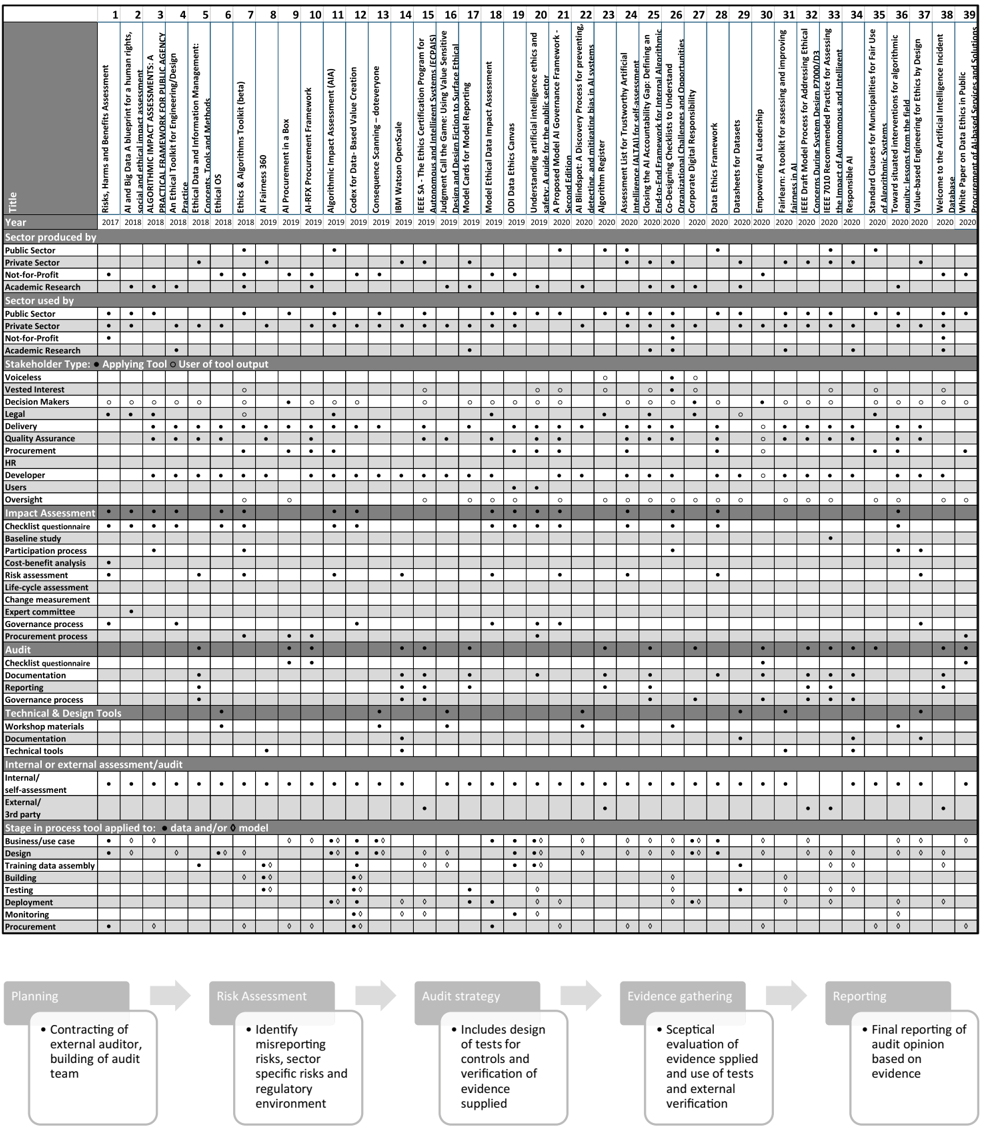
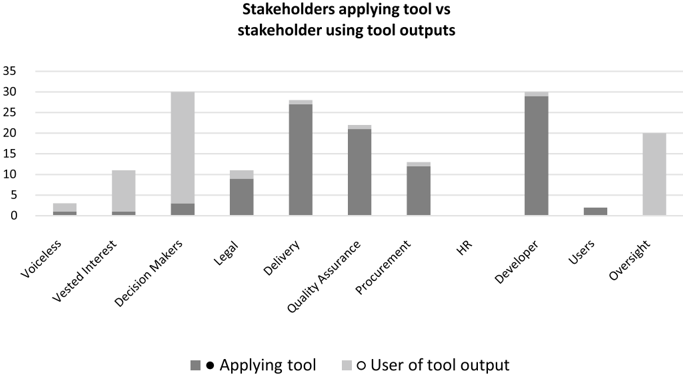
- Tools mainly target product development roles (developers, delivery, quality assurance), with outputs used by management decision-makers; voiceless groups, vested interests, and users are largely excluded.
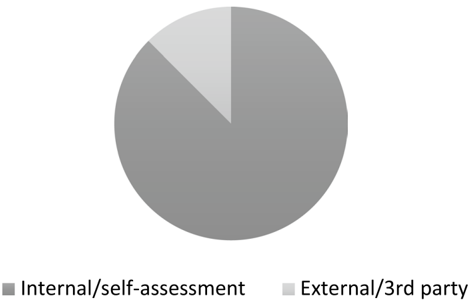
- Nearly all tools are internal self-assessment; only IEEE standards require external verification, and two public registers provide explicit transparency; external verification occurs in only 5 of 35 tools analysed.
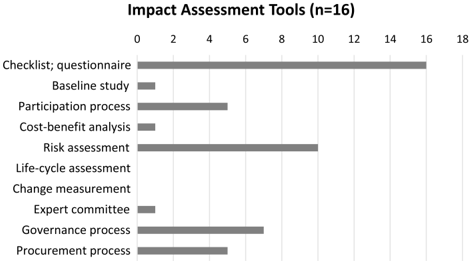
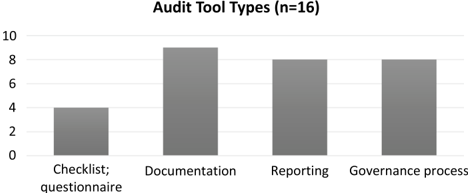
- Checklists/questionnaires are used in all 16 impact assessments versus 4/16 audit tools; missing techniques include participation process, baseline study, life-cycle assessment, change measurement, and expert committees; a third of impact assessment tools focus on procurement.
Methods
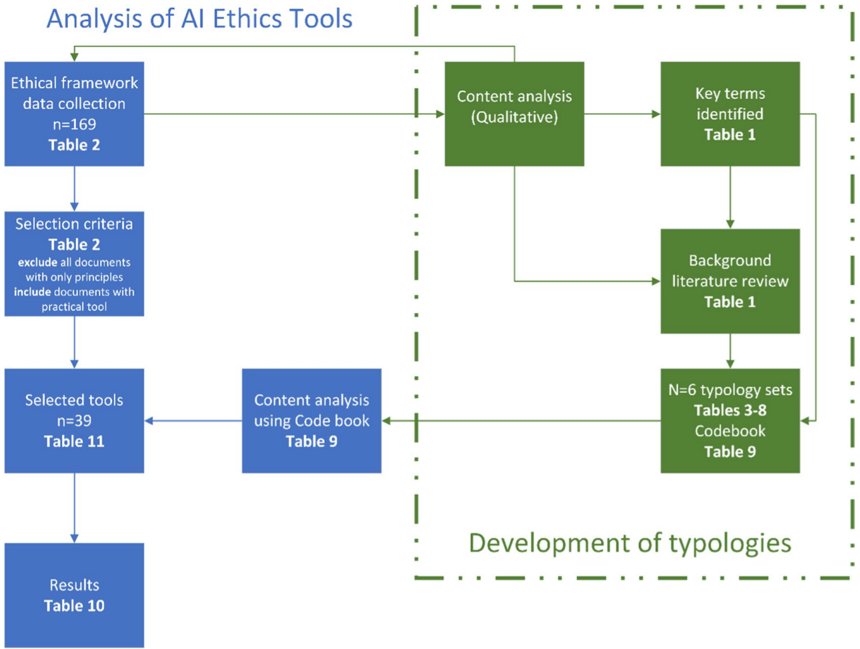
- Qualitative content analysis of AI ethics documents collected May 2019–December 2020, with publication dates 2016–2020; initial n = 169, excluding principles-only documents, leaving n = 39 practical tools.
- Typologies were built from historical impact assessment and audit literature across technology, environment, privacy/data protection, human rights, finance, and engineering, then used to code documents for stakeholders, tool types, internal/external process, production stage, and data/model focus.
- Documents were stored in Zotero and coded iteratively in MS Excel using a codebook and sub-questions to compare tools.
Limitations
- Stated: the limited size of the team analysing and coding the documents presents a limitation, since qualitative validity is often justified by recurrent iterations with different coders.
- Stated: the paper does not provide an exhaustive review of computational techniques in AI/ML for fairness and explainability.
- Evident from the text: “impact assessment” and “audit” are used loosely or interchangeably across AI ethics documents, requiring researcher judgement; the sample is largely grey literature, English-language, and publicly online, which may limit generalisability.
Model-written summary. Check it against the paper before relying on it.
Integrity signals
Registry
Cites
Statistics
Figures

Verification
Claims the paper makes
10 Valid · 5 Not valid · 45 Not checked · 64 Own results and interpretations
The sources with a verdict support this claim; the rest weren’t checked yet, have no full text we could read, or their verdicts aren’t rated yet.
In the paper
“Meta-analyses of AI ethics proposals have thus far focused mainly on classifying and comparing the ethical principles suggested, where some convergence can be identified for principles like transparency, fairness, privacy and responsibility [4][5][6].”
§ Putting AI ethics to work: are the tools fit for purpose? > 1 Introduction
What the sources say
- Supportedcites [4] Hagendorff, T.: The ethics of AI ethics-an evaluation of guide- lines. Minds Mach. 30(1), 99-120 (2020). https:// doi. org/ 10. 1007/ s11023-020-09517-8 source
Split into 2 atoms — 2 confirmed, 0 partially supported, 0 disputed, 0 misattributed, 0 unverifiable. Expand the claim to see per-atom verdicts.
- Supportedcites [5] Jobin, A., Ienca, M., Vayena, E.: The global landscape of AI eth- ics guidelines. Nat. Mach. Intell. 1(9), 389-399 (2019). https:// doi. org/ 10. 1038/ s42256-019-0088-2 source
Split into 2 atoms — 2 confirmed, 0 partially supported, 0 disputed, 0 misattributed, 0 unverifiable. Expand the claim to see per-atom verdicts.
- Not checked yetcites [6] Fjeld, J., Achten, N., Hilligoss, H., Nagy, A., Srikumar, M.: Prin- cipled artificial intelligence: mapping consensus in ethical and rights-based approaches to principles for AI. In: Social Science Research Network, Rochester, NY, SSRN Scholarly Paper ID 3518482 (2020). Available https:// papers. ssrn. com/ abstr act= 35184 82. Accessed 27 Jan. 2020. (Online) source
plain- Asserted: passes — The authors put it forward as true.
- Checkable: passes — It can be checked against evidence.
- Load-bearing: passes — The paper’s conclusions depend on it.
- Based: passes — The paper gives a reason why it holds.
- Supported
The sources with a verdict support this claim; the rest weren’t checked yet, have no full text we could read, or their verdicts aren’t rated yet.
In the paper
“In the first phase from 2016 to 2019, many high-level ethical principles for AI were published as evidenced by these catalogues of ethical principles and frameworks for ethical, trustworthy responsible AI [4-6, 18, 19].”
§ Putting AI ethics to work: are the tools fit for purpose? > 1 Introduction
What the sources say
- Supportedcites [4] Hagendorff, T.: The ethics of AI ethics-an evaluation of guide- lines. Minds Mach. 30(1), 99-120 (2020). https:// doi. org/ 10. 1007/ s11023-020-09517-8 source
The Abstract says that numerous AI ethics guidelines setting out normative principles were released in recent years. Section 2.1 (Method) identifies multiple guidelines and principle lists dated 2016–2019. The paper supports their publication in that period; the citing paper’s description of it as a “first phase” is its own framing. (LLM, conf=0.89)
- Supportedcites [5] Jobin, A., Ienca, M., Vayena, E.: The global landscape of AI eth- ics guidelines. Nat. Mach. Intell. 1(9), 389-399 (2019). https:// doi. org/ 10. 1038/ s42256-019-0088-2 source
The Results report 84 documents containing AI ethical principles or guidelines, 88% of which were released after 2016. This supports the claim that many such principles were published during the stated period; the 'first phase' label is the citing authors’ framing. (LLM, conf=0.93)
- Not checked yetcites [6] Fjeld, J., Achten, N., Hilligoss, H., Nagy, A., Srikumar, M.: Prin- cipled artificial intelligence: mapping consensus in ethical and rights-based approaches to principles for AI. In: Social Science Research Network, Rochester, NY, SSRN Scholarly Paper ID 3518482 (2020). Available https:// papers. ssrn. com/ abstr act= 35184 82. Accessed 27 Jan. 2020. (Online) source
- Not checked yetcites [18] AlgorithmWatch: "AI Ethics Guidelines Global Inventory by AlgorithmWatch," AI Ethics Guidelines Global Inventory (2020). https:// inven tory. algor ithmw atch. org. Accessed 11 Aug. 2020.
- Not checked yetcites [19] Schiff, D., Borenstein, J., Biddle, J., Laas, K.: AI ethics in the public, private, and NGO sectors: a review of a global document collection. IEEE Trans. Technol. Soc. (2021). https:// doi. org/ 10. 1109/ TTS. 2021. 30521 27 source
plain- Asserted: passes — The authors put it forward as true.
- Checkable: passes — It can be checked against evidence.
- Load-bearing: unclear — It is unclear whether the paper’s conclusions depend on it.
- Based: passes — The paper gives a reason why it holds.
- Supported
The sources with a verdict support this claim; the rest weren’t checked yet, have no full text we could read, or their verdicts aren’t rated yet.
In the paper
“There are already established governance methodologies for assessing and mitigating the impact of new technologies, processes, and infrastructure across the domains of environment [24], information privacy [25], data protection [26] and human rights [27].”
§ Putting AI ethics to work: are the tools fit for purpose? > 1 Introduction
What the sources say
- Supportedcites [24] Morgan, R.K.: Environmental impact assessment: the state of the art. Impact Assess. Proj. Apprais. 30(1), 5-14 (2012). https:// doi. org/ 10. 1080/ 14615 517. 2012. 661557 source
For the environment leg of the claim, Morgan (2012) supplies exactly the attributed point: the Introduction defines EIA as the established process of 'assessing proposed actions (from policies to projects) for their likely implications for all aspects of the environment ... before decisions are made to commit to those actions, and developing appropriate responses to the issues identified in that assessment' (i.e. assessing and mitigating impacts of new projects/infrastructure), and the Institutional considerations section states that after 40 years 'EIA is now universally recognized as a key instrument for environmental management, firmly embedded in domestic and international environmental law', with the ECOLEX search showing 191 of 193 UN member nations have legislation or an international instrument referring to EIA. The Strengths section likewise records that 'EIA is well established around the world', in statutory development control, international law and lending-institution standards. The claim's other domains (privacy, data protection, human rights) carry separate citations and are not judged here; note only that this paper mentions human rights impact assessment as one of several newer forms of impact assessment (Forms of impact assessment). (LLM, conf=0.88)
- Not checked yetcites [25] Clarke, R.: Privacy impact assessment: Its origins and develop- ment. Comput. Law Secur. Rev. 25(2), 123-135 (2009). https:// doi. org/ 10. 1016/j. clsr. 2009. 02. 002 source
- Not checked yetcites [26] Information Commissioner's Office: Data protection impact assessments (2018). https:// ico. org. uk/ for-organ isati ons/ guide- to-the-gener al-data-prote ction-regul ation-gdpr/ accou ntabi lity- and-gover nance/ data-prote ction-impact-asses sments/. Accessed 07 Jun. 2018
plain- Asserted: passes — The authors put it forward as true.
- Checkable: passes — It can be checked against evidence.
- Load-bearing: passes — The paper’s conclusions depend on it.
- Based: passes — The paper gives a reason why it holds.
- Supported
The sources with a verdict support this claim; the rest weren’t checked yet, have no full text we could read, or their verdicts aren’t rated yet.
In the paper
“Audit also requires non-technical governance processes [15] to ensure consistency with relevant principles or norms [56].”
§ Putting AI ethics to work: are the tools fit for purpose? > 2.6 Audit
What the sources say
- Not checked yetcites [15] Kazim, E., Koshiyama, A.: AI assurance processes. In: Social Science Research Network, Rochester, SSRN Scholarly Paper ID 3685087 (2020). https:// doi. org/ 10. 2139/ ssrn. 36850 87. source
- Supportedcites [56] Mökander, J., Floridi, L.: Ethics-based auditing to develop trustworthy AI. Minds Mach. (2021). https:// doi. org/ 10. 1007/ s11023-021-09557-8 source
Section 2 ("Ethics-based Auditing of AI—What it is and How it Works") states that "Ethics-based auditing is a governance mechanism" and that operationally it is "a structured process by which an entity's behaviour is assessed for consistency with relevant principles or norms" — i.e. the audit's purpose is normative alignment, not a technical fix. Section 4 ("A Roadmap for Future Research") reinforces the non-technical, institutional character: "Ethics-based auditing is only as good as the institutions backing it," with organisational and institutional constraints (Table 1) listed separately from technical ones, and Section 3 requiring frameworks to "harmonise with organisational policies and individual incentives." Together these support the cited proposition that auditing requires non-technical governance processes to ensure consistency with relevant principles or norms. (LLM, conf=0.85)
plainstates a cause- Asserted: passes — The authors put it forward as true.
- Checkable: passes — It can be checked against evidence.
- Load-bearing: unclear — It is unclear whether the paper’s conclusions depend on it.
- Based: passes — The paper gives a reason why it holds.
Every source the paper cites for this claim was checked and supports it.
In the paper
“Studies with ML developers highlight that considerations of a model's context, and the specificity of the domain in which it is used, are vital to improve features like fairness [73].”
§ Putting AI ethics to work: are the tools fit for purpose? > 2.9 Technical and design tools
What the sources say
- Supportedcites [73] Veale, M., Van Kleek, M., Binns, R.: Fairness and accountability design needs for algorithmic support in high-stakes public sec- tor decision-making. In: Proceedings of the 2018 CHI Confer- ence on Human Factors in Computing Systems, New York, p. 440:1-440:14 (2018). https:// doi. org/ 10. 1145/ 31735 74. 31740 14. source
The Concluding Remarks (p. 10) state that 'Domain-specific, organisational and contextual factors are crucial to closely consider in the context of interventions intended to improve the fairness and accountability of algorithmic decision-support', which matches the claim's substance (context and domain specificity as vital to improving fairness). The Introduction (p. 1-2) and Background (p. 2) reinforce this: FAT/ML tools are 'built in isolation ... from specific users and use contexts' and 'will also fail unless contextual challenges are understood early on'. The study basis is practitioners including 'in-house machine learning modellers' (Introduction, p. 2), so describing it as a study with ML developers is accurate. (LLM, conf=0.85)
plainstates a cause- Asserted: passes — The authors put it forward as true.
- Checkable: passes — It can be checked against evidence.
- Load-bearing: unclear — It is unclear whether the paper’s conclusions depend on it.
- Based: passes — The paper gives a reason why it holds.
- Supported
32 more claims
Create a free account to see all 124 claims and to verify the 82 references still open.
- Probably not a substantial claim. 63
- It may state two separate claims as one. 51
Claims other papers make about this one
Each is checked against this paper’s own text: does it say what the citing paper says it does?
The cited source says what the claim attributes to it.
In the citing paper
“There is little consensus yet on the proper way to design and conduct an AI audit [4,56].”
From Who Audits the Auditors? Recommendations from a field scan of the algorithmic auditing ecosystem (2022) · cites this paper as [4]
In the citing paper
“The latter enables researchers to study the real-world effects different auditing procedures have on how AI systems are designed and deployed (Ayling & Chapman, 2021;Fitzgerald et al., 2013;Stoel et al., 2012).”
From Auditing of AI: Legal, Ethical and Technical Approaches (2023) · cites this paper as Ayling & Chapman, 2021
Self-check
Percentages, sums and reported differences re-computed from the paper’s own numbers.
Each contradiction between two passages listed here was confirmed by an independent check.
Rated minor: it would not touch a result — a value no result rests on, a p-value that stays on the same side of the significance level, or a conflict that is clerical, resolved elsewhere in the paper, or outside its own findings.
In the paper
§ Putting AI ethics to work: are the tools fit for purpose? > 5 Discussion
“As Fig. 2 illustrates, current tools, not surprisingly, are designed for use by those in the production process of AI systems and the key decision-makers around that process.”
§ Putting AI ethics to work: are the tools fit for purpose? > Appendix 1: Source documents
“Figure: 2 Fig. 2 Fig. 2 Flow diagram of methodology”
Rated minor: it would not touch a result — a value no result rests on, a p-value that stays on the same side of the significance level, or a conflict that is clerical, resolved elsewhere in the paper, or outside its own findings.
In the paper
§ Putting AI ethics to work: are the tools fit for purpose? > 5 Discussion
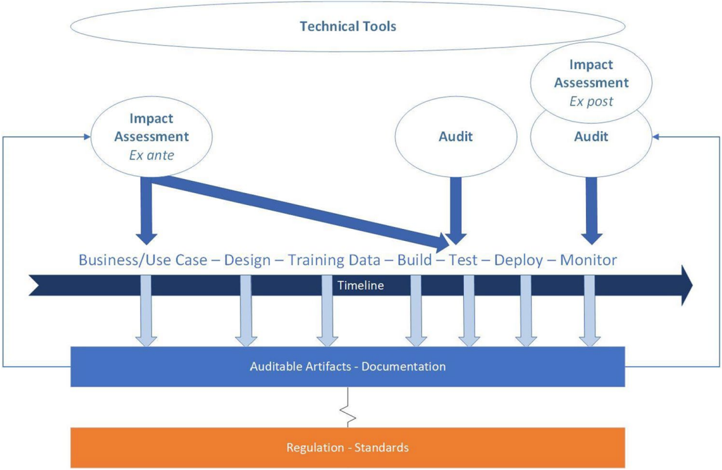
“In Fig. 8, the top-level-Regulation and Standards-has no direct connection to the processes below.”
§ Putting AI ethics to work: are the tools fit for purpose? > Appendix 1: Source documents
“Figure: 8 Fig. 8 Fig. 8 Technical and design tools”
Citations
Cites
Content Analysis: An Introduction to its Methodology.
Shelley, M., & Krippendorff, K. (1984) · Journal of the American Statistical Association · doi:10.2307/2288384 · Cited by 24,312
(2010) · Cited by 24,023
Risk Society, Towards a New Modernity
Leiss, W., Beck, U., Ritter, M., Lash, S., & Wynne, B. (1994) · Canadian Journal of Sociology / Cahiers canadiens de sociologie · doi:10.2307/3341155 · Cited by 12,546
Risk Society: Towards a New Modernity
Boyd, W., Beck, U., & Shrader-Frechette, K. S. (1993) · Economic Geography · doi:10.2307/143601 · Cited by 9,215
(2014) · Medical Entomology and Zoology · Cited by 6,828
The global landscape of AI ethics guidelines
Jobin, A., Ienca, M., & Vayena, E. (2019) · Nature Machine Intelligence · doi:10.1038/s42256-019-0088-2 · Cited by 6,220 · cited 3×
“[5] note in their systematic review of global AI guidelines, conflicts can be identified in the different proposals ‘between avoiding harm at all costs and the perspective of accepting some degree of harm as long as risks and benefits are weighed against each other.”
BackgroundMethodThe Stakeholder Theory of the Corporation: Concepts, Evidence, and Implications
Donaldson, T., & Preston, L. E. (1995) · The Academy of Management Review · doi:10.2307/258887 · Cited by 5,846 · cited 1×
“Identify the responsibilities of parties with relation to a given process [66].”
BackgroundA Survey on Bias and Fairness in Machine Learning
Mehrabi, N., Morstatter, F., Saxena, N., Lerman, K., & Galstyan, A. (2022) · ACM Computing Surveys · doi:10.1145/3457607 · Cited by 5,812
A Survey on Bias and Fairness in Machine Learning
Mehrabi, N., Morstatter, F., Saxena, N., Lerman, K., & Galstyan, A. (2019) · arXiv · doi:10.48550/arxiv.1908.09635 · Cited by 5,812
Floridi, L., Cowls, J., Beltrametti, M., Chatila, R., Chazerand, P., Dignum, V., Luetge, C., Madelin, R., Pagallo, U., Rossi, F., et al. (2018) · Minds and Machines · doi:10.1007/s11023-018-9482-5 · Cited by 4,774 · cited 1×
“[63] draw attention to risk that results from not using the technology, and how these risks need careful trade-offs to ensure the greatest benefit.”
BackgroundHow to plan and perform a qualitative study using content analysis
Bengtsson, M. (2016) · NursingPlus Open · doi:10.1016/j.npls.2016.01.001 · Cited by 4,616 · cited 2×
“The research methodology used is a reflexive and adaptive [85], creating a robust process for relating the document data to their context as shown in the diagram in Fig.”
MethodThe ethics of algorithms: Mapping the debate
Mittelstadt, B. D., Allo, P., Taddeo, M., Wachter, S., & Floridi, L. (2016) · Big Data & Society · doi:10.1177/2053951716679679 · Cited by 4,567 · cited 1×
“Algorithmic systems also create problems of accountability and moral responsibility, where it is unclear which moral agent in the process bears (or shares) responsibility for outcomes from a system [10].”
BackgroundStrategic Management: A Stakeholder Approach
Freeman, R. E. (2010) · Cambridge University Press eBooks · doi:10.1017/cbo9781139192675 · Cited by 4,494
Automating Inequality: How High-Tech Tools Profile, Police, and Punish the Poor
Lebovits, H. (2019) · Public Integrity · doi:10.1080/10999922.2018.1511671 · Cited by 3,279
Rebitzer, G., Ekvall, T., Frischknecht, R., Hunkeler, D., Norris, G., Rydberg, T., Schmidt, W.-P., Suh, S., Weidema, B. P., & Pennington, D. W. (2004) · Environment International · doi:10.1016/j.envint.2003.11.005 · Cited by 2,753
Model Cards for Model Reporting
Mitchell, M., Wu, S., Zaldivar, A., Barnes, P., Vasserman, L., Hutchinson, B., Spitzer, E., Raji, I. D., & Gebru, T. (2019) · Proceedings of the Conference on Fairness, Accountability, and Transparency · doi:10.1145/3287560.3287596 · Cited by 2,681 · cited 1×
“) These are either materials for use in design teams in workshop style events [76, 77], tools for producing documentation of the design, build and test process [21, 68], or technical tools for testing models, protecting privacy and security, testing for bias [69, 93, 94], or tracking provenance of data [95].”
BackgroundGebru, T., Morgenstern, J., Vecchione, B., Vaughan, J. W., Wallach, H., Daumé, H., & Crawford, K. (2018) · arXiv · doi:10.48550/arxiv.1803.09010 · Cited by 2,474
Gebru, T., Morgenstern, J., Vecchione, B., Vaughan, J. W., Wallach, H., III, H. D., & Crawford, K. (2021) · Communications of the ACM · doi:10.1145/3458723 · Cited by 2,469 · cited 1×
“A second phase saw a more technical approach from the computer science community focusing on fairness, accountability and transparency as an engineering ‘ethical-by-design’ problem-solving exercise [20–22].”
BackgroundThe Ethics of AI Ethics: An Evaluation of Guidelines
Hagendorff, T. (2020) · Minds and Machines · doi:10.1007/s11023-020-09517-8 · Cited by 1,911 · cited 1×
“Other collections of AI ethics documents were also used both as sources of relevant documents, and for validation [4, 5, 18, 82].”
MethodWestin, A. F. (1967) · Cited by 1,908
The Ethics of AI Ethics -- An Evaluation of Guidelines
Hagendorff, T. (2019) · arXiv · doi:10.48550/arxiv.1903.03425 · Cited by 1,907 · cited 1×
“Other collections of AI ethics documents were also used both as sources of relevant documents, and for validation [4, 5, 18, 82].”
MethodSocial Benefit versus Technological Risk: What is our society willing to pay for safety?
Starr, C. (1969) · Science · doi:10.1126/science.165.3899.1232 · Cited by 1,736
Risk assessment and risk management: Review of recent advances on their foundation
Aven, T. (2016) · European Journal of Operational Research · doi:10.1016/j.ejor.2015.12.023 · Cited by 1,713 · cited 2×
“1 3 Risk assessment techniques vary from quantitative to qualitative approaches [40] depending on the sector and application.”
BackgroundSecure, privacy-preserving and federated machine learning in medical imaging
Kaissis, G. A., Makowski, M. R., Rückert, D., & Braren, R. F. (2020) · Nature Machine Intelligence · doi:10.1038/s42256-020-0186-1 · Cited by 1,676 · cited 1×
“) These are either materials for use in design teams in workshop style events [76, 77], tools for producing documentation of the design, build and test process [21, 68], or technical tools for testing models, protecting privacy and security, testing for bias [69, 93, 94], or tracking provenance of data [95].”
BackgroundRoutledge International Handbook of Participatory Design
(2012) · doi:10.4324/9780203108543 · Cited by 1,606
Bellamy, R. K. E., Dey, K., Hind, M., Hoffman, S. C., Houde, S., Kannan, K., Lohia, P., Martino, J., Mehta, S., Mojsilovic, A., et al. (2018) · arXiv · doi:10.48550/arxiv.1810.01943 · Cited by 1,581 · cited 1×
“A range of computational approaches have been suggested, offering quantitative metrics for fairness, methods to ‘debias’ training data sets, test models against protected characteristics and provide explanations of ‘black box’ algorithms, packaged up into AI fairness toolkits [20, 68–70].”
Solove, D. J. (2006) · University of Pennsylvania Law Review · doi:10.2307/40041279 · Cited by 1,388
(2008) · Cited by 1,325
(2018) · Cited by 1,167
Social Benefit Versus Technological Risk: What is Our Society Willing to Pay for Safety?
Starr, C. (2018) · Renewable Energy · doi:10.4324/9781315793245-125 · Cited by 1,006
Fjeld, J., Achten, N., Hilligoss, H., Nagy, A., & Srikumar, M. (2020) · SSRN Electronic Journal · doi:10.2139/ssrn.3518482 · Cited by 998 · cited 3×
“This paper sets out to review the landscape of suggested ethical frameworks with a focus on those which go beyond high-level statements of principles (see [4–6] for review of principles), and offer practical tools for application of these principles in the production and deployment of systems.”
BackgroundEnvironmental impact assessment: the state of the art
Morgan, R. K. (2012) · Impact Assessment and Project Appraisal · doi:10.1080/14615517.2012.661557 · Cited by 902 · cited 2×
“By reviewing best practices from historical frameworks created to assess the effects of technology on the environment [24], information privacy [25], data protection [26] and human rights [27], we create a typology of concerns that previous generations of impact assessments and audits have found beneficial to consider.”
BackgroundAI Fairness 360: An extensible toolkit for detecting and mitigating algorithmic bias
Bellamy, R. K. E., Dey, K., Hind, M., Hoffman, S. C., Houde, S., Kannan, K., Lohia, P., Martino, J., Mehta, S., Mojsilović, A., et al. (2019) · IBM Journal of Research and Development · doi:10.1147/jrd.2019.2942287 · Cited by 884
Morley, J., Floridi, L., Kinsey, L., & Elhalal, A. (2020) · Science and Engineering Ethics · doi:10.1007/s11948-019-00165-5 · Cited by 882 · cited 2×
“It also serves to illustrate how complex this landscape is, and as others have noted [7, 19, 98, 102, 104, 105], this provides a barrier to those developing or purchasing AI systems as to which tool is appropriate for their purposes.”
BackgroundAccountability in algorithmic decision making
Diakopoulos, N. (2016) · Communications of the ACM · doi:10.1145/2844110 · Cited by 763
The Atlas of AI: Power, Politics, and the Planetary Costs of Artificial Intelligence
CRAWFORD, K. (2021) · doi:10.2307/j.ctv1ghv45t · Cited by 742
Global Risk Governance: Concept and Practice Using the IRGC Framework
(2008) · International Risk Governance Council Bookseries · doi:10.1007/978-1-4020-6799-0 · Cited by 734
Where fairness fails: data, algorithms, and the limits of antidiscrimination discourse
Hoffmann, A. L. (2019) · Information, Communication & Society · doi:10.1080/1369118x.2019.1573912 · Cited by 535
Stephanidis, C., Salvendy, G., Antona, M., Chen, J. Y. C., Dong, J., Duffy, V. G., Fang, X., Fidopiastis, C., Fragomeni, G., Fu, L. P., et al. (2019) · International Journal of Human–Computer Interaction · doi:10.1080/10447318.2019.1619259 · Cited by 524 · cited 1×
“The human–computer interaction (HCI) community is also concerned to translate previous work in, for example, Value Centred Design, to address the issues in human–AI interactions [79].”
BackgroundVeale, M., Van Kleek, M., & Binns, R. (2018) · Proceedings of the 2018 CHI Conference on Human Factors in Computing Systems · doi:10.1145/3173574.3174014 · Cited by 490 · cited 2×
“Many would argue that in fact, developing ethical AI requires not only technical ‘fixes’ but the deployment of social science disciplines is vital to address negative outcomes [73–75].”
BackgroundThe Oxford Handbook of Ethics of AI
(2020) · doi:10.1093/oxfordhb/9780190067397.001.0001 · Cited by 459
Madaio, M. A., Stark, L., Wortman Vaughan, J., & Wallach, H. (2020) · Proceedings of the 2020 CHI Conference on Human Factors in Computing Systems · doi:10.1145/3313831.3376445 · Cited by 436 · cited 2×
“Other suggestions focus on design processes, for example, awareness raising for design teams in workshop style events [76, 77], or participatory design processes [78].”
BackgroundThe Role and Limits of Principles in AI Ethics: Towards a Focus on Tensions
Whittlestone, J., Nyrup, R., Alexandrova, A., & Cave, S. (2019) · Proceedings of the 2019 AAAI/ACM Conference on AI, Ethics, and Society · doi:10.1145/3306618.3314289 · Cited by 399 · cited 1×
“See [86] for a discussion of why principles are not enough on their own, and how we need to bridge to gap between principles and practice.”
BackgroundPublic participation in environmental impact assessment: why, who and how?
Glucker, A. N., Driessen, P. P. J., Kolhoff, A., & Runhaar, H. A. C. (2013) · Environmental Impact Assessment Review · doi:10.1016/j.eiar.2013.06.003 · Cited by 395
The Ethics of AI Ethics: An Evaluation of Guidelines
Hagendorff, T. (2020) · PhilPapers (PhilPapers Foundation) · Cited by 394
Greene, D., Hoffmann, A. L., & Stark, L. (2019) · Proceedings of the Annual Hawaii International Conference on System Sciences · doi:10.24251/hicss.2019.258 · Cited by 386 · cited 1×
“Who should decide on the design and use/non-use of AI systems is often framed as a ‘project of expert oversight’, giving little or no input to those stakeholders subject to AI systems [14], and where the process can become a form of ‘participation washing’ [121].”
BackgroundThe global landscape of AI ethics guidelines
Jobin, A., Ienca, M., & Vayena, E. (2019) · Repository for Publications and Research Data (ETH Zurich) · doi:10.3929/ethz-b-000375277 · Cited by 360
The Values Encoded in Machine Learning Research
Birhane, A., Kalluri, P., Card, D., Agnew, W., Dotan, R., & Bao, M. (2022) · 2022 ACM Conference on Fairness Accountability and Transparency · doi:10.1145/3531146.3533083 · Cited by 317
The Values Encoded in Machine Learning Research
Birhane, A., Kalluri, P., Card, D., Agnew, W., Dotan, R., & Bao, M. (2021) · arXiv · doi:10.48550/arxiv.2106.15590 · Cited by 317
Ryan, M., & Stahl, B. C. (2021) · Journal of Information, Communication and Ethics in Society · doi:10.1108/jices-12-2019-0138 · Cited by 310 · cited 1×
“Several authors [7, 13–17] have identified different phases in the response to increasing public debate about the impact of AI technologies.”
BackgroundToward Trustworthy AI Development: Mechanisms for Supporting Verifiable Claims
Brundage, M., Avin, S., Wang, J., Belfield, H., Krueger, G., Hadfield, G., Khlaaf, H., Yang, J., Toner, H., Fong, R., et al. (2020) · arXiv · doi:10.48550/arxiv.2004.07213 · Cited by 306 · cited 1×
“Brundage et al. define as this as problem space for current AI production in that they ‘lack traceable logs of steps taken in problem-definition, design, development, and operation, leading to a lack of accountability for subsequent claims about those systems’ properties and impacts’ [55].”
Background50 Years of Test (Un)fairness: Lessons for Machine Learning
Hutchinson, B., & Mitchell, M. (2019) · Proceedings of the Conference on Fairness, Accountability, and Transparency · doi:10.1145/3287560.3287600 · Cited by 297 · cited 1×
“1], and reflect a longer history of attempts to reduce (un)fairness to a metric [72].”
BackgroundPrivacy and Power: Computer Databases and Metaphors for Information Privacy
Solove, D. J. (2001) · Stanford Law Review · doi:10.2307/1229546 · Cited by 288
Ethics-Based Auditing to Develop Trustworthy AI
Mökander, J., & Floridi, L. (2021) · Minds and Machines · doi:10.1007/s11023-021-09557-8 · Cited by 268 · cited 1×
“Audit also requires non-technical governance processes [15] to ensure consistency with relevant principles or norms [56].”
BackgroundTypologies, Taxonomies, and the Benefits of Policy Classification
Smith, K. B. (2002) · Policy Studies Journal · doi:10.1111/j.1541-0072.2002.tb02153.x · Cited by 267
Participation Is not a Design Fix for Machine Learning
Sloane, M., Moss, E., Awomolo, O., & Forlano, L. (2022) · Equity and Access in Algorithms, Mechanisms, and Optimization · doi:10.1145/3551624.3555285 · Cited by 267 · cited 1×
“Who should decide on the design and use/non-use of AI systems is often framed as a ‘project of expert oversight’, giving little or no input to those stakeholders subject to AI systems [14], and where the process can become a form of ‘participation washing’ [121].”
BackgroundPearce, D. W. (1971) · doi:10.1007/978-1-349-01091-2 · Cited by 264
From ethics washing to ethics bashing: a view on tech ethics from within moral philosophy
Bietti, E. (2020) · Proceedings of the 2020 Conference on Fairness, Accountability, and Transparency · doi:10.1145/3351095.3372860 · Cited by 261 · cited 1×
“’ Ethical tools can though, provide a reliable evidence base on which to make decisions, but without robust oversight may result in procedures that produce a checklist mentality and performative gestures that constitute ‘ethics washing’ [13, 107, 108].”
BackgroundQualitative Inhaltsanalyse – Abgrenzungen, Spielarten, Weiterentwicklungen
Mayring, P. (2019) · Forum Qualitative Sozialforschung / Forum: Qualitative Social Research · doi:10.17169/fqs-20.3.3343 · Cited by 249
The case for ethical technology assessment (eTA)
Palm, E., & Hansson, S. O. (2006) · Technological Forecasting and Social Change · doi:10.1016/j.techfore.2005.06.002 · Cited by 230
Fairlearn: A toolkit for assessing and improving fairness in AI
Bird, S., Dudík, M., Edgar, R. J., Horn, B., Lutz, R., Milan, V., Sameki, M., Wallach, H., & Walker, K. (2020) · Cited by 204
Privacy impact assessment: Its origins and development
Clarke, R. (2009) · Computer Law & Security Review · doi:10.1016/j.clsr.2009.02.002 · Cited by 196
Human rights and impact assessment: clarifying the connections in practice
Kemp, D., & Vanclay, F. (2013) · Impact Assessment and Project Appraisal · doi:10.1080/14615517.2013.782978 · Cited by 195 · cited 1×
“SIA is not a widely applied form of assessment ‘largely because of the challenge of defining, predicting and measuring social change and impact, in addition to legal and regulatory frameworks that are persistently weak or ineffectual in terms of social impact’ [43, p. 91].”
BackgroundAlgorithmic Impact Assessments and Accountability: The Co-construction of Impacts
Metcalf, J., Moss, E., Watkins, E. A., Singh, R., & Elish, M. C. (2021) · Proceedings of the 2021 ACM Conference on Fairness, Accountability, and Transparency · doi:10.1145/3442188.3445935 · Cited by 195 · cited 1×
“Metcalf et al. [109] conclude that historically impact assessments Fig.”
BackgroundP for Political: Participation is Not Enough
Beck, E. E. (2002) · Journal of the Association for Information Systems · Cited by 191
Hayne, C., & Free, C. (2014) · Accounting, Organizations and Society · doi:10.1016/j.aos.2014.05.002 · Cited by 162
Toward situated interventions for algorithmic equity: lessons from the field
Katell, M., Young, M., Dailey, D., Herman, B., Guetler, V., Tam, A., Bintz, C., Raz, D., & Krafft, P. M. (2020) · Proceedings of the 2020 Conference on Fairness, Accountability, and Transparency · doi:10.1145/3351095.3372874 · Cited by 153
AI Ethics in the Public, Private, and NGO Sectors: A Review of a Global Document Collection
Schiff, D., Borenstein, J., Biddle, J., & Laas, K. (2021) · IEEE Transactions on Technology and Society · doi:10.1109/tts.2021.3052127 · Cited by 149 · cited 1×
“It also serves to illustrate how complex this landscape is, and as others have noted [7, 19, 98, 102, 104, 105], this provides a barrier to those developing or purchasing AI systems as to which tool is appropriate for their purposes.”
BackgroundAccounting for Enron: shareholder value and stakeholder interests
Clarke, T. (2005) · Corporate Governance An International Review · doi:10.1111/j.1467-8683.2005.00454.x · Cited by 130
The Landscape and Gaps in Open Source Fairness Toolkits
Lee, M. S. A., & Singh, J. (2021) · Proceedings of the 2021 CHI Conference on Human Factors in Computing Systems · doi:10.1145/3411764.3445261 · Cited by 129 · cited 2×
“We also have not set out to provide an exhaustive review of the computational techniques in the AI/ML research to address ethical issues like fairness and explainability, for this, see for example [102, 103].”
BackgroundPrinciples of Contemporary Corporate Governance
du Plessis, J. J., Hargovan, A., & Bagaric, M. (2009) · Cambridge University Press eBooks · doi:10.1017/cbo9781139151467 · Cited by 128
Beyond checklists: toward an ethical-constructive technology assessment
Kiran, A. H., Oudshoorn, N., & Verbeek, P.-P. (2015) · Journal of Responsible Innovation · doi:10.1080/23299460.2014.992769 · Cited by 124
50 Years of Test (Un)fairness: Lessons for Machine Learning
Hutchinson, B., & Mitchell, M. (2018) · arXiv (Cornell University) · doi:10.48550/arxiv.1811.10104 · Cited by 118
Bryson, J. J. (2020) · Oxford University Press eBooks · doi:10.1093/oxfordhb/9780190067397.013.1 · Cited by 117
Information Technology in a Democracy
Westin, A. F. (1971) · Harvard University Press eBooks · doi:10.4159/harvard.9780674436978 · Cited by 97
Information privacy, impact assessment, and the place of ethics
Raab, C. D. (2020) · Computer Law & Security Review · doi:10.1016/j.clsr.2020.105404 · Cited by 93 · cited 12×
“EIAs and ERAs were criticized for focusing on only bio-physical and economic impacts and not including the social and cultural impacts of proposed developments or technologies, leading to the development in the 1990s of Social Impact Assessments (SIA).”
BackgroundInfluentialThe Interpretation and Evaluation of Assurance Cases
Rushby, J. (2015) · Cited by 81
Interdisciplinary Vision: The First 25 Years of the Society for Risk Analysis (SRA), 1980–2005
Thompson, K. M., Deisler, P. F., & Schwing, R. C. (2005) · Risk Analysis · doi:10.1111/j.1539-6924.2005.00702.x · Cited by 79
Bantilan, N. (2018) · Journal of Technology in Human Services · doi:10.1080/15228835.2017.1416512 · Cited by 72
Lee, M. S. A., Floridi, L., & Singh, J. (2021) · AI and Ethics · doi:10.1007/s43681-021-00067-y · Cited by 71
Treatment of risk in environmental impact assessment
Suter, G. W., Barnthouse, L. W., & O'Neill, R. V. (1987) · Environmental Management · doi:10.1007/bf01867157 · Cited by 69 · cited 2×
“These assessments are part of many jurisdictions planning and/or environmental legislation, intended to allow stakeholders, including the public in its widest definition, to contribute to decision-making on infrastructure development like dams and roads [36, 37].”
BackgroundTheory In, Theory Out: The Uses of Social Theory in Machine Learning for Social Science
Radford, J., & Joseph, K. (2020) · Frontiers in Big Data · doi:10.3389/fdata.2020.00018 · Cited by 58 · cited 1×
“Many would argue that in fact, developing ethical AI requires not only technical ‘fixes’ but the deployment of social science disciplines is vital to address negative outcomes [73–75].”
BackgroundSome methods and techniques for comprehensive impact assessment
Coates, J. F. (1974) · Technological Forecasting and Social Change · doi:10.1016/0040-1625(74)90035-3 · Cited by 55
Why do we still need participatory technology assessment?
Hennen, L. (2012) · Poiesis & Praxis · doi:10.1007/s10202-012-0122-5 · Cited by 49 · cited 1×
“Instead of the traditional TA model with panels of experts producing reports for policy-makers, participatory TA (pTA) includes contributions from a much wider group of stakeholders like lay people, journalists, trade unions and civil society groups [33].”
MethodPrinciples of Contemporary Corporate Governance
du Plessis, J. J., Hargovan, A., & Harris, J. (2018) · Cambridge University Press eBooks · doi:10.1017/9781108329453 · Cited by 48
Capturing and querying fine-grained provenance of preprocessing pipelines in data science
Chapman, A. P., Missier, P., Simonelli, G., & Torlone, R. (2020) · Proceedings of the VLDB Endowment · doi:10.14778/3436905.3436911 · Cited by 41
Self-citationPrivacy HarmsPreprint
Citron, D. K., & Solove, D. J. (2021) · SSRN Electronic Journal · doi:10.2139/ssrn.3782222 · Cited by 31
Disruptive Innovations and Disruptive Assurance: Assuring Machine Learning and Autonomy
Bloomfield, R., Khlaaf, H., Ryan Conmy, P., & Fletcher, G. (2019) · Computer · doi:10.1109/mc.2019.2914775 · Cited by 23 · cited 1×
“There are also audit and assurance standards in safety critical engineering for industries like aviation, nuclear power, or more recently, autonomous vehicles [50, 51].”
BackgroundPrivacy Impact AssessmentsPreprint
VanHoy, J. (2023) · SSRN Electronic Journal · doi:10.2139/ssrn.4673612 · Cited by 22
Ethically Aligned Design of Autonomous Systems: Industry viewpoint and an empirical study
Vakkuri, V., Kemell, K., Kultanen, J., Siponen, M. T., & Abrahamsson, P. (2019) · Jyväskylä University Digital Archive (University of Jyväskylä) · doi:10.48550/arxiv.1906.07946 · Cited by 21
Business Data Ethics: Emerging Trends in the Governance of Advanced Analytics and AIPreprint
Hirsch, D. D., Bartley, T., Chandrasekaran, A., Norris, D., Parthasarathy, S., & Turner, P. N. (2020) · SSRN Electronic Journal · doi:10.2139/ssrn.3828239 · Cited by 20
Kazim, E., & Koshiyama, A. (2020) · SSRN Electronic Journal · doi:10.2139/ssrn.3685087 · Cited by 16
Prospects and Perils of Fiscal Impact Analysis
Edwards, M. M., & Huddleston, J. R. (2009) · Journal of the American Planning Association · doi:10.1080/01944360903310477 · Cited by 15
New Ways of Thinking about Privacy
Roessler, B. (2009) · Oxford University Press eBooks · doi:10.1093/oxfordhb/9780199548439.003.0038 · Cited by 14
Robb, C. M. (2003) · SSRN Electronic Journal · doi:10.2139/ssrn.879118 · Cited by 13
Standing and Privacy Harms: A Critique of TransUnion v. Ramirez
Solove, D. J., & Citron, D. K. (2021) · Scholarly Commons - George Washington University Law School (George Washington University) · Cited by 2
Stoa, R. (2020) · Stoa · doi:10.25009/st.2020.21.2596 · Cited by 1
Kende-Robb, C. (2003) · RePEc: Research Papers in Economics · Cited by 1
Participation is not a Design Fix for Machine Learning
Sloane, M., Moss, E., Awomolo, O., et al. (2020) · arXiv · doi:10.48550/arxiv.2007.02423
Value-based Engineering for Ethics by Design
Spiekermann, S., & Winkler, T. (2020) · arXiv · doi:10.48550/arxiv.2004.13676
Research works printed but not linked: 6
- IEEE Draft Model Process for Address- ing Ethical Concerns During System Design P7000/D3 2020 IEEE Standards Association IEEE https:// stand ards. ieee. org/ proje ct/ 7000. html 04/06/2020
- IEEE Recommended Practice for Assess- ing the Impact of Autonomous and Intelligent Systems on Human Well- Being Std 7010 2020 IEEE Standards Association IEEE https:// stand ards. ieee. org/ indus try-conne ctions/ ec/ auton omous-syste ms. html 30/08/2020
- UN Environment: "Assessing Environmental Impacts A Global Review Of Legislation-UNEP-WCMC," In: UNEP-WCMC's official website-Assessing Environmental Impacts A Global Review Of Legislation (2018). https:// www. unep-wcmc. org/ asses sing-envir onmen tal-impac ts--a-global-review-of-legis lation. Accessed 12 Feb. 2021.
- Krippendorff, K.: Content analysis. In: International encyclo- pedia of communication, vol. 1. Oxford University Press, New York, pp 8 (1989). Available http:// repos itory. upenn. edu/ asc_ papers/ 22. Accessed 08 Jul 2020 (Online)
- Webster, G.: Translation: personal information protection law of the People's Republic of China (Draft) (Second Review Draft) | DigiChina. In: Stanford DigiChina Cyber Policy Unit (2021). https:// digic hina. stanf ord. edu/ news/ trans lation-perso nal-infor mation-prote ction-law-peopl es-repub lic-china-draft-second- review. Accessed 21 May 2021 112.
- Thuermer, G., Walker, J., Simperl, E., Carr, L.: When data meets citizens: an investigation of citizen engagement in data-driven innovation programmes. In: Presented at the 2nd Data Justice Conference, Cardiff University Online (2021) 121.
Cited by
Experimental evidence on the productivity effects of generative artificial intelligence
Noy, S., & Zhang, W. (2023) · Science · doi:10.1126/science.adh2586 · Cited by 2,150
State of the art and practice in AI in education
Holmes, W., & Tuomi, I. (2022) · European Journal of Education · doi:10.1111/ejed.12533 · Cited by 1,093
Responsible Artificial Intelligence Governance: A Review and Research Framework
Papagiannidis, E., Mikalef, P., & Conboy, K. (2025) · The Journal of Strategic Information Systems · doi:10.1016/j.jsis.2024.101885 · Cited by 565
Ahmad, S. F., Han, H., Alam, M. M., Rehmat, M. K., Irshad, M., Arraño-Muñoz, M., & Ariza-Montes, A. (2023) · Humanities and Social Sciences Communications · doi:10.1057/s41599-023-01787-8 · Cited by 338
RetractedArtificial intelligence for literature reviews: opportunities and challenges
Bolaños, F., Salatino, A., Osborne, F., & Motta, E. (2024) · Artificial Intelligence Review · doi:10.1007/s10462-024-10902-3 · Cited by 246
Metadata
- Authors
- Ayling, J., & Chapman, A.
- Affiliations
- University of Southampton (GB)
- Corresponding author
- Ayling, Jacqui
- Venue
- AI and Ethics
- Published
- 2021-09-12
- Volume
- 2
- Issue
- 3
- Pages
- 405-429
- ISSN
- 2730-5953 (ISSN-L)
- 2730-5961
- OpenAlex
- W3199196172
- Semantic Scholar
- dd5a6c9ebde898e89e2d3db8153de774dce53c1a
- Cited by
- 253
- References
- 92
- Citations by year
- 2026: 49 · 2025: 66 · 2024: 85 · 2023: 33 · 2022: 20
- FWCI
- 43.14
- Type
- journal article
- Language
- en
- Open access
- hybrid
- doi.org
- Licence
- cc-by
- creativecommons.org/licenses/by/4.0 (tdm)
- creativecommons.org/licenses/by/4.0 (vor)
- Locations
- AI and Ethics (publishedVersion, cc-by)
- ePrints Soton (University of Southampton) (acceptedVersion)
- Funders
- Engineering and Physical Sciences Research Council
- Topics
- Physical Sciences › Computer Science › Artificial Intelligence › Ethics and Social Impacts of AI
- Physical Sciences › Computer Science › Artificial Intelligence › Explainable Artificial Intelligence (XAI)
- Social Sciences › Law › Digitalization, Law, and Regulation
- Keywords
- AI ethics, ethical frameworks, artificial intelligence in auditing, AI risk assessment, algorithmic bias, transparency and accountability, impact assessment, technology life cycle, stakeholder engagement
About these checks
Registry, retraction, Cites and statistics results are computed, not judged, with one exception: a printed reference that no index lists is read once by a model before it counts as a citation error. Claims are extracted by a model and kept only when their quote appears verbatim in the text; each cited source is then checked, with a model’s help, for whether it says what the claim relies on. Those verdicts can be wrong — read the claim’s quote and the cited source before relying on one.
The claim verdicts this report counts are experimental: their accuracy is not yet measured.
A language model drew the claims from the paper on 2026-10-07, under version 3 of the claim definition (model deepseek-v4.1-flash, prompt extract-v3).
A second model labelled each claim on 2026-10-07 (model jev-1.13-20260917, definition revision gold-guideline-v0.2).
Cited sources are checked with a language model’s help (gpt-6-sol and qwen3.8-omni-flash).
Statistics and arithmetic are recomputed, not judged.
Confidence bands are shown only for fields calibrated on our annotated test set. None is calibrated yet, so no band is shown.
What counts as a claim ›How we measure confidence ›How we check this ›
Are you an author, or do you see a problem with this page? Request a review
Data sources
Bibliographic data: Semantic Scholar, OpenAlex, Crossref.
Contains information from the Semantic Scholar Academic Graph Datasets, made available under the ODC Attribution License (ODC-BY 1.0).
Semantic Scholar’s data is described in: Kinney, R., et al. (2023). The Semantic Scholar Open Data Platform. arXiv:2301.10140.
