

Adherence to the CONSORT statement of randomized clinical trials on dentin hypersensitivity treatment using mouthwashes
Open accessThe DOI matches its Crossref record; 69 of the 69 references it cites were found in a registry or an index; 23 of the 38 sources its claims cite were checked for support.
Abstract
Following the publication of the CONSORT statement, numerous dental journals have recommended its use for the reporting of randomized clinical trials (RCTs). While numerous RCTs have been published assessing the efficacy of desensitizing mouthwashes for treating dentin hypersensitivity (DH), none of these studies have been evaluated for their quality using CONSORT guidelines. This study assessed RCTs investigating mouthwashes for DH treatment for adherence to CONSORT guidelines and their risk of bias. The databases of Cochrane Library, MEDLINE, Embase, BBO, LILACS, Scopus, and Web of Science were systematically searched from August to October 2024 for RCTs assessing the effectiveness of desensitizing mouthwashes. Adherence to CONSORT recommendations was evaluated using a specific tool, while the Cochrane risk-of-bias tool 2 was employed to assess the individual quality of the included papers. Out of the 2,883 papers retrieved, 36 were included in the qualitative analysis. The mean overall CONSORT score was 23.3 ± 1.4, out of a maximum of 32 points. Intervention, outcomes, hypothesis testing, and effect size were the most comprehensively described elements. Meanwhile, settings and protocol registration were only described by 12.5% of the articles. Significant differences in CONSORT scores were identified based on journal and publication dates. Low risk of bias was identified in 14 studies, two papers were judged to have an unclear risk, and no articles showed a high risk of bias. Full adherence to CONSORT recommendations was not attained in the analyzed papers, but most of the papers had a low risk of bias.
Overview
CoChat Summary
## TL;DR
This systematic review/meta-research assessed how well randomized clinical trials of desensitizing mouthwashes for dentin hypersensitivity followed CONSORT reporting guidelines and how risky they were for bias. It found moderate CONSORT adherence overall, with no studies at high risk of bias, but several reporting items were poorly described.
## Key findings
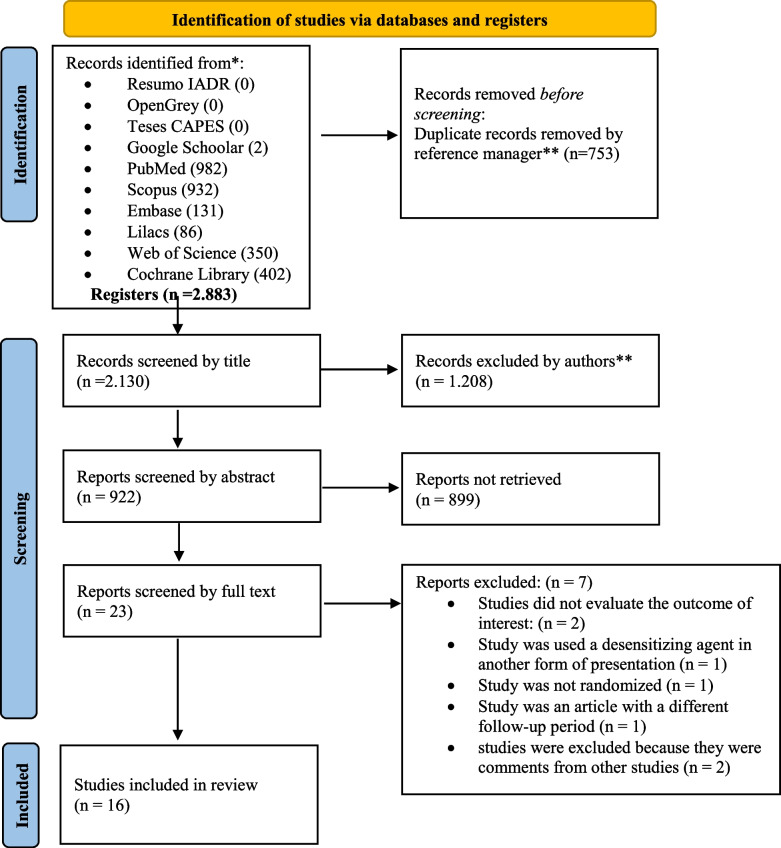
- After screening 2,883 records, the review included 16 clinical RCTs in the qualitative analysis, with 2,507 participants total.
- The included studies had an overall CONSORT score of 23.3 ± 1.4 out of 32 points, reported as 70.1% of the maximum; the authors describe this as moderate adherence.
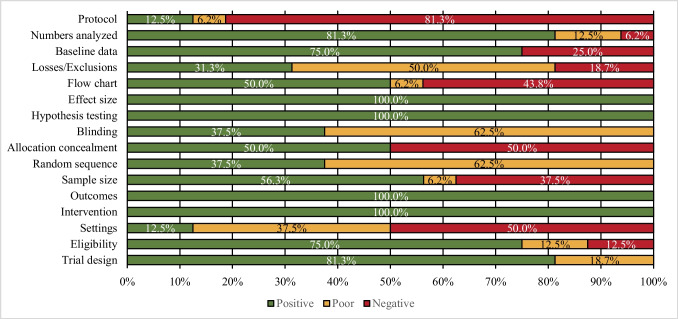
- The best-reported CONSORT items were effect size, hypothesis testing, outcomes, and intervention, each adequately reported by all included papers.
- Poorly reported items included randomization sequence and blinding in 37.5% of papers, losses/exclusions in 31.3%, and protocol and settings in only 12.5% of papers.
- CONSORT scores were higher in more recent studies: 2014–2019 papers scored 26.4 ± 1.2 versus 15.8 ± 0.7 for 1996–2004 papers; scores also differed by journal, with the Journal of the American Dental Association highest at 29.5 ± 0.5.
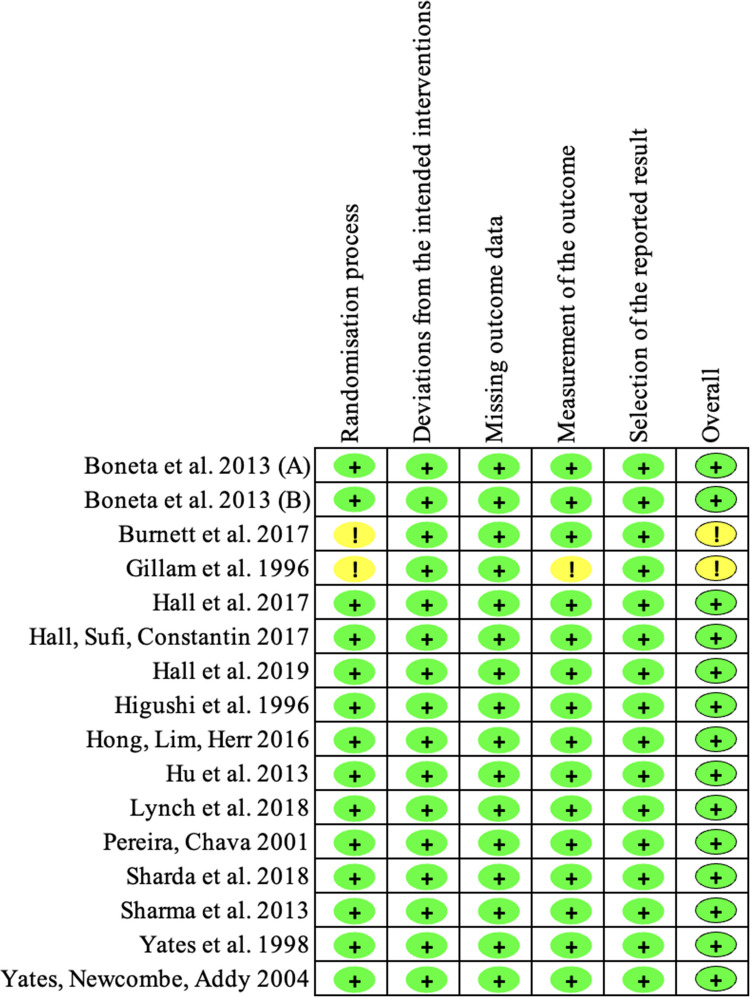
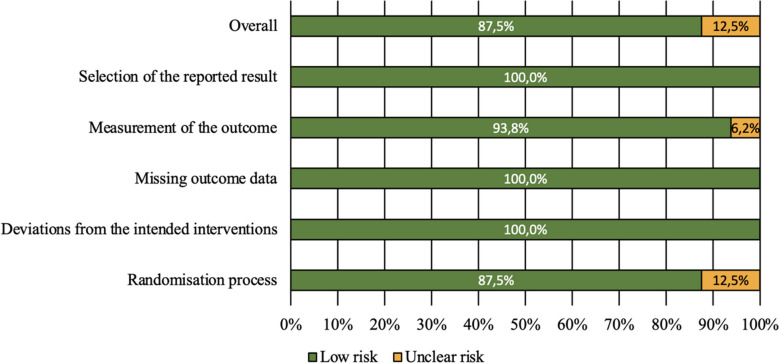
- Risk of bias was low in 14 studies, unclear in 2, and high in 0.
## Methods
- Systematic literature review conducted August–October 2024, following PRISMA 2020 and registered in PROSPERO (#CRD42022379556).
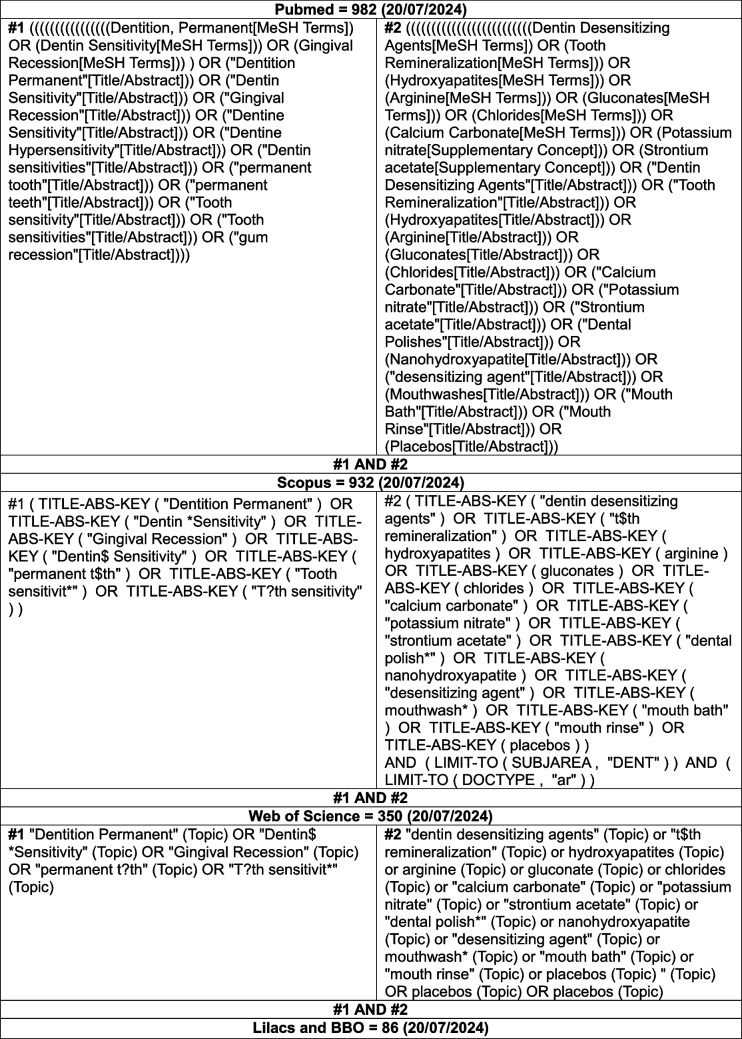
- Searched Cochrane Library, MEDLINE/PubMed, Embase, BBO, LILACS, Scopus, and Web of Science, plus reference lists; only peer-reviewed journals were included and gray literature was not consulted.
- Included adult RCTs evaluating desensitizing mouthwashes for dentin hypersensitivity, published from 1996 onward and with 4- to 8-week follow-up; adherence was scored with a CONSORT-based tool and risk of bias assessed with Cochrane RoB2.
## Limitations
- The paper states that a limitation was excluding papers in languages other than English.
- The authors also note that some articles may not have been detected despite the broad search, and that excluding gray literature may have missed relevant studies.
- Evident from the text: the review is based on published RCT reports, so its CONSORT assessment reflects reporting quality, not necessarily the underlying conduct of the trials.
Model-written summary. Check it against the paper before relying on it.
Integrity signals
Registry
Cites
Statistics
Figures
Verification
Claims the paper makes
19 Valid · 0 Not valid · 9 Not checked · 42 Own results and interpretations
The cited sources support only part of this claim — read each source’s verdict below.
In the paper
“For assessing therapeutic effectiveness, randomized clinical trials (RCTs) are the gold standard source of evidence, as they reduce the influence of confounding factors on cause-and-effect relationships compared to other study designs (Juni 2001).”
§ Adherence to the CONSORT statement of randomized clinical trials on dentin hypersensitivity treatment using mouthwashes > Introduction
What the sources say
- Partly supportedcites Juni 2001 matched to “Assessing the quality of controlled clinical trials” (2001) sourceExperimental — accuracy not yet measured
Our copy of Jüni, Altman & Egger (BMJ 2001) supports only the confounding element, and only as the aim of randomisation: the Selection bias section states 'The aim of randomisation is the creation of groups that are comparable for any known or unknown potential confounding factors,' with success depending on adequate generation and concealment of the allocation sequence. No passage in our copy calls RCTs the 'gold standard' source of evidence for therapeutic effectiveness or ranks them against other study designs; the opening frames trials as the 'raw material' of systematic reviews whose quality is variable, and the Empirical evidence of bias section shows inadequate allocation concealment exaggerates effects by ~30% (combined ratio of odds ratios 0.70, 95% CI 0.62-0.80). So the comparative 'gold standard / reduces confounding relative to other designs' framing is not what this source says. (LLM, conf=0.70)
plainstates a cause- Asserted: passes — The authors put it forward as true.
- Checkable: passes — It can be checked against evidence.
- Load-bearing: passes — The paper’s conclusions depend on it.
- Based: passes — The paper gives a reason why it holds.
- Partly supported
The sources with a verdict support this claim; the rest weren’t checked yet, have no full text we could read, or their verdicts aren’t rated yet.
In the paper
“However, reviews have found that adherence to the guidelines remains incomplete across various domains of dentistry (Meyer et al. 2023; Sarkis-Onofre et al. 2019).”
§ Adherence to the CONSORT statement of randomized clinical trials on dentin hypersensitivity treatment using mouthwashes > Introduction
What the sources say
- Supportedcites Meyer et al. 2023 matched to “Reporting of flow diagrams in randomised controlled trials published in periodontology and implantology: a survey” (2023) source
The Results report that 44% of flow diagrams in the surveyed periodontology and implantology trials lacked at least one CONSORT template item. The Discussion also reports incomplete flow-diagram reporting in earlier studies of periodontology, general dentistry, implantology, and prosthodontics. The evidence concerns the flow-diagram component of CONSORT, rather than every guideline item. (LLM, conf=0.88)
- Not checked — no full text of the sourcecites Sarkis-Onofre et al. 2019 matched to “Randomized Controlled Trials in Implant Dentistry: Assessment of the Last 20 Years of Contribution and Research Network Analysis” (2019) source
plain- Asserted: passes — The authors put it forward as true.
- Checkable: passes — It can be checked against evidence.
- Load-bearing: passes — The paper’s conclusions depend on it.
- Based: passes — The paper gives a reason why it holds.
- Supported
The cited sources support only part of this claim — read each source’s verdict below.
In the paper
“Therefore, studies without protocol registration may present distorted data (Chan et al. 2013; Hahn et al. 2000).”
§ Adherence to the CONSORT statement of randomized clinical trials on dentin hypersensitivity treatment using mouthwashes > Discussion
What the sources say
- Partly supportedcites Chan et al. 2013 matched to “SPIRIT 2013 Statement: Defining Standard Protocol Items for Clinical Trials” (2013) sourceExperimental — accuracy not yet measured
Our copy of SPIRIT 2013 supports only an adjacent, weaker point: the Abstract (Introduction) states that deficiencies in trial protocols 'may in turn lead to avoidable protocol amendments, poor trial conduct, and inadequate reporting in trial publications (15, 30)', and the Discussion (Abstract section, 'Potential Benefits') states that comparing protocols with final trial reports 'can help to identify selective reporting of results and undisclosed amendments (48), such as changes to primary outcomes'. Neither passage ties distorted data to the absence of protocol REGISTRATION; the paper's registration content concerns supporting WHO/ICMJE/FDA registration requirements and improving the quality of registry entries via the WHO Trial Registration Data Set (item 2b). The specific claim that unregistered studies may present distorted data is therefore not stated by this source. (LLM, conf=0.66)
- Not checked — no full text of the sourcecites Hahn et al. 2000 matched to “Assessing the potential for bias in meta-analysis due to selective reporting of subgroup analyses within studies” (2000) doi:10.1002/1097-0258(20001230)19:24
hedgedstates a possible cause- Asserted: passes — The authors put it forward as true.
- Checkable: passes — It can be checked against evidence.
- Load-bearing: unclear — It is unclear whether the paper’s conclusions depend on it.
- Based: passes — The paper gives a reason why it holds.
- Partly supported
The cited sources support only part of this claim — read each source’s verdict below.
In the paper
“The evaluation of compliance with the CONSORT statement was performed using a previously validated tool that has been applied in other studies (Loguercio et al. 2017; Reis et al. 2018).”
§ Adherence to the CONSORT statement of randomized clinical trials on dentin hypersensitivity treatment using mouthwashes > Methods > Compliance with the CONSORT statement
What the sources say
- Partly supportedcites Loguercio et al. 2017 matched to “Randomized clinical trials of dental bleaching – Compliance with the CONSORT Statement: a systematic review” (2017) sourceExperimental — accuracy not yet measured
In ‘Adherence to CONSORT statement’ (page unavailable), the paper says it developed and used a CONSORT evaluation tool. It reports pilot-testing the tool and checking its accuracy and reproducibility before evaluation, but does not describe it as a previously validated tool. (LLM, conf=0.83)
- Not checked — no full text of the sourcecites Reis et al. 2018 matched to “Compliance of Randomized Clinical Trials in Noncarious Cervical Lesions With the CONSORT Statement: A Systematic Review of Methodology” (2018) source
plain- Asserted: passes — The authors put it forward as true.
- Checkable: passes — It can be checked against evidence.
- Load-bearing: passes — The paper’s conclusions depend on it.
- Based: passes — The paper gives a reason why it holds.
- Partly supported
A result the paper reports from its own data — it cites no other source for it, so there is none to check. The quote shows it is in the paper.
In the paper
“The measurement of outcome domain presented low risk for 93.8% of studies and unclear risk for 6.2%.”
§ Adherence to the CONSORT statement of randomized clinical trials on dentin hypersensitivity treatment using mouthwashes > Results > Risk of BIAS of the included studies
plain- Asserted: passes — The authors put it forward as true.
- Checkable: passes — It can be checked against evidence.
- Load-bearing: unclear — It is unclear whether the paper’s conclusions depend on it.
- Based: passes — The paper gives a reason why it holds.
18 more claims
Create a free account to see all 70 claims and to verify the 2 references still open.
- Probably not a substantial claim. 37
- It may state two separate claims as one. 22
Self-check
Percentages, sums and reported differences re-computed from the paper’s own numbers.
Each contradiction between two passages listed here was confirmed by an independent check.
Rated major: it would touch a result — a value a result rests on, reported and recomputed p-values on opposite sides of the significance level, two passages that conflict with no sign which is right, or a cited work retracted before this paper was published.
In the paper
§ Adherence to the CONSORT statement of randomized clinical trials on dentin hypersensitivity treatment using mouthwashes > Abstract
“Out of the 2,883 papers retrieved, 36 were included in the qualitative analysis.”
§ Adherence to the CONSORT statement of randomized clinical trials on dentin hypersensitivity treatment using mouthwashes > Abstract
“Low risk of bias was identified in 14 studies, two papers were judged to have an unclear risk, and no articles showed a high risk of bias.”
Rated major: it would touch a result — a value a result rests on, reported and recomputed p-values on opposite sides of the significance level, two passages that conflict with no sign which is right, or a cited work retracted before this paper was published.
In the paper
“The included studies achieved an overall CONSORT score of 23.3 ± 1.4, representing 70.1% of the maximum CONSORT score (32 points).”
§ Adherence to the CONSORT statement of randomized clinical trials on dentin hypersensitivity treatment using mouthwashes > Results > CONSORT mean scores according to study characteristics
Reported 70.1 · recomputed 72.8125
Rated minor: it would not touch a result — a value no result rests on, a p-value that stays on the same side of the significance level, or a conflict that is clerical, resolved elsewhere in the paper, or outside its own findings.
In the paper
§ Adherence to the CONSORT statement of randomized clinical trials on dentin hypersensitivity treatment using mouthwashes > Results > CONSORT mean scores according to study characteristics
“The included studies achieved an overall CONSORT score of 23.3 ± 1.4, representing 70.1% of the maximum CONSORT score (32 points).”
§ Adherence to the CONSORT statement of randomized clinical trials on dentin hypersensitivity treatment using mouthwashes > Discussion
“The mean CONSORT score of the assessed studies was 23 points, signifying a moderate level of adherence to CONSORT recommendations (72% of the maximum CONSORT score of 32 points).”
Rated minor: it would not touch a result — a value no result rests on, a p-value that stays on the same side of the significance level, or a conflict that is clerical, resolved elsewhere in the paper, or outside its own findings.
In the paper
§ Adherence to the CONSORT statement of randomized clinical trials on dentin hypersensitivity treatment using mouthwashes > Results > Study selection
“In the final qualitative analysis, 16 clinical RCTs were included.”
§ Adherence to the CONSORT statement of randomized clinical trials on dentin hypersensitivity treatment using mouthwashes > Abstract
“Out of the 2,883 papers retrieved, 36 were included in the qualitative analysis.”
Citations
Cites
RoB 2: a revised tool for assessing risk of bias in randomised trials
Sterne, J. A. C., Savović, J., Page, M. J., Elbers, R. G., Blencowe, N. S., Boutron, I., Cates, C. J., Cheng, H.-Y., Corbett, M. S., Eldridge, S. M., et al. (2019) · BMJ · doi:10.1136/bmj.l4898 · Cited by 34,787 · cited 1×
“The subjective analysis of a researcher is associated with algorithms, resulting in the synthesis of the risk of bias not only for each domain but also for the study as a whole (Sterne et al. 2019).”
Page, M. J., Moher, D., Bossuyt, P. M., Boutron, I., Hoffmann, T. C., Mulrow, C. D., Shamseer, L., Tetzlaff, J. M., Akl, E. A., Brennan, S. E., et al. (2021) · BMJ · doi:10.1136/bmj.n160 · Cited by 13,262 · cited 1×
“This systematic literature review adhered to the guidelines outlined in PRISMA 2020 (Preferred Reporting Items for Systematic Reviews and Meta-Analyses) (Page et al. 2021) for research reporting, and was carried out between August and October, 2024.”
Moher, D., Hopewell, S., Schulz, K. F., Montori, V., Gotzsche, P. C., Devereaux, P. J., Elbourne, D., Egger, M., & Altman, D. G. (2010) · BMJ · doi:10.1136/bmj.c869 · Cited by 8,883
SPIRIT 2013 Statement: Defining Standard Protocol Items for Clinical Trials
Chan, A.-W., Tetzlaff, J. M., Altman, D. G., Laupacis, A., Gøtzsche, P. C., Krleža-Jerić, K., Hróbjartsson, A., Mann, H., Dickersin, K., Berlin, J. A., et al. (2013) · Annals of Internal Medicine · doi:10.7326/0003-4819-158-3-201302050-00583 · Cited by 7,363 · cited 1×
“Therefore, studies without protocol registration may present distorted data (Chan et al. 2013; Hahn et al. 2000).”
Moher, D., Schulz, K. F., & Altman, D. G. (2001) · The Lancet · doi:10.1016/s0140-6736(00)04337-3 · Cited by 5,373
Assessing the quality of controlled clinical trials
Jüni, P., Altman, D. G., & Egger, M. (2001) · BMJ · doi:10.1136/bmj.323.7303.42 · Cited by 3,309 · cited 1×
“For assessing therapeutic effectiveness, randomized clinical trials (RCTs) are the gold standard source of evidence, as they reduce the influence of confounding factors on cause-and-effect relationships compared to other study designs (Juni 2001).”
Improving the Quality of Reporting of Randomized Controlled Trials: The CONSORT Statement
Begg, C. (1996) · JAMA · doi:10.1001/jama.1996.03540080059030 · Cited by 3,127
Moher, D., Hopewell, S., Schulz, K. F., Montori, V., Gøtzsche, P. C., Devereaux, P. J., Elbourne, D., Egger, M., & Altman, D. G. (2012) · International Journal of Surgery · doi:10.1016/j.ijsu.2011.10.001 · Cited by 2,345 · cited 2×
“The CONSORT assessment tool was established in the CONSORT Declaration of 2010 (Moher et al. 2010).”
Publication bias: the case for an international registry of clinical trials.
Simes, R. J. (1986) · Journal of Clinical Oncology · doi:10.1200/jco.1986.4.10.1529 · Cited by 747 · cited 1×
“Advocacy for the protocol registration of RCTs has spanned several decades, (Simes 1986) and in 2004, the International Committee of Medical Journal Editors declared that member journals would only accept publications if the trials had been registered (Dwan et al. 2011).”
The hydrodynamics of the dentine; its possible relationship to dentinal pain.
Brännström, M., & Aström, A. (1972) · PubMed · Cited by 544
Cuschieri, S. (2019) · Saudi Journal of Anaesthesia · doi:10.4103/sja.sja_559_18 · Cited by 476
Value of Flow Diagrams in Reports of Randomized Controlled Trials
Egger, M. (2001) · JAMA · doi:10.1001/jama.285.15.1996 · Cited by 317 · cited 1×
“The absence of a flowchart hampers the analysis of the internal and external validity of the RCT, negatively impacting the clinical research report (Egger 2001).”
Randomized controlled trials – a matter of design
Siepmann, T., Spieth, P. M., Kubasch, A. S., Penzlin, A. I., Illigens, B. M.-W., & Barlinn, K. (2016) · Neuropsychiatric Disease and Treatment · doi:10.2147/ndt.s101938 · Cited by 292 · cited 1×
“Despite their importance, issues in the methodology and study design can introduce bias, random error, or limit the generalizability of RCTs (Spieth et al. 2016; Wambier et al. 2022).”
Prevalence of dentin hypersensitivity: Systematic review and meta-analysis
Favaro Zeola, L., Soares, P. V., & Cunha-Cruz, J. (2019) · Journal of Dentistry · doi:10.1016/j.jdent.2018.12.015 · Cited by 276
Devereaux, P. J. (2001) · JAMA · doi:10.1001/jama.285.15.2000 · Cited by 258 · cited 1×
“The lack of detailed descriptions creates significant variability in both clinical interpretations and definitions of these terms in epidemiological manuals (Devereaux 2001).”
Comparison of protocols and registry entries to published reports for randomised controlled trials
Dwan, K., Altman, D. G., Cresswell, L., Blundell, M., Gamble, C. L., & Williamson, P. R. (2011) · Cochrane Database of Systematic Reviews · doi:10.1002/14651858.mr000031.pub2 · Cited by 243 · cited 1×
“Advocacy for the protocol registration of RCTs has spanned several decades, (Simes 1986) and in 2004, the International Committee of Medical Journal Editors declared that member journals would only accept publications if the trials had been registered (Dwan et al. 2011).”
West, N. X., Sanz, M., Lussi, A., Bartlett, D., Bouchard, P., & Bourgeois, D. (2013) · Journal of Dentistry · doi:10.1016/j.jdent.2013.07.017 · Cited by 237 · cited 1×
“The main causes of DH are linked to gingival recession and enamel loss, which may result from friction, abrasion, abfraction, or erosion (West et al. 2013).”
Management of dentine hypersensitivity: efficacy of professionally and self‐administered agents
West, N. X., Seong, J., & Davies, M. (2015) · Journal of Clinical Periodontology · doi:10.1111/jcpe.12336 · Cited by 138 · cited 2×
“Dentin hypersensitivity (DH) is a prevalent clinical condition characterized by brief and sharp instances of pain that occur in the absence of any other dentin-related pathology (Cartwright 2014; West et al. 2015).”
Identification and impact of outcome selection bias in meta‐analysis
Williamson, P. R., & Gamble, C. (2005) · Statistics in Medicine · doi:10.1002/sim.2025 · Cited by 132 · cited 1×
“One crucial aim of the protocol is to prevent the selective communication of results, known as results bias (Williamson and Gamble 2005).”
de Oliveira, D. W. D., Vitor, G. P., da Silveira, J. O., Martins, C. C., Costa, F. O., & Cota, L. O. M. (2017) · Journal of Dentistry · doi:10.1016/j.jdent.2017.12.007 · Cited by 113 · cited 1×
“The incidence of DH is increasing, largely due to factors such as gingival recession, periodontal treatments, teeth whitening, orthodontic procedures, and the prolonged retention of vital or minimally restored teeth over a person’s lifetime (Douglas-de-Oliveira et al. 2018; Goh et al. 2016).”
Risk of Bias 2 in Cochrane Reviews: a phased approach for the introduction of new methodology
Flemyng, E., Dwan, K., Moore, T. H., Page, M. J., & Higgins, J. P. (2020) · Cochrane Database of Systematic Reviews · doi:10.1002/14651858.ed000148 · Cited by 95 · cited 2×
“The difference in results between the two tools can be explained by differences in factors covered between the two, such as “protocol”, “settings”, and “flowchart” in the CONSORT guidelines.”
Goh, V., Corbet, E. F., & Leung, W. K. (2016) · Journal Of Clinical Periodontology · doi:10.1111/jcpe.12552 · Cited by 80 · cited 1×
“The incidence of DH is increasing, largely due to factors such as gingival recession, periodontal treatments, teeth whitening, orthodontic procedures, and the prolonged retention of vital or minimally restored teeth over a person’s lifetime (Douglas-de-Oliveira et al. 2018; Goh et al. 2016).”
Yates, R., Newcombe, R. G., & Addy, M. (2004) · Journal Of Clinical Periodontology · doi:10.1111/j.1600-051x.2004.00581.x · Cited by 79 · cited 2×
“The studies were conducted in the United Kingdom ( n = 6), (Hall et al. 2017a, b, 2019; Gillam et al. 1996; Yates et al. 1998, 2004) the United States ( n = 5), (Boneta et al. 2013a; Burnett et al. 2018; Lynch et al. 2018; Sharma et al. 2013b; Boneta et al. 2013b) Brazil ( n = 1), (Pereira and…”
The Reporting Quality of Randomized Controlled Trials in Orthodontics
Lempesi, E., Koletsi, D., Fleming, P. S., & Pandis, N. (2014) · Journal of Evidence Based Dental Practice · doi:10.1016/j.jebdp.2013.12.001 · Cited by 77
Managing Dentin Hypersensitivity: What Treatment to Recommend to Patients
Scherman, A., & Jacobsen, P. L. (1992) · The Journal of the American Dental Association · doi:10.14219/jada.archive.1992.0107 · Cited by 74 · cited 1×
“The two primary strategies for managing DH involve limiting neural transmission and physically occluding open dentinal tubules (Scherman and Jacobsen 1992).”
Evidence-Based Dentistry: What's New?
Ballini, A., Capodiferro, S., Toia, M., Cantore, S., Favia, G., FRENZA, G. D., & Grassi, F. R. (2007) · International Journal of Medical Sciences · doi:10.7150/ijms.4.174 · Cited by 73 · cited 1×
“This approach helps reduce systematic biases and ensures more reliable and effective treatment outcomes (Ballini et al. 2007).”
Use of guidelines to improve the quality and transparency of reporting oral health research
Sarkis-Onofre, R., Cenci, M. S., Demarco, F. F., Lynch, C. D., Fleming, P. S., Pereira-Cenci, T., & Moher, D. (2015) · Journal of Dentistry · doi:10.1016/j.jdent.2015.01.006 · Cited by 73 · cited 1×
“Following the publication of the CONSORT statement, numerous dental journals have recommended its use for the reporting of RCTs (Sarkis-Onofre et al. 2015).”
InfluentialEfficacy of a potassium nitrate mouthwash in alleviating cervical dentine sensitivity (CDS)
Gillam, D. G., Bulman, J. S., Jackson, R., & Newman, H. N. (1996) · Journal Of Clinical Periodontology · doi:10.1111/j.1600-051x.1996.tb00526.x · Cited by 62 · cited 2×
“The studies were conducted in the United Kingdom ( n = 6), (Hall et al. 2017a, b, 2019; Gillam et al. 1996; Yates et al. 1998, 2004) the United States ( n = 5), (Boneta et al. 2013a; Burnett et al. 2018; Lynch et al. 2018; Sharma et al. 2013b; Boneta et al. 2013b) Brazil ( n = 1), (Pereira and…”
Pereira, R., & Chava, V. K. (2001) · Journal of Periodontology · doi:10.1902/jop.2001.72.12.1720 · Cited by 62 · cited 2×
“…United States ( n = 5), (Boneta et al. 2013a; Burnett et al. 2018; Lynch et al. 2018; Sharma et al. 2013b; Boneta et al. 2013b) Brazil ( n = 1), (Pereira and Chava 2001) China ( n = 1), (Hu et al. 2013) India ( n = 1), (Sharda et al. 2018) Japan ( n = 1), (Higuchi et al. 1996) and South Korea (…”
Uetani, K., Nakayama, T., Ikai, H., Yonemoto, N., & Moher, D. (2009) · Internal Medicine · doi:10.2169/internalmedicine.48.1358 · Cited by 59 · cited 1×
“This has led to an increase in the number of studies presenting reports with greater detail (Uetani et al. 2009).”
Yates, R., West, N. X., Addy, M., & Marlow, I. (1998) · Journal Of Clinical Periodontology · doi:10.1111/j.1600-051x.1998.tb02375.x · Cited by 49 · cited 2×
“The studies were conducted in the United Kingdom ( n = 6), (Hall et al. 2017a, b, 2019; Gillam et al. 1996; Yates et al. 1998, 2004) the United States ( n = 5), (Boneta et al. 2013a; Burnett et al. 2018; Lynch et al. 2018; Sharma et al. 2013b; Boneta et al. 2013b) Brazil ( n = 1), (Pereira and…”
Petersson, L. G., Hakestam, U., Baigi, A., & Lynch, E. J. (2007) · PubMed · Cited by 46
Elías-Boneta, A. R., Ramírez, K., Naboa, J., Mateo, L. R., Stewart, B., Panagokos, F., & Vizio, W. D. (2013) · Journal of Dentistry · doi:10.1016/j.jdent.2012.11.011 · Cited by 40
Martimbianco, A. L. C., Sá, K. M. M., Santos, G. M., Santos, E. M., Pacheco, R. L., & Riera, R. (2023) · Revista da Associação Médica Brasileira · doi:10.1590/1806-9282.20221593 · Cited by 39 · cited 1×
“Assessing the risk of bias in studies is an essential step for a systematic review (Martimbianco et al. 2023).”
Randomised clinical efficacy trial of potassium oxalate mouthrinse in relieving dentinal sensitivity
Sharma, D., McGuire, J. A., Gallob, J. T., & Amini, P. (2013) · Journal of Dentistry · doi:10.1016/s0300-5712(13)70005-8 · Cited by 37 · cited 3×
“…included, a low risk of bias was identified in 14 papers (Hall et al. 2017a, b, 2019; Yates et al. 1998, 2004; Boneta et al. 2013a; Lynch et al. 2018; Sharma et al. 2013b; Boneta et al. 2013b; Pereira and Chava 2001; Hu et al. 2013; Sharda et al. 2018; Higuchi et al. 1996; Hong et al. 2016).”
Flint, H. E., & Harrison, J. E. (2010) · Journal of Orthodontics · doi:10.1179/14653121043191 · Cited by 36 · cited 1×
“Some published studies have, however, shown lower adherence to the CONSORT guidelines (Loguercio et al. 2017; Menne et al. 2022; Knippschild et al. 2021; Rezende et al. 2022; Flint and Harrison 2010).”
Hu, D., Stewart, B., Mello, S. V., Arvanitidou, L. S., Panagakos, F. S., Vizio, W. D., Zhang, Y. P., Mateo, L. R., & Yin, W. (2013) · Journal of Dentistry · doi:10.1016/j.jdent.2012.10.001 · Cited by 35 · cited 2×
“…included, a low risk of bias was identified in 14 papers (Hall et al. 2017a, b, 2019; Yates et al. 1998, 2004; Boneta et al. 2013a; Lynch et al. 2018; Sharma et al. 2013b; Boneta et al. 2013b; Pereira and Chava 2001; Hu et al. 2013; Sharda et al. 2018; Higuchi et al. 1996; Hong et al. 2016).”
Reis, A., de Geus, J., Wambier, L., Schroeder, M., & Loguercio, A. (2018) · Operative Dentistry · doi:10.2341/17-060-l · Cited by 35 · cited 1×
“The evaluation of compliance with the CONSORT statement was performed using a previously validated tool that has been applied in other studies (Loguercio et al. 2017; Reis et al. 2018).”
Self-citationLOGUERCIO, A. D., MARAN, B. M., HANZEN, T. A., PAULA, A. M. D., PERDIGÃO, J., & REIS, A. (2017) · Brazilian Oral Research · doi:10.1590/1807-3107bor-2017.vol31.0060 · Cited by 34 · cited 3×
“The evaluation of compliance with the CONSORT statement was performed using a previously validated tool that has been applied in other studies (Loguercio et al. 2017; Reis et al. 2018).”
(2014) · PubMed · Cited by 32
Elías-Boneta, A. R., Salás, R. M. G., Mateo, L. R., Stewart, B., Mello, S. V., Arvanitidou, L. S., Panagakos, F. S., & DeVizio, W. (2013) · Journal of Dentistry · doi:10.1016/j.jdent.2012.11.004 · Cited by 32
Efficacy of a 3% potassium nitrate mouthrinse for the relief of dentinal hypersensitivity
Hall, C., Sufi, F., Milleman, J. L., & Milleman, K. R. (2019) · The Journal of the American Dental Association · doi:10.1016/j.adaj.2018.10.023 · Cited by 28
Potassium oxalate mouthrinse reduces dentinal hypersensitivity
Lynch, M. C., Perfekt, R., McGuire, J. A., Milleman, J. L., Gallob, J. T., Amini, P., & Milleman, K. R. (2018) · The Journal of the American Dental Association · doi:10.1016/j.adaj.2018.02.027 · Cited by 27 · cited 2×
“…6), (Hall et al. 2017a, b, 2019; Gillam et al. 1996; Yates et al. 1998, 2004) the United States ( n = 5), (Boneta et al. 2013a; Burnett et al. 2018; Lynch et al. 2018; Sharma et al. 2013b; Boneta et al. 2013b) Brazil ( n = 1), (Pereira and Chava 2001) China ( n = 1), (Hu et al. 2013) India ( n =…”
Sharma, D., McGuire, J. A., & Amini, P. (2013) · PubMed · Cited by 25
Hong, J., Lim, H., & Herr, Y. (2016) · Journal of Periodontal & Implant Science · doi:10.5051/jpis.2016.46.1.46 · Cited by 24 · cited 2×
“…included, a low risk of bias was identified in 14 papers (Hall et al. 2017a, b, 2019; Yates et al. 1998, 2004; Boneta et al. 2013a; Lynch et al. 2018; Sharma et al. 2013b; Boneta et al. 2013b; Pereira and Chava 2001; Hu et al. 2013; Sharda et al. 2018; Higuchi et al. 1996; Hong et al. 2016).”
Siddiq, H., Pentapati, K.-C., & Acharya, S. (2019) · Journal of Evidence Based Dental Practice · doi:10.1016/j.jebdp.2019.04.001 · Cited by 23 · cited 1×
“(Siddiq et al. 2019).”
Chen, J., Li, Z., Liu, B., Gan, X., Li, C., & Yu, H. (2018) · Journal of Dentistry · doi:10.1016/j.jdent.2018.04.025 · Cited by 16 · cited 1×
“…dental specialties, such as restorative dentistry, (Elagami et al. 2024) endodontics, (Cabral et al. 2021) surgery, (Shete-Motgi et al. 2022; Kshirsagar et al. 2021) prosthetics, (Chen et al. 2018; Lem-pesi et al. 2014) and pediatric dentistry, (Wambier et al. 2022) have produced similar results.”
Sharda, S., Prasad, K. V. V., Shetty, P. J., & Nikhil, K. (2018) · Contemporary Clinical Dentistry · doi:10.4103/ccd.ccd_167_18 · Cited by 15 · cited 2×
“…included, a low risk of bias was identified in 14 papers (Hall et al. 2017a, b, 2019; Yates et al. 1998, 2004; Boneta et al. 2013a; Lynch et al. 2018; Sharma et al. 2013b; Boneta et al. 2013b; Pereira and Chava 2001; Hu et al. 2013; Sharda et al. 2018; Higuchi et al. 1996; Hong et al. 2016).”
Elagami, R. A., Reis, T. M., Hassan, M. A., Tedesco, T. K., Braga, M. M., Mendes, F. M., Cenci, M. S., Huysmans, M.-C., & Raggio, D. P. (2024) · BMC Oral Health · doi:10.1186/s12903-024-04417-0 · Cited by 14 · cited 1×
“Additionally, reports in other dental specialties, such as restorative dentistry, (Elagami et al. 2024) endodontics, (Cabral et al. 2021) surgery, (Shete-Motgi et al. 2022; Kshirsagar et al. 2021) prosthetics, (Chen et al. 2018; Lem-pesi et al. 2014) and pediatric dentistry, (Wambier et al. 2022)…”
Burnett, G. R., Gallob, J. T., Milleman, K. R., Mason, S., Patil, A. A., Budhawant, C., & Milleman, J. L. (2017) · Journal of Dentistry · doi:10.1016/j.jdent.2017.12.004 · Cited by 12 · cited 2×
“…United Kingdom ( n = 6), (Hall et al. 2017a, b, 2019; Gillam et al. 1996; Yates et al. 1998, 2004) the United States ( n = 5), (Boneta et al. 2013a; Burnett et al. 2018; Lynch et al. 2018; Sharma et al. 2013b; Boneta et al. 2013b) Brazil ( n = 1), (Pereira and Chava 2001) China ( n = 1), (Hu et…”
Hall, C., Sufi, F., & Constantin, P. (2017) · PubMed · Cited by 12
Rezende, M., Martins, A. C. R., da Silva, J. A., Reis, A., & de Geus, J. L. (2022) · Clinical Oral Investigations · doi:10.1007/s00784-021-04198-8 · Cited by 12
Knippschild, S., Loddenkemper, J., Tulka, S., Loddenkemper, C., & Baulig, C. (2021) · BMJ Open · doi:10.1136/bmjopen-2020-045372 · Cited by 10 · cited 1×
“Some published studies have, however, shown lower adherence to the CONSORT guidelines (Loguercio et al. 2017; Menne et al. 2022; Knippschild et al. 2021; Rezende et al. 2022; Flint and Harrison 2010).”
da Silva, A., Muniz, R., Lago, M. C. A., Júnior, E. D. S., & Braz, R. (2022) · Operative Dentistry · doi:10.2341/21-181-lit · Cited by 10
Hall, C., Sufi, F., Wang, N., & Goyal, C. R. (2017) · PubMed · Cited by 9
Kshirsagar, K., Bhate, K., Shete, A. V., & Kakodkar, P. V. (2021) · Journal of Oral and Maxillofacial Surgery · doi:10.1016/j.joms.2021.01.032 · Cited by 9 · cited 1×
“…other dental specialties, such as restorative dentistry, (Elagami et al. 2024) endodontics, (Cabral et al. 2021) surgery, (Shete-Motgi et al. 2022; Kshirsagar et al. 2021) prosthetics, (Chen et al. 2018; Lem-pesi et al. 2014) and pediatric dentistry, (Wambier et al. 2022) have produced similar…”
Higuchi, Y., Kurihara, H., Nishimura, F., Miyamoto, M., Arai, H., Nakagawa, M., Murayama, Y., Suido, H., & Tanii, S. (1996) · PubMed · Cited by 8
Reporting quality of abstracts of randomized controlled trials related to implant dentistry
Menne, M. C., Pandis, N., & Faggion, C. M. (2022) · Journal of Periodontology · doi:10.1002/jper.21-0396 · Cited by 8 · cited 1×
“Some published studies have, however, shown lower adherence to the CONSORT guidelines (Loguercio et al. 2017; Menne et al. 2022; Knippschild et al. 2021; Rezende et al. 2022; Flint and Harrison 2010).”
Wambier, L. M., Gonçalves, A. D. R., Wambier, D. S., Reis, A., & Chibinski, A. C. R. (2022) · Brazilian Oral Research · doi:10.1590/1807-3107bor-2022.vol36.0017 · Cited by 8 · cited 2×
“Despite their importance, issues in the methodology and study design can introduce bias, random error, or limit the generalizability of RCTs (Spieth et al. 2016; Wambier et al. 2022).”
Self-citationSarkis-Onofre, R., Marchini, L., Spazzin, A. O., & Santos, M. B. F. D. (2019) · Journal of Oral Implantology · doi:10.1563/aaid-joi-d-18-00276 · Cited by 7 · cited 1×
“However, reviews have found that adherence to the guidelines remains incomplete across various domains of dentistry (Meyer et al. 2023; Sarkis-Onofre et al. 2019).”
Shete-Motgi, A., Shete, M., Bhate, K., Kshirsagar, K., & Kakodkar, P. (2022) · Journal of Indian Academy of Oral Medicine and Radiology · doi:10.4103/jiaomr.jiaomr_273_21 · Cited by 7 · cited 1×
“Additionally, reports in other dental specialties, such as restorative dentistry, (Elagami et al. 2024) endodontics, (Cabral et al. 2021) surgery, (Shete-Motgi et al. 2022; Kshirsagar et al. 2021) prosthetics, (Chen et al. 2018; Lem-pesi et al. 2014) and pediatric dentistry, (Wambier et al. 2022)…”
Pashley, D. H. (2013) · Journal of Dentistry · doi:10.1016/s0300-5712(13)00179-6 · Cited by 6 · cited 1×
“…the use of dentifrice with a desen-sitizing agent; (Han et al. 2017) c) one study was not randomized; (Jankowska et al. 2015) d) one study had a different follow-up period; (Sharma et al. 2013a) e) two studies were commentaries on other studies (Brignardello-Petersen 2019; Pashley 2013) (Fig.”
Effects of desensitizing agents for cervical dentin hypersensitivity: A randomized clinical trial.
Han, K.-H., Hong, J. H., Shin, J.-H., Lee, J. Y., & Shin, S. (2017) · PubMed · Cited by 5
Effects of a Novel Mouthwash on Dental Remineralization
Ajdaharian, J., Takesh, T., Anbarani, A. G., Ho, J., & Smith, P. W. (2017) · Dentistry · doi:10.4172/2161-1122.1000432 · Cited by 4 · cited 1×
“From these, 7 were excluded for the following reasons: a) two studies did not evaluate the outcome of interest; (Ajdaharian et al. 2017; Petersson et al. 2007) b) one study included the use of dentifrice with a desen-sitizing agent; (Han et al. 2017) c) one study was not randomized; (Jankowska et…”
Brignardello‐Petersen, R. (2018) · The Journal of the American Dental Association · doi:10.1016/j.adaj.2018.07.021 · Cited by 4 · cited 4×
“The studies were conducted in the United Kingdom ( n = 6), (Hall et al. 2017a, b, 2019; Gillam et al. 1996; Yates et al. 1998, 2004) the United States ( n = 5), (Boneta et al. 2013a; Burnett et al. 2018; Lynch et al. 2018; Sharma et al. 2013b; Boneta et al. 2013b) Brazil ( n = 1), (Pereira and…”
InfluentialMeyer, H.-G. J., Pandis, N., Seehra, J., & Faggion, C. M. (2023) · BMC Medical Research Methodology · doi:10.1186/s12874-023-01923-7 · Cited by 4 · cited 1×
“However, reviews have found that adherence to the guidelines remains incomplete across various domains of dentistry (Meyer et al. 2023; Sarkis-Onofre et al. 2019).”
Khot, T., Lele, P., Dodwad, V., Bhosale, N., Yewale, M., & Mariam, S. (2023) · Journal of International Society of Preventive and Community Dentistry · doi:10.4103/jispcd.jispcd_97_23 · Cited by 4 · cited 1×
“Desensitizing mouthwashes often serve as a first-line treatment due to their low cost, ease of use, home application, and daily habit (Khot et al. 2023).”
Compliance of RCTs in endodontic instrumentation with the CONSORT Statement: A systematic review
Cabral, K. A., Martins, A. C. R., Wambier, L. M., Vivacqua-Gomes, N., Rezende, M., Reis, A., & Geus, J. L. D. (2021) · Research, Society and Development · doi:10.33448/rsd-v10i8.17350 · Cited by 2 · cited 1×
“Additionally, reports in other dental specialties, such as restorative dentistry, (Elagami et al. 2024) endodontics, (Cabral et al. 2021) surgery, (Shete-Motgi et al. 2022; Kshirsagar et al. 2021) prosthetics, (Chen et al. 2018; Lem-pesi et al. 2014) and pediatric dentistry, (Wambier et al. 2022)…”
Self-citationHahn, S., Williamson, P. R., Hutton, J. L., Garner, P., & Flynn, E. V. (2000) · Statistics in Medicine · doi:10.1002/1097-0258(20001230)19:24<3325::aid-sim827>3.0.co;2-d · cited 1×
“Therefore, studies without protocol registration may present distorted data (Chan et al. 2013; Hahn et al. 2000).”
Research works printed but not linked: 2
- Higgins J, Savović J, Page M, Elbers R, Sterne J (2022) Chapter 8: assessing risk of bias in a randomized trial. In: Higgins JPT, Thomas J, Chandler J, Cumpston M, Li T, Page MJ, Welch VA (eds) Cochrane handbook for systematic reviews of interventions version 6.3. United Kingdom, Chichester
- Jankowska KA, Piesiak-Pańczyszyn DA, Herman K, Kasiak MA, Wrzyszcz-Kowalczyk AB (2015) Home treatment of dentin hypersensitivity based on pro-argin technology. Dent Med Probl 51:365–374
Metadata
- Authors
- Neto, L. T., Wambier, L. M., & Chibinski, A. C. R.
- Affiliations
- Universidade Estadual de Ponta Grossa (BR)
- Corresponding author
- Neto, Lauro Taques
- Venue
- The Saudi Dental Journal
- Published
- 2025-10
- Volume
- 37
- Issue
- 7-9
- Pages
- 49-49
- ISSN
- 1013-9052 (ISSN-L)
- 2524-1702
- PMC
- PMC12528558
- OpenAlex
- W4415191418
- Cited by
- 0
- References
- 69
- FWCI
- 0.00
- Type
- journal article
- Language
- en
- Open access
- gold
- doi.org
- Licence
- cc-by-nc-nd
- creativecommons.org/licenses/by-nc-nd/4.0 (tdm)
- creativecommons.org/licenses/by-nc-nd/4.0 (vor, 14 d)
- Locations
- The Saudi Dental Journal (publishedVersion, cc-by-nc-nd)
- Europe PMC (PubMed Central) (publishedVersion, cc-by-nc-nd)
- PubMed (publishedVersion)
- DOAJ (DOAJ: Directory of Open Access Journals) (submittedVersion, cc-by-sa)
- Topics
- Social Sciences › Decision Sciences › Statistics, Probability and Uncertainty › Meta-analysis and systematic reviews
- Health Sciences › Dentistry › General Dentistry › Dental Erosion and Treatment
- Health Sciences › Medicine › Public Health, Environmental and Occupational Health › Clinical practice guidelines implementation
- Keywords
- CONSORT statement, reporting quality, randomized controlled trials, dentin hypersensitivity, risk of bias, clinical trial registration
About these checks
Registry, retraction, Cites and statistics results are computed, not judged, with one exception: a printed reference that no index lists is read once by a model before it counts as a citation error. Claims are extracted by a model and kept only when their quote appears verbatim in the text; each cited source is then checked, with a model’s help, for whether it says what the claim relies on. Those verdicts can be wrong — read the claim’s quote and the cited source before relying on one.
The claim verdicts this report counts are experimental: their accuracy is not yet measured.
A language model drew the claims from the paper on 2026-10-11, under version 3 of the claim definition (model deepseek-v4.1-flash, prompt extract-v3).
A second model labelled each claim on 2026-10-11 (model jev-1.13-20260917, definition revision gold-guideline-v0.2).
Cited sources are checked with a language model’s help (qwen3.8-omni-flash and gpt-6-sol).
Statistics and arithmetic are recomputed, not judged.
Confidence bands are shown only for fields calibrated on our annotated test set. None is calibrated yet, so no band is shown.
What counts as a claim ›How we measure confidence ›How we check this ›
Are you an author, or do you see a problem with this page? Request a review
Data sources
Bibliographic data: Semantic Scholar, OpenAlex, Crossref.
Contains information from the Semantic Scholar Academic Graph Datasets, made available under the ODC Attribution License (ODC-BY 1.0).
Semantic Scholar’s data is described in: Kinney, R., et al. (2023). The Semantic Scholar Open Data Platform. arXiv:2301.10140.
