

A review and analysis of extraction methods for aluminum and oxygen from Lunar Regolith
Open accessThe DOI matches its Crossref record; 58 of the 58 references it cites were found in a registry or an index; 4 of the 55 sources its claims cite were checked for support.
Abstract
This review compares three prominent ISRU technologies—Carbothermal Reduction (CTR), Molten Salt Electrolysis (MSE), and Molten Regolith Electrolysis (MRE)—for producing aluminum and oxygen from lunar regolith, highlighting outputs, energy needs, lunar adaptability, and technological gaps.
Overview
CoChat Summary
TL;DR
This review and thermodynamic analysis compares carbothermal reduction (CTR), molten salt electrolysis (MSE, via LISAP-MSE), and molten regolith electrolysis (MRE) for co-producing aluminum and oxygen from lunar anorthite. It reports that all three pathways are endothermic and non-spontaneous under the evaluated conditions, with LISAP-MSE stated to have the lowest energy requirement but slower oxygen production, while CTR and MRE offer high oxygen output and low-purity alloys.
Key findings
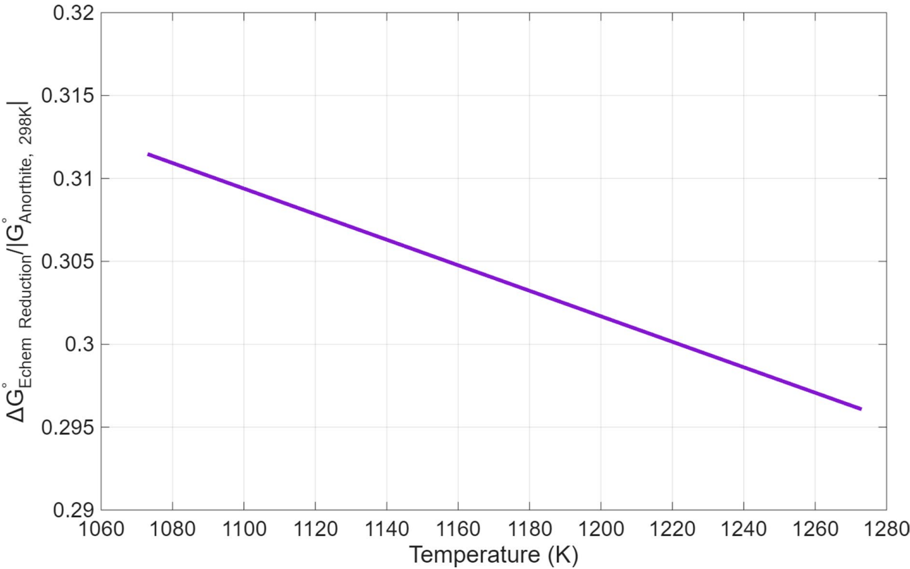
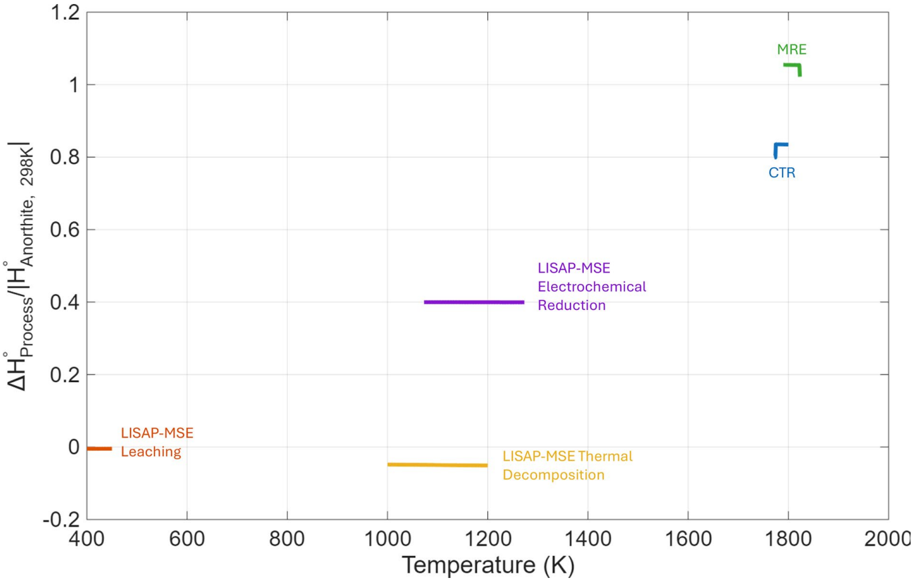
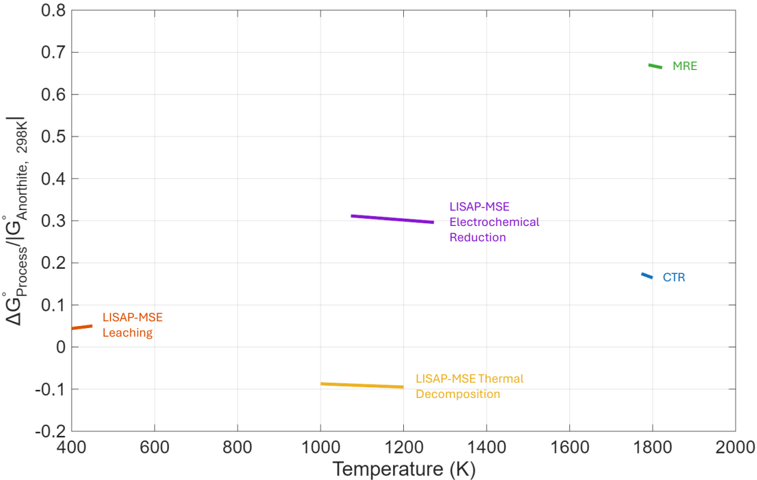
- For anorthite feedstock, all three processes show positive ΔH and ΔG, requiring external energy. The paper states LISAP-MSE has the lowest overall ΔH and ΔG among the three; Table 2 reports per kg Al: CTR <65,562 kJ ΔH and <13,867 kJ ΔG; LISAP-MSE [26,941, 27,240] kJ ΔH and [19,501, 21,823] kJ ΔG; MRE <80,195 kJ ΔH and <52,775 kJ ΔG.
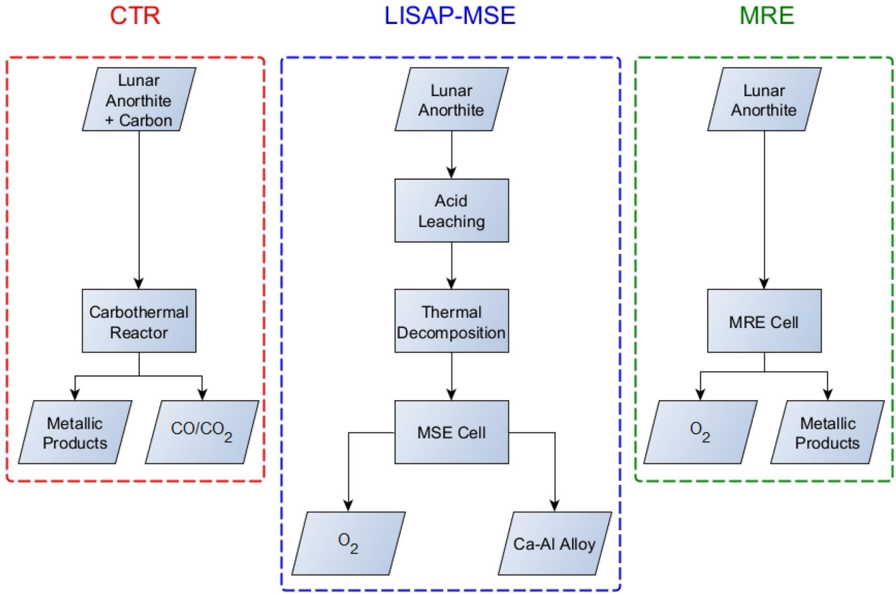
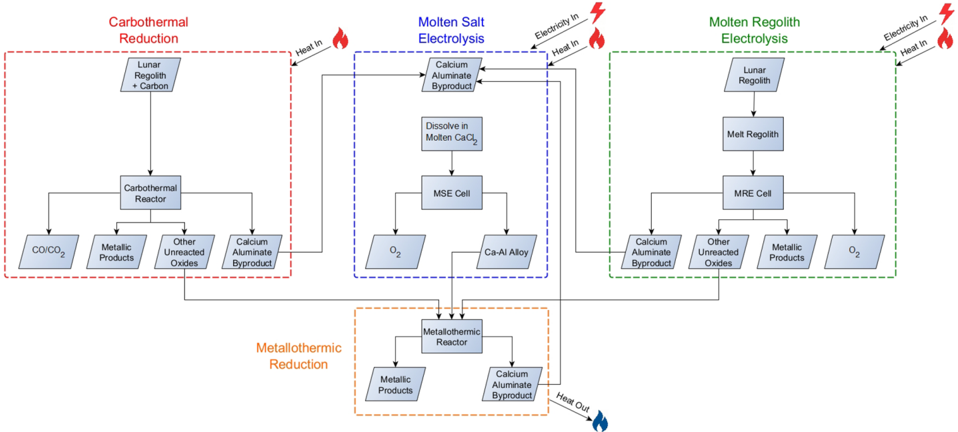
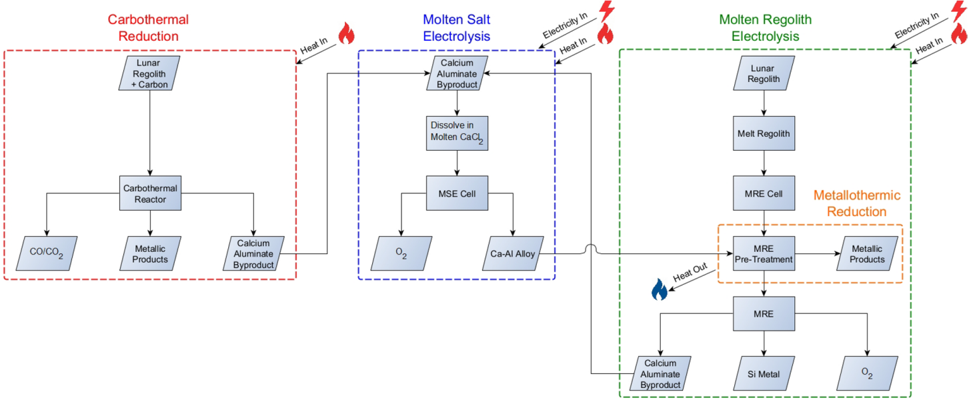
- Operating conditions and products differ: CTR operates at minimum 1773 K, uses carbon, and produces metal alloy + COx + slag; LISAP-MSE operates at maximum 1273 K, uses beneficiated anorthite + CaCl2, and produces Al metal + O2; MRE operates at minimum 1823 K, processes unrefined regolith, and produces metal alloy + O2 + slag.
- TRLs are reported as CTR 6, MSE 4, and MRE 5. Key gaps include carbon sourcing, CaCl2 melt durability, electrode durability, material survivability, power optimization, scalability, I/O automation, and thermal uniformity.
- Prior CTR studies report oxygen yields of only 2.4–7.9 wt% of feedstock, corresponding to 5.4–17.5% of total available oxygen. Pilot systems require at least 2.54 kg/hr regolith delivery for 10,000 kg O2/yr assuming bulk regolith is 45% O2 by mass.
Methods
- Review and first-principles thermodynamic comparison using anorthite (CaAl2Si2O8) as a representative highlands feedstock, assuming complete conversion to elemental products as an upper-bound theoretical extraction limit.
- Temperature-adjusted enthalpy, entropy, and Gibbs free energy were calculated using heat-capacity integrals, Shomate equation fits, supplemental thermochemical data, and phase-change latent heats; CTR, LISAP-MSE stages (acid leaching, thermal decomposition, electrolytic reduction), and MRE were evaluated and normalized per kg Al/O and per mole anorthite.
- Data availability states no datasets were generated or analysed; thermodynamic parameters are compiled in Appendix A.
Limitations
- Stated: comparisons are specific to simultaneous aluminum and oxygen production from anorthositic feedstock; rankings may shift if oxygen is prioritized, if Fe/Si/Ti extraction is targeted, or if mare-derived regolith compositions are considered.
- Stated: the complete-reduction assumption gives theoretical upper bounds; practical efficiencies vary due to kinetics, mass transport, and reactor-specific conditions, and the analysis neglects radiative losses, minor side reactions, and interfacial/transport effects.
- Stated: anorthite thermodynamic data are reliable only to approximately 1800 K, with extension to 1823 K introducing minimal uncertainty; pre-processing is treated explicitly for LISAP-MSE, but some feedstock conditioning is likely required for all approaches, so the apparent simplicity of CTR and MRE may underrepresent operational preparation requirements. Evident: no experimental validation is presented; conclusions are thermodynamic and system-level review findings.
Model-written summary. Check it against the paper before relying on it.
Integrity signals
Registry
Cites
Statistics
Figures
Verification
Claims the paper makes
3 Valid · 6 Not valid · 25 Not checked · 147 Own results and interpretations
The cited sources that could be checked couldn’t confirm or dispute this claim.
In the paper
“For CaCl 2 , a commonly researched salt, this operating temperature typically falls between 800 • C and 1000 • C.”
- Also stated in: § Introduction · plain
“It allows for the reduction of metal oxides from lunar regolith at temperatures ranging from 800-1000 • C (Chen 2020; Mohandas and Fray 2004;Schwandt et al. 2012;Kilby et al. 2006;Jin et al. 2004;Jiang et al. 2006;Liu et al. 2017).”
§ A review and analysis of extraction methods for aluminum and oxygen from Lunar Regolith > Abstract
What the sources say
- Could not verifycites Chen 2020 matched to “Interactions of molten salts with cathode products in the FFC Cambridge Process” (2020) sourceExperimental — accuracy not yet measured
The available overview says molten salts provide high temperatures for electrolysis but gives no operating range for CaCl2. Searches for 800°C, 1000°C, and CaCl2 operating temperature returned no passage establishing that 800–1000°C is typical; the temperature-bearing reference entry concerns a CaCl2–NaCl mixture at 550°C. (LLM, conf=0.71)
- Not matchedcites Mohandas and Fray 2004
An author–year citation the paper’s reference list doesn’t settle. We don’t search these by name.
- Not checked — no full text of the sourcecites Schwandt et al. 2012 matched to “The production of oxygen and metal from lunar regolith” (2012) source
plain- Asserted: passes — The authors put it forward as true.
- Checkable: passes — It can be checked against evidence.
- Load-bearing: unclear — It is unclear whether the paper’s conclusions depend on it.
- Based: passes — The paper gives a reason why it holds.
- Also stated in: § Introduction · plain
Every source the paper cites for this claim was checked and supports it.
In the paper
“prior studies of carbothermal reduction applied to lunar regolith report oxygen yields of only 2.4 7.9 wt % of the feedstock, corresponding to 5.4 17.5 % of the total available oxygen, with strong dependence on operating conditions and mineralogy Troisi et al. (2022).”
§ A review and analysis of extraction methods for aluminum and oxygen from Lunar Regolith > Framework and thermodynamic evaluation of CTR, MSE, and MRE
What the sources say
- Supportedcites Troisi et al. (2022) matched to “Oxygen extraction from lunar dry regolith: Thermodynamic numerical characterization of the carbothermal reduction” (2022) source
Split into 2 atoms — 2 confirmed, 0 partially supported, 0 disputed, 0 misattributed, 0 unverifiable. Expand the claim to see per-atom verdicts.
plainstates an association- Asserted: passes — The authors put it forward as true.
- Checkable: passes — It can be checked against evidence.
- Load-bearing: passes — The paper’s conclusions depend on it.
- Based: passes — The paper gives a reason why it holds.
- Supported
A result the paper states — it cites no source for it, so there is none to check. The quote shows it is in the paper.
In the paper
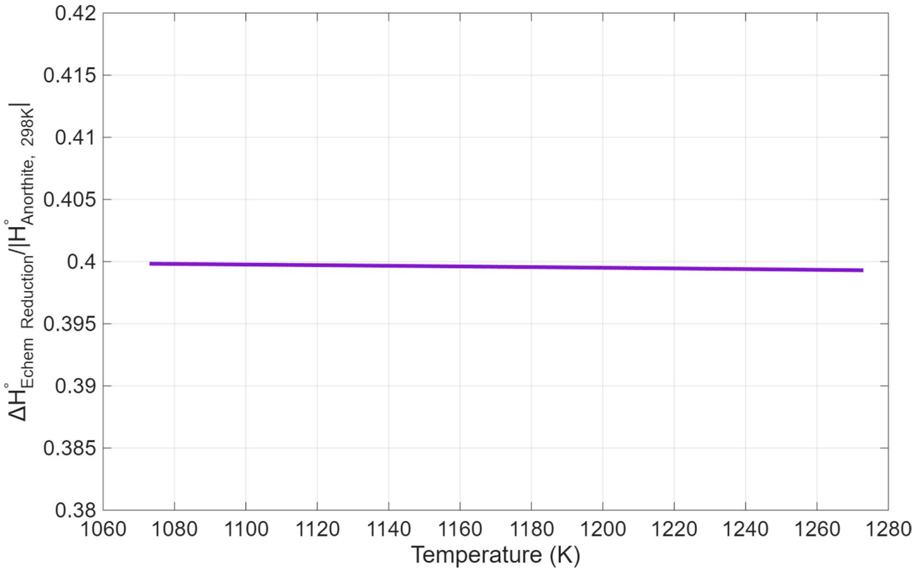
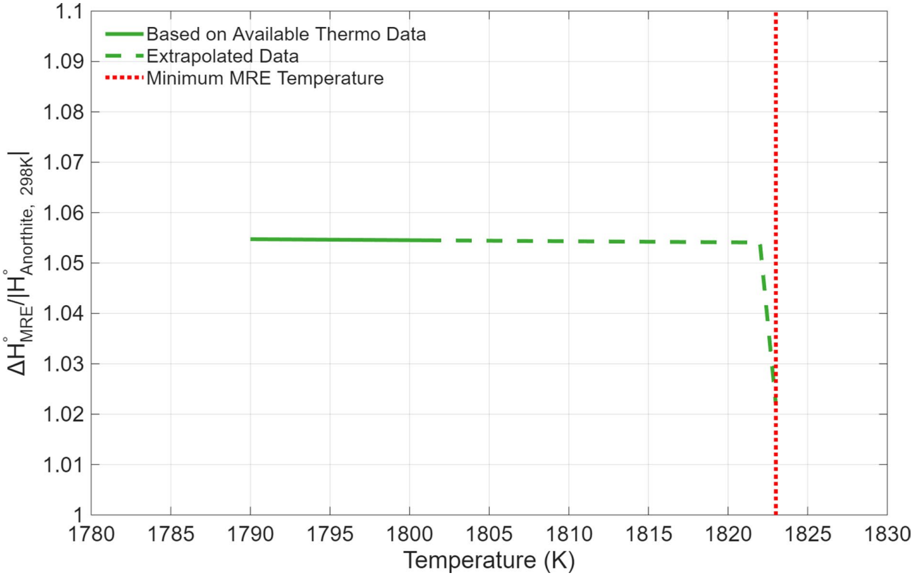
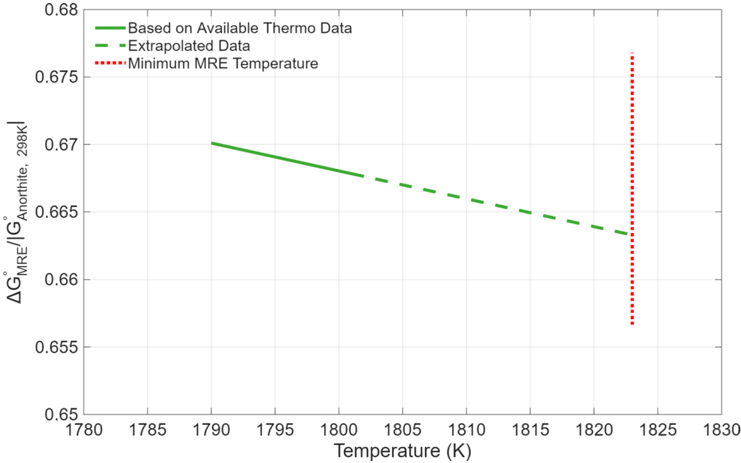
“The changes in heat capacity and enthalpy over this narrow temperature range are small relative to the total energy of the system and do not meaningfully affect the calculated spontaneity.”
§ A review and analysis of extraction methods for aluminum and oxygen from Lunar Regolith > MRE
plain- Asserted: passes — The authors put it forward as true.
- Checkable: passes — It can be checked against evidence.
- Load-bearing: passes — The paper’s conclusions depend on it.
- Based: passes — The paper gives a reason why it holds.
A result the paper reports from its own data — it cites no other source for it, so there is none to check. The quote shows it is in the paper.
In the paper
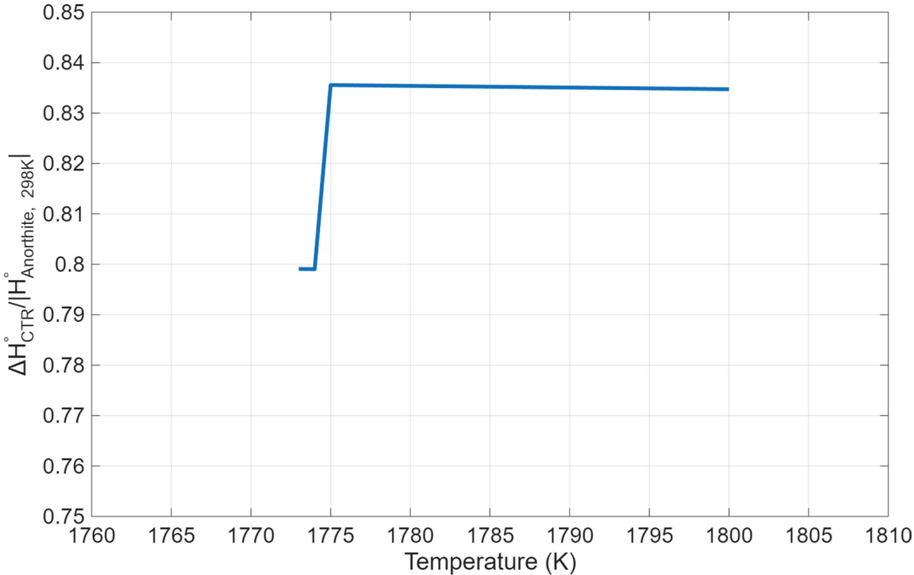
“The enthalpy shows a small increase associated with the phase transition and thermal input, consistent with the endothermic nature of the process.”
§ A review and analysis of extraction methods for aluminum and oxygen from Lunar Regolith > MRE
plainstates an association- Asserted: passes — The authors put it forward as true.
- Checkable: passes — It can be checked against evidence.
- Load-bearing: unclear — It is unclear whether the paper’s conclusions depend on it.
- Based: passes — The paper gives a reason why it holds.
A result the paper reports from its own data — it cites no other source for it, so there is none to check. The quote shows it is in the paper.
In the paper
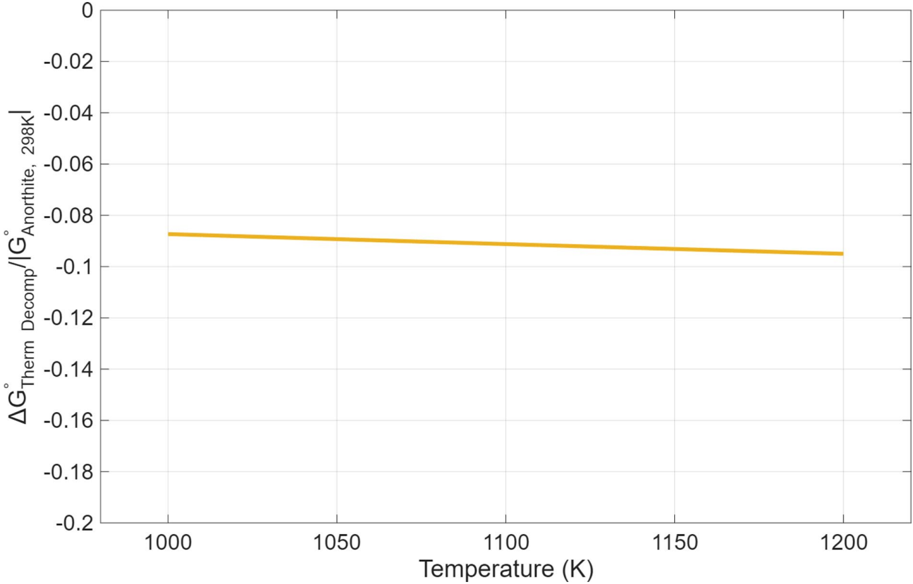
“The thermal decomposition reaction remains spontaneous across the evaluated temperature range.”
§ A review and analysis of extraction methods for aluminum and oxygen from Lunar Regolith > Thermal decomposition processes
plain- Asserted: passes — The authors put it forward as true.
- Checkable: passes — It can be checked against evidence.
- Load-bearing: passes — The paper’s conclusions depend on it.
- Based: passes — The paper gives a reason why it holds.
79 more claims
Create a free account to see all 181 claims and to verify the 5 references still open.
- It may state two separate claims as one. 70
- Probably not a substantial claim. 39
- The quote only partly states this claim. 1
Self-check
Percentages, sums and reported differences re-computed from the paper’s own numbers.
Each contradiction between two passages listed here was confirmed by an independent check.
Rated major: it would touch a result — a value a result rests on, reported and recomputed p-values on opposite sides of the significance level, two passages that conflict with no sign which is right, or a cited work retracted before this paper was published.
In the paper
§ A review and analysis of extraction methods for aluminum and oxygen from Lunar Regolith > Conclusions
“The thermodynamic evaluation indicates that LISAP-MSE requires the lowest ∆H • and ∆G • among the three pathways at relevant operating temperatures”
§ A review and analysis of extraction methods for aluminum and oxygen from Lunar Regolith > Appendix A summary of thermodynamic parameters
“| ∆G • per mole Anorthite (kJ) | < 748.24 | [1,052.3, 1,177.6] | < 2,847.8 | |”
Rated minor: it would not touch a result — a value no result rests on, a p-value that stays on the same side of the significance level, or a conflict that is clerical, resolved elsewhere in the paper, or outside its own findings.
In the paper
§ A review and analysis of extraction methods for aluminum and oxygen from Lunar Regolith > Appendix A summary of thermodynamic parameters
“| ∆H • per mole Anorthite (kJ) | < 3,537.7 | [1,453.8, 1,469.9] | < 4,327.3 | |”
§ A review and analysis of extraction methods for aluminum and oxygen from Lunar Regolith > Appendix A summary of thermodynamic parameters
“| MRE | 1790 | 4.4657×10 6 | 887.55 | 2.8770×10 6 |”
Rated minor: it would not touch a result — a value no result rests on, a p-value that stays on the same side of the significance level, or a conflict that is clerical, resolved elsewhere in the paper, or outside its own findings.
In the paper
§ A review and analysis of extraction methods for aluminum and oxygen from Lunar Regolith > MRE
“The enthalpy shows a small increase associated with the phase transition and thermal input, consistent with the endothermic nature of the process.”
§ A review and analysis of extraction methods for aluminum and oxygen from Lunar Regolith > Appendix A summary of thermodynamic parameters
“| MRE | 1790 | 4.4657×10 6 | 887.55 | 2.8770×10 6 | | | 1823 | 4.3273×10 6 | 811.60 | 2.8478×10 6 |”
Rated minor: it would not touch a result — a value no result rests on, a p-value that stays on the same side of the significance level, or a conflict that is clerical, resolved elsewhere in the paper, or outside its own findings.
In the paper
§ A review and analysis of extraction methods for aluminum and oxygen from Lunar Regolith > Comparison of thermodynamic quantities for simultaneous aluminum and oxygen production using CTR, LISAP-MSE, and MRE
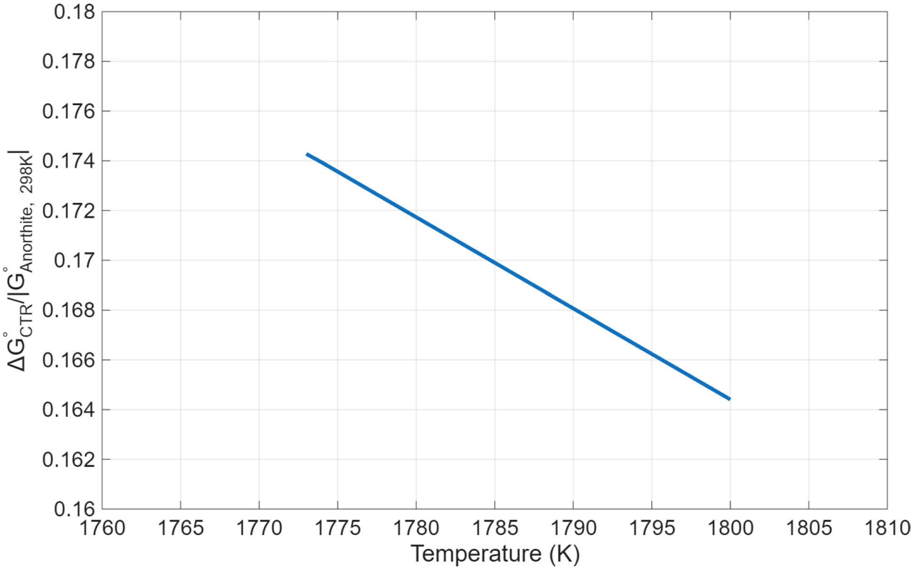
“For CTR and MRE, both ∆H • and ∆G • decrease with increasing temperature once melting has begun.”
§ A review and analysis of extraction methods for aluminum and oxygen from Lunar Regolith > Appendix A summary of thermodynamic parameters
“| CTR | 1773 | 3.3833×10 6 | 1,486.2 | 7.4824×10 5 | | | 1800 | 3.5342×10 6 | 1,571.3 | 7.0587×10 5 |”
Citations
Cites
Direct electrochemical reduction of titanium dioxide to titanium in molten calcium chloride
Chen, G. Z., Fray, D. J., & Farthing, T. W. (2000) · Nature · doi:10.1038/35030069 · Cited by 1,537
Crawford, I. A. (2015) · Progress in Physical Geography: Earth and Environment · doi:10.1177/0309133314567585 · Cited by 348 · cited 1×
“Given the 14-day lunar night, reactors may remain dormant for extended periods; dust-resistant covers or hibernation protocols will be critical to protect equipment during these off-cycles (Crawford 2015; Sanders and Larson 2013).”
A new concept for producing Ti sponge: Calciothermic reduction
Ono, K., & Suzuki, R. O. (2002) · JOM · doi:10.1007/bf02701078 · Cited by 308
Electrochemical Preparation of Silicon and Its Alloys from Solid Oxides in Molten Calcium Chloride
Jin, X., Gao, P., Wang, D., Hu, X., & Chen, G. Z. (2004) · Angewandte Chemie International Edition · doi:10.1002/anie.200352786 · Cited by 214
The production of oxygen and metal from lunar regolith
Schwandt, C., Hamilton, J. A., Fray, D. J., & Crawford, I. A. (2012) · Planetary and Space Science · doi:10.1016/j.pss.2012.06.011 · Cited by 186
Sanders, G. B., & Larson, W. E. (2013) · Journal of Aerospace Engineering · doi:10.1061/(asce)as.1943-5525.0000208 · Cited by 173 · cited 5×
“ISRU pathways that minimize exotic materials are more logistically viable, suggesting early systems will rely heavily on imported components until in-situ ceramic processing becomes feasible (Sanders and Larson 2013; Yu et al. 2025; Chen et al. 2000).”
InfluentialNovel metallurgical process for titanium production
Jiao, S., & Zhu, H. (2006) · Journal of Materials Research · doi:10.1557/jmr.2006.0268 · Cited by 162
Lomax, B. A., Conti, M., Khan, N., Bennett, N. S., Ganin, A. Y., & Symes, M. D. (2020) · Planetary and Space Science · doi:10.1016/j.pss.2019.104748 · Cited by 161 · cited 2×
“MSE is an electrochemical process that enables the reduction of oxide species within a molten salt electrolyte, offer - ing a controllable and efficient pathway for lunar ISRU applications (Lomax et al. 2025, 2020; Schild et al. 2025; Burke et al. 2024; Ortega et al. 2025).”
The specific heat of graphite: An evaluation of measurements
(1973) · doi:10.1016/0022-3115(73)90060-3 · Cited by 157
Halmann, M. M., Frei, A., & Steinfeld, A. (2007) · Energy · doi:10.1016/j.energy.2007.06.002 · Cited by 117
Interactions of molten salts with cathode products in the FFC Cambridge Process
Chen, G. Z. (2020) · International Journal of Minerals, Metallurgy and Materials · doi:10.1007/s12613-020-2202-1 · Cited by 64 · cited 1×
“It allows for the reduction of metal oxides from lunar regolith at temperatures ranging from 800-1000 ◦ C (Chen 2020; Mohandas and Fray 2004; Schwandt et al. 2012; Kilby et al. 2006; Jin et al. 2004; Jiang et al. 2006; Liu et al. 2017 ).”
Early steps toward the lunar base deployment: Some prospects
Marov, M. Y., & Slyuta, E. N. (2021) · Acta Astronautica · doi:10.1016/j.actaastro.2021.01.002 · Cited by 59
Sargeant, H. M., Barber, S. J., Anand, M., Abernethy, F. A. J., Sheridan, S., Wright, I. P., & Morse, A. D. (2021) · Planetary and Space Science · doi:10.1016/j.pss.2021.105287 · Cited by 51
Geologic context and potential EVA targets at the lunar south pole
Gawronska, A. J., Barrett, N., Boazman, S. J., Gilmour, C. M., Halim, S. H., Harish, McCanaan, K., Satyakumar, A. V., Shah, J., Meyer, H. M., et al. (2020) · Advances in Space Research · doi:10.1016/j.asr.2020.05.035 · Cited by 49
The enthalpy of fusion of anorthite
(1980) · doi:10.1007/bf00375493 · Cited by 48
The possible reduction of alumina to aluminum using hydrogen
Braaten, O., Kjekshus, A., & Kvande, H. (2000) · JOM · doi:10.1007/s11837-000-0047-7 · Cited by 48
Sanders, G. B., & Larson, W. E. (2012) · Earth and Space 2012 · doi:10.1061/9780784412190.050 · Cited by 48
A parametric sizing model for Molten Regolith Electrolysis reactors to produce oxygen on the Moon
Schreiner, S. S., Sibille, L., Dominguez, J. A., & Hoffman, J. A. (2016) · Advances in Space Research · doi:10.1016/j.asr.2016.01.006 · Cited by 46 · cited 1×
“MRE is an electrochemical process that directly reduces unrefined lunar regolith by melting it into a conductive oxide medium and applying an electric potential to drive reduction (Yu et al. 2025; Schreiner et al. 2016; Sibille et al. 2009; Patel et al. 2023; Grossman et al. 2021).”
Lunar Soil Simulant Electrolysis Using Inert Anode for Al-Si Alloy and Oxygen Production
Liu, A., Shi, Z., Hu, X., Gao, B., & Wang, Z. (2017) · Journal of The Electrochemical Society · doi:10.1149/2.1381702jes · Cited by 45 · cited 1×
“It allows for the reduction of metal oxides from lunar regolith at temperatures ranging from 800-1000 ◦ C (Chen 2020; Mohandas and Fray 2004; Schwandt et al. 2012; Kilby et al. 2006; Jin et al. 2004; Jiang et al. 2006; Liu et al. 2017 ).”
Wu, J., Yu, J., Xu, X., Liu, Y., Zhang, Z., & Wei, P. (2022) · Ceramics International · doi:10.1016/j.ceramint.2022.07.305 · Cited by 43
Crawford, I. (2014) · BIROn (Birkbeck, University of London) · doi:10.48550/arxiv.1410.6865 · Cited by 43
Sibille, L., Sadoway, D., Sirk, A., Tripathy, P., Melendez, O., Standish, E., Dominguez, J., Stefanescu, D., Curreri, P., & Poizeau, S. (2009) · 47th AIAA Aerospace Sciences Meeting including The New Horizons Forum and Aerospace Exposition · doi:10.2514/6.2009-659 · Cited by 42 · cited 1×
“MRE is an electrochemical process that directly reduces unrefined lunar regolith by melting it into a conductive oxide medium and applying an electric potential to drive reduction (Yu et al. 2025; Schreiner et al. 2016; Sibille et al. 2009; Patel et al. 2023; Grossman et al. 2021).”
The Ca isotope composition of mare basalts as a probe into the heterogeneous lunar mantle
Klaver, M., Luu, T.-H., Lewis, J., Jansen, M. N., Anand, M., Schwieters, J. B., & Elliott, T. R. (2021) · Earth and Planetary Science Letters · doi:10.1016/j.epsl.2021.117079 · Cited by 36
Electroanalytical Measurements of Oxide Ions in Molten CaCl 2 on W electrode
Zhang, C., Rappleye, D., Nelson, A., Simpson, S., & Simpson, M. (2021) · Journal of The Electrochemical Society · doi:10.1149/1945-7111/ac208e · Cited by 33
Troisi, I., Lunghi, P., & Lavagna, M. (2022) · Acta Astronautica · doi:10.1016/j.actaastro.2022.07.021 · Cited by 33 · cited 2×
“For example, prior studies of carbothermal reduction applied to lunar regolith report oxygen yields of only 2.4 7.9 wt % of the feedstock, corresponding to 5.4 17.5 % of the total available oxygen, with strong dependence on operating conditions and mineralogy Troisi et al. (2022).”
InfluentialDemonstrating the Solar Carbothermal Reduction of Lunar Regolith to Produce Oxygen
Gustafson, R., White, B., Fidler, M., & Muscatello, A. (2010) · 48th AIAA Aerospace Sciences Meeting Including the New Horizons Forum and Aerospace Exposition · doi:10.2514/6.2010-1163 · Cited by 32 · cited 3×
“At higher temperatures (typically above 1400 ◦ C ), molten carbothermal reduction becomes dominant, where partial melting of the feedstock enhances mass transport and can enable more extensive reduction Gustafson et al. (2010).”
Bulk composition of regolith fines on lunar crater floors: Initial investigation by LRO/Mini-RF
Heggy, E., Palmer, E. M., Thompson, T. W., Thomson, B. J., & Patterson, G. W. (2020) · Earth and Planetary Science Letters · doi:10.1016/j.epsl.2020.116274 · Cited by 30
Regolith as substitute mold material for aluminum casting on the Moon
Baasch, J., Windisch, L., Koch, F., Linke, S., Stoll, E., & Schilde, C. (2021) · Acta Astronautica · doi:10.1016/j.actaastro.2021.01.045 · Cited by 26
Thermal Properties of Lunar Regolith Simulants
Street, Jr., Ray, C., Rickman, D., & Scheiman, D. A. (2010) · Earth and Space 2010 · doi:10.1061/41096(366)28 · Cited by 26
Thermal evolution of water and hydrogen from Apollo lunar regolith grains
Jones, B. M., Александров, А. В., Hibbitts, C. A., & Orlando, T. M. (2021) · Earth and Planetary Science Letters · doi:10.1016/j.epsl.2021.117107 · Cited by 25
Hydrogen reduction of lunar materials for oxygen extraction on the moon
McKay, D. S., & Allen, C. (1996) · AIAA Aerospace Sciences Meeting and Exhibit · doi:10.2514/6.1996-488 · Cited by 24
Timing of lunar Mg-suite magmatism constrained by SIMS U-Pb dating of Apollo norite 78238
Zhang, B., Lin, Y., Moser, D. E., Warren, P. H., Hao, J., Barker, I. R., Shieh, S. R., & Bouvier, A. (2021) · Earth and Planetary Science Letters · doi:10.1016/j.epsl.2021.117046 · Cited by 23
Reaction Mechanism of Various Types of Lunar Soil Simulants by Hydrogen Reduction
Sueyoshi, K., Watanabe, T., Nakano, Y., Kanamori, H., Aoki, S., Miyahara, A., & Matsui, K. (2008) · Earth & Space 2008 · doi:10.1061/40988(323)134 · Cited by 22
“Perovskitization”‐Assisted Electrochemical Reduction of Solid TiO2 in Molten CaCl2
Jiang, K., Hu, X., Ma, M., Wang, D., Qiu, G., Jin, X., & Chen, G. Z. (2005) · Angewandte Chemie · doi:10.1002/ange.200502318 · Cited by 21
Samouhos, M., Tsakiridis, P., Iskander, M., Taxiarchou, M., & Betsis, K. (2022) · Planetary and Space Science · doi:10.1016/j.pss.2021.105414 · Cited by 21 · cited 1×
“This temperature was chosen based on experimental observations indicating that signifi - cant reduction of regolith oxides occurs only once partial melting begins, improving reactant mobility and enabling measurable conversion efficiency Samouhos et al. ( 2022).”
Prinetto, J., Colagrossi, A., Dottori, A., Troisi, I., & Lavagna, M. R. (2022) · Planetary and Space Science · doi:10.1016/j.pss.2022.105618 · Cited by 20
Burke, P. A., Nord, M. E., Hibbitts, C. A., & Berdis, J. R. (2024) · Frontiers in Space Technologies · doi:10.3389/frspt.2024.1304579 · Cited by 15 · cited 1×
“MSE is an electrochemical process that enables the reduction of oxide species within a molten salt electrolyte, offer - ing a controllable and efficient pathway for lunar ISRU applications (Lomax et al. 2025, 2020; Schild et al. 2025; Burke et al. 2024; Ortega et al. 2025).”
Carbothermal reduction of lunar materials for oxygen production on the moon
Rice, E., Rosenberg, S., Musbah, O., Hermes, P., & Bemowski, P. (1996) · 34th Aerospace Sciences Meeting and Exhibit · doi:10.2514/6.1996-487 · Cited by 14
Lunar Production System for Extracting Oxygen from Regolith
Linne, D. L., Schuler, J. M., Sibille, L., Kleinhenz, J. E., Colozza, A. J., J. Fincannon, H., Oleson, S. R., Suzuki, N. H., & Moore, L. (2021) · Journal of Aerospace Engineering · doi:10.1061/(asce)as.1943-5525.0001269 · Cited by 14 · cited 1×
“…is a high-temperature chemical process that reduces metal oxides in lunar regolith using carbon as the reducing agent, typically in the form of graphite or methane ( CH 4 ) (Prinetto et al. 2023; Linne et al. 2021; Rice et al. 1996; Mckay and Allen 1996; Troisi et al. 2022; Rosenberg et al. 1996).”
Kaur, S., Aleksandrov, A. B., Ready, W. J., Orlando, T. M., & Loutzenhiser, P. G. (2024) · Advances in Space Research · doi:10.1016/j.asr.2024.01.025 · Cited by 14
Analysis of Thermal and Reaction Times for Hydrogen Reduction of Lunar Regolith
Hegde, U., Balasubramaniam, R., Gökoğlu, S. A., & El‐Genk, M. S. (2008) · AIP conference proceedings · doi:10.1063/1.2844967 · Cited by 14
Extraction of Aluminum from Lunar Regolith through Molten Salt Electrolysis
Ortega, J. N., Sander, T. P., Smith, J. D., Rezaei, F., Bayless, D. J., Schonberg, W., Stutts, D. S., & Han, F. D. (2025) · Acta Astronautica · doi:10.1016/j.actaastro.2025.04.064 · Cited by 13 · cited 5×
“The MSE analysis centers on a lunar-adapted configura - tion, Lunar In-Situ Aluminum Production via Molten Salt Electrolysis (LISAP-MSE) Ortega et al. (2025), which co-produces metallic aluminum and oxygen by electrolytically reducing alumina derived from anorthite in molten CaCl 2 .”
InfluentialSelf-citationMelting properties of lunar regolith simulant for in-situ construction
Liu, Y., Zhang, X., Wang, C., Gao, T., Wang, C., Wang, Q., Gu, J., Chen, X., & Yao, W. (2025) · Advances in Space Research · doi:10.1016/j.asr.2024.09.058 · Cited by 11 · cited 1×
“MRE, on the other hand, forgoes the use of an external electrolyte and electrolyzes the bulk regolith melt directly at high temperatures, typically operating above the melting point of regolith simulants ( 1300 ◦ C ) (Street et al. 2010; Liu et al. 2025).”
Hydrogen Reduction of Lunar Regolith Simulants for Oxygen Production
Hegde, U., Balasubramaniam, R., Gökoğlu, S. A., Rogers, K., Reddington, M., & Oryshchyn, L. (2011) · AIAA Aerospace Sciences Meeting · doi:10.2514/6.2011-608 · Cited by 11
Grossman, K., Sibille, L., Bell, E. A., Petersen, E. M., Medina, J. A. T., Williams, H., Newbold, T., Zacny, K. A., & Bates, I. (2021) · AIAA Accelerating Space Commerce, Exploration, and New Discovery Conference (ASCEND) · doi:10.2514/6.2021-4019 · Cited by 10
Multiple gaseous reduction of ilmenite: thermodynamic and experimental study
Xiao, W., Lu, X., Zou, X., Li, C., & Ding, W. (2015) · Rare Metals · doi:10.1007/s12598-014-0264-9 · Cited by 10 · cited 1×
“…been explored in both thermal and plasma-assisted configurations and is supported by a substantial body of experimental and modeling work, particularly for iron-rich and ilmenite-bearing regolith compositions (Sargeant et al. 2021; Hegde et al. 2009, 2011; Xiao et al. 2014; Sueyoshi et al. 2008).”
Lomax, B. A., Selmeci, Á., Rützler, A., Schild, T., Symes, M. D., Bonsall, E., Schröder, C., Conti, M., Lindner, R., & Carpenter, J. D. (2025) · Acta Astronautica · doi:10.1016/j.actaastro.2025.04.049 · Cited by 8 · cited 1×
“MSE is an electrochemical process that enables the reduction of oxide species within a molten salt electrolyte, offer - ing a controllable and efficient pathway for lunar ISRU applications (Lomax et al. 2025, 2020; Schild et al. 2025; Burke et al. 2024; Ortega et al. 2025).”
Schild, T., Lomax, B. A., Conti, M., Aridon, G., Harries, D., & Hadler, K. (2025) · Acta Astronautica · doi:10.1016/j.actaastro.2025.02.021 · Cited by 8 · cited 1×
“MSE is an electrochemical process that enables the reduction of oxide species within a molten salt electrolyte, offer - ing a controllable and efficient pathway for lunar ISRU applications (Lomax et al. 2025, 2020; Schild et al. 2025; Burke et al. 2024; Ortega et al. 2025).”
Improving molten regolith electrolysis with zirconia-based hollow anode technology
Yu, K., West, W. C., Stokes, J. L., Harder, B. J., Reidy, L. P., Dominguez, J. A., & Faber, K. T. (2025) · Acta Astronautica · doi:10.1016/j.actaastro.2025.06.028 · Cited by 8
Dottori, A., Troisi, I., & Lavagna, M. R. (2025) · Planetary and Space Science · doi:10.1016/j.pss.2025.106154 · Cited by 6 · cited 2×
“In the solid-gas regime (typically below 1200 ◦ C ), reduction occurs through gas-solid reactions involving CO/ CO 2 and oxide phases, often with slower kinetics and incomplete conversion Dottori et al. (2025).”
Kaur, S., Ready, W. J., Orlando, T. M., & Loutzenhiser, P. G. (2025) · Acta Astronautica · doi:10.1016/j.actaastro.2025.03.021 · Cited by 5
Bachle, P. F., Smith, J. D., Rezaei, F., Bayless, D., Schonberg, W. P., & Han, D. (2024) · ASCE International Conference on Engineering, Science, Construction, and Operations in Challenging Environments (Earth and Space) · doi:10.1061/9780784485736.023 · Cited by 3
Environmental Testing of a Fully Automated Carbothermal Reactor for Lunar Oxygen Production
Haggerty, N., White, B. C., Paz, A., O'Connor, D., Azim, N., & Captain, J. (2025) · International Conference on Environmental Systems (ICES) · doi:10.32865/2346/102672 · Cited by 2
Christen, L.-B., Watanabe, M., Yamakami, H., Sekine, H., Komurasaki, K., & Koizumi, H. (2025) · Optics & Laser Technology · doi:10.1016/j.optlastec.2024.111935 · Cited by 1
Producing Lunar Steel and Oxygen using Molten Regolith Electrolysis
Patel, P. B., Soto, J., Koller, S., Latyshev, K., Sangabattula, L., Adams, Z. K., Misquitta, K., Jalil, L., Cooper, A., Nguyen, T., et al. (2023) · AIAA Accelerating Space Commerce, Exploration, and New Discovery Conference (ASCEND) · doi:10.2514/6.2023-4794 · Cited by 1
Erratum to: Interactions of molten salts with cathode products in the FFC Cambridge Process
Chen, G. Z. (2021) · International Journal of Minerals, Metallurgy and Materials · doi:10.1007/s12613-021-2271-9
Research works printed but not linked: 9
- 12. Dean, J.A.: Lange's Handbook of Chemistry, McGraw-Hill Inc (1999). (15th edn)
- 23. X Heiken, G., Vaniman, D., French, B.M.: Lunar Sourcebook: A User's Guide to the Moon, Cambridge University Press (2005)
- 29. Kilby, K.C.T., Centeno, L., Doughty, G., et al.: The Electrochemical Production of Oxygen and Metal via the FFC-Cambridge Pro- cess. Space Resources Roundtable 8, 64-65 (2006)
- 31. Koziol, A.M., Newton, R.C.: Redetermination of the Anorthite Break- down Reaction and Improvement of the Plagioclase-Garnet-Al 2 SiO 5 -Quartz Geobarometer. Am. Miner. 73, 216-223 (1988)
- 32. Krupka, K.M., Robie, R.A., Hemingway, B.S.: High-temperature heat capacities of corundum, periclase, anorthite, CaAl 2 SiO 8 glass, muscovite, pyrophtllite, KAlSi 3 O 8 glass, grossular, and NaAlSi 3 O 8 glass. Am. Miner. 64(86), 101 (1979)
- 33. Lide, D.R.: CRC Handbook of Chemistry and Physics, 85th edn. CRC Press, Boca Raton (2004)
- 42. Mohandas, K.S., Fray, D.: FFC Cambridge Process and Removal of Oxygen from Metal-Oxygen Systems by Molten Salt Electroly- sis: an Overview. Trans. Indian Inst. Met. 57(6), 579-592 (2004)
- 44. Moon to Mars Objectives. NASA (2022). (Tech report) Space and Planetary Resources (2026) 2:5 Multiple industry contributors (Fibertek, Redwire, Blue Origin, Hon- eybee Robotics, et al.) (2025) The Commercial Lunar Economy Field Guide: a Vision for Industry on the Moon in the Next Decade. Air University Press, Maxwell Air Force Base, AL, URL h t t p s : / / w w w . 2020) NASA's plan for sustained lunar exploration and devel- opment. Tech report, NASA, URL h t / /
- 52. Rosenberg, S.D., Musbah, O., Rice, E.E.: Carbothermal Reduction of Lunar Materials for Oxygen Production on the Moon: reduc- tion of Lunar Simulants with Carbon. In: Proceedings of the 27th Lunar and Planetary Science Conference (1996)
Cited by
Coffman, B. A., Ortega, J. N., Bachle, P. F., Smith, J., Rezaei, F., Bayless, D., Schonberg, W. P., Runyon, K. D., & Han, D. (2026) · Acta Astronautica · doi:10.1016/j.actaastro.2026.09.032
Self-citation
Metadata
- Authors
- Ortega, J. N., Rupp, B., & Han, F. D.
- Affiliations
- Missouri University of Science and Technology (US)
- Marshall Space Flight Center (US)
- Corresponding author
- Ortega, Jacob N.
- Rupp, Benjamin
- Han, Frank D.
- ORCID
- Rupp, Benjamin
- Venue
- Space and Planetary Resources
- Published
- 2026-06-03
- Volume
- 2
- Issue
- 1
- ISSN
- 3059-4502 (ISSN-L)
- OpenAlex
- W7163326083
- Cited by
- 1
- References
- 53
- Citations by year
- 2026: 1
- FWCI
- 3.09
- Type
- journal article
- Language
- en
- Open access
- hybrid
- doi.org
- Licence
- cc-by-nc-nd
- creativecommons.org/licenses/by-nc-nd/4.0 (tdm)
- creativecommons.org/licenses/by-nc-nd/4.0 (vor)
- Locations
- Space and Planetary Resources (publishedVersion, cc-by-nc-nd)
- Funders
- NASA (80NSSC25K0260)
- Missouri University of Science and Technology
- Topics
- Physical Sciences › Earth and Planetary Sciences › Space and Planetary Science › Planetary Science and Exploration
- Physical Sciences › Chemistry › Electrochemistry › Molten salt chemistry and electrochemical processes
- Physical Sciences › Engineering › Aerospace Engineering › Space Exploration and Technology
- Keywords
- lunar regolith, in-situ resource utilization, aluminum extraction, oxygen production, carbothermal reduction, molten salt electrolysis, energy requirements
About these checks
Registry, retraction, Cites and statistics results are computed, not judged, with one exception: a printed reference that no index lists is read once by a model before it counts as a citation error. Claims are extracted by a model and kept only when their quote appears verbatim in the text; each cited source is then checked, with a model’s help, for whether it says what the claim relies on. Those verdicts can be wrong — read the claim’s quote and the cited source before relying on one.
The claim verdicts this report counts are experimental: their accuracy is not yet measured.
A language model drew the claims from the paper on 2026-10-10, under version 3 of the claim definition (model deepseek-v4.1-flash, prompt extract-v3).
A second model labelled each claim on 2026-10-10 (model jev-1.13-20260917, definition revision gold-guideline-v0.2).
Cited sources are checked with a language model’s help (gpt-6-sol).
Statistics and arithmetic are recomputed, not judged.
Confidence bands are shown only for fields calibrated on our annotated test set. None is calibrated yet, so no band is shown.
What counts as a claim ›How we measure confidence ›How we check this ›
Are you an author, or do you see a problem with this page? Request a review
Data sources
Bibliographic data: Semantic Scholar, OpenAlex, Crossref.
Contains information from the Semantic Scholar Academic Graph Datasets, made available under the ODC Attribution License (ODC-BY 1.0).
Semantic Scholar’s data is described in: Kinney, R., et al. (2023). The Semantic Scholar Open Data Platform. arXiv:2301.10140.
