

General purpose technologies ‘Engines of growth’?
Open accessThe DOI matches its Crossref record; 39 of the 45 references it cites were found in a registry or an index.
Abstract
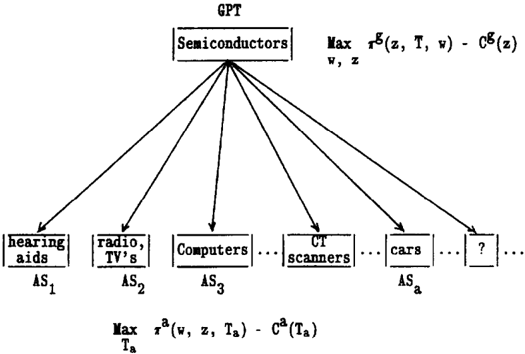
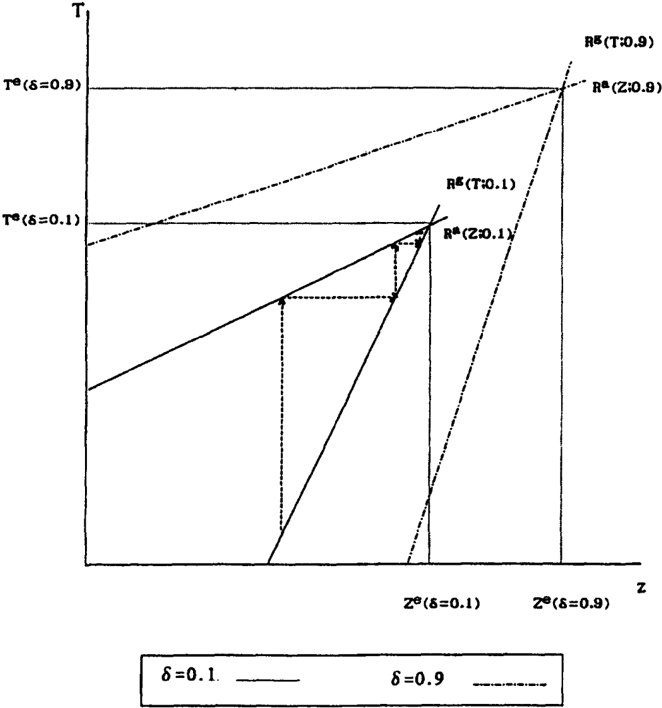
Whole eras of technical progress and growth appear to be driven by a few ‘General Purpose Technologies’ (GPT's), such as the steam engine, the electric motor, and semiconductors. GPT's are characterized by pervasiveness, inherent potential for technical improvements, and ‘innovational complementarities’, giving rise to increasing returns-to-scale. However, a decentralized economy will have difficulty in fully exploiting the growth opportunities of GPT's: arms-length market transactions between the GPT and its users may result in ‘too little, too late’ innovation. Likewise, difficulties in forecasting the technological developments of the other side can lower the rate of technical advance of all sectors.
Overview
The claims and statistics of this paper haven’t been checked yet.
Free: it reads the open-access text and checks the first 5 claims that cite a source we can check. Create a free account to check every claim.
Integrity signals
Registry
Cites
Statistics
Figures
Verification
Claims the paper makes
The claims and statistics of this paper haven’t been checked yet.
Free: it reads the open-access text and checks the first 5 claims that cite a source we can check. Create a free account to check every claim.
Claims other papers make about this one
Each is checked against this paper’s own text: does it say what the citing paper says it does?
The source backs part of the claim, not all of it — or backs it for a different population, condition or comparison.
In the citing paper
“The impacts of GPT are pivotal explanatory factors of long-term economic growth: 'One of the most important aspects of GPT is that they rejuvenate the growth process by creating spillovers that go far beyond the concept of measurable externalities' [80] (p. 100).”
From Digitalization and the Decoupling Debate: Can ICT Help to Reduce Environmental Impacts While the Economy Keeps Growing? (2020) · cites this paper as [80]
Experimental — accuracy not yet measuredThe source backs part of the claim, not all of it — or backs it for a different population, condition or comparison.
In the citing paper
“We conclude that LLMs such as GPTs exhibit traits of general-purpose technologies”
From GPTs are GPTs: An Early Look at the Labor Market Impact Potential of Large Language Models (2023) · cites this paper as Bresnahan and Trajtenberg, 1995
Experimental — accuracy not yet measuredThe source backs part of the claim, not all of it — or backs it for a different population, condition or comparison.
In the citing paper
“General purpose technologies (GPTs) such as AI enable and require significant complementary investments, including co-invention of new processes, products, business models and human capital.”
From The Productivity J-Curve: How Intangibles Complement General Purpose Technologies (2021) · cites this paper as Bresnahan and Trajtenberg 1995
Experimental — accuracy not yet measuredIn the citing paper
“AI, and in particular the subfield of AI called machine learning, is pervasive, improves over time, and spawns complementary innovation, thereby meeting Bresnahan and Trajtenberg's (1995) three canonical GPT criteria.”
From The Productivity J-Curve: How Intangibles Complement General Purpose Technologies (2021) · cites this paper as Bresnahan and Trajtenberg's (1995)
In the citing paper
“Specifically, they are pervasive, improve over time, and lead to complementary innovation (Bresnahan and Trajtenberg 1995).”
From The Productivity J-Curve: How Intangibles Complement General Purpose Technologies (2021) · cites this paper as Bresnahan and Trajtenberg 1995
Self-check
Percentages, sums and reported differences re-computed from the paper’s own numbers.
The self-check needs the paper’s full text.
Citations
Cites
Increasing returns and long-run growth
Romer, P. M. (1986) · Journal of Political Economy · doi:10.1086/261420 · Cited by 20,149
Technical Change and the Aggregate Production Function
Solow, R. M. (1957) · The Review of Economics and Statistics · doi:10.2307/1926047 · Cited by 12,259
The Theory of Industrial Organization
Jean Tirole, Z. (1988) · MIT Press Books · Cited by 8,651
Economic Welfare and the Allocation of Resources for Invention
Arrow, K. J. (1962) · The Rate and Direction of Inventive Activity · doi:10.1515/9781400879762-024 · Cited by 8,635
The Strategy of Economic Development
Linder, S. B., & Hirschman, A. O. (1959) · Ekonomisk Tidskrift · doi:10.2307/3438684 · Cited by 6,249
Innovation and Growth in the Global Economy.
Taylor, M. S., Grossman, G. M., & Helpman, E. (1993) · Economica · doi:10.2307/2554862 · Cited by 6,231
Theory of Industrial Organization.
Rubinstein, A., & Tirole, J. (1989) · Economica · doi:10.2307/2554286 · Cited by 5,142
Holmstrom, B. (1982) · The Bell Journal of Economics · doi:10.2307/3003457 · Cited by 4,903
Innovation and growth in the global economy
Broadberry, S. (1992) · International Journal of Industrial Organization · doi:10.1016/0167-7187(92)90023-r · Cited by 3,930
Hybrid Corn: An Exploration in the Economics of Technological Change
Griliches, Z. (1957) · Econometrica · doi:10.2307/1905380 · Cited by 3,330
Research works printed but not linked: 4
- Fisher, F.M., J.E. Greenwood, and J.J. McGowan, 1983, Folded, spindled, and mutilated: Economic analysis of U.S. vs. IBM (MIT Press, Cambridge, MA).
- Landes, D., 1969, The unbound Prometheus (Cambridge University Press, Cambridge).
- Mokyr, J., 1990, The lever of riches (Oxford University Press, New York, NY).
- Pakes, A. and P. McGuire, 1992, Computation of Markov perfect Nash equilibrium: Numerical implications of a dynamic differentiated product model, NBER technical discussion paper.
Cited by
Items 301–400 of 1,010
Of Smart Phone Wars and Software Patents
Graham, S. J. H., & Vishnubhakat, S. (2013) · The Journal of Economic Perspectives · doi:10.1257/jep.27.1.67 · Cited by 130
Get with the Program: Software-Driven Innovation in Traditional Manufacturing
Branstetter, L., Drev, M., & Kwon, N. (2018) · Management Science · doi:10.1287/mnsc.2017.2960 · Cited by 131
A longitudinal study of e-government maturity
Das, A., Singh, H., & Joseph, D. (2017) · Information & Management · doi:10.1016/j.im.2016.09.006 · Cited by 129
Kopka, A., & Fornahl, D. (2023) · Small Business Economics · doi:10.1007/s11187-023-00754-6 · Cited by 132
Technological Sovereignty as Ability, Not Autarky
March, C., & Schieferdecker, I. (2023) · International Studies Review · doi:10.1093/isr/viad012 · Cited by 131
Technological Diffusion: Alternative Theories and Historical Evidence
Sarkar, J. (1998) · Journal of Economic Surveys · doi:10.1111/1467-6419.00051 · Cited by 132
Kaplan, D. E. (2012) · Resources Policy · doi:10.1016/j.resourpol.2012.06.001 · Cited by 127
Ardito, L., Petruzzelli, A. M., & Albino, V. (2016) · Journal of Engineering and Technology Management · doi:10.1016/j.jengtecman.2016.02.002 · Cited by 128
Productivity and Broadband: The Human Factor
Mack, E. A., & Faggian, A. (2013) · International Regional Science Review · doi:10.1177/0160017612471191 · Cited by 127
Nanotechnology innovation system: Understanding hidden dynamics of nanoscience fusion trajectories
Islam, N., & Miyazaki, K. (2008) · Technological Forecasting and Social Change · doi:10.1016/j.techfore.2008.03.021 · Cited by 129
Highly innovative small firms in the markets for technology
Hicks, D. M., & Hegde, D. (2005) · Research Policy · doi:10.1016/j.respol.2005.03.008 · Cited by 128
Bresnahan, T. F., Greenstein, S. M., & Henderson, R. M. (2012) · University of Chicago Press eBooks · doi:10.7208/chicago/9780226473062.003.0008 · Cited by 126
Self-citationInnovation and skill dynamics: a life-cycle approach
Vona, F., & Consoli, D. (2014) · Industrial and Corporate Change · doi:10.1093/icc/dtu028 · Cited by 129
Public Procurement as Policy Instrument for Innovation
Czarnitzki, D., Hünermund, P., & Moshgbar, N. (2018) · International Journal of Industrial Organization · doi:10.1016/j.ijindorg.2020.102620 · Cited by 123
Runge, S., Schwens, C., & Schulz, M. (2021) · Strategic Management Journal · doi:10.1002/smj.3334 · Cited by 130
The Solow productivity paradox in historical perspective
Crafts, N. F. R. (2002) · Warwick Research Archive Portal (University of Warwick) · doi:10.82444/warw.33482929 · Cited by 125
Lee, J.-H., & Lee, K. (2021) · Industrial and Corporate Change · doi:10.1093/icc/dtaa059 · Cited by 123
Artificial intelligence and scientific discovery: a model of prioritized search
Agrawal, A. K., McHale, J., & Oettl, A. (2024) · Research Policy · doi:10.1016/j.respol.2024.104989 · Cited by 127
Lichtenthaler, U. (2010) · Technovation · doi:10.1016/j.technovation.2010.04.001 · Cited by 123
Bartel, A. P., Ichniowski, C., & Shaw, K. L. (2005) · National Bureau of Economic Research · doi:10.3386/w11773 · Cited by 126
e-Business and Disintegration of the Semiconductor Industry Value Chain
Macher, J. T., Mowery, D. C., & Simcoe, T. S. (2002) · Industry and Innovation · doi:10.1080/1366271022000034444 · Cited by 123
Electronic Medical Records and Physician Productivity: Evidence from Panel Data Analysis
Bhargava, H. K., & Mishra, A. N. (2014) · Management Science · doi:10.1287/mnsc.2014.1934 · Cited by 103
The Economics and Econometrics of Innovation
Encaoua, D., Hall, B. H., Laisney, F., & Mairesse, J. (2000) · Springer eBooks · doi:10.1007/978-1-4757-3194-1 · Cited by 123
Innovation and entrepreneurial ecosystems: fintech in the financial services industry
Berman, A., Cano-Kollmann, M. F., & Mudambi, R. (2021) · Review of Managerial Science · doi:10.1007/s11846-020-00435-8 · Cited by 127
ICT and Productivity: A Review of the Literature
Biagi, F. (2013) · RePEc: Research Papers in Economics · doi:10.2788/32940 · Cited by 122
Delera, M., Pietrobelli, C., Calza, E., & Lavopa, A. (2021) · World Development · doi:10.1016/j.worlddev.2021.105788 · Cited by 126
Digital Technologies in Built Environment Projects: Review and Future Directions
Papadonikolaki, E., Krystallis, I., & Morgan, B. (2022) · Project Management Journal · doi:10.1177/87569728211070225 · Cited by 124
Freddi, D. (2017) · AI & Society · doi:10.1007/s00146-017-0740-5 · Cited by 124
Bretschger, L. (2005) · Ecological Economics · doi:10.1016/j.ecolecon.2004.12.026 · Cited by 120
Quantitative Determination of Technological Improvement from Patent Data
Benson, C. L., & Magee, C. L. (2015) · PLoS ONE · doi:10.1371/journal.pone.0121635 · Cited by 122
Karim, M. S., Nahar, S., & Demirbağ, M. (2022) · Technological Forecasting and Social Change · doi:10.1016/j.techfore.2022.121626 · Cited by 120
Basu, S., Fernald, J. G., & Francisco, F. R. B. O. S. (2006) · Federal Reserve Bank of San Francisco, Working Paper Series · doi:10.24148/wp2006-29 · Cited by 119
Useful work and information as drivers of economic growth
Warr, B. S., & Ayres, R. U. (2011) · Ecological Economics · doi:10.1016/j.ecolecon.2011.09.006 · Cited by 118
The Role of Digitalization in Cross-Border E-Commerce Performance of Italian SMEs
Dallocchio, M., Lambri, M., Sironi, E., & Teti, E. (2024) · Sustainability · doi:10.3390/su16020508 · Cited by 120
Chou, Y., Chuang, H. H., & Shao, B. B. M. (2014) · International Journal of Production Economics · doi:10.1016/j.ijpe.2014.08.003 · Cited by 121
A literature review on markets for ideas: Emerging characteristics and unanswered questions
Natalicchio, A., Petruzzelli, A. M., & Garavelli, A. C. (2013) · Technovation · doi:10.1016/j.technovation.2013.11.005 · Cited by 119
Do R&D and ICT affect total factor productivity growth differently?
Edquist, H. O., & Henrekson, M. (2016) · Telecommunications Policy · doi:10.1016/j.telpol.2016.11.010 · Cited by 117
The decline of computers as a general purpose technology
Thompson, N., & Spanuth, S. (2021) · Communications of the ACM · doi:10.1145/3430936 · Cited by 116
Structure and Governance in Industrial Districts: Implications for Competitive Advantage
Arıkan, A. T., & Schilling, M. A. (2011) · Journal of Management Studies · doi:10.1111/j.1467-6486.2010.00951.x · Cited by 122
ICT as a source of output and productivity growth in Finland
Jalava, J., & Pohjola, M. (2007) · Telecommunications Policy · doi:10.1016/j.telpol.2007.05.011 · Cited by 116
Basu, S., Fernald, J. G., Oulton, N., & Srinivasan, S. (2003) · SSRN Electronic Journal · doi:10.2139/ssrn.472903 · Cited by 116
Balcerzak, A. P., & Pietrzak, M. B. (2017) · Journal of Competitiveness · doi:10.7441/joc.2017.02.01 · Cited by 118
Technological Diversification: A Systematic Review of Antecedents, Outcomes and Moderating Effects
Ceipek, R., Hautz, J., Mayer, M. C. J., & Matzler, K. (2019) · International Journal of Management Reviews · doi:10.1111/ijmr.12205 · Cited by 119
Profiting from Enabling Technologies?
Gambardella, A., Heaton, S., Novelli, E., & Teece, D. J. (2021) · Strategy Science · doi:10.1287/stsc.2020.0119 · Cited by 87
Innovation in service firms explored: what, how and why?
Bruins, A. S., Dolfsma, W. A., & Meijaard, J. (2003) · Cited by 72
Skill-Biased Technical Change: Theoretical Concepts, Empirical Problems and a Survey of the EvidencePreprint
Sanders, M. W. J. L., & ter Weel, B. (2000) · RePEc: Research Papers in Economics · doi:10.26481/umamer.2000012 · Cited by 119
Paunov, C., & Planes-Satorra, S. (2019) · OECD science, technology and industry policy papers · doi:10.1787/67bbcafe-en · Cited by 114
The digital revolution and digitalized network society
Knell, M. S. (2021) · Review of Evolutionary Political Economy · doi:10.1007/s43253-021-00037-4 · Cited by 119
Ray, G., Xue, L., & Barney, J. B. (2012) · Academy of Management Journal · doi:10.5465/amj.2010.0874 · Cited by 116
Of Mice and Academics: Examining the Effect of Openness on Innovation
Murray, F., Aghion, P., Dewatripont, M., Kolev, J., & Stern, S. (2009) · National Bureau of Economic Research · doi:10.3386/w14819 · Cited by 116
The Nexus between technological performances of countries and incidence of cancers in society
Coccia, M. (2015) · Technology in Society · doi:10.1016/j.techsoc.2015.02.003 · Cited by 112
Geographic location and the diffusion of Internet technology
Forman, C., Goldfarb, A., & Greenstein, S. M. (2004) · Electronic Commerce Research and Applications · doi:10.1016/j.elerap.2004.10.005 · Cited by 114
Complement or Substitute? How AI Increases the Demand for Human SkillsPreprint
Mäkelä, E., & Stephany, F. (2025) · SSRN Electronic Journal · doi:10.2139/ssrn.5153230 · Cited by 119
Evolutionary trajectories of the nanotechnology research across worldwide economic players
Coccia, M. (2012) · Technology Analysis and Strategic Management · doi:10.1080/09537325.2012.705117 · Cited by 111
A manifesto for the creative economy
Bakhshi, H., Hargreaves, I., & Mateos-Garcia, J. C. (2013) · ORCA Online Research @Cardiff (Cardiff University) · Cited by 111
Does state aid for broadband deployment in rural areas close the digital and economic divide?
Briglauer, W., Dürr, N. S., Falck, O., & Hüschelrath, K. (2019) · Information Economics and Policy · doi:10.1016/j.infoecopol.2019.01.001 · Cited by 112
Innovation: market failures and public policies
Bryan, K. A., & Williams, H. (2021) · Handbook of Industrial Organization · doi:10.1016/bs.hesind.2021.11.013 · Cited by 109
Battke, B., Schmidt, T. S., Stollenwerk, S., & Hoffmann, V. H. (2015) · Research Policy · doi:10.1016/j.respol.2015.06.014 · Cited by 112
Mobile Computing: The Next Platform Rivalry
Bresnahan, T., & Greenstein, S. (2014) · American Economic Review · doi:10.1257/aer.104.5.475 · Cited by 92
Self-citationSalehan, M., Kim, D. J., & Lee, J.-N. (2018) · Information & Management · doi:10.1016/j.im.2018.03.003 · Cited by 110
Arora, A., Fosfuri, A., & Gambardella, A. (2001) · Journal of Development Economics · doi:10.1016/s0304-3878(01)00126-2 · Cited by 109
Adoption of e‐Processes by Service Firms: An Empirical Study of Antecedents
Tsikriktsis, N., Lanzolla, G., & Frohlich, M. (2004) · Production and Operations Management · doi:10.1111/j.1937-5956.2004.tb00507.x · Cited by 93
Building digital institutions: ICT and the rise of assemblages in government
Lanzara, G. F. (2009) · Palgrave Macmillan UK eBooks · doi:10.1057/9780230227293_2 · Cited by 109
Revealed Relatedness: Mapping Industry SpacePreprint
Neffke, F. M. H., & Henning, M. (2008) · RePEc: Research Papers in Economics · Cited by 108
Organizational Barriers to Technology Adoption: Evidence from Soccer-Ball Producers in Pakistan
Atkin, D., Chaudhry, A. A., Chaudry, S., Khandelwal, A. K., & Verhoogen, E. (2015) · National Bureau of Economic Research · doi:10.3386/w21417 · Cited by 110
The geography of Industry 4.0 technologies across European regions
Corradini, C., Santini, É., & Vecciolini, C. (2021) · Regional Studies · doi:10.1080/00343404.2021.1884216 · Cited by 107
Future management research directions in nanotechnology: A case study
Shea, C. M. (2005) · Journal of Engineering and Technology Management · doi:10.1016/j.jengtecman.2005.06.002 · Cited by 108
ICT, skills, and organizational change: evidence from Italian manufacturing firms
Giuri, P., Torrisi, S., & Zinovyeva, N. (2007) · Industrial and Corporate Change · doi:10.1093/icc/dtm038 · Cited by 109
Battke, B., & Schmidt, T. S. (2015) · Applied Energy · doi:10.1016/j.apenergy.2015.06.010 · Cited by 111
Innovation-Driven Entrepreneurship
Botelho, T. L., Fehder, D. C., & Hochberg, Y. V. (2021) · National Bureau of Economic Research · doi:10.3386/w28990 · Cited by 107
Agarwal, S., & Kapoor, R. (2023) · Organization Science · doi:10.1287/orsc.2022.1615 · Cited by 105
Forecasting extreme labor displacement: A survey of AI practitioners
Gruetzemacher, R., Paradice, D., & Lee, K. B. (2020) · Technological Forecasting and Social Change · doi:10.1016/j.techfore.2020.120323 · Cited by 105
A transaction cost perspective on blockchain governance in global value chains
Chen, W., Botchie, D., Braganza, A., & Han, H. (2022) · Strategic Change · doi:10.1002/jsc.2487 · Cited by 109
Patent Value and Citations: Creative Destruction or Strategic Disruption?
Abrams, D., Akcigit, U., & Grennan, J. (2013) · National Bureau of Economic Research · doi:10.3386/w19647 · Cited by 105
Economic aspects of additive manufacturing : benefits, costs and energy consumption
Baumers, M. (2012) · Loughborough University Institutional Repository (Loughborough University) · Cited by 105
EVOLUTIONARY AND NEW GROWTH THEORIES. ARE THEY CONVERGING?
Castellacci, F. (2007) · Journal of Economic Surveys · doi:10.1111/j.1467-6419.2007.00515.x · Cited by 112
Castelnovo, P., Florio, M., Forte, S., Rossi, L., & Sirtori, E. (2018) · Research Policy · doi:10.1016/j.respol.2018.06.018 · Cited by 107
Mapping general purpose technologies with patent data
Petralia, S. (2020) · Research Policy · doi:10.1016/j.respol.2020.104013 · Cited by 106
Linking Digital Technologies to Sustainability through Industry 5.0: A bibliometric Analysis
Youssef, A. B., & Mejri, I. (2023) · Sustainability · doi:10.3390/su15097465 · Cited by 105
A Research Agenda for Sustainable Consumption Governance
Lehner, M. (2019) · Edward Elgar Publishing eBooks · doi:10.4337/9781788117814 · Cited by 102
Foundation Models for Natural Language Processing: Pre-trained Language Models Integrating Media
Paaß, G., & Giesselbach, S. (2023) · Artificial intelligence: foundations, theory, and algorithms/Artificial intelligence: Foundations, theory, and algorithms · doi:10.1007/978-3-031-23190-2 · Cited by 105
Origins and pathways of innovation in the third industrial revolution1
Taalbi, J. (2018) · Industrial and Corporate Change · doi:10.1093/icc/dty053 · Cited by 101
Metatechnology frontier and convexity: A restatement
Kerstens, K., O’Donnell, C. J., & de Woestyne, I. V. (2018) · European Journal of Operational Research · doi:10.1016/j.ejor.2018.11.064 · Cited by 100
A Schumpeterian Perspective on Growth and Competition
Aghion, P., & Howitt, P. W. (1998) · Palgrave Macmillan UK eBooks · doi:10.1007/978-1-349-26270-0_2 · Cited by 101
How uncertainty shapes herding in the corporate use of artificial intelligence technology
Ameye, N., Bughin, J., & van Zeebroeck, N. (2023) · Technovation · doi:10.1016/j.technovation.2023.102846 · Cited by 101
Understanding the Inputs into Innovation: Do Cities Substitute for Internal Firm Resources?
Forman, C., Goldfarb, A., & Greenstein, S. M. (2008) · Journal of Economics & Management Strategy · doi:10.1111/j.1530-9134.2008.00179.x · Cited by 100
Catching up or getting stuck? Europe's troubles to exploit ICT's productivity potentialPreprint
van Ark, B., & Inklaar, R. (2005) · RePEc: Research Papers in Economics · Cited by 99
IT AND PRODUCTIVITY IN U.S. MANUFACTURING: DO COMPUTER NETWORKS MATTER?
Atrostic, B. K., & Nguyen, S. V. (2005) · Economic Inquiry · doi:10.1093/ei/cbi033 · Cited by 98
“Entrepreneurs' use of internet and social media applications”
Mack, E. A., Marie-Pierre, L., & Redican, K. (2017) · Telecommunications Policy · doi:10.1016/j.telpol.2016.12.001 · Cited by 96
Broadband upgrade and firm performance in rural areas: Quasi-experimental evidence
Canzian, G., Poy, S., & Schüller, S. (2019) · Regional Science and Urban Economics · doi:10.1016/j.regsciurbeco.2019.03.002 · Cited by 96
The impact of public research on the technological development of industry in the green energy field
Ardito, L., Petruzzelli, A. M., & Ghisetti, C. (2019) · Technological Forecasting and Social Change · doi:10.1016/j.techfore.2019.04.007 · Cited by 96
Innovating by prompting: How to facilitate innovation in the age of generative AI
Sundberg, L., & Holmström, J. (2024) · Business Horizons · doi:10.1016/j.bushor.2024.04.014 · Cited by 99
Technological convergence and the absorptive capacity of standardisation
Gauch, S., & Blind, K. (2014) · Technological Forecasting and Social Change · doi:10.1016/j.techfore.2014.02.022 · Cited by 97
ICT as a general-purpose technology: The productivity of ICT in the United States revisited
Liao, H., Wang, B., Li, B., & Weyman-Jones, T. (2016) · Information Economics and Policy · doi:10.1016/j.infoecopol.2016.05.001 · Cited by 95
Wulf, J., & Blohm, I. (2020) · Journal of Management Information Systems · doi:10.1080/07421222.2019.1705514 · Cited by 96
Shock or empowerment? Artificial intelligence technology and corporate ESG performance
Chen, J., Wang, N., Lin, T., Liu, B., & Hu, J. (2024) · Economic Analysis and Policy · doi:10.1016/j.eap.2024.08.004 · Cited by 96
Explaining a productive decade
Oliner, S. D., Sichel, D. E., & Stiroh, K. J. (2008) · Journal of Policy Modeling · doi:10.1016/j.jpolmod.2008.04.007 · Cited by 100
Magee, C. L., & Devezas, T. C. (2017) · Technological Forecasting and Social Change · doi:10.1016/j.techfore.2016.12.001 · Cited by 70
Han, K., Chang, Y. B., & Hahn, J. (2011) · Journal of Management Information Systems · doi:10.2753/mis0742-1222280105 · Cited by 95
Unbundling and Managing Uncertainty Surrounding Emerging Technologies
Kapoor, R., & Klueter, T. M. (2021) · Strategy Science · doi:10.1287/stsc.2020.0118 · Cited by 93
Metadata
- Authors
- Bresnahan, T. F., & Trajtenberg, M.
- Affiliations
- National Bureau of Economic Research (US)
- Corresponding author
- Bresnahan, Timothy F.
- Venue
- Journal of Econometrics
- Publisher
- Elsevier BV
- Published
- 1995-01
- Volume
- 65
- Issue
- 1
- Pages
- 83-108
- ISSN
- 0304-4076 (ISSN-L)
- OpenAlex
- W2033912020
- Cited by
- 2,879
- References
- 45
- Citations by year
- 2026: 331 · 2025: 227 · 2024: 174 · 2023: 140 · 2022: 146 · 2021: 144 · 2020: 124 · 2019: 124 · 2018: 105 · 2017: 130 · 2016: 91 · 2015: 86 · 2014: 79 · 2013: 79 · 2012: 96
- FWCI
- 29.27
- Type
- journal article
- Language
- en
- Open access
- hybrid
- doi.org
- Licence
- cc-by-nc-nd
- www.elsevier.com/tdm/userlicense/1.0/ (tdm)
- www.elsevier.com/legal/tdmrep-license (tdm)
- creativecommons.org/licenses/by-nc-nd/4.0/ (vor, 2287 d)
- Locations
- Journal of Econometrics (publishedVersion, cc-by-nc-nd)
- RePEc: Research Papers in Economics (submittedVersion)
- Topics
- Social Sciences › Economics, Econometrics and Finance › Economics and Econometrics › Economic Growth and Productivity
- Social Sciences › Economics, Econometrics and Finance › General Economics, Econometrics and Finance › Economic Development and Digital Transformation
- Social Sciences › Decision Sciences › Management Science and Operations Research › Innovation Diffusion and Forecasting
- Keywords
- general purpose technologies, technological progress, economic growth, innovation complementarity, increasing returns to scale, decentralized economy, technology forecasting, semiconductors, electric motors, steam engines
About these checks
Registry, retraction, Cites and statistics results are computed, not judged, with one exception: a printed reference that no index lists is read once by a model before it counts as a citation error. Claims are extracted by a model and kept only when their quote appears verbatim in the text; each cited source is then checked, with a model’s help, for whether it says what the claim relies on. Those verdicts can be wrong — read the claim’s quote and the cited source before relying on one.
Statistics and arithmetic are recomputed, not judged.
Confidence bands are shown only for fields calibrated on our annotated test set. None is calibrated yet, so no band is shown.
What counts as a claim ›How we measure confidence ›How we check this ›
Are you an author, or do you see a problem with this page? Request a review
Data sources
Bibliographic data: Semantic Scholar, OpenAlex, Crossref.
Contains information from the Semantic Scholar Academic Graph Datasets, made available under the ODC Attribution License (ODC-BY 1.0).
Semantic Scholar’s data is described in: Kinney, R., et al. (2023). The Semantic Scholar Open Data Platform. arXiv:2301.10140.
