

Risk of cardiac events in family members of patients with long QT syndrome
Open accessThe DOI matches its Crossref record; 27 of the 29 references it cites were found in a registry or an index.
Abstract
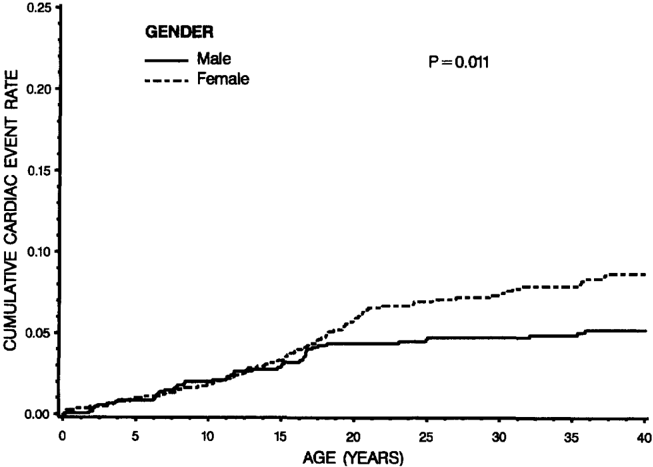
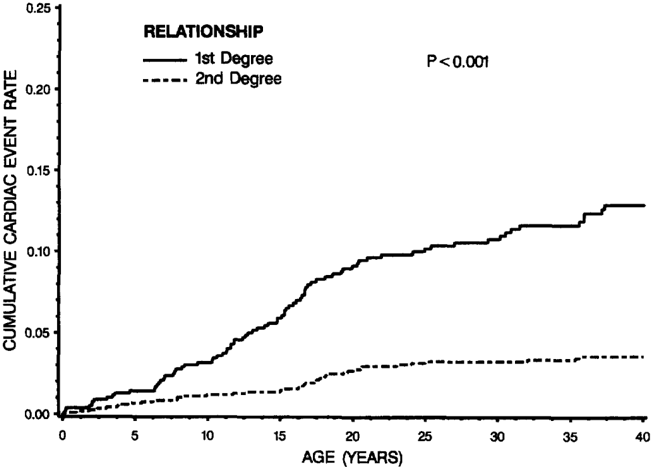
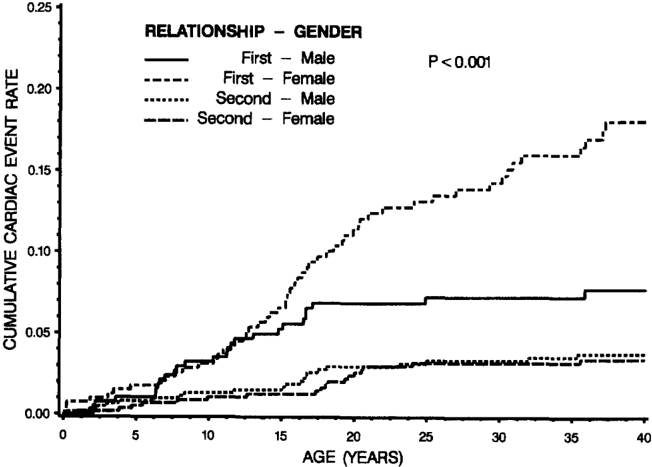
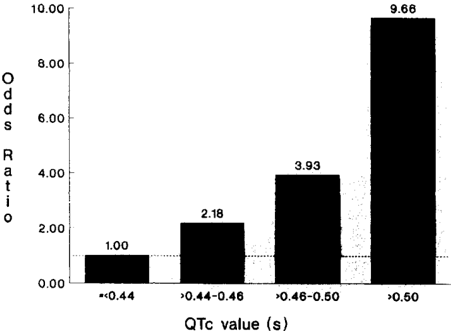
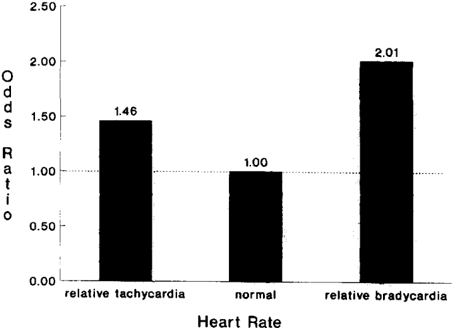
OBJECTIVES: This study sought to identify risk factors for cardiac events (syncope, aborted cardiac arrest or sudden cardiac death) in family members of patients with the long QT syndrome. BACKGROUND: Patients with the long QT syndrome are known to be at high risk for cardiac events. Whenever the first member of a family is identified as having the long QT syndrome (proband), there is concern regarding the likelihood of cardiac events in other family members. METHODS: A multivariate logistic regression model was used to evaluate the risk of cardiac events in 637 family members who were first- and second-degree relatives of 151 probands with the long QT syndrome and in a subset of 513 family members who were not receiving beta-adrenergic blocking agents. There were 293 first-degree (46%) and 344 second-degree relatives (54%) (293 men [46%], 344 women [54%]). Fifteen percent of the family members had a corrected QT interval (QTc) > 0.44 s, and relative tachycardia and bradycardia were observed in 12% and 25%, respectively. RESULTS: The risk of cardiac events occurring before age 40 in family members not taking beta-blockers was influenced by the QTc interval (odds ratio [OR] 1.18/0.01 increase in QTc value; 95% confidence interval [CI] 1.12 to 1.24), relative tachycardia (OR 2.21, 95% CI 0.97 to 5.02) or bradycardia (OR 2.24, 95% CI 1.10 to 4.56) and an interaction term combining gender and closeness of the relationship to the proband (OR for female first-degree relative 3.23 vs. all second-degree relatives, 95% CI 1.67-6.22). CONCLUSIONS: Female first-degree relatives of patients with the long QT syndrome have a higher risk of cardiac events than male first- or second-degree relatives, independent of recorded electrocardiographic findings. Not only bradycardia, but also tachycardia increases risk of cardiac events in family members of patients with the long QT syndrome.
Overview
The claims and statistics of this paper haven’t been checked yet.
Free: it reads the open-access text and checks the first 5 claims that cite a source we can check. Create a free account to check every claim.
Integrity signals
Registry
Cites
Statistics
Figures
Verification
Claims the paper makes
The claims and statistics of this paper haven’t been checked yet.
Free: it reads the open-access text and checks the first 5 claims that cite a source we can check. Create a free account to check every claim.
Claims other papers make about this one
Each is checked against this paper’s own text: does it say what the citing paper says it does?
The source backs part of the claim, not all of it — or backs it for a different population, condition or comparison.
In the citing paper
“A prolonged QT interval predisposes to the development of ventricular tachyarrhythmias such as torsade de pointes and ventricular fibrillation, which could cause syncope, cardiac arrest, or SCD (Haverkamp et al., 2000;Moss, 1999;Zareba et al., 1995).”
From 2017 ISHNE-HRS expert consensus statement on ambulatory ECG and external cardiac monitoring/telemetry (2017) · cites this paper as Zareba et al., 1995
Experimental — accuracy not yet measured
Self-check
Percentages, sums and reported differences re-computed from the paper’s own numbers.
The self-check needs the paper’s full text.
Citations
Cites
Nonparametric Estimation from Incomplete Observations
Kaplan, E. L., & Meier, P. (1992) · Springer Series in Statistics · doi:10.1007/978-1-4612-4380-9_25 · Cited by 45,181
Nonparametric Estimation from Incomplete Observations
Kaplan, E. L., & Meier, P. (1958) · Journal of the American Statistical Association · doi:10.1080/01621459.1958.10501452 · Cited by 39,158
Jervell, A., & Lange-Nielsen, F. (1957) · American Heart Journal · doi:10.1016/0002-8703(57)90079-0 · Cited by 1,596
Diagnostic criteria for the long QT syndrome. An update.
Schwartz, P. J., Moss, A. J., Vincent, G. M., & Crampton, R. S. (1993) · Circulation · doi:10.1161/01.cir.88.2.782 · Cited by 1,181
Self-citationThe long QT syndrome. Prospective longitudinal study of 328 families.
Moss, A. J., Schwartz, P. J., Crampton, R. S., Tzivoni, D., Locati, E. H., MacCluer, J., Hall, W. J., Weitkamp, L., Vincent, G. M., & Garson, A. (1991) · Circulation · doi:10.1161/01.cir.84.3.1136 · Cited by 968
Self-citationSchwartz, P. J., Periti, M., & Malliani, A. (1975) · American Heart Journal · doi:10.1016/0002-8703(75)90089-7 · Cited by 910
A NEW FAMILIAL CARDIAC SYNDROME IN CHILDREN.
Ward, O. C. (1964) · PubMed · Cited by 826
Schwartz, P. J. (1997) · Current Problems in Cardiology · doi:10.1016/s0146-2806(97)80009-6 · Cited by 693
Sex differences in the evolution of the electrocardiographic QT interval with age.
Rautaharju, P. M., Sh, Z., Wong, S., Hp, C., Berenson, G. S., Prineas, R., & Davignon, A. (1992) · PubMed · Cited by 635
The Spectrum of Symptoms and QT Intervals in Carriers of the Gene for the Long-QT Syndrome
Vincent, G. M., Timothy, K. W., Leppert, M., & Keating, M. (1992) · New England Journal of Medicine · doi:10.1056/nejm199209173271204 · Cited by 622
Research works printed but not linked: 2
- 6. Romano C, Gemme G, Pongiglione R. Aritmie cardiache rare dell'eta' pediatrica. I1. Accessi sincopali per fibrillazione ventricolare parossistica. Clin Pediat (Bologna) 1963;45:656-83.
- 13. Bazett HC. An analysis of the time relations of electrocardiograms. Heart 1920;7:353-67.
Cited by
Developed in collaboration with, European Heart Rhythm Association (EHRA), Heart Failure Association (HFA), and Heart Rhythm Society (HRS), societies, E. B. T. F., European Society of Emergency Medicine (EuSEM), European Federation of Internal Medicine (EFIM), European Union Geriatric Medicine Society (EUGMS), American Geriatrics Society (AGS), European Neurological Society (ENS), et al. (2009) · European Heart Journal · doi:10.1093/eurheartj/ehp298 · Cited by 2,040
Influence of the Genotype on the Clinical Course of the Long-QT Syndrome
Zareba, W., Moss, A. J., Schwartz, P. J., Vincent, G. M., Robinson, J. L., Priori, S. G., Benhorin, J., Locati, E. H., Towbin, J. A., Keating, M. T., et al. (1998) · New England Journal of Medicine · doi:10.1056/nejm199810013391404 · Cited by 754
Self-citationLocati, E. H., Zareba, W., Moss, A. J., Schwartz, P. J., Vincent, G. M., Lehmann, M. H., Towbin, J. A., Priori, S. G., Napolitano, C., Robinson, J. L., et al. (1998) · Circulation · doi:10.1161/01.cir.97.22.2237 · Cited by 493
“The age-sex differences in clinical manifestations may contribute to the unexplained sex imbalance among patients referred to the LQTS Registry.”
BackgroundInfluentialSelf-citationSex Difference in Risk of Torsade de Pointes With d,l- Sotalol
Lehmann, M. H., Hardy, S., Archibald, D., Quart, B., & MacNeil, D. J. (1996) · Circulation · doi:10.1161/01.cir.94.10.2535 · Cited by 458
Androgen Receptors Mediate Hypertrophy in Cardiac Myocytes
Marsh, J. D., Lehmann, M. H., Ritchie, R. H., Gwathmey, J. K., Green, G. E., & Schiebinger, R. J. (1998) · Circulation · doi:10.1161/01.cir.98.3.256 · Cited by 432
Bernardi, M., Calandra, S., Colantoni, A., Trevisani, F., Raimondo, M. L., Sica, G., Schepis, F., Mandini, M., Simoni, P., Contin, M., et al. (1998) · Hepatology · doi:10.1002/hep.510270106 · Cited by 396
Implantable Cardioverter Defibrillator in High‐Risk Long QT Syndrome Patients
ZAREBA, W., MOSS, A. J., DAUBERT, J. P., HALL, W. J., ROBINSON, J. L., & ANDREWS, M. (2003) · Journal of Cardiovascular Electrophysiology · doi:10.1046/j.1540-8167.2003.02545.x · Cited by 314
Self-citationSteinberg, J. S., Varma, N., Cygankiewicz, I., Aziz, P., Balsam, P., Baranchuk, A., Cantillon, D. J., Dilaveris, P., Dubner, S. J., El-Sherif, N., et al. (2017) · Heart Rhythm · doi:10.1016/j.hrthm.2017.03.038 · Cited by 303
“As syncope is considered a risk factor for SCD in patients with HCM, careful workup including ECG, exercise test, and AECG should be performed.”
BackgroundInfluentialSelf-citationModulating effects of age and gender on the clinical course of long QT syndrome by genotype
Zareba, W., Moss, A. J., Locati, E. H., Lehmann, M. H., Peterson, D. R., Hall, W. J., Schwartz, P. J., Vincent, G. M., Priori, S. G., Benhorin, J., et al. (2003) · Journal of the American College of Cardiology · doi:10.1016/s0735-1097(03)00554-0 · Cited by 283
Self-citationGuía de práctica clínica para el diagnóstico y manejo del síncope (versión 2009)
Moya, Á., Sutton, R., Ammirati, F., Blanc, J.-J., Brignole, M., Dahm, J. B., Deharo, J.-C., Gajek, J., Gjesdal, K., Krahn, A., et al. (2009) · Revista Española de Cardiología (English Edition) · doi:10.1016/s1885-5857(09)73541-8 · Cited by 276
Chou, R., Cruciani, R. A., Fiellin, D. A., Compton, P., Farrar, J. T., Haigney, M. C., Inturrisi, C., Knight, J. R., Otis-Green, S., Marcus, S. M., et al. (2014) · The Journal of Pain · doi:10.1016/j.jpain.2014.01.494 · Cited by 262
EBERT, S. N., LIU, X.-K., & WOOSLEY, R. L. (1998) · Journal of Women's Health · doi:10.1089/jwh.1998.7.547 · Cited by 224
Lehmann, M. H., Timothy, K. W., Frankovich, D., Fromm, B. S., Keating, M., Locati, E. H., Taggart, P., Towbin, J. A., Moss, A. J., Schwartz, P. J., et al. (1997) · Journal of the American College of Cardiology · doi:10.1016/s0735-1097(96)00454-8 · Cited by 192
“(7) have recently reported that, analogous to the presently described age-gender differences in QTc interval, cumulative cardiac event rates among blood relatives with long QT syndrome become attenuated in males after puberty.”
BackgroundResultSelf-citationThe Molecular Ggenetics of the Long QT Syndrome: Genes Causing Fainting and Sudden Death
Vincent, M. (1998) · Annual Review of Medicine · doi:10.1146/annurev.med.49.1.263 · Cited by 187
Influence of Menstrual Cycle on QT Interval Dynamics
NAKAGAWA, M., OOIE, T., TAKAHASHI, N., TANIGUCHI, Y., ANAN, F., YONEMOCHI, H., & SAIKAWA, T. (2006) · Pacing and Clinical Electrophysiology · doi:10.1111/j.1540-8159.2006.00407.x · Cited by 171
“We calculated four time-domain measures of heart rate variability using only normal RR (NN) intervals: (1) the mean of all NN intervals during a 24-hour period (mNN), (2) SD of all NN intervals during a 24-hour period (SDNN), (3) SD of the averaged NN intervals for all 5-minute segments during a 24-hour period (SDANN)…”
MethodVeglio, M., Borra, M., Stevens, L. K., Fuller, J. H., & Perin, P. C. (1999) · Diabetologia · doi:10.1007/s001250051115 · Cited by 167
“Also female first-degree relatives of patients with congenital long QT syndrome have a higher risk of cardiac events [43].”
BackgroundA common polymorphism in KCNH2 (HERG) hastens cardiac repolarization
Bezzina, C. (2003) · Cardiovascular Research · doi:10.1016/s0008-6363(03)00342-0 · Cited by 163
Pathophysiological basis and clinical application of T-wave alternans
Armoundas, A. A., Tomaselli, G. F., & Esperer, H. D. (2002) · Journal of the American College of Cardiology · doi:10.1016/s0735-1097(02)01960-5 · Cited by 141
Lupoglazoff, J., Denjoy, I., Villain, E., Fressart, V., Simon, F., Bozio, A., Berthet, M., Benammar, N., Hainque, B., & Guicheney, P. (2004) · Journal of the American College of Cardiology · doi:10.1016/j.jacc.2003.09.049 · Cited by 132
QT interval as a cardiac risk factor in a middle aged population.
Karjalainen, J., Reunanen, A., Ristola, P., & Viitasalo, M. T. (1997) · Heart · doi:10.1136/hrt.77.6.543 · Cited by 140
Maron, B. J., Moller, J. H., Seidman, C. E., Vincent, G. M., Dietz, H. C., Moss, A. J., Towbin, Sondheimer, Pyeritz, McGee, et al. (1998) · PubMed · Cited by 125
Self-citationNonsustained Ventricular Tachycardia
Katritsis, D. G., Zaręba, W., & Camm, A. J. (2012) · Journal of the American College of Cardiology · doi:10.1016/j.jacc.2011.12.063 · Cited by 136
Steinberg, J. S., Varma, N., Cygankiewicz, I., Aziz, P. F., Balsam, P., Baranchuk, A. M., Cantillon, D. J., Dilaveris, P., Dubner, S., El‐Sherif, N., et al. (2017) · Annals of Noninvasive Electrocardiology · doi:10.1111/anec.12447 · Cited by 133
“A prolonged QT interval predisposes to the development of ventricular tachyarrhythmias such as torsade de pointes and ventricular fibrillation, which could cause syncope, cardiac arrest, or SCD (Haverkamp et al., 2000; Moss, 1999; Zareba et al., 1995).”
BackgroundSelf-citationECG Repolarization Waves: Their Genesis and Clinical Implications
Hlaing, T., Dimino, T. L., Kowey, P. R., & Yan, G. (2005) · Annals of Noninvasive Electrocardiology · doi:10.1111/j.1542-474x.2005.05588.x · Cited by 117
Antipsychotic Drugs and QT Interval Prolongation
Zaręba, W., & Lin, D. A. (2003) · Psychiatric Quarterly · doi:10.1023/a:1024122706337 · Cited by 125
“These observations are in agreement with data from congenital LQTS studies also showing that QTc > 500 ms is associated with a substantial increase in the risk of cardiac events (4,16).”
ResultElectrocardiographic Findings in Patients With Diphenhydramine Overdose
Zaręba, W., Moss, A. J., Rosero, S. Z., Hajjali, R. H., Konecki, J., & Andrews, M. L. (1997) · The American Journal of Cardiology · doi:10.1016/s0002-9149(97)00634-6 · Cited by 103
Self-citationassociation between HERG K897T polymorphism and QT interval in middle-aged finnish women
Pietilä, E. M., Fodstad, H., Niskasaari, E., Laitinen, P. Ä. J., Swan, H., Savolainen, M. J., Kesäniemi, Y. A., KONTULA, K. K., & Huikuri, H. V. (2002) · Journal of the American College of Cardiology · doi:10.1016/s0735-1097(02)01979-4 · Cited by 103
Maron, B. J., Moller, J. H., Seidman, C. E., Vincent, G. M., Dietz, H. C., Moss, A. J., Towbin, J. A., Sondheimer, H. M., Pyeritz, R. E., McGee, G., et al. (1998) · Circulation · doi:10.1161/01.cir.98.14.1460 · Cited by 142
Self-citationNew Generation Antipsychotic Drugs and QTc Interval Prolongation
Vieweg, W. V. R. (2003) · The Primary Care Companion For CNS Disorders · doi:10.4088/pcc.v05n0504 · Cited by 116
“When the QTc interval is greater than 500 ms, the patient is at an increased risk of developing torsades de pointes.4 Zareba et al.30 reported that the risk of cardiac events before age 40 years in family members with congenital long QT syndrome (LQTS) not taking β-blockers was influenced by the QTc interval.”
BackgroundLong QT syndrome and short QT syndrome
Zareba, W., & Cygankiewicz, I. (2008) · Progress in Cardiovascular Diseases · doi:10.1016/j.pcad.2008.10.006 · Cited by 96
JTc prolongation with d,l-sotalol in women versus men
Lehmann, M. H., Hardy, S. A., Archibald, D., & MacNeil, D. J. (1999) · The American Journal of Cardiology · doi:10.1016/s0002-9149(98)00868-6 · Cited by 96
Torsade de pointes: the clinical considerations
Gowda, R. M., Khan, I. A., Wilbur, S. L., Vasavada, B. C., & Sacchi, T. J. (2004) · International Journal of Cardiology · doi:10.1016/j.ijcard.2003.04.055 · Cited by 93
“The use of QT prolonging drugs and the hypokalemia, which in turn is commonly secondary to diuretics use, may precipitate symptomatic events in patients with congenital LQT [42].”
BackgroundInfluentialFemale Predominance and Transmission Distortion in the Long-QT Syndrome
Imboden, M., Swan, H., Denjoy, I., van Langen, I. M., Laitinen-Forsblom, P. J., Napolitano, C., Fressart, V., Breithardt, G., Berthet, M., Priori, S. G., et al. (2006) · New England Journal of Medicine · doi:10.1056/nejmoa042786 · Cited by 97
Zaręba, W. (2007) · PubMed · Cited by 106
Myerburg, R. J., Cox, M. M., Interian, A., Mitrani, R. D., Girgis, I. G., Dylewski, J., & Castellanos, A. (1999) · The American Journal of Cardiology · doi:10.1016/s0002-9149(99)00013-2 · Cited by 91
Characteristics of new-onset ventricular arrhythmias in pregnancy
Nakagawa, M., Katou, S., Ichinose, M., Nobe, S., Yonemochi, H., Miyakawa, I., & Saikawa, T. (2004) · Journal of Electrocardiology · doi:10.1016/j.jelectrocard.2003.10.007 · Cited by 85
Surawicz, B., & Parikh, S. R. (2003) · Annals of Noninvasive Electrocardiology · doi:10.1046/j.1542-474x.2003.08411.x · Cited by 79
The use of genotype-phenotype correlations in mutation analysis for the long QT syndrome
van Langen, I. M., Birnie, E., Alders, M. M., Jongbloed, R. J. E., Marec, H. L., & Wilde, A. A. M. (2003) · Journal of Medical Genetics · doi:10.1136/jmg.40.2.141 · Cited by 88
Effect of Female Sex on Cardiac Arrhythmias
Gowd, B. M. P., & Thompson, P. D. (2012) · Cardiology in Review · doi:10.1097/crd.0b013e318259294b · Cited by 82
“Female first-degree relatives of LQTS patients have more cardiac events than male relatives.(128)”
BackgroundClinical Implications for Affected Parents and Siblings of Probands With Long-QT Syndrome
Kimbrough, J., Moss, A. J., Zaręba, W., Robinson, J. L., Hall, W. J., Benhorin, J., Locati, E. H., Medina, A., Napolitano, C., Priori, S. G., et al. (2001) · Circulation · doi:10.1161/hc3001.093501 · Cited by 72
“Cardiac arrest or death by age 40 y, n (%) 9 (14) 46 (31) 0.”
Self-citationAli, R. H. H., Zaręba, W., Moss, A. J., Schwartz, P. J., Benhorin, J., Vincent, G. M., Locati, E. H., Priori, S. G., Napolitano, C., Towbin, J. A., et al. (2000) · The American Journal of Cardiology · doi:10.1016/s0002-9149(99)90772-5 · Cited by 72
Self-citationEzaki, K., Nakagawa, M., Taniguchi, Y., Nagano, Y., Teshima, Y., Yufu, K., Takahashi, N., Nomura, T., Satoh, F., Mimata, H., et al. (2010) · Circulation Journal · doi:10.1253/circj.cj-10-0221 · Cited by 74
Risk of death in the long QT syndrome when a sibling has died
Kaufman, E. S., McNitt, S. A., Moss, A. J., Zaręba, W., Robinson, J. L., Hall, W. J., Ackerman, M. J., Benhorin, J., Locati, E. H., Napolitano, C., et al. (2008) · Heart Rhythm · doi:10.1016/j.hrthm.2008.02.029 · Cited by 70
Self-citationSwan, H., Saarinen, K., KONTULA, K. K., Toivonen, L. K., & Viitasalo, M. T. (1998) · Journal of the American College of Cardiology · doi:10.1016/s0735-1097(98)00248-4 · Cited by 69
Effects of hormone replacement therapy on QT interval
Larsen, J. A., Tung, R. H., Sadananda, R., Goldberger, J. J., Horvath, G., Parker, M. A., & Kadish, A. H. (1998) · The American Journal of Cardiology · doi:10.1016/s0002-9149(98)00523-2 · Cited by 67
Němec, J., Hejlik, J., Shen, W.-K., & Ackerman, M. J. (2003) · Mayo Clinic Proceedings · doi:10.4065/78.1.40 · Cited by 61
Chen, Y., Wu, F., Parvez, F., Ahmed, A., Eunus, M., McClintock, T. R., Patwary, T. I., Islam, T., Ghosal, A. K., Islam, S., et al. (2013) · Environmental Health Perspectives · doi:10.1289/ehp.1205197 · Cited by 54
“Women are also more susceptible to develop torsades de pointes during administration of drugs that prolong QT (Lehmann et al. 1996; Makkar et al. 1993; Reinoehl et al. 1996; Zareba et al. 1995).”
BackgroundYoshinaga, M., Kamimura, J., Fukushige, T., Kusubae, R., Shimago, A., Nishi, J., Kono, Y., Nomura, Y., & Miyata, K. (1999) · The American Journal of Cardiology · doi:10.1016/s0002-9149(99)00131-9 · Cited by 51
Towards Privacy-Preserving Medical Cloud Computing Using Homomorphic Encryption
Kocabaş, Ö., & Soyata, T. (2019) · IGI Global eBooks · doi:10.4018/978-1-5225-9863-3.ch005 · Cited by 49
Genotype-specific ECG patterns in long QT syndrome
Zaręba, W. (2006) · Journal of Electrocardiology · doi:10.1016/j.jelectrocard.2006.05.017 · Cited by 49
Nakagawa, M., Takahashi, N., WATANABE, M., Ichinose, M., Nobe, S., Yonemochi, H., Ito, M., & Saikawa, T. (2003) · Pacing and Clinical Electrophysiology · doi:10.1046/j.1460-9592.2003.00151.x · Cited by 48
Preventing tomorrow's sudden cardiac death today
Al‐Khatib, S. M., Sanders, G. D., Bigger, J. T., Buxton, A. E., Califf, R. M., Carlson, M. D., Curtis, A. B., Curtis, J. P., Fain, E. S., Gersh, B. J., et al. (2007) · American Heart Journal · doi:10.1016/j.ahj.2007.03.003 · Cited by 50
Changes in Repolarization Dynamicity and the Assessment of the Arrhythmic Risk
Maison‐Blanche, P., & Coumel, P. (1997) · Pacing and Clinical Electrophysiology · doi:10.1111/j.1540-8159.1997.tb06111.x · Cited by 47
Asthma and the risk of cardiac events in the long QT syndrome
Rosero, S. Z., Zaręba, W., Moss, A. J., Robinson, J. L., Ali, R. H. H., Locati, E. H., Benhorin, J., & Andrews, M. L. (1999) · The American Journal of Cardiology · doi:10.1016/s0002-9149(99)00586-x · Cited by 45
Self-citationElectrocardiographic arrhythmia risk testing
Engel, G., Beckerman, J. G., Froelicher, V. F., Yamazaki, T., Chen, H. A., Richardson, K., McAuley, R. J., Ashley, E. A., Chun, S., & Wang, P. J. (2004) · Current Problems in Cardiology · doi:10.1016/j.cpcardiol.2004.02.007 · Cited by 50
Diagnosis and Management of Delirium in Critically Ill Infants: Case Report and Review
Brahmbhatt, K., & Whitgob, E. E. (2016) · PEDIATRICS · doi:10.1542/peds.2015-1940 · Cited by 41
Towards Privacy-Preserving Medical Cloud Computing Using Homomorphic Encryption
Kocabaş, Ö., & Soyata, T. (2015) · Advances in wireless technologies and telecommunication book series · doi:10.4018/978-1-4666-8662-5.ch007 · Cited by 36
An LQTS6 MiRP1 Mutation Suppresses Pacemaker Current and is Associated with Sinus Bradycardia
Nawathe, P. A., Kryukova, Y. N., Oren, R. V., Milanesi, R., Clancy, C. E., Lu, J. T., Moss, A. J., DiFrancesco, D., & Robinson, R. B. (2013) · Journal of Cardiovascular Electrophysiology · doi:10.1111/jce.12163 · Cited by 42
Self-citationRussell, M. W. W. (1996) · Progress in Pediatric Cardiology · doi:10.1016/1058-9813(96)00170-1 · Cited by 34
Park, Y., Roh, H. G., Choo, S. W., Lee, S. H., Shin, S. W., Do, Y. S., Byun, H. S., Park, K. B., & Jeon, P. (2005) · Korean Journal of Radiology · doi:10.3348/kjr.2005.6.4.248 · Cited by 32
Implantable Cardioverter- Defibrillator Therapy in Clinical Practice
Cesario, D. A., & Dec, G. W. (2006) · Journal of the American College of Cardiology · doi:10.1016/j.jacc.2005.09.077 · Cited by 36
T-Wave Alternans as an Arrhythmic Risk Stratifier: State of the Art
Merchant, F. M., Sayadi, O., Moazzami, K., Puppala, D., & Armoundas, A. A. (2013) · Current Cardiology Reports · doi:10.1007/s11886-013-0398-7 · Cited by 34
“However, several other methods have been applied for the detection and quantification of MTWA including autocorrelation [68], complex demodulation [69], autoregression [70], and the modified moving average (MMA) [71, 72].”
Cellular basis of sex disparities in human cardiac electrophysiology
Verkerk, A. O., Wilders, R., de Geringel, W., & Tan, H. L. (2006) · Acta Physiologica · doi:10.1111/j.1748-1716.2006.01586.x · Cited by 28
“The most notable examples are inherited long QT syndrome (LQTS) and Brugada syndrome, where prominent sex disparities in clinical expressivity exist, despite equal genetic transmission (autosomal dominant inheritance).”
BackgroundInfluentialDynamic analysis of the QT interval in long QT1 syndrome patients with a normal phenotype
Lande, G., Kyndt, F., Baró, I., Chabannes, D., Boisseau, P., Pony, J. C., Escande, D., & Marec, H. L. (2001) · European Heart Journal · doi:10.1053/euhj.2000.2292 · Cited by 29
Sra, J. S., Dhala, A. A., Blanck, Z., Deshpande, S., Cooley, R., & Akhtar, M. (1999) · Current Problems in Cardiology · doi:10.1016/s0146-2806(99)90004-x · Cited by 30
Zaręba, W., & Moss, A. J. (2001) · Journal of Electrocardiology · doi:10.1054/jelc.2001.28863 · Cited by 27
Self-citationModern management of arrhythmias
HALL, M. C., & TODD, D. M. (2006) · Postgraduate Medical Journal · doi:10.1136/pgmj.2005.033654 · Cited by 23
Management of Congenital Long-QT Syndrome: Commentary From the Experts
Kaufman, E. S., Eckhardt, L. L., Ackerman, M. J., Aziz, P. F., Behr, E. R., Cerrone, M., Chung, M. K., Cutler, M. J., Etheridge, S. P., Krahn, A. D., et al. (2021) · Circulation Arrhythmia and Electrophysiology · doi:10.1161/circep.120.009726 · Cited by 27
Shin, H. S., Lee, W., Kim, S.-W., Jung, C., Rhee, E., Kim, B. J., Sung, K., Kim, B., Kang, J.-H., Lee, M., et al. (2005) · Circulation Journal · doi:10.1253/circj.69.409 · Cited by 19
Provocative Testing in Children with Suspect Congenital Long QT Syndrome
Berul, C. I., Sweeten, T. L., Hill, S. L., & Vetter, V. L. (1998) · Annals of Noninvasive Electrocardiology · doi:10.1111/j.1542-474x.1998.tb00023.x · Cited by 18
Investigating the effect of sotalol on the repolarization intervals in healthy young individuals
Couderc, J., Zhou, M., Sarapa, N., & Zaręba, W. (2008) · Journal of Electrocardiology · doi:10.1016/j.jelectrocard.2008.06.013 · Cited by 18
“Based on our current observations, ( 1 ) moxifloxacin is associated with ventricular repolarization heterogeneity mainly located in the early portion of the T wave (in healthy individuals),21 (2)”
MethodA Mitochondrial DNA Mutation Cosegregates with the Pathophysiological U Wave
Matsuoka, R., Furutani, M., Hayashi, J., Isobe, K., Akimoto, K., Shibata, T., Imamura, S., Tatsuguchi, M., Furutani, Y., Takao, A., et al. (1999) · Biochemical and Biophysical Research Communications · doi:10.1006/bbrc.1999.0443 · Cited by 19
Syndrome du QT long congénital
Lupoglazoff, J., Denjoy, I., Guicheney, P., Casasoprana, A., & Coumel, P. (2001) · Archives de Pédiatrie · doi:10.1016/s0929-693x(00)00261-x · Cited by 15
Preventing tomorrow's sudden cardiac death today
Sanders, G. D., Al‐Khatib, S. M., Berliner, E., Bigger, J. T., Buxton, A. E., Califf, R. M., Carlson, M. D., Curtis, A. B., Curtis, J. P., DOMANSKI, M. J., et al. (2007) · American Heart Journal · doi:10.1016/j.ahj.2007.03.002 · Cited by 14
The benign nature of mild induced therapeutic hypothermia—Induced long QTc
Weitz, D. S., Greet, B. D., Bernstein, S., Holmes, D., Bernstein, N. E., Aizer, A., Chinitz, L. A., & Roswell, R. O. (2013) · International Journal of Cardiology · doi:10.1016/j.ijcard.2013.01.046 · Cited by 12
QT prolongation in end-stage liver disease: A result of altered sex hormone metabolism?
Lehmann, M. H. (1997) · Hepatology · doi:10.1002/hep.510260137 · Cited by 12
Bockeria, O. L., & Константинович, С. М. (2015) · Annaly aritmologii · doi:10.15275/annaritmol.2015.2.7 · Cited by 11
Gender disparities in torsade de pointes ventricular tachycardia
Verkerk, A. O., & Tan, H. L. (2007) · Netherlands Heart Journal · doi:10.1007/bf03086040 · Cited by 11
Gender Differences in the Dynamics of Terminal T Wave Intervals
Nakagawa, M., Ooie, T., Ou, B., Ichinose, M., Yonemochi, H., & Saikawa, T. (2004) · Pacing and Clinical Electrophysiology · doi:10.1111/j.1540-8159.2004.00526.x · Cited by 13
“pronounced at shorter cycle lengths; (3) The rate dependent changes in the Ta-e interval are so small that rate correction may be unnecessary, and even inadvisable when the Ta-e interval is measured in healthy subjects.”
BackgroundPrenatal diagnosis and successful preterm delivery of a fetus with long QT syndrome
Manning, N., Anthony, J., Östman‐Smith, I., Snyder, C. C., & Burch, M. (2000) · BJOG An International Journal of Obstetrics & Gynaecology · doi:10.1111/j.1471-0528.2000.tb10413.x · Cited by 11
Assessment of Ventricular Repolarization From Body-Surface ECGs in Humans
Couderc, J., & Zaręba, W. (2007) · Humana Press eBooks · doi:10.1007/978-1-59259-884-7_6 · Cited by 12
“The LQTS is characterized by a prolongation of QT intervals on the ECGs and is associated with an increased risk for ventricular arrhythmias that can degenerate in cardiac arrest and sudden death (30, 31 ).”
BackgroundInfluentialPrognostic Value of a New Marker of Ventricular Repolarization in Cirrhotic Patients
Salgado, Â. A., Benchimol‐Barbosa, P. R., Ferreira, A. G., Reis, C. A. D. S. S., & Terra, C. (2016) · Arquivos Brasileiros de Cardiologia · doi:10.5935/abc.20160181 · Cited by 9
Viadero, M. T., Rubín, E., Amigo, T., & González‐Lamuño, D. (2010) · Pediatric Cardiology · doi:10.1007/s00246-010-9821-7 · Cited by 11
“Different epidemiologic studies have demonstrated the high risk of cardiac events for patients affected with LQTS [5, 13 ].”
BackgroundQT Interval and Its Drug-Induced Prolongation
Zaręba, W., & Moss, A. J. (2003) · Contemporary cardiology · doi:10.1007/978-1-59259-362-0_14 · Cited by 9
Self-citationTorsades de Pointes: Unanswered Questions
Surawicz, B. (2002) · Journal of Nippon Medical School · doi:10.1272/jnms.69.218 · Cited by 9
Guía de práctica clínica para el diagnóstico y manejo del síncope (versión 2009)
Moya‐Mitjans, À., Sutton, R., Ammirati, F., Blanc, J., Brignole, M., Dahm, J. B., Deharo, J., Gajek, J. J., Gjesdal, K., Krahn, A. D., et al. (2009) · Revista Española de Cardiología · doi:10.1016/s0300-8932(09)73132-x · Cited by 29
QT Interval Analysis in Patients with Chronic Liver Disease
Calborean, V., Gheorman, V., Istrătoaie, O., Mustafa, R. E., Cojocaru, P. A., Alexandru, D. O., Galceava, O., Mită, A., Miscoci, S. A., Namat, R. A., et al. (2018) · Revista de Chimie · doi:10.37358/rc.18.5.6275 · Cited by 8
Assessment of absolute risk of life-threatening cardiac events in long QT syndrome patients
Wang, M., Peterson, D. R., Pagan, E., Bagnardi, V., Mazzanti, A., McNitt, S. A., Rich, D. Q., Seplaki, C. L., Kutyifa, V., Polonsky, B., et al. (2022) · Frontiers in Cardiovascular Medicine · doi:10.3389/fcvm.2022.988951 · Cited by 13
Device Therapy in the Setting of Long QT Syndrome
Rhodes, T. E., & Weiss, R. (2015) · Cardiac Electrophysiology Clinics · doi:10.1016/j.ccep.2015.05.018 · Cited by 8
Correlation Between Liver Cirrhosis and Risk of Cardiac Arrhythmias
Calborean, V., Miscoci, S. A., Istrătoaie, O., Galceava, O., Alexandru, D. O., Guta, M. M., Gheorman, V., Pădureanu, V., Forțofoiu, M.-C., Dijmărescu, A. L., et al. (2018) · Revista de Chimie · doi:10.37358/rc.18.6.6361 · Cited by 7
Nonsustained Ventricular Tachycardia
Katritsis, D. G., Zaręba, W., & Camm, A. J. (2012) · Elsevier eBooks · doi:10.1016/b978-1-4377-0285-9.00045-4 · Cited by 7
Lehmann, M. H., Frankovich, D., Baga, J. J., Pires, L. A., Schuger, C. D., Steinman, R. T., & Rabinowe, S. L. (1997) · The American Journal of Cardiology · doi:10.1016/s0002-9149(97)00022-2 · Cited by 7
Outcome by Sex in Patients With Long QT Syndrome With an Implantable Cardioverter Defibrillator
Younis, A., Aktaş, M. K., Rosero, S. Z., Kutyifa, V., Polonsky, B., McNitt, S. A., Sotoodehnia, N., Kudenchuk, P. J., Rea, T. D., Arking, D. E., et al. (2020) · Journal of the American Heart Association · doi:10.1161/jaha.120.016398 · Cited by 6
Life threatening causes of syncope: Channelopathies and cardiomyopathies
Herman, A. R. M., Bennett, M. T., Chakrabarti, S., & Krahn, A. D. (2014) · Autonomic Neuroscience · doi:10.1016/j.autneu.2014.04.003 · Cited by 6
Bjelic, M., Goldenberg, I., Younis, A., Chen, A. Y., Huang, D. T.-C., Yoruk, A., Aktaş, M. K., Rosero, S. Z., Cutter, K., McNitt, S. A., et al. (2024) · Journal of the American Heart Association · doi:10.1161/jaha.122.028902 · Cited by 4
“Importantly, based on the apparent lack of signal of therapeutic efficacy with β - blocker therapy in this registry-based cohort and the very low event rates reported in large, single-center observation studies that use almost exclusively the nonselective β - blockers of either nadolol or propranolol, we would discour…”
BackgroundInfluentialDifferential diagnostics of syncopal conditions
Dzhioeva, O. N., Reznik, E. V., & Nikitin, I. G. (2019) · CARDIOVASCULAR THERAPY AND PREVENTION · doi:10.15829/1728-8800-2019-2-76-83 · Cited by 5
Prolonged QTc interval as an important factor in sudden infant death syndrome
WREN, C. (1999) · Archives of Disease in Childhood · doi:10.1136/adc.81.3.278k · Cited by 3
“reported the QTc only slightly prolonged in all but two of their cases. International studies have failed to demonstrate any excess of sudden infant death in families with known long QT syndrome.”
BackgroundWEISSENBURGER, J., & Davy, J.-M. (2004) · EMC - Cardiologie-Angéiologie · doi:10.1016/j.emcaa.2004.03.001 · Cited by 3
Congenital long QT syndromes and Brugada syndrome: the arrhythmogenic ion channel disorders
Němec, J., & Shen, W.-K. (2001) · Expert Opinion on Pharmacotherapy · doi:10.1517/14656566.2.5.773 · Cited by 3
“The female predominance among LQTS probands has been independently reported by several investigators, approximately 60 - 70% of LQTS patients in most series are female [75-77].”
BackgroundA review of diagnosis methods for heart rhythm disorders
Xia, H., Zhao, X., Bains, J., & Wortham, D. C. (2009) · ORNL Biomedical Science & Engineering Conference (BSEC) · doi:10.1109/bsec.2009.5090460 · Cited by 3
Metadata
- Authors
- Zareba, W., Moss, A. J., le Cessie, S., Locati, E. H., Robinson, J. L., Hall, W. J., & Andrews, M. L.
- Affiliations
- University of Rochester Medicine (US)
- University of Milan (IT)
- Venue
- Journal of the American College of Cardiology
- Publisher
- Elsevier BV
- Published
- 1995-12
- Volume
- 26
- Issue
- 7
- Pages
- 1685-1691
- ISSN
- 0735-1097 (ISSN-L)
- OpenAlex
- W2018414627
- Cited by
- 142
- References
- 29
- Citations by year
- 2024: 3 · 2022: 3 · 2021: 1 · 2020: 2 · 2019: 3 · 2018: 3 · 2017: 2 · 2016: 3 · 2015: 4 · 2014: 2 · 2013: 8 · 2012: 9
- FWCI
- 7.32
- Type
- journal article
- Language
- en
- Open access
- hybrid
- doi.org
- Licence
- cc-by-nc-nd
- www.elsevier.com/tdm/userlicense/1.0/ (tdm)
- www.elsevier.com/legal/tdmrep-license (tdm)
- creativecommons.org/licenses/by-nc-nd/4.0/ (vor, 1518 d)
- Locations
- Journal of the American College of Cardiology (publishedVersion, cc-by-nc-nd)
- PubMed (publishedVersion)
- Funders
- National Heart, Lung, and Blood Institute (HL 33843, R01HL033843)
- Topics
- Health Sciences › Medicine › Cardiology and Cardiovascular Medicine › Cardiac electrophysiology and arrhythmias
- Health Sciences › Medicine › Cardiology and Cardiovascular Medicine › Cardiovascular Effects of Exercise
- Health Sciences › Medicine › Cardiology and Cardiovascular Medicine › Cardiac Health and Mental Health
- Keywords
- long QT syndrome, family members, sudden cardiac death, aborted cardiac arrest, syncope, QTc interval, bradycardia, tachycardia, sex differences, first-degree relatives, second-degree relatives, beta-adrenergic blocking agents, risk factors
- MeSH terms
- Adolescent, Adult, Child, Child, Preschool, Female, Heart Arrest, Humans, Infant, Long QT Syndrome, Male, Prognosis, Risk Factors, Syncope, Multivariate Analysis, Odds Ratio, Death, Sudden, Cardiac
About these checks
Registry, retraction, Cites and statistics results are computed, not judged, with one exception: a printed reference that no index lists is read once by a model before it counts as a citation error. Claims are extracted by a model and kept only when their quote appears verbatim in the text; each cited source is then checked, with a model’s help, for whether it says what the claim relies on. Those verdicts can be wrong — read the claim’s quote and the cited source before relying on one.
Statistics and arithmetic are recomputed, not judged.
Confidence bands are shown only for fields calibrated on our annotated test set. None is calibrated yet, so no band is shown.
What counts as a claim ›How we measure confidence ›How we check this ›
Are you an author, or do you see a problem with this page? Request a review
Data sources
Bibliographic data: Semantic Scholar, OpenAlex, Crossref.
Contains information from the Semantic Scholar Academic Graph Datasets, made available under the ODC Attribution License (ODC-BY 1.0).
Semantic Scholar’s data is described in: Kinney, R., et al. (2023). The Semantic Scholar Open Data Platform. arXiv:2301.10140.
