

The DOI matches its Crossref record; 60 of the 60 references it cites were found in a registry or an index.
Fusobacterium nucleatum and adverse pregnancy outcomes: Epidemiological and mechanistic evidence
Open accessAbstract
Fusobacterium nucleatum is a Gram-negative anaerobic oral commensal associated with periodontal disease. F. nucleatum has been implicated in a wide spectrum of systemic diseases, including oral, gastro-intestinal, rheumatologic, and vascular pathologies. As pregnancy risk has been linked to periodontal disease, there has also been significant research into the effects of periodontal disease on adverse pregnancy outcomes. This article reviews the epidemiological and mechanistic evidence of the role of F. nucleatum in adverse pregnancy outcomes.
Overview
The claims and statistics of this paper haven’t been checked yet.
Run the check — free, no account needed. It reads the open-access text and checks the sources it cites.
Integrity signals
Registry
Cites
Statistics
Figures
Verification
Claims the paper makes
The claims and statistics of this paper haven’t been checked yet.
Run the check — free, no account needed. It reads the open-access text and checks the sources it cites.
Claims other papers make about this one
Each is checked against this paper’s own text: does it say what the citing paper says it does?
In the citing paper
“Studies investigating the placental microbiome to understand its role in preterm pregnancies have identified bacteria associated with periodontal disease, suggesting a relationship between the oral and placental microbiomes.113, 114, 115, 116”
From The oral microbiome: Role of key organisms and complex networks in oral health and disease (2021) · cites this paper as [115]
In the citing paper
“Pathogenic bacteria from the oral cavity found at various sites within the uterus are associated with adverse pregnancy outcomes, such as preterm delivery and preeclampsia.113, 114, 115”
From The oral microbiome: Role of key organisms and complex networks in oral health and disease (2021) · cites this paper as [115]
In the citing paper
“Similarly, bacteria of oral origin, namely Fusobacterium nucleatum, were identified in samples of amniotic fluid and cord blood from women with pregnancy complications, suggesting oral translocation via hematogenous mechanisms.115”
From The oral microbiome: Role of key organisms and complex networks in oral health and disease (2021) · cites this paper as [115]
Self-check
Percentages, sums and reported differences re-computed from the paper’s own numbers.
The self-check needs the paper’s full text.
Citations
Cites
Intrauterine infection and preterm delivery
Goldenberg, R. L., Hauth, J. C., & Andrews, W. W. (2000) · New England Journal of Medicine · doi:10.1056/nejm200005183422007 · Cited by 2,548 · cited 1×
“Currently, there are two major pathways by which bacteria and other pathogens may trigger an inflammatory response leading to pregnancy complications [1,6].”
BackgroundThe Placenta Harbors a Unique Microbiome
Aagaard, K., Ma, J., Antony, K. M., Ganu, R., Petrosino, J., & Versalovic, J. (2014) · Science Translational Medicine · doi:10.1126/scitranslmed.3008599 · Cited by 2,494 · cited 1×
“Although the presence of a placental microbiome in healthy term pregnancies has been debated [21], recent research suggests that the placental microbiome most closely resembles the human oral microbiome [22].”
BackgroundRubinstein, M. R., Wang, X., Liu, W., Hao, Y., Cai, G., & Han, Y. W. (2013) · Cell Host & Microbe · doi:10.1016/j.chom.2013.07.012 · Cited by 2,476
Self-citationThe bacteria of periodontal diseases
Moore, W. E., & Moore, L. V. H. (1994) · Periodontology 2000 · doi:10.1111/j.1600-0757.1994.tb00019.x · Cited by 1,077 · cited 1×
“One such oral species of interest is Fusobacterium nucleatum, a Gram-negative anaerobe commonly found within the oral cavity and implicated in various forms of periodontal diseases [27,28].”
BackgroundGriffen, A. L., Beall, C. J., Campbell, J. H., Firestone, N. D., Kumar, P., Yang, Z. K., Podar, M., & Leys, E. J. (2011) · The ISME Journal · doi:10.1038/ismej.2011.191 · Cited by 1,006 · cited 1×
“One such oral species of interest is Fusobacterium nucleatum, a Gram-negative anaerobe commonly found within the oral cavity and implicated in various forms of periodontal diseases [27,28].”
BackgroundFusobacterium nucleatum: a commensal-turned pathogen
Han, Y. W. (2015) · Current Opinion in Microbiology · doi:10.1016/j.mib.2014.11.013 · Cited by 869 · cited 2×
“nucleatum has also been implicated in a wide variety of systemic diseases, including GI disorders, atherosclerosis, rheumatoid arthritis and respiratory tract infections [29,30], which is well summarized in a prior review [31].”
BackgroundSelf-citationStrauss, J., Kaplan, G. G., Beck, P. L., Rioux, K. P., Panaccione, R., DeVinney, R., Lynch, T., & Allen‐Vercoe, E. (2011) · Inflammatory Bowel Diseases · doi:10.1002/ibd.21606 · Cited by 578 · cited 1×
“nucleatum has also been implicated in a wide variety of systemic diseases, including GI disorders, atherosclerosis, rheumatoid arthritis and respiratory tract infections [29,30], which is well summarized in a prior review [31].”
BackgroundLauder, A. P., Roche, A. M., Sherrill-Mix, S., Bailey, A., Laughlin, A. L., Bittinger, K., Leite, R., Elovitz, M. A., Parry, S., & Bushman, F. D. (2016) · Microbiome · doi:10.1186/s40168-016-0172-3 · Cited by 539
Han, Y. W., & Wang, X. (2013) · Journal of Dental Research · doi:10.1177/0022034513487559 · Cited by 489
Self-citationPeriodontal infection and preterm birth
JEFFCOAT, M. K., GEURS, N. C., REDDY, M. S., CLIVER, S. P., GOLDENBERG, R. L., & HAUTH, J. C. (2001) · The Journal of the American Dental Association · doi:10.14219/jada.archive.2001.0299 · Cited by 476
Han, Y. W., Redline, R. W., Mei, L., Yin, L., Hill, G. B., & McCormick, T. S. (2004) · Infection and Immunity · doi:10.1128/iai.72.4.2272-2279.2004 · Cited by 454 · cited 3×
“coli DH5α did not cause fetal loss, indicating the effect on pregnancy is species-specific [49].”
BackgroundSelf-citationHan, Y. W., Shi, W., Huang, G. T.-J., Kinder Haake, S., Park, N.-H., Kuramitsu, H., & Genco, R. J. (2000) · Infection and Immunity · doi:10.1128/iai.68.6.3140-3146.2000 · Cited by 435
Self-citationUncultivated Bacteria as Etiologic Agents of Intra-Amniotic Inflammation Leading to Preterm Birth
Han, Y. W., Shen, T., Chung, P., Buhimschi, I. A., & Buhimschi, C. S. (2008) · Journal of Clinical Microbiology · doi:10.1128/jcm.01206-08 · Cited by 345 · cited 1×
“nucleatum has been detected in placental and fetal tissues, including amniotic fluid [24], cord blood [26], fetal membranes [35], and neonatal gastric aspirates [36], from pregnancies affected by PPROM as well as preterm birth with intact membranes.”
BackgroundSelf-citationThe infectious origins of stillbirth
Goldenberg, R. L., & Thompson, C. (2003) · American Journal of Obstetrics and Gynecology · doi:10.1067/s0002-9378(03)00470-8 · Cited by 344
Fardini, Y., Wang, X., Témoin, S., Nithianantham, S., Lee, D. M., Shoham, M., & Han, Y. W. (2011) · Molecular Microbiology · doi:10.1111/j.1365-2958.2011.07905.x · Cited by 292 · cited 2×
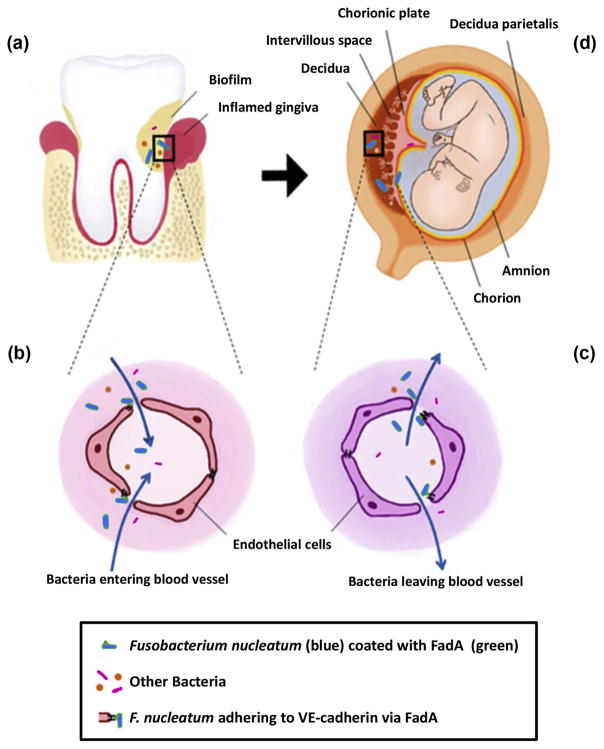
“When FadA binds to the vascular endothelial cadherins (VE-cadherin), it causes VE-cadherin to migrate away from the cell-cell junction, thus increasing the endothelial permeability allowing microorganisms to penetrate through the endothelium [59].”
BackgroundSelf-citationTerm Stillbirth Caused by Oral Fusobacterium nucleatum
Han, Y. W., Fardini, Y., Chen, C., Iacampo, K. G., Peraino, V. A., Shamonki, J. M., & Redline, R. W. (2010) · Obstetrics & Gynecology · doi:10.1097/aog.0b013e3181cb9955 · Cited by 289 · cited 3×
“The kinetics of this acute infection model corroborates with the afore-mentioned human stillbirth case [23].”
BackgroundResultSelf-citationPrince, A., Ma, J., Kannan, P. S., Alvarez, M., Gisslen, T. A., Harris, R. A., Sweeney, E. L., Knox, C. L., Lambers, D. S., Jobe, A. H., et al. (2016) · American Journal of Obstetrics and Gynecology · doi:10.1016/j.ajog.2016.01.193 · Cited by 282
Fardini, Y., Chung, P., Dumm, R., Joshi, N., & Han, Y. W. (2010) · Infection and Immunity · doi:10.1128/iai.01395-09 · Cited by 272 · cited 1×
“nucleatum, demonstrating that the oral bacteria are capable of translocation to the fetal-placental unit [41].”
BackgroundSelf-citationIdentification and Characterization of a Novel Adhesin Unique to Oral Fusobacteria
Han, Y. W., Ikegami, A., Rajanna, C., Kawsar, H. I., Zhou, Y., Li, M., Sojar, H. T., Genco, R. J., Kuramitsu, H. K., & Deng, C. X. (2005) · Journal of Bacteriology · doi:10.1128/jb.187.15.5330-5340.2005 · Cited by 260 · cited 1×
“nucleatum, absent in most other species of Fusobacterium [54].”
BackgroundSelf-citationKaplan, C. W., Lux, R., Haake, S. K., & Shi, W. (2008) · Molecular Microbiology · doi:10.1111/j.1365-2958.2008.06503.x · Cited by 252
Preterm Birth: Associations With Genital and Possibly Oral Microflora
Hill, G. B. (1998) · Annals of Periodontology · doi:10.1902/annals.1998.3.1.222 · Cited by 252 · cited 2×
“nucleatum identified in amniotic fluid and placenta appear to match those from the maternal or the partner subgingival sites, rather than the lower genital tract [23,39,40].”
BackgroundSanz, M., Kornman, K. S., & on behalf of working group 3 of the joint EFP/AAP workshop (2013) · Journal of Periodontology · doi:10.1902/jop.2013.1340016 · Cited by 249
Coppenhagen‐Glazer, S., Sol, A., Abed, J., Naor, R., Zhang, X., Han, Y. W., & Bachrach, G. (2015) · Infection and Immunity · doi:10.1128/iai.02838-14 · Cited by 249
Self-citationAdverse pregnancy outcomes (APOs) and periodontal disease: pathogenic mechanisms
Madianos, P., Bobetsis, Y. A., & Offenbacher, S. (2013) · Journal of Periodontology · doi:10.1902/jop.2013.1340015 · Cited by 243
Holmlund, U., Cebers, G., Richter‐Dahlfors, A., Sandstedt, B., Bremme, K., Sverremark‐Ekström, E., & Scheynius, A. (2002) · Immunology · doi:10.1046/j.1365-2567.2002.01491.x · Cited by 240 · cited 1×
“TLRs are involved in the immune responses against pathogens, and stimulation of TLR2 within the placenta has been shown to induce pro-inflammatory cytokines [48].”
BackgroundElevated second-trimester amniotic fluid interleukin-6 levels predict preterm delivery
Wenstrom, K. D., Andrews, W. W., Hauth, J. C., Goldenberg, R. L., DuBard, M. B., & Cliver, S. (1998) · American Journal of Obstetrics and Gynecology · doi:10.1016/s0002-9378(98)70436-3 · Cited by 224
Evidence of Periopathogenic Microorganisms in Placentas of Women With Preeclampsia
Barak, S., Oettinger‐Barak, O., Machtei, E. E., Sprecher, H., & Ohel, G. (2007) · Journal of Periodontology · doi:10.1902/jop.2007.060362 · Cited by 224 · cited 1×
“nucleatum, were found to be significantly enriched in the placentas of women with preeclampsia compared with controls [45].”
ResultXu, M., Yamada, M., Mei, L., Liu, H., Chen, S. G., & Han, Y. W. (2007) · Journal of Biological Chemistry · doi:10.1074/jbc.m611567200 · Cited by 199 · cited 1×
“It has been shown in vitro that preFadA and mFadA form an active and heterogeneous complex (FadAc) for binding and invasion [55].”
BackgroundSelf-citationReview: Maternal health and the placental microbiome
Pelzer, E., Gómez-Arango, L. F., Barrett, H. L., & Nitert, M. D. (2016) · Placenta · doi:10.1016/j.placenta.2016.12.003 · Cited by 199
Wang, X., Buhimschi, C. S., Témoin, S., Bhandari, V., Han, Y. W., & Buhimschi, I. A. (2013) · PLoS ONE · doi:10.1371/journal.pone.0056131 · Cited by 188 · cited 4×
“F. nucleatum was the most prevalent species detected in the cord blood associated with presumed EONS, placing it on par with E. coli as an important neonatal pathogen.”
BackgroundInfluentialSelf-citationLiu, H., Redline, R. W., & Han, Y. W. (2007) · The Journal of Immunology · doi:10.4049/jimmunol.179.4.2501 · Cited by 181
Self-citationMarkers of periodontal infection and preterm birth
Jarjoura, K., Devine, P., Perez‐Delboy, A., Herrera‐Abreu, M., D’Alton, M. E., & Papapanou, P. N. (2005) · American Journal of Obstetrics and Gynecology · doi:10.1016/j.ajog.2004.07.018 · Cited by 160
Doyle, R., Alber, D., Jones, H. E., Harris, K., Fitzgerald, F., Peebles, D., & Klein, N. J. (2014) · Placenta · doi:10.1016/j.placenta.2014.10.007 · Cited by 153
Amarasekara, R., Jayasekara, R. W., Senanayake, H. M., & Dissanayake, V. H. W. (2014) · Journal of obstetrics and gynaecology research · doi:10.1111/jog.12619 · Cited by 152
Periodontal Infection and Preterm Birth: Results of a Prospective Study
Jeffcoat, M. K., Geurs, N. C., Reddy, M. S., Cliver, S., Goldenberg, R. L., & Hauth, J. C. (2002) · Obstetrical & Gynecological Survey · doi:10.1097/00006254-200201000-00003 · Cited by 149
Allen‐Vercoe, E., Strauss, J., & Chadee, K. (2011) · Gut Microbes · doi:10.4161/gmic.2.5.18603 · Cited by 149
Bacterial colonization of amniotic fluid from intact fetal membranes
Miller, J. M., PUPKIN, M. J., & Hill, G. B. (1980) · American Journal of Obstetrics and Gynecology · doi:10.1016/0002-9378(80)90458-5 · Cited by 141
McClure, E. M., & Goldenberg, R. L. (2009) · Seminars in Fetal and Neonatal Medicine · doi:10.1016/j.siny.2009.02.003 · Cited by 136
Oral Health and Adverse Pregnancy Outcomes – What’s Next?
Han, Y. W. (2011) · Journal of Dental Research · doi:10.1177/0022034510381905 · Cited by 133
Self-citationIntra-amniotic bacterial colonization in premature labor
Wahbeh, C. J., Hill, G. B., Eden, R. D., & Gall, S. A. (1984) · American Journal of Obstetrics and Gynecology · doi:10.1016/0002-9378(84)90558-1 · Cited by 130
Common Oral Manifestations During Pregnancy: A Review
Barak, S., Oettinger‐Barak, O., Oettinger, M., Machtei, E. E., Peled, M., & Ohel, G. (2003) · Obstetrical & Gynecological Survey · doi:10.1097/01.ogx.0000083542.14439.cf · Cited by 122 · cited 1×
“Moreover, pregnancy renders women susceptible to periodontal disease, as the hormonal changes lead to weakened gingival epithelial barriers and increased inflammation, evidenced by increased rates of gingivitis and progression of periodontitis during gestation [14].”
BackgroundIkegami, A., Chung, P., & Han, Y. W. (2009) · Infection and Immunity · doi:10.1128/iai.00209-09 · Cited by 105 · cited 1×
“nucleatum mutant without FadA is severely deficient in colonizing the murine placenta, while its complement clone restores the colonization [49,58].”
BackgroundSelf-citationCharacterization of aid1, a Novel Gene Involved in Fusobacterium nucleatum Interspecies Interactions
Kaplan, A., Kaplan, C. W., He, X., McHardy, I. H., Shi, W., & Lux, R. (2014) · Microbial Ecology · doi:10.1007/s00248-014-0400-y · Cited by 77
Swati, P., Thomas, B., Vahab, S. A., Satyamoorthy, K., & Kushtagi, P. (2011) · Archives of Gynecology and Obstetrics · doi:10.1007/s00404-011-2012-9 · Cited by 69 · cited 1×
“Another case-control study reported that at the time of cesarean section, women with hypertensive disorders were more likely to have higher levels of oral pathogens in both the oral cavity and the placenta, when compared to the gestational age-matched controls [46].”
BackgroundMaternal Serum Interleukin-6 Concentration as a Marker for Impending Preterm Delivery
Murtha, A. P. (1998) · Obstetrics and Gynecology · doi:10.1016/s0029-7844(97)00602-9 · Cited by 68
GHIDINI, A., Jenkins, C., Spong, C. Y., Pezzullo, J. C., Salafia, C. M., & Eglinton, G. S. (1997) · American Journal of Reproductive Immunology · doi:10.1111/j.1600-0897.1997.tb00219.x · Cited by 67
The origin ofFusobacterium nucleatuminvolved in intra-amniotic infection and preterm birth
Gauthier, S., Têtu, A., Himaya, E., Morand, M., Chandad, F., Rallu, F., & Bujold, E. (2011) · The Journal of Maternal-Fetal & Neonatal Medicine · doi:10.3109/14767058.2010.550977 · Cited by 66
Ebersole, J. L., Novak, M. J., Michalowicz, B. S., Hodges, J. S., Steffen, M. J., Ferguson, J. E., II, DiAngelis, A. J., Buchanan, W., Mitchell, D. A., & Papapanou, P. N. (2009) · Journal of Periodontology · doi:10.1902/jop.2009.080464 · Cited by 62 · cited 1×
“[43] found that women with miscarriages or stillbirths had significantly higher serum antibody levels to F.”
BackgroundGonzales‐Marin, C., Spratt, D. A., & Allaker, R. P. (2012) · Journal of Medical Microbiology · doi:10.1099/jmm.0.049452-0 · Cited by 61 · cited 1×
“nucleatum has been detected in placental and fetal tissues, including amniotic fluid [24], cord blood [26], fetal membranes [35], and neonatal gastric aspirates [36], from pregnancies affected by PPROM as well as preterm birth with intact membranes.”
BackgroundIntraamniotic infection with fusobacteria
Chaim, W., & Mazor, M. (1992) · Archives of Gynecology and Obstetrics · doi:10.1007/bf02718272 · Cited by 60
Cahill, R. (2005) · Molecular Human Reproduction · doi:10.1093/molehr/gah234 · Cited by 58 · cited 1×
“nucleatum has been detected in placental and fetal tissues, including amniotic fluid [24], cord blood [26], fetal membranes [35], and neonatal gastric aspirates [36], from pregnancies affected by PPROM as well as preterm birth with intact membranes.”
BackgroundChaparro, A. P., Blanlot, C., Ramı́rez, V., Sanz, A., Quintero, A., Inostroza, C., Bittner, M., Navarro, M., & Illanes, S. E. (2013) · Journal of Periodontal Research · doi:10.1111/jre.12074 · Cited by 57 · cited 1×
“[47] found no difference in the rates of periodontal infection or presence of F.”
BackgroundNithianantham, S., Xu, M., Yamada, M., Ikegami, A., Shoham, M., & Han, Y. W. (2008) · Journal of Biological Chemistry · doi:10.1074/jbc.m805503200 · Cited by 39 · cited 1×
“The crystal structure of mFadA reveals a predominantly alpha-helical hairpin structure, with the monomers linked together head-to-tail via a novel leucine-chain motif [57].”
BackgroundSelf-citationFurther evidence for periodontal disease as a risk indicator for adverse pregnancy outcomes
Turton, M., & Africa, C. W. J. (2016) · International Dental Journal · doi:10.1111/idj.12274 · Cited by 36
Hayman, L., Steffen, M. J., Stevens, J., Badger, E., Tempro, P. J., Fuller, B. L., McGuire, A. J., Al‐Sabbagh, M., Thomas, M. V., & Ebersole, J. L. (2011) · Clinical & Experimental Immunology · doi:10.1111/j.1365-2249.2010.04314.x · Cited by 31 · cited 1×
“As the quantity of antibodies in serum is related to the severity of periodontal disease [44], these findings support a link between oral F.”
ResultLevels of periodontal pathogens in neonatal gastric aspirates and possible maternal sites of origin
Gonzales‐Marin, C., Spratt, D. A., Millar, M. R., Simmonds, M. C., Kempley, S. T., & Allaker, R. P. (2011) · Molecular Oral Microbiology · doi:10.1111/j.2041-1014.2011.00616.x · Cited by 26
The Quiet Epidemic of Premature Birth: Commentary on a Recent Institute of Medicine Report
McCormick, M. C., & Behrman, R. E. (2007) · Ambulatory Pediatrics · doi:10.1016/j.ambp.2006.10.002 · Cited by 26
Acute chorioamnionitis at term caused by the oral pathogen Fusobacterium nucleatum.
Bohrer, J. C., Kamemoto, L. E., Almeida, P. G., & Ogasawara, K. K. (2012) · Europe PMC (PubMed Central) · Cited by 24
Can Oral Bacteria Cause Pregnancy Complications?
Han, Y. W. (2011) · Women s Health · doi:10.2217/whe.11.37 · Cited by 17
Self-citationPerinatally Acquired Pseudomonas Infection: A Newly Recognized Maternal Risk Factor
Insoft, R. M., & Sola, A. (1995) · American Journal of Perinatology · doi:10.1055/s-2007-994393 · Cited by 10 · cited 1×
“Neonatal sepsis has also been linked to poor maternal oral health [42], although the literature supporting this association is less robust.”
Background
Cited by
Sorted by citations
The oral microbiome: Role of key organisms and complex networks in oral health and disease
Sedghi, L., DiMassa, V., Harrington, A., Lynch, S. V., & Kapila, Y. L. (2021) · Periodontology 2000 · doi:10.1111/prd.12393 · Cited by 755
Hajishengallis, G., & Lamont, R. J. (2021) · Periodontology 2000 · doi:10.1111/prd.12371 · Cited by 314
Wu, J., Li, Q., & Fu, X. (2019) · Translational Oncology · doi:10.1016/j.tranon.2019.03.003 · Cited by 259
“FadA can also bind to endothelial cells VE-cadherin, which a linker molecule on endothelial cells [33].”
BackgroundInfluentialPeriodontal diseases and adverse pregnancy outcomes: Mechanisms
Figuero, E., Han, Y. W., & Furuichi, Y. (2020) · Periodontology 2000 · doi:10.1111/prd.12295 · Cited by 183
Self-citationMuraoka, A., Suzuki, M. M., Hamaguchi, T., Watanabe, S., Iijima, K., Murofushi, Y., Shinjo, K., Osuka, S., Hariyama, Y., Ito, M., et al. (2023) · Science Translational Medicine · doi:10.1126/scitranslmed.add1531 · Cited by 192
Metadata
- Authors
- Vander Haar, E. L., So, J., Gyamfi-Bannerman, C., & Han, Y. W.
- Affiliations
- Columbia University Irving Medical Center (US)
- Corresponding author
- Han, Yiping W.
- ORCID
- Han, Yiping W.
- Venue
- Anaerobe
- Publisher
- Elsevier BV
- Published
- 2018-04
- Volume
- 50
- Pages
- 55-59
- ISSN
- 1075-9964 (ISSN-L)
- PMC
- PMC6750227
- OpenAlex
- W2791709251
- Cited by
- 155
- References
- 60
- Citations by year
- 2026: 23 · 2025: 23 · 2024: 21 · 2023: 28 · 2022: 20 · 2021: 20 · 2020: 13 · 2019: 4 · 2018: 1
- FWCI
- 1.39
- Type
- journal article
- Language
- en
- Open access
- hybrid
- doi.org
- Licence
- Locations
- Anaerobe (publishedVersion, cc-by-nc-nd)
- PubMed (publishedVersion)
- PubMed Central (acceptedVersion, cc-by-nc-nd)
- Funders
- NIH (DE014924, DE023332, CA192111)
- Topics
- Health Sciences › Dentistry › Periodontics › Oral microbiology and periodontitis research
- Health Sciences › Medicine › Obstetrics and Gynecology › Preterm Birth and Chorioamnionitis
- Health Sciences › Medicine › Obstetrics and Gynecology › Pregnancy and preeclampsia studies
- Keywords
- Fusobacterium nucleatum, adverse pregnancy outcomes, periodontal disease, oral commensals, oral microbiota, systemic inflammation, pregnancy complications, periodontitis
- MeSH terms
- Animals, Female, Fusobacterium Infections, Humans, Mouth Mucosa, Periodontal Diseases, Pregnancy, Pregnancy Complications, Pregnancy Complications, Infectious, Pregnancy Outcome, Virulence, Fusobacterium nucleatum
About these checks
Registry, retraction, Cites and statistics results are computed, not judged, with one exception: a printed reference that no index lists is read once by a model before it counts as a citation error. Claims are extracted by a model and kept only when their quote appears verbatim in the text; each cited source is then checked, with a model’s help, for whether it says what the claim relies on. Those verdicts can be wrong — read the claim’s quote and the cited source before relying on one.
Statistics and arithmetic are recomputed, not judged.
Confidence bands are shown only for fields calibrated on our annotated test set. None is calibrated yet, so no band is shown.
What counts as a claim ›How we measure confidence ›How we check this ›
Are you an author, or do you see a problem with this page? Request a review
