

The DOI matches its Crossref record; 187 of the 189 references it cites were found in a registry or an index.
Potential and challenges of tannins as an alternative to in-feed antibiotics for farm animal production
Open accessAbstract
Naturally occurring plant compounds including tannins, saponins and essential oils are extensively assessed as natural alternatives to in-feed antibiotics. Tannins are a group of polyphenolic compounds that are widely present in plant region and possess various biological activities including antimicrobial, anti-parasitic, anti-viral, antioxidant, anti-inflammatory, immunomodulation, etc. Therefore, tannins are the major research subject in developing natural alternative to in-feed antibiotics. Strong protein affinity is the well-recognized property of plant tannins, which has successfully been applied to ruminant nutrition to decrease protein degradation in the rumen, and thereby improve protein utilization and animal production efficiency. Incorporations of tannin-containing forage in ruminant diets to control animal pasture bloat, intestinal parasite and pathogenic bacteria load are another 3 important applications of tannins in ruminant animals. Tannins have traditionally been regarded as "anti-nutritional factor" for monogastric animals and poultry, but recent researches have revealed some of them, when applied in appropriate manner, improved intestinal microbial ecosystem, enhanced gut health and hence increased productive performance. The applicability of plant tannins as an alternative to in-feed antibiotics depends on many factors that contribute to the great variability in their observed efficacies.
Overview
The claims and statistics of this paper haven’t been checked yet.
Run the check — free, no account needed. It reads the open-access text and checks the sources it cites.
Integrity signals
Registry
Cites
Statistics
Figures
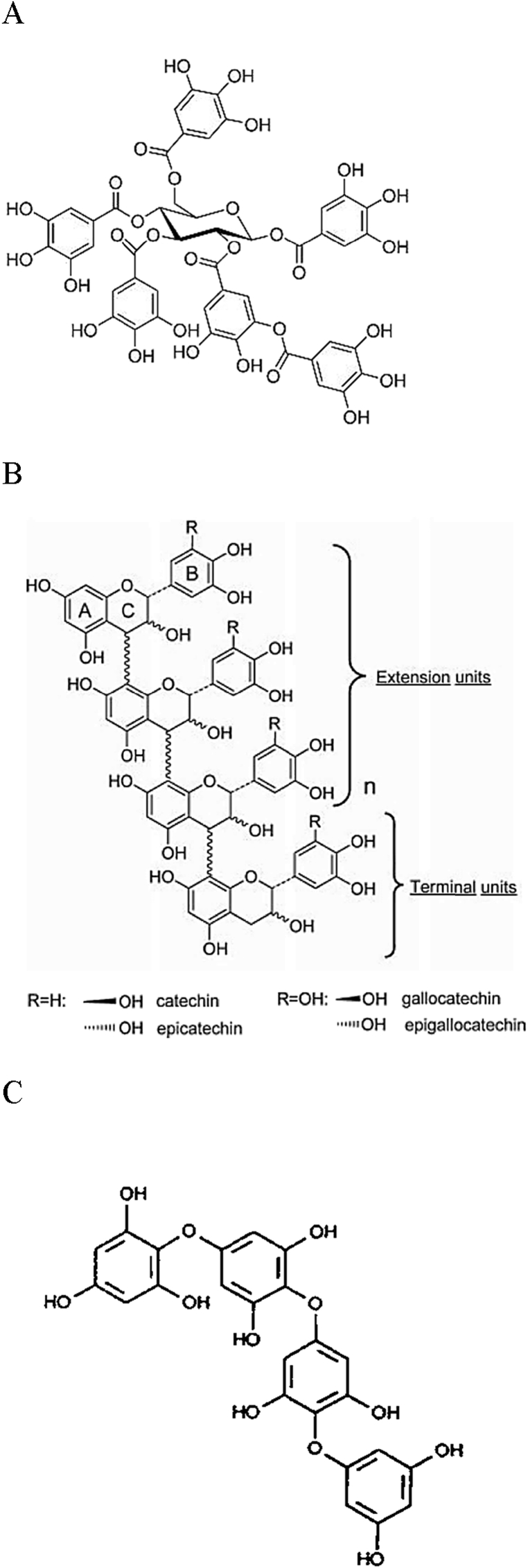
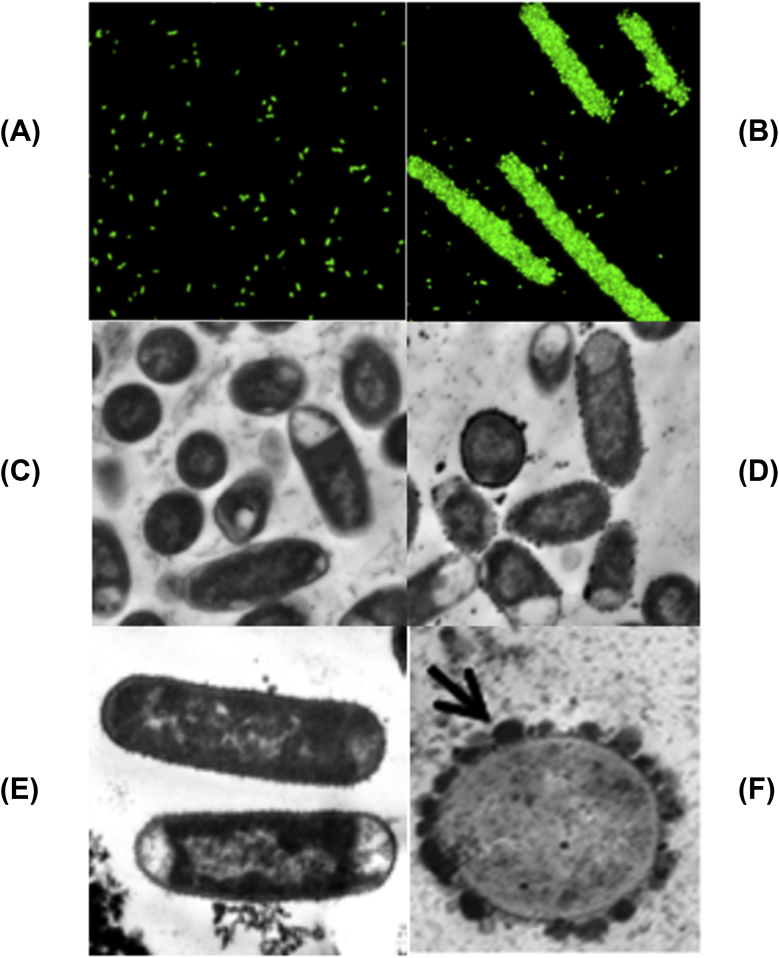
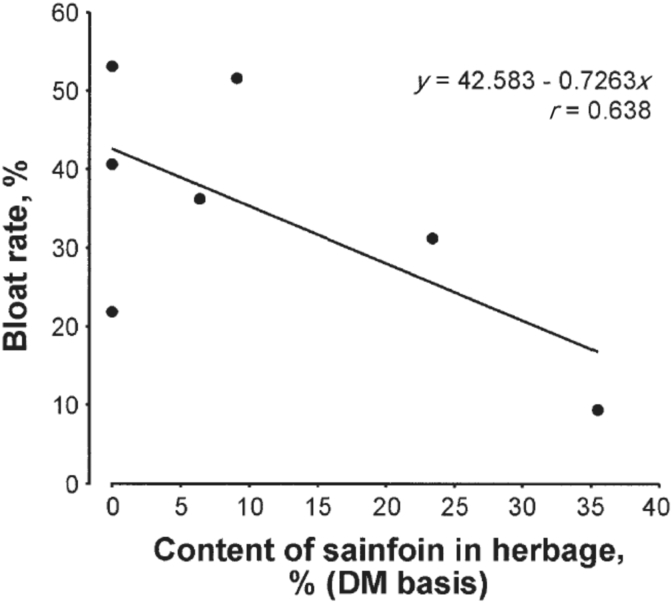
Verification
Claims the paper makes
The claims and statistics of this paper haven’t been checked yet.
Run the check — free, no account needed. It reads the open-access text and checks the sources it cites.
Claims other papers make about this one
Each is checked against this paper’s own text: does it say what the citing paper says it does?
The source backs part of the claim, not all of it — or backs it for a different population, condition or comparison.
In the citing paper
“Prolonged use of the purified form of secondary compounds can lead to antimicrobial resistance; however, tannin supplementation as a crude extract of mixtures (having different molecular sizes) offers a major advantage to control antimicrobial resistance (226).”
From Phytogenic Additives Can Modulate Rumen Microbiome to Mediate Fermentation Kinetics and Methanogenesis Through Exploiting Diet–Microbe Interaction (2020) · cites this paper as [226]
Experimental — accuracy not yet measured
Self-check
Percentages, sums and reported differences re-computed from the paper’s own numbers.
The self-check needs the paper’s full text.
Citations
Cites
Structure-antioxidant activity relationships of flavonoids and phenolic acids
Rice-Evans, C. A., Miller, N. J., & Paganga, G. (1996) · Free Radical Biology and Medicine · doi:10.1016/0891-5849(95)02227-9 · Cited by 9,085
Dietary polyphenols and the prevention of diseases
Scalbert, A., Manach, C., Morand, C., Rémésy, C., & Jiménez, L. (2005) · Critical Reviews in Food Science and Nutrition · doi:10.1080/1040869059096 · Cited by 2,999
Antimicrobial properties of tannins
Scalbert, A. (1991) · Phytochemistry · doi:10.1016/0031-9422(91)83426-l · Cited by 2,321
The Relative Antioxidant Activities of Plant-Derived Polyphenolic Flavonoids
Rice-Evans, C. A., Miller, N. J., Bolwell, P., Bramley, P. M., & Pridham, J. B. (1995) · Free Radical Research · doi:10.3109/10715769509145649 · Cited by 2,160
Proceedings of the 8th Workshop on Programming Languages and Operating Systems
Lu, S., California, S. '. A. S. 2. S. O. O. S. P. 2. M., Association for Computing Machinery-Digital Library, ACM Special Interest Group on Operating Systems, & SIGs, A. (2015) · doi:10.1145/2818302 · Cited by 1,629
High Molecular Weight Plant Polyphenolics (Tannins) as Biological Antioxidants
Hagerman, A. E., Riedl, K. M., Jones, G. A., Sovik, K. N., Ritchard, N. T., Hartzfeld, P. W., & Riechel, T. L. (1998) · Journal of Agricultural and Food Chemistry · doi:10.1021/jf970975b · Cited by 1,386
Dietary Flavonoids: Intake, Health Effects and Bioavailability
Hollman, P. C. H., & Katan, M. (1999) · Food and Chemical Toxicology · doi:10.1016/s0278-6915(99)00079-4 · Cited by 1,144
Min, B. R., Barry, T. N., Attwood, G. T., & McNabb, W. C. (2003) · Animal Feed Science and Technology · doi:10.1016/s0377-8401(03)00041-5 · Cited by 1,062
Unravelling the conundrum of tannins in animal nutrition and health
Mueller-Harvey, I. (2006) · Journal of the Science of Food and Agriculture · doi:10.1002/jsfa.2577 · Cited by 967
Exploitation of dietary tannins to improve rumen metabolism and ruminant nutrition
Patra, A. K., & Saxena, J. (2010) · Journal of the Science of Food and Agriculture · doi:10.1002/jsfa.4152 · Cited by 878
Research works printed but not linked: 8
- Barham, 2001, Effects of Tascor14 on prevalence levels of enterohemorragic Escherichia coli and Salmonella spp. in feedlot steers, J Anim Sci, 79, 257
- Behrends, 2000, Tasco supplementation in feedlot cattle: effects on pathogen loads, J Anim Sci, 78, 106
- Brus, 2013, Effect of chestnut (Castanea sativa Mill.) wood tannins and organic acids on growth performance and faecal microbiota of pigs from 23 to 127 days of age, Bulg J Agric Sci, 19, 841
- Chen, 1997, A hypothesis on phaeophyceae polyphenols, their structural unit and mechanism of the formation (in Chinese with English summary), Oceanol Limnol Sin, 28, 225
- Dutta, 2012, Effect of supplementing tanniferous tree leaves mixture on immune response and GI nematodes in kids, Livest Res Rural Dev, 24
- Mcleod, 1974, Plant tannins-Their role in forage quality, Nutr Abstr Rev, 44, 803
- Van Soest, 1982, vol. 44, 2552
- Wang, 2011, Brown algae as feed additive: nutritional and health impacts on ruminant animals – a review, 1
Cited by
Sorted by citations
Tian, M., He, X., Feng, Y., Wang, W., Chen, H., Gong, M., Liu, D., Clarke, J. L., & van Eerde, A. (2021) · Antibiotics · doi:10.3390/antibiotics10050539 · Cited by 298
Yang, W., Li, J., Yao, Z., & Li, M. (2024) · The Science of The Total Environment · doi:10.1016/j.scitotenv.2024.171757 · Cited by 282
Technological Application of Tannin-Based Extracts
Fraga‐Corral, M., Garcia‐Oliveira, P., Pereira, A. G., Lourenço‐Lopes, C., Jiménez-López, C., Prieto, M. A., & Simal‐Gándara, J. (2020) · Molecules · doi:10.3390/molecules25030614 · Cited by 262
Xu, N., Gao, Y., Li, Z., Chen, Y., Liu, M., Jia, J., Zeng, R., Luo, G., Li, J., & Yu, Y. (2023) · Chemical Engineering Journal · doi:10.1016/j.cej.2023.143173 · Cited by 253
Zabaniotou, A. A., & Kamaterou, P. (2018) · Journal of Cleaner Production · doi:10.1016/j.jclepro.2018.11.230 · Cited by 193
Metadata
- Authors
- Huang, Q., Liu, X., Zhao, G., Hu, T., & Wang, Y.
- Affiliations
- Yangzhou University (CN)
- Inner Mongolia Academy of Agricultural & Animal Husbandry Sciences (CN)
- Northwest A&F University (CN)
- Agriculture and Agri-Food Canada (CA)
- Corresponding author
- Wang, Yuxi
- Venue
- Animal nutrition
- Publisher
- Elsevier BV
- Published
- 2018-06
- Volume
- 4
- Issue
- 2
- Pages
- 137-150
- ISSN
- 2405-6383 (ISSN-L)
- 2405-6545
- PMC
- PMC6104569
- OpenAlex
- W2761389834
- Cited by
- 555
- References
- 189
- Citations by year
- 2026: 58 · 2025: 68 · 2024: 94 · 2023: 70 · 2022: 83 · 2021: 86 · 2020: 61 · 2019: 25 · 2018: 9
- FWCI
- 3.15
- Type
- journal article
- Language
- en
- Open access
- gold
- doi.org
- Licence
- Locations
- Animal nutrition (publishedVersion, cc-by-nc-nd)
- Europe PMC (PubMed Central) (publishedVersion, cc-by-nc-nd)
- PubMed Central (publishedVersion, cc-by-nc-nd)
- PubMed (publishedVersion)
- DOAJ (DOAJ: Directory of Open Access Journals) (submittedVersion, cc-by-sa)
- Funders
- Natural Science Foundation of Jiangsu Province (BK20170494)
- Agriculture Research System of China (CARS-36)
- Agriculture and Agri-Food Canada
- China Postdoctoral Science Foundation (2017M611930)
- Topics
- Life Sciences › Agricultural and Biological Sciences › Animal Science and Zoology › Animal Nutrition and Physiology
- Life Sciences › Agricultural and Biological Sciences › Animal Science and Zoology › Ruminant Nutrition and Digestive Physiology
- Health Sciences › Veterinary › Small Animals › Veterinary medicine and infectious diseases
- Keywords
- tannins, in-feed antibiotics, natural antibiotic alternatives, polyphenols, ruminant nutrition, protein degradation, intestinal parasites, poultry gut health, antinutritional factors, antimicrobial activity, saponins, essential oils, livestock productivity
About these checks
Registry, retraction, Cites and statistics results are computed, not judged, with one exception: a printed reference that no index lists is read once by a model before it counts as a citation error. Claims are extracted by a model and kept only when their quote appears verbatim in the text; each cited source is then checked, with a model’s help, for whether it says what the claim relies on. Those verdicts can be wrong — read the claim’s quote and the cited source before relying on one.
Statistics and arithmetic are recomputed, not judged.
Confidence bands are shown only for fields calibrated on our annotated test set. None is calibrated yet, so no band is shown.
What counts as a claim ›How we measure confidence ›How we check this ›
Are you an author, or do you see a problem with this page? Request a review
