

The DOI matches its Crossref record; 193 of the 194 references it cites were found in a registry or an index.
Sterilization and disinfection methods for decellularized matrix materials: Review, consideration and proposal
Open accessAbstract
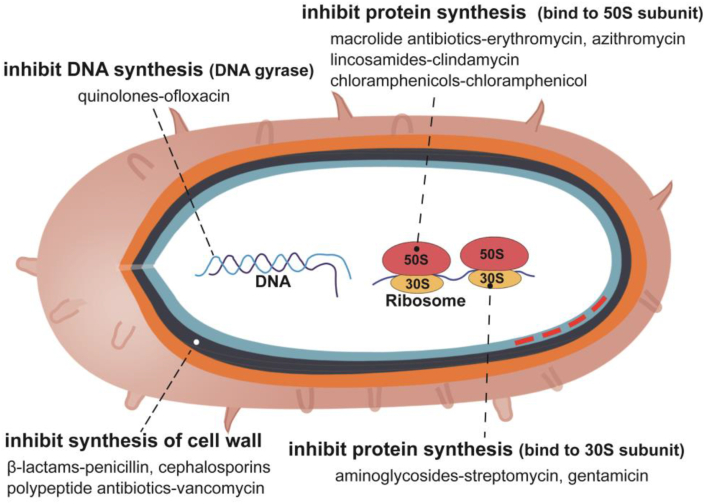
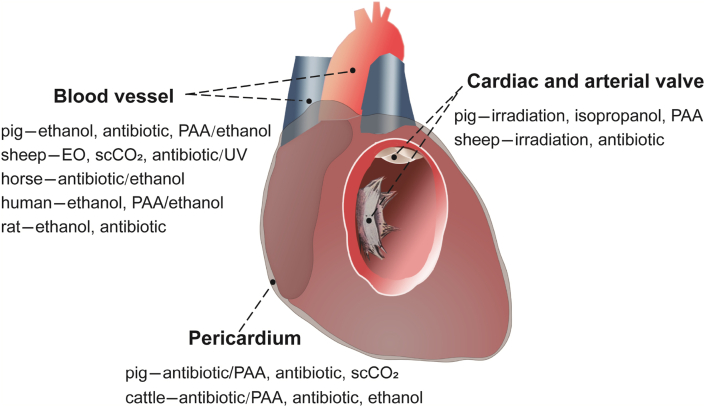
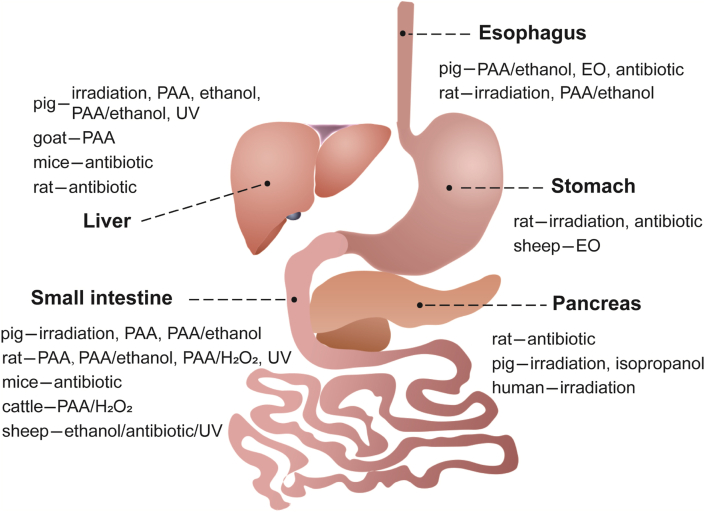
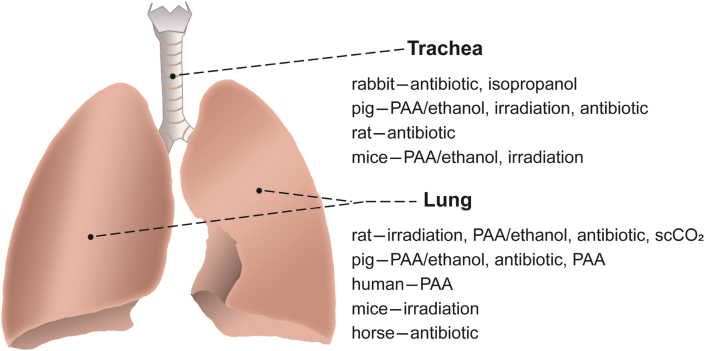
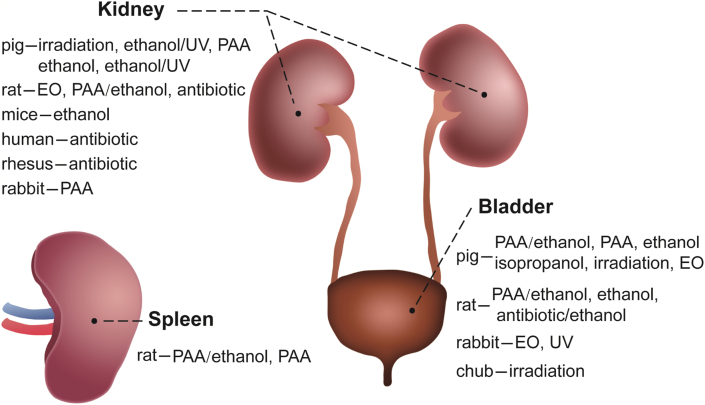
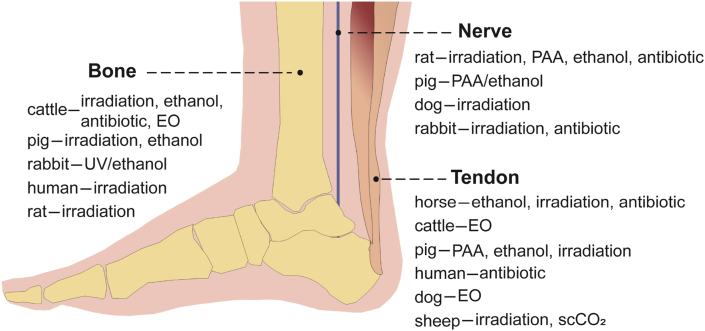
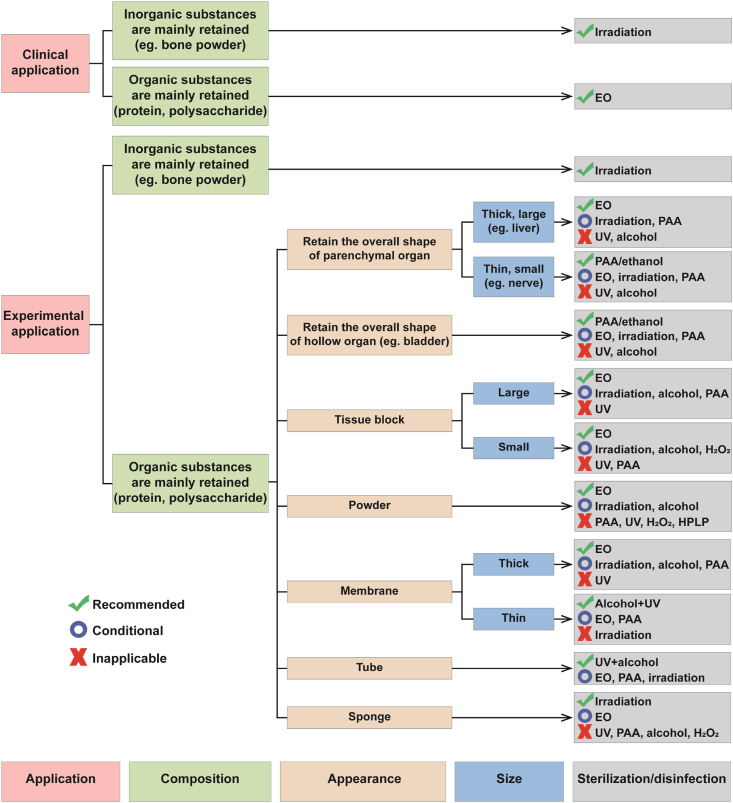
Sterilization is the process of killing all microorganisms, while disinfection is the process of killing or removing all kinds of pathogenic microorganisms except bacterial spores. Biomaterials involved in cell experiments, animal experiments, and clinical applications need to be in the aseptic state, but their physical and chemical properties as well as biological activities can be affected by sterilization or disinfection. Decellularized matrix (dECM) is the low immunogenicity material obtained by removing cells from tissues, which retains many inherent components in tissues such as proteins and proteoglycans. But there are few studies concerning the effects of sterilization or disinfection on dECM, and the systematic introduction of sterilization or disinfection for dECM is even less. Therefore, this review systematically introduces and analyzes the mechanism, advantages, disadvantages, and applications of various sterilization and disinfection methods, discusses the factors influencing the selection of sterilization and disinfection methods, summarizes the sterilization and disinfection methods for various common dECM, and finally proposes a graphical route for selecting an appropriate sterilization or disinfection method for dECM and a technical route for validating the selected method, so as to provide the reference and basis for choosing more appropriate sterilization or disinfection methods of various dECM.
Overview
The claims and statistics of this paper haven’t been checked yet.
Run the check — free, no account needed. It reads the open-access text and checks the sources it cites.
Integrity signals
Registry
Cites
Statistics
Figures
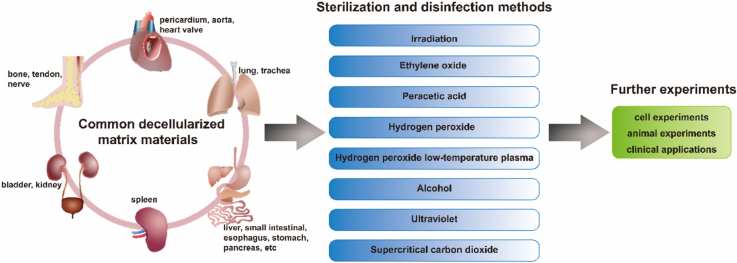
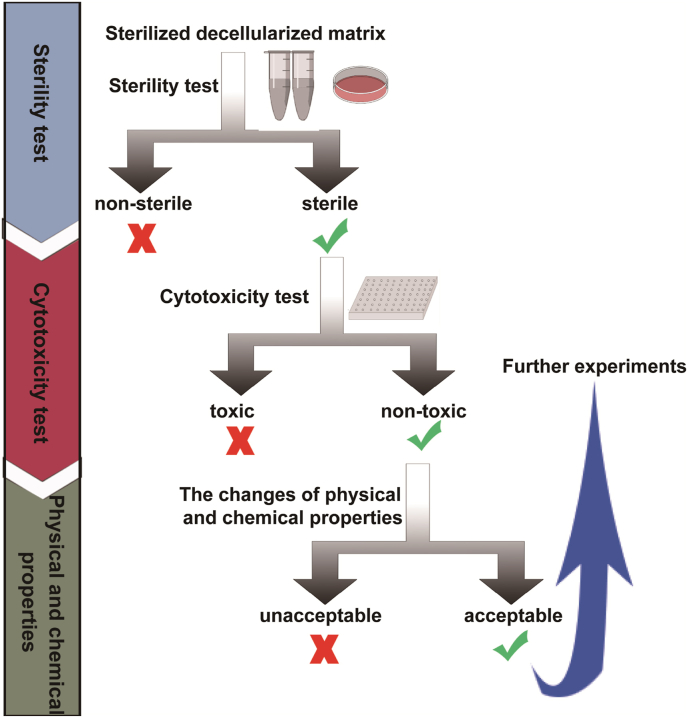
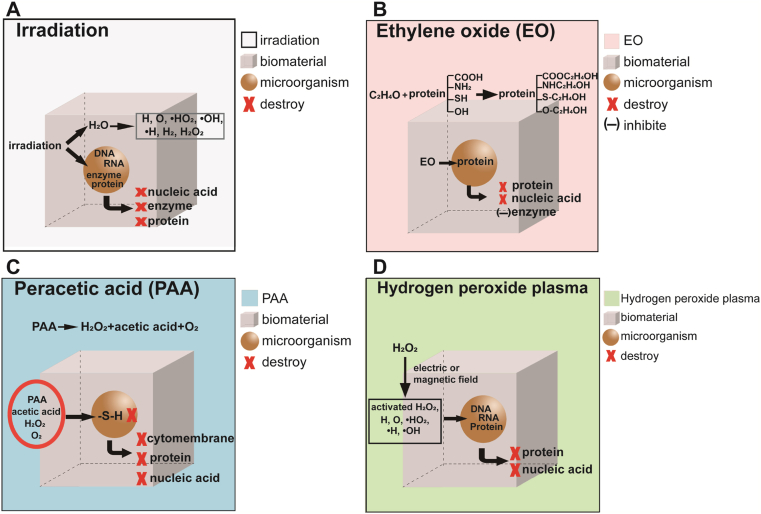
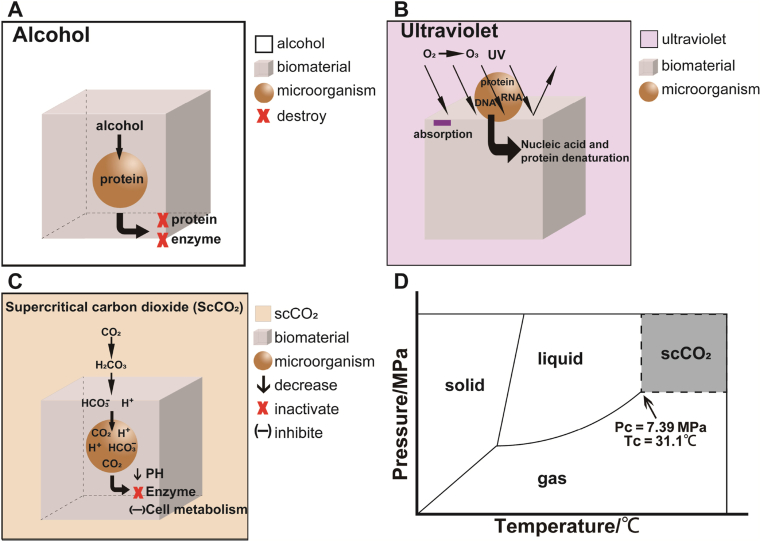
Verification
Claims the paper makes
The claims and statistics of this paper haven’t been checked yet.
Run the check — free, no account needed. It reads the open-access text and checks the sources it cites.
Claims other papers make about this one
Each is checked against this paper’s own text: does it say what the citing paper says it does?
The source backs part of the claim, not all of it — or backs it for a different population, condition or comparison.
In the citing paper
“Some sterilization methods may increase FBR incidence via crosslinking ECM components and interfering with subsequent degradation [219].”
From Immunogenicity of decellularized extracellular matrix scaffolds: a bottleneck in tissue engineering and regenerative medicine (2023) · cites this paper as [219]
Experimental — accuracy not yet measured
Self-check
Percentages, sums and reported differences re-computed from the paper’s own numbers.
The self-check needs the paper’s full text.
Citations
Cites
Regeneration and experimental orthotopic transplantation of a bioengineered kidney
Song, J. J., Guyette, J. P., Gilpin, S. E., Gonzalez, G., Vacanti, J. P., & Ott, H. C. (2013) · Nature Medicine · doi:10.1038/nm.3154 · Cited by 793
Use of hydrogen peroxide as a biocide: new consideration of its mechanisms of biocidal action
Linley, E., Denyer, S. P., McDonnell, G. E., Simons, C., & Maillard, J. (2012) · Journal of Antimicrobial Chemotherapy · doi:10.1093/jac/dks129 · Cited by 544
A hydrogel derived from decellularized dermal extracellular matrix
Wolf, M. T., Daly, K. A., Brennan-Pierce, E. P., Johnson, S. A., Carruthers, C. A., D'Amore, A., Nagarkar, S. P., Velankar, S. S., & Badylak, S. F. (2012) · Biomaterials · doi:10.1016/j.biomaterials.2012.06.051 · Cited by 482
Ethylene oxide sterilization of medical devices: A review
Mendes, G. C., Brandão, T. R. S., & Silva, C. L. M. (2007) · American Journal of Infection Control · doi:10.1016/j.ajic.2006.10.014 · Cited by 398
Sullivan, D. C., Mirmalek-Sani, S.-H., Deegan, D. B., Baptista, P. M., Aboushwareb, T., Atala, A., & Yoo, J. J. (2012) · Biomaterials · doi:10.1016/j.biomaterials.2012.07.023 · Cited by 363
Sterilization techniques for biodegradable scaffolds in tissue engineering applications
Dai, Z., Ronholm, J., Tian, Y., Sethi, B., & Cao, X. (2016) · Journal of Tissue Engineering · doi:10.1177/2041731416648810 · Cited by 362
Zhu, M., Li, W., Dong, X., Yuan, X., Midgley, A. C., Chang, H., Wang, Y., Wang, H., Wang, K., Ma, P. X., et al. (2019) · Nature Communications · doi:10.1038/s41467-019-12545-3 · Cited by 322
Self-citationEsophageal Reconstruction with ECM and Muscle Tissue in a Dog Model
Badylak, S. F., Vorp, D. A., Spievack, A. R., Simmons-Byrd, A., Hanke, J., Freytes, D. O., Thapa, A., Gilbert, T. W., & Nieponice, A. (2005) · Journal of Surgical Research · doi:10.1016/j.jss.2005.03.002 · Cited by 291
Scanningless and continuous 3D bioprinting of human tissues with decellularized extracellular matrix
Yu, C., Ma, X., Zhu, W., Wang, P., Miller, K. L., Stupin, J., Koroleva-Maharajh, A., Hairabedian, A., & Chen, S. (2019) · Biomaterials · doi:10.1016/j.biomaterials.2018.12.009 · Cited by 272
Biologic scaffolds composed of central nervous system extracellular matrix
Crapo, P. M., Medberry, C. J., Reing, J. E., Tottey, S., van der Merwe, Y., Jones, K. E., & Badylak, S. F. (2012) · Biomaterials · doi:10.1016/j.biomaterials.2012.01.044 · Cited by 263
Cited by
Sorted by citations
Kasravi, M., Ahmadi, A., Babajani, A., Mazloomnejad, R., Hatamnejad, M. R., Shariatzadeh, S., Bahrami, S., & Niknejad, H. (2023) · Biomaterials Research · doi:10.1186/s40824-023-00348-z · Cited by 316
Neishabouri, A., Soltani Khaboushan, A., Daghigh, F., Kajbafzadeh, A.-M., & Majidi Zolbin, M. (2022) · Frontiers in Bioengineering and Biotechnology · doi:10.3389/fbioe.2022.805299 · Cited by 281
Golebiowska, A. A., Intravaia, J. T., Sathe, V. M., Kumbar, S. G., & Nukavarapu, S. P. (2024) · Bioactive Materials · doi:10.1016/j.bioactmat.2023.09.017 · Cited by 236
Solarte-David, V. A., Güiza-Argüello, V. R., Arango-Rodríguez, M. L., Sossa, C., & Becerra‐Bayona, S. M. (2022) · Frontiers in Bioengineering and Biotechnology · doi:10.3389/fbioe.2022.821852 · Cited by 150
A review of conventional and emerging technologies for hydrogels sterilization
Bento, C. S. A., Gaspar, M. C., Coimbra, P., de Sousa, H. C., & Braga, M. E. M. (2023) · International Journal of Pharmaceutics · doi:10.1016/j.ijpharm.2023.122671 · Cited by 137
Metadata
- Authors
- Tao, M., Ao, T., Mao, X., Yan, X., Javed, R., Hou, W., Wang, Y., Sun, C., Lin, S., Yu, T., & Ao, Q.
- Affiliations
- China Medical University (CN)
- Chinese Academy of Medical Sciences & Peking Union Medical College (CN)
- Sichuan University (CN)
- Corresponding author
- Ao, Qiang
- Venue
- Bioactive Materials
- Publisher
- Elsevier BV
- Published
- 2021-09
- Volume
- 6
- Issue
- 9
- Pages
- 2927-2945
- ISSN
- 2097-1192 (ISSN-L)
- 2452-199X
- PMC
- PMC7930362
- OpenAlex
- W3134529887
- Cited by
- 119
- References
- 194
- Citations by year
- 2026: 5 · 2025: 21 · 2024: 29 · 2023: 33 · 2022: 25 · 2021: 6
- FWCI
- 5.60
- Type
- journal article
- Language
- en
- Open access
- gold
- doi.org
- Licence
- Locations
- Bioactive Materials (publishedVersion, cc-by-nc-nd)
- PubMed Central (publishedVersion, cc-by-nc-nd)
- PubMed (publishedVersion)
- DOAJ (DOAJ: Directory of Open Access Journals) (submittedVersion, cc-by-sa)
- Funders
- Sichuan Province Science and Technology Support Program (2020YFH0008)
- National Key Research and Development Program of China (2017YFA0105802)
- Topics
- Health Sciences › Medicine › Surgery › Tissue Engineering and Regenerative Medicine
- Life Sciences › Immunology and Microbiology › Microbiology › Medical Device Sterilization and Disinfection
- Life Sciences › Biochemistry, Genetics and Molecular Biology › Biotechnology › Microbial Inactivation Methods
- Keywords
- decellularized extracellular matrix, sterilization, disinfection, aseptic processing, sterilization validation, biomaterials, immunogenicity, proteoglycans, tissue engineering scaffolds
About these checks
Registry, retraction, Cites and statistics results are computed, not judged, with one exception: a printed reference that no index lists is read once by a model before it counts as a citation error. Claims are extracted by a model and kept only when their quote appears verbatim in the text; each cited source is then checked, with a model’s help, for whether it says what the claim relies on. Those verdicts can be wrong — read the claim’s quote and the cited source before relying on one.
Statistics and arithmetic are recomputed, not judged.
Confidence bands are shown only for fields calibrated on our annotated test set. None is calibrated yet, so no band is shown.
What counts as a claim ›How we measure confidence ›How we check this ›
Are you an author, or do you see a problem with this page? Request a review
