

The DOI matches its Crossref record, with a small difference in title or year; 152 of the 154 references it cites were found in a registry or an index.
A Spatiotemporal Profile of In Vivo Cerebral Blood Flow Changes Following Intranasal Oxytocin in Humans
Open accessAbstract
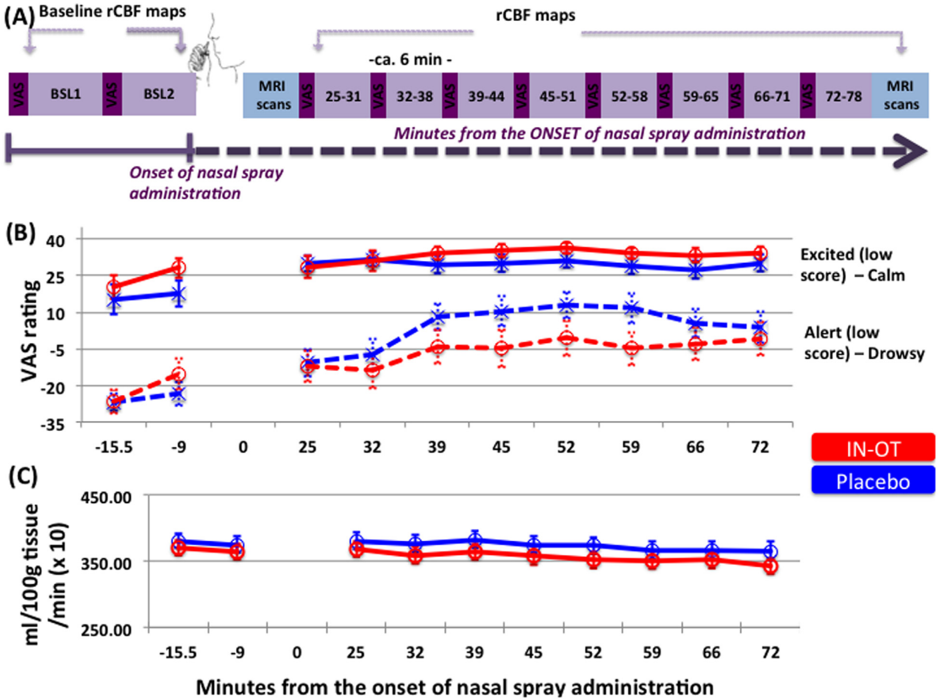
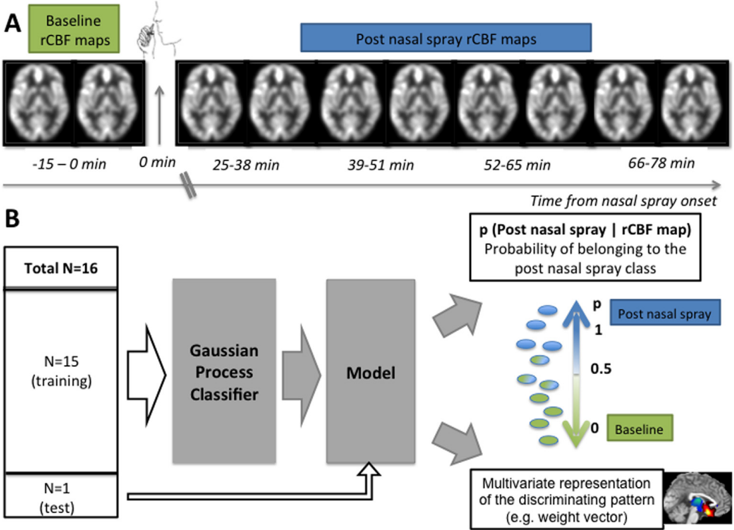
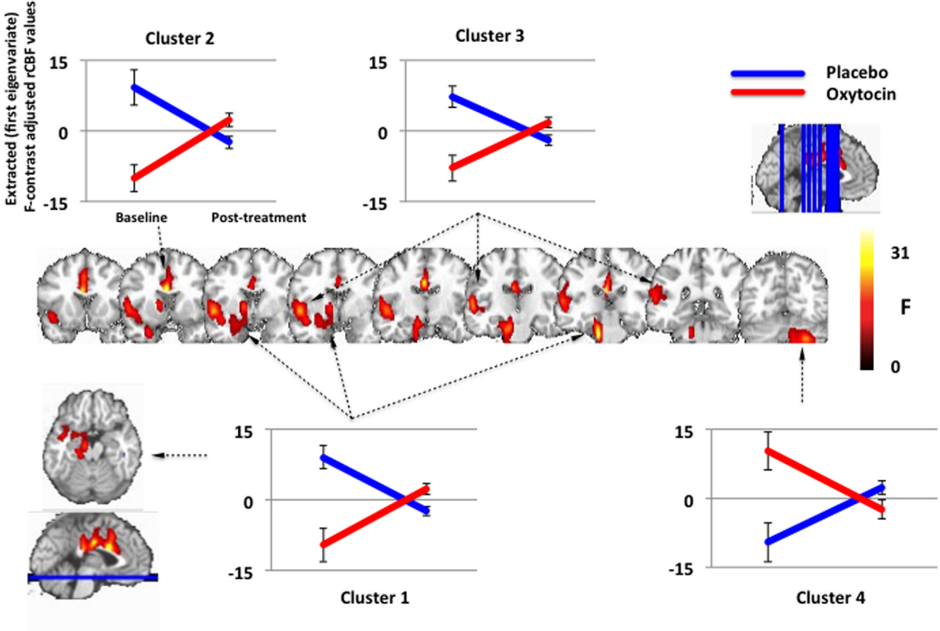
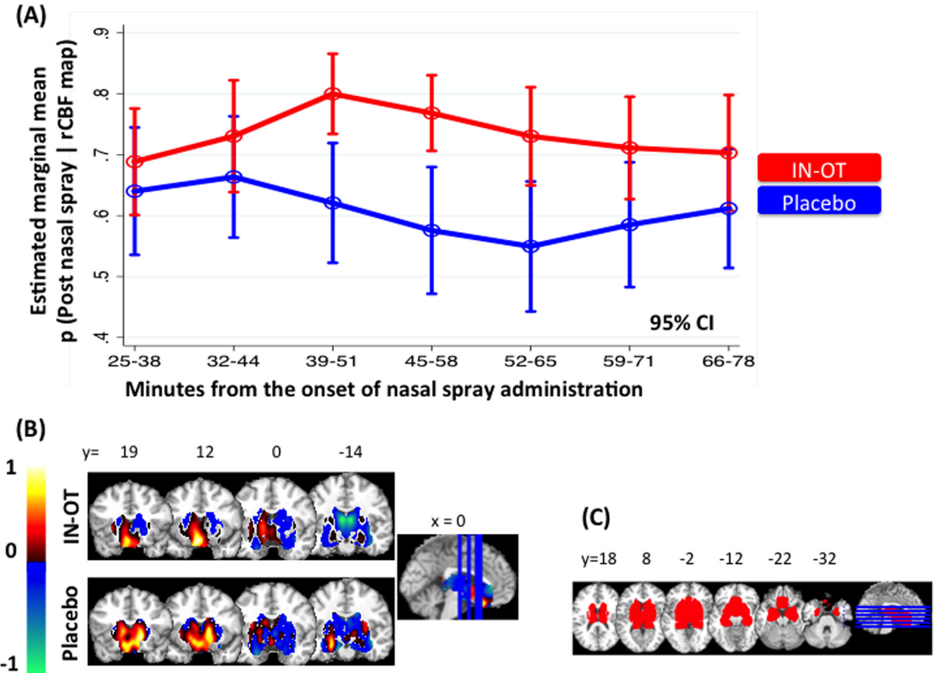
BACKGROUND: Animal and human studies highlight the role of oxytocin in social cognition and behavior and the potential of intranasal oxytocin (IN-OT) to treat social impairment in individuals with neuropsychiatric disorders such as autism. However, extensive efforts to evaluate the central actions and therapeutic efficacy of IN-OT may be marred by the absence of data regarding its temporal dynamics and sites of action in the living human brain. METHODS: In a placebo-controlled study, we used arterial spin labeling to measure IN-OT-induced changes in resting regional cerebral blood flow (rCBF) in 32 healthy men. Volunteers were blinded regarding the nature of the compound they received. The rCBF data were acquired 15 min before and up to 78 min after onset of treatment onset (40 IU of IN-OT or placebo). The data were analyzed using mass univariate and multivariate pattern recognition techniques. RESULTS: We obtained robust evidence delineating an oxytocinergic network comprising regions expected to express oxytocin receptors, based on histologic evidence, and including core regions of the brain circuitry underpinning social cognition and emotion processing. Pattern recognition on rCBF maps indicated that IN-OT-induced changes were sustained over the entire posttreatment observation interval (25-78 min) and consistent with a pharmacodynamic profile showing a peak response at 39-51 min. CONCLUSIONS: Our study provides the first visualization and quantification of IN-OT-induced changes in rCBF in the living human brain unaffected by cognitive, affective, or social manipulations. Our findings can inform theoretical and mechanistic models regarding IN-OT effects on typical and atypical social behavior and guide future experiments (e.g., regarding the timing of experimental manipulations).
Overview
The claims and statistics of this paper haven’t been checked yet.
Run the check — free, no account needed. It reads the open-access text and checks the sources it cites.
Integrity signals
Registry
Cites
Statistics
Figures
Verification
Claims the paper makes
The claims and statistics of this paper haven’t been checked yet.
Run the check — free, no account needed. It reads the open-access text and checks the sources it cites.
Claims other papers make about this one
Each is checked against this paper’s own text: does it say what the citing paper says it does?
In the citing paper
“doubt has been cast on the extent to which intranasal OXT crosses the blood-brain barrier (Neumann et al., 2013;Paloyelis et al., 2014;Striepens et al., 2013).”
From Oxytocin increases attention to the eyes and selectively enhances self-reported affective empathy for fear (2017) · cites this paper as Paloyelis et al., 2014
In the citing paper
“Furthermore, there are uncertainties regarding the site and mechanism of action of exogenous intranasal oxytocin in humans due to lack of suitable radio tracers (Paloyelis et al., 2016).”
From Meta-analysis of the effects of intranasal oxytocin on interpretation and expression of emotions (2017) · cites this paper as Paloyelis et al., 2016
In the citing paper
“intranasal administration of oxytocin has been shown to modulate neural responses in brain regions involved in threat detection and reward processing (Ma et al., 2016b; Paloyelis et al., 2016; Wang et al., 2017; Liu et al., 2019).”
From Oxytocin promotes coordinated out-group attack during intergroup conflict in humans (2019) · cites this paper as Paloyelis et al., 2016
In the citing paper
“A recent elegant study using arterial spin labeling showed that IN-OT increases the levels of cerebral blood flow of key regions of the SBN such as ventral striatum, amygdala, hippocampus, caudate nucleus, anterior and middle cingulate cortices, anterior insula, ventral tegmental area (VTA), inferior frontal gyrus, inferior parietal cortex, and superior temporal gyrus (Paloyelis et al. 2016).”
From A precision medicine approach to oxytocin trials (2017) · cites this paper as Paloyelis et al. 2016
Self-check
Percentages, sums and reported differences re-computed from the paper’s own numbers.
The self-check needs the paper’s full text.
Citations
Cites
A Simple Sequentially Rejective Multiple Test Procedure
(1979) · Scandinavian Journal of Statistics · doi:10.2307/4615733 · Cited by 21,526
Gaussian Processes for Machine Learning
Rasmussen, C. E., & Williams, C. K. I. (2005) · doi:10.7551/mitpress/3206.001.0001 · Cited by 11,705
Comparison of Beck Depression Inventories -IA and -II in psychiatric outpatients
Beck, A. T., Steer, R. A., Ball, R., & Ranieri, W. F. (1996) · Journal of Personality Assessment · doi:10.1207/s15327752jpa6703_13 · Cited by 5,965
Meeting of minds: the medial frontal cortex and social cognition
Amodio, D. M., & Frith, C. D. (2006) · Nature Reviews Neuroscience · doi:10.1038/nrn1884 · Cited by 3,782
The oxytocin receptor system: structure, function, and regulation
Gimpl, G., & Fahrenholz, F. (2001) · Physiological Reviews · doi:10.1152/physrev.2001.81.2.629 · Cited by 3,089
Glial and neuronal control of brain blood flow
Attwell, D., Buchan, A. M., Charpak, S., Lauritzen, M., MacVicar, B. A., & Newman, E. A. (2010) · Nature · doi:10.1038/nature09613 · Cited by 2,511
A Note on Robust Variance Estimation for Cluster‐Correlated Data
Williams, R. L. (2000) · Biometrics · doi:10.1111/j.0006-341x.2000.00645.x · Cited by 2,501
Beyond mind-reading: multi-voxel pattern analysis of fMRI data
Norman, K. A., Polyn, S. M., Detre, G. J., & Haxby, J. V. (2006) · Trends in Cognitive Sciences · doi:10.1016/j.tics.2006.07.005 · Cited by 2,271
Analysing controlled trials with baseline and follow up measurements
Vickers, A. J., & Altman, D. G. (2001) · BMJ · doi:10.1136/bmj.323.7321.1123 · Cited by 2,116
Neural mechanisms of empathy in humans: a relay from neural systems for imitation to limbic areas
Carr, L., Iacoboni, M., Dubeau, M.-C., Mazziotta, J. C., & Lenzi, G. L. (2003) · Proceedings of the National Academy of Sciences · doi:10.1073/pnas.0935845100 · Cited by 1,978
Cited by
Sorted by citations
Gating of social reward by oxytocin in the ventral tegmental area
Hung, L. W., Neuner, S., Polepalli, J. S., Beier, K. T., Wright, M., Walsh, J. J., Lewis, E. M., Luo, L., Deisseroth, K., Dölen, G., et al. (2017) · Science · doi:10.1126/science.aan4994 · Cited by 578
Does Oxytocin Increase Trust in Humans? A Critical Review of Research
Nave, G., Camerer, C., & McCullough, M. (2015) · Perspectives on Psychological Science · doi:10.1177/1745691615600138 · Cited by 316
Quintana, D. S., Lischke, A., Grace, S., Scheele, D., Ma, Y., & Becker, B. (2021) · Molecular Psychiatry · doi:10.1038/s41380-020-00864-7 · Cited by 263
Kinetics and dose dependency of intranasal oxytocin effects on amygdala reactivity
Spengler, F. B., Schultz, J., Scheele, D., Essel, M., Maier, W., Heinrichs, M., & Hurlemann, R. (2017) · Biological Psychiatry · doi:10.1016/j.biopsych.2017.04.015 · Cited by 229
Why empathy has a beneficial impact on others in medicine: unifying theories
Decety, J., & Fotopoulou, A. (2015) · Frontiers in Behavioral Neuroscience · doi:10.3389/fnbeh.2014.00457 · Cited by 266
Meta-analysis of the effects of intranasal oxytocin on interpretation and expression of emotions
Leppanen, J., Ng, K. W., Tchanturia, K., & Treasure, J. (2017) · Neuroscience & Biobehavioral Reviews · doi:10.1016/j.neubiorev.2017.04.010 · Cited by 188
Brain oxytocin: how puzzle stones from animal studies translate into psychiatry
Grinevich, V., & Neumann, I. D. (2020) · Molecular Psychiatry · doi:10.1038/s41380-020-0802-9 · Cited by 201
Walker, S. C., Trotter, P. D., Swaney, W. T., Marshall, A. G., & McGlone, F. P. (2017) · Neuropeptides · doi:10.1016/j.npep.2017.01.001 · Cited by 204
Advances in human oxytocin measurement: challenges and proposed solutions
Tabak, B. A., Leng, G., Szeto, A., Parker, K. J., Verbalis, J. G., Ziegler, T. E., Lee, M. R., Neumann, I. D., & Mendez, A. J. (2023) · Molecular Psychiatry · doi:10.1038/s41380-022-01719-z · Cited by 170
Intranasal Oxytocin Normalizes Amygdala Functional Connectivity in Posttraumatic Stress Disorder
Koch, S. B. J., van Zuiden, M., Nawijn, L., Frijling, J. L., Veltman, D. J., & Olff, M. (2016) · Neuropsychopharmacology · doi:10.1038/npp.2016.1 · Cited by 132
Labeled oxytocin administered via the intranasal route reaches the brain in rhesus macaques
Lee, M. R., Shnitko, T. A., Blue, S. W., Kaucher, A. V., Winchell, A. J., Erikson, D. W., Grant, K. A., & Leggio, L. (2020) · Nature Communications · doi:10.1038/s41467-020-15942-1 · Cited by 132
Ma, Y., Shamay-Tsoory, S., Han, S., & Zink, C. F. (2016) · Trends in Cognitive Sciences · doi:10.1016/j.tics.2015.10.009 · Cited by 131
Martins, D., Mazibuko, N., Zelaya, F. O., Vasilakopoulou, S., Loveridge, J., Oates, A. E., Maltezos, S., Mehta, M. A., Wastling, S. J., Howard, M. A., et al. (2020) · Nature Communications · doi:10.1038/s41467-020-14845-5 · Cited by 131
Overview of human oxytocin research
Kendrick, K. M., Guastella, A. J., & Becker, B. (2017) · Current Topics in Behavioral Neurosciences · doi:10.1007/7854_2017_19 · Cited by 121
Preventive Treatments for Psychosis: Umbrella Review (Just the Evidence)
Fusar-Poli, P., Davies, C., Solmi, M., Brondino, N., De Micheli, A., Kotlicka-Antczak, M., Shin, J. I., & Radua, J. (2019) · Frontiers in Psychiatry · doi:10.3389/fpsyt.2019.00764 · Cited by 108
Quintana, D. S., Guastella, A. J., Westlye, L. T., & Andreassen, O. A. (2016) · Molecular Psychiatry · doi:10.1038/mp.2015.166 · Cited by 107
Detection, processing and reinforcement of social cues: regulation by the oxytocin system
Menon, R., & Neumann, I. D. (2023) · Nature Reviews Neuroscience · doi:10.1038/s41583-023-00759-w · Cited by 100
Koch, S. B., van Zuiden, M., Nawijn, L., Frijling, J. L., Veltman, D. J., & Olff, M. (2016) · Neuropsychopharmacology · doi:10.1038/npp.2015.299 · Cited by 98
Daughters, K., Manstead, A. S. R., Hubble, K., Rees, A., Thapar, A., & van Goozen, S. H. M. (2015) · PLOS ONE · doi:10.1371/journal.pone.0145104 · Cited by 92
“[27] demonstrated that IN-OT also crosses the blood-brain barrier in human males, providing further evidence that IN-OT has direct effects on the brain.”
BackgroundOxytocin modulates social value representations in the amygdala
Liu, Y., Li, S., Lin, W., Li, W., Yan, X., Wang, X., Pan, X., Rutledge, R. B., & Ma, Y. (2019) · Nature Neuroscience · doi:10.1038/s41593-019-0351-1 · Cited by 89
Oxytocin promotes coordinated out-group attack during intergroup conflict in humans
Zhang, H., Gross, J., De Dreu, C., & Ma, Y. (2019) · eLife · doi:10.7554/elife.40698 · Cited by 87
Frijling, J. L. (2017) · European Journal of Psychotraumatology · doi:10.1080/20008198.2017.1302652 · Cited by 95
Cai, Q., Feng, L., & Yap, K. Z. (2017) · Psychiatry and Clinical Neurosciences · doi:10.1111/pcn.12627 · Cited by 82
Numan, M. (2020) · doi:10.1093/oso/9780190848675.001.0001 · Cited by 106
Oxytocin promotes intuitive rather than deliberated cooperation with the in-group
Ten Velden, F. S., Daughters, K., & De Dreu, C. K. W. (2017) · Hormones and Behavior · doi:10.1016/j.yhbeh.2016.06.005 · Cited by 66
Khalili‐Mahani, N., Rombouts, S. A. R. B., van Osch, M. J. P., Duff, E. P., Carbonell, F., Nickerson, L. D. H., Becerra, L. R., Dahan, A., Evans, A. C., Soucy, J., et al. (2017) · Human Brain Mapping · doi:10.1002/hbm.23516 · Cited by 63
Sex- and context-dependent effects of oxytocin on social sharing
Ma, X., Zhao, W., Luo, R., Zhou, F., Geng, Y., Xu, L., Gao, Z., Zheng, X., Becker, B., & Kendrick, K. M. (2018) · NeuroImage · doi:10.1016/j.neuroimage.2018.08.004 · Cited by 68
Improving the precision of intranasal oxytocin research
Winterton, A., Westlye, L. T., Steen, N. E., Andreassen, O. A., & Quintana, D. S. (2020) · Nature Human Behaviour · doi:10.1038/s41562-020-00996-4 · Cited by 65
Kou, J., Zhang, Y., Zhou, F., Sindermann, C., Montag, C., Becker, B., & Kendrick, K. M. (2020) · Psychological Medicine · doi:10.1017/s0033291720003803 · Cited by 62
Paloyelis, Y., Krahé, C., Maltezos, S., Williams, S. C., Howard, M. A., & Fotopoulou, A. (2016) · Journal of Neuroendocrinology · doi:10.1111/jne.12347 · Cited by 61
Frijling, J. L., van Zuiden, M., Koch, S. B. J., Nawijn, L., Veltman, D. J., & Olff, M. (2016) · Neuropsychopharmacology · doi:10.1038/npp.2015.278 · Cited by 60
What's Love Got to do with it: Role of oxytocin in trauma, attachment and resilience
Sharma, S. R., Gonda, X., Dome, P., & Tarazi, F. I. (2020) · Pharmacology & Therapeutics · doi:10.1016/j.pharmthera.2020.107602 · Cited by 61
Ebert, A., & Brüne, M. (2017) · Current topics in behavioral neurosciences · doi:10.1007/7854_2017_21 · Cited by 66
Nawijn, L., van Zuiden, M., Koch, S. B. J., Frijling, J. L., Veltman, D. J., & Olff, M. (2016) · Psychoneuroendocrinology · doi:10.1016/j.psyneuen.2016.01.020 · Cited by 60
Zhao, Z., Ma, X., Geng, Y., Zhao, W., Zhou, F., Wang, J., Markett, S. A., Biswal, B. B., Ma, Y., Kendrick, K. M., et al. (2018) · NeuroImage · doi:10.1016/j.neuroimage.2018.09.067 · Cited by 56
Sniff and mimic–Intranasal oxytocin increases facial mimicry in a sample of men
Korb, S., Malsert, J., Strathearn, L., Vuilleumier, P., & Niedenthal, P. (2016) · Hormones and Behavior · doi:10.1016/j.yhbeh.2016.06.003 · Cited by 54
Kou, J., Zhang, Y., Zhou, F., Gao, Z., Yao, S., Zhao, W., Li, H., Lei, Y., Gao, S., Kendrick, K. M., et al. (2022) · Psychotherapy and Psychosomatics · doi:10.1159/000521348 · Cited by 55
Yao, S., & Kendrick, K. M. (2022) · Pharmaceutics · doi:10.3390/pharmaceutics14020323 · Cited by 55
Fragkaki, I., Cima, M., & Granic, I. (2017) · Psychoneuroendocrinology · doi:10.1016/j.psyneuen.2017.11.005 · Cited by 54
The oxytocin receptor gene predicts brain activity during an emotion recognition task in autism
Uzefovsky, F., Bethlehem, R. A. I., Shamay-Tsoory, S., Ruigrok, A., Holt, R., Spencer, M., Chura, L., Warrier, V., Chakrabarti, B., Bullmore, E., et al. (2019) · Molecular Autism · doi:10.1186/s13229-019-0258-4 · Cited by 49
How does oxytocin modulate human behavior?
Yao, S., & Kendrick, K. M. (2025) · Molecular Psychiatry · doi:10.1038/s41380-025-02898-1 · Cited by 61
Gryksa, K., & Neumann, I. D. (2021) · Psychoneuroendocrinology · doi:10.1016/j.psyneuen.2021.105601 · Cited by 53
Xin, F., Zhou, X., Dong, D., Zhao, Z., Yang, X., Wang, Q., Gu, Y., Kendrick, K. M., Chen, A., & Becker, B. (2020) · Advanced Science · doi:10.1002/advs.202001077 · Cited by 47
Leppänen, J., Cardi, V., Ng, K. W., Paloyelis, Y., Stein, D., Tchanturia, K., & Treasure, J. L. (2017) · Psychoneuroendocrinology · doi:10.1016/j.psyneuen.2017.01.017 · Cited by 46
Oxytocin promotes face-sensitive neural responses to infant and adult faces in mothers
Peltola, M. J., Strathearn, L., & Puura, K. (2018) · Psychoneuroendocrinology · doi:10.1016/j.psyneuen.2018.02.012 · Cited by 45
Seeley, S. H., Chou, Y., & O'Connor, M. (2018) · Neuroscience & Biobehavioral Reviews · doi:10.1016/j.neubiorev.2018.09.011 · Cited by 43
Koch, S. B. J., van Zuiden, M., Nawijn, L., Frijling, J. L., Veltman, D. J., & Olff, M. (2018) · European Neuropsychopharmacology · doi:10.1016/j.euroneuro.2018.12.002 · Cited by 48
Oxytocin Modulates the Intrinsic Dynamics Between Attention-Related Large-Scale Networks
Xin, F., Zhou, F., Zhou, X., Ma, X., Geng, Y., Zhao, W., Yao, S., Dong, D., Biswal, B. B., Kendrick, K. M., et al. (2018) · Cerebral Cortex · doi:10.1093/cercor/bhy295 · Cited by 39
Hubble, K., Daughters, K., Manstead, A. S. R., Rees, A., Thapar, A., & van Goozen, S. H. M. (2017) · Neuropsychologia · doi:10.1016/j.neuropsychologia.2017.10.019 · Cited by 41
Intrinsic, dynamic and effective connectivity among large-scale brain networks modulated by oxytocin
Jiang, X., Ma, X., Geng, Y., Zhao, Z., Zhou, F., Zhao, W., Yao, S., Yang, S., Zhao, Z., Becker, B., et al. (2020) · NeuroImage · doi:10.1016/j.neuroimage.2020.117668 · Cited by 39
The role of machine learning in neuroimaging for drug discovery and development
Doyle, O., Mehta, M. A., & Brammer, M. J. (2015) · Psychopharmacology · doi:10.1007/s00213-015-3968-0 · Cited by 41
A precision medicine approach to oxytocin trials
Andari, E., Hurlemann, R., & Young, L. J. (2017) · Current Topics in Behavioral Neurosciences · doi:10.1007/7854_2017_29 · Cited by 40
Oxytocin modulates meta-mood as a function of age and sex
Ebner, N. C., Horta, M., Lin, T., Feifel, D., Fischer, H., & Cohen, R. A. (2015) · Frontiers in Aging Neuroscience · doi:10.3389/fnagi.2015.00175 · Cited by 40
Intranasal Oxytocin and Vasopressin Modulate Divergent Brainwide Functional Substrates
Galbusera, A., Felice, A. D., Girardi, S., Bassetto, G., Maschietto, M., Nishimori, K., Chini, B., Papaleo, F., Vassanelli, S., & Gozzi, A. (2016) · Neuropsychopharmacology · doi:10.1038/npp.2016.283 · Cited by 38
Alaerts, K., Bernaerts, S., Vanaudenaerde, B. M., Daniëls, N., & Wenderoth, N. (2019) · Biological Psychiatry Cognitive Neuroscience and Neuroimaging · doi:10.1016/j.bpsc.2019.01.008 · Cited by 42
Geng, Y., Zhao, W., Zhou, F., Ma, X., Yao, S., Becker, B., & Kendrick, K. M. (2018) · Frontiers in Endocrinology · doi:10.3389/fendo.2018.00572 · Cited by 42
“Less is more”: A dose-response account of intranasal oxytocin pharmacodynamics in the human brain
Martins, D., Brodmann, K., Veronese, M., Dipasquale, O., Mazibuko, N., Schuschnig, U., Zelaya, F. O., Fotopoulou, A., & Paloyelis, Y. (2022) · Progress in Neurobiology · doi:10.1016/j.pneurobio.2022.102239 · Cited by 43
A dose-finding study of oxytocin using neurophysiological measures of social processing
Wynn, J. K., Green, M. F., Hellemann, G., Reavis, E. A., & Marder, S. R. (2018) · Neuropsychopharmacology · doi:10.1038/s41386-018-0165-y · Cited by 40
Chen, Y., Becker, B., Zhang, Y., Cui, H., Du, J. R., Wernicke, J., Montag, C., Kendrick, K. M., & Yao, S. (2020) · European Neuropsychopharmacology · doi:10.1016/j.euroneuro.2020.08.003 · Cited by 39
Sniffing oxytocin: Nose to brain or nose to blood?
Yao, S., Chen, Y., Zhuang, Q., Zhang, Y., Lan, C., Zhu, S., Becker, B., & Kendrick, K. M. (2023) · Molecular Psychiatry · doi:10.1038/s41380-023-02075-2 · Cited by 41
Kou, J., Lan, C., Zhang, Y., Wang, Q., Zhou, F., Zhao, Z., Montag, C., Yao, S., Becker, B., & Kendrick, K. M. (2021) · Translational Psychiatry · doi:10.1038/s41398-021-01241-w · Cited by 39
Intranasal Oxytocin Selectively Modulates Large-Scale Brain Networks in Humans
Brodmann, K., Gruber, O., & Goya‐Maldonado, R. (2017) · Brain Connectivity · doi:10.1089/brain.2017.0528 · Cited by 35
Zunhammer, M., Geis, S., Busch, V., Eichhammer, P., & Greenlee, M. W. (2016) · Scientific Reports · doi:10.1038/srep31606 · Cited by 35
Daughters, K., Manstead, A. S. R., Velden, F. S. T., & Dreu, C. K. W. D. (2016) · Psychoneuroendocrinology · doi:10.1016/j.psyneuen.2016.11.039 · Cited by 38
Oxytocin and Facial Emotion Recognition
Ellenbogen, M. A. (2017) · Current topics in behavioral neurosciences · doi:10.1007/7854_2017_20 · Cited by 34
Alaerts, K., Bernaerts, S., Prinsen, J., Dillen, C., Steyaert, J. G., & Wenderoth, N. (2020) · Neuropsychopharmacology · doi:10.1038/s41386-020-0653-8 · Cited by 36
Cui, F., Huang, X., Jing, Y., Luo, Y., Liu, J., & Gu, R. (2022) · Cerebral Cortex · doi:10.1093/cercor/bhac017 · Cited by 32
Impact of intranasal oxytocin on interoceptive accuracy in alcohol users: an attentional mechanism?
Betka, S., van Praag, C. G., Paloyelis, Y., Bond, R., Pfeifer, G., Sequeira, H., Duka, T., & Critchley, H. (2018) · Social Cognitive and Affective Neuroscience · doi:10.1093/scan/nsy027 · Cited by 32
The Role of Intranasal Oxytocin on Social Cognition: an Integrative Human Lifespan Approach
Horta, M., Pehlivanoglu, D., & Ebner, N. C. (2020) · Current Behavioral Neuroscience Reports · doi:10.1007/s40473-020-00214-5 · Cited by 31
The Neuropeptide Oxytocin Enhances Information Sharing and Group Decision Making Quality
de Wilde, T. R. W., Velden, F. S. T., & Dreu, C. K. W. D. (2017) · Scientific Reports · doi:10.1038/srep40622 · Cited by 32
Grace, S., Labuschagne, I., Castle, D. J., & Rossell, S. L. (2019) · Psychoneuroendocrinology · doi:10.1016/j.psyneuen.2019.05.022 · Cited by 31
Oxytocin modulates hippocampal perfusion in people at clinical high risk for psychosis
Davies, C., Paloyelis, Y., Rutigliano, G., Cappucciati, M., Micheli, A. D., Ramella‐Cravaro, V., Provenzani, U., Antoniades, M., Modinos, G., Oliver, D., et al. (2019) · Neuropsychopharmacology · doi:10.1038/s41386-018-0311-6 · Cited by 28
Acute and Repeated Intranasal Oxytocin Differentially Modulate Brain-wide Functional Connectivity
Pagani, M., Felice, A. D., Montani, C., Galbusera, A., Papaleo, F., & Gozzi, A. (2020) · Neuroscience · doi:10.1016/j.neuroscience.2019.12.036 · Cited by 27
Oxytocin receptor binding sites in the periphery of the neonatal mouse
Greenwood, M. A., & Hammock, E. A. D. (2017) · PLoS ONE · doi:10.1371/journal.pone.0172904 · Cited by 27
Leslie, M. R., Leppänen, J., Paloyelis, Y., & Treasure, J. L. (2018) · Molecular and Cellular Endocrinology · doi:10.1016/j.mce.2018.12.014 · Cited by 28
Berends, Y. R., Tulen, J. H. M., Wierdsma, A. I., PELT, J. V., Feldman, R., Zagoory‐Sharon, O., de Rijke, Y. B., Kushner, S. A., & Marle, H. J. C. V. (2019) · Psychoneuroendocrinology · doi:10.1016/j.psyneuen.2019.03.027 · Cited by 28
Oral Administration of Oxytocin, Like Intranasal Administration, Decreases Top-Down Social Attention
Zhuang, Q., Zheng, X., Yao, S., Zhao, W., Becker, B., Xu, X., & Kendrick, K. M. (2022) · The International Journal of Neuropsychopharmacology · doi:10.1093/ijnp/pyac059 · Cited by 27
Oxytocin amplifies sex differences in human mate choice
Xu, L., Becker, B., Luo, R., Zheng, X., Zhao, W., Zhang, Q., & Kendrick, K. M. (2019) · Psychoneuroendocrinology · doi:10.1016/j.psyneuen.2019.104483 · Cited by 27
Straccia, M. A., Teed, A. R., Katzman, P. L., Tan, K. M., Parrish, M. H., Irwin, M. R., Eisenberger, N. I., Lieberman, M. D., & Tabak, B. A. (2021) · Psychological Medicine · doi:10.1017/s0033291721004104 · Cited by 25
Zhuang, Q., Zhu, S., Yang, X., Zhou, X., Xu, X., Chen, Z., Lan, C., Zhao, W., Becker, B., Yao, S., et al. (2020) · Journal of Psychopharmacology · doi:10.1177/0269881120972347 · Cited by 23
Can intranasal oxytocin reduce craving in automated addictive behaviours? A systematic review
Houghton, B., Kouimtsidis, C., Duka, T., Paloyelis, Y., & Bailey, A. (2021) · British Journal of Pharmacology · doi:10.1111/bph.15617 · Cited by 26
Effects of intranasal oxytocin in food intake and craving: A meta-analysis of clinical trials
Chen, C., Chiang, Y.-C., Kuo, T., Tam, K., & Loh, E. (2021) · Clinical Nutrition · doi:10.1016/j.clnu.2021.08.011 · Cited by 24
Martins, D., Davies, C., Micheli, A. D., Oliver, D., Krawczun-Rygmaczewska, A., Fusar‐Poli, P., & Paloyelis, Y. (2020) · Translational Psychiatry · doi:10.1038/s41398-020-00890-7 · Cited by 27
Chen, Y., Li, Q., Zhang, Q., Kou, J., Zhang, Y., Cui, H., Wernicke, J., Montag, C., Becker, B., Kendrick, K. M., et al. (2020) · Frontiers in Neuroscience · doi:10.3389/fnins.2020.589878 · Cited by 26
Lussier, D., Cruz‐Almeida, Y., & Ebner, N. C. (2019) · Frontiers in Aging Neuroscience · doi:10.3389/fnagi.2019.00338 · Cited by 21
Shcherbinin, S., Doyle, O., Zelaya, F. O., Simoni, S. D., Mehta, M. A., & Schwarz, A. J. (2015) · Psychopharmacology · doi:10.1007/s00213-015-4021-z · Cited by 21
Martins, D., Leslie, M. R., Rodan, S., Zelaya, F. O., Treasure, J. L., & Paloyelis, Y. (2020) · Translational Psychiatry · doi:10.1038/s41398-020-00871-w · Cited by 21
Imaging clinically relevant pain states using arterial spin labeling
Loggia, M. L., Segerdahl, A. R., Howard, M. A., & Tracey, I. (2019) · PAIN Reports · doi:10.1097/pr9.0000000000000750 · Cited by 23
Zhao, W., Geng, Y., Luo, L., Zhao, Z., Ma, X., Xu, L., Yao, S., & Kendrick, K. M. (2017) · Frontiers in Human Neuroscience · doi:10.3389/fnhum.2017.00272 · Cited by 20
Schultebraucks, K., Maslahati, T., Wingenfeld, K., Hellmann‐Regen, J., Kraft, J., Kownatzki, M., Behnia, B., Ripke, S., Otte, C., & Roepke, S. (2021) · Neuropsychopharmacology · doi:10.1038/s41386-021-01247-4 · Cited by 23
Leslie, M., Leppanen, J., Paloyelis, Y., Nazar, B. P., & Treasure, J. (2019) · Journal of neuroendocrinology · doi:10.1111/jne.12771 · Cited by 19
Tully, J., Sethi, A., Griem, J., Paloyelis, Y., Craig, M., Williams, S., Murphy, D., Blair, J., & Blackwood, N. (2023) · Nature Mental Health · doi:10.1038/s44220-023-00067-3 · Cited by 18
Embodied Precision: Intranasal Oxytocin Modulates Multisensory Integration
Crucianelli, L., Paloyelis, Y., Ricciardi, L., Jenkinson, P. M., & Fotopoulou, A. (2018) · Journal of Cognitive Neuroscience · doi:10.1162/jocn_a_01366 · Cited by 20
Victory is its own reward: oxytocin increases costly competitive behavior in schizophrenia
Bradley, E., Brustkern, J., Coster, L. D., van den Bos, W., McClure, S. M., Seitz, A., & Woolley, J. D. (2019) · Psychological Medicine · doi:10.1017/s0033291719000552 · Cited by 21
Mekhael, A. A., Bent, J. E., Fawcett, J. M., Campbell, T. S., Aguirre‐Camacho, A., Farrell, A., & Rash, J. A. (2023) · Canadian Journal of Pain · doi:10.1080/24740527.2023.2191114 · Cited by 19
A phase II randomised controlled trial of intranasal oxytocin in anorexia nervosa
Maguire, S., Kesby, A., Brownlow, R. S., Hunt, G. E., Kim, M., McAulay, C., Grisham, J. R., McGregor, I. S., Suraev, A. S., Kevin, R. C., et al. (2024) · Psychoneuroendocrinology · doi:10.1016/j.psyneuen.2024.107032 · Cited by 17
Chen, Y., Zou, H., Hou, X., Lan, C., Wang, J., Qing, Y., Chen, W., Yao, S., & Kendrick, K. M. (2023) · eLife · doi:10.7554/elife.85847 · Cited by 18
Lan, C., Liu, C., Li, K., Zhao, Z., Yang, J., Ma, Y., Scheele, D., Yao, S., Kendrick, K. M., & Becker, B. (2022) · The International Journal of Neuropsychopharmacology · doi:10.1093/ijnp/pyac037 · Cited by 18
Ali, Z. A., Yasseen, A. A., Al-Dujaili, A. H., Al-Karaqully, A. J., McAllister, K. A., & Jumaah, A. S. (2022) · PLoS ONE · doi:10.1371/journal.pone.0265217 · Cited by 17
The effect of intranasal oxytocin on social reward processing in humans: a systematic review
Kraus, J., Výborová, E., & Silani, G. (2023) · Frontiers in Psychiatry · doi:10.3389/fpsyt.2023.1244027 · Cited by 16
Metadata
- Authors
- Paloyelis, Y., Doyle, O. M., Zelaya, F. O., Maltezos, S., Williams, S. C., Fotopoulou, A., & Howard, M. A.
- Affiliations
- King's College London (GB)
- University College London (GB)
- Corresponding author
- Paloyelis, Yannis
- ORCID
- Venue
- Biological Psychiatry
- Publisher
- Elsevier BV
- Published
- 2016-04
- Volume
- 79
- Issue
- 8
- Pages
- 693-705
- ISSN
- 0006-3223 (ISSN-L)
- OpenAlex
- W2021223630
- Cited by
- 187
- References
- 154
- Citations by year
- 2026: 10 · 2025: 6 · 2024: 12 · 2023: 10 · 2022: 12 · 2021: 16 · 2020: 41 · 2019: 20 · 2018: 14 · 2017: 19 · 2016: 13
- FWCI
- 22.75
- Type
- journal article
- Language
- en
- Open access
- hybrid
- doi.org
- Locations
- Biological Psychiatry (publishedVersion, cc-by)
- PubMed (publishedVersion)
- Research Portal (King's College London) (publishedVersion, cc-by)
- UCL Discovery (University College London) (submittedVersion)
- Funders
- Economic and Social Research Council fellowship (ES/K009400/1)
- Volkswagen Foundation “European Platform for Life Sciences, Mind Sciences and Humanities” (II/85 069)
- Institute for the Study of Affective Neuroscience/Hope for Depression Research Foundation (to AF)
- European Research Council Starting Investigator Award (ERC-2012-STG GA313755)
- Topics
- Life Sciences › Neuroscience › Endocrine and Autonomic Systems › Neuroendocrine regulation and behavior
- Life Sciences › Neuroscience › Sensory Systems › Olfactory and Sensory Function Studies
- Life Sciences › Neuroscience › Cellular and Molecular Neuroscience › Neuropeptides and Animal Physiology
- Keywords
- intranasal oxytocin, regional cerebral blood flow, arterial spin labeling, oxytocin receptor, social cognition, emotional processing, pharmacodynamics, autism spectrum disorder, social dysfunction, spatiotemporal dynamics
- MeSH terms
- Administration, Intranasal, Brain, Brain Mapping, Central Nervous System Agents, Cerebrovascular Circulation, Humans, Magnetic Resonance Imaging, Male, Oxytocin, Pattern Recognition, Automated, Rest, Multivariate Analysis, Single-Blind Method, Young Adult
About these checks
Registry, retraction, Cites and statistics results are computed, not judged, with one exception: a printed reference that no index lists is read once by a model before it counts as a citation error. Claims are extracted by a model and kept only when their quote appears verbatim in the text; each cited source is then checked, with a model’s help, for whether it says what the claim relies on. Those verdicts can be wrong — read the claim’s quote and the cited source before relying on one.
Statistics and arithmetic are recomputed, not judged.
Confidence bands are shown only for fields calibrated on our annotated test set. None is calibrated yet, so no band is shown.
What counts as a claim ›How we measure confidence ›How we check this ›
Are you an author, or do you see a problem with this page? Request a review
