

The DOI matches its Crossref record; 71 of the 72 references it cites were found in a registry or an index.
Rate-Limiting Steps in Yeast Protein Translation
Open accessAbstract
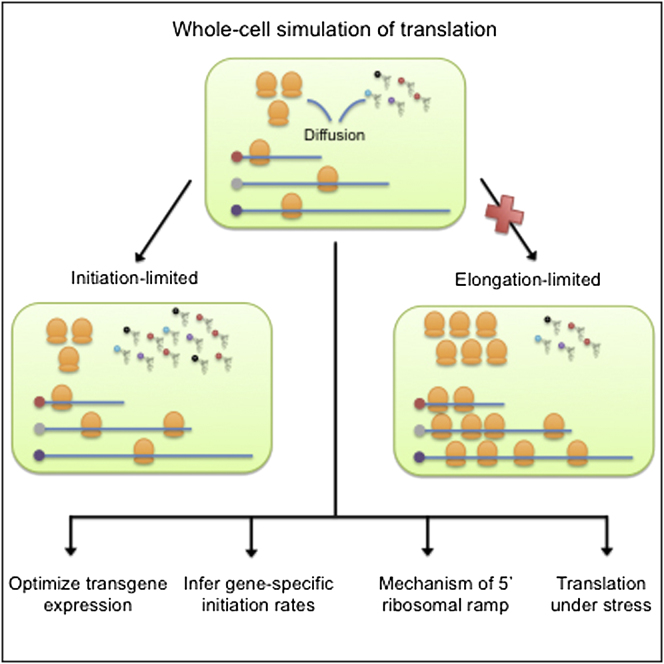
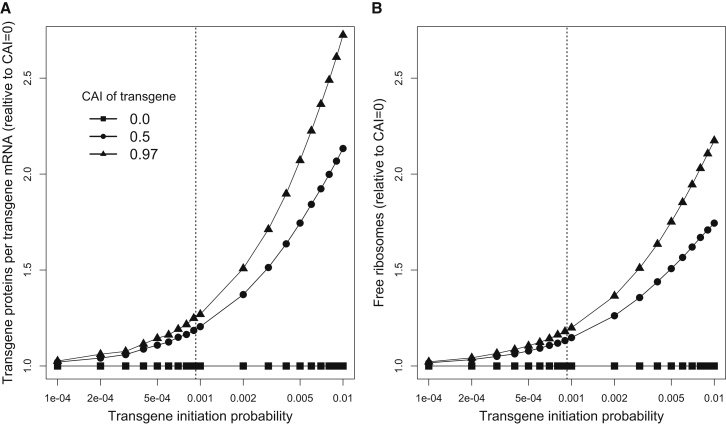
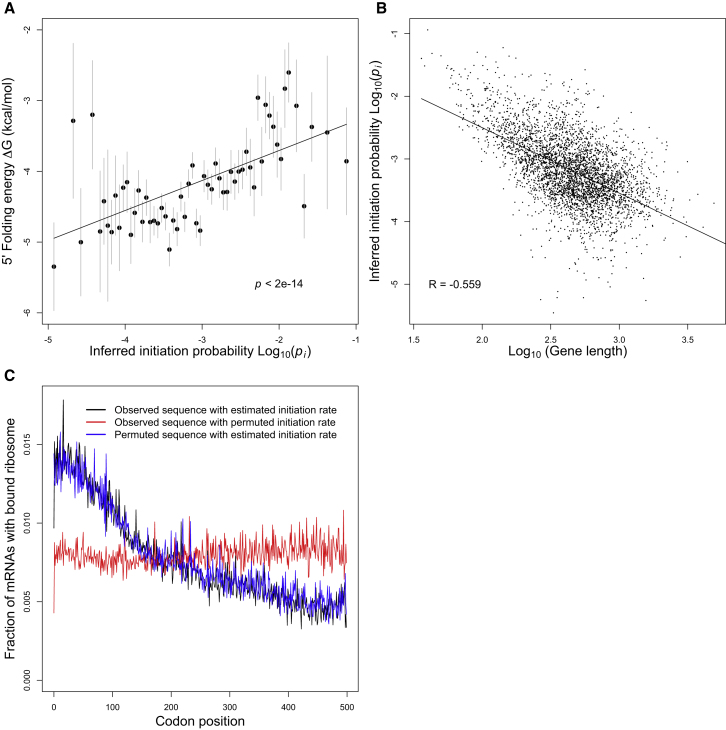
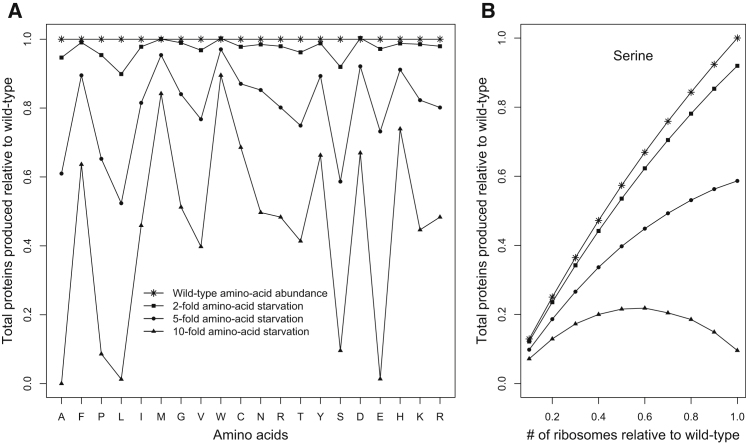
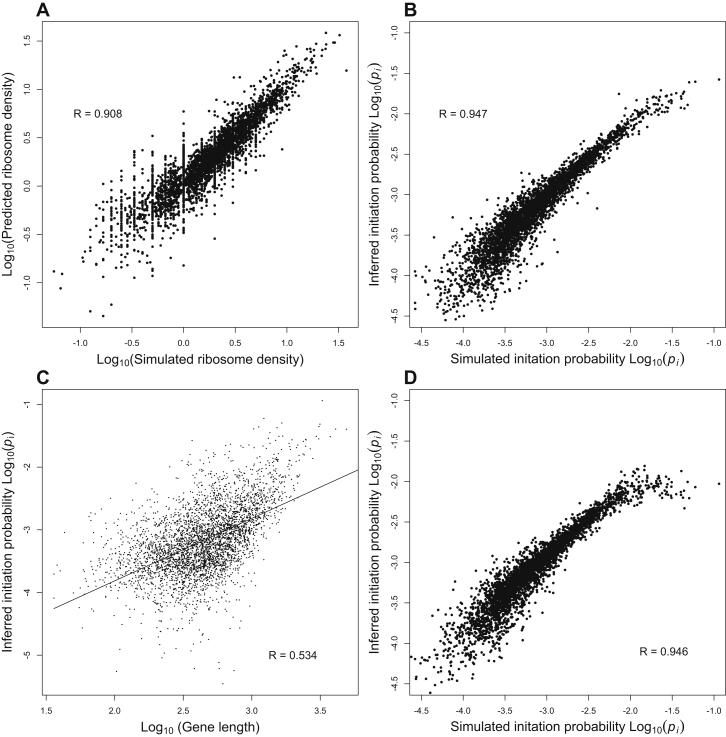
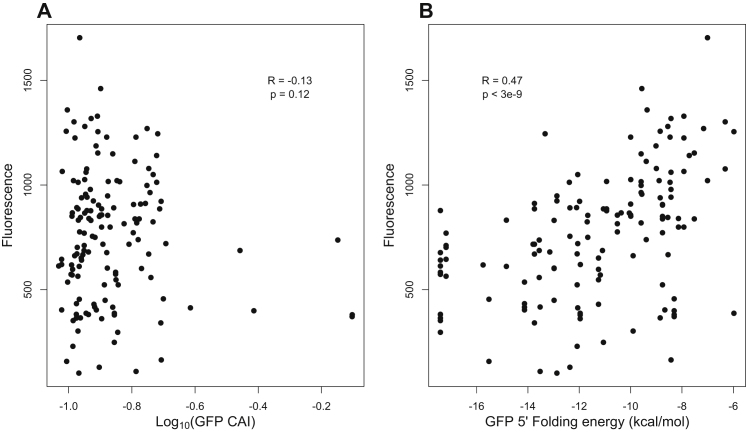
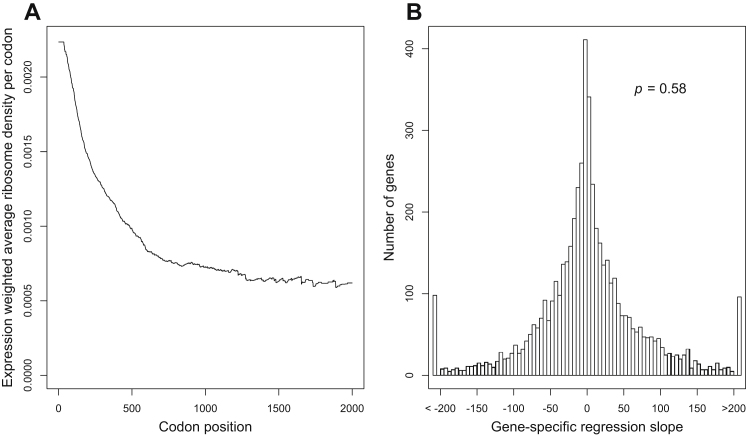
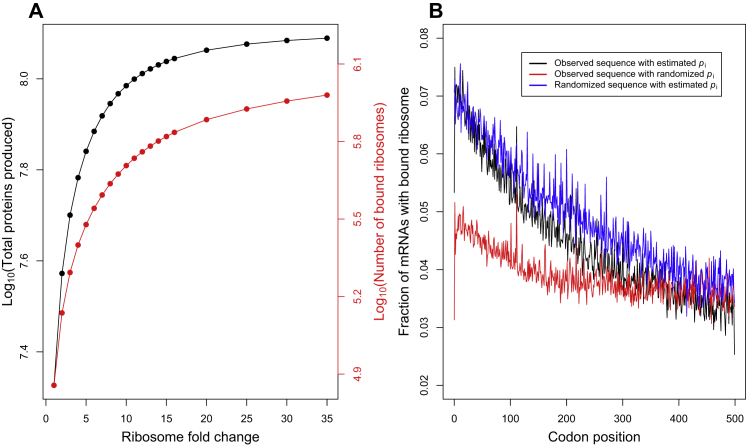
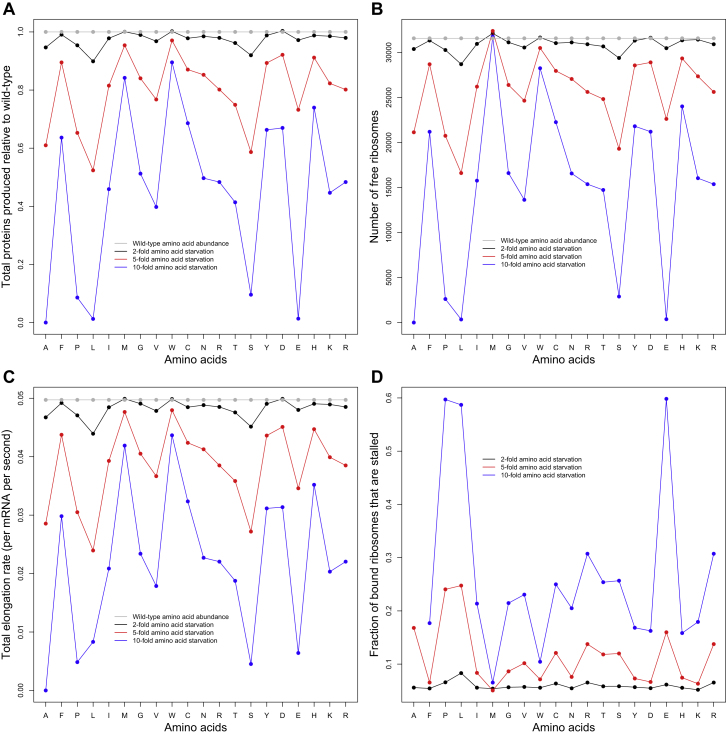
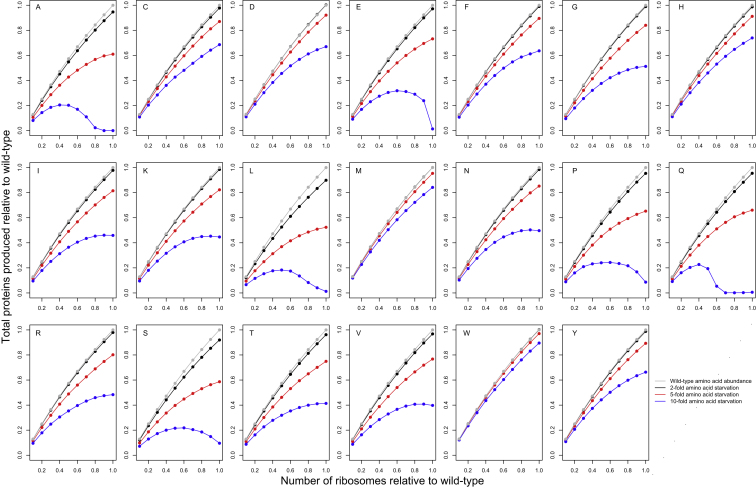
Deep sequencing now provides detailed snapshots of ribosome occupancy on mRNAs. We leverage these data to parameterize a computational model of translation, keeping track of every ribosome, tRNA, and mRNA molecule in a yeast cell. We determine the parameter regimes in which fast initiation or high codon bias in a transgene increases protein yield and infer the initiation rates of endogenous Saccharomyces cerevisiae genes, which vary by several orders of magnitude and correlate with 5' mRNA folding energies. Our model recapitulates the previously reported 5'-to-3' ramp of decreasing ribosome densities, although our analysis shows that this ramp is caused by rapid initiation of short genes rather than slow codons at the start of transcripts. We conclude that protein production in healthy yeast cells is typically limited by the availability of free ribosomes, whereas protein production under periods of stress can sometimes be rescued by reducing initiation or elongation rates.
Overview
The claims and statistics of this paper haven’t been checked yet.
Run the check — free, no account needed. It reads the open-access text and checks the sources it cites.
Integrity signals
Registry
Cites
Statistics
Figures
Verification
Claims the paper makes
The claims and statistics of this paper haven’t been checked yet.
Run the check — free, no account needed. It reads the open-access text and checks the sources it cites.
Claims other papers make about this one
Each is checked against this paper’s own text: does it say what the citing paper says it does?
The source backs part of the claim, not all of it — or backs it for a different population, condition or comparison.
In the citing paper
“Some studies have shown that protein expression level drops if the 5′-end leader region has more secondary structure5,50–53.”
From Algorithm for optimized mRNA design improves stability and immunogenicity (2023) · cites this paper as [52]
Experimental — accuracy not yet measuredThe cited source says what the claim attributes to it.
In the citing paper
“Most surprising, in contrast to previous reports47–49, we found 5’ UTRs that are highly structured, such as the dengue virus (DEN2), can support efficient translation.”
From Combinatorial optimization of mRNA structure, stability, and translation for RNA-based therapeutics (2022) · cites this paper as [49]
Self-check
Percentages, sums and reported differences re-computed from the paper’s own numbers.
The self-check needs the paper’s full text.
Citations
Cites
Exact stochastic simulation of coupled chemical reactions
Gillespie, D. T. (1977) · The Journal of Physical Chemistry · doi:10.1021/j100540a008 · Cited by 10,215
Sharp, P. M., & Li, W.-H. (1987) · Nucleic Acids Research · doi:10.1093/nar/15.3.1281 · Cited by 3,992
Genome-Wide Analysis in Vivo of Translation with Nucleotide Resolution Using Ribosome Profiling
Ingolia, N. T., Ghaemmaghami, S., Newman, J. R. S., & Weissman, J. S. (2009) · Science · doi:10.1126/science.1168978 · Cited by 3,853
The mechanism of eukaryotic translation initiation and principles of its regulation
Jackson, R. J., Hellen, C. U. T., & Pestova, T. V. (2010) · Nature Reviews Molecular Cell Biology · doi:10.1038/nrm2838 · Cited by 2,759
A "Silent" Polymorphism in the MDR 1 Gene Changes Substrate Specificity
Kimchi-Sarfaty, C., Oh, J. M., Kim, I.-W., Sauna, Z. E., Calcagno, A. M., Ambudkar, S. V., & Gottesman, M. M. (2007) · Science · doi:10.1126/science.1135308 · Cited by 2,416
Fast folding and comparison of RNA secondary structures
Hofacker, I. L., Fontana, W., Stadler, P. F., Bonhoeffer, S., Tacker, M., & Schuster, P. M. (1994) · Monatshefte für Chemie - Chemical Monthly · doi:10.1007/bf00818163 · Cited by 2,314
The economics of ribosome biosynthesis in yeast
Warner, J. R. (1999) · Trends in Biochemical Sciences · doi:10.1016/s0968-0004(99)01460-7 · Cited by 1,933
The UCSC Genome Browser Database
Karolchik, D. (2003) · Nucleic Acids Research · doi:10.1093/nar/gkg129 · Cited by 1,890
Saccharomyces Genome Database: the genomics resource of budding yeast
Cherry, J., Hong, E., Amundsen, C., Balakrishnan, R., Binkley, G., Chan, E. T., Christie, K., Costanzo, M., Dwight, S., Engel, S., et al. (2011) · Nucleic Acids Res. · doi:10.1093/nar/gkr1029 · Cited by 1,886
Automated design of synthetic ribosome binding sites to control protein expression
Salis, H. M., Mirsky, E. A., & Voigt, C. A. (2009) · Nature Biotechnology · doi:10.1038/nbt.1568 · Cited by 1,844
Research works printed but not linked: 1
- Tuller, 2010, An evolutionarily conserved mechanism for controlling the efficiency of protein translation, Cell, 141, 344, 10.1016/j.cell.2010.03.031 · DOI · Paper page
Cited by
Sorted by citations
Items 201–300 of 463
Properties and determinants of codon decoding time distributions
Dana, A., & Tuller, T. (2014) · BMC Genomics · doi:10.1186/1471-2164-15-s6-s13 · Cited by 22
“, traffic jams at the beginning of the ORF [40,41], length of the peptide inside the exit tunnel of the ribosome) 3) we cannot exclude the possibility that the resulting signal is at least partially due to various experimental biases (e.”
BackgroundGorgoni, B., Ciandrini, L., McFarland, M. R., Romano, M. C., & Stansfield, I. (2016) · Nucleic Acids Research · doi:10.1093/nar/gkw630 · Cited by 21
Canale, A. S., Venev, S. V., Whitfield, T. W., Caffrey, D. R., Marasco, W. A., Schiffer, C. A., Kowalik, T. F., Jensen, J. D., Finberg, R. W., Zeldovich, K. B., et al. (2018) · Journal of Molecular Biology · doi:10.1016/j.jmb.2018.02.009 · Cited by 26
Schwirz, J., Yan, Y., Franta, Z., & Schetelig, M. F. (2020) · Insect Biochemistry and Molecular Biology · doi:10.1016/j.ibmb.2020.103324 · Cited by 23
Macroevolutionary divergence of gene expression driven by selection on protein abundance
Cope, A. L., Schraiber, J. G., & Pennell, M. W. (2025) · Science · doi:10.1126/science.ads2658 · Cited by 20
Ribosome Profiling of Synechocystis Reveals Altered Ribosome Allocation at Carbon Starvation
Karlsen, J., Asplund‐Samuelsson, J., Thomas, Q. A., Jahn, M., & Hudson, E. P. (2018) · mSystems · doi:10.1128/msystems.00126-18 · Cited by 23
Current limitations in predicting mRNA translation with deep learning models
Schlusser, N., González, A., Pandey, M., & Zavolan, M. (2024) · Genome Biology · doi:10.1186/s13059-024-03369-6 · Cited by 21
“Initiation is the limiting step of translation [2, 6, 7], modulated by a variety of regulatory elements in the 5’UTRs [6, 31], from uORFs to internal ribosome entry sites [32–34].”
BackgroundPoblete‐Castro, I., Aravena-Carrasco, C., Orellana‐Saez, M., Pacheco, N., Cabrera, A., & Acuña, J. M. B. (2020) · Frontiers in Bioengineering and Biotechnology · doi:10.3389/fbioe.2020.00161 · Cited by 22
mRNA Translation Is Dynamically Regulated to Instruct Stem Cell Fate
Wang, R., & Amoyel, M. (2022) · Frontiers in Molecular Biosciences · doi:10.3389/fmolb.2022.863885 · Cited by 23
Chowdhury, N. B., Alsiyabi, A., & Saha, R. (2022) · Microbiology Spectrum · doi:10.1128/spectrum.01463-22 · Cited by 22
“In terms of including tRNA charging reactions in the ME model (74), initiation was the rate-limiting step in the translation reaction rather than the elongation process.”
BackgroundScarpin, M. R., Simmons, C. H., & Brunkard, J. O. (2022) · Journal of Experimental Botany · doi:10.1093/jxb/erac267 · Cited by 23
Ribosome flow model with extended objects
Zarai, Y., Michael Margaliot, A., & Tuller, T. (2017) · Journal of The Royal Society Interface · doi:10.1098/rsif.2017.0128 · Cited by 22
“, [10], [55], [54], [7], [47], [12], [40], [69]).”
Zheng, F., Liu, J., Basit, A., Miao, T., & Jiang, W. Z. (2018) · Frontiers in Microbiology · doi:10.3389/fmicb.2018.03016 · Cited by 22
Iwasaki, S., & Ingolia, N. T. (2016) · Science · doi:10.1126/science.aag1039 · Cited by 21
Promoter architecture determines cotranslational regulation of mRNAPreprint
Espinar, L., Schikora-Tamarit, M. À., Domingo, J., & Carey, L. B. (2018) · Genome Research · doi:10.1101/gr.230458.117 · Cited by 22
“…et al. 2008) and the way this regulatory information is encoded in enhancers, promoters, 5 ′ untranslated regions (UTRs), and other regulatory regions throughout the gene sequence has been well characterized (Kudla et al. 2009; Dvir et al. 2013; Keren et al. 2013; Shalem et al. 2013, 2015).”
Kisly, I., Rèmme, J., & Tamm, T. (2018) · Nucleic Acids Research · doi:10.1093/nar/gky1083 · Cited by 20
Zafirov, D., Giovinazzo, N., Lecampion, C., Field, B., Ducassou, J. N., Couté, Y., Browning, K. S., Robaglia, C., & Gallois, J. (2023) · PLoS Pathogens · doi:10.1371/journal.ppat.1011417 · Cited by 20
“Translation, the decoding of a messenger RNA (mRNA) into a protein product, is a fundamental process in any cell that comes at a high energetic price and is therefore subjected to tight regulatory mechanisms [1,2].”
BackgroundOptimal Translation Along a Circular mRNA
Zarai, Y., Ovseevich, A. I., & Michael Margaliot, A. (2017) · Scientific Reports · doi:10.1038/s41598-017-09602-6 · Cited by 20
“Note that by (6) we can always assume, without loss of generality, that b = 1.”
BackgroundŻydowicz-Machtel, P., Świątkowska, A., Popenda, Ł., Gorska, A. A., & Ciesiołka, J. (2018) · Scientific Reports · doi:10.1038/s41598-018-20010-2 · Cited by 22
Witte, F., Ruiz‐Orera, J., Mattioli, C. C., Blachut, S., Adami, E., Schulz, J. F., Schneider-Lunitz, V., Hummel, O., Patone, G., Mücke, M. B., et al. (2021) · Genome biology · doi:10.1186/s13059-021-02397-w · Cited by 16
Wang, C., Zhang, W., Tian, R., Zhang, J., Zhang, L., Deng, Z., Lv, X., Li, J., Liu, L., Du, G., et al. (2022) · Biotechnology Journal · doi:10.1002/biot.202100655 · Cited by 19
“[1,2] 8] Successful examples of NCS engineering have been shown for fine-tuning the gene expression of genetic circuit elements and enhancing biopro-ductionbyregulatingkeymetabolicpathwaygenesin Bacillussubtilis , [6] Escherichia coli , [9,10] and cyanobacteria.”
BackgroundFMRP-dependent production of large dosage-sensitive proteins is highly conserved
Flanagan, K., Baradaran‐Heravi, A., Yin, Q., Duc, K. D., Spradling, A. C., & Greenblatt, E. J. (2022) · Genetics · doi:10.1093/genetics/iyac094 · Cited by 19
Castillo, K., Wu, C., Ding, Z., Lopez-Garcia, O. K., Rowlinson, E., Sachs, M. S., & Bell‐Pedersen, D. (2022) · Cell Reports · doi:10.1016/j.celrep.2022.111879 · Cited by 19
Translation elongation as a rate-limiting step of protein production
Lyons, E. F., Devanneaux, L., Muller, R. Y., Freitas, A. V., Meacham, Z. A., McSharry, M. V., Trinh, V. N., Rogers, A. J., Lobel, J. H., Ingolia, N. T., et al. (2026) · Cell Systems · doi:10.1016/j.cels.2025.101490 · Cited by 19
Prediction of ribosome footprint profile shapes from transcript sequences
Liu, T., & Song, Y. S. (2016) · Bioinformatics · doi:10.1093/bioinformatics/btw253 · Cited by 20
Cenik, C., Chua, H. N., Singh, G., Akef, A., Snyder, M. P., Palazzo, A. F., Moore, M. J., & Roth, F. P. (2016) · RNA · doi:10.1261/rna.059105.116 · Cited by 18
“Although some aspects of this remain controversial (Charneski and Hurst 2013; Shah et al. 2013; Zinshteyn and Gilbert 2013; Gerashchenko and Gladyshev 2015), it is clear that decoding of codons by tRNAs with different abundances can affect the translation rate under conditions of cellular stress…”
Ribosomes: An Exciting Avenue in Stem Cell Research
Han, Z., Zhang, Q., Zhu, Y., Chen, J., & Li, W. (2020) · Stem Cells International · doi:10.1155/2020/8863539 · Cited by 19
“Initiation is an important rate-limiting step in translation [15].”
BackgroundRibosome exit tunnel electrostatics
Joiret, M., Kerff, F., Rapino, F. A., Close, P., & Geris, L. (2022) · Physical review. E · doi:10.1103/physreve.105.014409 · Cited by 19
Analysis of Translation Elongation Dynamics in the Context of an Escherichia coli Cell
Vieira, J. R. P., Racle, J., & Vassily Hatzimanikatis, A. (2016) · Biophysical Journal · doi:10.1016/j.bpj.2016.04.004 · Cited by 19
The suppressive cap-binding complex factor 4EIP is required for normal differentiation
Terrão, M. C., Marucha, K. K., Mugo, E., Droll, D., Minia, I., Egler, F., Braun, J., & CLAYTON, C. E. (2018) · Nucleic Acids Research · doi:10.1093/nar/gky733 · Cited by 19
Depletion of Shine-Dalgarno Sequences Within Bacterial Coding Regions Is Expression Dependent
Yang, C., Hockenberry, A. J., Jewett, M. C., & Amaral, L. A. N. (2016) · G3 Genes Genomes Genetics · doi:10.1534/g3.116.032227 · Cited by 17
Rodríguez, A., Diehl, J. D., Wright, G., Bonar, C. D., Lundgren, T. J., Moss, M. J., Li, J., Milenković, T., Huber, P. W., Champion, M. M., et al. (2024) · Proceedings of the National Academy of Sciences · doi:10.1073/pnas.2405510121 · Cited by 17
“Similarly, others have shown that intragenic 5 ′ codon substitutions typically result in larger effects on translation initiation than cotranslational folding ( 8 , 9 , 52 ).”
Duc, K. D., Saleem, Z. H., & Song, Y. S. (2018) · Physical review. E · doi:10.1103/physreve.97.012106 · Cited by 18
Protein Abundance Prediction Through Machine Learning Methods
Ferreira, M. A. D. M., Ventorim, R. Z., de Almeida, E. L. M., Silveira, S. D. A., & da Silveira, W. B. (2021) · Journal of Molecular Biology · doi:10.1016/j.jmb.2021.167267 · Cited by 20
Li, F., Fang, J., Yu, Y., Hao, S., Zou, Q., Zeng, Q., & Yang, X. (2023) · Nature Communications · doi:10.1038/s41467-023-36290-w · Cited by 18
Riboformer: a deep learning framework for predicting context-dependent translation dynamics
Shao, B., Yan, J., Zhang, J., Liu, L., Chen, Y., & Buskirk, A. R. (2024) · Nature Communications · doi:10.1038/s41467-024-46241-8 · Cited by 17
“Whole-cellmodelsbasedonthesedataprovideaprecise depiction of the physical process of translation 17,18 .”
BackgroundControlling translation elongation efficiency: tRNA regulation of ribosome flux on the mRNA
Gorgoni, B., Marshall, E., McFarland, M. R., Romano, M. C., & Stansfield, I. (2014) · Biochemical Society Transactions · doi:10.1042/bst20130132 · Cited by 17
Benet, M., Miguel, A., Carrasco, F., Li, T., Planells, J., Alepuz, P. M., Tordera, V., & Pérez-Ortín, J. E. (2017) · Biochimica et Biophysica Acta (BBA) - Gene Regulatory Mechanisms · doi:10.1016/j.bbagrm.2017.04.003 · Cited by 15
Polysomes and mRNA control the biophysical properties of the eukaryotic cytoplasm
Gade, V. R., Heinrich, S., Paloni, M., Gómez-García, P. A., Dzanko, A., Oswald, A., Marchand, D., Khawaja, S., Barducci, A., & Weis, K. (2025) · Cell Reports · doi:10.1016/j.celrep.2025.116204 · Cited by 16
To New Beginnings: Riboproteogenomics Discovery of N-Terminal Proteoforms in Arabidopsis Thaliana
Willems, P., Ndah, E., Jonckheere, V., Breusegem, F. V., & Damme, P. V. (2022) · Frontiers in Plant Science · doi:10.3389/fpls.2021.778804 · Cited by 14
“Of these phases, translation initiation forms a major rate-limiting step that is strongly regulated in eukaryotes (Sonenberg and Hinnebusch, 2009; Shah et al., 2013).”
BackgroundeIF4A1 enhances LARP1-mediated translational repression during mTORC1 inhibition
Shichino, Y., Yamaguchi, T., Kashiwagi, K., Mito, M., Takahashi, M., Ito, T., Ingolia, N. T., Kuba, K., & Iwasaki, S. (2024) · Nature Structural & Molecular Biology · doi:10.1038/s41594-024-01321-7 · Cited by 17
“Translation initiation—a rate-limiting step of protein synthesis 1,2 —is precisely controlled to regulate cellular homeostasis and stress responses.”
The interplay between translational efficiency, poly(A) tails, microRNAs, and neuronal activation
Eisen, T. J., Li, J. J., & Bartel, D. P. (2022) · RNA · doi:10.1261/rna.079046.121 · Cited by 16
Loss of FGFR4 promotes the malignant phenotype of PDAC
D’Agosto, S. L., Pezzini, F., Veghini, L., Delfino, P., Fiorini, C., Tane, G. D. T., Curatolo, A. D., Vicentini, C., Ferrari, G., Pasini, D., et al. (2022) · Oncogene · doi:10.1038/s41388-022-02432-5 · Cited by 15
Quantitative Modeling of Protein Synthesis Using Ribosome Profiling Data
Yadav, V., Irshad, I. U., Kumar, H., & Sharma, A. K. (2021) · Frontiers in Molecular Biosciences · doi:10.3389/fmolb.2021.688700 · Cited by 15
“Analysis of these rate parameters and their use in protein synthesis simulations give signi fi cant insight into the translational regulation of an individual gene (Shah et al., 2013; Lyu et al., 2020).”
BackgroundGuzikowski, A. R., Harvey, A. T., Zhang, J., Zhu, S., Begovich, K., Cohn, M. H., Wilhelm, J. E., & Zid, B. M. (2022) · RNA Biology · doi:10.1080/15476286.2022.2065784 · Cited by 15
“negative ramp of distribution reported to be characteristic of well-translated genes [41].”
BackgroundAmaral, F. E., Parker, D., Randis, T. M., Kulkarni, R., Prince, A. S., Shirasu‐Hiza, M., & Ratner, A. J. (2015) · PLoS ONE · doi:10.1371/journal.pone.0119823 · Cited by 14
Rauscher, R., Eggers, C., Dimitrova-Paternoga, L., Shankar, V. G., Rosina, A., Cristodero, M., Paternoga, H., Wilson, D. N., Leidel, S. A., & Polacek, N. (2024) · Nucleic Acids Research · doi:10.1093/nar/gkae067 · Cited by 13
“Translation elongation is a diffusion-limited process with cognate tRNA entering the A-site as the rate-limiting step ( 43 ,44 ).”
Relevance of Translation Initiation in Diffuse Glioma Biology and its Therapeutic Potential
Digregorio, M., Lombard, A., Lumapat, P. N., Felix, S., Rogister, B., & Coppieters, N. (2019) · Cells · doi:10.3390/cells8121542 · Cited by 15
“In this review, we will focus on translation initiation in gliomas, as this is the most critical and rate-limiting step of protein synthesis [12].”
MethodProbabilistic Boolean Network Modelling and Analysis Framework for mRNA Translation
Zhao, Y., & Krishnan, J. (2015) · IEEE Transactions on Computational Biology and Bioinformatics · doi:10.1109/tcbb.2015.2478477 · Cited by 14
Power series method for solving TASEP-based models of mRNA translation
Scott, S., & Szavits-Nossan, J. (2019) · Physical Biology · doi:10.1088/1478-3975/ab57a0 · Cited by 14
Near-freezing effects on the proteome of industrial yeast strains of Saccharomyces cerevisiae
Ballester‐Tomás, L., Pérez‐Torrado, R., Rodríguez‐Vargas, S., Prieto, J. A., & Rández‐Gil, F. (2016) · Journal of Biotechnology · doi:10.1016/j.jbiotec.2016.01.029 · Cited by 13
The molecular choreography of protein synthesis: translational control, regulation, and pathways
Chen, J., Choi, J., O’Leary, S. E., Prabhakar, A., Petrov, A. N., Grosely, R., Puglisi, E. V., & Puglisi, J. D. (2016) · Quarterly Reviews of Biophysics · doi:10.1017/s0033583516000056 · Cited by 16
“Some progress has been made in this regard, particularly with the application of systems biology to in vivo translation efficiency (Firczuk et al. 2013; Shah et al. 2013).”
BackgroundBinding of a viral IRES to the 40S subunit occurs in two successive steps mediated by eS25
Walters, B., Axhemi, A. A., Jankowsky, E., & Thompson, S. R. (2020) · Nucleic Acids Research · doi:10.1093/nar/gkaa547 · Cited by 13
“01 min−1) on the time scale of initiation, which is thought to take about 60 s, making it essentially irreversible (32).”
Fan, X., Bao, T., Yi, H., Zhang, Z., Zhang, K., Liu, X., Lin, X., Zhang, Z., & Feng, Z. (2021) · Frontiers in Microbiology · doi:10.3389/fmicb.2021.781454 · Cited by 14
Comprehensive quantitative modeling of translation efficiency in a genome‐reduced bacterium
Weber, M. L., Sogues, A., Yus, E., Burgos, R., Gallo, C., Martínez, S., Lluch‐Senar, M., & Serrano, L. G. (2023) · Molecular Systems Biology · doi:10.15252/msb.202211301 · Cited by 12
Sharma, A. K., & O’Brien, E. P. (2017) · The Journal of Physical Chemistry B · doi:10.1021/acs.jpcb.7b01700 · Cited by 12
ROSE: A Deep Learning Based Framework for Predicting Ribosome StallingPreprint
Zhang, S., Hu, H., Zhou, J., He, X., Jiang, T., & Zeng, J. (2018) · SSRN Electronic Journal · doi:10.1101/067108 · Cited by 13
“Previous studies [4, 8, 10, 19, 20, 22, 25–27, 64, 65] have provided various mechanistic insights into translation elongation dynamics based on statistical analysis.”
ResultControllability Analysis and Control Synthesis for the Ribosome Flow Model
Zarai, Y., Michael Margaliot, A., Sontag, E. D., & Tuller, T. (2017) · IEEE Transactions on Computational Biology and Bioinformatics · doi:10.1109/tcbb.2017.2707420 · Cited by 14
“, [7], [9], [12], [46], [54], [62], [64]).”
Fine-Tuning the Expression of Duplicate Genes by Translational Regulation in Arabidopsis and Maize
Wang, S., & Chen, Y. F. (2019) · Frontiers in Plant Science · doi:10.3389/fpls.2019.00534 · Cited by 12
Kuwahara, H., Arold, S. T., & Gao, X. (2015) · Integrative Biology · doi:10.1039/c5ib00107b · Cited by 13
Kim, D. J., Kim, J., Lee, D. H., Lee, J., & Woo, H. M. (2022) · ACS Synthetic Biology · doi:10.1021/acssynbio.2c00202 · Cited by 11
Hu, X.-P., Yang, Y., & Ma, B. (2015) · Scientific Reports · doi:10.1038/srep11113 · Cited by 12
Structural insights into the binding of bS1 to the ribosome
D’Urso, G., Chat, S., Gillet, R., & Giudice, E. (2023) · Nucleic Acids Research · doi:10.1093/nar/gkad126 · Cited by 11
“The initiation of this translation process is the rate-limiting step for protein synthesis (1).”
BackgroundBroad anti-pathogen potential of DEAD box RNA helicase eIF4A-targeting rocaglates
Obermann, W., Azri, M. F. D., Konopka, L., Schmidt, N., Magari, F., Sherman, J., Silva, L. M. R., Hermosilla, C. R., Ludewig, A. H., Houhou, H., et al. (2023) · Scientific Reports · doi:10.1038/s41598-023-35765-6 · Cited by 13
DrosophilaX-Linked Genes Have Lower Translation Rates than Autosomal Genes
Zhang, Z., & Presgraves, D. C. (2015) · Molecular Biology and Evolution · doi:10.1093/molbev/msv227 · Cited by 10
Developing anti-neoplastic biotherapeutics against eIF4F
Steinberger, J., Chu, J., Maïga, R. I., Sleiman, K., & Pelletier, J. (2016) · Cellular and Molecular Life Sciences · doi:10.1007/s00018-016-2430-8 · Cited by 11
Maximizing Protein Translation Rate in the Ribosome Flow Model: The Homogeneous Case
Zarai, Y., Michael Margaliot, A., & Tuller, T. (2014) · IEEE Transactions on Computational Biology and Bioinformatics · doi:10.1109/tcbb.2014.2330621 · Cited by 11
“nsions (n+1)×(n+1), whereas that of the HRFM is 2×2. A more general question is related to the concavity of other models of translation including various versions of the TASEP model [34], [50], [48], [44], [8], [38]. More generally, the asymmetric simple exclusion process (ASEP) has become the “default stochastic mode…”
MethodDynamics of ribosomes in mRNA translation under steady- and nonsteady-state conditions
Szavits-Nossan, J., & Evans, M. R. (2020) · Physical review. E · doi:10.1103/physreve.101.062404 · Cited by 11
Ahmed, N., Friedrich, U. A., Sormanni, P., Ciryam, P., Altman, N., Bukau, B., Krämer, G., & O’Brien, E. P. (2020) · Journal of Molecular Biology · doi:10.1016/j.jmb.2020.10.030 · Cited by 11
Comparative survey of the relative impact of mRNA features on local ribosome profiling read density
O’Connor, P. B. F., Andreev, D. E., & Baranov, P. V. (2016) · RePEc: Research Papers in Economics · Cited by 11
Eukaryotic Elongation Factor 3 Protects Saccharomyces cerevisiae Yeast from Oxidative Stress
Gościńska, K., Ghahe, S. S., Domogała, S., & Topf, U. (2020) · Genes · doi:10.3390/genes11121432 · Cited by 12
“The initiation of protein synthesis is a common rate-limiting step and is thus tightly regulated [6].”
BackgroundVillada, J. C., Brustolini, O. J. B., & da Silveira, W. B. (2017) · DNA Research · doi:10.1093/dnares/dsx014 · Cited by 11
Sharma, A. K., Venezian, J., Shiber, A., Kramer, G., Bukau, B., & O’Brien, E. P. (2021) · Proceedings of the National Academy of Sciences · doi:10.1073/pnas.2026362118 · Cited by 10
Clearing the slate: RNA turnover to enable cell state switching?
Westbrook, E. R., Ford, H. Z., Antolović, V., & Chubb, J. R. (2023) · Development · doi:10.1242/dev.202084 · Cited by 7
Hybrid agent-based model for quantitative in-silico cell-free protein synthesis
Semenchenko, A., Oliveira, G., & Atman, A. P. F. (2016) · Biosystems · doi:10.1016/j.biosystems.2016.07.008 · Cited by 10
“The mRNA translation has been the focus of the research effort using a variety of experimental techniques along the last decades [1, 2, 3, 4, 5, 6] and its complexity continues to challenge the scientific community [7, 8, 9].”
C‐Terminal Domain Controls Protein Quality and Secretion of Spider Silk in Tobacco Cells
Thagun, C., Suzuki, T., Kodama, Y., & Numata, K. (2023) · Advanced Biology · doi:10.1002/adbi.202300011 · Cited by 10
Depletion of cap-binding protein eIF4E dysregulates amino acid metabolic gene expression
Diamond, P. D., McGlincy, N. J., & Ingolia, N. T. (2024) · Molecular Cell · doi:10.1016/j.molcel.2024.05.008 · Cited by 11
The impact of RNA structure on coding sequence evolution in both bacteria and eukaryotes
Gu, W., Li, M., Xu, Y., Wang, T., Ko, J., & Zhou, T. (2014) · BMC Evolutionary Biology · doi:10.1186/1471-2148-14-87 · Cited by 12
“Unlike translation initiation, codon usage and corresponding tRNA abundance, rather than RNA secondary structure, are the more important factors that regulates translation elongation and the final output of gene expression [61].”
Toward a next-generation atlas of RNA secondary structure
Bai, Y., Dai, X., Harrison, A., Johnston, C., & Chen, M. (2015) · Briefings in Bioinformatics · doi:10.1093/bib/bbv026 · Cited by 10
Delaveau, T., Davoine, D., Jolly, A., Vallot, A., Rouvière, J. O., Gerber, A., Brochet, S., Plessis, M., Roquigny, R., Merhej, J., et al. (2016) · Nucleic Acids Research · doi:10.1093/nar/gkw732 · Cited by 12
“This result indicates that Tma108 function is not related to translation initiation, the rate-determining step of translation (53).”
BackgroundPinetree: a step-wise gene expression simulator with codon-specific translation rates
Jack, B. R., & Wilke, C. O. (2019) · Bioinformatics · doi:10.1093/bioinformatics/btz203 · Cited by 10
Charting the dynamics of translation
Chu, D., Thompson, J., & von der Haar, T. (2014) · Biosystems · doi:10.1016/j.biosystems.2014.02.005 · Cited by 11
“Common measures of codon adaptedness such as the CAI (Sharp and Li, 1987) or tAI (dos Reis et al., 2003) are often used as proxies for decoding speed and are able to predict various transcriptomic and proteomic key measures, including expression levels of both mRNA and protein (Gingold and Pilpel, 2011).”
Marek, A., & Tomala, K. (2018) · Genome Biology and Evolution · doi:10.1093/gbe/evy225 · Cited by 10
“One possible factor could be the stability of mRNA (Park et al. 2013), while another the rate of translation initiation and elongation (Kudla et al. 2009; Shah et al. 2013; Yang et al. 2014).”
BackgroundArabidopsis uORF-containing mRNAs behave differently from NMD targetsPreprint
Wu, H.-Y. L., & Hsu, P. Y. (2021) · bioRxiv (Cold Spring Harbor Laboratory) · doi:10.1101/2021.09.16.460672 · Cited by 9
Sun, Y., Shao, X., Zhang, Y., Han, L., Huang, J., Xie, Y., Liu, J., & Deng, X. (2022) · Cell & Bioscience · doi:10.1186/s13578-022-00884-6 · Cited by 9
Sejour, R., Leatherwood, J., Yurovsky, A., & Futcher, B. (2023) · eLife · doi:10.7554/elife.89656 · Cited by 12
“A different idea was proposed by Shah et al., 2013 in a theory paper, which suggested this apparent slow translation could be an informatic artifact caused by rapid translational initiation (and, therefore, high ribosome density) on short genes.”
BackgroundModelling the effect of ribosome mobility on the rate of protein synthesis
Dauloudet, O., Neri, I., Walter, J., Dorignac, J., Geniet, F., & Parmeggiani, A. (2021) · The European Physical Journal E · doi:10.1140/epje/s10189-021-00019-8 · Cited by 9
Vectorial channeling as a mechanism for translational control by functional prions and condensates
Gu, X., Schafer, N. P., & Wolynes, P. G. (2021) · Proceedings of the National Academy of Sciences · doi:10.1073/pnas.2115904118 · Cited by 9
Optimization of ribosome utilization in Saccharomyces cerevisiae.
Mahima, M., & Sharma, A. K. (2023) · PubMed Central · doi:10.1093/pnasnexus/pgad074 · Cited by 9
“Since it is the translation initiation and codon translation rate that control the overall kinetics of protein synthesis (42, 23, 35), we hypothesize that RUE is being regulated by the non-random features of genetic material that can influence those rate parameters.”
Kershaw, C. J., Nelson, M. G., Castelli, L. M., Jennings, M. D., Lui, J., Talavera, D., Grant, C. M., Pavitt, G. D., Hubbard, S. J., & Ashe, M. (2023) · Journal of Biological Chemistry · doi:10.1016/j.jbc.2023.105195 · Cited by 9
“Interestingly, the time taken for initiation events in vivo is estimated to vary by around two orders of magnitude from the fastest mRNAs initiating every few seconds to those taking over 200 s with a median of 40 s (46).”
Decoding stoichiometric protein synthesis in E. coli through translation rate parameters
Irshad, I. U., & Sharma, A. K. (2023) · Biophysical Reports · doi:10.1016/j.bpr.2023.100131 · Cited by 8
“Inyeast, the process of translation initiation serves as the primary rate-limiting step in protein synthesis (25,26,32,79,80).”
BackgroundLauria, F., Tebaldi, T., Lunelli, L., Struffi, P., Gatto, P., Pugliese, A., Brigotti, M., Montanaro, L., Ciribilli, Y., Inga, A., et al. (2015) · Nucleic Acids Research · doi:10.1093/nar/gkv781 · Cited by 8
Moriya, H. (2020) · AIMS Biophysics · doi:10.3934/biophy.2020010 · Cited by 8
Sarvari, P., Ingram, D., & Stan, G.-B. V. (2021) · Biology · doi:10.3390/biology10010037 · Cited by 9
High-throughput translational profiling with riboPLATE-seq
Metz, J. B., Hornstein, N. J., Sharma, S. D., Worley, J., Gonzalez, C., & Sims, P. A. (2022) · Scientific Reports · doi:10.1038/s41598-022-09638-3 · Cited by 8
Collins-Hed, A. I., & Ardell, D. H. (2019) · Theoretical Population Biology · doi:10.1016/j.tpb.2019.03.007 · Cited by 8
Boonekamp, F. J., Dashko, S., Duiker, D., Gehrmann, T., van den Broek, M. A., den Ridder, M., Pabst, M., Robert, V., Abeel, T., Postma, E. D., et al. (2020) · ACS Synthetic Biology · doi:10.1021/acssynbio.0c00045 · Cited by 8
Abrahams, L., & Hurst, L. D. (2017) · Molecular Biology and Evolution · doi:10.1093/molbev/msx223 · Cited by 8
“First, theþ1 stop codon may abort translation immediately if the ribosome slips following initiation, preventing the synthesis of a faulty protein and allowing ultrarapid recycling of ribosomes which are often rate-limiting (Shah et al. 2013; Subramaniam et al. 2014) (translation termination).”
BackgroundLinearDesign: Efficient Algorithms for Optimized mRNA Sequence DesignPreprint
Zhang, H., Zhang, L., Li, Z., Liu, K., Liu, B., Mathews, D. H., & Huang, L. (2020) · arXiv (Cornell University) · Cited by 8
Metadata
- Authors
- Shah, P., Ding, Y., Niemczyk, M., Kudla, G., & Plotkin, J. B.
- Affiliations
- University of Pennsylvania (US)
- Wellcome Centre for Cell Biology (GB)
- Corresponding author
- Plotkin, Joshua B.
- Venue
- Cell
- Publisher
- Elsevier BV
- Published
- 2013-06
- Volume
- 153
- Issue
- 7
- Pages
- 1589-1601
- ISSN
- 0092-8674 (ISSN-L)
- PMC
- PMC3694300
- OpenAlex
- W2011503994
- Cited by
- 463
- References
- 72
- Citations by year
- 2026: 15 · 2025: 24 · 2024: 31 · 2023: 33 · 2022: 37 · 2021: 27 · 2020: 40 · 2019: 37 · 2018: 42 · 2017: 50 · 2016: 48 · 2015: 26 · 2014: 44 · 2013: 9
- FWCI
- 18.98
- Type
- journal article
- Language
- en
- Open access
- hybrid
- doi.org
- Licence
- Locations
- Cell (publishedVersion, cc-by)
- Europe PMC (PubMed Central) (publishedVersion, cc-by)
- PubMed Central (publishedVersion, cc-by)
- PubMed (publishedVersion)
- Edinburgh Research Explorer (University of Edinburgh) (submittedVersion, cc-by)
- Funders
- Burroughs Wellcome Fund
- Army Research Office (D12AP00025, W911NF-12-1-0552)
- James S. McDonnell Foundation
- David and Lucile Packard Foundation
- U.S. Department of the Interior
- Wellcome Trust (077248)
- Alfred P. Sloan Foundation (RFP-12-16)
- Topics
- Life Sciences › Biochemistry, Genetics and Molecular Biology › Molecular Biology › RNA and protein synthesis mechanisms
- Life Sciences › Biochemistry, Genetics and Molecular Biology › Molecular Biology › RNA Research and Splicing
- Life Sciences › Biochemistry, Genetics and Molecular Biology › Molecular Biology › Genomics and Chromatin Dynamics
- Keywords
- mRNA translation, ribosome occupancy, translation initiation rate, codon usage bias, free ribosomes, protein production, Saccharomyces cerevisiae, tRNA availability, stress response
- MeSH terms
- Codon, Markov Chains, Models, Genetic, Ribosomes, RNA, Messenger, RNA, Transfer, Saccharomyces cerevisiae, Protein Biosynthesis
About these checks
Registry, retraction, Cites and statistics results are computed, not judged, with one exception: a printed reference that no index lists is read once by a model before it counts as a citation error. Claims are extracted by a model and kept only when their quote appears verbatim in the text; each cited source is then checked, with a model’s help, for whether it says what the claim relies on. Those verdicts can be wrong — read the claim’s quote and the cited source before relying on one.
Statistics and arithmetic are recomputed, not judged.
Confidence bands are shown only for fields calibrated on our annotated test set. None is calibrated yet, so no band is shown.
What counts as a claim ›How we measure confidence ›How we check this ›
Are you an author, or do you see a problem with this page? Request a review
