

The DOI matches its Crossref record; 3 of the 3 references it cites were found in a registry or an index.
Nuclear Export Inhibition Enhances HLH-30/TFEB Activity, Autophagy, and Lifespan
Overview
The claims and statistics of this paper haven’t been checked yet.
Run the check — free, no account needed. It reads the open-access text and checks the sources it cites.
Integrity signals
Registry
Cites
Statistics
Figures
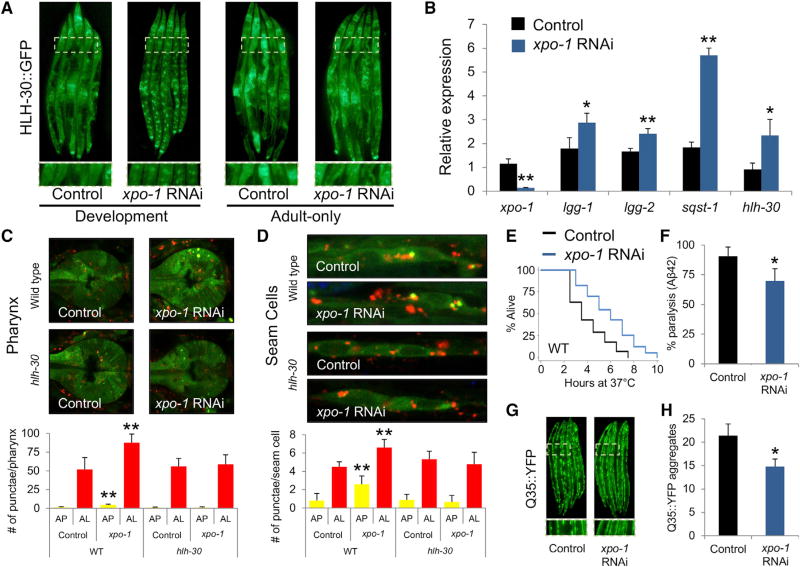
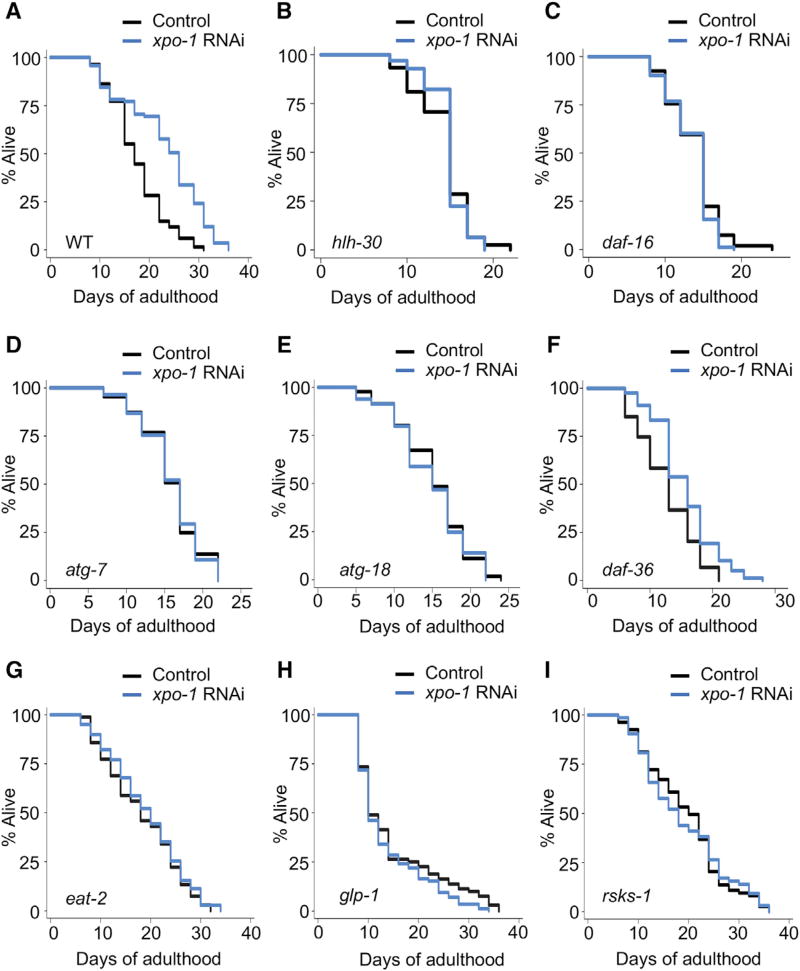
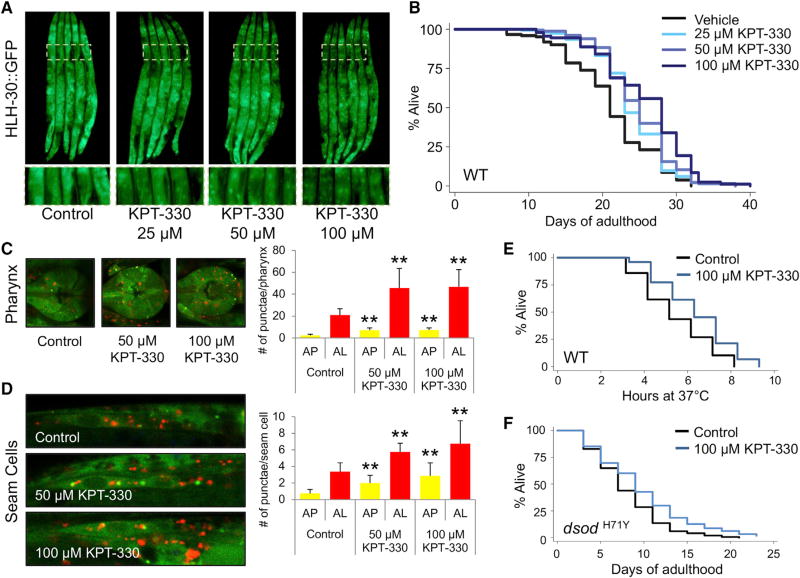
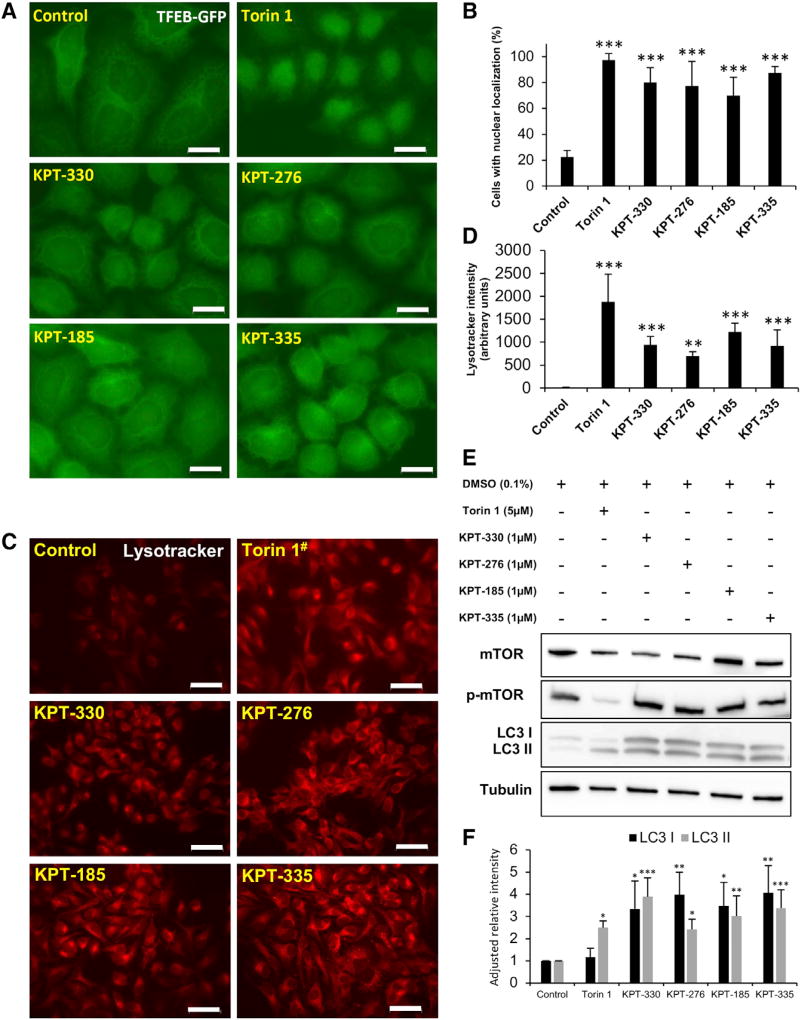
Verification
Claims the paper makes
The claims and statistics of this paper haven’t been checked yet.
Run the check — free, no account needed. It reads the open-access text and checks the sources it cites.
Claims other papers make about this one
Each is checked against this paper’s own text: does it say what the citing paper says it does?
The check wasn’t confident either way, so it gives no verdict — never disputed.
In the citing paper
“Similar to TFEB, the erythroid transcription factor GATA1 and its coregulator ZFPM1/FOG1 as well as the myeloid master regulator SPI1/PU.1 induce the transcription of multiple genes encoding autophagy components.”
From Guidelines for the use and interpretation of assays for monitoring autophagy (4th edition) 1 (2021) · cites this paper as [975]
Experimental — accuracy not yet measuredIn the citing paper
“This developmentally regulated transcriptional response is coupled to increases in autophagosome number as well as the percent of cells that contain autophagosomes [975-977].”
From Guidelines for the use and interpretation of assays for monitoring autophagy (4th edition) 1 (2021) · cites this paper as [975]
Self-check
Percentages, sums and reported differences re-computed from the paper’s own numbers.
The self-check needs the paper’s full text.
Citations
Cites
TFEB Links Autophagy to Lysosomal Biogenesis
Settembre, C., Di Malta, C., Polito, V. A., Arencibia, M. G., Vetrini, F., Erdin, S., Erdin, S. U., Huynh, T., Medina, D., Colella, P., et al. (2011) · Science · doi:10.1126/science.1204592 · Cited by 3,365
Pharmacological modulation of autophagy: therapeutic potential and persisting obstacles
Galluzzi, L., Bravo-San Pedro, J. M., Levine, B., Green, D. R., & Kroemer, G. (2017) · Nature Reviews Drug Discovery · doi:10.1038/nrd.2017.22 · Cited by 842
Autophagy and Lipid Metabolism Coordinately Modulate Life Span in Germline-less C. elegans
Lapierre, L. R., Gelino, S., Meléndez, A., & Hansen, M. (2011) · Current Biology · doi:10.1016/j.cub.2011.07.042 · Cited by 343
Self-citation
Research works printed but not linked: 39
- Benedetti, 2008, Compounds that confer thermal stress resistance and extended lifespan, Exp. Gerontol., 43, 882, 10.1016/j.exger.2008.08.049 · DOI
- Berman, 2006, Germ-cell loss extends C. elegans life span through regulation of DAF-16 by kri-1 and lipophilic-hormone signaling, Cell, 124, 1055, 10.1016/j.cell.2006.01.039 · DOI
- Brenner, 1974, The genetics of Caenorhabditis elegans, Genetics, 77, 71, 10.1093/genetics/77.1.71 · DOI
- Büssing, 2010, The nuclear export receptor XPO-1 supports primary miRNA processing in C. elegans and Drosophila, EMBO J., 29, 1830, 10.1038/emboj.2010.82 · DOI
- Chang, 2017, Spatiotemporal regulation of autophagy during Caenorhabditis elegans aging, eLife, 6, e18459, 10.7554/eLife.18459 · DOI
- Fornerod, 1997, CRM1 is an export receptor for leucine-rich nuclear export signals, Cell, 90, 1051, 10.1016/S0092-8674(00)80371-2 · DOI
- Green, 2015, Preclinical antitumor efficacy of selective exportin 1 inhibitors in glioblastoma, Neuro-oncol., 17, 697, 10.1093/neuonc/nou303 · DOI
- Kamath, 2001, Effectiveness of specific RNA-mediated interference through ingested double-stranded RNA in Caenorhabditis elegans, Genome Biol., 2
- Kennedy, 2016, The mechanistic target of rapamycin: the grand conducTOR of metabolism and aging, Cell Metab., 23, 990, 10.1016/j.cmet.2016.05.009 · DOI · Paper page
- Kirkwood, 1991, Evolution of senescence: late survival sacrificed for reproduction, Philos. Trans. R. Soc. Lond. B Biol. Sci., 332, 15, 10.1098/rstb.1991.0028 · DOI
- Kırlı, 2015, A deep proteomics perspective on CRM1-mediated nuclear export and nucleocytoplasmic partitioning, eLife, 4, e11466, 10.7554/eLife.11466 · DOI
- Kumsta, 2017, Hormetic heat stress and HSF-1 induce autophagy to improve survival and proteostasis in C. elegans, Nat. Commun., 8, 14337, 10.1038/ncomms14337 · DOI · Paper page
- Kutay, 2005, Leucine-rich nuclear-export signals: born to be weak, Trends Cell Biol., 15, 121, 10.1016/j.tcb.2005.01.005 · DOI
- Lapierre, 2013, The TFEB orthologue HLH-30 regulates autophagy and modulates longevity in Caenorhabditis elegans, Nat. Commun., 4, 2267, 10.1038/ncomms3267 · DOI · Paper page
- Lapierre, 2013, Autophagy genes are required for normal lipid levels in C. elegans, Autophagy, 9, 278, 10.4161/auto.22930 · DOI
- Lapierre, 2015, Transcriptional and epigenetic regulation of autophagy in aging, Autophagy, 11, 867, 10.1080/15548627.2015.1034410 · DOI
- Lipinski, 2010, A genome-wide siRNA screen reveals multiple mTORC1 independent signaling pathways regulating autophagy under normal nutritional conditions, Dev. Cell, 18, 1041, 10.1016/j.devcel.2010.05.005 · DOI
- Martina, 2012, MTORC1 functions as a transcriptional regulator of autophagy by preventing nuclear transport of TFEB, Autophagy, 8, 903, 10.4161/auto.19653 · DOI · Paper page
- McColl, 2012, Utility of an improved model of amyloid-beta (Aβ1−42) toxicity in Caenorhabditis elegans for drug screening for Alzheimer’s disease, Mol. Neurodegener., 7, 57, 10.1186/1750-1326-7-57 · DOI
- Mohri-Shiomi, 2008, Insulin signaling and the heat shock response modulate protein homeostasis in the Caenorhabditis elegans intestine during infection, J. Biol. Chem., 283, 194, 10.1074/jbc.M707956200 · DOI
- Morel, 2017, Autophagy: a druggable process, Annu. Rev. Pharmacol. Toxicol., 57, 375, 10.1146/annurev-pharmtox-010716-104936 · DOI
- Morley, 2002, The threshold for polyglutamine-expansion protein aggregation and cellular toxicity is dynamic and influenced by aging in Caenorhabditis elegans, Proc. Natl. Acad. Sci. USA, 99, 10417, 10.1073/pnas.152161099 · DOI
- Nakamura, 2016, Mondo complexes regulate TFEB via TOR inhibition to promote longevity in response to gonadal signals, Nat. Commun., 7, 10944, 10.1038/ncomms10944 · DOI
- Nixon, 2013, The role of autophagy in neurodegenerative disease, Nat. Med., 19, 983, 10.1038/nm.3232 · DOI · Paper page
- O’Rourke, 2013, MXL-3 and HLH-30 transcriptionally link lipolysis and autophagy to nutrient availability, Nat. Cell Biol., 15, 668, 10.1038/ncb2741 · DOI
- Parikh, 2014, Selective inhibitors of nuclear export (SINE)--a novel class of anti-cancer agents, J. Hematol. Oncol., 7, 78, 10.1186/s13045-014-0078-0 · DOI
- Roczniak-Ferguson, 2012, The transcription factor TFEB links mTORC1 signaling to transcriptional control of lysosome homeostasis, Sci. Signal., 5, ra42, 10.1126/scisignal.2002790 · DOI
- Rottiers, 2006, Hormonal control of C. elegans dauer formation and life span by a Rieske-like oxygenase, Dev. Cell, 10, 473, 10.1016/j.devcel.2006.02.008 · DOI
- Şahin, 2017, Human SOD1 ALS mutations in a Drosophila knock-in model cause severe phenotypes and reveal dosage-sensitive gain- and loss-of-function components, Genetics, 205, 707, 10.1534/genetics.116.190850 · DOI
- Sardiello, 2009, A gene network regulating lysosomal biogenesis and function, Science, 325, 473, 10.1126/science.1174447 · DOI · Paper page
- Seah, 2016, Autophagy-mediated longevity is modulated by lipoprotein biogenesis, Autophagy, 12, 261, 10.1080/15548627.2015.1127464 · DOI
- Settembre, 2013, TFEB controls cellular lipid metabolism through a starvation-induced autoregulatory loop, Nat. Cell Biol., 15, 647, 10.1038/ncb2718 · DOI · Paper page
- Thakar, 2013, Identification of CRM1-dependent Nuclear Export Cargos Using Quantitative Mass Spectrometry, Mol. Cell. Proteomics, 12, 664, 10.1074/mcp.M112.024877 · DOI
- Visvikis, 2014, Innate host defense requires TFEB-mediated transcription of cytoprotective and antimicrobial genes, Immunity, 40, 896, 10.1016/j.immuni.2014.05.002 · DOI
- Wang, 2008, Fat metabolism links germline stem cells and longevity in C. elegans, Science, 322, 957, 10.1126/science.1162011 · DOI
- Wong, 2010, Autophagy gone awry in neurodegenerative diseases, Nat. Neurosci., 13, 805, 10.1038/nn.2575 · DOI · Paper page
- Yan, 2013, Drugging the undruggable: transcription therapy for cancer, Biochim. Biophys. Acta, 1835, 76
- Ye, 2014, A pharmacological network for lifespan extension in Caenorhabditis elegans, Aging Cell, 13, 206, 10.1111/acel.12163 · DOI
- Zhang, 2015, The C9orf72 repeat expansion disrupts nucleocytoplasmic transport, Nature, 525, 56, 10.1038/nature14973 · DOI · Paper page
Cited by
Sorted by citations
Guidelines for the use and interpretation of assays for monitoring autophagy (4th edition) 1
Klionsky, D. J., Abdel-Aziz, A. K., Abdelfatah, S., Abdellatif, M., Abdoli, A., Abel, S., Abeliovich, H., Abildgaard, M. H., Abudu, Y. P., Acevedo-Arozena, A., et al. (2021) · Autophagy · doi:10.1080/15548627.2020.1797280 · Cited by 2,897
Self-citationLysosomes as dynamic regulators of cell and organismal homeostasis
Ballabio, A., & Bonifacino, J. S. (2020) · Nature Reviews Molecular Cell Biology · doi:10.1038/s41580-019-0185-4 · Cited by 1,469
Autophagy in healthy aging and disease
Aman, Y., Schmauck-Medina, T., Hansen, M., Morimoto, R. I., Simon, A. K., Bjedov, I., Palikaras, K., Simonsen, A., Johansen, T., Tavernarakis, N., et al. (2021) · Nature Aging · doi:10.1038/s43587-021-00098-4 · Cited by 1,313
TFEB Transcriptional Responses Reveal Negative Feedback by BHLHE40 and BHLHE41
Carey, K. L., Paulus, G. L. C., Wang, L., Balce, D. R., Luo, J. W., Bergman, P., Ferder, I. C., Kong, L., Renaud, N., Singh, S., et al. (2020) · Cell Reports · doi:10.1016/j.celrep.2020.108371 · Cited by 55
Recent advances in understanding the mechanisms determining longevity
Bayersdorf, R., & Schumacher, B. (2019) · F1000Research · doi:10.12688/f1000research.19610.1 · Cited by 14
Metadata
- Authors
- Silvestrini, M. J., Johnson, J. R., Kumar, A. V., Thakurta, T. G., Blais, K., Neill, Z. A., Marion, S. W., St. Amand, V., Reenan, R. A., & Lapierre, L. R.
- Venue
- Cell Reports
- Publisher
- Elsevier BV
- Published
- 2018-05
- Volume
- 23
- Issue
- 7
- Pages
- 1915-1921
- ISSN
- 2211-1247
- PMC
- PMC5991088
- Cited by
- 101
- References
- 3
- Language
- en
- Licence
- Funders
- American Federation for Aging Research
- Glenn Foundation for Medical Research
About these checks
Registry, retraction, Cites and statistics results are computed, not judged, with one exception: a printed reference that no index lists is read once by a model before it counts as a citation error. Claims are extracted by a model and kept only when their quote appears verbatim in the text; each cited source is then checked, with a model’s help, for whether it says what the claim relies on. Those verdicts can be wrong — read the claim’s quote and the cited source before relying on one.
Statistics and arithmetic are recomputed, not judged.
Confidence bands are shown only for fields calibrated on our annotated test set. None is calibrated yet, so no band is shown.
What counts as a claim ›How we measure confidence ›How we check this ›
Are you an author, or do you see a problem with this page? Request a review
How to cite
Cite CoChat for the checks on this page, and the paper for its own findings.
- This page
- CoChat. (2026). Citation check: Nuclear Export Inhibition Enhances HLH-30/TFEB Activity, Autophagy, and Lifespan. https://app.cochat.ai/papers/10.1016/j.celrep.2018.04.063
- The paper
- Silvestrini, M. J., Johnson, J. R., Kumar, A. V., Thakurta, T. G., Blais, K., Neill, Z. A., Marion, S. W., St. Amand, V., Reenan, R. A., & Lapierre, L. R. (2018). Nuclear Export Inhibition Enhances HLH-30/TFEB Activity, Autophagy, and Lifespan. Cell Reports. https://doi.org/10.1016/j.celrep.2018.04.063
