

The DOI matches its Crossref record; 33 of the 34 references it cites were found in a registry or an index; 2 of the 37 sources its claims cite were checked for support.
Isolation and identification of high fluoride resistant bacteria from water samples of Dindigul district, Tamil Nadu, South India
Open accessAbstract
Fluoride (F − ) pollution is one of the major issues in India and worldwide. Water samples were collected, and analyse the physicochemical characteristics. From the results, acceptable limit pH ranges, low and high electrical conductivity (EC) values, high-level of TDS (total dissolved solids) and chloride (Cl − ) values, less than desirable and higher than permissible F − concentrations (4.7 and 11 ppm) were found. At first, ninety-three colonies were screened using rapid hicoliform agar plates. After that, sixty-six F − resistant colonies were picked up from 50 mM NaF (Sodium fluoride) containing LB agar plates. Finally, eight isolates were showing a high degree of F − resistance (200–-300 mM NaF) and selected for further studies. High F − resistance isolates exhibited β and γ-haemolytic activities were determined in blood agar plates. F − resistant isolates showed their salt tolerances ranged from 4% to 7% NaCl and resistant to multiple antibiotics. Biochemical and 16S rRNA sequencing results showed that the F − resistant isolates were identified as Enterobacter cloacae strain 3, E. hormaechei strain 14, Enterobacter sp. strain 21, E. hormaechei strain 22, E . coli strain S2-9, Aeromonas caviae strain 31, A. caviae strain 32, A. caviae strain 34. All strains were submitted in the NCBI database with the accession numbers (MW131637, MW131639; MW131650-655). The F − resistant gene ‘crcB ’ gene was successfully amplified from the resistant isolates using gene-specific primers. These results have demonstrated that fluoride resistant bacteria would be useful for bacterial fluoride bioremediation near future.
Overview
AI snapshot
Written from the paper’s full text.
TL;DR
Eight high fluoride-resistant bacteria (200–300 mM NaF) were isolated from groundwater in Natham taluk, Dindigul district, Tamil Nadu, where two villages had 4.7 and 11 ppm fluoride. Isolates included *Aeromonas caviae*, *E. coli*, and *Enterobacter* spp.; *crcB* was amplified from *Aeromonas*, *E. coli*, and *Enterobacter*, and *Aeromonas* strains showed β-haemolysis and virulence genes lipase/elastase.
Key findings
- Water fluoride ranged from 0.409 to 11 ppm; high F− was detected at Odukampatty (4.7 ppm) and Chellapanaikenpatti (11 ppm). pH ranged 6.13–6.94 (average 6.42), EC 2.13–1918 μS/cm, highest TDS 994 mg/L, and Cl− 50–800 mg/L.
- Eight F−-resistant isolates were identified: *Enterobacter cloacae* strain 3, *E. hormaechei* strain 14, *Enterobacter* sp. strain 21, *E. hormaechei* strain 22, *E. coli* strain S2-9, and *A. caviae* strains 31, 32, and 34. Strains 31, 32, and 34 tolerated 300 mM NaF; strains 3, 14, 21, 22, and S2-9 tolerated up to 250 mM.
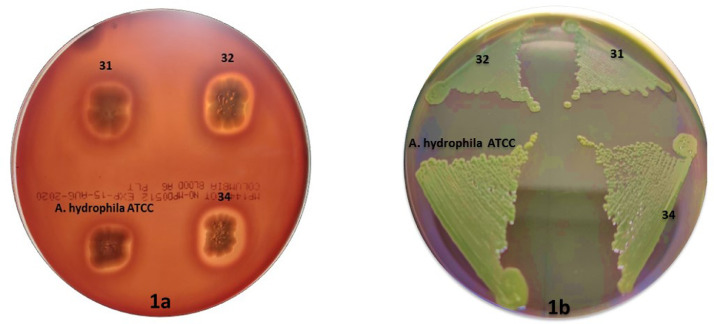
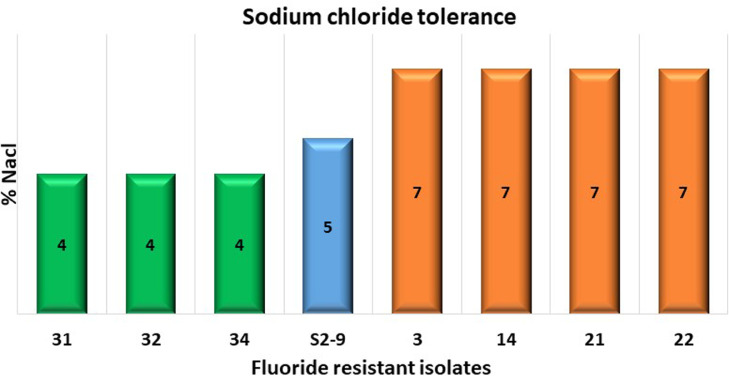
- Salt tolerance ranged from 4% to 7% NaCl: isolates 3, 14, 21, and 22 grew at 7%; S2-9 at 5%; high F−-resistant *Aeromonas* isolates up to 4%. Isolates 3, 14, 21, 22, and S2-9 were γ-haemolytic; 31, 32, and 34 were β-haemolytic. All isolates were resistant to methicillin, rifampicin, penicillin, and vancomycin.
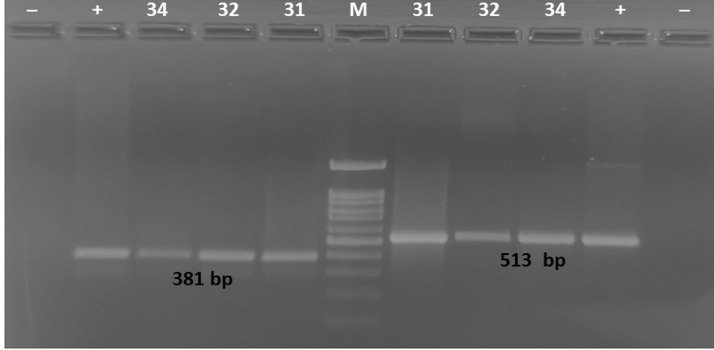
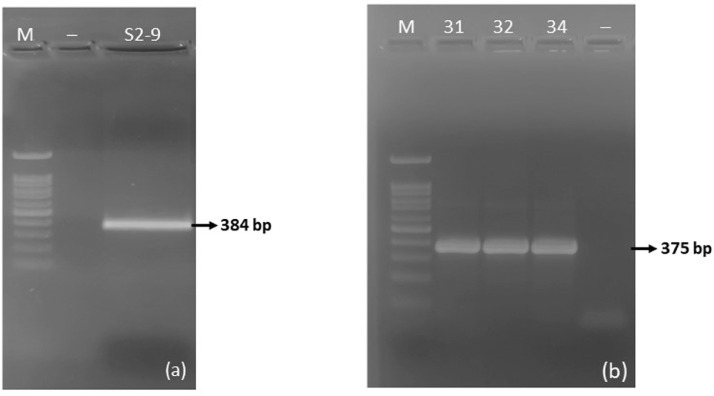
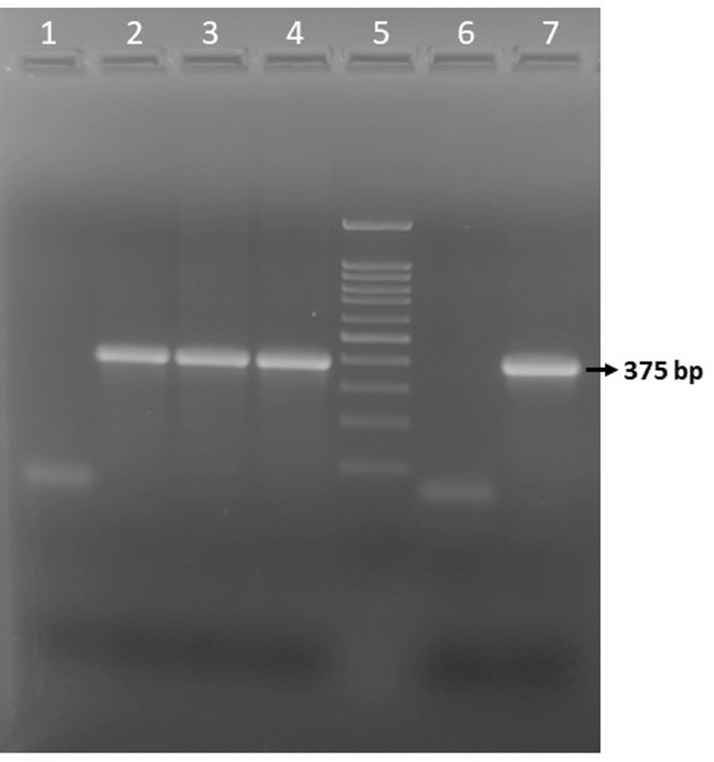
- *crcB* was amplified from *E. coli* S2-9 (384 bp), *Aeromonas* (375 bp), and *Enterobacter* (375 bp). *Aeromonas* strains 31, 32, and 34 carried lipase (381 bp) and elastase (513 bp) genes; aerolysin, Act, and Ast were not detected.
Methods
- Water samples were collected from boreholes and handpumps in selected villages of Natham taluk, Dindigul district, Tamil Nadu, South India. Physicochemical parameters measured included pH, EC, TDS, salinity, Cl−, and F−.
- Bacteria were screened on rapid hicoliform agar, patched on LB agar with 50 mM NaF, and tested for maximum F− tolerance on LB agar containing 50–300 mM NaF. Further characterization used biochemical kits, blood agar, 26-antibiotic disc diffusion, and salt tolerance from 0% to 10% NaCl.
- Genomic DNA was extracted; 16S rRNA was amplified, sequenced, and compared by BLAST. Specific PCR assays identified *Aeromonas* (16S rRNA, AER8/AER9, AluI restriction), *E. coli* (16E1/16E2, *lacZ*, *uidA*), virulence genes, and *crcB*.
Limitations
- Stated limitations: Not stated in the paper.
- Evident from the text: the study is limited to Natham taluk, Dindigul district, and characterizes only eight isolates.
- Evident from the text: no quantitative fluoride removal or bioremediation experiments were performed, despite the conclusion suggesting future bioremoval use; antibiotic susceptibility tests were performed in duplicate with no statistical analysis described.
Model-written summary. Check it against the paper before relying on it.
Integrity signals
Registry
Cites
Statistics
Figures
Verification
Claims the paper makes
62 Own result · 13 No full text of the sources · 8 Sources not found · 8 Not checked yet · 6 Own interpretation · 5 Own method · 2 Supported
A result the paper reports from its own data — it cites no other source for it, so there is none to check. The quote shows it is in the paper.
In the paper
“The isolates 3, 14, 21 and 22 were showed 7% high NaCl tolerance”
§ Isolation and identification of high fluoride resistant bacteria from water samples of Dindigul district, Tamil Nadu, South India > Results > Salt tolerance
plain- Asserted: passes — The authors put it forward as true.
- Checkable: passes — It can be checked against evidence.
- Load-bearing: unclear — It is unclear whether the paper’s conclusions depend on it.
- Based: passes — The paper gives a reason why it holds.
A result the paper reports from its own data — it cites no other source for it, so there is none to check. The quote shows it is in the paper.
In the paper
“The ‘crcB’ involved in bacterial fluoride resistance was amplified from Aeromonas, E. coli, and Enterobacter species.”
- Also stated in: § Amplification of crcB in fluoride resistant isolates · plain
“F− resistant gene ‘crcB’ gene was amplified from E. coli S2-9, Aeromonas, and Enterobacter species using specific primers (Table 2).”
§ Isolation and identification of high fluoride resistant bacteria from water samples of Dindigul district, Tamil Nadu, South India > Abstract
plain- Asserted: passes — The authors put it forward as true.
- Checkable: passes — It can be checked against evidence.
- Load-bearing: passes — The paper’s conclusions depend on it.
- Based: passes — The paper gives a reason why it holds.
- Also stated in: § Amplification of crcB in fluoride resistant isolates · plain
A result the paper reports from its own data — it cites no other source for it, so there is none to check. The quote shows it is in the paper.
In the paper
“| 3. | Enterobacter hormaechei | 14 | 641 | MW131650 | 100 | NCBI |”
§ Isolation and identification of high fluoride resistant bacteria from water samples of Dindigul district, Tamil Nadu, South India > Results > 16S rRNA sequencing analysis
plainSingle case- Asserted: passes — The authors put it forward as true.
- Checkable: passes — It can be checked against evidence.
- Load-bearing: unclear — It is unclear whether the paper’s conclusions depend on it.
- Based: passes — The paper gives a reason why it holds.
A result the paper reports from its own data — it cites no other source for it, so there is none to check. The quote shows it is in the paper.
In the paper
“In this study, the concentration of fluoride ranged between 0.409 mg/L and 11 mg/L.”
§ Isolation and identification of high fluoride resistant bacteria from water samples of Dindigul district, Tamil Nadu, South India > Discussion
plain- Asserted: passes — The authors put it forward as true.
- Checkable: passes — It can be checked against evidence.
- Load-bearing: passes — The paper’s conclusions depend on it.
- Based: passes — The paper gives a reason why it holds.
A result the paper reports from its own data — it cites no other source for it, so there is none to check. The quote shows it is in the paper.
In the paper
“In this study, eight fluoride resistant bacteria isolated from water samples of Dindigul district, South India.”
§ Isolation and identification of high fluoride resistant bacteria from water samples of Dindigul district, Tamil Nadu, South India > Conclusion
plain- Asserted: passes — The authors put it forward as true.
- Checkable: passes — It can be checked against evidence.
- Load-bearing: passes — The paper’s conclusions depend on it.
- Based: passes — The paper gives a reason why it holds.
A result the paper reports from its own data — it cites no other source for it, so there is none to check. The quote shows it is in the paper.
In the paper
“Apart from these antibiotic resistances, F− resistant isolates 3, and S2-9 displayed independent resistance to nitrofurantoin and piperacillin antibiotics.”
§ Isolation and identification of high fluoride resistant bacteria from water samples of Dindigul district, Tamil Nadu, South India > Results > Determination of Antibiotic resistance
plain- Asserted: passes — The authors put it forward as true.
- Checkable: passes — It can be checked against evidence.
- Load-bearing: unclear — It is unclear whether the paper’s conclusions depend on it.
- Based: passes — The paper gives a reason why it holds.
A result the paper reports from its own data — it cites no other source for it, so there is none to check. The quote shows it is in the paper.
In the paper
“Salinity values tested ranging from 1.07 to 956. The values expressed in terms of parts per trillion (ppt).”
§ Isolation and identification of high fluoride resistant bacteria from water samples of Dindigul district, Tamil Nadu, South India > Results > Water analysis
plain- Asserted: passes — The authors put it forward as true.
- Checkable: passes — It can be checked against evidence.
- Load-bearing: unclear — It is unclear whether the paper’s conclusions depend on it.
- Based: passes — The paper gives a reason why it holds.
A result the paper reports from its own data — it cites no other source for it, so there is none to check. The quote shows it is in the paper.
In the paper
“High F− (4.7 and 11 ppm) concentration was detected at Odukampatty and Chellapanaikenpatti villages of Dindigul district.”
- Also stated in: § Water analysis · plain
“Predominantly, high F− (4.7 and 11 ppm) concentration was detected at Odukampatty and Chellapanaikenpatti villages (Table 1).”
§ Isolation and identification of high fluoride resistant bacteria from water samples of Dindigul district, Tamil Nadu, South India > Abstract
plain- Asserted: passes — The authors put it forward as true.
- Checkable: passes — It can be checked against evidence.
- Load-bearing: passes — The paper’s conclusions depend on it.
- Based: passes — The paper gives a reason why it holds.
- Also stated in: § Water analysis · plain
A result the paper reports from its own data — it cites no other source for it, so there is none to check. The quote shows it is in the paper.
In the paper
“The selected F− resistant bacteria were identified as Enterobacter cloacae strain 3, E. hormaechei strain 14, Enterobacter sp. strain 21, E. hormaechei strain 22, E. coli strain S2-9, Aeromonas caviae strain 31, A. caviae strain 32, A. caviae strain 34.”
§ Isolation and identification of high fluoride resistant bacteria from water samples of Dindigul district, Tamil Nadu, South India > Abstract
plain- Asserted: passes — The authors put it forward as true.
- Checkable: passes — It can be checked against evidence.
- Load-bearing: passes — The paper’s conclusions depend on it.
- Based: passes — The paper gives a reason why it holds.
A result the paper reports from its own data — it cites no other source for it, so there is none to check. The quote shows it is in the paper.
In the paper
“In this work, 800 mg/L high Cl− concentration was recorded at Pucharipatti borehole water (Table 1).”
§ Isolation and identification of high fluoride resistant bacteria from water samples of Dindigul district, Tamil Nadu, South India > Results > Water analysis
plainSingle case- Asserted: passes — The authors put it forward as true.
- Checkable: passes — It can be checked against evidence.
- Load-bearing: unclear — It is unclear whether the paper’s conclusions depend on it.
- Based: passes — The paper gives a reason why it holds.
- The quote only partly states this claim. 3
- Probably not a substantial claim. 27
- It may state two separate claims as one. 18
Every source the paper cites for this claim was checked and supports it.
In the paper
“In this study, we found a similar kind of F− resistance shown by Enterobacter strains isolated from water samples.”
§ Isolation and identification of high fluoride resistant bacteria from water samples of Dindigul district, Tamil Nadu, South India > Discussion
What the sources say
- Supportedcites Liu et al. (2017) source
The Results section (‘E. cloacae FRM exhibits high fluoride resistance’) reports that FRM grew at fluoride concentrations up to 4,000 mg/L. The citing authors’ observation about their own water-sample isolates is their finding; this source supports the comparison to fluoride-resistant E. cloacae FRM. (LLM, conf=0.89)
plain- Asserted: passes — The authors put it forward as true.
- Checkable: passes — It can be checked against evidence.
- Load-bearing: unclear — It is unclear whether the paper’s conclusions depend on it.
- Based: passes — The paper gives a reason why it holds.
The quote only partly states this claim.
- Supported
Every source the paper cites for this claim was checked and supports it.
In the paper
“The sequences obtained were compiled and compared to the sequences in the GenBank databases using BLAST analysis (Altschul et al. 1997).”
§ Isolation and identification of high fluoride resistant bacteria from water samples of Dindigul district, Tamil Nadu, South India > Materials and methods > PCR amplification and 16S rRNA sequencing
What the sources say
- Supportedcites Altschul et al. 1997 source
The Introduction describes BLAST as a method for comparing DNA queries with DNA sequence databases. The citation identifies the analysis method used by the citing authors; it does not attribute their particular 16S rRNA comparison to Altschul et al. (LLM, conf=0.91)
plain- Asserted: passes — The authors put it forward as true.
- Checkable: passes — It can be checked against evidence.
- Load-bearing: passes — The paper’s conclusions depend on it.
- Based: passes — The paper gives a reason why it holds.
Probably not a substantial claim.
- Supported
A result the paper reports from its own data — it cites no other source for it, so there is none to check. The quote shows it is in the paper.
In the paper
“The first primer set is suitable amplification in strain 3 and the second set is opt for other strains 14, 21, and 22.”
§ Isolation and identification of high fluoride resistant bacteria from water samples of Dindigul district, Tamil Nadu, South India > Results > Fluoride resistant gene amplification
plaindirect- Asserted: unclear — It is unclear whether the authors put it forward as true.
- Checkable: passes — It can be checked against evidence.
- Load-bearing: unclear — It is unclear whether the paper’s conclusions depend on it.
- Based: unclear — It is unclear why the paper says it holds.
It may state two separate claims as one.
A result the paper reports from its own data — it cites no other source for it, so there is none to check. The quote shows it is in the paper.
In the paper
“In this work, all sample pH values were ranged from 6.13 to 6.94 with an average value of 6.42, exhibiting the slightly acidic condition of groundwater (Table 1).”
§ Isolation and identification of high fluoride resistant bacteria from water samples of Dindigul district, Tamil Nadu, South India > Results > Water analysis
plain- Asserted: passes — The authors put it forward as true.
- Checkable: passes — It can be checked against evidence.
- Load-bearing: unclear — It is unclear whether the paper’s conclusions depend on it.
- Based: passes — The paper gives a reason why it holds.
It may state two separate claims as one.
A result the paper reports from its own data — it cites no other source for it, so there is none to check. The quote shows it is in the paper.
In the paper
“The highest TDS (994 mg/L) was observed at Srikudi bore well and 38% of the samples showed higher than BIS permissible limit (Table 1).”
§ Isolation and identification of high fluoride resistant bacteria from water samples of Dindigul district, Tamil Nadu, South India > Results > Water analysis
plain- Asserted: passes — The authors put it forward as true.
- Checkable: passes — It can be checked against evidence.
- Load-bearing: unclear — It is unclear whether the paper’s conclusions depend on it.
- Based: passes — The paper gives a reason why it holds.
It may state two separate claims as one.
A result the paper reports from its own data — it cites no other source for it, so there is none to check. The quote shows it is in the paper.
In the paper
“From the analysis, twenty samples showed less than 1.0 ppm F− and nine samples viewed identical and above 1 ppm F− values.”
§ Isolation and identification of high fluoride resistant bacteria from water samples of Dindigul district, Tamil Nadu, South India > Results > Water analysis
plainn = 20- Asserted: passes — The authors put it forward as true.
- Checkable: passes — It can be checked against evidence.
- Load-bearing: passes — The paper’s conclusions depend on it.
- Based: passes — The paper gives a reason why it holds.
It may state two separate claims as one.
A result the paper reports from its own data — it cites no other source for it, so there is none to check. The quote shows it is in the paper.
In the paper
“In this study, we tested the average value of EC is 1147 μS/cm and, the maximum number of samples showed EC values are higher than the WHO recommended permissible limit.”
§ Isolation and identification of high fluoride resistant bacteria from water samples of Dindigul district, Tamil Nadu, South India > Discussion
plain- Asserted: passes — The authors put it forward as true.
- Checkable: passes — It can be checked against evidence.
- Load-bearing: unclear — It is unclear whether the paper’s conclusions depend on it.
- Based: passes — The paper gives a reason why it holds.
It may state two separate claims as one.
A result the paper reports from its own data — it cites no other source for it, so there is none to check. The quote shows it is in the paper.
In the paper
“On the other side, the selected isolates were negative to H2S production, Voges-Proskauer, indole, inulin, erythritol, α-methyl D-glucoside, and oxidase tests.”
§ Isolation and identification of high fluoride resistant bacteria from water samples of Dindigul district, Tamil Nadu, South India > Results > Biochemical characterization
plain- Asserted: passes — The authors put it forward as true.
- Checkable: passes — It can be checked against evidence.
- Load-bearing: unclear — It is unclear whether the paper’s conclusions depend on it.
- Based: passes — The paper gives a reason why it holds.
It may state two separate claims as one.
A result the paper reports from its own data — it cites no other source for it, so there is none to check. The quote shows it is in the paper.
In the paper
“Both strains (14, 21) together resistant to nitrofurantoin, minocycline, amoxyclav in contrast strains 14 and 21 separately resistant to chloramphenicol and cefotaxime antibiotics.”
§ Isolation and identification of high fluoride resistant bacteria from water samples of Dindigul district, Tamil Nadu, South India > Results > Determination of Antibiotic resistance
plain- Asserted: passes — The authors put it forward as true.
- Checkable: passes — It can be checked against evidence.
- Load-bearing: unclear — It is unclear whether the paper’s conclusions depend on it.
- Based: passes — The paper gives a reason why it holds.
It may state two separate claims as one.
A result the paper reports from its own data — it cites no other source for it, so there is none to check. The quote shows it is in the paper.
In the paper
“| 6. | Aeromonas caviae | 31 | 936 | MW131653 | 100 | NCBI |”
- Also stated in: § 16S rRNA sequencing analysis · plain
“| 7. | A. caviae | 32 | 909 | MW131654 | 100 | NCBI |”
- Also stated in: § 16S rRNA sequencing analysis · plain
“| 8. | A. caviae | 34 | 918 | MW131655 | 100 | NCBI |”
§ Isolation and identification of high fluoride resistant bacteria from water samples of Dindigul district, Tamil Nadu, South India > Results > 16S rRNA sequencing analysis
plain- Asserted: passes — The authors put it forward as true.
- Checkable: passes — It can be checked against evidence.
- Load-bearing: unclear — It is unclear whether the paper’s conclusions depend on it.
- Based: passes — The paper gives a reason why it holds.
The quote only partly states this claim.
- Also stated in: § 16S rRNA sequencing analysis · plain
A result the paper reports from its own data — it cites no other source for it, so there is none to check. The quote shows it is in the paper.
In the paper
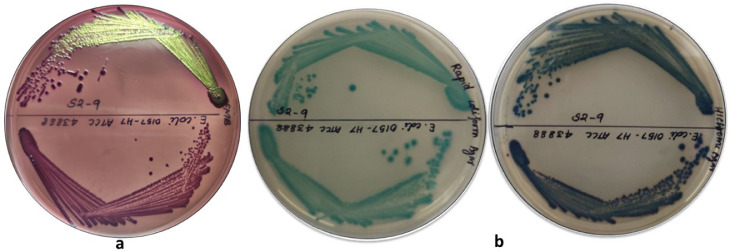
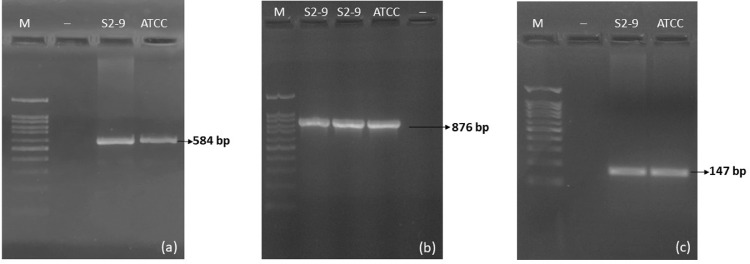
“Based on morphological and biochemical characteristics, strain S2-9 produces a green metallic sheen on EMB agar which may be tentatively identified as E. coli (Fig. 2a).”
§ Isolation and identification of high fluoride resistant bacteria from water samples of Dindigul district, Tamil Nadu, South India > Results > Biochemical characterization
hedgedSingle case- Asserted: passes — The authors put it forward as true.
- Checkable: passes — It can be checked against evidence.
- Load-bearing: unclear — It is unclear whether the paper’s conclusions depend on it.
- Based: passes — The paper gives a reason why it holds.
It may state two separate claims as one.
A result the paper reports from its own data — it cites no other source for it, so there is none to check. The quote shows it is in the paper.
In the paper
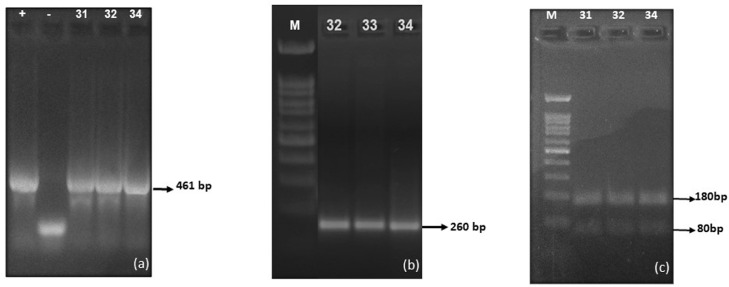
“The Aeromonas isolates were able to amplify the 260 bp fragment of 16S rRNA gene region (Fig. 5b) and digesting it with AluI restriction enzyme produced 180 and 80 bp fragments (Fig. 5c).”
§ Isolation and identification of high fluoride resistant bacteria from water samples of Dindigul district, Tamil Nadu, South India > Results > Detection of Aeromonas and E. coli
plaindirect- Asserted: passes — The authors put it forward as true.
- Checkable: passes — It can be checked against evidence.
- Load-bearing: passes — The paper’s conclusions depend on it.
- Based: passes — The paper gives a reason why it holds.
It may state two separate claims as one.
A result the paper reports from its own data — it cites no other source for it, so there is none to check. The quote shows it is in the paper.
In the paper
“The PCR products 384 bp and 375 bp was successfully amplified from E. coli S2-9 (Fig. 8a) and Aeromonas species (Fig. 8b).”
§ Isolation and identification of high fluoride resistant bacteria from water samples of Dindigul district, Tamil Nadu, South India > Results > Fluoride resistant gene amplification
plain- Asserted: passes — The authors put it forward as true.
- Checkable: passes — It can be checked against evidence.
- Load-bearing: passes — The paper’s conclusions depend on it.
- Based: passes — The paper gives a reason why it holds.
It may state two separate claims as one.
A result the paper reports from its own data — it cites no other source for it, so there is none to check. The quote shows it is in the paper.
In the paper
“On the contrary, isolate 14 showed positive for starch hydrolysis and negative for casein hydrolysis.”
§ Isolation and identification of high fluoride resistant bacteria from water samples of Dindigul district, Tamil Nadu, South India > Results > Biochemical characterization
plainSingle case- Asserted: passes — The authors put it forward as true.
- Checkable: passes — It can be checked against evidence.
- Load-bearing: unclear — It is unclear whether the paper’s conclusions depend on it.
- Based: passes — The paper gives a reason why it holds.
It may state two separate claims as one.
A result the paper reports from its own data — it cites no other source for it, so there is none to check. The quote shows it is in the paper.
In the paper
“In addition to that, we detect β-galactosidase (lacZ) and β-glucuronidase (uidA) genes were amplified from E. coli S29 by gene specific PCR analysis (Fig. 6b and c).”
§ Isolation and identification of high fluoride resistant bacteria from water samples of Dindigul district, Tamil Nadu, South India > Results > Detection of Aeromonas and E. coli
plainSingle case- Asserted: passes — The authors put it forward as true.
- Checkable: passes — It can be checked against evidence.
- Load-bearing: passes — The paper’s conclusions depend on it.
- Based: passes — The paper gives a reason why it holds.
The quote only partly states this claim.
A result the paper reports from its own data — it cites no other source for it, so there is none to check. The quote shows it is in the paper.
In the paper
“In this work, F– resistance gene ‘crcB’ was amplified from E. coli S2-9, Aeromonas and Enterobacter species and confirmed by blast analysis.”
- Also stated in: § Conclusion · plain
“Also we identified the gene ‘crcB’ involved in bacterial fluoride resistance was amplified from Aeromonas, E. coli and Enterobacter species by gene specific PCR analysis.”
§ Isolation and identification of high fluoride resistant bacteria from water samples of Dindigul district, Tamil Nadu, South India > Discussion
plain- Asserted: passes — The authors put it forward as true.
- Checkable: passes — It can be checked against evidence.
- Load-bearing: passes — The paper’s conclusions depend on it.
- Based: passes — The paper gives a reason why it holds.
It may state two separate claims as one.
- Also stated in: § Conclusion · plain
In the paper
“E. coli strain S2-9 capable of growing up to 250 mM NaF and displayed high F− resistance compared to an earlier study reported by Chouhan et al. (2012).”
§ Isolation and identification of high fluoride resistant bacteria from water samples of Dindigul district, Tamil Nadu, South India > Discussion
What the sources say
- Not checked — no full text of the sourcecites Chouhan et al. (2012) source
plainSingle case- Asserted: passes — The authors put it forward as true.
- Checkable: passes — It can be checked against evidence.
- Load-bearing: passes — The paper’s conclusions depend on it.
- Based: passes — The paper gives a reason why it holds.
It may state two separate claims as one.
In the paper
“The natural sources of F− are clay minerals, fluoride-bearing minerals, and fluoride replacing OH– in the ferromagnesium silicates (Dey et al. 2012).”
§ Isolation and identification of high fluoride resistant bacteria from water samples of Dindigul district, Tamil Nadu, South India > Introduction
What the sources say
- Not checked — no full text of the sourcecites Dey et al. 2012 source
plain- Asserted: passes — The authors put it forward as true.
- Checkable: passes — It can be checked against evidence.
- Load-bearing: fails — The paper’s conclusions may not depend on it.
- Based: passes — The paper gives a reason why it holds.
Probably not a substantial claim. The paper’s conclusions may not depend on it.
In the paper
“Before, F− resistant E. coli showed 100 mM NaF resistance isolated from soil (Chouhan et al. 2012).”
§ Isolation and identification of high fluoride resistant bacteria from water samples of Dindigul district, Tamil Nadu, South India > Discussion
What the sources say
- Not checked — no full text of the sourcecites Chouhan et al. (2012) source
plain- Asserted: passes — The authors put it forward as true.
- Checkable: passes — It can be checked against evidence.
- Load-bearing: fails — The paper’s conclusions may not depend on it.
- Based: passes — The paper gives a reason why it holds.
Probably not a substantial claim. The paper’s conclusions may not depend on it.
What the paper did — it cites no source for this, so there is none to check. The quote shows it is in the paper.
In the paper
“E. coli ATCC 43888 was used as a positive control.”
§ Isolation and identification of high fluoride resistant bacteria from water samples of Dindigul district, Tamil Nadu, South India > Materials and methods > Molecular identification of Aeromonas and E. coli
plain- Asserted: passes — The authors put it forward as true.
- Checkable: passes — It can be checked against evidence.
- Load-bearing: fails — The paper’s conclusions may not depend on it.
- Based: passes — The paper gives a reason why it holds.
Probably not a substantial claim. The paper’s conclusions may not depend on it.
In the paper
“In another study, F− resistant Bacillus flexus NM25 exhibited the highest salt tolerance up to 20% NaCl (Pal et al. 2014).”
§ Isolation and identification of high fluoride resistant bacteria from water samples of Dindigul district, Tamil Nadu, South India > Discussion
What the sources say
- Not checked — no full text of the sourcecites Pal et al. 2014 source
plain- Asserted: passes — The authors put it forward as true.
- Checkable: passes — It can be checked against evidence.
- Load-bearing: fails — The paper’s conclusions may not depend on it.
- Based: passes — The paper gives a reason why it holds.
Probably not a substantial claim. The paper’s conclusions may not depend on it.
In the paper
“Recently the WHO published 12 species of waterborne antibiotic-resistant bacteria includes Acinetobacter, Pseudomonas, and various Enterobacteriaceae that may cause a threat to human health (WHO 2017).”
§ Isolation and identification of high fluoride resistant bacteria from water samples of Dindigul district, Tamil Nadu, South India > Discussion
What the sources say
- Not matchedcites WHO 2017
Couldn’t be matched to a paper in Crossref, so it can’t be checked.
plainconditional- Asserted: passes — The authors put it forward as true.
- Checkable: passes — It can be checked against evidence.
- Load-bearing: fails — The paper’s conclusions may not depend on it.
- Based: passes — The paper gives a reason why it holds.
Probably not a substantial claim. The paper’s conclusions may not depend on it.
- Not matched
None of the sources cited for this claim have been checked yet.
In the paper
“F− resistant bacterium E. cloacae FRM able to tolerate 4000 mg/L that is approximate 210 mM (Liu et al. 2017).”
§ Isolation and identification of high fluoride resistant bacteria from water samples of Dindigul district, Tamil Nadu, South India > Discussion
What the sources say
- Not checked yetcites Liu et al. (2017) source
Checked before — its earlier verdict is held back until a new check runs.
plain- Asserted: passes — The authors put it forward as true.
- Checkable: passes — It can be checked against evidence.
- Load-bearing: fails — The paper’s conclusions may not depend on it.
- Based: passes — The paper gives a reason why it holds.
Probably not a substantial claim. The paper’s conclusions may not depend on it.
- Not checked yet
None of the sources cited for this claim have been checked yet.
In the paper
“Earlier, Aeromonas, Acinetobacter, Bacillus, Brevibacterium, Escherichia, Enterobacter, Micrococcus, Paenibacillus, Pseudomonas, and Staphylococcus have reported as F− resistant bacterial species isolated from different environmental backgrounds (Chouhan et al. 2012; Mukherjee et al. 2015, 2017, 2018; Liu et al. 2017; Kirupa Sree et al. 2018; Sharma et al. 2019; Edward Raja et al. 2021).”
§ Isolation and identification of high fluoride resistant bacteria from water samples of Dindigul district, Tamil Nadu, South India > Discussion
What the sources say
- Not checked — no full text of the sourcecites Chouhan et al. 2012 source
- Not matchedcites Mukherjee et al. 2015, 2017, 2018
Couldn’t be matched to a paper in Crossref, so it can’t be checked.
- Not checked yetcites Liu et al. 2017 source
Checked before — its earlier verdict is held back until a new check runs.
plain- Asserted: passes — The authors put it forward as true.
- Checkable: passes — It can be checked against evidence.
- Load-bearing: fails — The paper’s conclusions may not depend on it.
- Based: passes — The paper gives a reason why it holds.
Probably not a substantial claim. The paper’s conclusions may not depend on it.
In the paper
“It has demonstrated that the predominant species of Aeromonas found in municipally treated drinking water may possess a wide variety of virulence-related genes (Sen and Rodgers 2004).”
§ Isolation and identification of high fluoride resistant bacteria from water samples of Dindigul district, Tamil Nadu, South India > Discussion
What the sources say
- Not checked — no full text of the sourcecites Sen and Rodgers 2004 source
hedged- Asserted: passes — The authors put it forward as true.
- Checkable: passes — It can be checked against evidence.
- Load-bearing: fails — The paper’s conclusions may not depend on it.
- Based: passes — The paper gives a reason why it holds.
Probably not a substantial claim. The paper’s conclusions may not depend on it.
In the paper
“The concentration of F− in air, soil, and water is highly changed by airborne pollutants and industrial wastewater (Kabir et al. 2020).”
§ Isolation and identification of high fluoride resistant bacteria from water samples of Dindigul district, Tamil Nadu, South India > Introduction
What the sources say
- Not checked — no full text of the sourcecites Kabir et al. 2020 source
plaindirect- Asserted: passes — The authors put it forward as true.
- Checkable: passes — It can be checked against evidence.
- Load-bearing: fails — The paper’s conclusions may not depend on it.
- Based: passes — The paper gives a reason why it holds.
Probably not a substantial claim. The paper’s conclusions may not depend on it.
What the paper did — it cites no source for this, so there is none to check. The quote shows it is in the paper.
In the paper
“A. hydrophila ATCC 7966 was used as a standard strain.”
§ Isolation and identification of high fluoride resistant bacteria from water samples of Dindigul district, Tamil Nadu, South India > Materials and methods > Molecular identification of Aeromonas and E. coli
plain- Asserted: passes — The authors put it forward as true.
- Checkable: passes — It can be checked against evidence.
- Load-bearing: fails — The paper’s conclusions may not depend on it.
- Based: passes — The paper gives a reason why it holds.
Probably not a substantial claim. The paper’s conclusions may not depend on it.
A claim is checked only against the cited paper’s full text, never its abstract, and none is available for its sources.
In the paper
“Earlier in my research group identified Pseudomonas species are fluoride resistant bacteria isolated from Thadikombu and Ottupatti villages at Dindigul district, Tamil Nadu (Kirupa Sree et al. 2018; Edward Raja et al. 2021).”
§ Isolation and identification of high fluoride resistant bacteria from water samples of Dindigul district, Tamil Nadu, South India > Introduction
What the sources say
- Not checked — no full text of the sourcecites Kirupa Sree et al. 2018
- Not checked — no full text of the sourcecites Edward Raja et al. 2021 source
plain- Asserted: passes — The authors put it forward as true.
- Checkable: passes — It can be checked against evidence.
- Load-bearing: fails — The paper’s conclusions may not depend on it.
- Based: passes — The paper gives a reason why it holds.
Probably not a substantial claim. The paper’s conclusions may not depend on it.
In the paper
“The safe limit of pH for drinking water specified by the BIS (1999) as 6.6–8.5”
§ Isolation and identification of high fluoride resistant bacteria from water samples of Dindigul district, Tamil Nadu, South India > Discussion
What the sources say
- Not matchedcites BIS (1999)
Couldn’t be matched to a paper in Crossref, so it can’t be checked.
plain- Asserted: passes — The authors put it forward as true.
- Checkable: passes — It can be checked against evidence.
- Load-bearing: passes — The paper’s conclusions depend on it.
- Based: passes — The paper gives a reason why it holds.
Probably not a substantial claim.
- Not matched
In the paper
“Recently published F− resistant Paenibacillus sp. strain DWC5 only grow up to 4% NaCl (Sharma et al. 2019).”
§ Isolation and identification of high fluoride resistant bacteria from water samples of Dindigul district, Tamil Nadu, South India > Discussion
What the sources say
- Not checked — no full text of the sourcecites Sharma et al. 2019 source
plainSingle case- Asserted: passes — The authors put it forward as true.
- Checkable: passes — It can be checked against evidence.
- Load-bearing: fails — The paper’s conclusions may not depend on it.
- Based: passes — The paper gives a reason why it holds.
Probably not a substantial claim. The paper’s conclusions may not depend on it.
None of the sources cited for this claim have been checked yet.
In the paper
“Diverse bacterial genus (Aeromonas, Micrococcus, Pseudomonas, Bacillus, Providencia, Acinetobacter) were identified as F− resistance bacteria from various environmental regimens (Chouhan et al. 2012; Pal et al. 2014; Banerjee et al. 2016; Mukherjee et al. 2017; Mukherjee et al. 2018; Sharma et al. 2019; Sakthi desai et al. 2020; Shiva Shanker et al. 2020).”
§ Isolation and identification of high fluoride resistant bacteria from water samples of Dindigul district, Tamil Nadu, South India > Introduction
What the sources say
plain- Asserted: passes — The authors put it forward as true.
- Checkable: passes — It can be checked against evidence.
- Load-bearing: fails — The paper’s conclusions may not depend on it.
- Based: passes — The paper gives a reason why it holds.
Probably not a substantial claim. The paper’s conclusions may not depend on it.
None of the sources cited for this claim have been checked yet.
In the paper
“The gene crcB act as putative F– ion transporter and help bacteria to reduce the toxic effect of F– on the bacterial cell (Baker et al. 2012).”
§ Isolation and identification of high fluoride resistant bacteria from water samples of Dindigul district, Tamil Nadu, South India > Discussion
What the sources say
- Not checked yetcites Baker et al. 2012 source
Checked before — its earlier verdict is held back until a new check runs.
hedgeddirect- Asserted: passes — The authors put it forward as true.
- Checkable: passes — It can be checked against evidence.
- Load-bearing: unclear — It is unclear whether the paper’s conclusions depend on it.
- Based: passes — The paper gives a reason why it holds.
It may state two separate claims as one.
- Not checked yet
In the paper
“Sharma et al. (2019) reported that F− resistant Aeromonas sp. DWC1 able to resist F− up to 9200 mg/L (~ 484 mM) respectively.”
§ Isolation and identification of high fluoride resistant bacteria from water samples of Dindigul district, Tamil Nadu, South India > Discussion
What the sources say
- Not checked — no full text of the sourcecites Sharma et al. (2019) source
plain- Asserted: passes — The authors put it forward as true.
- Checkable: passes — It can be checked against evidence.
- Load-bearing: fails — The paper’s conclusions may not depend on it.
- Based: passes — The paper gives a reason why it holds.
Probably not a substantial claim. The paper’s conclusions may not depend on it.
In the paper
“Moreover, likewise, in our earlier study, Pseudomonas strains THP6, THP41, and OPH5 were tolerated 5% NaCl (Kirupa Sree et al. 2018).”
§ Isolation and identification of high fluoride resistant bacteria from water samples of Dindigul district, Tamil Nadu, South India > Discussion
What the sources say
- Not checked — no full text of the sourcecites Kirupa Sree et al. 2018
plain- Asserted: passes — The authors put it forward as true.
- Checkable: passes — It can be checked against evidence.
- Load-bearing: fails — The paper’s conclusions may not depend on it.
- Based: passes — The paper gives a reason why it holds.
Probably not a substantial claim. The paper’s conclusions may not depend on it.
What the paper did — it cites no source for this, so there is none to check. The quote shows it is in the paper.
In the paper
“All the tests were performed in duplicate.”
§ Isolation and identification of high fluoride resistant bacteria from water samples of Dindigul district, Tamil Nadu, South India > Materials and methods > Antibiotic sensitivity
plain- Asserted: passes — The authors put it forward as true.
- Checkable: passes — It can be checked against evidence.
- Load-bearing: fails — The paper’s conclusions may not depend on it.
- Based: passes — The paper gives a reason why it holds.
Probably not a substantial claim. The paper’s conclusions may not depend on it.
None of the sources cited for this claim have been checked yet.
In the paper
“Baker et al. (2012) reported that ‘eriC’ and ‘crcB’ are identified as fluoride resistance gene from P. syringae and E. coli.”
§ Isolation and identification of high fluoride resistant bacteria from water samples of Dindigul district, Tamil Nadu, South India > Introduction
What the sources say
- Not checked yetcites Baker et al. (2012) source
Checked before — its earlier verdict is held back until a new check runs.
plaincorrelational- Asserted: passes — The authors put it forward as true.
- Checkable: passes — It can be checked against evidence.
- Load-bearing: fails — The paper’s conclusions may not depend on it.
- Based: passes — The paper gives a reason why it holds.
Probably not a substantial claim. The paper’s conclusions may not depend on it.
- Not checked yet
A conclusion the paper draws from its own results — it cites no other source for it, so there is none to check. The quote shows it is in the paper.
In the paper
“E. coli S2-9 is a fluoride resistant, non-pathogenic and thermotolerant bacteria.”
§ Isolation and identification of high fluoride resistant bacteria from water samples of Dindigul district, Tamil Nadu, South India > Abstract
plainSingle case- Asserted: passes — The authors put it forward as true.
- Checkable: passes — It can be checked against evidence.
- Load-bearing: passes — The paper’s conclusions depend on it.
- Based: passes — The paper gives a reason why it holds.
It may state two separate claims as one.
None of the sources cited for this claim could be matched to a paper in Crossref, so there is nothing to check it against.
In the paper
“Antibiotic sensitivity was categorized as resistant, intermediate, or sensitive was measured by the zone of inhibition (mm) around each disc according to standards suggested by the CLSI and the EUCAST.”
§ Isolation and identification of high fluoride resistant bacteria from water samples of Dindigul district, Tamil Nadu, South India > Materials and methods > Antibiotic sensitivity
What the sources say
- Not matchedcites CLSI
Couldn’t be matched to a paper in Crossref, so it can’t be checked.
- Not matchedcites EUCAST
Couldn’t be matched to a paper in Crossref, so it can’t be checked.
plain- Asserted: passes — The authors put it forward as true.
- Checkable: passes — It can be checked against evidence.
- Load-bearing: fails — The paper’s conclusions may not depend on it.
- Based: passes — The paper gives a reason why it holds.
Probably not a substantial claim. The paper’s conclusions may not depend on it.
- Not matched
None of the sources cited for this claim have been checked yet.
In the paper
“Liu et al. (2017) reported that E. cloacae FRM was fluoride resistant bacterium that contains six genes that including crcB response for a fluoride transporter, fluoride inhibited enzymes and a universal stress protein.”
§ Isolation and identification of high fluoride resistant bacteria from water samples of Dindigul district, Tamil Nadu, South India > Discussion
What the sources say
- Not checked yetcites Liu et al. (2017) source
Checked before — its earlier verdict is held back until a new check runs.
plain- Asserted: passes — The authors put it forward as true.
- Checkable: passes — It can be checked against evidence.
- Load-bearing: fails — The paper’s conclusions may not depend on it.
- Based: passes — The paper gives a reason why it holds.
Probably not a substantial claim. The paper’s conclusions may not depend on it.
- Not checked yet
What the paper did — it cites no source for this, so there is none to check. The quote shows it is in the paper.
In the paper
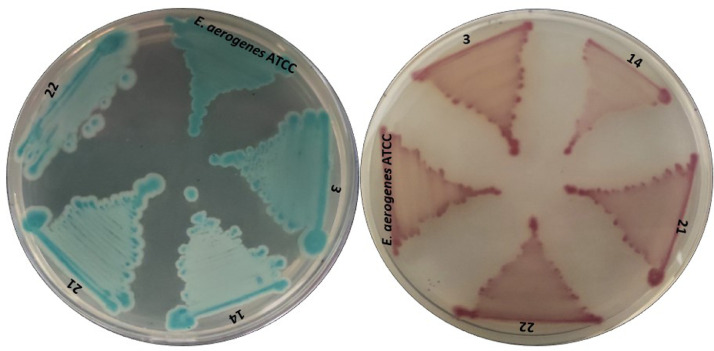
“For this purpose, E. coli 0157:H7 ATCC 43888, Aeromonas hydrophila ATCC 7966, and Enterobacter aerogenes ATCC 13048 were referenced as a positive controls.”
§ Isolation and identification of high fluoride resistant bacteria from water samples of Dindigul district, Tamil Nadu, South India > Materials and methods > Biochemical characterization
plain- Asserted: passes — The authors put it forward as true.
- Checkable: passes — It can be checked against evidence.
- Load-bearing: fails — The paper’s conclusions may not depend on it.
- Based: passes — The paper gives a reason why it holds.
Probably not a substantial claim. The paper’s conclusions may not depend on it. It may state two separate claims as one.
None of the sources cited for this claim have been checked yet.
In the paper
“At higher concentration, F− is lethal to humans, animals, and plants (Thivya et al. 2017).”
§ Isolation and identification of high fluoride resistant bacteria from water samples of Dindigul district, Tamil Nadu, South India > Introduction
What the sources say
- Not checked yetcites Thivya et al. 2017 source
Checked before — its earlier verdict is held back until a new check runs.
plaindirect- Asserted: passes — The authors put it forward as true.
- Checkable: passes — It can be checked against evidence.
- Load-bearing: passes — The paper’s conclusions depend on it.
- Based: passes — The paper gives a reason why it holds.
Probably not a substantial claim. It may state two separate claims as one.
- Not checked yet
In the paper
“According to the WHO report Aeromonas, E. coli, and Enterobacter species recognized as antibiotic-resistant bacteria from groundwater.”
§ Isolation and identification of high fluoride resistant bacteria from water samples of Dindigul district, Tamil Nadu, South India > Discussion
What the sources say
- Not matchedcites WHO 2017
Couldn’t be matched to a paper in Crossref, so it can’t be checked.
plain- Asserted: passes — The authors put it forward as true.
- Checkable: passes — It can be checked against evidence.
- Load-bearing: fails — The paper’s conclusions may not depend on it.
- Based: passes — The paper gives a reason why it holds.
Probably not a substantial claim. The paper’s conclusions may not depend on it.
- Not matched
A conclusion the paper draws from its own results — it cites no other source for it, so there is none to check. The quote shows it is in the paper.
In the paper
“This is the first report to identify F− resistance bacteria in water samples, evaluate antibiotic susceptibility and determine high F− resistance, biochemical and 16S rRNA sequencing analysis of F− resistant bacteria, and molecular identification of F− resistance gene were carried out in this study.”
§ Isolation and identification of high fluoride resistant bacteria from water samples of Dindigul district, Tamil Nadu, South India > Introduction
plain- Asserted: passes — The authors put it forward as true.
- Checkable: passes — It can be checked against evidence.
- Load-bearing: passes — The paper’s conclusions depend on it.
- Based: passes — The paper gives a reason why it holds.
It may state two separate claims as one.
- Rests on an assumption: No study has been conducted for the isolation of F− resistance bacteria from Natham taluk, Dindigul district, South India.
None of the sources cited for this claim have been checked yet.
In the paper
“Aeromonas species are recognized as water-borne bacteria that have been isolated from different environment regimens (Janda and Abbott 2010).”
§ Isolation and identification of high fluoride resistant bacteria from water samples of Dindigul district, Tamil Nadu, South India > Discussion
What the sources say
- Not checked yetcites Janda and Abbott 2010 source
Checked before — its earlier verdict is held back until a new check runs.
plain- Asserted: passes — The authors put it forward as true.
- Checkable: passes — It can be checked against evidence.
- Load-bearing: fails — The paper’s conclusions may not depend on it.
- Based: passes — The paper gives a reason why it holds.
Probably not a substantial claim. The paper’s conclusions may not depend on it.
- Not checked yet
What the paper did — it cites no source for this, so there is none to check. The quote shows it is in the paper.
In the paper
“TA vector served as a negative control.”
§ Isolation and identification of high fluoride resistant bacteria from water samples of Dindigul district, Tamil Nadu, South India > Materials and methods > PCR amplification and 16S rRNA sequencing
plain- Asserted: passes — The authors put it forward as true.
- Checkable: passes — It can be checked against evidence.
- Load-bearing: fails — The paper’s conclusions may not depend on it.
- Based: passes — The paper gives a reason why it holds.
Probably not a substantial claim. The paper’s conclusions may not depend on it.
In the paper
“The maximum BIS permissible limit of TDS is 500 mg/L.”
§ Isolation and identification of high fluoride resistant bacteria from water samples of Dindigul district, Tamil Nadu, South India > Discussion
What the sources say
- Not matchedcites BIS
Couldn’t be matched to a paper in Crossref, so it can’t be checked.
plain- Asserted: passes — The authors put it forward as true.
- Checkable: passes — It can be checked against evidence.
- Load-bearing: passes — The paper’s conclusions depend on it.
- Based: passes — The paper gives a reason why it holds.
Probably not a substantial claim.
- Not matched
The paper relies on this without support.
No study has been conducted for the isolation of F− resistance bacteria from Natham taluk, Dindigul district, South India.
“However, no such study has been conducted for the isolation of F− resistance bacteria from Natham taluk, Dindigul district, South India.”
The paper relies on this without support.
This is the first report identifying fluoride-resistant bacteria from Natham taluk, southern Tamil Nadu.
“To our knowledge, this is the first report identifying fluoride resistant bacteria especially from Natham taluk, southern part of Tamilnadu.”
Self-check
Percentages, sums and reported differences re-computed from the paper’s own numbers.
Each contradiction between two passages listed here was confirmed by an independent check.
Rated major: it would touch a result — a value a result rests on, reported and recomputed p-values on opposite sides of the significance level, two passages that conflict with no sign which is right, or a cited work retracted before this paper was published.
In the paper
§ Isolation and identification of high fluoride resistant bacteria from water samples of Dindigul district, Tamil Nadu, South India > Results > Water analysis
“the maximum permissible limit is 600 mg/L”
§ Isolation and identification of high fluoride resistant bacteria from water samples of Dindigul district, Tamil Nadu, South India > Discussion
“The maximum BIS permissible limit of TDS is 500 mg/L.”
Rated major: it would touch a result — a value a result rests on, reported and recomputed p-values on opposite sides of the significance level, two passages that conflict with no sign which is right, or a cited work retracted before this paper was published.
In the paper
§ Isolation and identification of high fluoride resistant bacteria from water samples of Dindigul district, Tamil Nadu, South India > Discussion
“The safe limit of pH for drinking water specified by the BIS (1999) as 6.6–8.5 and, the present study water samples showed pH values are within the safe limit.”
§ Isolation and identification of high fluoride resistant bacteria from water samples of Dindigul district, Tamil Nadu, South India > Materials and methods > Samples collection and analysis
“| 12 | Sirukudi | HP | 5.87 | 2.6 | 1.8 | 1.31 | 300 | 1.2 |”
Rated minor: it would not touch a result — a value no result rests on, a p-value that stays on the same side of the significance level, or a conflict that is clerical, resolved elsewhere in the paper, or outside its own findings.
In the paper
§ Isolation and identification of high fluoride resistant bacteria from water samples of Dindigul district, Tamil Nadu, South India > Results > Water analysis
“all sample pH values were ranged from 6.13 to 6.94”
§ Isolation and identification of high fluoride resistant bacteria from water samples of Dindigul district, Tamil Nadu, South India > Materials and methods > Samples collection and analysis
“| 12 | Sirukudi | HP | 5.87 | 2.6 | 1.8 | 1.31 | 300 | 1.2 |”
Rated minor: it would not touch a result — a value no result rests on, a p-value that stays on the same side of the significance level, or a conflict that is clerical, resolved elsewhere in the paper, or outside its own findings.
In the paper
§ Isolation and identification of high fluoride resistant bacteria from water samples of Dindigul district, Tamil Nadu, South India > Materials and methods > Molecular identification of Aeromonas and E. coli
“| 4. | AER9 | TTCGCCACCGGTATTCCTCCAGATC | 25 | 61 | 280 | ’’ |”
§ Isolation and identification of high fluoride resistant bacteria from water samples of Dindigul district, Tamil Nadu, South India > Results > Detection of Aeromonas and E. coli
“The Aeromonas isolates were able to amplify the 260 bp fragment of 16S rRNA gene region (Fig. 5b)”
Rated minor: it would not touch a result — a value no result rests on, a p-value that stays on the same side of the significance level, or a conflict that is clerical, resolved elsewhere in the paper, or outside its own findings.
In the paper
§ Isolation and identification of high fluoride resistant bacteria from water samples of Dindigul district, Tamil Nadu, South India > Results > Fluoride resistant gene amplification
“The first primer set is suitable amplification in strain 3 and the second set is opt for other strains 14, 21, and 22.”
§ Isolation and identification of high fluoride resistant bacteria from water samples of Dindigul district, Tamil Nadu, South India > Results > Fluoride resistant gene amplification
“lanes 2, 3 and 4: gene amplification by strains 22, 21 and 14 using EAF and EAR primers. lane 5: 100 bp ladder; lane 6: negative control; lane 7: gene amplification by strain 3 using ERF and ERR primers.”
Rated minor: it would not touch a result — a value no result rests on, a p-value that stays on the same side of the significance level, or a conflict that is clerical, resolved elsewhere in the paper, or outside its own findings.
In the paper
§ Isolation and identification of high fluoride resistant bacteria from water samples of Dindigul district, Tamil Nadu, South India > Conclusion
“resistance to antibiotics such as methicillin, rifampicin, vancomycin, penicillin, chloramphenicol, cefotaxime, doxycycline hydrochloride, fosfomycin, minocycline, nalidixic acid, nitrofurantoin and trimethoprim.”
§ Isolation and identification of high fluoride resistant bacteria from water samples of Dindigul district, Tamil Nadu, South India > Results > Determination of Antibiotic resistance
“| Doxycycline HCl (DO) | 30 | 14(S) | 14(S) | 12(I) | 15(S) | 14(S) | 17(S) | 17(S) | 17(S) | 15(R) | 18(S) |”
Rated minor: it would not touch a result — a value no result rests on, a p-value that stays on the same side of the significance level, or a conflict that is clerical, resolved elsewhere in the paper, or outside its own findings.
In the paper
§ Isolation and identification of high fluoride resistant bacteria from water samples of Dindigul district, Tamil Nadu, South India > Conclusion
“resistance to antibiotics such as methicillin, rifampicin, vancomycin, penicillin, chloramphenicol, cefotaxime, doxycycline hydrochloride, fosfomycin, minocycline, nalidixic acid, nitrofurantoin and trimethoprim.”
§ Isolation and identification of high fluoride resistant bacteria from water samples of Dindigul district, Tamil Nadu, South India > Results > Determination of Antibiotic resistance
“| Trimethoprim (TR) | 10 | 24(S) | 23(S) | 21(S) | 23(S) | 25(S) | 17(I) | 17(I) | 21(S) | 25(S) | 32(S) |”
Rated minor: it would not touch a result — a value no result rests on, a p-value that stays on the same side of the significance level, or a conflict that is clerical, resolved elsewhere in the paper, or outside its own findings.
In the paper
§ Isolation and identification of high fluoride resistant bacteria from water samples of Dindigul district, Tamil Nadu, South India > Conclusion
“resistance to antibiotics such as methicillin, rifampicin, vancomycin, penicillin, chloramphenicol, cefotaxime, doxycycline hydrochloride, fosfomycin, minocycline, nalidixic acid, nitrofurantoin and trimethoprim.”
§ Isolation and identification of high fluoride resistant bacteria from water samples of Dindigul district, Tamil Nadu, South India > Results > Determination of Antibiotic resistance
“| Nalidixic Acid (NA) | 30 | 22(S) | 14(I) | 20(S) | 22(S) | 22(S) | 26(S) | 26(S) | 27(S) | 22(S) | 21(S) |”
Rated minor: it would not touch a result — a value no result rests on, a p-value that stays on the same side of the significance level, or a conflict that is clerical, resolved elsewhere in the paper, or outside its own findings.
In the paper
§ Isolation and identification of high fluoride resistant bacteria from water samples of Dindigul district, Tamil Nadu, South India > Materials and methods > Molecular identification of Aeromonas and E. coli
“| 6 | LipR | CCGTGCCAGGACTGGGTCTT | 20 | 54 | 382 | ’’ |”
§ Isolation and identification of high fluoride resistant bacteria from water samples of Dindigul district, Tamil Nadu, South India > Results > Virulence profile of Aeromonas
“virulence genes lipase (381 bp) and elastase (513 bp) was only amplified from Aeromonas iolsates 31, 32 and 34.”
Citations
Cites
Gapped BLAST and PSI-BLAST: a new generation of protein database search programs
Altschul, S. (1997) · Nucleic Acids Research · doi:10.1093/nar/25.17.3389 · Cited by 73,302
The Genus Aeromonas : Taxonomy, Pathogenicity, and Infection
Janda, J. M., & Abbott, S. L. (2010) · Clinical Microbiology Reviews · doi:10.1128/cmr.00039-09 · Cited by 1,766
Statistical Modeling of Global Geogenic Fluoride Contamination in Groundwaters
Amini, M., Mueller, K., Abbaspour, K. C., Rosenberg, T., Afyuni, M., Møller, K. N., Sarr, M., & Johnson, C. A. (2008) · Environmental Science & Technology · doi:10.1021/es071958y · Cited by 452
Widespread genetic switches and toxicity resistance proteins for fluoride
Baker, J. L., Sudarsan, N., Weinberg, Z., Roth, A., Stockbridge, R. B., & Breaker, R. R. (2012) · Science · doi:10.1126/science.1215063 · Cited by 438
Adimalla, N., Li, P., & Qian, H. (2018) · Human and Ecological Risk Assessment An International Journal · doi:10.1080/10807039.2018.1460579 · Cited by 325
Fluoride and human health: systematic appraisal of sources, exposures, metabolism, and toxicity
Kabir, H., Gupta, A. K., & Tripathy, S. (2020) · Critical Reviews in Environmental Science and Technology · doi:10.1080/10643389.2019.1647028 · Cited by 228
Sen, K., & Rodgers, M. (2004) · Journal of Applied Microbiology · doi:10.1111/j.1365-2672.2004.02398.x · Cited by 209
Should we restrict chloride rather than sodium?
McCarty, M. F. (2004) · Medical Hypotheses · doi:10.1016/j.mehy.2003.11.005 · Cited by 125
Controlling factors of fluoride in groundwater in a part of South India
Rao, N. S. (2017) · Arabian Journal of Geosciences · doi:10.1007/s12517-017-3291-7 · Cited by 123
Praveen, P. K., Debnath, C., Shekhar, S., Dalai, N., & Ganguly, S. (2016) · Veterinary World · doi:10.14202/vetworld.2016.6-11 · Cited by 109
Research works printed but not linked: 3
- Banerjee, 2016, Isolation and characterization of fluoride resistant bacterial strains from fluoride endemic areas of West Bengal, India: assessment of their fluoride absorption efficiency, Fluoride, 49, 429
- Sankpal, 2012, Physiochemical analysis of effluent discharge of fish processing industries in Ratnagiri, India, Biosci. Discov., 3, 107
- Shobana, 2012, Ground water quality of five villages in Natham city, Dindigul District Tamil Nadu (India), Interface J. Currt Sci., 68
Cited by
Sorted by citations
Carusi, J., Kabuki, D. Y., Pereira, P. M. D. S., & Cabral, L. (2023) · Food Research International · doi:10.1016/j.foodres.2023.113710 · Cited by 59
Singh, A., Patani, A., Patel, M., Vyas, S., Verma, R. K., Amari, A., Osman, H., Rathod, L., Elboughdiri, N. A., Yadav, V. K., et al. (2024) · Frontiers in Microbiology · doi:10.3389/fmicb.2023.1330071 · Cited by 30
Singh, A., Yadav, V. K., Gautam, H. K., Rathod, L., Chundawat, R. S., Singh, G., Verma, R. K., Sahoo, D. K., & Patel, A. (2023) · Frontiers in Microbiology · doi:10.3389/fmicb.2023.1271034 · Cited by 22
Guidi, F., Lorenzetti, C., Centorotola, G., Torresi, M., Cammà, C., Chiaverini, A., Pomilio, F., & Blasi, G. (2022) · Frontiers in Microbiology · doi:10.3389/fmicb.2022.930895 · Cited by 9
Oetiker, N., León, J. J., Swihart, M. T., Chen, K., Pfeifer, B. A., Dutta, A., Pliss, A., Kuzmin, A. N., Perez-Donoso, J. M., & Prasad, P. N. (2024) · Journal of Nanobiotechnology · doi:10.1186/s12951-024-02874-x · Cited by 7
Metadata
- Authors
- Chellaiah, E. R., Ravi, P., & Uthandakalaipandian, R.
- Affiliations
- Madurai Kamaraj University (IN)
- Venue
- Current Research in Microbial Sciences
- Publisher
- Elsevier BV
- Published
- 2021-12
- Volume
- 2
- Pages
- 100038
- ISSN
- 2666-5174 (ISSN-L)
- PMC
- PMC8610349
- OpenAlex
- W3161143346
- Cited by
- 17
- References
- 34
- Citations by year
- 2026: 1 · 2025: 6 · 2024: 5 · 2023: 4 · 2022: 1
- FWCI
- 0.76
- Type
- journal article
- Language
- en
- Open access
- gold
- doi.org
- Licence
- Locations
- Current Research in Microbial Sciences (publishedVersion, cc-by-nc-nd)
- PubMed Central (publishedVersion, cc-by-nc-nd)
- PubMed (publishedVersion)
- DOAJ (DOAJ: Directory of Open Access Journals) (submittedVersion, cc-by-sa)
- Funders
- Department of Science and Technology, Ministry of Science and Technology, India (SB/S2/RJN-009/2016)
- Science and Engineering Research Board
- Madurai Kamaraj University
- Topics
- Physical Sciences › Environmental Science › Water Science and Technology › Fluoride Effects and Removal
- Physical Sciences › Environmental Science › Ecology › Microbial Community Ecology and Physiology
- Physical Sciences › Environmental Science › Water Science and Technology › Fecal contamination and water quality
- Keywords
- fluoride contamination, drinking water quality, Enterobacter cloacae, Enterobacter hormaechei, Aeromonas caviae, bacterial bioremediation, Dindigul district
About these checks
Registry, retraction, Cites and statistics results are computed, not judged, with one exception: a printed reference that no index lists is read once by a model before it counts as a citation error. Claims are extracted by a model and kept only when their quote appears verbatim in the text; each cited source is then checked, with a model’s help, for whether it says what the claim relies on. Those verdicts can be wrong — read the claim’s quote and the cited source before relying on one.
A language model drew the claims from the paper on 2026-11-10, under version 3 of the claim definition (model deepseek-v4.1-flash, prompt extract-v3).
A second model labelled each claim on 2026-11-10 (model jev-1.13-20260917, definition revision gold-guideline-v0.2).
Cited sources are checked with a language model’s help (gpt-6-sol).
Statistics and arithmetic are recomputed, not judged.
Confidence bands are shown only for fields calibrated on our annotated test set. None is calibrated yet, so no band is shown.
What counts as a claim ›How we measure confidence ›How we check this ›
Are you an author, or do you see a problem with this page? Request a review
