

The DOI matches its Crossref record; 9 of the 9 references it cites were found in a registry or an index.
Harnessing fluoroacetate dehalogenase for defluorination of fluorocarboxylic acids: in silico and in vitro approach
Overview
The claims and statistics of this paper haven’t been checked yet.
Run the check — free, no account needed. It reads the open-access text and checks the sources it cites.
Integrity signals
Registry
Cites
Statistics
Figures
Verification
Claims the paper makes
The claims and statistics of this paper haven’t been checked yet.
Run the check — free, no account needed. It reads the open-access text and checks the sources it cites.
Claims other papers make about this one
Each is checked against this paper’s own text: does it say what the citing paper says it does?
In the citing paper
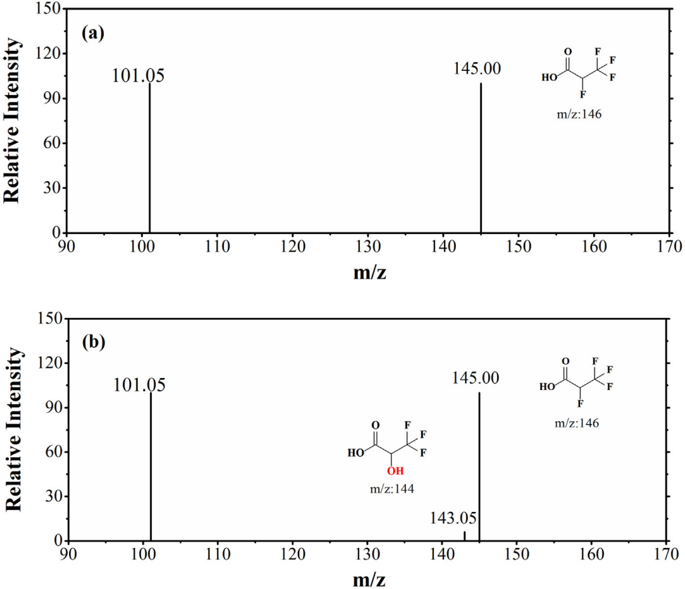
“In addition to 2-fluoropropionic acid, Li et al. (69) also observed the degradation of 2,3,3,3-tetrafluoropropionic acid by RPA1163, as evidenced by the detection of defluorination product 2-hydroxyl-3,3,3-trifluoropropionic acid using MS/MS analysis.”
From Toward the development of a molecular toolkit for the microbial remediation of per-and polyfluoroalkyl substances (2024) · cites this paper as [69]
Self-check
Percentages, sums and reported differences re-computed from the paper’s own numbers.
The self-check needs the paper’s full text.
Citations
Cites
Dynamic personalities of proteins
Henzler-Wildman, K., & Kern, D. (2007) · Nature · doi:10.1038/nature06522 · Cited by 2,545
Adsorption behavior and mechanism of perfluorinated compounds on various adsorbents—A review
Du, Z., Deng, S., Bei, Y., Huang, Q., Wang, B., Huang, J., & Yu, G. (2014) · Journal of Hazardous Materials · doi:10.1016/j.jhazmat.2014.04.038 · Cited by 1,236
Conder, J. M., Hoke, R. A., Wolf, W. D., Russell, M. H., & Buck, R. C. (2008) · Environmental Science & Technology · doi:10.1021/es070895g · Cited by 1,206
Wang, Z., Cousins, I. T., Scheringer, M., & Hungerbühler, K. (2013) · Environment International · doi:10.1016/j.envint.2013.08.021 · Cited by 924
Trojanowicz, M., Bojanowska-Czajka, A., Bartosiewicz, I., & Kulisa, K. (2018) · Chemical Engineering Journal · doi:10.1016/j.cej.2017.10.153 · Cited by 550
Degradation and Removal Methods for Perfluoroalkyl and Polyfluoroalkyl Substances in Water
Merino, N., Qu, Y., Deeb, R. A., Hawley, E. L., Hoffmann, M. R., & Mahendra, S. (2016) · Environmental Engineering Science · doi:10.1089/ees.2016.0233 · Cited by 349
D’eon, J. C., & Mabury, S. A. (2011) · Environmental Health Perspectives · doi:10.1289/ehp.1002409 · Cited by 193
Bruton, T. A., & Sedlak, D. L. (2017) · Environmental Science & Technology · doi:10.1021/acs.est.7b03969 · Cited by 183
Mapping the reaction coordinates of enzymatic defluorination
Chan, P. W. Y., Yakunin, A. F., Edwards, E. A., & Pai, E. F. (2011) · Journal of the American Chemical Society · doi:10.1021/ja200277d · Cited by 107
Research works printed but not linked: 68
- Agarwal, 2017, Enzymatic halogenation and dehalogenation reactions: pervasive and mechanistically diverse, Chem. Rev., 117, 5619, 10.1021/acs.chemrev.6b00571 · DOI
- Ahlrichs, 1989, Electronic structure calculations on workstation computers: the program system turbomole, Chem. Phys. Lett., 162, 165, 10.1016/0009-2614(89)85118-8 · DOI
- Ali, 2018, The diamine cation is not a chemical example where density functional theory fails, Nat. Commun., 9, 4733, 10.1038/s41467-018-07266-y · DOI
- Ang, 2018, Dehalogenases: from improved performance to potential microbial dehalogenation applications, Molecules, 23, 1100, 10.3390/molecules23051100 · DOI
- Armitage, 2009, Comparative assessment of the global fate and transport pathways of Long-chain perfluorocarboxylic acids (PFCAs) and perfluorocarboxylates (PFCs) emitted from direct sources, Environ. Sci. Technol., 43, 5830, 10.1021/es900753y · DOI · Paper page
- Bakowies, 1996, Hybrid models for combined quantum mechanical and molecular mechanical approaches, J. Phys. Chem., 100, 10580, 10.1021/jp9536514 · DOI
- Black, 2017, Statistical analysis of activation and reaction energies with quasi-variational coupled-cluster theory, Mol. Phys., 116, 1421, 10.1080/00268976.2017.1400698 · DOI
- Boehr, 2006, An NMR perspective on enzyme dynamics, Chem. Rev., 106, 3055, 10.1021/cr050312q · DOI
- Brooks, 1983, Deformable stochastic boundaries in molecular dynamics, J. Chem. Phys., 79, 6312, 10.1063/1.445724 · DOI
- Brooks, 1983, CHARMM: a program for macromolecular energy, minimization, and dynamics calculations, J. Comput. Chem., 4, 187, 10.1002/jcc.540040211 · DOI
- Brooks, 2009, CHARMM: the biomolecular simulation program, J. Comput. Chem., 30, 1545, 10.1002/jcc.21287 · DOI
- Butt, 2014, Biotransformation pathways of fluorotelomer-based polyfluoroalkyl substances: a review, Environ. Toxicol. Chem., 33, 243, 10.1002/etc.2407 · DOI · Paper page
- Chan, 2010, Sequence- and activity-based screening of microbial genomes for novel dehalogenases, Microb. Biotechnol., 3, 107, 10.1111/j.1751-7915.2009.00155.x · DOI · Paper page
- Cooper, 2014, Averaging techniques for reaction barriers in QM/MM simulations, Chemphyschem, 15, 3264, 10.1002/cphc.201402382 · DOI
- Davis, 2012, Isolation and survey of novel fluoroacetate-degrading bacteria belonging to the phylum Synergistetes, FEMS Microbiol. Ecol., 80, 671, 10.1111/j.1574-6941.2012.01338.x · DOI · Paper page
- De Vries, 1999, Zeolite structure and reactivity by combined quantum-chemical−classical calculations, J. Phys. Chem. B, 103, 6133, 10.1021/jp9913012 · DOI
- D'eon, 2007, Production of perfluorinated carboxylic acids (PFCAs) from the biotransformation of polyfluoroalkyl phosphate surfactants (PAPS): exploring routes of human contamination, Environ. Sci. Technol., 41, 4799, 10.1021/es070126x · DOI
- Ding, 2017, Side chains of parabens modulate antiandrogenic activity: in vitro and molecular docking studies, Environ Sci Technol, 51, 6452, 10.1021/acs.est.7b00951 · DOI
- Goldman, 1969, The carbon-fluorine bond in compounds of biological interest, Science, 164, 1123, 10.1126/science.164.3884.1123 · DOI
- Grimme, 2010, A consistent and accurate ab initio parametrization of density functional dispersion correction (DFT-D) for the 94 elements H-Pu, J. Chem. Phys., 132, 10.1063/1.3382344 · DOI · Paper page
- Hori, 2004, Decomposition of environmentally persistent perfluorooctanoic acid in water by photochemical approaches, Environ. Sci. Technol., 38, 6118, 10.1021/es049719n · DOI
- Huang, 2016, Photoinduced hydrodefluorination mechanisms of perfluorooctanoic acid by SiC/graphene catalyst, Environ. Sci. Technol., 50, 5857, 10.1021/acs.est.6b00652 · DOI
- Ji, 2017, Mechanism of cobalamin-mediated reductive dehalogenation of chloroethylenes, ACS Catal., 7, 5294, 10.1021/acscatal.7b00540 · DOI
- Jitsumori, 2009, X-ray crystallographic and mutational studies of fluoroacetate dehalogenase from Burkholderia sp. strain FA1, J. Bacteriol., 191, 2630, 10.1128/JB.01654-08 · DOI · Paper page
- Jorgensen, 1983, Comparison of simple potential functions for simulating liquid water, J. Chem. Phys., 79, 926, 10.1063/1.445869 · DOI
- Kamachi, 2010, The catalytic mechanism of fluoroacetate dehalogenase: a computational exploration of biological dehalogenation, Chem. Eur. J., 15, 7394, 10.1002/chem.200801813 · DOI · Paper page
- Key, 1997, Fluorinated organics in the biosphere, Environ. Sci. Technol., 31, 2445, 10.1021/es961007c · DOI · Paper page
- Kim, 2017, The role of dimer asymmetry and protomer dynamics in enzyme catalysis, Science, 355, eaag2355, 10.1126/science.aag2355 · DOI
- Kulik, 2018, Large-scale QM/MM free energy simulations of enzyme catalysis reveal the influence of charge transfer, Phys. Chem. Chem. Phys., 20, 20650, 10.1039/C8CP03871F · DOI
- Kurihara, 2003, Purification, characterization, and gene cloning of a novel fluoroacetate dehalogenase from Burkholderia sp. FA1, J. Mol. Catal. B Enzym., 23, 347, 10.1016/S1381-1177(03)00098-5 · DOI · Paper page
- Li, 2016, Catalytic mechanism of C–F bond cleavage: insights from QM/MM analysis of fluoroacetate dehalogenase, Catal. Sci. Technol., 6, 73, 10.1039/C5CY00777A · DOI
- Li, 2016, How many conformations of enzymes should be sampled for DFT/MM calculations? A case study of fluoroacetate dehalogenase, Int. J. Mol. Sci., 17, 1372, 10.3390/ijms17081372 · DOI
- Liu, 1998, Reaction mechanism of fluoroacetate dehalogenase from Moraxella sp. B, J. Biol. Chem., 273, 30897, 10.1074/jbc.273.47.30897 · DOI · Paper page
- Liu, 2017, Structure-dependent hematological effects of per- and polyfluoroalkyl substances on activation of plasma Kallikrein-Kinin system cascade, Environ. Sci. Technol., 51, 10173, 10.1021/acs.est.7b02055 · DOI
- Liu, 2018, Reductive defluorination of branched per- and polyfluoroalkyl substances with cobalt complex catalysts, Environ. Sci. Technol. Lett., 5, 289, 10.1021/acs.estlett.8b00122 · DOI · Paper page
- Liu, 2018, Kinetics and mechanism insights into the photodegradation of hydroperfluorocarboxylic acids in aqueous solution, Chem. Eng. J., 348, 644, 10.1016/j.cej.2018.05.055 · DOI
- Lonsdale, 2010, Compound I reactivity defines alkene oxidation selectivity in cytochrome P450cam, J. Phys. Chem. B, 114, 1156, 10.1021/jp910127j · DOI
- Lu, 2012, Multiwfn: a multifunctional wavefunction analyzer, J. Comput. Chem., 33, 580, 10.1002/jcc.22885 · DOI
- Lu, 2018, Thyroid disruption by bisphenol S analogues via thyroid hormone receptor beta: in vitro, in vivo, and molecular dynamics simulation study, Environ. Sci. Technol., 52, 6617, 10.1021/acs.est.8b00776 · DOI
- Luo, 2018, Perfluorooctanesulfonate degrades in a laccase-mediator system, Environ. Sci. Technol., 52, 10617, 10.1021/acs.est.8b00839 · DOI · Paper page
- Mallinson, 2018, A promiscuous cytochrome P450 aromatic O-demethylase for lignin bioconversion, Nat. Commun., 9, 2487, 10.1038/s41467-018-04878-2 · DOI
- Mehmood, 2019, The protein’s role in substrate positioning and reactivity for biosynthetic enzyme complexes: the case of SyrB2/SyrB1, ACS Catal., 9, 4930, 10.1021/acscatal.9b00865 · DOI
- Metz, 2014, ChemShell—a modular software package for QM/MM simulations, Wiley Interdiscip. Rev.: Comput. Mol. Sci., 4, 101
- Min, 2005, Fluctuating enzymes:lessons from single-molecule studies, Acc. Chem. Res., 38, 923, 10.1021/ar040133f · DOI
- Miranda-Rojas, 2015, Mechanistic insights into the dehalogenation reaction of fluoroacetate/fluoroacetic acid, J. Chem. Phys., 142, 10.1063/1.4920946 · DOI
- Miranda-Rojas, 2018, Unraveling the nature of the catalytic power of fluoroacetate dehalogenase, Chemcatchem, 10, 1052, 10.1002/cctc.201701517 · DOI · Paper page
- Moriwaki, 2005, Sonochemical decomposition of perfluorooctane sulfonate and perfluorooctanoic acid, Environ. Sci. Technol., 39, 3388, 10.1021/es040342v · DOI
- Müller, 2007, Fluorine in pharmaceuticals: looking beyond intuition, Science, 317, 1881, 10.1126/science.1131943 · DOI
- Nakayama, 2012, Substrate specificity of fluoroacetate dehalogenase: an insight from crystallographic analysis, fluorescence spectroscopy, and theoretical computations, Chemistry, 18, 8392, 10.1002/chem.201103369 · DOI · Paper page
- Nashine, 2010, Coupled motions in enzyme catalysis, Chem. Eng. J., 14, 644
- Niu, 2012, Electrochemical mineralization of perfluorocarboxylic acids (PFCAs) by ce-doped modified porous nanocrystalline PbO2 film electrode, Environ. Sci. Technol., 46, 10191, 10.1021/es302148z · DOI
- Qu, 2016, Experimental and theoretical insights into the photochemical decomposition of environmentally persistent perfluorocarboxylic acids, Water Res., 104, 34, 10.1016/j.watres.2016.07.071 · DOI
- Ryde, 2017, How many conformations need to be sampled to obtain converged QM/MM energies? The curse of exponential averaging, J. Chem. Theory Comput., 13, 5745, 10.1021/acs.jctc.7b00826 · DOI
- Santosmartins, 2018, A buried water molecule influences reactivity in α-amylase on a subnanosecond time scale, ACS Catal., 8, 4055, 10.1021/acscatal.7b04400 · DOI
- Shaik, 2010, P450 enzymes: their structure, reactivity, and selectivity-modeled by QM/MM calculations, Chem. Rev., 110, 949, 10.1021/cr900121s · DOI
- Sherwood, 2003, QUASI: a general purpose implementation of the QM/MM approach and its application to problems in catalysis, J. Mol. Struct. THEOCHEM, 632, 1, 10.1016/S0166-1280(03)00285-9 · DOI
- Smith, 1996, DL_POLY_2.0: a general-purpose parallel molecular dynamics simulation package, J. Mol. Graph., 14, 136, 10.1016/S0263-7855(96)00043-4 · DOI
- Sousa, 2017, Application of quantum mechanics/molecular mechanics methods in the study of enzymatic reaction mechanisms, Wiley Interdiscip. Rev.: Comput. Mol. Sci., 7, e1281
- Sun, 2016, Chemisorption of perfluorooctanoic acid on powdered activated carbon initiated by persulfate in aqueous solution, Environ. Sci. Technol., 50, 7618, 10.1021/acs.est.6b00411 · DOI
- Wang, 2017, Investigating substrate scope and enantioselectivity of a defluorinase by a stereochemical probe, J. Am. Chem. Soc., 139, 11241, 10.1021/jacs.7b06019 · DOI · Paper page
- Wolfenden, 2001, The depth of chemical time and the power of enzymes as catalysts, Acc. Chem. Res., 34, 938, 10.1021/ar000058i · DOI
- Xie, 2013, Biochemistry. Enzyme kinetics, past and present, Science, 342, 1457, 10.1126/science.1248859 · DOI
- Yang, 2003, Protein conformational dynamics probed by single-molecule electron transfer, Science, 302, 262, 10.1126/science.1086911 · DOI
- Yang, 2018, Influence of water and enzyme SpnF on the dynamics and energetics of the ambimodal [6+4]/[4+2] cycloaddition, Proc. Natl. Acad. Sci. U. S. A., 115, E848
- Yang, 2019, Quantum mechanical description of electrostatics provides a unified picture of catalytic action across methyltransferases, J. Phys. Chem. Lett., 3779, 10.1021/acs.jpclett.9b01555 · DOI
- Yang, 2019, Revealing quantum mechanical effects in enzyme catalysis with large-scale electronic structure simulation, React. Chem. Eng., 4, 298, 10.1039/C8RE00213D · DOI
- Yu, 2018, Effects of microbial activity on perfluorinated carboxylic acids (PFCAs) generation during aerobic biotransformation of fluorotelomer alcohols in activated sludge, Sci. Total Environ., 610-611, 776, 10.1016/j.scitotenv.2017.08.075 · DOI · Paper page
- Zhang, 2004, Homology modeling and S(N)2 displacement reaction of fluoroacetate dehalogenase from Burkholderia sp. FA1, Biochem. Biophys. Res. Commun., 325, 414, 10.1016/j.bbrc.2004.10.044 · DOI · Paper page
Cited by
Sorted by citations
Wackett, L. P. (2022) · Microbial Biotechnology · doi:10.1111/1751-7915.13928 · Cited by 165
Hu, M., & Scott, C. (2024) · Applied and Environmental Microbiology · doi:10.1128/aem.00157-24 · Cited by 63
Metadata
- Authors
- Li, Y., Yue, Y., Zhang, H., Yang, Z., Wang, H., Tian, S., Wang, J.-B., Zhang, Q., & Wang, W.
- Venue
- Environment International
- Publisher
- Elsevier BV
- Published
- 2019-10
- Volume
- 131
- Pages
- 104999
- ISSN
- 0160-4120
- Cited by
- 33
- References
- 9
- Language
- en
- Licence
- Funders
- National Natural Science Foundation of China
About these checks
Registry, retraction, Cites and statistics results are computed, not judged, with one exception: a printed reference that no index lists is read once by a model before it counts as a citation error. Claims are extracted by a model and kept only when their quote appears verbatim in the text; each cited source is then checked, with a model’s help, for whether it says what the claim relies on. Those verdicts can be wrong — read the claim’s quote and the cited source before relying on one.
Statistics and arithmetic are recomputed, not judged.
Confidence bands are shown only for fields calibrated on our annotated test set. None is calibrated yet, so no band is shown.
What counts as a claim ›How we measure confidence ›How we check this ›
Are you an author, or do you see a problem with this page? Request a review
