

The DOI matches its Crossref record; 274 of the 285 references it cites were found in a registry or an index.
Live fast, die young? A review on the developmental trajectories of ADHD across the lifespan
Open accessAbstract
Attention-deficit/hyperactivity disorder (ADHD) is highly heritable and the most common neurodevelopmental disorder in childhood. In recent decades, it has been appreciated that in a substantial number of cases the disorder does not remit in puberty, but persists into adulthood. Both in childhood and adulthood, ADHD is characterised by substantial comorbidity including substance use, depression, anxiety, and accidents. However, course and symptoms of the disorder and the comorbidities may fluctuate and change over time, and even age of onset in childhood has recently been questioned. Available evidence to date is poor and largely inconsistent with regard to the predictors of persistence versus remittance. Likewise, the development of comorbid disorders cannot be foreseen early on, hampering preventive measures. These facts call for a lifespan perspective on ADHD from childhood to old age. In this selective review, we summarise current knowledge of the long-term course of ADHD, with an emphasis on clinical symptom and cognitive trajectories, treatment effects over the lifespan, and the development of comorbidities. Also, we summarise current knowledge and important unresolved issues on biological factors underlying different ADHD trajectories. We conclude that a severe lack of knowledge on lifespan aspects in ADHD still exists for nearly every aspect reviewed. We encourage large-scale research efforts to overcome those knowledge gaps through appropriately granular longitudinal studies.
Overview
The claims and statistics of this paper haven’t been checked yet.
Run the check — free, no account needed. It reads the open-access text and checks the sources it cites.
Integrity signals
Registry
Cites
Statistics
Figures
Verification
Claims the paper makes
The claims and statistics of this paper haven’t been checked yet.
Run the check — free, no account needed. It reads the open-access text and checks the sources it cites.
Claims other papers make about this one
Each is checked against this paper’s own text: does it say what the citing paper says it does?
The cited source says what the claim attributes to it.
In the citing paper
“it is unclear whether the prevalence of adult ADHD changes with age.”
From The decreasing prevalence of ADHD across the adult lifespan confirmed (2022) · cites this paper as [5]
The cited source says what the claim attributes to it.
In the citing paper
“compared to childhood ADHD, adult ADHD has received far less research attention”
From The decreasing prevalence of ADHD across the adult lifespan confirmed (2022) · cites this paper as [5]
The cited source says what the claim attributes to it.
In the citing paper
“adult ADHD definitions strongly varying between studies”
From The decreasing prevalence of ADHD across the adult lifespan confirmed (2022) · cites this paper as [5]
The cited source says what the claim attributes to it.
In the citing paper
“few large population-based data sets spanning the full adult lifespan available [4-7]”
From The decreasing prevalence of ADHD across the adult lifespan confirmed (2022) · cites this paper as [5]
Self-check
Percentages, sums and reported differences re-computed from the paper’s own numbers.
The self-check needs the paper’s full text.
Citations
Cites
1 retracted
Immediate-release methylphenidate for attention deficit hyperactivity disorder (ADHD) in adults
Epstein, T., Patsopoulos, N. A., & Weiser, M. (2014) · Cochrane Database of Systematic Reviews · doi:10.1002/14651858.cd005041.pub2 · Cited by 65
RetractedDiagnostic and Statistical Manual of Mental Disorders
Williams, J. B. W., & First, M. B. (2013) · Oxford University Press eBooks · doi:10.1093/acrefore/9780199975839.013.104 · Cited by 109,845
The worldwide prevalence of ADHD: a systematic review and metaregression analysis
Polanczyk, G., de Lima, M. S., Horta, B. L., Biederman, J., & Rohde, L. A. (2007) · American Journal of Psychiatry · doi:10.1176/ajp.2007.164.6.942 · Cited by 5,346
Prevalence and development of psychiatric disorders in childhood and adolescence
Costello, E. J., Mustillo, S., Erkanli, A., Keeler, G., & Angold, A. (2003) · Archives of General Psychiatry · doi:10.1001/archpsyc.60.8.837 · Cited by 4,035
Kessler, R. C., Adler, L., Barkley, R., Biederman, J., Conners, C. K., Demler, O., Faraone, S. V., Greenhill, L. L., Howes, M. J., Secnik, K., et al. (2006) · American Journal of Psychiatry · doi:10.1176/ajp.2006.163.4.716 · Cited by 3,886
Self-citationWillcutt, E. G., Doyle, A. E., Nigg, J. T., Faraone, S. V., & Pennington, B. F. (2005) · Biological Psychiatry · doi:10.1016/j.biopsych.2005.02.006 · Cited by 3,568
Self-citationAn Expanded View of Complex Traits: From Polygenic to Omnigenic
Boyle, E. A., Li, Y. I., & Pritchard, J. K. (2017) · Cell · doi:10.1016/j.cell.2017.05.038 · Cited by 2,851
Molecular genetics of attention-deficit/hyperactivity disorder
Faraone, S. V., Perlis, R. H., Doyle, A. E., Smoller, J. W., Goralnick, J. J., Holmgren, M. A., & Sklar, P. (2005) · Biological Psychiatry · doi:10.1016/j.biopsych.2004.11.024 · Cited by 2,357
Self-citationFARAONE, S. V., BIEDERMAN, J., & MICK, E. (2006) · Psychological Medicine · doi:10.1017/s003329170500471x · Cited by 2,267
Self-citationGenetic relationship between five psychiatric disorders estimated from genome-wide SNPs
Cross-Disorder Group of the Psychiatric Genomics Consortium (2013) · Nature Genetics · doi:10.1038/ng.2711 · Cited by 2,263
Self-citation
Research works printed but not linked: 6
- Arcos-Burgos, 2010, A common variant of the latrophilin 3 gene, LPHN3, confers susceptibility to ADHD and predicts effectiveness of stimulant medication, Mol. Psychiatry, 15, 1053, 10.1038/mp.2010.6 · DOI
- Cheung, 2015, Childhood predictors of adolescent and young adult outcome in ADHD, J. Psychiatr. Res., 62, 92, 10.1016/j.jpsychires.2015.01.011 · DOI
- Lasky-Su, 2008, Genome-wide association scan of quantitative traits for attention deficit hyperactivity disorder identifies novel associations and confirms candidate gene associations, Am. J. Med. Genet. B Neuropsychiatr. Genet., 147b, 1345, 10.1002/ajmg.b.30867 · DOI
- Lyon, 2011, Exome sequencing and unrelated findings in the context of complex disease research: ethical and clinical implications, Discov. Med., 12, 41
- Michelini, 2016, Attention-deficit/hyperactivity disorder remission is linked to better neurophysiological error detection and attention-vigilance processes, Biol. Psychiatry, 80, 923, 10.1016/j.biopsych.2016.06.021 · DOI
- Schachar, 2015, Mental health implications of traumatic brain injury (TBI) in children and youth, J. Can. Acad. Child Adolesc. Psychiatry, 24, 100
Cited by
Sorted by citations
Items 201–300 of 569
Evidence-Based Assessment for Attention-Deficit/Hyperactivity Disorder
Eng, A. G., Bansal, P. S., Goh, P. K., Nirjar, U., Petersen, M. K., & Martel, M. M. (2023) · Assessment · doi:10.1177/10731911221149957 · Cited by 17
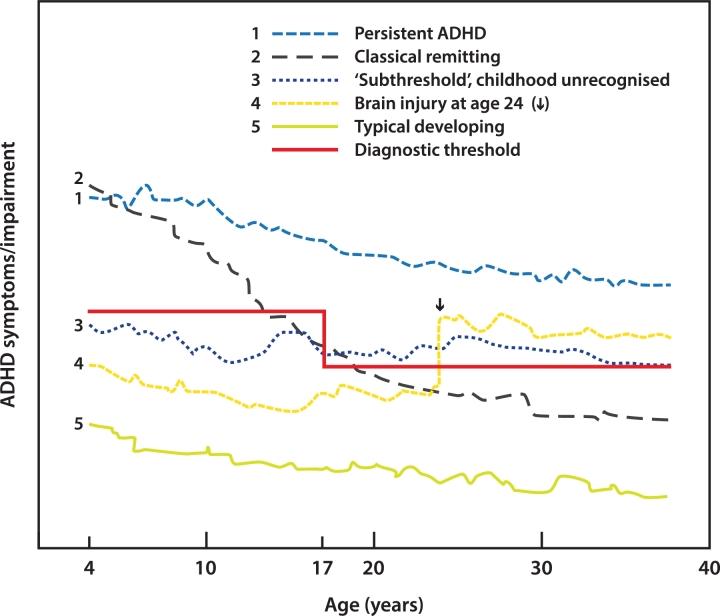
“Franke et al. (2018) presented a theoretical framework for several distinct ADHD symptom trajectories from childhood to adulthood, ranging from typical developing controls and subthreshold patterns to onset post-brain injury and persistent ADHD trajectories.”
BackgroundVeloso, A. S., Vicente, S., & Filipe, M. G. (2022) · European Journal of Investigation in Health Psychology and Education · doi:10.3390/ejihpe12110116 · Cited by 14
Aggensteiner, P., Albrecht, B., Strehl, U., Wörz, S., Ruckes, C., Freitag, C., Rothenberger, A., Gevensleben, H., Millenet, S., Hohmann, S., et al. (2021) · Biological Psychology · doi:10.1016/j.biopsycho.2021.108169 · Cited by 12
“Children with ADHD are significantly impaired in their daily functioning at home and in school, and the problems often persist in adulthood (for a review see Franke et al. (2018)).”
Self-citationMuntaner‐Mas, A., Ortega, F. B., Femia, P., Kiive, E., Eensoo, D., Mäestu, J., Franke, B., Reif, A., Faraone, S. V., & Harro, J. (2020) · Scandinavian Journal of Medicine and Science in Sports · doi:10.1111/sms.13905 · Cited by 15
Self-citationSoriano, L. D. H., Rosser, T. C., Hamilton, D., Wood, T., Abbeduto, L., & Sherman, S. L. (2020) · Scientific Reports · doi:10.1038/s41598-020-77392-5 · Cited by 15
Baggio, S., Hasler, R., Deiber, M., Heller, P., Buadze, A., Giacomini, V., & Perroud, N. A. (2020) · Psychiatry Research · doi:10.1016/j.psychres.2020.113521 · Cited by 14
McCoy, T. H., Pellegrini, A. M., & Perlis, R. H. (2020) · PLoS ONE · doi:10.1371/journal.pone.0237698 · Cited by 10
Luderer, M., Reinhard, I., Richter, A., Kiefer, F., & Weber, T. (2020) · European Addiction Research · doi:10.1159/000508918 · Cited by 12
Interaksi Faktor Genetik dan Lingkungan pada Attention Deficit/Hyperactivity Disorder (ADHD)
Frida Ayu, N. H., & Setiawati, Y. (2017) · Jurnal Psikiatri Surabaya · doi:10.20473/jps.v6i2.19434 · Cited by 14
Zetterqvist, V., Öster, C., Oremark, A., Myllys, L., Meyer, J., Ramklint, M., & Isaksson, J. (2025) · BMC Psychology · doi:10.1186/s40359-025-02350-7 · Cited by 11
Relationship Between ADHD-Like Traits and Emotion Dysregulation in the Adult General Population
Albesisi, S., & Overton, P. G. (2023) · Advances in Neurodevelopmental Disorders · doi:10.1007/s41252-023-00381-y · Cited by 13
“This is in keeping with the previously reported tendency for inattention to persist into adulthood whilst hyperactivity declines with age (Franke et al., 2018).”
Update on genetics of attention deficit/hyperactivity disorder: current status 2023
Kranz, T. M., & Grimm, O. (2023) · Current Opinion in Psychiatry · doi:10.1097/yco.0000000000000852 · Cited by 17
“ADHD shows a specific developmental profile of clinical symptoms such as a decline of hyperactivity and comorbidity with depression and addiction and furthermore social impairment and a significant economic burden [2].”
BackgroundGenome Guided Personalized Drug Therapy in Attention Deficit Hyperactivity Disorder
Haavik, J. (2022) · Frontiers in Psychiatry · doi:10.3389/fpsyt.2022.925442 · Cited by 11
“This strong genetic relationship is also in accordance with clinical observations showing that ADHD symptoms in children, as well as in adults, often coexists with other symptoms and disorders, including MDD, anxiety and ASD (1).”
BackgroundResultInfluentialSelf-citationSabbe, M., Sawchik, J., Gräfe, M., Wuillaume, F., Bruyn, S. D., Antwerpen, P. V., Hal, G. F. V., Desseilles, M., Hamdani, J., & Malonne, H. (2022) · Archives of Public Health · doi:10.1186/s13690-022-00816-3 · Cited by 14
“Furthermore, while there are cases of ADHD with apparent onset in adulthood, it is likely that many of these cases were not previously diagnosed [25].”
BackgroundDijk, H., Wessels, L. M., Constanti, M., van den Hoofdakker, B. J., Hoekstra, P., & Groenman, A. (2021) · Journal of child and adolescent psychopharmacology · doi:10.1089/cap.2021.0068 · Cited by 11
“Treatment of ADHD can result in better outcomes of the core symptoms of ADHD and accompanying problems such as crimi-nality, problems with occupation, substance use, obesity, and suicidal behavior (for review see Franke et al. 2018).”
Integrating genomics and transcriptomics: Towards deciphering ADHD
Pujol‐Gualdo, N., Sánchez‐Mora, C., Ramos‐Quiroga, J. A., Marta Ribasés, A., & Artigas, M. S. (2021) · European Neuropsychopharmacology · doi:10.1016/j.euroneuro.2021.01.002 · Cited by 13
Self-citationDevelopment of the Korean Practice Parameter for Adult Attention-Deficit/Hyperactivity Disorder
Bahn, G. H., Lee, Y. S., Yoo, H. K., Kim, E., Park, S., Han, D. H., Hong, M., Kim, B., Lee, S. I., Bhang, S., et al. (2019) · Journal of korean Academy of Child and Adolescent Psychiatry · doi:10.5765/jkacap.190030 · Cited by 14
Lundervold, A. J., Vartiainen, H. I., Jensen, D. A., & Haavik, J. (2019) · Journal of Attention Disorders · doi:10.1177/1087054719879501 · Cited by 16
“Few studies have, however, investigated the relationship between current and childhood symptoms in samples with a reduced recall capacity due to old age, and we still need longitudinal studies with a lifespan perspective to confirm age-related characteristics of individuals with an ADHD diagnosis (Franke et al., 2018).”
BackgroundInfluentialSelf-citationMeyer, J., Ramklint, M., Hallerbäck, M. U., Lööf, M., & Isaksson, J. (2019) · BMC Psychiatry · doi:10.1186/s12888-019-2133-4 · Cited by 14
“The presentation of attention deficit/hyperactivity disorder (ADHD) changes across the life span, with younger children displaying more hyperactivity-impulsive behaviours and adolescents and adults exhibiting more symptoms of inattention [1].”
BackgroundInternet-delivered self-help for adults with ADHD (MyADHD): usability study
Kenter, R. M. F., Schønning, A., & Inal, Y. (2022) · JMIR Formative Research · doi:10.2196/37137 · Cited by 10
“With an estimated prevalence of 2%-3%, ADHD can be counted as a common mental disorder in adulthood [7-9].”
BackgroundDistinct neuroimaging subtypes of ADHD among adolescents based on semi-supervised learning
Chen, Y., Li, M., Zhao, Z., Xu, X., Chen, R., Zhao, R., Zhang, Y., Wang, G., & Wu, D. (2025) · Translational Psychiatry · doi:10.1038/s41398-025-03662-3 · Cited by 10
“For such reasons, studies have tried to unravel ADHD heterogeneity in aspects of long-term trajectories [11, 12], disease comorbidity [13, 14], genetic variations [15], as well as temperament/personality [16, 17] for improved diagnosis and prognosis.”
Solberg, B. S., Kvalvik, L. G., Instanes, J. T., Hartman, C. A., Klungsøyr, K., Li, L., Larsson, H., Magnus, P. M., Njølstad, P. R., Johansson, S., et al. (2023) · Biological Psychiatry · doi:10.1016/j.biopsych.2023.12.017 · Cited by 11
Self-citationSankesara, H., Denyer, H., Sun, S.-X., Deng, Q., Ranjan, Y., Conde, P., Rashid, Z., Asherson, P., Bilbow, A., Groom, M. J., et al. (2023) · JMIR Formative Research · doi:10.2196/54531 · Cited by 10
Self-citationWeyandt, L. L., DuPaul, G. J., Shepard, E., Labban, J. D., Francis, A. R., Beatty, A., & Anastopoulos, A. D. (2023) · Archives of Sexual Behavior · doi:10.1007/s10508-023-02660-0 · Cited by 12
“In addition to substance related issues, the extant research demonstrates that sexual risk behavior among college students is associated with mental health disorders that are frequently comorbid with ADHD (e.g., anxiety and depression) (Franke et al., 2018; O’Rourke et al., 2020).”
BackgroundGeiss, L., Stemmler, M., Beck, B., Hillemacher, T., Widder, M., & Hösl, K. M. (2023) · Cognitive Neuropsychiatry · doi:10.1080/13546805.2023.2255336 · Cited by 12
“Overall symptom severity commonly declines during the transition into adulthood, while comorbidity and psychosocial problems increase signi fi cantly with adolescence (Franke et al., 2018; Tandon et al., 2016).”
BackgroundEditorial: It is time to modernize the concept of ADHD!
Franke, B. (2023) · Journal of Child Psychology and Psychiatry and Allied Disciplines · doi:10.1111/jcpp.13812 · Cited by 10
Self-citationArpawong, T. E., Klopack, E. T., Kim, J. K., & Crimmins, E. M. (2023) · Clinical Epigenetics · doi:10.1186/s13148-023-01484-y · Cited by 14
“There are also varying degrees of symptoms that occur at different times across the lifespan [30, 31], with no clear clinical cut-points for diagnosis [12] There are several genetic variants that have been consistently associated with ADHD, yet the underlying molecular genetics are not fully understood [12, 27].”
BackgroundRasmussen, I. L., Ørjasæter, K., Schei, J., & Young, S. (2022) · International Journal of Adolescence and Youth · doi:10.1080/02673843.2022.2156297 · Cited by 10
“This study expands the research focusing on resilience theory (Dvorsky & Langberg, 2016) related to self-esteem and adds knowledge to the gap in understanding the transition from childhood into adulthood (Franke et al., 2018).”
BackgroundSchirl, J., Ruth, E., & Zemp, M. (2022) · International Journal of Applied Positive Psychology · doi:10.1007/s41042-022-00082-2 · Cited by 10
“…and age were controlled for in the light of the fact that not only ADHD phenotype varies substantially depending on these child characteristics (Franke et al., 2018; Loyer Carbonneau et al., 2021), but they are also linked with the parental relationship quality, as prior studies demonstrated…”
Baggio, S., Heller, P., Perroud, N. A., Buadze, A., Schleifer, R., Wolff, H. J., Liebrenz, M., & Gétaz, L. (2022) · Forensic Science International Mind and Law · doi:10.1016/j.fsiml.2022.100071 · Cited by 12
Haan, E., Krebs, K., Võsa, U., Brikell, I., Larsson, H., & Lehto, K. (2022) · medRxiv · doi:10.1101/2022.11.28.22282824 · Cited by 10
“However, ADHD is often underdiagnosed in middle-age and older adults because ADHD in adulthood has been recognized fairly recently (Franke et al., 2018).”
Self-citationMichelini, G., Lenartowicz, A., Vera, J. D., Bilder, R. M., McGough, J. J., McCracken, J. T., & Loo, S. K. (2022) · Journal of the American Academy of Child & Adolescent Psychiatry · doi:10.1016/j.jaac.2022.08.001 · Cited by 15
“We focused on ADHD severity, oppositionality, and anxiety measures as clinical predictors based on the aforementioned literature(13,14,16,17) and because oppositionality and anxiety are the most commonly co-occurring symptoms in children with ADHD.(31) Based on studies on psychostimulants, we hypothesized that greater…”
ResultSelf-citationDaharat, A. N. M., Sued, M., & Gheisari, A. (2022) · Education Research International · doi:10.1155/2022/2284603 · Cited by 10
“The discriminant validity is achieved in each construct, such as IMS, organization innovation, and organizational excellence, whereas all magnitudes of discriminant validities within the statistical standards [47, 48].”
BackgroundKenter, R. M. F., Lundervold, A. J., & Nordgreen, T. (2021) · Internet Interventions · doi:10.1016/j.invent.2021.100485 · Cited by 15
“, 2006), “Often” (Franke et al., 2018) or “Very Often” (Kessler et al.”
BackgroundInfluentialAndersen, A., Sund, A. M., Thomsen, P., Lydersen, S., Young, S., & Nøvik, T. (2021) · Nordic Journal of Psychiatry · doi:10.1080/08039488.2021.1965212 · Cited by 10
“Adolescents with ADHD are at increased risk of many adverse outcomes and a negative life trajectory into adulthood [3,4].”
BackgroundPojanapotha, P., Boonnag, C., Siritikul, S., Chalanunt, S., Kuntawong, P., Wongpakaran, N., & Wongpakaran, T. (2021) · BMC Psychology · doi:10.1186/s40359-021-00615-5 · Cited by 10
Lifetime evolution of ADHD treatment
Mucci, F., Carpita, B., Pagni, G., Vecchia, A. D., Bjedov, S., Pozza, A., & Marazziti, D. (2021) · Journal of Neural Transmission · doi:10.1007/s00702-021-02336-w · Cited by 15
Zadra, E., Giupponi, G., Migliarese, G., Oliva, F., de Rossi, P., Gardellin, F., Scocco, P., Holzer, S., Venturi, V., Sale, A., et al. (2020) · Rivista di psichiatria · doi:10.1708/3503.34894 · Cited by 10
Life Gets Better: Important Resilience Factors When Growing Up With ADHD
Dangmann, C. R., Skogli, G. K. W., Holthe, M. E. G., Steffenak, A. K. M., & Andersen, P. N. (2024) · Journal of Attention Disorders · doi:10.1177/10870547241246645 · Cited by 13
“ADHD symptoms are frequently associated with poor academic performance and reduced social functioning (Franke et al., 2018).”
BackgroundCarucci, S., Zuddas, A., Lampis, A., Man, K. K. C., Balia, C., Buitelaar, J. K., Danckaerts, M., Dittmann, R., Donno, F., Falissard, B., et al. (2024) · Journal of Attention Disorders · doi:10.1177/10870547241226726 · Cited by 11
Self-citationRobinson, D., Edwards, K. L., Willoughby, M. T., Hamilton, K., Blair, C. B., Granger, D. A., & Thomas, E. A. (2024) · European Child and Adolescent Psychiatry · doi:10.1007/s00787-024-02381-2 · Cited by 9
“Despite ADHD standing as the most diagnosed mental disorder of childhood and adolescence, little is known about the disease etiology, particularly regarding the environmental impacts of metal exposures on ADHD symptoms and diagnosis [6].”
BackgroundLyhmann, I., Widding‐Havneraas, T., Bjelland, I., Markussen, S., Elwert, F., Chaulagain, A., Mykletun, A., & Halmøy, A. (2024) · BMJ Mental Health · doi:10.1136/bmjment-2024-301003 · Cited by 10
Adult ADHD in the Republic of Ireland: the evolving response
Raaj, S., Wrigley, M., & Farrelly, R. (2023) · BJPsych Bulletin · doi:10.1192/bjb.2023.77 · Cited by 10
Herrera-Morales, W. V., López, J. V. R., Tuz-Castellanos, K. N.-H., Abud, D. O., Ramírez-Lugo, L., Santiago-Rodríguez, E., & Núñez-Jaramillo, L. (2023) · Journal of Personalized Medicine · doi:10.3390/jpm13091361 · Cited by 13
“Since a large number of children with ADHD maintain this disorder as adults [32,33], it is important to determine the neurophysiological changes associated with this disorder in adults in order to improve the therapeutic approaches used in this age group.”
BackgroundPachiti, I., Milienos, F. S., & Dimitropoulou, P. (2023) · Behavioral Sciences · doi:10.3390/bs13080691 · Cited by 14
“However, a large proportion of school-aged children experience attention deficits that are often associated with neurodevelopmental disorders such as attention deficit hyperactivity disorder (ADHD) and can significantly impact their daily lives and overall functioning [4,5].”
BackgroundDoes Mind-Wandering Explain ADHD-Related Impairment in Adolescents?
Dekkers, T. J., Flisar, A., Motaghi, A. K., Karl, A., Frick, M. A., & Boyer, B. E. (2023) · Child Psychiatry & Human Development · doi:10.1007/s10578-023-01557-2 · Cited by 12
“Relative to childhood, the symptoms of ADHD are less visible from the outside in adolescence: hyperactivity and impulsivity typically diminish and problems with inattention and sluggish cognitive tempo are often causing most impairment [4, 24].”
Ahlberg, R., Garcia‐Argibay, M., Rietz, E. D., Butwicka, A., Cortese, S., D'Onofrio, B. M., Ludvigsson, J. F., & Larsson, H. (2023) · Journal of the American Academy of Child & Adolescent Psychiatry · doi:10.1016/j.jaac.2023.03.015 · Cited by 12
Self-citationBailie, V., & Linden, M. (2023) · Disability and Rehabilitation · doi:10.1080/09638288.2022.2164366 · Cited by 12
Perugi, G., Rosa, U. D., & Barbuti, M. (2022) · Expert Opinion on Pharmacotherapy · doi:10.1080/14656566.2022.2148830 · Cited by 12
“ADHD is the most common neurodevelopmental disorder diagnosed in childhood and persists into adolescence and adulthood in 40%-70% of cases [1].”
BackgroundReplication of a predictive model for youth ADHD in an independent sample from a developing country
Lorenzi, C. H., Leffa, D. T., Bressan, R. A., Belangero, S. I., Gadelha, A., Santoro, M. L., Salum, G. A., Rohde, L. A., & Caye, A. (2022) · Journal of Child Psychology and Psychiatry · doi:10.1111/jcpp.13682 · Cited by 12
Turan, B., Esin, I., & Dursun, O. (2021) · Behaviour change · doi:10.1017/bec.2021.13 · Cited by 9
“…of studies investigating ADHD treatments, the focus is generally on improvement in the child ’ s core symptoms and functionality, and although the effect of treatment on parental stress and family functionality is important, it is frequently overlooked (Epstein & Weiss, 2012; Franke et al., 2018).”
Fotopoulos, N. H., Devenyi, G. A., Guay, S., Sengupta, S. M., Chakravarty, M. M., Grizenko, N., Karama, S., & Joober, R. (2021) · NeuroImage Clinical · doi:10.1016/j.nicl.2021.102695 · Cited by 10
Moldekleiv, C. D., Lundervold, A. J., Solberg, B. S., Engeland, A., Fadnes, L. T., Chalabianloo, F., & Klungsøyr, K. (2025) · BMC Psychiatry · doi:10.1186/s12888-025-07305-1 · Cited by 8
“ADHD also tends to appear together with other psychiatric disorders [12].”
Zaher, A., Leonards, J., Reif, A., & Grimm, O. (2025) · Scientific Reports · doi:10.1038/s41598-025-96780-3 · Cited by 8
Self-citationEnriquez‐Geppert, S., Krc, J., van Dijk, H., DeBeus, R. J., Arnold, L. E., & Arns, M. (2024) · Applied Psychophysiology and Biofeedback · doi:10.1007/s10484-024-09675-w · Cited by 7
“This might lead to reduced learning, as well as basic self-regulatory and reward processes, impacting individuals across the lifespan (Franke et al., 2018; Mohamed et al., 2019).”
Schiavone, N., Virta, M., Leppämäki, S., Launes, J., Vanninen, R. L., Tuulio‐Henriksson, A., Järvinen, I., Lehto, E., & Hokkanen, L. (2024) · Frontiers in Psychology · doi:10.3389/fpsyg.2024.1393642 · Cited by 8
“Furthermore, studies evaluating cognitive performance and impairment in adults aged 40 or older with known childhood ADHD are still scarce (Seidman, 2006; Franke et al., 2018).”
BackgroundCabana‐Domínguez, J., Bosch, R., Artigas, M. S., Alemany, S., Llonga, N., Vilar‐Ribó, L., Carabí‐Gassol, P., Arribas, L., Macias‐Chimborazo, V., Español‐Martín, G., et al. (2024) · Molecular Psychiatry · doi:10.1038/s41380-024-02582-w · Cited by 8
Self-citationSmári, U. J., Valdimarsdóttir, U. A., Aspelund, T., Hauksdóttir, A., Thordardottir, E. B., Hartman, C. A., Andell, P., Larsson, H., & Zoëga, H. (2023) · BMC Medicine · doi:10.1186/s12916-023-03160-7 · Cited by 8
Self-citationOlczyk, A. R., Rosen, P. J., Alacha, H. F., & Flynn, M. M. (2023) · European Child & Adolescent Psychiatry · doi:10.1007/s00787-023-02246-0 · Cited by 16
“Sex differences such as higher prevalence of anxiety in girls and higher prevalence of ADHD in boys are well known [71, 72].”
Remote Administration of ADHD-Sensitive Cognitive Tasks: A Pilot Study
Sun, S.-X., Denyer, H., Sankesara, H., Deng, Q., Ranjan, Y., Conde, P., Rashid, Z., Bendayan, R., Asherson, P., Bilbow, A., et al. (2023) · Journal of Attention Disorders · doi:10.1177/10870547231172763 · Cited by 8
“…past research links attention deficit hyperactivity disorder (ADHD), in both children and adults, to a cognitive profile that indicates difficulties with the regulation of attention and aspects of executive functioning, such as response inhibition (Franke et al., 2018; Pievsky & McGrath, 2018).”
Self-citationRadtke, F., Palladino, V. S., McNeill, R., Chiocchetti, A., Haslinger, D., Leyh, M., Gersic, D., Frank, M., Grünewald, L., Klebe, S., et al. (2022) · American Journal of Medical Genetics Part B: Neuropsychiatric Genetics · doi:10.1002/ajmg.b.32918 · Cited by 8
“Up to 50–60% of the adults with a history of childhood ADHD still fulfill diagnostic criteria for the ADHD diagnosis or show persisting impairing symptoms (Franke et al., 2018; Hesson & Fowler, 2015).”
BackgroundSelf-citationKuntsi, J., Larsson, H., Deng, Q., Lichtenstein, P., & Chang, Z. (2021) · Journal of the American Academy of Child & Adolescent Psychiatry · doi:10.1016/j.jaac.2021.07.002 · Cited by 11
Self-citationBoomsma, D. I., van Beijsterveldt, T. C. E. M., Odintsova, V. V., Neale, M. C., & Dolan, C. V. (2020) · Behavior Genetics · doi:10.1007/s10519-020-10025-9 · Cited by 11
Foubister, L., Rennie, F., & Williams, J. (2019) · Journal of Child and Adolescent Psychiatric Nursing · doi:10.1111/jcap.12261 · Cited by 8
Willoughby, M. T., Williams, J. G., Mills-Koonce, R., & Blair, C. (2019) · Development and Psychopathology · doi:10.1017/s0954579419001135 · Cited by 23
Wang, Y., Lv, R., Jiang, Z. H. E. N. G. M., Liu, Y., Zhang, J., Zhao, Z., Liu, Y., Zheng, Y., Liu, B., Clauw, D., et al. (2026) · Molecular Psychiatry · doi:10.1038/s41380-026-03542-2 · Cited by 8
“In adults, physical hyperactivity (e.g., running, climbing) decreases, but subjective inner restlessness may emerge (e.g., needing to stay busy constantly, feeling anxious when sitting still) [144, 145].”
Poznyak, E., & Debbané, M. (2025) · Child and Adolescent Psychiatry and Mental Health · doi:10.1186/s13034-025-00898-1 · Cited by 17
“For example, longitudinal studies demonstrate that core ADHD symptoms vary considerably from childhood to late adolescence, whereas social impairments, in contrast, are more persistent across the lifespan [11].”
Nasrallah, M., Moghrabi, A. E., Kayal, M., Matar, D., Alwan, I. H., & Fakhoury, M. (2025) · International Journal of Developmental Disabilities · doi:10.1080/20473869.2025.2456800 · Cited by 8
Wu, G., He, Q., Li, D., Zhang, Z., Miao, J.-L., & Shu, Y.-P. (2024) · Brain and Behavior · doi:10.1002/brb3.70194 · Cited by 7
“ADHD not only impacts academic performance and development but also often persists into adulthood, associated with educational underachievement, interpersonal difficulties, and mental health issues (Franke, Michelini, et al. 2018).”
Tolonen, T., Leppämäki, S., Roine, T., Alho, K., Tani, P., Koski, A., Laine, M., & Salmi, J. (2024) · NeuroImage Clinical · doi:10.1016/j.nicl.2024.103696 · Cited by 8
“Given that both functional connectivity patterns (Grayson and Fair, 2017) and ADHD symptoms evolve during childhood (Franke et al., 2018), it is difficult to make reliable inferences from child studies on WM-related functional connectivity in adults with ADHD.”
Sensory processing, executive function, and behavior in children with ADHD
Owen, A., Cruz, S., Pozo-Rodríguez, M., Zubizarreta, S. C.-P., Tubío-Fungueiriño, M., Sampaio, A., Carracedo, Á., & Fernández‐Prieto, M. (2024) · Child Neuropsychology · doi:10.1080/09297049.2024.2414875 · Cited by 6
“While the hyperactive-impulsive profile, characterized by more aggressive, rule-breaking behavior, tends to decrease with age, inattentive symptoms (e.g., distractibility), are more likely to persist into adolescence and adulthood (Franke et al., 2018).”
Kaiser, A., Aggensteiner, P., Blasco-Fontecilla, H., Ros, T., Acquaviva, E., Attal, Y., Banaschewski, T., Baumeister, S., Bousquet, E., Bussalb, A., et al. (2024) · Frontiers in Psychiatry · doi:10.3389/fpsyt.2023.1331004 · Cited by 7
Self-citationDifferences among fathers, mothers, and teachers in symptom assessment of ADHD patients
Huang, X., Li, H.-Q., Simpson, A., Xu, J.-J., Tang, W.-J., & Li, Y.-Y. (2023) · Frontiers in Psychiatry · doi:10.3389/fpsyt.2023.1029672 · Cited by 7
“The following patients were excluded: (1) Combined with other mental disorders, (2) Divorce or separation of parents, (3) Death of one (both) parent (s), (4) Patients were not attending school (including kindergarten), and (5) Combined diseases of the nervous system, such as autism spectrum disorder, developmental lea…”
BackgroundDeng, H., Huang, Z.-M., Li, Z., Cao, L., He, Y., Sun, N., Zeng, Y., & Wu, J. (2023) · Frontiers in Neuroscience · doi:10.3389/fnins.2023.1098526 · Cited by 10
“In addition, ADHD occurs throughout the patient’s life cycle, sourcing from early childhood and extending to adulthood (Campbell et al., 2014; Franke et al., 2018).”
BackgroundShared genetic architecture between attention-deficit/hyperactivity disorder and lifespan
Vilar‐Ribó, L., Cabana‐Domínguez, J., Martorell, L., Ramos‐Quiroga, J. A., Sanchez‐Roige, S., Palmer, A. A., Vilella, E., Marta Ribasés, A., Muntané, G., & Artigas, M. S. (2023) · Neuropsychopharmacology · doi:10.1038/s41386-023-01555-x · Cited by 8
“These include (i) mental health problems, such as oppositional defiant disorder, conduct disorder, mood and anxiety disorders, and substance use disorder [8, 12–14]; (ii) comorbid somatic disorders such as obesity [3], asthma [15] and diabetes [16, 17]; (iii) harmful lifestyle behaviors, such as unhealthy eating habit…”
BackgroundSelf-citationMeyer, J., Zetterqvist, V., Hallerbäck, M. U., Ramklint, M., & Isaksson, J. (2022) · BMC Psychiatry · doi:10.1186/s12888-022-04435-8 · Cited by 13
“Although functional impairment in daily activities is a diagnostic criterion of ADHD [1], the degree and type of impairment vary across individuals and settings [4, 5].”
BackgroundTsai, Y.-C., Chien, T.-W., Wu, J.-W., & Lin, C.-H. (2022) · Medicine · doi:10.1097/md.0000000000030545 · Cited by 7
“[20] ADHD symptoms vary throughout life, with younger children displaying more inattention, hyperactivity, and impulsivity than adolescents and adults.[21] Through academic research, numerous technical and methodological advances have been made available for clinicians and researchers to better understand ADHD and its…”
BackgroundAster, H.-C., Romanos, M., Walitza, S., Gerlach, M., Mühlberger, A., Rizzo, A., Andreatta, M., Hasenauer, N., Hartrampf, P. E., Nerlich, K., et al. (2022) · Frontiers in Psychiatry · doi:10.3389/fpsyt.2022.804730 · Cited by 8
“ADHD significantly impacts on mental health and the social services (1).”
BackgroundLeenders, A. E. M., Damatac, C. G., Soheili‐Nezhad, S., Chauvin, R. J., Mennes, M., Zwiers, M. P., van Rooij, D., Akkermans, S. E. A., Naaijen, J., Franke, B., et al. (2021) · JCPP Advances · doi:10.1002/jcv2.12040 · Cited by 11
“…with altered patterns of brain structure and function, however the neural mechanisms related to symptom progression (i.e., remission vs. persistence) have not yet been fully unraveled (Aoki et al., 2018; Damatac et al., 2020; Francx, Zwiers, et al., 2015; Franke et al., 2018; Hoogman et al., 2017).”
BackgroundSelf-citationSKILLS – A psychoeducational group programme for children with ADHD
Lantz, S., Fornwall, C., Lööf, M., & Isaksson, J. (2021) · Scandinavian Journal of Psychology · doi:10.1111/sjop.12727 · Cited by 13
Lúcio, P. S., Eid, M., Cogo-Moreira, H., Puglisi, M., & Polanczyk, G. (2021) · Child Psychiatry and Human Development · doi:10.1007/s10578-021-01145-2 · Cited by 7
Pallucchini, A., Carli, M., Scarselli, M., Maremmani, I., & Perugi, G. (2021) · International Journal of Environmental Research and Public Health · doi:10.3390/ijerph18030922 · Cited by 11
“The importance of emotional dysregulation in the psychopathology of neurodevelopmental disorders has been confirmed by many empirical observations [17,40].”
BackgroundCurrent and Retrospective Childhood Ratings of Emotional Fluctuations in Adults With ADHD
Lundervold, A. J., Halmøy, A., Nordby, E. S., Haavik, J., & Meza, J. I. (2020) · Frontiers in Psychology · doi:10.3389/fpsyg.2020.571101 · Cited by 10
“The prevalence of ADHD in adulthood is estimated to be 2–3% (Faraone and Biederman, 2005), and some characteristics of the disorder are associated with negative outcomes, including depressive symptomatology and self-injurious thoughts and behaviors (Hinshaw et al., 2012; Franke et al., 2018).”
BackgroundSelf-citationHirvikoski, T., Lajić, S., Jokinen, J., Renhorn, E., Trillingsgaard, A., Kadesjo, B., Gillberg, C., & Borg, J. (2020) · European Child and Adolescent Psychiatry · doi:10.1007/s00787-020-01600-w · Cited by 7
Animal Models in Psychiatric Disorder Studies
Nani, J. V. S., Rodríguez, B., Cruz, F. C., & Hayashi, M. A. F. (2019) · IntechOpen eBooks · doi:10.5772/intechopen.89034 · Cited by 7
A Potential Role for the STXBP5-AS1 Gene in Adult ADHD Symptoms
Arias-Vásquez, A., Groffen, A., Spijker, S., Ouwens, K. G., Klein, M., Vojinovic, D., Galesloot, T., Bralten, J., Hottenga, J., van der Most, P. J., et al. (2019) · Behavior Genetics · doi:10.1007/s10519-018-09947-2 · Cited by 7
Self-citationMartin, J., Shameem Agha, S., Eyre, O., Riglin, L., Langley, K., Hubbard, L., Stergiakouli, E., Psychiatric Genomics Consortium ADHD Working Group, O'Donovan, M., & Thapar, A. (2021) · American Journal of Medical Genetics Part B: Neuropsychiatric Genetics · doi:10.1002/ajmg.b.32842 · Cited by 6
“rate is similar in males and females (Franke et al., 2018).”
Brown, L. E., Tallon, M. M., Bellgrove, M. A., Rudaizky, D., Kendall, G. E., Boyes, M. E., & MYERS, B. J. (2025) · Child Psychiatry & Human Development · doi:10.1007/s10578-025-01815-5 · Cited by 12
Gore, M. N., & Morgan, J. (2025) · Journal of Indian Association for Child and Adolescent Mental Health · doi:10.1177/09731342241310558 · Cited by 10
Emotion processing difficulties in ADHD: a Bayesian meta-analysis study
Soler-Gutiérrez, A.-M., Sánchez‐Carmona, A. J., Albert, J., Hinojosa, J. A., Cortese, S., Bellato, A., & Mayas, J. (2025) · European Child & Adolescent Psychiatry · doi:10.1007/s00787-025-02647-3 · Cited by 12
“These symptoms may be associated with poor quality of life, and risk of premature mortality if not properly identified and treated [2, 3].”
Zoppé, H., Xavier, J., Dupuis, A., Migeot, V., Bioulac, S., Hary, R., Bonnet‐Brilhault, F., & Albouy-Llaty, M. (2024) · Neuroscience & Biobehavioral Reviews · doi:10.1016/j.neubiorev.2024.105938 · Cited by 6
You, Y., Oginni, O. A., Rijsdijk, F. V., Lim, K. X., Zavos, H. M. S., & McAdams, T. A. (2024) · Psychological Medicine · doi:10.1017/s0033291724002514 · Cited by 8
“…diagnosed ADHD are associated with conduct problems and neurodevelopmental issues in childhood, while evidence suggests that emotional problems become more associated with ADHD symptoms with age (e.g. Farhat et al., 2022; Franke et al., 2018; Sadek, 2018; Thapar, Harrington, & McGuffin, 2001).”
Александрович, В. И., Ouellet‐Morin, I., Petitclerc, A., Morneau‐Vaillancourt, G., Brendgen, M. R., Dionne, G., Vitaro, F., & Boivin, M. (2024) · JCPP Advances · doi:10.1002/jcv2.12222 · Cited by 8
“Attention ‐ deficit/hyperactivity disorder (ADHD) is an early ‐ onset neurodevelopmental condition characterized by age ‐ inappropriate and persistent levels of inattention, impulsivity and hyperactivity (Franke et al., 2018).”
BackgroundVerbal memory performance in adolescents and adults with ADHD
Pawley, A., Mayer, J., Medda, J., Brandt, G., Agnew-Blais, J., Asherson, P., Rommel, A.-S., Ramos-Quiroga, J., Sanchez, J., Bergsma, D., et al. (2024) · Neuroscience Applied · doi:10.1016/j.nsa.2024.103941 · Cited by 6
“A range of cognitive differences or impairments have been associated with attention deficit hyperactivity disorder (ADHD), with broadly similar patterns emerging in children and adults (Franke et al., 2018).”
Self-citationvan Oort, J., Llera, A., Kohn, N., Mei, T., Collard, R. M., Duyser, F. A., Vrijsen, J. N., Beckmann, C. F., Schene, A. H., Fernández, G., et al. (2023) · eLife · doi:10.7554/elife.85006 · Cited by 9
Wu, J. S., Nankoo, M. M. A., Bucks, R. S., & Pestell, C. (2023) · Journal of Clinical and Experimental Neuropsychology · doi:10.1080/13803395.2023.2246213 · Cited by 7
“The diagnosis of ADHD in adulthood may be complicated because symptoms are not stable and can fluctuate over time (Franke et al., 2018).”
BackgroundVainieri, I., Michelini, G., Cheung, C. H. M., Oginni, O. A., Asherson, P. J., Rijsdijk, F. V., & Kuntsi, J. (2023) · Journal of Attention Disorders · doi:10.1177/10870547231159908 · Cited by 10
“Cross-sectional studies indicate overall similar patterns of cognitive impairments associated with ADHD in childhood, adolescence, and adulthood (Franke et al., 2018).”
BackgroundInfluentialSelf-citationØie, M. G., Storaas, T. A. V., & Egeland, J. (2023) · Journal of Attention Disorders · doi:10.1177/10870547231154903 · Cited by 6
“Comorbidities included oppositional defiant disorder (N = 9), developmental reading disorder (N = 2), and concurrent oppositional defiant disorder and developmental reading disorder (N = 3), corresponding with frequent comorbid diagnoses in the patient population (Franke et al., 2018).”
BackgroundAttention‐deficit hyperactivity symptoms and risk of alcohol use relapse
Kawata, T., Sugihara, G., Kakibuchi, Y., Tomitaka, M., Miyajima, M., Matsushima, E., Takeuchi, T., & Takahashi, H. (2022) · Neuropsychopharmacology Reports · doi:10.1002/npr2.12312 · Cited by 10
Sjöström, D. K., Rask, O., Welin, L., Petersson, M., Gustafsson, P., Landgren, K., & Eberhard, S. (2022) · International Journal of Environmental Research and Public Health · doi:10.3390/ijerph20010221 · Cited by 6
Metadata
- Authors
- Franke, B., Michelini, G., Asherson, P., Banaschewski, T., Bilbow, A., Buitelaar, J. K., Cormand, B., Faraone, S. V., Ginsberg, Y., Haavik, J., Kuntsi, J., Larsson, H., Lesch, K.-P., Ramos-Quiroga, J. A., Réthelyi, J. M., Ribases, M., & Reif, A.
- Affiliations
- Radboud University Nijmegen (NL)
- King's College London (GB)
- Heidelberg University (DE)
- Radboud University Medical Center (NL)
- Instituto de Salud Carlos III (ES)
- SUNY Upstate Medical University (US)
- Karolinska Institutet (SE)
- Haukeland University Hospital (NO)
- Sechenov University (RU)
- Semmelweis University (HU)
- University Hospital Frankfurt (DE)
- Corresponding author
- Franke, Barbara
- ORCID
- Venue
- European Neuropsychopharmacology
- Publisher
- Elsevier BV
- Published
- 2018-10
- Volume
- 28
- Issue
- 10
- Pages
- 1059-1088
- ISSN
- 0924-977X (ISSN-L)
- PMC
- PMC6379245
- OpenAlex
- W2891070637
- Cited by
- 643
- References
- 285
- Citations by year
- 2026: 73 · 2025: 88 · 2024: 92 · 2023: 91 · 2022: 86 · 2021: 90 · 2020: 81 · 2019: 37 · 2018: 2
- FWCI
- 7.98
- Type
- journal article
- Language
- en
- Open access
- hybrid
- doi.org
- Licence
- Locations
- European Neuropsychopharmacology (publishedVersion, cc-by)
- Europe PMC (PubMed Central) (publishedVersion, cc-by)
- PubMed Central (publishedVersion, cc-by)
- PubMed (publishedVersion)
- Radboud Repository (Radboud University) (submittedVersion)
- Research Publications (Maastricht University) (submittedVersion, cc-by)
- Dipòsit Digital de Documents de la UAB (Universitat Autònoma de Barcelona) (submittedVersion, cc-by)
- Dipòsit Digital de la Universitat de Barcelona (Universitat de Barcelona) (submittedVersion, cc-by-nc-nd)
- LA Referencia (Red Federada de Repositorios Institucionales de Publicaciones Científicas) (submittedVersion, cc-by)
- Research Portal (King's College London) (submittedVersion, cc-by-nc-nd)
- Online Publication Service of Würzburg University (Würzburg University) (submittedVersion, cc-by)
- Publication Server of Goethe University Frankfurt am Main (Goethe University Frankfurt) (submittedVersion, cc-by)
- Semmelweis University Repository (Semmelweis University) (submittedVersion)
- Radboud Repository (Radboud University) (submittedVersion, other-oa)
- Research Publications (Maastricht University) (submittedVersion, other-oa)
- Funders
- European Community's Seventh Framework Programme (n° 602805 (AGGRESSOTYPE), 603016 (MATRICS), 278948 (TACTICS), 602450 (IMAGEMEND))
- European Community's Horizon 2020 Programme (n° 643051 (MiND) and 667302 (CoCA))
- Netherlands Organization for Scientific Research (NWO), i.e. the Vici Innovation Program (016-130-669)
- Hungarian Brain Research Program (NAP-B KTIA_NAP_13-2014-0011)
- Topics
- Health Sciences › Medicine › Psychiatry and Mental health › Attention Deficit Hyperactivity Disorder
- Social Sciences › Psychology › Clinical Psychology › Child and Adolescent Psychosocial and Emotional Development
- Life Sciences › Neuroscience › Cognitive Neuroscience › Autism Spectrum Disorder Research
- Keywords
- attention deficit hyperactivity disorder, ADHD persistence, remission, comorbidities, substance use disorders, depression, anxiety, accidents, age of onset, cognitive trajectories, treatment effects, lifespan development, neurodevelopmental disorders, biological factors
- MeSH terms
- Aging, Attention Deficit Disorder with Hyperactivity, Humans, Comorbidity
About these checks
Registry, retraction, Cites and statistics results are computed, not judged, with one exception: a printed reference that no index lists is read once by a model before it counts as a citation error. Claims are extracted by a model and kept only when their quote appears verbatim in the text; each cited source is then checked, with a model’s help, for whether it says what the claim relies on. Those verdicts can be wrong — read the claim’s quote and the cited source before relying on one.
Statistics and arithmetic are recomputed, not judged.
Confidence bands are shown only for fields calibrated on our annotated test set. None is calibrated yet, so no band is shown.
What counts as a claim ›How we measure confidence ›How we check this ›
Are you an author, or do you see a problem with this page? Request a review
