

The DOI matches its Crossref record; 274 of the 285 references it cites were found in a registry or an index.
Live fast, die young? A review on the developmental trajectories of ADHD across the lifespan
Open accessAbstract
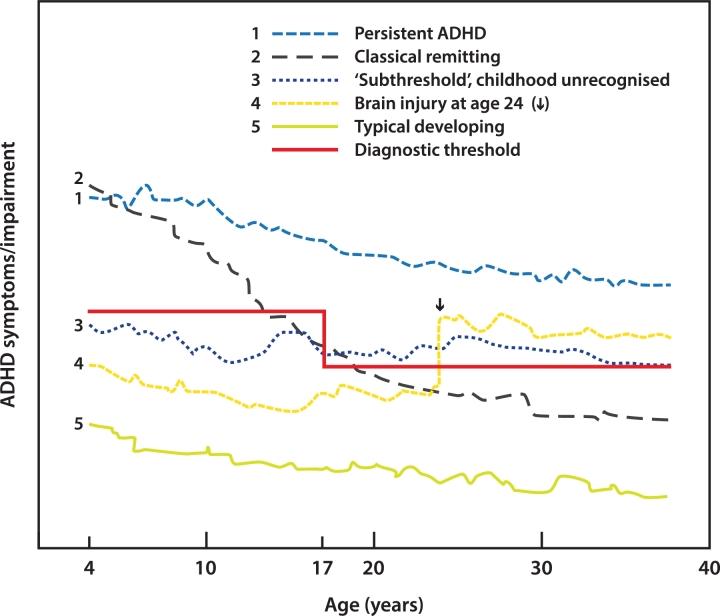
Attention-deficit/hyperactivity disorder (ADHD) is highly heritable and the most common neurodevelopmental disorder in childhood. In recent decades, it has been appreciated that in a substantial number of cases the disorder does not remit in puberty, but persists into adulthood. Both in childhood and adulthood, ADHD is characterised by substantial comorbidity including substance use, depression, anxiety, and accidents. However, course and symptoms of the disorder and the comorbidities may fluctuate and change over time, and even age of onset in childhood has recently been questioned. Available evidence to date is poor and largely inconsistent with regard to the predictors of persistence versus remittance. Likewise, the development of comorbid disorders cannot be foreseen early on, hampering preventive measures. These facts call for a lifespan perspective on ADHD from childhood to old age. In this selective review, we summarise current knowledge of the long-term course of ADHD, with an emphasis on clinical symptom and cognitive trajectories, treatment effects over the lifespan, and the development of comorbidities. Also, we summarise current knowledge and important unresolved issues on biological factors underlying different ADHD trajectories. We conclude that a severe lack of knowledge on lifespan aspects in ADHD still exists for nearly every aspect reviewed. We encourage large-scale research efforts to overcome those knowledge gaps through appropriately granular longitudinal studies.
Overview
The claims and statistics of this paper haven’t been checked yet.
Run the check — free, no account needed. It reads the open-access text and checks the sources it cites.
Integrity signals
Registry
Cites
Statistics
Figures
Verification
Claims the paper makes
The claims and statistics of this paper haven’t been checked yet.
Run the check — free, no account needed. It reads the open-access text and checks the sources it cites.
Claims other papers make about this one
Each is checked against this paper’s own text: does it say what the citing paper says it does?
The cited source says what the claim attributes to it.
In the citing paper
“it is unclear whether the prevalence of adult ADHD changes with age.”
From The decreasing prevalence of ADHD across the adult lifespan confirmed (2022) · cites this paper as [5]
The cited source says what the claim attributes to it.
In the citing paper
“compared to childhood ADHD, adult ADHD has received far less research attention”
From The decreasing prevalence of ADHD across the adult lifespan confirmed (2022) · cites this paper as [5]
The cited source says what the claim attributes to it.
In the citing paper
“adult ADHD definitions strongly varying between studies”
From The decreasing prevalence of ADHD across the adult lifespan confirmed (2022) · cites this paper as [5]
The cited source says what the claim attributes to it.
In the citing paper
“few large population-based data sets spanning the full adult lifespan available [4-7]”
From The decreasing prevalence of ADHD across the adult lifespan confirmed (2022) · cites this paper as [5]
Self-check
Percentages, sums and reported differences re-computed from the paper’s own numbers.
The self-check needs the paper’s full text.
Citations
Cites
1 retracted
Immediate-release methylphenidate for attention deficit hyperactivity disorder (ADHD) in adults
Epstein, T., Patsopoulos, N. A., & Weiser, M. (2014) · Cochrane Database of Systematic Reviews · doi:10.1002/14651858.cd005041.pub2 · Cited by 65
RetractedDiagnostic and Statistical Manual of Mental Disorders
Williams, J. B. W., & First, M. B. (2013) · Oxford University Press eBooks · doi:10.1093/acrefore/9780199975839.013.104 · Cited by 109,845
The worldwide prevalence of ADHD: a systematic review and metaregression analysis
Polanczyk, G., de Lima, M. S., Horta, B. L., Biederman, J., & Rohde, L. A. (2007) · American Journal of Psychiatry · doi:10.1176/ajp.2007.164.6.942 · Cited by 5,346
Prevalence and development of psychiatric disorders in childhood and adolescence
Costello, E. J., Mustillo, S., Erkanli, A., Keeler, G., & Angold, A. (2003) · Archives of General Psychiatry · doi:10.1001/archpsyc.60.8.837 · Cited by 4,035
Kessler, R. C., Adler, L., Barkley, R., Biederman, J., Conners, C. K., Demler, O., Faraone, S. V., Greenhill, L. L., Howes, M. J., Secnik, K., et al. (2006) · American Journal of Psychiatry · doi:10.1176/ajp.2006.163.4.716 · Cited by 3,886
Self-citationWillcutt, E. G., Doyle, A. E., Nigg, J. T., Faraone, S. V., & Pennington, B. F. (2005) · Biological Psychiatry · doi:10.1016/j.biopsych.2005.02.006 · Cited by 3,568
Self-citationAn Expanded View of Complex Traits: From Polygenic to Omnigenic
Boyle, E. A., Li, Y. I., & Pritchard, J. K. (2017) · Cell · doi:10.1016/j.cell.2017.05.038 · Cited by 2,851
Molecular genetics of attention-deficit/hyperactivity disorder
Faraone, S. V., Perlis, R. H., Doyle, A. E., Smoller, J. W., Goralnick, J. J., Holmgren, M. A., & Sklar, P. (2005) · Biological Psychiatry · doi:10.1016/j.biopsych.2004.11.024 · Cited by 2,357
Self-citationFARAONE, S. V., BIEDERMAN, J., & MICK, E. (2006) · Psychological Medicine · doi:10.1017/s003329170500471x · Cited by 2,267
Self-citationGenetic relationship between five psychiatric disorders estimated from genome-wide SNPs
Cross-Disorder Group of the Psychiatric Genomics Consortium (2013) · Nature Genetics · doi:10.1038/ng.2711 · Cited by 2,263
Self-citation
Research works printed but not linked: 6
- Arcos-Burgos, 2010, A common variant of the latrophilin 3 gene, LPHN3, confers susceptibility to ADHD and predicts effectiveness of stimulant medication, Mol. Psychiatry, 15, 1053, 10.1038/mp.2010.6 · DOI
- Cheung, 2015, Childhood predictors of adolescent and young adult outcome in ADHD, J. Psychiatr. Res., 62, 92, 10.1016/j.jpsychires.2015.01.011 · DOI
- Lasky-Su, 2008, Genome-wide association scan of quantitative traits for attention deficit hyperactivity disorder identifies novel associations and confirms candidate gene associations, Am. J. Med. Genet. B Neuropsychiatr. Genet., 147b, 1345, 10.1002/ajmg.b.30867 · DOI
- Lyon, 2011, Exome sequencing and unrelated findings in the context of complex disease research: ethical and clinical implications, Discov. Med., 12, 41
- Michelini, 2016, Attention-deficit/hyperactivity disorder remission is linked to better neurophysiological error detection and attention-vigilance processes, Biol. Psychiatry, 80, 923, 10.1016/j.biopsych.2016.06.021 · DOI
- Schachar, 2015, Mental health implications of traumatic brain injury (TBI) in children and youth, J. Can. Acad. Child Adolesc. Psychiatry, 24, 100
Cited by
Sorted by citations
Items 301–400 of 569
Fasano, A., Biancardi, C., Masi, G., Vecchia, S. D., Frumento, P., Mazzoni, A., Falotico, E., Faraguna, U., & Sicca, F. (2022) · Journal of Psychiatric Research · doi:10.1016/j.jpsychires.2022.10.057 · Cited by 7
Haugan, A.-L. J., Sund, A. M., Thomsen, P. H., Lydersen, S., & Nøvik, T. S. (2022) · Frontiers in Psychiatry · doi:10.3389/fpsyt.2022.834356 · Cited by 8
“In addition, they are more often involved in risky behavior than their non-ADHD peers (36).”
BackgroundStructural brain morphometry as classifier and predictor of ADHD and reward-related comorbidities
van Rooij, D., Zhang‐James, Y., Buitelaar, J. K., Faraone, S. V., Reif, A., & Grimm, O. (2022) · Frontiers in Psychiatry · doi:10.3389/fpsyt.2022.869627 · Cited by 9
“A major factor contributing to the disease burden of ADHD in adolescent and adult populations is the high rate of comorbidities in ADHD (3).”
BackgroundSelf-citationD’Aiello, B., Battisti, A., Lazzaro, G., Pani, P., Rossi, P. D., Vara, S. D., Pretelli, I., Costanzo, F., Vicari, S., & Menghini, D. (2022) · International Journal of Environmental Research and Public Health · doi:10.3390/ijerph19084575 · Cited by 5
“In addition, the critical attitude of parents to pharmacotherapy pushes them to consider other treatment options, such as cognitive behavioral therapy, which however produces modest effects [19].”
BackgroundPark, S., & Chang, H. (2022) · Frontiers in Psychology · doi:10.3389/fpsyg.2021.736840 · Cited by 7
Atypical resting-state gamma band trajectory in adult attention deficit/hyperactivity disorder
Tombor, L., Kakuszi, B., Papp, S., Réthelyi, J., Bitter, I., & Czobor, P. (2021) · Journal of Neural Transmission · doi:10.1007/s00702-021-02368-2 · Cited by 8
“Although the symptoms, clinical characteristics, and neurocognitive profile of ADHD change over time, there is still a lack of knowledge about the lifespan aspects of the electrophysiological alterations of the disorder (Franke 2018).”
BackgroundSelf-citationImmediate-release methylphenidate for attention deficit hyperactivity disorder (ADHD) in adults
Cândido, R. C. F., de Padua, C. A. M., Golder, S., & Junqueira, D. R. (2021) · Cochrane Database of Systematic Reviews · doi:10.1002/14651858.cd013011.pub2 · Cited by 35
“Cochrane Database of Systematic Reviews Franke 2018 Franke B, Michelini G, Asherson P, Banaschewski T, Bilbow A, Buitelaar JK, et al. Live fast, die young?”
BackgroundBurek, B., & Martinussen, R. (2020) · Mind Brain and Education · doi:10.1111/mbe.12270 · Cited by 6
Vilor‐Tejedor, N., Ikram, M. A., Roshchupkin, G. V., Vinke, E. J., Vernooij, M. W., & Adams, H. H. H. (2020) · Frontiers in Psychiatry · doi:10.3389/fpsyt.2020.00574 · Cited by 6
Insomnia, Alcohol Consumption and ADHD Symptoms in Adults
Lundervold, A., Jensen, D. A., & Haavik, J. (2020) · Frontiers in Psychology · doi:10.3389/fpsyg.2020.01150 · Cited by 6
Self-citationDemontis, D., Walters, R., Rajagopal, V., Waldman, I., Grove, J., Als, T., Dalsgaard, S., Ribasés, M., Grauholm, J., Bækvad-Hansen, M., et al. (2019) · bioRxiv · doi:10.1101/791160 · Cited by 6
Self-citationXueke, W., & Tingyong, F. (2023) · Advances in Psychological Science · doi:10.3724/sp.j.1042.2023.02106 · Cited by 7
Merscher, J., Barra, S., Xander, A. M., Patrasc, P. G., Retz-Junginger, P., & Retz, W. (2025) · Scientific Reports · doi:10.1038/s41598-024-74222-w · Cited by 6
Prenatal Acetaminophen Exposure and its Associated Risk for Attention Deficit Hyperactivity Disorder
J. Spillers, N., C. Talbot, N., M. Luther, P., H. Ly, G., J. Roberts, C., Ahmadzadeh, S., Shekoohi, S., Viswanath, O., & D. Kaye, A. (2024) · Health Psychology Research · doi:10.52965/001c.125267 · Cited by 5
Schaer, R., Wenger, N., Steiner, S., Notter, T., & Meyer, U. (2026) · Neuropsychopharmacology · doi:10.1038/s41386-026-02373-7 · Cited by 4
Zoppé, H., Trocmet, L., Rambault, A., Abtroun, Y., Defresne, D., Ansoborlo, M., Hazard, M., & Bonnet-Brilhault, F. (2025) · Asian Journal of Psychiatry · doi:10.1016/j.ajp.2025.104561 · Cited by 5
Nitschke, A. S., Salmanpour, A., Kaur, P., do Valle, H. A., Elwood, C. N., Gadermann, A., Guhn, M., Hippman, C., Ip, A., Karim, J. L., et al. (2025) · Pharmacoepidemiology and Drug Safety · doi:10.1002/pds.70129 · Cited by 4
“Appropriate treatment of ADHD is an important public health issue, as ADHD is associated with high rates of psychiatric [41, 42] and somatic symptoms and conditions [43, 44], as well as increased risk for poor educational, occupational, and social outcomes [45, 46].”
Devor, T., Einziger, T., Ben-Shachar, M. S., Klein, C., Auerbach, J. G., & Berger, A. (2025) · Psychophysiology · doi:10.1111/psyp.14764 · Cited by 5
“This change is evident both in symptomatology appearance and in the development of neural structures over the years (Franke et al. 2018; Halperin and Healey 2011).”
Konaç, A., Bini, M., Fusco, N., & Bourdin, P. (2024) · JMIR XR and spatial computing. · doi:10.2196/57225 · Cited by 5
Purece, A., Thomsen, S. T., Plass, D., Spyropoulou, A., Machera, K., Palmont, P., Crépet, A., Benchrih, R., Devleesschauwer, B., Wieland, N., et al. (2024) · Environmental Health · doi:10.1186/s12940-024-01131-w · Cited by 5
“…attributable ADHD cases, therefore justifying the expansion of the window of effect compared to the age category for which the exposure-effect association was derived, assuming that prevalent cases of ADHD could have developed at an earlier age and having persisted throughout late adolescence [43].”
BackgroundEstrada‐Prat, X., Romero, S., Borràs, R., Merranko, J. A., Goldstein, T. R., Hafeman, D., Hower, H. M., Yen, S., Hunt, J., Goldstein, B. I., et al. (2024) · Journal of Affective Disorders · doi:10.1016/j.jad.2024.10.115 · Cited by 5
Robertz, A., Törnhage, C.-J., Nilsson, S., Nyman, V., & Kantzer, A.-K. (2024) · Complementary Therapies in Clinical Practice · doi:10.1016/j.ctcp.2024.101909 · Cited by 5
Zhang, S., Yu, S., Cui, X., Liang, L., & Li, X. (2025) · Journal of Attention Disorders · doi:10.1177/10870547251405008 · Cited by 5
“These children often demonstrate behavioral problems and functional impairments yet face barriers to accessing evidence-based treatments (DeSerisy et al., 2019; Hong et al., 2014; Sayal et al., 2018; Wang et al., 2023).”
The gut-microbiome in adult Attention-deficit/hyperactivity disorder - A Meta-analysis
Jakobi, B., Vlaming, P., Mulder, D., Marta Ribasés, A., Vanesa Richarte, B., Ramos‐Quiroga, J. A., Tendolkar, I., van Eijndhoven, P., Vrijsen, J. N., Buitelaar, J. K., et al. (2024) · European Neuropsychopharmacology · doi:10.1016/j.euroneuro.2024.07.004 · Cited by 20
Self-citationHøberg, A., Solberg, B. S., Hegvik, T., & Haavik, J. (2024) · BMC Psychiatry · doi:10.1186/s12888-024-05925-7 · Cited by 7
“Notably, all of these established risk factors have a polygenic genetic risk component that partially overlaps with ADHD genetic risk [5, 43, 44].”
BackgroundSelf-citationMayer, J. S., Kohlhas, L., Stermann, J., Medda, J. E., Brandt, G. A., Grimm, O., Pawley, A. D., Asherson, P. J., Sanchez, J. P., Vanesa Richarte, B., et al. (2024) · European Archives of Psychiatry and Clinical Neuroscience · doi:10.1007/s00406-024-01784-1 · Cited by 5
“ADHD is associated with co-occurring mental [1] and somatic conditions [2] that add to individual disease burden [2–4].”
BackgroundSelf-citationADHD Diagnosis and Biomarker Detection Based on Multimodal Graph Convolutional Neural Network
Gao, Y., Wang, X.-T., Jiang, A.-M., Chen, Y., & Tang, Y.-B. (2024) · IEEE International Conference on Acoustics, Speech, and Signal Processing · doi:10.1109/icassp48485.2024.10446345 · Cited by 5
“Although early interventions help mitigate progression of this disorder, diagnosing ADHD remains challenging due to its clinical heterogeneity and reliance on subjective evaluations [2, 3].”
BackgroundÖğütlü, H., Kütük, Ö. M., Tufan, A. E., Akay, A. P., Gündoğdu, Ö. Y., & Ercan, E. S. (2024) · Frontiers in Psychiatry · doi:10.3389/fpsyt.2024.1372341 · Cited by 5
Daniel, H. M. C., Bráz, A., Caye, A., Suleman, A., Fumo, W., & Rohde, L. A. (2024) · Revista Brasileira de Psiquiatria · doi:10.47626/1516-4446-2023-3343 · Cited by 5
“18,36,37 Thus, our findings support the cross-cultural validity of the DSM-5’s conceptualization of ADHD.”
BackgroundSomogyi, S., Kilencz, T., Szőcs, K., Klein, I., Balogh, L., Molnár, R., Bálint, S., Pulay, A. J., Nemoda, Z., Baradits, M., et al. (2023) · European Archives of Psychiatry and Clinical Neuroscience · doi:10.1007/s00406-023-01702-x · Cited by 5
“As a consequence, it needs to be targeted with complex clinical and psychosocial modalities and considered in the lifespan perspective [12–14].”
BackgroundSelf-citationBunford, N., Hámori, G., Nemoda, Z., Angyal, N., Fiáth, R., Sebők-Welker, T., Pászthy, B., Ulbert, I., & Réthelyi, J. (2023) · Comprehensive Psychiatry · doi:10.1016/j.comppsych.2023.152389 · Cited by 9
Self-citationLuderer, M., Seidt, J., Gerhardt, S., Hoffmann, S., Vollstädt‐Klein, S., Reif, A., & Sobanski, E. (2023) · Frontiers in Psychiatry · doi:10.3389/fpsyt.2023.1112843 · Cited by 6
“EF deficits are associated with an increased risk for treatment drop-out in AUD (54) and SUD + ADHD (55) and lower QoL in ADHD (56).”
BackgroundInfluentialSelf-citationRocca, F. D., Maremmani, A. G. I., Bacciardi, S., Pacini, M., Lamanna, F., Tripodi, B., Miccoli, M., & Maremmani, I. (2023) · International Journal of Environmental Research and Public Health · doi:10.3390/ijerph20054566 · Cited by 6
Heradstveit, O., Askeland, K. G., Bøe, T., Lundervold, A. J., Elgen, I. B., Skogen, J. C., Pedersen, M. U., & Hysing, M. (2022) · Journal of Attention Disorders · doi:10.1177/10870547221105063 · Cited by 5
“…Mitchison & Njardvik, 2019; Szatmari et al., 1989; Willcutt et al., 1999), as well as an increased risk of substance-related problems (SRP) (Agnew-Blais et al., 2018; Erskine et al., 2016; Franke et al., 2018; Heradstveit et al., 2018; Lee et al., 2011; Molina & Pelham, 2003; Yewers et al., 2005).”
BackgroundBustos-Valenzuela, P., August Romeo, A., Boxhoorn, S., Helfer, B., Freitag, C. M., Asherson, P. J., & Supèr, H. (2022) · Psychiatry Research Communications · doi:10.1016/j.psycom.2022.100045 · Cited by 6
Self-citationImproving accuracy of ADHD subtype diagnoses with the ADHD symptom rating scale
Rogers, E., Graves, S., Freeman, A. J., Paul, M. G., Etcoff, L., & Allen, D. (2022) · Child Neuropsychology: A Journal of Normal and Abnormal Development in Childhood and Adolescence · doi:10.1080/09297049.2022.2044768 · Cited by 5
Fadeuilhe, C., Daigre, C., Grau‐López, L., Vanesa Richarte, B., Palma-Álvarez, R. F., Montse Corrales, F., Sáez, B., Baz, M., & Ramos‐Quiroga, J. A. (2021) · Psychiatry Research · doi:10.1016/j.psychres.2021.114349 · Cited by 8
Self-citationPereira-Sánchez, V., Franco, A. R., de Castro‐Manglano, P., Fernández‐Seara, M. A., Vallejo-Valdivielso, M., Díez‐Suárez, A., Fernández-Martínez, M., de Eulate, M. R. G., Milham, M. P., Soutullo, C. A., et al. (2021) · Frontiers in Psychiatry · doi:10.3389/fpsyt.2021.759696 · Cited by 6
“Attention-deficit/hyperactivity disorder (ADHD) is a neurodevelopmental disorder affecting 5–10% of children and adolescents (1) and persisting into adulthood in about half of cases (2).”
BackgroundMethodTengeler, A. C., Emmerzaal, T. L., Geenen, B., Verweij, V., van Bodegom, M., Morava, É., Kiliaan, A. J., & Kozicz, T. (2021) · Scientific Reports · doi:10.1038/s41598-021-92203-1 · Cited by 6
Early maternal care and amygdala habituation to emotional stimuli in adulthood
Holz, N., Häge, A., Plichta, M., Boecker-Schlier, R., Jennen-Steinmetz, C., Baumeister, S., Meyer-Lindenberg, A., Laucht, M., Banaschewski, T., & Brandeis, D. (2021) · Social Cognitive and Affective Neuroscience · doi:10.1093/scan/nsab059 · Cited by 5
“Such results would be particularly relevant as ADHD represents the most common neurodevelopmental disorder frequently accompanied by a range of coexisting internalizing symptoms (Polanczyk et al., 2007; Taurines et al., 2010; Franke et al., 2018).”
BackgroundSelf-citationReduced fronto-striatal volume in ADHD in two cohorts across the lifespan
Cupertino, R., Soheili-Nezhad, S., Grevet, E., Bandeira, C., Picon, F., Tavares, M., Naaijen, J., van Rooij, D., Akkermans, S., Vitola, E., et al. (2019) · bioRxiv · doi:10.1101/790204 · Cited by 5
“hyperactivity/impulsivity, adolescents and adults often experience more symptoms of inattention (1,5).”
BackgroundSelf-citationSani, S. H. Z., Sadeghi‐Bazargani, H., Fathirezaie, Z., Hadidi, Y., & Brand, S. (2019) · Transportation Research Part F Traffic Psychology and Behaviour · doi:10.1016/j.trf.2019.09.010 · Cited by 5
Changes in Genetic Contributions to ASD and ADHD by Year of Diagnosis
LaBianca, S., Lousdal, M. L., Krebs, M. D., Hansen, O. S., Hellberg, K.-L. G., Lundberg, M., Sørensen, J. Ø., Gådin, J. R., Ohlsson, H., Grove, J., et al. (2026) · JAMA Psychiatry · doi:10.1001/jamapsychiatry.2026.1450 · Cited by 9
Georgiou, G. P. (2025) · Acoustics · doi:10.3390/acoustics7040072 · Cited by 4
“…criteria also diverge: ADHD/ASD require developmental history and symptom-based thresholds in DSM/ICD, whereas AD now emphasizes biological definition and staged criteria, and PD employs Movement Disorder Society clinical diagnostic criteria with specified supportive and exclusion features [14,15].”
Cai, Y., Holmes, J., Michelini, G., Eley, T., & Gathercole, S. (2025) · Research on Child and Adolescent Psychopathology · doi:10.1007/s10802-025-01377-z · Cited by 4
“Adolescents with ADHD exhibited persistently elevated levels of parent-reported inattention and hyperactivity/ impulsivity at ages 12 and 16, reinforcing evidence that childhood ADHD is a developmentally stable condition (Franke et al., 2018 ).”
Self-citationChen, L.-C., Bai, Y.-M., Tsai, S., Hsu, J.-W., & Chen, M.-H. (2025) · Psychiatry Research · doi:10.1016/j.psychres.2025.116644 · Cited by 4
Öksüzoğlu, M. E., Rollas, T., Erdogan, I. M., Aliyev, E. S. A., Ünal, D., Karahan, S., Esen, T. Ç., & Yağcıoğlu, A. (2025) · Psychiatry Research · doi:10.1016/j.psychres.2025.116643 · Cited by 4
Klinefelter syndrome and ADHD: a short systematic review
Zamboni, L., Fusina, F., Casari, R., Lugoboni, F., Zandonai, T., Cappelletti, S., & Federico, A. (2025) · Frontiers in Psychiatry · doi:10.3389/fpsyt.2025.1585259 · Cited by 6
Andersen, A. C., Thomsen, P. H., Lydersen, S., Sund, A. M., Haugan, A.-L. J., & Nøvik, T. S. (2025) · Nordic Journal of Psychiatry · doi:10.1080/08039488.2025.2506558 · Cited by 5
Kolari, T. A., Vuori, M. A., Rättö, H., Varimo, E. A., Aronen, E. T., Auranen, K. J., Saastamoinen, L., & Ruokoniemi, P. T. (2025) · European Child & Adolescent Psychiatry · doi:10.1007/s00787-025-02735-4 · Cited by 4
“Attention deficit hyperactivity disorder (ADHD) is a com - mon neurodevelopmental disorder, including persistent symptoms of inattention, hyperactivity, and impulsivity that interfere with cognitive and social functioning [1].”
van Oort, J., Tendolkar, I., Vrijsen, J. N., Collard, R. M., Gardner, G., Duyser, F. A., Fernández, G., Bachi, K., & van Eijndhoven, P. (2025) · Journal of Affective Disorders · doi:10.1016/j.jad.2025.03.194 · Cited by 5
Smith, S., & McVeigh, J. (2025) · Disabilities · doi:10.3390/disabilities5010024 · Cited by 42
Durdurak, B., Morales-Muñoz, I., Hosang, G., & Marwaha, S. (2025) · European psychiatry · doi:10.1192/j.eurpsy.2025.24 · Cited by 4
“[16, 59, 60] Sixth, the ALSPAC cohort was recruited in one region in Southwest England comprising mainly White participants, and therefore our findings may not generalize to other settings or birth cohorts.”
Identification of diagnostic and therapeutic biomarkers for attention‐deficit/hyperactivity disorder
Lee, S.-Y., Wang, L.-J., & Yen, C.-F. (2025) · Kaohsiung Journal of Medical Sciences · doi:10.1002/kjm2.12931 · Cited by 4
Bayas, M., Kockler, T. D., Ramos‐Quiroga, J. A., Caller, S. M., Fadeuilhe, C., de Girolamo, G., Iozzino, L., D’Addazio, M., Haavik, J., Halmøy, A., et al. (2024) · International Journal of Bipolar Disorders · doi:10.1186/s40345-024-00367-2 · Cited by 4
Self-citationOh, Y., Kim, Y., & Ryu, V. (2024) · Asian Journal of Psychiatry · doi:10.1016/j.ajp.2024.104277 · Cited by 5
The relationship between sphingomyelin and ceramide levels and soft neurological signs in ADHD
Güleç, A., Türkoğlu, S., & Kocabaş, R. (2024) · Journal of Neural Transmission · doi:10.1007/s00702-024-02831-w · Cited by 4
“Identifying risk factors can aid in understanding the underlying mechanisms of the disorder and developing preventive strategies and interventions to reduce the burden of ADHD (Franke et al. 2018 ).”
The socioeconomic burden of adult attention-deficit/hyperactivity disorder in Spain
Merino, M., Maravilla‐Herrera, P., Lorenzo, T. M., Arance, J. A., Bobes, J., Montse Corrales, F., Guzmán, F., Morales, M. D. C., & Mur, C. (2024) · Global & Regional Health Technology Assessment · doi:10.33393/grhta.2024.2697 · Cited by 3
Browning, L., Cannoy, C. N., Moses, T. E. H., Lundahl, L. H., Ledgerwood, D. M., & Greenwald, M. K. (2024) · Drug and Alcohol Dependence · doi:10.1016/j.drugalcdep.2024.111292 · Cited by 3
van Doornik, R., der Oord, S. V., Luijckx, J., Groenman, A. P., Leijten, P. H. O., Luman, M., Hoekstra, P. J., van den Hoofdakker, B. J., & Dekkers, T. J. (2024) · BMC Psychiatry · doi:10.1186/s12888-024-05649-8 · Cited by 8
“When left untreated, problems may exacerbate and put children at risk of adverse outcomes later on in life, such as school dropout, delinquency, substance use and depression [3, 4].”
BackgroundAndersen, A. C., Sund, A. M., Thomsen, P. H., Lydersen, S., Young, S., & Nøvik, T. S. (2024) · Nordic Journal of Psychiatry · doi:10.1080/08039488.2024.2301774 · Cited by 4
“Psychiatric comorbidity including behavioural problems, substance use disorder, anxiety, and depression disorders is common and there is a high risk of adverse outcomes and a negative life trajectory into adulthood [5,6].”
BackgroundSexual development in ADHD and internet pornography consumption
Privara, M., & Bob, P. (2023) · Frontiers in Psychiatry · doi:10.3389/fpsyt.2023.1240222 · Cited by 7
Is WISC-IV Working Memory Index associated with ADHD symptoms in 7–8-year-olds?
Marinopoulou, M., Hallerbäck, M. U., Bornehag, C., & Billstedt, E. (2023) · Applied Neuropsychology Child · doi:10.1080/21622965.2023.2176232 · Cited by 4
“These variables were chosen because they have been shown to influence hyperactivity, inattention and EF (Franke et al., 2018; Jurado & Rosselli, 2007).”
Tarchi, L., Damiani, S., La‐Torraca‐Vittori, P., Frick, A., Castellini, G., Politi, P., Fusar‐Poli, P., & Ricca, V. (2023) · Developmental Psychobiology · doi:10.1002/dev.22366 · Cited by 5
H is for hypersexual: Sexuality in youths with ADHD
Hale, E. W., Murphy, M. O., & Thompson, K. (2022) · Frontiers in Child and Adolescent Psychiatry · doi:10.3389/frcha.2022.1048732 · Cited by 4
“Though diagnosis focuses on an extended period of disruptive hyperactive-impulsive and/or inattentive symptoms attention, ADHD has also been associated with an increased risk for obesity, sleep problems, sexually transmitted infections, immune disorders, metabolic disorders, and other health risks [2].”
BackgroundFurukawa, E., Uchida, R., Tatsuki, M. O., Fitts, M., & Tripp, G. (2022) · Frontiers in Psychiatry · doi:10.3389/fpsyt.2022.885496 · Cited by 4
“Four of the top 5 nouns for boys and girls occupied the same position [friend (1), brother (3), world (4), people (5)].”
BackgroundChange Blindness in Adolescents With Attention-Deficit/Hyperactivity Disorder: Use of Eye-Tracking
Hochhauser, M., Aran, A. A., & Grynszpan, O. (2022) · Frontiers in Psychiatry · doi:10.3389/fpsyt.2022.770921 · Cited by 6
“Studies have shown that deficits in visual processing, vigilance, and inhibition continue into adolescence, at the same time, showing inconsistencies in response times impairments specifically in adolescence (7).”
BackgroundDoes Anxiety Symptomatology Affect Bullying Behavior in Children and Adolescents with ADHD?
Pityaratstian, N., & Prasartpornsirichoke, J. (2022) · Child & Youth Care Forum · doi:10.1007/s10566-022-09681-1 · Cited by 10
“3:1 in this study is consistent with the male preponderance rates in ADHD samples from other studies (Franke et al., 2018; Owens et al., 2015).”
ResultPolygenic profiles define aspects of clinical heterogeneity in ADHDPreprint
Schork, A., LaBianca, S., Brickell, I., Helenius, D., Loughnan, R., Mefford, J., Palmer, C., Walker, R. L., Gådin, J., Krebs, M., et al. (2021) · medRxiv · doi:10.1101/2021.07.13.21260299 · Cited by 4
Correll, C. U., Starling, B. R., & Huß, M. (2021) · CNS Spectrums · doi:10.1017/s1092852921000341 · Cited by 3
“Ameta-analysis of 18 trials found that, compared with placebo, treatment with methylphenidate resulted in a moderate improvement in ADHD symptoms in adults.21 Additionally, a large analysis of 133 studies (51 of which focused on adults) found that amphetamines, methylphenidate, bupropion, and atomoxetine improved ADHD…”
BackgroundResultInfluentialRostami, M., Khosrowabadi, R., Albrecht, B., Rothenberger, A., & Pouretemad, H. (2020) · Nordic Journal of Psychiatry · doi:10.1080/08039488.2020.1787512 · Cited by 4
The Positive Aspects of Attention-Deficit/Hyperactivity Disorder among Famous People
Lee, J. W., Seo, K., & Bahn, G. H. (2020) · Psychiatry Investigation · doi:10.30773/pi.2020.0036 · Cited by 5
Multi-Informant Ratings of Irritability and Disruptiveness in School-Aged Children with ADHD
Vuori, M. A., Autti‐Rämö, I., Junttila, N., & Tuulio‐Henriksson, A. (2020) · International Journal of Disability Development and Education · doi:10.1080/1034912x.2020.1755426 · Cited by 4
“Approximately 5% of children suffer from clinically significant symptoms (Franke et al., 2018; Sayal et al., 2018).”
BackgroundNeurobiological Convergence in SPDs and ADHD: Insights from a Narrative Review
Corbo, D., & Grandi, L. C. (2026) · Biology · doi:10.3390/biology15020198 · Cited by 3
“These results are of critical importance since they demonstrate that even ADHD has a different clinical profile across the lifespan; also, in terms of the comorbidity profile [74,75], these changes do not reflect brain-related modifications [25].”
Hormonal effects on externalizing problems in females across the lifespan
Martel, M. M., Eng, A. G., Nirjar, U., Petersen, M. K., Ramirez, M. P., Litteral, C. A., & Robinson, L. E. (2025) · Frontiers in Neuroendocrinology · doi:10.1016/j.yfrne.2025.101206 · Cited by 3
Tomlinson, E., Owen-Smith, A., Benavente, M., Cooper, C., Jones, H. E., Ward, M., Walker, J. G., Wang, H., Manzano, C. L., Hank, D., et al. (2025) · BMJ Open · doi:10.1136/bmjopen-2024-095479 · Cited by 3
van der Plas, N. E., Noordermeer, S. D. S., Oosterlaan, J., & Luman, M. (2025) · Journal of the American Academy of Child & Adolescent Psychiatry · doi:10.1016/j.jaac.2025.04.012 · Cited by 16
Guigou, Y., Hennequin, A., Marchand, T., Chebli, M., Pisella, L., Staccini, P., & Vannucci, V. D. (2025) · Frontiers in Psychiatry · doi:10.3389/fpsyt.2025.1466107 · Cited by 3
Federico, A., & Bradshaw, J. L. (2025) · Infant Behavior and Development · doi:10.1016/j.infbeh.2025.102039 · Cited by 3
The hippocampus–IPL connectivity links to ADHD traits through sensory processing sensitivity
Zhou, L., Xu, T., & Feng, T. (2025) · Cerebral Cortex · doi:10.1093/cercor/bhaf063 · Cited by 4
Genomics of Attention Deficit Hyperactivity Disorder
Haavik, J. (2025) · Psychiatric Clinics of North America · doi:10.1016/j.psc.2025.01.011 · Cited by 4
Self-citationGurgel, W. D. S., Garcia‐Argibay, M., D'Onofrio, B. M., Larsson, H., & Polanczyk, G. V. (2024) · Journal of Child Psychology and Psychiatry · doi:10.1111/jcpp.14093 · Cited by 5
Self-citationAbsent or Hidden? Hyperactivity in Females With ADHD
Wettstein, R., Navarro-Ovando, V., Pirgon, E., Kroesen, J., Wettstein, K., Kroesen, H., Mathôt, R. A. A., & Dumont, G. (2024) · Journal of Attention Disorders · doi:10.1177/10870547241273152 · Cited by 4
Ginting, R., Sagala, A. K., Nst, M. A., Simamora, M., Pulungan, R. A., Silalahi, R. U., Ginting, S. N. B., Pane, S., & Fatimah, Y. N. (2023) · DIKSI Jurnal Kajian Pendidikan dan Sosial · doi:10.53299/diksi.v4i2.361 · Cited by 3
Derin, S., Ersin, M., & Selman, S. (2023) · Psikiyatride Guncel Yaklasimlar · doi:10.18863/pgy.1241913 · Cited by 3
He, Q., Keding, T. J., Zhang, Q., Miao, J., Russell, J. D., Herringa, R. J., Lu, Q., Travers, B. G., & Li, J. J. (2023) · Journal of Neurodevelopmental Disorders · doi:10.1186/s11689-023-09498-6 · Cited by 4
“…also supports the possibility that the genetic liability for ADHD may be developmentally specific, such that the AnnoPred ADHD PGS was only associated with IA but not HI symptoms in adolescence, which is consistent with the relative stability of IA symp-tomology over time in individuals [27].”
ResultRoessner, V., Ehrlich, S., Backhausen, L. L., Rempel, S., & Uhlmann, A. (2022) · European Child and Adolescent Psychiatry · doi:10.1007/s00787-022-02043-1 · Cited by 3
“This is all the more regrettable since better knowledge about the heterogeneous courses of ADHD symptoms is critically needed to better inform patients, relatives, and clinicians regarding the individuals at risk for unfavourable outcomes in later life [2].”
BackgroundA Systematic Screening of ADHD-Susceptible Variants From 25 Chinese Parents–Offspring Trios
Li, Q., Meng, Y., Wang, J., Xie, Y., Li, T., & Sun, W. (2022) · Frontiers in Genetics · doi:10.3389/fgene.2022.878036 · Cited by 4
“It has been estimated that at least 15% of children diagnosed with ADHD (childhood ADHD) will continue to retain a full diagnosis by the age of 25, approximately 40% will show just partial remission and continue to experience impairing symptoms, and only 40% will get a complete remission (Franke et al., 2018).”
BackgroundAl-Ani, R. K., Al-Sumiadai, M. M., Abdulla, A. I., & Sarhat, A. R. (2021) · Al-Anbar Medical Journal · doi:10.33091/amj.2021.171061 · Cited by 3
“However, inattentive symptoms don’t seem to have a comparable developmental advantage and in general, it will stay constant into adulthood [19].”
Bilgiç, A., Uzun, N., Işık, Ü., Açıkel, S., Çoşkun, F., & Akça, Ö. (2021) · Children's health care · doi:10.1080/02739615.2021.1894938 · Cited by 3
“ADHD in adults is related to a variety of unfavorable factors such as the presence of comorbid psychiatric disorders, poor parenting styles, low education level and low family income (Efron et al., 2018; Franke et al., 2018), which may be responsible for poor offspring behavioral outcomes.”
BackgroundSchjøtt, J. D., Heitmann, K., Bakkebø, T., & Jahnsen, J. A. (2020) · Frontiers in Pharmacology · doi:10.3389/fphar.2020.607915 · Cited by 3
Kuang, Y., & Flouri, E. (2020) · British Journal of Educational Psychology · doi:10.1111/bjep.12395 · Cited by 6
Mosheva, M., Dar, N., Madi, L. R., Weizman, A., & Gothelf, D. (2020) · International Clinical Psychopharmacology · doi:10.1097/yic.0000000000000323 · Cited by 3
“Psychiatric comorbidities of ADHD in general, and comorbidity of disruptive disorder in particular, have a negative effect on outcomes including higher rates of functional impairments, higher persistence of ADHD into adulthood, increased risk for development of substance use disorders and depression (Franke et al., 20…”
BackgroundADHS im Kindes- und Jugendalter. Update 2020
Popow, C., & Ohmann, S. (2020) · Pädiatrie & Pädologie · doi:10.1007/s00608-020-00789-y · Cited by 7
“Klinik und Komorbiditäten Die klinische Vielfalt des ADHS wird neben den Kardinalsymptomen auch beeinflusst durch das Lebensalter ([14, 118, 156, 314, 342]; .”
BackgroundHess, J., Radonjić, N., Patak, J., Glatt, S., & Faraone, S. (2019) · bioRxiv · doi:10.1101/652792 · Cited by 3
Self-citationADHD genetic liability and physical health outcomes - A two-sample Mendelian randomization studyPreprint
Leppert, B., Riglin, L., Dardani, C., Thapar, A., Staley, J. R., Tilling, K., Smith, G., Thapar, A., & Stergiakouli, E. (2019) · bioRxiv · doi:10.1101/630467 · Cited by 3
ADHD-INTERNALIZING DISORDER CO-OCCURRENCE IN CHILDHOOD AND ADOLESCENCE
Goh, P. K. (2021) · UKnowledge (University of Kentucky) · doi:10.13023/etd.2021.260 · Cited by 2
Panvino, F., Zaccaria, V., Pica, M., Amitrano, N., Pisani, F., & Di Brina, C. (2025) · Children · doi:10.3390/children12060798 · Cited by 2
van der Plas, N. E., Noordermeer, S. D. S., Franke, B., Hartman, C. A., Hoekstra, P. J., Rommelse, N. N. J., Sprooten, E., Luman, M., & Oosterlaan, J. (2026) · Psychiatry Research · doi:10.1016/j.psychres.2026.117308 · Cited by 3
Self-citationCarbone, M. G., Tripodi, B., Matarese, I., Bellini, A., Rizzato, R., Tagliarini, C., Rocca, F. D., Dominicis, F. D., Maremmani, I., Perugi, G., et al. (2026) · Journal of Clinical Medicine · doi:10.3390/jcm15072688 · Cited by 2
“This is especially the case when ADHD symptoms persist into adulthood and are accompanied by impairments in executive control and reward processing [12,74,75].”
Metadata
- Authors
- Franke, B., Michelini, G., Asherson, P., Banaschewski, T., Bilbow, A., Buitelaar, J. K., Cormand, B., Faraone, S. V., Ginsberg, Y., Haavik, J., Kuntsi, J., Larsson, H., Lesch, K.-P., Ramos-Quiroga, J. A., Réthelyi, J. M., Ribases, M., & Reif, A.
- Affiliations
- Radboud University Nijmegen (NL)
- King's College London (GB)
- Heidelberg University (DE)
- Radboud University Medical Center (NL)
- Instituto de Salud Carlos III (ES)
- SUNY Upstate Medical University (US)
- Karolinska Institutet (SE)
- Haukeland University Hospital (NO)
- Sechenov University (RU)
- Semmelweis University (HU)
- University Hospital Frankfurt (DE)
- Corresponding author
- Franke, Barbara
- ORCID
- Venue
- European Neuropsychopharmacology
- Publisher
- Elsevier BV
- Published
- 2018-10
- Volume
- 28
- Issue
- 10
- Pages
- 1059-1088
- ISSN
- 0924-977X (ISSN-L)
- PMC
- PMC6379245
- OpenAlex
- W2891070637
- Cited by
- 643
- References
- 285
- Citations by year
- 2026: 73 · 2025: 88 · 2024: 92 · 2023: 91 · 2022: 86 · 2021: 90 · 2020: 81 · 2019: 37 · 2018: 2
- FWCI
- 7.98
- Type
- journal article
- Language
- en
- Open access
- hybrid
- doi.org
- Licence
- Locations
- European Neuropsychopharmacology (publishedVersion, cc-by)
- Europe PMC (PubMed Central) (publishedVersion, cc-by)
- PubMed Central (publishedVersion, cc-by)
- PubMed (publishedVersion)
- Radboud Repository (Radboud University) (submittedVersion)
- Research Publications (Maastricht University) (submittedVersion, cc-by)
- Dipòsit Digital de Documents de la UAB (Universitat Autònoma de Barcelona) (submittedVersion, cc-by)
- Dipòsit Digital de la Universitat de Barcelona (Universitat de Barcelona) (submittedVersion, cc-by-nc-nd)
- LA Referencia (Red Federada de Repositorios Institucionales de Publicaciones Científicas) (submittedVersion, cc-by)
- Research Portal (King's College London) (submittedVersion, cc-by-nc-nd)
- Online Publication Service of Würzburg University (Würzburg University) (submittedVersion, cc-by)
- Publication Server of Goethe University Frankfurt am Main (Goethe University Frankfurt) (submittedVersion, cc-by)
- Semmelweis University Repository (Semmelweis University) (submittedVersion)
- Radboud Repository (Radboud University) (submittedVersion, other-oa)
- Research Publications (Maastricht University) (submittedVersion, other-oa)
- Funders
- European Community's Seventh Framework Programme (n° 602805 (AGGRESSOTYPE), 603016 (MATRICS), 278948 (TACTICS), 602450 (IMAGEMEND))
- European Community's Horizon 2020 Programme (n° 643051 (MiND) and 667302 (CoCA))
- Netherlands Organization for Scientific Research (NWO), i.e. the Vici Innovation Program (016-130-669)
- Hungarian Brain Research Program (NAP-B KTIA_NAP_13-2014-0011)
- Topics
- Health Sciences › Medicine › Psychiatry and Mental health › Attention Deficit Hyperactivity Disorder
- Social Sciences › Psychology › Clinical Psychology › Child and Adolescent Psychosocial and Emotional Development
- Life Sciences › Neuroscience › Cognitive Neuroscience › Autism Spectrum Disorder Research
- Keywords
- attention deficit hyperactivity disorder, ADHD persistence, remission, comorbidities, substance use disorders, depression, anxiety, accidents, age of onset, cognitive trajectories, treatment effects, lifespan development, neurodevelopmental disorders, biological factors
- MeSH terms
- Aging, Attention Deficit Disorder with Hyperactivity, Humans, Comorbidity
About these checks
Registry, retraction, Cites and statistics results are computed, not judged, with one exception: a printed reference that no index lists is read once by a model before it counts as a citation error. Claims are extracted by a model and kept only when their quote appears verbatim in the text; each cited source is then checked, with a model’s help, for whether it says what the claim relies on. Those verdicts can be wrong — read the claim’s quote and the cited source before relying on one.
Statistics and arithmetic are recomputed, not judged.
Confidence bands are shown only for fields calibrated on our annotated test set. None is calibrated yet, so no band is shown.
What counts as a claim ›How we measure confidence ›How we check this ›
Are you an author, or do you see a problem with this page? Request a review
