

The DOI matches its Crossref record; 274 of the 285 references it cites were found in a registry or an index.
Live fast, die young? A review on the developmental trajectories of ADHD across the lifespan
Open accessAbstract
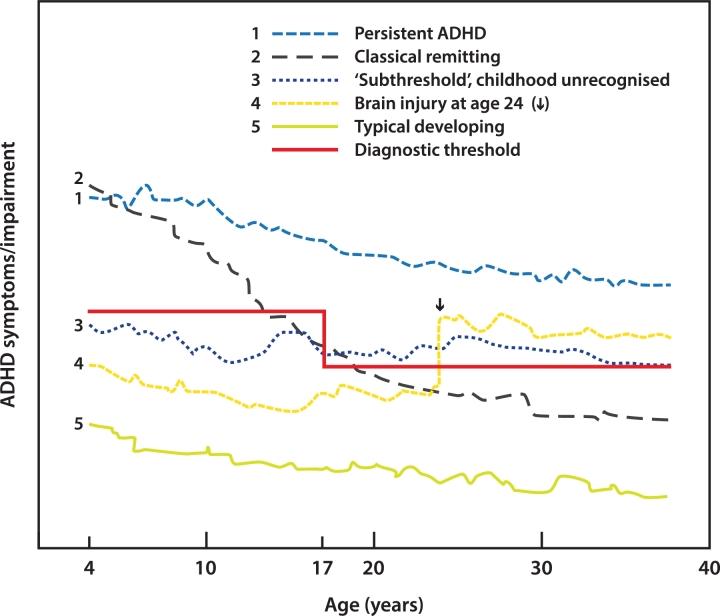
Attention-deficit/hyperactivity disorder (ADHD) is highly heritable and the most common neurodevelopmental disorder in childhood. In recent decades, it has been appreciated that in a substantial number of cases the disorder does not remit in puberty, but persists into adulthood. Both in childhood and adulthood, ADHD is characterised by substantial comorbidity including substance use, depression, anxiety, and accidents. However, course and symptoms of the disorder and the comorbidities may fluctuate and change over time, and even age of onset in childhood has recently been questioned. Available evidence to date is poor and largely inconsistent with regard to the predictors of persistence versus remittance. Likewise, the development of comorbid disorders cannot be foreseen early on, hampering preventive measures. These facts call for a lifespan perspective on ADHD from childhood to old age. In this selective review, we summarise current knowledge of the long-term course of ADHD, with an emphasis on clinical symptom and cognitive trajectories, treatment effects over the lifespan, and the development of comorbidities. Also, we summarise current knowledge and important unresolved issues on biological factors underlying different ADHD trajectories. We conclude that a severe lack of knowledge on lifespan aspects in ADHD still exists for nearly every aspect reviewed. We encourage large-scale research efforts to overcome those knowledge gaps through appropriately granular longitudinal studies.
Overview
The claims and statistics of this paper haven’t been checked yet.
Run the check — free, no account needed. It reads the open-access text and checks the sources it cites.
Integrity signals
Registry
Cites
Statistics
Figures
Verification
Claims the paper makes
The claims and statistics of this paper haven’t been checked yet.
Run the check — free, no account needed. It reads the open-access text and checks the sources it cites.
Claims other papers make about this one
Each is checked against this paper’s own text: does it say what the citing paper says it does?
The cited source says what the claim attributes to it.
In the citing paper
“it is unclear whether the prevalence of adult ADHD changes with age.”
From The decreasing prevalence of ADHD across the adult lifespan confirmed (2022) · cites this paper as [5]
The cited source says what the claim attributes to it.
In the citing paper
“compared to childhood ADHD, adult ADHD has received far less research attention”
From The decreasing prevalence of ADHD across the adult lifespan confirmed (2022) · cites this paper as [5]
The cited source says what the claim attributes to it.
In the citing paper
“adult ADHD definitions strongly varying between studies”
From The decreasing prevalence of ADHD across the adult lifespan confirmed (2022) · cites this paper as [5]
The cited source says what the claim attributes to it.
In the citing paper
“few large population-based data sets spanning the full adult lifespan available [4-7]”
From The decreasing prevalence of ADHD across the adult lifespan confirmed (2022) · cites this paper as [5]
Self-check
Percentages, sums and reported differences re-computed from the paper’s own numbers.
The self-check needs the paper’s full text.
Citations
Cites
1 retracted
Immediate-release methylphenidate for attention deficit hyperactivity disorder (ADHD) in adults
Epstein, T., Patsopoulos, N. A., & Weiser, M. (2014) · Cochrane Database of Systematic Reviews · doi:10.1002/14651858.cd005041.pub2 · Cited by 65
RetractedDiagnostic and Statistical Manual of Mental Disorders
Williams, J. B. W., & First, M. B. (2013) · Oxford University Press eBooks · doi:10.1093/acrefore/9780199975839.013.104 · Cited by 109,845
The worldwide prevalence of ADHD: a systematic review and metaregression analysis
Polanczyk, G., de Lima, M. S., Horta, B. L., Biederman, J., & Rohde, L. A. (2007) · American Journal of Psychiatry · doi:10.1176/ajp.2007.164.6.942 · Cited by 5,346
Prevalence and development of psychiatric disorders in childhood and adolescence
Costello, E. J., Mustillo, S., Erkanli, A., Keeler, G., & Angold, A. (2003) · Archives of General Psychiatry · doi:10.1001/archpsyc.60.8.837 · Cited by 4,035
Kessler, R. C., Adler, L., Barkley, R., Biederman, J., Conners, C. K., Demler, O., Faraone, S. V., Greenhill, L. L., Howes, M. J., Secnik, K., et al. (2006) · American Journal of Psychiatry · doi:10.1176/ajp.2006.163.4.716 · Cited by 3,886
Self-citationWillcutt, E. G., Doyle, A. E., Nigg, J. T., Faraone, S. V., & Pennington, B. F. (2005) · Biological Psychiatry · doi:10.1016/j.biopsych.2005.02.006 · Cited by 3,568
Self-citationAn Expanded View of Complex Traits: From Polygenic to Omnigenic
Boyle, E. A., Li, Y. I., & Pritchard, J. K. (2017) · Cell · doi:10.1016/j.cell.2017.05.038 · Cited by 2,851
Molecular genetics of attention-deficit/hyperactivity disorder
Faraone, S. V., Perlis, R. H., Doyle, A. E., Smoller, J. W., Goralnick, J. J., Holmgren, M. A., & Sklar, P. (2005) · Biological Psychiatry · doi:10.1016/j.biopsych.2004.11.024 · Cited by 2,357
Self-citationFARAONE, S. V., BIEDERMAN, J., & MICK, E. (2006) · Psychological Medicine · doi:10.1017/s003329170500471x · Cited by 2,267
Self-citationGenetic relationship between five psychiatric disorders estimated from genome-wide SNPs
Cross-Disorder Group of the Psychiatric Genomics Consortium (2013) · Nature Genetics · doi:10.1038/ng.2711 · Cited by 2,263
Self-citation
Research works printed but not linked: 6
- Arcos-Burgos, 2010, A common variant of the latrophilin 3 gene, LPHN3, confers susceptibility to ADHD and predicts effectiveness of stimulant medication, Mol. Psychiatry, 15, 1053, 10.1038/mp.2010.6 · DOI
- Cheung, 2015, Childhood predictors of adolescent and young adult outcome in ADHD, J. Psychiatr. Res., 62, 92, 10.1016/j.jpsychires.2015.01.011 · DOI
- Lasky-Su, 2008, Genome-wide association scan of quantitative traits for attention deficit hyperactivity disorder identifies novel associations and confirms candidate gene associations, Am. J. Med. Genet. B Neuropsychiatr. Genet., 147b, 1345, 10.1002/ajmg.b.30867 · DOI
- Lyon, 2011, Exome sequencing and unrelated findings in the context of complex disease research: ethical and clinical implications, Discov. Med., 12, 41
- Michelini, 2016, Attention-deficit/hyperactivity disorder remission is linked to better neurophysiological error detection and attention-vigilance processes, Biol. Psychiatry, 80, 923, 10.1016/j.biopsych.2016.06.021 · DOI
- Schachar, 2015, Mental health implications of traumatic brain injury (TBI) in children and youth, J. Can. Acad. Child Adolesc. Psychiatry, 24, 100
Cited by
Sorted by citations
Items 401–500 of 569
Tierney, J., Morrissey, A., Adamis, D., Wrigley, M., & Robinson, K. (2026) · European Child & Adolescent Psychiatry · doi:10.1007/s00787-025-02955-8 · Cited by 2
Jun, I. C. J., Salmon, C., Vinnicombe, J., Bowen, J., McNicholas, F., Adamis, D., Jayasooriya, T., Das, S., & Johnson, K. (2026) · Irish Journal of Psychological Medicine · doi:10.1017/ipm.2026.10175 · Cited by 3
Metabolomic Profile in Children and Adolescents with Attention Deficit Hyperactivity Disorders
Yadav, B. K., Tomar, M., Mohit, Pateriya, A., Kar, S., Arya, A., Shrivastava, A., & Gupta, P. (2026) · Clinical Psychopharmacology and Neuroscience · doi:10.9758/cpn.25.1344 · Cited by 2
Gorski, J., Bonjo, L., Sassu, K., & Councilor, K. (2026) · Journal of LGBTQ Issues in Counseling · doi:10.1080/26924951.2025.2598565 · Cited by 2
Piccolo, A., Fauci, M. L., Domenico, C. D., Cara, M. D., Fulgenzi, A., Mancuso, N., Bonanno, L., Tresoldi, M., Muratore, R., Impallomeni, C., et al. (2026) · Journal of Clinical Medicine · doi:10.3390/jcm15020906 · Cited by 3
“Moreover, several neuropsychiatric conditions often co-occurring during life-course [7,8] including Language Disorders (LD) in 40–50% of cases [9–12], and Specific Learning Disorder (SLD) in 25–40% [8,13].”
Gonda, X., Döme, P., Balogh, L., Baradits, M., & Réthelyi, J. (2026) · Pharmacology & Therapeutics · doi:10.1016/j.pharmthera.2026.108997 · Cited by 3
Self-citationKaraçul, F. E., & Arslan, G. (2025) · Journal of Attention Disorders · doi:10.1177/10870547251370427 · Cited by 2
“Given the distinct clinical and neurobiological profiles of ADHD subtypes, inattention symptoms are examined separately from hyperactivity/impulsivity symptoms as each subtype presents with different challenges and different developmental trajectories (Franke et al., 2018).”
Li, H., Meng, Q., Zhang, P., & Zhen, Z. (2025) · Journal of Psychiatric Research · doi:10.1016/j.jpsychires.2025.09.044 · Cited by 2
Upshaw, B. M., Spencer, S. D., Pinciotti, C. M., Zhyrov, V., Minhajuddin, A., Castillo, A. A., Abacan, A., Slater, H., Walker, R. A., Blader, J. C., et al. (2025) · Journal of Attention Disorders · doi:10.1177/10870547251353392 · Cited by 3
“This is consistent with data that ADHD often presents more prominently in younger children (De Rossi et al., 2023) due to a gradual decline of symptom severity across the lifespan (Franke et al., 2018).”
A Novel Approach to ADHD Detection Using Handwriting and Image Processing
Budak, O. Y., Adak, M. F., & Sarıgedik, E. (2025) · 2025 7th International Congress on Human-Computer Interaction, Optimization and Robotic Applications (ICHORA) · doi:10.1109/ichora65333.2025.11017072 · Cited by 2
“In approximately 70-80% of children with ADHD, symptoms persist into adolescence and may continue into adulthood [7].”
From hyper- to hypo-: ADHD medications & sexual dysfunction.
Hale, E. W., Igoe, T. J., Bernat, O., Cohan, T., & Thompson, K. P. (2025) · Journal of Sexual Medicine · doi:10.1093/jsxmed/qdaf054 · Cited by 2
Grigore, M., Ionica, M. V., Pătru, L., Gheorman, V., & Wagner, A. P. (2025) · Current Health Sciences Journal · doi:10.12865/chsj.51.01.02 · Cited by 2
“These comorbidities contribute substantially to healthcare burdens, societal challenges, and economic costs [15,17,18].”
Victoria, V., & Setiawati, Y. (2025) · Medical Forum Monthly · doi:10.60110//medforum.360201 · Cited by 2
Population-level transitions in observed difficulties through childhood and adolescence.
Benhamou, E., Akarca, D., Bathelt, J., Fletcher‐Watson, S., & Astle, D. E. (2025) · Developmental Psychology · doi:10.1037/dev0001874 · Cited by 3
“To complicate matters further, the co-occurrence of problems fl uctuates over time (Franke et al., 2018).”
Gomez, R., & Zarate, D. (2025) · Current Psychology · doi:10.1007/s12144-025-07370-5 · Cited by 2
“Evidence indicates a positive and strong association between affect lability and ADHD (Franke et al., 2018; The latest edition of the Diagnostic and Statistical Manual of Mental Disorders (DSM-5-TR) states that Attention Deficit/Hyperactivity Disorder (ADHD) is characterized by two core symptoms:…”
Epigenetic age across development in children and adolescents with ADHD
Wrigglesworth, J., Fransquet, P., Ryabinin, P., Mooney, M. A., Craig, J. M., & Silk, T. (2025) · Psychiatry Research · doi:10.1016/j.psychres.2025.116373 · Cited by 2
“These findings, however, are limited to epigenetic aging in childhood and adolescence and cannot inform on the earlier stages of development, nor on patterns in people experiencing symptoms into adulthood (Franke et al., 2018).”
TDAH en France : un défi en milieu scolaire
Fally, S. (2024) · Annales Médico-psychologiques, revue psychiatrique · doi:10.1016/j.amp.2024.09.001 · Cited by 2
Jostrup, E., Nyström, M., Tallberg, P., Söderlund, G., Gustafsson, P., & Claesdotter-Knutsson, E. (2024) · JMIR Research Protocols · doi:10.2196/56388 · Cited by 2
“The effects of stimulants have shown to be beneficial on several symptoms and impairments associated with ADHD, such as increased risk for other psychiatric disorders, substance use, increased risk for accidents and injuries, and antisocial behavior [6,7].”
BackgroundFriendship matters—An interview study with adolescents with attention deficit hyperactivity disorder
Robertz, A., Kantzer, A.-K., Nilsson, S., Törnhage, C.-J., & Nyman, V. (2024) · PLOS mental health · doi:10.1371/journal.pmen.0000023 · Cited by 2
“While it aids organisational skills, daily life skills are also necessary [42].”
Chen, Y., Ma, Y., Fan, X., Lyu, J., & Yang, R. (2024) · Journal of Zhejiang University (Medical Sciences) · doi:10.3724/zdxbyxb-2023-0390 · Cited by 4
Continuation of Treatment in Children With ADHD: A Multicenter Turkish Sample Study
Baykal, S., Osmanlı, C. Ç., Bozkurt, A., Önal, B. S., Şahin, B., Karaçizmeli, M., Gazi, A. Ö., & Karabekiroğlu, K. (2024) · Journal of Attention Disorders · doi:10.1177/10870547231222021 · Cited by 2
“ADHD in individuals whose symptoms commencing in childhood persist into adulthood has been associated with poor performance at work, unemployment, emotional, and marital problems, an increased risk of traffic accidents, substance use disorders, and a tendency to criminality (Franke et al., 2018).”
Adler, L. A., Anbarasan, D., Sardoff, T., Leon, T. L., Gallagher, R., Massimi, C., & Faraone, S. (2024) · Journal of Attention Disorders · doi:10.1177/10870547231222260 · Cited by 2
“The consequences of untreated adult ADHD are significant with higher rates of divorce, separation, job loss, motor vehicle accidents and substance use disorders and substantial societal cost (Faraone et al., 2015; Franke et al., 2018).”
BackgroundSelf-citationLow Persistence of Inattention Symptoms From Childhood to Adolescence: A Population-Based Study
Lundervold, A. J., Sørensen, L., Posserud, M.-B. R., & Hysing, M. (2023) · Journal of Attention Disorders · doi:10.1177/10870547231187147 · Cited by 4
Uğurpala, C., Tükel, R., Ziylan, E. Ç., Ertekin, E., & Berberoğlu, E. (2023) · Journal of Nervous and Mental Disease · doi:10.1097/nmd.0000000000001696 · Cited by 2
Gómez-Álzate, A. M., Hidalgo-López, C., Valencia, J. G., Martinez-Zamora, M. I., Aguirre–Acevedo, D. C., Cuartas-Arias, M., Arcos‐Burgos, M., Valencia‐Echeverry, J., López‐Jaramillo, C., & Palacio-Ortíz, J. D. (2023) · Revista Colombiana de Psiquiatría (English ed ) · doi:10.1016/j.rcpeng.2021.03.006 · Cited by 1
“Ontheotherhand,astudycarriedout inColombiaalsoshowedahighprevalenceofADHDinparents (36.6%), although lower than that found in our study.5 However, it is not comparable because that study had a different methodology.”
ResultInfluentialNagano, S., Kamimura, N., Sota, S., Takahashi, H., Suganuma, N., & Kazui, H. (2023) · Psychiatry and Clinical Neurosciences Reports · doi:10.1002/pcn5.104 · Cited by 3
“41 Meanwhile, adult ADHD may be linked to deteriorating brain function with age, and this decline may reach disorder levels in presenium, 40,42,43 thereby forcing these individuals to seek medical attention at a slightly earlier age.”
BackgroundHumaiya, S., & Zulaikha, A. (2023) · GALENICAL : Jurnal Kedokteran dan Kesehatan Mahasiswa Malikussaleh · doi:10.29103/jkkmm.v2i2.9313 · Cited by 2
Fracture rates by medication type in attention-deficit/hyperactive disorder
Sidrak, J., Blaakman, S. R., & Hale, E. W. (2023) · Frontiers in Surgery · doi:10.3389/fsurg.2023.973266 · Cited by 2
“The neurobiology of ADHD seems to affect nearly all aspects of health (12).”
BackgroundPauli‐Pott, U., Cosan, A. S., Schloß, S., Skoluda, N., Nater, U. M., Tumala, S., Kruse, J., & Peters, E. M. J. (2022) · Journal of Affective Disorders · doi:10.1016/j.jad.2022.10.007 · Cited by 2
Opper, E., Kunina-Habenicht, O., Oriwol, D., Hanssen-Doose, A., Krell-Roesch, J., Schlack, R., Worth, A., & Woll, A. (2022) · Scientific Reports · doi:10.1038/s41598-022-06139-1 · Cited by 2
Gender Differences in ADHD Comorbidity During Adolescence: An Understudied Area in Need of Attention
Goh, P. K., Eng, A. G., Elkins, A. R., & Martel, M. M. (2021) · The ADHD Report · doi:10.1521/adhd.2021.29.7.1 · Cited by 1
Carruthers, S., Michelini, G., Kitsune, V., Hosang, G. M., Brandeis, D., Asherson, P. J., & Kuntsi, J. (2021) · Psychiatry Research · doi:10.1016/j.psychres.2021.114088 · Cited by 3
“Attention-deficit/hyperactivity disorder (ADHD) and bipolar disorder (BD) are distinct psychiatric diagnoses (APA, 2013) sharing several impairing symptoms, such as increased impulsivity, distractibility and talkativeness (Asherson et al., 2014; Franke et al., 2018; Kitsune et al., 2016; Skirrow et al., 2012).”
Self-citationLeow, T. Y. Q., Sadhu, R., Mayall, M., McDERMOTT, B. M., Botha, B., Yiallourides, M., & Mongia, M. (2021) · Journal of Central Nervous System Disease · doi:10.1177/11795735211063985 · Cited by 2
“DSM-5 stipulates the presence of multiple inattentive and hyperactive-impulsive symptoms to be present before the age of 12 years for a diagnosis of ADHD, though the possibility of adolescent or adult-onset ADHD has also been proposed.(3,5) However, if gender is an influential variable in parents and teachers reportin…”
BackgroundRole of Copy Number Variations in ADHD
Krgović, D. (2020) · IntechOpen eBooks · doi:10.5772/intechopen.94383 · Cited by 2
Coaching for Adults With ADHD: Gains at a Six-Week Follow-Up
Ahmann, E., Saviet, M., & Otto, M. (2026) · American Journal of Lifestyle Medicine · doi:10.1177/15598276261473877 · Cited by 1
Kranz, T. M., McNeill, R. V., Jacob, C. P., Ahrens, K. F., Neumann, R. J., Plichta, M. M., Kollmann, B., Streit, F., Tüscher, O., Lieb, K., et al. (2026) · Translational Psychiatry · doi:10.1038/s41398-026-04008-3 · Cited by 1
“Conduct and oppositional de fi ant disorder dominate the comorbidity pattern during childhood, whereas substance dependence, anxiety, and especially affective disorders come to the fore in adulthood [3].”
Self-citationCoaching for Adults With ADHD: A Prospective Study
Ahmann, E., Saviet, M., & Otto, M. (2026) · American Journal of Lifestyle Medicine · doi:10.1177/15598276261432960 · Cited by 1
Shim, J. K., Lee, S. I., Kim, S.-G., Ko, Y., Youn, H., & Lee, J. (2026) · Psychiatry Investigation · doi:10.30773/pi.2025.0283 · Cited by 3
Baxmann, M., Kárpáti, K., & Baráth, Z. (2026) · BMC Oral Health · doi:10.1186/s12903-026-07704-0 · Cited by 1
Seward, M., Milligan, K., Sibalis, A., Wenban, H., & van Noordt, S. J. R. (2026) · Clinical EEG and Neuroscience · doi:10.1177/15500594251399706 · Cited by 1
“It is common for individuals with ADHD to have comorbid diagnoses 2 and we did not fi nd any pre - intervention relationships between comorbidities and outcome variables of interest.”
Pharmacogenetics in Attention-Deficit/Hyperactivity Disorder (ADHD)
Cabetas, A. G., del Bosque, A., Sáinz-Gil, M., & Verde, Z. (2026) · Future Pharmacology · doi:10.3390/futurepharmacol6010005 · Cited by 1
“…adult cohorts, cross-cultural populations, and sex-specific pharmacogenetic pathways—could enhance the translational relevance of future studies, particularly considering growing evidence that age, sex, and developmental stage may both genetic associations and drug efficacy [59,60].”
Brain morphological changes across behaviour spectrums in attention‐deficit/hyperactivity disorder
Zhong, T., Wang, F. H., Qiu, J., & Lu, W. (2025) · General Psychiatry · doi:10.1136/gpsych-2025-102340 · Cited by 1
“Future longitudinal and follow-up investigations are necessary to gain a more comprehensive understanding of the dynamic process of brain structural changes associated with clinical symptoms in ADHD.”
Jin, Y., Firdaus, A. S. B., & Zhang, H. (2025) · Journal of Education and Health Promotion · doi:10.4103/jehp.jehp_2046_24 · Cited by 2
“[2] Individuals with ADHD frequently experience functional impairments across multiple domains, including academic and occupational achievement, social relationships, and physical and psychological well‑being.”
As rates of ASD and ADHD rise, genetic contributions fall: Evidence for widening diagnostic criteriaPreprint
LaBianca, S., Lousdal, M. L., Krebs, M., Hansen, O., Hellberg, K., Lundberg, M., Soerensen, J., Gaadin, J. R., Ohlsson, H., Børglum, A., et al. (2025) · medRxiv · doi:10.1101/2025.11.10.25339891 · Cited by 1
“Initially conceived as distinct, narrowly defined childhood disorders, they are now considered life-long conditions with a spectrum of manifestations and high rates of co-occurring mental health difficulties 9,10 .”
Smith, J. N., Coxe, S. J., Jusko, M. L., Raiker, J. S., Parent, J. M., Nousen, E. K., Tipsord, J. M., Maron, L. M., & Musser, E. D. (2025) · Clinical Psychological Science · doi:10.1177/21677026251375904 · Cited by 1
Halldner, L., Eberhard, S., Lichtenstein, P., Gustafsson, P., Gillberg, C., Johnson, M., Billstedt, E., Täljemark, J., Råstam, M., & Lundström, S. (2025) · BMC Psychiatry · doi:10.1186/s12888-025-07475-y · Cited by 1
“Estimations of the presence of comorbidity panoramas are especially challenging [6, 7] and most prevalence studies or instruments focus on single disorders, not taking into account the vast coexistence [8].”
Jostrup, E., Claesdotter‐Knutsson, E., Tallberg, P., Söderlund, G. B. W., Gustafsson, P., & Nyström, M. (2025) · Brain Disorders · doi:10.1016/j.dscb.2025.100289 · Cited by 1
Winogrodzki, I., Trzciński, B., Kowalczyk, P., Gugała, O., Stryczek-Schlusche, A., Furczyńska, A. M., Bracichowicz, F., Gęsińska, A., Paszkiewicz, H., & Nowak, K. (2025) · International Journal of Innovative Technologies in Social Science · doi:10.31435/ijitss.3(47).2025.3606 · Cited by 1
Chen, S., Xue, B., Zhou, R., Bai, X., Shiwei, Z., Cheng, Y., Li, Q., Qian, A., Yang, C., Huang, X., et al. (2025) · Journal of Affective Disorders · doi:10.1016/j.jad.2025.120014 · Cited by 1
Michelini, G., Liao, W., Lu, S., Caserini, C., Eley, T., Ronald, A., Wilson, S., Malanchini, M., & Rimfeld, K. (2025) · medRxiv · doi:10.1101/2025.07.31.25332492 · Cited by 1
“ADHD but also associated with many other neurodevelopmental conditions (e.g., difficulties switching attention in autism) [13, 28].”
Self-citationJia, F., Zhang, Y., Cha, C., Chen, L., Chen, Y., Chu, K., Fang, S., Han, Y., Li, R., Shi, P., et al. (2025) · BMC Pediatrics · doi:10.1186/s12887-025-05851-x · Cited by 2
CFTR acts as a potential therapeutic target for attention deficit-hyperactivity disorder
Li, Q., Wang, T., Li, J., & Lin, X. (2025) · Scientific Reports · doi:10.1038/s41598-025-98900-5 · Cited by 1
Childhood Traumatic Experiences, Social Capital and Mental Health Issues Among Adults
Bibi, S., & Alam, N. (2025) · Social Science Review Archives · doi:10.70670/sra.v3i1.444 · Cited by 1
L’épidémiologie du TDAH à tous les âges
Galéra, C., & Caci, H. M. (2025) · Annales Médico-psychologiques revue psychiatrique · doi:10.1016/j.amp.2024.07.014 · Cited by 1
Carbonneau, R., Vitaro, F., Brendgen, M. R., Boivin, M., & Tremblay, R. E. (2024) · Healthcare · doi:10.3390/healthcare12232380 · Cited by 1
“…(for its potential intergenerational transmission [14]) and mother smoking during pregnancy (for its potential influence on fetal development and on epigenetic mechanisms in utero [7]), are both coherent as potential etiological factors of an early, genetically predisposed comorbid condition.”
Leandro, S. I. D. S., Alves, K. C. M., de Oliveira, F. Í. S., Matoso, L. Y. D. A., Zamoner, B. M., Romano, T. M., Nardin, K. D. L., Cavalcante, F. S. B. M., Müller, P. G., Gervásio, B. C., et al. (2024) · The Egyptian Journal of Neurology Psychiatry and Neurosurgery · doi:10.1186/s41983-024-00907-8 · Cited by 1
“Recognizing the unique clinical signs and symptoms in comorbidity between ADHD and mixed symptoms along bipolar spectrum is crucial, underscoring the importance of early diagnosis to improve the patient prognosis [5].”
Lynch, A., & Davison, K. G. (2024) · Journal of Research in Special Educational Needs · doi:10.1111/1471-3802.12648 · Cited by 1
Zaher, A., Leonards, J., Reif, A., & Grimm, O. (2024) · medRxiv · doi:10.1101/2024.01.04.24300820 · Cited by 1
“…comorbidities, including but not limited to, substance use disorders (SUD), depression, as well as diminished quality of life, reduced treatment effectiveness, and even increased mortality when compared to the general population (Franke et al., 2018; Matthies et al., 2018; Weibel et al., 2020).”
BackgroundSelf-citationAi, B., Zhang, S.-Y., Fu, J.-Y., Yin, X., Wen, G., Sun, D.-L., Xian, D.-X., Zhao, Y., Lin, H.-L., Chen, W.-Q., et al. (2023) · Future · doi:10.3390/future1010005 · Cited by 1
“, preschool children), investigations among such populations are more imperative for the early prevention of ADHD [24].”
BackgroundThe Role of Circadian Rhythmicity and CLOCK Genes in Psychiatry
Palm, D., & Thome, J. (2023) · Pharmacopsychiatry · doi:10.1055/a-2078-4905 · Cited by 3
Öztürk, Y. (2022) · Northern Clinics of Istanbul · doi:10.14744/nci.2022.77674 · Cited by 1
Raji, O., & Javaid, S. (2022) · British Journal of Learning Disabilities · doi:10.1111/bld.12446 · Cited by 1
Imbeault, A., & Pagani, L. S. (2021) · Preventive Medicine · doi:10.1016/j.ypmed.2021.106780 · Cited by 5
Mattheisen, M., Grove, J., Als, T., Martin, J., Voloudakis, G., Meier, S., Demontis, D., Bendl, J., Walters, R., Carey, C., et al. (2021) · medRxiv · doi:10.1101/2021.05.20.21257484 · Cited by 1
“…implicating the red nucleus in midbrain is also consistent with our knowledge of phenotypic sharing between ASD and ADHD, as it relates to skilled movements and motor control in the limbs as well as jaw: both motor coordination problems and speech problems are frequent in both ASD and ADHD 49,50 .”
BackgroundSelf-citationGómez-León, M. (2020) · Psiquiatría Biológica · doi:10.1016/j.psiq.2020.06.003 · Cited by 1
Piacentino, D., Rossi, P. D., Kotzalidis, G. D., Maniscalco, I., Pompili, M., Giupponi, G., Hiemke, C., & Conca, A. (2020) · Human Psychopharmacology Clinical and Experimental · doi:10.1002/hup.2740 · Cited by 1
Lauth-Lebens, M., & Lauth, G. W. (2020) · Lernen und Lernstörungen · doi:10.1024/2235-0977/a000288 · Cited by 2
ADHD Genetics in Mouse and Man
Mortimer, N. (2021) · Online Publication Service of Würzburg University (Würzburg University) · doi:10.25972/opus-23626
ADHD: A Neurodevelopmental Disorder
Pallanti, S., & Salerno, L. (2020) · Springer eBooks · doi:10.1007/978-3-030-39051-8_2 · Cited by 2
Adult ADHD: Future Directions for Practice and Research
Pallanti, S., & Salerno, L. (2020) · Springer eBooks · doi:10.1007/978-3-030-39051-8_20 · Cited by 2
Rodríguez-López, M. L., Pol, H. E. H., Franke, B., & Klein, M. (2019) · bioRxiv (Cold Spring Harbor Laboratory) · doi:10.1101/750091 · Cited by 4
“…as well as antisocial behavior (ASB) and antisocial personality disorder co-occur frequently with ADHD, as different studies showed high prevalence of comorbid ADHD with Oppositional Defiant Disorder (ODD)/Conduct Disorder (CD), ranging from 25% up to 80% (reviewed in (Franke et al., 2018)).”
BackgroundSelf-citationThe relationship between ADHD and creativity in childhood and adolescence—A systematic review
Szabo, J., & Linderkamp, F. (2026) · Social Sciences & Humanities Open · doi:10.1016/j.ssaho.2026.103791
Wrigglesworth, J., Chirokoff, V., Fransquet, P., Anderson, V. A., Bellgrove, M. A., & Silk, T. J. (2026) · bioRxiv (Cold Spring Harbor Laboratory) · doi:10.64898/2026.10.20.760579
“There is considerable heterogeneity in symptom profiles between individuals, which can also fluctuate within an individual throughout the course of development (Franke et al., 2018; Sibley et al., 2022).”
Bhargava, P., Srivastava, P., Kushwaha, K., Singh, S., Sharma, A. K., & Misra, A. (2026) · International Journal of Drug Delivery Technology · doi:10.25258/ijddt.16.76s.83
“Studies carried out over long periods of time have suggested that about 40 to 60 percent of people who are diagnosed with ADHD in childhood continue to display signs of ADHD in adulthood [12,14].”
From childhood to adulthood: an attempt to model long-term outcomes of ADHD using machine learning
van der Plas, N. E., Bennis, F., Franke, B., Hartman, C., Hoekstra, P. J., Nijmeijers, A., Oblong, L., Rommelse, N. N. J., Sprooten, E., Luman, M., et al. (2026) · European Child & Adolescent Psychiatry · doi:10.1007/s00787-026-03204-2
Self-citationMagno, M., Martella, D., Leone, S., Pastore, A., Strozza, C., Caselani, E., Cortese, S., D'Addazio, M., Dieleman, G., Franić, T., et al. (2026) · JCPP Advances · doi:10.1002/jcv2.70174
“Internalising and externalising symptom profiles often precede or accompany diagnostic reclassification, particularly as externalising presentations evolve into mood or anxiety disorders during adolescence (Franke et al., 2018; Nikstat & Riemann, 2020).”
The developmental dopamine trajectory hypothesis of ADHD across the lifespan
Custodio, R. J. P., Getzmann, S., Wascher, E., Pan, M. C., Samante, F. I., Samante, F. L. D., Kim, B.-N., Kim, H. J., Yi, E. C., & Cheong, J. H. (2026) · Frontiers in Psychiatry · doi:10.3389/fpsyt.2026.1944446
“In adulthood, the model predicts continued pharmacological heterogeneity as developmental and clinical factors contribute to diverse phenotypes characterized by executive dysfunction, motivational dysregulation, emotional instability, and internal restless-ness rather than overt hyperactivity (56).”
InfluentialTuokko, M., Ämmälä, A., Paunio, T., TAIMELA, S. P., & Leppämäki, S. (2026) · The British Journal of Psychiatry · doi:10.1192/bjp.2026.10794
New and emerging therapeutics and molecular targets for attention-deficit hyperactivity disorder
Haavik, J. (2026) · Expert opinion on therapeutic targets · doi:10.1080/14728222.2026.2747529
“As ADHD symptoms in most cases persist into adulthood and may even be lifelong, most ADHD cases in the population are adults [13].”
Self-citationThe Quest for MicroRNAs as Biomarkers of Attention-Deficit/Hyperactivity Disorder.
Wang, L.-J., Lee, S.-Y., & Li, S.-C. (2026) · Biological Psychiatry · doi:10.1016/j.biopsych.2026.07.011
Individualised Structural and Functional Frontostriatal Connectivity Mapping in Adult ADHD
Tolonen, T., Laine, M., Alho, K., Leppämäki, S., Tani, P., Koski, A., Salmitaival, J., & Roine, T. (2026) · Human Brain Mapping · doi:10.1002/hbm.70652
Doyle, A., Ramachandiran, A. K., Bugarinovic, M., Gunning, F., Verhaak, P. F., Vuijk, P., Doshi-Velez, F., & Perlis, R. (2026) · Biological Psychiatry: Cognitive Neuroscience and Neuroimaging · doi:10.1016/j.bpsc.2026.09.012
Putra, H. A., & Park, K. (2026) · Human Brain Mapping · doi:10.1002/hbm.70647
“Attention-deficit/hyperactivity disorder (ADHD) symptoms are increasingly recognized as dimensional traits that vary continuously across the general population, rather than defining a discrete diagnostic category (Franke et al. 2018; Lubke et al. 2009; Marcus and Barry 2011).”
Neurodevelopmental reward dysregulation and addiction risk in ADHD
Custodio, R. J. P., Yi, E. C., Kim, B.-N., & Cheong, J. H. (2026) · European Archives of Psychiatry and Clinical Neuroscience · doi:10.1007/s00406-026-02370-3
Bolacalı, E. T., & Küçükoğlu, S. (2026) · Ahi evran medical journal · doi:10.46332/aemj.1627327
Salo, M., Hurtig, T., Nordstrom, T., Timonen, J., & Halt, A. (2026) · Nordic Journal of Psychiatry · doi:10.1080/08039488.2026.2714819
“Thus Eng et al. [7] found that aging and pubertal development were associated with ADHD symptoms, and Franke et al. [8], in their discussion of fluctuations in ADHD symptoms, particularly identified the transition from adolescence to adulthood as problematic due to difficulties in the continuity of…”
Reaction time variability and attentional impairment in hoarding disorder.
Worden, B. L., Manjarrez, E., & Timpano, K. (2026) · Behaviour Research and Therapy · doi:10.1016/j.brat.2026.105135
van der Plas, N. E., Kaag, A. M., Franke, B., Hartman, C. A., Hoekstra, P. J., Rommelse, N. N. J., Sprooten, E., Oosterlaan, J., Luman, M., & Noordermeer, S. D. S. (2026) · Neurodiversity · doi:10.1177/27546330261480183
Self-citationJóźwiak, J. (2026) · International Journal of Molecular Sciences · doi:10.3390/ijms27156748
“Consequently, differences in dopaminergic activation dynamics may represent one potential mechanism underlying the remarkable clinical heterogeneity observed across ADHD populations [87].”
Kelly, T., May, B., Porter, C. N., & Palace, M. (2026) · Journal of Attention Disorders · doi:10.1177/10870547261469625
Senequier, A., Iliodromiti, S., & Agnew‐Blais, J. C. (2026) · JCPP Advances · doi:10.1002/jcv2.70146
“Type of ADHD symptom may underpin some of these differences, as PA was more strongly associated with hyperactivity symptoms, which are also less frequent among girls (Franke et al., 2018).”
Tavares, M., Grevet, E., Schuch, J., Temoteo, I., Vitola, E., Santos, I. J., Ciochetti, N., Oliveira, V. F., Bandeira, C., Rohde, L., et al. (2026) · Translational Psychiatry · doi:10.1038/s41398-026-04180-6
“Attention-De fi cit/Hyperactivity Disorder (ADHD) is a neuropsychiatric condition associated with substantial morbidity [1, 2].”
Michelini, G., Liao, W., Lu, S. D., Caserini, C., Eley, T. C., Ronald, A., Wilson, S., Malanchini, M., & Rimfeld, K. (2026) · Molecular Psychiatry · doi:10.1038/s41380-026-03714-0
“The neurodevelopmental spectrum consistently captured attention dif fi culties across development, which are a de fi ning feature of ADHD but also associated with many other neurodevelopmental conditions (e.g., dif fi culties switching attention in autism) [13, 79].”
Self-citationAssociation Between Probable Adult ADHD and Profession in India: A Cross-Sectional Study
Gupta, A. D., Ray, B., Basu, A., Singh, R. B. S., Sarkar, S., & Ghosh, A. (2026) · Cureus · doi:10.7759/cureus.112114
“Contrary to earlier beliefs that ADHD is exclusively a childhood disorder, research has established that ADHD symptoms may persist into adulthood in a substantial proportion of individuals [1-3].”
Roncero, C., Torres, M. M., Remón-Gallo, D., Aguilar, L., Andrés-Olivera, P., González-Pelaez, P., García-Ullán, L., Cobo-Cuadrado, M. S., & González-Sánchez, A. (2026) · Medical Sciences · doi:10.3390/medsci14030377
“Indeed, previous longitudinal studies have reported increased mortality among individuals with the hyperactive-impulsive presentation of ADHD, particularly from causes related to impulsive behaviours [26].”
Napoli, R. D., Laino, L. V., Rafaniello, C., Costanzo, L. D., Sullo, M. G., Scavone, C., & Capuano, A. (2026) · Pharmaceuticals · doi:10.3390/ph19071122
“Some authors suggested that this difference could be related to a lower rating on core symptoms of ADHD among females, which reflects a general delay in recognising ADHD in this population [25,26].”
Müller, V., Vízhányó, D., & Piko, B. F. (2026) · Magyar Pszichológiai Szemle · doi:10.1556/0016.2026.00185
A bibliometric analysis of executive functions in ADHD mapping trends and hotspots
Zhou, Q., Chen, C., Tong, J., & Han, P. (2026) · Discover Mental Health · doi:10.1007/s44192-026-00495-4
“In clinical practice, ADHD typically presents with predominant hyperactivity and impulsivity in childhood, while in adolescence and adulthood, symptoms of inattention tend to become more prominent [5, 6].”
Waltereit, J., Borghoff, C., Schulte‐Rüther, M., Roessner, V., & Waltereit, R. (2026) · Zeitschrift für Kinder- und Jugendpsychiatrie und Psychotherapie · doi:10.1024/1422-4917/a001078
Lu, W., He, X., Lei, P., Liu, Y., Zhan, X., Ma, Q., Yan, B., Ma, X., Yang, J., & Gao, Y. (2026) · European Child & Adolescent Psychiatry · doi:10.1007/s00787-026-03076-6
“Destructive externalizing behaviors are more likely to attract the attention of parents, teachers and doctors, but covert internalizing behaviors are often ignored [17, 18].”
Metadata
- Authors
- Franke, B., Michelini, G., Asherson, P., Banaschewski, T., Bilbow, A., Buitelaar, J. K., Cormand, B., Faraone, S. V., Ginsberg, Y., Haavik, J., Kuntsi, J., Larsson, H., Lesch, K.-P., Ramos-Quiroga, J. A., Réthelyi, J. M., Ribases, M., & Reif, A.
- Affiliations
- Radboud University Nijmegen (NL)
- King's College London (GB)
- Heidelberg University (DE)
- Radboud University Medical Center (NL)
- Instituto de Salud Carlos III (ES)
- SUNY Upstate Medical University (US)
- Karolinska Institutet (SE)
- Haukeland University Hospital (NO)
- Sechenov University (RU)
- Semmelweis University (HU)
- University Hospital Frankfurt (DE)
- Corresponding author
- Franke, Barbara
- ORCID
- Venue
- European Neuropsychopharmacology
- Publisher
- Elsevier BV
- Published
- 2018-10
- Volume
- 28
- Issue
- 10
- Pages
- 1059-1088
- ISSN
- 0924-977X (ISSN-L)
- PMC
- PMC6379245
- OpenAlex
- W2891070637
- Cited by
- 643
- References
- 285
- Citations by year
- 2026: 73 · 2025: 88 · 2024: 92 · 2023: 91 · 2022: 86 · 2021: 90 · 2020: 81 · 2019: 37 · 2018: 2
- FWCI
- 7.98
- Type
- journal article
- Language
- en
- Open access
- hybrid
- doi.org
- Licence
- Locations
- European Neuropsychopharmacology (publishedVersion, cc-by)
- Europe PMC (PubMed Central) (publishedVersion, cc-by)
- PubMed Central (publishedVersion, cc-by)
- PubMed (publishedVersion)
- Radboud Repository (Radboud University) (submittedVersion)
- Research Publications (Maastricht University) (submittedVersion, cc-by)
- Dipòsit Digital de Documents de la UAB (Universitat Autònoma de Barcelona) (submittedVersion, cc-by)
- Dipòsit Digital de la Universitat de Barcelona (Universitat de Barcelona) (submittedVersion, cc-by-nc-nd)
- LA Referencia (Red Federada de Repositorios Institucionales de Publicaciones Científicas) (submittedVersion, cc-by)
- Research Portal (King's College London) (submittedVersion, cc-by-nc-nd)
- Online Publication Service of Würzburg University (Würzburg University) (submittedVersion, cc-by)
- Publication Server of Goethe University Frankfurt am Main (Goethe University Frankfurt) (submittedVersion, cc-by)
- Semmelweis University Repository (Semmelweis University) (submittedVersion)
- Radboud Repository (Radboud University) (submittedVersion, other-oa)
- Research Publications (Maastricht University) (submittedVersion, other-oa)
- Funders
- European Community's Seventh Framework Programme (n° 602805 (AGGRESSOTYPE), 603016 (MATRICS), 278948 (TACTICS), 602450 (IMAGEMEND))
- European Community's Horizon 2020 Programme (n° 643051 (MiND) and 667302 (CoCA))
- Netherlands Organization for Scientific Research (NWO), i.e. the Vici Innovation Program (016-130-669)
- Hungarian Brain Research Program (NAP-B KTIA_NAP_13-2014-0011)
- Topics
- Health Sciences › Medicine › Psychiatry and Mental health › Attention Deficit Hyperactivity Disorder
- Social Sciences › Psychology › Clinical Psychology › Child and Adolescent Psychosocial and Emotional Development
- Life Sciences › Neuroscience › Cognitive Neuroscience › Autism Spectrum Disorder Research
- Keywords
- attention deficit hyperactivity disorder, ADHD persistence, remission, comorbidities, substance use disorders, depression, anxiety, accidents, age of onset, cognitive trajectories, treatment effects, lifespan development, neurodevelopmental disorders, biological factors
- MeSH terms
- Aging, Attention Deficit Disorder with Hyperactivity, Humans, Comorbidity
About these checks
Registry, retraction, Cites and statistics results are computed, not judged, with one exception: a printed reference that no index lists is read once by a model before it counts as a citation error. Claims are extracted by a model and kept only when their quote appears verbatim in the text; each cited source is then checked, with a model’s help, for whether it says what the claim relies on. Those verdicts can be wrong — read the claim’s quote and the cited source before relying on one.
Statistics and arithmetic are recomputed, not judged.
Confidence bands are shown only for fields calibrated on our annotated test set. None is calibrated yet, so no band is shown.
What counts as a claim ›How we measure confidence ›How we check this ›
Are you an author, or do you see a problem with this page? Request a review
