

The DOI matches its Crossref record; 129 of the 130 references it cites were found in a registry or an index, and 1 are not checked yet.
Advances in emulsion stability: A review on mechanisms, role of emulsifiers, and applications in food
Open accessAbstract
Emulsions, as thermodynamically unstable systems with multiscale and multiphase structures, naturally destabilize over time. Their stability plays a vital role in industries like food, cosmetics, and chemical materials. For emulsion-based foods, stability is essential to preserve their nutritional value, texture, appearance, and flavor. Enhancing emulsion stability during transportation, storage, and use not only extends shelf life but also boosts market reliability and consumer trust. This review explores emulsion destabilization mechanisms, evaluates the influencing factors, and discusses strategies to assess and enhance stability. The text outlines key emulsion stabilization methods, focusing on recent progress in emulsifier development, including Pickering particles. This review highlights the application of proteins, polysaccharides, polyphenols, and their complexes as emulsifiers in stabilizing food emulsions. It also explores their potential to enhance product performance while addressing consumer demand and sustainability goals. • Explored the mechanism of emulsion destabilization. • Evaluated the factors affecting destabilization. • Discusses the main methods of stabilizing emulsions. • Outlining the application of proteins, polysaccharides, polyphenols and their complex-type emulsifiers. • Potential for stabilizing emulsions to improve the performance of good products.
Overview
The claims and statistics of this paper haven’t been checked yet.
Run the check — free, no account needed. It reads the open-access text and checks the sources it cites.
Integrity signals
Registry
Cites
Statistics
Figures
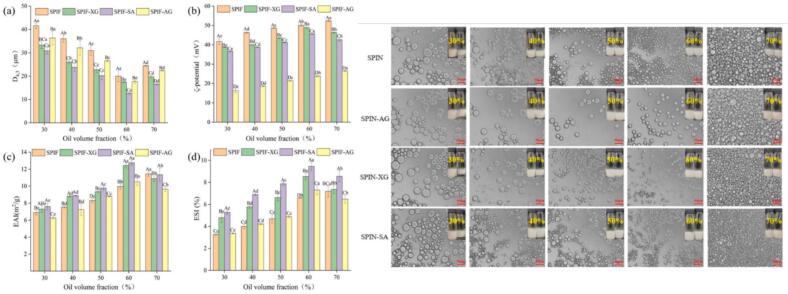
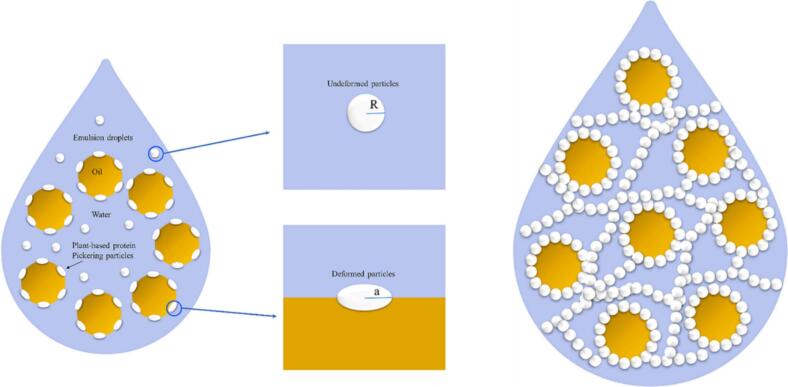
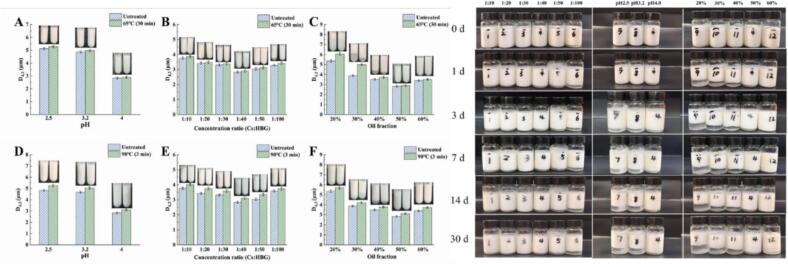

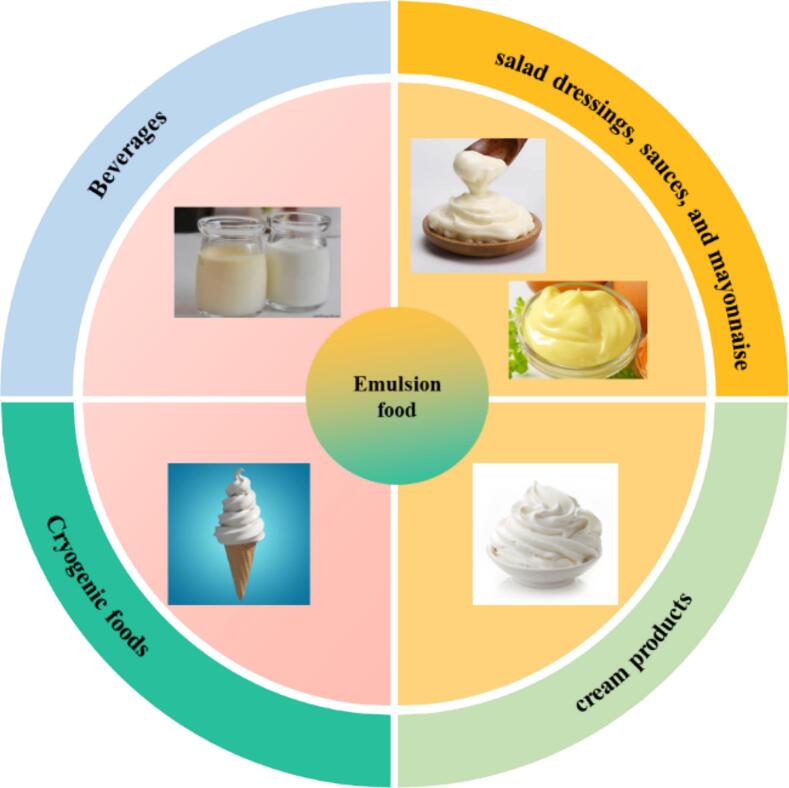
Verification
Claims the paper makes
The claims and statistics of this paper haven’t been checked yet.
Run the check — free, no account needed. It reads the open-access text and checks the sources it cites.
Claims other papers make about this one
Each is checked against this paper’s own text: does it say what the citing paper says it does?
The source backs part of the claim, not all of it — or backs it for a different population, condition or comparison.
In the citing paper
“The thickening polymer, sodium polyacryloyldimethyl taurate (SPDT), forms a gel network that increases viscosity, binds water or oil within emulsions, and produces a cohesive, structured texture [22, 23].”
From Formulation development, physical stability, and preliminary safety screening of cosmetic emulsions containing banana peel extract (2026) · cites this paper as [22]
Experimental — accuracy not yet measuredThe source backs part of the claim, not all of it — or backs it for a different population, condition or comparison.
In the citing paper
“Collectively, these strategies allow the formulation of creams with desirable sensory, functional, and rheological properties by systematically adjusting thickener type and concentration [22, 25].”
From Formulation development, physical stability, and preliminary safety screening of cosmetic emulsions containing banana peel extract (2026) · cites this paper as [22]
Experimental — accuracy not yet measuredThe source backs part of the claim, not all of it — or backs it for a different population, condition or comparison.
In the citing paper
“From a theoretical perspective, thickener concentration is an established determinant of cream texture and mechanical integrity.”
From Formulation development, physical stability, and preliminary safety screening of cosmetic emulsions containing banana peel extract (2026) · cites this paper as [22]
Experimental — accuracy not yet measuredThe source backs part of the claim, not all of it — or backs it for a different population, condition or comparison.
In the citing paper
“Enhanced thickener content promotes a firmer consistency, while lower levels generate creams that are softer and more suited to lightweight products [22].”
From Formulation development, physical stability, and preliminary safety screening of cosmetic emulsions containing banana peel extract (2026) · cites this paper as [22]
Experimental — accuracy not yet measuredThe source backs part of the claim, not all of it — or backs it for a different population, condition or comparison.
In the citing paper
“Studies by [22] insist that small and homogeneously distributed droplets-result from a suitable choice of emulsifiers, the performance during processing- are necessary for achieving high physical stability.”
From Formulation development, physical stability, and preliminary safety screening of cosmetic emulsions containing banana peel extract (2026) · cites this paper as [22]
Experimental — accuracy not yet measured
The source backs part of the claim, not all of it — or backs it for a different population, condition or comparison.
In the citing paper
“Homogeneous smaller droplets reduce the chances of agglomeration and phase separation which in turn contributes to uniform texture, appearance during entire shelf life.”
From Formulation development, physical stability, and preliminary safety screening of cosmetic emulsions containing banana peel extract (2026) · cites this paper as [22]
Experimental — accuracy not yet measuredThe check wasn’t confident either way, so it gives no verdict — never disputed.
In the citing paper
“since over thickening can dampen the user appeal [22, 28].”
From Formulation development, physical stability, and preliminary safety screening of cosmetic emulsions containing banana peel extract (2026) · cites this paper as [22]
Experimental — accuracy not yet measuredThe check wasn’t confident either way, so it gives no verdict — never disputed.
In the citing paper
“The viscosity of lotions is typically 10,000 to 30,000 cP and for creams is usually between 30,000 to 70,000 cP but these can be varied depending on the application one desires.”
From Formulation development, physical stability, and preliminary safety screening of cosmetic emulsions containing banana peel extract (2026) · cites this paper as [22]
Experimental — accuracy not yet measured
Self-check
Percentages, sums and reported differences re-computed from the paper’s own numbers.
The self-check needs the paper’s full text.
Citations
Cites
Hydrocolloids as emulsifiers and emulsion stabilizers
Dickinson, E. (2008) · Food Hydrocolloids · doi:10.1016/j.foodhyd.2008.08.005 · Cited by 1,357 · cited 1×
“The results showed that solid particles (10 nm to a few millimeters) and hydrocolloids (5 – 10 nm) had a significant advantage in forming thicker interfacial films compared to surfactants (0.5 – 1 nm) and proteins (1 – 5 nm) (Dickinson, 2009).”
InfluentialMcClements, D. J., & Gümüş, C. E. (2016) · Advances in Colloid and Interface Science · doi:10.1016/j.cis.2016.03.002 · Cited by 1,021 · cited 2×
“Emulsifiers commonly used in the food industry include proteins, polysaccharides, phospholipids, and small-molecule surfactants (McClements & Gumus, 2016).”
Emulsification and emulsion stability: The role of the interfacial properties
Ravera, F., Dziza, K., Santini, E., Cristofolini, L., & Liggieri, L. (2020) · Advances in Colloid and Interface Science · doi:10.1016/j.cis.2020.102344 · Cited by 534 · cited 3×
“This, in turn, affects the viscosity and textural properties of the system (Ravera et al., 2021).”
InfluentialThe Pristine Oil/Water Interface: Surfactant‐Free Hydroxide‐Charged Emulsions
Beattie, J. K., & Djerdjev, A. M. (2004) · Angewandte Chemie International Edition · doi:10.1002/anie.200453916 · Cited by 413
Li, D., Zhao, Y., Wang, X., Tang, H., Wu, N. C., Wu, F., Yu, D., & Elfalleh, W. (2019) · Food Hydrocolloids · doi:10.1016/j.foodhyd.2019.105306 · Cited by 407 · cited 1×
“When the catechin concentration in the complex was increased to 0.15 % ( w / v ), the zeta potential nearly doubled, resulting in the highest observed stability (Li et al., 2020).”
InfluentialPhysicochemical characteristics, applications and research trends of edible Pickering emulsions
Xia, T., Xue, C., & Wei, Z. (2020) · Trends in Food Science & Technology · doi:10.1016/j.tifs.2020.11.019 · Cited by 403 · cited 1×
“Because particle adsorption at the interface is irreversible, Pickering emulsions exhibit greater stability than conventional emulsions (Xia, Xue, & Wei, 2021).”
Recent advances in improving stability of food emulsion by plant polysaccharides
Shao, P., Feng, J., Sun, P., Xiang, N., Lu, B., & Qiu, D. (2020) · Food Research International · doi:10.1016/j.foodres.2020.109376 · Cited by 352 · cited 1×
“Larger droplets tend to flocculate or settle more rapidly, negatively impacting emulsion stability (Shao et al., 2020).”
Dairy and plant proteins as natural food emulsifiers
Kim, W., Wang, Y., & Selomulya, C. (2020) · Trends in Food Science & Technology · doi:10.1016/j.tifs.2020.09.012 · Cited by 316 · cited 2×
“For example, casein tends to form a thick and low-viscoelastic interfacial layer that effectively stabilizes oil droplets, mainly due to its low hydrophobicity and high electrostatic charge (Kim, Wang, & Selomulya, 2020).”
Liu, X., Song, Q., Li, X., Chen, Y., Liu, C., Zhu, X., Liu, J., Granato, D., Wang, Y., & Huang, J. (2021) · Food Chemistry · doi:10.1016/j.foodchem.2021.130071 · Cited by 311 · cited 2×
“Chemically, phenolics are defined by the presence of at least one phenolic hydroxyl group, often linked to aromatic rings or conjugated sugars, which influence their bioactivity and functional properties (Liu et al., 2021).”
Water-in-oil emulsions stabilized by surfactants, biopolymers and/or particles: a review
Zembyla, M., Murray, B. S., & Sarkar, A. (2020) · Trends in Food Science & Technology · doi:10.1016/j.tifs.2020.07.028 · Cited by 299 · cited 2×
“For oil-in-water emulsions, a more hydrophilic inter-facial layer improves resistance to coalescence, as emulsifiers with higher water solubility better stabilize droplets in the aqueous continuous phase (Zembyla, Murray, & Sarkar, 2020).”
Cited by
Sorted by citations
Clean‐Label Trends in Processed Foods: Challenges in Formulation and Consumer Expectations
Urugo, M. M., Getachew, P., Milkias, M., Teka, T. A., & Kebede, B. (2026) · Comprehensive Reviews in Food Science and Food Safety · doi:10.1111/1541-4337.70505 · Cited by 12
Development of Curcumin-Loaded Nanoemulsions for Fortification and Stabilization of Dairy Beverages
Pino, R., Sicari, V., Hussain, M., Boakye, S. K. K., Kanwal, F., Yaseen, R., Azhar, M., Ahmad, Z., Degraft-Johnson, B., Kebede, A. A., et al. (2026) · Applied Sciences · doi:10.3390/app16020885 · Cited by 11
Vu, G. M., Tran, N. H., Tran, M., Dam, A. N., Lieu, N. N., Nguyen, N. M., Ngo, N. Y. L., Dinh, T. N. N., & Nguyen, D. Q. (2025) · Journal of Molecular Liquids · doi:10.1016/j.molliq.2025.128495 · Cited by 10
Emulsion and Emulgel-Based Ophthalmic Drug Delivery Systems
Mohapatra, D., Yang, E., & Corson, T. W. (2025) · Pharmaceutics · doi:10.3390/pharmaceutics17121504 · Cited by 10
Phase Change Materials‐Based Biodegradable Packaging for Perishable Food
Deka, H. A., Naseem, A., Bhansali, A. A., Mabood, M. F., Gangawane, K. M., & Sablani, S. S. (2026) · Comprehensive Reviews in Food Science and Food Safety · doi:10.1111/1541-4337.70404 · Cited by 8
Metadata
- Authors
- Xiao, T., Ma, X., Hu, H., Xiang, F., Zhang, X., Zheng, Y., Dong, H., Adhikari, B., Wang, Q., & Shi, A.
- Affiliations
- Institute of Food Science and Technology (CN)
- Zhongkai University of Agriculture and Engineering (CN)
- RMIT University (AU)
- Corresponding author
- Wang, Qiang
- Shi, Aimin
- Venue
- Food Chemistry: X
- Publisher
- Elsevier BV
- Published
- 2025-07
- Volume
- 29
- Pages
- 102792
- ISSN
- 2590-1575 (ISSN-L)
- PMC
- PMC12311586
- OpenAlex
- W4412650871
- Cited by
- 111
- References
- 129
- Citations by year
- 2026: 94 · 2025: 17
- FWCI
- 9.11
- Type
- journal article
- Language
- en
- Open access
- gold
- doi.org
- Licence
- Locations
- Food Chemistry X (publishedVersion, cc-by-nc)
- Europe PMC (PubMed Central) (publishedVersion, cc-by-nc)
- PubMed Central (publishedVersion, cc-by-nc)
- PubMed (publishedVersion)
- DOAJ (DOAJ: Directory of Open Access Journals) (submittedVersion, cc-by-sa)
- Funders
- National Key Research and Development Program of China (2023YFE0104900)
- Agricultural Science and Technology Innovation Program (CAAS-ASTIP-2025-IFST)
- National Natural Science Foundation of China (32472271, 32172149)
- Topics
- Life Sciences › Agricultural and Biological Sciences › Food Science › Proteins in Food Systems
- Physical Sciences › Materials Science › Materials Chemistry › Pickering emulsions and particle stabilization
- Physical Sciences › Chemistry › Physical and Theoretical Chemistry › Surfactants and Colloidal Systems
- Keywords
- emulsion stability, emulsifiers, Pickering emulsions, protein emulsifiers, polyphenols, protein-polysaccharide complexes, food emulsions, shelf life, emulsion stabilization
About these checks
Registry, retraction, Cites and statistics results are computed, not judged, with one exception: a printed reference that no index lists is read once by a model before it counts as a citation error. Claims are extracted by a model and kept only when their quote appears verbatim in the text; each cited source is then checked, with a model’s help, for whether it says what the claim relies on. Those verdicts can be wrong — read the claim’s quote and the cited source before relying on one.
Statistics and arithmetic are recomputed, not judged.
Confidence bands are shown only for fields calibrated on our annotated test set. None is calibrated yet, so no band is shown.
What counts as a claim ›How we measure confidence ›How we check this ›
Are you an author, or do you see a problem with this page? Request a review
