

The DOI matches its Crossref record; 60 of the 60 references it cites were found in a registry or an index.
Antiplatelet effects of dietary nitrate in healthy volunteers: Involvement of cGMP and influence of sex
Open accessAbstract
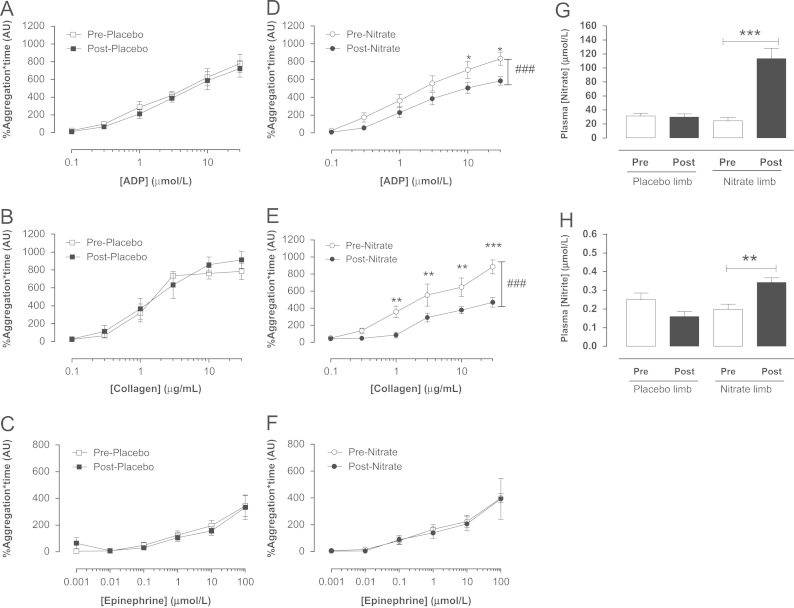
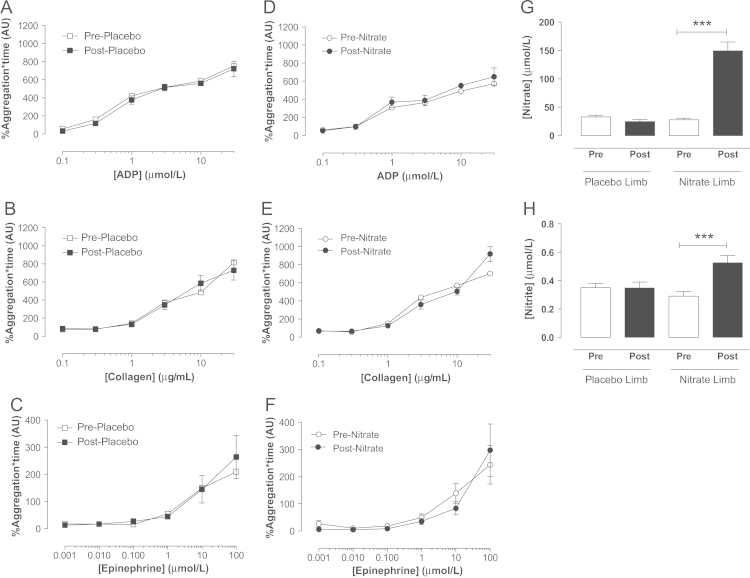
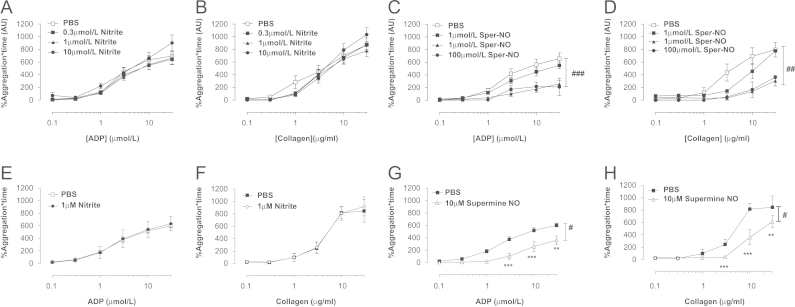
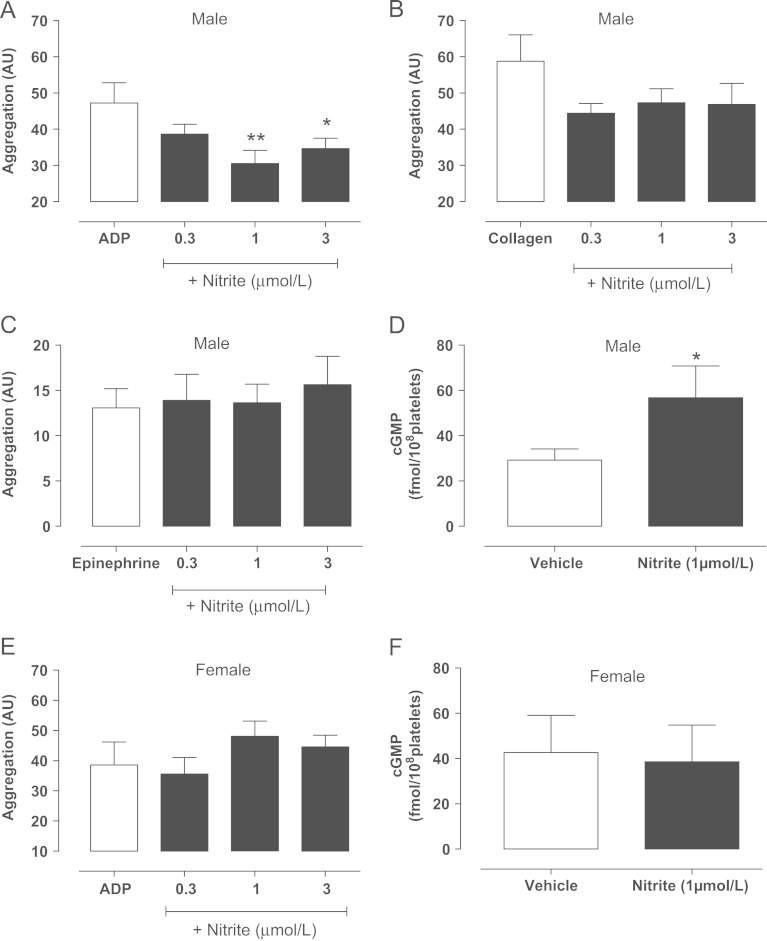
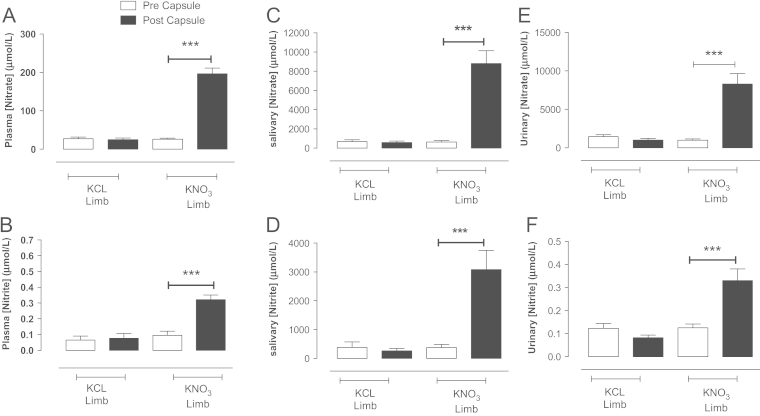
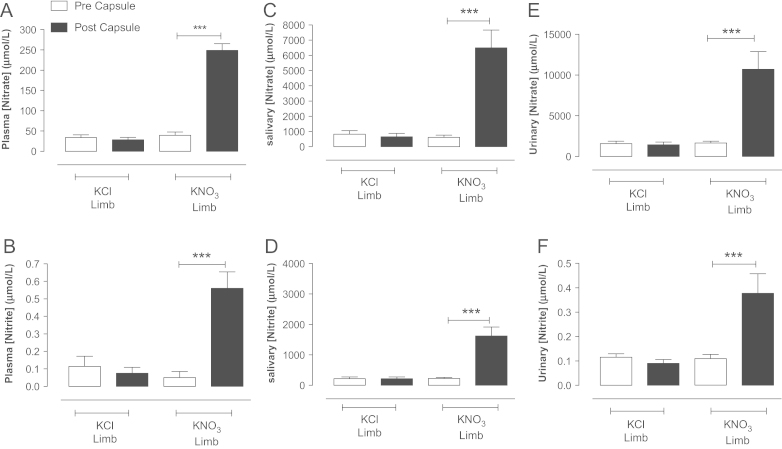
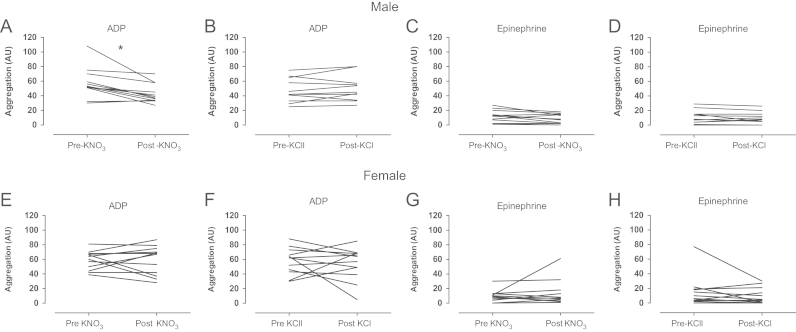
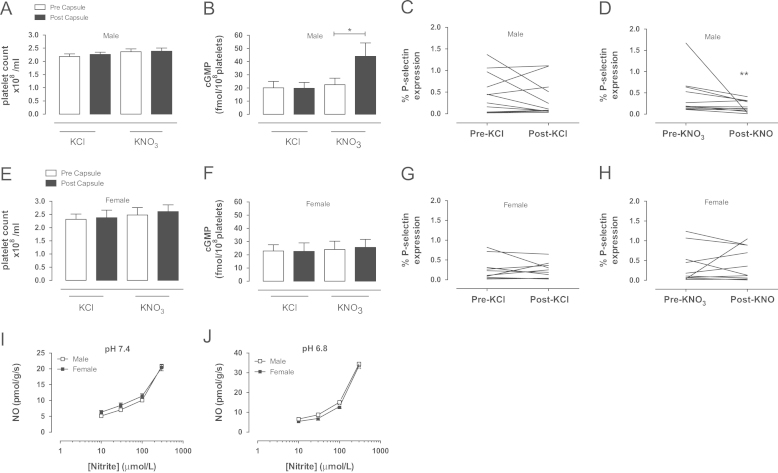
Ingestion of vegetables rich in inorganic nitrate has emerged as an effective method, via the formation of a nitrite intermediate, for acutely elevating vascular NO levels. As such a number of beneficial effects of dietary nitrate ingestion have been demonstrated including the suggestion that platelet reactivity is reduced. In this study we investigated whether inorganic nitrate supplementation might also reduce platelet reactivity in healthy volunteers and have determined the mechanisms involved in the effects seen. We conducted two randomised crossover studies each in 24 (12 of each sex) healthy subjects assessing the acute effects of dietary nitrate (250 ml beetroot juice) or potassium nitrate capsules (KNO3, 8 mmol) vs placebo control on platelet reactivity. Inorganic nitrate ingested either from a dietary source or via supplementation raised circulating nitrate and nitrite levels in both sexes and attenuated ex vivo platelet aggregation responses to ADP and, albeit to a lesser extent, collagen but not epinephrine in male but not female volunteers. These inhibitory effects were associated with a reduced platelet P-selectin expression and elevated platelet cGMP levels. In addition, we show that nitrite reduction to NO occurs at the level of the erythrocyte and not the platelet. In summary, our results demonstrate that inorganic nitrate ingestion, whether via the diet or through supplementation, causes a modest decrease in platelet reactivity in healthy males but not females. Our studies provide strong support for further clinical trials investigating the potential of dietary nitrate as an adjunct to current antiplatelet therapies to prevent atherothrombotic complications. Moreover, our observations highlight a previously unknown sexual dimorphism in platelet reactivity to NO and intimate a greater dependence of males on the NO-soluble guanylate cyclase pathway in limiting thrombotic potential.
Overview
The claims and statistics of this paper haven’t been checked yet.
Run the check — free, no account needed. It reads the open-access text and checks the sources it cites.
Integrity signals
Registry
Cites
Statistics
Figures
Verification
Claims the paper makes
The claims and statistics of this paper haven’t been checked yet.
Run the check — free, no account needed. It reads the open-access text and checks the sources it cites.
Claims other papers make about this one
Each is checked against this paper’s own text: does it say what the citing paper says it does?
The cited source says what the claim attributes to it.
In the citing paper
“This is similar to the ratios identified in healthy volunteers following single dose nitrate supplementation28, 29 suggesting that the entero-salivary circulation is intact and functioning normally in hypertensive patients.”
From Dietary Nitrate Provides Sustained Blood Pressure Lowering in Hypertensive Patients: A Randomized, Phase 2, Double-Blind, Placebo-Controlled Study (2015) · cites this paper as [29]
In the citing paper
“Thus, not only is the NO synthesis completely abolished but the protein also becomes an oxidase, generating superoxide instead of NO (191, 972, 1007) (Table 6).”
From Sources of Vascular Nitric Oxide and Reactive Oxygen Species and Their Regulation (2019) · cites this paper as [972]
In the citing paper
“Mechanistically, when NOS binds BH2 instead of BH4, the ferrous/oxy heme cannot hydroxylate l-arginine to NG-hydroxy-l-arginine, NO synthesis is blocked, and the oxygen is eventually oxidized to superoxide.”
From Sources of Vascular Nitric Oxide and Reactive Oxygen Species and Their Regulation (2019) · cites this paper as [972]
Self-check
Percentages, sums and reported differences re-computed from the paper’s own numbers.
The self-check needs the paper’s full text.
Citations
Cites
Zhang, Q., Wang, C., Zheng, M., Li, Y., Li, J., Zhang, L., Shang, X., & Yan, C. (2014) · Cerebrovascular Diseases · doi:10.1159/000369778 · Cited by 11,609
European Guidelines on cardiovascular disease prevention in clinical practice (version 2012)
Authors/Task Force Members:, Perk, J., De Backer, G., Gohlke, H., Graham, I., Reiner, Ž., Verschuren, M., Albus, C., Benlian, P., Boysen, G., et al. (2012) · European Heart Journal · doi:10.1093/eurheartj/ehs092 · Cited by 8,490
Prasugrel versus clopidogrel in patients with acute coronary syndromes
Wiviott, S. D., Braunwald, E., McCabe, C. H., Montalescot, G., Ruzyllo, W., Gottlieb, S., Neumann, F.-J., Ardissino, D., De Servi, S., Murphy, S. A., et al. (2007) · New England Journal of Medicine · doi:10.1056/nejmoa0706482 · Cited by 6,790
The International HapMap Project
†The International HapMap Consortium, Genotyping centres: Baylor College of Medicine and ParAllele BioScience, Gibbs, R. A., Belmont, J. W., Hardenbol, P., Willis, T. D., Yu, F., Chinese HapMap Consortium, Yang, H., Ch'ang, L.-Y., et al. (2003) · Nature · doi:10.1038/nature02168 · Cited by 6,057
European guidelines on cardiovascular disease prevention in clinical practice: executive summary
Graham, I., Atar, D., Borch‐Johnsen, K., Boysen, G., Burell, G. K., Cífková, R., Dallongeville, J., Backer, G. D., Ebrahim, S. B. J., Gjelsvik, B., et al. (2007) · European Heart Journal · doi:10.1093/eurheartj/ehm316 · Cited by 3,865
AHA Guidelines for Primary Prevention of Cardiovascular Disease and Stroke: 2002 Update
Pearson, T. A., Blair, S. N., Daniels, S. R., Eckel, R. H., Fair, J. M., Fortmann, S. P., Franklin, B. A., Goldstein, L. B., Greenland, P., Grundy, S. M., et al. (2002) · Circulation · doi:10.1161/01.cir.0000020190.45892.75 · Cited by 1,837
Nitrite reduction to nitric oxide by deoxyhemoglobin vasodilates the human circulation
Cosby, K., Partovi, K. S., Crawford, J. H., Patel, R. P., Reiter, C. D., Martyr, S., Yang, B. K., Waclawiw, M. A., Zalos, G., Xu, X., et al. (2003) · Nature Medicine · doi:10.1038/nm954 · Cited by 1,807
A strategy to reduce cardiovascular disease by more than 80%
Wald, N., & Law, M. R. (2003) · BMJ · doi:10.1136/bmj.326.7404.1419 · Cited by 1,565
ENDOGENOUS NITRIC OXIDE INHIBITS HUMAN PLATELET ADHESION TO VASCULAR ENDOTHELIUM
Radomski, M. W., Palmer, R. M. J., & Moncada, S. (1987) · The Lancet · doi:10.1016/s0140-6736(87)91481-4 · Cited by 1,437
The Effect of Fruit and Vegetable Intake on Risk for Coronary Heart Disease
Joshipura, K. J., Hu, F. B., Manson, J. E., Stampfer, M. J., Rimm, E. B., Speizer, F. E., Colditz, G., Ascherio, A., Rosner, B., Spiegelman, D., et al. (2001) · Annals of Internal Medicine · doi:10.7326/0003-4819-134-12-200106190-00010 · Cited by 1,396
Nitric oxide : biology and pathobiology
Ignarro, L. J. (2000) · Cited by 1,306
Prepared, B. (2005) · Heart · doi:10.1136/hrt.2005.079988 · Cited by 1,223
An L-arginine/nitric oxide pathway present in human platelets regulates aggregation.
Radomski, M. W., Palmer, R. M., & Moncada, S. (1990) · Proceedings of the National Academy of Sciences · doi:10.1073/pnas.87.13.5193 · Cited by 1,208
Fruit and Vegetable Intake in Relation to Risk of Ischemic Stroke
Joshipura, K. J. (1999) · JAMA · doi:10.1001/jama.282.13.1233 · Cited by 1,078
Webb, A. J., Patel, N., Loukogeorgakis, S., Okorie, M., Aboud, Z., Misra, S., Rashid, R., Miall, P., Deanfield, J., Benjamin, N., et al. (2008) · Hypertension · doi:10.1161/hypertensionaha.107.103523 · Cited by 1,078
Self-citationWardlaw, J. M., Murray, V., Berge, E., del Zoppo, G., Sandercock, P. A., Lindley, R. I., & Cohen, G. (2012) · The Lancet · doi:10.1016/s0140-6736(12)60738-7 · Cited by 1,007
Signaling During Platelet Adhesion and Activation
Li, Z., Delaney, M. K., O’Brien, K., & Du, X. (2010) · Arteriosclerosis Thrombosis and Vascular Biology · doi:10.1161/atvbaha.110.207522 · Cited by 914
Ignarro, L. J., Fukuto, J. M., Griscavage, J. M., Rogers, N. E., & Byrns, R. E. (1993) · Proceedings of the National Academy of Sciences · doi:10.1073/pnas.90.17.8103 · Cited by 856
British Hypertension Society guidelines for hypertension management 2004 (BHS-IV): summary
Williams, B., Poulter, N. R., Brown, M. J., Davis, M., McInnes, G. T., Potter, J. F., Sever, P., & Thom, S. (2004) · BMJ · doi:10.1136/bmj.328.7440.634 · Cited by 847
The role of nitric oxide and cGMP in platelet adhesion to vascular endothelium
Radomski, M. W., Palmer, R. M. J., & Moncada, S. (1987) · Biochemical and Biophysical Research Communications · doi:10.1016/s0006-291x(87)80299-1 · Cited by 746
Dietary Inorganic Nitrate Improves Mitochondrial Efficiency in Humans
Larsen, F. J., Schiffer, T. A., Borniquel, S., Sahlin, K., Ekblom, B., Lundberg, J. O., & Weitzberg, E. (2011) · Cell Metabolism · doi:10.1016/j.cmet.2011.01.004 · Cited by 689 · cited 1×
“In support of this possibility, recent studies in healthy volunteers have shown a range of beneficial effects of acute administration of a dietary nitrate load [52] or inorganic nitrate supplementation [19,22,23] on the cardiovascular system including some suggestion of reduced platelet reactivity [38,52].”
ResultInorganic Nitrate Supplementation Lowers Blood Pressure in Humans: Role for Nitrite-Derived NO
Kapil, V., Milsom, A. B., Okorie, M., Maleki-Toyserkani, S., Akram, F., Rehman, F., Arghandawi, S., Pearl, V., Benjamin, N., Loukogeorgakis, S., et al. (2010) · Hypertension · doi:10.1161/hypertensionaha.110.153536 · Cited by 621
Self-citationNitric Oxide Insufficiency, Platelet Activation, and Arterial Thrombosis
Loscalzo, J. (2001) · Circulation Research · doi:10.1161/hh0801.089861 · Cited by 612
Spiegelhalder, B., Eisenbrand, G., & Preussmann, R. (1976) · Food and Cosmetics Toxicology · doi:10.1016/s0015-6264(76)80005-3 · Cited by 596
Capsazepine: a competitive antagonist of the sensory neurone excitant capsaicin
Bevan, S., Hothi, S. S., Hughes, G. A., James, I. F., Rang, H. P., Shah, K., Walpole, C. S. J., & Yeats, J. C. (1992) · British Journal of Pharmacology · doi:10.1111/j.1476-5381.1992.tb12781.x · Cited by 587
Effects of Dietary Nitrate on Blood Pressure in Healthy Volunteers
Larsen, F. J., Ekblom, B., Sahlin, K., Lundberg, J. O., & Weitzberg, E. (2006) · New England Journal of Medicine · doi:10.1056/nejmc062800 · Cited by 587
Keeley, E. C., Boura, J., & Grines, C. L. (2006) · The Lancet · doi:10.1016/s0140-6736(06)68148-8 · Cited by 553
U.S. Preventive Services Task Force* (2009) · Annals of Internal Medicine · doi:10.7326/0003-4819-150-6-200903170-00008 · Cited by 533
Moro, M. Á., Russel, R., Cellek, S., Lizasoaín, I., Su, Y., Darley-Usmar, V. M., Radomski, M. W., & Moncada, S. (1996) · Proceedings of the National Academy of Sciences · doi:10.1073/pnas.93.4.1480 · Cited by 472
Physiological role for nitrate-reducing oral bacteria in blood pressure control
Kapil, V., Haydar, S. M. A., Pearl, V., Lundberg, J. O., Weitzberg, E., & Ahluwalia, A. (2013) · Free Radical Biology and Medicine · doi:10.1016/j.freeradbiomed.2012.11.013 · Cited by 413
Self-citationAuthors/Task Force Members:, Perk, J., Backer, G. D., Gohlke, H., Graham, I. D., Reiner, Ž., Verschuren, W. M. M., Albus, C., Benlian, P., Boysen, G., et al. (2012) · European Heart Journal · doi:10.1093/eurheartj/ehs254 · Cited by 390
The effect of nitrate intake on nitrite formation in human saliva
Tannenbaum, S. R., Weisman, M., & Fett, D. (1976) · Food and Cosmetics Toxicology · doi:10.1016/s0015-6264(76)80006-5 · Cited by 381
Association of Aspirin Use With Major Bleeding in Patients With and Without Diabetes
Berardis, G. D., Lucisano, G., D'Ettorre, A., Pellegrini, F., Lepore, V. L., Tognoni, G., & Nicolucci, A. (2012) · JAMA · doi:10.1001/jama.2012.5034 · Cited by 247
Webb, A. J., Milsom, A. B., Rathod, K. S., Chu, W. L., Qureshi, S., Lovell, M. J., Lecomte, F. M. J., Perrett, D., Raimondo, C., Khoshbin, E., et al. (2008) · Circulation Research · doi:10.1161/circresaha.108.175810 · Cited by 203
Self-citationRegulation of platelet granule exocytosis by S-nitrosylation
Morrell, C. N., Matsushita, K., Chiles, K. A., Scharpf, R. B., Yamakuchi, M., Mason, R. J. A., Bergmeier, W., Mankowski, J. L., Baldwin, W. M., Faraday, N. R., et al. (2005) · Proceedings of the National Academy of Sciences · doi:10.1073/pnas.0408310102 · Cited by 140
Stojanović, A., Marjanovic, J., Brovkovych, V. M., Peng, X.-D., Hay, N., Skidgel, R. A., & Du, X. (2006) · Journal of Biological Chemistry · doi:10.1074/jbc.m512378200 · Cited by 119
Dangel, O., Mergia, E., Karlisch, K., Groneberg, D., Koesling, D., & Friebe, A. (2010) · Journal of Thrombosis and Haemostasis · doi:10.1111/j.1538-7836.2010.03806.x · Cited by 118
Gender-specific hypertension and responsiveness to nitric oxide in sGCα1 knockout mice
Buys, E. S., Sips, P. Y., Vermeersch, P., Raher, M. J., Rogge, E., Ichinose, F., Dewerchin, M. A., Bloch, K. D., Janssens, S. P., & Brouckaert, P. (2008) · Cardiovascular Research · doi:10.1093/cvr/cvn068 · Cited by 117
Bahra, M., Kapil, V., Pearl, V., Ghosh, S., & Ahluwalia, A. (2012) · Nitric Oxide · doi:10.1016/j.niox.2012.01.004 · Cited by 116
Self-citationPlatelet Inhibition by Nitrite Is Dependent on Erythrocytes and Deoxygenation
Srihirun, S., Sriwantana, T., Unchern, S., Kittikool, D., Noulsri, E., Pattanapanyasat, K., Fucharoen, S., Piknova, B., Schechter, A. N., & Sibmooh, N. (2012) · PLoS ONE · doi:10.1371/journal.pone.0030380 · Cited by 109
Sogo, N., Magid, K. S., Shaw, C. A., Webb, D. J., & Megson, I. L. (2000) · Biochemical and Biophysical Research Communications · doi:10.1006/bbrc.2000.3976 · Cited by 107
Cell-Free and Erythrocytic S -Nitrosohemoglobin Inhibits Human Platelet Aggregation
Pawloski, J. R., Swaminathan, R. V., & Stamler, J. S. (1998) · Circulation · doi:10.1161/01.cir.97.3.263 · Cited by 105
Broekman, M., Eiroa, A. M., & Marcus, A. (1991) · Blood · doi:10.1182/blood.v78.4.1033.1033 · Cited by 101
Effects of nitric oxide/EDRF on platelet surface glycoproteins
Michelson, A. D., Benoit, S., Furman, M. I., Breckwoldt, W. L., Rohrer, M. J., Barnard, M. R., & Loscalzo, J. (1996) · American Journal of Physiology-Heart and Circulatory Physiology · doi:10.1152/ajpheart.1996.270.5.h1640 · Cited by 101
Richardson, G., Hicks, S. L., O'Byrne, S., Frost, M. T., Moore, K., Benjamin, N., & McKnight, G. M. (2002) · Nitric Oxide · doi:10.1016/s1089-8603(02)00010-1 · Cited by 101
Inorganic nitrate and the cardiovascular system
Kapil, V., Webb, A. J., & Ahluwalia, A. (2010) · Heart · doi:10.1136/hrt.2009.180372 · Cited by 90
Self-citationMarcondes, S., Cardoso, M. H. M., Morganti, R. P., Thomazzi, S. M., Lilla, S., Murad, F., Nucci, G. D., & Antunes, E. (2006) · Proceedings of the National Academy of Sciences · doi:10.1073/pnas.0509397103 · Cited by 81
Stimulatory Roles of Nitric-oxide Synthase 3 and Guanylyl Cyclase in Platelet Activation
Marjanovic, J., Li, Z., Stojanović, A., & Du, X. (2005) · Journal of Biological Chemistry · doi:10.1074/jbc.m506518200 · Cited by 78
Sidhu, J. S., Cowan, D., Tooze, J. A., & Kaski, J. C. (2004) · American Heart Journal · doi:10.1016/j.ahj.2003.12.035 · Cited by 71
Biphasic roles for soluble guanylyl cyclase (sGC) in platelet activation
Zhang, G., Xiang, B., Dong, A., Skoda, R. C., Daugherty, A., Smyth, S. S., Du, X., & Li, Z. (2011) · Blood · doi:10.1182/blood-2011-03-341107 · Cited by 69
(2011) · Methods in molecular biology · doi:10.1007/978-1-61779-307-3 · Cited by 57
Rukoyatkina, N., Walter, U., Friebe, A., & Gambaryan, S. P. (2011) · Thrombosis and Haemostasis · doi:10.1160/th11-05-0319 · Cited by 49
Armstrong, P. C. J., Dhanji, A.-R., Truss, N. J., Zain, Z. N. M., Tucker, A. T., Mitchell, J. A., & Warner, T. D. (2009) · Thrombosis and Haemostasis · doi:10.1160/th09-04-0215 · Cited by 46
Distinct endothelial pathways underlie sexual dimorphism in vascular auto‐regulation
Chan, M. V., Bubb, K. J., Noyce, A. J., Villar, I. C., Duchêne, J., Hobbs, A. J., Scotland, R. S., & Ahluwalia, A. (2012) · British Journal of Pharmacology · doi:10.1111/j.1476-5381.2012.02012.x · Cited by 43
Self-citationEndogenous Inhibitory Mechanisms and the Regulation of Platelet Function
Jones, C. I., Barrett, N. E., Moraes, L. A., Gibbins, J. M., & Jackson, D. E. (2011) · Methods in molecular biology · doi:10.1007/978-1-61779-307-3_23 · Cited by 41
Laustiola, K., Vuorinen, P., Pörsti, I. H., Metsä‐Ketelä, T., Manninen, V., & Vapaatalo, H. (1991) · Pharmacology & Toxicology · doi:10.1111/j.1600-0773.1991.tb01209.x · Cited by 36
Saitoh, M., Salzman, E. W., Smith, M. A., & Ware, J. A. (1989) · Blood · doi:10.1182/blood.v74.6.2001.2001 · Cited by 22
Mechanisms of Nitrite Reduction in Ischemia in the Cardiovascular System
Webb, A., & Ahluwalia, A. (2010) · Elsevier eBooks · doi:10.1016/b978-0-12-373866-0.00017-4 · Cited by 15
Self-citationArora, S., Tyagi, Y. K., Kumar, A., Majumder, S., Saluja, D., Raj, H. G., Chatterjee, S., Saso, L., Prasad, A. K., & Parmar, V. S. (2009) · Biological and Pharmaceutical Bulletin · doi:10.1248/bpb.32.161 · Cited by 6
Cited by
Sorted by citations
Nitric oxide signalling in cardiovascular health and disease
Farah, C., Michel, L. Y. M., & Balligand, J.-L. (2018) · Nature Reviews Cardiology · doi:10.1038/nrcardio.2017.224 · Cited by 779
Sources of Vascular Nitric Oxide and Reactive Oxygen Species and Their Regulation
Tejero, J., Shiva, S., & Gladwin, M. T. (2019) · Physiological Reviews · doi:10.1152/physrev.00036.2017 · Cited by 541
Kapil, V., Khambata, R. S., Robertson, A., Caulfield, M. J., & Ahluwalia, A. (2015) · Hypertension · doi:10.1161/hypertensionaha.114.04675 · Cited by 500
Self-citationVelmurugan, S., Gan, J. M., Rathod, K. S., Khambata, R. S., Ghosh, S. M., Hartley, A., Van Eijl, S., Sagi-Kiss, V., Chowdhury, T. A., Curtis, M., et al. (2016) · The American Journal of Clinical Nutrition · doi:10.3945/ajcn.115.116244 · Cited by 284
Self-citationKapil, V., Khambata, R. S., Jones, D. A., Rathod, K., Primus, C., Massimo, G., Fukuto, J. M., & Ahluwalia, A. (2020) · Pharmacological Reviews · doi:10.1124/pr.120.019240 · Cited by 248
Self-citation
Metadata
- Authors
- Velmurugan, S., Kapil, V., Ghosh, S. M., Davies, S., McKnight, A., Aboud, Z., Khambata, R. S., Webb, A. J., Poole, A., & Ahluwalia, A.
- Affiliations
- Queen Mary University of London (GB)
- University of Bristol (GB)
- Corresponding author
- Ahluwalia, Amrita
- Venue
- Free Radical Biology and Medicine
- Publisher
- Elsevier BV
- Published
- 2013-12
- Volume
- 65
- Pages
- 1521-1532
- ISSN
- 0891-5849 (ISSN-L)
- PMC
- PMC3878381
- OpenAlex
- W2028916136
- Cited by
- 114
- References
- 60
- Citations by year
- 2026: 3 · 2025: 4 · 2024: 4 · 2023: 6 · 2022: 7 · 2021: 7 · 2020: 5 · 2019: 8 · 2018: 15 · 2017: 9 · 2016: 18 · 2015: 10 · 2014: 15 · 2013: 2
- FWCI
- 10.42
- Type
- journal article
- Language
- en
- Update notices
- erratum (2015-07-01)
- Open access
- hybrid
- doi.org
- Licence
- Locations
- Free Radical Biology and Medicine (publishedVersion, cc-by-nc-nd)
- PubMed Central (publishedVersion, cc-by-nc-nd)
- PubMed (publishedVersion)
- Research Portal (King's College London) (submittedVersion, other-oa)
- Funders
- British Heart Foundation (FS/11/41/28749)
- Medical Research Council
- Topics
- Health Sciences › Medicine › Physiology (medical) › Nitric Oxide and Endothelin Effects
- Health Sciences › Medicine › Hematology › Platelet Disorders and Treatments
- Health Sciences › Medicine › Cardiology and Cardiovascular Medicine › Antiplatelet Therapy and Cardiovascular Diseases
- Keywords
- dietary nitrate, inorganic nitrate supplementation, platelet reactivity, platelet aggregation, nitric oxide, cyclic GMP, soluble guanylate cyclase, nitrite reduction, erythrocytes, P-selectin, sex differences, beetroot juice, potassium nitrate, atherothrombosis, antiplatelet therapy
- MeSH terms
- Adolescent, Adult, Blood Platelets, Cardiovascular Diseases, Collagen, Diet, Epinephrine, Erythrocytes, Female, Cyclic GMP, Guanylate Cyclase, Humans, Male, Middle Aged, Nitrates, Nitric Oxide, Platelet Aggregation, Platelet Aggregation Inhibitors, Sex Factors, Vegetables, Potassium Compounds, Cross-Over Studies, P-Selectin, Dietary Supplements, Beta vulgaris, Young Adult
About these checks
Registry, retraction, Cites and statistics results are computed, not judged, with one exception: a printed reference that no index lists is read once by a model before it counts as a citation error. Claims are extracted by a model and kept only when their quote appears verbatim in the text; each cited source is then checked, with a model’s help, for whether it says what the claim relies on. Those verdicts can be wrong — read the claim’s quote and the cited source before relying on one.
Statistics and arithmetic are recomputed, not judged.
Confidence bands are shown only for fields calibrated on our annotated test set. None is calibrated yet, so no band is shown.
What counts as a claim ›How we measure confidence ›How we check this ›
Are you an author, or do you see a problem with this page? Request a review
