

Negative effects of gamification in education software: Systematic mapping and practitioner perceptions
Open accessThe DOI matches its Crossref record; 121 of the 122 references it cites were found in a registry or an index; none of the 40 sources its claims cite is checked for support yet.
Overview
CoChat Summary
TL;DR
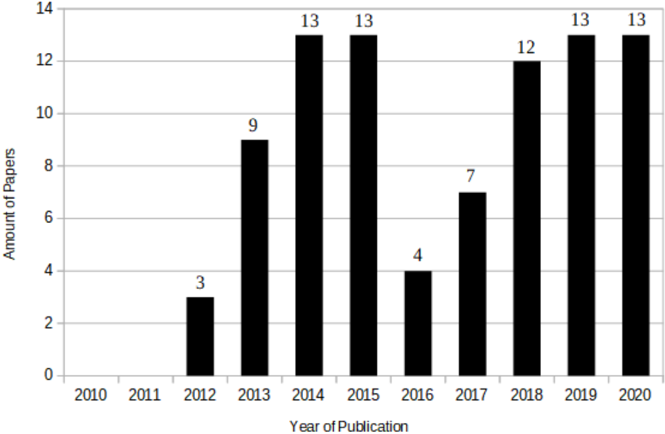
This paper reports a systematic mapping of 87 papers on negative effects of game design elements in education/learning software, plus a focus group with four developers of the gamified VazaZika software. It maps which elements are most often linked to adverse effects and finds developers were largely unaware of many reported negative effects but considered the information useful.
Key findings
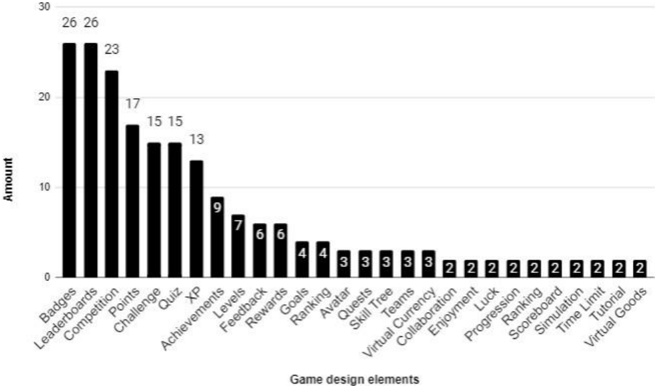
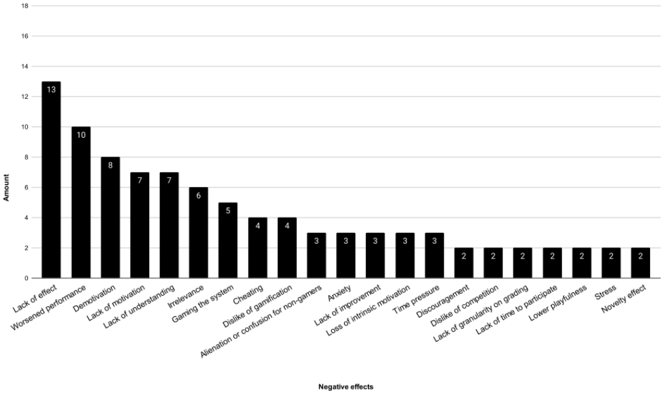
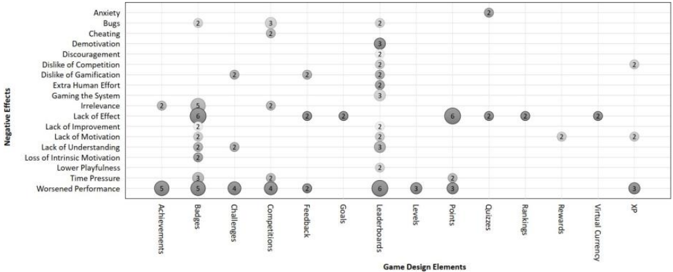
- The mapping included 87 papers; badges, leaderboards, competitions, and points were the game design elements most often reported as causing negative effects. The most cited negative effects were lack of effect, worsened performance, motivational issues, lack of understanding, and irrelevance; gaming the system and cheating were also often reported.
- Across the included papers, the authors found 94 different GDEs, 69 different negative effects caused to users/students, and 10 different negative effects caused to teachers or those maintaining the software. For teachers/maintainers, the most common effects were general technical challenges (7 mentions) and extra general human effort/resources (5 mentions).
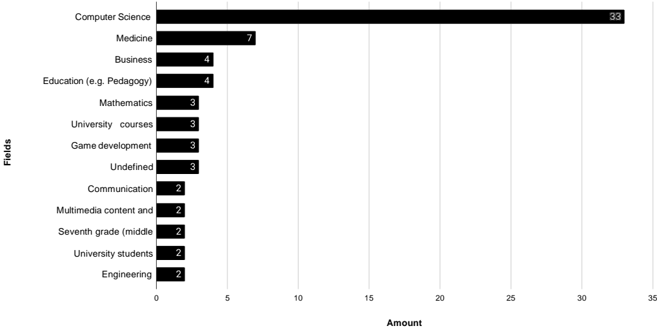
- Empirical study types were case study & survey (37), controlled experiment & survey (30), controlled experiment (9), case study (6), and survey (5); computer science was the most covered field.
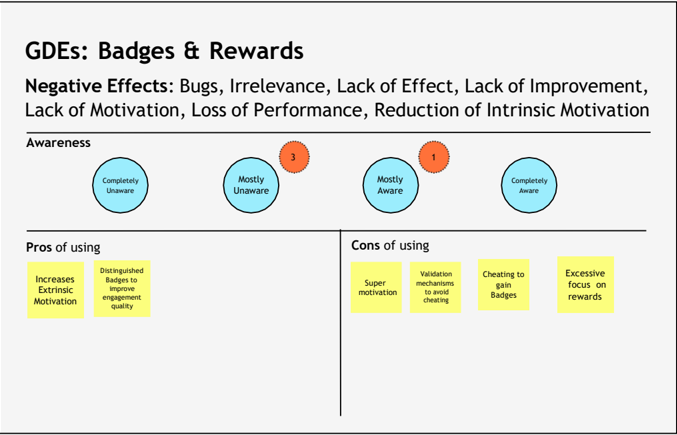
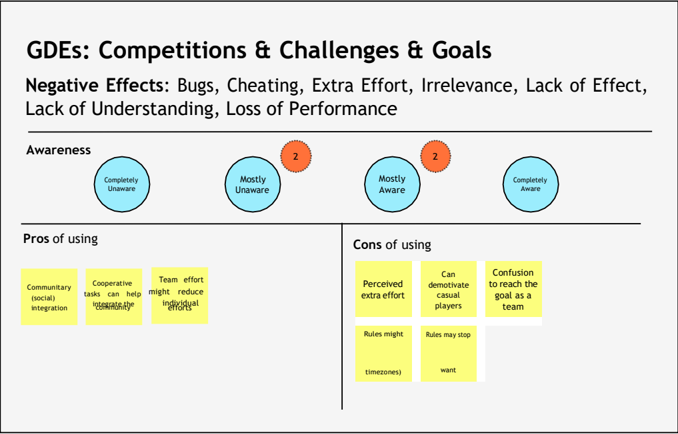
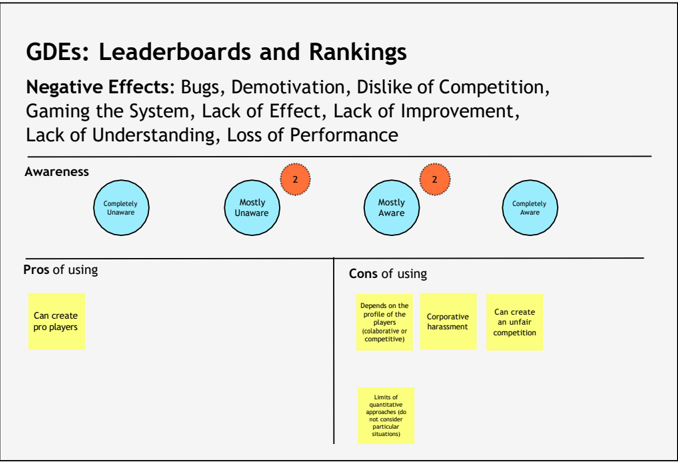
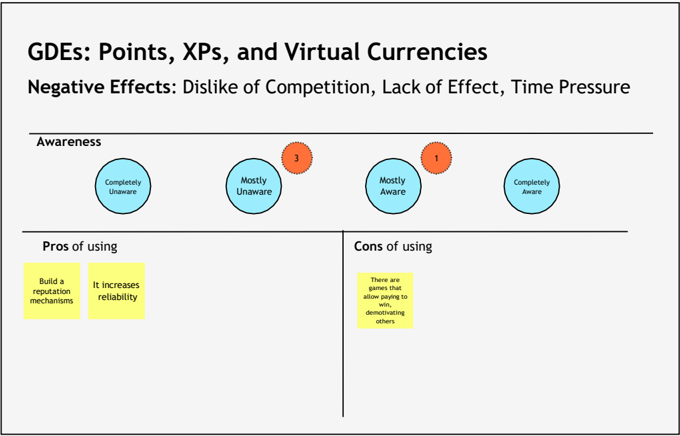
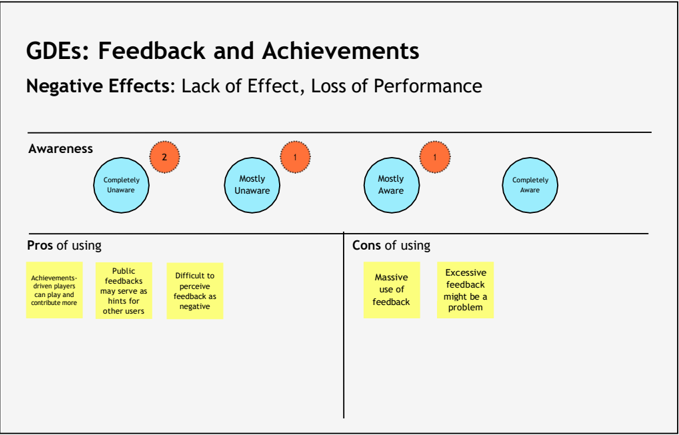
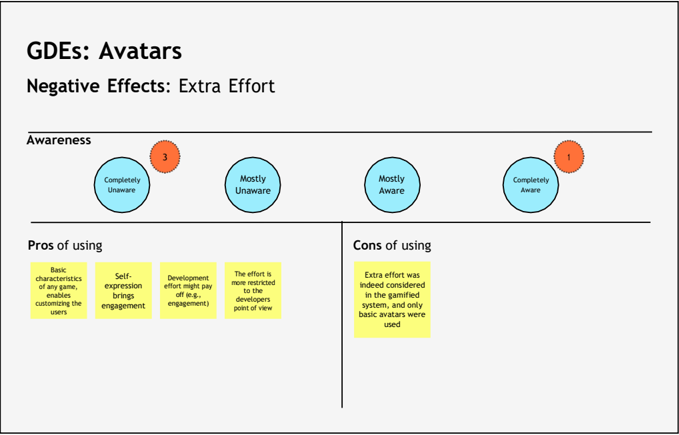
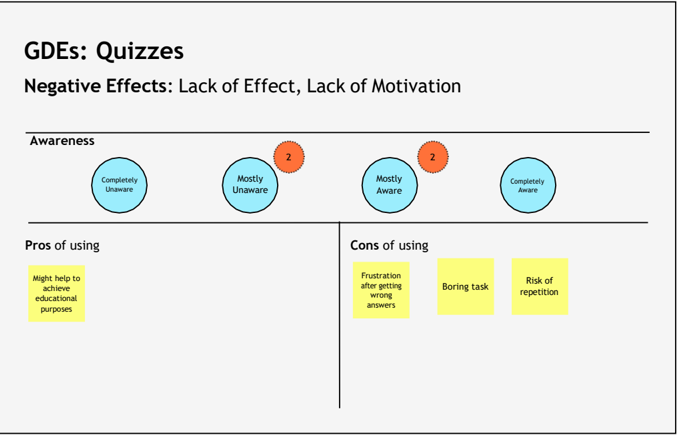
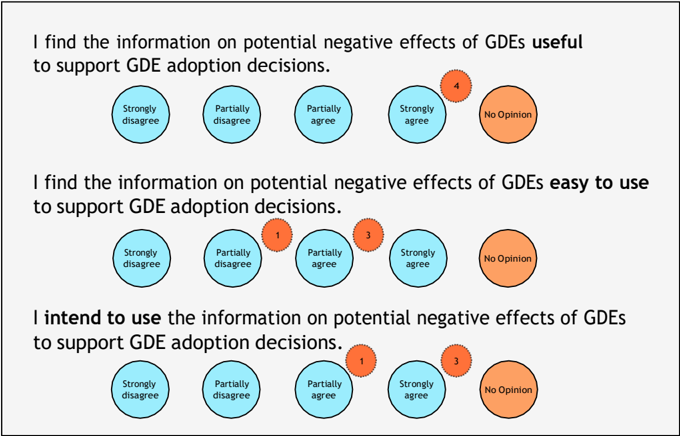
- In the focus group, developers were not aware of many possible negative effects; all participants strongly agreed the information was useful to support GDE adoption decisions, while only one partially disagreed and three partially agreed that the information was easy to use.
Methods
- Systematic mapping following Kitchenham and Charters and Petersen et al., using a hybrid search strategy combining a Scopus database search with backward and forward snowballing; after analyzing more than 3500 papers and manually adding 8 papers from Toda et al. missed by the search, the final set was 87 included papers.
- Data extraction used open coding to map GDEs to negative effects for users/students and teachers/maintainers, and to extract fields of education/learning and types of empirical studies.
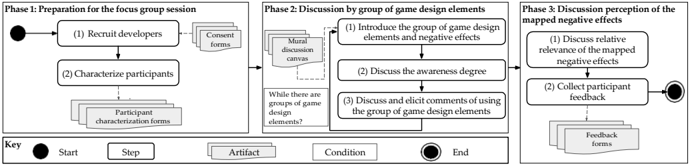
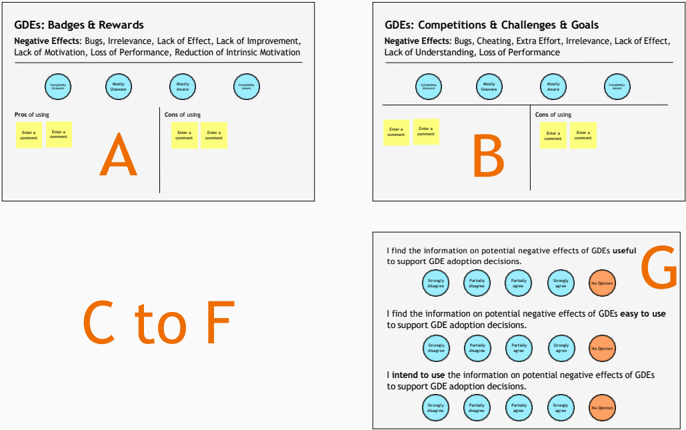
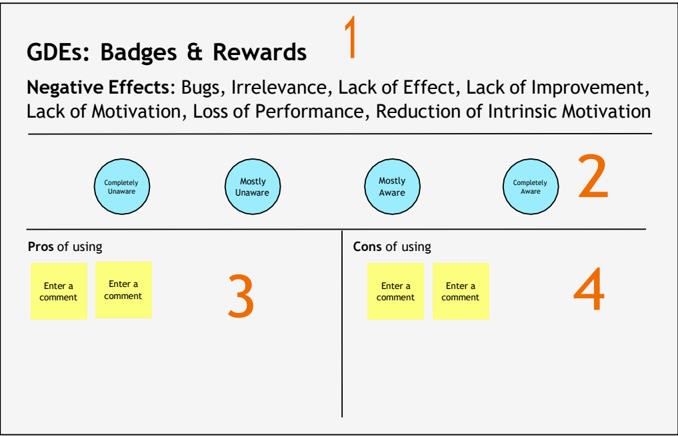
- A focus group was held with four experienced developers of the VazaZika gamified software (all PhDs in Computer Science, at least 10 years of software development experience), conducted online via MURAL and Zoom, discussing groups of GDEs and TAM-based items on usefulness, ease of use, and intent to adopt the information.
Limitations
- Stated: potentially missing papers; the final set includes 8 papers manually added from Toda et al.; screening only titles, abstracts, and keywords risks false negatives; grey literature was excluded; publication bias toward positive outcomes may hide unpublished negative results; a single focus group with four participants is preliminary and not generalizable; fine-grained analysis of each GDE’s effects for each role was out of scope.
- Stated/evident: snowballing was not continued to saturation because analyzing thousands of additional entries was unfeasible; the mapping reports associations rather than correlation or causation, and many GDEs/effects were mentioned by only one paper each.
- Evident: the focus group captured only developers’ views, not students’ or teachers’ views, and was tied to one gamified software context (VazaZika).
Model-written summary. Check it against the paper before relying on it.
Integrity signals
Registry
Cites
Statistics
Figures
Verification
Claims the paper makes
0 Valid · 4 Not valid · 37 Not checked · 152 Own results and interpretations
In the paper
“i.e., their search strategy did not retrieve 26 papers reporting negative effects of gamification in education/learning software that were retrieved by our search strategy.”
§ Negative Effects of Gamification in Education Software: Systematic Mapping and Practitioner Perceptions > Removed because of Amount
What the sources say
- Not checked yetcites [27] A. Toda, P. Valle, S. Isotani, The dark side of gamification: An overview of negative effects of gamification in education., HEFA 2017, Higher Edu- cation for All. From Challenges to Novel Technology-Enhanced Solutions (2018) 143-156. source
plainstates a cause- Asserted: passes — The authors put it forward as true.
- Checkable: passes — It can be checked against evidence.
- Load-bearing: unclear — It is unclear whether the paper’s conclusions depend on it.
- Based: passes — The paper gives a reason why it holds.
In the paper
“When comparing our new set of 79 included papers against the 17 papers included by [27], while our set of 79 papers to be included comprised 34 papers ranging from 2012 to 2016, only eight of them were also included by [27]”
§ Negative Effects of Gamification in Education Software: Systematic Mapping and Practitioner Perceptions > Removed because of Amount
What the sources say
- Not checked yetcites [27] A. Toda, P. Valle, S. Isotani, The dark side of gamification: An overview of negative effects of gamification in education., HEFA 2017, Higher Edu- cation for All. From Challenges to Novel Technology-Enhanced Solutions (2018) 143-156. source
plain- Asserted: passes — The authors put it forward as true.
- Checkable: passes — It can be checked against evidence.
- Load-bearing: passes — The paper’s conclusions depend on it.
- Based: passes — The paper gives a reason why it holds.
In the paper
“On the other hand, our search strategy missed eight papers included in their mapping”
§ Negative Effects of Gamification in Education Software: Systematic Mapping and Practitioner Perceptions > Removed because of Amount
What the sources say
- Not checked yetcites [27] A. Toda, P. Valle, S. Isotani, The dark side of gamification: An overview of negative effects of gamification in education., HEFA 2017, Higher Edu- cation for All. From Challenges to Novel Technology-Enhanced Solutions (2018) 143-156. source
plain- Asserted: passes — The authors put it forward as true.
- Checkable: passes — It can be checked against evidence.
- Load-bearing: unclear — It is unclear whether the paper’s conclusions depend on it.
- Based: passes — The paper gives a reason why it holds.
A result the paper reports from its own data — it cites no other source for it, so there is none to check. The quote shows it is in the paper.
In the paper
“As part of our results, we map the relations between game design elements and the negative effects that they may cause.”
- Also stated in: § 1. Introduction · plain
“We also mapped the relations between game design elements and the negative effects that they may cause, so that these effects can be pragmatically considered when designing gamified software.”
§ Negative Effects of Gamification in Education Software: Systematic Mapping and Practitioner Perceptions > Abstract
plainstates a possible cause- Asserted: passes — The authors put it forward as true.
- Checkable: passes — It can be checked against evidence.
- Load-bearing: passes — The paper’s conclusions depend on it.
- Based: passes — The paper gives a reason why it holds.
- Rests on an assumption not shown here.
- Also stated in: § 1. Introduction · plain
A result the paper reports from its own data — it cites no other source for it, so there is none to check. The quote shows it is in the paper.
In the paper
“The mapping study revealed 87 papers reporting undesired effects of game design elements.”
§ Negative Effects of Gamification in Education Software: Systematic Mapping and Practitioner Perceptions > Abstract
plain- Asserted: passes — The authors put it forward as true.
- Checkable: passes — It can be checked against evidence.
- Load-bearing: passes — The paper’s conclusions depend on it.
- Based: passes — The paper gives a reason why it holds.
- Rests on an assumption not shown here.
42 more claims
Create a free account to see all 193 claims and to verify the 35 references still open.
- It may state two separate claims as one. 65
- Probably not a substantial claim. 123
- The quote only partly states this claim. 2
Claims other papers make about this one
Each is checked against this paper’s own text: does it say what the citing paper says it does?
In the citing paper
“Badges may shift focus excessively toward earning them, reducing attention to main tasks (Almeida et al., 2023)”
From The impact of educational gamification on cognition, emotions, and motivation: a randomized controlled trial (2026) · cites this paper as Almeida et al., 2023
Self-check
Percentages, sums and reported differences re-computed from the paper’s own numbers.
Each contradiction between two passages listed here was confirmed by an independent check.
Rated major: it would touch a result — a value a result rests on, reported and recomputed p-values on opposite sides of the significance level, two passages that conflict with no sign which is right, or a cited work retracted before this paper was published.
In the paper
§ Negative Effects of Gamification in Education Software: Systematic Mapping and Practitioner Perceptions > 4. Systematic Mapping Results
“Overall, the papers reported 94 different GDEs, 69 different negative effects caused to the user, and ten different negative effects caused to the person maintaining the software or in the role of a teacher.”
§ Negative Effects of Gamification in Education Software: Systematic Mapping and Practitioner Perceptions > 4.1.2. RQ1.B
“Again, several (75) other negative effects caused to the user were mentioned only once.”
Rated minor: it would not touch a result — a value no result rests on, a p-value that stays on the same side of the significance level, or a conflict that is clerical, resolved elsewhere in the paper, or outside its own findings.
In the paper
“A total of 25 members participated in the project: one project manager; four development team leaders; 15 software developers, including the team lead-ers, distributed in two Brazilian cities, each with at least one developer per team; and seven senior researchers, five from Brazil and two from the UK.”
§ Negative Effects of Gamification in Education Software: Systematic Mapping and Practitioner Perceptions > 5.1. Context and Participant Characterization
Reported 25 · recomputed 23
Citations
Cites
Perceived usefulness, perceived ease of use, and user acceptance of information technology
Davis, F. D. (1989) · MIS Quarterly · doi:10.2307/249008 · Cited by 68,483
The Coding Manual for Qualitative Researchers
Lungu, M. (2022) · American Journal of Qualitative Research · doi:10.29333/ajqr/12085 · Cited by 10,826
Guidelines for performing Systematic Literature Reviews in Software Engineering
Kitchenham, B. A., & Charters, S. (n.d.) · Cited by 10,073
From game design elements to gamefulness: defining "gamification"
Deterding, S., Dixon, D., Khaled, R., & Nacke, L. (2011) · Proceedings of the 15th International Academic MindTrek Conference: Envisioning Future Media Environments · doi:10.1145/2181037.2181040 · Cited by 8,402 · cited 10×
“It can make player feel included and comfortable within the game [2].”
BackgroundInfluentialDoes Gamification Work? -- A Literature Review of Empirical Studies on Gamification
Hamari, J., Koivisto, J., & Sarsa, H. (2014) · 2014 47th Hawaii International Conference on System Sciences · doi:10.1109/hicss.2014.377 · Cited by 5,201 · cited 1×
“[35] corroborated the point about mixed effects.”
Likert scales, levels of measurement, and the “laws” of statistics
Norman, G. (2010) · Advances in Health Sciences Education · doi:10.1007/s10459-010-9222-y · Cited by 4,850
Experimentation in Software Engineering
Wohlin, C., Runeson, P., Höst, M., Ohlsson, M. C., Regnell, B., & Wesslén, A. (2012) · doi:10.1007/978-3-642-29044-2 · Cited by 4,460
Kapp, K. M. (2012) · Cited by 3,753
Guidelines for conducting systematic mapping studies in software engineering: An update
Petersen, K., Vakkalanka, S., & Kuzniarz, L. (2015) · Information and Software Technology · doi:10.1016/j.infsof.2015.03.007 · Cited by 2,669
Gamification in theory and action: a survey
Seaborn, K., & Fels, D. I. (2015) · International Journal of Human-Computer Studies · doi:10.1016/j.ijhcs.2014.09.006 · Cited by 2,515 · cited 1×
“Unfortunately, the term “gamification” remains inconsistently used, and a general theory of gamification is yet to be developed [18].”
Background
Research works printed but not linked: 5
- B. Boehm, V. Basili, Software defect reduction top 10 list., in: Founda- tions of Empirical Software Engineering, Springer Berlin Heidelberg, 2001, p. 426-431.
- J. Majuri, J. Koivisto, J. Hamari, Gamification of education and learning: A review of empirical literature., in: GamiFIN Conference 2018, 2018.
- S. Ejsing-Duun, H. Karoff, Gamification of a higher education course: What's the fun in that?, in: Proceedings of the 8th European Conference on Game Based Learning -ECGBL 2014, 2014, pp. 92-98.
- A. Campos, E. Batista, A. Signoretti, R. Gardiman, C. Madeira, Gamify- ing activities in a higher education course, in: 13th European Conference on Games Based Learning, 2015.
- C. Wohlin, P. Runeson, M. Höst, M. Ohlsson, B. Regnell, A. Wesslén, Ex- perimentation in software engineering, Springer Science & Business Media, 2012.
Cited by
Zeng, J., Sun, D., Looi, C., & Fan, A. C. W. (2024) · British Journal of Educational Technology · doi:10.1111/bjet.13471 · Cited by 391
Hong, Y., Saab, N., & Admiraal, W. (2024) · Computers & Education · doi:10.1016/j.compedu.2024.105000 · Cited by 183
Sari, D. N., & Alfiyan, A. R. (2023) · UPGRADE Jurnal Pendidikan Teknologi Informasi · doi:10.30812/upgrade.v1i1.3157 · Cited by 113
Coelho, F., Rando, B., Aparício, D., Pontífice-Sousa, P., Gonçalves, D., & Abreu, A. M. (2026) · Journal of Computers in Education · doi:10.1007/s40692-025-00366-x · Cited by 102
UMA PLATAFORMA PERVASIVA PARA EDUCAÇÃO INCLUSIVA APOIADA POR IA
SILVA, D. L. S. D. (2024) · doi:10.17771/pucrio.acad.67087 · Cited by 47
Gamification in Online Education: A Visual Bibliometric Network Analysis
Yazdi, A., Karimi, A., & Mystakidis, S. (2024) · Information · doi:10.3390/info15020081 · Cited by 46
From Engagement to Achievement: How Gamification Impacts Academic Success in Higher Education
Mateos, M. B., Hernández, M. I. S., López, Ó. R. G., & Jiménez, J. L. T. (2025) · Education Sciences · doi:10.3390/educsci15081054 · Cited by 46
Continuous learning at work: the power of gamification
Torresan, S., & Hinterhuber, A. (2023) · Management Decision · doi:10.1108/md-12-2020-1669 · Cited by 45
Gamificación-educación: el poder del dato. El profesorado en las redes sociales
Barroso-Moreno, C., Carretero, M. D. R. M., de Santiago, B. S.-R., & Rumayor, L. R. (2023) · RIED Revista Iberoamericana de Educación a Distancia · doi:10.5944/ried.27.1.37648 · Cited by 37
Gamification in education—teachers’ perspectives through the lens of the theory of planned behavior
Leiss, L., Großschedl, J., Wilde, M., Fränkel, S., Becker, S., & Großmann, N. (2025) · Frontiers in Psychology · doi:10.3389/fpsyg.2025.1571463 · Cited by 36
Liu, P.-L., Chen, C.-J., & Huang, C.-Y. (2025) · SAGE Open · doi:10.1177/21582440251379697 · Cited by 32
Swacha, J., & Szydłowska, J. (2023) · Education Sciences · doi:10.3390/educsci13100984 · Cited by 31
The effects of gamified flipped classroom on student learning: evidence from a meta-analysis
Yu, Q., & Yu, K. (2024) · Interactive Learning Environments · doi:10.1080/10494820.2023.2209791 · Cited by 26
Ngandu, M. R., Risinamhodzi, D. T., Dzvapatsva, G. P., & Matobobo, C. (2023) · Discover Education · doi:10.1007/s44217-023-00069-4 · Cited by 22
Campos, H. Á. (2023) · Región Científica · doi:10.58763/rc202397 · Cited by 20
Gamification-Based Learning that Preserves Cooperation and Empathy Among Employees
Putra, A. R., Arifin, S., & Darmawan, D. (2024) · International Journal of Service Science, Management, Engineering, and Technology · Cited by 19
The Effects of Gamification on Students' Flow Experience
dos Santos, W. O., Scaico, P. D., Hamari, J., Li, Z., & Shi, L. (2025) · Journal of Computer Assisted Learning · doi:10.1111/jcal.70120 · Cited by 17
Regression Models for Predicting Gamified Educational Outcomes
Ibrahim, A. F., Gatzoulis, C., Eid, M. M., Rizk, F. H., Abualigah, L., & El‐kenawy, E. M. (2024) · International Telecommunications Conference (ITC-Egypt) · doi:10.1109/itc-egypt61547.2024.10620545 · Cited by 15
Phạm, M., Nguyen, P. X. T., & Trinh, N. N. (2025) · Discover Education · doi:10.1007/s44217-025-00800-3 · Cited by 14
The Relationship Between Gamification User Types, Demographic Factors, and Gaming Habits
Santos, A. C. G., dos Santos, W. O., Vassileva, J., Hamari, J., & Isotani, S. (2025) · International Journal of Human-Computer Interaction · doi:10.1080/10447318.2024.2446498 · Cited by 13
Professional Insights into Benefits and Limitations of Implementing MLOps Principles
Araujo, G. C. D. R., Kalinowski, M., Endler, M., & Calefato, F. (2024) · International Conference on Enterprise Information Systems · doi:10.5220/0012741100003690 · Cited by 13
Self-citationSaavedra-Vallejos, E., Zúñiga, M. E. G., & Fuentes-Vilugrón, G. (2024) · Retos · doi:10.47197/retos.v61.108822 · Cited by 13
Wang, J., Gong, S., Cao, Y., Guo, X., & Peng, P. (2024) · Computers & Education · doi:10.1016/j.compedu.2024.105196 · Cited by 12
Ameen, F. (2026) · Smart Learning Environments · doi:10.1186/s40561-026-00447-z · Cited by 12
Reducing Anxiety among EFL Learners through Gamification: An Empirical Study of Instructional Impact
Amnouychokanant, V. (2025) · International Journal of Learning Teaching and Educational Research · doi:10.26803/ijlter.24.9.5 · Cited by 12
Gamifying a Software Testing Course with Continuous Integration
Straubinger, P., & Fraser, G. (2024) · IEEE/ACM International Conference on Software Engineering: Software Engineering Education and Training (ICSE-SEET) · doi:10.1145/3639474.3640054 · Cited by 12
The Effects of Gamification on Learners’ Engagement According to Their Gamification User Types
dos Santos, L. F., Oliveira, W., Corrêa de Lima, A., de Castro Junior, A. A., & Hamari, J. (2026) · Technology, Knowledge and Learning · doi:10.1007/s10758-025-09866-2 · Cited by 11
“However, the results are still mixed (i.e., positive, negative, or null) (Almeida et al., 2023; Kwon & Özpolat, 2021; Xiao & Hew, 2024a) and the studies usually focus on analyzing only classic gamification designs (e.g., based on points, badges, and leaderboards) (Klock et al., 2020; Cheng, 2024;…”
Enhancing Student Engagement through AI-Driven Adaptive Learning and Gamification
Idika, S., & Saihi, S. (2025) · British Journal of Education · doi:10.37745/bje.2013/vol13n1257103 · Cited by 10
Busquim, G., Araújo, A. A., Lima, M. J., & Kalinowski, M. (2024) · Simpósio Brasileiro de Engenharia de Software (SBES) · doi:10.5753/sbes.2024.3027 · Cited by 9
Self-citationTurning Play into Progress: Unveiling the Effect of Gamified VR on Learning Through Meta-Analysis
Zhang, Y., & Yu, Z. (2025) · International Journal of Serious Games · doi:10.17083/9a0nx770 · Cited by 9
Michinov, N., & Michinov, E. (2025) · Journal of Computing in Higher Education · doi:10.1007/s12528-025-09438-4 · Cited by 8
Hidalgo, S. A. A., Hidalgo, P. M. M., Tanguila, O. C. M., Diaz, M. L. A., & Guevara, J. I. Q. (2025) · Ciencia Latina Revista Científica Multidisciplinar · doi:10.37811/cl_rcm.v9i4.18985 · Cited by 8
Gamification with Purpose: What Learners Prefer to Motivate Their LearningPreprint
Marquardt, K., Schulz, M., Koziolek, A., & Happe, L. (2025) · arXiv (Cornell University) · doi:10.48550/arxiv.2512.08551 · Cited by 8
Preferensi Siswa Terhadap Gamifikasi dalam Pembelajaran di Sekolah Dasar
Muhammad Ilham, S., Rasyid, M. R., Amaliah, R., & Indriani, P. (2025) · Attadrib Jurnal Pendidikan Guru Madrasah Ibtidaiyah · doi:10.54069/attadrib.v8i2.991 · Cited by 8
Oltramonti, R., Cortez, J. L. P., & Sánchez-Simbaña, S. E. (2024) · Revista Científica Enfoques del Conocimiento · doi:10.55813/gaea/revistacec/v1/n2/12 · Cited by 7
The Impact of Gamification Across Different Educational Contexts
Sawarkar, D., Agrawal, P., Mandal, R. K., Pinjarkar, L. S., Agrawal, P., & Kaur, G. (2024) · International Conference on Innovative Practices in Technology and Management (ICIPTM) · doi:10.1109/iciptm59628.2024.10563427 · Cited by 7
Analysis of Wordwall-Based Gamification Design in Science Learning on Force and Motion Material
Juan, F. A., Ki`i, O. A., & Panis, I. C. (2025) · Indonesian Journal of Instructional Media and Model · doi:10.32585/ijimm.v7i1.6503 · Cited by 7
Reward and punishment model for elementary students’ character building in the digital era
Arzy, M., Saihan, S., & Mukaffan, M. (2025) · Inovasi Kurikulum · doi:10.64014/jik.v22i3.129 · Cited by 7
Alammary, A. S. (2025) · Electronics · doi:10.3390/electronics14214154 · Cited by 6
Cammarano, A., Perano, M., Varriale, V., Michelino, F., & Mueller, J. (2025) · Journal of Knowledge Management · doi:10.1108/jkm-08-2024-0954 · Cited by 6
TreEducation: A Visual Education Platform for Teaching Treemap Layout Algorithms
Fuchs, J., Jäckl, B., Jüttler, M., Keim, D. A., & Sevastjanova, R. (2024) · IEEE Transactions on Visualization and Computer Graphics · doi:10.1109/tvcg.2024.3393012 · Cited by 6
Chilean Student Teachers’ Willingness to Learn with Gamified Systems
Saavedra-Vallejos, E. (2023) · Sustainability · doi:10.3390/su152015043 · Cited by 6
Shernay, N., Issakov, Y., Ussenov, N., Aubakirova, G. B., Bakirbayeva, P., Артыкбаевна, К. Д., Assen, N., Nizamatdinova, Z., Gajić, T., & Lóránt, D. D. (2026) · Frontiers in Education · doi:10.3389/feduc.2026.1722540 · Cited by 6
Oledan, A. M. B. (2025) · International Journal of Learning Teaching and Educational Research · doi:10.26803/ijlter.24.11.21 · Cited by 6
Bylieva, D. S. (2023) · Lecture notes in networks and systems · doi:10.1007/978-3-031-48020-1_2 · Cited by 6
Gamification in Education and Demand for Acquired Skills: A Systematic Review
Tikhomirova, D. A., Tregubova, A., & Ternikov, A. (2024) · Voprosy Obrazovaniya/ Educational Studies Moscow · doi:10.17323/vo-2024-17587 · Cited by 6
Muruga, K., & Jamaludin, K. A. (2025) · International Journal of Research and Innovation in Social Science · doi:10.47772/ijriss.2025.903sedu0488 · Cited by 6
Survival of the Tested: Gamified Unit Testing Inspired by Battle Royale
Materazzo, A., Fulcini, T., Coppola, R., & Torchiano, M. (2023) · IEEE/ACM International Workshop on Games and Software Engineering (GAS) · doi:10.1109/gas59301.2023.00008 · Cited by 6
Gür, D., & Türel, Y. K. (2025) · Turkish Online Journal of Distance Education · doi:10.17718/tojde.1449998 · Cited by 6
Kalinowski, M., Escovedo, T., Pina, F., de Oliveira, A. V., Silva, A., Ponsirenas, R., & da Rocha, D. G. (2023) · Brazilian Symposium on Software Engineering · doi:10.1145/3613372.3614200 · Cited by 6
Self-citationCan gamification improve children’s performance in mental rotation?
Zakrzewski, S., Merrill, E. C., & Yang, Y. (2025) · Journal of Experimental Child Psychology · doi:10.1016/j.jecp.2024.106169 · Cited by 5
Game format of the exam as an effective tool for assessing competence development
Smolii, E. S., Николаевна, К. О., & Povalko, P. (2025) · The Education and science journal · doi:10.17853/1994-5639-2025-3-54-84 · Cited by 5
Tayal, S., & Rajagopal, K. (2024) · Brazilian Journal of Operations & Production Management · doi:10.14488/bjopm.2089.2024 · Cited by 5
Penerapan Gamifikasi dalam Pembelajaran Digital: Kajian Literatur Konseptual
Sidik, D. P., & Amalia, I. N. (2026) · RESET Review of Education Science and Technology · doi:10.66031/reset.v1i3.260 · Cited by 5
Allehyani, F. S. (2025) · Computer-Assisted Language Learning Electronic Journal · Cited by 5
González, E. Q., Grajales, D. M., Ospina-Cano, S., & Pinzón-Salazar, S. (2025) · Revista Virtual Universidad Católica del Norte · doi:10.35575/rvucn.n74a7 · Cited by 5
GAMIFICATION IN TEACHING ENGLISH AS A MEANS OF MOTIVATION IN AN ACADEMIC ENVIRONMENT
Shabunina, V., Labenko, O., & Horbachenko, A. (2025) · Тrаnscarpathian Philological Studies · doi:10.32782/tps2663-4880/2025.41.2.24 · Cited by 5
Aman, A., Prasojo, L. D., & Agustinova, D. E. (2025) · ASEAN Journal of Science and Engineering · doi:10.17509/ajse.v5i3.89109 · Cited by 5
Gamification in Science Education: Mapping a decade of research through Bibliometric analysis
Rai, K., & Gurung, D. J. (2026) · Research in Science & Technological Education · doi:10.1080/02635143.2026.2613431 · Cited by 4
Lo, C.-H. (2026) · BMC Psychology · doi:10.1186/s40359-026-05046-8 · Cited by 4
English Modern Curriculum Development
Al-Awaid, S. A. A., & Hussain, N. M. A. (2025) · Forum for Linguistic Studies · doi:10.30564/fls.v7i10.10600 · Cited by 4
Nugroho, M. A., Salma, A., Pradipa, A. R., & Putra, E. P. (2025) · 2025 International Conference on Computer and Applications (ICCA) · doi:10.1109/icca66035.2025.11431021 · Cited by 3
Einstein, D. A., Marsh, S., Moshel, M. L., Sinani, T., & Burrell, T. (2026) · International Journal of Environmental Research and Public Health · doi:10.3390/ijerph23030364 · Cited by 3
Moin, H., Zafar, S., Ashraf, R., Majeed, S., & Asad, M. (2026) · BMC Medical Education · doi:10.1186/s12909-026-08766-y · Cited by 3
Erol, A., Saracaloğlu, A. S., & Dinçer, B. (2025) · Education & Youth Research · doi:10.59041/eyor.1638158 · Cited by 3
Supporting First-Year Chemistry Undergraduates in Data Analysis through a Gamified Excel Escape Room
Perry, S. C. (2026) · Journal of Chemical Education · doi:10.1021/acs.jchemed.5c01679 · Cited by 3
da Silva, L. O., Oliveira, W., Hamari, J., Hatugai, M. R., & Scaico, P. D. (2024) · IEEE Frontiers in Education Conference (FIE) · doi:10.1109/fie61694.2024.10893493 · Cited by 3
Sánchez‐Sánchez, F. J., & Sánchez, A. M. S. (2025) · Journal of Tourism Futures · doi:10.1108/jtf-06-2025-0169 · Cited by 3
Avaliação heurística de um ambiente gamificado para ensino de programação
Frezato, O. F. D. S., Coleti, T. A., & Valle, P. H. D. (2024) · Anais do Workshop sobre Educação em Computação (WEI) · doi:10.5753/wei.2024.3050 · Cited by 3
Serious Video Games: Tools for Learning, Training and Health
Hands, C. (2026) · Encyclopedia · doi:10.3390/encyclopedia6040083 · Cited by 3
MILAGE LEARN+: Motivation and Grade Benefits in Computer Science University Students
Dorin, A., Moraes, M. C., & Figueiredo, M. J. G. (2024) · IEEE Frontiers in Education Conference (FIE) · doi:10.1109/fie61694.2024.10892845 · Cited by 3
Valverde, G. J., Fabre-Mitjans, N., & Guimerà-Ballesta, G. (2026) · Computers · doi:10.3390/computers15020078 · Cited by 3
Aldubayyan, N., & Aljebreen, S. (2025) · Forum for Linguistic Studies · doi:10.30564/fls.v7i9.10826 · Cited by 3
GAMIFICAÇÃO COMO FERRAMENTA EDUCACIONAL
Aguiar, R. N., & Ferreira, A. A. (2025) · Revista Educação Cultura e Sociedade · doi:10.30681/ecs.v15i2.13705 · Cited by 3
Tasakou, S., & Karachalios, I. (2025) · European Journal of Special Education Research · doi:10.46827/ejse.v11i5.6231 · Cited by 3
Clementino, A., Lima, E., Lima, L., Guedes, A., Netto, D., & Coutinho, J. C. D. S. (2024) · Simpósio Brasileiro de Engenharia de Software (SBES) · doi:10.5753/sbes.2024.3517 · Cited by 3
GLiDE: Integrated Gamified Learning Dashboard Environment
Farré Tost, C., López, L., Oriol Hilari, M., Espinola Garcia, A., Miñana Montecino, A., & Gutiérrez, J. F. (2024) · UPCommons institutional repository (Universitat Politècnica de Catalunya) · Cited by 3
Gronseth, S. L., McNeil, S., & Lopez, M. Y. (2026) · Educational Technology Research and Development · doi:10.1007/s11423-026-10591-5 · Cited by 2
Potential Adverse Effects Caused by Gamification Elements in mHealth Apps
Rocha, I., & Silveira, M. S. (2024) · Journal of the Brazilian Computer Society · doi:10.5753/jbcs.2024.4310 · Cited by 2
Exploring gender as a determinant of game element effectiveness
Koch, N. N., Gebert, R., Meißner, N., & Wirzberger, M. (2026) · Frontiers in Computer Science · doi:10.3389/fcomp.2026.1694621 · Cited by 2
Mayrhofer, J., Baldinger, S., & Weinhandl, R. (2026) · Education and Information Technologies · doi:10.1007/s10639-026-13930-4 · Cited by 2
Yousefi, M., Zhang, J., Mullick, J., & Jiang, Z. (2026) · The Curriculum Journal · doi:10.1002/curj.70042 · Cited by 2
Level up Learning: A Systematic Review of Gamification in Physical Education
Marcaida, J. L. M., Tayag, D. M., Acebes, R., Perez, C. D. D., Dizon, R. J. J., Amaro, R., Viray, R., & Cabrera, S. (2024) · Journal of interdisciplinary perspectives · doi:10.69569/jip.2024.0480 · Cited by 2
Systematic Literature Review: Gamification in Mathematics Learning
Indarti, S., & Sunanto, L. (2026) · Ar-Rasyid Jurnal Publikasi Penelitian Ilmiah · doi:10.64788/ar-rasyid.v2i1.267 · Cited by 2
AI and Gamification: Adding Fun to Learning
Yie, D. L., & Sanmugam, M. (2025) · Advances in Science, Technology & Innovation/Advances in science, technology & innovation · doi:10.1007/978-3-031-56848-0_3 · Cited by 2
Akçapınar, G., López‐Pernas, S., Er, E., & Saqr, M. (2024) · Lecture notes in educational technology · doi:10.1007/978-981-97-1814-6_79 · Cited by 2
Zahra, N., & Ismail, A. (2025) · Advances in computational intelligence and robotics book series · doi:10.4018/979-8-3373-0035-1.ch012 · Cited by 2
Oña, M. A. R., Collaguazo, M. E. T., Velasco, C. B. A., & Fernández, R. L. (2026) · Arandu-UTIC. · doi:10.69639/arandu.v13i1.2035 · Cited by 2
Šević, N. P., & Šević, A. (2025) · IntechOpen eBooks · doi:10.5772/intechopen.1012608 · Cited by 1
Enhancing First-Year Mathematics Achievement Through a Complex Gamified Learning System
Muzsnay, A., Szörényi, S., Stirling, A. D., Szabó, C. L., & Szeibert, J. (2026) · Education Sciences · doi:10.3390/educsci16010159 · Cited by 1
Empowering Learners with Autism Spectrum Disorder (ASD) Through Gamification
Sadruddin, M. M. (2025) · Inclusive learning and educational equity · doi:10.1007/978-3-031-98390-0_9 · Cited by 1
Govender, R. G., & Iyer, L. M. (2025) · E-Journal of Humanities Arts and Social Sciences · doi:10.38159/ehass.20256930 · Cited by 1
Discussing Native Visual Language for Visual Acceptance in Extended Reality
Musolino, F., & Fiorentino, M. (2025) · IEEE International Symposium on Mixed and Augmented Reality Adjunct (ISMAR-Adjunct) · doi:10.1109/ismar-adjunct68609.2025.00054 · Cited by 1
Fajri, S. A. (2025) · Bulletin of Indonesian Islamic Studies · doi:10.51214/biis.v4i2.1656 · Cited by 1
IDIMT-2025 : ICT in Business : AI Everywhere? Glory and Disgrace of AI
unknown (2025) · University Library Linz repository (Johannes Kepler Universitat Linz) · doi:10.35011/idimt-2025 · Cited by 1
Silva, R. B. T., Silva, P., Bezerra, C. I. M., Uchôa, A., & Garcia, A. (2025) · Simpósio Brasileiro de Engenharia de Software (SBES) · doi:10.5753/sbes.2025.9965 · Cited by 1
Self-citationGAMIFICATION IN HIGHER EDUCATION: ENHANCING LEARNING THROUGH GAME-BASED STRATEGIES
Galstyan, A. (2025) · Foreign Languages in Higher Education · doi:10.46991/flhe.2025.29.2.108 · Cited by 1
Gamification in Digital Marketing for Boosting Tourist Destination Competitiveness: A Case Study
Garcia, J. E., Pereira, B., Sousa, B. B., & Fonseca, M. J. (2025) · Smart innovation, systems and technologies · doi:10.1007/978-981-96-3081-3_24 · Cited by 1
Wahyudi, D. J., Dika, J. W., & Efendi, A. (2025) · JURNAL ILMIAH DIDAKTIKA Media Ilmiah Pendidikan dan Pengajaran · doi:10.22373/jid.v26i1.32142 · Cited by 1
THE IMPACT OF GAMIFICATION DESIGN QUALITY ON RECRUITMENT, EMPLOYEE MOTIVATION, AND DEVELOPMENT
Lipych, L. (2026) · Economic scope · doi:10.30838/ep.209.37-42 · Cited by 1
Metadata
- Authors
- Almeida, C., Kalinowski, M., Uchôa, A., & Feijó, B.
- Affiliations
- Pontifícia Universidade Católica do Rio de Janeiro (BR)
- Universidade Federal do Ceará (BR)
- Corresponding author
- Almeida, Cláuvin
- Venue
- Information and Software Technology
- Publisher
- Elsevier BV
- Published
- 2023-04
- Volume
- 156
- Pages
- 107142
- ISSN
- 0950-5849 (ISSN-L)
- OpenAlex
- W4312204119
- Cited by
- 256
- References
- 122
- Citations by year
- 2026: 113 · 2025: 87 · 2024: 31 · 2023: 25
- FWCI
- 27.62
- Type
- journal article
- Language
- en
- Open access
- green
- arxiv.org
- Licence
- cc-by
- www.elsevier.com/tdm/userlicense/1.0/ (tdm)
- www.elsevier.com/legal/tdmrep-license (tdm)
- doi.org/10.15223/policy-017 (stm-asf)
- doi.org/10.15223/policy-037 (stm-asf)
- doi.org/10.15223/policy-012 (stm-asf)
- doi.org/10.15223/policy-029 (stm-asf)
- doi.org/10.15223/policy-004 (stm-asf)
- Locations
- Information and Software Technology (publishedVersion)
- arXiv (Cornell University) (submittedVersion, cc-by)
- arXiv (Cornell University) (cc-by)
- Funders
- Coordenação de Aperfeiçoamento de Pessoal de Nível Superior (Brazil (Finance Code 001), (Code 001))
- Conselho Nacional de Desenvolvimento Científico e Tecnológico (Code 001, 312827/2020-2)
- Fundação Cearense de Apoio ao Desenvolvimento Científico e Tecnológico
- Topics
- Social Sciences › Psychology › Developmental and Educational Psychology › Educational Games and Gamification
- Physical Sciences › Computer Science › Computer Science Applications › Online Learning and Analytics
- Social Sciences › Sociology and Political Science › Digital Games and Media
- Keywords
- gamification, game elements, learning systems, badges, leaderboards, competition, points, motivation, gaming the system, cheating, developer awareness
About these checks
Registry, retraction, Cites and statistics results are computed, not judged, with one exception: a printed reference that no index lists is read once by a model before it counts as a citation error. Claims are extracted by a model and kept only when their quote appears verbatim in the text; each cited source is then checked, with a model’s help, for whether it says what the claim relies on. Those verdicts can be wrong — read the claim’s quote and the cited source before relying on one.
A language model drew the claims from the paper on 2026-11-23, under version 3 of the claim definition (model deepseek-v4.1-flash, prompt extract-v3).
A second model labelled each claim on 2026-11-23 (model jev-1.13-20260917, definition revision gold-guideline-v0.2).
Statistics and arithmetic are recomputed, not judged.
Confidence bands are shown only for fields calibrated on our annotated test set. None is calibrated yet, so no band is shown.
What counts as a claim ›How we measure confidence ›How we check this ›
Are you an author, or do you see a problem with this page? Request a review
Data sources
Bibliographic data: Semantic Scholar, OpenAlex, Crossref.
Contains information from the Semantic Scholar Academic Graph Datasets, made available under the ODC Attribution License (ODC-BY 1.0).
Semantic Scholar’s data is described in: Kinney, R., et al. (2023). The Semantic Scholar Open Data Platform. arXiv:2301.10140.
