

Negative effects of gamification in education software: Systematic mapping and practitioner perceptions
Open accessThe DOI matches its Crossref record; 121 of the 122 references it cites were found in a registry or an index; none of the 40 sources its claims cite is checked for support yet.
Overview
CoChat Summary
TL;DR
This paper reports a systematic mapping of 87 papers on negative effects of game design elements in education/learning software, plus a focus group with four developers of the gamified VazaZika software. It maps which elements are most often linked to adverse effects and finds developers were largely unaware of many reported negative effects but considered the information useful.
Key findings
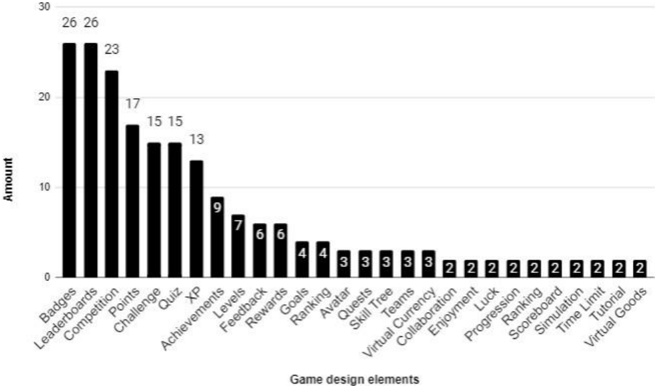
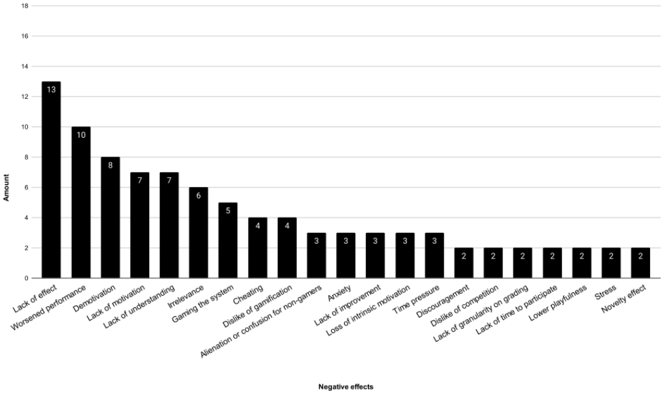
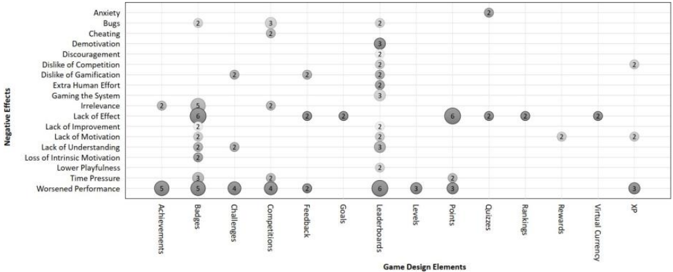
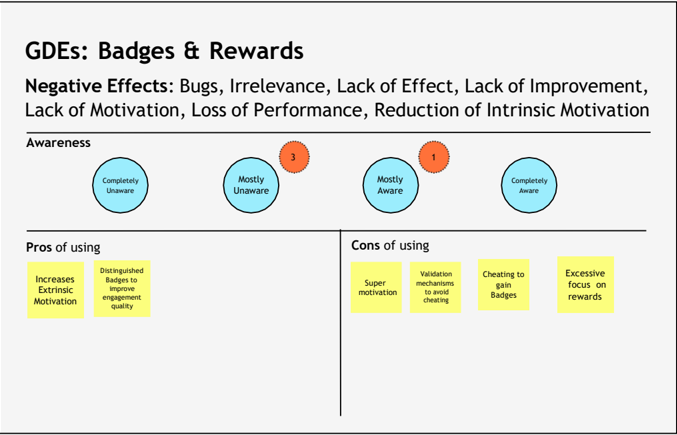
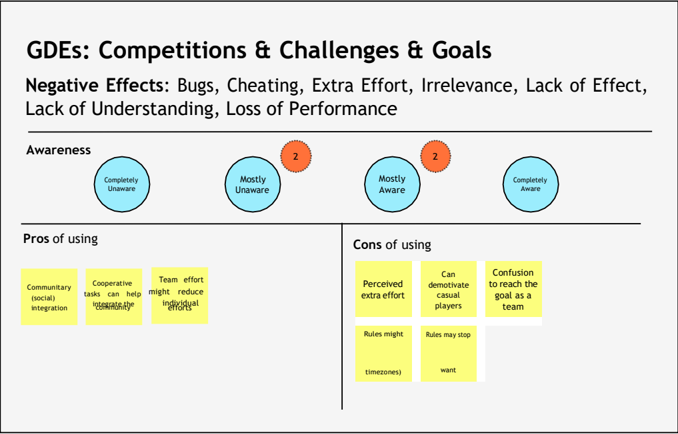
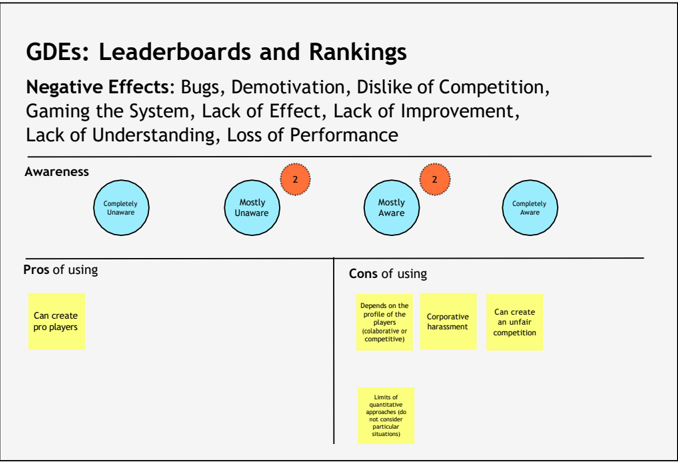
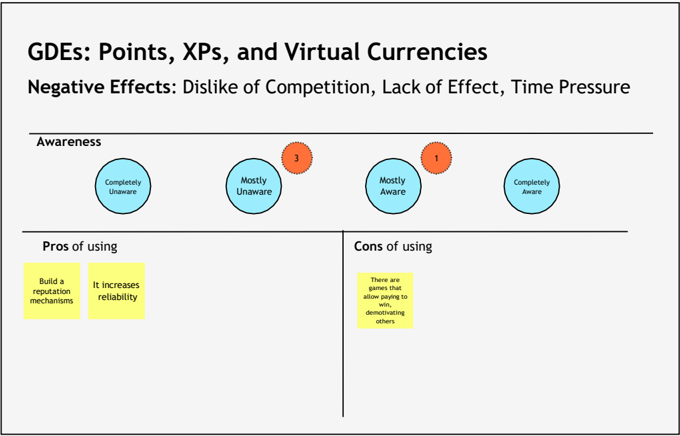
- The mapping included 87 papers; badges, leaderboards, competitions, and points were the game design elements most often reported as causing negative effects. The most cited negative effects were lack of effect, worsened performance, motivational issues, lack of understanding, and irrelevance; gaming the system and cheating were also often reported.
- Across the included papers, the authors found 94 different GDEs, 69 different negative effects caused to users/students, and 10 different negative effects caused to teachers or those maintaining the software. For teachers/maintainers, the most common effects were general technical challenges (7 mentions) and extra general human effort/resources (5 mentions).
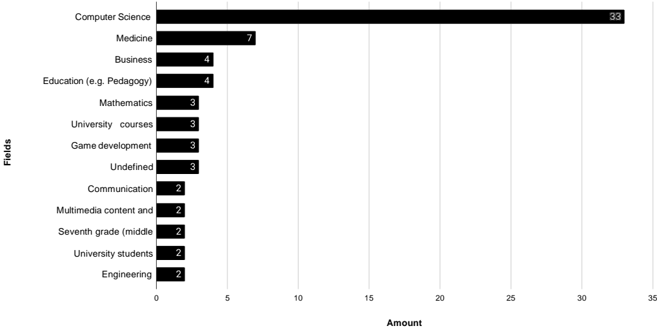
- Empirical study types were case study & survey (37), controlled experiment & survey (30), controlled experiment (9), case study (6), and survey (5); computer science was the most covered field.
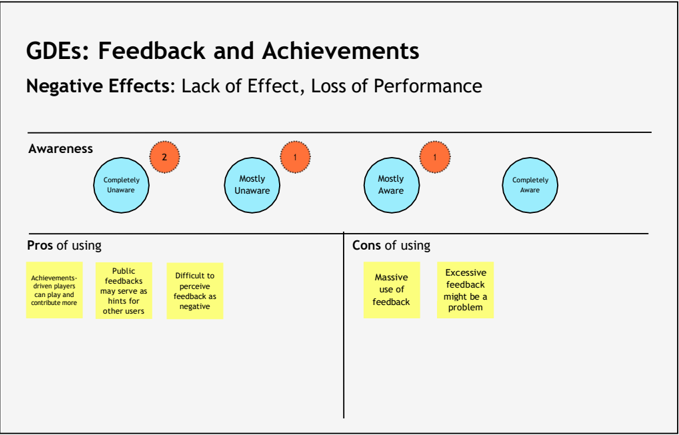
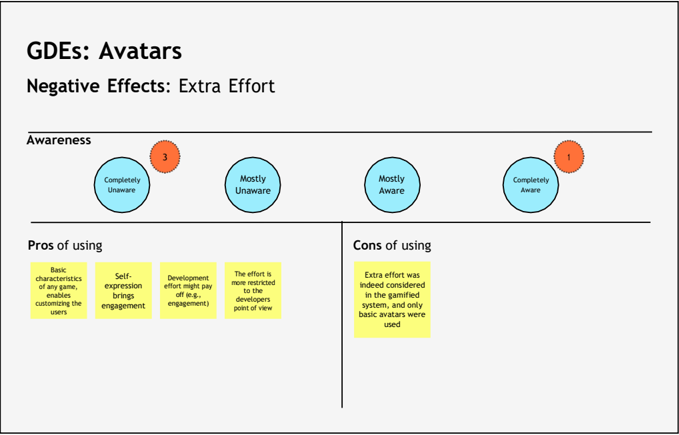
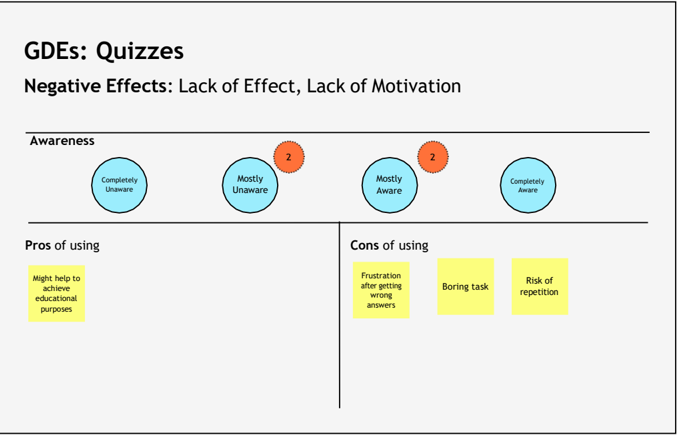
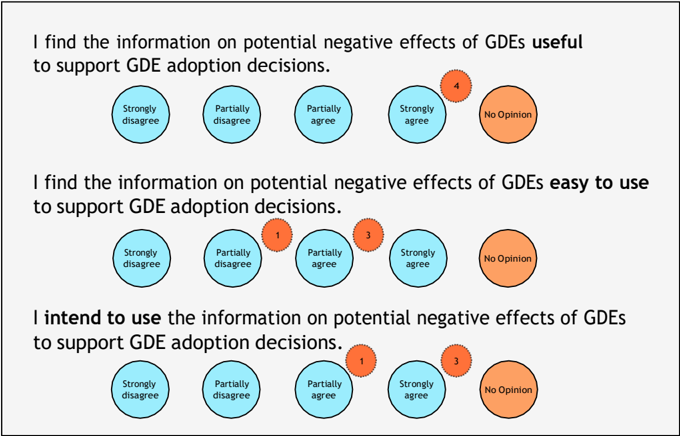
- In the focus group, developers were not aware of many possible negative effects; all participants strongly agreed the information was useful to support GDE adoption decisions, while only one partially disagreed and three partially agreed that the information was easy to use.
Methods
- Systematic mapping following Kitchenham and Charters and Petersen et al., using a hybrid search strategy combining a Scopus database search with backward and forward snowballing; after analyzing more than 3500 papers and manually adding 8 papers from Toda et al. missed by the search, the final set was 87 included papers.
- Data extraction used open coding to map GDEs to negative effects for users/students and teachers/maintainers, and to extract fields of education/learning and types of empirical studies.
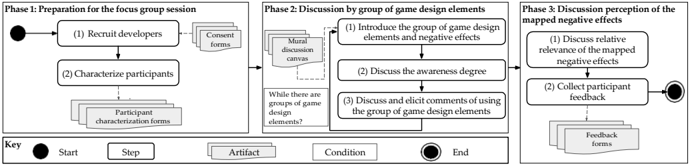
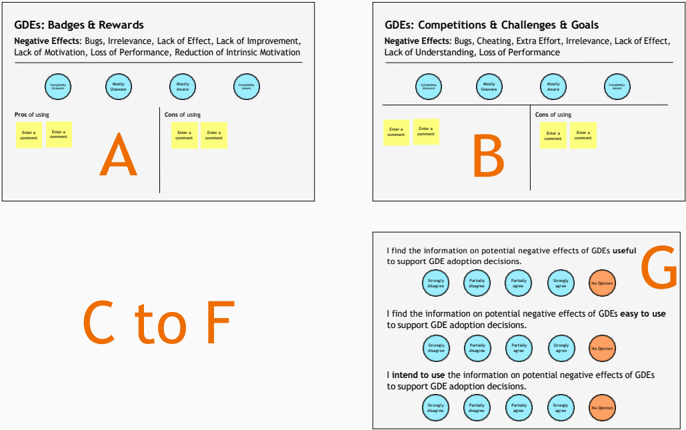
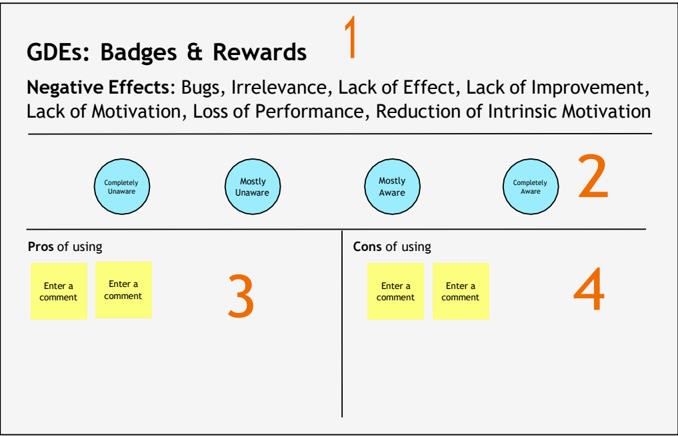
- A focus group was held with four experienced developers of the VazaZika gamified software (all PhDs in Computer Science, at least 10 years of software development experience), conducted online via MURAL and Zoom, discussing groups of GDEs and TAM-based items on usefulness, ease of use, and intent to adopt the information.
Limitations
- Stated: potentially missing papers; the final set includes 8 papers manually added from Toda et al.; screening only titles, abstracts, and keywords risks false negatives; grey literature was excluded; publication bias toward positive outcomes may hide unpublished negative results; a single focus group with four participants is preliminary and not generalizable; fine-grained analysis of each GDE’s effects for each role was out of scope.
- Stated/evident: snowballing was not continued to saturation because analyzing thousands of additional entries was unfeasible; the mapping reports associations rather than correlation or causation, and many GDEs/effects were mentioned by only one paper each.
- Evident: the focus group captured only developers’ views, not students’ or teachers’ views, and was tied to one gamified software context (VazaZika).
Model-written summary. Check it against the paper before relying on it.
Integrity signals
Registry
Cites
Statistics
Figures
Verification
Claims the paper makes
0 Valid · 4 Not valid · 37 Not checked · 152 Own results and interpretations
In the paper
“i.e., their search strategy did not retrieve 26 papers reporting negative effects of gamification in education/learning software that were retrieved by our search strategy.”
§ Negative Effects of Gamification in Education Software: Systematic Mapping and Practitioner Perceptions > Removed because of Amount
What the sources say
- Not checked yetcites [27] A. Toda, P. Valle, S. Isotani, The dark side of gamification: An overview of negative effects of gamification in education., HEFA 2017, Higher Edu- cation for All. From Challenges to Novel Technology-Enhanced Solutions (2018) 143-156. source
plainstates a cause- Asserted: passes — The authors put it forward as true.
- Checkable: passes — It can be checked against evidence.
- Load-bearing: unclear — It is unclear whether the paper’s conclusions depend on it.
- Based: passes — The paper gives a reason why it holds.
In the paper
“When comparing our new set of 79 included papers against the 17 papers included by [27], while our set of 79 papers to be included comprised 34 papers ranging from 2012 to 2016, only eight of them were also included by [27]”
§ Negative Effects of Gamification in Education Software: Systematic Mapping and Practitioner Perceptions > Removed because of Amount
What the sources say
- Not checked yetcites [27] A. Toda, P. Valle, S. Isotani, The dark side of gamification: An overview of negative effects of gamification in education., HEFA 2017, Higher Edu- cation for All. From Challenges to Novel Technology-Enhanced Solutions (2018) 143-156. source
plain- Asserted: passes — The authors put it forward as true.
- Checkable: passes — It can be checked against evidence.
- Load-bearing: passes — The paper’s conclusions depend on it.
- Based: passes — The paper gives a reason why it holds.
In the paper
“On the other hand, our search strategy missed eight papers included in their mapping”
§ Negative Effects of Gamification in Education Software: Systematic Mapping and Practitioner Perceptions > Removed because of Amount
What the sources say
- Not checked yetcites [27] A. Toda, P. Valle, S. Isotani, The dark side of gamification: An overview of negative effects of gamification in education., HEFA 2017, Higher Edu- cation for All. From Challenges to Novel Technology-Enhanced Solutions (2018) 143-156. source
plain- Asserted: passes — The authors put it forward as true.
- Checkable: passes — It can be checked against evidence.
- Load-bearing: unclear — It is unclear whether the paper’s conclusions depend on it.
- Based: passes — The paper gives a reason why it holds.
A result the paper reports from its own data — it cites no other source for it, so there is none to check. The quote shows it is in the paper.
In the paper
“As part of our results, we map the relations between game design elements and the negative effects that they may cause.”
- Also stated in: § 1. Introduction · plain
“We also mapped the relations between game design elements and the negative effects that they may cause, so that these effects can be pragmatically considered when designing gamified software.”
§ Negative Effects of Gamification in Education Software: Systematic Mapping and Practitioner Perceptions > Abstract
plainstates a possible cause- Asserted: passes — The authors put it forward as true.
- Checkable: passes — It can be checked against evidence.
- Load-bearing: passes — The paper’s conclusions depend on it.
- Based: passes — The paper gives a reason why it holds.
- Rests on an assumption not shown here.
- Also stated in: § 1. Introduction · plain
A result the paper reports from its own data — it cites no other source for it, so there is none to check. The quote shows it is in the paper.
In the paper
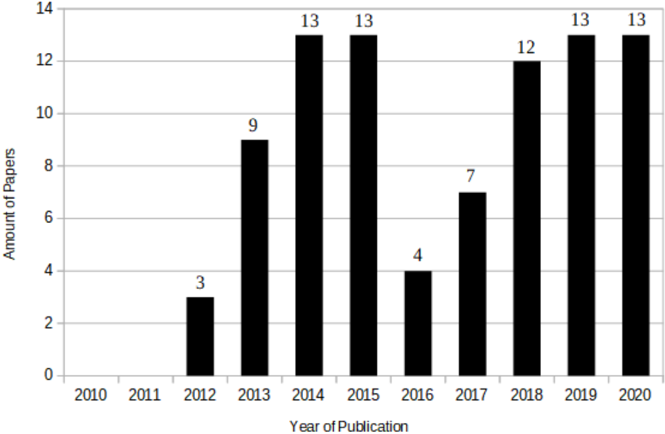
“The mapping study revealed 87 papers reporting undesired effects of game design elements.”
§ Negative Effects of Gamification in Education Software: Systematic Mapping and Practitioner Perceptions > Abstract
plain- Asserted: passes — The authors put it forward as true.
- Checkable: passes — It can be checked against evidence.
- Load-bearing: passes — The paper’s conclusions depend on it.
- Based: passes — The paper gives a reason why it holds.
- Rests on an assumption not shown here.
42 more claims
Create a free account to see all 193 claims and to verify the 35 references still open.
- It may state two separate claims as one. 65
- Probably not a substantial claim. 123
- The quote only partly states this claim. 2
Claims other papers make about this one
Each is checked against this paper’s own text: does it say what the citing paper says it does?
In the citing paper
“Badges may shift focus excessively toward earning them, reducing attention to main tasks (Almeida et al., 2023)”
From The impact of educational gamification on cognition, emotions, and motivation: a randomized controlled trial (2026) · cites this paper as Almeida et al., 2023
Self-check
Percentages, sums and reported differences re-computed from the paper’s own numbers.
Each contradiction between two passages listed here was confirmed by an independent check.
Rated major: it would touch a result — a value a result rests on, reported and recomputed p-values on opposite sides of the significance level, two passages that conflict with no sign which is right, or a cited work retracted before this paper was published.
In the paper
§ Negative Effects of Gamification in Education Software: Systematic Mapping and Practitioner Perceptions > 4. Systematic Mapping Results
“Overall, the papers reported 94 different GDEs, 69 different negative effects caused to the user, and ten different negative effects caused to the person maintaining the software or in the role of a teacher.”
§ Negative Effects of Gamification in Education Software: Systematic Mapping and Practitioner Perceptions > 4.1.2. RQ1.B
“Again, several (75) other negative effects caused to the user were mentioned only once.”
Rated minor: it would not touch a result — a value no result rests on, a p-value that stays on the same side of the significance level, or a conflict that is clerical, resolved elsewhere in the paper, or outside its own findings.
In the paper
“A total of 25 members participated in the project: one project manager; four development team leaders; 15 software developers, including the team lead-ers, distributed in two Brazilian cities, each with at least one developer per team; and seven senior researchers, five from Brazil and two from the UK.”
§ Negative Effects of Gamification in Education Software: Systematic Mapping and Practitioner Perceptions > 5.1. Context and Participant Characterization
Reported 25 · recomputed 23
Citations
Cites
Perceived usefulness, perceived ease of use, and user acceptance of information technology
Davis, F. D. (1989) · MIS Quarterly · doi:10.2307/249008 · Cited by 68,483
The Coding Manual for Qualitative Researchers
Lungu, M. (2022) · American Journal of Qualitative Research · doi:10.29333/ajqr/12085 · Cited by 10,826
Guidelines for performing Systematic Literature Reviews in Software Engineering
Kitchenham, B. A., & Charters, S. (n.d.) · Cited by 10,073
From game design elements to gamefulness: defining "gamification"
Deterding, S., Dixon, D., Khaled, R., & Nacke, L. (2011) · Proceedings of the 15th International Academic MindTrek Conference: Envisioning Future Media Environments · doi:10.1145/2181037.2181040 · Cited by 8,402 · cited 10×
“It can make player feel included and comfortable within the game [2].”
BackgroundInfluentialDoes Gamification Work? -- A Literature Review of Empirical Studies on Gamification
Hamari, J., Koivisto, J., & Sarsa, H. (2014) · 2014 47th Hawaii International Conference on System Sciences · doi:10.1109/hicss.2014.377 · Cited by 5,201 · cited 1×
“[35] corroborated the point about mixed effects.”
Likert scales, levels of measurement, and the “laws” of statistics
Norman, G. (2010) · Advances in Health Sciences Education · doi:10.1007/s10459-010-9222-y · Cited by 4,850
Experimentation in Software Engineering
Wohlin, C., Runeson, P., Höst, M., Ohlsson, M. C., Regnell, B., & Wesslén, A. (2012) · doi:10.1007/978-3-642-29044-2 · Cited by 4,460
Kapp, K. M. (2012) · Cited by 3,753
Guidelines for conducting systematic mapping studies in software engineering: An update
Petersen, K., Vakkalanka, S., & Kuzniarz, L. (2015) · Information and Software Technology · doi:10.1016/j.infsof.2015.03.007 · Cited by 2,669
Gamification in theory and action: a survey
Seaborn, K., & Fels, D. I. (2015) · International Journal of Human-Computer Studies · doi:10.1016/j.ijhcs.2014.09.006 · Cited by 2,515 · cited 1×
“Unfortunately, the term “gamification” remains inconsistently used, and a general theory of gamification is yet to be developed [18].”
Background
Research works printed but not linked: 5
- B. Boehm, V. Basili, Software defect reduction top 10 list., in: Founda- tions of Empirical Software Engineering, Springer Berlin Heidelberg, 2001, p. 426-431.
- J. Majuri, J. Koivisto, J. Hamari, Gamification of education and learning: A review of empirical literature., in: GamiFIN Conference 2018, 2018.
- S. Ejsing-Duun, H. Karoff, Gamification of a higher education course: What's the fun in that?, in: Proceedings of the 8th European Conference on Game Based Learning -ECGBL 2014, 2014, pp. 92-98.
- A. Campos, E. Batista, A. Signoretti, R. Gardiman, C. Madeira, Gamify- ing activities in a higher education course, in: 13th European Conference on Games Based Learning, 2015.
- C. Wohlin, P. Runeson, M. Höst, M. Ohlsson, B. Regnell, A. Wesslén, Ex- perimentation in software engineering, Springer Science & Business Media, 2012.
Cited by
Items 201–256 of 256
Investigando os efeitos das más práticas de integração contínua em projetos de software industriais
Silva, R. B. T. (2023) · LA Referencia (Red Federada de Repositorios Institucionales de Publicaciones Científicas)
Bibliometric Analysis of Gamification in Education: Trends, Collaboration, and Future Directions
Mutalib, W. W., Prasetiya, B., Suprapto, F., & Khoiriyah (2026) · Immortalis Journal of Interdisciplinary Studies · doi:10.67307/ijis.v2i1.77
Social gamification elements on user engagement and user retention in gamified learning apps
Olszewski, F. (2025) · reposiTUm (TU Wien) · doi:10.34726/hss.2025.132021
An affordance-based integration of sports and translation pedagogies
Musumeci, A. (2025) · Translation Matters · doi:10.21747/21844585/tm7_2a2
GAMIFICATION METHODS IN HACKATHONS AS A TOOL FOR INCREASING STATE RESILIENCE
JURAVIČIŪTĖ, S. (2025) · Visuomenes saugumas ir viesoji tvarka/Visuomenės saugumas ir viešoji tvarka · doi:10.13165/pspo-25-37-03-04
Tecnologías emergentes en la educación a distancia: un estudio sobre su impacto
Bournissen, J. M., Tumino, M. C., & Giménez, M. E. (2026) · El Servicio de Difusión de la Creación Intelectual (National University of La Plata)
Vesić, A. (2025) · reposiTUm (TU Wien) · doi:10.34726/hss.2025.123282
Wiboolyasarin, W., Wiboolyasarin, K., Kamonsawad, R., Tiranant, P., & Jinowat, N. (2026) · Computers and Education Open · doi:10.1016/j.caeo.2026.100436
UNIVERSITY STUDENTS FEELING IN GAMIFIED LEARNING OF ENGLISH LANGUAGE IN CLASSROOM.
Anugrah, P. P. (2024) · UMM Institutional Repository (Universitas Muhammadiyah Malang)
Almeida-Baroja, E. J. (2025) · Recie. Revista Caribeña de Investigación Educativa · doi:10.32541/recie.v9.784
Yulinar, Y., Jaenudin, R., & Hasmidyani, D. (2026) · Didaktika Jurnal Kependidikan · doi:10.58230/27454312.5070
Donozo, M. G., Largo, M. Y. R., Rosario, C. C. E., & Hurtado, J. M. A. (2026) · Polo del Conocimiento · doi:10.23857/pc.v11i11.12775
Idul, M., Dollah, S., Noni, N., Sakkir, G., Mujahidah, M., & Tjalla, M. (2026) · Indonesian TESOL Journal
Sharmukhanbet, S. R., Abykanova, B. T., Turmukhanova, G., Baitemirova, N., Naukenova, A. J., & Fındık, O. (2025) · Bulletin of the National Engineering Academy of the Republic of Kazakhstan · doi:10.47533/2025.1606-146x.16
Pertiwi, D. H., Muammar, M. A., Faturrahman, F., & Awalia, A. D. N. (2025) · Innovation and Applied Education Journal · doi:10.61220/iaej.v2i2.255
Gamification in Accounting Education: A Tam Perspective and Evidence from Non-Accounting Students
Tahir, W. M. M. W., & Noor, I. H. M. (2025) · International Journal of Research and Innovation in Social Science · doi:10.47772/ijriss.2025.909000729
Correia, M., Marques, C., Trigo, L., Quirino, C., Silva, H., Rocha, T., & Coelho, A. (2024) · Portuguese National Funding Agency for Science, Research and Technology (RCAAP Project by FCT) · doi:10.13140/rg.2.2.30030.23366
Bill, H. (2025) · Digitala vetenskapliga arkivet (Diva) (Karlstad University)
Sánchez, Y. K. L., Montaño, W. O. R., Castillo, O. S. C., & Ulloa, P. D. R. (2025) · Sinergia Académica · doi:10.51736/sa766
Insights on Gamification in Business and Management Education: A Qualitative Evidence Synthesis
PITIC, D. (2025) · Review of International Comparative Management · doi:10.24818/rmci.2025.4.698
Analisando Elementos de Gamificação em Aplicativos com fins Educacionais
Perico, N. M., & Silveira, M. S. (2025) · Simpósio Brasileiro de Fatores Humanos em Sistemas Computacionais (IHC) · doi:10.5753/ihc_estendido.2025.13285
Montoya, F. (2025) · Revista I+i · doi:10.71701/5mstm709
The Effect of Using Duolingo Application on Students’ Speaking Skill in Higher Education
Rahayu, P. S. E., Eripuddin, E., Jin, N. Y., & Dinata, B. A. (2025) · AL-ISHLAH Jurnal Pendidikan · doi:10.35445/alishlah.v17i4.7635
Gordillo, N. N. (2025) · TITULA
Rega, A., Miranda, L., Mele, C., & Scuotto, C. (2026) · Qwerty · doi:10.30557/qw000106
Кутняк, О., & Федорович, Д. (2026) · Молодь і ринок · doi:10.24919/2308-4634.2026.351041
Rahmattullah, M. (2026) · Journal of Hunan University Natural Sciences · doi:10.55463/issn.1674-2974.53.3.10
Exploring the role of gamification in enhancing engagement of maritime professionals to study
Yurzhenko, A. Y., Kononova, O., & Svirida, V. (2026) · Scientific Bulletin of Mukachevo State University Series “Pedagogy and Psychology” · doi:10.52534/msu-pp1.2026.56
Vieira, G. J. G. (2026) · Rebena - Revista Brasileira de Ensino e Aprendizagem · doi:10.5281/zenodo.20835425
Marín, M. C. (2026) · Revista Digital de Investigación y Postgrado · doi:10.59654/mcpjd421
Ruvalcaba, S. G., Enríquez, J. B., & Cosío, V. T. (2026) · Ibero Ciencias - Revista Científica y Académica · doi:10.63371/ic.v5.n2.a1310
Sudirman, L., Weley, N. C., Sacramed, M. T., Antony, A., & Tan, D. (2026) · Politica Jurnal Hukum Tata Negara dan Politik Islam · doi:10.32505/politica.v13i1.15223
Implementasi Pembelajaran Matematika Berbasis Virtual Reality untuk Pemahaman Konsep Siswa
Ginting, N. R., Pasaribu, L. H., & Julyanti, E. (2026) · Edu Cendikia Jurnal Ilmiah Kependidikan · doi:10.47709/educendikia.v6i01.8218
Agustiana, A. (2026) · Jurnal Mahasiswa Pendidikan · doi:10.36987/jmapen.v7i1.9110
Learniverse: A Curriculum-Aligned Gamified Learning Platform
Mandawkar, U., Panchabudhe, H. M., Patil, R., Ranmale, S., Patil, P., & Patil, R. (2026) · International Journal of Computer Information Systems and Industrial Management Applications · doi:10.70917/ijcisim-2026-4194
Mercado, R. L., Rosales, R. A., Salas, D. R., & Sano, C. R. D. (2026) · International Conference on e-Education, e-Business, e-Management and e-Learning · doi:10.1109/ic4e69618.2026.11631506
Paranawithana, I. A., & Kathriarachchi, R. P. S. (2025) · doi:10.64701/irc2025/345/9180
Jeldres, R., Matsumoto-Royo, K., & Tapia, C. G. (2025) · Revista Perspectivas Educacionales (REPED)
Saat, N. (2025) · Journal of Islamic Social Economics and Development
MENINGKATKAN MOTIVASI BELAJAR MELALUI GAMIFIKASI MISI BERTAHAP PADA PEMBELAJARAN KARYA TULIS ILMIAH
Haliza, L. N., Dzarna, D., & Anasofa, B. (2026) · SECONDARY Jurnal Inovasi Pendidikan Menengah · doi:10.51878/secondary.v6i4.15613
OFFLINE GAMIFIED ANKI FOR EFL VOCABULARY LEARNING: IMPLEMENTATION, BENEFITS, AND CHALLENGES
Rifki, M., & Virdyna, N. K. (2026) · ENGLISH JOURNAL
تحلیل شبکه مضامین عوامل موثر بر اثربخشی آموزش ضمن خدمت کادر درمان با رویکرد بازی وارسازی
آقاخانی, ف., آدابی, م., اصغری, ح., & بناب, ص. ب. (n.d.) · نشریه علمی رویکردهای پژوهشی نوین مدیریت و حسابداری
Ribeiro, K. A. C. (2026) · Revista Foco · doi:10.54751/revistafoco.v19n10-024
Ensino de planejamento e história administrativo-industrial por meio de um jogo de estratégia
Barcelos, F., Parreiras, M., da Silva, M. A. R., & Xexeo, G. B. (2026) · Simpósio Brasileiro de Jogos e Entretenimento Digital (SBGames) · doi:10.5753/sbgames.2026.26057
Irama, D., Sari, D. P., & Daheri, M. (2026) · IQRO Journal of Islamic Education · doi:10.24256/iqro.v9i3.12575
Asencio, P. I. F., Jordan, C. E. R., Ramirez, J. S. F., & Intriago, D. I. L. (2026) · Revista Científica Multidisciplinar G-nerando · doi:10.66473/rcmg.v7i2.1540
Díaz, J. A. (2026) · e-Revista Multidisciplinaria del Saber · doi:10.61286/e-rms.v4i.530
Marín, M. C. (2026) · Redalyc (Universidad Autónoma del Estado de México)
Krasteva, N., & Daskalov, T. (2026) · International Conference on Cybersecurity and AI-Based Systems (Cyber-AI) · doi:10.1109/cyber-ai70573.2026.11755249
Gamification as a Didactic Resource to Optimize School Achievement in Experimental Sciences
Rodríguez-Barocio, Y., & Valdivia, A. O. (2026) · American Journal of Educational Research · doi:10.12691/education-14-11-1
Lima, T., Patrício, J. M., Gonçalves, A., Franco, A., & Uchôa, A. (2026) · Software Quality Journal · doi:10.1007/s11219-026-09799-8
Self-citationПилипенко, Я. О. (2026) · Electronic Sumy State University Institutional Repository (Sumy State University)
Handoko, A., Fathurrahman, A., Solviana, M. D., Haka, N. B., Puspita, L., Hidayah, N., Pratama, A. O. S., Supriyadi, S., Novitasari, A., Oktafiani, R., et al. (2026) · JPBI (Jurnal Pendidikan Biologi Indonesia) · doi:10.22219/jpbi.v12i3.44840
Loor, J. M. V., Gracia, E. P., & Jiménez, J. C. (2026) · Contemporary Educational Technology · doi:10.30935/cedtech/19996
Metadata
- Authors
- Almeida, C., Kalinowski, M., Uchôa, A., & Feijó, B.
- Affiliations
- Pontifícia Universidade Católica do Rio de Janeiro (BR)
- Universidade Federal do Ceará (BR)
- Corresponding author
- Almeida, Cláuvin
- Venue
- Information and Software Technology
- Publisher
- Elsevier BV
- Published
- 2023-04
- Volume
- 156
- Pages
- 107142
- ISSN
- 0950-5849 (ISSN-L)
- OpenAlex
- W4312204119
- Cited by
- 256
- References
- 122
- Citations by year
- 2026: 113 · 2025: 87 · 2024: 31 · 2023: 25
- FWCI
- 27.62
- Type
- journal article
- Language
- en
- Open access
- green
- arxiv.org
- Licence
- cc-by
- www.elsevier.com/tdm/userlicense/1.0/ (tdm)
- www.elsevier.com/legal/tdmrep-license (tdm)
- doi.org/10.15223/policy-017 (stm-asf)
- doi.org/10.15223/policy-037 (stm-asf)
- doi.org/10.15223/policy-012 (stm-asf)
- doi.org/10.15223/policy-029 (stm-asf)
- doi.org/10.15223/policy-004 (stm-asf)
- Locations
- Information and Software Technology (publishedVersion)
- arXiv (Cornell University) (submittedVersion, cc-by)
- arXiv (Cornell University) (cc-by)
- Funders
- Coordenação de Aperfeiçoamento de Pessoal de Nível Superior (Brazil (Finance Code 001), (Code 001))
- Conselho Nacional de Desenvolvimento Científico e Tecnológico (Code 001, 312827/2020-2)
- Fundação Cearense de Apoio ao Desenvolvimento Científico e Tecnológico
- Topics
- Social Sciences › Psychology › Developmental and Educational Psychology › Educational Games and Gamification
- Physical Sciences › Computer Science › Computer Science Applications › Online Learning and Analytics
- Social Sciences › Sociology and Political Science › Digital Games and Media
- Keywords
- gamification, game elements, learning systems, badges, leaderboards, competition, points, motivation, gaming the system, cheating, developer awareness
About these checks
Registry, retraction, Cites and statistics results are computed, not judged, with one exception: a printed reference that no index lists is read once by a model before it counts as a citation error. Claims are extracted by a model and kept only when their quote appears verbatim in the text; each cited source is then checked, with a model’s help, for whether it says what the claim relies on. Those verdicts can be wrong — read the claim’s quote and the cited source before relying on one.
A language model drew the claims from the paper on 2026-11-23, under version 3 of the claim definition (model deepseek-v4.1-flash, prompt extract-v3).
A second model labelled each claim on 2026-11-23 (model jev-1.13-20260917, definition revision gold-guideline-v0.2).
Statistics and arithmetic are recomputed, not judged.
Confidence bands are shown only for fields calibrated on our annotated test set. None is calibrated yet, so no band is shown.
What counts as a claim ›How we measure confidence ›How we check this ›
Are you an author, or do you see a problem with this page? Request a review
Data sources
Bibliographic data: Semantic Scholar, OpenAlex, Crossref.
Contains information from the Semantic Scholar Academic Graph Datasets, made available under the ODC Attribution License (ODC-BY 1.0).
Semantic Scholar’s data is described in: Kinney, R., et al. (2023). The Semantic Scholar Open Data Platform. arXiv:2301.10140.
