

Negative effects of gamification in education software: Systematic mapping and practitioner perceptions
Open accessThe DOI matches its Crossref record; 121 of the 122 references it cites were found in a registry or an index; none of the 40 sources its claims cite is checked for support yet.
Overview
CoChat Summary
TL;DR
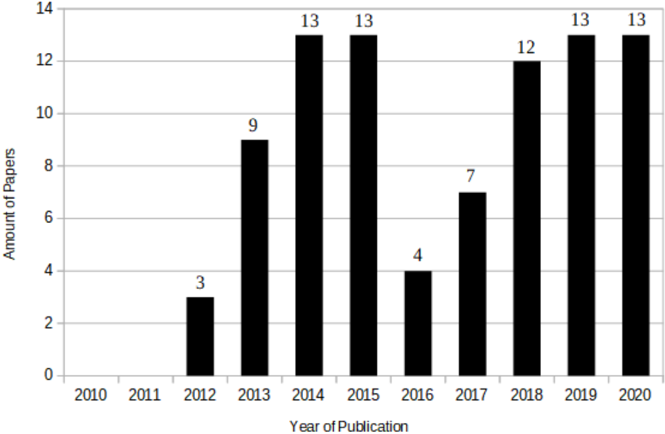
This paper reports a systematic mapping of 87 papers on negative effects of game design elements in education/learning software, plus a focus group with four developers of the gamified VazaZika software. It maps which elements are most often linked to adverse effects and finds developers were largely unaware of many reported negative effects but considered the information useful.
Key findings
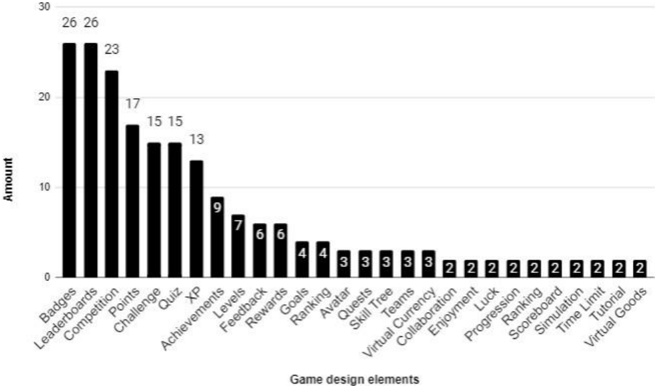
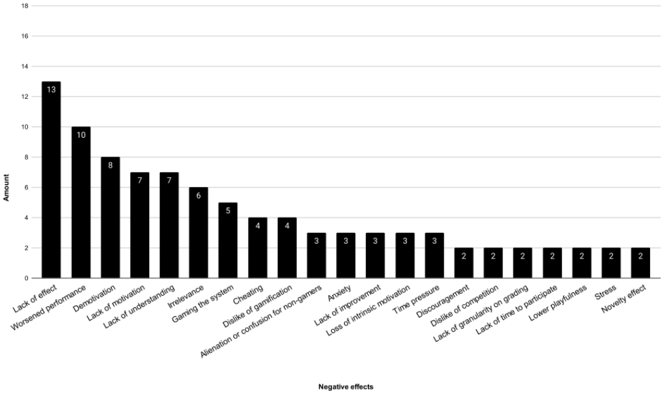
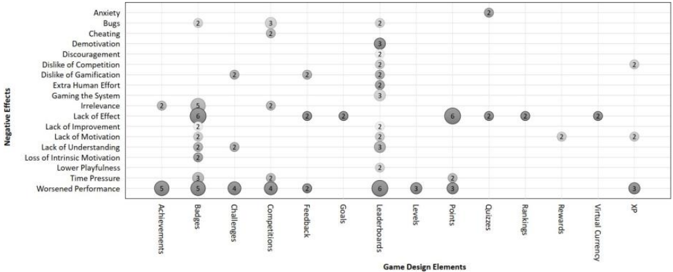
- The mapping included 87 papers; badges, leaderboards, competitions, and points were the game design elements most often reported as causing negative effects. The most cited negative effects were lack of effect, worsened performance, motivational issues, lack of understanding, and irrelevance; gaming the system and cheating were also often reported.
- Across the included papers, the authors found 94 different GDEs, 69 different negative effects caused to users/students, and 10 different negative effects caused to teachers or those maintaining the software. For teachers/maintainers, the most common effects were general technical challenges (7 mentions) and extra general human effort/resources (5 mentions).
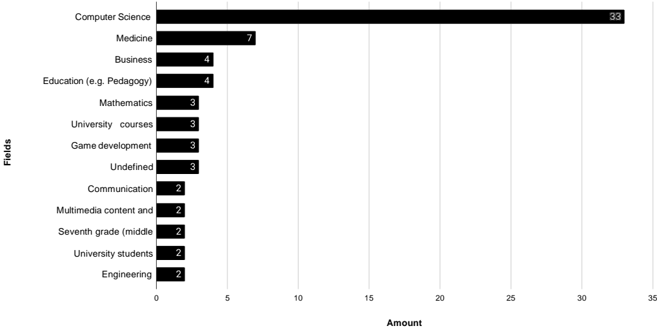
- Empirical study types were case study & survey (37), controlled experiment & survey (30), controlled experiment (9), case study (6), and survey (5); computer science was the most covered field.
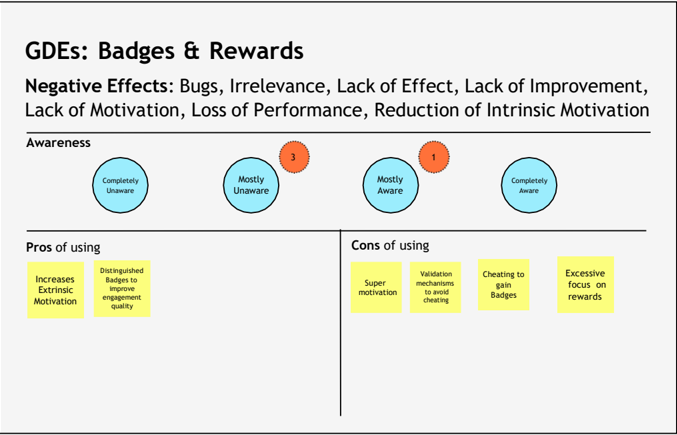
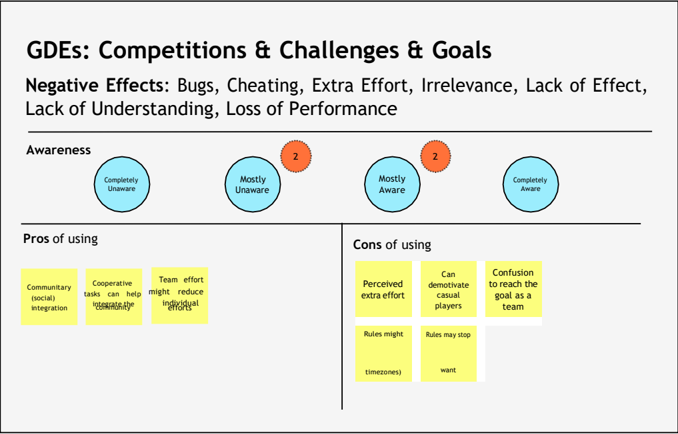
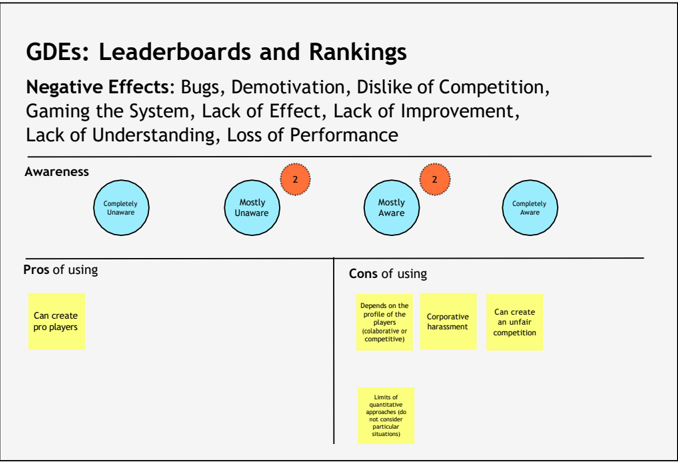
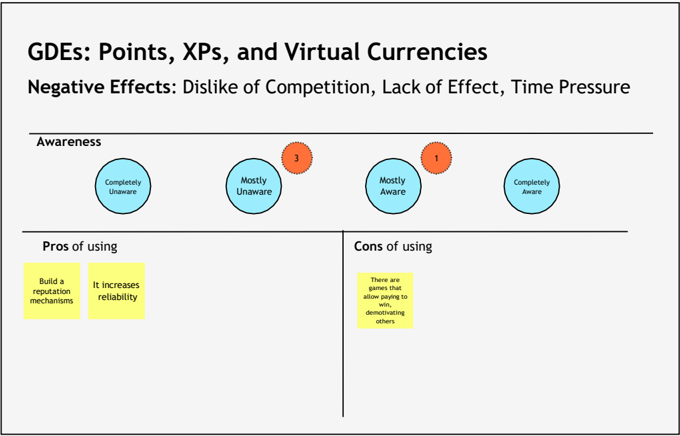
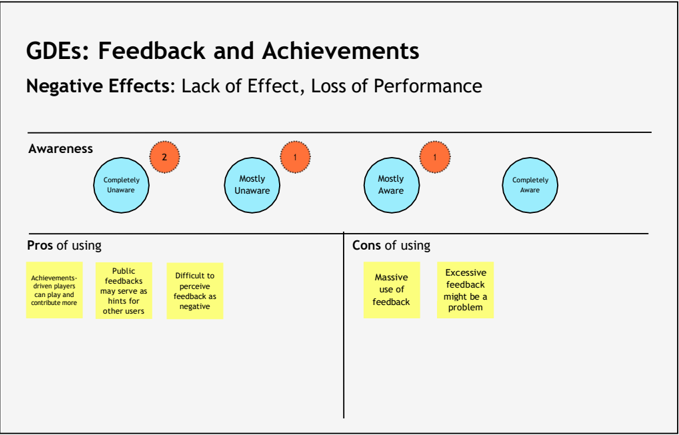
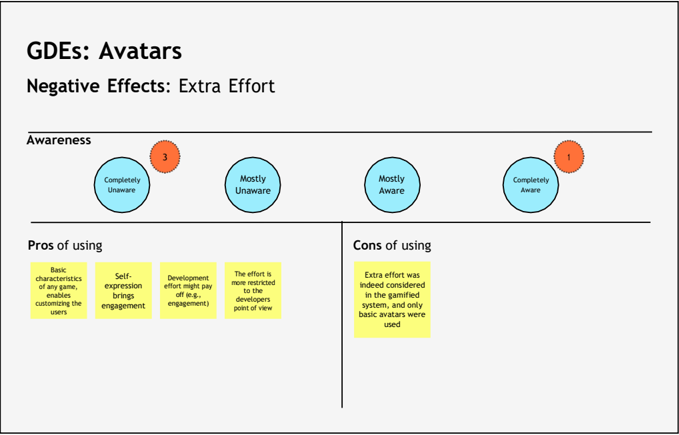
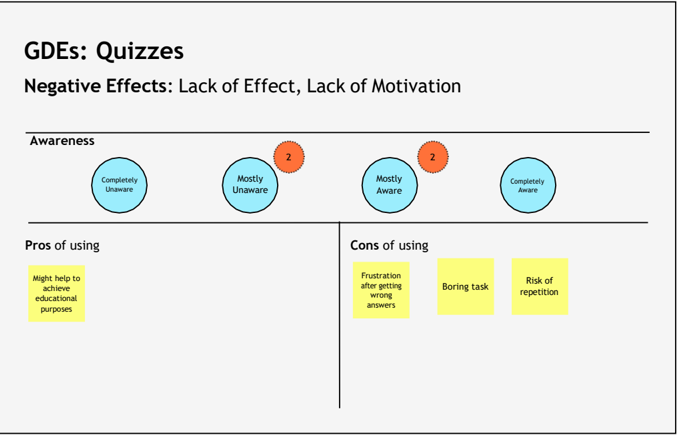
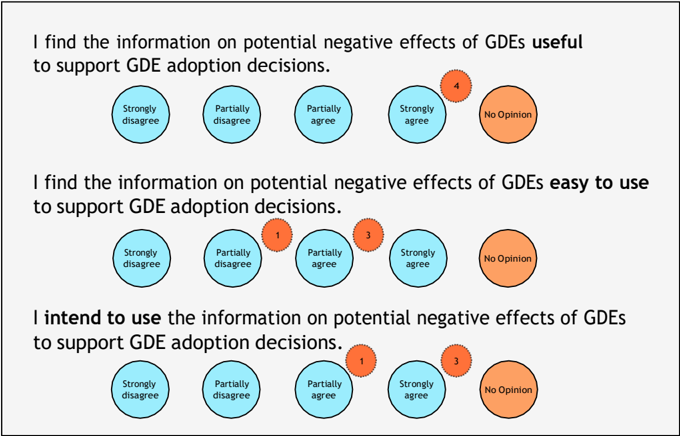
- In the focus group, developers were not aware of many possible negative effects; all participants strongly agreed the information was useful to support GDE adoption decisions, while only one partially disagreed and three partially agreed that the information was easy to use.
Methods
- Systematic mapping following Kitchenham and Charters and Petersen et al., using a hybrid search strategy combining a Scopus database search with backward and forward snowballing; after analyzing more than 3500 papers and manually adding 8 papers from Toda et al. missed by the search, the final set was 87 included papers.
- Data extraction used open coding to map GDEs to negative effects for users/students and teachers/maintainers, and to extract fields of education/learning and types of empirical studies.
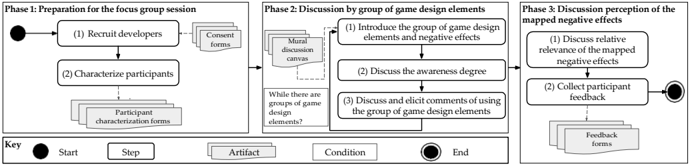
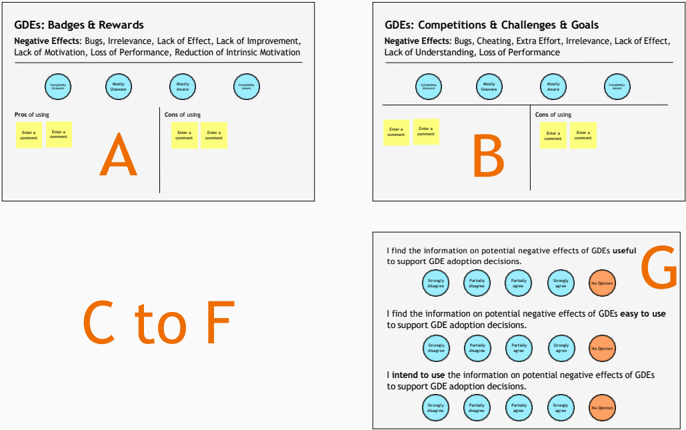
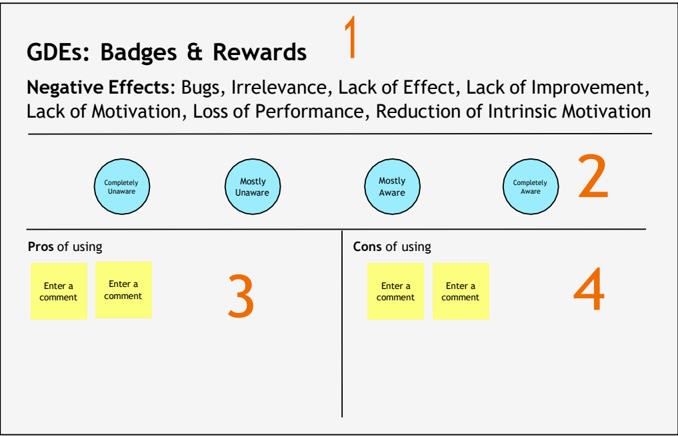
- A focus group was held with four experienced developers of the VazaZika gamified software (all PhDs in Computer Science, at least 10 years of software development experience), conducted online via MURAL and Zoom, discussing groups of GDEs and TAM-based items on usefulness, ease of use, and intent to adopt the information.
Limitations
- Stated: potentially missing papers; the final set includes 8 papers manually added from Toda et al.; screening only titles, abstracts, and keywords risks false negatives; grey literature was excluded; publication bias toward positive outcomes may hide unpublished negative results; a single focus group with four participants is preliminary and not generalizable; fine-grained analysis of each GDE’s effects for each role was out of scope.
- Stated/evident: snowballing was not continued to saturation because analyzing thousands of additional entries was unfeasible; the mapping reports associations rather than correlation or causation, and many GDEs/effects were mentioned by only one paper each.
- Evident: the focus group captured only developers’ views, not students’ or teachers’ views, and was tied to one gamified software context (VazaZika).
Model-written summary. Check it against the paper before relying on it.
Integrity signals
Registry
Cites
Statistics
Figures
Verification
Claims the paper makes
0 Valid · 4 Not valid · 37 Not checked · 152 Own results and interpretations
In the paper
“i.e., their search strategy did not retrieve 26 papers reporting negative effects of gamification in education/learning software that were retrieved by our search strategy.”
§ Negative Effects of Gamification in Education Software: Systematic Mapping and Practitioner Perceptions > Removed because of Amount
What the sources say
- Not checked yetcites [27] A. Toda, P. Valle, S. Isotani, The dark side of gamification: An overview of negative effects of gamification in education., HEFA 2017, Higher Edu- cation for All. From Challenges to Novel Technology-Enhanced Solutions (2018) 143-156. source
plainstates a cause- Asserted: passes — The authors put it forward as true.
- Checkable: passes — It can be checked against evidence.
- Load-bearing: unclear — It is unclear whether the paper’s conclusions depend on it.
- Based: passes — The paper gives a reason why it holds.
In the paper
“When comparing our new set of 79 included papers against the 17 papers included by [27], while our set of 79 papers to be included comprised 34 papers ranging from 2012 to 2016, only eight of them were also included by [27]”
§ Negative Effects of Gamification in Education Software: Systematic Mapping and Practitioner Perceptions > Removed because of Amount
What the sources say
- Not checked yetcites [27] A. Toda, P. Valle, S. Isotani, The dark side of gamification: An overview of negative effects of gamification in education., HEFA 2017, Higher Edu- cation for All. From Challenges to Novel Technology-Enhanced Solutions (2018) 143-156. source
plain- Asserted: passes — The authors put it forward as true.
- Checkable: passes — It can be checked against evidence.
- Load-bearing: passes — The paper’s conclusions depend on it.
- Based: passes — The paper gives a reason why it holds.
In the paper
“On the other hand, our search strategy missed eight papers included in their mapping”
§ Negative Effects of Gamification in Education Software: Systematic Mapping and Practitioner Perceptions > Removed because of Amount
What the sources say
- Not checked yetcites [27] A. Toda, P. Valle, S. Isotani, The dark side of gamification: An overview of negative effects of gamification in education., HEFA 2017, Higher Edu- cation for All. From Challenges to Novel Technology-Enhanced Solutions (2018) 143-156. source
plain- Asserted: passes — The authors put it forward as true.
- Checkable: passes — It can be checked against evidence.
- Load-bearing: unclear — It is unclear whether the paper’s conclusions depend on it.
- Based: passes — The paper gives a reason why it holds.
A result the paper reports from its own data — it cites no other source for it, so there is none to check. The quote shows it is in the paper.
In the paper
“As part of our results, we map the relations between game design elements and the negative effects that they may cause.”
- Also stated in: § 1. Introduction · plain
“We also mapped the relations between game design elements and the negative effects that they may cause, so that these effects can be pragmatically considered when designing gamified software.”
§ Negative Effects of Gamification in Education Software: Systematic Mapping and Practitioner Perceptions > Abstract
plainstates a possible cause- Asserted: passes — The authors put it forward as true.
- Checkable: passes — It can be checked against evidence.
- Load-bearing: passes — The paper’s conclusions depend on it.
- Based: passes — The paper gives a reason why it holds.
- Rests on an assumption not shown here.
- Also stated in: § 1. Introduction · plain
A result the paper reports from its own data — it cites no other source for it, so there is none to check. The quote shows it is in the paper.
In the paper
“The mapping study revealed 87 papers reporting undesired effects of game design elements.”
§ Negative Effects of Gamification in Education Software: Systematic Mapping and Practitioner Perceptions > Abstract
plain- Asserted: passes — The authors put it forward as true.
- Checkable: passes — It can be checked against evidence.
- Load-bearing: passes — The paper’s conclusions depend on it.
- Based: passes — The paper gives a reason why it holds.
- Rests on an assumption not shown here.
42 more claims
Create a free account to see all 193 claims and to verify the 35 references still open.
- It may state two separate claims as one. 65
- Probably not a substantial claim. 123
- The quote only partly states this claim. 2
Claims other papers make about this one
Each is checked against this paper’s own text: does it say what the citing paper says it does?
In the citing paper
“Badges may shift focus excessively toward earning them, reducing attention to main tasks (Almeida et al., 2023)”
From The impact of educational gamification on cognition, emotions, and motivation: a randomized controlled trial (2026) · cites this paper as Almeida et al., 2023
Self-check
Percentages, sums and reported differences re-computed from the paper’s own numbers.
Each contradiction between two passages listed here was confirmed by an independent check.
Rated major: it would touch a result — a value a result rests on, reported and recomputed p-values on opposite sides of the significance level, two passages that conflict with no sign which is right, or a cited work retracted before this paper was published.
In the paper
§ Negative Effects of Gamification in Education Software: Systematic Mapping and Practitioner Perceptions > 4. Systematic Mapping Results
“Overall, the papers reported 94 different GDEs, 69 different negative effects caused to the user, and ten different negative effects caused to the person maintaining the software or in the role of a teacher.”
§ Negative Effects of Gamification in Education Software: Systematic Mapping and Practitioner Perceptions > 4.1.2. RQ1.B
“Again, several (75) other negative effects caused to the user were mentioned only once.”
Rated minor: it would not touch a result — a value no result rests on, a p-value that stays on the same side of the significance level, or a conflict that is clerical, resolved elsewhere in the paper, or outside its own findings.
In the paper
“A total of 25 members participated in the project: one project manager; four development team leaders; 15 software developers, including the team lead-ers, distributed in two Brazilian cities, each with at least one developer per team; and seven senior researchers, five from Brazil and two from the UK.”
§ Negative Effects of Gamification in Education Software: Systematic Mapping and Practitioner Perceptions > 5.1. Context and Participant Characterization
Reported 25 · recomputed 23
Citations
Cites
Perceived usefulness, perceived ease of use, and user acceptance of information technology
Davis, F. D. (1989) · MIS Quarterly · doi:10.2307/249008 · Cited by 68,483
The Coding Manual for Qualitative Researchers
Lungu, M. (2022) · American Journal of Qualitative Research · doi:10.29333/ajqr/12085 · Cited by 10,826
Guidelines for performing Systematic Literature Reviews in Software Engineering
Kitchenham, B. A., & Charters, S. (n.d.) · Cited by 10,073
From game design elements to gamefulness: defining "gamification"
Deterding, S., Dixon, D., Khaled, R., & Nacke, L. (2011) · Proceedings of the 15th International Academic MindTrek Conference: Envisioning Future Media Environments · doi:10.1145/2181037.2181040 · Cited by 8,402 · cited 10×
“It can make player feel included and comfortable within the game [2].”
BackgroundInfluentialDoes Gamification Work? -- A Literature Review of Empirical Studies on Gamification
Hamari, J., Koivisto, J., & Sarsa, H. (2014) · 2014 47th Hawaii International Conference on System Sciences · doi:10.1109/hicss.2014.377 · Cited by 5,201 · cited 1×
“[35] corroborated the point about mixed effects.”
Likert scales, levels of measurement, and the “laws” of statistics
Norman, G. (2010) · Advances in Health Sciences Education · doi:10.1007/s10459-010-9222-y · Cited by 4,850
Experimentation in Software Engineering
Wohlin, C., Runeson, P., Höst, M., Ohlsson, M. C., Regnell, B., & Wesslén, A. (2012) · doi:10.1007/978-3-642-29044-2 · Cited by 4,460
Kapp, K. M. (2012) · Cited by 3,753
Guidelines for conducting systematic mapping studies in software engineering: An update
Petersen, K., Vakkalanka, S., & Kuzniarz, L. (2015) · Information and Software Technology · doi:10.1016/j.infsof.2015.03.007 · Cited by 2,669
Gamification in theory and action: a survey
Seaborn, K., & Fels, D. I. (2015) · International Journal of Human-Computer Studies · doi:10.1016/j.ijhcs.2014.09.006 · Cited by 2,515 · cited 1×
“Unfortunately, the term “gamification” remains inconsistently used, and a general theory of gamification is yet to be developed [18].”
BackgroundGamification by Design: Implementing Game Mechanics in Web and Mobile Apps
Zichermann, G., & Cunningham, C. J. L. (2011) · Cited by 2,378
(2012) · Swinburne figshare (Swinburne University of Technology) · Cited by 2,354
Gamifying learning experiences: Practical implications and outcomes
Domínguez, A., Saenz-de-Navarrete, J., de-Marcos, L., Fernández-Sanz, L., Pagés, C., & Martínez-Herráiz, J.-J. (2013) · Computers & Education · doi:10.1016/j.compedu.2012.12.020 · Cited by 2,007
Hanus, M. D., & Fox, J. (2015) · Computers & Education · doi:10.1016/j.compedu.2014.08.019 · Cited by 1,918 · cited 1×
“Achievements Irrelevance Worsened Performance [62] [69] [66] [69] [70] [67] [71] Bugs [55] [65] Irrelevance [55] [61] [62] [63] [64] Lack of Effect [55] [56] [57] [58] [59] [60] Lack Of Improvement [72] [73] Badges Lack of Motivation [74] [75] Lack of Understanding [59] [61] Loss of Intrinsic Motivation [76] [77] Time…”
BackgroundThe rise of motivational information systems: A review of gamification research
Koivisto, J., & Hamari, J. (2019) · International Journal of Information Management · doi:10.1016/j.ijinfomgt.2018.10.013 · Cited by 1,750
The TAME Project: Towards Improvement-Oriented Software Environments
Basili, V. R., & Rombach, H. D. (2005) · Foundations of Empirical Software Engineering · doi:10.1007/3-540-27662-9_8 · Cited by 1,411
The TAME project: towards improvement-oriented software environments
Basili, V. R., & Rombach, H. D. (1988) · IEEE Transactions on Software Engineering · doi:10.1109/32.6156 · Cited by 1,273
Gamification for health and wellbeing: A systematic review of the literature
Johnson, D., Deterding, S., Kuhn, K.-A., Staneva, A., Stoyanov, S., & Hides, L. (2016) · Internet Interventions · doi:10.1016/j.invent.2016.10.002 · Cited by 1,237
Actionable Gamification: Beyond Points, Badges, and Leaderboards
Chou, Y.-K. (2015) · Medical Entomology and Zoology · Cited by 1,190
Guide to Advanced Empirical Software Engineering
(2008) · Springer eBooks · doi:10.1007/978-1-84800-044-5 · Cited by 1,003
The impact of gamification on learning and instruction: A systematic review of empirical evidence
Zainuddin, Z., Chu, S. K. W., Shujahat, M., & Perera, C. J. (2020) · Educational Research Review · doi:10.1016/j.edurev.2020.100326 · Cited by 952
Gamification and student motivation
Buckley, P., & Doyle, E. (2016) · Interactive Learning Environments · doi:10.1080/10494820.2014.964263 · Cited by 879
An empirical study comparing gamification and social networking on e-learning
de-Marcos, L., Domínguez, A., Saenz-de-Navarrete, J., & Pagés, C. (2014) · Computers & Education · doi:10.1016/j.compedu.2014.01.012 · Cited by 626
Gibson, D., Ostashewski, N., Flintoff, K., Grant, S., & Knight, E. (2015) · Education and Information Technologies · doi:10.1007/s10639-013-9291-7 · Cited by 448
The Gamification Toolkit: Dynamics, Mechanics, and Components for the Win
Werbach, K. D., & Hunter, D. (2015) · Swinburne figshare (Swinburne University of Technology) · Cited by 443
Rice, J. W. (2012) · International Journal of Gaming and Computer-Mediated Simulations · doi:10.4018/jgcms.2012100106 · Cited by 441
Gamification in assessment: Do points affect test performance?
Attali, Y., & Arieli-Attali, M. (2015) · Computers & Education · doi:10.1016/j.compedu.2014.12.012 · Cited by 392
Gamification: a systematic review of design frameworks
Mora, A., Riera, D., González, C., & Arnedo-Moreno, J. (2017) · Journal of Computing in Higher Education · doi:10.1007/s12528-017-9150-4 · Cited by 326
Improving participation and learning with gamification
Barata, G., Gama, S., Jorge, J., & Gonçalves, D. (2013) · Proceedings of the First International Conference on Gameful Design, Research, and Applications · doi:10.1145/2583008.2583010 · Cited by 317
The Dark Side of Gamification: An Overview of Negative Effects of Gamification in Education
Toda, A. M., Valle, P. H. D., & Isotani, S. (2018) · Communications in Computer and Information Science · doi:10.1007/978-3-319-97934-2_9 · Cited by 305
Naming the pain in requirements engineering: Contemporary problems, causes, and effects in practice
Fernández, D. M., Wagner, S., Kalinowski, M., Felderer, M., Mafra, P., Vetrò, A., Conte, T., Christiansson, M.-T., Greer, D., Lassenius, C., et al. (2017) · Empirical Software Engineering · doi:10.1007/s10664-016-9451-7 · Cited by 300
Self-citationCan gamification help to improve education? Findings from a longitudinal study
Putz, L.-M., Hofbauer, F., & Treiblmaier, H. (2020) · Computers in Human Behavior · doi:10.1016/j.chb.2020.106392 · Cited by 299
Strengthening gamification studies: Current trends and future opportunities of gamification research
Rapp, A., Hopfgartner, F., Hamari, J., Linehan, C., & Cena, F. (2019) · International Journal of Human-Computer Studies · doi:10.1016/j.ijhcs.2018.11.007 · Cited by 286
Adaptive Gamification for Learning Environments
Lavoue, E., Monterrat, B., Desmarais, M., & George, S. (2019) · IEEE Transactions on Learning Technologies · doi:10.1109/tlt.2018.2823710 · Cited by 235
Empirical Study on the Effect of Achievement Badges in TRAKLA2 Online Learning Environment
Hakulinen, L., Auvinen, T., & Korhonen, A. (2013) · 2013 Learning and Teaching in Computing and Engineering · doi:10.1109/latice.2013.34 · Cited by 225
Gamification in software engineering education: A systematic mapping
Alhammad, M. M., & Moreno, A. M. (2018) · Journal of Systems and Software · doi:10.1016/j.jss.2018.03.065 · Cited by 224
Brathwaite, B., & Schreiber, I. (2008) · Cited by 218
(2016) · The Electronic Journal of e-Learning · Cited by 195
Matosin, N., Frank, E., Engel, M., Lum, J. S., & Newell, K. A. (2014) · Disease Models & Mechanisms · doi:10.1242/dmm.015123 · Cited by 194
How to Gamify? A Method For Designing Gamification
Morschheuser, B., Hamari, J., Werder, K., & Abe, J. (2017) · Proceedings of the Annual Hawaii International Conference on System Sciences · doi:10.24251/hicss.2017.155 · Cited by 193
Mourão, E., Pimentel, J. F., Murta, L., Kalinowski, M., Mendes, E., & Wohlin, C. (2020) · Information and Software Technology · doi:10.1016/j.infsof.2020.106294 · Cited by 191 · cited 7×
“We decided to use a hybrid search strategy, combining a database search on Scopus with forward and backward snowballing [15].”
BackgroundMethodInfluentialSelf-citationDiscovering and representing systematic code changes
Kim, M., & Notkin, D. (2009) · 2009 IEEE 31st International Conference on Software Engineering · doi:10.1109/icse.2009.5070531 · Cited by 183
Uncovering the dark side of gamification at work: Impacts on engagement and well-being
Hammedi, W., Leclercq, T., Poncin, I., & Alkire (Née Nasr), L. (2021) · Journal of Business Research · doi:10.1016/j.jbusres.2020.08.032 · Cited by 176
The Focus Group Method as an Empirical Tool in Software Engineering
Kontio, J., Bragge, J., & Lehtola, L. (2008) · Guide to Advanced Empirical Software Engineering · doi:10.1007/978-1-84800-044-5_4 · Cited by 167
van Roy, R., & Zaman, B. (2019) · International Journal of Human-Computer Studies · doi:10.1016/j.ijhcs.2018.04.009 · Cited by 162
When to update systematic literature reviews in software engineering
Mendes, E., Wohlin, C., Felizardo, K. R., & Kalinowski, M. (2020) · Journal of Systems and Software · doi:10.1016/j.jss.2020.110607 · Cited by 155
Self-citationLugmayr, A. R., Franssila, H., Sotamaa, O., Safran, C., & Aaltonen, T. (2010) · Cited by 151
Guidelines for the Search Strategy to Update Systematic Literature Reviews in Software Engineering
Wohlin, C., Mendes, E., Felizardo, K. R., & Kalinowski, M. (2020) · Information and Software Technology · doi:10.1016/j.infsof.2020.106366 · Cited by 147 · cited 1×
“18 strategy for updating systematic literature studies [51], the update until the end of 2020 could be accomplished by applying forward snowballing to the set of 68 papers identified initially as part of our strategy.”
MethodSelf-citationDavis, K. S., & Singh, S. (2015) · Computers & Education · doi:10.1016/j.compedu.2015.04.011 · Cited by 146
Denden, M., Tlili, A., Essalmi, F., Jemni, M., Chen, N., & Burgos, D. (2021) · International Journal of Human-Computer Studies · doi:10.1016/j.ijhcs.2021.102674 · Cited by 142
Diefenbach, S., & Müssig, A. (2018) · International Journal of Human-Computer Studies · doi:10.1016/j.ijhcs.2018.09.004 · Cited by 139
Berkling, K., & Thomas, C. (2013) · 2013 International Conference on Interactive Collaborative Learning (ICL) · doi:10.1109/icl.2013.6644642 · Cited by 139
Soviet and American precursors to the gamification of work
Nelson, M. J. (2012) · International Academic Mindtrek Conference (Mindtrek) · doi:10.1145/2393132.2393138 · Cited by 135
PICO: Model for Clinical Questions
Leonardo, R. (2018) · Evidence based Medicine and Practice · doi:10.4172/2471-9919.1000115 · Cited by 135
How (not) to introduce badges to online exercises
Haaranen, L., Ihantola, P., Hakulinen, L., & Korhonen, A. (2014) · Proceedings of the 45th ACM technical symposium on Computer science education · doi:10.1145/2538862.2538921 · Cited by 129
Does gamification work for boys and girls? An exploratory study with a virtual learning environment
Pedro, L. Z., Lopes, A. M. Z., Prates, B. G., Vassileva, J., & Isotani, S. (2015) · ACM Symposium on Applied Computing · doi:10.1145/2695664.2695752 · Cited by 120
Using badges for shaping interactions in online learning environments
McDaniel, R., Lindgren, R., & Friskics, J. (2012) · 2012 IEEE International Professional Communication Conference · doi:10.1109/ipcc.2012.6408619 · Cited by 112
Learning and engagement in a gamified course: I nvestigating the effects of student characteristics
Davis, K. S., Sridharan, H., Koepke, L., Singh, S. A. B., & Boiko, R. (2018) · Journal of Computer Assisted Learning · doi:10.1111/jcal.12254 · Cited by 104
Lee, B. C. (2019) · Sustainability · doi:10.3390/su11113002 · Cited by 102
Teaching Presence in Online Gamified Education for Sustainability Learning
Mahmud, S. N. D., Husnin, H., & Tuan Soh, T. M. (2020) · Sustainability · doi:10.3390/su12093801 · Cited by 97
van Roy, R., Deterding, S., & Zaman, B. (2018) · International Journal of Human-Computer Studies · doi:10.1016/j.ijhcs.2018.09.003 · Cited by 96
It was a bit of a race: Gamification of version control
Singer, L., & Schneider, K. A. (2012) · doi:10.1109/gas.2012.6225927 · Cited by 94
Fitz-Walter, Z., Johnson, D., Wyeth, P., Tjondronegoro, D., & Scott-Parker, B. (2017) · Computers in Human Behavior · doi:10.1016/j.chb.2016.08.050 · Cited by 93
5W2H Framework: a guide to design, develop and evaluate the user-centered gamification
Klock, A. C. T., Gasparini, I., & Pimenta, M. S. (2016) · Brazilian Symposium on Human Factors in Computing Systems (IHC) · doi:10.1145/3033701.3033715 · Cited by 90
Gender Moderation in Gamification: Does One Size Fit All?
Codish, D., & Ravid, G. (2017) · Hawaii International Conference on System Sciences (HICSS) · doi:10.24251/hicss.2017.244 · Cited by 87
2009 IEEE 31st International Conference on Software Engineering
(2009) · doi:10.1109/icse12134.2009 · Cited by 83
Ortíz-Rojas, M., Chiluiza, K., & Valcke, M. (2017) · Ghent University Academic Bibliography (Ghent University) · Cited by 82
Chau, C.-L., Tsui, Y. Y.-Y., & Cheng, C. (2019) · Frontiers in Psychology · doi:10.3389/fpsyg.2019.02468 · Cited by 82
Matthews, K. L., Baird, M., & Duchesne, G. (2018) · Qualitative Health Research · doi:10.1177/1049732318782167 · Cited by 81
Albuquerque, J., Bittencourt, I. I., Coelho, J. A. P. D. M., & da Silva, A. P. (2017) · Computers & Education · doi:10.1016/j.compedu.2017.08.005 · Cited by 79
Foundations of Empirical Software Engineering: The Legacy of Victor R. Basili
Boehm, B., Rombach, H. D., & Zelkowitz, M. V. (2005) · Springer eBooks · doi:10.1007/3-540-27662-9 · Cited by 78
It was a bit of a race: gamification of version control
Singer, L., & Schneider, K. A. (2012) · doi:10.5555/2663700.2663702 · Cited by 75
2013 39th Euromicro Conference on Software Engineering and Advanced Applications
Demirörs, O., & Türetken, O. (2013) · doi:10.1109/seaa32488.2013 · Cited by 74
What Perception Do Students Have About the Gamification Elements?
Iruela, M. G., & Hijón‐Neira, R. (2020) · IEEE Access · doi:10.1109/access.2020.3011222 · Cited by 73
Pilkington, C. (2018) · The International Review of Research in Open and Distributed Learning · doi:10.19173/irrodl.v19i3.3664 · Cited by 71
The design and implementation of a gamified assessment
Kocadere, S. A., & Çağlar, Ş. (2015) · DOAJ (DOAJ: Directory of Open Access Journals) · doi:10.20368/1971-8829/1070 · Cited by 66
PERSONALITY BASED GAMIFICATION: HOW DIFFERENT PERSONALITIES PERCEIVE GAMIFICATION
Codish, D., & Ravid, G. (2014) · AIS Electronic Library (AISeL) · Cited by 66
Negative results: negative perceptions limit their potential for increasing reproducibility
da Silva, J. A. T. (2015) · Journal of Negative Results in BioMedicine · doi:10.1186/s12952-015-0033-9 · Cited by 65
Understanding Development Process of Machine Learning Systems: Challenges and Solutions
Nascimento, E. D. S., Ahmed, I., Oliveira, E., Palheta, M. P., Steinmacher, I., & Conte, T. (2019) · 2019 ACM/IEEE International Symposium on Empirical Software Engineering and Measurement (ESEM) · doi:10.1109/esem.2019.8870157 · Cited by 64
UniCraft: Exploring the impact of asynchronous multiplayer game elements in gamification
Featherstone, M., & Habgood, J. (2019) · International Journal of Human-Computer Studies · doi:10.1016/j.ijhcs.2018.05.006 · Cited by 62
Hyrynsalmi, S., Smed, J., & Kimppa, K. K. (2017) · Cited by 61
Do Badges Affect Intrinsic Motivation in Introductory Programming Students?
Facey-Shaw, L., Specht, M., van Rosmalen, P., & Bartley-Bryan, J. (2020) · Simulation & Gaming · doi:10.1177/1046878119884996 · Cited by 60
Gamifying a Simulation: Do a Game Goal, Choice, Points, and Praise Enhance Learning?
Brom, C., Stárková, T., Bromová, E., & Děchtěrenko, F. (2018) · Journal of Educational Computing Research · doi:10.1177/0735633118797330 · Cited by 58
Schmorrow, D., & Fidopiastis, C. (2013) · Lecture notes in computer science · doi:10.1007/978-3-642-39454-6 · Cited by 52
Comparing badges and learning goals in low- and high-stakes learning contexts
Morris, B. J., Dragovich, C., Todaro, R. D., Balci, S., & Dalton, E. (2019) · Journal of Computing in Higher Education · doi:10.1007/s12528-019-09228-9 · Cited by 49
Going virtual: Adapting in-person interactive focus groups to the online environment
Menary, J., Stetkiewicz, S., Nair, A., Jorasch, P., Nanda, A. K., Guichaoua, A., Rufino, M., Fischer, A. R. H., & Davies, J. A. C. (2023) · Emerald Open Research · doi:10.1108/eor-06-2023-0008 · Cited by 48
The impact of a forfeit-or-prize gamified teaching on e-learners’ learning performance
Ge, Z.-G. (2018) · Computers & Education · doi:10.1016/j.compedu.2018.07.009 · Cited by 46
Klock, A. C. T., Ogawa, A. N., Gasparini, I., & Pimenta, M. S. (2018) · Proceedings of the 33rd Annual ACM Symposium on Applied Computing · doi:10.1145/3167132.3167347 · Cited by 45
Gamification in educational software development
Buisman, A. L. D., & van Eekelen, M. C. J. D. (2014) · Computer Science Education Research Conference · doi:10.1145/2691352.2691353 · Cited by 43
A Systematic Mapping of Negative Effects of Gamification in Education/Learning Systems
Almeida, C., Kalinowski, M., & Feijó, B. (2021) · Euromicro Conference on Software Engineering and Advanced Applications (SEAA) · doi:10.1109/seaa53835.2021.00011 · Cited by 42
Self-citationAre delayed issues harder to resolve? Revisiting cost-to-fix of defects throughout the lifecycle
Menzies, T., Nichols, W., Shull, F. J., & Layman, L. M. (2016) · Empirical Software Engineering · doi:10.1007/s10664-016-9469-x · Cited by 41
So Fun It Hurts – Gamifying an Engineering Course
Barata, G., Gama, S. P., Jorge, J. A., & Gonçalves, D. J. V. (2013) · Lecture notes in computer science · doi:10.1007/978-3-642-39454-6_68 · Cited by 39
Is Classroom Gamification Opposed to Performance?
Hernández-Fernändez, A., Torre, N. O., & Peña, M. (2020) · Sustainability · doi:10.3390/su12239958 · Cited by 38
Gamification for enforcing coding conventions
Prause, C. R., & Jarke, M. (2015) · ACM Joint European Software Engineering Conference and Symposium on the Foundations of Software Engineering (ESEC/FSE) · doi:10.1145/2786805.2786806 · Cited by 37
Adaptive and Gamified Learning Environment (AGLE)
Naik, V., & Kamat, V. V. (2015) · IEEE International Conference on Technology for Education (T4E) · doi:10.1109/t4e.2015.23 · Cited by 32
A Fundamental Study for Gamification Design: Exploring Learning Tendencies’ Effects
Zaric, N., Lukarov, V., & Schroder, U. (2020) · International Journal of Serious Games · doi:10.17083/ijsg.v7i4.356 · Cited by 30
Piras, L., Paja, E., Giorgini, P., Mylopoulos, J., Cuel, R., & Ponte, D. (2017) · International Conference on Research Challenges in Information Science (RCIS) · doi:10.1109/rcis.2017.7956544 · Cited by 30
Ohn, M. H., & Ohn, K. M. (2019) · Tzu Chi Medical Journal · doi:10.4103/tcmj.tcmj_5_19 · Cited by 29
(2019) · Communications in computer and information science · doi:10.1007/978-3-030-28005-5 · Cited by 28
Martakis, A., & Daneva, M. (2013) · IEEE 7th International Conference on Research Challenges in Information Science (RCIS) · doi:10.1109/rcis.2013.6577679 · Cited by 27
Peixoto, M., & Silva, C. (2017) · ACM Symposium on Applied Computing · doi:10.1145/3019612.3019752 · Cited by 26
Hyrynsalmi, S., Kimppa, K. K., & Smed, J. (2018) · Encyclopedia of Computer Graphics and Games · doi:10.1007/978-3-319-08234-9_138-1 · Cited by 26
(2020) · Communications in computer and information science · doi:10.1007/978-3-030-56441-4 · Cited by 25
Marinho, A., Bittencourt, I. I., Santos, W. O. D., & Dermeval, D. (2019) · Revista Brasileira de Informática na Educação · doi:10.5753/rbie.2019.27.02.40 · Cited by 19
Papadopoulos, P. M., Λάγκας, Θ., & Demetriadis, S. (2016) · Communications in computer and information science · doi:10.1007/978-3-319-29585-5_13 · Cited by 18
Exploring Gamification to Prevent Gaming the System and Help Refusal in Tutoring Systems
Azevedo, O. B., de Morais, F., & Jaques, P. A. (2018) · Lecture notes in computer science · doi:10.1007/978-3-319-98572-5_18 · Cited by 17
Understanding the Effect of Gamification on Learners with Different Personalities
Ghaban, W., & Hendley, R. (2019) · International Conference on Computer Supported Education · doi:10.5220/0007730703920400 · Cited by 14
Investigating the Potential of Gamification to Improve Seniors’ Experience and Use of Technology
Minge, M., & Cymek, D. H. (2020) · Information · doi:10.3390/info11050249 · Cited by 13
Bajko, R. N., Hodson, J., Seaborn, K., Livingstone, P., & Fels, D. I. (2016) · Information Systems Education Journal · Cited by 11
Going virtual: adapting in-person interactive focus groups to the online environment
Menary, J., Stetkiewicz, S., Nair, A., Jorasch, P., Nanda, A. K., Guichaoua, A., Rufino, M. C., Fischer, A. R. H., & Davies, J. A. C. (2021) · Emerald Open Research · doi:10.35241/emeraldopenres.14163.1 · Cited by 11
On Gamifying an Existing Healthcare System: Method, Conceptual Model and Evaluation
Uchôa, A., Fernandes, E., Fonseca, B., de Mello, R., Barbosa, C., Nunes, G., Garcia, A., & Teixeira, L. (2019) · IEEE/ACM International Workshop on Software Engineering for Healthcare (SEH) · doi:10.1109/seh.2019.00009 · Cited by 11
Self-citationGamification risks in collaborative information systems: identification and management method.
Algashami, A. M. (2019) · Bournemouth University Research Online (Bournemouth University) · Cited by 11
Evaluation of Gamification Elements in a VR Application for Higher Education
Tiefenbacher, F. (2020) · Communications in computer and information science · doi:10.1007/978-3-030-56441-4_63 · Cited by 10
2013 Learning and Teaching in Computing and Engineering
(2013) · doi:10.1109/latice30242.2013 · Cited by 9
Improved student independence through competitive tinkering
Martin, R. K., & Klein, A. G. (2017) · Frontiers in Education Conference · doi:10.1109/fie.2017.8190500 · Cited by 7
VazaZika: A Software Platform for Surveillance and Control of Mosquito-Borne Diseases
Fernandes, E., Uchôa, A., Sousa, L., de Oliveira, A. R. M., de Mello, R., Barroca, L. P., Carvalho, D. M., Garcia, A., Fonseca, B., & Teixeira, L. (2019) · Advances in intelligent systems and computing · doi:10.1007/978-3-030-14070-0_89 · Cited by 5
Self-citation(2019) · European Conference on Game Based Learning (ECGBL) · doi:10.34190/gbl.19.016 · Cited by 5
(2013)
Research works printed but not linked: 5
- B. Boehm, V. Basili, Software defect reduction top 10 list., in: Founda- tions of Empirical Software Engineering, Springer Berlin Heidelberg, 2001, p. 426-431.
- J. Majuri, J. Koivisto, J. Hamari, Gamification of education and learning: A review of empirical literature., in: GamiFIN Conference 2018, 2018.
- S. Ejsing-Duun, H. Karoff, Gamification of a higher education course: What's the fun in that?, in: Proceedings of the 8th European Conference on Game Based Learning -ECGBL 2014, 2014, pp. 92-98.
- A. Campos, E. Batista, A. Signoretti, R. Gardiman, C. Madeira, Gamify- ing activities in a higher education course, in: 13th European Conference on Games Based Learning, 2015.
- C. Wohlin, P. Runeson, M. Höst, M. Ohlsson, B. Regnell, A. Wesslén, Ex- perimentation in software engineering, Springer Science & Business Media, 2012.
Cited by
Zeng, J., Sun, D., Looi, C., & Fan, A. C. W. (2024) · British Journal of Educational Technology · doi:10.1111/bjet.13471 · Cited by 391
Hong, Y., Saab, N., & Admiraal, W. (2024) · Computers & Education · doi:10.1016/j.compedu.2024.105000 · Cited by 183
Sari, D. N., & Alfiyan, A. R. (2023) · UPGRADE Jurnal Pendidikan Teknologi Informasi · doi:10.30812/upgrade.v1i1.3157 · Cited by 113
Coelho, F., Rando, B., Aparício, D., Pontífice-Sousa, P., Gonçalves, D., & Abreu, A. M. (2026) · Journal of Computers in Education · doi:10.1007/s40692-025-00366-x · Cited by 102
UMA PLATAFORMA PERVASIVA PARA EDUCAÇÃO INCLUSIVA APOIADA POR IA
SILVA, D. L. S. D. (2024) · doi:10.17771/pucrio.acad.67087 · Cited by 47
Metadata
- Authors
- Almeida, C., Kalinowski, M., Uchôa, A., & Feijó, B.
- Affiliations
- Pontifícia Universidade Católica do Rio de Janeiro (BR)
- Universidade Federal do Ceará (BR)
- Corresponding author
- Almeida, Cláuvin
- Venue
- Information and Software Technology
- Publisher
- Elsevier BV
- Published
- 2023-04
- Volume
- 156
- Pages
- 107142
- ISSN
- 0950-5849 (ISSN-L)
- OpenAlex
- W4312204119
- Cited by
- 256
- References
- 122
- Citations by year
- 2026: 113 · 2025: 87 · 2024: 31 · 2023: 25
- FWCI
- 27.62
- Type
- journal article
- Language
- en
- Open access
- green
- arxiv.org
- Licence
- cc-by
- www.elsevier.com/tdm/userlicense/1.0/ (tdm)
- www.elsevier.com/legal/tdmrep-license (tdm)
- doi.org/10.15223/policy-017 (stm-asf)
- doi.org/10.15223/policy-037 (stm-asf)
- doi.org/10.15223/policy-012 (stm-asf)
- doi.org/10.15223/policy-029 (stm-asf)
- doi.org/10.15223/policy-004 (stm-asf)
- Locations
- Information and Software Technology (publishedVersion)
- arXiv (Cornell University) (submittedVersion, cc-by)
- arXiv (Cornell University) (cc-by)
- Funders
- Coordenação de Aperfeiçoamento de Pessoal de Nível Superior (Brazil (Finance Code 001), (Code 001))
- Conselho Nacional de Desenvolvimento Científico e Tecnológico (Code 001, 312827/2020-2)
- Fundação Cearense de Apoio ao Desenvolvimento Científico e Tecnológico
- Topics
- Social Sciences › Psychology › Developmental and Educational Psychology › Educational Games and Gamification
- Physical Sciences › Computer Science › Computer Science Applications › Online Learning and Analytics
- Social Sciences › Sociology and Political Science › Digital Games and Media
- Keywords
- gamification, game elements, learning systems, badges, leaderboards, competition, points, motivation, gaming the system, cheating, developer awareness
About these checks
Registry, retraction, Cites and statistics results are computed, not judged, with one exception: a printed reference that no index lists is read once by a model before it counts as a citation error. Claims are extracted by a model and kept only when their quote appears verbatim in the text; each cited source is then checked, with a model’s help, for whether it says what the claim relies on. Those verdicts can be wrong — read the claim’s quote and the cited source before relying on one.
A language model drew the claims from the paper on 2026-11-23, under version 3 of the claim definition (model deepseek-v4.1-flash, prompt extract-v3).
A second model labelled each claim on 2026-11-23 (model jev-1.13-20260917, definition revision gold-guideline-v0.2).
Statistics and arithmetic are recomputed, not judged.
Confidence bands are shown only for fields calibrated on our annotated test set. None is calibrated yet, so no band is shown.
What counts as a claim ›How we measure confidence ›How we check this ›
Are you an author, or do you see a problem with this page? Request a review
Data sources
Bibliographic data: Semantic Scholar, OpenAlex, Crossref.
Contains information from the Semantic Scholar Academic Graph Datasets, made available under the ODC Attribution License (ODC-BY 1.0).
Semantic Scholar’s data is described in: Kinney, R., et al. (2023). The Semantic Scholar Open Data Platform. arXiv:2301.10140.
