

Negative effects of gamification in education software: Systematic mapping and practitioner perceptions
Open accessThe DOI matches its Crossref record; 121 of the 122 references it cites were found in a registry or an index; none of the 40 sources its claims cite is checked for support yet.
Overview
CoChat Summary
TL;DR
This paper reports a systematic mapping of 87 papers on negative effects of game design elements in education/learning software, plus a focus group with four developers of the gamified VazaZika software. It maps which elements are most often linked to adverse effects and finds developers were largely unaware of many reported negative effects but considered the information useful.
Key findings
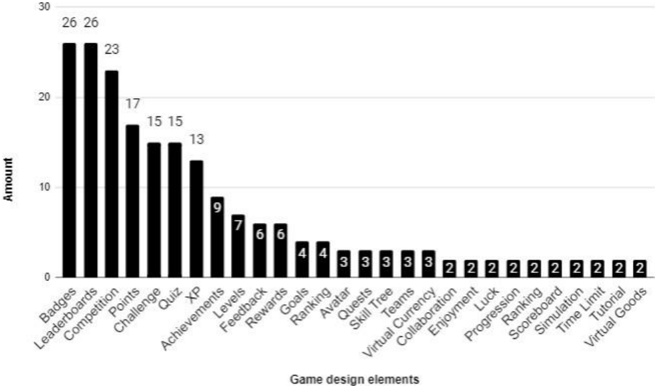
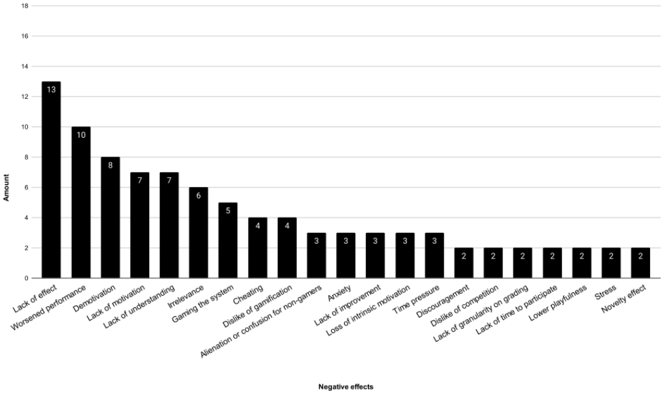
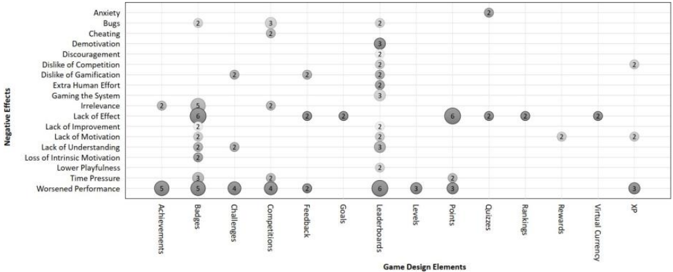
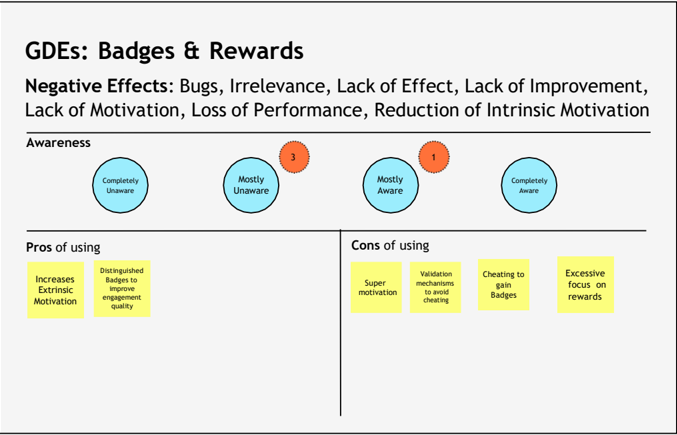
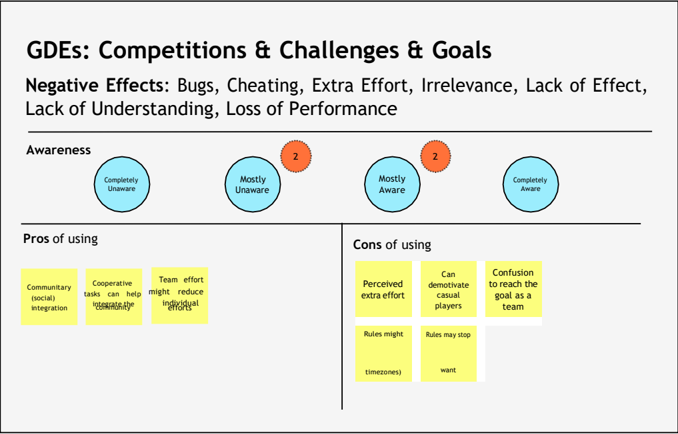
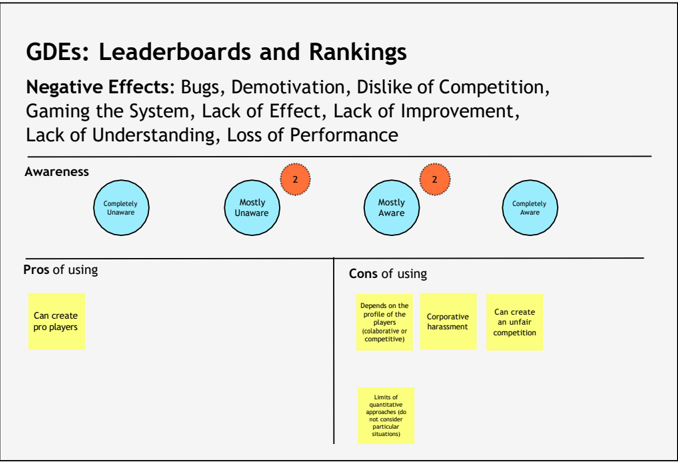
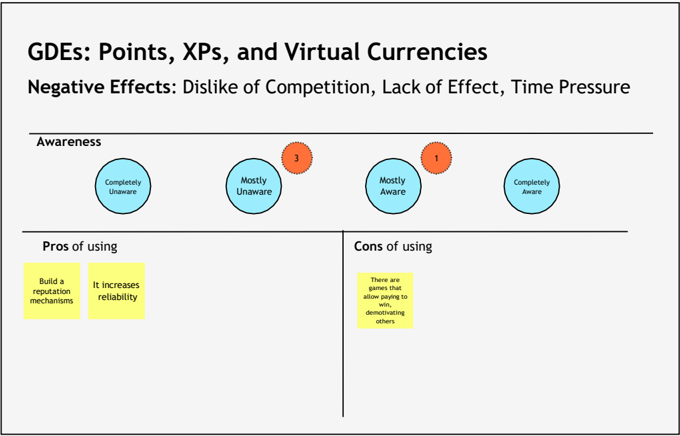
- The mapping included 87 papers; badges, leaderboards, competitions, and points were the game design elements most often reported as causing negative effects. The most cited negative effects were lack of effect, worsened performance, motivational issues, lack of understanding, and irrelevance; gaming the system and cheating were also often reported.
- Across the included papers, the authors found 94 different GDEs, 69 different negative effects caused to users/students, and 10 different negative effects caused to teachers or those maintaining the software. For teachers/maintainers, the most common effects were general technical challenges (7 mentions) and extra general human effort/resources (5 mentions).
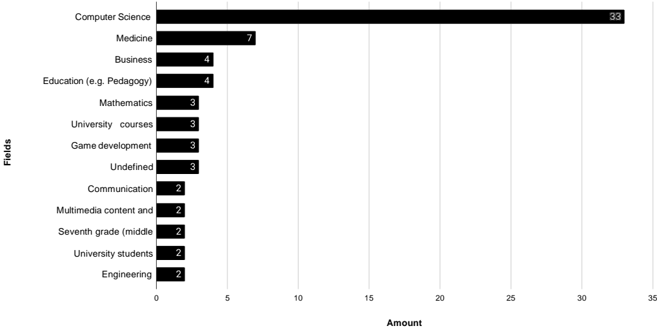
- Empirical study types were case study & survey (37), controlled experiment & survey (30), controlled experiment (9), case study (6), and survey (5); computer science was the most covered field.
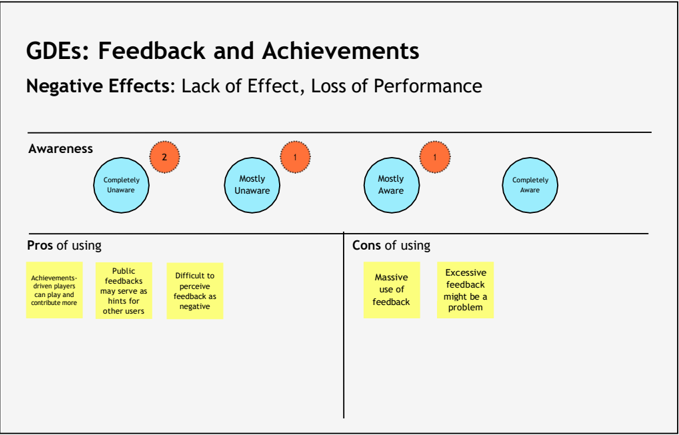
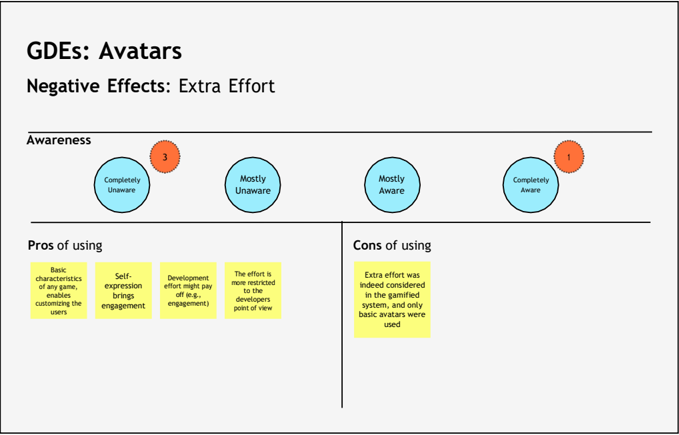
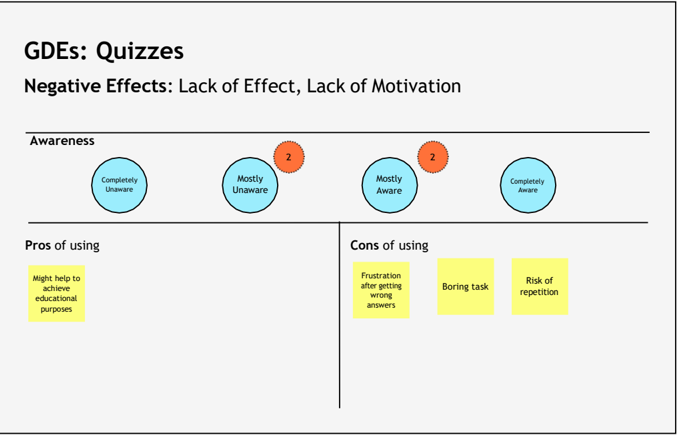
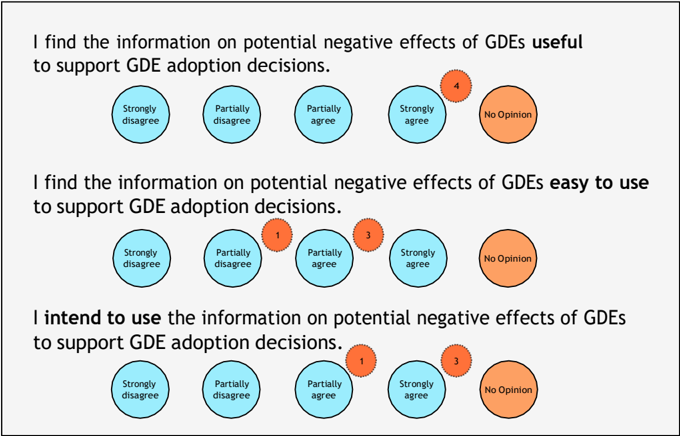
- In the focus group, developers were not aware of many possible negative effects; all participants strongly agreed the information was useful to support GDE adoption decisions, while only one partially disagreed and three partially agreed that the information was easy to use.
Methods
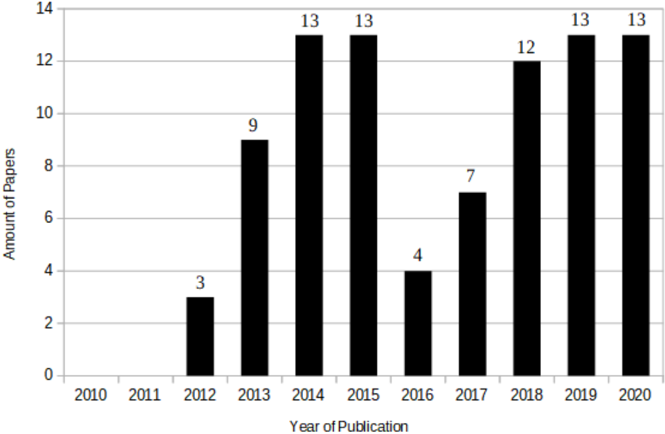
- Systematic mapping following Kitchenham and Charters and Petersen et al., using a hybrid search strategy combining a Scopus database search with backward and forward snowballing; after analyzing more than 3500 papers and manually adding 8 papers from Toda et al. missed by the search, the final set was 87 included papers.
- Data extraction used open coding to map GDEs to negative effects for users/students and teachers/maintainers, and to extract fields of education/learning and types of empirical studies.
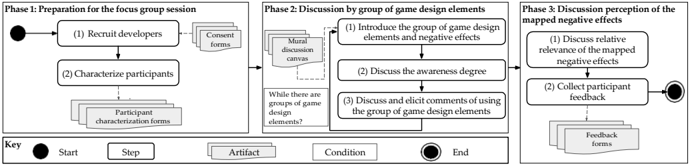
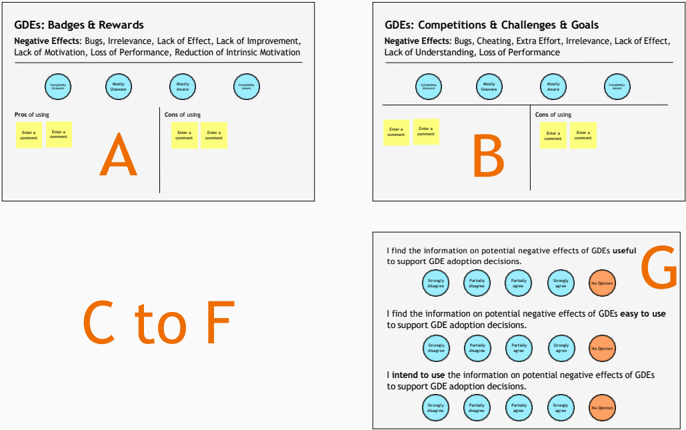
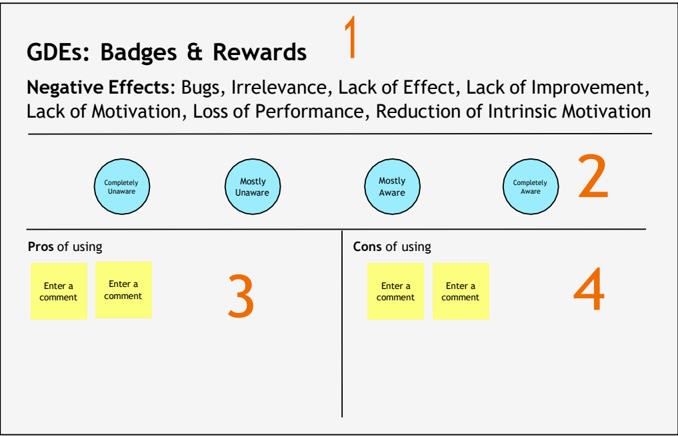
- A focus group was held with four experienced developers of the VazaZika gamified software (all PhDs in Computer Science, at least 10 years of software development experience), conducted online via MURAL and Zoom, discussing groups of GDEs and TAM-based items on usefulness, ease of use, and intent to adopt the information.
Limitations
- Stated: potentially missing papers; the final set includes 8 papers manually added from Toda et al.; screening only titles, abstracts, and keywords risks false negatives; grey literature was excluded; publication bias toward positive outcomes may hide unpublished negative results; a single focus group with four participants is preliminary and not generalizable; fine-grained analysis of each GDE’s effects for each role was out of scope.
- Stated/evident: snowballing was not continued to saturation because analyzing thousands of additional entries was unfeasible; the mapping reports associations rather than correlation or causation, and many GDEs/effects were mentioned by only one paper each.
- Evident: the focus group captured only developers’ views, not students’ or teachers’ views, and was tied to one gamified software context (VazaZika).
Model-written summary. Check it against the paper before relying on it.
Integrity signals
Registry
Cites
Statistics
Figures
Verification
Claims the paper makes
0 Valid · 4 Not valid · 37 Not checked · 152 Own results and interpretations
In the paper
“i.e., their search strategy did not retrieve 26 papers reporting negative effects of gamification in education/learning software that were retrieved by our search strategy.”
§ Negative Effects of Gamification in Education Software: Systematic Mapping and Practitioner Perceptions > Removed because of Amount
What the sources say
- Not checked yetcites [27] A. Toda, P. Valle, S. Isotani, The dark side of gamification: An overview of negative effects of gamification in education., HEFA 2017, Higher Edu- cation for All. From Challenges to Novel Technology-Enhanced Solutions (2018) 143-156. source
plainstates a cause- Asserted: passes — The authors put it forward as true.
- Checkable: passes — It can be checked against evidence.
- Load-bearing: unclear — It is unclear whether the paper’s conclusions depend on it.
- Based: passes — The paper gives a reason why it holds.
In the paper
“When comparing our new set of 79 included papers against the 17 papers included by [27], while our set of 79 papers to be included comprised 34 papers ranging from 2012 to 2016, only eight of them were also included by [27]”
§ Negative Effects of Gamification in Education Software: Systematic Mapping and Practitioner Perceptions > Removed because of Amount
What the sources say
- Not checked yetcites [27] A. Toda, P. Valle, S. Isotani, The dark side of gamification: An overview of negative effects of gamification in education., HEFA 2017, Higher Edu- cation for All. From Challenges to Novel Technology-Enhanced Solutions (2018) 143-156. source
plain- Asserted: passes — The authors put it forward as true.
- Checkable: passes — It can be checked against evidence.
- Load-bearing: passes — The paper’s conclusions depend on it.
- Based: passes — The paper gives a reason why it holds.
In the paper
“On the other hand, our search strategy missed eight papers included in their mapping”
§ Negative Effects of Gamification in Education Software: Systematic Mapping and Practitioner Perceptions > Removed because of Amount
What the sources say
- Not checked yetcites [27] A. Toda, P. Valle, S. Isotani, The dark side of gamification: An overview of negative effects of gamification in education., HEFA 2017, Higher Edu- cation for All. From Challenges to Novel Technology-Enhanced Solutions (2018) 143-156. source
plain- Asserted: passes — The authors put it forward as true.
- Checkable: passes — It can be checked against evidence.
- Load-bearing: unclear — It is unclear whether the paper’s conclusions depend on it.
- Based: passes — The paper gives a reason why it holds.
A result the paper reports from its own data — it cites no other source for it, so there is none to check. The quote shows it is in the paper.
In the paper
“As part of our results, we map the relations between game design elements and the negative effects that they may cause.”
- Also stated in: § 1. Introduction · plain
“We also mapped the relations between game design elements and the negative effects that they may cause, so that these effects can be pragmatically considered when designing gamified software.”
§ Negative Effects of Gamification in Education Software: Systematic Mapping and Practitioner Perceptions > Abstract
plainstates a possible cause- Asserted: passes — The authors put it forward as true.
- Checkable: passes — It can be checked against evidence.
- Load-bearing: passes — The paper’s conclusions depend on it.
- Based: passes — The paper gives a reason why it holds.
- Rests on an assumption not shown here.
- Also stated in: § 1. Introduction · plain
A result the paper reports from its own data — it cites no other source for it, so there is none to check. The quote shows it is in the paper.
In the paper
“The mapping study revealed 87 papers reporting undesired effects of game design elements.”
§ Negative Effects of Gamification in Education Software: Systematic Mapping and Practitioner Perceptions > Abstract
plain- Asserted: passes — The authors put it forward as true.
- Checkable: passes — It can be checked against evidence.
- Load-bearing: passes — The paper’s conclusions depend on it.
- Based: passes — The paper gives a reason why it holds.
- Rests on an assumption not shown here.
42 more claims
Create a free account to see all 193 claims and to verify the 35 references still open.
- It may state two separate claims as one. 65
- Probably not a substantial claim. 123
- The quote only partly states this claim. 2
Claims other papers make about this one
Each is checked against this paper’s own text: does it say what the citing paper says it does?
In the citing paper
“Badges may shift focus excessively toward earning them, reducing attention to main tasks (Almeida et al., 2023)”
From The impact of educational gamification on cognition, emotions, and motivation: a randomized controlled trial (2026) · cites this paper as Almeida et al., 2023
Self-check
Percentages, sums and reported differences re-computed from the paper’s own numbers.
Each contradiction between two passages listed here was confirmed by an independent check.
Rated major: it would touch a result — a value a result rests on, reported and recomputed p-values on opposite sides of the significance level, two passages that conflict with no sign which is right, or a cited work retracted before this paper was published.
In the paper
§ Negative Effects of Gamification in Education Software: Systematic Mapping and Practitioner Perceptions > 4. Systematic Mapping Results
“Overall, the papers reported 94 different GDEs, 69 different negative effects caused to the user, and ten different negative effects caused to the person maintaining the software or in the role of a teacher.”
§ Negative Effects of Gamification in Education Software: Systematic Mapping and Practitioner Perceptions > 4.1.2. RQ1.B
“Again, several (75) other negative effects caused to the user were mentioned only once.”
Rated minor: it would not touch a result — a value no result rests on, a p-value that stays on the same side of the significance level, or a conflict that is clerical, resolved elsewhere in the paper, or outside its own findings.
In the paper
“A total of 25 members participated in the project: one project manager; four development team leaders; 15 software developers, including the team lead-ers, distributed in two Brazilian cities, each with at least one developer per team; and seven senior researchers, five from Brazil and two from the UK.”
§ Negative Effects of Gamification in Education Software: Systematic Mapping and Practitioner Perceptions > 5.1. Context and Participant Characterization
Reported 25 · recomputed 23
Citations
Cites
Perceived usefulness, perceived ease of use, and user acceptance of information technology
Davis, F. D. (1989) · MIS Quarterly · doi:10.2307/249008 · Cited by 68,483
The Coding Manual for Qualitative Researchers
Lungu, M. (2022) · American Journal of Qualitative Research · doi:10.29333/ajqr/12085 · Cited by 10,826
Guidelines for performing Systematic Literature Reviews in Software Engineering
Kitchenham, B. A., & Charters, S. (n.d.) · Cited by 10,073
From game design elements to gamefulness: defining "gamification"
Deterding, S., Dixon, D., Khaled, R., & Nacke, L. (2011) · Proceedings of the 15th International Academic MindTrek Conference: Envisioning Future Media Environments · doi:10.1145/2181037.2181040 · Cited by 8,402 · cited 10×
“It can make player feel included and comfortable within the game [2].”
BackgroundInfluentialDoes Gamification Work? -- A Literature Review of Empirical Studies on Gamification
Hamari, J., Koivisto, J., & Sarsa, H. (2014) · 2014 47th Hawaii International Conference on System Sciences · doi:10.1109/hicss.2014.377 · Cited by 5,201 · cited 1×
“[35] corroborated the point about mixed effects.”
Likert scales, levels of measurement, and the “laws” of statistics
Norman, G. (2010) · Advances in Health Sciences Education · doi:10.1007/s10459-010-9222-y · Cited by 4,850
Experimentation in Software Engineering
Wohlin, C., Runeson, P., Höst, M., Ohlsson, M. C., Regnell, B., & Wesslén, A. (2012) · doi:10.1007/978-3-642-29044-2 · Cited by 4,460
Kapp, K. M. (2012) · Cited by 3,753
Guidelines for conducting systematic mapping studies in software engineering: An update
Petersen, K., Vakkalanka, S., & Kuzniarz, L. (2015) · Information and Software Technology · doi:10.1016/j.infsof.2015.03.007 · Cited by 2,669
Gamification in theory and action: a survey
Seaborn, K., & Fels, D. I. (2015) · International Journal of Human-Computer Studies · doi:10.1016/j.ijhcs.2014.09.006 · Cited by 2,515 · cited 1×
“Unfortunately, the term “gamification” remains inconsistently used, and a general theory of gamification is yet to be developed [18].”
Background
Research works printed but not linked: 5
- B. Boehm, V. Basili, Software defect reduction top 10 list., in: Founda- tions of Empirical Software Engineering, Springer Berlin Heidelberg, 2001, p. 426-431.
- J. Majuri, J. Koivisto, J. Hamari, Gamification of education and learning: A review of empirical literature., in: GamiFIN Conference 2018, 2018.
- S. Ejsing-Duun, H. Karoff, Gamification of a higher education course: What's the fun in that?, in: Proceedings of the 8th European Conference on Game Based Learning -ECGBL 2014, 2014, pp. 92-98.
- A. Campos, E. Batista, A. Signoretti, R. Gardiman, C. Madeira, Gamify- ing activities in a higher education course, in: 13th European Conference on Games Based Learning, 2015.
- C. Wohlin, P. Runeson, M. Höst, M. Ohlsson, B. Regnell, A. Wesslén, Ex- perimentation in software engineering, Springer Science & Business Media, 2012.
Cited by
Items 101–200 of 256
An analysis of gamification elements in mHealth applications
Rocha, I., & Silveira, M. S. (2023) · Brazilian Symposium on Human Factors in Computing Systems (IHC) · doi:10.1145/3638067.3638126 · Cited by 1
Gamificación y aprendizaje significativo de las matemáticas en educación primaria
Cortez, J. L. P., Bermúdez, Á. E. G., & Navas, C. D. H. (2025) · Revista de Investigación y Liderazgo · doi:10.63618/omd/revinvlid/v2/n4/44 · Cited by 1
Aluai, N., RODRIGUES, M. R. S., Ribeiro, T., & Vasconcelos, C. M. D. A. (2026) · Eurasia Journal of Mathematics Science and Technology Education · doi:10.29333/ejmste/17969 · Cited by 1
Reevaluating the Glorification of Gamification for Unexpected Outcomes in English Language Teaching
Sharizan, S. (2023) · Madah Jurnal Bahasa dan Sastra · doi:10.31503/madah.v14i2.642 · Cited by 1
Mukowski-Kickhöfel, R., Otto, L. R., & Rogge, A. A. (2024) · medRxiv · doi:10.1101/2024.06.13.24308883 · Cited by 1
Yuan, B., & Abdullah, M. N. L. Y. (2026) · Acta Psychologica · doi:10.1016/j.actpsy.2026.107416 · Cited by 1
Elsalmy, F. M., Sherief, N. H., & Abdelmoez, W. (2024) · International Conference on Software and Information Engineering (ICSIE) · doi:10.1145/3708635.3708641 · Cited by 1
Jafarpoor, H., Falavarjani, H. G., Shokrani, A., Mortazavi, Y., Kazemzadeh, A., Darzi, F. H., & Behnam, F. (2026) · BMC Medical Education · doi:10.1186/s12909-026-08933-1 · Cited by 1
Science and Videogames: From Scientific Dissemination to Knowledge Production
Bisso‐Machado, R. (2026) · American Journal of Human Biology · doi:10.1002/ajhb.70334 · Cited by 1
Aplicação da gamificação no ensino de lógica de programação para estudantes do ensino técnico
Kehdy, R. B. (2026) · IVY ENBER SCIENTIFIC JOURNAL · doi:10.57108/iesj.2026.6-1.10 · Cited by 1
Gamification in education: Effects and implications of gamified learning approaches in education
Koenkytö, W. (2023) · Aaltodoc (Aalto University) · Cited by 1
González, A. D. C. C., Yanza, J. M. A., Procel, M. D. C. C., Delgado, G. D. C. T., Ruiz, M. D. C. A., Herrera, E. M. H., & Aguilar, T. D. C. L. (2026) · doi:10.64973/edu.2026.2546 · Cited by 1
Mănescu, D. C. (2025) · Preprints.org · doi:10.20944/preprints202507.1114.v1 · Cited by 1
CIRef: A Tool for Visualizing the Historical Data of Software Refactorings in Java Projects
da Silva, M. E. V., Nunes, M., Bezerra, C. I. M., Uchôa, A., & Wessel, M. S. (2023) · Brazilian Symposium on Software Engineering · doi:10.1145/3613372.3613419 · Cited by 1
Self-citationGLiDe-G: Integrated Gamified Learning Dashboard Environment : Gamification Engine
Miñana Montecino, A. (2024) · UPCommons institutional repository (Universitat Politècnica de Catalunya) · Cited by 1
Drivers and Resistance Shaping Ethical Consumption among MSMEs in Green Technology Era
Ismaliyanto, J., Sudjaniah, D., Jailani, J., Arita, M., & Yulistiyaningsih, A. (2026) · International Journal of Financial Accounting and Management · doi:10.35912/ijfam.v8.n2.p211-234.2026 · Cited by 1
TÜRK ÖĞRETMENLERİN OYUNLAŞTIRMA KULLANICI TÜRLERİ VE EĞİTİMLERİ İÇİN OYUN ÖĞELERİ TERCİHLERİ
Özdemir, M. (2023) · OpenMETU (Middle East Technical University) · Cited by 1
Unlocking the Battle Pass: Broadening the Scope of Video Game Gamification
Sowole, M. (2023) · DiVA (Digitala Vetenskapliga Arkivet) · Cited by 1
Gamification - Expected and Unexpected Effects
Bankov, B., Parusheva, S. S., & Kasabova, G. (2023) · Izvestia Journal of the Union of Scientists - Varna Economic Sciences Series · doi:10.56065/ijusv-ess/2023.12.1.143 · Cited by 1
Fitri, A., Anjari, T. Y., Siregar, A. O., Sapriyanti, T., Zuhdi, N., & Asilah, V. A. (2026) · Alpatih. · doi:10.70115/alpatih.v4i1.711 · Cited by 1
Aprilia, Y. P., Zahro, D. A., & Hasanudin, C. (2025) · Seminar Nasional dan Gelar Karya Produk Hasil Pembelajaran · Cited by 1
Systematic Review of Game-Based Football Learning for School Students
Nawir, N., & Bismar, A. R. (2025) · Journal of Sport Education, Coaching, and Health (JOCCA) · doi:10.35458/jc.v6i1.4577 · Cited by 1
Maijala, O. (2025) · Aaltodoc (Aalto University) · Cited by 1
O'Higgins, D. (2026) · SSRN Electronic Journal · doi:10.2139/ssrn.6401879
Miramontes, B. V. H., & Martín, A. S. (2025) · Etic net Revista científica electrónica de Educación y Comunicación en la Sociedad del Conocimiento · doi:10.30827/eticanet.v25i2.31225
Castro, R. A. G., Asté, W. M. B., Aratia, G. P., Cruz, K. M. L.-D. L., Huanacuni, L. E. A., Ancoa, N. Z., & Romero, M. A. (2026) · doi:10.59899/dis-met
Li, Y., & Zhao, M. (2026) · Education and Information Technologies · doi:10.1007/s10639-026-14133-7
The games and education iceberg: Going beyond the surface to deeper learning
York, J. (2025) · Ludic Language Pedagogy · doi:10.55853/llp_v7pg4
What is Game-Like Mental Effort? Affordance of effort with different game conditions
Agrawal, S., & Dalvi, G. (2026) · International GamiFIN Conference (GamiFIN) · doi:10.1145/3789624.3789640
O'Higgins, D. (2026) · SSRN Electronic Journal · doi:10.2139/ssrn.6401881
Artificial Intelligence in STEM Education for Gamification Learning
Dohny, Q., Rajak, M. A. A., Jumat, N. R., Kiram, J. J., Halim, N. F. B. A., & Uden, L. (2026) · Advances in computational intelligence and robotics book series · doi:10.4018/407446
Case study: Creating escape games in Python using AI assistants
Ulrichova, H., Mrázová, M., Tran, D., Javorčík, T., Havlásková, T., & Mrógala, J. (2025) · International Conference on Emerging eLearning Technologies and Applications (ICETA) · doi:10.1109/iceta67772.2025.11280193
Maternal Perspectives on Gamified Oral Health Interventions for Children
Rajeh, M. T., & Nassar, A. A. (2025) · International Journal of Paediatric Dentistry · doi:10.1111/ipd.70057
Wuyts, S., Everaert, P. C., & Opdecam, E. (2026) · Accounting Education · doi:10.1080/09639284.2026.2671268
User preferences for game design elements in digital mental health interventions
Hu, S., Schmidt-Kraepelin, M., Krohmann, S., Thiebes, S., & Sunyaev, A. (2026) · Behaviour and Information Technology · doi:10.1080/0144929x.2026.2736084
Nazarejova, J., & Šoltysová, Z. (2026) · Education Sciences · doi:10.3390/educsci16081303
Albayrak, Ö., & Albayrak, D. (2023) · Advances in game-based learning book series · doi:10.4018/978-1-6684-9166-9.ch007
Domínguez, A. P. V., Cabrera, J. B., & Domínguez, E. N. V. (2025) · AvaCient. · doi:10.69823/avacient.v5n3a5
How can we enrich student induction experiences? Content matters
Vaduva, A., Chang, K., & Sandland, S. (2026) · Journal of Applied Research in Higher Education · doi:10.1108/jarhe-12-2025-1095
Gamificación y autorregulación del aprendizaje en educación media
de Arco, I. R. P., & Botero, J. C. R. (2026) · Revista Multidisciplinaria Voces de América y el Caribe · doi:10.69821/remuvac.v3i2.341
Enhancing Strategic Analysis Thought with Gamification Tools and Techniques
Ανδριόπουλος, Α., Kargas, A. D., Komisopoulos, F., Ntanos, S., & Drosos, D. (2026) · Springer proceedings in business and economics · doi:10.1007/978-3-032-12968-0_26
Díaz, E. M. F., & Ordóñez, S. (2026) · Multidisciplinary Journal for Education Social and Technological Sciences · doi:10.4995/muse.2026.25238
Birnstiel, S., Dümler, B., & Morschheuser, B. (2026) · Games Research and Practice · doi:10.1145/3803415
Birnstiel, S., & Morschheuser, B. (2026) · Behaviour and Information Technology · doi:10.1080/0144929x.2026.2678383
Jedel, I., & Palmquist, A. (2026) · CHI Conference on Human Factors in Computing Systems · doi:10.1145/3772318.3791046
An Investigation of Non-competitive Gamification Additions to an Online Course
Mahmoudi, E., & Summers, E. J. (2026) · Lecture notes in networks and systems · doi:10.1007/978-3-032-02999-7_12
Widyati, W., & Prasetyono, H. (2026) · Indonesian Journal of Multidisciplinary on Social and Technology · doi:10.69693/ijmst.v4i2.10621
Moreno, S., Cornejo, S. M. L., Chávez, S. F. P., Muñoz, B. G. N., & Morocho, J. T. T. (2025) · ASCE MAGAZINE · doi:10.70577/asce/454.477/2025
Sailer, P., Kremsner, T. P., Knipp, F., & Kayali, F. (2026) · Communications in computer and information science · doi:10.1007/978-3-032-39103-2_19
Kumar, R., & Shroff, A. (2026) · FIIB Business Review · doi:10.1177/23197145261485384
Tang, Y., & Rashid, M. S. S. M. (2025) · International Conference on AI-enabled Education · doi:10.1145/3768421.3768491
Mohamed, H., Rahman, M. Z. C. A., Ahmad, S. Z., & Vilbar, A. P. (2026) · Journal of Informatics and Web Engineering · doi:10.33093/jiwe.2026.5.2.13
Gamification as an Element of Building Employee Engagement in the Onboarding Process
Lasota, W. (2026) · Wroclaw University of Economics and Business eBooks · doi:10.15611/2026.35.7.03
Braese, O., Krath, J., Schubhan, M., Degraen, D., & Altmeyer, M. (2025) · Proceedings of the ACM on Human-Computer Interaction · doi:10.1145/3748597
Júnior, E. W., & Bolzan, W. (2023) · SSRN Electronic Journal · doi:10.2139/ssrn.4655011
Saleh, A. Y., Othman, M. K., Yee, S. C. S., Manaf, A. A. A., Aman, S., & Barawi, M. H. (2026) · Entertainment Computing · doi:10.1016/j.entcom.2026.101121
Exploring a Collaborative Gamified Approach to Vision-Language Model Evaluation
Gao, F., Wang, J. R. M., Sayuda, T., Pennington, M., & Sugano, Y. (2026) · CHI Conference Extended Abstracts on Human Factors in Computing Systems (CHI EA) · doi:10.1145/3772363.3799410
Paired Reading in Swedish with AI: Co-Designing for Enhanced Reading Engagement
Viberg, O., Engwall, O., & Larsson, P. (2026) · Nordic Conference on Human-Computer Interaction · doi:10.1145/3829807.3829857
Gamified clinical case video game in occupational therapy
Menéndez, J. D., Arberas, E. J., Fernández-Valera, D., & Merayo‐Lloves, J. (2026) · BMC Medical Education · doi:10.1186/s12909-026-09301-9
Matheus, F. R. P., Camino, L. X. A., Carranza, I. P. S., Chiluisa, N. L. T., & Lastra, M. A. M. (2025) · ASCE MAGAZINE · doi:10.70577/asce/2363.2388/2025
Formation of international manager competencies through the Civilization VI simulation
Serdiukov, M., & Privarnikova, I. (2026) · Scientific Notes of Lviv University of Business and Law · doi:10.66556/2663-0117.49.serdiukov-m
Gamification and Learning in Mozambican Higher Education: A Case Study Using Kahoot!
Nhandoro, D. V., & Lorgat, M. G. (2026) · Lecture notes in networks and systems · doi:10.1007/978-3-032-36036-6_10
Jarmasz, J., & Adlakha-Hutcheon, G. (2025) · SSRN Electronic Journal · doi:10.2139/ssrn.5743411
Examining Alternatives to Conventional Classes for ESL/EFL Students
Yakun, D., Linzhou, F., Rocha, A. H. M., Pérez, R. C., & Santana, C. I. B. (2023) · International Journal on Studies in English Language and Literature · doi:10.20431/2347-3134.1103002
Andrade-Yánez, A. S., Celi, N. E. P., & Chirinos, R. A. G. (2026) · Natural and Engineering Sciences · doi:10.28978/nesciences.263048
Gamification mechanics in top-rated educational apps by audience age
Gerez, L., & Valls, V. D. L. (2023) · SAP Gamification and Augmented Reality · doi:10.62486/gr202313
Designing Cocothink: A design thinking-based conceptual framework for gamified coding learning
Sagirani, T., Hariadi, B., Rahardiyanto, P., Fahmi, M. R., Efendi, W. W., & Priyadi, D. N. (2026) · Pedagogical Research · doi:10.29333/pr/19623
Promoting social and human factors through a gamified automotive software development environment
Gasca‐Hurtado, G. P., Muñoz, M., & Sameh, S. (2024) · Journal of Software Evolution and Process · doi:10.1002/smr.2704
GAMIFICATION AS A STRATEGY FOR INCREASING STUDENT MOTIVATION AND ENGAGEMENT IN MODERN TEACHING
Lejić, V., Jokić, S. V., & Vasić, I. (2026) · Journal of Educational Sciences Theory and Practice · doi:10.46763/jespt2621131l
Kalmpourtzis, G. (2026) · A K Peters/CRC Press eBooks · doi:10.1201/9781003542193
Salendab, F. A. (2026) · IGI Global eBooks · doi:10.4018/979-8-2600-1771-5.ch010
Nitaliya, B., & Ikhtiaranata, N. F. (2026) · Ceddi Journal of Education · doi:10.56134/cje.v5i1.206
El desarrollo de las competencias ciudadanas en educación superior
Contreras, G. A. D. (2026) · e_Buah
Rahman, S., Abdullah, Z., Hasan, K. M. M., & Hasan, N. A. M. (2026) · International Journal of Research and Innovation in Social Science · doi:10.47772/ijriss.2026.100900087
Gamifying Sustainable Consumption : Opportunities and dilemmas
Guillén, G. (2024) · Tampere University Institutional Repository (Tampere University)
Applying Gamification to Undergraduate Accounting Education: A Mixed-Methods Study
Scanlan, T., & Scanlan, S. (2026) · IAFOR Journal of Education · doi:10.22492/ije.14.2.04
Haubold, D. (2025) · MOnAMi (Hochschule Mittweida Hochschulbibliothek)
Att stärka riskmedvetenhet genom spelifiering: Designprinciper för digitalafallskyddsutbildningar
Öhrvall, M., & Hjert, J. (2026) · DiVA (Luleå University of Technology)
Retroalimentación gamificada y reducción de ansiedad matemática escolar
Rengel-Herrera, M. D. R., Osejos-Santillán, M. A., Villarreal-Puga, I., Macías-Palacios, A. M., & Bonilla, L. P. G. (2026) · Código Científico Revista de Investigación · doi:10.55813/gaea/ccri/v7/n1/1527
Gool, M. V., Walravens, G., Nolte, A., & Seraj, M. (2026) · Koli Calling International Conference on Computing Education Research · doi:10.1145/3856208.3856223
Ruffer, B. D., Faidley, E. W., Halliday, W., Travis, S. M., & Peebles, D. (2026) · International Journal of Arts Humanities & Social Science · doi:10.56734/ijahss.v7n1a3
ASSESSING THE BENEFITS OF MLOPS FOR SUPERVISED ONLINE REGRESSION MACHINE LEARNING
CARVALHO, G. D. A. (2023) · doi:10.17771/pucrio.acad.64505
Almo, A. (2026) · Arrow - TU Dublin (Technological University Dublin) · doi:10.21427/8ke4-mz33
Entre juegos y algoritmos: IA y gamificación para desarrollar competencias del siglo XXI
Tapia, M. A. T., Romero, M. J. S., Jiménez, M. E. A., Otavalo, B. A. G., & Cajamarca, J. G. S. (2026) · Revista Científica de Salud y Desarrollo Humano · doi:10.61368/r.s.d.h.v7i1.952
Design and Evaluation of Task-Based Waste Sorting Mechanics in Virtual Reality Learning Application
Nendya, M. B., Gautama, V., Senapartha, I. K. D., Chrismanto, A. R., & Pandapotan, D. D. (2026) · International Journal of Information Technology and Computer Science Applications · doi:10.58776/ijitcsa.v4i3.266
Arvidsson Matsson, A. (2023) · Digitala vetenskapliga arkivet (Diva) (Karlstad University)
THE ROLE OF GAMIFICATION AS AN ENGLISH TEACHER ASSISTANT
Prawira, B. Y., & Putriana, W. (2026) · TEACHING Jurnal Inovasi Keguruan dan Ilmu Pendidikan · doi:10.51878/teaching.v6i4.13509
Beyond the Game: Perceived Impact of Gamification on University Learning by Age
Olmedo, J. I. (2026) · Revista Veritas de Difusão Cientifica. · doi:10.61616/rvdc.v7i2.1722
Dark Patterns in Subscription-based Digital Services: A Cross-domain Literature Review
Nguyen, T. (2026) · Aaltodoc (Aalto University)
Estrategias gamificadas inclusivas para estudiantes con dificultades en matemáticas
Valencia, E. V. O., Cevallos, F., Folleco, Y. T. S., Vinueza-León, V. E., & Bastidas-Andradez, A. E. (2026) · Código Científico Revista de Investigación · doi:10.55813/gaea/ccri/v7/ne2/1697
El paradigma actual de las metodologías activas.
Navarro Fernández, D. (2025) · University of Valladolid Documentary Repository (University of Valladolid)
Immunoloogia teemalise kaardimängu koostamine ja selle mõju hindamine
Irina, G. (2025) · DSpace repository (University of Tartu)
Dalman, M. R. (2026) · BMC Medical Education · doi:10.1186/s12909-026-10222-w
Gunawan, K. W., Dharmasetiawan, L., Permatasari, A., & Halim, E. (2025) · International Conference on Cyber and IT Service Management (CITSM) · doi:10.1109/citsm67730.2025.11291521
Sairio, C. (2025) · Theseus (Ammattikorkeakoulujen)
Бабкова, Н. В., Гулієва, Д., Кочуєва, З., & Угольнікова, Н. С. (2026) · Наукові інновації та передові технології · doi:10.52058/2786-5274-2026-5(57)-3141-3156
Platform for basic school math drilling
Minarčík, M. E. (2026) · Brno University of Technology Digital Library (Brno University of Technology)
Gamificación y Educación Física: beneficios, desafíos y principios. Revisión narrativa.
Melo, A. F. C., & Arjona, Ó. A. M. (2026) · Sportis Scientific Journal of School Sport Physical Education and Psychomotricity · doi:10.55040/vh62sz80
Pacheco, M., Tayo, E., & Sisa, M. T. (2026) · Ecuacientífica · doi:10.56519/s0jetx55
Cruz, A. G. T., Cacuango, R. P. P., Díaz, A. B. E., & Contento, S. C. C. (2026) · doi:10.64245/eanean59
Metadata
- Authors
- Almeida, C., Kalinowski, M., Uchôa, A., & Feijó, B.
- Affiliations
- Pontifícia Universidade Católica do Rio de Janeiro (BR)
- Universidade Federal do Ceará (BR)
- Corresponding author
- Almeida, Cláuvin
- Venue
- Information and Software Technology
- Publisher
- Elsevier BV
- Published
- 2023-04
- Volume
- 156
- Pages
- 107142
- ISSN
- 0950-5849 (ISSN-L)
- OpenAlex
- W4312204119
- Cited by
- 256
- References
- 122
- Citations by year
- 2026: 113 · 2025: 87 · 2024: 31 · 2023: 25
- FWCI
- 27.62
- Type
- journal article
- Language
- en
- Open access
- green
- arxiv.org
- Licence
- cc-by
- www.elsevier.com/tdm/userlicense/1.0/ (tdm)
- www.elsevier.com/legal/tdmrep-license (tdm)
- doi.org/10.15223/policy-017 (stm-asf)
- doi.org/10.15223/policy-037 (stm-asf)
- doi.org/10.15223/policy-012 (stm-asf)
- doi.org/10.15223/policy-029 (stm-asf)
- doi.org/10.15223/policy-004 (stm-asf)
- Locations
- Information and Software Technology (publishedVersion)
- arXiv (Cornell University) (submittedVersion, cc-by)
- arXiv (Cornell University) (cc-by)
- Funders
- Coordenação de Aperfeiçoamento de Pessoal de Nível Superior (Brazil (Finance Code 001), (Code 001))
- Conselho Nacional de Desenvolvimento Científico e Tecnológico (Code 001, 312827/2020-2)
- Fundação Cearense de Apoio ao Desenvolvimento Científico e Tecnológico
- Topics
- Social Sciences › Psychology › Developmental and Educational Psychology › Educational Games and Gamification
- Physical Sciences › Computer Science › Computer Science Applications › Online Learning and Analytics
- Social Sciences › Sociology and Political Science › Digital Games and Media
- Keywords
- gamification, game elements, learning systems, badges, leaderboards, competition, points, motivation, gaming the system, cheating, developer awareness
About these checks
Registry, retraction, Cites and statistics results are computed, not judged, with one exception: a printed reference that no index lists is read once by a model before it counts as a citation error. Claims are extracted by a model and kept only when their quote appears verbatim in the text; each cited source is then checked, with a model’s help, for whether it says what the claim relies on. Those verdicts can be wrong — read the claim’s quote and the cited source before relying on one.
A language model drew the claims from the paper on 2026-11-23, under version 3 of the claim definition (model deepseek-v4.1-flash, prompt extract-v3).
A second model labelled each claim on 2026-11-23 (model jev-1.13-20260917, definition revision gold-guideline-v0.2).
Statistics and arithmetic are recomputed, not judged.
Confidence bands are shown only for fields calibrated on our annotated test set. None is calibrated yet, so no band is shown.
What counts as a claim ›How we measure confidence ›How we check this ›
Are you an author, or do you see a problem with this page? Request a review
Data sources
Bibliographic data: Semantic Scholar, OpenAlex, Crossref.
Contains information from the Semantic Scholar Academic Graph Datasets, made available under the ODC Attribution License (ODC-BY 1.0).
Semantic Scholar’s data is described in: Kinney, R., et al. (2023). The Semantic Scholar Open Data Platform. arXiv:2301.10140.
