

The DOI matches its Crossref record; 109 of the 109 references it cites were found in a registry or an index; 1 of the 124 sources its claims cite were checked for support.
Global issues in allergy and immunology: Parasitic infections and allergy
Open accessAbstract
Allergic diseases are on the increase globally in parallel with a decrease in parasitic infection. The inverse association between parasitic infections and allergy at an ecological level suggests a causal association. Studies in human subjects have generated a large knowledge base on the complexity of the interrelationship between parasitic infection and allergy. There is evidence for causal links, but the data from animal models are the most compelling: despite the strong type 2 immune responses they induce, helminth infections can suppress allergy through regulatory pathways. Conversely, many helminths can cause allergic-type inflammation, including symptoms of "classical" allergic disease. From an evolutionary perspective, subjects with an effective immune response against helminths can be more susceptible to allergy. This narrative review aims to inform readers of the most relevant up-to-date evidence on the relationship between parasites and allergy. Experiments in animal models have demonstrated the potential benefits of helminth infection or administration of helminth-derived molecules on chronic inflammatory diseases, but thus far, clinical trials in human subjects have not demonstrated unequivocal clinical benefits. Nevertheless, there is sufficiently strong evidence to support continued investigation of the potential benefits of helminth-derived therapies for the prevention or treatment of allergic and other inflammatory diseases.
Overview
AI snapshot
Written from the paper’s full text.
TL;DR
This narrative review synthesizes evidence on parasitic infections and allergy, concluding that helminths can suppress allergy through regulatory pathways but that human clinical trials of helminth therapy have not shown unequivocal benefit. It highlights strong animal-model evidence alongside inconsistent human epidemiologic and interventional data.
Key findings
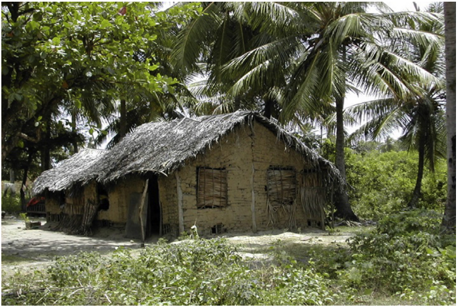
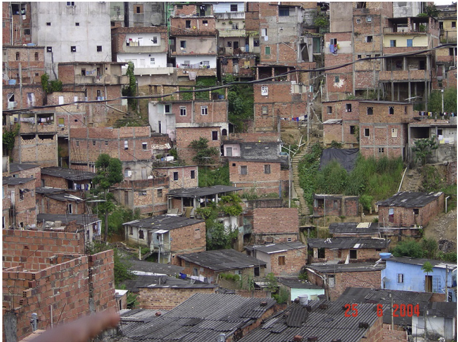
- Worldwide, an estimated 1.5 billion people are infected with a soil-transmitted helminth, and *Schistosoma* species are estimated to infect 230 million persons; in one rural Brazilian village, helminth prevalence was 83.5%, compared with less than 20% among children in nearby Salvador.
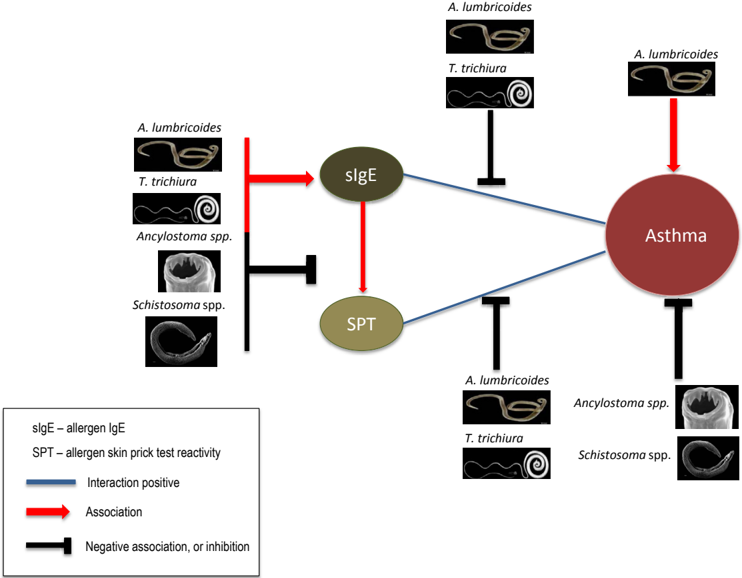
- Meta-analyses found that *Ascaris lumbricoides* was associated with increased asthma risk, whereas hookworm infection was associated with reduced risk; current STH infections were protective against atopy, consistent for all 3 of the most common STH infections and also schistosomiasis.
- Four prospective studies were identified; maternal and childhood hookworm and childhood *Trichuris trichiura* were associated with reduced eczema at 5 years, and *T trichiura* infections during the first 5 years of life were associated with reduced SPT reactivity in later childhood.
- Clinical trials of live helminths have been disappointing: *Trichuris suis* showed no efficacy for allergic rhinitis, *Necator americanus* showed no clinical benefit in celiac disease, and a small randomized trial in asthma showed no significant benefit of hookworm infection on clinical symptoms, bronchial responsiveness, or SPT reactivity.
Methods
- Narrative review; the paper states it aims to inform readers of the most relevant up-to-date evidence on the relationship between parasites and allergy, without a systematic search or meta-analysis.
- Evidence synthesized includes human epidemiologic studies, meta-analyses, prospective birth cohorts, randomized anthelmintic trials, animal models, and preclinical/clinical studies of helminth-derived molecules.
- Main analysis is qualitative synthesis, with tables and figures summarizing associations between helminths, atopy, and asthma and candidate immunomodulatory molecules.
Limitations
- The paper states that evidence from human studies has been equivocal, that there is still very limited evidence that STH infections protect against allergic symptoms, that early-life exposures are insufficiently studied, and that the role of human genetic determinants of IL33/ST2 in helminth infection is poorly understood.
- The paper states that clinical trials in human subjects have been disappointing, possibly because they attempted to modify preexisting disease while most animal models studied prevention, because of high placebo response rates, because patients continued immunosuppressive medications, and because of safety and ethical concerns with large infectious doses and long-term infections.
- Evident from the text: as a narrative review, it does not use a systematic search strategy or formal risk-of-bias assessment, and many cited human associations are cross-sectional, limiting causal inference.
Model-written summary. Check it against the paper before relying on it.
Integrity signals
Registry
Cites
Statistics
Figures
Verification
Claims the paper makes
63 Own interpretation · 52 Check pending · 41 No full text of the sources · 13 Not checked yet · 5 No basis given · 1 Supported · 1 Own result
Every source the paper cites for this claim was checked and supports it.
In the paper
“Individual allergy risk is considered to reflect a complex interaction between genetic predisposition and environmental exposures over the life course.9”
§ Clinical reviews in allergy and immunology Global issues in allergy and immunology: Parasitic infections and allergy > GLOBAL TRENDS IN PARASITE INFECTIONS AND ALLERGY Global trends
What the sources say
- Supportedcites [9] Burbank, 2017, Environmental determinants of allergy and asthma in early life, J Allergy Clin Immunol source
The Introduction says allergic disease likely results from complex gene–environment interactions. The paper also describes cumulative exposures during development and the possible effects of early-life exposures on sensitivity to future exposures over the lifespan (Conclusions and Future Directions). Its main focus is early life, but the broader, qualified claim is consistent with these passages. (LLM, conf=0.88)
plainstates an association- Asserted: passes — The authors put it forward as true.
- Checkable: passes — It can be checked against evidence.
- Load-bearing: unclear — It is unclear whether the paper’s conclusions depend on it.
- Based: passes — The paper gives a reason why it holds.
- Supported
A result the paper states — it cites no source for it, so there is none to check. The quote shows it is in the paper.
In the paper
“Experiments in animal models have demonstrated the potential benefits of helminth infection or administration of helminth-derived molecules on chronic inflammatory diseases”
§ Clinical reviews in allergy and immunology Global issues in allergy and immunology: Parasitic infections and allergy > Abstract
boostedstates a possible cause- Asserted: passes — The authors put it forward as true.
- Checkable: passes — It can be checked against evidence.
- Load-bearing: passes — The paper’s conclusions depend on it.
- Based: passes — The paper gives a reason why it holds.
In the paper
“By using a generalized estimating equation model, 3 single nucleotide polymorphisms (SNPs) associated with higher Schistosoma species-soluble adult worm antigen-specific IgE/IgG 4 (a measure of resistance to S mansoni) were found.61”
§ Clinical reviews in allergy and immunology Global issues in allergy and immunology: Parasitic infections and allergy > Variants that affect the T H 2 immune response
What the sources say
- Check pendingcites [61] Long, 2017, The role of ST2 and ST2 genetic variants in schistosomiasis, J Allergy Clin Immunol source
plainstates an association- Asserted: passes — The authors put it forward as true.
- Checkable: passes — It can be checked against evidence.
- Load-bearing: passes — The paper’s conclusions depend on it.
- Based: passes — The paper gives a reason why it holds.
In the paper
“This later haplotype was also associated with increased IL-10 production.70”
§ Clinical reviews in allergy and immunology Global issues in allergy and immunology: Parasitic infections and allergy > Variants that affect immunoregulatory mechanisms
What the sources say
- Check pendingcites [70] Costa, 2017, Effect of polymorphisms on TGFB1 on allergic asthma and helminth infection in an African admixed population, Ann Allergy Asthma Immunol source
plainstates an association- Asserted: passes — The authors put it forward as true.
- Checkable: passes — It can be checked against evidence.
- Load-bearing: unclear — It is unclear whether the paper’s conclusions depend on it.
- Based: passes — The paper gives a reason why it holds.
In the paper
“We demonstrated a negative association between rs1800470 (C allele), atopic wheezing, and allergy markers.”
§ Clinical reviews in allergy and immunology Global issues in allergy and immunology: Parasitic infections and allergy > Variants that affect immunoregulatory mechanisms
What the sources say
- Check pendingcites [70] Costa, 2017, Effect of polymorphisms on TGFB1 on allergic asthma and helminth infection in an African admixed population, Ann Allergy Asthma Immunol source
boostedstates an association- Asserted: passes — The authors put it forward as true.
- Checkable: passes — It can be checked against evidence.
- Load-bearing: passes — The paper’s conclusions depend on it.
- Based: passes — The paper gives a reason why it holds.
In the paper
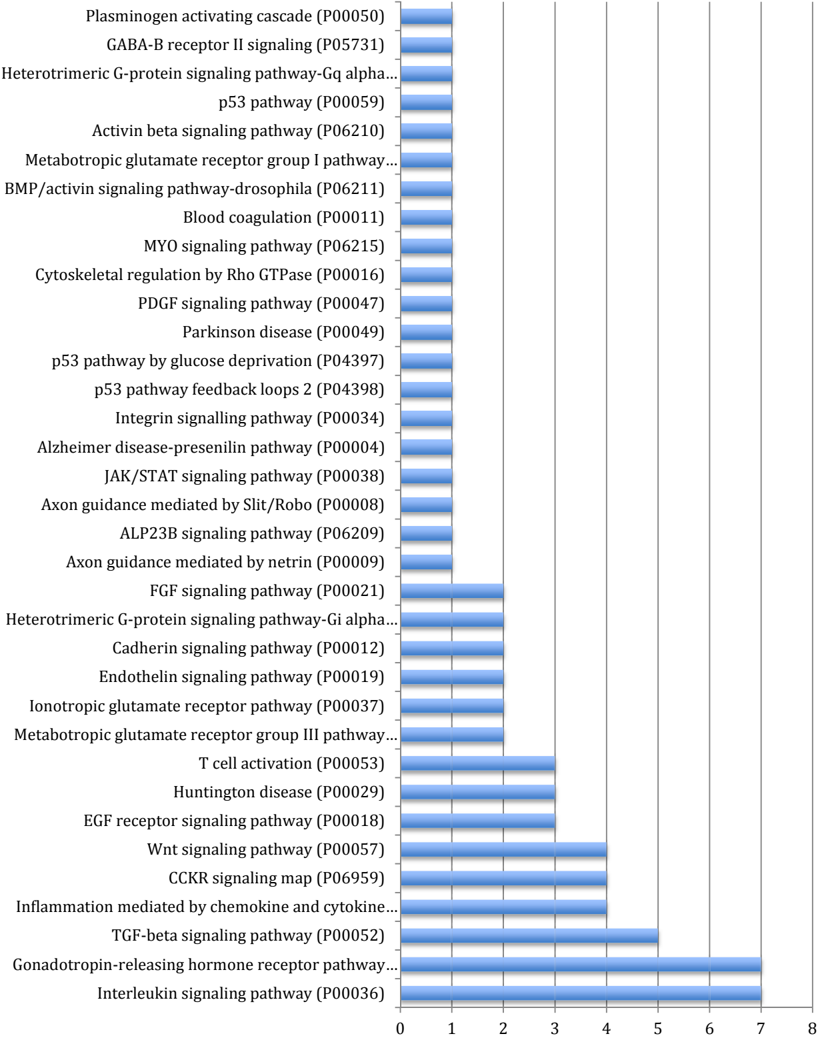
“In Fig 5, 49 an analysis using the Protein Analysis Through Evolutionary Relationships, version 11, 50 is presented, showing different pathways related to the main genes described in genome-wide association studies (GWASs) to date, in which one can observe 3 of the top 4 pathways linked to asthma are related to interleukin signaling and inflammation.”
§ Clinical reviews in allergy and immunology Global issues in allergy and immunology: Parasitic infections and allergy > GENETIC DETERMINANTS OF PROTECTION AGAINST HELMINTHS AND RISK OF ALLERGY
What the sources say
- Not checked — no full text of the sourcecites [49] Bourke, 2012, Trichuris suis ova therapy for allergic rhinitis does not affect allergen-specific cytokine responses despite a parasite-specific cytokine response, Clin Exp Allergy source
- Check pendingcites [50] Mi, 2017, PANTHER version 11: expanded annotation data from Gene Ontology and Reactome pathways, and data analysis tool enhancements, Nucleic Acids Res source
plainstates an association- Asserted: passes — The authors put it forward as true.
- Checkable: passes — It can be checked against evidence.
- Load-bearing: unclear — It is unclear whether the paper’s conclusions depend on it.
- Based: passes — The paper gives a reason why it holds.
In the paper
“In contrast, a positive association was observed between the haplotype ACCA and T trichiura and A lumbricoides infection.”
§ Clinical reviews in allergy and immunology Global issues in allergy and immunology: Parasitic infections and allergy > Variants that affect immunoregulatory mechanisms
What the sources say
- Check pendingcites [70] Costa, 2017, Effect of polymorphisms on TGFB1 on allergic asthma and helminth infection in an African admixed population, Ann Allergy Asthma Immunol source
plainstates an association- Asserted: passes — The authors put it forward as true.
- Checkable: passes — It can be checked against evidence.
- Load-bearing: unclear — It is unclear whether the paper’s conclusions depend on it.
- Based: passes — The paper gives a reason why it holds.
A conclusion the paper draws from its own results — it cites no other source for it, so there is none to check. The quote shows it is in the paper.
In the paper
“From an evolutionary perspective, subjects with an effective immune response against helminths can be more susceptible to allergy.”
§ Clinical reviews in allergy and immunology Global issues in allergy and immunology: Parasitic infections and allergy > Abstract
plainstates a possible cause- Asserted: passes — The authors put it forward as true.
- Checkable: passes — It can be checked against evidence.
- Load-bearing: passes — The paper’s conclusions depend on it.
- Based: passes — The paper gives a reason why it holds.
A statement the paper makes itself — it cites no source for it, so there is none to check. The quote shows it is in the paper.
In the paper
“Such a response can control parasite numbers by killing them in tissues or expelling them from the intestinal lumen.”
§ Clinical reviews in allergy and immunology Global issues in allergy and immunology: Parasitic infections and allergy > HOST IMMUNE RESPONSE AGAINST PARASITES
plainstates a cause- Asserted: passes — The authors put it forward as true.
- Checkable: passes — It can be checked against evidence.
- Load-bearing: unclear — It is unclear whether the paper’s conclusions depend on it.
- Based: passes — The paper gives a reason why it holds.
In the paper
“hookworm infection was associated with a reduced risk.”
§ Clinical reviews in allergy and immunology Global issues in allergy and immunology: Parasitic infections and allergy > Epidemiologic evidence for associations between parasites and allergy
What the sources say
- Not checked — no full text of the sourcecites [12] Leonardi-Bee, 2006, Asthma and current intestinal parasite infection: systematic review and meta-analysis, Am J Respir Crit Care Med source
plainstates an association- Asserted: passes — The authors put it forward as true.
- Checkable: passes — It can be checked against evidence.
- Load-bearing: unclear — It is unclear whether the paper’s conclusions depend on it.
- Based: passes — The paper gives a reason why it holds.
- It may state two separate claims as one. 40
- Probably not a substantial claim. 13
In the paper
“We described a variant (rs3024496, G allele) in the IL10 gene associated with suppression of IL-10 production in A lumbricoides antigen-stimulated cultures of peripheral blood leukocytes, and other variants within the same gene were positively associated with atopy and asthma and negatively associated with helminth coinfections.65”
§ Clinical reviews in allergy and immunology Global issues in allergy and immunology: Parasitic infections and allergy > Variants that affect immunoregulatory mechanisms
What the sources say
- Check pendingcites [65] Figueiredo, 2013, Coassociations between IL10 polymorphisms, IL-10 production, helminth infection, and asthma/wheeze in an urban tropical population in Brazil, J Allergy Clin Immunol source
plainstates an association- Asserted: passes — The authors put it forward as true.
- Checkable: passes — It can be checked against evidence.
- Load-bearing: passes — The paper’s conclusions depend on it.
- Based: passes — The paper gives a reason why it holds.
It may state two separate claims as one.
A conclusion the paper draws from its own results — it cites no other source for it, so there is none to check. The quote shows it is in the paper.
In the paper
“and that STH infections can reduce the prevalence of positive SPT responses but not specific IgE to aeroallergens.”
§ Clinical reviews in allergy and immunology Global issues in allergy and immunology: Parasitic infections and allergy > Epidemiologic evidence for associations between parasites and allergy
plainstates a cause- Asserted: passes — The authors put it forward as true.
- Checkable: passes — It can be checked against evidence.
- Load-bearing: passes — The paper’s conclusions depend on it.
- Based: passes — The paper gives a reason why it holds.
It may state two separate claims as one.
In the paper
“In case of schistosomiasis, all published studies have been cross-sectional, showing an inverse association between Schistosoma mansoni infection and SPT reactivity to common aeroallergens in most cases.16”
§ Clinical reviews in allergy and immunology Global issues in allergy and immunology: Parasitic infections and allergy > Epidemiologic evidence for associations between parasites and allergy
What the sources say
- Not checked — no full text of the sourcecites [16] Feary, 2011, Atopy and current intestinal parasite infection: a systematic review and meta-analysis, Allergy source
plainstates an association- Asserted: passes — The authors put it forward as true.
- Checkable: passes — It can be checked against evidence.
- Load-bearing: unclear — It is unclear whether the paper’s conclusions depend on it.
- Based: passes — The paper gives a reason why it holds.
It may state two separate claims as one.
A conclusion the paper draws from its own results — it cites no other source for it, so there is none to check. The quote shows it is in the paper.
In the paper
“There is evidence in support of protection against allergy by STH infections, but many studies in human populations present discordant effects.”
§ Clinical reviews in allergy and immunology Global issues in allergy and immunology: Parasitic infections and allergy > Epidemiologic evidence for associations between parasites and allergy
plainstates a possible cause- Asserted: passes — The authors put it forward as true.
- Checkable: passes — It can be checked against evidence.
- Load-bearing: passes — The paper’s conclusions depend on it.
- Based: unclear — It is unclear why the paper says it holds.
It may state two separate claims as one.
A statement the paper makes itself — it cites no source for it, so there is none to check. The quote shows it is in the paper.
In the paper
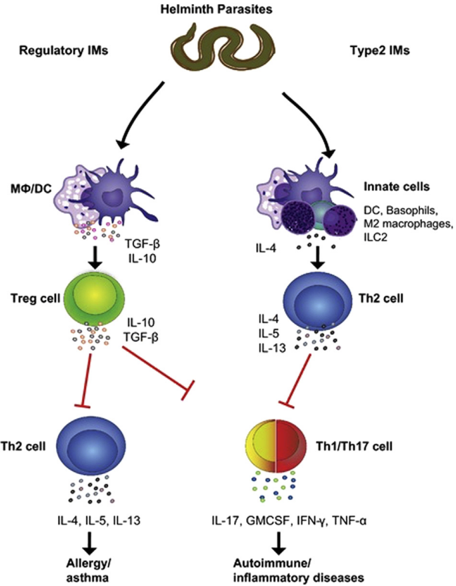
“The T H 2-type response is characterized by production of high levels of the cytokines IL-4, IL-5, IL-9, IL-10, IL-13, IL-21, and IL-33.”
§ Clinical reviews in allergy and immunology Global issues in allergy and immunology: Parasitic infections and allergy > HOST IMMUNE RESPONSE AGAINST PARASITES
plainstates an association- Asserted: passes — The authors put it forward as true.
- Checkable: passes — It can be checked against evidence.
- Load-bearing: fails — The paper’s conclusions may not depend on it.
- Based: passes — The paper gives a reason why it holds.
Probably not a substantial claim. The paper’s conclusions may not depend on it.
A statement the paper makes itself — it cites no source for it, so there is none to check. The quote shows it is in the paper.
In the paper
“Although Ascaris species infections can be associated inversely with atopy, they are often associated directly with wheezing, as mentioned in the previous paragraph.”
§ Clinical reviews in allergy and immunology Global issues in allergy and immunology: Parasitic infections and allergy > Epidemiologic evidence for associations between parasites and allergy
plainstates an association- Asserted: passes — The authors put it forward as true.
- Checkable: passes — It can be checked against evidence.
- Load-bearing: unclear — It is unclear whether the paper’s conclusions depend on it.
- Based: passes — The paper gives a reason why it holds.
It may state two separate claims as one.
In the paper
“The frequency of allergic disease has been increasing in urban and urbanizing populations, 1 whereas an overall decrease in rates of infections has been observed.”
§ Clinical reviews in allergy and immunology Global issues in allergy and immunology: Parasitic infections and allergy > Abstract
What the sources say
- Not checked yetcites [1] Matricardi, 2014, The allergy epidemic
plainstates an association- Asserted: passes — The authors put it forward as true.
- Checkable: passes — It can be checked against evidence.
- Load-bearing: passes — The paper’s conclusions depend on it.
- Based: passes — The paper gives a reason why it holds.
It may state two separate claims as one.
A conclusion the paper draws from its own results — it cites no other source for it, so there is none to check. The quote shows it is in the paper.
In the paper
“Overall, the evidence suggests that A lumbricoides infection and particularly Ascaris species-specific IgE are associated with an increased risk of asthma symptoms in endemic areas”
§ Clinical reviews in allergy and immunology Global issues in allergy and immunology: Parasitic infections and allergy > Epidemiologic evidence for associations between parasites and allergy
hedgedstates an association- Asserted: passes — The authors put it forward as true.
- Checkable: passes — It can be checked against evidence.
- Load-bearing: passes — The paper’s conclusions depend on it.
- Based: passes — The paper gives a reason why it holds.
It may state two separate claims as one.
In the paper
“Allergic diseases are among the most common chronic diseases, 1 particularly in populations undergoing urbanization.8”
§ Clinical reviews in allergy and immunology Global issues in allergy and immunology: Parasitic infections and allergy > GLOBAL TRENDS IN PARASITE INFECTIONS AND ALLERGY Global trends
What the sources say
- Not checked yetcites [1] Matricardi, 2014, The allergy epidemic
- Check pendingcites [8] Rodriguez, 2011, Urbanisation is associated with prevalence of childhood asthma in diverse, small rural communities in Ecuador, Thorax source
plainstates an association- Asserted: passes — The authors put it forward as true.
- Checkable: passes — It can be checked against evidence.
- Load-bearing: fails — The paper’s conclusions may not depend on it.
- Based: passes — The paper gives a reason why it holds.
Probably not a substantial claim. The paper’s conclusions may not depend on it. It may state two separate claims as one.
A statement the paper makes itself — it cites no source for it, so there is none to check. The quote shows it is in the paper.
In the paper
“These cytokines orchestrate immediate hypersensitivity that involves B-cell class-switching to IgG 4 and IgE, eosinophilia, goblet cell hyperplasia and mastocytosis, alternative activation of macrophages, and influx of inflammatory cells, such as eosinophils, that contribute to parasite killing.”
§ Clinical reviews in allergy and immunology Global issues in allergy and immunology: Parasitic infections and allergy > HOST IMMUNE RESPONSE AGAINST PARASITES
plainstates a cause- Asserted: passes — The authors put it forward as true.
- Checkable: passes — It can be checked against evidence.
- Load-bearing: unclear — It is unclear whether the paper’s conclusions depend on it.
- Based: passes — The paper gives a reason why it holds.
It may state two separate claims as one.
In the paper
“ILC2s produce a large set of T2 cytokines (IL-4, IL-5, IL-9, IL-13, and IL-21) in response to stimulation with IL-25, IL-33, and thymic stromal lymphopoietin 31 and play an important role in protection against helminths.”
§ Clinical reviews in allergy and immunology Global issues in allergy and immunology: Parasitic infections and allergy > HOST IMMUNE RESPONSE AGAINST PARASITES
What the sources say
- Check pendingcites [31] Smith, 2012, Type 2 innate immunity in helminth infection is induced redundantly and acts autonomously following CD11c(+) cell depletion, Infect Immun source
plainstates a cause- Asserted: passes — The authors put it forward as true.
- Checkable: passes — It can be checked against evidence.
- Load-bearing: unclear — It is unclear whether the paper’s conclusions depend on it.
- Based: passes — The paper gives a reason why it holds.
It may state two separate claims as one.
In the paper
“Six of these subjects were followed up, and remission continued into the sixth year, when 4 patients were offered anthelmintic treatment because of gastrointestinal problems.”
§ Clinical reviews in allergy and immunology Global issues in allergy and immunology: Parasitic infections and allergy > EXPLORING THE IMMUNOMODULATORY POTENTIAL OF HELMINTHS AND HELMINTH MOLECULES Helminth infection and immunomodulation of diseases
What the sources say
- Not checked — no full text of the sourcecites [84] Correale, 2011, The impact of parasite infections on the course of multiple sclerosis, J Neuroimmunol source
plainn = 6- Asserted: passes — The authors put it forward as true.
- Checkable: passes — It can be checked against evidence.
- Load-bearing: passes — The paper’s conclusions depend on it.
- Based: passes — The paper gives a reason why it holds.
It may state two separate claims as one.
A conclusion the paper draws from its own results — it cites no other source for it, so there is none to check. The quote shows it is in the paper.
In the paper
“Cross-reactivity between helminths and aerollergens has a number of important consequences, including false-positive reactions for specific IgE when used in the diagnosis of allergy and a potential increase in morbidity caused by inflammatory reactions directed against cross-reactive allergens.”
§ Clinical reviews in allergy and immunology Global issues in allergy and immunology: Parasitic infections and allergy > COMMONALITIES BETWEEN THE IMMUNE RESPONSE TO PARASITES AND ALLERGY
hedgedstates a possible cause- Asserted: passes — The authors put it forward as true.
- Checkable: passes — It can be checked against evidence.
- Load-bearing: passes — The paper’s conclusions depend on it.
- Based: passes — The paper gives a reason why it holds.
It may state two separate claims as one.
A conclusion the paper draws from its own results — it cites no other source for it, so there is none to check. The quote shows it is in the paper.
In the paper
“and because of sex differences among X-variants, insufficient efforts have been made to include X-variants in GWASs.”
§ Clinical reviews in allergy and immunology Global issues in allergy and immunology: Parasitic infections and allergy > Variants that affect immunoregulatory mechanisms
plainstates a cause- Asserted: passes — The authors put it forward as true.
- Checkable: passes — It can be checked against evidence.
- Load-bearing: fails — The paper’s conclusions may not depend on it.
- Based: passes — The paper gives a reason why it holds.
Probably not a substantial claim. The paper’s conclusions may not depend on it.
In the paper
“A multicenter randomized controlled trial of omalizumab for the treatment of asthma and rhinitis was safe in a population at risk for STH infections, although there was a modest increase in geohelminth infection.74”
§ Clinical reviews in allergy and immunology Global issues in allergy and immunology: Parasitic infections and allergy > IMMUNOREGULATION BY HELMINTHS AND CLINICAL PRACTICE
What the sources say
- Check pendingcites [74] Cruz, 2007, Safety of anti-immunoglobulin E therapy with omalizumab in allergic patient at risk of geohelminth infection, Clin Exp Allergy source
plainstates a cause- Asserted: passes — The authors put it forward as true.
- Checkable: passes — It can be checked against evidence.
- Load-bearing: passes — The paper’s conclusions depend on it.
- Based: passes — The paper gives a reason why it holds.
It may state two separate claims as one.
In the paper
“Treg cells have a dual role in helminth infections: they protect the host from excessive inflammatory responses during infection, but they also can decrease protective immunity and thereby permit parasite persistence.41”
§ Clinical reviews in allergy and immunology Global issues in allergy and immunology: Parasitic infections and allergy > COMMONALITIES BETWEEN THE IMMUNE RESPONSE TO PARASITES AND ALLERGY
What the sources say
- Check pendingcites [41] Sawant, 2014, Regulatory T cells limit induction of protective immunity and promote immune pathology following intestinal helminth infection, J Immunol source
plainstates a cause- Asserted: passes — The authors put it forward as true.
- Checkable: passes — It can be checked against evidence.
- Load-bearing: passes — The paper’s conclusions depend on it.
- Based: passes — The paper gives a reason why it holds.
It may state two separate claims as one.
A conclusion the paper draws from its own results — it cites no other source for it, so there is none to check. The quote shows it is in the paper.
In the paper
“Immune regulation of allergic disease results not only from protective environmental factors, including helminths, but also from genetic factors relating to IL10 production or hyperactivation of type 2 immune responses.”
§ Clinical reviews in allergy and immunology Global issues in allergy and immunology: Parasitic infections and allergy > Variants that affect immunoregulatory mechanisms
plainstates a cause- Asserted: passes — The authors put it forward as true.
- Checkable: passes — It can be checked against evidence.
- Load-bearing: passes — The paper’s conclusions depend on it.
- Based: passes — The paper gives a reason why it holds.
It may state two separate claims as one.
A conclusion the paper draws from its own results — it cites no other source for it, so there is none to check. The quote shows it is in the paper.
In the paper
“Increased tIgE levels and peripheral blood eosinophilia might indicate helminth infection.”
§ Clinical reviews in allergy and immunology Global issues in allergy and immunology: Parasitic infections and allergy > Box 1. Clinical notes I: Notes of relevance for clinical allergy practice on immunopathology of helminth infections d Accuracy of allergy testing
hedgedstates an association- Asserted: passes — The authors put it forward as true.
- Checkable: passes — It can be checked against evidence.
- Load-bearing: fails — The paper’s conclusions may not depend on it.
- Based: fails — The paper may give no reason why it holds.
Probably not a substantial claim. The paper’s conclusions may not depend on it. The paper may give no reason why it holds.
In the paper
“Subsequently, their multiple sclerosis activity resumed, whereas IL-10 and TGF-b expression decreased.84”
§ Clinical reviews in allergy and immunology Global issues in allergy and immunology: Parasitic infections and allergy > EXPLORING THE IMMUNOMODULATORY POTENTIAL OF HELMINTHS AND HELMINTH MOLECULES Helminth infection and immunomodulation of diseases
What the sources say
- Not checked — no full text of the sourcecites [84] Correale, 2011, The impact of parasite infections on the course of multiple sclerosis, J Neuroimmunol source
plainstates an associationn = 4- Asserted: passes — The authors put it forward as true.
- Checkable: passes — It can be checked against evidence.
- Load-bearing: passes — The paper’s conclusions depend on it.
- Based: passes — The paper gives a reason why it holds.
It may state two separate claims as one.
In the paper
“Studies involving the genes codifying the IL33/ST2 route have been widely replicated in different populations, 57 confirming their association with asthma 58 and blood eosinophilia.59”
§ Clinical reviews in allergy and immunology Global issues in allergy and immunology: Parasitic infections and allergy > Variants that affect the T H 2 immune response
What the sources say
- Check pendingcites [57] Allakhverdi, 2007, Cutting edge: the ST2 ligand IL-33 potently activates and drives maturation of human mast cells, J Immunol source
- Check pendingcites [58] Smith, 2010, IL-33: a tissue derived cytokine pathway involved in allergic inflammation and asthma, Clin Exp Allergy source
- Not checked — no full text of the sourcecites [59] Gudbjartsson, 2009, Sequence variants affecting eosinophil numbers associate with asthma and myocardial infarction, Nat Genet source
boostedstates an association- Asserted: passes — The authors put it forward as true.
- Checkable: passes — It can be checked against evidence.
- Load-bearing: unclear — It is unclear whether the paper’s conclusions depend on it.
- Based: passes — The paper gives a reason why it holds.
It may state two separate claims as one.
In the paper
“In an endemic area for S mansoni, alleles at the 3 promoter SNPs were associated with high tIgE levels in the same direction as in atopic subjects but not with egg counts.”
§ Clinical reviews in allergy and immunology Global issues in allergy and immunology: Parasitic infections and allergy > Variants that affect immunoregulatory mechanisms
What the sources say
- Not checked — no full text of the sourcecites [7] Ponte, 2014, Reduced asthma morbidity in endemic areas for helminth infections: a longitudinal ecological study in Brazil, J Asthma source
plainstates an association- Asserted: passes — The authors put it forward as true.
- Checkable: passes — It can be checked against evidence.
- Load-bearing: passes — The paper’s conclusions depend on it.
- Based: passes — The paper gives a reason why it holds.
It may state two separate claims as one.
In the paper
“Common genetic variants of type 2 immune signaling relating to allergy and asthma provide credence to the hypothesis that the origin of these allergy-promoting variants derives from evolutionary mechanisms and that their selection occurred in the presence of widespread endemic helminth infection.51”
§ Clinical reviews in allergy and immunology Global issues in allergy and immunology: Parasitic infections and allergy > Variants that affect the T H 2 immune response
What the sources say
- Not checked — no full text of the sourcecites [51] Hopkin, 2009, Immune and genetic aspects of asthma, allergy and parasitic worm infections: evolutionary links, Parasite Immunol source
plainstates a cause- Asserted: passes — The authors put it forward as true.
- Checkable: passes — It can be checked against evidence.
- Load-bearing: passes — The paper’s conclusions depend on it.
- Based: passes — The paper gives a reason why it holds.
It may state two separate claims as one.
A statement the paper makes itself — it cites no source for it, so there is none to check. The quote shows it is in the paper.
In the paper
“In both GWASs and candidate genes studies, some 200 genes have been associated with asthma or related phenotypes.”
§ Clinical reviews in allergy and immunology Global issues in allergy and immunology: Parasitic infections and allergy > Variants that affect the T H 2 immune response
plainstates an association- Asserted: passes — The authors put it forward as true.
- Checkable: passes — It can be checked against evidence.
- Load-bearing: fails — The paper’s conclusions may not depend on it.
- Based: passes — The paper gives a reason why it holds.
Probably not a substantial claim. The paper’s conclusions may not depend on it.
In the paper
“Reports have indicated possible benefits of helminth infections on autoimmune diseases, inflammatory bowel disease, and even in patients with metabolic syndrome.80”
§ Clinical reviews in allergy and immunology Global issues in allergy and immunology: Parasitic infections and allergy > IMMUNOREGULATION BY HELMINTHS AND CLINICAL PRACTICE
What the sources say
- Not checked — no full text of the sourcecites [80] Wiria, 2012, Helminth infection in populations undergoing epidemiological transition: a friend or foe?, Semin Immunopathol source
hedgedstates a possible cause- Asserted: passes — The authors put it forward as true.
- Checkable: passes — It can be checked against evidence.
- Load-bearing: unclear — It is unclear whether the paper’s conclusions depend on it.
- Based: passes — The paper gives a reason why it holds.
It may state two separate claims as one.
In the paper
“IL10 promoter polymorphisms appear to influence nonspecific tIgE levels but not schistosomiasisspecific immunity.7”
§ Clinical reviews in allergy and immunology Global issues in allergy and immunology: Parasitic infections and allergy > Variants that affect immunoregulatory mechanisms
What the sources say
- Not checked — no full text of the sourcecites [7] Ponte, 2014, Reduced asthma morbidity in endemic areas for helminth infections: a longitudinal ecological study in Brazil, J Asthma source
hedgedstates an association- Asserted: passes — The authors put it forward as true.
- Checkable: passes — It can be checked against evidence.
- Load-bearing: unclear — It is unclear whether the paper’s conclusions depend on it.
- Based: passes — The paper gives a reason why it holds.
It may state two separate claims as one.
In the paper
“Patients infected with parasites had reduced inflammatory cytokine responses and enhanced production of both IL-10 and TGF-b.”
§ Clinical reviews in allergy and immunology Global issues in allergy and immunology: Parasitic infections and allergy > EXPLORING THE IMMUNOMODULATORY POTENTIAL OF HELMINTHS AND HELMINTH MOLECULES Helminth infection and immunomodulation of diseases
What the sources say
- Not checked — no full text of the sourcecites [84] Correale, 2011, The impact of parasite infections on the course of multiple sclerosis, J Neuroimmunol source
plainstates an association- Asserted: passes — The authors put it forward as true.
- Checkable: passes — It can be checked against evidence.
- Load-bearing: passes — The paper’s conclusions depend on it.
- Based: passes — The paper gives a reason why it holds.
It may state two separate claims as one.
The paper states this without a source or data behind it here, so there is nothing to check it against. The quote shows it is in the paper.
In the paper
“The main cellular source of both IL-10 and TGF-b1 are Treg cells, which are critical for the maintenance of immune homeostasis.”
§ Clinical reviews in allergy and immunology Global issues in allergy and immunology: Parasitic infections and allergy > Variants that affect immunoregulatory mechanisms
plainstates a cause- Asserted: passes — The authors put it forward as true.
- Checkable: passes — It can be checked against evidence.
- Load-bearing: fails — The paper’s conclusions may not depend on it.
- Based: fails — The paper may give no reason why it holds.
Probably not a substantial claim. The paper’s conclusions may not depend on it. The paper may give no reason why it holds. It may state two separate claims as one.
In the paper
“Furthermore, allergen homologues derived from parasites and aeroallergens not only exhibit IgE cross-reactivity but also can induce cross-sensitization in murine models.44”
§ Clinical reviews in allergy and immunology Global issues in allergy and immunology: Parasitic infections and allergy > COMMONALITIES BETWEEN THE IMMUNE RESPONSE TO PARASITES AND ALLERGY
What the sources say
- Not checked yetcites [44] Santiago Hda, 2016, Role in allergic diseases of immunological cross-reactivity between allergens and homologues of parasite proteins, Crit Rev Immunol source
plainstates a cause- Asserted: passes — The authors put it forward as true.
- Checkable: passes — It can be checked against evidence.
- Load-bearing: passes — The paper’s conclusions depend on it.
- Based: passes — The paper gives a reason why it holds.
It may state two separate claims as one.
The paper states this without a source or data behind it here, so there is nothing to check it against. The quote shows it is in the paper.
In the paper
“The activation of forkhead box protein 3 (FOXP3) transcriptional factor is pivotal for Treg cell function.”
§ Clinical reviews in allergy and immunology Global issues in allergy and immunology: Parasitic infections and allergy > Variants that affect immunoregulatory mechanisms
plainstates a cause- Asserted: passes — The authors put it forward as true.
- Checkable: passes — It can be checked against evidence.
- Load-bearing: fails — The paper’s conclusions may not depend on it.
- Based: fails — The paper may give no reason why it holds.
Probably not a substantial claim. The paper’s conclusions may not depend on it. The paper may give no reason why it holds.
In the paper
“Other cells involved are AAMFs and regulatory B cells.11”
§ Clinical reviews in allergy and immunology Global issues in allergy and immunology: Parasitic infections and allergy > HOST IMMUNE RESPONSE AGAINST PARASITES
What the sources say
- Not checked yetcites [11] Maizels, 2016, Regulation of the host immune system by helminth parasites, J Allergy Clin Immunol source
plain- Asserted: passes — The authors put it forward as true.
- Checkable: passes — It can be checked against evidence.
- Load-bearing: unclear — It is unclear whether the paper’s conclusions depend on it.
- Based: passes — The paper gives a reason why it holds.
It may state two separate claims as one.
In the paper
“Polymorphisms in the FOXP3 gene have been evaluated in association studies for allergy, 71 but only a few studies on asthma have been reported.”
§ Clinical reviews in allergy and immunology Global issues in allergy and immunology: Parasitic infections and allergy > Variants that affect immunoregulatory mechanisms
What the sources say
- Not checked — no full text of the sourcecites [71] Bottema, 2010, X-chromosome Forkhead Box P3 polymorphisms associate with atopy in girls in three Dutch birth cohorts, Allergy source
plain- Asserted: passes — The authors put it forward as true.
- Checkable: passes — It can be checked against evidence.
- Load-bearing: unclear — It is unclear whether the paper’s conclusions depend on it.
- Based: passes — The paper gives a reason why it holds.
It may state two separate claims as one.
In the paper
“Significant associations were seen between 2 functional variants on the IL13 gene and S mansoni egg counts, indicating IL13 as protective but no associations of IL13 gene variants with tIgE levels.”
§ Clinical reviews in allergy and immunology Global issues in allergy and immunology: Parasitic infections and allergy > Variants that affect the T H 2 immune response
What the sources say
- Not checked — no full text of the sourcecites [7] Ponte, 2014, Reduced asthma morbidity in endemic areas for helminth infections: a longitudinal ecological study in Brazil, J Asthma source
plainstates an association- Asserted: passes — The authors put it forward as true.
- Checkable: passes — It can be checked against evidence.
- Load-bearing: passes — The paper’s conclusions depend on it.
- Based: passes — The paper gives a reason why it holds.
It may state two separate claims as one.
A statement the paper makes itself — it cites no source for it, so there is none to check. The quote shows it is in the paper.
In the paper
“The helminth reported to affect immunosuppressed hosts most frequently is Strongyloides stercoralis, occasionally resulting in uncontrolled dissemination of the parasite in the potentially fatal hyperinfection syndrome.”
§ Clinical reviews in allergy and immunology Global issues in allergy and immunology: Parasitic infections and allergy > IMMUNOREGULATION BY HELMINTHS AND CLINICAL PRACTICE
plainstates a cause- Asserted: passes — The authors put it forward as true.
- Checkable: passes — It can be checked against evidence.
- Load-bearing: unclear — It is unclear whether the paper’s conclusions depend on it.
- Based: passes — The paper gives a reason why it holds.
It may state two separate claims as one.
In the paper
“The heterozygote genotype for rs3761547 was a risk factor for allergic rhinitis, and this association was reproduced in gene-gene interaction analysis with rs3761548.72”
§ Clinical reviews in allergy and immunology Global issues in allergy and immunology: Parasitic infections and allergy > Variants that affect immunoregulatory mechanisms
What the sources say
- Not checked — no full text of the sourcecites [72] Bottema, 2010, Gene-gene interaction in regulatory T-cell function in atopy and asthma development in childhood, J Allergy Clin Immunol source
plainstates an association- Asserted: passes — The authors put it forward as true.
- Checkable: passes — It can be checked against evidence.
- Load-bearing: unclear — It is unclear whether the paper’s conclusions depend on it.
- Based: passes — The paper gives a reason why it holds.
It may state two separate claims as one.
The paper states this without a source or data behind it here, so there is nothing to check it against. The quote shows it is in the paper.
In the paper
“The human FOXP3 gene is located on the X-chromosome (Xp11.23)”
§ Clinical reviews in allergy and immunology Global issues in allergy and immunology: Parasitic infections and allergy > Variants that affect immunoregulatory mechanisms
plain- Asserted: passes — The authors put it forward as true.
- Checkable: passes — It can be checked against evidence.
- Load-bearing: passes — The paper’s conclusions depend on it.
- Based: fails — The paper may give no reason why it holds.
Probably not a substantial claim. The paper may give no reason why it holds.
A statement the paper makes itself — it cites no source for it, so there is none to check. The quote shows it is in the paper.
In the paper
“The presence of regulatory cells is associated with a reduction in T H 2 cell numbers and development of a modified type 2 immune response.”
§ Clinical reviews in allergy and immunology Global issues in allergy and immunology: Parasitic infections and allergy > HOST IMMUNE RESPONSE AGAINST PARASITES
plainstates an association- Asserted: passes — The authors put it forward as true.
- Checkable: passes — It can be checked against evidence.
- Load-bearing: passes — The paper’s conclusions depend on it.
- Based: passes — The paper gives a reason why it holds.
It may state two separate claims as one.
The paper states this without a source or data behind it here, so there is nothing to check it against. The quote shows it is in the paper.
In the paper
“Treatment of allergic diseases with systemic corticosteroids at immunosuppressive doses increases the risk of opportunistic infections.”
§ Clinical reviews in allergy and immunology Global issues in allergy and immunology: Parasitic infections and allergy > IMMUNOREGULATION BY HELMINTHS AND CLINICAL PRACTICE
plainstates a cause- Asserted: passes — The authors put it forward as true.
- Checkable: passes — It can be checked against evidence.
- Load-bearing: passes — The paper’s conclusions depend on it.
- Based: fails — The paper may give no reason why it holds.
Probably not a substantial claim. The paper may give no reason why it holds.
In the paper
“Modification of the host immune response to helminths affects how human subjects respond immunologically to other pathogens, such as those causing malaria 78 and tuberculosis 79 ; however, effects on clinically measurable outcomes are less clear.”
§ Clinical reviews in allergy and immunology Global issues in allergy and immunology: Parasitic infections and allergy > IMMUNOREGULATION BY HELMINTHS AND CLINICAL PRACTICE
What the sources say
plainstates a cause- Asserted: passes — The authors put it forward as true.
- Checkable: passes — It can be checked against evidence.
- Load-bearing: unclear — It is unclear whether the paper’s conclusions depend on it.
- Based: passes — The paper gives a reason why it holds.
It may state two separate claims as one.
A conclusion the paper draws from its own results — it cites no other source for it, so there is none to check. The quote shows it is in the paper.
In the paper
“When dealing with patients from areas endemic for helminth infections, an allergy workup, including specific IgE measurement, might be more sensitive than an SPT, but in subjects with a very high tIgE levels, in vitro test results can be false positive.”
§ Clinical reviews in allergy and immunology Global issues in allergy and immunology: Parasitic infections and allergy > Box 1. Clinical notes I: Notes of relevance for clinical allergy practice on immunopathology of helminth infections d Accuracy of allergy testing
hedgedstates a possible cause- Asserted: passes — The authors put it forward as true.
- Checkable: passes — It can be checked against evidence.
- Load-bearing: unclear — It is unclear whether the paper’s conclusions depend on it.
- Based: passes — The paper gives a reason why it holds.
It may state two separate claims as one.
In the paper
“Because the functional effect of both variants on the gene product IL-13 is to increase its amount or activity, this finding suggests IL-13 functions to increase antihelminth immunity, and functional variants might be an evolutionary vestige of selective forces that could now favor atopic phenotypes.5”
§ Clinical reviews in allergy and immunology Global issues in allergy and immunology: Parasitic infections and allergy > Variants that affect the T H 2 immune response
What the sources say
- Not checked — no full text of the sourcecites [5] Grant, 2008, High heritability but uncertain mode of inheritance for total serum IgE level and Schistosoma mansoni infection intensity in a schistosomiasis-endemic Brazilian population, J Infect Dis source
hedgedstates a cause- Asserted: passes — The authors put it forward as true.
- Checkable: passes — It can be checked against evidence.
- Load-bearing: passes — The paper’s conclusions depend on it.
- Based: passes — The paper gives a reason why it holds.
It may state two separate claims as one.
In the paper
“Resistance to Schistosoma haematobium was associated with the IL13-1055T/T genotype, 62 which has also been implicated in asthma exacerbations.63”
§ Clinical reviews in allergy and immunology Global issues in allergy and immunology: Parasitic infections and allergy > Variants that affect the T H 2 immune response
What the sources say
- Check pendingcites [62] Kouriba, 2005, Analysis of the 5q31-q33 locus shows an association between IL13-1055C/T IL-13-591A/G polymorphisms and Schistosoma haematobium infections, J Immunol source
- Not checked — no full text of the sourcecites [63] van der Pouw Kraan, 1999, An IL-13 promoter polymorphism associated with increased risk of allergic asthma, Genes Immun source
plainstates an association- Asserted: passes — The authors put it forward as true.
- Checkable: passes — It can be checked against evidence.
- Load-bearing: unclear — It is unclear whether the paper’s conclusions depend on it.
- Based: passes — The paper gives a reason why it holds.
It may state two separate claims as one.
The paper states this without a source or data behind it here, so there is nothing to check it against. The quote shows it is in the paper.
In the paper
“In the real world exposure to helminths often occurs in a markedly different environmental, ethnical, and lifestyle context, including contrasts in ancestry, physical activity, diet, nutrition, stress, and exposure to air pollution and to microorganisms.d”
§ Clinical reviews in allergy and immunology Global issues in allergy and immunology: Parasitic infections and allergy > Box 2. Clinical notes II: Note of relevance on protection against allergy and other chronic diseases d Inverse association between helminth infection and allergy and other chronic diseases
plain- Asserted: passes — The authors put it forward as true.
- Checkable: passes — It can be checked against evidence.
- Load-bearing: passes — The paper’s conclusions depend on it.
- Based: fails — The paper may give no reason why it holds.
Probably not a substantial claim. The paper may give no reason why it holds.
A conclusion the paper draws from its own results — it cites no other source for it, so there is none to check. The quote shows it is in the paper.
In the paper
“Helminth infections can also provoke symptoms of allergy, although such allergic inflammation tends to be modulated during chronic infections.”
§ Clinical reviews in allergy and immunology Global issues in allergy and immunology: Parasitic infections and allergy > CONCLUSIONS
plainstates a cause- Asserted: passes — The authors put it forward as true.
- Checkable: passes — It can be checked against evidence.
- Load-bearing: passes — The paper’s conclusions depend on it.
- Based: passes — The paper gives a reason why it holds.
It may state two separate claims as one.
A statement the paper makes itself — it cites no source for it, so there is none to check. The quote shows it is in the paper.
In the paper
“In addition to this, some trials in patients with inflammatory bowel disease were unable to show an immunosuppressive effect of helminths because of a very high placebo response rate (unpublished).”
§ Clinical reviews in allergy and immunology Global issues in allergy and immunology: Parasitic infections and allergy > DISCUSSION
plainstates a cause- Asserted: passes — The authors put it forward as true.
- Checkable: passes — It can be checked against evidence.
- Load-bearing: fails — The paper’s conclusions may not depend on it.
- Based: passes — The paper gives a reason why it holds.
Probably not a substantial claim. The paper’s conclusions may not depend on it.
A conclusion the paper draws from its own results — it cites no other source for it, so there is none to check. The quote shows it is in the paper.
In the paper
“There is consolidated evidence from studies in human subjects of a negative association of helminth infection with allergy, although the effect seems to vary by helminth species, parasite burden, and age of infection.”
§ Clinical reviews in allergy and immunology Global issues in allergy and immunology: Parasitic infections and allergy > CONCLUSIONS
boostedstates an association- Asserted: passes — The authors put it forward as true.
- Checkable: passes — It can be checked against evidence.
- Load-bearing: passes — The paper’s conclusions depend on it.
- Based: unclear — It is unclear why the paper says it holds.
It may state two separate claims as one.
A conclusion the paper draws from its own results — it cites no other source for it, so there is none to check. The quote shows it is in the paper.
In the paper
“Both the intestinal microbiota and nutrition can interact with the effects of helminth infections.”
§ Clinical reviews in allergy and immunology Global issues in allergy and immunology: Parasitic infections and allergy > DISCUSSION
plainstates an association- Asserted: passes — The authors put it forward as true.
- Checkable: passes — It can be checked against evidence.
- Load-bearing: unclear — It is unclear whether the paper’s conclusions depend on it.
- Based: passes — The paper gives a reason why it holds.
It may state two separate claims as one.
In the paper
“Such factors include diet, nutrition, obesity, gut microbiome, physical activity, exposure to air pollution, stress, and use of vaccines and antibiotics, all of which are related to an urbanized lifestyle, which has clearly been an important risk factor for allergy.108,109”
§ Clinical reviews in allergy and immunology Global issues in allergy and immunology: Parasitic infections and allergy > DISCUSSION
What the sources say
- Not checked yetcites [108] House, 2017, Early-life farm exposures and adult asthma and atopy in the Agricultural Lung Health Study, J Allergy Clin Immunol source
- Check pendingcites [109] Briggs, 2016, The hygiene hypothesis and its inconvenient truths about helminth infections, PLoS Negl Trop Dis source
plainstates an association- Asserted: passes — The authors put it forward as true.
- Checkable: passes — It can be checked against evidence.
- Load-bearing: unclear — It is unclear whether the paper’s conclusions depend on it.
- Based: passes — The paper gives a reason why it holds.
It may state two separate claims as one.
A conclusion the paper draws from its own results — it cites no other source for it, so there is none to check. The quote shows it is in the paper.
In the paper
“Exposure to helminths occurs in a diverse environment that might be itself protective”
§ Clinical reviews in allergy and immunology Global issues in allergy and immunology: Parasitic infections and allergy > Box 2. Clinical notes II: Note of relevance on protection against allergy and other chronic diseases d Inverse association between helminth infection and allergy and other chronic diseases
hedgedstates a possible cause- Asserted: passes — The authors put it forward as true.
- Checkable: passes — It can be checked against evidence.
- Load-bearing: passes — The paper’s conclusions depend on it.
- Based: passes — The paper gives a reason why it holds.
Probably not a substantial claim.
In the paper
“Furthermore, trials in human subjects have attempted to modify preexisting disease, whereas most animal models have studied the ability of helminths to prevent disease.110”
§ Clinical reviews in allergy and immunology Global issues in allergy and immunology: Parasitic infections and allergy > DISCUSSION
What the sources say
- Check pendingcites [110] Garg, 2014, Helminth therapy (worms) for induction of remission in inflammatory bowel disease, Cochrane Database Syst Rev source
plain- Asserted: passes — The authors put it forward as true.
- Checkable: passes — It can be checked against evidence.
- Load-bearing: passes — The paper’s conclusions depend on it.
- Based: passes — The paper gives a reason why it holds.
It may state two separate claims as one.
A conclusion the paper draws from its own results — it cites no other source for it, so there is none to check. The quote shows it is in the paper.
In the paper
“The inverse associations between helminth infections and biomarkers of chronic inflammatory diseases and allergy might not be directly causal but linked to conditions related to parasite infections.”
§ Clinical reviews in allergy and immunology Global issues in allergy and immunology: Parasitic infections and allergy > Box 2. Clinical notes II: Note of relevance on protection against allergy and other chronic diseases d Inverse association between helminth infection and allergy and other chronic diseases
hedgedstates an association- Asserted: passes — The authors put it forward as true.
- Checkable: passes — It can be checked against evidence.
- Load-bearing: fails — The paper’s conclusions may not depend on it.
- Based: fails — The paper may give no reason why it holds.
Probably not a substantial claim. The paper’s conclusions may not depend on it. The paper may give no reason why it holds.
In the paper
“In experimental models of inflammatory disease, recombinant proteins derived from helminth molecules induce anti-inflammatory and inhibit proinflammatory cytokine production and promote regulatory cell recruitment and immune deviation.91”
§ Clinical reviews in allergy and immunology Global issues in allergy and immunology: Parasitic infections and allergy > Tests with helminth molecules as immunomodulatory candidates
What the sources say
- Not checked — no full text of the sourcecites [91] Nascimento Santos, 2017, Recombinant proteins of helminths with immunoregulatory properties and their possible therapeutic use, Acta Trop source
plainstates a cause- Asserted: passes — The authors put it forward as true.
- Checkable: passes — It can be checked against evidence.
- Load-bearing: passes — The paper’s conclusions depend on it.
- Based: passes — The paper gives a reason why it holds.
It may state two separate claims as one.
The authors state this as an assumption.
IgE plays a central role in protective immunity against helminth parasites.
“Because of the presumed central role of IgE in protective immunity against helminth parasites”
The paper relies on this without support.
Findings from animal models of helminth infection and allergy are informative for human allergic disease.
“the data from animal models are the most compelling”
“Experiments in animal models have demonstrated the potential benefits of helminth infection or administration of helminth-derived molecules on chronic inflammatory diseases”
The paper relies on this without support.
The key effects of protective environmental exposures occur during early life, during which there is a limited window of opportunity for such exposures to mediate their effects.
“It has been suggested that the key effects of protective environmental exposures occur during early life, during which there might be a limited window of opportunity for such exposures to mediate their effects.9”
The authors state this as an assumption.
The immune system can be modulated with amelioration or remission of the inflammatory disease.
“The premise is that the immune system can be modulated with amelioration or remission of the inflammatory disease.”
The paper relies on this without support.
Experimental animal models have demonstrated helminth parasites reduce allergic reactivity.
“Experimental animal models have demonstrated helminth parasites reduce allergic reactivity, but”
The paper relies on this without support.
Most studies have been designed to prevent the development of allergic reactivity rather than treat established disease.
“most studies have been designed to prevent the development of allergic reactivity rather than treat established disease.”
The paper relies on this without support.
Recombinant proteins can reproduce the biological effects observed in infection with live worms.
“Recombinant proteins can reproduce the biological effects observed in infection with live worms.”
The paper relies on this without support.
Molecule-based helminth treatment offers the advantage of delivery directly to the site of pathology.
“Furthermore, molecule-based helminth treatment offers the advantage of delivery directly to the site of pathology.”
The paper relies on this without support.
No safety issues have been reported after administration of T. suis ova thus far, even to immunosuppressed patients.
“No safety issues have been reported after administration of T suis ova thus far, even to immunosuppressed patients, but in general, there are safety and ethical concerns with treating human subjects with large infectious doses and maintaining infections for a period of years that might be required to induce clinically relevant immunomodulatory effects.”
The paper relies on this without support.
The effects of helminth infections in humans are related to parasite burden and duration of infection.
“The effects of helminth infections in humans are related to parasite burden and duration of infection.”
Claims other papers make about this one
Each is checked against this paper’s own text: does it say what the citing paper says it does?
In the citing paper
“Furthermore, epidemiological studies have shown that regions with a high prevalence of parasitic infections often exhibit a lower incidence of allergic diseases, suggesting a potential protective effect of some chronic parasitic exposures (Cruz et al. 2017; Flohr et al. 2009).”
From Parasites and allergies: a complex bidirectional relationship from evolutionary origins to modern therapeutics (2026) · cites this paper as Cruz et al. 2017
In the citing paper
“Specifically, certain helminths, especially in endemic environments with frequent or prolonged exposure, may attenuate allergic inflammation through several regulatory mechanisms.”
From Parasites and allergies: a complex bidirectional relationship from evolutionary origins to modern therapeutics (2026) · cites this paper as Cruz et al. 2017
In the citing paper
“These include the induction of regulatory T and B cells, the production of anti-inflammatory cytokines such as IL-10 and TGF-β, the alternative activation of macrophages, and the modulation of IgE-mediated effector pathways”
From Parasites and allergies: a complex bidirectional relationship from evolutionary origins to modern therapeutics (2026) · cites this paper as Cruz et al. 2017
Self-check
Percentages, sums and reported differences re-computed from the paper’s own numbers.
Each contradiction between two passages listed here was confirmed by an independent check.
Rated minor: it would not touch a result — a value no result rests on, a p-value that stays on the same side of the significance level, or a conflict that is clerical, resolved elsewhere in the paper, or outside its own findings.
In the paper
§ Clinical reviews in allergy and immunology Global issues in allergy and immunology: Parasitic infections and allergy > CONCLUSIONS
“FIG 5.Pathway analysis using PANTHER, version 11,49 for the top SNPs associated in GWASs for asthma to date.”
§ Clinical reviews in allergy and immunology Global issues in allergy and immunology: Parasitic infections and allergy > References
“49. Bourke CD, Mutapi F, Nausch N, Photiou DM, Poulsen LK, Kristensen B, et al. Trichuris suis ova therapy for allergic rhinitis does not affect allergen-specific cytokine responses despite a parasite-specific cytokine response.”
Rated minor: it would not touch a result — a value no result rests on, a p-value that stays on the same side of the significance level, or a conflict that is clerical, resolved elsewhere in the paper, or outside its own findings.
In the paper
§ Clinical reviews in allergy and immunology Global issues in allergy and immunology: Parasitic infections and allergy > Variants that affect the T H 2 immune response
“In another study 2 quantitative traits, tIgE levels (representing T H 2 pathway activation) and S mansoni egg counts, which reflect host immunity to helminths, were investigated, providing a unique opportunity for genetic dissection of the T H 2 pathway in the context of schistosomiasis.7”
§ Clinical reviews in allergy and immunology Global issues in allergy and immunology: Parasitic infections and allergy > References
“7. Ponte EV, Rasella D, Souza-Machado C, Stelmach R, Barreto ML, Cruz AA. Reduced asthma morbidity in endemic areas for helminth infections: a longitudi- nal ecological study in Brazil.”
Citations
Cites
Harrington, L. E., Hatton, R. D., Mangan, P. R., Turner, H., Murphy, T. L., Murphy, K. M., & Weaver, C. T. (2005) · Nature Immunology · doi:10.1038/ni1254 · Cited by 4,742
Colley, D. G., Bustinduy, A. L., Secor, W. E., & King, C. H. (2014) · The Lancet · doi:10.1016/s0140-6736(13)61949-2 · Cited by 2,634
Nuocytes represent a new innate effector leukocyte that mediates type-2 immunity
Neill, D. R., Wong, S. H., Bellosi, A., Flynn, R. J., Daly, M., Langford, T. K. A., Bucks, C., Kane, C. M., Fallon, P. G., Pannell, R., et al. (2010) · Nature · doi:10.1038/nature08900 · Cited by 1,938
Mi, H., Huang, X., Muruganujan, A., Tang, H., Mills, C., Kang, D., & Thomas, P. D. (2017) · Nucleic Acids Research · doi:10.1093/nar/gkw1138 · Cited by 1,874
A large-scale, consortium-based genomewide association study of asthma
Moffatt, M. F., Gut, I. G., Demenais, F., Strachan, D. P., Bouzigon, E., Heath, S., von Mutius, E., Farrall, M., Lathrop, M., & Cookson, W. O. C. M. (2010) · New England Journal of Medicine · doi:10.1056/nejmoa0906312 · Cited by 1,818
Environmental biodiversity, human microbiota, and allergy are interrelated
Hanski, I., von Hertzen, L., Fyhrquist, N., Koskinen, K., Torppa, K., Laatikainen, T., Karisola, P., Auvinen, P., Paulin, L., Mäkelä, M. J., et al. (2012) · Proceedings of the National Academy of Sciences · doi:10.1073/pnas.1205624109 · Cited by 1,063
Protective immune mechanisms in helminth infection
Anthony, R. M., Rutitzky, L. I., Urban, J. F., Stadecker, M. J., & Gause, W. C. (2007) · Nature Reviews Immunology · doi:10.1038/nri2199 · Cited by 779
Oliphant, C. J., Hwang, Y. Y., Walker, J. A., Salimi, M., Wong, S. H., Brewer, J. M., Englezakis, A., Barlow, J. L., Hams, E., Scanlon, S. T., et al. (2014) · Immunity · doi:10.1016/j.immuni.2014.06.016 · Cited by 697
Sequence variants affecting eosinophil numbers associate with asthma and myocardial infarction
Gudbjartsson, D. F., Bjornsdottir, U. S., Halapi, E., Helgadottir, A., Sulem, P., Jonsdottir, G. M., Thorleifsson, G., Helgadottir, H., Steinthorsdottir, V., Stefansson, H., et al. (2009) · Nature Genetics · doi:10.1038/ng.323 · Cited by 677
Trichuris suis therapy for active ulcerative colitis: a randomized controlled trial
Summers, R. W., Elliott, D. E., Urban, J. F., Thompson, R. A., & Weinstock, J. V. (2005) · Gastroenterology · doi:10.1053/j.gastro.2005.01.005 · Cited by 613
Cited by
Sorted by citations
Regulation of immunity and allergy by helminth parasites
Maizels, R. M. (2020) · Allergy · doi:10.1111/all.13944 · Cited by 162
Scientific Research in Ecuador: A Bibliometric Analysis
Herrera-Franco, G., Montalván-Burbano, N., Mora-Frank, C., & Bravo-Montero, L. (2021) · Publications · doi:10.3390/publications9040055 · Cited by 75
Fasciola hepatica-Derived Molecules as Regulators of the Host Immune Response
Ryan, S. M., Shiels, J., Taggart, C. C., Dalton, J. P., & Weldon, S. (2020) · Frontiers in Immunology · doi:10.3389/fimmu.2020.02182 · Cited by 74
The hygiene hypothesis at a glance: Early exposures, immune mechanism and novel therapies
Alexandre-Silva, G. M., de Souza, P. A. B., Oliveira, A. C. S., Cerni, F. A., Zottich, U., & Pucca, M. B. (2018) · Acta Tropica · doi:10.1016/j.actatropica.2018.08.032 · Cited by 67
The hygiene hypothesis: immunological mechanisms of airway tolerance
Haspeslagh, E., Heyndrickx, I., Hammad, H., & Lambrecht, B. N. (2018) · Current Opinion in Immunology · doi:10.1016/j.coi.2018.06.007 · Cited by 61
Metadata
- Authors
- Cruz, A. A., Cooper, P. J., Figueiredo, C. A., Alcantara-Neves, N. M., Rodrigues, L. C., & Barreto, M. L.
- Affiliations
- St George's, University of London (GB)
- Universidade Federal da Bahia (BR)
- London School of Hygiene & Tropical Medicine (GB)
- Venue
- Journal of Allergy and Clinical Immunology
- Publisher
- Elsevier BV
- Published
- 2017-11
- Volume
- 140
- Issue
- 5
- Pages
- 1217-1228
- ISSN
- 0091-6749 (ISSN-L)
- OpenAlex
- W2765928288
- Semantic Scholar
- e0489260cd1aa8e03100bdbf8a4a1a5a5a0bd304
- Cited by
- 82
- References
- 109
- Citations by year
- 2026: 6 · 2025: 6 · 2024: 6 · 2023: 12 · 2022: 7 · 2021: 10 · 2020: 11 · 2019: 12 · 2018: 12
- FWCI
- 1.39
- Type
- journal article
- Language
- en
- Open access
- hybrid
- doi.org
- Locations
- Journal of Allergy and Clinical Immunology (publishedVersion, cc-by)
- PubMed (publishedVersion)
- St George's Online Research Archive (St George's University of London) (acceptedVersion)
- LSHTM Research Online (London School of Hygiene and Tropical Medicine) (acceptedVersion)
- Americanae (AECID Library) (submittedVersion, other-oa)
- Arca - Repositório Institucional da Fiocruz (submittedVersion, other-oa)
- LA Referencia (Red Federada de Repositorios Institucionales de Publicaciones Científicas) (submittedVersion, other-oa)
- Funders
- Conselho Nacional de Desenvolvimento Científico e Tecnológico
- Topics
- Life Sciences › Immunology and Microbiology › Parasitology › Parasites and Host Interactions
- Health Sciences › Medicine › Pulmonary and Respiratory Medicine › Asthma and respiratory diseases
- Health Sciences › Medicine › Immunology and Allergy › Allergic Rhinitis and Sensitization
- Keywords
- helminthiasis, allergy, allergic diseases, Th2 immune response, regulatory immune response, allergic inflammation, chronic inflammatory diseases, animal models of allergy
- MeSH terms
- Allergens, Allergy and Immunology, Animals, Antigens, Helminth, Clinical Trials as Topic, Disease Models, Animal, Helminthiasis, Helminths, Humans, Hypersensitivity, Parasitic Diseases, Immunomodulation, Therapy with Helminths
About these checks
Registry, retraction, Cites and statistics results are computed, not judged, with one exception: a printed reference that no index lists is read once by a model before it counts as a citation error. Claims are extracted by a model and kept only when their quote appears verbatim in the text; each cited source is then checked, with a model’s help, for whether it says what the claim relies on. Those verdicts can be wrong — read the claim’s quote and the cited source before relying on one.
A language model drew the claims from the paper on 2026-11-12, under version 3 of the claim definition (model deepseek-v4.1-flash, prompt extract-v3).
A second model labelled each claim on 2026-11-12 (model jev-1.13-20260917, definition revision gold-guideline-v0.2).
Cited sources are checked with a language model’s help (gpt-6-sol).
Statistics and arithmetic are recomputed, not judged.
Confidence bands are shown only for fields calibrated on our annotated test set. None is calibrated yet, so no band is shown.
What counts as a claim ›How we measure confidence ›How we check this ›
Are you an author, or do you see a problem with this page? Request a review
