

The DOI matches its Crossref record; 99 of the 102 references it cites were found in a registry or an index.
Resolving the Paradox of Hepatic Insulin Resistance
Open accessAbstract
Insulin resistance is associated with numerous metabolic disorders, such as obesity and type II diabetes, that currently plague our society. Although insulin normally promotes anabolic metabolism in the liver by increasing glucose consumption and lipid synthesis, insulin-resistant individuals fail to inhibit hepatic glucose production and paradoxically have increased liver lipid synthesis, leading to hyperglycemia and hypertriglyceridemia. Here, we detail the intrahepatic and extrahepatic pathways mediating insulin's control of glucose and lipid metabolism. We propose that the interplay between both of these pathways controls insulin signaling and that mis-regulation between the 2 results in the paradoxic effects seen in the insulin-resistant liver instead of the commonly proposed deficiencies in particular branches of only the direct hepatic pathway.
Overview
The claims and statistics of this paper haven’t been checked yet.
Run the check — free, no account needed. It reads the open-access text and checks the sources it cites.
Integrity signals
Registry
Cites
Statistics
Figures
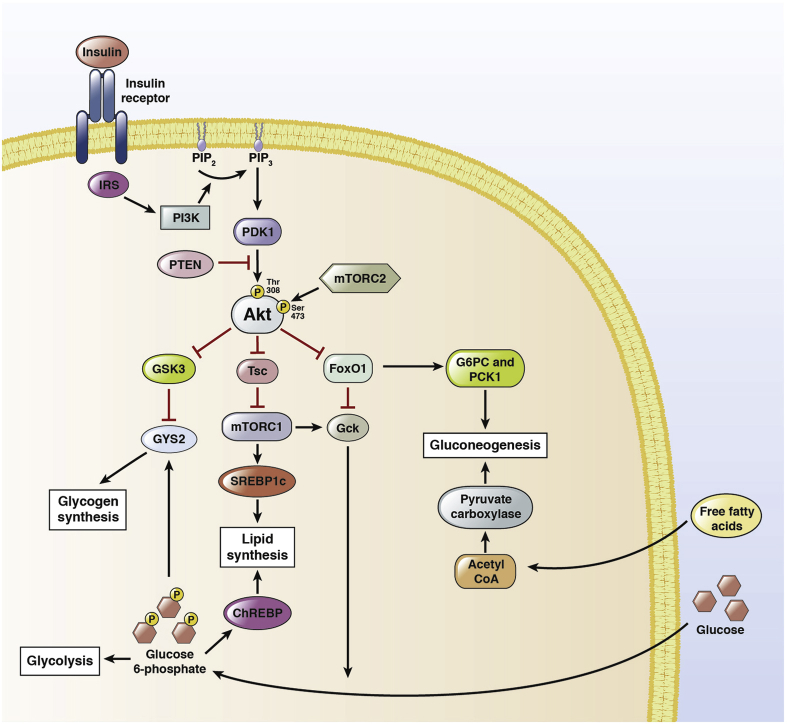
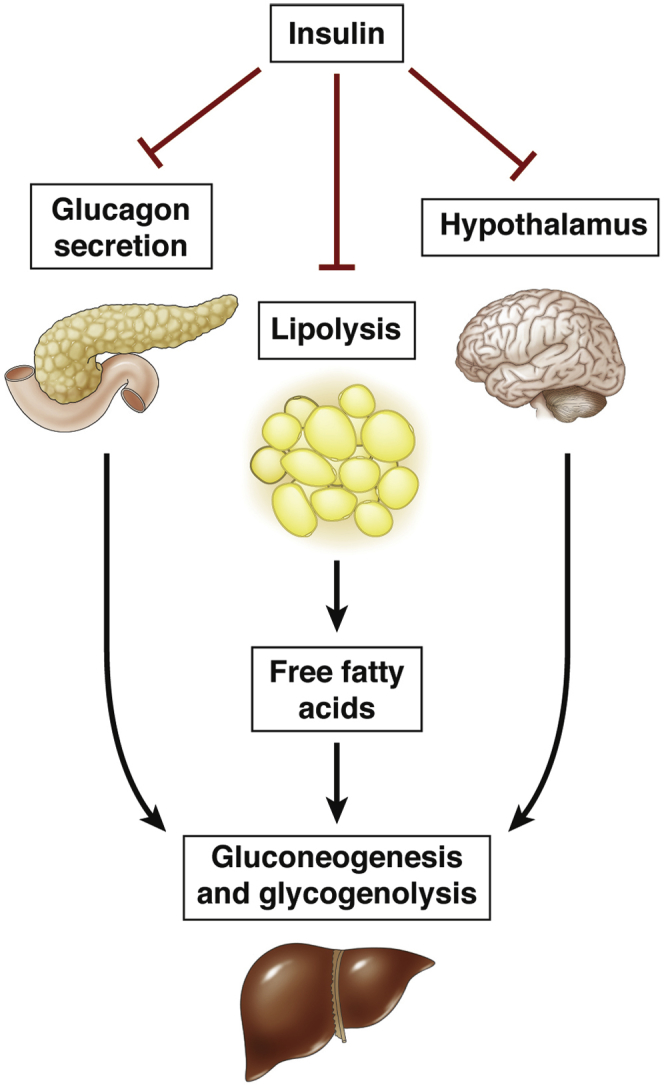
Verification
Claims the paper makes
The claims and statistics of this paper haven’t been checked yet.
Run the check — free, no account needed. It reads the open-access text and checks the sources it cites.
Claims other papers make about this one
Each is checked against this paper’s own text: does it say what the citing paper says it does?
The source backs part of the claim, not all of it — or backs it for a different population, condition or comparison.
In the citing paper
“Reduced phosphorylation of the PI3K/Akt pathway is a hallmark of IR in PCOS patients10–12.”
From Efficacy and safety of GLP-1 receptor agonists on weight management and metabolic parameters in PCOS women: a meta-analysis of randomized controlled trials (2025) · cites this paper as [11]
Experimental — accuracy not yet measuredThe source backs part of the claim, not all of it — or backs it for a different population, condition or comparison.
In the citing paper
“hepatic insulin resistance, among other effects, has proved to result in increased gluconeogenesis, lipogenesis, and synthesis of very-low-density lipoproteins (VLDL) [22]”
From The Role of Exercise in the Interplay between Myokines, Hepatokines, Osteokines, Adipokines, and Modulation of Inflammation for Energy Substrate Redistribution and Fat Mass Loss: A Review (2020) · cites this paper as [22]
Experimental — accuracy not yet measured
Self-check
Percentages, sums and reported differences re-computed from the paper’s own numbers.
The self-check needs the paper’s full text.
Citations
Cites
1 retracted
Mora, A., Lipina, C., Tronche, F., Sutherland, C. D., & Alessi, D. R. (2005) · Biochemical Journal · doi:10.1042/bj20041782 · Cited by 92 · cited 1×
“In addition, deficiency in 3phosphoinositide-dependent protein kinase 1 in mouse liver causes glucose intolerance and results in liver failure.(24)”
BackgroundRetractedPhosphorylation and regulation of Akt/PKB by the rictor-mTOR complex
Sarbassov, D. D., Guertin, D. A., Ali, S. M., & Sabatini, D. M. (2005) · Science · doi:10.1126/science.1106148 · Cited by 6,216
Global and societal implications of the diabetes epidemic
Zimmet, P., Alberti, K. G. M. M., & Shaw, J. (2001) · Nature · doi:10.1038/414782a · Cited by 5,883 · cited 1×
“016 Mdiabetes mellitus (T2DM) have reached epidemic proportions and continue to be a leading cause of death worldwide.(1) The liver plays a central role in the systemic regulation of glucose and lipid metabolism and aberrant hepatic insulin action is thought to be a primary driver of insulin resistance, in which highe…”
BackgroundInhibition of glycogen synthase kinase-3 by insulin mediated by protein kinase B
Cross, D. A. E., Alessi, D. R., Cohen, P., Andjelkovich, M., & Hemmings, B. A. (1995) · Nature · doi:10.1038/378785a0 · Cited by 5,244
SREBPs: activators of the complete program of cholesterol and fatty acid synthesis in the liver
Horton, J. D., Goldstein, J. L., & Brown, M. S. (2002) · Journal of Clinical Investigation · doi:10.1172/jci15593 · Cited by 4,794 · cited 1×
“Sterol regulatory element binding protein 1c (SREBP1c) is a member of the SREBP class of transcription factors that are key players in controlling cellular expression of genes required for lipid and cholesterol metabolism.(39) Insulin regulates SREBP1c by both enhancing its gene expression and post-translational proce…”
BackgroundSREBPs: activators of the complete program of cholesterol and fatty acid synthesis in the liver
Horton, J. D., Goldstein, J. L., & Brown, M. S. (2002) · Journal of Clinical Investigation · doi:10.1172/jci0215593 · Cited by 4,092
Brown, M. S., & Goldstein, J. L. (1997) · Cell · doi:10.1016/s0092-8674(00)80213-5 · Cited by 3,834 · cited 1×
“SREBP proteins from the endoplasmic reticulum to the Golgi where it is cleaved, releasing the active part of SREBP to the nucleus where it regulates transcription.(44) SCAP is required for activation of all isoforms of SREBP and its deletion significantly reduces cholesterol and fatty acid synthesis in the liver.”
BackgroundCritical nodes in signalling pathways: insights into insulin action
Taniguchi, C. M., Emanuelli, B., & Kahn, C. R. (2006) · Nature Reviews Molecular Cell Biology · doi:10.1038/nrm1837 · Cited by 2,760 · cited 1×
“3-phosphate kinase (PI3K)/Akt pathway is the key signaling pathway that mediates the effects of insulin on anabolic metabolism in all organisms.(17) When insulin binds to the insulin receptor (IR), it recruits and activates PI3K through insulin-receptor substrates (IRS), generating phosphatidylinositol (3,4,5)-trispho…”
BackgroundNonalcoholic steatohepatitis: association of insulin resistance and mitochondrial abnormalities
Sanyal, A. J., Campbell–Sargent, C., Mirshahi, F., Rizzo, W. B., Contos, M. J., Sterling, R. K., Luketic, V. A., Shiffman, M. L., & Clore, J. N. (2001) · Gastroenterology · doi:10.1053/gast.2001.23256 · Cited by 2,078 · cited 1×
“Patients with NAFLD almost universally show hyperinsulinemia.(6) In addition, both obese and diabetic human beings show a higher prevalence of NAFLD than lean ones.”
BackgroundActivation of a metabolic gene regulatory network downstream of mTOR complex 1
Düvel, K., Yecies, J. L., Menon, S., Raman, P., Lipovsky, A. I., Souza, A. L., Triantafellow, E., Ma, Q., Gorski, R., Cleaver, S., et al. (2010) · Molecular Cell · doi:10.1016/j.molcel.2010.06.022 · Cited by 2,020
Research works printed but not linked: 1
- Roden, 2000, Effects of free fatty acid elevation on and gluconeogenesis in humans, Endocrinol Metab, 49, 701
Cited by
Sorted by citations
Items 201–300 of 343
Tamili, D., Chakraborty, M., Chakraborty, T., & Bhattacharjee, P. (2024) · Discover Food · doi:10.1007/s44187-024-00126-3 · Cited by 5
Ma, X., Zou, H., Zhan, J., Gao, J., & Xie, Y. (2024) · European Journal of Gastroenterology & Hepatology · doi:10.1097/meg.0000000000002806 · Cited by 5
“Normally, insulin first recognizes insulin receptors to activate the PI3K/ AKT/mTOR signaling pathway, which ultimately accelerates glycogen synthesis, blocks gluconeogenesis, and inhibits fatty acid catabolism [24].”
Rosso, N., Stephenson, A. M., Giraudi, P. J., & Tiribelli, C. (2021) · Annals of Translational Medicine · doi:10.21037/atm-20-4723 · Cited by 5
Fousteri, G., Jones, M., Novelli, R., Boccella, S., Brandolini, L., Aramini, A., Pozzilli, P., & Allegretti, M. (2025) · Frontiers in Immunology · doi:10.3389/fimmu.2025.1576371 · Cited by 6
“Insulin resistance in hepatocytes directly contributes to glucose metabolism, hyperglycemia and glucose intolerance (112).”
Cooper, I. D., Petagine, L., Soto-Mota, A., Duraj, T., Scarborough, A., Norwitz, N. G., Seyfried, T. N., Furoni, M. A., & Kyriakidou, Y. (2025) · Livers · doi:10.3390/livers5030041 · Cited by 4
“In pathological conditions, including chronic non-communicable diseases, insulin fails to properly regulate liver metabolism, leading to excessive glucose production despite accelerated lipid synthesis—referred to as hepatic insulin resistance [23].”
Li, Z.-F., Yin, Z., Li, X., Lu, M.-Y., Zhang, W., Luo, F., Xu, Y.-L., Li, J., Dou, K.-F., Wang, X., et al. (2025) · Cardiovascular Diabetology · doi:10.1186/s12933-025-02910-6 · Cited by 4
“Impaired insulin action promoted hepatic de novo lipogenesis and TG production, while dysregulated adipose lipolysis increased FFA flux to the liver, collectively contributing to elevated LDL-C and atherogenic dyslipidemia [60].”
Dirjayanto, V. J., Yiu, D. C., Chen, R., & Fan, K. H. (2025) · Journal of Gastroenterology and Hepatology · doi:10.1111/jgh.70186 · Cited by 4
“Hepatic dysfunction in HCC precipitates significant disturbances in carbohydrate metabolism, largely owing to the development of insulin resistance, impaired glucose tolerance, reduced glycogen synthesis and storage, and an early shift towards gluconeogenesis [9].”
Therapeutic potential of isothiocyanates by targeting the NRF2 pathway
García‐Yagüe, Á. J., Cazalla, E., & Cuadrado, A. (2026) · Free Radical Biology and Medicine · doi:10.1016/j.freeradbiomed.2026.03.029 · Cited by 5
Zhang, T., Fan, J., Wen, X., & Duan, X. (2025) · Journal of Physiology and Biochemistry · doi:10.1007/s13105-025-01077-8 · Cited by 4
“Chronic overnutrition action is thought to a primary driver of insulin resistance [5].”
SIRT5 Regulates Lipid Deposition in Goat Preadipocytes via PI3K-Akt and MAPK Signaling Pathways
Li, H., Yao, W., Yang, C., Zhang, W., Wang, Y., Lin, Y., Du, Z., Zhang, C., Huang, L., Zhang, M., et al. (2025) · Animals · doi:10.3390/ani15071072 · Cited by 4
“The PI3K-AKT signaling axis serves as a central regulator of lipid metabolic gene expression, exerting systemic control over key metabolic organs including the liver [43], skeletal muscle [44], brain [45], and adipose depots [46].”
Resistance exercise attenuates IKKε phosphorylation and hepatic fat accumulation of obese mice
Antunes, G. C., de Lima, R. D., Vieira, R. F. L., Macêdo, A. P. A., Muñoz, V. R., Zambalde, É. P., Romeiro, C. F., Simabuco, F. M., Prada, P. O., da Silva, A. S. R., et al. (2022) · Clinical and Experimental Pharmacology and Physiology · doi:10.1111/1440-1681.13687 · Cited by 4
“Insulin is a crucial hormone for regulating liver glycogenesis and lipogenesis.(26) This fact occurs because of regulating glycogenesis and lipogenesis by insulin action in GSK3 and sterol regulatory element-binding protein 1 (Srebp1) protein.”
BackgroundXie, X.-M., Cao, Q.-Y., Sun, Y.-J., Zhang, J., Liu, K., Qin, Y.-F., Long, W.-J., Luo, Z.-J., Li, X., Liang, X.-H., et al. (2023) · Current Medical Science · doi:10.1007/s11596-022-2683-4 · Cited by 4
Effect of uric acid on lipid metabolism assessed via restricted cubic splines: A new insight
Xiao, Y., Wang, H., Han, L., Lyu, G., & Li, S. (2024) · Heliyon · doi:10.1016/j.heliyon.2024.e37408 · Cited by 4
Pomar, C. A., Trepiana, J., Besné-Eseverri, I., Castillo, P., Palou, A., Palou, M., Portillo, M. P., & Picó, C. (2024) · International Journal of Molecular Sciences · doi:10.3390/ijms252211876 · Cited by 4
“Adiponectin is known to enhance the liver’s anti-inflammatory and antioxidant capacity [44], partly by downregulating Nfkb expression [45].”
Mun, H., & So, E. S. (2022) · Annals of Hepatology · doi:10.1016/j.aohep.2022.100721 · Cited by 4
Paskaleva, I. N., Kaleva, N., Dimcheva, T., Markova, P. P., & Ivanov, I. S. (2025) · Diseases · doi:10.3390/diseases13040094 · Cited by 4
“Future long-term studies are undoubtedly needed to determine its efficacy and safety, especially in younger children.”
Essaouiba, A., Jellali, R., Poulain, S., Kim, S. H., Danoy, M., Legallais, C., Sakai, Y., & Leclerc, É. (2025) · Molecular and Cellular Endocrinology · doi:10.1016/j.mce.2025.112582 · Cited by 3
Lo, C., Lee, J., Tsai, W.-T., Huang, C., Yang, Y., Lii, C., & Chen, H. (2025) · The Journal of Nutritional Biochemistry · doi:10.1016/j.jnutbio.2025.109981 · Cited by 3
Choi, Y., Song, J. E., Lim, S.-H., & Song, H. (2025) · Frontiers in Endocrinology · doi:10.3389/fendo.2025.1663958 · Cited by 3
Lai, W., Zhou, Y., Xiao, L., Zhang, T., He, W., Gu, W., & Lin, Y. (2026) · Cardiovascular Diabetology · doi:10.1186/s12933-026-03115-1 · Cited by 3
“In addition, IR may enhance gluconeogenesis but reduce hepatic glycogen production, thereby increasing glucose production and release, leading to hyperglycemia, dyslipidemia, and hepatic fat accumulation [36].”
Liao, Y., Davies, N. A., & Bogle, I. D. L. (2022) · Chemical Engineering Science · doi:10.1016/j.ces.2022.118131 · Cited by 3
LRP1 facilitates hepatic glycogenesis by improving the insulin signaling pathway in HFD ‐fed mice
Guo, X., Pu, J., Tang, Z., Jia, C., Yang, F., Liu, T., & Ding, Y. (2024) · Animal Models and Experimental Medicine · doi:10.1002/ame2.12408 · Cited by 4
“4,5 In addition, hepatic glycogen content and glycogenesis were demonstrated to be reduced in T2D patients, which was correlated with excessive glucose production and postprandial hyper-glycemia.”
BackgroundRocha, S., Vicente, B., Proença, C., Silva, V. L. M., Silva, A. M. S., Corvo, M. L., Fernandes, E. G. R., & Freitas, M. (2024) · Chemical Biology & Drug Design · doi:10.1111/cbdd.70017 · Cited by 3
“The phosphoinositide- 3-phosphate kinase/protein kinase B (PI3K/Akt) pathway is the central signaling pathway that mediates the effects of insulin on anabolic metabolism across all organisms (Santoleri and Titchenell 2019).”
Liver portal fibroblasts induce the functions of primary human hepatocytes in vitro
Brown, G. E., Bodke, V. V., Ware, B. R., & Khetani, S. R. (2025) · Communications Biology · doi:10.1038/s42003-025-08135-3 · Cited by 3
“Insulin sensitivity is a crucial regulator of various liver functions, including lipidandglucosemetabolism 37 .”
Wei, X., Du, P., Luo, Y., Zhao, Y., Zhou, X., Chen, G., & Zhang, B. (2025) · Foods · doi:10.3390/foods14172989 · Cited by 4
“Consequently, levels of MDA and the activity of antioxidant enzymes SOD and GSH-Px are widely recognized as key biomarkers for assessing oxidative stress in biological systems [30].”
Zhou, Z., Zhao, X., Chen, L., Li, Y., Zhao, C., Wang, Y., Zhou, Z., & Chu, X. (2020) · Nutrition & Metabolism · doi:10.1186/s12986-020-00467-7 · Cited by 3
Potential role of microRNAs in selective hepatic insulin resistance: From paradox to the paradigm
Palihaderu, P. A. D. S., Mendis, B. I. L. M., Premarathne, J. M. K. J. K., Dias, W. K. R. R., Yeap, S. K., Ho, W. Y., Dissanayake, A. S., Rajapakse, I. H., Karunanayake, P., Senarath, U., et al. (2022) · Frontiers in Endocrinology · doi:10.3389/fendo.2022.1028846 · Cited by 3
“Generally, T2DM is predominantly due to insulin resistance or inadequate insulin secretion from the pancreas in response to glucose stimulation (3).”
BackgroundInfluentialGarg, R., Katekar, R. A., Parwez, S., Agarwal, A. K., Sahu, S., Dadge, S. D., Verma, S., Goand, U. K., Siddiqi, M. I., & Gayen, J. R. (2023) · European Journal of Pharmacology · doi:10.1016/j.ejphar.2023.175559 · Cited by 3
Zhang, C., Xu, Q., Xu, C., Yang, K., Xia, T., Ha-Si, W.-Y., Hao, M., & Kuang, H. (2023) · Endocrine Research · doi:10.1080/07435800.2023.2262034 · Cited by 3
Zhang, C., Sui, Y., Liu, S., & Yang, M. J. (2023) · Exploration of Digestive Diseases · doi:10.37349/edd.2023.00029 · Cited by 3
Body Fat Depletion: the Yin Paradigm for Treating Type 2 Diabetes
Zhu, J., & Wilding, J. P. H. (2023) · Current Atherosclerosis Reports · doi:10.1007/s11883-023-01181-4 · Cited by 3
“The exaggerated (portal) insulin secretion could not only improve glycemic control but also increase very low-density lipoprotein (VLDL) output to deplete liver TG/ fat [43, 48].”
Kopitar, L., Fister, I., & Štiglic, G. (2024) · Information · doi:10.3390/info15030162 · Cited by 6
“Elevated blood sugar levels (hyperglycemia), reduced responsiveness to insulin (insulin resistance), and insufficient insulin production are the defining features of T2DM [38].”
BackgroundMartyshina, A. V., Sirotkina, A. G., & Gosteva, I. V. (2024) · Biosystems · doi:10.1016/j.biosystems.2024.105227 · Cited by 3
Liu, Q., & Niu, C.-Y. (2019) · World Chinese Journal of Digestology · doi:10.11569/wcjd.v27.i19.1171 · Cited by 3
Liu, Y., Xue, H., Liu, Y., Han, L., Liang, Q. Y., Ma, L., Zhao, M., & Liu, J. (2025) · Clinical and Translational Gastroenterology · doi:10.14309/ctg.0000000000000829 · Cited by 2
Glycemic control modifies LDL-C–DKD risk: a U-shaped association in well-controlled type 2 diabetes
Zheng, K., He, C., Chen, G., Wang, H., & Ma, Y. (2025) · Frontiers in Nutrition · doi:10.3389/fnut.2025.1660820 · Cited by 2
“…LDL-C metabolism: insulin resistance accompanying hyperglycemia might impair the LDL receptor-mediated cholesterol clearance capacity in the liver, leading to a decoupling between elevated circulating LDL-C levels and renal LDL deposition (42, 43), thereby masking its association with DKD risk.”
Bautista‐Ortín, A. B., Martínez‐Moreno, A., Pérez-Mendoza, A. L., Carrasco-Palazón, M. J., Osete-Alcaraz, L., Soriano-Romaní, L., Díez-Sánchez, E., Nieto, J. A., Soto−Jover, S., & Gómez‐Plaza, E. (2025) · Foods · doi:10.3390/foods14234035 · Cited by 2
“The results also showed that among the hybrids studied in this work, RF03, RF05 and RF06, presented an effect on the modulation of one of the two biomarkers analyzed, related to insulin resistance [83].”
Laitinen, A., Käräjämäki, A., Käräjämäki, A. J., Kurki, S. H., Hakaste, L., Asplund, O., Hultman, J., Lahti, K., Lehtovirta, M., Ahlqvist, E., et al. (2026) · Diabetes Obesity and Metabolism · doi:10.1111/dom.70983 · Cited by 3
Zuo, H., Huang, X., Sun, X., Man, Y., Xu, F., Shen, T., Li, J., & Dou, L. Z. (2025) · The FASEB Journal · doi:10.1096/fj.202501513rr · Cited by 2
Pan, Y., Fan, R., Li, F., Wang, L., & Deng, Q. (2026) · Molecular Nutrition & Food Research · doi:10.1002/mnfr.70428 · Cited by 2
“At the molecular level, defects in insulin receptor signaling and reduced activation of the PI3K/AKT pathway attenuate glucose uptake and disrupt hepatic glucose metabolism [ 2 ].”
Hepatitis C Virus and Type 2 Diabetes: Mechanisms, Clinical Impact, and Post‐DAA Management
Chang, S., Liu, C., Chan, S., & Lin, L. (2026) · Journal of Medical Virology · doi:10.1002/jmv.70952 · Cited by 2
“IR, which is the perturbation of the insulin signaling pathway, has been demonstrated to reduce glucose uptake in the liver, skeletal muscle, and adipose tissues [45–47].”
Gene regulatory mechanisms underlying sex- and age-dependent pathophysiology of MASLD
Morral, N. (2026) · Clinical Science · doi:10.1042/cs20250052 · Cited by 2
The Insulin Journey in the Human Body
Infante, M. (2022) · IntechOpen eBooks · doi:10.5772/intechopen.107906 · Cited by 2
Saeed, M., Shoaib, A., Tasleem, M., AL-Shammary, A. A., Kausar, M. A., Asmar, Z. E., Abdelgadir, A., Sulieman, A. M. E., Ahmed, E. H., Zahin, M., et al. (2024) · ACS Omega · doi:10.1021/acsomega.4c00082 · Cited by 2
Utilization of Generative AI in Medical Imaging to Improve Evaluation and Therapy
Abhinaya, P. M., & Reddy, C. K. K. (2024) · Advances in medical technologies and clinical practice book series · doi:10.4018/979-8-3693-8990-4.ch007 · Cited by 2
Taesuwan, S., Inchai, J., Boonyingsathit, K., Chimkerd, C., Judprasong, K., Rachtanapun, P., Muanprasat, C., & Vaddhanaphuti, C. S. (2024) · Plants · doi:10.3390/plants14010013 · Cited by 2
“Insulin resistance, a key pathology of MASLD, disrupts hepatic glucose regulation, promotes gluconeogenesis and de novo lipogenesis, and subsequently leads to extrahepatic hyperglycemia and hypertriglyceridemia [2].”
Walls, K. M., Joh, J. Y., Martinez, M. M., Hong, K. U., & Hein, D. W. (2025) · Pharmacogenetics and Genomics · doi:10.1097/fpc.0000000000000559 · Cited by 2
“When insulin fails to properly phosphorylate AKT due to insulin resistance, dysregulation of gluconeogenic enzymes such as G6PC and PCK1 often occurs [31,34].”
Gaique, T. G., Boechat, S. K., Neto, J. G. O., Bento‐Bernardes, T., Medeiros, R. F., Pazos-Moura, C. C., & Oliveira, K. J. (2023) · HORMONES · doi:10.1007/s42000-023-00442-w · Cited by 2
“The activation of insulin signaling through IR/IRS is one of the principal regulators of AKT phosphorylation and activity [21], and cinnamaldehyde is able to stimulate AKT activation in vivo [22, 23] and in vitro [19].”
BackgroundVerma, A., Mittal, R., Navaneethakannan, M., Ahirwar, S. S., Mukherjee, S., & Kotnis, A. L. (2024) · Current Molecular Medicine · doi:10.2174/0115665240269082240213115711 · Cited by 2
Bogomolov, P., Bueverov, A. O., Dreval', A. V., Nechaeva, O., Mayorov, A. Y., Mishina, E. Е., Fedosina, E. A., Koblov, S. V., Сумцова, О. В., Jallow, A., et al. (2020) · Экспериментальная и клиническая гастроэнтерология · doi:10.31146/1682-8658-ecg-169-9-4-10 · Cited by 2
“Основными последствиями этих процессов выступают гипергликемия, гипертриглицеридемия и усиленная аккумуляция жира в гепатоцитах [6].”
Andrisse, S., Feng, M., Wang, Z., Awe, O., Yu, L., Zhang, H., Bi, S., Wang, H., Li, L., Joseph, S., et al. (2021) · bioRxiv (Cold Spring Harbor Laboratory) · doi:10.1101/2021.06.09.447759 · Cited by 2
“The liver plays a major role in 74 determining systemic insulin resistance and metabolism[22] and its function is altered in women[23] and mice[24] 75 with hyperandrogenemia.”
BackgroundBhattacharya, I., Bhattacharya, T., Sahu, A., Das, P., Sarkar, S., Prasanna, V. S., Sreed, R., Ravichandiran, V., & Arumugam, S. (2024) · Research Square · doi:10.21203/rs.3.rs-4667019/v1 · Cited by 2
Jagtap, U., Quan, A., Ono, Y., Lee, J. D., Shen, K. A., Manakov, S. A., Szabó, G., Nasser, I. A., & Slack, F. J. (2024) · bioRxiv (Cold Spring Harbor Laboratory) · doi:10.1101/2024.09.19.613915 · Cited by 2
Chen, Z., Zhou, Z., Wang, L., Zhang, Y., Huang, C., Wang, C., Huang, Y., Wang, S., Yan, D., & Feng, K. (2024) · Journal of Diabetes Investigation · doi:10.1111/jdi.14373 · Cited by 1
“Insulin-resistant individuals fail to repress hepatic glucose production while increasing lipid synthesis, resulting in hyperglycemia and hypertriglyceridemia 7 .”
Yang, Y., Chen, Y., Liu, C., Wang, S., Zhao, Y., Cao, W., & Wang, K. (2025) · Journal of Diabetes Research · doi:10.1155/jdr/6251747 · Cited by 1
“Several lines of evidence have demonstrated that the impairment of this biological process has adverse e ff ects on hepatic insulin resistance, increasing the risk of diabetes or other metabolic disease [59].”
Miles, L. A., Bai, H., Chakrabarty, S., Baik, N., Zhang, Y., Parmer, R. J., & Samad, F. (2025) · Journal of Thrombosis and Haemostasis · doi:10.1016/j.jtha.2025.09.020 · Cited by 1
Chen, P., Li, X., Yang, S., Liu, H., & Li, Z. (2025) · mSystems · doi:10.1128/msystems.01199-25 · Cited by 1
“The liver plays a central role in glucose/lipid metabolism (11).”
Russo, C., Surdo, S., Valle, M. S., & Malaguarnera, L. (2026) · Nutrients · doi:10.3390/nu18071157 · Cited by 1
“Concurrently, hepatic IR fails to suppress gluconeogenesis and dysregulates lipid synthesis, promoting metabolic in-flexibility [16].”
Shi, T., Yue, H., Wang, W., Gao, Y., Xu, S., Gao, J., & Yin, C. (2026) · International Journal of Nanomedicine · doi:10.2147/ijn.s603396 · Cited by 1
“The liver serves as a pivotal metabolic organ alongside skeletal muscle and adipose tissue 114 and is regulated primarily by the insulin signaling pathway IRS/PI3K/AKT/FoxO1, 115 which also modulates the cell cycle, growth, and apoptosis.”
Hepatic Lipoprotein Production, Cardiometabolic Phenotypes, and Subtypes of Steatotic Liver Disease
Davidson, N. O. (2026) · Circulation Research · doi:10.1161/circresaha.126.327269 · Cited by 2
Nobiletin ameliorates hepatic insulin resistance by modulating the gut–liver axis
Tang, E., Xiang, Q., Wang, N., Zhou, H., Chen, Z., He, Q., Yang, X., & Liao, W. (2026) · The Journal of Nutritional Biochemistry · doi:10.1016/j.jnutbio.2026.110452 · Cited by 1
Gastaldelli, A., Choi, E., Conde‐Knape, K., Göransson, O., Krook, A., Lehtonen, S. H., Roden, M., Schrauwen, P., Sparks, L. M., & Heni, M. (2026) · Diabetologia · doi:10.1007/s00125-026-06853-9 · Cited by 1
Metabolic dysfunction-associated fatty liver disease from definition to complications
Ezzat, A. A., & Elmoghazy, M. (2021) · Medical Journal of Viral Hepatitis /Medical Journal of Viral Hepatitis · doi:10.21608/mjvh.2021.211705 · Cited by 1
Pathophysiology of Type 2 Diabetes: A General Overview of Glucose and Insulin Homeostasis
Ghasemi, A., & Kashfi, K. (2022) · BENTHAM SCIENCE PUBLISHERS eBooks · doi:10.2174/9789815079814122010004 · Cited by 1
Khan, S., Salman, M., Ali, I., Fatima, N., Mastoor, M., & Sayed, T. M. (2022) · doi:10.53350/pjmhs221610365 · Cited by 1
Effects of marine phenolics on diabetes, obesity, and metabolic syndrome
García-Díez, E., Martín, M. Á., & Ramos, S. (2023) · Elsevier eBooks · doi:10.1016/b978-0-12-823589-8.00016-9 · Cited by 1
Morrow, N. M., & Mulvihill, E. E. (2023) · Journal of Pharmacology and Experimental Therapeutics · doi:10.1124/jpet.122.001517 · Cited by 1
FETAL METABOLIC PROGRAMMING IN THE ETIOLOGY OF POLYCYSTIC OVARIAN SYNDROME
Silva, M. P. L. D., & Vargas, R. (2023) · Revista Contemporânea · doi:10.56083/rcv3n8-028 · Cited by 1
GRg1 Ameliorates Insulin Resistance Through Activation of the PI3K/AKT/GSK-3β Pathway in HepG2 Cells
Shen, X., Jin, Y., Chen, Y., & Yang, H. (2023) · Pharmacognosy Magazine · doi:10.1177/09731296231198284 · Cited by 1
“The liver, which is responsible for glucose synthesis and metabolism, and hepatic insulin resistance, characterized by suppressed insulin-dependent cellular glucose consumption (Santoleri & Titchenell, 2019), plays a central role in insulin resistance (Jia et al., 2020; Petersen & Shulman, 2018).”
BackgroundFACTORES DE RIESGO IMPLICADOS EN LA RESISTENCIA A LA INSULINA: UN ANÁLISIS BIBLIOGRÁFICO.
Salazar, C. B. V., Arboleda, G. C. D., Miguel, C. S. Q. S., Rodríguez, E. M. Q., Diaz, N. M. R., Farfán, F. G. G., Baño, E. S. L., Espinoza, V. D. R. L., Ortiz, S. M. E., Mendoza, J. I. G., et al. (2024) · Brazilian Journal of Implantology and Health Sciences · doi:10.36557/2674-8169.2024v6n4p920-929 · Cited by 1
Khorami, S. A. H., Mutalib, M. S. A., Shiraz, M. F., Abdullah, J. A., Rejali, Z., Ali, R. M., & Khaza’ai, H. (2020) · doi:10.21203/rs.3.rs-22403/v1
Walls, K. M. (2021) · ThinkIR: The University of Louisville's Institutional Repository (University of Louisville) · doi:10.18297/etd/3622
Crespo-Morfin, P. B., Aguilar-Salinas, C. A., Almeda‐Valdés, P., Alfaro-Pastrana, R., Bello‐Chavolla, O. Y., Cano-Castillo, J., Gomez-Perez, F. J., & Cruz‐Bautista, I. (2022) · Revista de investigaci�n Cl�nica · doi:10.24875/ric.22000039
“Hepatic insulin resistance can be present in fasting conditions and during the first minutes of an OGTT 30 .”
BackgroundCorrelation of Prediabetes and Metabolic Syndrome in Rural Population of Dinanath
Gulzar, A., Rashid, N., Siddiqi, M. F., Arif, Z., Ali, R., & Uddin, M. A. (2022) · Pakistan Journal of Medical and Health Sciences · doi:10.53350/pjmhs22166232
Gu, L., Zhu, Y., Watari, K., Lee, M., Liu, J., Perez, S., Thai, M., Mayfield, J. E., Zhang, B., Rocha, K. C. E., et al. (2023) · bioRxiv (Cold Spring Harbor Laboratory) · doi:10.1101/2023.03.05.531181
Woerkom, A. V., Harney, D. J., Nagarajan, S. R., Hakeem-Sanni, M. F., Lin, J., Hooke, M., Pulpitel, T., Cooney, G., Larance, M., Saunders, D., et al. (2023) · bioRxiv · doi:10.1101/2023.03.09.531813
Leptin and the Intersection of Cardiovascular Disease, Metabolism, and Adipose Tissue
Vavruch, C. (2023) · Linköping University medical dissertations · doi:10.3384/9789180751032
Cywes, R., Kajee, H., Wellington, N., Cucuzzella, M. T., Riley, K., Isaacs, D. M., Pataguana, N., Lake, I., Rauch, L., McKelvey, S., et al. (2023) · Elsevier eBooks · doi:10.1016/b978-0-12-821617-0.00010-3
Kakimoto, P. A. (2021) · Digital Library of Theses and Dissertations (Universidade de São Paulo) · doi:10.11606/t.46.2021.tde-10082023-115406
Jasim, R. H., & Lefta, A. A. (2023) · Journal of Kufa for Chemical Sciences · doi:10.36329/jkcm/2022/v2.i9.13287
Resistencia a la insulina, hepatopatía grasa y su asociación con las proteínas acarreadoras de IGF
Guzmán, C., Mendoza-Domínguez, G., & Bautista-Ubaldo, M. G. (2023) · Revista Mexicana de Endocrinología Metabolismo y Nutrición · doi:10.24875/rme.22000056
Modelling of postprandial glucose and insulin dynamics
van Sloun, B. (2023) · doi:10.26481/dis.20231027bs
Didyk, O. K., & Chernyavskyi, V. V. (2023) · Family medicine European practices · doi:10.30841/2786-720x.3.2023.289347
Jørgensen, S. H., Emdal, K. B., Pedersen, A.-K., Axelsen, L. N., Kildegaard, H. F., Damozay, D., Pedersen, T. Å., Grønborg, M., Slaaby, R., Nielsen, P. K., et al. (2023) · bioRxiv (Cold Spring Harbor Laboratory) · doi:10.1101/2023.12.14.571674
Akdeniz diyeti ve Non alkolik yağlı karaciğer hastalığı
Bektaş, A., & Ulusoy, M. (2023) · Troia Medical Journal · doi:10.55665/troiamedj.1363991
Li, Z., Peng, B., Chen, S., Li, J., Hu, K., Liao, L., Xie, Q., Yao, M., Liang, L., Tomlinson, S., et al. (2023) · Figshare · doi:10.6084/m9.figshare.24104254
Zhou, Z., Zhao, X., Chen, L., Li, Y., Chen, Z., Wang, Y., Zhou, Z., & Chu, X. (2020) · Figshare · doi:10.6084/m9.figshare.12511466
Li, Z., Peng, B., Chen, S., Li, J., Hu, K., Liao, L., Xie, Q., Yao, M., Liang, L., Tomlinson, S., et al. (2023) · Figshare · doi:10.6084/m9.figshare.24104260
Li, Z., Peng, B., Chen, S., Li, J., Hu, K., Liao, L., Xie, Q., Yao, M., Liang, L., Tomlinson, S., et al. (2023) · Figshare · doi:10.6084/m9.figshare.24104266
Zhou, Z., Zhao, X., Chen, L., Li, Y., Chen, Z., Wang, Y., Zhou, Z., & Chu, X. (2020) · Figshare · doi:10.6084/m9.figshare.12511472
Li, Z., Peng, B., Chen, S., Li, J., Hu, K., Liao, L., Xie, Q., Yao, M., Liang, L., Tomlinson, S., et al. (2023) · Figshare · doi:10.6084/m9.figshare.24104284
Zhou, Z., Zhao, X., Chen, L., Li, Y., Chen, Z., Wang, Y., Zhou, Z., & Chu, X. (2020) · Figshare · doi:10.6084/m9.figshare.12511493
Mechanisms of Hepatic Steatosis
Mrdjen, M., Travers, J., & Nagy, L. E. (2024) · Elsevier eBooks · doi:10.1016/b978-0-323-95488-4.00079-6
Research Progress on the Role of m6A Modification in Arsenic-Induced Toxicity
李, 仁. (2024) · Bioprocess · doi:10.12677/bp.2024.142008
Andrade, L. J. D. O., de Oliveira, G. C. M., & de Oliveira, L. M. (2024) · Research Square · doi:10.21203/rs.3.rs-4739938/v1
Mathematical Modelling of MASLD ‐ Towards Digital Twins in Liver Disease
Simonsson, C. (2024) · Linköping studies in science and technology. Dissertations · doi:10.3384/9789180757348
Nemati, M., Nemati, F., Hosseinzadeh, Z., & Ghaffari, M. K. (2024) · Research Square · doi:10.21203/rs.3.rs-5434832/v1
Jia, N., Li, J., Cui, Y. M., Li, Y., Li, X., & Chu, X. (2025) · SSRN Electronic Journal · doi:10.2139/ssrn.5208281
Metadata
- Authors
- Santoleri, D., & Titchenell, P. M.
- Affiliations
- University of Pennsylvania (US)
- Corresponding author
- Titchenell, Paul M.
- Venue
- Cellular and Molecular Gastroenterology and Hepatology
- Publisher
- Elsevier BV
- Published
- 2019
- Volume
- 7
- Issue
- 2
- Pages
- 447-456
- ISSN
- 2352-345X (ISSN-L)
- PMC
- PMC6369222
- OpenAlex
- W2899043265
- Cited by
- 336
- References
- 102
- Citations by year
- 2026: 35 · 2025: 57 · 2024: 61 · 2023: 63 · 2022: 51 · 2021: 40 · 2020: 24 · 2019: 5
- FWCI
- 2.57
- Type
- journal article
- Language
- en
- Open access
- gold
- doi.org
- Licence
- Locations
- Cellular and Molecular Gastroenterology and Hepatology (publishedVersion, cc-by-nc-nd)
- Europe PMC (PubMed Central) (publishedVersion, cc-by-nc-nd)
- PubMed Central (publishedVersion, cc-by-nc-nd)
- PubMed (publishedVersion)
- DOAJ (DOAJ: Directory of Open Access Journals) (submittedVersion, cc-by-sa)
- Funders
- National Institutes of Health (K01 DK111715, P30 DK19525)
- Topics
- Health Sciences › Medicine › Hepatology › Liver Disease Diagnosis and Treatment
- Life Sciences › Biochemistry, Genetics and Molecular Biology › Molecular Biology › Metabolism, Diabetes, and Cancer
- Health Sciences › Medicine › Endocrinology, Diabetes and Metabolism › Diabetes, Cardiovascular Risks, and Lipoproteins
- Keywords
- hepatic insulin resistance, insulin signaling, hepatic glucose production, hepatic lipid synthesis, hypertriglyceridemia, hyperglycemia, type 2 diabetes, obesity, glucose metabolism, lipid metabolism
- MeSH terms
- Animals, Humans, Insulin, Insulin Resistance, Liver, Models, Biological, Signal Transduction, Lipid Metabolism
About these checks
Registry, retraction, Cites and statistics results are computed, not judged, with one exception: a printed reference that no index lists is read once by a model before it counts as a citation error. Claims are extracted by a model and kept only when their quote appears verbatim in the text; each cited source is then checked, with a model’s help, for whether it says what the claim relies on. Those verdicts can be wrong — read the claim’s quote and the cited source before relying on one.
Statistics and arithmetic are recomputed, not judged.
Confidence bands are shown only for fields calibrated on our annotated test set. None is calibrated yet, so no band is shown.
What counts as a claim ›How we measure confidence ›How we check this ›
Are you an author, or do you see a problem with this page? Request a review
