

The DOI matches its Crossref record; 99 of the 102 references it cites were found in a registry or an index.
Resolving the Paradox of Hepatic Insulin Resistance
Open accessAbstract
Insulin resistance is associated with numerous metabolic disorders, such as obesity and type II diabetes, that currently plague our society. Although insulin normally promotes anabolic metabolism in the liver by increasing glucose consumption and lipid synthesis, insulin-resistant individuals fail to inhibit hepatic glucose production and paradoxically have increased liver lipid synthesis, leading to hyperglycemia and hypertriglyceridemia. Here, we detail the intrahepatic and extrahepatic pathways mediating insulin's control of glucose and lipid metabolism. We propose that the interplay between both of these pathways controls insulin signaling and that mis-regulation between the 2 results in the paradoxic effects seen in the insulin-resistant liver instead of the commonly proposed deficiencies in particular branches of only the direct hepatic pathway.
Overview
The claims and statistics of this paper haven’t been checked yet.
Run the check — free, no account needed. It reads the open-access text and checks the sources it cites.
Integrity signals
Registry
Cites
Statistics
Figures
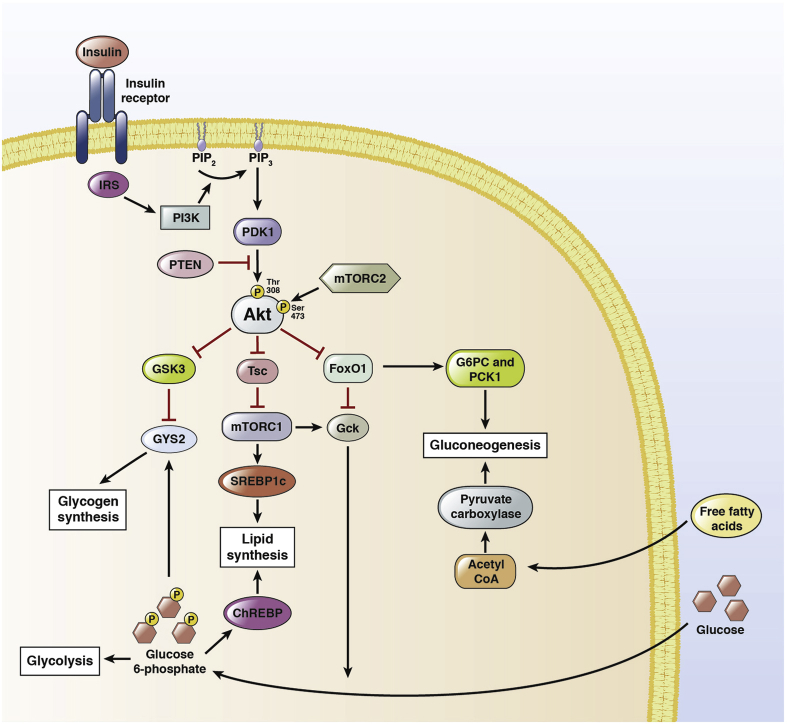
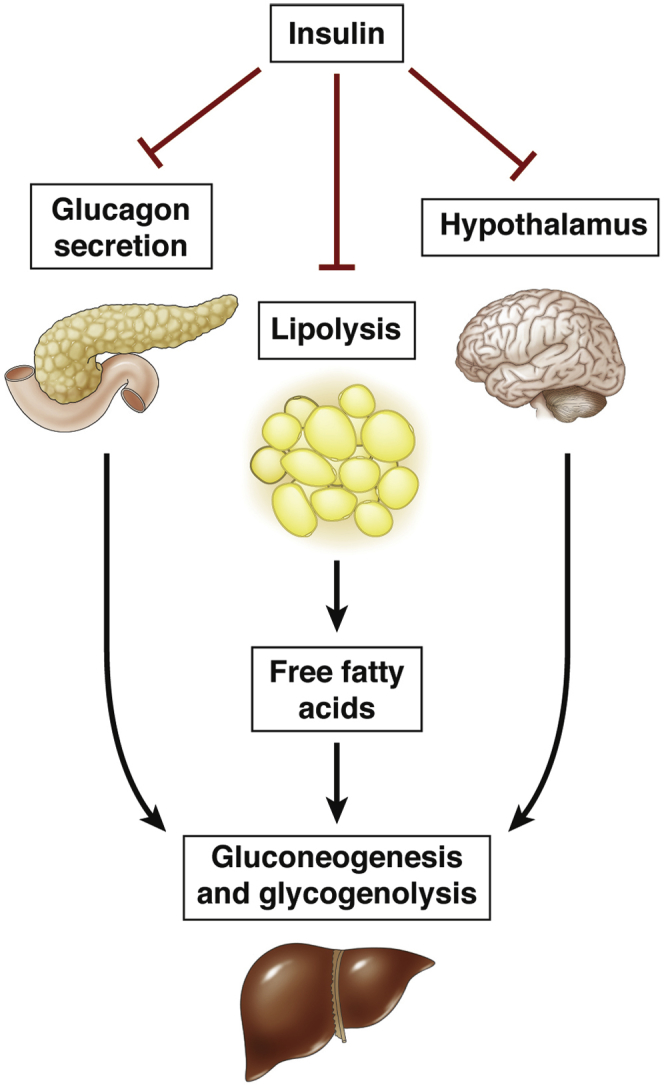
Verification
Claims the paper makes
The claims and statistics of this paper haven’t been checked yet.
Run the check — free, no account needed. It reads the open-access text and checks the sources it cites.
Claims other papers make about this one
Each is checked against this paper’s own text: does it say what the citing paper says it does?
The source backs part of the claim, not all of it — or backs it for a different population, condition or comparison.
In the citing paper
“Reduced phosphorylation of the PI3K/Akt pathway is a hallmark of IR in PCOS patients10–12.”
From Efficacy and safety of GLP-1 receptor agonists on weight management and metabolic parameters in PCOS women: a meta-analysis of randomized controlled trials (2025) · cites this paper as [11]
Experimental — accuracy not yet measuredThe source backs part of the claim, not all of it — or backs it for a different population, condition or comparison.
In the citing paper
“hepatic insulin resistance, among other effects, has proved to result in increased gluconeogenesis, lipogenesis, and synthesis of very-low-density lipoproteins (VLDL) [22]”
From The Role of Exercise in the Interplay between Myokines, Hepatokines, Osteokines, Adipokines, and Modulation of Inflammation for Energy Substrate Redistribution and Fat Mass Loss: A Review (2020) · cites this paper as [22]
Experimental — accuracy not yet measured
Self-check
Percentages, sums and reported differences re-computed from the paper’s own numbers.
The self-check needs the paper’s full text.
Citations
Cites
1 retracted
Mora, A., Lipina, C., Tronche, F., Sutherland, C. D., & Alessi, D. R. (2005) · Biochemical Journal · doi:10.1042/bj20041782 · Cited by 92 · cited 1×
“In addition, deficiency in 3phosphoinositide-dependent protein kinase 1 in mouse liver causes glucose intolerance and results in liver failure.(24)”
BackgroundRetractedPhosphorylation and regulation of Akt/PKB by the rictor-mTOR complex
Sarbassov, D. D., Guertin, D. A., Ali, S. M., & Sabatini, D. M. (2005) · Science · doi:10.1126/science.1106148 · Cited by 6,216
Global and societal implications of the diabetes epidemic
Zimmet, P., Alberti, K. G. M. M., & Shaw, J. (2001) · Nature · doi:10.1038/414782a · Cited by 5,883 · cited 1×
“016 Mdiabetes mellitus (T2DM) have reached epidemic proportions and continue to be a leading cause of death worldwide.(1) The liver plays a central role in the systemic regulation of glucose and lipid metabolism and aberrant hepatic insulin action is thought to be a primary driver of insulin resistance, in which highe…”
BackgroundInhibition of glycogen synthase kinase-3 by insulin mediated by protein kinase B
Cross, D. A. E., Alessi, D. R., Cohen, P., Andjelkovich, M., & Hemmings, B. A. (1995) · Nature · doi:10.1038/378785a0 · Cited by 5,244
SREBPs: activators of the complete program of cholesterol and fatty acid synthesis in the liver
Horton, J. D., Goldstein, J. L., & Brown, M. S. (2002) · Journal of Clinical Investigation · doi:10.1172/jci15593 · Cited by 4,794 · cited 1×
“Sterol regulatory element binding protein 1c (SREBP1c) is a member of the SREBP class of transcription factors that are key players in controlling cellular expression of genes required for lipid and cholesterol metabolism.(39) Insulin regulates SREBP1c by both enhancing its gene expression and post-translational proce…”
BackgroundSREBPs: activators of the complete program of cholesterol and fatty acid synthesis in the liver
Horton, J. D., Goldstein, J. L., & Brown, M. S. (2002) · Journal of Clinical Investigation · doi:10.1172/jci0215593 · Cited by 4,092
Brown, M. S., & Goldstein, J. L. (1997) · Cell · doi:10.1016/s0092-8674(00)80213-5 · Cited by 3,834 · cited 1×
“SREBP proteins from the endoplasmic reticulum to the Golgi where it is cleaved, releasing the active part of SREBP to the nucleus where it regulates transcription.(44) SCAP is required for activation of all isoforms of SREBP and its deletion significantly reduces cholesterol and fatty acid synthesis in the liver.”
BackgroundCritical nodes in signalling pathways: insights into insulin action
Taniguchi, C. M., Emanuelli, B., & Kahn, C. R. (2006) · Nature Reviews Molecular Cell Biology · doi:10.1038/nrm1837 · Cited by 2,760 · cited 1×
“3-phosphate kinase (PI3K)/Akt pathway is the key signaling pathway that mediates the effects of insulin on anabolic metabolism in all organisms.(17) When insulin binds to the insulin receptor (IR), it recruits and activates PI3K through insulin-receptor substrates (IRS), generating phosphatidylinositol (3,4,5)-trispho…”
BackgroundNonalcoholic steatohepatitis: association of insulin resistance and mitochondrial abnormalities
Sanyal, A. J., Campbell–Sargent, C., Mirshahi, F., Rizzo, W. B., Contos, M. J., Sterling, R. K., Luketic, V. A., Shiffman, M. L., & Clore, J. N. (2001) · Gastroenterology · doi:10.1053/gast.2001.23256 · Cited by 2,078 · cited 1×
“Patients with NAFLD almost universally show hyperinsulinemia.(6) In addition, both obese and diabetic human beings show a higher prevalence of NAFLD than lean ones.”
BackgroundActivation of a metabolic gene regulatory network downstream of mTOR complex 1
Düvel, K., Yecies, J. L., Menon, S., Raman, P., Lipovsky, A. I., Souza, A. L., Triantafellow, E., Ma, Q., Gorski, R., Cleaver, S., et al. (2010) · Molecular Cell · doi:10.1016/j.molcel.2010.06.022 · Cited by 2,020
Research works printed but not linked: 1
- Roden, 2000, Effects of free fatty acid elevation on and gluconeogenesis in humans, Endocrinol Metab, 49, 701
Cited by
Sorted by citations
Mechanisms of Fibrosis Development in Nonalcoholic Steatohepatitis
Schwabe, R. F., Tabas, I., & Pajvani, U. B. (2020) · Gastroenterology · doi:10.1053/j.gastro.2019.11.311 · Cited by 671
Role of Insulin in Health and Disease: An Update
Rahman, M. S., Hossain, K. S., Das, S., Kundu, S., Adegoke, E. O., Rahman, M. A., Hannan, M. A., Uddin, M. J., & Pang, M. (2021) · International Journal of Molecular Sciences · doi:10.3390/ijms22126403 · Cited by 574
The Role of Estrogen in Insulin Resistance
Paoli, M. D., Zakharia, A., & Werstuck, G. H. (2021) · American Journal Of Pathology · doi:10.1016/j.ajpath.2021.05.011 · Cited by 322
“However, insulin-resistant individuals do not respond to this signaling process, and paradoxically show an increase in both hepatic glucose production and insulin secretion, which can induce or aggravate hyperglycemia.(15) The factors that promote the emergence of insulin resistance include altered insulin signaling,…”
BackgroundGonzalez-Gil, A. M., & Elizondo-Montemayor, L. (2020) · Nutrients · doi:10.3390/nu12061899 · Cited by 278
“In humans, high pre-training levels of SeP were predictive of decreased aerobic exercise capacity, measured as VO2 max [50], suggesting that FFAs released by VAT lipolysis during and after exercise are less efficiently utilized by SkM and are instead preferentially reincorporated into VAT via VLDL.”
BackgroundInfluentialAcetyl-CoA Carboxylases and Diseases
Wang, Y., Yu, W., Li, S., Guo, D., He, J., & Wang, Y. (2022) · Frontiers in Oncology · doi:10.3389/fonc.2022.836058 · Cited by 238
“In mammals, the accumulation of lipid in tissues, such as muscle and liver, is closely related to insulin resistance that associates with a myriad of metabolic disorders (84, 85).”
BackgroundPathophysiological mechanisms underlying MAFLD
Kuchay, M. S., Choudhary, N. S., & Mishra, S. K. (2020) · Diabetes & Metabolic Syndrome Clinical Research & Reviews · doi:10.1016/j.dsx.2020.09.026 · Cited by 188
Estrogens in adipose tissue physiology and obesity-related dysfunction
Kuryłowicz, A. (2023) · Biomedicines · doi:10.3390/biomedicines11030690 · Cited by 178
Singh, A. P., Shadangi, S., Gupta, P. K., & Rana, S. (2025) · Comprehensive physiology · doi:10.1002/cph4.70003 · Cited by 201
“…where periportal and perivenous hepatocytes perform distinct functions, and any dysregulation of this compartmentalization contributes to the overall metabolic dysregulation observed in insulin-resistant states (da Silva Rosa et al. 2020; Santoleri and Titchenell 2019; Mastrototaro and Roden 2021).”
Glucocorticoid-Induced Fatty Liver Disease
Rahimi, L., Rajpal, A., & Ismail‐Beigi, F. (2020) · Diabetes Metabolic Syndrome and Obesity · doi:10.2147/dmso.s247379 · Cited by 151
Fougerat, A., Montagner, A., Loiseau, N., Guillou, H., & Wahli, W. (2020) · Cells · doi:10.3390/cells9071638 · Cited by 150
Torre, S. D. (2020) · Frontiers in Endocrinology · doi:10.3389/fendo.2020.572490 · Cited by 125
“NAFLD is closely linked with peripheral insulin resistance and hepatic insulin resistance (28–30), a condition where insulin fails to suppress hepatic glucose production (HPG, which accounts for 90% of endogenous glucose production) but promotes lipid synthesis leading to hyperglycemia, hypertriglyceridemia and hepati…”
BackgroundSerum concentration of asprosin in new-onset type 2 diabetes
Naiemian, S., Naeemipour, M., Zarei, M., Najafi, M. L., Gohari, A., Behroozikhah, M. R., Heydari, H., & Miri, M. (2020) · Diabetology & Metabolic Syndrome · doi:10.1186/s13098-020-00564-w · Cited by 94
Pathophysiological underpinnings of metabolic dysfunction-associated steatotic liver disease
Kuchay, M. S., Choudhary, N. S., & Ramos‐Molina, B. (2025) · American Journal of Physiology-Cell Physiology · doi:10.1152/ajpcell.00951.2024 · Cited by 104
Yu, M., Wei, X., Wei, Z., Song, G., Zhao, X., & Lei, Y. (2024) · Cardiovascular Diabetology · doi:10.1186/s12933-024-02287-y · Cited by 92
“Meanwhile, IR could also enhance gluconeogenesis but decrease hepatic glycogenesis, which can increase glucose production and release [48, 49].”
BackgroundPal, S. C., & Méndez‐Sánchez, N. (2023) · World Journal of Gastroenterology · doi:10.3748/wjg.v29.i25.3999 · Cited by 98
Beyond the X Factor: Relevance of Sex Hormones in NAFLD Pathophysiology
Torre, S. D. (2021) · Cells · doi:10.3390/cells10092502 · Cited by 91
Excessive Gluconeogenesis Causes the Hepatic Insulin Resistance Paradox and Its Sequelae
Onyango, A. N. (2022) · Heliyon · doi:10.1016/j.heliyon.2022.e12294 · Cited by 80
James, A., Wang, K., & Wang, Y. (2023) · Nutrients · doi:10.3390/nu15133022 · Cited by 88
Tesařík, J. (2025) · International Journal of Molecular Sciences · doi:10.3390/ijms26062797 · Cited by 72
Hepatic insulin receptor: new views on the mechanisms of liver disease
Lee, W., Najjar, S. M., Kahn, C. R., & Hinds, T. D. (2023) · Metabolism · doi:10.1016/j.metabol.2023.155607 · Cited by 76
Silymarin is an ally against insulin resistance: A review
MacDonald-Ramos, K., Michán, L., Martínez‐Ibarra, A., & Cerbón, M. A. (2020) · Annals of Hepatology · doi:10.1016/j.aohep.2020.08.072 · Cited by 72
Futile lipid cycling: from biochemistry to physiology
Sharma, A. K., Khandelwal, R., & Wolfrum, C. (2024) · Nature Metabolism · doi:10.1038/s42255-024-01003-0 · Cited by 66
Asimakidou, E., Saipuljumri, E. N., Lo, C. H., & Zeng, J. (2024) · Neural Regeneration Research · doi:10.4103/nrr.nrr-d-23-01770 · Cited by 65
“The liver plays a pivotal role in the regulation of glucose metabolism and aberrant insulin signaling in the liver is thought to be a primary driver of systemic or peripheral insulin resistance (Santoleri and Titchenell, 2019).”
BackgroundHesperetin promotes longevity and delays aging via activation of Cisd2 in naturally aged mice
Yeh, C., Shen, Z., Wang, T.-W., Kao, C., Teng, Y., Yeh, T., Lu, C.-K., & Tsai, T. (2022) · Journal of Biomedical Science · doi:10.1186/s12929-022-00838-7 · Cited by 61
Ahmed, E. S. A., Mohamed, H. E., & Farrag, M. A. (2022) · International Journal of Immunopathology and Pharmacology · doi:10.1177/03946320221137435 · Cited by 59
“Whereas dysregulation of the insulin signaling induces insulin resistance in which insulin lose its ability to control and regulate the hepatic metabolism of both glucose and lipid, leading to hyperglycemia (excessive glucose production) and hyperlipidemia (accelerated rates lipogenesis).(7) Based on the strong link b…”
BackgroundInfluentialChen, H., Sun, Y., Zhao, H., Qi, X., Cui, H., Li, Q., & Ma, Y. (2022) · Food & Function · doi:10.1039/d2fo01343f · Cited by 58
Asprosin-neutralizing antibodies as a treatment for metabolic syndrome
Mishra, I., Duerrschmid, C., Ku, Z., He, Y., Xie, W., Silva, E. S., Hoffman, J., Xin, W., Zhang, N., Xu, Y., et al. (2021) · eLife · doi:10.7554/elife.63784 · Cited by 61
Ahmed, S. A., Sarma, P., Barge, S., Swargiary, D., Gurumayum, S., & Borah, J. C. (2023) · Chemico-Biological Interactions · doi:10.1016/j.cbi.2023.110347 · Cited by 57
Cheon, S. Y., & Song, J. (2022) · Cell & Bioscience · doi:10.1186/s13578-022-00836-0 · Cited by 58
“Insulin resistance and poor insulin sensitivity are hallmark features of T2DM and NAFLD [119].”
BackgroundLee, J., Park, K., Lee, H. S., Park, H.-K., Han, J. H., & Ahn, S. B. (2022) · Clinical and Molecular Hepatology · doi:10.3350/cmh.2022.0099 · Cited by 54
Hussein, H. K., Aubead, N. M., Kzar, H. H., Karim, Y. S., Amin, A. H., Al-Gazally, M. E., Ahmed, T. I., Jawad, M. A., Hammid, A. T., Jalil, A. T., et al. (2022) · Diabetology & Metabolic Syndrome · doi:10.1186/s13098-022-00844-7 · Cited by 53
RetractedTan, D., Tseng, H. H. L., Zhong, Z., Wang, S., Vong, C. T., & Wang, Y. (2022) · International Journal of Molecular Sciences · doi:10.3390/ijms231910988 · Cited by 55
“On the other hand, the liver is responsible for glucose uptake and lipid synthesis and metabolism [78].”
BackgroundStructural Characterization and Hypoglycemic Function of Polysaccharides from Cordyceps cicadae
Wang, Y., Zeng, T., Li, H., Wang, Y., Wang, J., & Yuan, H. (2023) · Molecules · doi:10.3390/molecules28020526 · Cited by 50
“The hypoglycemic mechanism is mainly related to activation of PI3K by insulin receptor substrates (IRSs) and subsequent activation of Akt [20,21], which transmits signals to downstream pathways to control cell survival and glucose and lipid metabolism [22,23].”
BackgroundRole of Long Non-Coding RNAs and the Molecular Mechanisms Involved in Insulin Resistance
Tello‐Flores, V. A., Beltrán‐Anaya, F. O., Ramírez‐Vargas, M. A., Esteban-Casales, B. E., Navarro‐Tito, N., Alarcón‐Romero, L. D. C., Luciano-Villa, C. A., Ramı́rez, M., Moral-Hernández, Ó. D., & Flores‐Alfaro, E. (2021) · International Journal of Molecular Sciences · doi:10.3390/ijms22147256 · Cited by 50
“Non-alcoholic fatty liver disease, a consequence of the high production and accumulation of lipids in the liver, is considered a key factor in the development of IR and T2D [60].”
BackgroundRegulation of hepatic insulin signaling and glucose homeostasis by sphingosine kinase 2
Aji, G., Huang, Y., Ng, M. L., Wang, W., Lan, T., Li, M., Li, Y., Chen, Q., Li, R., Yan, S., et al. (2020) · Proceedings of the National Academy of Sciences · doi:10.1073/pnas.2007856117 · Cited by 49
Xia, Z., Zhang, S., Chen, Y., Li, K., Chen, W., & Liu, Y. (2020) · Food and Chemical Toxicology · doi:10.1016/j.fct.2020.111803 · Cited by 52
Glucocorticosteroids and the Risk of NAFLD in Inflammatory Bowel Disease
Jarmakiewicz-Czaja, S., Sokal-Dembowska, A., Pardak, P., & Filip, R. (2022) · Canadian Journal of Gastroenterology and Hepatology · doi:10.1155/2022/4344905 · Cited by 48
“Moreover, insulin resistance of liver cells plays an important role in the pathogenesis of the disease [77], which is associated with increased lipid synthesis in the liver, thus leading to the development of hypertriglyceridemia and hyperglycemia [78].”
BackgroundZou, H., Ma, X., Zhang, F., & Xie, Y. (2023) · Lipids in Health and Disease · doi:10.1186/s12944-023-01902-3 · Cited by 49
“Regardless of the “double-hit” theory or “multiple-hit” theory, IR is a crucial component in the development of MAFLD [8, 47–51].”
BackgroundDiabetes and the associated complications: The role of antioxidants in diabetes therapy and care
Dilworth, L., Stennett, D., Facey, A., Omoruyi, F. O., Mohansingh, S., & Omoruyi, F. O. (2024) · Biomedicine & Pharmacotherapy · doi:10.1016/j.biopha.2024.117641 · Cited by 71
Mertens, J., Block, C. E. M. D., Spinhoven, M. J., Driessen, A. L. C., Francque, S., & Kwanten, W. J. (2021) · Frontiers in Pharmacology · doi:10.3389/fphar.2021.768576 · Cited by 48
Exposure to dim light at night alters daily rhythms of glucose and lipid metabolism in rats
Rumanova, V. S., Okuliarová, M., Foppen, E., Kalsbeek, A., & Zeman, M. (2022) · Frontiers in Physiology · doi:10.3389/fphys.2022.973461 · Cited by 49
“Glycogen phosphorylase is the ratelimiting enzyme in glycogen catabolism (Agius, 2015) and FOXO1 promotes transcription of gluconeogenic genes (Santoleri and Titchenell, 2019).”
BackgroundTherapeutic effects of icariin and icariside II on diabetes mellitus and its complications
Jiang, W., Ding, K., Yue, R., & Lei, M. (2023) · Critical Reviews in Food Science and Nutrition · doi:10.1080/10408398.2022.2159317 · Cited by 44
“Instead, excess glucose in the liver fuels excess fat synthesis, leading to nonalcoholic fatty liver disease (NAFLD), hypertriglyceridemia, and hyperglycemia (Santoleri and Titchenell 2019).”
BackgroundLi, L., Huang, L., Lei, R., Zhang, P., Yang, Y., Liu, H., & Zhang, Y. (2023) · Environmental Pollution · doi:10.1016/j.envpol.2023.122948 · Cited by 45
Proteostasis Decline and Redox Imbalance in Age-Related Diseases: The Therapeutic Potential of NRF2
Buttari, B., Tramutola, A., Rojo, A. I., Chondrogianni, N., Saha, S., Berry, A., Giona, L., Miranda, J. P., Profumo, E., Davinelli, S., et al. (2025) · Biomolecules · doi:10.3390/biom15010113 · Cited by 49
“The mechanisms by which T2D develops are not fully understood [271], nevertheless, regardless of the causative factors, the key driver of diabetic phenotypes including the development of IR and dyslipidemia is a propathogenic shift in cellular metabolism.”
Atherosclerosis and Insulin Resistance: Is There a Link Between Them?
Brie, A. D., Christodorescu, R., Popescu, R., Adam, O., Tîrziu, A., & Brie, D. M. (2025) · Biomedicines · doi:10.3390/biomedicines13061291 · Cited by 50
Intestine-liver crosstalk in Type 2 Diabetes and non-alcoholic fatty liver disease
Nawrot, M., Peschard, S., Lestavel, S., & Staels, B. (2021) · Metabolism · doi:10.1016/j.metabol.2021.154844 · Cited by 49
NAFLD in type 1 diabetes: overrated or underappreciated?
Mertens, J., Gaal, L. F. V., Francque, S., & Block, C. E. M. D. (2021) · Therapeutic Advances in Endocrinology and Metabolism · doi:10.1177/20420188211055557 · Cited by 44
Gu, L., Zhu, Y., Watari, K., Lee, M., Liu, J., Perez, S., Thai, M., Mayfield, J. E., Zhang, B., Rocha, K. C. E., et al. (2023) · Cell Metabolism · doi:10.1016/j.cmet.2023.03.021 · Cited by 43
Sabir, U., Irfan, H. M., Alamgeer, Ullah, A., Althobaiti, Y. S., & Asim, M. H. (2022) · Journal of Inflammation Research · doi:10.2147/jir.s354878 · Cited by 43
“HFDmay produce irregularities in blood lipids due to insulin resistance, viciously leading to lipotoxicity and steatosis.(13) The kinetic, qualitative, and quantitative alterations in all lipoprotein subtypes may be the root cause of blood lipid irregularities and fatty liver.”
BackgroundInfluentialAndrisse, S., Feng, M., Wang, Z., Awe, O., Yu, L., Zhang, H., Bi, S., Wang, H., Li, L., Joseph, S., et al. (2021) · The FASEB Journal · doi:10.1096/fj.202100961r · Cited by 46
Kemas, A. M., Youhanna, S. C., Shafagh, R. Z., & Lauschke, V. M. (2021) · The FASEB Journal · doi:10.1096/fj.202001989rr · Cited by 46
Triglyceride glucose (TyG) index and the progression of liver fibrosis: A cross-sectional study
Tutunchi, H., Naeini, F., Mobasseri, M., & Ostadrahimi, A. (2021) · Clinical Nutrition ESPEN · doi:10.1016/j.clnesp.2021.04.025 · Cited by 40
Vazquez-Borrego, M. C., del Río-Moreno, M., & Kineman, R. D. (2021) · Cells · doi:10.3390/cells10102532 · Cited by 39
Liver-specific ceramide reduction alleviates steatosis and insulin resistance in alcohol-fed mice
Correnti, J., Lin, C., Brettschneider, J., Kuriakose, A., Jeon, S., Scorletti, E., Oranu, A. C., McIver-Jenkins, D., Kaneza, I., Buyco, D. G., et al. (2020) · Journal of Lipid Research · doi:10.1194/jlr.ra119000446 · Cited by 38
“Specifically, ASAH Etoh-Dox-fed mice were re - fractory to insulin’s inhibitory effects on hepatic glucose production (HGP), while ceramidase-overexpressing mice exhibited a 57% reduction in HGP in response to insulin (Fig.”
Guo, R., Zheng, H., Li, Q., Qiu, X., Zhang, J., & Cheng, Z. (2022) · Reproductive Biology · doi:10.1016/j.repbio.2021.100594 · Cited by 37
Ding, Z., Wei, Y., Peng, J., Wang, S., Chen, G., & Sun, J. (2023) · Biomedicines · doi:10.3390/biomedicines11102711 · Cited by 40
“Individuals with insulin resistance fail to suppress hepatic glucose production and instead increase hepatic lipid synthesis, leading to hyperglycemia and hypertriglyceridemia [83].”
BackgroundMacrophages and the development and progression of non-alcoholic fatty liver disease
Alabdulaali, B., Al‐Rashed, F., Al‐Onaizi, M., Kandari, A., Razafiarison, J., Tonui, D., Williams, M. R., Blériot, C., Ahmad, R., & Alzaïd, F. (2023) · Frontiers in Immunology · doi:10.3389/fimmu.2023.1195699 · Cited by 38
“In pathological conditions of insulin resistance, insulin fails to regulate liver metabolism, resulting in excessive glucose production alongside increased lipid synthesis (30); consequently, NAFLD is associated with insulin-resistance (31).”
BackgroundAdipose tissue in cortisol excess: What Cushing’s syndrome can teach us?
Bavaresco, A., Mazzeo, P., Lazzara, M., & Barbot, M. (2024) · Biochemical Pharmacology · doi:10.1016/j.bcp.2024.116137 · Cited by 41
Type 2 diabetes – unmet need, unresolved pathogenesis, mTORC1-centric paradigm
Bar‐Tana, J. (2020) · Reviews in Endocrine and Metabolic Disorders · doi:10.1007/s11154-020-09545-w · Cited by 38
S100 Proteins in Fatty Liver Disease and Hepatocellular Carcinoma
Delangre, E., Oppliger, E., Berkcan, S., Gjorgjieva, M., de Sousa, M. C., & Foti, M. (2022) · International Journal of Molecular Sciences · doi:10.3390/ijms231911030 · Cited by 32
“Ectopic accumulation of intracellular fatty acids (FAs) also leads to increased synthesis of toxic lipid species such as ceramides [19] that further aggravate IR and lipotoxicity.”
BackgroundJang, H.-J., Min, H.-Y., Kang, Y. P., Boo, H., Kim, J., Ahn, J. H., Oh, S. H., Jung, J. H., Park, C., Park, J.-S., et al. (2024) · Nature Communications · doi:10.1038/s41467-024-49199-9 · Cited by 34
Wang, D., Tian, Y., Wang, Q., Zhang, Y., Ye, B., Zuo, Z., He, J., Pan, Z., Sun, D., Zou, J., et al. (2024) · Aquaculture · doi:10.1016/j.aquaculture.2024.740574 · Cited by 36
Mir, R., Jeelani, M., Alharthi, M. H., Rizvi, S. F., Sohail, S. K., Wani, J. I., Sabah, Z. U., BinAfif, W. F., Nandi, P. S., Alshahrani, A. M., et al. (2025) · International Journal of Molecular Sciences · doi:10.3390/ijms26062770 · Cited by 47
“Insulin decreases glycogenic enzymes and activates glycolysis and fatty acid synthesis enzymes via Akt2, which is a downstream of insulin signaling [224,225].”
InfluentialLi, Z., Xu, K., Guo, Y., Ping, L., Gao, Y., Qiu, Y., Ni, J., Liu, Q., & Wang, Z. (2020) · Aging Cell · doi:10.1111/acel.13104 · Cited by 32
DHT causes liver steatosis via transcriptional regulation of SCAP in normal weight female mice
Seidu, T. A., McWhorter, P., Myer, J., Alamgir, R., Eregha, N., Bogle, D., Lofton, T., ECELBARGER, C. A., & Andrisse, S. (2021) · Journal of Endocrinology · doi:10.1530/joe-21-0040 · Cited by 32
Role of Sphingosine Kinase in Type 2 Diabetes Mellitus
Qi, Y., Wang, W., Song, Z., Aji, G., Liu, X. T., & Xia, P. (2021) · Frontiers in Endocrinology · doi:10.3389/fendo.2020.627076 · Cited by 34
“Hepatic insulin resistance is considered a key pathogenic onset of prediabetes (73).”
BackgroundPathophysiological Mechanisms in Non-Alcoholic Fatty Liver Disease: From Drivers to Targets
Santos‐Laso, Á., Gutiérrez‐Larrañaga, M., Alonso‐Peña, M., Medina, J. M., Iruzubieta, P., Arias, M., López‐Hoyos, M., & Crespo, J. (2021) · Biomedicines · doi:10.3390/biomedicines10010046 · Cited by 34
“Postprandial glucose clearance is compromised by IR since both peripheral glucose uptake and insulin-mediated hepatic gluconeogenesis and glycogenolysis suppression fail, promoting DNL by two different molecular mechanisms [45,51].”
BackgroundLin, S., Deng, Y., Huang, J., Li, M., Sooranna, S. R., Qin, M., & Tan, B. (2025) · Scientific Reports · doi:10.1038/s41598-025-99622-4 · Cited by 35
Liver insulinization as a driver of triglyceride dysmetabolism
Cook, J. R., Hawkins, M. A., & Pajvani, U. B. (2023) · Nature Metabolism · doi:10.1038/s42255-023-00843-6 · Cited by 33
Nkonge, K. M., Nkonge, D. K., & Nkonge, T. N. (2023) · Diabetes Therapy · doi:10.1007/s13300-023-01468-4 · Cited by 36
“Insulin signaling in the liver is known to induce hepatic de novo lipogenesis by activating transcription factors and enzymes involved in fatty acid biosynthesis [78, 79].”
BackgroundZhu, Y., Zhang, H., Wei, Y., Cai, M., Gu, R., Wang, Y., Ma, Y., & Chen, L. (2020) · Journal of Food Biochemistry · doi:10.1111/jfbc.13454 · Cited by 30
Chen, C., Gu, L., Matye, D. J., Clayton, Y., Hasan, M. N., Wang, Y., Friedman, J. E., & Li, T. (2022) · Proceedings of the National Academy of Sciences · doi:10.1073/pnas.2111737119 · Cited by 29
Su, M., Zhang, X., Yuan, J., Zhang, X., & Li, F. (2022) · International Journal of Molecular Sciences · doi:10.3390/ijms23063268 · Cited by 29
“Disruption of insulin secretion causes metabolic disorders, such as hyperglycemia or hypertriglyceridemia, suggesting the important role of insulin in regulating blood sugar homeostasis [3,4].”
BackgroundHOMA-IR is positively correlated with biological age and advanced aging in the US adult population
Yang, H., Gong, R., Liu, M., Deng, Y., Zheng, X., & Hu, T. (2023) · European journal of medical research · doi:10.1186/s40001-023-01448-1 · Cited by 33
“Previous studies had shown that IR contributes to the development and poor prognosis of some diseases, including diabetes [2], obesity [3], polycystic ovarian syndrome (PCOS) [4], hypertension [5], cardiovascular disease [6], kidney disease [6], Non-alcoholic fatty liver disease (NAFLD) [7],…”
BackgroundFriedline, R. H., Noh, H. L., Suk, S., Albusharif, M., Dağdeviren, S., Saengnipanthkul, S., Kim, B. K., Kim, A. M., Kim, L. H., TAUER, L. A., et al. (2024) · Nature Communications · doi:10.1038/s41467-024-49633-y · Cited by 31
Zhang, S., Wong, Y.-T., Tang, K.-Y., Kwan, H. Y., & Su, T. (2020) · Frontiers in Endocrinology · doi:10.3389/fendo.2020.572729 · Cited by 28
“In addition, insulin resistance can be acquired viamultiple mechanisms, and may affect various steps in the insulin signaling cascade which finally suppresses important metabolic pathways causing overproduction of glucose, and ultimately result in liver cell damage and death, and hence accelerates NAFLD progression (2…”
BackgroundLee, W., Kipp, Z. A., Pauss, S. N., Martinez, G. J., Bates, E. A., Badmus, O. O., Stec, D. E., & Hinds, T. D. (2025) · Clinical Science · doi:10.1042/cs20242825 · Cited by 30
“Insulin-resistant hepatocytes also threaten whole-body health as they can increase fat accumulation, reduce insulin clearance, increase circulating insulin half-life [6], and stimulate gluconeogenesis [6].”
Sphingosine‐1‐phosphate in mitochondrial function and metabolic diseases
Duan, M., Gao, P., Chen, S., Novák, P., Yin, K., & Zhu, X. (2022) · Obesity Reviews · doi:10.1111/obr.13426 · Cited by 29
“hepatocytes to insulin, resulting in increased glucose production and decreased glucose processing.(159)”
BackgroundZhang, T., Tian, J., Fan, J., Liu, X., & Wang, R. (2023) · Frontiers in Immunology · doi:10.3389/fimmu.2023.1082050 · Cited by 28
“The liver plays a central role in the systemic regulation of glucose and lipid metabolism and aberrant hepatic function is thought to be a primary driver of insulin resistance (33).”
BackgroundHepatic Phospholipid Remodeling Modulates Insulin Sensitivity and Systemic Metabolism
Tian, Y., Mehta, K., Jellinek, M. J., Sun, H., Lu, W., Shi, R., Ingram, K., Friedline, R. H., Kim, J. K., Kemper, J. K., et al. (2023) · Advanced Science · doi:10.1002/advs.202300416 · Cited by 26
Zhang, J., Song, J., Liu, S., Zhang, Y., Qiu, T., Jiang, L., Bai, J., Yao, X., Wang, N., Yang, G., et al. (2023) · The Science of The Total Environment · doi:10.1016/j.scitotenv.2023.167202 · Cited by 27
la Fuente, F. P.-D., Nocetti, D., Sacristán, C., Ruiz, P., Guerrero, J., Jorquera, G., Uribe-Oporto, E., Bucarey, J. L., Espinosa, A., & Puente-Diaz, L. (2020) · Nutrients · doi:10.3390/nu12030700 · Cited by 28
“IR in the liver is a paradoxical process, referred to as “selective hepatic insulin resistance,” in which both glucose production and lipid storage are increased, altering the normal function of the liver by the increase of gluconeogenesis and de novo lipogenesis [5].”
BackgroundZhang, S., Sousa, A., Lin, M., Iwano, A., Jain, R., Ma, B., Lee, C. M., Park, J. W., Kamle, S., Carlson, R. I., et al. (2021) · Cells · doi:10.3390/cells10020201 · Cited by 25
Rocha, S., Corvo, M. L., Freitas, M., & Fernandes, E. G. R. (2024) · International Journal of Pharmaceutics · doi:10.1016/j.ijpharm.2024.124441 · Cited by 26
Bajaj, G., Choudhary, D., Singh, V., Priyadarshi, N., Garg, P., Mantri, S. S., Rishi, V., & Singhal, N. K. (2024) · Small · doi:10.1002/smll.202409501 · Cited by 24
Che, X., Shang, X., Weixu, Xing, M., Wei, H., Li, W., Li, Z., Teng, X., & Geng, L. (2025) · International Journal of Biological Macromolecules · doi:10.1016/j.ijbiomac.2025.141204 · Cited by 24
Polarization of Macrophages in Insects: Opening Gates for Immuno-Metabolic Research
Bajgar, A., Krejčová, G., & Doležal, T. (2021) · Frontiers in Cell and Developmental Biology · doi:10.3389/fcell.2021.629238 · Cited by 22
“…is Frontiers in Cell and Developmental Biology | www.frontiersin.org 13 February 2021 | Volume 9 | Article 629238 known to respond differently to a lack of insulin signaling from most tissues in the body, which is called the “liver insulin resistance paradox ” (Santoleri and Titchenell, 2019).”
BackgroundMetabolic Phenotypes and Step by Step Evolution of Type 2 Diabetes: A New Paradigm
Cooper, I. D., Brookler, K. H., Kyriakidou, Y., Elliott, B., & Crofts, C. A. P. (2021) · Biomedicines · doi:10.3390/biomedicines9070800 · Cited by 24
Yutharaksanukul, P., Tangpromphan, P., Tunsagool, P., Sae‐tan, S., Nitisinprasert, S., Somnuk, S., Nakphaichit, M., Pusuntisumpun, N., & Wanikorn, B. (2024) · Nutrients · doi:10.3390/nu16173017 · Cited by 22
“Overweight individuals with insulin resistance are incapable of adequately suppressing hepatic glucose production, thereby resulting in hyperglycemia [51].”
BackgroundBile acid signaling in MASLD: From pathogenesis to therapeutic applications
Simbrunner, B., Paternostro, R., Reiberger, T., & Trauner, M. (2025) · Hepatology · doi:10.1097/hep.0000000000001539 · Cited by 30
Zhu, J., Chen, X., Li, F., Wei, K., Chen, J., Wei, X., & Wang, Y. (2022) · Plant Foods for Human Nutrition · doi:10.1007/s11130-022-00975-2 · Cited by 23
“S7) [26]: (1) Promoting glycogen synthesis by activating the phosphorylation of GSK3; (2) Affecting key enzyme activities in glycolysis/gluconeogenesis; (3) Transporting GLUT2 to the outer membrane of hepatocytes to enhance its utilization; (4) Reducing cAMP levels by inducing the activation of PDE3B and then improvin…”
BackgroundLi, S., Deng, X., & Zhang, Y. (2022) · Journal of Clinical Medicine · doi:10.3390/jcm11237153 · Cited by 22
“Alternatively, during the development of insulin resistance, insulin cannot inhibit the production of glucose in the liver but paradoxically accelerates the synthesis of lipids, leading to an increase in triglycerides and blood glucose [69].”
BackgroundFujiwara, S., Izawa, T., Mori, M., Atarashi, M., Yamate, J., & Kuwamura, M. (2022) · Scientific Reports · doi:10.1038/s41598-022-25838-3 · Cited by 22
Exploring the Genetic Conception of Obesity via the Dual Role of FoxO
Behl, T., Kaur, I., Sehgal, A., Singh, S., Zengin, G., Negruţ, N., Nistor-Cseppento, C. D., Pavel, F. M., Aron, R. A. C., & BUNGAU, S. G. (2021) · International Journal of Molecular Sciences · doi:10.3390/ijms22063179 · Cited by 22
“These results confirm the detrimental functions of fundamentally stimulated FoxO1 throughout extreme liver insulin resistance in hyperglycemia and the insulin receptor monolayers of the insulin signaling branch phosphatidylinositol 3-kinase-protein kinase B (PI3K-Akt)-FoxO1 underlying the hepatic insulin-controlled gl…”
BackgroundSolanum anguivi Lam. Fruits: Their Potential Effects on Type 2 Diabetes Mellitus
Nakitto, A. M. S., Muyonga, J. H., Byaruhanga, Y. B., & Wagner, A. E. (2021) · Molecules · doi:10.3390/molecules26072044 · Cited by 21
“Aberrant hepatic insulin action is hypothesized to primarily drive IR, given that higher circulating insulin levels are necessary to adequately control the blood glucose levels [68].”
BackgroundSabir, U., Irfan, H. M., Alamgeer, Ullah, A., Althobaiti, Y. S., Alshehri, F. S., & Niazi, Z. R. (2022) · Biomedicine & Pharmacotherapy · doi:10.1016/j.biopha.2022.112956 · Cited by 22
Role of non-coding RNAs on liver metabolism and NAFLD pathogenesis
Qian, G., & Morral, N. (2022) · Human Molecular Genetics · doi:10.1093/hmg/ddac088 · Cited by 21
Fasciolo, G., Napolitano, G., Aprile, M., Cataldi, S., Costa, V., Ciccodicola, A., Meo, S. D., & Venditti, P. (2022) · Antioxidants · doi:10.3390/antiox11071295 · Cited by 21
“Akt inhibits FoxO1, resulting in an inhibition of gluconeogenesis by suppressing the expression of the proteins glucose-6-phosphatase (G6pc) and phosphoenolpyruvate carboxykinase (Pck1) [51].”
BackgroundLiang, M., Huo, M., Guo, Y. Z., Zhang, Y., Xiao, X., Xv, J., Fang, L., Li, T., Wang, H., Dong, S., et al. (2022) · Frontiers in Pharmacology · doi:10.3389/fphar.2022.1084435 · Cited by 24
“PI3K/AKT signaling pathway plays an important role in the development of NAFLD (Huang et al., 2018; Santoleri and Titchenell, 2019).”
BackgroundSon, T., Jeong, I., Park, J., Jun, W., Kim, A., & Kim, O. (2023) · Frontiers in Nutrition · doi:10.3389/fnut.2023.1162992 · Cited by 24
“The activated PI3K subsequently induces protein kinase B (Akt) phosphorylation, which inhibits glycogen synthase kinase 3 and Forkhead box protein O1 and activates the mammalian target of rapamycin complex 1 to stimulate glycogen synthesis, gluconeogenesis, and lipid synthesis (21).”
Background
Metadata
- Authors
- Santoleri, D., & Titchenell, P. M.
- Affiliations
- University of Pennsylvania (US)
- Corresponding author
- Titchenell, Paul M.
- Venue
- Cellular and Molecular Gastroenterology and Hepatology
- Publisher
- Elsevier BV
- Published
- 2019
- Volume
- 7
- Issue
- 2
- Pages
- 447-456
- ISSN
- 2352-345X (ISSN-L)
- PMC
- PMC6369222
- OpenAlex
- W2899043265
- Cited by
- 336
- References
- 102
- Citations by year
- 2026: 35 · 2025: 57 · 2024: 61 · 2023: 63 · 2022: 51 · 2021: 40 · 2020: 24 · 2019: 5
- FWCI
- 2.57
- Type
- journal article
- Language
- en
- Open access
- gold
- doi.org
- Licence
- Locations
- Cellular and Molecular Gastroenterology and Hepatology (publishedVersion, cc-by-nc-nd)
- Europe PMC (PubMed Central) (publishedVersion, cc-by-nc-nd)
- PubMed Central (publishedVersion, cc-by-nc-nd)
- PubMed (publishedVersion)
- DOAJ (DOAJ: Directory of Open Access Journals) (submittedVersion, cc-by-sa)
- Funders
- National Institutes of Health (K01 DK111715, P30 DK19525)
- Topics
- Health Sciences › Medicine › Hepatology › Liver Disease Diagnosis and Treatment
- Life Sciences › Biochemistry, Genetics and Molecular Biology › Molecular Biology › Metabolism, Diabetes, and Cancer
- Health Sciences › Medicine › Endocrinology, Diabetes and Metabolism › Diabetes, Cardiovascular Risks, and Lipoproteins
- Keywords
- hepatic insulin resistance, insulin signaling, hepatic glucose production, hepatic lipid synthesis, hypertriglyceridemia, hyperglycemia, type 2 diabetes, obesity, glucose metabolism, lipid metabolism
- MeSH terms
- Animals, Humans, Insulin, Insulin Resistance, Liver, Models, Biological, Signal Transduction, Lipid Metabolism
About these checks
Registry, retraction, Cites and statistics results are computed, not judged, with one exception: a printed reference that no index lists is read once by a model before it counts as a citation error. Claims are extracted by a model and kept only when their quote appears verbatim in the text; each cited source is then checked, with a model’s help, for whether it says what the claim relies on. Those verdicts can be wrong — read the claim’s quote and the cited source before relying on one.
Statistics and arithmetic are recomputed, not judged.
Confidence bands are shown only for fields calibrated on our annotated test set. None is calibrated yet, so no band is shown.
What counts as a claim ›How we measure confidence ›How we check this ›
Are you an author, or do you see a problem with this page? Request a review
