

The DOI matches its Crossref record; 99 of the 102 references it cites were found in a registry or an index.
Resolving the Paradox of Hepatic Insulin Resistance
Open accessAbstract
Insulin resistance is associated with numerous metabolic disorders, such as obesity and type II diabetes, that currently plague our society. Although insulin normally promotes anabolic metabolism in the liver by increasing glucose consumption and lipid synthesis, insulin-resistant individuals fail to inhibit hepatic glucose production and paradoxically have increased liver lipid synthesis, leading to hyperglycemia and hypertriglyceridemia. Here, we detail the intrahepatic and extrahepatic pathways mediating insulin's control of glucose and lipid metabolism. We propose that the interplay between both of these pathways controls insulin signaling and that mis-regulation between the 2 results in the paradoxic effects seen in the insulin-resistant liver instead of the commonly proposed deficiencies in particular branches of only the direct hepatic pathway.
Overview
The claims and statistics of this paper haven’t been checked yet.
Run the check — free, no account needed. It reads the open-access text and checks the sources it cites.
Integrity signals
Registry
Cites
Statistics
Figures
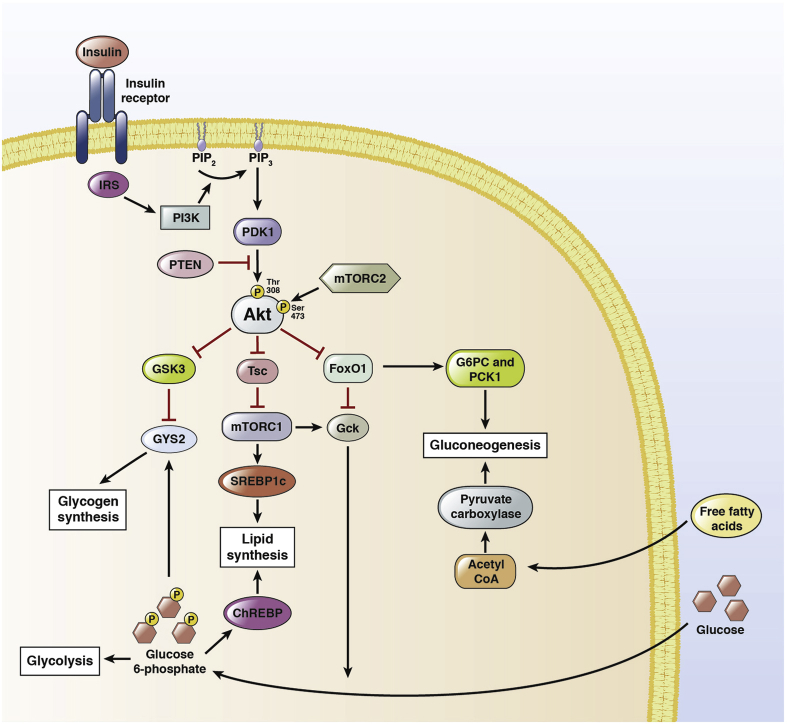
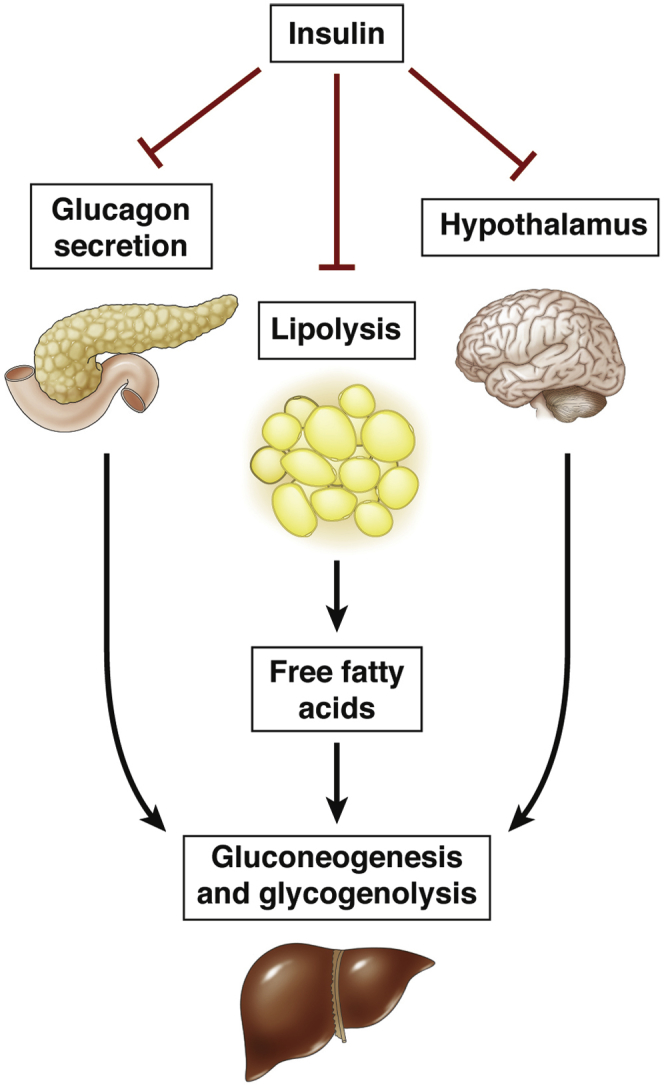
Verification
Claims the paper makes
The claims and statistics of this paper haven’t been checked yet.
Run the check — free, no account needed. It reads the open-access text and checks the sources it cites.
Claims other papers make about this one
Each is checked against this paper’s own text: does it say what the citing paper says it does?
The source backs part of the claim, not all of it — or backs it for a different population, condition or comparison.
In the citing paper
“Reduced phosphorylation of the PI3K/Akt pathway is a hallmark of IR in PCOS patients10–12.”
From Efficacy and safety of GLP-1 receptor agonists on weight management and metabolic parameters in PCOS women: a meta-analysis of randomized controlled trials (2025) · cites this paper as [11]
Experimental — accuracy not yet measuredThe source backs part of the claim, not all of it — or backs it for a different population, condition or comparison.
In the citing paper
“hepatic insulin resistance, among other effects, has proved to result in increased gluconeogenesis, lipogenesis, and synthesis of very-low-density lipoproteins (VLDL) [22]”
From The Role of Exercise in the Interplay between Myokines, Hepatokines, Osteokines, Adipokines, and Modulation of Inflammation for Energy Substrate Redistribution and Fat Mass Loss: A Review (2020) · cites this paper as [22]
Experimental — accuracy not yet measured
Self-check
Percentages, sums and reported differences re-computed from the paper’s own numbers.
The self-check needs the paper’s full text.
Citations
Cites
1 retracted
Mora, A., Lipina, C., Tronche, F., Sutherland, C. D., & Alessi, D. R. (2005) · Biochemical Journal · doi:10.1042/bj20041782 · Cited by 92 · cited 1×
“In addition, deficiency in 3phosphoinositide-dependent protein kinase 1 in mouse liver causes glucose intolerance and results in liver failure.(24)”
BackgroundRetractedPhosphorylation and regulation of Akt/PKB by the rictor-mTOR complex
Sarbassov, D. D., Guertin, D. A., Ali, S. M., & Sabatini, D. M. (2005) · Science · doi:10.1126/science.1106148 · Cited by 6,216
Global and societal implications of the diabetes epidemic
Zimmet, P., Alberti, K. G. M. M., & Shaw, J. (2001) · Nature · doi:10.1038/414782a · Cited by 5,883 · cited 1×
“016 Mdiabetes mellitus (T2DM) have reached epidemic proportions and continue to be a leading cause of death worldwide.(1) The liver plays a central role in the systemic regulation of glucose and lipid metabolism and aberrant hepatic insulin action is thought to be a primary driver of insulin resistance, in which highe…”
BackgroundInhibition of glycogen synthase kinase-3 by insulin mediated by protein kinase B
Cross, D. A. E., Alessi, D. R., Cohen, P., Andjelkovich, M., & Hemmings, B. A. (1995) · Nature · doi:10.1038/378785a0 · Cited by 5,244
SREBPs: activators of the complete program of cholesterol and fatty acid synthesis in the liver
Horton, J. D., Goldstein, J. L., & Brown, M. S. (2002) · Journal of Clinical Investigation · doi:10.1172/jci15593 · Cited by 4,794 · cited 1×
“Sterol regulatory element binding protein 1c (SREBP1c) is a member of the SREBP class of transcription factors that are key players in controlling cellular expression of genes required for lipid and cholesterol metabolism.(39) Insulin regulates SREBP1c by both enhancing its gene expression and post-translational proce…”
BackgroundSREBPs: activators of the complete program of cholesterol and fatty acid synthesis in the liver
Horton, J. D., Goldstein, J. L., & Brown, M. S. (2002) · Journal of Clinical Investigation · doi:10.1172/jci0215593 · Cited by 4,092
Brown, M. S., & Goldstein, J. L. (1997) · Cell · doi:10.1016/s0092-8674(00)80213-5 · Cited by 3,834 · cited 1×
“SREBP proteins from the endoplasmic reticulum to the Golgi where it is cleaved, releasing the active part of SREBP to the nucleus where it regulates transcription.(44) SCAP is required for activation of all isoforms of SREBP and its deletion significantly reduces cholesterol and fatty acid synthesis in the liver.”
BackgroundCritical nodes in signalling pathways: insights into insulin action
Taniguchi, C. M., Emanuelli, B., & Kahn, C. R. (2006) · Nature Reviews Molecular Cell Biology · doi:10.1038/nrm1837 · Cited by 2,760 · cited 1×
“3-phosphate kinase (PI3K)/Akt pathway is the key signaling pathway that mediates the effects of insulin on anabolic metabolism in all organisms.(17) When insulin binds to the insulin receptor (IR), it recruits and activates PI3K through insulin-receptor substrates (IRS), generating phosphatidylinositol (3,4,5)-trispho…”
BackgroundNonalcoholic steatohepatitis: association of insulin resistance and mitochondrial abnormalities
Sanyal, A. J., Campbell–Sargent, C., Mirshahi, F., Rizzo, W. B., Contos, M. J., Sterling, R. K., Luketic, V. A., Shiffman, M. L., & Clore, J. N. (2001) · Gastroenterology · doi:10.1053/gast.2001.23256 · Cited by 2,078 · cited 1×
“Patients with NAFLD almost universally show hyperinsulinemia.(6) In addition, both obese and diabetic human beings show a higher prevalence of NAFLD than lean ones.”
BackgroundActivation of a metabolic gene regulatory network downstream of mTOR complex 1
Düvel, K., Yecies, J. L., Menon, S., Raman, P., Lipovsky, A. I., Souza, A. L., Triantafellow, E., Ma, Q., Gorski, R., Cleaver, S., et al. (2010) · Molecular Cell · doi:10.1016/j.molcel.2010.06.022 · Cited by 2,020
Research works printed but not linked: 1
- Roden, 2000, Effects of free fatty acid elevation on and gluconeogenesis in humans, Endocrinol Metab, 49, 701
Cited by
Sorted by citations
Items 301–343 of 343
Yi, X., Yang, X., Shen, X., Huang, S., Zheng, M., Mao, H., Lin, T., & Jin, Y. (2025) · Research Square · doi:10.21203/rs.3.rs-6703771/v1
Zhou, J., Li, Z., Wang, J., Jiang, Z., Wang, T., Xie, T., Wang, L., Kang, S., Tao, Z., & Wang, M. (2025) · Frontiers in Medicine · doi:10.3389/fmed.2025.1650584
“In WD patients, the liver—a key insulin-responsive organ— develops mitochondrial dysfunction and oxidative stress due to copper homeostasis imbalance, thereby inducing systemic Frontiers in Medicine 10 frontiersin.org glucose-lipid metabolic dysregulation (36).”
Revolutionizing Diabetes Treatment with Insulin-loaded Nanoparticles
Vats, J., Rana, A., Chauhan, A., Rajput, S., Malviya, R., Vashist, C., Mittal, A., & Sridhar, S. B. (2025) · Mini-Reviews in Medicinal Chemistry · doi:10.2174/0113895575398397250827102455
Sambou, M. L., Wang, Y., Bigambo, F. M., Sambou, P., & Sambou, A. (2025) · Physiology & Behavior · doi:10.1016/j.physbeh.2025.115113
Milinčić, M., & Gojnić, D. (2025) · Medicinski podmladak · doi:10.5937/mp76-51037
Obesity Hacks the Brain’s Systems for Weight Loss Resistance
Zand, H., Pourvali, K., Shakery, A., & Sohouli, M. H. (2025) · Molecular Neurobiology · doi:10.1007/s12035-025-05570-5
“Other hormones also play a crucial role in regulating metabolism and appetite [2].”
Li, L., Lang, J., Yang, L., & Zhao, D. (2025) · Journal of Lipid Research · doi:10.1016/j.jlr.2025.100962
“Dysregulation of postprandial hepatic glucose metabolism promotes the development of metabolic disorders, including insulin resistance and type 2 diabetes (34).”
Li, Z., Peng, B., Chen, S., Li, J., Hu, K., Liao, L., Xie, Q., Yao, M., Liang, L., Tomlinson, S., et al. (2023) · Figshare · doi:10.6084/m9.figshare.24104278
Min, Y., Wei, X., Wei, Z., Song, G., Zhao, X., & Lei, Y. (2024) · Figshare · doi:10.6084/m9.figshare.25953297
Li, Z., Peng, B., Chen, S., Li, J., Hu, K., Liao, L., Xie, Q., Yao, M., Liang, L., Tomlinson, S., et al. (2023) · Figshare · doi:10.6084/m9.figshare.24104272
Zhou, Z., Zhao, X., Chen, L., Li, Y., Chen, Z., Wang, Y., Zhou, Z., & Chu, X. (2020) · Figshare · doi:10.6084/m9.figshare.12511478
Zhou, Y., Su, J., Dong, Y., He, Z., Wang, Y., Chen, S., & Lv, G. (2024) · Figshare · doi:10.6084/m9.figshare.26942820
Lv, Z., Ren, Y., Li, Y., Niu, F., Li, Z., Li, M., Li, X., Li, Q., Huang, D., Yu, Y., et al. (2024) · Figshare · doi:10.6084/m9.figshare.26629016
Li, Z., Peng, B., Chen, S., Li, J., Hu, K., Liao, L., Xie, Q., Yao, M., Liang, L., Tomlinson, S., et al. (2023) · Figshare · doi:10.6084/m9.figshare.24104275
Zhou, Z., Zhao, X., Chen, L., Li, Y., Chen, Z., Wang, Y., Zhou, Z., & Chu, X. (2020) · Figshare · doi:10.6084/m9.figshare.12511484
Li, Z., Peng, B., Chen, S., Li, J., Hu, K., Liao, L., Xie, Q., Yao, M., Liang, L., Tomlinson, S., et al. (2023) · Figshare · doi:10.6084/m9.figshare.24104257
Li, Z., Peng, B., Chen, S., Li, J., Hu, K., Liao, L., Xie, Q., Yao, M., Liang, L., Tomlinson, S., et al. (2023) · Figshare · doi:10.6084/m9.figshare.24104281
Li, Z., Peng, B., Chen, S., Li, J., Hu, K., Liao, L., Xie, Q., Yao, M., Liang, L., Tomlinson, S., et al. (2023) · Figshare · doi:10.6084/m9.figshare.24104269
Yeh, C.-H., Shen, Z.-Q., Wang, T.-W., Kao, C.-H., Teng, Y.-C., Yeh, T.-K., Lu, C.-K., & Tsai, T.-F. (2022) · Figshare · doi:10.6084/m9.figshare.20367224
Zou, H., Ma, X., Zhang, F., & Xie, Y. (2023) · Figshare · doi:10.6084/m9.figshare.24098428
Li, Z., Peng, B., Chen, S., Li, J., Hu, K., Liao, L., Xie, Q., Yao, M., Liang, L., Tomlinson, S., et al. (2023) · Figshare · doi:10.6084/m9.figshare.24104263
Zhu, T., Zhu, Z., Li, S., Tian, J., Lei, C., Du, J., & Song, H. (2026) · Comparative Biochemistry and Physiology Part D Genomics and Proteomics · doi:10.1016/j.cbd.2026.101753
Rudminaitė, E., Čypaitė, G., & Diana, S. M. (2026) · Clinical Epidemiology and Global Health · doi:10.1016/j.cegh.2026.102322
FKBP51 disrupts the insulin signaling pathway and impairs mitochondrial bioenergetics in HepG2 cells
Donoso-Barraza, C., Díaz-Roblero, M., Sepúlveda, C., Villegas-Bravo, A., Soto-Alarcón, S. A., Durán-Castillo, D., Castillo, V. A., Bravo, R., & Troncoso, R. (2026) · Scientific Reports · doi:10.1038/s41598-026-40414-9
“A decrease in Ser 473 phosphorylation in the liver is linked to increased gluconeogenesis and reduced glycogen synthesis, thereby influencing glucose metabolism 37,38 .”
Liu, J., Yi, X., Yao, Y., Zhang, J., Zhang, M., Panichayupakaranant, P., Buhagiar, J., & Chen, H. (2026) · Food Bioscience · doi:10.1016/j.fbio.2026.108587
Ponnusamy, R., Giriraj, K., Dharani, S., & Sowndhararajan, K. (2026) · Springer eBooks · doi:10.1007/978-3-032-17170-2_13
Multi-organ glucose metabolism alterations in diabetes mellitus: a total-body 18F-FDG PET/CT study
Wang, M., Sun, L., Wu, Y., Yang, J., Liang, J., Meng, N., Jiao, Y., Guo, X., Yue, X., Lv, J., et al. (2026) · EJNMMI Research · doi:10.1186/s13550-026-01418-8 · Cited by 1
“Studies demonstrate that liver insulin resistance serves as the primary driver of fasting hyper-glycemia, wherein elevated circulating insulin levels are essential for maintaining glycemic control [6].”
Lv, Q., Guan, Y., Bai, X., Wang, X., & Jiang, B. (2026) · Chinese Herbal Medicines · doi:10.1016/j.chmed.2026.04.002
van der Spek, A. H., Ritter, M., Amano, I., de Oliveira, L. S., Kaserman, J., Cespedes, I. S., Vierling, T., Wilson, A. A., & Hollenberg, A. N. (2026) · Hepatology Communications · doi:10.1097/hc9.0000000000000937 · Cited by 1
“[6,9,10] Targeting key pathways of metabolic diseases, including MASLD and IR, continues to be an area of clinical interest.”
Ko, K. M., & Leung, H. Y. (2026) · Chinese Medicine · doi:10.4236/cm.2026.172005
The asialoglycoprotein receptor 1 (ASGR1): emerging new roles in health and disease
Geremew, D., Tan, J. T. M., Psaltis, P. J., & Bursill, C. A. (2026) · Biomarker Research · doi:10.1186/s40364-026-00954-8 · Cited by 1
“Hepatic insulin resistance is the major driver of systemic insulin resistance [62].”
Zhang, Y., Gao, X., Long, X., Li, Y., Xiong, W., Tu, S., Luo, W., Deng, X., Zeng, L., Ye, F., et al. (2026) · BMC Endocrine Disorders · doi:10.1186/s12902-026-02366-z
“…may augment glu-coneogenesis while diminishing hepatic glycogen synthesis, consequently elevating glucose production and release, which in turn exacerbates insulin resistance through mechanisms involving inflammation, oxidative stress, endoplasmic reticulum stress, and lipotoxicity [44, 45].”
Nowakowski, D., Zańko, A., Pawłowski, M., & Milewski, R. J. (2026) · International Journal of Molecular Sciences · doi:10.3390/ijms27135876
“…sensitive, may secondarily exacerbate IR, and lead to MASLD (metabolic dysfunction-associated steatotic liver disease nonalcoholic fatty liver disease)—formerly termed nonalcoholic fatty liver disease (NAFLD)—dyslipidemia, and hypertriglyceridemia); • Aim at controlling de novo lipogenesis [4].”
Glycerol 3-phosphate activates lipid metabolism through GATOR2-dependent regulation of mTORC1
Kwon, H., Yamada, S., Meng, L., Kwon, M., Xu, H., Chi, J., Radovick, S., Gu, H., He, L., & Wondisford, F. E. (2026) · Science Signaling · doi:10.1126/scisignal.aeb7989
Glycemic Control in the Critically Ill or Injured
Whitlock, A. E. G., Seidel, H. D., & Suliburk, J. W. (2026) · Springer eBooks · doi:10.1007/978-3-032-22660-0_32
Huang, Q., Liang, Z., Zeng, Y., Yao, C., He, J. S., Cao, Y., & Chen, Y. (2026) · Food Frontiers · doi:10.1002/fft2.70337
Peripheral GABA Signaling in Metabolic Adaptation and Maladaptation
Saliu, T. P., Adetunji, A. O., Ogunsile, J. O., Popoola, H. O., Ikele, C. M.-C., Miller, S. N., Oriakhi, K., Dı́az, F., & Karaganis, S. P. (2026) · International Journal of Molecular Sciences · doi:10.3390/ijms27167141
Kotlyarov, S. N., Котлярова, А. А., Catanzaro, R., & Marotta, F. (2026) · International Journal of Molecular Sciences · doi:10.3390/ijms27198614
Endocrine determinants of MASLD: mechanisms and therapeutic targets
Chaturvedi, R., Mathew, A., Pradhan, A., Goyal, M., Sharma, M., Kachroo, V., Agrawal, C., Krishnamurthy, A., Atreja, S. M., & Atreja, A. (2026) · Frontiers in Endocrinology · doi:10.3389/fendo.2026.1967494
Borrelli, S., Masola, V., Prosdocimi, T., Corbett, R., Trepiccione, F., Liberato, L. D., Bonomini, M., Manna, G. L., Magnoni, G., Nardelli, L., et al. (2026) · Peritoneal Dialysis International · doi:10.1177/08968608261493817
Fauzi, M. I., Murakami, T., Usui, R., Botagarova, A., Otani, D., Sakaki, K., Tokumoto, S., Imaizumi, T., Tatsuoka, H., Ogura, M., et al. (2026) · Science Advances · doi:10.1126/sciadv.aeh4948
“…of this tightly regulated balance is a central pathophysiological feature of type 2 diabetes (T2D), in which impaired insulin secretion ( 3 ) and inadequate suppression of hepatic glucose production (HGP) ( 4 , 5 ), often compounded by insulin resistance, cause persistent hyperglycemia ( 6 ).”
Ma, T.-H., Jiang, H.-L., Bai, C., Zhang, X.-Q., Zhang, Y., Guan, Y.-X., Zhou, K.-H., Zhao, J., Zuo, F., Xin, N., et al. (2026) · The FASEB Journal · doi:10.1096/fj.202601702rrrr
Metadata
- Authors
- Santoleri, D., & Titchenell, P. M.
- Affiliations
- University of Pennsylvania (US)
- Corresponding author
- Titchenell, Paul M.
- Venue
- Cellular and Molecular Gastroenterology and Hepatology
- Publisher
- Elsevier BV
- Published
- 2019
- Volume
- 7
- Issue
- 2
- Pages
- 447-456
- ISSN
- 2352-345X (ISSN-L)
- PMC
- PMC6369222
- OpenAlex
- W2899043265
- Cited by
- 336
- References
- 102
- Citations by year
- 2026: 35 · 2025: 57 · 2024: 61 · 2023: 63 · 2022: 51 · 2021: 40 · 2020: 24 · 2019: 5
- FWCI
- 2.57
- Type
- journal article
- Language
- en
- Open access
- gold
- doi.org
- Licence
- Locations
- Cellular and Molecular Gastroenterology and Hepatology (publishedVersion, cc-by-nc-nd)
- Europe PMC (PubMed Central) (publishedVersion, cc-by-nc-nd)
- PubMed Central (publishedVersion, cc-by-nc-nd)
- PubMed (publishedVersion)
- DOAJ (DOAJ: Directory of Open Access Journals) (submittedVersion, cc-by-sa)
- Funders
- National Institutes of Health (K01 DK111715, P30 DK19525)
- Topics
- Health Sciences › Medicine › Hepatology › Liver Disease Diagnosis and Treatment
- Life Sciences › Biochemistry, Genetics and Molecular Biology › Molecular Biology › Metabolism, Diabetes, and Cancer
- Health Sciences › Medicine › Endocrinology, Diabetes and Metabolism › Diabetes, Cardiovascular Risks, and Lipoproteins
- Keywords
- hepatic insulin resistance, insulin signaling, hepatic glucose production, hepatic lipid synthesis, hypertriglyceridemia, hyperglycemia, type 2 diabetes, obesity, glucose metabolism, lipid metabolism
- MeSH terms
- Animals, Humans, Insulin, Insulin Resistance, Liver, Models, Biological, Signal Transduction, Lipid Metabolism
About these checks
Registry, retraction, Cites and statistics results are computed, not judged, with one exception: a printed reference that no index lists is read once by a model before it counts as a citation error. Claims are extracted by a model and kept only when their quote appears verbatim in the text; each cited source is then checked, with a model’s help, for whether it says what the claim relies on. Those verdicts can be wrong — read the claim’s quote and the cited source before relying on one.
Statistics and arithmetic are recomputed, not judged.
Confidence bands are shown only for fields calibrated on our annotated test set. None is calibrated yet, so no band is shown.
What counts as a claim ›How we measure confidence ›How we check this ›
Are you an author, or do you see a problem with this page? Request a review
