

The DOI matches its Crossref record; 99 of the 102 references it cites were found in a registry or an index.
Resolving the Paradox of Hepatic Insulin Resistance
Open accessAbstract
Insulin resistance is associated with numerous metabolic disorders, such as obesity and type II diabetes, that currently plague our society. Although insulin normally promotes anabolic metabolism in the liver by increasing glucose consumption and lipid synthesis, insulin-resistant individuals fail to inhibit hepatic glucose production and paradoxically have increased liver lipid synthesis, leading to hyperglycemia and hypertriglyceridemia. Here, we detail the intrahepatic and extrahepatic pathways mediating insulin's control of glucose and lipid metabolism. We propose that the interplay between both of these pathways controls insulin signaling and that mis-regulation between the 2 results in the paradoxic effects seen in the insulin-resistant liver instead of the commonly proposed deficiencies in particular branches of only the direct hepatic pathway.
Overview
The claims and statistics of this paper haven’t been checked yet.
Run the check — free, no account needed. It reads the open-access text and checks the sources it cites.
Integrity signals
Registry
Cites
Statistics
Figures
Verification
Claims the paper makes
The claims and statistics of this paper haven’t been checked yet.
Run the check — free, no account needed. It reads the open-access text and checks the sources it cites.
Claims other papers make about this one
Each is checked against this paper’s own text: does it say what the citing paper says it does?
The source backs part of the claim, not all of it — or backs it for a different population, condition or comparison.
In the citing paper
“Reduced phosphorylation of the PI3K/Akt pathway is a hallmark of IR in PCOS patients10–12.”
From Efficacy and safety of GLP-1 receptor agonists on weight management and metabolic parameters in PCOS women: a meta-analysis of randomized controlled trials (2025) · cites this paper as [11]
Experimental — accuracy not yet measuredThe source backs part of the claim, not all of it — or backs it for a different population, condition or comparison.
In the citing paper
“hepatic insulin resistance, among other effects, has proved to result in increased gluconeogenesis, lipogenesis, and synthesis of very-low-density lipoproteins (VLDL) [22]”
From The Role of Exercise in the Interplay between Myokines, Hepatokines, Osteokines, Adipokines, and Modulation of Inflammation for Energy Substrate Redistribution and Fat Mass Loss: A Review (2020) · cites this paper as [22]
Experimental — accuracy not yet measured
Self-check
Percentages, sums and reported differences re-computed from the paper’s own numbers.
The self-check needs the paper’s full text.
Citations
Cites
1 retracted
Mora, A., Lipina, C., Tronche, F., Sutherland, C. D., & Alessi, D. R. (2005) · Biochemical Journal · doi:10.1042/bj20041782 · Cited by 92 · cited 1×
“In addition, deficiency in 3phosphoinositide-dependent protein kinase 1 in mouse liver causes glucose intolerance and results in liver failure.(24)”
BackgroundRetractedPhosphorylation and regulation of Akt/PKB by the rictor-mTOR complex
Sarbassov, D. D., Guertin, D. A., Ali, S. M., & Sabatini, D. M. (2005) · Science · doi:10.1126/science.1106148 · Cited by 6,216
Global and societal implications of the diabetes epidemic
Zimmet, P., Alberti, K. G. M. M., & Shaw, J. (2001) · Nature · doi:10.1038/414782a · Cited by 5,883 · cited 1×
“016 Mdiabetes mellitus (T2DM) have reached epidemic proportions and continue to be a leading cause of death worldwide.(1) The liver plays a central role in the systemic regulation of glucose and lipid metabolism and aberrant hepatic insulin action is thought to be a primary driver of insulin resistance, in which highe…”
BackgroundInhibition of glycogen synthase kinase-3 by insulin mediated by protein kinase B
Cross, D. A. E., Alessi, D. R., Cohen, P., Andjelkovich, M., & Hemmings, B. A. (1995) · Nature · doi:10.1038/378785a0 · Cited by 5,244
SREBPs: activators of the complete program of cholesterol and fatty acid synthesis in the liver
Horton, J. D., Goldstein, J. L., & Brown, M. S. (2002) · Journal of Clinical Investigation · doi:10.1172/jci15593 · Cited by 4,794 · cited 1×
“Sterol regulatory element binding protein 1c (SREBP1c) is a member of the SREBP class of transcription factors that are key players in controlling cellular expression of genes required for lipid and cholesterol metabolism.(39) Insulin regulates SREBP1c by both enhancing its gene expression and post-translational proce…”
BackgroundSREBPs: activators of the complete program of cholesterol and fatty acid synthesis in the liver
Horton, J. D., Goldstein, J. L., & Brown, M. S. (2002) · Journal of Clinical Investigation · doi:10.1172/jci0215593 · Cited by 4,092
Brown, M. S., & Goldstein, J. L. (1997) · Cell · doi:10.1016/s0092-8674(00)80213-5 · Cited by 3,834 · cited 1×
“SREBP proteins from the endoplasmic reticulum to the Golgi where it is cleaved, releasing the active part of SREBP to the nucleus where it regulates transcription.(44) SCAP is required for activation of all isoforms of SREBP and its deletion significantly reduces cholesterol and fatty acid synthesis in the liver.”
BackgroundCritical nodes in signalling pathways: insights into insulin action
Taniguchi, C. M., Emanuelli, B., & Kahn, C. R. (2006) · Nature Reviews Molecular Cell Biology · doi:10.1038/nrm1837 · Cited by 2,760 · cited 1×
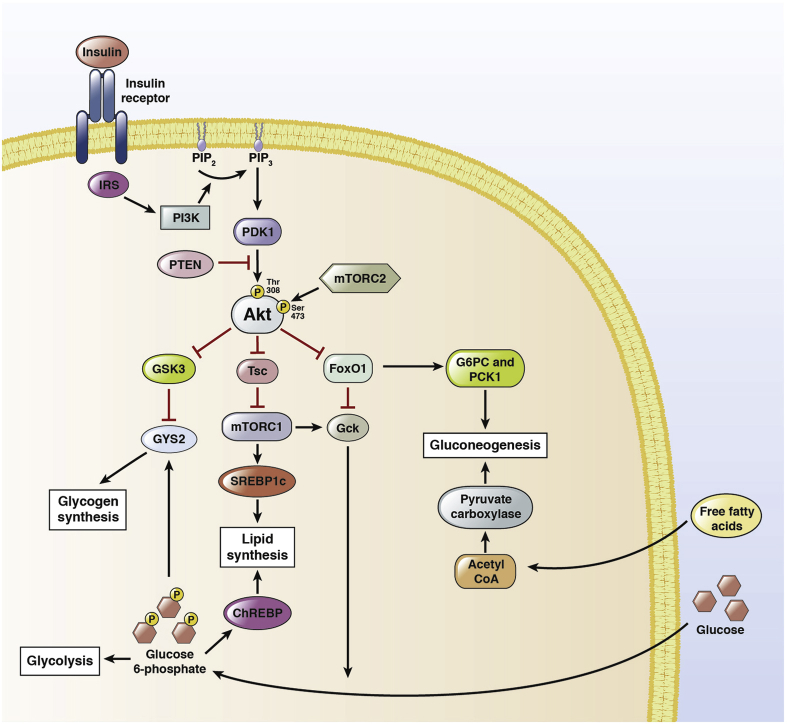
“3-phosphate kinase (PI3K)/Akt pathway is the key signaling pathway that mediates the effects of insulin on anabolic metabolism in all organisms.(17) When insulin binds to the insulin receptor (IR), it recruits and activates PI3K through insulin-receptor substrates (IRS), generating phosphatidylinositol (3,4,5)-trispho…”
BackgroundNonalcoholic steatohepatitis: association of insulin resistance and mitochondrial abnormalities
Sanyal, A. J., Campbell–Sargent, C., Mirshahi, F., Rizzo, W. B., Contos, M. J., Sterling, R. K., Luketic, V. A., Shiffman, M. L., & Clore, J. N. (2001) · Gastroenterology · doi:10.1053/gast.2001.23256 · Cited by 2,078 · cited 1×
“Patients with NAFLD almost universally show hyperinsulinemia.(6) In addition, both obese and diabetic human beings show a higher prevalence of NAFLD than lean ones.”
BackgroundActivation of a metabolic gene regulatory network downstream of mTOR complex 1
Düvel, K., Yecies, J. L., Menon, S., Raman, P., Lipovsky, A. I., Souza, A. L., Triantafellow, E., Ma, Q., Gorski, R., Cleaver, S., et al. (2010) · Molecular Cell · doi:10.1016/j.molcel.2010.06.022 · Cited by 2,020
Cho, H., Mu, J., Kim, J. K., Thorvaldsen, J. L., Chu, Q., Crenshaw, E. B., Kaestner, K. H., Bartolomei, M. S., Shulman, G. I., & Birnbaum, M. J. (2001) · Science · doi:10.1126/science.292.5522.1728 · Cited by 1,860 · cited 1×
“regulation becausemice with germline deletion of Akt2 show insulin resistance and a diabetes-like phenotype.(28,29) Mice lacking hepatic Akt2, the most abundant hepatic isoform, have decreased lipid accumulation, and decreased de novo lipogenesis in the liver of ob/ob mice or mice subjected to a high-fat diet.”
BackgroundMichael, M. D., Kulkarni, R. N., Postic, C., Previs, S. F., Shulman, G. I., Magnuson, M. A., & Kahn, C. R. (2000) · Molecular Cell · doi:10.1016/s1097-2765(05)00015-8 · Cited by 1,296 · cited 1×
“For example, LIRKO mice are typically smaller than wild-type mice, possibly because of defects in the insulin-like growth factor axis, and eventually the observed effects, such as hyperglycemia, disappear as a result of liver failure.(14) In these instances, inducible genetic knockouts hold some benefit because one ca…”
BackgroundDisordered lipid metabolism and the pathogenesis of insulin resistance.
Savage, D. B., Petersen, K. F., & Shulman, G. I. (2007) · Physiological Reviews · doi:10.1152/physrev.00024.2006 · Cited by 1,107
Lambert, J. E., Ramos–Roman, M. A., Browning, J. D., & Parks, E. J. (2014) · Gastroenterology · doi:10.1053/j.gastro.2013.11.049 · Cited by 1,069 · cited 1×
“Isotope labeling experiments in subjects with NAFLD showed that subjects with increased hepatic steatosis had 2fold higher rates of de novo lipogenesis and increased plasma levels of free fatty acids (FFAs) and insulin.(8) In addition to increased lipid synthesis, insulin-resistant individuals have increased rates of…”
BackgroundCREB and the CRTC co-activators: sensors for hormonal and metabolic signals
Altarejos, J. Y., & Montminy, M. (2011) · Nature Reviews Molecular Cell Biology · doi:10.1038/nrm3072 · Cited by 1,061 · cited 1×
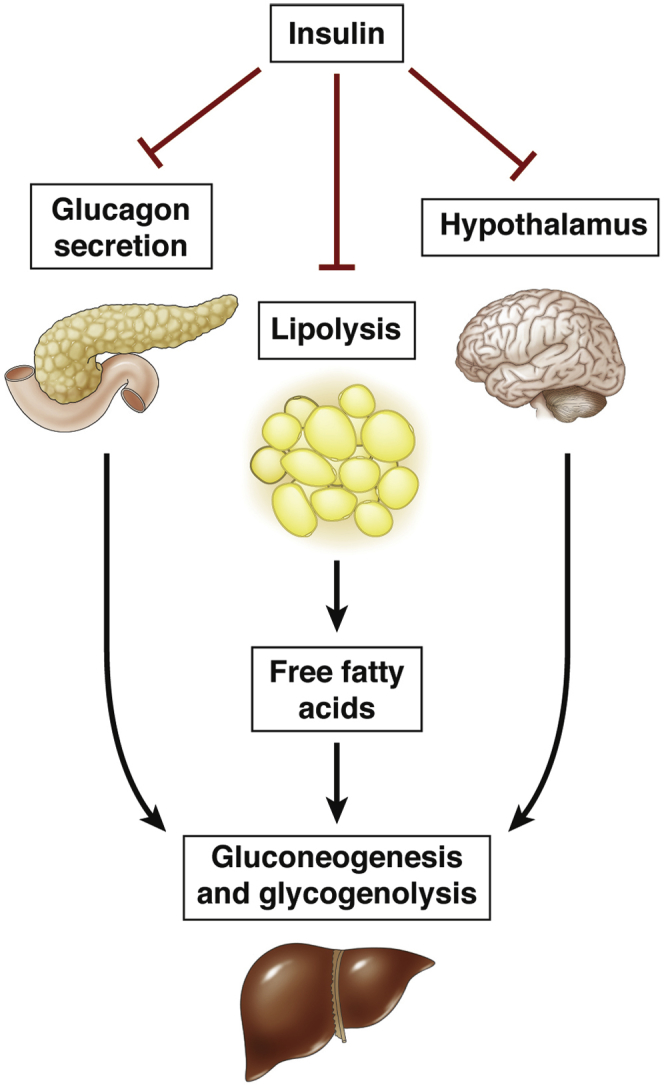
“Glucagon is the principal counter-regulatory hormone that stimulates glycogenolysis and gluconeogenesis during fasting and opposes the hepatic actions of insulin.(84) Glucagon increases HGP by acutely stimulating glycogenolysis and chronically promoting gluconeogenesis(3,85,86) (Figure 2).”
BackgroundSelective versus Total Insulin Resistance: A Pathogenic Paradox
Brown, M. S., & Goldstein, J. L. (2008) · Cell Metabolism · doi:10.1016/j.cmet.2007.12.009 · Cited by 959 · cited 1×
“In pathologic states, such as obesity and T2DM, insulin fails to appropriately regulate hepatic metabolism, leading to excess production of glucose despite accelerated rates of lipid synthesis, a condition now commonly referred to as selective hepatic insulin resistance.(4) As a consequence, insulin-resistant disorder…”
BackgroundPositive and negative regulation of insulin signaling through IRS-1 phosphorylation
Gual, P., Le Marchand-Brustel, Y., & Tanti, J.-F. (2005) · Biochimie · doi:10.1016/j.biochi.2004.10.019 · Cited by 912 · cited 1×
“IRS proteins link the PI3K pathway to the insulin receptor by binding to phosphotyrosine residues on the insulin receptor.(18) Knockout of multiple insulin-receptor substrates prevents activation of the pathway in response to insulin, leading to insulin resistance and hyperglycemia, but not hepatic steatosis.”
BackgroundHypothalamic insulin signaling is required for inhibition of glucose production
Obici, S., Zhang, B. B., Karkanias, G., & Rossetti, L. (2002) · Nature Medicine · doi:10.1038/nm1202-798 · Cited by 904
Iizuka, K., Bruick, R. K., Liang, G., Horton, J. D., & Uyeda, K. (2004) · Proceedings of the National Academy of Sciences · doi:10.1073/pnas.0401516101 · Cited by 834 · cited 1×
“resistance.(47) However, ChREBP deficiency in obese mice also results in decreased lipid accumulation and improved insulin sensitivity.”
Menon, S., Dibble, C. C., Talbott, G., Hoxhaj, G., Valvezan, A. J., Takahashi, H., Cantley, L. C., & Manning, B. D. (2014) · Cell · doi:10.1016/j.cell.2013.11.049 · Cited by 766
Prevention of fat-induced insulin resistance by salicylate
Kim, J. K., Kim, Y.-J., Fillmore, J. J., Chen, Y., Moore, I., Lee, J., Yuan, M., Li, Z. W., Karin, M., Perret, P., et al. (2001) · Journal of Clinical Investigation · doi:10.1172/jci11559 · Cited by 737 · cited 9×
“However, other work has shown that insulin’s direct action on the liver dominates.32,72 Differences in experimental clamp conditions could underlie these contrasting results on the role of FFAs in the control of HGP.”
BackgroundInfluentialGarofalo, R. S., Orena, S. J., Rafidi, K., Torchia, A. J., Stock, J. L., Hildebrandt, A. L., Coskran, T., Black, S. C., Brees, D. J., Wicks, J. R., et al. (2003) · Journal of Clinical Investigation · doi:10.1172/jci16885 · Cited by 726 · cited 1×
“regulation becausemice with germline deletion of Akt2 show insulin resistance and a diabetes-like phenotype.(28,29) Mice lacking hepatic Akt2, the most abundant hepatic isoform, have decreased lipid accumulation, and decreased de novo lipogenesis in the liver of ob/ob mice or mice subjected to a high-fat diet.”
BackgroundPerry, R. J., Camporez, J.-P. G., Kursawe, R., Titchenell, P. M., Zhang, D., Perry, C. J., Jurczak, M. J., Abudukadier, A., Han, M. S., Zhang, X.-M., et al. (2015) · Cell · doi:10.1016/j.cell.2015.01.012 · Cited by 719 · cited 1×
“Recent genetic studies from several groups have supported these classic physiology studies and assert that FFA action on the liver drives HGP in insulin-resistant livers or livers completely devoid of hepatic insulin signaling.(32,72,95) Perry et al(95) proposed that insulin’s indirect action on the liver negates the…”
ResultShimomura, I., Bashmakov, Y. K., & Horton, J. D. (1999) · Journal of Biological Chemistry · doi:10.1074/jbc.274.42.30028 · Cited by 704 · cited 1×
“Consistent with increased lipogenesis in insulin-resistant models, several models for diabetes in mice, such as ob/ob, involve heightened levels of SREBP1c activity.(42,43) SREBP cleavage-activating protein (SCAP) is a major regulator of SREBP activity because it chaperones”
BackgroundHepatocyte-specific Pten deficiency results in steatohepatitis and hepatocellular carcinomas
Horie, Y., Suzuki, A., Kataoka, E., Sasaki, T., Hamada, K., Sasaki, J., Mizuno, K., Hasegawa, G., Kishimoto, H., Iizuka, M., et al. (2004) · Journal of Clinical Investigation · doi:10.1172/jci20513 · Cited by 699 · cited 1×
“In vivo deletion of PTEN results in substantial lipid accumulation in the liver.(25) Studies have shown that deletion of Akt2 is sufficient to prevent lipid accumulation in livers with PTEN also removed,(26) suggesting that Akt serves as the essential downstream signaling kinase.”
BackgroundInsulin Action in AgRP-Expressing Neurons Is Required for Suppression of Hepatic Glucose Production
Könner, A. C., Janoschek, R., Plum, L., Jordan, S. D., Rother, E., Ma, X., Xu, C., Enriori, P., Hampel, B., Barsh, G. S., et al. (2007) · Cell Metabolism · doi:10.1016/j.cmet.2007.05.004 · Cited by 695 · cited 1×
“rons results in a failure of insulin to inhibit HGP but had no impact on insulin’s effects on body weight.(79) In response to insulin, activation of potassium adenosine triphosphate channels in the hypothalamus signals through the vagus nerve to the liver, which inhibit hepatic gluconeogenesis.”
BackgroundYecies, J. L., Zhang, H., Menon, S., Liu, S., Yecies, D. W., Lipovsky, A. I., Görgün, C. Z., Kwiatkowski, D. J., Hotamışlıgil, G. S., Lee, C., et al. (2011) · Cell Metabolism · doi:10.1016/j.cmet.2011.06.002 · Cited by 685
Sunny, N. E., Parks, E. J., Browning, J. D., & Burgess, S. C. (2011) · Cell Metabolism · doi:10.1016/j.cmet.2011.11.004 · Cited by 672 · cited 1×
“Indeed, there is a significant correlation between rates of gluconeogenesis and the extent of liver fat in NAFLD patients.(10) Therefore, during the progression of insulin resistance, insulin fails to suppress HGP yet continues to drive excess lipid synthesis, leading to the sequela of NAFLD, hyperglycemia, and hypert…”
BackgroundHypothalamic KATP channels control hepatic glucose production
Pocai, A., Lam, T. K. T., Gutierrez-Juarez, R., Obici, S., Schwartz, G. J., Bryan, J., Aguilar-Bryan, L., & Rossetti, L. (2005) · Nature · doi:10.1038/nature03439 · Cited by 645
Gastaldelli, A., Cusi, K., Pettiti, M., Hardies, J., Miyazaki, Y., Berria, R., Buzzigoli, E., Sironi, A. M., Cersosimo, E., Ferrannini, E., et al. (2007) · Gastroenterology · doi:10.1053/j.gastro.2007.04.068 · Cited by 629 · cited 1×
“In addition, both obese and diabetic human beings show a higher prevalence of NAFLD than lean ones.(7) Isotope labeling experiments in subjects with NAFLD showed that subjects with increased hepatic steatosis had 2fold higher rates of de novo lipogenesis and increased plasma levels of free fatty acids (FFAs) and insul…”
BackgroundMatsumoto, M., Pocai, A., Rossetti, L., DePinho, R. A., & Accili, D. (2007) · Cell Metabolism · doi:10.1016/j.cmet.2007.08.006 · Cited by 624 · cited 1×
“Hepatic deletion of FoxO1 in mice results in significant decreases in glycogenolysis and gluconeogenesis.(75) Surprisingly, deletion of FoxO1 in IR, IRS, and Akt knockout mice is sufficient to restore insulin’s suppressive effects on HGP in vivo despite a lack of autonomous insulin action.”
BackgroundRegulation of gene expression by insulin
O’Brien, R. M., & Granner, D. K. (1996) · Physiological Reviews · doi:10.1152/physrev.1996.76.4.1109 · Cited by 532
FoxO1 Regulates Multiple Metabolic Pathways in the Liver
Zhang, W., Patil, S., Chauhan, B., Guo, S., Powell, D. R., Le, J., Klotsas, A., Matika, R. W., Xiao, X., Franks, R. R., et al. (2006) · Journal of Biological Chemistry · doi:10.1074/jbc.m600272200 · Cited by 522 · cited 2×
“Surprisingly, deletion of FoxO1 in IR, IRS, and Akt knockout mice is sufficient to restore insulin’s suppressive effects on HGP in vivo despite a lack of autonomous insulin action.(16,19,31,32,60,76) These data provide genetic evidence that supports classic physiological studies by Cherrington and Bergman that extrahe…”
BackgroundBanting Lecture 1997. Control of glucose uptake and release by the liver in vivo.
Cherrington, A. D. (1999) · Diabetes · doi:10.2337/diabetes.48.5.1198 · Cited by 500
Schwarz, J.-M., Linfoot, P., Dare, D., & Aghajanian, K. (2003) · The American Journal of Clinical Nutrition · doi:10.1093/ajcn/77.1.43 · Cited by 496
Biddinger, S. B., Hernandez-Ono, A., Rask-Madsen, C., Haas, J. T., Alemán, J. O., Suzuki, R., Scapa, E. F., Agarwal, C., Carey, M. C., Stephanopoulos, G., et al. (2008) · Cell Metabolism · doi:10.1016/j.cmet.2007.11.013 · Cited by 469
Dong, X. C., Copps, K. D., Guo, S., Li, Y., Kollipara, R., DePinho, R. A., & White, M. F. (2008) · Cell Metabolism · doi:10.1016/j.cmet.2008.06.006 · Cited by 463 · cited 2×
“Surprisingly, deletion of FoxO1 in IR, IRS, and Akt knockout mice is sufficient to restore insulin’s suppressive effects on HGP in vivo despite a lack of autonomous insulin action.(16,19,31,32,60,76) These data provide genetic evidence that supports classic physiological studies by Cherrington and Bergman that extrahe…”
BackgroundUnraveling the Regulation of Hepatic Metabolism by Insulin
Titchenell, P. M., Lazar, M. A., & Birnbaum, M. J. (2017) · Trends in Endocrinology and Metabolism · doi:10.1016/j.tem.2017.03.003 · Cited by 457 · cited 2×
“Surprisingly, deletion of FoxO1 in IR, IRS, and Akt knockout mice is sufficient to restore insulin’s suppressive effects on HGP in vivo despite a lack of autonomous insulin action.(16,19,31,32,60,76) These data provide genetic evidence that supports classic physiological studies by Cherrington and Bergman that extrahe…”
MethodResultHypothalamic sensing of circulating fatty acids is required for glucose homeostasis
Lam, T. K. T., Pocai, A., Gutierrez-Juarez, R., Obici, S., Bryan, J., Aguilar-Bryan, L., Schwartz, G. J., & Rossetti, L. (2005) · Nature Medicine · doi:10.1038/nm1201 · Cited by 432 · cited 1×
“However, denervation of the hepatic branch of the vagus nerve fails to prevent insulin’s ability to suppress HGP in mice during a peripheral infusion of insulin under euglycemic clamp conditions.(83) In addition, mice”
BackgroundHormonal regulation of hepatic glucose production in health and disease
Lin, H. V., & Accili, D. (2011) · Cell Metabolism · doi:10.1016/j.cmet.2011.06.003 · Cited by 429 · cited 11×
“by regulating expression of glucose-6-phosphatase and phosphoenolpyruvate carboxykinase (Figure 1), and its inhibition improves glycemia in insulin-resistant and diabetic mice.(3,32,74) Hepatic deletion of FoxO1 in mice results in significant decreases in glycogenolysis and gluconeogenesis.”
BackgroundInfluentialBenhamed, F., Denechaud, P.-D., Lemoine, M., Robichon, C., Moldes, M., Bertrand-Michel, J., Ratziu, V., Serfaty, L., Housset, C., Capeau, J., et al. (2012) · Journal of Clinical Investigation · doi:10.1172/jci41636 · Cited by 408 · cited 1×
“cient to increase fatty liver progression because overexpression of hepatic ChREBP in mice results in steatosis.(49) Consistent with these mouse studies, obese human beings typically have higher ChREBP expression in the liver, which correlates with fatty liver.”
BackgroundCentral nervous system control of metabolism
Myers, M. G., & Olson, D. P. (2012) · Nature · doi:10.1038/nature11705 · Cited by 399 · cited 1×
“The central nervous system plays an integral role in glucose and lipid homeostasis.(77) Nutrients, metabolites, and hormones signal in various regions of the hypothalamus to control metabolism.”
BackgroundInsulin regulates liver metabolism in vivo in the absence of hepatic Akt and Foxo1
Lu, M., Wan, M., Leavens, K. F., Chu, Q., Monks, B. R., Fernandez, S., Ahima, R. S., Ueki, K., Kahn, C. R., & Birnbaum, M. J. (2012) · Nature Medicine · doi:10.1038/nm.2686 · Cited by 392
Non-alcoholic steatohepatitis (NASH): a disease of emerging identity and importance
James, O., & Day, C. P. (1998) · Journal of Hepatology · doi:10.1016/s0168-8278(98)80073-1 · Cited by 370 · cited 1×
“closely linked to nonalcoholic fatty liver disease (NAFLD), a disorder that can lead to liver dysfunction and progress to deadly nonalcoholic steatohepatitis.(5) Increased rates of glucose production and lipogenesis are well documented in insulin-resistant human beings.”
BackgroundPathogenesis of fasting and postprandial hyperglycemia in type 2 diabetes: implications for therapy.
Rizza, R. A. (2010) · Diabetes · doi:10.2337/db10-1032 · Cited by 367
Regulation of Hepatic Glucose Uptake and Storage In Vivo
Moore, M. C., Coate, K. C., Winnick, J. J., An, Z., & Cherrington, A. D. (2012) · Advances in Nutrition · doi:10.3945/an.112.002089 · Cited by 366
Postreceptor insulin resistance contributes to human dyslipidemia and hepatic steatosis
Semple, R. K., Sleigh, A., Murgatroyd, P. R., Adams, C. A., Bluck, L. J. C., Jackson, S. J., Vottero, A., Kanabar, D. J., Charlton-Menys, V., Durrington, P. N., et al. (2009) · Journal of Clinical Investigation · doi:10.1172/jci37432 · Cited by 347 · cited 1×
“The clinical findings corroborate the concept that the liver is the key driver of insulin’s wholebody action on glucose and lipid homeostasis.(13) Further supporting this statement, fat-specific deletion of the insulin receptor results in lipodystrophy along with insulin resistance and hyperglycemia.”
BackgroundLewis, G. F., Uffelman, K. D., Szeto, L., & Steiner, G. A. (1993) · Diabetes · doi:10.2337/diab.42.6.833 · Cited by 323 · cited 2×
“Enhanced secretion of VLDL-TAG is another hallmark of people with insulin-resistant conditions, such as obesity or NAFLD.53,54 In particular, a failure of insulin to facilitate degradation of apolipoprotein B, a major protein in VLDL synthesis, as well as increased levels of FFAs and increased lipogenesis in insulin-r…”
BackgroundMoon, Y.-A., Liang, G., Xie, X., Frank-Kamenetsky, M., Fitzgerald, K., Koteliansky, V., Brown, M. S., Goldstein, J. L., & Horton, J. D. (2012) · Cell Metabolism · doi:10.1016/j.cmet.2011.12.017 · Cited by 320 · cited 2×
“In addition, eliminating SCAP specifically in hepatocytes reduces lipid accumulation in the liver and is sufficient to prevent hepatic steatosis in ob/ob mice and sucrose-fed hamsters.(43) Therefore, SREBP1c is a necessary factor in lipogenic gene expression and in the development of fatty liver.”
BackgroundInsulin Signaling in α Cells Modulates Glucagon Secretion In Vivo
Kawamori, D., Kurpad, A. J., Hu, J., Liew, C. W., Shih, J. L., Ford, E. L., Herrera, P. L., Polonsky, K. S., McGuinness, O. P., & Kulkarni, R. N. (2009) · Cell Metabolism · doi:10.1016/j.cmet.2009.02.007 · Cited by 316 · cited 1×
“Genetic evidence also supports this correlation, indicating that deletion of the insulin receptor from a cells in mouse pancreas leads to enhanced glucagon secretion, leading to mild glucose intolerance, hyperglycemia, and hyperglucagonemia.(89) Because of hyperglucagonemia’s long association with diabetes, many comme…”
BackgroundInsulin stimulation of SREBP-1c processing in transgenic rat hepatocytes requires p70 S6-kinase
Owen, J. L., Zhang, Y., Bae, S., Farooqi, M. S., Liang, G., Hammer, R. E., Goldstein, J. L., & Brown, M. S. (2012) · Proceedings of the National Academy of Sciences · doi:10.1073/pnas.1213343109 · Cited by 305 · cited 1×
“For example, SREBP1c processing in transgenic rats requires S6K1, a target of mTORC1.(41) Consistent with increased lipogenesis in insulin-resistant models, several models for diabetes in mice, such as ob/ob, involve heightened levels of SREBP1c activity.”
BackgroundMatsuda, M., Korn, B. S., Hammer, R. E., Moon, Y.-A., Komuro, R., Horton, J. D., Goldstein, J. L., Brown, M. S., & Shimomura, I. (2001) · Genes & Development · doi:10.1101/gad.891301 · Cited by 303 · cited 1×
“SCAP is required for activation of all isoforms of SREBP and its deletion significantly reduces cholesterol and fatty acid synthesis in the liver.(45) In addition, eliminating SCAP specifically in hepatocytes reduces lipid accumulation in the liver and is sufficient to prevent hepatic steatosis in ob/ob mice and sucro…”
BackgroundRole of hepatic STAT3 in brain-insulin action on hepatic glucose production
Inoue, H., Ogawa, W., Asakawa, A., Okamoto, Y., Nishizawa, A., Matsumoto, M., Teshigawara, K., Matsuki, Y., Watanabe, E., Hiramatsu, R., et al. (2006) · Cell Metabolism · doi:10.1016/j.cmet.2006.02.009 · Cited by 301
Titchenell, P. M., Quinn, W. J., Lu, M., Chu, Q., Lu, W., Li, C., Chen, H., Monks, B. R., Chen, J., Rabinowitz, J. D., et al. (2016) · Cell Metabolism · doi:10.1016/j.cmet.2016.04.022 · Cited by 298 · cited 10×
“by regulating expression of glucose-6-phosphatase and phosphoenolpyruvate carboxykinase (Figure 1), and its inhibition improves glycemia in insulin-resistant and diabetic mice.(3,32,74) Hepatic deletion of FoxO1 in mice results in significant decreases in glycogenolysis and gluconeogenesis.”
BackgroundResultInfluentialPhysiologic action of glucagon on liver glucose metabolism
Ramnanan, C. J., Edgerton, D. S., Kraft, G., & Cherrington, A. D. (2011) · Diabetes Obesity and Metabolism · doi:10.1111/j.1463-1326.2011.01454.x · Cited by 293 · cited 1×
“During a normal physiologic fasting period, a high glucagonto-insulin ratio decreases the rate of glucose consumption and shifts the liver to glucose production, first by consuming its stores of glycogen (glycogenolysis) and then from glucogenic precursors in a synthetic pathway (gluconeogenesis).(2) In the postprandi…”
BackgroundAkt2 Is Required for Hepatic Lipid Accumulation in Models of Insulin Resistance
Leavens, K. F., Easton, R., Shulman, G. I., Previs, S. F., & Birnbaum, M. J. (2009) · Cell Metabolism · doi:10.1016/j.cmet.2009.10.004 · Cited by 289 · cited 1×
“Mice lacking hepatic Akt2, the most abundant hepatic isoform, have decreased lipid accumulation, and decreased de novo lipogenesis in the liver of ob/ob mice or mice subjected to a high-fat diet.(30) However, despite its abundance, liver-specific deletion of Akt2 only results in mild insulin resistance owing to residu…”
BackgroundTaniguchi, C. M., Kondo, T., Sajan, M. P., Luo, J., Bronson, R. T., Asano, T., Farese, R. V., Cantley, L. C., & Kahn, C. R. (2006) · Cell Metabolism · doi:10.1016/j.cmet.2006.04.005 · Cited by 288
Roden, M., Stingl, H., Chandramouli, V, Schumann, W. C., Hofer, A., Landau, B. R., Nowotny, P., Waldhäusl, W., & Shulman, G. I. (2000) · Diabetes · doi:10.2337/diabetes.49.5.701 · Cited by 288
Free Fatty Acid as a Link in the Regulation of Hepatic Glucose Output by Peripheral Insulin
Rebrin, K., Steil, G. M., Getty‐Kaushik, L., & Bergman, R. N. (1995) · Diabetes · doi:10.2337/diab.44.9.1038 · Cited by 270
Hormone and glucose signalling in POMC and AgRP neurons
Belgardt, B., Okamura, T., & Brüning, J. C. (2009) · The Journal of Physiology · doi:10.1113/jphysiol.2009.179192 · Cited by 257 · cited 1×
“Insulin can act on neurons in the hypothalamus, particularly agouti-related peptide– and proopiomelanocortin-expressing neurons.(78) Knockout of the insulin receptor in agouti-related peptide–expressing neu-”
BackgroundThe role of FOXO in the regulation of metabolism
Gross, D. N., Wan, M., & Birnbaum, M. J. (2009) · Current Diabetes Reports · doi:10.1007/s11892-009-0034-5 · Cited by 244
Linden, A. G., Li, S., Choi, H. Y., Fang, F., Fukasawa, M., Uyeda, K., Hammer, R. E., Horton, J. D., Engelking, L. J., & Liang, G. (2018) · Journal of Lipid Research · doi:10.1194/jlr.m081836 · Cited by 243 · cited 1×
“Moreover, overexpressing ChREBP was not sufficient to regain any significant lipogenic gene induction in mice lacking SREBP after SCAP deletion, showing that SREBP is required for the induction of lipogenic expression.(52) The interplay between ChREBP and SREBP1c in regulating lipogenic gene expression helps ensure th…”
BackgroundMetabolic Syndrome: Focus on Dyslipidemia
Ginsberg, H. N., Zhang, Y., & Hernández‐Ono, A. (2006) · Obesity · doi:10.1038/oby.2006.281 · Cited by 228
Inhibition of Foxo1 function is associated with improved fasting glycemia in diabetic mice
Altomonte, J., Richter, A. M., Harbaran, S., Suriawinata, J., Nakae, J., Thung, S. N., Meseck, M. L., Accili, D., & Dong, H. H. (2003) · American Journal of Physiology-Endocrinology and Metabolism · doi:10.1152/ajpendo.00156.2003 · Cited by 228 · cited 1×
“by regulating expression of glucose-6-phosphatase and phosphoenolpyruvate carboxykinase (Figure 1), and its inhibition improves glycemia in insulin-resistant and diabetic mice.(3,32,74) Hepatic deletion of FoxO1 in mice results in significant decreases in glycogenolysis and gluconeogenesis.”
BackgroundHaas, J. T., Miao, J., Chanda, D., Wang, Y., Zhao, E., Haas, M. E., Hirschey, M. D., Vaitheesvaran, B., Farese, R. V., Kurland, I. J., et al. (2012) · Cell Metabolism · doi:10.1016/j.cmet.2012.05.002 · Cited by 216 · cited 1×
“In addition, LIRKO mice fail to accumulate lipids and do not develop fatty liver, even when fed a high-fat diet, despite increased blood glucose and insulin levels.(12) These”
BackgroundIizuka, K., Miller, B., & Uyeda, K. (2006) · American Journal of Physiology-Endocrinology and Metabolism · doi:10.1152/ajpendo.00027.2006 · Cited by 205
Selective Inhibition of FOXO1 Activator/Repressor Balance Modulates Hepatic Glucose Handling
Langlet, F., Haeusler, R. A., Lindén, D., Ericson, E., Norris, T., Johansson, A., Cook, J. R., Aizawa, K. S., Wang, L., Buettner, C., et al. (2017) · Cell · doi:10.1016/j.cell.2017.09.045 · Cited by 201
Insulin's direct effects on the liver dominate the control of hepatic glucose production
Edgerton, D. S. (2006) · Journal of Clinical Investigation · doi:10.1172/jci27073 · Cited by 194 · cited 10×
“However, other work has shown that insulin’s direct action on the liver dominates.32,72 Differences in experimental clamp conditions could underlie these contrasting results on the role of FFAs in the control of HGP.”
BackgroundInfluentialHaeusler, R. A., Hartil, K., Vaitheesvaran, B., Arrieta‐Cruz, I., Knight, C. M., Cook, J. R., Kammoun, H. L., Febbraio, M. A., Juárez, R. G., Kurland, I. J., et al. (2014) · Nature Communications · doi:10.1038/ncomms6190 · Cited by 192 · cited 1×
“Conversely, deletion of all FoxO isoforms from the liver activates lipogenic gene expression and induces de novo lipogenesis correlating with hepatic steatosis.(62) Because FoxO1 is thought to be a transcriptional activator, the specific mechanisms governing its inhibition of lipogenesis is unclear.”
BackgroundA growing role for mTOR in promoting anabolic metabolism
Howell, J. J., Ricoult, S. J. H., Ben‐Sahra, I., & Manning, B. D. (2013) · Biochemical Society Transactions · doi:10.1042/bst20130041 · Cited by 185
Sindelar, D., Chu, C. A., Rohlie, M., Neal, D., Swift, L., & Cherrington, A. (1997) · Diabetes · doi:10.2337/diab.46.2.187 · Cited by 179
Dentin, R., Tomás‐Cobos, L., Foufelle, F., Leopold, J. A., Girard, J. R., Postic, C., & Ferré, P. (2011) · Journal of Hepatology · doi:10.1016/j.jhep.2011.07.019 · Cited by 177
Hepatic insulin signalling is dispensable for suppression of glucose output by insulin in vivo
Titchenell, P. M., Chu, Q., Monks, B. R., & Birnbaum, M. J. (2015) · Nature Communications · doi:10.1038/ncomms8078 · Cited by 169 · cited 2×
“These mice also fail to promote hepatic lipogenesis in response to a high carbohydrate meal.(16) Resolving what specific factors mediate insulin action on the liver to generate these paradoxical effects has become a major focus in obesity and T2DM studies and has provided many insights into the molecular mechanisms of…”
BackgroundSelf-citationMiyake, K., Ogawa, W., Matsumoto, M., Nakamura, T., Sakaue, H., & Kasuga, M. (2002) · Journal of Clinical Investigation · doi:10.1172/jci15880 · Cited by 156
Deng, X., Zhang, W., O‐Sullivan, I., Williams, J. B., Dong, Q., Park, E. A., Raghow, R., Unterman, T. G., & Elam, M. B. (2012) · Journal of Biological Chemistry · doi:10.1074/jbc.m112.347211 · Cited by 150 · cited 2×
“However, recent studies have argued that FoxO1 directly represses the transcription of SREBP1c.63 In addition, FoxO1 has been implicated in regulating the expression of glucokinase (Gck) through a repression mechanism mediated by Sin3a and Sin3b62,64,65 (Figure 1).”
BackgroundKubota, N., Kubota, T., Kajiwara, E., Iwamura, T., Kumagai, H., Watanabe, T., Inoue, M., Takamoto, I., Sasako, T., Kumagai, K., et al. (2016) · Nature Communications · doi:10.1038/ncomms12977 · Cited by 143 · cited 1×
“Knockout of multiple insulin-receptor substrates prevents activation of the pathway in response to insulin, leading to insulin resistance and hyperglycemia, but not hepatic steatosis.(19,20) PIP3 initiates recruitment of Akt (named as such when it was discovered to be the oncogene responsible for thymoma in Ak mice, a…”
BackgroundWan, M., Leavens, K. F., Saleh, D., Easton, R., Guertin, D. A., Peterson, T. R., Kaestner, K. H., Sabatini, D. M., & Birnbaum, M. J. (2011) · Cell Metabolism · doi:10.1016/j.cmet.2011.09.001 · Cited by 140 · cited 1×
“Studies have shown that activation of mTORC1 is required for de novo lipogenesis, however, activation of mTORC1 alone is not sufficient to induce lipogenesis in the absence of hepatic insulin signaling.(32,37) This is consistent with the phenotype of mice lacking Tsc specifically in hepatocytes because liver-specific…”
ResultThe direct and indirect effects of insulin on hepatic glucose production in vivo
Cherrington, A. D., Edgerton, D. S., & Sindelar, D. K. (1998) · Diabetologia · doi:10.1007/s001250051021 · Cited by 137
Edgerton, D. S., Kraft, G., Smith, M. S., Farmer, B., Williams, P. E., Coate, K. C., Printz, R. L., O’Brien, R. M., & Cherrington, A. D. (2017) · JCI Insight · doi:10.1172/jci.insight.91863 · Cited by 131
Lipodystrophy Due to Adipose Tissue–Specific Insulin Receptor Knockout Results in Progressive NAFLD
Softic, S., Boucher, J., Solheim, M. H., Fujisaka, S., Haering, M.-F., Homan, E. P., Winnay, J. N., Pérez‐Atayde, A. R., & Kahn, C. R. (2016) · Diabetes · doi:10.2337/db16-0213 · Cited by 128 · cited 1×
“Further supporting this statement, fat-specific deletion of the insulin receptor results in lipodystrophy along with insulin resistance and hyperglycemia.(15) However, these mice are not protected from NAFLD, and eventually develop nonalcoholic steatohepatitis, unlike the LIRKO mice and human beings with insulin-recep…”
BackgroundHirota, K., Sakamaki, J.-I., Ishida, J., Shimamoto, Y., Nishihara, S., Kodama, N., Ohta, K., Yamamoto, M. P., Tanimoto, K., & Fukamizu, A. (2008) · Journal of Biological Chemistry · doi:10.1074/jbc.m806179200 · Cited by 123
The Critical Role of AKT2 in Hepatic Steatosis Induced by PTEN Loss
He, L., Hou, X., Kanel, G. C., Zeng, N., Galicia, V. A., Wang, Y., Yang, J., Wu, H., Birnbaum, M. J., & Stiles, B. L. (2010) · American Journal Of Pathology · doi:10.2353/ajpath.2010.090931 · Cited by 108
von Wilamowitz-Moellendorff, A., Hunter, R. W., Garcı́a-Rocha, M., Kang, L., López‐Soldado, I., Lantier, L., Patel, K., Peggie, M. W., Martínez-Pons, C., Voß, M., et al. (2013) · Diabetes · doi:10.2337/db13-0880 · Cited by 106
Hyperinsulinemia and in vivo very-low-density lipoprotein-triglyceride kinetics
Steiner, G. A., Haynes, F. J., Yoshino, G., & Vranić, M. (1984) · American Journal of Physiology-Endocrinology and Metabolism · doi:10.1152/ajpendo.1984.246.2.e187 · Cited by 102
Hepatic insulin signaling regulates VLDL secretion and atherogenesis in mice
Han, S., Liang, C.-P., Westerterp, M., Senokuchi, T., Welch, C. L., Wang, Q., Matsumoto, M., Accili, D., & Tall, A. R. (2009) · Journal of Clinical Investigation · doi:10.1172/jci36523 · Cited by 97 · cited 1×
“In addition, disrupting insulin signaling in mouse livers by deleting Akt or the insulin receptor reduces VLDL secretion.(57) Downstream of Akt, inhibiting or activating mTORC1 in the liver leads to decreased or increased VLDL secretion, respectively, through the regulation of phosphatidylcholine synthesis, a crucial…”
BackgroundmTORC1 stimulates phosphatidylcholine synthesis to promote triglyceride secretion
Quinn, W. J., Wan, M., Shewale, S. V., Gelfer, R., Rader, D. J., Birnbaum, M. J., & Titchenell, P. M. (2017) · Journal of Clinical Investigation · doi:10.1172/jci96036 · Cited by 96 · cited 1×
“Downstream of Akt, inhibiting or activating mTORC1 in the liver leads to decreased or increased VLDL secretion, respectively, through the regulation of phosphatidylcholine synthesis, a crucial part of VLDL synthesis and secretion.(58) As such, insulin regulation of VLDL-TAG secretion is complex and the coordinated con…”
BackgroundMittelman, S. D., Fu, Y. Y., Rebrin, K., Steil, G. M., & Bergman, R. N. (1997) · Journal of Clinical Investigation · doi:10.1172/jci119867 · Cited by 94
Zhang, W., Bu, S. Y., Mashek, M. T., O‐Sullivan, I., Sibai, Z., Khan, S. A., Ilkayeva, O., Newgard, C. B., Mashek, D. G., & Unterman, T. G. (2016) · Cell Reports · doi:10.1016/j.celrep.2016.03.021 · Cited by 82 · cited 1×
“due to its three active serine residues being mutated to alanines, FoxoAAA, fail to initiate transcription of lipogenic genes after feeding, leading to a reduction in lipogenesis and triglyceride secretion.(60,61) Conversely, deletion of all FoxO isoforms from the liver activates lipogenic gene expression and induces…”
BackgroundA Noncanonical, GSK3-Independent Pathway Controls Postprandial Hepatic Glycogen Deposition
Wan, M., Leavens, K. F., Hunter, R. W., Koren, S., von Wilamowitz-Moellendorff, A., Lu, M., Satapati, S., Chu, Q., Sakamoto, K., Burgess, S. C., et al. (2013) · Cell Metabolism · doi:10.1016/j.cmet.2013.06.001 · Cited by 81
Effects of free fatty acids on hepatic glycogenolysis and gluconeogenesis in conscious dogs
Chu, C. A., Sherck, S. M., Igawa, K., Sindelar, D. K., Neal, D. W., Emshwiller, M., & Cherrington, A. D. (2002) · American Journal of Physiology-Endocrinology and Metabolism · doi:10.1152/ajpendo.00136.2001 · Cited by 71 · cited 9×
“Increased gluconeogenic flux largely contributes to this effect on HGP.(94) Recent genetic studies from several groups have supported these classic physiology studies and assert that FFA action on the liver drives HGP in insulin-resistant livers or livers completely devoid of hepatic insulin signaling.”
BackgroundInfluentialJois, T., Chen, W., HOWARD, V. G., Harvey, R. E., Youngs, K., Thalmann, C., Saha, P., Chan, L., Cowley, M. A., & Sleeman, M. W. (2017) · Molecular Metabolism · doi:10.1016/j.molmet.2017.07.006 · Cited by 66 · cited 1×
“Recently, studies deleting ChREBP specifically in mouse hepatocytes showed mild insulin resistance and protection from hepatic steatosis when challenged with a high-carbohydrate diet, but had no effect on lipogenesis and lipogenic gene expression under normal chow.(51) Hepatic deletion of ChREBP in mice following a hi…”
BackgroundChREBP expression in the liver, adipose tissue and differentiated preadipocytes in human obesity
del Pozo, C. H., Vesperinas, G., Rubio, M. Á., Corripio‐Sánchez, R., García, A. J. T., Obregón, M.-J., & Calvo, R. M. (2011) · Biochimica et Biophysica Acta (BBA) - Molecular and Cell Biology of Lipids · doi:10.1016/j.bbalip.2011.07.016 · Cited by 65 · cited 1×
“Consistent with these mouse studies, obese human beings typically have higher ChREBP expression in the liver, which correlates with fatty liver.(50) Recently, studies deleting ChREBP specifically in mouse hepatocytes showed mild insulin resistance and protection from hepatic steatosis when challenged with a high-carbo…”
BackgroundAblation of PI3K p110-α Prevents High-Fat Diet–Induced Liver Steatosis
Chattopadhyay, M., Selinger, E. S., Ballou, L. M., & Lin, R. Z. (2011) · Diabetes · doi:10.2337/db10-0869 · Cited by 53
Myers, S. R., Diamond, M. P., Adkins-Marshall, B. A., Williams, P. E., Stinsen, R., & Cherrington, A. D. (1991) · Metabolism · doi:10.1016/0026-0495(91)90194-2 · Cited by 46 · cited 1×
“Under euglycemic clamp conditions, increased insulin concentrations led to a reduction in glucagon secretion.(87) Moreover, human studies have indicated a close correlation of insulin action and decreased glucagon concentrations, implying some effect of insulin on glucagon secretion.”
BackgroundInhibiting or antagonizing glucagon: making progress in diabetes care
Lefèbvre, P. J., Paquot, N., & Scheen, A. J. (2015) · Diabetes Obesity and Metabolism · doi:10.1111/dom.12480 · Cited by 45 · cited 1×
“Because of hyperglucagonemia’s long association with diabetes, many commercial antidiabetic drugs target some part of the glucagon signaling mechanism with some success.(90) Despite this well-established effect on”
BackgroundInsulin action on the liver in vivo
Cherrington, A. D., Moore, M. C., Sindelar, D. K., & Edgerton, D. S. (2007) · Biochemical Society Transactions · doi:10.1042/bst0351171 · Cited by 43
Impaired Insulin Suppression of VLDL-Triglyceride Kinetics in Nonalcoholic Fatty Liver Disease
Poulsen, M. K., Nellemann, B., Stødkilde-Jørgensen, H., Pedersen, S. B., Grønbæk, H., & Nielsen, S. (2016) · The Journal of Clinical Endocrinology & Metabolism · doi:10.1210/jc.2015-3476 · Cited by 39 · cited 2×
“Enhanced secretion of VLDL-TAG is another hallmark of people with insulin-resistant conditions, such as obesity or NAFLD.53,54 In particular, a failure of insulin to facilitate degradation of apolipoprotein B, a major protein in VLDL synthesis, as well as increased levels of FFAs and increased lipogenesis in insulin-r…”
BackgroundImpaired Insulin Action Is Associated With Increased Glucagon Concentrations in Nondiabetic Humans
Sharma, A. R., Varghese, R. T., Shah, M., Man, C. D., Cobelli, C., Rizza, R. A., Bailey, K. R., & Vella, A. V. (2017) · The Journal of Clinical Endocrinology & Metabolism · doi:10.1210/jc.2017-01197 · Cited by 38 · cited 1×
“Moreover, human studies have indicated a close correlation of insulin action and decreased glucagon concentrations, implying some effect of insulin on glucagon secretion.(88) Genetic evidence also supports this correlation, indicating that deletion of the insulin receptor from a cells in mouse pancreas leads to enhanc…”
BackgroundChen, C., Williams, P. F., Cooney, G. J., Caterson, I. D., & Turtle, J. R. (1992) · Hormone and Metabolic Research · doi:10.1055/s-2007-1003285 · Cited by 27
Research works printed but not linked: 1
- Roden, 2000, Effects of free fatty acid elevation on and gluconeogenesis in humans, Endocrinol Metab, 49, 701
Cited by
Sorted by citations
Mechanisms of Fibrosis Development in Nonalcoholic Steatohepatitis
Schwabe, R. F., Tabas, I., & Pajvani, U. B. (2020) · Gastroenterology · doi:10.1053/j.gastro.2019.11.311 · Cited by 671
Role of Insulin in Health and Disease: An Update
Rahman, M. S., Hossain, K. S., Das, S., Kundu, S., Adegoke, E. O., Rahman, M. A., Hannan, M. A., Uddin, M. J., & Pang, M. (2021) · International Journal of Molecular Sciences · doi:10.3390/ijms22126403 · Cited by 574
The Role of Estrogen in Insulin Resistance
Paoli, M. D., Zakharia, A., & Werstuck, G. H. (2021) · American Journal Of Pathology · doi:10.1016/j.ajpath.2021.05.011 · Cited by 322
“However, insulin-resistant individuals do not respond to this signaling process, and paradoxically show an increase in both hepatic glucose production and insulin secretion, which can induce or aggravate hyperglycemia.(15) The factors that promote the emergence of insulin resistance include altered insulin signaling,…”
BackgroundGonzalez-Gil, A. M., & Elizondo-Montemayor, L. (2020) · Nutrients · doi:10.3390/nu12061899 · Cited by 278
“In humans, high pre-training levels of SeP were predictive of decreased aerobic exercise capacity, measured as VO2 max [50], suggesting that FFAs released by VAT lipolysis during and after exercise are less efficiently utilized by SkM and are instead preferentially reincorporated into VAT via VLDL.”
BackgroundInfluentialAcetyl-CoA Carboxylases and Diseases
Wang, Y., Yu, W., Li, S., Guo, D., He, J., & Wang, Y. (2022) · Frontiers in Oncology · doi:10.3389/fonc.2022.836058 · Cited by 238
“In mammals, the accumulation of lipid in tissues, such as muscle and liver, is closely related to insulin resistance that associates with a myriad of metabolic disorders (84, 85).”
Background
Metadata
- Authors
- Santoleri, D., & Titchenell, P. M.
- Affiliations
- University of Pennsylvania (US)
- Corresponding author
- Titchenell, Paul M.
- Venue
- Cellular and Molecular Gastroenterology and Hepatology
- Publisher
- Elsevier BV
- Published
- 2019
- Volume
- 7
- Issue
- 2
- Pages
- 447-456
- ISSN
- 2352-345X (ISSN-L)
- PMC
- PMC6369222
- OpenAlex
- W2899043265
- Cited by
- 336
- References
- 102
- Citations by year
- 2026: 35 · 2025: 57 · 2024: 61 · 2023: 63 · 2022: 51 · 2021: 40 · 2020: 24 · 2019: 5
- FWCI
- 2.57
- Type
- journal article
- Language
- en
- Open access
- gold
- doi.org
- Licence
- Locations
- Cellular and Molecular Gastroenterology and Hepatology (publishedVersion, cc-by-nc-nd)
- Europe PMC (PubMed Central) (publishedVersion, cc-by-nc-nd)
- PubMed Central (publishedVersion, cc-by-nc-nd)
- PubMed (publishedVersion)
- DOAJ (DOAJ: Directory of Open Access Journals) (submittedVersion, cc-by-sa)
- Funders
- National Institutes of Health (K01 DK111715, P30 DK19525)
- Topics
- Health Sciences › Medicine › Hepatology › Liver Disease Diagnosis and Treatment
- Life Sciences › Biochemistry, Genetics and Molecular Biology › Molecular Biology › Metabolism, Diabetes, and Cancer
- Health Sciences › Medicine › Endocrinology, Diabetes and Metabolism › Diabetes, Cardiovascular Risks, and Lipoproteins
- Keywords
- hepatic insulin resistance, insulin signaling, hepatic glucose production, hepatic lipid synthesis, hypertriglyceridemia, hyperglycemia, type 2 diabetes, obesity, glucose metabolism, lipid metabolism
- MeSH terms
- Animals, Humans, Insulin, Insulin Resistance, Liver, Models, Biological, Signal Transduction, Lipid Metabolism
About these checks
Registry, retraction, Cites and statistics results are computed, not judged, with one exception: a printed reference that no index lists is read once by a model before it counts as a citation error. Claims are extracted by a model and kept only when their quote appears verbatim in the text; each cited source is then checked, with a model’s help, for whether it says what the claim relies on. Those verdicts can be wrong — read the claim’s quote and the cited source before relying on one.
Statistics and arithmetic are recomputed, not judged.
Confidence bands are shown only for fields calibrated on our annotated test set. None is calibrated yet, so no band is shown.
What counts as a claim ›How we measure confidence ›How we check this ›
Are you an author, or do you see a problem with this page? Request a review
