Cited by 82

The DOI matches its Crossref record; 1 of the 1 references it cites were found in a registry or an index.

ApoA5 lowers triglyceride levels via suppression of ANGPTL3/8-mediated LPL inhibition

Chen, Yan Q., Pottanat, Thomas G., Zhen, Eugene Y., Siegel, Robert W., Ehsani, Mariam, Qian, Yue-Wei, Konrad, Robert J.·2021·Journal of Lipid Research

Overview

The claims and statistics of this paper haven’t been checked yet.

Run the check — free, no account needed. It reads the open-access text and checks the sources it cites.

A few free checks a day · papers already verified open instantly · results are public

Integrity signals

Registry

Crossref · 10.1016/j.jlr.2021.100068

Cites

1 of 1 references verified0 citation errors · 0 not checkable

Statistics

Figures

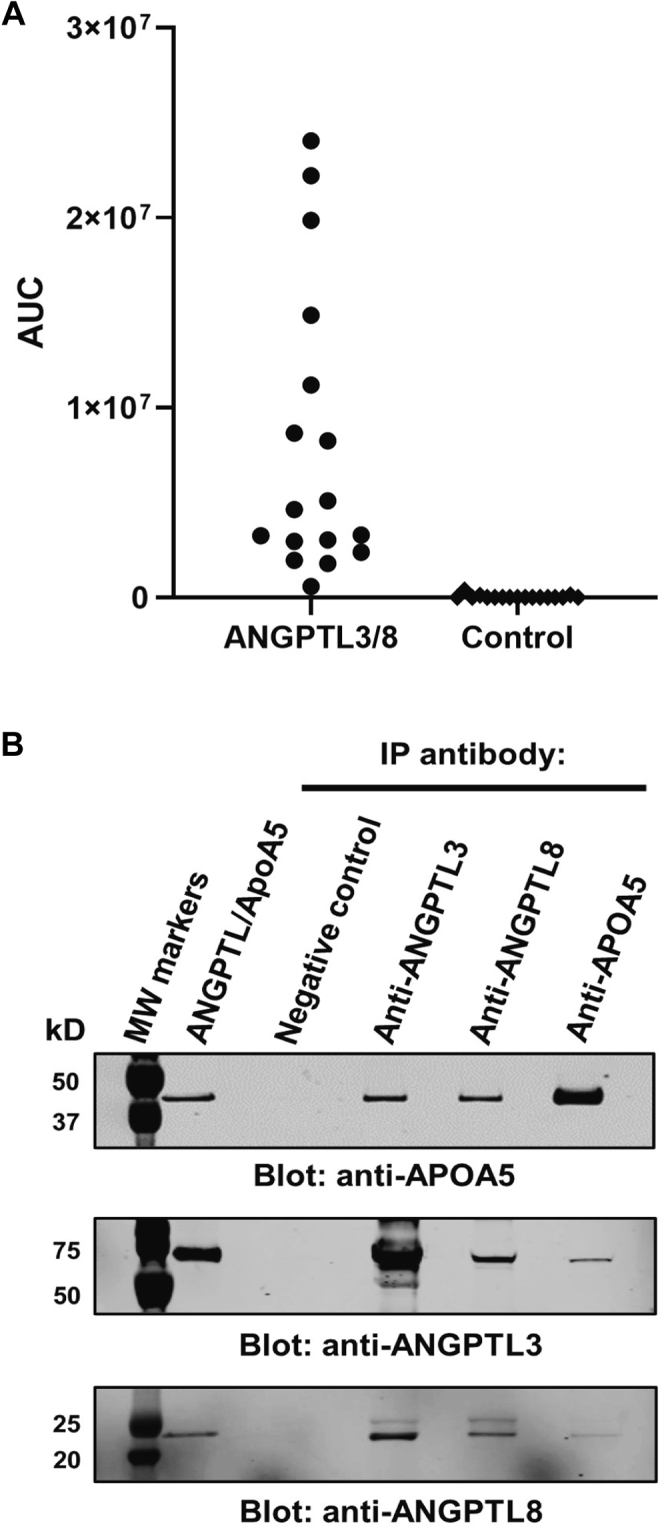
Fig. 1 ApoA5 associates with ANGPTL3/8 in human serum. A: The ANGPTL3/8 complex was coupled to beads that were incubated with human serum overnight at 4°C. Bound proteins were reduced, alkylated, and digested with trypsin. The means (from triplicate samples) of the areas under the curve (AUC) for peptide ions significantly different from control (P < 0.05 and fold-change > 5) were plotted in a scatter dot plot. Only ApoA5 peptide ions met these criteria. The AUC was extracted for each ion with a mass tolerance of 2 ppm. Results shown are representative of 3 independent experiments. B: To confirm the association of ApoA5 with ANGPTL3/8 in human serum, an irrelevant, negative control antibody, an anti-ANGPTL3 antibody, an anti-ANGPTL8 antibody, and an anti-ApoA5 antibody were covalently coupled to beads and used to immunoprecipitate human serum overnight at 4°C. Immunoprecipitated proteins were separated on gels and transferred to PVDF membranes. The blots were stained with an anti-ApoA5 antibody, an anti-ANGPTL3 antibody, or an anti-ANGPTL8 antibody. ANGPTL8, angiopoietin-like protein 8.
Fig. 1 ApoA5 associates with ANGPTL3/8 in human serum. A: The ANGPTL3/8 complex was coupled to beads that were incubated with human serum overnight at 4°C. Bound proteins were reduced, alkylated, and digested with trypsin. The means (from triplicate samples) of the areas under the curve (AUC) for peptide ions significantly different from control (P < 0.05 and fold-change > 5) were plotted in a scatter dot plot. Only ApoA5 peptide ions met these criteria. The AUC was extracted for each ion with a mass tolerance of 2 ppm. Results shown are representative of 3 independent experiments. B: To confirm the association of ApoA5 with ANGPTL3/8 in human serum, an irrelevant, negative control antibody, an anti-ANGPTL3 antibody, an anti-ANGPTL8 antibody, and an anti-ApoA5 antibody were covalently coupled to beads and used to immunoprecipitate human serum overnight at 4°C. Immunoprecipitated proteins were separated on gels and transferred to PVDF membranes. The blots were stained with an anti-ApoA5 antibody, an anti-ANGPTL3 antibody, or an anti-ANGPTL8 antibody. ANGPTL8, angiopoietin-like protein 8.CC BY · PubMed Central
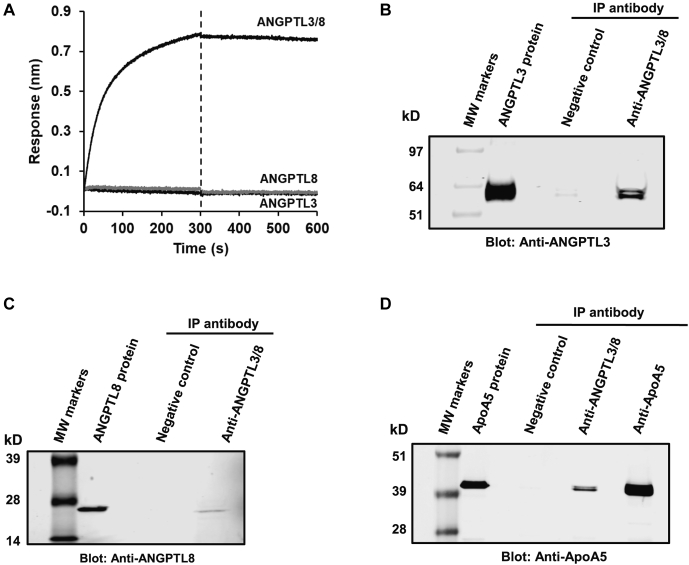
Fig. 2 An anti-ANGPTL3/8-specific antibody immunoprecipitates ApoA5 from human serum. A: Biolayer interferometry confirmed the specific binding of the anti-ANGPTL3/8 antibody to ANGPTL3/8 and not free ANGPTL3 or ANGPTL8. B: The anti-ANGPTL3/8 antibody was used to immunoprecipitate human serum overnight at 4°C. Immunoprecipitated proteins were separated, transferred to PVDF, and stained with anti-ANGPTL3 antibody to confirm pull down of ANGPTL3. C: The anti-ANGPTL3/8-specific antibody was used to immunoprecipitate human serum overnight at 4°C. Immunoprecipitated proteins were separated, transferred to PVDF, and stained with anti-ANGPTL8 antibody to confirm pull down of ANGPTL8. D: An irrelevant, negative control antibody, the anti-ANGPTL3/8 antibody, and an anti-ApoA5 antibody were used to immunoprecipitate human serum overnight at 4°C. Immunoprecipitated proteins were separated, transferred to PVDF, and stained with the anti-ApoA5 antibody. Results are representative of two independent experiments. ANGPTL8, angiopoietin-like protein 8.
Fig. 2 An anti-ANGPTL3/8-specific antibody immunoprecipitates ApoA5 from human serum. A: Biolayer interferometry confirmed the specific binding of the anti-ANGPTL3/8 antibody to ANGPTL3/8 and not free ANGPTL3 or ANGPTL8. B: The anti-ANGPTL3/8 antibody was used to immunoprecipitate human serum overnight at 4°C. Immunoprecipitated proteins were separated, transferred to PVDF, and stained with anti-ANGPTL3 antibody to confirm pull down of ANGPTL3. C: The anti-ANGPTL3/8-specific antibody was used to immunoprecipitate human serum overnight at 4°C. Immunoprecipitated proteins were separated, transferred to PVDF, and stained with anti-ANGPTL8 antibody to confirm pull down of ANGPTL8. D: An irrelevant, negative control antibody, the anti-ANGPTL3/8 antibody, and an anti-ApoA5 antibody were used to immunoprecipitate human serum overnight at 4°C. Immunoprecipitated proteins were separated, transferred to PVDF, and stained with the anti-ApoA5 antibody. Results are representative of two independent experiments. ANGPTL8, angiopoietin-like protein 8.CC BY · PubMed Central
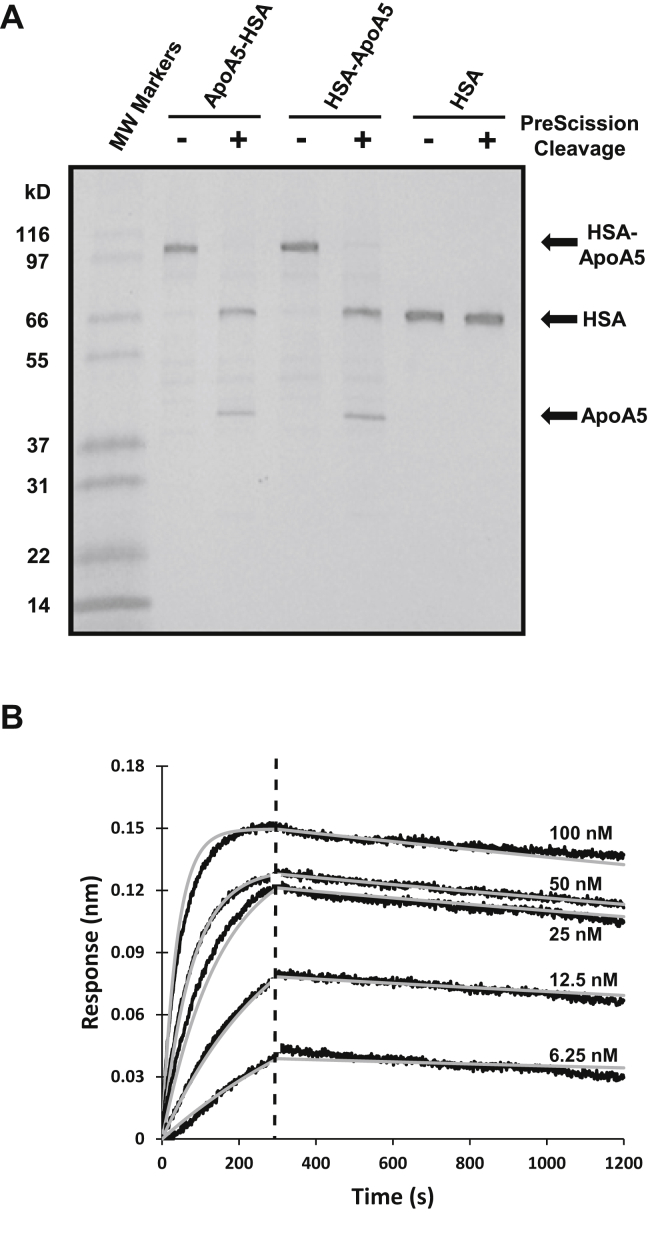
Fig. 3 Expression and purification of recombinant ApoA5 protein and characterization of its binding to the ANGPTL3/8 complex. A: Recombinant human ApoA5-HSA, HSA-ApoA5, and control HSA protein (0.5 μg of each) were analyzed either without or with PreScission cleavage of the HSA tag. Proteins were separated via gradient gel electrophoresis using a 4%–20% Tris-glycine gel and stained with Coomassie Blue. B: Biolayer interferometry was used to examine the binding affinity of ApoA5 to the ANGPTL3/8 complex. Flag-tagged ANGPTL3/8 complex was first immobilized on streptavidin biosensors coated with anti-Flag antibody. Immobilized ANGPTL3/8 was then incubated with increasing concentrations of ApoA5 (6.25–100 nM) to monitor association of ApoA5 with the ANGPTL3/8 complex and then transferred into buffer-only wells to monitor its dissociation from the ANGPTL3/8 complex, with background reference subtraction performed. ApoA5 binding to ANGPTL3/8 demonstrated a moderate on-rate (association) and a very slow off-rate (dissociation). Curves were fit globally using a 1:1 binding model to generate kon, koff, and KD values of 2.60 × 10⁵ M−1s−1, 1.35 × 10⁻⁴ s−1, and 520 pM, respectively. Raw data were plotted in black and the curve fits in gray. Results are representative of three independent experiments. ANGPTL8, angiopoietin-like protein 8; HSA, human serum albumin.
Fig. 3 Expression and purification of recombinant ApoA5 protein and characterization of its binding to the ANGPTL3/8 complex. A: Recombinant human ApoA5-HSA, HSA-ApoA5, and control HSA protein (0.5 μg of each) were analyzed either without or with PreScission cleavage of the HSA tag. Proteins were separated via gradient gel electrophoresis using a 4%–20% Tris-glycine gel and stained with Coomassie Blue. B: Biolayer interferometry was used to examine the binding affinity of ApoA5 to the ANGPTL3/8 complex. Flag-tagged ANGPTL3/8 complex was first immobilized on streptavidin biosensors coated with anti-Flag antibody. Immobilized ANGPTL3/8 was then incubated with increasing concentrations of ApoA5 (6.25–100 nM) to monitor association of ApoA5 with the ANGPTL3/8 complex and then transferred into buffer-only wells to monitor its dissociation from the ANGPTL3/8 complex, with background reference subtraction performed. ApoA5 binding to ANGPTL3/8 demonstrated a moderate on-rate (association) and a very slow off-rate (dissociation). Curves were fit globally using a 1:1 binding model to generate kon, koff, and KD values of 2.60 × 10⁵ M−1s−1, 1.35 × 10⁻⁴ s−1, and 520 pM, respectively. Raw data were plotted in black and the curve fits in gray. Results are representative of three independent experiments. ANGPTL8, angiopoietin-like protein 8; HSA, human serum albumin.CC BY · PubMed Central
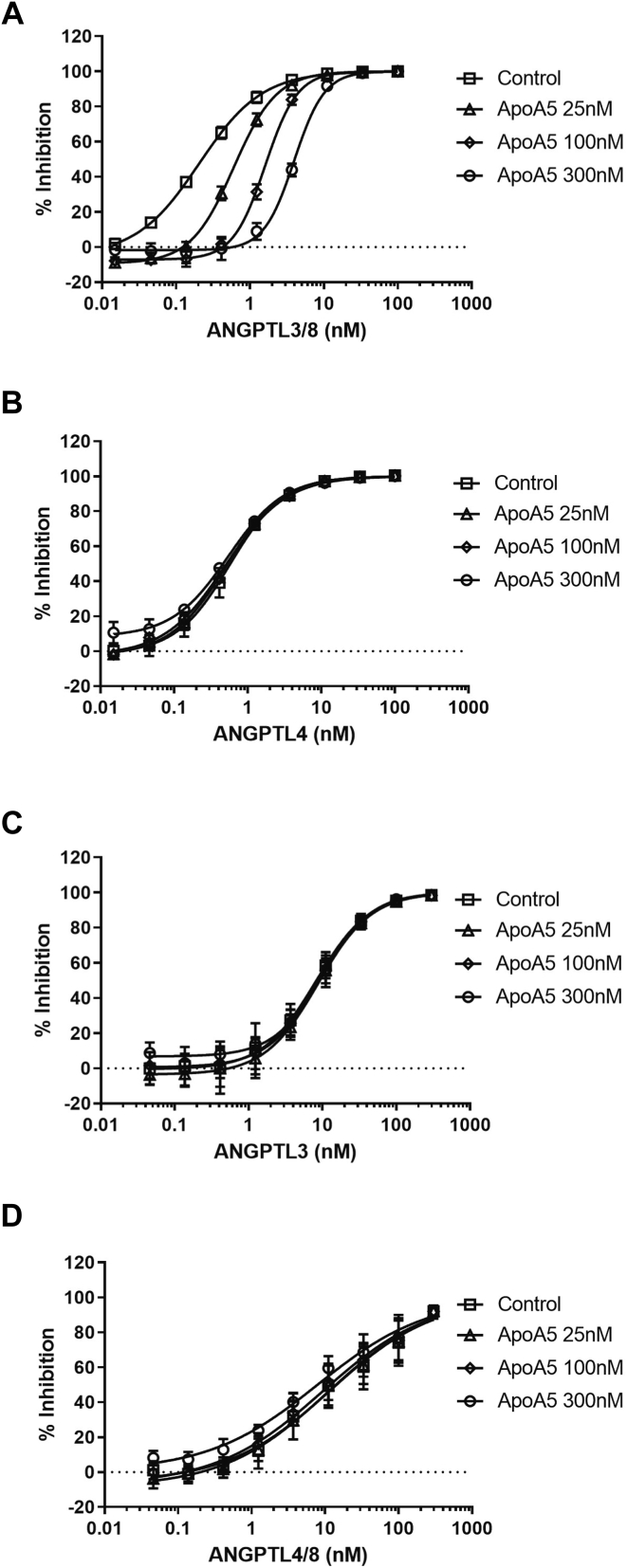
Fig. 4 ApoA5 selectively blocks the ability of ANGPTL3/8 to inhibit LPL activity. The ability of ANGPTL3/8, ANGPTL4, ANGPTL3, and ANGPTL4/8 to inhibit the LPL activity in the presence of 0 nM (squares), 25 nM (triangles), 100 nM (diamonds), and 300 nM (circles) of ApoA5 (HSA-ApoA5) was assessed using LPL-stable expression cells with EnzChek fluorescent lipase substrate. All results are shown as the mean ± SD (n = 3 from three independent experiments). A: ANGPTL3/8 was preincubated with ApoA5 before the addition of lipase substrate. B: ANGPTL4 was preincubated with ApoA5 before the addition of lipase substrate. C: ANGPTL3 was preincubated with ApoA5 before the addition of lipase substrate. D: ANGPTL4/8 was preincubated with ApoA5 before the addition of lipase substrate. ANGPTL8, angiopoietin-like protein 8; HSA, human serum albumin.
Fig. 4 ApoA5 selectively blocks the ability of ANGPTL3/8 to inhibit LPL activity. The ability of ANGPTL3/8, ANGPTL4, ANGPTL3, and ANGPTL4/8 to inhibit the LPL activity in the presence of 0 nM (squares), 25 nM (triangles), 100 nM (diamonds), and 300 nM (circles) of ApoA5 (HSA-ApoA5) was assessed using LPL-stable expression cells with EnzChek fluorescent lipase substrate. All results are shown as the mean ± SD (n = 3 from three independent experiments). A: ANGPTL3/8 was preincubated with ApoA5 before the addition of lipase substrate. B: ANGPTL4 was preincubated with ApoA5 before the addition of lipase substrate. C: ANGPTL3 was preincubated with ApoA5 before the addition of lipase substrate. D: ANGPTL4/8 was preincubated with ApoA5 before the addition of lipase substrate. ANGPTL8, angiopoietin-like protein 8; HSA, human serum albumin.CC BY · PubMed Central
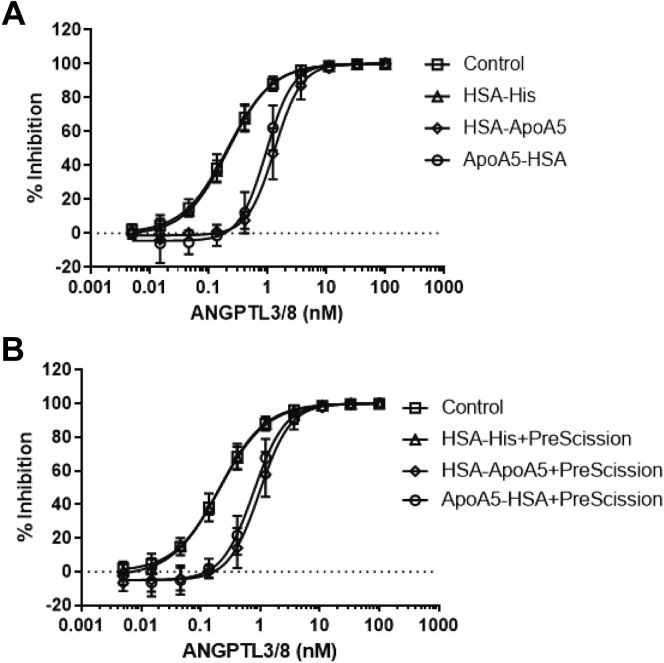
Fig. 5 HSA-ApoA5 and ApoA5-HSA block ANGPTL3/8-mediated LPL inhibitory activity in a similar manner to PreScission-cleaved HSA-ApoA5 and PreScission-cleaved ApoA5-HSA. A: The ability of 100 nM HSA-ApoA5 (diamonds) and 100 nM ApoA5-HSA (circles) to inhibit LPL activity in the presence of increasing concentrations of ANGPTL3/8 was assessed using LPL-stable expression cells with EnzChek fluorescent lipase substrate. Control (squares) and HSA-His–alone (triangles) conditions are also shown. Results are shown as the mean ± SD (n = 3 from three independent experiments). B: The ability of 100 nM PreScission-cleaved HSA-ApoA5 (diamonds) and 100 nM PreScission-cleaved ApoA5-HSA (circles) to inhibit the LPL activity in the presence of increasing concentrations of ANGPTL3/8 was assessed using LPL-stable expression cells with EnzChek fluorescent lipase substrate. Control (squares) and HSA-His alone plus PreScission cleavage (triangles) are also shown. Results are shown as the mean ± SD (n = 3 from three independent experiments). ANGPTL8, angiopoietin-like protein 8; HSA, human serum albumin.
Fig. 5 HSA-ApoA5 and ApoA5-HSA block ANGPTL3/8-mediated LPL inhibitory activity in a similar manner to PreScission-cleaved HSA-ApoA5 and PreScission-cleaved ApoA5-HSA. A: The ability of 100 nM HSA-ApoA5 (diamonds) and 100 nM ApoA5-HSA (circles) to inhibit LPL activity in the presence of increasing concentrations of ANGPTL3/8 was assessed using LPL-stable expression cells with EnzChek fluorescent lipase substrate. Control (squares) and HSA-His–alone (triangles) conditions are also shown. Results are shown as the mean ± SD (n = 3 from three independent experiments). B: The ability of 100 nM PreScission-cleaved HSA-ApoA5 (diamonds) and 100 nM PreScission-cleaved ApoA5-HSA (circles) to inhibit the LPL activity in the presence of increasing concentrations of ANGPTL3/8 was assessed using LPL-stable expression cells with EnzChek fluorescent lipase substrate. Control (squares) and HSA-His alone plus PreScission cleavage (triangles) are also shown. Results are shown as the mean ± SD (n = 3 from three independent experiments). ANGPTL8, angiopoietin-like protein 8; HSA, human serum albumin.CC BY · PubMed Central
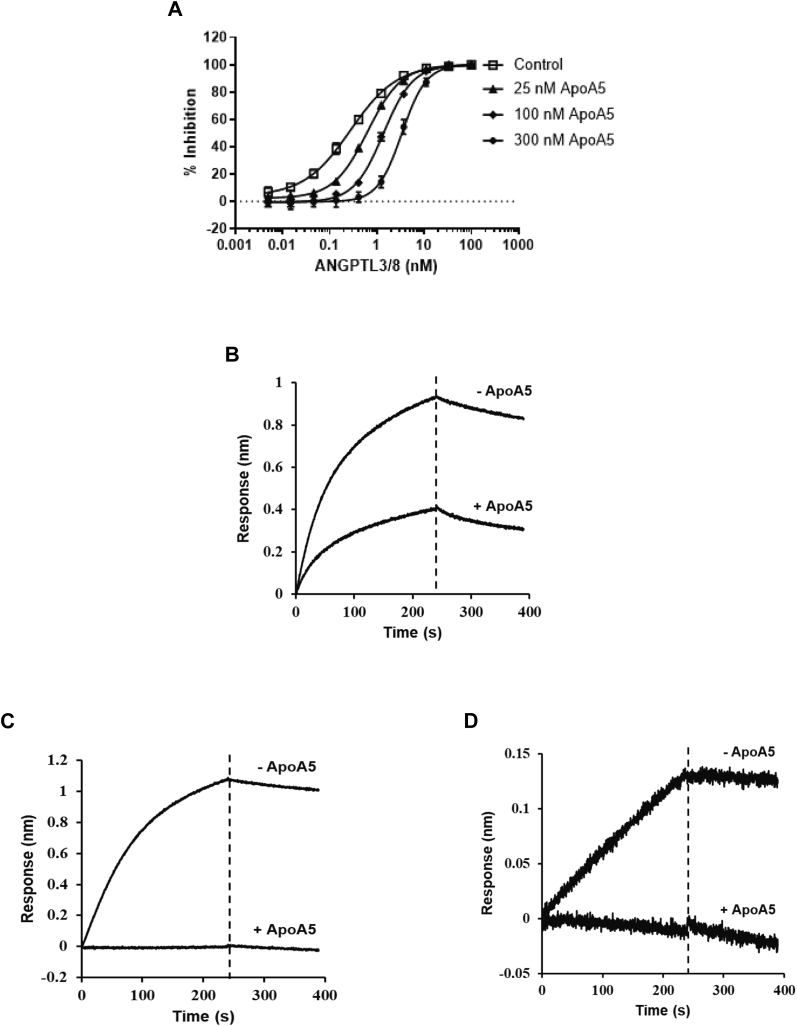
Fig. 6 Further characterization of ApoA5 suppression of ANGPTL3/8-mediated LPL inhibition. A: The ability of ANGPTL3/8 to inhibit LPL activity using VLDL as a substrate was assessed in the presence of 0 nM (squares), 25 nM (triangles), 100 nM (diamonds), and 300 nM (circles) of ApoA5 (HSA-ApoA5). The assay was performed with VLDL as a substrate, and NEFA levels were measured. Results are shown as the mean ± SD (n = 4 from two independent experiments). B: Biolayer interferometry was used to assess the binding of the immobilized anti-ANGPTL3/8 antibody to the ANGPTL3/8 complex after preincubation of ANGPTL3/8 with ApoA5. (C) Biolayer interferometry was used to assess the binding of the immobilized anti-ANGPTL3 antibody to the ANGPTL3/8 complex after preincubation of ANGPTL3/8 with ApoA5. D: Biolayer interferometry was used to assess the binding of the immobilized anti-ANGPTL8 antibody to the ANGPTL3/8 complex after preincubation of ANGPTL3/8 with ApoA5. ANGPTL8, angiopoietin-like protein 8.
Fig. 6 Further characterization of ApoA5 suppression of ANGPTL3/8-mediated LPL inhibition. A: The ability of ANGPTL3/8 to inhibit LPL activity using VLDL as a substrate was assessed in the presence of 0 nM (squares), 25 nM (triangles), 100 nM (diamonds), and 300 nM (circles) of ApoA5 (HSA-ApoA5). The assay was performed with VLDL as a substrate, and NEFA levels were measured. Results are shown as the mean ± SD (n = 4 from two independent experiments). B: Biolayer interferometry was used to assess the binding of the immobilized anti-ANGPTL3/8 antibody to the ANGPTL3/8 complex after preincubation of ANGPTL3/8 with ApoA5. (C) Biolayer interferometry was used to assess the binding of the immobilized anti-ANGPTL3 antibody to the ANGPTL3/8 complex after preincubation of ANGPTL3/8 with ApoA5. D: Biolayer interferometry was used to assess the binding of the immobilized anti-ANGPTL8 antibody to the ANGPTL3/8 complex after preincubation of ANGPTL3/8 with ApoA5. ANGPTL8, angiopoietin-like protein 8.CC BY · PubMed Central
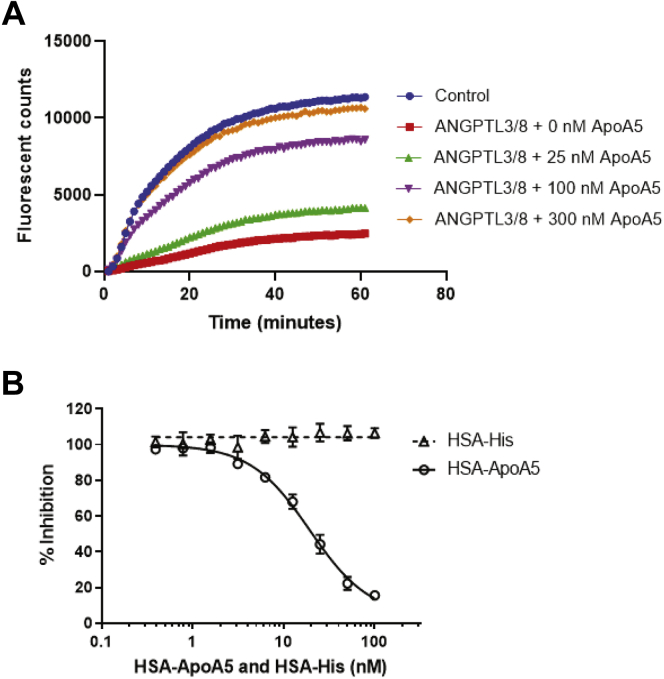
Fig. 7 Analyses of ApoA5 effect on ANGPTL3/8-mediated LPL inhibition. A: The ability of 1.2 nM of ANGPTL3/8 to inhibit LPL activity in the presence of HSA-ApoA5 was assessed via kinetic analyses using LPL-stable expression cells with EnzChek fluorescent lipase substrate. ANGPTL3/8 was preincubated with 0 nM (red squares), 25 nM (green triangles), 100 nM (purple triangles), or 300 nM (orange diamonds) of HSA-ApoA5 before the addition of lipase substrate. The control condition (blue circles) indicates the absence of ANGPTL3/8 and ApoA5. Results are representative of three independent experiments. B: The effect of HSA-ApoA5 (circles) on the ability of 0.3 nM ANGPTL3/8 (the IC60 of ANGPTL3/8) to inhibit LPL was assessed using LPL-stable expression cells. ANGPTL3/8 was preincubated with increasing concentrations of HSA-ApoA5 before the addition of lipase substrate. The effect of HSA alone (triangles) was also evaluated. Results are shown as the mean ± SD (n = 4 from two independent experiments). ANGPTL8, angiopoietin-like protein 8; HSA, human serum albumin.
Fig. 7 Analyses of ApoA5 effect on ANGPTL3/8-mediated LPL inhibition. A: The ability of 1.2 nM of ANGPTL3/8 to inhibit LPL activity in the presence of HSA-ApoA5 was assessed via kinetic analyses using LPL-stable expression cells with EnzChek fluorescent lipase substrate. ANGPTL3/8 was preincubated with 0 nM (red squares), 25 nM (green triangles), 100 nM (purple triangles), or 300 nM (orange diamonds) of HSA-ApoA5 before the addition of lipase substrate. The control condition (blue circles) indicates the absence of ANGPTL3/8 and ApoA5. Results are representative of three independent experiments. B: The effect of HSA-ApoA5 (circles) on the ability of 0.3 nM ANGPTL3/8 (the IC60 of ANGPTL3/8) to inhibit LPL was assessed using LPL-stable expression cells. ANGPTL3/8 was preincubated with increasing concentrations of HSA-ApoA5 before the addition of lipase substrate. The effect of HSA alone (triangles) was also evaluated. Results are shown as the mean ± SD (n = 4 from two independent experiments). ANGPTL8, angiopoietin-like protein 8; HSA, human serum albumin.CC BY · PubMed Central
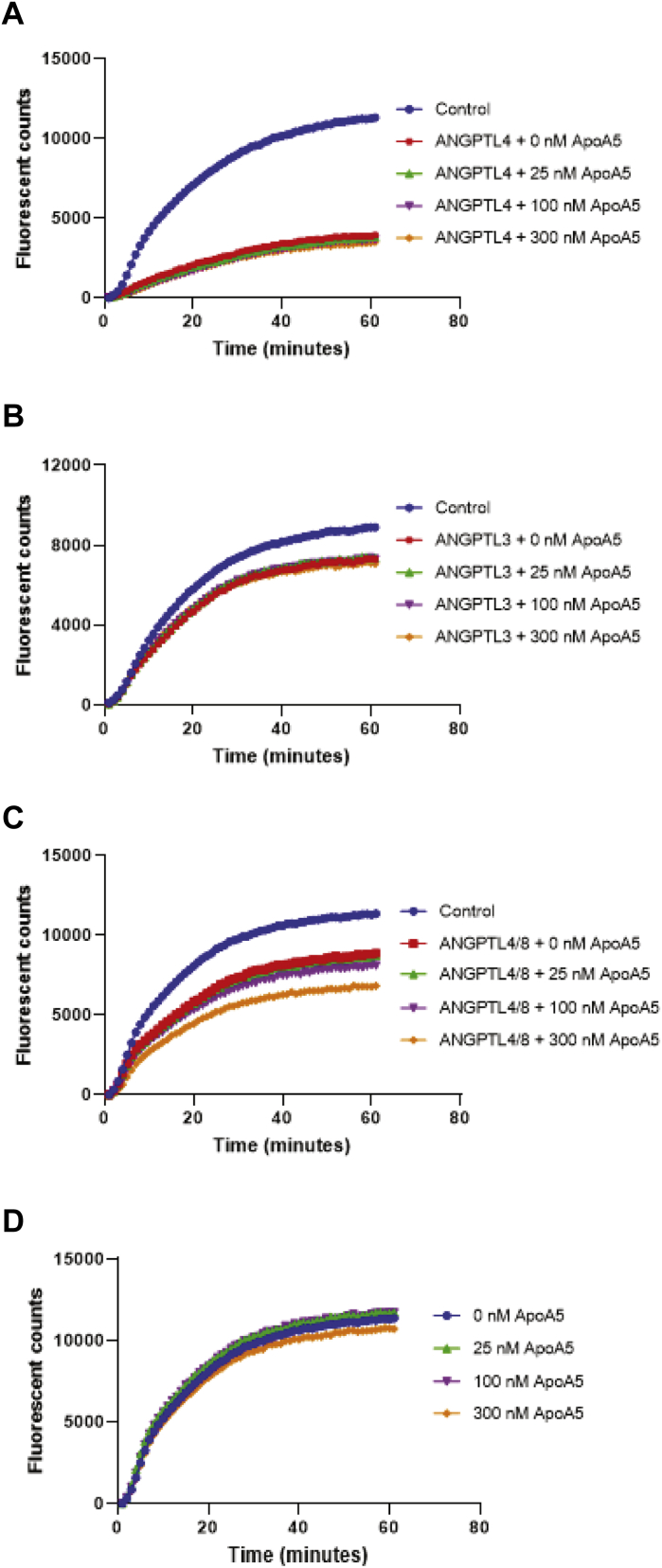
Fig. 8 Kinetic analyses of the effect of ApoA5 on LPL-inhibitory activities of ANGPTL4, ANGPTL3, and ANGPTL4/8. The ability of ANGPTL4, ANGPTL3, or ANGPTL4/8 (each at 1.2 nM) to inhibit LPL activity in the presence of different concentrations of ApoA5 (HSA-ApoA5) at 0 nM (red squares), 25 nM (green triangles), 100 nM (purple triangles), and 300 nM (orange diamonds) was assessed using LPL-stable expression cells with EnzChek fluorescent lipase substrate. The control condition (blue circles) indicates the absence of ApoA5 and each respective ANGPTL protein or complex. All results are representative of three independent experiments. (A) ANGPTL4 was preincubated with ApoA5 before the addition of lipase substrate. B: ANGPTL3 was preincubated with ApoA5 before the addition of lipase substrate. C: ANGPTL4/8 was preincubated with ApoA5 before the addition of lipase substrate. D: The effect of ApoA5 alone at 0 nM (blue circles), 25 nM (green triangles), 100 nM (purple triangles), and 300 nM (orange diamonds) on the LPL activity was assessed using LPL-stable expression cells. ANGPTL8, angiopoietin-like protein 8; HSA, human serum albumin.
Fig. 8 Kinetic analyses of the effect of ApoA5 on LPL-inhibitory activities of ANGPTL4, ANGPTL3, and ANGPTL4/8. The ability of ANGPTL4, ANGPTL3, or ANGPTL4/8 (each at 1.2 nM) to inhibit LPL activity in the presence of different concentrations of ApoA5 (HSA-ApoA5) at 0 nM (red squares), 25 nM (green triangles), 100 nM (purple triangles), and 300 nM (orange diamonds) was assessed using LPL-stable expression cells with EnzChek fluorescent lipase substrate. The control condition (blue circles) indicates the absence of ApoA5 and each respective ANGPTL protein or complex. All results are representative of three independent experiments. (A) ANGPTL4 was preincubated with ApoA5 before the addition of lipase substrate. B: ANGPTL3 was preincubated with ApoA5 before the addition of lipase substrate. C: ANGPTL4/8 was preincubated with ApoA5 before the addition of lipase substrate. D: The effect of ApoA5 alone at 0 nM (blue circles), 25 nM (green triangles), 100 nM (purple triangles), and 300 nM (orange diamonds) on the LPL activity was assessed using LPL-stable expression cells. ANGPTL8, angiopoietin-like protein 8; HSA, human serum albumin.CC BY · PubMed Central
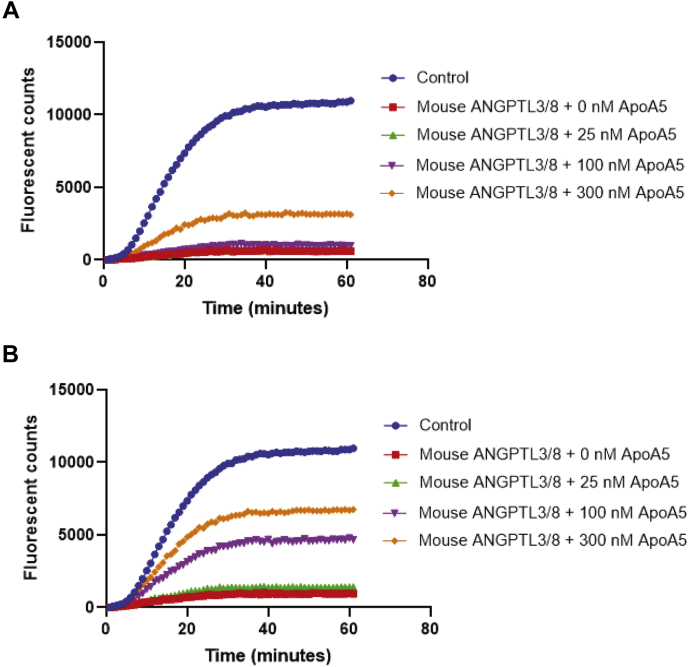
Fig. 9 Human ApoA5 shows markedly decreased potency in suppressing mouse ANGPTL3/8-mediated inhibition of mouse LPL activity. A: Kinetic analyses were performed to assess the effect of human ApoA5 on mouse ANGPTL3/8. The ability of 1.2 nM mouse ANGPTL3/8 to inhibit mouse LPL in the presence of different concentrations of human ApoA5 (HSA-ApoA5) at 0 nM (red squares), 25 nM (green triangles), 100 nM (purple triangles), and 300 nM (orange diamonds) was assessed using mouse LPL-stable expression cells with EnzChek fluorescent lipase substrate. The control condition (blue circles) indicates the absence of both human ApoA5 and mouse ANGPTL3/8. Results are representative of three independent experiments. B: The ability of 0.4 nM mouse ANGPTL3/8 to inhibit mouse LPL activity in the presence of the same concentrations of human ApoA5 used in Fig. 9A was assessed using mouse LPL-stable expression cells with EnzChek fluorescent lipase substrate. The control condition indicates the absence of both human ApoA5 and mouse ANGPTL3/8. Results are representative of 3 independent experiments. ANGPTL8, angiopoietin-like protein 8.
Fig. 9 Human ApoA5 shows markedly decreased potency in suppressing mouse ANGPTL3/8-mediated inhibition of mouse LPL activity. A: Kinetic analyses were performed to assess the effect of human ApoA5 on mouse ANGPTL3/8. The ability of 1.2 nM mouse ANGPTL3/8 to inhibit mouse LPL in the presence of different concentrations of human ApoA5 (HSA-ApoA5) at 0 nM (red squares), 25 nM (green triangles), 100 nM (purple triangles), and 300 nM (orange diamonds) was assessed using mouse LPL-stable expression cells with EnzChek fluorescent lipase substrate. The control condition (blue circles) indicates the absence of both human ApoA5 and mouse ANGPTL3/8. Results are representative of three independent experiments. B: The ability of 0.4 nM mouse ANGPTL3/8 to inhibit mouse LPL activity in the presence of the same concentrations of human ApoA5 used in Fig. 9A was assessed using mouse LPL-stable expression cells with EnzChek fluorescent lipase substrate. The control condition indicates the absence of both human ApoA5 and mouse ANGPTL3/8. Results are representative of 3 independent experiments. ANGPTL8, angiopoietin-like protein 8.CC BY · PubMed Central
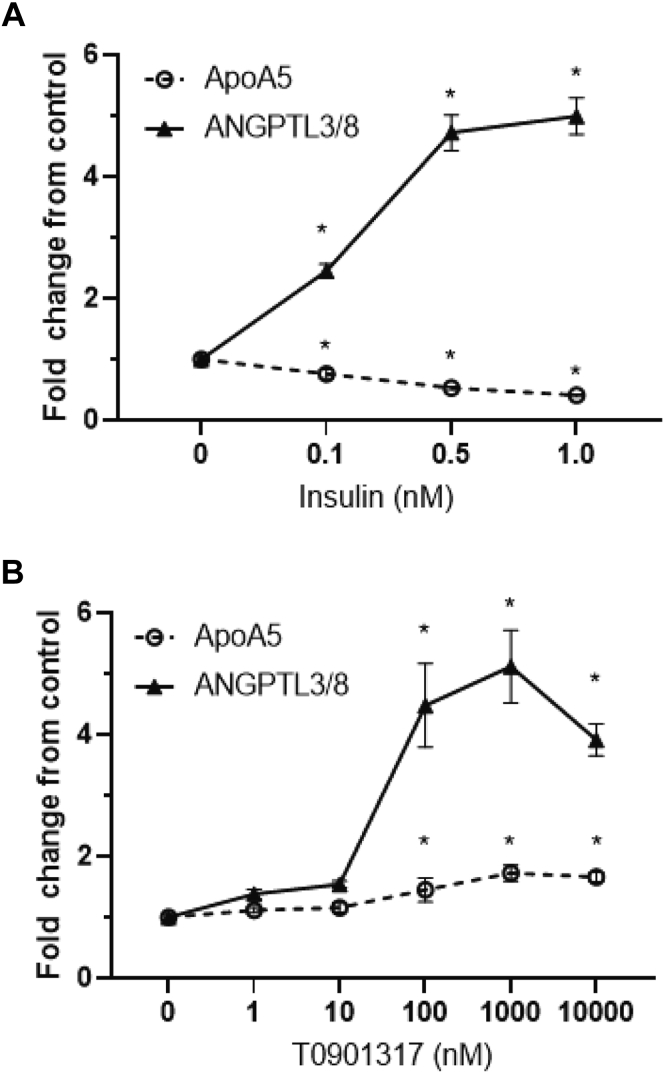
Fig. 10 Effect of insulin or the LXR agonist T0901317 on hepatocyte secretion of ANGPTL3/8 and ApoA5. A: Human primary hepatocytes were preincubated in application media in the absence of insulin. After aspiration, cells were incubated with application media in the presence of 0–1 nM insulin. ANGPTL3/8 (filled triangles) and ApoA5 (open circles) secreted into the media were measured using immunoassays, with the results shown as the mean ± SEM (n = 8 from 2 independent experiments, ∗P < 0.01). B: Human primary hepatocytes were preincubated in application media in the absence of insulin. After aspiration, cells were incubated with application media in the presence of 0–10,000 nM T0901317. ANGPTL3/8 (filled triangles) and ApoA5 (open circles) secreted into the media were measured using immunoassays, with the results shown as the mean ± SEM (n = 8 from two independent experiments, ∗P < 0.01). ANGPTL8, angiopoietin-like protein 8.
Fig. 10 Effect of insulin or the LXR agonist T0901317 on hepatocyte secretion of ANGPTL3/8 and ApoA5. A: Human primary hepatocytes were preincubated in application media in the absence of insulin. After aspiration, cells were incubated with application media in the presence of 0–1 nM insulin. ANGPTL3/8 (filled triangles) and ApoA5 (open circles) secreted into the media were measured using immunoassays, with the results shown as the mean ± SEM (n = 8 from 2 independent experiments, ∗P < 0.01). B: Human primary hepatocytes were preincubated in application media in the absence of insulin. After aspiration, cells were incubated with application media in the presence of 0–10,000 nM T0901317. ANGPTL3/8 (filled triangles) and ApoA5 (open circles) secreted into the media were measured using immunoassays, with the results shown as the mean ± SEM (n = 8 from two independent experiments, ∗P < 0.01). ANGPTL8, angiopoietin-like protein 8.CC BY · PubMed Central
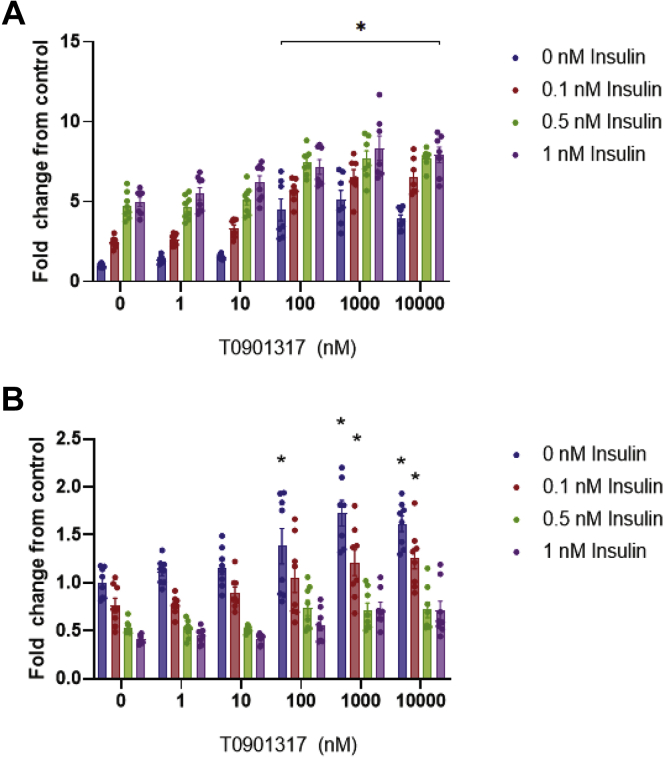
Fig. 11 Effect of the combination of insulin and the LXR agonist T0901317 on hepatocyte secretion of ANGPTL3/8 and ApoA5. A: Human primary hepatocytes were preincubated in application media in the absence of insulin. After aspiration, cells were incubated with application media in the presence of 0–1 nM insulin and 0–10,000 nM T0901317. ANGPTL3/8 levels in the media were measured using an immunoassay, with the results shown as the mean ± SEM (n = 8 from two independent experiments, ∗P < 0.001). B: ApoA5 levels from the exact same media samples collected in Fig. 11A were measured using an immunoassay, with the results shown as the mean ± SEM (n = 8 from two independent experiments, ∗P < 0.01). ANGPTL8, angiopoietin-like protein 8.
Fig. 11 Effect of the combination of insulin and the LXR agonist T0901317 on hepatocyte secretion of ANGPTL3/8 and ApoA5. A: Human primary hepatocytes were preincubated in application media in the absence of insulin. After aspiration, cells were incubated with application media in the presence of 0–1 nM insulin and 0–10,000 nM T0901317. ANGPTL3/8 levels in the media were measured using an immunoassay, with the results shown as the mean ± SEM (n = 8 from two independent experiments, ∗P < 0.001). B: ApoA5 levels from the exact same media samples collected in Fig. 11A were measured using an immunoassay, with the results shown as the mean ± SEM (n = 8 from two independent experiments, ∗P < 0.01). ANGPTL8, angiopoietin-like protein 8.CC BY · PubMed Central

Verification

Claims the paper makes

The claims and statistics of this paper haven’t been checked yet.

Run the check — free, no account needed. It reads the open-access text and checks the sources it cites.

A few free checks a day · papers already verified open instantly · results are public

Claims other papers make about this one

Each is checked against this paper’s own text: does it say what the citing paper says it does?

Self-check

Percentages, sums and reported differences re-computed from the paper’s own numbers.

The self-check needs the paper’s full text.

Citations

Cites

Show all 1 references

Research works printed but not linked: 49

  1. Ren, 2012, Identification of rifl, a novel adipocyte-enriched insulin target gene with a role in lipid metabolism, Am. J. Physiol. Endocrinol. Metab., 303, E334, 10.1152/ajpendo.00084.2012 · DOI · Paper page
  2. Zhang, 2012, Lipasin, a novel nutritionally-regulated liver-enriched factor that regulates serum triglyceride levels, Biochem. Biophys. Res. Commun., 424, 786, 10.1016/j.bbrc.2012.07.038 · DOI · Paper page
  3. Quagliarini, 2012, Atypical angiopoietin-like protein that regulates ANGPTL3, Proc. Natl. Acad. Sci. U.S.A., 109, 19751, 10.1073/pnas.1217552109 · DOI · Paper page
  4. Zhang, 2013, Emerging roles of lipasin as a critical lipid regulator, Biochem. Biophys. Res. Commun., 432, 401, 10.1016/j.bbrc.2013.01.129 · DOI
  5. Wang, 2013, Mice lacking ANGPTL8 (betatrophin) manifest disrupted triglyceride metabolism without impaired glucose homeostasis, Proc. Natl. Acad. Sci. U.S.A., 110, 16109, 10.1073/pnas.1315292110 · DOI · Paper page
  6. Haller, 2017, ANGPTL8 requires ANGPTL3 to inhibit lipoprotein lipase and plasma triglyceride clearance, J. Lipid Res., 58, 1166, 10.1194/jlr.M075689 · DOI · Paper page
  7. Fu, 2015, A lipasin/Angptl8 monoclonal antibody lowers mouse serum triglycerides involving increased postprandial activity of the cardiac lipoprotein lipase, Sci. Rep., 5, 18502, 10.1038/srep18502 · DOI
  8. Zhang, 2016, The ANGPTL3-4-8 model, a molecular mechanism for triglyceride trafficking, Open. Biol., 6, 150272, 10.1098/rsob.150272 · DOI
  9. Chi, 2017, ANGPTL8 promotes the ability of ANGPTL3 to bind and inhibit lipoprotein lipase, Mol. Metab., 6, 1137, 10.1016/j.molmet.2017.06.014 · DOI · Paper page
  10. Kovrov, 2020, On the mechanism of angiopoietin-like protein 8 for control of lipoprotein lipase activity, J. Lipid Res, 60, 783, 10.1194/jlr.M088807 · DOI · Paper page
  11. Chen, 2020, Angiopoietin-like protein 8 differentially regulates ANGPTL3 and ANGPTL4 during postprandial partitioning of fatty acids, J. Lipid Res., 61, 1203, 10.1194/jlr.RA120000781 · DOI · Paper page
  12. Oldoni, 2020, ANGPTL8 has both endocrine and autocrine effects on substrate utilization, JCI Insight, 30, 138777, 10.1172/jci.insight.138777 · DOI · Paper page
  13. Wolska, 2020, Apolipoprotein C-II: the re-emergence of a forgotten factor, Curr. Opin. Lipidol., 31, 147, 10.1097/MOL.0000000000000680 · DOI
  14. Larsson, 2017, Apolipoprotein C-III inhibits triglyceride hydrolysis by GPIHBP1-bound LPL, J. Lipid Res., 58, 1893, 10.1194/jlr.M078220 · DOI
  15. Pennacchio, 2001, An apolipoprotein influencing triglycerides in humans and mice revealed by comparative sequencing, Science, 294, 169, 10.1126/science.1064852 · DOI · Paper page
  16. van der Vliet, 2001, Apolipoprotein A-V: a novel apolipoprotein associated with an early phase of liver regeneration, J. Biol. Chem., 276, 44512, 10.1074/jbc.M106888200 · DOI
  17. van der Vliet, 2001, Adenoviral overexpression of apolipoprotein A-V reduces serum levels of triglycerides and cholesterol in mice, Biochem. Biophys. Res. Commun., 295, 1156, 10.1016/S0006-291X(02)00808-2 · DOI
  18. Pennacchio, 2003, Apolipoprotein A5, a newly identified gene that affects plasma triglyceride levels in humans and mice, Arterioscler. Thromb. Vasc. Biol., 23, 529, 10.1161/01.ATV.0000054194.78240.45 · DOI
  19. Baroukh, 2004, Analysis of apolipoprotein A5, C3, and plasma triglyceride concentrations in genetically engineered mice, Arterioscler. Thromb. Vasc. Biol., 24, 1297, 10.1161/01.ATV.0000130463.68272.1d · DOI
  20. Pennacchio, 2001, Two independent apolipoprotein A5 haplotypes influence human plasma triglyceride levels, Hum. Mol. Genet., 11, 3031, 10.1093/hmg/11.24.3031 · DOI
  21. Evans, 2003, The single nucleotide polymorphism −1131T>C in the apolipoprotein A5 (ApoA5) gene is associated with elevated triglycerides in patients with hyperlipidemia, J. Mol. Med., 81, 645, 10.1007/s00109-003-0465-4 · DOI
  22. Kao, 2003, A novel genetic variant in the apolipoprotein A5 gene is associated with hypertriglyceridemia, Hum. Mol. Genet., 12, 2533, 10.1093/hmg/ddg255 · DOI
  23. Horinek, 2003, T-1131→C polymorphism within the apolipoprotein AV gene in hypertriglyceridemic individuals, Atherosclerosis, 167, 369, 10.1016/S0021-9150(03)00022-4 · DOI
  24. Vu-Dac, 2003, Apolipoprotein A5, a crucial determinant of plasma triglyceride levels, is highly responsive to peroxisome proliferator-activated receptor α activators, J. Biol. Chem., 278, 17982, 10.1074/jbc.M212191200 · DOI
  25. Schultze, 2005, Administration of a PPARalpha agonist increases serum apolipoprotein A-V levels and the apolipoprotein A-V/apolipoprotein C-III ratio, J. Lipid Res., 46, 1591, 10.1194/jlr.C500010-JLR200 · DOI
  26. Wong, 2007, Characterization of apolipoprotein A-V structure and mode of plasma triacylglycerol regulation, Curr. Opin. Lipidol., 18, 319, 10.1097/MOL.0b013e328133856c · DOI
  27. Sharma, 2012, Apolipoprotein A-V dependent modulation of plasma triacylglycerol: a puzzlement, Biochim. Biophys. Acta, 1821, 795, 10.1016/j.bbalip.2011.12.002 · DOI
  28. Forte, 2015, Apolipoprotein A5: Extracellular and intracellular roles in triglyceride metabolism, Curr. Drug Targets, 16, 1274, 10.2174/1389450116666150531161138 · DOI
  29. O'Brien, 2005, The novel apolipoprotein A5 is present in human serum, is associated with VLDL, HDL, and chylomicrons, and circulates at very low concentrations compared with other apolipoproteins, Clin. Chem., 51, 351, 10.1373/clinchem.2004.040824 · DOI
  30. Alborn, 2006, Definitive N-terminal protein sequence and further characterization of the novel apolipoprotein A5 in human serum, Clin. Chem., 52, 514, 10.1373/clinchem.2005.061374 · DOI
  31. Kirchgessner, 2016, Beneficial and adverse effects of an LXR agonist on human lipid and lipoprotein metabolism and circulating neutrophils, Cell Metab, 24, 223, 10.1016/j.cmet.2016.07.016 · DOI · Paper page
  32. Jakel, 2004, The liver X receptor ligand T0901317 down-regulates APOA5 gene expression through activation of SREBP-1c, J. Biol. Chem., 279, 45462, 10.1074/jbc.M404744200 · DOI
  33. Hale, 2004, A simplified procedure for the reduction and alkylation of cysteine residues in proteins prior to proteolytic digestion and mass spectral analysis, Anal. Biochem., 333, 174, 10.1016/j.ab.2004.04.013 · DOI
  34. Higgs, 2013, Quantitative proteomics via high resolution MS quantification: capabilities and limitations, Int. J. Proteomics, 674282
  35. Castleberry, 2020, Functional recombinant apolipoprotein A5 that is stable at high concentrations at physiological pH, J. Lipid Res., 61, 244, 10.1194/jlr.D119000103 · DOI
  36. Nelbach, 2008, Effect of apolipoprotein A-V on plasma triglyceride, lipoprotein size, and composition in genetically engineered mice, J. Lipid Res., 49, 572, 10.1194/jlr.M700281-JLR200 · DOI
  37. Shu, 2010, Intravenous injection of apoA-V reconstituted HDL decreases hypertriglyceridemia in apoav-/- mice and requires GPIHBP1, Arterioscler. Thromb. Vasc. Biol., 30, 2504, 10.1161/ATVBAHA.110.210815 · DOI
  38. Young, 2019, GPIHBP1 and lipoprotein lipase, partners in plasma triglyceride metabolism, Cell Metab., 30, 51, 10.1016/j.cmet.2019.05.023 · DOI
  39. Beigneux, 2009, GPIHBP1, a GPI-anchored protein required for the lipolytic processing of triglyceride-rich lipoproteins, J. Lipid Res., 50, S57, 10.1194/jlr.R800030-JLR200 · DOI
  40. Schaap, 2004, ApoAV reduces plasma triglycerides by inhibiting very low density lipoprotein-triglyceride (VLDL-TG) production and stimulating lipoprotein lipase-mediated VLDL-TG hydrolysis, J. Biol. Chem., 279, 27941, 10.1074/jbc.M403240200 · DOI
  41. Joseph, 2002, Synthetic LXR ligand inhibits the development of atherosclerosis in mice, Proc. Natl. Acad. Sci. U.S.A., 99, 7604, 10.1073/pnas.112059299 · DOI
  42. Bradley, 2007, Ligand activation of LXR beta reverses atherosclerosis and cellular cholesterol overload in mice lacking LXR alpha and apoE, J. Clin. Invest., 117, 2337, 10.1172/JCI31909 · DOI
  43. Grefhorst, 2002, Stimulation of lipogenesis by pharmacological activation of the liver X receptor leads to production of large, triglyceride-rich very low density lipoprotein particles, J. Biol. Chem., 277, 34182, 10.1074/jbc.M204887200 · DOI
  44. Parikh, 2014, Liver X receptor: a cardinal target for atherosclerosis and beyond, J. Atheroscler. Thromb., 21, 519
  45. Lee, 2015, AMP-activated protein kinase suppresses the expression of LXR/SREBP-1 signaling-induced ANGPTL8 in HepG2 cells, Mol. Cell. Endocrinol., 414, 148, 10.1016/j.mce.2015.07.031 · DOI
  46. Chen, 2004, Central role for liver X receptor in insulin-mediated activation of Srebp-1c transcription and stimulation of fatty acid synthesis in liver, Proc. Natl. Acad. Sci. U.S.A., 101, 11245, 10.1073/pnas.0404297101 · DOI
  47. Kaplan, 2003, Regulation of the angiopoietin-like protein 3 gene by LXR, J. Lipid Res., 44, 136, 10.1194/jlr.M200367-JLR200 · DOI · Paper page
  48. Inaba, 2003, Angiopoietin-like protein 3 mediates hypertriglyceridemia induced by the liver X receptor, J. Biol. Chem., 278, 21344, 10.1074/jbc.M213202200 · DOI
  49. Nowak, 2005, Insulin-mediated down-regulation of apolipoprotein A5 gene expression through the phosphatidylinositol 3-kinase pathway: role of upstream stimulatory factor, Mol. Cell. Biol., 25, 1537, 10.1128/MCB.25.4.1537-1548.2005 · DOI

Cited by

Sorted by citations

Metadata

Authors
Chen, Y. Q., Pottanat, T. G., Zhen, E. Y., Siegel, R. W., Ehsani, M., Qian, Y.-W., & Konrad, R. J.
Venue
Journal of Lipid Research
Publisher
Elsevier BV
Published
2021
Volume
62
Pages
100068
ISSN
0022-2275
Cited by
82
References
1
Language
en
Funders
Eli Lilly and Company

About these checks

Registry, retraction, Cites and statistics results are computed, not judged, with one exception: a printed reference that no index lists is read once by a model before it counts as a citation error. Claims are extracted by a model and kept only when their quote appears verbatim in the text; each cited source is then checked, with a model’s help, for whether it says what the claim relies on. Those verdicts can be wrong — read the claim’s quote and the cited source before relying on one.

Statistics and arithmetic are recomputed, not judged.

Confidence bands are shown only for fields calibrated on our annotated test set. None is calibrated yet, so no band is shown.

What counts as a claim ›How we measure confidence ›How we check this ›

Are you an author, or do you see a problem with this page? Request a review