

The DOI matches its Crossref record; 41 of the 42 references it cites were found in a registry or an index.
Limited Mitochondrial Permeabilization Causes DNA Damage and Genomic Instability in the Absence of Cell Death
Open accessAbstract
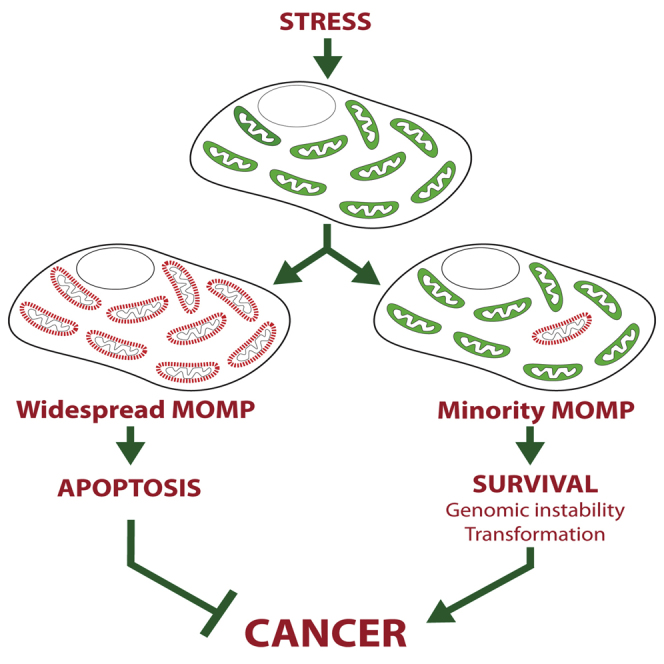
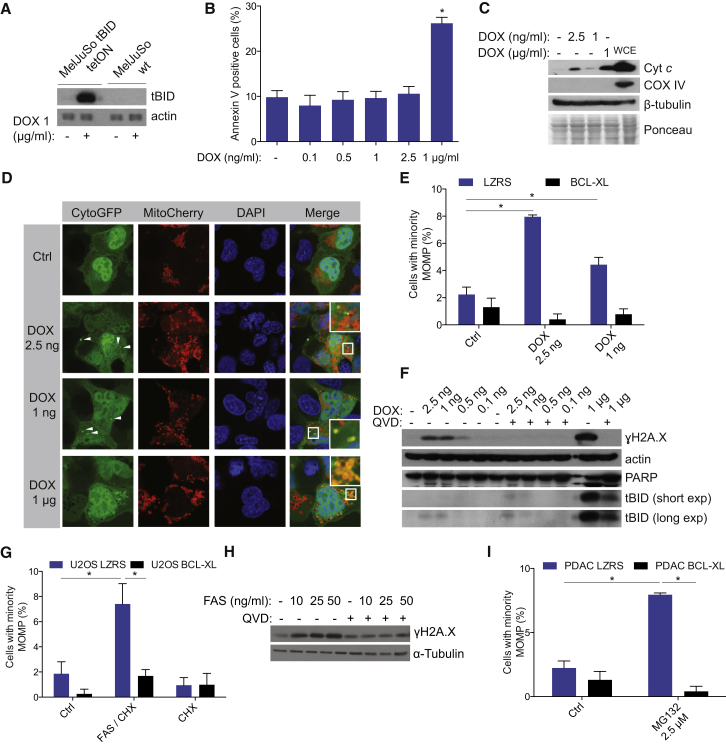
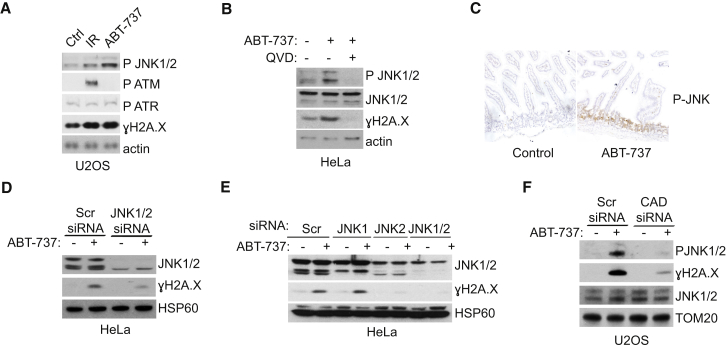
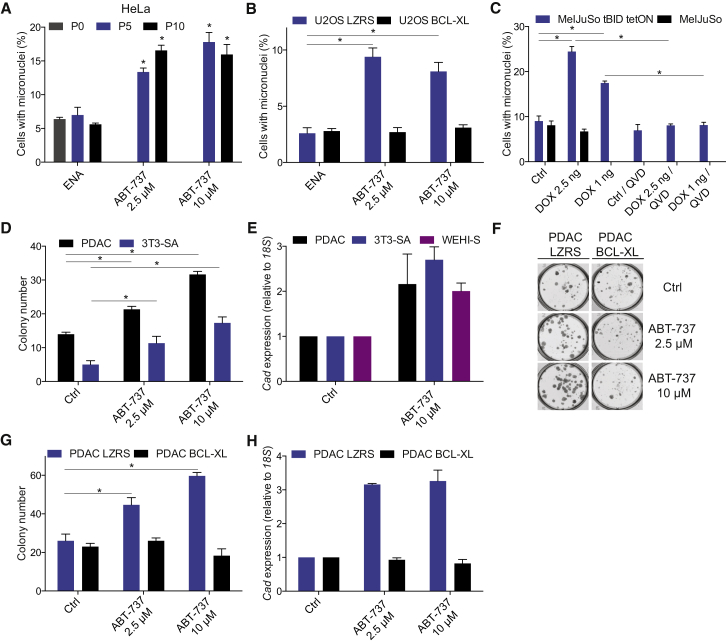
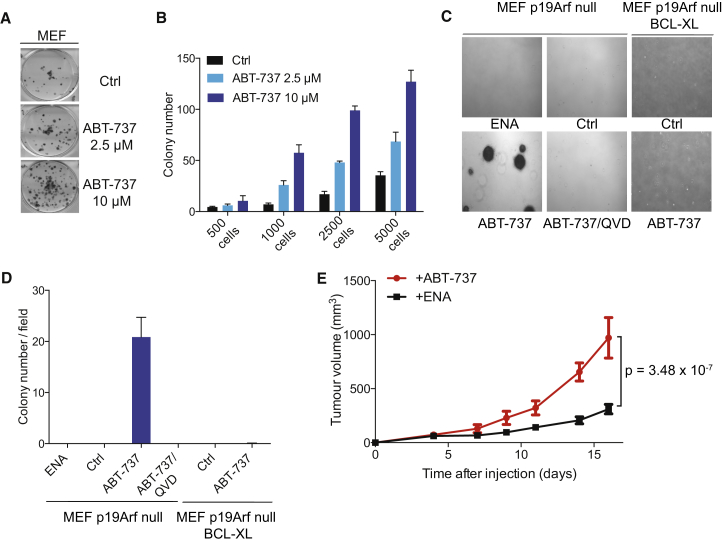
During apoptosis, the mitochondrial outer membrane is permeabilized, leading to the release of cytochrome c that activates downstream caspases. Mitochondrial outer membrane permeabilization (MOMP) has historically been thought to occur synchronously and completely throughout a cell, leading to rapid caspase activation and apoptosis. Using a new imaging approach, we demonstrate that MOMP is not an all-or-nothing event. Rather, we find that a minority of mitochondria can undergo MOMP in a stress-regulated manner, a phenomenon we term "minority MOMP." Crucially, minority MOMP leads to limited caspase activation, which is insufficient to trigger cell death. Instead, this caspase activity leads to DNA damage that, in turn, promotes genomic instability, cellular transformation, and tumorigenesis. Our data demonstrate that, in contrast to its well-established tumor suppressor function, apoptosis also has oncogenic potential that is regulated by the extent of MOMP. These findings have important implications for oncogenesis following either physiological or therapeutic engagement of apoptosis.
Overview
The claims and statistics of this paper haven’t been checked yet.
Run the check — free, no account needed. It reads the open-access text and checks the sources it cites.
Integrity signals
Registry
Cites
Statistics
Figures
Verification
Claims the paper makes
The claims and statistics of this paper haven’t been checked yet.
Run the check — free, no account needed. It reads the open-access text and checks the sources it cites.
Claims other papers make about this one
Each is checked against this paper’s own text: does it say what the citing paper says it does?
In the citing paper
“In addition, when MOMP affects a limited number of mitochondria, the consequent sublethal activation of caspases does not precipitate RCD but promotes genomic instability [226].”
From Molecular mechanisms of cell death: recommendations of the nomenclature committee on cell death 2018. (2018) · cites this paper as [226]
In the citing paper
“Finally, at least some cells exposed to transient apoptotic stimuli appear to survive MOMP affecting a limited number of mitochondria and the partial activation of executioner caspases by a hitherto poorly characterized process called anastasis (most likely constituting a robust adaptative response upstream of the boundary between cellular life and death) [226–228].”
From Molecular mechanisms of cell death: recommendations of the nomenclature committee on cell death 2018. (2018) · cites this paper as [226]
In the citing paper
“However, it has been shown that in conditions of sub-lethal stress, a small subset of mitochondria undergo MOMP without inducing cell death, a phenomenon called minority MOMP (miMOMP) (Ichim et al., 2015).”
From Cytoplasmic DNA: sources, sensing, and role in aging and disease (2021) · cites this paper as Ichim et al., 2015
Self-check
Percentages, sums and reported differences re-computed from the paper’s own numbers.
The self-check needs the paper’s full text.
Citations
Cites
The DNA-damage response in human biology and disease
Jackson, S. P., & Bartek, J. (2009) · Nature · doi:10.1038/nature08467 · Cited by 6,092
An inhibitor of Bcl-2 family proteins induces regression of solid tumours
Oltersdorf, T., Elmore, S. W., Shoemaker, A. R., Armstrong, R. C., Augeri, D. J., Belli, B., Bruncko, M., Deckwerth, T. L., Dinges, J., Hajduk, P. J., et al. (2005) · Nature · doi:10.1038/nature03579 · Cited by 3,407
Mitochondria and cell death: outer membrane permeabilization and beyond
Tait, S. W. G., & Green, D. R. (2010) · Nature Reviews Molecular Cell Biology · doi:10.1038/nrm2952 · Cited by 2,593
Self-citationATM and related protein kinases: safeguarding genome integrity
Shiloh, Y. (2003) · Nature Reviews Cancer · doi:10.1038/nrc1011 · Cited by 2,577
Cytokinesis-block micronucleus cytome assay
Fenech, M. F. (2007) · Nature Protocols · doi:10.1038/nprot.2007.77 · Cited by 2,025
Cleavage of CAD inhibitor in CAD activation and DNA degradation during apoptosis
Sakahira, H., Enari, M., & Nagata, S. (1998) · Nature · doi:10.1038/34214 · Cited by 1,666
The coordinate release of cytochrome c during apoptosis is rapid, complete and kinetically invariant
Goldstein, J. C., Waterhouse, N. J., Juin, P. P., Evan, G. I., & Green, D. R. (2000) · Nature Cell Biology · doi:10.1038/35004029 · Cited by 1,073
Li, Z., Jo, J., Jia, J., Lo, S., Whitcomb, D. J., Jiao, S., Cho, K., & Sheng, M. (2010) · Cell · doi:10.1016/j.cell.2010.03.053 · Cited by 533
Colell, A., Ricci, J.-E., Tait, S., Milasta, S., Maurer, U., Bouchier-Hayes, L., Fitzgerald, P., Guio-Carrion, A., Waterhouse, N. J., Li, C. W., et al. (2007) · Cell · doi:10.1016/j.cell.2007.03.045 · Cited by 516
Self-citationDie another way – non-apoptotic mechanisms of cell death
Tait, S. W. G., Ichim, G., & Green, D. R. (2014) · Journal of Cell Science · doi:10.1242/jcs.093575 · Cited by 366 · cited 1×
“However, even in the absence of caspase activity, cells typically die onceMOMP has occurred, most likely due to progressive mitochondrial dysfunction (Lartigue et al., 2009; Tait et al., 2014).”
Self-citationCell Apoptosis: Requirement of H2AX in DNA Ladder Formation, but Not for the Activation of Caspase-3
Lu, C., Zhu, F., Cho, Y., Tang, F., Zykova, T. A., Ma, W., Bode, A. M., & Dong, Z. (2006) · Molecular Cell · doi:10.1016/j.molcel.2006.05.023 · Cited by 363
Otera, H., Ohsakaya, S., Nagaura, Z.-I., Ishihara, N., & Mihara, K. (2005) · The EMBO Journal · doi:10.1038/sj.emboj.7600614 · Cited by 354
Martinou, I., Desagher, S., Eskes, R., Antonsson, B. E., André, É., Fakan, S., & Martinou, J. (1999) · The Journal of Cell Biology · doi:10.1083/jcb.144.5.883 · Cited by 316
Tang, H. L., Tang, H. M., Mak, K. H., Hu, S., Wang, S. S., Wong, K. M., Wong, C. S. T., Wu, H. Y., Law, H. T., Liu, K., et al. (2012) · Molecular Biology of the Cell · doi:10.1091/mbc.e11-11-0926 · Cited by 293
Evidence of a Novel Event during Neuronal Death
Deshmukh, M., & Johnson, E. M. (1998) · Neuron · doi:10.1016/s0896-6273(00)80587-5 · Cited by 281
Belshaw, P. J., Ho, S. N., Crabtree, G. R., & Schreiber, S. L. (1996) · Proceedings of the National Academy of Sciences · doi:10.1073/pnas.93.10.4604 · Cited by 278
Mimicking the BH3 domain to kill cancer cells
Chonghaile, T. N., & Letai, A. G. (2008) · Oncogene · doi:10.1038/onc.2009.52 · Cited by 275
Apoptotic and non-apoptotic roles of caspases in neuronal physiology and pathophysiology
Hyman, B. T., & Yuan, J. (2012) · Nature reviews. Neuroscience · doi:10.1038/nrn3228 · Cited by 261
Orth, J. D., Loewer, A., Lahav, G., & Mitchison, T. J. (2011) · Molecular Biology of the Cell · doi:10.1091/mbc.e11-09-0781 · Cited by 252
Xue, L., Fletcher, G. C., & Tolkovsky, A. M. (2001) · Current Biology · doi:10.1016/s0960-9822(01)00100-2 · Cited by 230
Caspase-specific and nonspecific in vivo protein processing during Fas-induced apoptosis
Damme, P. V., Martens, L., Damme, J. V., Hugelier, K., Staes, A., Vandekerckhove, J. S., & Gevaert, K. (2005) · Nature Methods · doi:10.1038/nmeth792 · Cited by 223
Rehm, M., Huber, H. J., Düßmann, H., & Prehn, J. H. M. (2006) · The EMBO Journal · doi:10.1038/sj.emboj.7601295 · Cited by 209
Self-citationResistance to Caspase-Independent Cell Death Requires Persistence of Intact Mitochondria
Tait, S. W. G., Parsons, M. J., Llambi, F., Bouchier‐Hayes, L., Connell, S., Muñoz‐Pinedo, C., & Green, D. R. (2010) · Developmental Cell · doi:10.1016/j.devcel.2010.03.014 · Cited by 204
Self-citationA Caspase Cascade Regulating Developmental Axon Degeneration
Simon, D. J., Weimer, R. M., McLaughlin, T., Kallop, D. Y., Stanger, K., Yang, J. H., O’Leary, D. D. M., Hannoush, R. N., & Tessier‐Lavigne, M. (2012) · Journal of Neuroscience · doi:10.1523/jneurosci.3012-12.2012 · Cited by 201
Fresquet, V., Rieger, M., Carolis, C., Garcia-Barchino, M. J., & Martinez-Climent, J. A. (2014) · Blood · doi:10.1182/blood-2014-03-560284 · Cited by 190
Zhang, J., Wang, X., Cui, W., Wang, W., Zhang, H., Liu, L., Zhang, Z., Li, Z., Ying, G., Zhang, N., et al. (2013) · Nature Communications · doi:10.1038/ncomms3157 · Cited by 144
Lartigue, L., Kushnareva, Y., Seong, Y., Lin, H. H., Faustin, B., & Newmeyer, D. D. (2009) · Molecular Biology of the Cell · doi:10.1091/mbc.e09-07-0649 · Cited by 138
Michalak, E. M., Vandenberg, C. J., Delbridge, A. R. D., Wu, L., Scott, C. L., Adams, J. M., & Strasser, A. (2010) · Genes & Development · doi:10.1101/gad.1940110 · Cited by 129
Antiapoptotic potency of Bcl-2 proteins primarily relies on their stability, not binding selectivity
Rooswinkel, R. W., van de Kooij, B., de Vries, E., Paauwe, M., Braster, R., Verheij, M., & Borst, J. G. (2014) · Blood · doi:10.1182/blood-2013-08-519470 · Cited by 110
Self-citationApoptosis of leukocytes triggered by acute DNA damage promotes lymphoma formationPreprint
Labi, V., Erlacher, M., Krumschnabel, G., Manzl, C., Tzankov, A., Pinon, J., Egle, A., & Villunger, A. (2010) · Genes & Development · doi:10.1101/gad.1940210 · Cited by 108
The Role of the Apoptotic Machinery in Tumor SuppressionPreprint
Delbridge, A. R. D., Valente, L. J., & Strasser, A. (2012) · Cold Spring Harbor Perspectives in Biology · doi:10.1101/cshperspect.a008789 · Cited by 106
Cleavage and Inactivation of ATM during Apoptosis
Smith, G. C. M., di Fagagna, F. D., Lakin, N. D., & Jackson, S. P. (1999) · Molecular and Cellular Biology · doi:10.1128/mcb.19.9.6076 · Cited by 106
Mechanisms of Bcl-2 family protein function and dysfunction in health and disease.
Reed, J. C. (1996) · PubMed · Cited by 99
TRAIL treatment provokes mutations in surviving cells
Lovric, M. M., & Hawkins, C. J. (2010) · Oncogene · doi:10.1038/onc.2010.242 · Cited by 97
Wright, K. M., Linhoff, M. W., Potts, P. R., & Deshmukh, M. (2004) · The Journal of Cell Biology · doi:10.1083/jcb.200406073 · Cited by 95
Gama, V., Swahari, V., Schafer, J. M., Kole, A. J., Evans, A., Huang, Y. Y., Cliffe, A. R., Golitz, B. T., Sciaky, N., Pei, X., et al. (2014) · Science Signaling · doi:10.1126/scisignal.2005309 · Cited by 68
Telomerase activity and expression of its RNA component in cervical lesions
Yashima, K., Ashfaq, R., Nowak, J. A., von Gruenigen, V., Milchgrub, S., Rathi, A., Albores‐Saavedra, J., Shay, J. W., & Gazdar, A. F. (1998) · Cancer · doi:10.1002/(sici)1097-0142(19980401)82:7 · Cited by 64
Nucleolytic Cleavage of the Mixed Lineage Leukemia Breakpoint Cluster Region during Apoptosis
Sim, S.-P., & Liu, L. F. (2001) · Journal of Biological Chemistry · doi:10.1074/jbc.m103962200 · Cited by 58
Hars, E. S., Lyu, Y. L., Lin, C., & Liu, L. F. (2006) · Cancer Research · doi:10.1158/0008-5472.can-06-1724 · Cited by 48
Chapter 4 Assessing Metabolic Stress and Autophagy Status in Epithelial Tumors
Mathew, R., Karantza‐Wadsworth, V., & White, E. (2009) · Methods in enzymology on CD-ROM/Methods in enzymology · doi:10.1016/s0076-6879(08)04004-4 · Cited by 37
The loss of the BH3-only Bcl-2 family member Bid delays T-cell leukemogenesis in Atm−/− mice
Biswas, S., Shi, Q., Wernick, A., Aiello, A., & Zinkel, S. S. (2013) · Cell Death and Differentiation · doi:10.1038/cdd.2013.16 · Cited by 14
Cited by
Sorted by citations
Galluzzi, L., Vitale, I., Aaronson, S. A., Abrams, J. M., Adam, D., Agostinis, P., Alnemri, E. S., Altucci, L., Amelio, I., Andrews, D. W., et al. (2018) · Cell Death & Differentiation · doi:10.1038/s41418-017-0012-4 · Cited by 6,680
Mitochondria as multifaceted regulators of cell death
Bock, F. J., & Tait, S. W. G. (2019) · Nature Reviews Molecular Cell Biology · doi:10.1038/s41580-019-0173-8 · Cited by 2,531
Self-citationThe cGAS–STING pathway as a therapeutic target in inflammatory diseases
Decout, A., Katz, J. D., Venkatraman, S., & Ablasser, A. (2021) · Nature Reviews Immunology · doi:10.1038/s41577-021-00524-z · Cited by 2,309
Regulation of apoptosis in health and disease: the balancing act of BCL-2 family proteins
Singh, R., Letai, A., & Sarosiek, K. (2019) · Nature Reviews Molecular Cell Biology · doi:10.1038/s41580-018-0089-8 · Cited by 2,111
Cytotoxic CD8+ T cells in cancer and cancer immunotherapy
Raskov, H., Orhan, A., Christensen, J. P., & Gögenur, I. (2021) · British Journal of Cancer · doi:10.1038/s41416-020-01048-4 · Cited by 1,687
Metadata
- Authors
- Ichim, G., Lopez, J., Ahmed, S. U., Muthalagu, N., Giampazolias, E., Delgado, M. E., Haller, M., Riley, J. S., Mason, S. M., Athineos, D., Parsons, M. J., van de Kooij, B., Bouchier-Hayes, L., Chalmers, A. J., Rooswinkel, R. W., Oberst, A., Blyth, K., Rehm, M., Murphy, D. J., & Tait, S. W. G.
- Affiliations
- Cancer Research UK Scotland Institute (GB)
- University of Glasgow (GB)
- Royal College of Surgeons in Ireland (IE)
- Baylor College of Medicine (US)
- The Netherlands Cancer Institute (NL)
- University of Washington (US)
- Corresponding author
- Tait, Stephen W.G.
- ORCID
- Venue
- Molecular Cell
- Publisher
- Elsevier BV
- Published
- 2015-03
- Volume
- 57
- Issue
- 5
- Pages
- 860-872
- ISSN
- 1097-2765 (ISSN-L)
- PMC
- PMC4352766
- OpenAlex
- W2099583458
- Cited by
- 479
- References
- 42
- Citations by year
- 2026: 49 · 2025: 48 · 2024: 57 · 2023: 45 · 2022: 58 · 2021: 43 · 2020: 42 · 2019: 36 · 2018: 33 · 2017: 32 · 2016: 22 · 2015: 11
- FWCI
- 14.19
- Type
- journal article
- Language
- en
- Update notices
- erratum (2015-06-04)
- Open access
- hybrid
- doi.org
- Licence
- Locations
- Molecular Cell (publishedVersion, cc-by)
- PubMed Central (publishedVersion, cc-by)
- PubMed (publishedVersion)
- ENLIGHTEN (Jurnal Bimbingan dan Konseling Islam) (acceptedVersion)
- Sunderland Repository (University of Sunderland) (acceptedVersion)
- University of Groningen research database (University of Groningen / Centre for Information Technology) (submittedVersion)
- Funders
- Cancer Research UK (22311)
- Royal Society
- European Commission
- National Institutes of Health
- Biotechnology and Biological Sciences Research Council (BB/K008374/1)
- National Institute of Allergy and Infectious Diseases (R01AI108685)
- Topics
- Life Sciences › Biochemistry, Genetics and Molecular Biology › Molecular Biology › Cell death mechanisms and regulation
- Life Sciences › Biochemistry, Genetics and Molecular Biology › Molecular Biology › Mitochondrial Function and Pathology
- Life Sciences › Biochemistry, Genetics and Molecular Biology › Cell Biology › Autophagy in Disease and Therapy
- Keywords
- mitochondrial outer membrane permeabilization, apoptosis, caspase activation, cytochrome c release, DNA damage, genomic instability, cell transformation, carcinogenesis, tumor suppression
- MeSH terms
- Animals, Biphenyl Compounds, DNA Damage, Dose-Response Relationship, Drug, Embryo, Mammalian, Fibroblasts, HeLa Cells, Histones, Humans, Mice, Inbred C57BL, Nitrophenols, Permeability, Piperazines, Sulfonamides, Time Factors, Blotting, Western, Apoptosis, Mice, Knockout, Microscopy, Confocal, Proto-Oncogene Proteins c-bcl-2, Staurosporine, Caspases, Genomic Instability, HCT116 Cells, Cell Line, Tumor, Cyclin-Dependent Kinase Inhibitor p19, Mitochondrial Membranes, MCF-7 Cells
About these checks
Registry, retraction, Cites and statistics results are computed, not judged, with one exception: a printed reference that no index lists is read once by a model before it counts as a citation error. Claims are extracted by a model and kept only when their quote appears verbatim in the text; each cited source is then checked, with a model’s help, for whether it says what the claim relies on. Those verdicts can be wrong — read the claim’s quote and the cited source before relying on one.
Statistics and arithmetic are recomputed, not judged.
Confidence bands are shown only for fields calibrated on our annotated test set. None is calibrated yet, so no band is shown.
What counts as a claim ›How we measure confidence ›How we check this ›
Are you an author, or do you see a problem with this page? Request a review
