

The DOI matches its Crossref record; 51 of the 51 references it cites were found in a registry or an index.
Mitochondrial impairment activates the Wallerian pathway through depletion of NMNAT2 leading to SARM1-dependent axon degeneration
Open accessPublished version of a preprint
Abstract
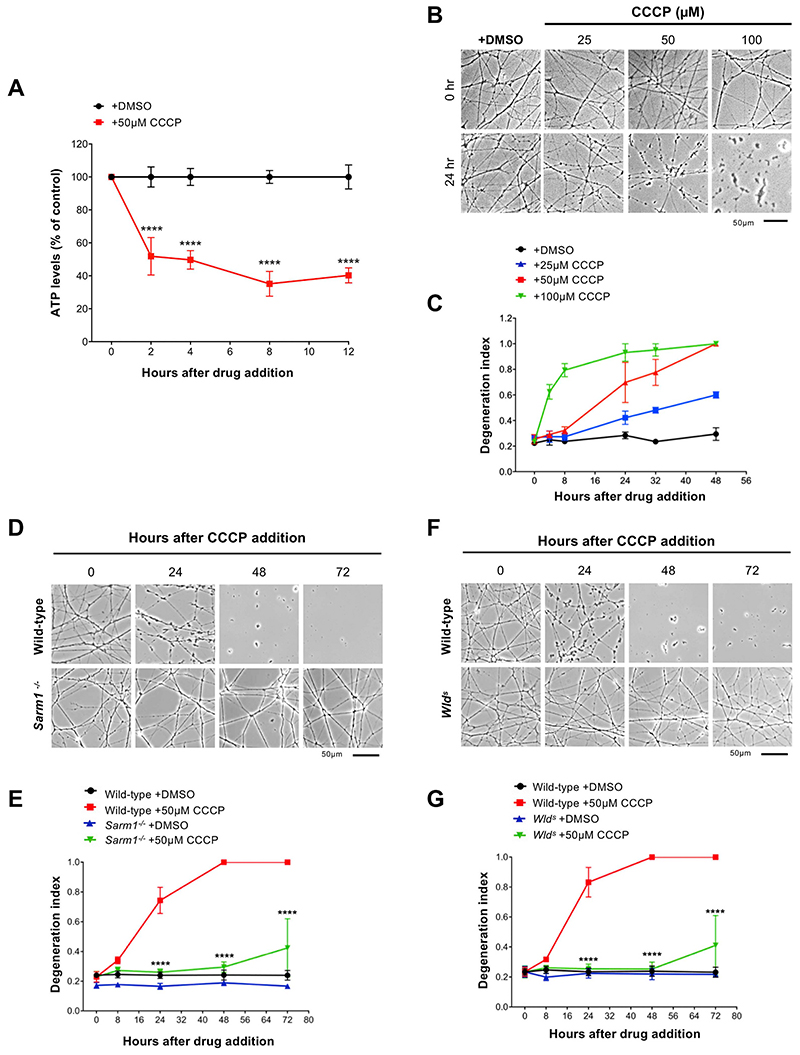
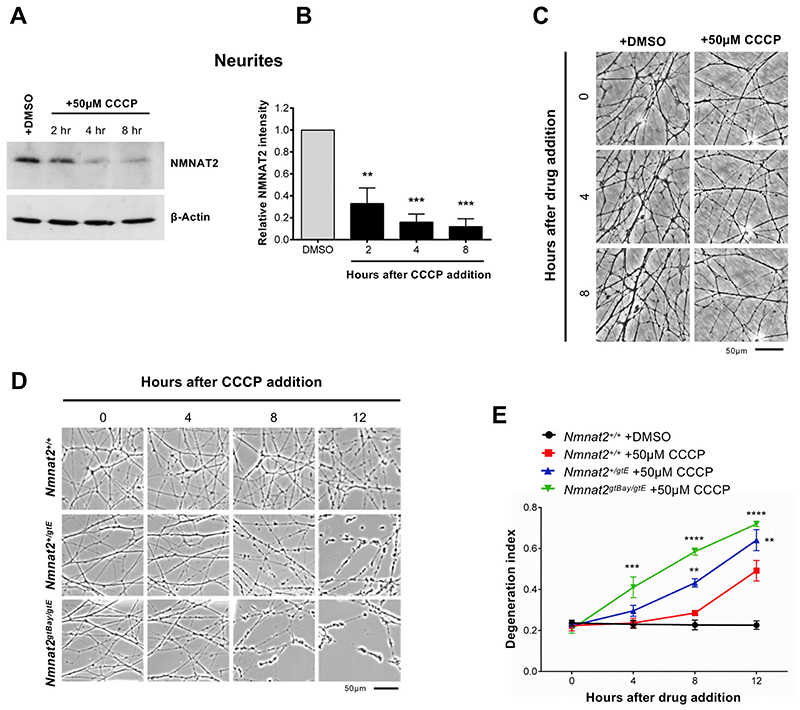
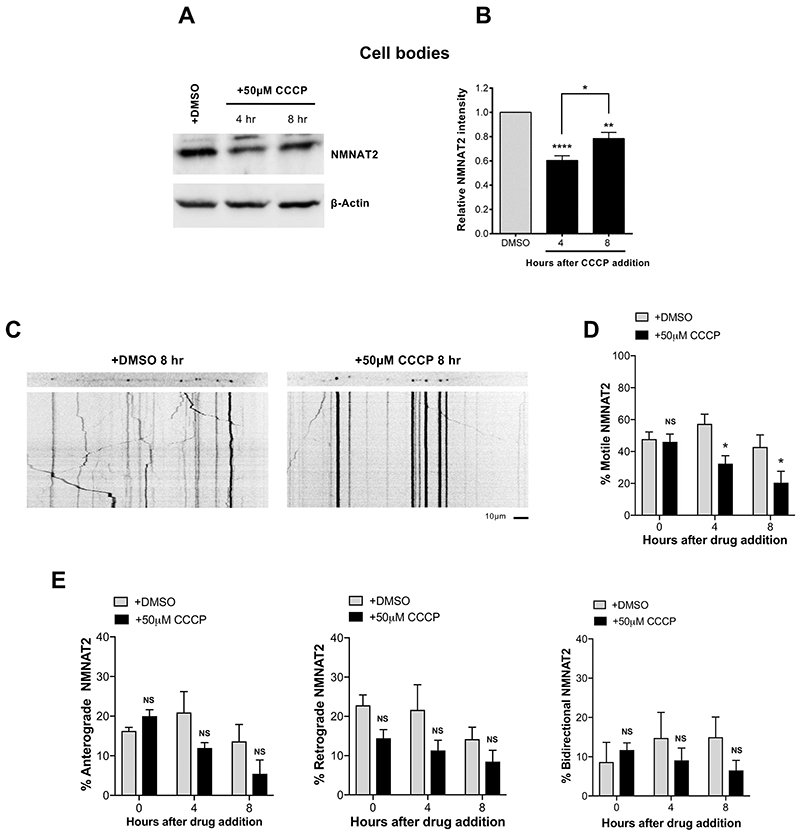
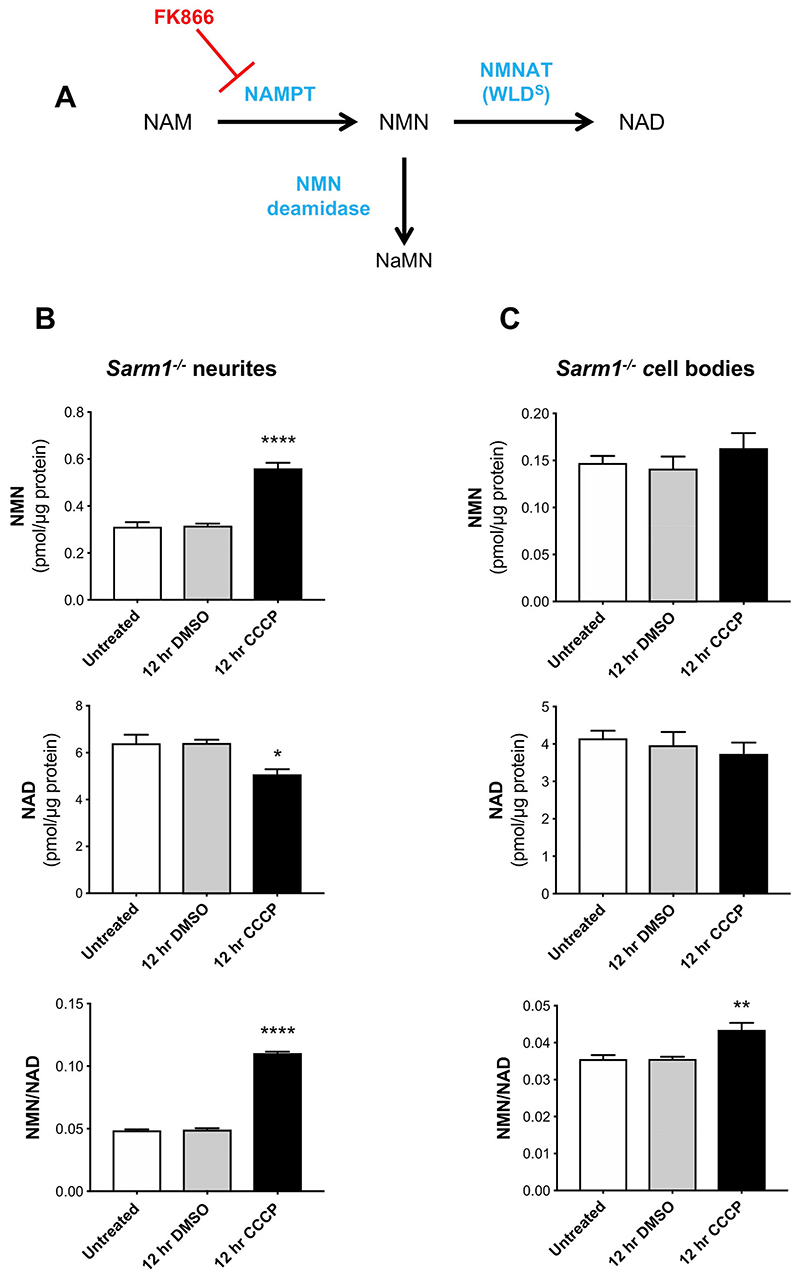
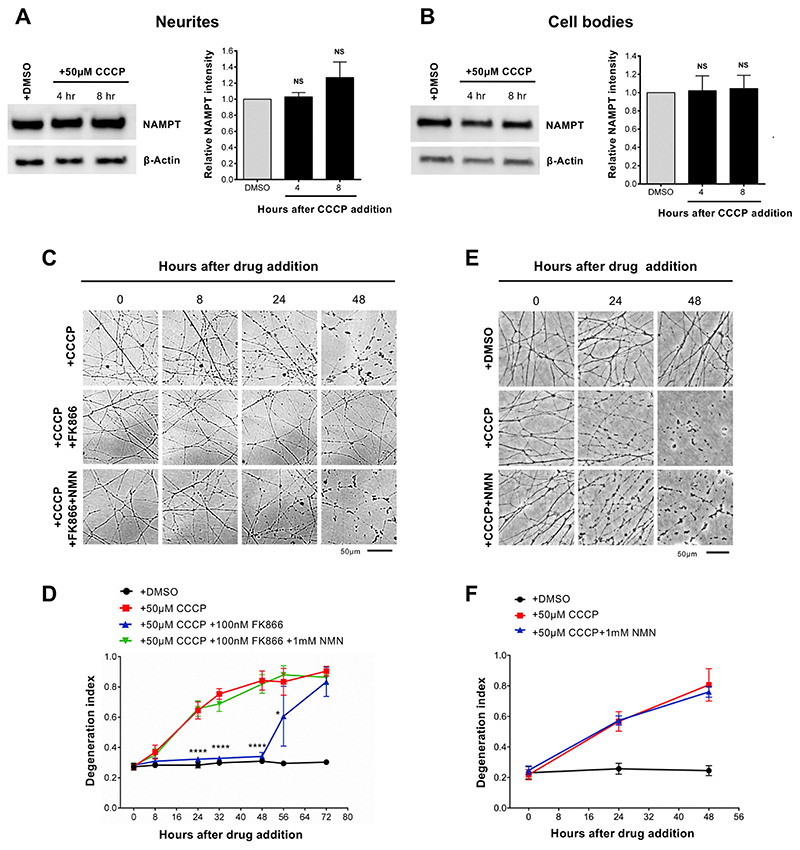
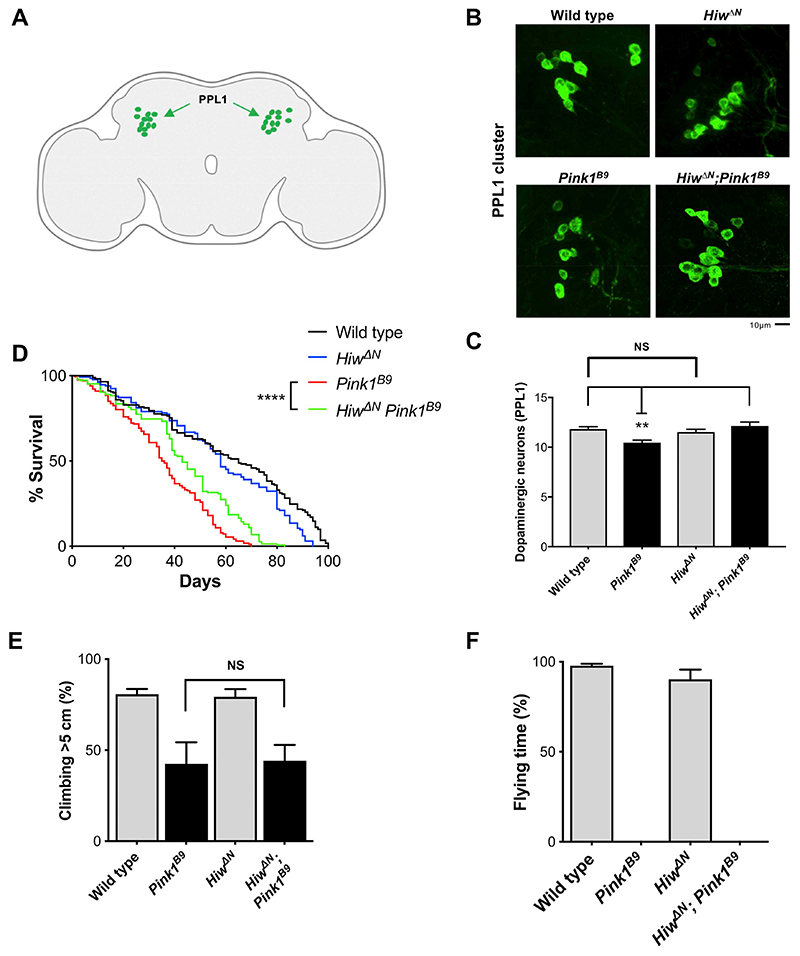
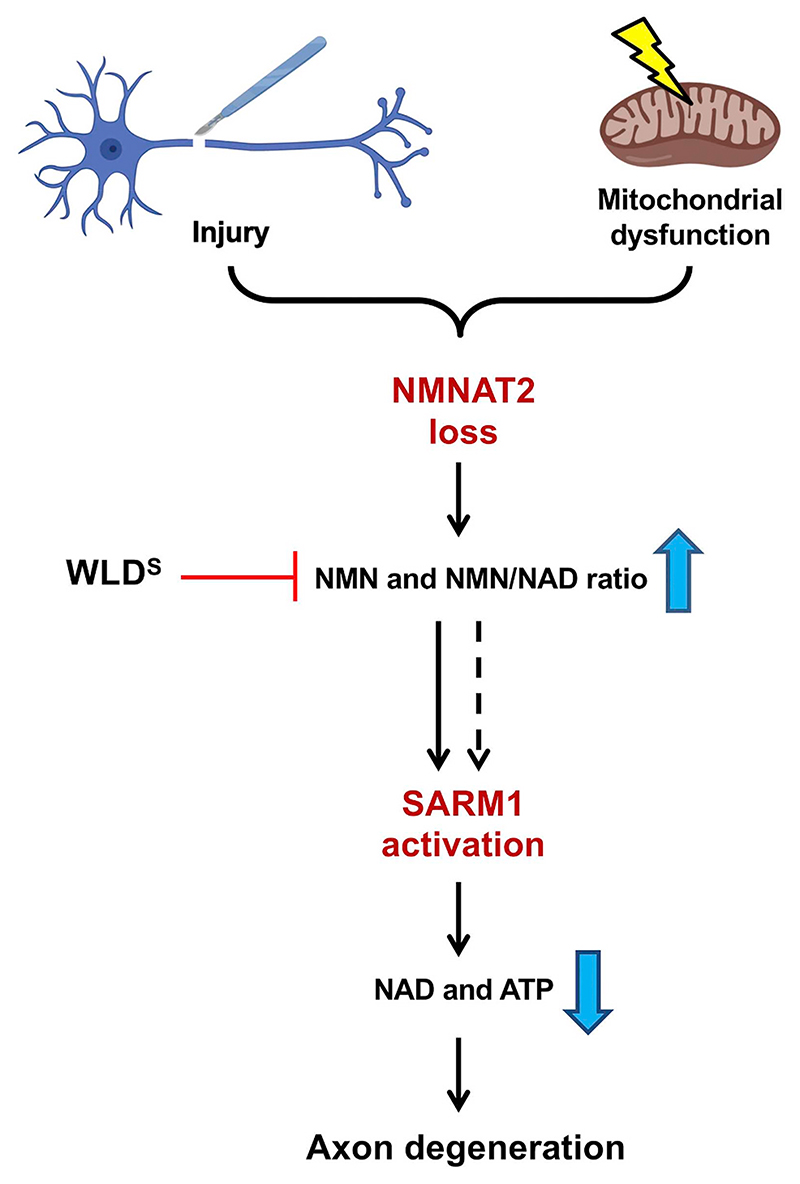
Wallerian degeneration of physically injured axons involves a well-defined molecular pathway linking loss of axonal survival factor NMNAT2 to activation of pro-degenerative protein SARM1. Manipulating the pathway through these proteins led to the identification of non-axotomy insults causing axon degeneration by a Wallerian-like mechanism, including several involving mitochondrial impairment. Mitochondrial dysfunction is heavily implicated in Parkinson's disease, Charcot-Marie-Tooth disease, hereditary spastic paraplegia and other axonal disorders. However, whether and how mitochondrial impairment activates Wallerian degeneration has remained unclear. Here, we show that disruption of mitochondrial membrane potential leads to axonal NMNAT2 depletion in mouse sympathetic neurons, increasing the substrate-to-product ratio (NMN/NAD) of this NAD-synthesising enzyme, a metabolic fingerprint of Wallerian degeneration. The mechanism appears to involve both impaired NMNAT2 synthesis and reduced axonal transport. Expression of WLDS and Sarm1 deletion both protect axons after mitochondrial uncoupling. Blocking the pathway also confers neuroprotection and increases the lifespan of flies with Pink1 loss-of-function mutation, which causes severe mitochondrial defects. These data indicate that mitochondrial impairment replicates all the major steps of Wallerian degeneration, placing it upstream of NMNAT2 loss, with the potential to contribute to axon pathology in mitochondrial disorders.
Overview
The claims and statistics of this paper haven’t been checked yet.
Run the check — free, no account needed. It reads the open-access text and checks the sources it cites.
Integrity signals
Registry
Cites
Statistics
Figures
Verification
Claims the paper makes
The claims and statistics of this paper haven’t been checked yet.
Run the check — free, no account needed. It reads the open-access text and checks the sources it cites.
Claims other papers make about this one
Each is checked against this paper’s own text: does it say what the citing paper says it does?
In the citing paper
“during axon degeneration, NMNAT2 axonal transport is blocked, and the axonal pool of the protein is rapidly degraded, leading to a critical depletion of NAD+ in the axon142,143.”
From NAD+ metabolism and its roles in cellular processes during ageing (2021) · cites this paper as [143]
Self-check
Percentages, sums and reported differences re-computed from the paper’s own numbers.
The self-check needs the paper’s full text.
Citations
Cites
Hereditary Early-Onset Parkinson's Disease Caused by Mutations in PINK1
Valente, E. M., Abou-Sleiman, P. M., Caputo, V., Muqit, M. M. K., Harvey, K., Gispert, S., Ali, Z., Del Turco, D., Bentivoglio, A. R., Healy, D. G., et al. (2004) · Science · doi:10.1126/science.1096284 · Cited by 3,481
The Roles of PINK1, Parkin, and Mitochondrial Fidelity in Parkinson’s Disease
Pickrell, A. M., & Youle, R. J. (2015) · Neuron · doi:10.1016/j.neuron.2014.12.007 · Cited by 2,310
Drosophila pink1 is required for mitochondrial function and interacts genetically with parkin
Clark, I. E., Dodson, M. W., Jiang, C., Cao, J. H., Huh, J. R., Seol, J. H., Yoo, S. J., Hay, B. A., & Guo, M. (2006) · Nature · doi:10.1038/nature04779 · Cited by 1,788
Mitochondrial dysfunction in Drosophila PINK1 mutants is complemented by parkin
Park, J., Lee, S. B., Lee, S., Kim, Y., Song, S., Kim, S., Bae, E., Kim, J., Shong, M., Kim, J.-M., et al. (2006) · Nature · doi:10.1038/nature04788 · Cited by 1,705
The mitochondrial membrane potential (Δψm) in apoptosis; an update
Ly, J. D., Grubb, D. R., & Lawen, A. (2003) · APOPTOSIS · doi:10.1023/a:1022945107762 · Cited by 1,607
Matsuda, W., Furuta, T., Nakamura, K. C., Hioki, H., Fujiyama, F., Arai, R., & Kaneko, T. (2009) · The Journal of Neuroscience · doi:10.1523/jneurosci.4029-08.2009 · Cited by 865
dSarm/Sarm1 Is Required for Activation of an Injury-Induced Axon Death Pathway
Osterloh, J. M., Yang, J. H., Rooney, T. M., Fox, A. N., Adalbert, R., Powell, E. H., Sheehan, A. E., Avery, M. A., Hackett, R., Logan, M. A., et al. (2012) · Science · doi:10.1126/science.1223899 · Cited by 688
Self-citationMelamed, Z., López-Erauskin, J., Baughn, M. W., Zhang, O., Drenner, K., Sun, Y., Freyermuth, F., McMahon, M. A., Beccari, M. S., Artates, J. W., et al. (2019) · Nature Neuroscience · doi:10.1038/s41593-018-0293-z · Cited by 635
Wallerian degeneration: an emerging axon death pathway linking injury and disease
Conforti, L., Gilley, J., & Coleman, M. P. (2014) · Nature reviews. Neuroscience · doi:10.1038/nrn3680 · Cited by 630
Self-citationEssuman, K., Summers, D. W., Sasaki, Y., Mao, X., DiAntonio, A., & Milbrandt, J. (2017) · Neuron · doi:10.1016/j.neuron.2017.02.022 · Cited by 619
Cited by
Sorted by citations
NAD+ metabolism and its roles in cellular processes during ageing
Covarrubias, A. J., Perrone, R., Grozio, A., & Verdin, E. (2021) · Nature Reviews Molecular Cell Biology · doi:10.1038/s41580-020-00313-x · Cited by 1,617
Hughes, R. O., Bosanac, T., Mao, X. R., Engber, T. M., DiAntonio, A., Milbrandt, J., Devraj, R. V., & Krauss, R. (2021) · Cell Reports · doi:10.1016/j.celrep.2020.108588 · Cited by 183
Liu, H., Zhang, J., Xu, X., Lu, S., Yang, D., Xie, C., Jia, M., Zhang, W., Jin, L., Wang, X., et al. (2021) · Theranostics · doi:10.7150/thno.49054 · Cited by 162
Figley, M. D., & DiAntonio, A. (2020) · Current Opinion in Neurobiology · doi:10.1016/j.conb.2020.02.012 · Cited by 144
SARM1 acts downstream of neuroinflammatory and necroptotic signaling to induce axon degeneration
Ko, K. W., Milbrandt, J., & DiAntonio, A. (2020) · The Journal of Cell Biology · doi:10.1083/jcb.201912047 · Cited by 137
Metadata
- Authors
- Loreto, A., Hill, C. S., Hewitt, V. L., Orsomando, G., Angeletti, C., Gilley, J., Lucci, C., Sanchez-Martinez, A., Whitworth, A. J., Conforti, L., Dajas-Bailador, F., & Coleman, M. P.
- Affiliations
- University of Cambridge (GB)
- Marche Polytechnic University (IT)
- University of Nottingham (GB)
- Corresponding author
- Loreto, Andrea
- Coleman, Michael P.
- ORCID
- Venue
- Neurobiology of Disease
- Publisher
- Elsevier BV
- Published
- 2020-02
- Volume
- 134
- Pages
- 104678
- ISSN
- 0969-9961 (ISSN-L)
- PMC
- PMC7611775
- OpenAlex
- W2984519822
- Cited by
- 131
- References
- 51
- Citations by year
- 2026: 12 · 2025: 13 · 2024: 23 · 2023: 16 · 2022: 22 · 2021: 30 · 2020: 13
- FWCI
- 7.84
- Type
- journal article
- Language
- en
- Open access
- hybrid
- doi.org
- Licence
- Locations
- Neurobiology of Disease (publishedVersion, cc-by)
- bioRxiv (Cold Spring Harbor Laboratory) (acceptedVersion, cc-by-nc-nd)
- PubMed (publishedVersion)
- Europe PMC (PubMed Central) (acceptedVersion, other-oa)
- PubMed Central (acceptedVersion, cc-by)
- DOAJ (DOAJ: Directory of Open Access Journals) (submittedVersion, cc-by-sa)
- UCL Discovery (University College London) (submittedVersion)
- Repository@Nottingham (University of Nottingham) (submittedVersion, cc-by)
- Università Politecnica delle Marche (Università Politecnica delle Marche) (submittedVersion, cc-by-nc-nd)
- Università Politecnica delle Marche (Università Politecnica delle Marche) (submittedVersion)
- Apollo (University of Cambridge) (submittedVersion)
- Apollo
- Funders
- Medical Research Council
- Parkinson's UK
- Wellcome Trust
- Topics
- Life Sciences › Neuroscience › Cellular and Molecular Neuroscience › Nerve injury and regeneration
- Life Sciences › Neuroscience › Cellular and Molecular Neuroscience › Hereditary Neurological Disorders
- Life Sciences › Biochemistry, Genetics and Molecular Biology › Molecular Biology › Mitochondrial Function and Pathology
- Keywords
- Wallerian degeneration, mitochondrial dysfunction, NMNAT2, SARM1, axonal degeneration, mitochondrial membrane potential, mitochondrial uncoupling, axonal transport, sympathetic neurons, NAD biosynthesis, PINK1, mitochondrial disease, neuroprotection
- MeSH terms
- Animals, Axons, Cytoskeletal Proteins, Drosophila, Male, Mice, Inbred C57BL, Mitochondria, Nicotinamide-Nucleotide Adenylyltransferase, Wallerian Degeneration, Armadillo Domain Proteins, Membrane Potential, Mitochondrial
About these checks
Registry, retraction, Cites and statistics results are computed, not judged, with one exception: a printed reference that no index lists is read once by a model before it counts as a citation error. Claims are extracted by a model and kept only when their quote appears verbatim in the text; each cited source is then checked, with a model’s help, for whether it says what the claim relies on. Those verdicts can be wrong — read the claim’s quote and the cited source before relying on one.
Statistics and arithmetic are recomputed, not judged.
Confidence bands are shown only for fields calibrated on our annotated test set. None is calibrated yet, so no band is shown.
What counts as a claim ›How we measure confidence ›How we check this ›
Are you an author, or do you see a problem with this page? Request a review
