

The DOI matches its Crossref record; 83 of the 86 references it cites were found in a registry or an index.
Atypical recruitment of medial prefrontal cortex in autism spectrum disorders: An fMRI study of two executive function tasks
Open accessAbstract
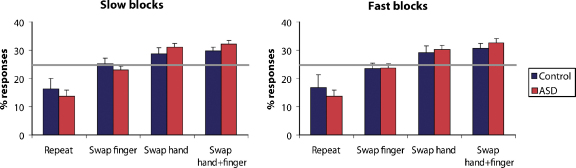
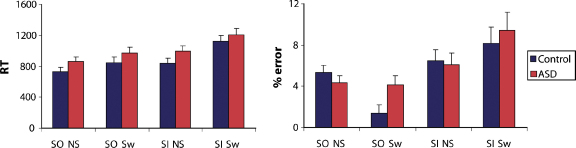
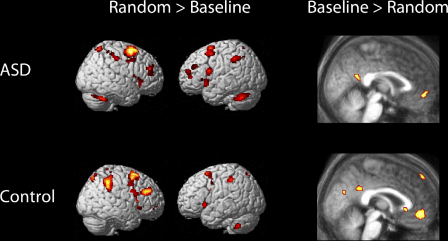
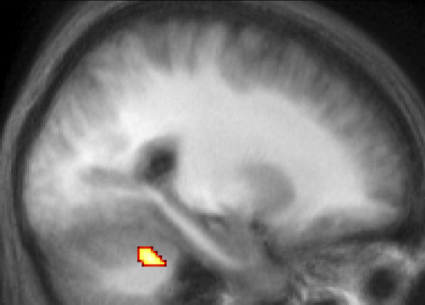
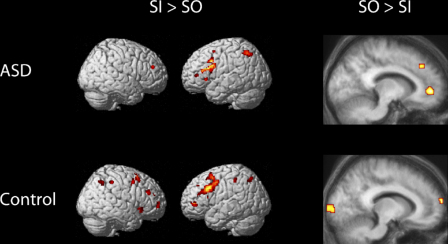
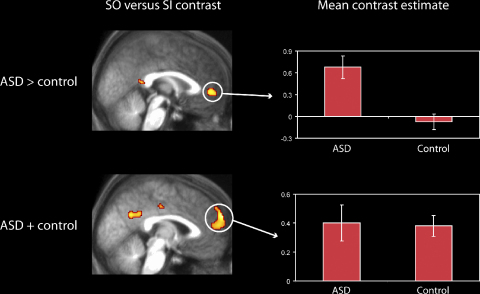
Recent studies have suggested an uneven profile of executive dysfunction in autism spectrum disorders (ASD). For example, some authors have reported deficits on newly developed tests of executive function sensitive to rostral prefrontal function, despite spared, or even superior, performance on other tests. We investigated the performance of a group of high-functioning participants with ASD (N=15) and an age- and IQ-matched control group (N=18) on two executive function tests, whilst undergoing functional magnetic resonance imaging (fMRI). Behaviourally, there were no significant differences between the two groups. In a classical test of executive function (random response generation), BOLD signal differed between the groups in the cerebellum but not in the frontal lobes. However, on a new test of executive function (selection between stimulus-oriented and stimulus-independent thought), the ASD group exhibited significantly greater signal-change in medial rostral prefrontal cortex (especially Brodmann Area 10) in the comparison of stimulus-oriented versus stimulus-independent attention. In addition, the new test (but not the classical test) provided evidence for abnormal functional organisation of medial prefrontal cortex in ASD. These results underline the heterogeneity of different tests of executive function, and suggest that executive functioning in ASD is associated with task-specific functional change.
Overview
The claims and statistics of this paper haven’t been checked yet.
Run the check — free, no account needed. It reads the open-access text and checks the sources it cites.
Integrity signals
Registry
Cites
Statistics
Figures
Verification
Claims the paper makes
The claims and statistics of this paper haven’t been checked yet.
Run the check — free, no account needed. It reads the open-access text and checks the sources it cites.
Claims other papers make about this one
Each is checked against this paper’s own text: does it say what the citing paper says it does?
The source backs part of the claim, not all of it — or backs it for a different population, condition or comparison.
In the citing paper
“disruptions in cerebellar–mPFC connectivity have been demonstrated in ASD20.”
From Regulation of autism-relevant behaviors by cerebellar-prefrontal cortical circuits (2020) · cites this paper as [20]
Experimental — accuracy not yet measured
Self-check
Percentages, sums and reported differences re-computed from the paper’s own numbers.
The self-check needs the paper’s full text.
Citations
Cites
Studies of interference in serial verbal reactions
Stroop, J. R. (1935) · Journal of Experimental Psychology · doi:10.1037/h0054651 · Cited by 18,622
Miyake, A., Friedman, N. P., Emerson, M. J., Witzki, A. H., Howerter, A., & Wager, T. D. (2000) · Cognitive Psychology · doi:10.1006/cogp.1999.0734 · Cited by 15,798
Statistical parametric maps in functional imaging: A general linear approach
Friston, K. J., Holmes, A. P., Worsley, K. J., Poline, J. ‐., Frith, C. D., & Frackowiak, R. S. J. (1994) · Human Brain Mapping · doi:10.1002/hbm.460020402 · Cited by 9,688
Self-citationLord, C., Rutter, M., & Le Couteur, A. (1994) · Journal of Autism and Developmental Disorders · doi:10.1007/bf02172145 · Cited by 9,065
Does the autistic child have a “theory of mind” ?
Baron-Cohen, S., Leslie, A. M., & Frith, U. (1985) · Cognition · doi:10.1016/0010-0277(85)90022-8 · Cited by 8,599
Lord, C., Risi, S., Lambrecht, L., Cook, E. H., Leventhal, B. L., DiLavore, P. C., Pickles, A., & Rutter, M. (2000) · Journal of Autism and Developmental Disorders · doi:10.1023/a:1005592401947 · Cited by 7,520
From Neuropsychology to Mental Structure
Shallice, T. (1988) · doi:10.1017/cbo9780511526817 · Cited by 4,072
Specific impairments of planning
Shallice, T. (1982) · Philosophical Transactions of the Royal Society of London. B, Biological Sciences · doi:10.1098/rstb.1982.0082 · Cited by 3,741
Wechsler Adult Intelligence Scale-III
Ryan, J. J., & Lopez, S. J. (2001) · Springer eBooks · doi:10.1007/978-1-4615-1185-4_2 · Cited by 3,680
Frith, C., & Frith, U. (2005) · Current Biology · doi:10.1016/j.cub.2005.08.041 · Cited by 3,561
Self-citation
Cited by
Sorted by citations
An aberrant precision account of autism
Lawson, R. P., Rees, G., & Friston, K. J. (2014) · Frontiers in Human Neuroscience · doi:10.3389/fnhum.2014.00302 · Cited by 641
A genome-wide linkage and association scan reveals novel loci for autism
The Gene Discovery Project of Johns Hopkins & the Autism Consortium, Weiss, L. A., & Arking, D. E. (2009) · Nature · doi:10.1038/nature08490 · Cited by 619
A meta-analysis of cerebellar contributions to higher cognition from PET and fMRI studies
E, K., Chen, S. A., Ho, M. R., & Desmond, J. E. (2014) · Human Brain Mapping · doi:10.1002/hbm.22194 · Cited by 516
Understanding Executive Control in Autism Spectrum Disorders in the Lab and in the Real World
Kenworthy, L., Yerys, B. E., Anthony, L. G., & Wallace, G. L. (2008) · Neuropsychology Review · doi:10.1007/s11065-008-9077-7 · Cited by 504
Minds made for sharing: initiating joint attention recruits reward-related neurocircuitry
Schilbach, L., Wilms, M., Eickhoff, S. B., Romanzetti, S., Tepest, R., Bente, G., Shah, N. J., Fink, G. R., & Vogeley, K. (2010) · Journal of Cognitive Neuroscience · doi:10.1162/jocn.2009.21401 · Cited by 415
A systematic review and meta-analysis of the fMRI investigation of autism spectrum disorders
Philip, R. C. M., Dauvermann, M. R., Whalley, H. C., Baynham, K., Lawrie, S. M., & Stanfield, A. C. (2011) · Neuroscience & Biobehavioral Reviews · doi:10.1016/j.neubiorev.2011.10.008 · Cited by 422
Enhanced visual functioning in autism: An ALE meta-analysis
Samson, F., Mottron, L., Soulières, I., & Zeffiro, T. A. (2012) · Human Brain Mapping · doi:10.1002/hbm.21307 · Cited by 351
Distortions and disconnections: Disrupted brain connectivity in autism
Wass, S. V. (2010) · Brain and Cognition · doi:10.1016/j.bandc.2010.10.005 · Cited by 335
Dumontheil, I. (2014) · Developmental Cognitive Neuroscience · doi:10.1016/j.dcn.2014.07.009 · Cited by 293
The nature of brain dysfunction in autism: Functional brain imaging studies
Minshew, N. J., & Keller, T. A. (2010) · Current Opinion in Neurology · doi:10.1097/wco.0b013e32833782d4 · Cited by 291
Regulation of autism-relevant behaviors by cerebellar-prefrontal cortical circuits
Kelly, E., Meng, F., Fujita, H., Morgado, F., Kazemi, Y., Rice, L. C., Ren, C., Escamilla, C. O., Gibson, J. M., Sajadi, S., et al. (2020) · Nature Neuroscience · doi:10.1038/s41593-020-0665-z · Cited by 280
Autism Spectrum Disorder and the Cerebellum
Becker, E. B. E., & Stoodley, C. J. (2013) · International review of neurobiology · doi:10.1016/b978-0-12-418700-9.00001-0 · Cited by 292
The neural substrates of cognitive control deficits in autism spectrum disorders
Solomon, M., Ozonoff, S. J., Ursu, S., Ravizza, S., Cummings, N., Ly, S., & Carter, C. S. (2009) · Neuropsychologia · doi:10.1016/j.neuropsychologia.2009.04.019 · Cited by 263
Ecker, C. (2012) · Archives of General Psychiatry · doi:10.1001/archgenpsychiatry.2011.1251 · Cited by 259
White, S. W., Mazefsky, C. A., Dichter, G. S., Chiu, P. H., Richey, J. A., & Ollendick, T. H. (2014) · International Journal of Developmental Neuroscience · doi:10.1016/j.ijdevneu.2014.05.012 · Cited by 252
Dufour, N., Redcay, E., Young, L., Mavros, P. L., Moran, J. M., Triantafyllou, C., Gabrieli, J. D. E., & Saxe, R. (2013) · PLoS ONE · doi:10.1371/journal.pone.0075468 · Cited by 228
Functional magnetic resonance imaging of autism spectrum disorders
Dichter, G. S. (2012) · Dialogues in Clinical Neuroscience · doi:10.31887/dcns.2012.14.3/gdichter · Cited by 215
Memory in autistic spectrum disorder.
Boucher, J., Mayes, A. R., & Bigham, S. (2012) · Psychological Bulletin · doi:10.1037/a0026869 · Cited by 204
Hyperfocus: the forgotten frontier of attention
Ashinoff, B. K., & Abu-Akel, A. M. (2019) · Psychological Research · doi:10.1007/s00426-019-01245-8 · Cited by 226
Elderly with Autism: Executive Functions and Memory
Geurts, H. M., & Vissers, M. E. (2011) · Journal of Autism and Developmental Disorders · doi:10.1007/s10803-011-1291-0 · Cited by 190
Environmental enrichment as an effective treatment for autism: A randomized controlled trial.
Woo, C. C., & Leon, M. (2013) · Behavioral Neuroscience · doi:10.1037/a0033010 · Cited by 175
Is anorexia nervosa a version of autism spectrum disorders?
Oldershaw, A., Treasure, J. L., Hambrook, D. G., Tchanturia, K., & Schmidt, U. H. (2011) · European Eating Disorders Review · doi:10.1002/erv.1069 · Cited by 179
Social Behavior Is Modulated by Valence-Encoding mPFC-Amygdala Sub-circuitry
Huang, W., Zucca, A., Levy, J., & Page, D. T. (2020) · Cell Reports · doi:10.1016/j.celrep.2020.107899 · Cited by 171
Autism is characterized by dorsal anterior cingulate hyperactivation during social target detection
Dichter, G. S., Felder, J. N., & Bodfish, J. W. (2009) · Social Cognitive and Affective Neuroscience · doi:10.1093/scan/nsp017 · Cited by 145
Benevides, T. W., & Lane, S. J. (2015) · Journal of Autism and Developmental Disorders · doi:10.1007/s10803-013-1971-z · Cited by 137
Top-down control of hippocampal signal-to-noise by prefrontal long-range inhibition
Malik, R., Li, Y., Schamiloglu, S., & Sohal, V. S. (2022) · Cell · doi:10.1016/j.cell.2022.04.001 · Cited by 142
Cognitive Remediation Therapy for Eating Disorders: Development, Refinement and Future Directions
Tchanturia, K., & Lock, J. (2010) · Current topics in behavioral neurosciences · doi:10.1007/7854_2010_90 · Cited by 138
Pervasive Rightward Asymmetry Shifts of Functional Networks in Autism Spectrum Disorder
Cardinale, R., Shih, P., Fishman, I., Ford, L. M., & Müller, R. (2013) · JAMA Psychiatry · doi:10.1001/jamapsychiatry.2013.382 · Cited by 144
Kas, M. J., Glennon, J. C., Buitelaar, J., Ey, E., Biemans, B., Crawley, J., Ring, R. H., Lajonchere, C., Esclassan, F., Talpos, J., et al. (2014) · Psychopharmacology · doi:10.1007/s00213-013-3268-5 · Cited by 132
Separable Forms of Reality Monitoring Supported by Anterior Prefrontal Cortex
Simons, J. S., Henson, R. N., Gilbert, S. J., & Fletcher, P. C. (2007) · Journal of Cognitive Neuroscience · doi:10.1162/jocn.2008.20036 · Cited by 135
Self-citation[Neuropsychology of executive functions].
Verdejo‐García, A., & Bechara, A. (2010) · PubMed · Cited by 117
Yi, L., Wang, J., Jia, L., Zhao, Z., Lu, J., Li, K., Jia, J., Yong He, A., Jiang, C., & Han, Y. (2012) · PLoS ONE · doi:10.1371/journal.pone.0044758 · Cited by 113
Impairments on “open‐ended” executive function tests in autism
White, S. J., Burgess, P. W., & Hill, E. L. (2009) · Autism Research · doi:10.1002/aur.78 · Cited by 112
Self-citationTowgood, K. J., Meuwese, J. D. I., Gilbert, S. J., Turner, M., & Burgess, P. W. (2009) · Neuropsychologia · doi:10.1016/j.neuropsychologia.2009.06.028 · Cited by 102
Self-citationRethinking the role of music in the neurodevelopment of autism spectrum disorder
Janzen, T. B., & Thaut, M. H. (2018) · Music & Science · doi:10.1177/2059204318769639 · Cited by 98
Developmental Meta-Analysis of the Functional Neural Correlates of Autism Spectrum Disorders
Dickstein, D. P., Pescosolido, M. F., Reidy, B. L., Galvan, T., Kim, K. L., Seymour, K. E., Laird, A. R., Martino, A. D., & Barrett, R. P. (2013) · Journal of the American Academy of Child & Adolescent Psychiatry · doi:10.1016/j.jaac.2012.12.012 · Cited by 92
Frontoparietal Network in Executive Functioning in Autism Spectrum Disorder
May, K. E., & Kana, R. K. (2020) · Autism Research · doi:10.1002/aur.2403 · Cited by 87
Reduced Theta Connectivity during Set-Shifting in Children with Autism
Doesburg, S. M., Vidal, J., & Taylor, M. J. (2013) · Frontiers in Human Neuroscience · doi:10.3389/fnhum.2013.00785 · Cited by 81
Executive Functioning Theory and Autism
Geurts, H. M., de Vries, M., & van den Bergh, S. F. W. M. (2013) · Springer eBooks · doi:10.1007/978-1-4614-8106-5_8 · Cited by 80
Gilbert, S. J., Meuwese, J. D. I., Towgood, K. J., Frith, C. D., & Burgess, P. W. (2009) · Brain · doi:10.1093/brain/awn365 · Cited by 73
Self-citationBailey, C. D. C., Alves, N. C., Nashmi, R., De Biasi, M., & Lambe, E. K. (2012) · Biological Psychiatry · doi:10.1016/j.biopsych.2011.09.011 · Cited by 69
Thabault, M., Turpin, V., Maïsterrena, A., Jaber, M., Egloff, M., & Galvan, L. (2022) · International Journal of Molecular Sciences · doi:10.3390/ijms23042294 · Cited by 74
Does “Task Difficulty” Explain “Task-Induced Deactivation?”
Gilbert, S. J., Bird, G., Frith, C., & Burgess, P. W. (2012) · Frontiers in Psychology · doi:10.3389/fpsyg.2012.00125 · Cited by 70
Self-citationWhite, S. J., Frith, U., Rellecke, J., Al-Noor, Z., & Gilbert, S. J. (2013) · Neuropsychologia · doi:10.1016/j.neuropsychologia.2013.12.013 · Cited by 74
Self-citationPina‐Camacho, L., Villero, S., Fraguas, D., Boada, L., Janssen, J., Navas-Sánchez, F. J., Mayoral, M., Llorente, C., Arango, C., & Parellada, M. (2011) · Journal of Autism and Developmental Disorders · doi:10.1007/s10803-011-1360-4 · Cited by 61
Reduced beta connectivity during emotional face processing in adolescents with autism
Leung, R. C., Ye, A. X., Wong, S. M., Taylor, M. J., & Doesburg, S. M. (2014) · Molecular Autism · doi:10.1186/2040-2392-5-51 · Cited by 63
Neural circuit pathology driven by Shank3 mutation disrupts social behaviors
Kim, S., Kim, Y.-E., Song, I., Ujihara, Y., Kim, N., Jiang, Y., Yin, H. H., Lee, T., & Kim, I. H. (2022) · Cell Reports · doi:10.1016/j.celrep.2022.110906 · Cited by 52
Goldberg, M. C., Spinelli, S., Joel, S., Pekar, J. J., DENCKLA, M. B., & Mostofsky, S. H. (2010) · Developmental Cognitive Neuroscience · doi:10.1016/j.dcn.2010.07.002 · Cited by 48
The Physiology of Executive Functioning
Chung, H. J., Weyandt, L. L., & Swentosky, A. J. (2013) · Springer eBooks · doi:10.1007/978-1-4614-8106-5_2 · Cited by 56
Neural Substrates of the Drift-Diffusion Model in Brain Disorders
Gupta, A., Bansal, R., Alashwal, H., Kaçar, A. Ş., Balcı, F., & Moustafa, A. A. (2022) · Frontiers in Computational Neuroscience · doi:10.3389/fncom.2021.678232 · Cited by 49
A deep connectome learning network using graph convolution for connectome-disease association study
Yang, Y., Ye, C., & Ma, T. (2023) · Neural Networks · doi:10.1016/j.neunet.2023.04.025 · Cited by 47
Explainable Classification of Brain Networks via Contrast Subgraphs
Lanciano, T., Bonchi, F., & Gionis, A. (2020) · ACM SIGKDD Conference on Knowledge Discovery and Data Mining (KDD) · doi:10.1145/3394486.3403383 · Cited by 47
Wang, T., Xiao, F., Wu, G., Fang, J., Sun, Z., Feng, H., Zhang, J., & Xu, H. (2017) · Neural Plasticity · doi:10.1155/2017/8738714 · Cited by 41
Yoo, T., Cho, H., Park, H., Lee, J., & Kim, E. (2019) · Frontiers in Cellular Neuroscience · doi:10.3389/fncel.2019.00458 · Cited by 41
Goodwill, A., Low, L., Fox, P., Fox, P., Poon, K., Bhowmick, S., & Chen, S. A. A. (2023) · Brain Imaging and Behavior · doi:10.1007/s11682-022-00754-2 · Cited by 30
Thomson, A. R., Pasanta, D., Arichi, T., & Puts, N. A. J. (2024) · Neuroscience & Biobehavioral Reviews · doi:10.1016/j.neubiorev.2024.105728 · Cited by 50
Herrington, J. D., Riley, M. E., Grupe, D. W., & Schultz, R. T. (2014) · Journal of Autism and Developmental Disorders · doi:10.1007/s10803-014-2233-4 · Cited by 39
Development of the Selection and Manipulation of Self-Generated Thoughts in Adolescence
Dumontheil, I., Hassan, B., Gilbert, S. J., & Blakemore, S. (2010) · Journal of Neuroscience · doi:10.1523/jneurosci.1375-10.2010 · Cited by 39
Self-citationReality Monitoring and Metamemory in Adults with Autism Spectrum Conditions
Cooper, R. A., Plaisted-Grant, K. C., Baron‐Cohen, S., & Simons, J. S. (2016) · Journal of Autism and Developmental Disorders · doi:10.1007/s10803-016-2749-x · Cited by 38
Marques, R. C., Vieira, L., Marques, D., & Cantilino, A. (2019) · Brazilian Journal of Psychiatry · doi:10.1590/1516-4446-2019-0344 · Cited by 42
Wang, T., Sun, D., Liu, Y., Mei, B., Li, H., Zhang, S., & Zhang, J. (2017) · Frontiers in Neurology · doi:10.3389/fneur.2017.00403 · Cited by 36
Venkataraman, A., Duncan, J. S., Yang, D. Y. ‐., & Pelphrey, K. A. (2015) · NeuroImage Clinical · doi:10.1016/j.nicl.2015.04.021 · Cited by 33
Neurocognitive and cerebellar function in ADHD, autism and spinocerebellar ataxia
Cundari, M., Vestberg, S., Gustafsson, P., Gorcenco, S., & Rasmussen, A. (2023) · Frontiers in Systems Neuroscience · doi:10.3389/fnsys.2023.1168666 · Cited by 38
Lyons, K., Stevenson, R. A., Owen, A. M., & Stojanoski, B. B. (2020) · NeuroImage Clinical · doi:10.1016/j.nicl.2020.102477 · Cited by 31
Naglieri, J. A., & Goldstein, S. (2013) · Springer eBooks · doi:10.1007/978-1-4614-8106-5_14 · Cited by 35
Wu, H., White, S. J., Rees, G. E., & Burgess, P. W. (2018) · Cortex · doi:10.1016/j.cortex.2018.01.013 · Cited by 30
Self-citationThe influence of age and ASD on verbal fluency networks
Baxter, L. C., Nespodzany, A., Walsh, M. J. M., Wood, E. T., Smith, C. J., & Braden, B. B. (2019) · Research in Autism · doi:10.1016/j.rasd.2019.03.002 · Cited by 28
Thiébaut, F. I., White, S. J., Walsh, A. E. L., Klargaard, S. K., Wu, H.-C., Rees, G. E., & Burgess, P. W. (2015) · Journal of Autism and Developmental Disorders · doi:10.1007/s10803-015-2551-1 · Cited by 33
Self-citationPower spectrum scale invariance identifies prefrontal dysregulation in paranoid schizophrenia
Rǎdulescu, A., Rubin, D., Strey, H. H., & Mujica-Parodi, L. R. (2011) · Human Brain Mapping · doi:10.1002/hbm.21309 · Cited by 28
Aberrant neural mediation of verbal fluency in autism spectrum disorders
Kenworthy, L., Wallace, G. L., Birn, R., Milleville, S. C., Case, L. K., Bandettini, P. A., & Martin, A. (2013) · Brain and Cognition · doi:10.1016/j.bandc.2013.08.003 · Cited by 26
Mapping social target detection with functional magnetic resonance imaging
Dichter, G. S., Felder, J. N., Bodfish, J. W., Sikich, L., & Belger, A. (2008) · Social Cognitive and Affective Neuroscience · doi:10.1093/scan/nsn037 · Cited by 27
Valproic acid treated female Long-Evans rats are impaired on attentional set-shifting
McKinnell, Z. E., Maze, T., Ramos, A., Challans, B., & Plakke, B. (2020) · Behavioural Brain Research · doi:10.1016/j.bbr.2020.112966 · Cited by 27
Bayesian Community Detection in the Space of Group-Level Functional Differences
Venkataraman, A., Yang, D. Y. ‐., Pelphrey, K. A., & Duncan, J. S. (2016) · IEEE Transactions on Medical Imaging · doi:10.1109/tmi.2016.2536559 · Cited by 24
Ji, J., & Yao, Y. (2020) · IEEE Transactions on Computational Biology and Bioinformatics · doi:10.1109/tcbb.2020.2989315 · Cited by 22
When Language Breaks Down: Analysing Discourse in Clinical Contexts
Elissa, D., & de Villiers, J. (2010) · Medical Entomology and Zoology · Cited by 22
Synaptopathology in autism spectrum disorders: Complex effects of synaptic genes on neural circuits
Wang, X., Kéry, R., & Xiong, Q. (2017) · Progress in Neuro-Psychopharmacology and Biological Psychiatry · doi:10.1016/j.pnpbp.2017.09.026 · Cited by 24
Li, X., Qu, F., Xie, W., Wang, F., Liu, H., Song, S., Chen, T., Zhang, Y., Zhu, S., Wang, Y., et al. (2014) · Toxicological Sciences · doi:10.1093/toxsci/kfu049 · Cited by 21
Traces of culture: The feedback loop between behavior, brain, and disorder
Crafa, D., & Nagel, S. K. (2020) · Transcultural Psychiatry · doi:10.1177/1363461519879515 · Cited by 24
Antonucci, L. A., Taurisano, P., Coppola, G., & Cassibba, R. (2018) · Neuroscience & Biobehavioral Reviews · doi:10.1016/j.neubiorev.2018.11.002 · Cited by 20
Neural correlates of facial recognition deficits in autism spectrum disorder: a comprehensive review
Liu, J., Chen, H., Wang, H., & Wang, Z. (2025) · Frontiers in Psychiatry · doi:10.3389/fpsyt.2024.1464142 · Cited by 22
Chan, M. M. Y., Chan, M.-C., Lai, O., Krishnamurthy, K., & Han, Y. M. Y. (2022) · Biomedicines · doi:10.3390/biomedicines10051132 · Cited by 19
What Is Social about Autism? The Role of Allostasis-Driven Learning
Djerassi, M., Ophir, S., & Atzil, S. (2021) · Brain Sciences · doi:10.3390/brainsci11101269 · Cited by 22
Kim, Y., Noh, Y. W., Kim, K., Yang, E., Kim, H., & Kim, E. (2020) · Frontiers in Cellular Neuroscience · doi:10.3389/fncel.2020.00023 · Cited by 18
An update on the neurobiology of repetitive behaviors in autism
Yerys, B. E. (2015) · International review of research in developmental disabilities · doi:10.1016/bs.irrdd.2015.06.006 · Cited by 16
Spontaneous synchronous network activity in the neonatal development of mPFC in mice
Pires, J., Nelissen, R., Mansvelder, H. D., & Meredith, R. M. (2021) · Developmental Neurobiology · doi:10.1002/dneu.22811 · Cited by 14
Tower of London: Planning Development in Children from 6 to 13 Years of Age
Injoque‐Ricle, I., Barreyro, J. P., Calero, A. D., & Burín, D. I. (2014) · The Spanish Journal of Psychology · doi:10.1017/sjp.2014.83 · Cited by 16
Uccelli, N. A., Codagnone, M. G., Traetta, M. E., Levanovich, N., Rosato‐Siri, M. V., Urrutia, L., Falasco, G., Vázquez, S., Pasquini, J. M., & Reinés, A. G. (2021) · Journal of Neurochemistry · doi:10.1111/jnc.15444 · Cited by 17
Self-awareness: Behavior analysis and neuroscience
Thompson, T. I. (2008) · The Behavior Analyst · doi:10.1007/bf03392167 · Cited by 14
Confabulation in children with autism
Spitzer, D., White, S. J., Mandy, W., & Burgess, P. W. (2016) · Cortex · doi:10.1016/j.cortex.2016.10.004 · Cited by 13
Self-citationA molecularly defined mPFC-BLA circuit specifically regulates social novelty preference
Liu, Y., Wang, Y., Xie, G., Yang, Q., Bhattacherjee, A., Zhang, C., & Zhang, Y. (2025) · Science Advances · doi:10.1126/sciadv.adt9008 · Cited by 13
A specific impairment in cognitive control in individuals with high-functioning autism
Barbalat, G., Leboyer, M., & Zalla, T. (2014) · Journal of Psychiatric Research · doi:10.1016/j.jpsychires.2014.07.013 · Cited by 13
Akdeniz, G. (2023) · Advances in Clinical and Experimental Medicine · doi:10.17219/acem/162922 · Cited by 11
Behavioural, Biopsychosocial, and Cognitive Models of Autism Spectrum Disorders
Lind, S. E., & Williams, D. M. (2011) · Springer eBooks · doi:10.1007/978-1-4419-8065-6_7 · Cited by 13
Age-related differences in inhibitory control and memory updating in boys with Asperger syndrome
Weiss, E. M., Gschaidbauer, B., Kaufmann, L., Fink, A., Schulter, G., Mittenecker, E., & Papousek, I. (2016) · European Archives of Psychiatry and Clinical Neuroscience · doi:10.1007/s00406-016-0756-8 · Cited by 13
Functional Neuroimaging of Deficits in Cognitive Control
Mackie, M., & Fan, J. (2017) · Elsevier eBooks · doi:10.1016/b978-0-12-803676-1.00011-8 · Cited by 12
de Fockert, J. W., Rees, G. E., Frith, C., & Lavie, N. (2007) · Cited by 10
Self-citationAutism, optimism and positive events: evidence against a general optimistic bias
Harris, A. J. L., Shah, P., Catmur, C., Bird, G., & Hahn, U. (2013) · BIROn (Birkbeck, University of London) · Cited by 9
Self-citationExecutive Functions and Psychopathology Dimensions in Deficit and Non-Deficit Schizophrenia
Bielecki, M., Tyburski, E. M., Plichta, P., Mak, M., Kucharska–Mazur, J., Podwalski, P., Rek-Owodziń, K., Waszczuk, K., Sagan, L. M., Mueller, S. T., et al. (2023) · Journal of Clinical Medicine · doi:10.3390/jcm12051998 · Cited by 9
Moral judgment modulation by disgust priming via altered fronto-temporal functional connectivity
Lim, J., Kurnianingsih, Y. A., Ong, H. H., & Mullette-Gillman, O. A. (2017) · Scientific Reports · doi:10.1038/s41598-017-11147-7 · Cited by 10
Conceptual and methodological challenges for neuroimaging studies of autistic spectrum disorders
Mazzone, L., & Curatolo, P. (2010) · Behavioral and Brain Functions · doi:10.1186/1744-9081-6-17 · Cited by 8
Metadata
- Authors
- Gilbert, S. J., Bird, G., Brindley, R., Frith, C. D., & Burgess, P. W.
- Affiliations
- University College London (GB)
- Corresponding author
- Gilbert, Sam J.
- Venue
- Neuropsychologia
- Publisher
- Elsevier BV
- Published
- 2008-07
- Volume
- 46
- Issue
- 9
- Pages
- 2281-2291
- ISSN
- 0028-3932 (ISSN-L)
- PMC
- PMC2648877
- OpenAlex
- W2101777433
- Cited by
- 158
- References
- 86
- Citations by year
- 2026: 3 · 2025: 7 · 2024: 5 · 2023: 10 · 2022: 10 · 2021: 6 · 2020: 12 · 2019: 6 · 2018: 6 · 2017: 7 · 2016: 8 · 2015: 5 · 2014: 11 · 2013: 17 · 2012: 8
- FWCI
- 6.03
- Type
- journal article
- Language
- en
- Open access
- hybrid
- doi.org
- Licence
- Locations
- Neuropsychologia (publishedVersion, cc-by)
- Europe PMC (PubMed Central) (publishedVersion, cc-by)
- PubMed Central (publishedVersion, cc-by)
- PubMed (publishedVersion)
- UCL Discovery (University College London) (submittedVersion)
- Research Portal (King's College London) (submittedVersion)
- Funders
- Wellcome Trust (061171)
- Topics
- Life Sciences › Neuroscience › Cognitive Neuroscience › Autism Spectrum Disorder Research
- Life Sciences › Neuroscience › Cognitive Neuroscience › Neural and Behavioral Psychology Studies
- Life Sciences › Biochemistry, Genetics and Molecular Biology › Genetics › Genetics and Neurodevelopmental Disorders
- Keywords
- autism spectrum disorder, executive function, medial prefrontal cortex, Brodmann area 10, cerebellum, high-functioning autism
- MeSH terms
- Adult, Autistic Disorder, Brain, Cognition, Female, Humans, Image Processing, Computer-Assisted, Magnetic Resonance Imaging, Male, Mental Processes, Middle Aged, Neuropsychological Tests, Parietal Lobe, Psychomotor Performance, Reaction Time, Recruitment, Neurophysiological, Task Performance and Analysis, Prefrontal Cortex
About these checks
Registry, retraction, Cites and statistics results are computed, not judged, with one exception: a printed reference that no index lists is read once by a model before it counts as a citation error. Claims are extracted by a model and kept only when their quote appears verbatim in the text; each cited source is then checked, with a model’s help, for whether it says what the claim relies on. Those verdicts can be wrong — read the claim’s quote and the cited source before relying on one.
Statistics and arithmetic are recomputed, not judged.
Confidence bands are shown only for fields calibrated on our annotated test set. None is calibrated yet, so no band is shown.
What counts as a claim ›How we measure confidence ›How we check this ›
Are you an author, or do you see a problem with this page? Request a review
