

The DOI matches its Crossref record; 37 of the 37 references it cites were found in a registry or an index.
Abnormal blood–brain barrier permeability in normal appearing white matter in multiple sclerosis investigated by MRI
Open accessAbstract
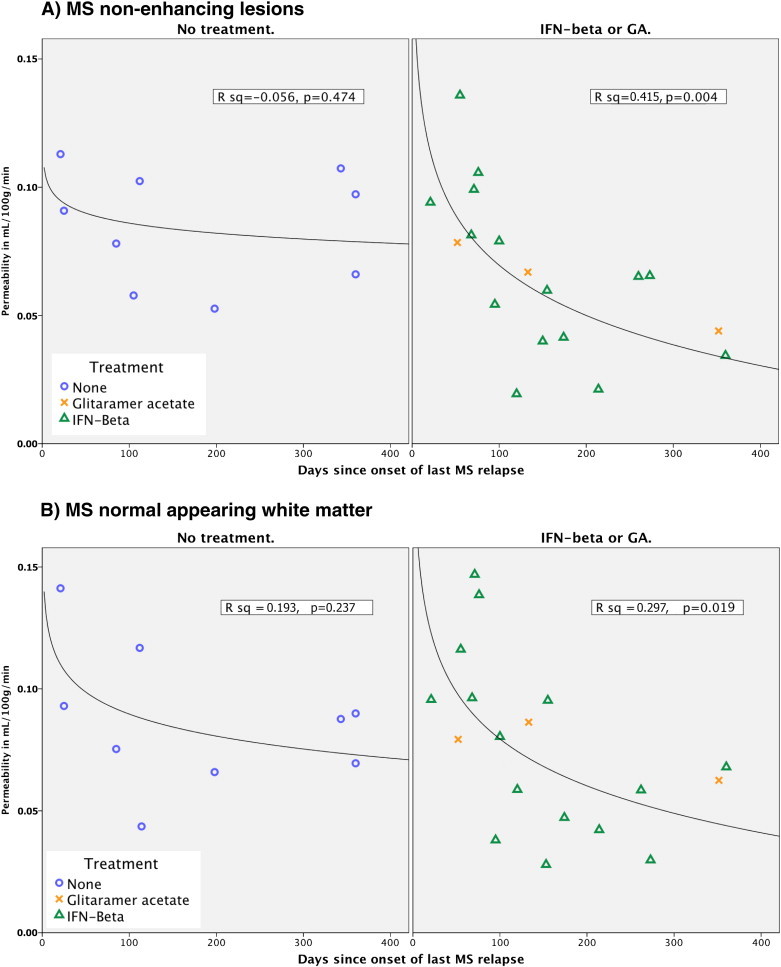
OBJECTIVES: To investigate whether blood-brain barrier (BBB) permeability is disrupted in normal appearing white matter in MS patients, when compared to healthy controls and whether it is correlated with MS clinical characteristics. METHODS: Dynamic contrast-enhanced MRI was used to measure BBB permeability in 27 patients with MS and compared to 24 matched healthy controls. RESULTS: Permeability measured as K(trans) was significantly higher in periventricular normal appearing white matter (NAWM) and thalamic gray matter in MS patients when compared to healthy controls, with periventricular NAWM showing the most pronounced difference. Recent relapse coincided with significantly higher permeability in periventricular NAWM, thalamic gray matter, and MS lesions. Immunomodulatory treatment and recent relapse were significant predictors of permeability in MS lesions and periventricular NAWM. Our results suggest that after an MS relapse permeability gradually decreases, possibly an effect of immunomodulatory treatment. CONCLUSIONS: Our results emphasize the importance of BBB pathology in MS, which we find to be most prominent in the periventricular NAWM, an area prone to development of MS lesions. Both the facts that recent relapse appears to cause widespread BBB disruption and that immunomodulatory treatment seems to attenuate this effect indicate that BBB permeability is intricately linked to the presence of MS relapse activity. This may reveal further insights into the pathophysiology of MS.
Overview
The claims and statistics of this paper haven’t been checked yet.
Run the check — free, no account needed. It reads the open-access text and checks the sources it cites.
Integrity signals
Registry
Cites
Statistics
Figures
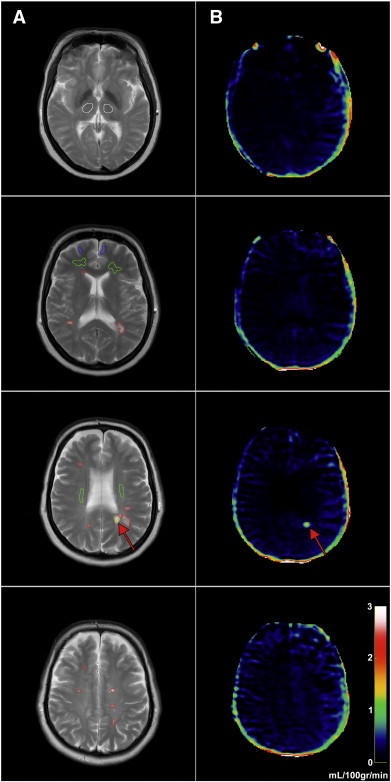
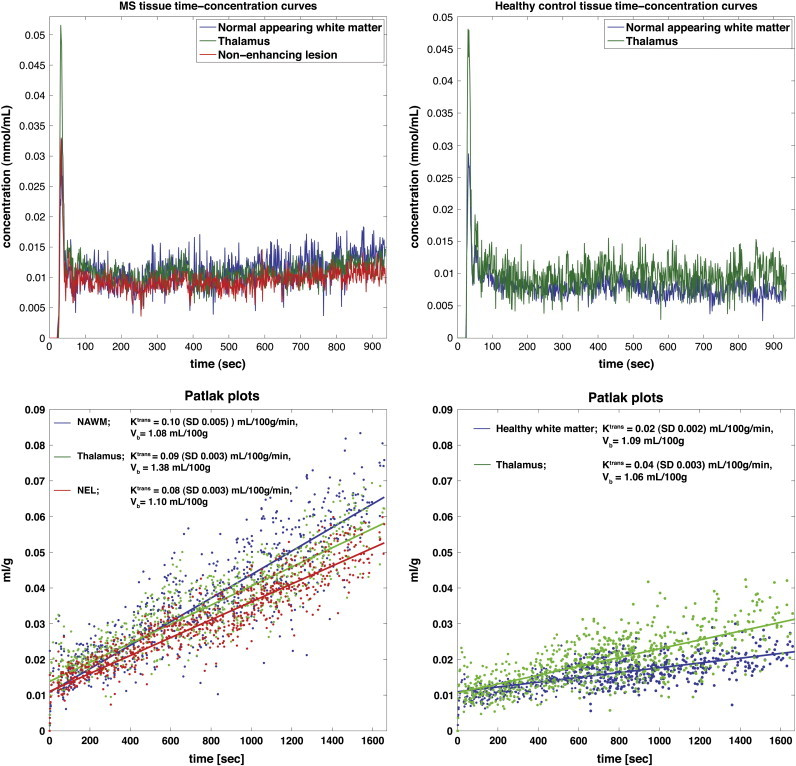
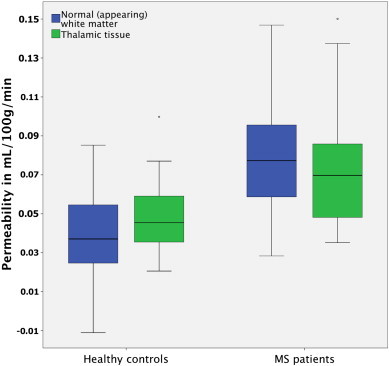
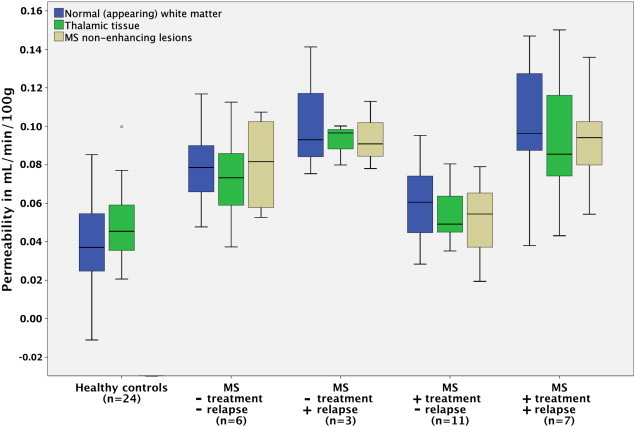
Verification
Claims the paper makes
The claims and statistics of this paper haven’t been checked yet.
Run the check — free, no account needed. It reads the open-access text and checks the sources it cites.
Claims other papers make about this one
Each is checked against this paper’s own text: does it say what the citing paper says it does?
The source backs part of the claim, not all of it — or backs it for a different population, condition or comparison.
In the citing paper
“More recently, an increase in BBB permeability has been shown in MS patients by DCE-MRI in the cortex and adjacent white matter (392), corpus callosum and internal capsule (121-123, 421, 574), as well as thalamic gray matter (123).”
From Blood-Brain Barrier: From Physiology to Disease and Back (2019) · cites this paper as [123]
Experimental — accuracy not yet measured
Self-check
Percentages, sums and reported differences re-computed from the paper’s own numbers.
The self-check needs the paper’s full text.
Citations
Cites
Schumacher, G. A., Beebe, G., Kibler, R. F., Kurland, L. T., Kurtzke, J. F., McDowell, F., Nagler, B., Sibley, W. A., Tourtellotte, W. W., & Willmon, T. L. (1965) · Annals of the New York Academy of Sciences · doi:10.1111/j.1749-6632.1965.tb20235.x · Cited by 1,438 · cited 1×
“Relapsewasdefined as new or worsening symptoms that lasted 24 h and occurred in the absence of fever or infection (Schumacher et al., 1965).”
BackgroundProgressive multiple sclerosis: pathology and pathogenesis
Lassmann, H., van Horssen, J., & Mahad, D. (2012) · Nature Reviews Neurology · doi:10.1038/nrneurol.2012.168 · Cited by 1,033 · cited 5×
“…did not include secondary progressive MS patients, where the relationship between inflammation and damage to the BBB is less obvious than in RRMS (Lassmann et al., 2012), secondly, our cohorts were all evaluated for treatment intensification, thus presumably having a high relative disease…”
BackgroundInfluentialBlood-brain barrier disruption in multiple sclerosis
Minagar, A., & Alexander, J. S. (2003) · Multiple Sclerosis · doi:10.1191/1352458503ms965oa · Cited by 685 · cited 2×
“However, the MS disease process itself seems capable of modifying the permeability of the BBB (Larochelle et al., 2011; Minagar and Alexander, 2003) but we observed no correlation between permeability and age, EDSS or years sinceMS onset indicating that BBB abnormalities do not seem toworsen with disease progression.”
BackgroundKERMODE, A. G., THOMPSON, A. J., TOFTS, P., MACMANUS, D. G., KENDALL, B. E., KINGSLEY, D. P. E., MOSELEY, I. F., RUDGE, P., & MCDONALD, W. I. (1990) · Brain · doi:10.1093/brain/113.5.1477 · Cited by 578 · cited 1×
“All rights reser inactive MS lesions as well as normal appearing white matter (NAWM) (Kirk et al., 2003; McQuaid et al., 2009; Plumb et al., 2002; Vos et al., 2005), and serial MRI studies have indicated that structural changes (Filippi et al., 1998; Werring, 2000) and BBB dysfunction (Goodkin et…”
BackgroundHow do immune cells overcome the blood-brain barrier in multiple sclerosis?
Larochelle, C., Alvarez, J. I., & Prat, A. (2011) · FEBS Letters · doi:10.1016/j.febslet.2011.04.066 · Cited by 405 · cited 3×
“On the other hand, activated leukocytes themselves are capable of altering BBB permeability through expression and secretion of inflammatory cytokines (Larochelle et al., 2011).”
BackgroundFilippi, M., Rocca, M. A., Martino, G., Horsfield, M. A., & Comi, G. (1998) · Annals of Neurology · doi:10.1002/ana.410430616 · Cited by 395 · cited 2×
“…white matter (NAWM) (Kirk et al., 2003; McQuaid et al., 2009; Plumb et al., 2002; Vos et al., 2005), and serial MRI studies have indicated that structural changes (Filippi et al., 1998; Werring, 2000) and BBB dysfunction (Goodkin et al., 1998) may precedemyelin damage and leukocyte infiltration.”
BackgroundKirk, J., Plumb, J., Mirakhur, M., & McQuaid, S. (2003) · The Journal of Pathology · doi:10.1002/path.1434 · Cited by 375 · cited 2×
“All rights reser inactive MS lesions as well as normal appearing white matter (NAWM) (Kirk et al., 2003; McQuaid et al., 2009; Plumb et al., 2002; Vos et al., 2005), and serial MRI studies have indicated that structural changes (Filippi et al., 1998; Werring, 2000) and BBB dysfunction (Goodkin et…”
BackgroundHarris, J. O., Frank, J., Patronas, N., Mcfarlin, D. E., & McFarland, H. (1991) · Annals of Neurology · doi:10.1002/ana.410290515 · Cited by 334
Werring, D. J. (2000) · Brain · doi:10.1093/brain/123.8.1667 · Cited by 323 · cited 3×
“…white matter (NAWM) (Kirk et al., 2003; McQuaid et al., 2009; Plumb et al., 2002; Vos et al., 2005), and serial MRI studies have indicated that structural changes (Filippi et al., 1998; Werring, 2000) and BBB dysfunction (Goodkin et al., 1998) may precedemyelin damage and leukocyte infiltration.”
BackgroundEpstein-Barr virus infection is not a characteristic feature of multiple sclerosis brain.
Willis, S., Stadelmann, C., Rodig, S., Caron, T. J., Gattenloehner, S., Mallozzi, S. S., Roughan, J. E., Almendinger, S. E., Blewett, M. M., Brück, W., et al. (2009) · Brain : a journal of neurology · doi:10.1093/brain/awp200 · Cited by 304 · cited 1×
“Only a minority of cells need be infected and express viral genes, which would serve to explain the inconsistent detection of EBV in MS brains (Willis et al., 2009) and CSF (Mancuso et al., 2010).”
Background
Cited by
Sorted by citations
Items 201–206 of 206
Choi, K. S., Choi, M., Park, M., & Jahng, G. (2025) · Investigative Magnetic Resonance Imaging · doi:10.13104/imri.2025.0001
Theranostic applications in multiple sclerosis: Nanomedicines through nasal route
Kumar, R., Kunal, Sharma, A., Wadhwa, S., & Gulati, M. (2023) · THE FOURTH SCIENTIFIC CONFERENCE FOR ELECTRICAL ENGINEERING TECHNIQUES RESEARCH (EETR2022) · doi:10.1063/5.0164748
Physical and Physiological Principles of Perfusion and Permeability
Cramer, S. P., Vestergaard, M. B., Lindberg, U., & Larsson, H. B. W. (2020) · Advances in magnetic resonance technology and applications · doi:10.1016/b978-0-12-817057-1.00013-5
Self-citationIntroduction to Imaging in the Neurosciences
Boska, M. D., & White, M. L. (2016) · Springer eBooks · doi:10.1007/978-3-319-44022-4_53
Inflammation in the CNS: advancing the field using intravital imaging
Pai, S., Hickey, M., & Weninger, W. (2017) · Frontiers research topics · doi:10.3389/978-2-88945-364-1
Time to Revisit Non-Pharmacological Research Approaches to Ameliorate Multiple Sclerosis Symptoms
Juurlink, B. (2015) · Journal of Neurology and Neuroscience · doi:10.21767/2171-6625.100052
Metadata
- Authors
- Cramer, S. P., Simonsen, H., Frederiksen, J. L., Rostrup, E., & Larsson, H. B. W.
- Affiliations
- University of Copenhagen (DK)
- Corresponding author
- Cramer, S.P.
- Venue
- NeuroImage: Clinical
- Publisher
- Elsevier BV
- Published
- 2014
- Volume
- 4
- Pages
- 182-189
- ISSN
- 2213-1582 (ISSN-L)
- PMC
- PMC3872721
- OpenAlex
- W2039561850
- Cited by
- 232
- References
- 37
- Citations by year
- 2026: 16 · 2025: 20 · 2024: 16 · 2023: 20 · 2022: 24 · 2021: 16 · 2020: 14 · 2019: 20 · 2018: 26 · 2017: 13 · 2016: 16 · 2015: 21 · 2014: 9
- FWCI
- 11.49
- Type
- journal article
- Language
- en
- Open access
- gold
- doi.org
- Licence
- Locations
- NeuroImage Clinical (publishedVersion, cc-by-nc-sa)
- Europe PMC (PubMed Central) (publishedVersion, cc-by-nc-sa)
- PubMed Central (publishedVersion, cc-by-nc-sa)
- PubMed (publishedVersion)
- BIBSYS Brage (BIBSYS (Norway)) (submittedVersion)
- DOAJ (DOAJ: Directory of Open Access Journals) (submittedVersion, cc-by-sa)
- NORA - Norwegian Open Research Archives (submittedVersion, cc-by-nc-sa)
- Research at the University of Copenhagen (University of Copenhagen) (submittedVersion)
- Funders
- Biogen
- Scleroseforeningen (14588)
- Multiple Sclerosis Society (14588)
- Region Hovedstaden
- Topics
- Health Sciences › Medicine › Clinical Neurology › Multiple Sclerosis Research Studies
- Life Sciences › Neuroscience › Neurology › Barrier Structure and Function Studies
- Health Sciences › Medicine › Radiology, Nuclear Medicine and Imaging › Advanced MRI Techniques and Applications
- Keywords
- multiple sclerosis, blood-brain barrier permeability, normal-appearing white matter, periventricular white matter, dynamic contrast-enhanced MRI, MS relapse, immunomodulatory therapy, MS lesions, blood-brain barrier disruption
- MeSH terms
- Adult, Blood-Brain Barrier, Capillary Permeability, Contrast Media, Female, Humans, Magnetic Resonance Imaging, Male, Middle Aged, Multiple Sclerosis, Severity of Illness Index, Imaging, Three-Dimensional, Perfusion Imaging, White Matter
About these checks
Registry, retraction, Cites and statistics results are computed, not judged, with one exception: a printed reference that no index lists is read once by a model before it counts as a citation error. Claims are extracted by a model and kept only when their quote appears verbatim in the text; each cited source is then checked, with a model’s help, for whether it says what the claim relies on. Those verdicts can be wrong — read the claim’s quote and the cited source before relying on one.
Statistics and arithmetic are recomputed, not judged.
Confidence bands are shown only for fields calibrated on our annotated test set. None is calibrated yet, so no band is shown.
What counts as a claim ›How we measure confidence ›How we check this ›
Are you an author, or do you see a problem with this page? Request a review
